The Sports Science of Nitrate and Beetroot: A Complete Breakdown of the Nitric Oxide Pathway, Endurance Effect Sizes, and Dosing Timing
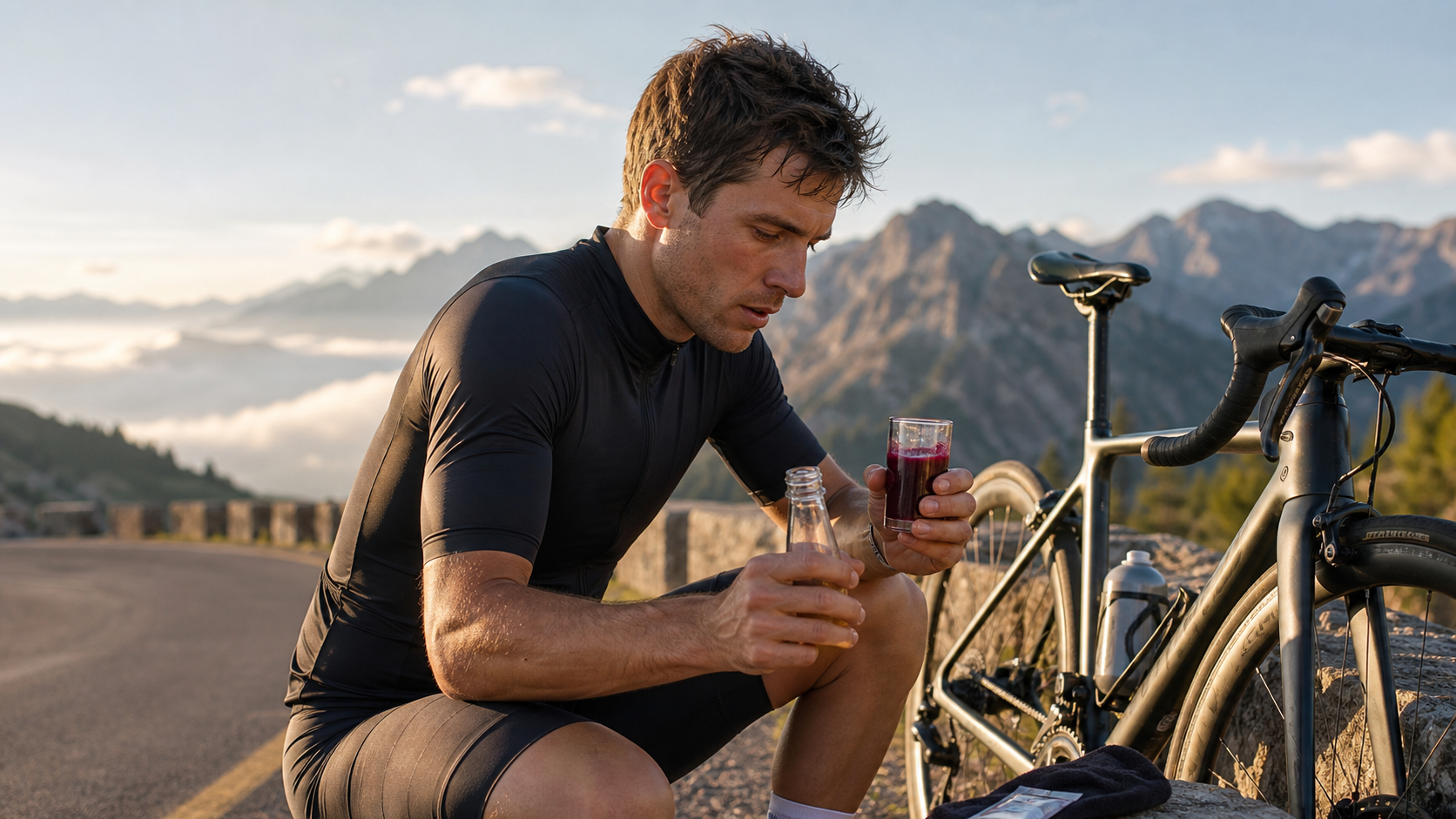
Starting with a Glass of Purple-Red Juice
A few years ago, I was coaching an amateur cyclist preparing to take on Wuling. Let’s call him A-Kai. His climbing ability was above average, with a power-to-weight ratio of around 3.8 W/kg, and he’d been stuck on a training plateau for a long time. One day, he mysteriously showed me a small bottle of purple-red beetroot concentrate and asked, “Coach, the internet says drinking this can make you faster. Is it real or just a tax on the gullible?”
I didn’t immediately answer “useful” or “useless,” because both answers are too lazy. Beetroot and nitrate are among the few supplements in sports nutrition that simultaneously have a substantial body of research evidence and are heavily inflated by commercial marketing. It’s not a placebo, but it’s also definitely not magic that gives you an extra 20 watts on the spot. The truth is in the middle, and the details—dose, timing, and individual—determine whether what you’re drinking is a worthwhile investment or just purple urine.
In this article, I want to use the practical tone I use with my athletes to lay out the science of nitrate clearly: how it works in your body, how large its effect size is for endurance performance, who tends to benefit most, and most importantly—how much to take and when. At the end, I’ll give specific action recommendations for readers at different levels.
Let me start with the conclusion so you have some context: for general to intermediate exercisers, nitrate provides a “small but real” benefit; for top elites, the benefit noticeably shrinks. This one sentence is the anchor for understanding everything that follows.
Conceptual Foundation: How Nitrate Becomes “Blood-Vessel-Relaxing” Nitric Oxide
What Nitric Oxide (NO) Actually Does
Nitric oxide (NO) is a crucial signaling molecule in the body. For athletes, you only need to remember its three key functions:
- Vasodilation: Relaxes and widens blood vessels, delivering more oxygenated blood to working muscles during exercise.
- Improved muscular oxygen efficiency: In plain terms, at the same pace and same power output, you might use slightly less oxygen to do the work—meaning better exercise economy.
- Influences muscle contraction and calcium handling: This is especially relevant to the contraction efficiency of fast-twitch muscle fibers.
The body naturally produces nitric oxide on its own through the classic “L-arginine–nitric oxide synthase” pathway (which requires oxygen). But here’s the interesting part: when you’re exercising hard, breathing heavily, with local tissue hypoxia and an acidic environment, the efficiency of that oxygen-dependent pathway actually decreases. And that’s precisely when nitrate steps in.
Nitrate Follows a Different “Backup Route”
Dietary nitrate follows an independent backup pathway, generally called the “nitrate–nitrite–nitric oxide” pathway. The overall process goes roughly like this:
- You drink beetroot juice rich in nitrate, and the nitrate is absorbed into the bloodstream.
- A portion of the nitrate is secreted into saliva, where symbiotic bacteria in your mouth reduce it to nitrite.
- The nitrite is swallowed and absorbed into the bloodstream.
- In muscle tissue, especially in hypoxic, acidic environments, nitrite is further reduced to nitric oxide.
Understanding this pathway immediately clarifies two things that are extremely important in practice:
First, oral bacteria are the critical relay station. This is why there’s a famous reminder in sports nutrition: during nitrate supplementation, don’t use antibacterial mouthwash, and try not to brush your teeth so thoroughly right after taking it that you wipe out your oral microbiome. If you kill the bacteria responsible for reducing nitrate, you’re shutting down the first station of the entire production line, and the effect will be greatly diminished. This is the detail beginners most often overlook, yet it genuinely affects results.
Second, the nitrate pathway is especially active under “hypoxic, acidic” conditions. This explains why it helps more in high-intensity, near-limit, locally hypoxic exercise situations, and also why its improvement of exercise economy is most easily measured at submaximal intensities.
Two Mechanisms, Two Benefits—Don’t Confuse Them
In the research, the mechanisms behind nitrate’s performance benefits can be broadly grouped into two categories. Let me break them down separately because this affects how you understand “what it helps me with”:
- Improved exercise economy: At the same submaximal intensity (e.g., your cruising power), the body may use slightly less oxygen. For endurance sports, this means you’re relatively “more efficient” at the same pace, or you can push slightly harder at the same perceived effort.
- Muscle contraction efficiency and fast-twitch performance: Nitric oxide participates in intramuscular calcium handling and contraction efficiency, which is more likely to show up in situations requiring repeated explosive efforts and high-intensity surges (e.g., intervals, team sports).
Keep these two points in mind, and you’ll understand why nitrate’s benefit is less clear for “pure aerobic, low-intensity, several-hour easy rides,” while it’s easier to see effects in “high-intensity, near-limit, repeated surge” situations—because the mechanisms it acts on matter most in those intensity zones.
Effect Size: Don’t Get Excited Too Soon, and Don’t Dismiss It Too Quickly
As a consultant, I fear two types of people most: those who see “supported by research” and inflate it endlessly, treating beetroot as a miracle cure; and those who hear “small effect size” and dismiss it entirely, thinking anyone who takes it is a fool. Both are wrong because they don’t understand what “effect size” really means in competitive sport.
Statistical Effect Size: Small, but Consistent in Direction
According to a recent umbrella review compiling multiple systematic reviews, along with related meta-analyses, the effect size of dietary nitrate on exercise performance is roughly on this order of magnitude:
| Supplementation Method | Standardized Mean Difference (SMD) Magnitude | Plain-Language Interpretation |
|---|---|---|
| Acute supplementation (single dose, hours before competition) | ~0.20 (small effect) | Present and consistent in direction, but not large |
| Chronic supplementation (multiple consecutive days) | ~0.13 (nearly negligible) | Smaller than acute; may not be worth it |
| Strength-related measures | ~0.08 (negligible) | Don’t expect it to make you stronger |
(Source: see references at the end)
Seeing the number 0.20, many people are disappointed: “That’s it? So little?” But please note—in competitive sport, a 1% to 2% performance difference is often the gap between standing on the podium and finishing in the teens. In a 40 km time trial, a difference of a few seconds can change your placing. So a “small effect size” doesn’t mean “meaningless”; it just reminds you that this is marginal optimization, not the main course.
In What Situations Is It More Noticeable?
Condensing the consensus of many studies into a practical table will help you see the direction more clearly:
| Situation | Likelihood of Noticing Nitrate’s Effect | Explanation |
|---|---|---|
| 4–30 minute time trials / exhaustion tests | Higher | This is the time frame where positive effects are most commonly seen in the literature |
| High-intensity intervals, repeated surges in team sports | Medium-high | Repeated hypoxic situations are friendly to the nitrate pathway |
| Long-distance endurance (several hours) | Uncertain | Evidence is scattered; don’t over-expect |
| General recreational, non-elite populations | Higher | More room for improvement, easier to measure |
| Elite athletes who already use oxygen very efficiently | Lower | Their bodies are already highly efficient; less marginal gain to extract |
Here’s a very important point that marketing often obscures: in the published evidence, clear performance benefits mostly appear in recreational to intermediate exercisers, while in top elites the effect often shrinks or even disappears. My advice to A-Kai was based on this: he’s an improving amateur rider, exactly the population for whom nitrate is relatively “worth trying.” If he were national-team level with an off-the-charts VO₂max, I’d instead tell him to put his energy elsewhere.
Why Does the Elite Benefit Shrink?
The intuitive explanation is this: elite athletes’ bodies already use oxygen very efficiently. Their muscle capillary density, mitochondrial function, and lactate handling are all near human limits. The space nitrate can help with is essentially “adding a bit of throttle response to an engine that isn’t yet fully efficient.” When the engine is already top-spec, the room for further improvement naturally shrinks. This isn’t beetroot being useless; it’s diminishing marginal returns.
Dosage and Timing: The Most Practical Part of This Entire Article
Okay, science done. Let’s talk about what you really want to know: exactly how to take it. I suggest you screenshot this section.
Effective Dose: Measured in “Millimoles of Nitrate,” Not Milliliters
Sports nutrition research measures nitrate dosage in millimoles (mmol), not milliliters. This is important because the nitrate concentration of commercial beetroot products varies enormously. Drinking 100 mL of different products can deliver wildly different amounts of actual nitrate.
Based on current recommendations, a single effective acute dose roughly falls in this range:
| Dosing Strategy | Nitrate Amount | Roughly Equivalent To | Notes |
|---|---|---|---|
| Standard single acute dose | ~6–8 mmol | ~350–500 mg nitrate | Common “beetroot concentrate shots” of ~70 mL per bottle are designed for this |
| Higher acute dose range | ~5–14.9 mmol | Depends on product | The range where benefits appear more often in meta-analyses |
| Chronic daily supplementation | ~5–9.9 mmol/day | Several consecutive days | After more than two days, dose and benefit may become negatively correlated; don’t keep increasing |
Here’s a counterintuitive point that research repeatedly highlights: “more is better” is wrong for chronic supplementation. Some analyses show that when supplementation exceeds two days, the relationship between dose and performance benefit actually becomes negative, with the optimal daily dose around 5–9.9 mmol. In other words, greedily chugging large amounts of beetroot juice every day may not only fail to help, but could actually hurt. I’ll expand on this in “Common Mistakes.”
Timing: 2 to 3 Hours Before the Event, Not Right Before Your Warm-Up
Timing is where many people go wrong. The key point is that blood nitrite levels need time to rise to their peak.
- Plasma nitrite concentration peaks approximately 2 to 3 hours after ingestion.
- Therefore, the standard recommendation is: consume it about 2 to 3 hours before exercise or competition begins (studies commonly say “at least 150 minutes before”).
In other words, if you’re starting your Wuling climb at 7:00 AM, ideally you should drink your beetroot shot between 4:30 and 5:00 AM, not while warming up in the parking lot. For cyclists in Taiwan, the practical implication is: you need to build it into your pre-race routine, possibly even waking up in the dark to drink it and then going back to sleep. It’s inconvenient, but that’s the physical condition for it to work.
A Ready-to-Copy Pre-Race Schedule
Using a cycling time trial or major climbing event with a “7:00 AM start” as an example:
| Time | Action |
|---|---|
| From 3 days before | (Optional) Daily chronic supplementation of 6–8 mmol nitrate; don’t exceed the recommended upper limit |
| 24 hours before | Stop using antibacterial mouthwash; maintain normal hydration and carbohydrate intake |
| 4:00–4:30 AM | Wake up, drink one 6–8 mmol beetroot shot, with a small amount of warm water |
| After 4:30 AM | Don’t immediately use antibacterial mouthwash or aggressively brush to eliminate oral bacteria; a simple rinse is fine |
| 5:00–6:00 AM | Eat a normal breakfast, hydrate |
| 6:30 AM | Arrive, dynamic warm-up |
| 7:00 AM | Start |
Important: Always Test It on a Non-Race Day First
This is my iron rule for every athlete: never try any supplementation strategy for the first time on race day. Beetroot juice can be harsh on some people’s gastrointestinal systems, potentially causing bloating, diarrhea, or discomfort—and having that hit mid-race is a disaster. At least 2 to 4 weeks before your race, do one or two full rehearsals on training days using the same product, the same dose, and the same timing you plan to use, to confirm your GI tolerance and physical response. In sports nutrition, this is called “don’t try anything new on race day,” and it’s a hard-won rule of thumb.
Acute vs. Chronic: How to Choose Between the Two Strategies
Many people are confused about the difference between “a single dose before the race” and “taking it for several consecutive days.” Let me clarify with a table:
| Aspect | Acute Supplementation (Single Dose) | Chronic Supplementation (Consecutive Days) |
|---|---|---|
| Timing | 2–3 hours before the race on race day | Daily for 3–6 days before the race, with the final day including the pre-race dose |
| Dose | ~6–8 mmol in one dose | ~5–9.9 mmol/day; don’t exceed the upper limit |
| Effect size | Relatively larger (SMD ~0.20) | Relatively smaller (SMD ~0.13) |
| Who it suits | People who want simplicity and convenience | People who want to squeeze out the last drop and don’t mind the hassle |
| Risk | Almost none | Doses too high or too many days may actually backfire |
My practical tendency is: for the vast majority of amateur and intermediate exercisers, simply getting the “single acute dose” right offers the highest return on investment. Chronic supplementation is actually more complex to do well and easier to fall into the “more is worse” trap. Unless you’re a very meticulous advanced athlete with data feedback, I don’t proactively recommend it. Simple, reliable, and error-free often beats complex, theoretically better, but practically error-prone.
A Concrete Feel for the Numbers: What a Small Effect Size Means for You
Athletes most often ask me: “Coach, what does an SMD of 0.20 translate to for me—how many seconds faster?” I have to be honest: there’s no precise answer; individual variation is huge. But I can help you build a reasonable sense of magnitude.
Suppose you’re an intermediate cyclist completing a ~20-minute time trial. In the literature, for these 4–30 minute high-intensity endurance situations, if you happen to be a responder, the observed performance improvement is “roughly” in the low single-digit percentage range—please note, this is a very wide, highly individual rough magnitude, not a guaranteed value. For a 20-minute effort, even a very small percentage, when converted to seconds and places, can matter in a competitive age group.
Conversely, if your training base is inadequate, you didn’t sleep well the night before, or your hydration is off, then this small marginal benefit can easily be drowned out by larger variables, and you won’t feel it at all. This is why I keep emphasizing “get the fundamentals right first”—not as a platitude, but because if the noise in your fundamentals is too large, the signal from the supplement gets buried.
Non-Responders: Why Some People Feel Absolutely Nothing
This is an important but rarely discussed aspect of nitrate. Research and field experience both tell us: there is individual variation between “responders” and “non-responders” in the population. Some people clearly feel the benefit after supplementing; others feel no difference no matter what they take.
Possible reasons include: differences in oral microbiome composition (some people naturally have lower efficiency at reducing nitrate to nitrite), dietary habits (people who already eat a lot of vegetables have a higher baseline of nitrate in their bodies, so the marginal benefit of additional supplementation is smaller), as well as genetic and muscle fiber composition differences. I’ll just point out the directions here without making overly precise claims.
Practical conclusion: don’t assume you’ll definitely benefit just because a friend or an online review says it “works wonders”; and don’t conclude “this stuff is a scam” just because you didn’t feel anything yourself. The right approach is to objectively test it in your own training and use data to judge whether it’s worth it for you personally.
Common Mistakes and Corrections: What I Most Often Fix in the Field
In all my years coaching athletes, I’ve probably encountered every type of mistake on this nitrate topic. Here’s a checklist—see if any apply to you:
Mistake 1: Treating It Like a Daily Health Supplement and Chugging It
Symptom: Someone hears beetroot is good for cardiovascular health, so they drink large amounts every day, and even think they should “double up” on race day.
Correction: As mentioned earlier, after more than two days of chronic supplementation, and with doses too high, the benefit can actually reverse. Treat it as a precise pre-race tool, not an unlimited daily beverage. For cardiovascular health, eating a variety of dark-colored vegetables (which are naturally rich in nitrate) is more balanced than chugging concentrate.
Mistake 2: Drinking It Right Before Warm-Up—Timing Completely Wrong
Symptom: Drinking a bottle in the parking lot 20 minutes before the race, thinking “as long as I drank it, I’m protected.”
Correction: Nitrite takes 2 to 3 hours to reach its peak. Drinking it at the last minute means the race is already over by the time the effect finally arrives. Move the timing to 2–3 hours before the event.
Mistake 3: Immediately Using Antibacterial Mouthwash or Brushing Thoroughly After Taking It
Symptom: Hygiene-conscious athletes immediately use mouthwash to kill bacteria and brush their teeth spotlessly after drinking it.
Correction: You’ve eliminated the oral bacteria responsible for reducing nitrate, effectively cutting off the first link in the entire conversion chain. Avoid antibacterial mouthwash during the supplementation period, and don’t deliberately aim to “eliminate all bacteria” when brushing.
Mistake 4: Thinking It Can Replace Training, Sleep, and Nutritional Fundamentals
Symptom: Irregular training, insufficient sleep, haphazard eating out for every meal—yet expecting a bottle of beetroot juice to save everything.
Correction: Nitrate is the final 1–2% on top of the ceiling; the preceding 98% is training volume, recovery, sleep, and overall diet. Trying to rely on supplements before building a solid foundation is completely backwards. I often tell my athletes: “Supplements are the cherry on the cake; you need to have the cake first.”
Mistake 5: Only Looking at Milliliters, Not Nitrate Content
Symptom: Buying a large bottle of “beetroot drink,” only to find it’s loaded with sugar and flavorings, with pitifully low nitrate content—and you’ve also consumed a bellyful of sugar.
Correction: Check the ingredients and the nitrate labeling (measured in mmol or mg). Prioritize concentrated shots designed for sports or pure juices with high nitrate content, rather than sugary juice drinks.
Mistake 6: Ignoring the Normal GI and Urine Color Reactions
Symptom: After drinking it, you notice your urine or stool turning red, panic thinking it’s blood in the urine, and rush to the emergency room.
Correction: The natural pigments in beetroot can turn some people’s urine and stool red or pink. This is called “beeturia” and is mostly a harmless, normal phenomenon. Of course, if you’re unsure, or if it’s accompanied by pain or other symptoms, you should still see a doctor to confirm—in Taiwan, seeing a family medicine or urology doctor is very convenient. Don’t scare yourself, but also don’t mistake real hematuria for beeturia and delay treatment.
The Local Taiwan Context: Bringing the Science Down to Your Life
After all this talk about international research, let’s discuss the actual situations Taiwanese cyclists and runners will encounter.
Perceived Differences in Taiwan’s Hot, Humid Climate
Taiwan’s summers are hot and humid. During exercise, heart rate tends to spike and perceived exertion feels higher. Theoretically, nitrate improves oxygen use efficiency and blood flow, which is a different matter from “heat dissipation.” It won’t lower your body temperature, and it can’t replace hydration and electrolyte strategies. In hot, humid conditions, your first priority is always fluids, electrolytes, and pace control. Nitrate is at best a marginal help at submaximal intensities, letting you “save a little effort at the same pace.” Don’t get the priorities backwards.
How to Get Natural Nitrate If You Eat Out Most of the Time
If you don’t want to buy concentrated shots and prefer to get nitrate from natural foods, you can incorporate nitrate-rich dark-colored and root vegetables into your daily routine:
- Beetroot itself (available at traditional markets, organic stores, and some supermarkets in Taiwan)
- Dark leafy greens, such as spinach, arugula, amaranth, and sweet potato leaves
- Celery, romaine lettuce, etc.
But honestly, relying on natural foods to precisely hit 6–8 mmol before a race, while also nailing the 2–3 hour timing, is quite difficult, because the nitrate content of vegetables varies greatly depending on variety, origin, fertilization, and storage—you can’t easily calibrate the dose. So if you want “precision” for competition, concentrated shots are easier to manage; if you want “general health, daily intake,” eating a variety of dark vegetables is the better choice. Two purposes, two strategies.
To give you a general direction, I’ve compiled a “relative high-low” comparison table of common food sources (note: this is a relative trend, not precise values; actual content varies greatly by variety, origin, fertilization, and storage):
| Food Source | Relative Nitrate Content | Practical Comment |
|---|---|---|
| Beetroot concentrate shot (sports use) | High, with clearly calibrated dose | First choice for precise pre-race supplementation |
| Pure beetroot juice | Medium-high | Feasible, but you need to calculate the dose; larger volume |
| Dark leafy greens (spinach, arugula, amaranth, sweet potato leaves) | Medium-high | Great for daily health; hard to calibrate pre-race |
| Celery, romaine lettuce | Medium | Suitable for incorporating into daily diet |
| General sugary “beetroot-flavored drinks” | Often low | Usually high in sugar and low in nitrate; don’t use as a supplement source |
Practical Thoughts for Common Taiwan Venues
The routes Taiwanese cyclists love to challenge most are climbs like Wuling, Fengguizui, Yangmingshan, and Beiyi; runners often train on riverside paths, tracks, or sign up for marathons around the country. When applying nitrate strategy to these situations, my reminder is: the more “sustained high-intensity, tens-of-minutes effort” the event is, the more likely you are to benefit theoretically; the more “leisurely, long-duration, completion-oriented” the ride or run is, the more ambiguous the marginal benefit. First clarify the nature of your event, then decide whether to put in this effort—rather than reflexively chugging a bottle every time you head out.
Friends with Chronic Conditions: Please Individualize
I’ll state this section conservatively and clearly. Nitrate affects vasodilation and blood pressure, so if you have hypertension, heart disease, diabetes, or are taking blood pressure medications or nitrate-based cardiac drugs (e.g., certain medications for angina), beetroot and nitrate supplements may interact with your medications or condition.
Please don’t self-supplement heavily based on this article. Medical care is convenient and accessible in Taiwan, so please consult your cardiologist or family medicine physician, as well as a dietitian, for an individualized assessment. A sports science consultant can give you general principles, but your condition and your medications can only be judged by your medical team. This isn’t a formality; it’s a safety bottom line.
Action Recommendations for Readers at Different Levels
Let me condense everything above into executable plans. Find your level and follow accordingly.
If You’re a Beginner / General Fitness Exerciser
- Don’t rush to buy shots. Your fastest source of improvement right now is consistent training, adequate sleep, and eating well.
- If you want to explore nitrate, start with eating more dark-colored vegetables daily—this helps overall health anyway.
- If you really want to try supplements, choose a product designed for sports with clearly stated nitrate content, and test your tolerance on training days first. Don’t obsess over feeling stronger immediately.
- Remember it’s the “final 1–2%”; don’t let it crowd out more important fundamentals.
If You’re an Intermediate Enthusiast (with a Specific Race Goal)
- Do precise supplementation for your target event: 2–3 hours before, 6–8 mmol, and choose the right product.
- 2–4 weeks before the race, do at least one full rehearsal with the same product, dose, and timing to confirm GI tolerance.
- Avoid antibacterial mouthwash around the race.
- Don’t do chronic daily chugging; treat it as a precise pre-race tool.
- Keep rational expectations: this is marginal optimization to help you “save a bit of effort at the same pace and hold on a little longer at exhaustion,” not an engine swap.
If You’re Advanced / Semi-Elite
- Recognize that the marginal gains you can extract are smaller than average, so you need to be more precise with timing, dose, and individual response.
- Pair it with objective measurements: for example, fixed-course time trials, power data, or heart rate and perceived exertion at submaximal intensities, comparing with and without supplementation, and use data to judge whether it’s worth it for “you personally.”
- Don’t ignore the existence of “non-responders”—some people simply respond very little to nitrate. That’s normal; it doesn’t mean you’re doing something wrong, just that this tool may not suit you.
- Integrate it into your overall periodized nutrition strategy, planning together with your coach and dietitian.
A Quick Self-Checklist
Before heading out to supplement, quickly run through this table:
| Check Item | Done? |
|---|---|
| Fundamentals (training, sleep, diet) are solid | ☐ |
| Dose is around 6–8 mmol (read the label, not the milliliters) | ☐ |
| Timing is 2–3 hours before the event, not at the last minute | ☐ |
| Avoided antibacterial mouthwash during the supplementation period | ☐ |
| Tested GI tolerance on a non-race day | ☐ |
| Not treating it as a daily beverage to chug | ☐ |
| Those with chronic conditions/medications have consulted their medical team | ☐ |
If all seven are checked, you’re using this tool correctly.
Back to A-Kai: What Happened Next?
Let’s return to A-Kai, the cyclist from the beginning who was taking on Wuling. I didn’t mythologize beetroot. Instead, I helped him fix his fundamentals first—adjusting his training distribution, stabilizing his sleep, and choosing better food when eating out. Then, before his target event, we used the 2–3 hours before, 6–8 mmol strategy, first rehearsing it on two long climbing training days to confirm his GI was fine.
What was the actual result? He described it himself: “On that final stretch of climbing where I was about to crack, I felt like I could grit my teeth and hold on a little longer.” This subjective feeling corresponds exactly to the scientific logic that nitrate is more useful in near-limit, locally hypoxic situations. I didn’t tell him it was definitely the beetroot’s doing—because his training, psychology, and overall condition all improved simultaneously. But as a reasonable piece of the overall strategy, it was a worthwhile marginal investment for an improving amateur rider like him.
This is the core mindset I want to convey: treat nitrate as a “small but real tool that requires precise operation,” not a miracle cure, and not a tax on the gullible. The more you understand its pathway and limitations, the better you can use it in the right places—without waste and without disappointment.
FAQ
I’ve compiled the questions I’m most often asked by athletes here for quick answers.
Q1: Are beetroot capsules/tablets as effective as beetroot juice?
The key isn’t the form, but the actual nitrate content. Some beetroot “powders” or “capsules” lose much of their nitrate during drying and processing, and they may be marketed for other beetroot compounds rather than nitrate. To benefit from the nitrate pathway, look for the product’s clearly stated nitrate content in millimoles—don’t be fooled by the word “beetroot.”
Q2: Can I use it together with caffeine and carbohydrates?
Nitrate, pre-race caffeine, and mid-race carbohydrate fueling work through different mechanisms and can theoretically coexist in an overall strategy. But the key remains the same old saying: any combination must be tested on training days first to confirm GI and physical responses. Don’t stack a bunch of new things together on race day.
Q3: Will drinking it harm my kidneys or health?
For generally healthy adults, short-term use within the recommended sports nutrition dosage range is currently considered relatively safe. Natural vegetables already contain large amounts of nitrate—you’re ingesting it every day just by eating vegetables. The people who truly need caution are those with chronic conditions, kidney issues, or taking specific medications. In such cases, consult your medical team first and don’t self-supplement heavily long-term.
Q4: Do vegetarians get less benefit because they already eat a lot of vegetables?
That’s a possibility, but not absolute. People with high long-term vegetable intake have a higher baseline of nitrate in their bodies, so the marginal benefit of additional supplementation may be smaller. But this is just a trend; individual variation remains large, so it’s still best to test and judge for yourself.
Q5: Does it apply to running and swimming too, or only cycling?
Nitrate improves oxygen use efficiency and blood flow, which is a cross-sport physiological mechanism, not exclusive to cycling. Endurance sports like running and swimming may also benefit, especially for efforts similar to 4–30 minutes of high intensity. The dosing and timing principles apply the same way.
Q6: Do I have to buy expensive sports-specific shots?
Not necessarily. The advantages of sports-specific shots are clearly calibrated doses, small volume for easy carrying, and easy pre-race handling. If you can find pure beetroot juice with high nitrate content, are willing to calculate the dose, and your GI can handle the larger volume, regular pure juice can also work. The key is always the actual nitrate amount and timing, not the packaging.
Conclusion
Nitrate and beetroot are among the few supplements in sports nutrition with relatively solid research support, but their effect size is “small and consistent.” The main benefits fall on recreational to intermediate populations and in 4–30 minute high-intensity endurance situations. A dose of about 6–8 mmol, taken 2–3 hours before the event, avoiding antibacterial mouthwash, testing tolerance on a non-race day first, and not chronically chugging it—get these five things right, and you’ve captured 80% of its value.
Finally, and most importantly: supplements are always the cherry on the cake. First build the cake of training, recovery, sleep, and overall diet—only then does the cherry mean anything.
Wishing you, in your next challenge, the right tools, smoother riding, and longer running.
This article is educational content and cannot replace individual diagnosis and treatment advice from a physician, physical therapist, or dietitian. If you have chronic conditions such as hypertension, heart disease, or diabetes, or are taking medication, please consult your medical team for an individualized assessment before supplementing with nitrate.
References
- Australian Institute of Sport (AIS/ASC) Dietary Nitrate/Beetroot Juice Supplement Guidelines: https://www.ausport.gov.au/ais/nutrition/supplements/group_a/performance-supplements2/beetroot-juicenitrate
- AIS How and When to Use It: https://www.ausport.gov.au/ais/nutrition/supplements/group_a/performance-supplements2/beetroot-juicenitrate/how-and-when-do-i-use-it
- Dietary Nitrate Supplementation and Exercise Performance: Umbrella Review of 20 Systematic Reviews (PMC): https://pmc.ncbi.nlm.nih.gov/articles/PMC12106159/
- Umbrella Review of Beetroot Juice Effects on Performance in Athletes and Healthy Individuals (PMC): https://pmc.ncbi.nlm.nih.gov/articles/PMC12195723/
- Systematic Review and Meta-Analysis of Nitrate Intake on High-Intensity Endurance Time Trial Performance (PMC): https://pmc.ncbi.nlm.nih.gov/articles/PMC9287610/
Related Reading
- Beetroot Juice and Nitrate Supplementation: A Coach’s Guide to Dosage, Timing, and Side Effects
- Beetroot Juice and Nitrate Supplementation: A Natural Performance Enhancer for Cycling
- The Mechanism of Beetroot Juice in Improving Cycling Performance: The Power of Nitric Oxide
- The Science of Beetroot Juice: Can Nitrate Supplementation Really Improve Endurance
CT暗黑廚房) 車友必備 宇宙無敵鮮蚵湯 幫助訓練恢復 天然食補 好市多 超肥鮮蚵 破PR
7 年前
一個測試有沒有認真練車的方法😂 #公路車
10 個月前
大家都在開箱的...單車用藍芽對講耳機真的有幫助嗎? SENA BiKom 20 長距離旅遊 & 海鷗繞圈賽 實際體驗心得 / 公路車 / CT Yeh
9 個月前
台北闊瀨陡坡 騎旅 / 日本單車雜誌編輯車友臨時加入!/ 髮香才是最強的 / feat. 北迴歸線小隊 / 公路車 CT Yeh
6 個月前
西進武嶺 免費訓練分析服務 Intervals | 練不夠還是練過頭?你哪一種類型選手?AI模型告訴你! | 備戰神器 | 公路車 訓練 | CT Yeh
4 年前
JJSC南台灣單車走春三日行 DAY 1 / 強度 x 美食 x 節慶體驗 / 公路車 CT Yeh
5 個月前
秘境雪場 日本 八甲田 冰樹探險與滑雪體驗 ft. Q老師 & 運動生活
7 年前
2021 96聯賽 桃園市長盃 4K多視角實況 當天選手瓦數/推力比/均速/時間 即時數據分析 | 公路車 | CT Yeh
5 年前