Do Antioxidant Supplements Undermine Your Training? A Sports Science Consultant Breaks Down the "Vitamin C/E vs Diet" Debate
First, a Real Situation I Encountered as a Coach
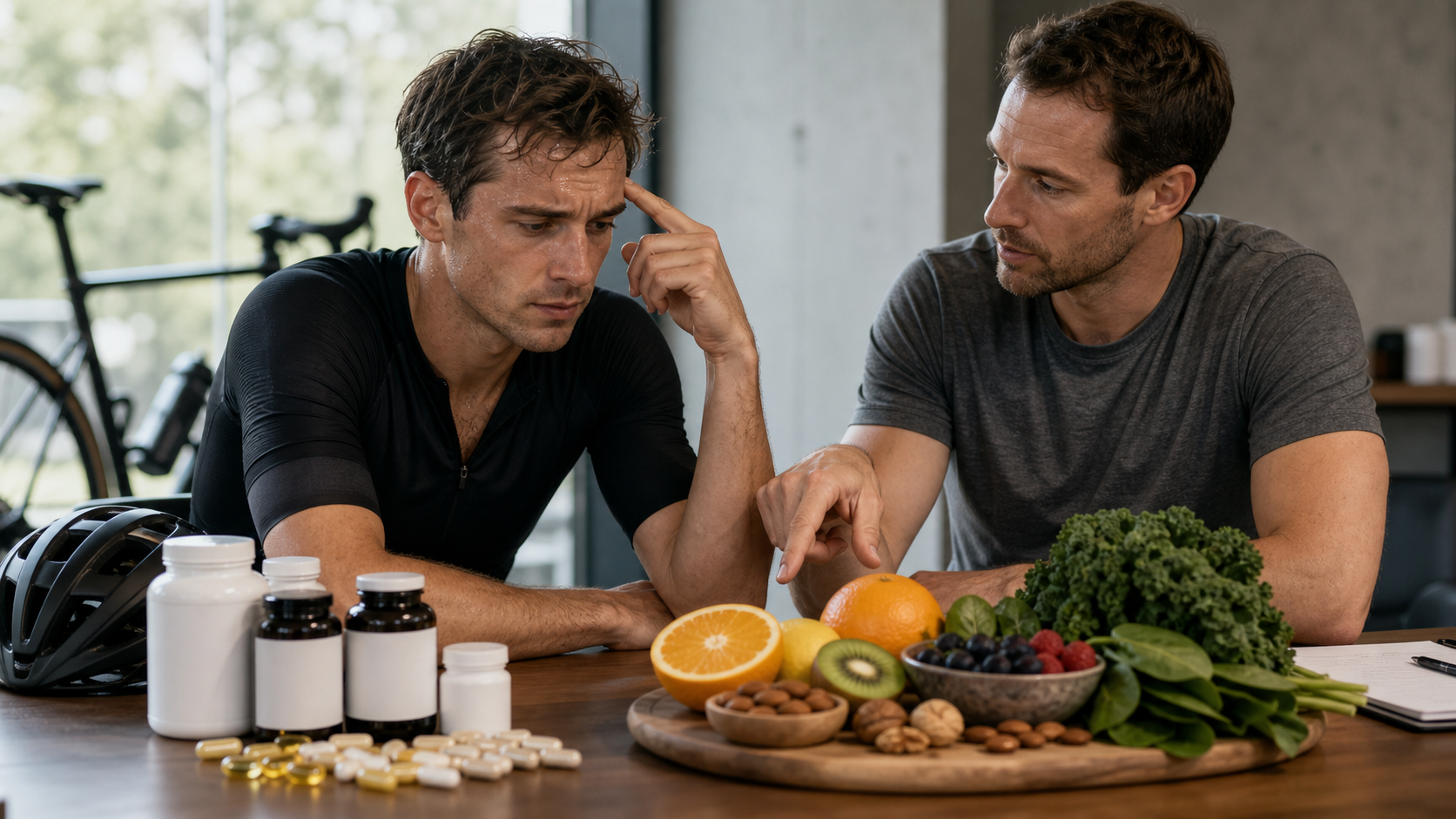
A few years ago, I coached a very dedicated amateur road cyclist—let’s call him A-Kai. A-Kai was in his early thirties, an engineer, training about eight to ten hours a week, with the goal of pushing his personal record on a certain climbing route even further. When he came to me, he brought a whole bag of supplements—fish oil, a multivitamin, and a large bottle of “high-potency” Vitamin C and E capsules. He took them every morning before and after training, and his reasoning sounded quite logical: “Coach, I train so hard, I must have tons of free radicals. I need to supplement with antioxidants, right?”
That statement is actually one of the most common misconceptions among Taiwanese athletes, and one that’s most easily swayed by marketing hype. I didn’t tell him to throw them away right away. Instead, I asked him a question: “Have you ever considered that this thing you’re spending money on might be quietly undoing the progress you’ve worked so hard for?” He was stunned.
In this article, I want to write down everything I’ve repeatedly told my athletes over the years, both on the sidelines and in consultations. Are antioxidant supplements actually good? Why does the sports science community have this counterintuitive-sounding claim that “antioxidant supplements may inhibit training adaptations”? What’s the real difference between antioxidants in food and those in supplement capsules? And most practically—whether you’re a beginner just starting out or an advanced athlete chasing performance, what exactly should you do?
I’ll try to explain the science in plain language, but I won’t exaggerate for the sake of being sensational. The worst thing in sports nutrition is seeing everything in black and white. Antioxidant supplements are neither a miracle cure nor poison; the key lies in dosage, timing, and who you are.
Foundational Concepts: What “Oxidative Stress” During Exercise Really Is
Free Radicals Aren’t the Bad Guys; They’re Signal Messengers
Let’s clarify the terms first. When you exercise, your muscles contract heavily and your mitochondria burn energy like crazy. This process produces a group of molecules collectively known as “reactive oxygen and nitrogen species” (ROS/RONS)—commonly referred to as “free radicals.”
Over the past two or three decades, mainstream health narratives have almost painted free radicals as pure villains: they attack cells, cause inflammation, accelerate aging, so we need to desperately consume antioxidants to “neutralize” them. This claim has some merit in the context of “chronic, excessive” exposure, but when applied to “exercise training,” it becomes a big problem.
The key turning point is this: The transient rise in free radicals during exercise is actually a “signal messenger” that triggers a cascade of adaptive responses in the body. This isn’t just my personal opinion; it’s a fairly consistent consensus in exercise physiology over the past decade. The transient increase in ROS/RONS during exercise is seen as an important switch that triggers many training adaptations in skeletal muscle, including mitochondrial biogenesis (the core of improving your aerobic capacity), angiogenesis, and muscle remodeling signals.
In other words, part of the reason you get stronger with training is precisely because your body “senses” the oxidative stress from exercise and then initiates repair and upgrades. If you use high-dose antioxidant supplements before and after training to “silence” this signal, it’s like intercepting the text message your body was supposed to receive saying “time to upgrade.”
Hormesis: The Right Amount of Stress Makes You Stronger
Here I need to introduce a very important concept called hormesis, sometimes translated as the “poison excitement effect” or “adaptive stress response.”
Its core idea is: A stimulus that is harmful at high doses or with chronic exposure can, at low doses or with intermittent exposure, actually induce positive adaptations in the body. Exercise itself is the most typical example of hormesis—you give your body a “just right” amount of stress (training), and to cope better next time, it upgrades itself to become stronger.
Exercise-induced free radicals follow this same “non-linear” relationship: Physiological doses (the transient rise during exercise) are beneficial; chronic or excessive exposure is harmful. This is why “antioxidant” issues can’t be generalized—you need to target “chronic, uncontrolled” oxidative stress, not the “transient, purposeful, exercise-induced” wave.
I often use this analogy with my athletes: The oxidative stress from training is like an alarm clock that wakes up the construction workers to build your house. Taking too many antioxidant supplements is like turning off the alarm clock—the workers sleep comfortably, but the house never gets built.
A Bit More on How the “Signal” Works
Some athletes ask further: “Coach, you say free radicals are signal messengers, but who exactly do they wake up?” Let me explain it once without getting too bogged down in jargon, so you have a general picture.
The transient increase in reactive oxygen species in your muscles during exercise “stimulates” certain molecular switches inside the cells that are responsible for “placing orders.” Once these switches are activated, they notify the cell nucleus: “Hey, that training session just now was quite stressful. We need to build more mitochondria, make more antioxidant enzymes, and expand the blood vessel network so we can handle it next time.” So the cell starts producing more mitochondria and enhancing its own endogenous antioxidant defense capacity—this is the cellular basis for your aerobic capacity improving and your recovery getting faster.
Notice there’s a beautiful design here: Your body upgrades its own antioxidant system. In other words, regular training itself makes your body increasingly better at handling oxidative stress. This is an “endogenous, intelligent, regulated” defense. In contrast, the high-dose supplements you forcibly pour in from outside are “exogenous, crude, and not subject to the body’s rhythm.” The former makes you stronger; the latter might make your body think, “No need to train my own defenses; someone else is handling it,” and over time, your endogenous defense system fails to develop.
This contrast is, I think, the most crucial sentence for understanding the whole issue: What you want to cultivate is your body’s own ability to “handle antioxidants,” not a permanent reliance on supplements poured in from outside.
The Core Controversial Research: Do Supplements Really “Blunt” Adaptations?
The Frequently Cited Norwegian Study
When discussing this topic, we can’t avoid a frequently cited human randomized controlled trial. The researchers had participants undergo about 11 weeks of endurance training. One group took high doses of Vitamin C (about 1000 mg) and Vitamin E (about 235 mg) daily, while the other took a placebo. They compared changes at the muscle cellular level between the two groups in a double-blind manner.
The results were quite intriguing: The group supplementing with Vitamin C and E showed a “blunted” effect on key markers of mitochondrial biogenesis (such as proteins related to mitochondrial biogenesis like COX4, TFAM). In other words, antioxidant supplements did interfere with some of the adaptations that training should have brought about at the cellular level.
But here’s a very important detail that’s often overlooked by marketing hype: In “overall exercise performance” (such as running performance, maximal oxygen uptake VO₂peak, maximal power Wmax), there was no detectable significant difference in the degree of improvement between the two groups. In other words, within the short span of about ten weeks in the study, the cellular signals were suppressed, but the performance numbers hadn’t yet shown a clear gap.
This is why I say this topic is “controversial” rather than “settled.” You can’t just look at a sensational headline and draw conclusions.
How to Interpret It Correctly
Let me break this down into several levels for you:
- Cellular level: Multiple studies (both animal and human) indicate that high-dose antioxidant supplements may blunt exercise-induced mitochondrial biogenesis signals, as well as the endogenous increase of certain antioxidant enzymes (like SOD). This direction is relatively consistent.
- Performance level: Short-term studies often don’t show obvious performance differences, but the problem is—training adaptations accumulate over “years.” Over one season, two seasons, five years, could those blunted cellular signals accumulate into a visible difference? Currently, no human study is long enough to answer definitively, but from a mechanistic standpoint, this concern is reasonable.
- No evidence that supplements can “enhance” adaptations: I want to emphasize this point. To date, there is no convincing evidence that antioxidant supplements can ‘enhance’ training adaptations. In other words, the best-case scenario is “no help,” and the worst-case scenario is “holding you back”—that risk-to-reward ratio simply isn’t worth it.
So my advice to A-Kai wasn’t “your body has definitely gotten worse,” but rather: “Are you willing to spend money on a risk that ‘might hold you back and almost certainly won’t help’?”
Why “No Short-Term Difference” Should Make You More Cautious
I want to spend an extra paragraph here because it’s often misread. Many people see “no significant difference in performance” and breathe a sigh of relief: “See, no difference even with supplements, so I’ll keep taking them.” This reasoning is actually quite dangerous.
Think of it this way: A ten-week study is just a tiny slice of your athletic career. Training adaptations are something that accumulates gradually, over years. If the “ordering” signals at the cellular level are systematically suppressed, even if the numbers on your bike computer don’t show a difference right now, you’re essentially losing a little bit of the upgrade dividend from every single training session. These “little bits” are invisible over a month or two, but over three or five years of accumulated training, they might not be.
Moreover, on the other side of the scale—it almost certainly can’t make you stronger. So this isn’t a question of “is it harmful,” but rather “is the risk-to-reward ratio worth it.” When something has a “best-case scenario of being useless and worst-case scenario of holding you back,” the rational choice for an athlete is pretty clear.
Another Case: A Runner Using Supplements as a Recovery Cure-All
Let me share a contrasting case. I also coached a full-marathon runner—let’s call her Xiao-Ting. Her problem was different from A-Kai’s. Xiao-Ting wasn’t taking supplements to “get stronger”; she was taking them for “recovery.” After every long run, she’d have muscle soreness, so she’d down antioxidant supplements, hoping to reduce the soreness and be able to train again the next day.
I understand that feeling, but I had to honestly tell her: The soreness and inflammation after training are partly part of the repair and adaptation process. If you use high-dose antioxidant supplements to suppress it long-term just to “feel better right now,” you might also be suppressing part of the recovery signal. In the end, Xiao-Ting changed her strategy: She focused on carbohydrate and protein intake after training, sleep, and easy cool-downs and stretching. Her soreness improved just the same, without worrying about interfering with adaptations. That’s what recovery should look like.
Diet vs. Supplements: Why One Is a Friend and the Other Needs Caution
This is the most practical and most misunderstood section of the entire article, so please read it carefully.
“Antioxidants” Don’t Equal “Antioxidant Supplements”
Many people, upon hearing that “antioxidant supplements might be harmful,” overreact and start fearing vegetables and fruits—which is a huge misunderstanding. Antioxidants in natural foods and high-dose single-antioxidant supplements from a pill bottle are two completely different things.
What’s the difference? I’ve organized it into a table:
| Aspect | Natural Foods (fruits, vegetables, whole grains, nuts) | High-Dose Antioxidant Supplements (Vitamin C/E capsules, etc.) |
|---|---|---|
| Dosage | Relatively moderate, spread out | Often several to dozens of times the daily recommended amount |
| Composition | Hundreds of phytochemicals working synergistically (polyphenols, flavonoids, fiber) | Usually one or a few highly purified ingredients |
| Absorption rate | Slowly released through digestion | Concentrated, rapidly spiking blood concentrations |
| Effect on exercise signals | Almost never suppresses training adaptations | At high doses, concentrated around training, may blunt signals |
| Additional benefits | Fiber, minerals, satiety, gut health | None |
| My recommendation | Encouraged, the more the better (within a balanced diet) | Not routinely needed for generally healthy athletes |
The key difference lies in “concentration” and “timing.” When you eat a guava or a plate of sweet potato leaves, the antioxidants enter your body gently and spread out, almost never roughly suppressing that wave of signals during exercise. But when you swallow a 1000 mg Vitamin C capsule, your blood concentration spikes instantly, and if it happens to coincide with the critical window before or after training when the signal is about to be sent—that’s the problem.
The Reality of Taiwanese Diets: What Should People Who Eat Out Do?
At this point, many Taiwanese athletes grimace: “Coach, I eat out for almost every meal. How can I get that many fruits and vegetables?” This is a very real problem. Taiwan’s eating-out culture is prevalent—bento boxes, noodle shops, fried chicken stands—and the vegetable portion is often insufficient.
But my stance is clear: Instead of spending money on a bottle of antioxidant capsules that ‘might hold you back,’ use that budget to buy real food. Here are the specific practices I actually give to athletes who eat out:
- Add an extra serving of blanched vegetables to your bento: Almost every buffet or bento shop has blanched vegetables. Add one more serving; it costs less than thirty dollars.
- Fruit as a snack: Taiwanese fruit is cheap and good—bananas, guavas, tomatoes, seasonal fruits. Bring one for after training.
- Prioritize dark-colored vegetables: Sweet potato leaves, spinach, broccoli, bell peppers. The darker and more vibrant the color, the richer the phytochemicals usually are.
- Add a boiled egg and a cup of unsweetened soy milk to breakfast: Adds protein and nutritional density.
- Swap sugary drinks for unsweetened tea: Green tea and oolong tea naturally contain polyphenol antioxidants.
None of these practices require swallowing a capsule, yet they genuinely improve your nutritional density, and there’s no concern about suppressing training adaptations.
Taiwan is actually a “paradise for getting antioxidants through diet.” We have a wide variety of fruits year-round, and they’re cheap: guavas, tomatoes, pineapples, papayas, seasonal citrus—all with impressive Vitamin C content. Dark green vegetables like sweet potato leaves, dragon beard vegetables, and lettuce are available at almost every meal. Our tea culture is well-developed; a cup of unsweetened green tea or oolong tea is a natural source of polyphenols. In comparison, people in many countries find it harder to get diverse, fresh fruits and vegetables. So I often joke with my athletes: In Taiwan, getting enough antioxidants through food is so easy that you have no excuse. Instead of spending money on imported high-potency capsules, make good use of this land’s cheap and fresh produce.
So Do Supplements Have No Role at All? Three Exceptional Situations
I don’t like to speak in absolutes. Antioxidant supplements aren’t an absolute forbidden zone; in specific situations, they do have a role. Here are three situations where I would consider them, but always with careful evaluation:
Situation One: Clinically Confirmed Deficiency or Medical Need
If you’ve been diagnosed by a physician through blood tests with a specific nutrient deficiency (for example, due to extremely restricted diets, gastrointestinal absorption issues, certain nutrients for vegetarians, etc.), then supplementation is “treatment” rather than “performance enhancement.” In that case, supplement if needed, but this must be evaluated by a physician or dietitian, not self-prescribed from the internet.
Situation Two: Short-Term, Special Occasions with “Performance” as the Sole Goal
Some antioxidants (such as NAC, N-acetylcysteine, a precursor to the body’s main antioxidant glutathione) have been observed in studies to have an acute effect of “delaying fatigue.” But there’s a very important caveat: Its effect seems to appear mainly in people whose glutathione levels are already low. For those with adequate glutathione, NAC supplementation shows no obvious benefit. Moreover, high doses carry concerns about side effects like gastrointestinal discomfort.
This type of use is closer to an “acute strategy on race day” rather than “daily long-term supplementation,” and it should be used under professional guidance. Using it daily as a health supplement is missing the point.
Situation Three: A “Timing Offset” Strategy in Season Planning
This is a more advanced concept. Since the concern is “high-dose antioxidant supplements around training suppressing adaptations,” for certain high-level athletes, a compromise strategy is: During training phases that emphasize adaptation, avoid taking antioxidants around training sessions; during race phases (where the focus is recovery and performance, not long-term adaptation), consider short-term use. This requires planning with a coach and sports nutrition professional; the average person doesn’t need to think about it this complexly.
I’ve organized the difference between these three situations and “daily health maintenance” into a decision table:
| Your Situation | Recommendation for High-Dose Antioxidant Supplements | Reason |
|---|---|---|
| Generally healthy athlete wanting to get stronger | Not recommended for routine use | May blunt adaptations, almost no evidence of enhancement |
| Physician-diagnosed deficiency | Supplement as prescribed | This is treatment, not performance enhancement |
| Specific race acute performance needs | Short-term consideration under professional guidance | Effects vary by individual, need to weigh side effects |
| Advanced athlete’s periodized plan | Offset from training adaptation phases | Preserve adaptation signals, reassess during race season |
| Wanting to use them to “speed recovery, get stronger” | Not recommended | This is exactly the use that research has debunked |
Common Mistakes and Corrections: Five Things I Most Often Correct on the Sidelines
Mistake One: “If I Train Hard, I Need More Antioxidant Supplements”
This is the most fundamental logical error. The oxidative stress from training is “purposeful and transient”; you don’t need to rush to neutralize it. Correction: Focus on sleep, protein intake, and overall diet quality—these are the main players in recovery.
Mistake Two: Misinterpreting “Antioxidants Are Bad” as “Don’t Eat Fruits and Vegetables”
I’ve covered this earlier, but this misunderstanding is so common it deserves repeating. Correction: Feel free to consume antioxidants from food in large amounts. What you need to be careful about is “high-dose single supplements”—they’re completely different.
Mistake Three: “Precisely” Swallowing High-Dose Vitamin C/E Before and After Training
Ironically, many dedicated people happen to take supplements at the worst possible time—right before and after training, which is exactly the window when signals are about to be sent. Correction: If you really need to supplement for medical reasons, try to avoid the time periods immediately adjacent to training.
Mistake Four: Falling for Marketing Terms Like “High-Potency” or “Medical Grade”
“High-potency” sounds impressive, but when it comes to antioxidants, high dosage is precisely the source of the problem, not a selling point. Correction: Be wary of marketing that suggests “the higher the dose, the better.” Antioxidants are not a case of “more is better.”
Mistake Five: Treating Supplements as a “Get-Out-of-Jail-Free Card” for a Poor Diet
Many people eat poorly with insufficient fruits and vegetables, then swallow vitamins to feel better about it. Correction: Supplements can’t make up for a broken dietary structure. Get real food right first—that’s the foundation.
Mistake Six: Panicking at the Sight of the Words “Oxidative Stress”
Some athletes, after a health check-up, see “oxidative stress markers elevated” on their report and panic, rushing to buy antioxidant supplements. I want to remind you here: Athletes naturally have higher exercise-induced oxidative stress. Within normal ranges, this is part of training, not a sign of illness. Correction: Let your physician interpret health check data. Don’t self-diagnose based on a term you saw and start adding supplements on your own. What you should really worry about is the chronic oxidative stress from “sedentary lifestyle, smoking, poor sleep, and bad diet”—that requires lifestyle improvement, not a capsule.
An Often Overlooked Key Point: Endogenous Defense Is the Real Deal
Stringing together the mistakes above, the core is just one sentence: What you should truly invest in is your body’s own ability to “handle antioxidants.” Regular training, adequate sleep, and a balanced diet will make your body’s built-in antioxidant defense system both strong and smart—it knows when to act and when to hold back. This is a fine-tuned regulation that no external supplement can mimic. In contrast, relying long-term on high-dose supplements to “do the work” might leave this built-in system undertrained. This is why I keep emphasizing: Putting your effort into training and lifestyle is far more worthwhile than researching which supplement bottle to buy.
Actionable Advice for Readers at Different Levels
Athletes vary greatly, so I’ve separated the advice by level. You can find where you fit.
If You’re a Beginner Just Starting to Exercise
- Put the supplement bottles away for now. Your biggest room for improvement at this stage comes from regular training, adequate sleep, and eating balanced meals—not from any supplement.
- Start with “one serving of vegetables per meal, one serving of fruit per day.” A simple, achievable goal is a hundred times more important than researching which brand of Vitamin C is best.
- Don’t be swayed by recommendations from the gym or the internet. Beginners are most susceptible to being brainwashed with “you need to supplement this,” but what you really need is time and consistency.
If You’re an Advanced Athlete with a Significant Training Load
- Review your current supplement list and make high-dose single antioxidant supplements (Vitamin C/E) a priority for scrutiny. Ask yourself: Was this recommended by a physician, or did I buy it to make myself feel better?
- Optimize your diet for “nutritional density” rather than “antioxidant supplements.” Multi-colored fruits and vegetables, seasonal fruits, whole grains and root vegetables—these are your antioxidant sources.
- If you have specific race needs and want to try acute supplementation strategies, work with a sports nutrition professional. Don’t experiment on your own.
If You’re a Coach or Someone Who Writes Training Plans for Others
- Proactively help your athletes review their supplement lists. Many athletes buy supplements because “someone told them to.” A single reminder from you could save them wasted money and avoid potential blunting of adaptations.
- Communicate using the concept of “timing” rather than simply saying “don’t take them”—emphasizing not to take high-dose antioxidants around training is more acceptable.
A One-Week Meal Plan Reference for “Antioxidants Through Diet”
Finally, here’s a practical reference you can actually use. It’s not a rigid plan, but rather to show you how simple “getting antioxidants through food” can be:
| Meal | Taiwan Eating-Out Friendly Options | Antioxidant Focus |
|---|---|---|
| Breakfast | Unsweetened soy milk + boiled egg + a banana | Protein + fruit polyphenols |
| Lunch | Bento with an extra serving of blanched vegetables (sweet potato leaves/broccoli) | Phytochemicals from dark green vegetables |
| Post-Training | A guava or a serving of seasonal fruit | Vitamin C (food form, not high-dose) |
| Dinner | Buffet with three different colored vegetables + a serving of fish | Multi-colored phytochemicals + Omega-3 |
| Snack | A small handful of nuts + unsweetened tea | Vitamin E (food form) + tea polyphenols |
Please note that the fruits and vegetables in the table provide “food-form, spread-out doses” of antioxidants—exactly the form we encourage, which is fundamentally different from high-dose capsules.
What About Other Supplements? Let’s Clarify Some Commonly Confused Ones
Athletes often lump “antioxidant supplements” together with other nutrients. Let me clarify this here so you don’t throw the baby out with the bathwater.
| Supplement Type | Is It the Subject of the “Antioxidant Supplement” Controversy? | My General View |
|---|---|---|
| High-dose Vitamin C/E capsules | Yes, the main subject of this article | Not recommended for routine use by general athletes |
| Multivitamins | Partially overlapping (contains C, E) | Usually unnecessary if diet is balanced; check the labeled dosage |
| Fish oil (Omega-3) | No, different mechanism | A separate topic, outside the antioxidant controversy in this article |
| Protein, whey | No | Main players in recovery and muscle synthesis; encouraged as needed |
| Electrolytes/sports drinks | No | Necessary for rehydration and electrolyte replacement when sweating heavily |
| Caffeine | No | Different performance-enhancing mechanism, with its own considerations |
The key point is: The concern that “antioxidant supplements may blunt adaptations” is specifically about high-dose antioxidants like Vitamin C/E, concentrated around training sessions. It’s not telling you to avoid protein, fish oil, or electrolytes. Get the scope of the controversy right; don’t overextend it.
Frequently Asked Questions (FAQ)
These are the questions I get asked to death in lectures and consultations. Let me answer them all at once.
Q1: Should I stop taking my daily multivitamin?
If your diet is generally balanced and the Vitamin C/E doses in your multivitamin aren’t particularly high, you don’t need to worry too much—the impact is limited. What you really need to be careful about are those “single-ingredient, high-potency” antioxidant capsules. If you’re concerned, check the labeled dosage or ask a dietitian directly.
Q2: Will drinking a glass of orange juice or eating a guava after training also suppress adaptations?
Almost certainly not. The Vitamin C in food is at a spread-out, moderate dose, which is vastly different from a 1000 mg capsule. Feel free to eat fruit.
Q3: I mainly do strength training, not endurance sports. Does this article apply to me?
Yes. Research shows that muscle hypertrophy signals are also partly regulated by oxidative stress-related pathways, and high-dose antioxidant supplements raise similar concerns for strength/hypertrophy adaptations. The principle is the same: food first, supplements conservative.
Q4: I see people online saying antioxidant supplements can fight inflammation and aging. Isn’t that good?
“Fighting chronic, uncontrolled oxidative stress” and “suppressing purposeful exercise-induced signals” are two different things. You can’t assume that because it has a potential role in certain chronic disease or aging contexts, it’s suitable for daily use alongside training. Different contexts lead to different conclusions.
Q5: Is there a simplest principle I can remember?
Yes. “Color comes from your plate, not from a pill bottle.” Get your antioxidants from colorful real food, and leave high-dose single antioxidant supplements for situations with medical need and professional evaluation.
Q6: I’ve already been taking high-dose antioxidant supplements for months. Have all my gains been wasted?
Don’t panic. First, short-term studies haven’t shown obvious performance differences, meaning even if there’s an effect, it’s subtle. Second, if you adjust your strategy now and put the focus back on training, diet, and recovery, your body will continue to adapt. You can’t change the past, but every training session from now on is new accumulation. Instead of regretting, start correcting your direction from the next meal and the next workout.
A Few Reminders Specific to Taiwan
A few additional points tailored to the Taiwanese environment:
- Climate and sweating: Taiwan’s summers are hot and humid. Heavy sweating might make people think “my body is working hard, so I need more supplements.” But what you need to replenish from sweating is water and electrolytes, not antioxidant capsules. Don’t confuse the two.
- Convenience of healthcare and health insurance: Taiwan has convenient healthcare and low barriers to blood tests. Instead of guessing “am I deficient in something,” it’s more rational to see a family medicine doctor or a nutrition clinic for an evaluation if you have concerns, rather than blindly buying supplements.
- Health food advertising bombardment: Taiwan’s health food market is enormous. TV, pharmacies, and direct sales channels are saturated with “antioxidant, anti-aging” claims. When you see such ads, keep the core principle of this article in mind—food first, supplements conservative.
- People with chronic diseases need to be especially careful: If you have chronic conditions like diabetes, hypertension, or heart disease, any supplement (including antioxidant supplements) may interact with your medications or condition. This is absolutely not something you can decide by doing your own research online. You must discuss it with your primary care physician for an individualized assessment. Never stop your medication or add supplements on your own.
Conclusion: Spend Your Money and Effort in the Right Places
Back to A-Kai’s story. Eventually, he put away that bottle of high-dose Vitamin C/E and instead started eating two extra servings of vegetables and one serving of fruit daily, and focused on proper warm-ups, cool-downs, and protein intake around training. Over a season, his performance continued to improve—of course, I won’t exaggerate and say “it was all because he stopped the supplements,” because training adaptations are inherently the accumulation of multiple factors. But at least he was no longer spending money on a risk that “might hold him back and almost certainly wouldn’t help.” That in itself was progress.
This is the core message I want to convey: On the topic of antioxidants, natural food is your friend, while high-dose single supplements require great caution. The wave of oxidative stress during exercise isn’t your enemy; it’s the signal for your body to get stronger. What you need to do isn’t rush to silence it, but give your body enough raw materials (good diet) and time (adequate recovery) to complete the upgrade.
Next time you’re holding a bottle of capsules touting “high-potency antioxidants” and about to swallow them before training, please remember this article and ask yourself: Is this really what I need, or is it what marketing has made me think I need?
Spend your money on real food, and your effort on training and sleep—this is the least flashy but most effective advice I’ve given in over a decade of coaching athletes.
Finally, let me condense the entire article into three takeaways you can carry with you: First, the oxidative stress during exercise is a signal, not an enemy; second, antioxidants from natural food are friends, while high-dose single supplements require great caution; third, what you want to cultivate is your body’s own ability to handle antioxidants, not a permanent reliance on supplements poured in from outside. Remember these three sentences, and you won’t be easily swayed by the dazzling array of supplement marketing. The road of athletics is long; solid fundamentals are worth more than any capsule.
This article is educational content and does not replace individual diagnosis and treatment advice from a physician, physical therapist, or dietitian. If you have a chronic disease, are taking medication, or are considering using any supplement, please consult your physician or a qualified dietitian for an individualized assessment.
References
- Paulsen G, et al. Vitamin C and E supplementation hampers cellular adaptation to endurance training in humans: a double-blind, randomised, controlled trial. The Journal of Physiology. https://pmc.ncbi.nlm.nih.gov/articles/PMC4001759/
- Merry TL, Ristow M. Do antioxidant supplements interfere with skeletal muscle adaptation to exercise training? The Journal of Physiology. https://pmc.ncbi.nlm.nih.gov/articles/PMC5023714/
- Antioxidants and Exercise: A Redox-Informed Framework for Training Adaptation, Performance, and Recovery. https://pmc.ncbi.nlm.nih.gov/articles/PMC13113188/
- N-acetylcysteine supplementation increases exercise performance and reduces oxidative stress only in individuals with low levels of glutathione. https://www.sciencedirect.com/science/article/abs/pii/S0891584917312388
Related Reading
- Vitamin C and E: The Antioxidant Dilemma—When the Antioxidants You Supplement Actually Block Your Path to Getting Stronger
- The Double-Edged Sword of Antioxidant Supplementation: Interference of High-Dose Vitamins C/E with Training Adaptations
- Antioxidant Supplementation and Training Adaptations: Interference of High-Dose Vitamins C and E with Adaptation Signals
- The Controversy of Post-Exercise Antioxidant Supplementation: Research Evidence on Hindering Adaptation Signals
CT暗黑廚房) 車友必備 宇宙無敵鮮蚵湯 幫助訓練恢復 天然食補 好市多 超肥鮮蚵 破PR
7 年前
西進武嶺 免費訓練分析服務 Intervals | 練不夠還是練過頭?你哪一種類型選手?AI模型告訴你! | 備戰神器 | 公路車 訓練 | CT Yeh
4 年前
一日北高/長距離團騎 常見問題補充篇 / 組團或跟團的眉角 / 壯車友容易被瘦車友慢性拉爆 / 原來屁股痛可能是這個原因...? / 風場配速法 / 公路車 / CT Yeh
2 年前
詳測) 小米 電動打氣筒 公路車胎要充多久? 值得買嗎? 米家充氣寶 小心燙手!
7 年前
一日北高前的高裝檢 | 北高 360 | 挑戰11小時的裝備 | 一日雙塔 | 補給
6 年前
碟煞公路車 銑面器 !? 原來銑完差這麼多! 降低蹭碟機率! | TIME 公路車 保養小記錄 | CT Yeh
3 年前
一個測試有沒有認真練車的方法😂 #公路車
10 個月前
一日北高常見問題大集合 | 攻略 | 路線 | 訓練 | 補給 | 自行車 單車 | 一日雙城 | 雙塔 | TWB北高360 | 屁股痛
6 年前