Can Cycling Prevent Dementia? Evidence, Mechanisms, and Practical Prescriptions for Exercise Against Cognitive Aging
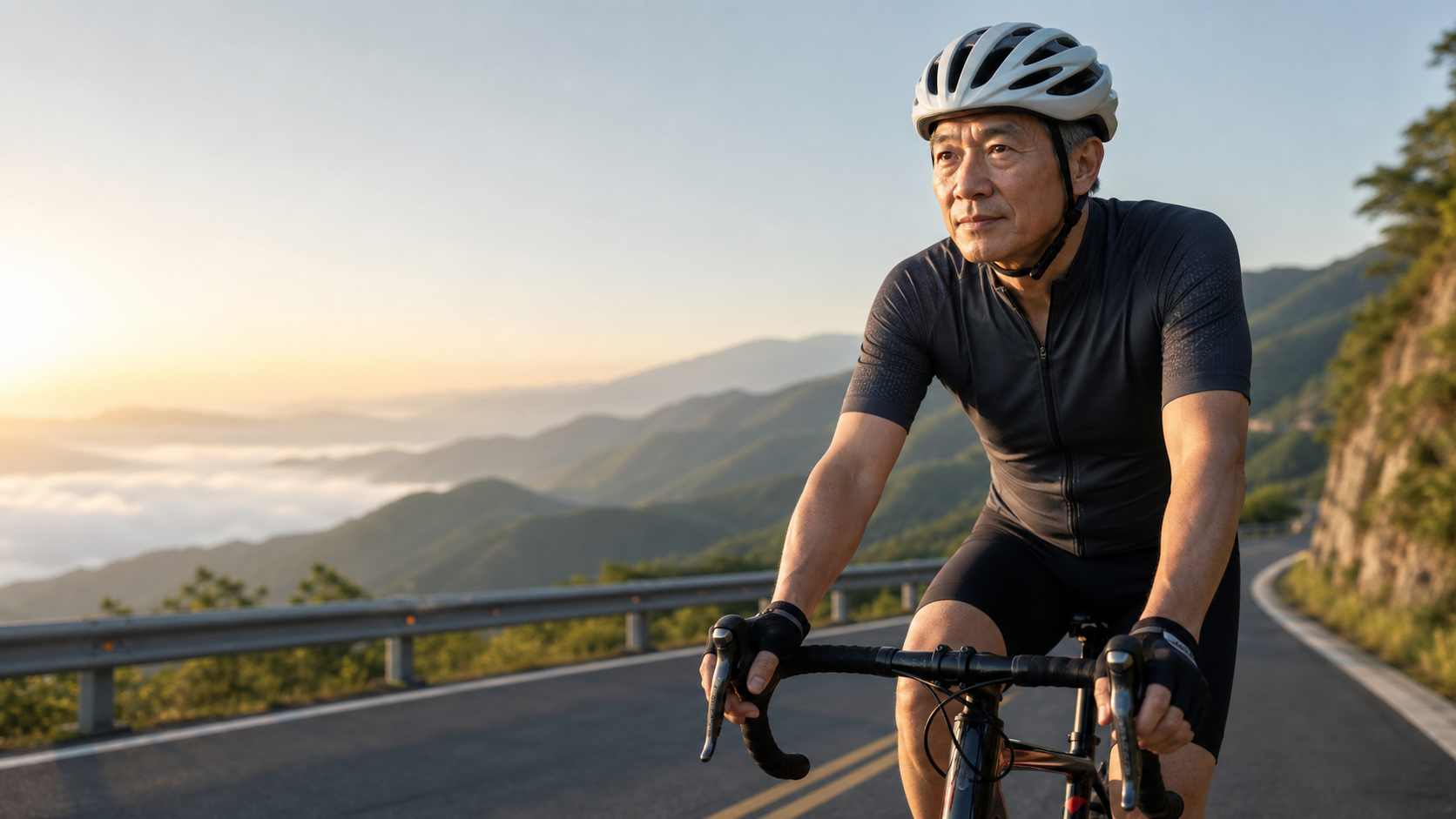
Starting with a Question from a Student
Having led cycling groups for over a decade, the question I’ve been asked most often in recent years is no longer “Coach, how do I ride faster?” but rather a quieter, heavier one.
The one that stuck with me most was from a 58-year-old student, let’s call him Brother Chen. Before retiring, he was an engineer, and he kept himself in decent shape, riding Yangmingshan with his cycling club every weekend. Once, during a rest stop, he pulled me aside and whispered, “Coach, my dad has been forgetting things left and right for the past two years. The doctor says it’s early-stage dementia. Lately, I’ve also been struggling to find the right words—words on the tip of my tongue. Am I starting too? Does exercise… really help? Or is it just self-comfort?”
That afternoon, I didn’t give him an easy answer, because this question deserves a serious one. Cognitive aging and dementia are among the deepest fears for middle-aged and older adults in Taiwan—it’s not as sudden as a heart attack, but it’s a process of slowly losing yourself and your dignity. And exercise happens to be one of the few lifestyle factors we can intervene on with some of the strongest evidence, and something almost everyone can do.
In this article, I want to thoroughly organize what I’ve accumulated over the years from reading literature, coaching students, and collaborating with the medical side: Can exercise actually reduce dementia risk? What does it do inside the brain? And most importantly—what can you actually do after work today? I’ll try to explain it like I’m chatting with you at a rest stop, not bombarding you with numbers to scare you.
Let me start with the conclusion: Exercise is not a miracle cure, and it can’t guarantee you won’t get dementia. But it’s currently the most scientifically reliable, side-effect-minimal way to “maintain your brain,” with a bunch of bonus benefits (cardiovascular, metabolic, mood, sleep) thrown in. It’s never too late to start today.
I also want to be upfront: This article won’t give you a “guaranteed no-dementia secret recipe,” because that doesn’t exist. The causes of dementia are complex, involving genetics, age, chronic diseases, environment, and many factors we can’t fully control. But among these, exercise is one of the few that “you call the shots on.” What I hope you take away after reading isn’t fear, but a solid sense of control—that today, I can already do something for my brain ten years from now.
Concepts and Scientific Foundations: What Exercise Does to the Brain
Cognitive Aging Isn’t Overnight
Many people think dementia “starts suddenly one day,” but that’s not the case. Pathological changes in the brain often begin quietly 10 to 20 years before symptoms actually appear. This is actually good news within bad news—because it means we have a long “intervention window.” If you start maintaining your brain at 40 or 50, the benefits will be far greater than waiting until symptoms show up.
The aging of cognitive function mainly involves several aspects:
- Memory: Especially episodic memory governed by the hippocampus, i.e., recent memories like “what did I have for dinner yesterday.”
- Executive function: Planning, task switching, impulse inhibition, working memory—these rely mainly on the prefrontal cortex.
- Processing speed: Slower reactions, slower arithmetic.
- Attention: Easily distracted, unable to multitask.
The hippocampus plays a particularly critical role. It’s not just the memory center; it’s also one of the few brain regions that continues to generate new neurons in adulthood. And its volume slowly shrinks at a rate of about 1% to 2% per year with age—which is why memory declines after middle age.
How Exercise Reverses This Process
Here’s some evidence that got me excited the first time I read it. A randomized controlled trial in healthy older adults showed that regular aerobic exercise can reverse hippocampal volume loss, accompanied by improvements in memory function (research by Erickson et al., see references at the end). In other words, exercise doesn’t just “slow down” brain shrinkage—in some cases, it can even “grow it back a bit.”
There are several key mechanisms behind this, which I’ll explain in plain language like I do with my students:
First, exercise promotes the secretion of BDNF (Brain-Derived Neurotrophic Factor). You can think of BDNF as “fertilizer for the brain.” During exercise, BDNF levels in the blood rise, and studies have found that increases in hippocampal volume are positively correlated with increases in serum BDNF levels. BDNF is considered the leading candidate factor stimulating neurogenesis. Simply put—when you do aerobic exercise, you’re fertilizing your brain.
Second, exercise improves cerebral blood flow and vascular health. The brain is a major oxygen consumer, accounting for about 20% of the body’s total oxygen consumption. Aerobic exercise promotes angiogenesis and improves endothelial function, giving the brain a more adequate supply of oxygen and nutrients. Many cases of dementia are actually “vascular” or mixed-type, so taking care of your blood vessels is itself a form of dementia prevention.
Third, exercise fights inflammation and improves metabolism. Chronic low-grade inflammation and insulin resistance are both factors that accelerate brain aging. Some people even jokingly call Alzheimer’s “Type 3 diabetes,” emphasizing its link to metabolism. Exercise improves insulin sensitivity and lowers inflammatory markers, which reduces long-term damage to the brain at its root.
Fourth, exercise enhances “cognitive reserve.” This is a very important concept. Cognitive reserve is like the brain’s “savings”—given the same pathological changes, people with more reserve can hold out longer before symptoms appear. Exercise (especially activities requiring coordination, judgment, and adaptability, like riding on real roads) trains both body and brain simultaneously, accumulating this reserve. I often use this analogy: Cognitive reserve is like your climbing reserve—on the same steep slope, someone who trains regularly pedals with ease, while someone who crammed at the last minute blows up halfway. The brain is the same; if you save up regularly, when pathology actually attacks, you last longer and symptoms appear later.
Fifth, exercise improves sleep and mood. This one is often overlooked but is crucial. During deep sleep, the brain’s “glymphatic system” accelerates the clearance of metabolic waste accumulated during the day, including abnormal proteins linked to dementia. Regular exercise deepens sleep and shortens the time it takes to fall asleep; at the same time, exercise is a powerful tool against depression and anxiety. And long-term depression itself is one of the risk factors for dementia. So you’ll see—the benefits of exercise are interconnected: sleep well, feel good, and the brain naturally cleans itself thoroughly and repairs completely.
I often draw these five mechanisms as a diagram for my students to help them understand: Exercise isn’t beneficial to the brain in just “one spot”—it works on five fronts simultaneously: blood vessels, neural nourishment, metabolism, sleep, and psychology. That’s why its benefits are so hard to replace with a single drug.
How Strong Is the Evidence Really
I especially want to emphasize the level of evidence, because there are too many claims out there like “this supplement prevents dementia” that have weak evidence. Exercise is different.
In its 2019 guidelines, Risk Reduction of Cognitive Decline and Dementia, the World Health Organization (WHO) explicitly recommends: Adults with normal cognitive function should engage in physical activity to reduce the risk of cognitive decline, with the quality of evidence rated as “moderate” and the strength of recommendation as “strong.” For people with mild cognitive impairment (MCI), exercise “may” also be recommended to reduce the risk of cognitive decline. In an official guideline full of conservative language, getting a “strong recommendation” shows just how much standing exercise has.
Even more encouraging is the research on dosage. A study cited by the Johns Hopkins Bloomberg School of Public Health found that, compared to zero minutes per week, just 35 minutes per week of moderate-to-vigorous physical activity was associated with an approximately 41% lower risk of dementia over an average follow-up of four years; and for those doing 140 minutes or more per week, the risk was reduced by as much as approximately 69% (see references at the end).
I want to remind you how to read these numbers: This is a “correlation” from observational studies, not guaranteed causation, and there’s also healthy-user bias (people who are already healthier are the ones who can get moving). But the direction it points to is very clear, and the threshold is so low it’s touching—35 minutes a week equals an average of 5 minutes a day. I love using this message to encourage those older adults who “don’t exercise at all”: You don’t need to become a triathlete overnight; just going from zero to moving at all brings substantial benefits.
Practical Methods: Turning Evidence into a Weekly Prescription
Okay, I’ve covered the “why.” Next is what I’m most eager to share—the “how.” I’ll give you a complete “anti-cognitive-aging exercise prescription” with four main pillars.
Overview of the Four Pillars
Doing only aerobic exercise is effective, but it’s not the optimal solution. Most international exercise recommendations for brain health point toward a “diverse combination.” I’ve organized this into four pillars:
| Pillar | Primary Function | Recommended Weekly Dose | Common Practices in Taiwan |
|---|---|---|---|
| Aerobic Exercise | Promotes BDNF, improves cerebral blood flow, protects blood vessels | 150–300 minutes of moderate intensity | Cycling, brisk walking, riverside jogging, spinning |
| Resistance Training | Maintains muscle, improves metabolism, supports independent function | 2–3 full-body sessions per week | Squats, resistance bands, machines, bodyweight |
| Coordination/Balance/Cognitive Challenges | Enhances cognitive reserve, prevents falls | 2–3 times per week | Tai Chi, yoga, table tennis, dancing, outdoor riding |
| Daily Physical Activity | Reduces the harm of prolonged sitting | Accumulate daily, minimize sitting | Walking to shop, climbing stairs, walking the dog |
All four pillars are indispensable. I often tell my trainees: Aerobics protects blood vessels, weights protect muscles, coordination protects the brain, and daily activity protects the foundation. Doing all four together is the complete approach to brain maintenance.
How to Gauge Aerobic Exercise Intensity
Aerobics is the core, but intensity is key. Too easy and the benefits diminish; too hard and you can’t sustain it, and you risk injury. I usually use both heart rate and the “talk test” together.
A rough estimate of maximum heart rate can start with “220 minus age” (this is only a very rough estimate—individual variation is large; those with heart rate monitors should rely on actual measurements). Here’s the intensity zone comparison I commonly use:
| Intensity | % of Max Heart Rate | Perceived Effort (Talk Test) | Suitable For |
|---|---|---|---|
| Light | 50–60% | Can sing easily | Beginners, recovery days, seniors just starting |
| Moderate | 60–70% | Can talk but not sing | The main zone for most people |
| Moderate-High | 70–80% | Speech becomes broken, somewhat breathless | Those with a foundation, advanced stimulation |
| High-Intensity Intervals | 80–90% | Barely able to speak full sentences | Those with good fitness, cleared by a physician |
Take 58-year-old Mr. Chen as an example: his estimated max heart rate is about 162 bpm, and his moderate zone falls roughly between 97 and 113 bpm. This is why I ask him not to constantly watch his power output while riding—as long as he maintains the feeling of “can chat but can’t sing,” he’s on the right track.
Three Sample Training Plans for Different Starting Points
The three plans below are weekly examples I actually give to trainees at different levels. Treat them as frameworks, not commandments—if you’re feeling unwell, the weather is too hot, or you slept poorly, adjustments are fine.
Plan A: Complete Beginner / Sedentary Senior (Focus on Getting Moving)
| Day | Content | Time/Intensity |
|---|---|---|
| Mon | Brisk walking or easy cycling | 20 minutes・Light |
| Tue | Full-body resistance with resistance bands | 6–8 exercises, 12 reps x 2 sets each |
| Wed | Rest or a stroll | Casual |
| Thu | Brisk walking or easy cycling | 20 minutes・Light to moderate |
| Fri | Chair exercises + balance training | 15 minutes |
| Sat | Riverside cycling with family | 30 minutes・Light |
| Sun | Complete rest | — |
Plan B: Generally Healthy Middle-Aged Adult (Already Has Exercise Habits)
| Day | Content | Time/Intensity |
|---|---|---|
| Mon | Resistance training (lower body focus) | 40 minutes |
| Tue | Cycling or jogging | 45 minutes・Moderate |
| Wed | Yoga or Tai Chi | 40 minutes |
| Thu | Resistance training (upper body + core) | 40 minutes |
| Fri | Rest or a stroll | Casual |
| Sat | Long-distance cycling (outdoor route) | 60–90 minutes・Moderate |
| Sun | Table tennis/badminton/dancing (social sport) | 60 minutes |
Plan C: Good Fitness, Actively Aiming to Counter Aging (Advanced)
| Day | Content | Time/Intensity |
|---|---|---|
| Mon | Resistance training (full-body compound movements) | 50 minutes |
| Tue | Aerobic intervals (hill cycling or spinning) | 40 minutes・Includes moderate-high intensity segments |
| Wed | Recovery ride + coordination training | 40 minutes |
| Thu | Resistance training | 50 minutes |
| Fri | Moderate-intensity long ride | 90 minutes |
| Sat | Cognitive-challenge sports (ball sports/dance/climbing) | 60 minutes |
| Sun | Rest or easy stroll | Casual |
Note that high-intensity intervals only appear in Plan C, and I wrote “cleared by a physician” in parentheses. High intensity isn’t off-limits for people with underlying cardiovascular conditions—it’s just that assessment first and gradual progression are mandatory.
Why I Especially Recommend Cycling
This article is categorized under cycling science, so of course I’ll put in a good word for cycling—and I have reasons.
First, cycling is low-impact aerobic exercise, friendly to the knees and hips, making it well-suited for middle-aged and older adults, heavier individuals, or those with joint degeneration to do for extended periods. Many seniors can’t run, but they can ride for a long time.
Second, outdoor riding itself is cognitive training. You have to read road conditions, anticipate oncoming traffic, plan routes, and control steering and braking—this involves far more cognitive engagement than a stationary trainer or treadmill. It’s like training both aerobics and the brain in one go—two birds with one stone.
Third, cycling makes it easy to maintain social connections. Taiwan has a strong cycling club culture. Riding with a group and chatting at rest stops—social connection itself is a protective factor against dementia. Loneliness and social isolation are risk factors for dementia, and exercise communities directly address that.
Of course, cycling has its own homework: safety first, wear a helmet, choose appropriate routes, and guard against heatstroke in hot weather. I’ll cover these later.
Comparison of “Brain Benefits” Across Exercise Types
Many trainees ask me: “Coach, so which exercise is actually best for the brain?” My answer is: The best exercise is the one you’re willing to stick with long-term. But if we’re comparing, I’ll give you a concept with the table below. This is a relative comparison I’ve compiled from literature trends and my coaching experience—the values are conceptual star ratings, not precise measurements.
| Exercise Type | Aerobic Benefit | Strength Benefit | Cognitive Challenge | Joint Friendliness | Sustainability |
|---|---|---|---|---|---|
| Outdoor Cycling | ★★★★ | ★★ | ★★★★ | ★★★★★ | ★★★★ |
| Indoor Spinning/Trainer | ★★★★★ | ★★ | ★★ | ★★★★★ | ★★★ |
| Brisk Walking | ★★★ | ★★ | ★★ | ★★★★ | ★★★★★ |
| Jogging | ★★★★★ | ★★★ | ★★ | ★★ | ★★★ |
| Resistance Training | ★★ | ★★★★★ | ★★ | ★★★ | ★★★★ |
| Tai Chi/Yoga | ★★ | ★★★ | ★★★★ | ★★★★ | ★★★★ |
| Table Tennis/Badminton/Dance | ★★★ | ★★ | ★★★★★ | ★★★ | ★★★★ |
You’ll notice that activities requiring lots of judgment, adaptation, and social interaction (like outdoor cycling, ball sports, and dance) stand out particularly in the “Cognitive Challenge” column. This is exactly the point I keep emphasizing: purely mechanical, repetitive exercise is effective, but adding cognitive and social elements provides more comprehensive stimulation for the brain. This is also why I encourage seniors not to just walk on a treadmill, but to get outside and move with others.
A Real Transformation of an Auntie
Let me share another case. I have a sixty-five-year-old student, Auntie Lin. After retirement, she barely left the house. Her daughter, worried about her growing silence and worsening memory, brought her to me. Honestly, at first, she was tired after just a 15-minute walk and was terrified of cycling.
I didn’t rush. In the first month, we only did “accompanied walks,” 15 to 20 minutes each time, along with a few simple sit-to-stand and resistance band exercises. In the second month, she started riding on the back of a tandem bike along the riverside, and then progressed to riding her own lightweight bike for 30 minutes each session. In the third month, I introduced her to a senior folk dance class in the community—that changed her even more than the exercise itself, because she regained friends and something to look forward to each week.
Six months later, her daughter told me that Auntie talked more, slept better, and was even sharper when making change at the market. I have to be honest: this isn’t rigorous scientific measurement, and I can’t claim that “exercise cured her cognition.” But what I saw was a living person who, by becoming active and reconnecting, lit up again. This kind of transformation is the true meaning behind all the mechanisms and data.
Common Mistakes and Corrections
Having coached students for so many years, I’ve seen countless well-intentioned but misguided approaches. Here are the most common ones—check if any apply to you.
Mistake 1: Only Doing Aerobics, No Strength Training
Many older adults think, “Walking is enough; lifting weights is for young people.” This is a regrettable mindset. Muscle loss (sarcopenia) itself is highly correlated with cognitive decline, disability, and falls. Moreover, resistance training has independent benefits for executive function.
Correction: Start with the simplest things. Resistance bands, water bottles filled with water, and sit-to-stand exercises (getting up and sitting down from a chair) all count as resistance training. Aim for 2 to 3 times per week, covering major muscle groups. You don’t need a gym to do this.
Mistake 2: Intensity Too Low for Too Long, No Adaptation Stimulus
The other extreme is “as long as I’m moving, it’s fine,” but always staying at an intensity where you can walk and talk on the phone at the same time. The body is smart—without sufficient stimulus, it won’t improve, and the benefits to the brain are diminished.
Correction: At least part of the time should be in the moderate zone where “talking makes you breathless, and you can’t sing.” You can progress gradually, extending the moderate time every two weeks, or adding short hill climbs.
Mistake 3: Short-Lived Enthusiasm, Unable to Sustain
This is what I consider the most fatal mistake. Preventing dementia relies on “decades of accumulation,” not “three months of intense training.” Many people start too hard, get injured or burned out within a month, and quit—which is worse than someone who steadily exercises 3 times a week for ten years.
Correction: Lower the bar to “so low that failure is impossible.” At the beginning, it’s better to do less and build the habit first. Tying exercise into your life (commuting by bike, walking to the market, scheduling rides with friends) is far more reliable than relying on willpower alone. Remember that number—35 minutes a week—you really don’t need much to start.
Mistake 4: Ignoring Sleep, Diet, and Chronic Disease Management
Exercise is important, but it’s not an island. Chronic sleep deprivation, uncontrolled blood sugar and blood pressure, and a poor diet can cancel out much of the effort you put into exercise. Brain health is the result of your overall lifestyle.
Correction: Treat exercise as a fulcrum to drive overall change. Aim for around 7 hours of sleep, have your blood pressure, blood sugar, and cholesterol regularly monitored by your doctor, and shift your diet toward a Mediterranean style (more vegetables and fruits, whole foods, good fats, less refined sugar). These work synergistically with exercise, not independently.
Mistake 5: Treating Exercise as Medicine, Delaying Medical Care
I want to address this very seriously. If you or a family member are already experiencing noticeable memory issues, judgment problems, wandering, or personality changes, please seek medical attention—don’t think “more exercise will fix it.” Exercise is for prevention and support, not treatment. Taiwan’s National Health Insurance offers excellent access to care; neurology departments, memory clinics, and dementia shared care centers are all available resources.
Correction: Prevention is prevention, symptoms are medical. Run both paths in parallel; don’t let one replace the other. Seeking evaluation earlier often buys more time and resources for intervention, which benefits the whole family.
Practical Tips for Taiwan
After all this science, let’s ground it in the land we live on.
Weather and Heatstroke. Taiwan’s summers are humid and hot. I’ve seen too many people insist on cycling at noon and end up with heatstroke or dehydration. Anti-aging is a long-term project; don’t wreck yourself for one day’s training. In summer, move exercise to early morning or evening, hydrate continuously, and stop immediately if you feel dizzy, nauseous, or stop sweating. Drinking about 500 to 800 ml of water per hour is a rough guideline; adjust based on how much you sweat. In winter, be aware that blood pressure can spike in the cold early morning—older adults especially shouldn’t head out to ride hard before dawn. It’s safer to wait until the sun is up and you’re properly warmed up. Taiwan’s climate varies greatly across the four seasons; the smart approach is to “adapt to the weather,” not fight it.
Eating Out and Diet. Eating out in Taiwan is convenient, but refined carbohydrates and sodium tend to be high. This is unfriendly to blood vessels and metabolism, indirectly harming the brain. Small tricks: swap in an extra serving of blanched vegetables with your bento, replace bread with whole-food starches, and cut sugary drinks in half. You don’t need to do it all at once—change gradually.
Choosing a Venue. Taiwan has a great exercise environment: riverside bike paths in every city are relatively safe, parks have simple fitness equipment, and community activity centers often host tai chi or folk dance classes. For older adults looking to train coordination and social connection, community exercise classes are often more suitable and sustainable than expensive gyms.
Medical Care and Resources. Make good use of the NHI. Annual checkups keep an eye on blood pressure, blood sugar, and cholesterol; if you have concerns, get evaluated at a neurology or memory clinic; and various dementia service sites and shared care centers offer resources across the country. Exercise coaches are not doctors—I’ve always made this boundary very clear.
A Simple Comparison for Brain-Friendly Eating
Exercise and diet are two sides of the same coin. I’m often asked by students, “So what should I eat?” There’s no magic food; the key is shifting the overall pattern toward a Mediterranean or DASH-style diet. Here’s a simple substitution chart I give my students, focused on “what’s doable,” not perfection. These are general dietary principles; for those with specific conditions (like kidney disease or diabetes), portion sizes should be adjusted individually by a dietitian.
| Common Taiwanese Eating Habits | More Brain-Friendly Substitution | Reason |
|---|---|---|
| Sugary drinks, sweetened coffee | Unsweetened tea, black coffee, plain water | Reduces refined sugar and blood sugar spikes |
| White rice, white bread as staples | Partially swap for brown rice, sweet potato, whole wheat | Stabilizes blood sugar, more fiber |
| Fried foods, processed meats | Steamed or boiled fish and soy products | Better fats, reduces inflammatory load |
| Insufficient vegetable intake | Add a serving of dark leafy greens to each meal | Antioxidants, protects blood vessels |
| Rarely eats nuts | A small handful of unsalted nuts as a snack | Good fats and vitamin E |
| Rarely eats deep-sea fish | Eat fish 2 to 3 times a week | Omega-3 benefits nerves |
I want to emphasize: diet is a “long-term pattern” of accumulation—it’s not that one meal eaten right earns you points, or one meal eaten wrong ruins everything. Adjusting gradually with a substitution mindset is more sustainable than cutting out all your favorite foods at once. And—after exercise, your body’s food choices often naturally improve; that’s one of the hidden benefits of exercise.
Actionable Advice for Different Readers
Finally, let me condense the whole article into actions you can take immediately, based on your situation.
If You’re Completely Inactive
Don’t overthink it. Starting tomorrow, just walk 10 minutes a day. Focus first on “building the habit of getting out and moving,” not intensity. Remember that number—35 minutes a week already makes a difference; you’re closer to the threshold than you think. After two weeks, once your body adapts, gradually add more.
If You Already Have an Exercise Habit
Check whether all four pillars are covered. Many aerobic enthusiasts lack resistance training, and many lifting enthusiasts lack coordination and cardio. Fill in the missing piece, and the benefits become more complete. Also try adding a “cognitive challenge” to your exercise—riding outdoors, learning a new sport, or moving with others.
If You’re a Caregiver Planning for an Older Adult
Use “safety, social connection, and sustainability” as your principles. Low-impact cycling or brisk walking, community tai chi or dance classes, and exercising with company will last longer than solitary grinding. At the same time, take care of sleep, diet, blood pressure/blood sugar/cholesterol control, and regular medical visits. If cognitive symptoms are already present, get an evaluation first; treat exercise as a supplement, not a replacement.
If You Have a Chronic Condition
For those with diabetes, hypertension, heart disease, or joint issues, exercise is equally beneficial—perhaps even more necessary—but the intensity and type must be individualized; discuss it with your primary care physician first. Don’t jump into high-intensity interval training on your own. Progress gradually, monitor regularly, and do it steadily—that matters more than anything.
The Questions Students Ask Me Most Often
Over the years, I’ve been asked these countless times. Let me pick the most frequent—and most misunderstood—questions and address them all at once.
Q1: I’m already in my sixties. Is it too late to start exercising now?
It’s not too late. In the hippocampal volume study mentioned earlier, the participants were precisely older adults, and their hippocampi still grew and memory still improved after exercise. Brain plasticity lasts a lifetime—it just happens a little slower. I’ve worked with seniors who only started riding regularly in their seventies, and I still saw positive changes in their energy, sleep, and mood. It’s never too late—this statement holds especially true for the brain.
Q2: Do those “brain-boosting” supplements and brain-training game apps actually work?
My stance is quite conservative. Evidence that any single supplement can prevent dementia is generally weak, so don’t pin your hopes on them. As for brain games, they mostly just make you “better at playing that game”—evidence that they broadly transfer to everyday cognition is limited. In comparison, the evidence for exercise is far stronger and comes with whole-body benefits. Rather than spending money on a pile of supplements, spend it on a good pair of walking shoes or a safe bicycle. Of course, if a balanced diet truly leaves you deficient in certain nutrients, supplementation is still warranted—but that should be assessed individually by a physician or dietitian.
Q3: Does exercise only count if it’s exhausting and makes you sweat a lot?
No. Remember that figure: “even 35 minutes a week makes a difference.” There should be some intensity (getting into the breathless moderate zone is better), but it’s absolutely not a case of the more exhausted, the better. Overtraining only increases injury risk and raises stress hormones—the cost outweighs the benefit. Steady, sustainable, and progressive beats occasional all-out efforts every time.
Q4: If I have high blood pressure or heart disease, can I still exercise?
In most cases, not only can you, but you really should—but the type and intensity must be individualized and discussed with your primary physician first. Typically, you’d start at low intensity and progress gradually, avoiding sudden high-intensity sprints and breath-holding exertion. Monitor your blood pressure regularly, take your medication on schedule, and pay attention to your body’s signals during exercise (stop and seek medical attention if you feel chest tightness, unusual breathlessness, or dizziness). I can’t and shouldn’t give you a specific prescription here—please go back to your medical team.
Q5: What time of day is best for exercise?
The best time is the time you can consistently stick to. Some people have energy in the morning; others only have time after work. In Taiwan’s summers, I’d recommend avoiding the intense midday heat—early morning or evening is safer. As for “is morning exercise or evening exercise better for the brain,” there’s currently no evidence strong enough to warrant changing your routine over it—consistency and sustainability matter far more than the time of day.
Conclusion: Treat Your Brain Like a Route You’ll Ride for Life
Back to that afternoon at the rest stop. I later said to Brother Chen: “You can’t guarantee you’ll never end up on the same path as your father—that’s the reality. But you’re holding a very powerful tool, and you’re already using it. What we can do is ride steadily—one year, five years, ten years down the road.”
More than three years have passed, and Brother Chen is still with the cycling group. He’s not the fastest rider, but he gets out steadily every week, added strength training, adjusted his diet, and—most importantly—he’s no longer so anxious, because he knows he’s doing the right things for his brain.
Exercise against cognitive aging is not a sprint; it’s an ultra-long-distance ride. There are no magical shortcuts, but every time you choose to get moving, you’re depositing cognitive capital for your future self. The barrier to entry is low, the returns are high, and the best time to start is today. The second-best time is right now.
Treat your brain like a route you’ll ride for a lifetime and take good care of it. You don’t have to ride the fastest—you just have to be willing to stay on the road and ride it well. See you out there, and I look forward to us still remembering each other years from now.
This article is educational content and does not replace individual diagnosis and treatment advice from a physician, physical therapist, or dietitian. If you or a family member have already shown noticeable changes in memory, judgment, or personality, please seek medical evaluation as soon as possible.
References
- World Health Organization (WHO) “Risk Reduction of Cognitive Decline and Dementia” guidelines: https://www.who.int/publications-detail-redirect/risk-reduction-of-cognitive-decline-and-dementia
- Full text of WHO guidelines (NCBI Bookshelf): https://www.ncbi.nlm.nih.gov/books/NBK542796/
- Study on small amounts of moderate-to-vigorous physical activity associated with big reductions in dementia risk (Johns Hopkins Bloomberg School of Public Health): https://publichealth.jhu.edu/2025/small-amounts-of-moderate-to-vigorous-physical-activity-are-associated-with-big-reductions-in-dementia-risk
- Exercise training increases hippocampal volume and improves memory (Erickson et al., PMC): https://pmc.ncbi.nlm.nih.gov/articles/PMC3041121/
- Meta-analysis of randomized controlled trials on aerobic exercise effects on hippocampal volume in healthy older adults (PMC): https://pmc.ncbi.nlm.nih.gov/articles/PMC10828456/
Related Reading
- How Exercise Protects the Brain: A Complete Exercise Prescription from Evidence and Mechanisms to Dementia Prevention
- Exercise and Depression: A Natural Antidepressant Prescription—Effects, Mechanisms, and How to Dose It
- How Cycling Enhances Cognitive Function: Research on Aerobic Exercise Increasing Hippocampal Volume
- Exercise Science for Older Adults: Sarcopenia, Frailty, and Exercise Prescriptions—A Practical Guide to Resistance Training, Balance, and Fall Prevention
靠單車減肥35公斤 心得分享與整理
7 年前
Never Stop 西進武嶺 前後雙機 完整全程錄影 訓練台 實境
8 年前
一日北高常見問題大集合 | 攻略 | 路線 | 訓練 | 補給 | 自行車 單車 | 一日雙城 | 雙塔 | TWB北高360 | 屁股痛
6 年前
大家都在開箱的...單車用藍芽對講耳機真的有幫助嗎? SENA BiKom 20 長距離旅遊 & 海鷗繞圈賽 實際體驗心得 / 公路車 / CT Yeh
9 個月前
摔車後補裝備: 好市多新款單車安全帽& Specialized Romin 北高整路屁股都不痛的坐墊 | 一千元居然有MIPS | CT Yeh | 公路車
4 年前
#公路車 #Fitting 靠人工智慧APP 幫你調整單車
6 年前
一日北高/長距離團騎 常見問題補充篇 / 組團或跟團的眉角 / 壯車友容易被瘦車友慢性拉爆 / 原來屁股痛可能是這個原因...? / 風場配速法 / 公路車 / CT Yeh
2 年前
一個測試有沒有認真練車的方法😂 #公路車
10 個月前