Exercise Addiction: The Dark Side of a Good Habit—When Discipline Becomes a Trap, How to Recognize and Loosen It
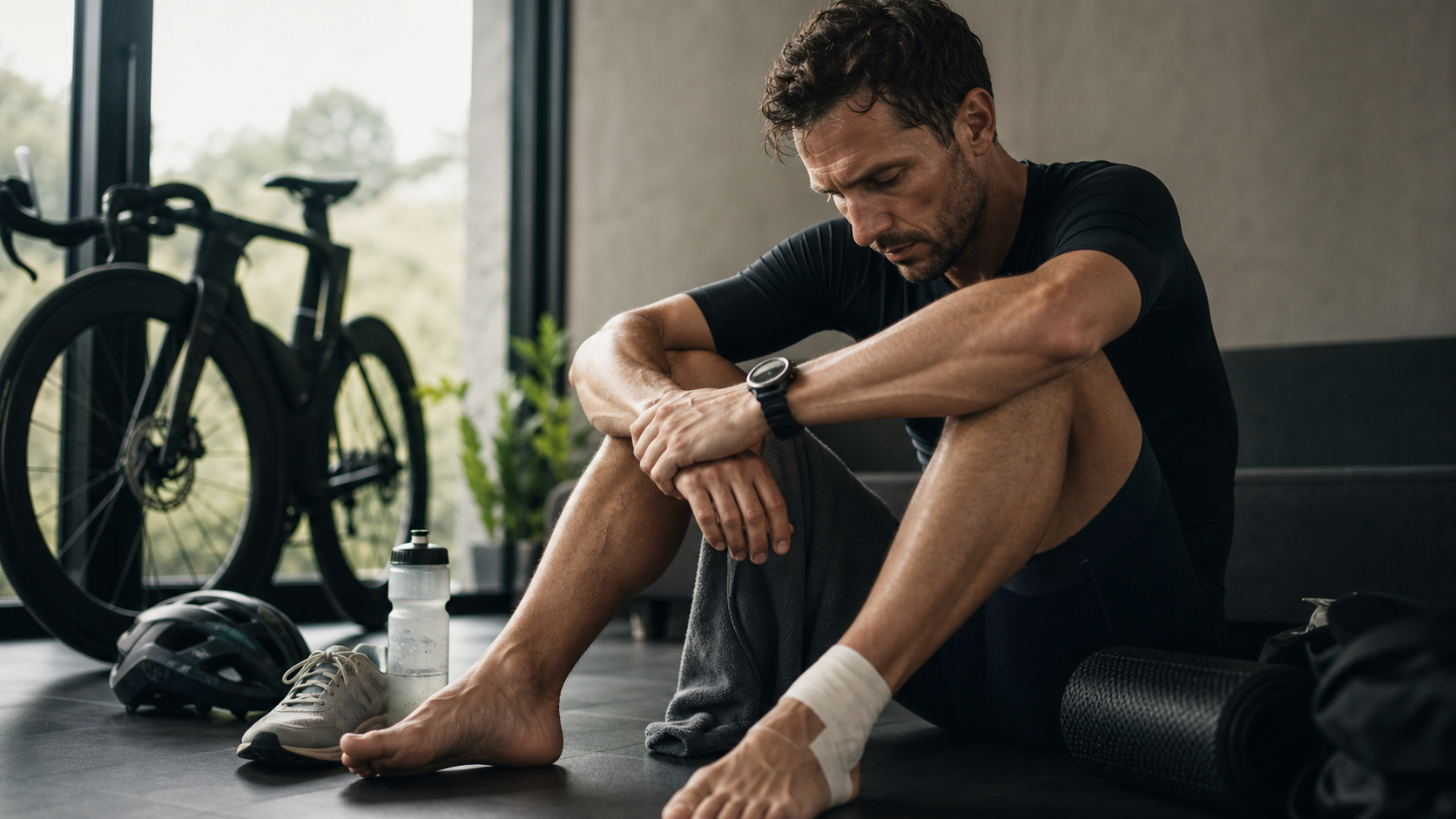
Opening: The Athlete Who Never Dared to Rest
I once coached an amateur triathlete—let’s call him A-Kai. Thirty-four years old, an engineer, with a long-term weekly training volume of fifteen to eighteen hours. The first time we sat down to talk, I asked him how he’d been sleeping lately and whether anything felt off physically. He rattled off three things: he’d been running with lateral ankle pain for six weeks; on two nights when he couldn’t complete his interval workout due to overtime at work, he “couldn’t sleep all night and felt like a total failure”; and—he hadn’t taken a single full rest day in 140 consecutive days.
What struck me most wasn’t the numbers, but the near-panic in his voice when he said, “If I don’t train today, I feel like I’m regressing, like I’m rotting.” In that moment, I knew clearly: I wasn’t dealing with someone who lacked discipline, but someone who was bound by it.
As a coach, I’ve spent years learning to appreciate discipline. But it’s also been these years that slowly taught me one thing: this good thing called exercise has a dark side. When “I want to move” becomes “I’m afraid not to move,” when rest shifts from reward to sin, when the body’s distress signals are crushed by sheer willpower—then we’re no longer talking about a healthy habit, but a behavioral pattern that can harm both mind and body. Sports science calls it “exercise addiction” or “exercise dependence.”
In this article, I want to use my perspective as a coach to help you understand three things: how to recognize exercise addiction, why it so often becomes entangled with eating disorders, and most importantly—how to find your way back to balance.
Conceptual Foundation: Exercise Addiction Is Not “Loving Exercise”
Let me start with a crucial distinction, because too many passionate cyclists and runners will see themselves in this and spiral into unnecessary anxiety.
Loving exercise is not the same as exercise addiction. A healthy exercise enthusiast treats exercise as “a part” of their life; an exercise addict turns exercise into “everything” in their life, in a way that causes other parts to crumble. The difference isn’t in “how much” you do, but in “how much control it has over you,” and “what happens when you’re forced to stop.”
Exercise addiction hasn’t yet been formally included in the Diagnostic and Statistical Manual of Mental Disorders (DSM), but the research community generally agrees it fits the diagnostic framework of “behavioral addiction.” Scholars commonly describe it using a set of six core features, which actually apply to all addictive behaviors:
- Salience: Exercise becomes the most important thing in life; everything else must make way for it.
- Mood modification: Exercise becomes the only outlet for escaping emotions and numbing anxiety.
- Tolerance: You need increasingly larger amounts to get the same satisfaction or sense of security.
- Withdrawal: When unable to exercise, you experience irritability, anxiety, guilt, insomnia, or anger.
- Conflict: Exercise causes friction with family, partners, or work, or sacrifices relationships and career.
- Relapse: You want to cut back but can’t; at the first opportunity, you return to extreme training patterns.
There’s also a set of ten clinical criteria that’s closer to practical diagnosis, including: continuously increasing training volume; negative emotions when stopping; inability to voluntarily reduce training; being preoccupied with exercise; using exercise as the sole coping mechanism; training through illness or injury; downplaying your training volume to others; sacrificing important relationships for it; continuing despite knowing it’s harmful; and intense guilt after missing a single session.
Please pay attention to the most critical one: training hard through injury or illness. This is the red line I care about most in practice. A healthy exerciser stops when it hurts and rests when sick; an addict convinces themselves that “resting is regression” and keeps going. A-Kai running for six weeks on an ankle injury is a textbook case.
Why Exercise Can Become “Addictive”
Physiologically, exercise does produce a sense of reward. After moderate-to-high-intensity exercise, the brain releases substances like endocannabinoids and endorphins, producing what’s known as the “runner’s high”—that light, elevated mood state. This is completely normal in itself and part of exercise’s benefits.
The problem arises when a person begins to “depend” on this feeling to regulate emotions and escape stress, when exercise becomes the only tool for managing anxiety and self-worth—then the reward circuit can be hijacked. At that point, rest no longer brings relaxation; it brings withdrawal-like unease. Exercise shifts from “I do it because it makes me happy” to “I do it so I don’t feel miserable.” That shift is the core of addiction.
“Motivation” Matters More Than “Behavior”
I often tell my athletes: to judge whether a habit is healthy, don’t look at “what you do,” but at “why you do it, and what happens when you don’t.” Two people could both train ten hours a week and be in completely different places.
The first person trains ten hours because they enjoy the process and have clear goals. When a family member gets sick or work explodes, they can cut their training in half without guilt and pick it back up once things settle. The second person trains ten hours because missing even one session makes them anxious enough to lose sleep; even with a sore knee, even missing their child’s birthday, they can’t stop. Same volume—one is the master, the other is the slave. That’s why I keep emphasizing that judging exercise addiction can never rely solely on surface numbers like training hours.
An Easily Confused Concept: Overtraining vs. Exercise Addiction
These two terms are often used interchangeably, but they’re actually different levels of the same issue. It’s important to distinguish them.
| Aspect | Overtraining | Exercise Addiction |
|---|---|---|
| Nature | Physiological: training volume exceeds recovery capacity | Psychological/behavioral: compulsive dependence on exercise |
| Core problem | Body can’t fully recover; performance declines | Inability to voluntarily control exercise behavior |
| Typical signs | Declining performance, elevated resting heart rate, persistent fatigue, frequent colds | Anxiety and guilt when stopping, training through injury, sacrificing life |
| Can reducing volume solve it? | Usually yes—rest and recovery suffice | Often no—“knows they should cut back but can’t” |
| Does it require psychological intervention? | Usually not | Often yes, especially when combined with eating disorders |
A person can have overtraining without addiction (e.g., a temporary bout of overzealousness, but they’re willing to cut back when reminded); or they can have both (addiction prevents them from stopping, which stacks up into overtraining over time). Addicts are often stuck in both the physiological and psychological pits at once—which is why simply telling them to “rest more” usually doesn’t work. Their problem isn’t a lack of understanding; it’s an inability to stop.
What the Data Says: Prevalence and the Link to Eating Disorders
I want to be honest here: prevalence figures for exercise addiction vary widely depending on the study population and measurement tools used, so please treat the numbers below as “reference ranges,” not definitive conclusions.
Based on multiple systematic reviews and meta-analyses, prevalence rates are roughly as follows:
| Population | Prevalence of exercise addiction risk (reference range) |
|---|---|
| General exercising population | Approximately 8% (ranging from about 3%–9% across studies) |
| Amateur competitive athletes | Approximately 5% |
| University students | Approximately 3%–6% |
| Amateur endurance athletes (e.g., marathoners, long-distance cyclists, triathletes) | Notably higher; some studies report 20%–30% or more |
Seeing that last row, you probably understand why I care so much about the endurance sports community. The culture of endurance sports itself tends to glorify “train more, endure pain, never rest.” In cycling and marathon communities, “consecutive riding days” and “zero rest days” are often worn as badges of honor. This atmosphere packages addictive tendencies as virtues, making them extremely hard for the person themselves—or those around them—to detect.
Exercise Addiction and Eating Disorders: Two Sides of the Same Undercurrent
This is the most important point this article wants to emphasize. Exercise addiction rarely exists alone; it is often tightly intertwined with eating disorders.
The association shown in research is quite clear. A meta-analysis of multiple studies found that among populations with a tendency toward eating disorders, the prevalence of exercise addiction is more than three and a half times higher than in populations without eating disorders. Another set of data is even more striking: among people scoring below the cut-off on eating pathology scales (meaning relatively healthy eating habits), about 20% had exercise addiction; but among those with possible eating disorders, that figure jumped to about 55%.
The academic community therefore roughly divides exercise addiction into two types:
- Primary exercise addiction: Exercise itself is the core of the addiction, and eating issues are not necessarily the main cause.
- Secondary exercise addiction: Excessive exercise is part of an eating disorder, used as a means of “compensating” for or “purging” calories and controlling weight.
Secondary type is particularly dangerous because it is often misread by outsiders as “this person is very hardworking and disciplined,” when in reality the underlying issue is a fear of losing control over body shape, weight, and eating. I have seen too many cases like this: a person isn’t “loving exercise,” but rather “cannot allow themselves to eat without exercising.” When exercise becomes an indulgence for eating, things have already gone off track.
A Local Context I Often Remind People About
Taiwan’s eating-out culture, combined with the overwhelming “body management” content on social media, can make this tendency easier to cultivate. I have had trainees who, because they ate a pork rib bento at lunch, forced themselves to add an extra hour of intervals in the evening to “burn it off.” Looking at a single instance, it’s nothing; but if every meal is followed by a “debt to be repaid” through exercise, this is no longer health management—it is emotional and dietary control carried out in the name of exercise. Eating does not require atonement, and exercise should not be punishment.
Taiwan’s summers are humid and hot, which actually adds another layer of risk. I have had trainees insist on going out to ride or run at noon in the height of summer because “I can’t break the streak today,” only to end up dehydrated or on the verge of heat exhaustion. When the obsession with “can’t stop” is strong enough to make someone ignore the heat and ignore their body’s distress signals, this numbness to safety signals is itself a microcosm of addictive tendency. A healthy exerciser will reschedule due to weather; an addict will take risks to maintain a consecutive streak.
The Body Sends Signals First
Beyond the psychological level, long-term excessive exercise without recovery will cause the body to protest through physiological signals. These signals appearing alone don’t indicate addiction, but if you have the psychological traits mentioned earlier and also experience several of the following, you should be very alert:
| Physiological/Performance Signal | What It May Indicate |
|---|---|
| Morning resting heart rate 5–10 bpm higher than usual | Body under excessive stress, insufficient recovery |
| Performance stagnates or declines; same pace feels harder and more tiring | Accumulated chronic fatigue, possible overtraining |
| Sleep worsens; exhausted but can’t sleep well | Chronically overactive sympathetic nervous system |
| Recurrent minor colds, slower wound healing | Immune function suppressed by chronic high stress |
| Irregular or absent menstrual cycles in women | Warning sign of long-term energy deficiency; seek medical attention |
| Low mood, irritability, loss of interest in previously enjoyed activities | Physical and mental exhaustion, possibly with co-occurring emotional distress |
I especially want you to use this table to “observe others.” Addicts often turn a blind eye to their own signals, but the coaches, teammates, and family members around them can often spot something wrong first. If someone around you is clearly declining in condition yet training harder and harder, this table can help you decide whether to reach out and express concern.
Practical Methods: How to Identify, How to Classify
Now that we’ve covered the concepts, let’s talk about what coaches should give you most—operational tools.
Self-Checklist: Ten Honest Questions
Please take two minutes and very honestly answer “yes” or “no” to each question. Don’t answer with “the answer you should give”—answer with “the real you.”
| Question | Yes / No |
|---|---|
| 1. Missing a training session gives me noticeable guilt or anxiety | |
| 2. I insist on training while injured, sick, or extremely fatigued | |
| 3. I have sacrificed important family, social, or work commitments for training | |
| 4. I need to train more and more to get the same sense of relief or satisfaction | |
| 5. When others advise me to rest, I get angry or find reasons to argue back | |
| 6. I often downplay or hide my actual training volume from others | |
| 7. Exercise is my only way to relieve stress or negative emotions | |
| 8. I use exercise to “offset” the food I eat | |
| 9. When I try to cut back or rest, I’ve attempted it but always fail | |
| 10. My mind is almost constantly occupied with the next workout, mileage, or data |
Interpretation (for self-awareness only, not a diagnosis): Checking 0–2 items mostly indicates healthy commitment; 3–4 items warrants vigilance and starting to make adjustments; 5 or more items strongly suggests seeking professional help (sports psychology, psychiatry or psychosomatic medicine, or a dietitian). Special note: if either question 2 or question 8 is “yes,” regardless of the total score, it is recommended to take it seriously.
Risk Classification and Corresponding Actions
| Level | Profile | Recommended Action |
|---|---|---|
| Green: Healthy commitment | Schedules rest days, stops when injured, other life areas remain intact | Maintain current status, conduct regular self-checks |
| Yellow: Overreaching tendency | Feels uneasy when resting, often ignores fatigue signals, sleep begins to be affected | Proactively schedule deload weeks, establish fixed rest days, find someone to keep you accountable |
| Orange: Clear dependence | Trains through injury, uses exercise to compensate for eating, relationships show cracks | Pause self-prescribed training plans, consult sports medicine or psychosomatic medicine, nutritional assessment |
| Red: Co-occurring signs of eating disorder | Extreme dieting, self-induced vomiting or laxative abuse, rapid weight loss, amenorrhea | Seek medical attention promptly, prioritize treating the eating disorder and physiological crisis |
I want to be very clear about the red row: if a female athlete experiences cessation of menstruation (continuous absence), this is your body screaming for help—it is absolutely not a point of pride for being “lean and fit.” It may involve long-term energy deficiency (what sports medicine calls the concept of “relative energy deficiency”), which can affect bone density, hormones, and cardiovascular health. In this situation, please don’t try to handle it alone—seek medical attention immediately. In Taiwan, you can start with a family medicine, gynecology, or sports medicine clinic; all are covered by National Health Insurance, and the threshold is lower than you might think.
Periodic Deload Schedule: Scheduling Rest In
Many trainees with addictive tendencies resist the word “rest” because in their minds, rest equals loss. So my approach has never been to tell them “don’t train,” but rather “treat deloading and recovery as part of the training plan and schedule it in together.” Rest is not punishment; it is a necessary component for making the body stronger.
Below is a four-week sample deload framework for the yellow-light group. The numbers are relative values—please adjust according to your individual situation and coach, and don’t treat it as a rigid prescription:
| Week | Training Volume (Relative to Baseline) | Focus | Rest Days |
|---|---|---|---|
| Week 1 | 100% | Normal training, but ensure 1 full rest day | At least 1 day |
| Week 2 | 80% | Reduce intensity but not frequency, prioritize sleep | At least 2 days |
| Week 3 | 60% | Significant volume reduction, add non-exercise relaxation activities | 2–3 days |
| Week 4 | 70% | Gradually ramp back up, reassess physical and mental state | At least 2 days |
The key here isn’t those percentages—it’s practicing the experience of “stopping without the world collapsing.” For those with addictive tendencies, the first time they take a full rest day and discover that they feel better the next day and their mood hasn’t fallen apart, that is often the starting point of loosening the grip.
Rebuilding a Healthy Relationship with Exercise: Three Concrete Practices
The reduced-volume plan addresses “behavior,” but the root of addiction lies in “relationship”—the relationship between you and exercise, and the relationship between you and yourself. I often give my athletes three small practices. They seem simple, but for those with addictive tendencies, they are not easy to do in practice—yet the effect is profound.
Practice One: One “pure enjoyment” workout per week. For this session, no data, no pace chasing, no goals. Slowly ride along a riverside path you love, or easily run a scenic route. Stop when tired, take photos when you want. The goal is to rediscover that “exercise is supposed to be fun.” Many addicts feel very uneasy doing this practice because there’s “no training effect,” but it’s precisely this unease that reveals how much you’ve instrumentalized exercise.
Practice Two: “Ritualize” your rest days. Don’t treat rest days as “empty days where you did nothing.” Instead, proactively arrange something you enjoy that’s unrelated to athletic performance—have a nice meal with family, watch a movie, sleep in, or grab coffee with friends. Make rest something you look forward to, not a punishment to be endured.
Practice Three: Write down “what’s the worst that happens if I don’t train today.” When you feel anxious about resting, write down that catastrophic thought in your mind, then rationally examine it. “If I don’t run today, will my fitness decline?” In reality, one day won’t. When you expose fear to the light, it often shrinks. This cognitive practice is a common technique in psychotherapy for treating anxiety. You can try it yourself first, but if you find it too difficult, that’s a good time to seek professional help.
The common spirit of these three practices is: gradually restore exercise from “must” to “choice.” When exercise becomes something you freely choose to do, rather than something driven by fear, you’re on the road to recovery.
Common Mistakes and Corrections
After all these years of coaching, I’ve identified several of the most common mistakes that tend to pull people deeper into the trap.
Mistake One: Treating “withdrawal anxiety” as a “signal that you need more exercise”
Many people feel restless and irritable after one rest day and instinctively interpret it as “see, I need to exercise,” so they train even harder the next day. Correction: This unease is actually a withdrawal reaction, not a genuine physical need to move. The right approach is to acknowledge it, observe it, and let it pass, rather than immediately trying to eliminate it with exercise. You can get through that anxiety with a walk, stretching, mindful breathing, or having a meal with friends.
Mistake Two: Using exercise to atone for every bite of food
This is the “eating penance” pattern mentioned earlier. Correction: Practice psychologically decoupling “eating” from “moving.” Food is fuel for the body and a pleasure of life, not a sin to be offset. If you find yourself mentally calculating “how long do I need to run to burn this off” after every meal, that’s a significant signal worth discussing with a nutritionist or mental health professional.
Mistake Three: Romanticizing pain
The endurance world loves to say “No pain, no gain.” Correction: You need to distinguish between “training soreness (normal adaptation)” and “injury pain (danger signal).” Joint or tendon pain lasting more than two weeks, pain that worsens with training, or pain that changes your movement patterns—these are not things to tough out with willpower. They’re reasons to stop and, if necessary, seek medical attention. Taiwan’s rehabilitation and sports medicine clinics are very well-developed. Dealing with issues early is far easier than waiting until you have a tear or a stress fracture.
Mistake Four: Isolating yourself and hiding the real situation
One characteristic of addiction is downplaying it to others. Correction: Find one or two people you trust, honestly tell them about your training volume and struggles, and give them the right to remind you when you cross the line. Loneliness feeds addiction; connection loosens its grip.
Mistake Five: Treating data as your only source of self-worth
The mileage, power, and heart rate variability on your watch were meant to be tools, but they often become the master instead. Correction: Regularly schedule “no-data days”—no watch, no apps. Just feel your body and enjoy the ride or run itself. If you find you absolutely cannot exercise without data, that in itself is a warning sign.
Actionable Advice for Readers at Different Levels
Everyone stands at a different point, so I’ve divided my advice into three types of readers.
If you’re an “actually still healthy, but want to prevent” exercise enthusiast
- Proactively schedule rest days: Treat at least one full rest day per week as a non-negotiable principle, written into your plan.
- Build non-exercise stress outlets: Don’t let exercise be your only emotional release. Cultivate one or two interests unrelated to physical performance.
- Be wary of social comparison: Less comparison of “consecutive riding days,” more listening to your own body’s signals.
- Regular self-checks: Do the ten-question check above every month or two, treating it like a health screening.
If you’re a “yellow light, starting to lose control” person
- Immediately introduce a deload week: Use the four-week framework above to force yourself to experience that “stopping is okay.”
- Find someone to hold you accountable: Tell your partner, friend, or coach your goals, and ask them to speak up directly when you cross the line.
- Address the emotional root: Ask yourself, “What am I actually running from?” Exercise addiction is often the surface; underneath, there’s usually anxiety, perfectionism, or a lack of self-worth.
- Prioritize sleep: Treat sleep as the number one “training.” Chronically sleeping poorly while training hard is pushing your body toward collapse.
If you’re “orange or red light,” or you know someone who is
- Seek professional help; don’t handle it alone: This is beyond what a coach or self-discipline can solve. Sports psychologists, psychosomatic medicine, psychiatry, and nutritionists are your teammates.
- Prioritize treating eating disorders: If it’s combined with dieting, self-induced vomiting, laxative abuse, rapid weight loss, or amenorrhea, these are medical priorities—seek medical attention promptly.
- In Taiwan, getting help is actually close: Family medicine, psychosomatic medicine, obstetrics/gynecology, rehabilitation, and sports medicine clinics are all covered by National Health Insurance. If your emotions are affecting daily life, you can also make good use of the mental health resources in your city or county.
- If you’re a supporter: Don’t blame them with “why are you so lacking in willpower” or “you’re being ridiculous,” and don’t praise their overtraining either. Use a tone of concern rather than criticism, and accompany them in finding professional help.
What Happened to A-Kai
Back to A-Kai from the beginning. We didn’t cut his training in half overnight—that would have been too terrifying for him and would only have caused backlash. What we did was first set a small goal he could accept: give himself one “legitimate rest day” per week, and on that day, no guilt allowed. I even had him text me to report, “I successfully rested today.”
The first two weeks were a struggle. In the third week, he said something to me that I’ve never forgotten: “Coach, I rested yesterday, and today’s ride was actually the smoothest I’ve had in three months.” After that, we slowly worked on the deeper issues—his anxiety about work and self-worth, and the fact that he was using training volume to prove “I’m a useful person.” As for his ankle injury, after he finally agreed to stop and dutifully went to the rehabilitation clinic, it was mostly healed within six weeks.
He still loves triathlon now, and his training volume isn’t even low, but the relationship has changed: exercise has returned to being “a part of his life” rather than “holding his entire life hostage.” That’s where I want to bring every reader.
Another Story: When Exercise Becomes a “License to Eat”
I want to share another case—heavier, but very important—to illustrate what secondary exercise addiction looks like.
Xiao-Ting (a pseudonym) was a very dedicated runner, 27 years old. When she first came to see me, she said she “wanted to run faster,” and her training was indeed very consistent. But after a few weeks, I noticed some details that felt off: after every workout she would anxiously ask, “Was that enough expenditure today?” Her lunches were often just a tiny bite, and she would share many “guilt-free” ultra-low-calorie recipes in her group chats. One time at a group run, she looked pale and was clearly exhausted. I asked her to stop and rest, but she insisted, “I ate too much today, I have to finish the run.”
At that moment, alarm bells went off in my head. Her exercise was no longer about getting faster—it was about “earning the right to eat.” Without exercising to a certain amount, she couldn’t forgive herself for eating. This is classic secondary addiction: exercise becomes a purging tool for an eating disorder.
In this situation, adjusting the training plan alone is completely insufficient—it may even be harmful, because the core of the problem lies in diet and psychology, not training. The first thing I did was share my observations with her honestly and without judgment, telling her this was beyond what I could handle as a coach, and that it wasn’t because she “wasn’t tough enough”—she needed a professional team. I helped connect her with a psychiatrist and a dietitian. Her recovery was not a straight line; there were relapses and struggles. But the key was that she was willing to seek help, and the people around her didn’t push her back with “you’re overthinking it.”
I’m telling this story so you know: if you see a pattern in yourself or a friend like “I don’t dare eat without exercising, using exercise to offset food, or having intense fear about body shape,” treat it as a health warning sign, not an inspirational story. This is not a willpower issue—it’s a condition that needs to be held gently and professionally.
FAQ
Q1: I exercise every day and feel restless if I skip a day. Am I addicted?
Not necessarily. Exercising daily and feeling a bit wistful when you miss a day is completely normal for many people who love exercise. The key is the degree and the cost: is that “restlessness” mild and relieved by other things, or is it intense enough to affect your sleep, make you train through injury, or sacrifice your life? If it’s just “a bit of nostalgia,” you’re probably fine; if it’s “anxiety that won’t let you stop,” that’s when you need to be alert. Doing an honest self-assessment with the ten-question checklist earlier will make it clearer.
Q2: Where exactly is the line between exercise addiction and self-discipline?
My favorite criterion is: Can you calmly set aside training for something more important? Disciplined people have flexibility—when family needs them, when they’re injured, or when work explodes, they can adjust, they can rest, and they won’t be drowned in guilt afterward. Addicted people lose that flexibility—they have to train no matter the cost, and they fall apart the moment they stop. Discipline enriches your life; addiction shrinks it smaller and smaller.
Q3: Won’t rest waste all the fitness I’ve worked so hard to build?
This is the most common myth and the one that most needs debunking. Appropriate rest and tapering won’t make you regress—on the contrary, it’s the necessary process through which your body converts training stimuli into progress. This is called “supercompensation.” What actually makes you regress is accumulated fatigue, injury, and the performance decline caused by overtraining. Resting when you should rest is part of getting stronger, not the beginning of getting weaker.
Q4: How can I help a friend who might have exercise addiction?
What you do matters more than what you say. Don’t accuse (“you’re being ridiculous”), don’t lecture, and definitely don’t praise their overtraining. Use a tone of concern rather than criticism, and specifically describe what you’ve observed that worries you (“I noticed you’ve been training even though you’re injured, and I’m a bit worried about you”). When they’re willing, accompany them to seek professional help. If there are signs of a co-occurring eating disorder, prioritize “seeing a doctor” over “convincing them to rest more.”
Q5: In Taiwan, which specialty should I see?
It depends on the main concern. For physical pain or injury, start with rehabilitation medicine or a sports medicine clinic. For menstrual irregularities or amenorrhea, see an OB-GYN. If it’s mainly emotional, anxiety, or an uncontrollable compulsion, see a psychiatrist. If there’s a co-occurring eating disorder, a psychiatrist plus a dietitian is the core combination. Most of these are covered by Taiwan’s National Health Insurance, and the threshold is lower than you think—going sooner is better than putting it off.
Conclusion: Let a Good Habit Stay a Good Habit
Exercise is one of the things I treasure most in life, and I won’t deny its goodness. But precisely because I treasure it, I want you to see its dark side clearly: any good habit, once it becomes a binding you can’t let go of, will turn around and hurt you.
The core of identifying exercise addiction has never been “how much you train,” but rather “whether you can stop, what happens when you stop, and whether exercise has begun to damage other parts of your life.” If it’s entangled with an eating disorder, be especially cautious, because that often involves deeper physical and mental health issues.
Finally, I want to say: Being willing to rest is what true strength looks like. Having the courage to stop when you should stop takes no less bravery than gritting your teeth through an ultramarathon. Give yourself that courage, and let exercise continue to be the good habit that brings you joy—not fear.
This article is educational content and cannot replace individual diagnosis and treatment advice from a physician, physical therapist, or dietitian. If you or someone around you shows signs of a co-occurring eating disorder, amenorrhea, rapid weight loss, or emotional distress, please seek professional medical help as soon as possible.
References
- A comparative meta-analysis of the prevalence of exercise addiction in adults with and without indicated eating disorders (PubMed): https://pubmed.ncbi.nlm.nih.gov/31894540/
- Exercise Addiction Prevalence and Correlates in the Absence of Eating Disorder Symptomology: A Systematic Review and Meta-analysis (PubMed): https://pubmed.ncbi.nlm.nih.gov/32496431/
- Prevalence and Correlates of Exercise Addiction in the Presence vs. Absence of Indicated Eating Disorders (PMC): https://www.ncbi.nlm.nih.gov/pmc/articles/PMC7739814/
- Prevalence and Association of Exercise Dependence and Eating Disorder Risk in Collegiate Student-Athletes (PMC): https://pmc.ncbi.nlm.nih.gov/articles/PMC11215719/
- Excessive Exercise—A Meta-Review (PMC): https://www.ncbi.nlm.nih.gov/pmc/articles/PMC7714788/
- Exercise addiction (Wikipedia, summary of diagnostic features): https://en.wikipedia.org/wiki/Exercise_addiction
Related Reading
- When Passion Becomes a Hostage: Identifying Exercise Addiction and Compulsive Exercise, the Entanglement with Eating Disorders, and a Practical Guide to Finding Balance
- 8 Warning Signs of Exercise Addiction: When Training Goes from Healthy to Compulsive
- Identifying and Recovering from Exercise Burnout: A Coach’s Guide to Reading Your Body’s Distress Signals
- When Exercise Becomes a Prison: On the Road to Eating Disorder Recovery, Is Exercise a Cure or a Poison?
一個測試有沒有認真練車的方法😂 #公路車
10 個月前
靠單車減肥35公斤 心得分享與整理
7 年前
一日北高/長距離團騎 常見問題補充篇 / 組團或跟團的眉角 / 壯車友容易被瘦車友慢性拉爆 / 原來屁股痛可能是這個原因...? / 風場配速法 / 公路車 / CT Yeh
2 年前
一日北高常見問題大集合 | 攻略 | 路線 | 訓練 | 補給 | 自行車 單車 | 一日雙城 | 雙塔 | TWB北高360 | 屁股痛
6 年前
西進武嶺 免費訓練分析服務 Intervals | 練不夠還是練過頭?你哪一種類型選手?AI模型告訴你! | 備戰神器 | 公路車 訓練 | CT Yeh
4 年前
CT 喇低賽) 單車 比賽總是沒照片? 攝影師的觀點大公開 姿勢就是力量! 請加速1.25倍收看
7 年前
#公路車 #Fitting 靠人工智慧APP 幫你調整單車
6 年前
把帶被我推爛,換新的防推爛款💪 #cycling #公路車 #曜越單車
2 年前