Caffeine Supplementation Guide: How to Get Dosage, Timing, and Sources Right? A Coach Walks You Through Drinking It Correctly
First, a Story from the Night Before Climbing Wuling
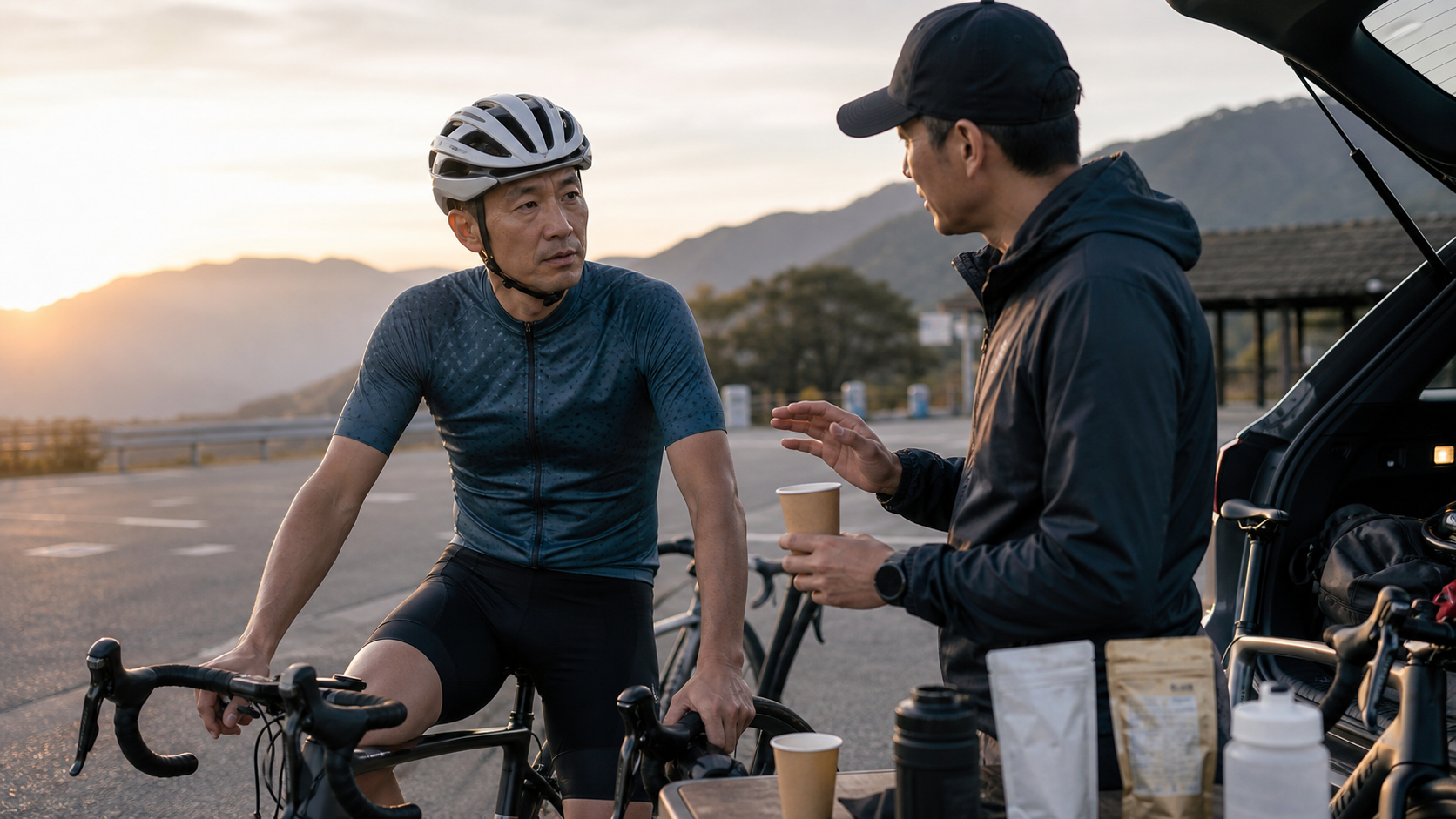
I once coached an office worker in his early forties—let’s call him A-Hong. He trained hard, rode Yangmingshan regularly on weekends, and had signed up for the West Route Wuling climb. A week before the challenge, he asked me: “Coach, I heard caffeine helps with cycling. Should I down two convenience-store Americanos before I head out?”
I asked him three questions back: How much do you weigh? Roughly how many milligrams of caffeine are in the coffee you plan to drink? And what time do you plan to drink it, and what time do you plan to start? He couldn’t answer any of the three. That’s actually the reality for most people using caffeine—they know “caffeine works,” but dosage, timing, and source are all based on gut feeling. The result is either drinking too little and feeling nothing, or drinking too much and getting heart palpitations and stomach churning before you even reach the starting point—hurting yourself instead.
Caffeine is one of the few legal supplements in sports science with a high level of evidence and a clear position statement from the International Society of Sports Nutrition (ISSN). Precisely because it works, it’s worth using it correctly. In this article, I’ll explain these three things clearly from a coach’s perspective, along with a dosage reference table you can follow directly.
Building the Concept First: What Does Caffeine Actually Do in the Body?
To use it well, you need a rough idea of how it works. Caffeine’s athletic benefit isn’t as simple as “providing energy”—it actually supplies zero calories. It mainly affects your performance through several pathways.
Central Nervous System: Slowing Down the Feeling of “Fatigue”
Caffeine is structurally similar to adenosine. Adenosine is a substance that gradually accumulates as you exercise, stay awake, and build up fatigue. It binds to receptors in the brain, telling you “time to rest, I’m tired.” Caffeine occupies those receptor sites, preventing adenosine from transmitting the fatigue signal.
In plain terms: at the same pedaling intensity and the same pace, you subjectively feel less tired. In sports science, this is called lowering the “rating of perceived exertion” (RPE). This is why many people feel “lighter on the pedals today” after caffeine—your power output or pace isn’t necessarily surging; your brain’s tolerance for discomfort has simply increased.
Improved Focus, Motor Unit Recruitment, and Neural Drive
Beyond suppressing fatigue, caffeine also enhances alertness, concentration, and the efficiency of motor unit recruitment. This is especially noticeable in sports requiring explosive effort and maintaining technical movement quality—such as sprints, out-of-the-saddle climbing, and each high-intensity interval in a workout.
Most Consistent Benefits for Endurance Sports
This is important and is the part the literature speaks about with the most confidence. According to the ISSN position statement and related meta-analyses, caffeine’s benefits for aerobic endurance performance are the most stable and consistent. At moderate doses, endurance performance improves by approximately 2–4%; across different studies, the improvement in average power output lands around the 3% magnitude.
Does 2–4% sound small? Let me convert that into real-world terms: for an event that would take you 3 hours, 2% saves roughly 3.5 minutes; for a runner chasing a PB, 2% in a marathon could be a gap of several minutes. In endurance sports, this is already a valuable marginal gain—and it’s legal, cheap, and readily available.
Key Takeaway: Caffeine helps mainly by “reducing fatigue perception and enhancing focus and neural drive,” with the most consistent benefits in endurance sports (about 2–4%). It doesn’t give you energy; it helps you squeeze out the fitness you already have.
More Than One Benefit: From Aerobic to Explosive
Although the endurance benefit is the most consistent, the literature also indicates that caffeine provides small-to-moderate help across many athletic domains—including muscular endurance, movement speed, strength, sprinting, jumping, and throwing, as well as various aerobic and anaerobic sport-specific actions. In other words, whether you cycle, run, swim, or do explosive interval training, caffeine can potentially help—just to varying degrees depending on the individual and the activity.
This is actually good news for Taiwan’s mostly “multi-discipline” athletic population: you might do weights and intervals during the week, then long rides or road runs on the weekend. Caffeine can play a supporting role across all these scenarios. But precisely because it “touches a bit of everything,” it’s worth reminding yourself not to over-mythologize it—it’s a good screwdriver, not a magic wand.
Caffeine’s Approximate Timeline in the Body
Understanding how it changes over time in your body tells you why timing matters so much. Below is an approximate timeline (individual variation is large; use it only for conceptual understanding):
| Time Point | Approximate Body State | What It Means for You |
|---|---|---|
| 0–15 minutes after intake | Begins being absorbed by the gut | No effect yet; don’t rush to add more |
| 30–45 minutes after intake | Blood concentration rises rapidly | Benefits begin to emerge |
| 45–60 minutes after intake | Near peak blood concentration | Optimal exercise timing window |
| Several hours after | Concentration declines slowly | Benefits gradually fade; consider topping up for long events |
| Evening/Night | May still be present | Slow metabolizers need to watch sleep impact |
Once you understand this table, you’ll see why “chugging a cup right before heading out” is a waste—your blood concentration hasn’t even risen yet. You’ll also understand why drinking it for an afternoon workout can still affect you at night.
Practical Core 1: How to Determine Dosage?
This is where most people get it wrong. Caffeine dosage is not about the number of cups—it’s about your body weight. In sports nutrition, it’s universally calculated as milligrams per kilogram of body weight (mg/kg).
The Sweet Spot: 3–6 mg/kg Body Weight
According to the ISSN position statement, caffeine at low-to-moderate doses (approximately 3–6 mg/kg body weight) effectively enhances performance in trained athletes; higher doses (e.g., ≥ 9 mg/kg) provide no additional benefit and significantly increase the risk of side effects. The literature also indicates the minimum effective dose may be as low as about 2 mg/kg body weight, though individual variation is large.
I’ve organized this into the most practical reference table. First weigh yourself, then check the table below:
| Body Weight | Conservative Starting Dose (3 mg/kg) | Standard Effective Dose (4–5 mg/kg) | Upper Reference (6 mg/kg) |
|---|---|---|---|
| 50 kg | ~150 mg | ~200–250 mg | ~300 mg |
| 60 kg | ~180 mg | ~240–300 mg | ~360 mg |
| 70 kg | ~210 mg | ~280–350 mg | ~420 mg |
| 80 kg | ~240 mg | ~320–400 mg | ~480 mg |
| 90 kg | ~270 mg | ~360–450 mg | ~540 mg |
My advice to every athlete is always: start from the leftmost column (3 mg/kg). First confirm how your body reacts to caffeine, your gut tolerance, and whether it affects your sleep, then adjust toward the middle column as needed. Never go straight to 6 mg/kg on your first try, and definitely don’t touch 9 mg/kg or above—the heart palpitations, shaking hands, gastrointestinal discomfort, and anxiety at that dose do more harm than good for the general athletic population.
Individual Variation: Why Some People Can’t Sleep After One Sip, While Others Feel Nothing After a Whole Pot?
This comes down to genetics (especially the activity of liver enzymes that metabolize caffeine) and tolerance built from long-term consumption habits. Some people metabolize it quickly—the benefits come fast and go fast; others metabolize slowly—one afternoon tea could ruin a whole night’s sleep. So the table above is a “population-average starting point.” Use it as a compass, not a decree. Your true optimal dose is something only you can find through repeated testing in training.
Practical Core 2: How to Time It?
Get the dose right but the timing wrong, and you’ll still get half the results.
The Classic Principle: 45–60 Minutes Before Exercise
The most commonly used and best-evidenced timing in the literature is intake approximately 60 minutes before exercise. The reason is simple: orally ingested caffeine (capsules or coffee) takes time to be absorbed from the gut into the bloodstream, with blood concentration typically peaking about 45–60 minutes after intake. You want that “blood concentration peak” to land exactly when you need it most.
So if you’re starting your climb from the base at 7 a.m., the ideal time to finish that coffee is around 6:00 to 6:15 a.m. A-Hong later adjusted exactly to this principle—no more chugging two cups right before departure, but finishing a carefully dosed amount an hour early.
Timing Adjustments by Form
| Source/Form | Absorption Rate | Recommended Lead Time | Notes |
|---|---|---|---|
| Caffeine capsules/tablets | Moderate | 45–60 minutes before exercise | Easiest to dose, most consistent |
| Fresh-brewed/pour-over coffee | Moderate | 45–60 minutes before exercise | Dosage estimation less precise |
| Caffeinated energy gels | Faster | As needed during exercise | For topping up in the latter half of long events |
| Caffeine gum/lozenges | Fast (oral mucosal absorption) | 10–20 minutes before or during exercise | Fast absorption, good for last-minute top-ups |
The “Split-Dose Strategy” for Long Events
For events lasting more than two or three hours (e.g., West Route Wuling, ultramarathons, long-distance triathlon), you don’t have to swallow the entire dose at once. A practical approach: take a portion beforehand (e.g., 3 mg/kg), then top up with a caffeinated gel or gum in the latter half when energy is fading and willpower needs the most support. This extends the benefit into the most critical stretch while avoiding wrecking your stomach from the start.
Coach’s Note: Caffeine is not “the earlier you drink it, the safer.” Drink it too early, and blood concentration may already be declining by the time you really need it; drink it too late, and it hasn’t kicked in for the early part of the session. Hit that 45–60 minute window.
Practical Core 3: Comparing Sources—A Taiwan-Specific Field Guide
This is the most practical section for Taiwanese readers. We have convenience stores, bubble tea shops, and cafés on every corner—but that’s also the problem: you have no idea how many milligrams are actually in that cup.
Caffeine Content of Common Sources (Approximate Ranges)
The table below shows rough caffeine contents for various common sources. Please understand: these are ranges, and actual amounts vary significantly by bean variety, roast, brewing method, and cup size. Don’t treat them as precise values.
| Source | Approximate Caffeine Content | Dosage Controllability |
|---|---|---|
| Convenience store medium Americano | ~120–200 mg | Moderate (relatively stable at the same store) |
| Bubble tea/chain store large Americano | ~150–300 mg | Poor (high variability) |
| Pour-over/fresh-brewed cup (~240 ml) | ~80–150 mg | Moderate |
| Single espresso shot | ~60–80 mg | Moderate |
| One packet of instant coffee | ~40–100 mg | Moderate |
| One can of commercial energy drink | ~80–160 mg | Fair (labeled) |
| One packet of caffeinated energy gel | ~25–100 mg (labeled) | Good |
| Caffeine tablets/capsules | Per product label (commonly 100–200 mg/tablet) | Best |
Pros and Cons of Each Source
Fresh-brewed coffee (convenience stores, cafés, home-brewed): This is the most convenient and familiar source for Taiwanese people. The advantages are that it’s readily available, tastes good, and carries social and psychological ritual value. The downside is that dosage is very hard to estimate precisely. The same “medium Americano” can vary significantly in concentration between stores and even at different times of day. If you’re using coffee as a pre-race supplement, I recommend sticking to the same store, the same type, and the same cup size to at least minimize variability.
Caffeine tablets/capsules: This is the most precise source for dosage control. To execute the body-weight table above accurately, tablets make it easiest—a 70 kg person wanting 4 mg/kg (~280 mg) can easily calculate it with two 100 mg tablets plus a bit more. The downside is that it lacks the aroma and drinking pleasure of coffee, and it’s easier to “overdose because it’s easy to swallow”—you must strictly adhere to the dose.
Caffeinated energy gels and gum: Designed specifically for sports, usually clearly labeled, and suitable for mid-exercise supplementation. Taiwanese long-distance cyclists and runners use these heavily in the latter half of events.
Energy drinks: Labeled and convenient, but often come with large amounts of sugar and other additives (e.g., taurine, other stimulants). They may not suit everyone’s stomach before a race, and you should also watch total sugar intake. If you just want caffeine, tablets or black coffee are usually cleaner.
Tea (green tea, black tea, oolong): Taiwanese people love tea, and tea does contain caffeine, but concentrations are generally lower than coffee and even more variable. Using tea to hit a precise athletic dose isn’t ideal—it’s better for daily drinking than for pre-race supplementation.
A practical “source selection decision”: Ask yourself one question—“Do I need precision, or do I need convenience and enjoyment?” If you need precision (important races, strict dosing), choose tablets or caffeinated energy gels; if it’s just a regular training session where you want a small boost and to enjoy it, a fixed convenience-store Americano works great. Use the right tool for the right occasion.
An Important Taiwan Climate Reminder: Caffeine and Dehydration
This point deserves special attention in Taiwan. Our summers are hot and humid, and sweat rates during long rides or runs are staggering. Caffeine’s diuretic effect during exercise is actually not as severe as once thought in habitual users at moderate doses—the old claim that “coffee dehydrates you” has been overstated. But the key point is—caffeine can never replace fluid and electrolyte intake. During prolonged exercise in Taiwan’s hot, humid environment, your top priority is always getting enough water and electrolytes. Caffeine is the icing on the cake, not the cake itself. If you drink caffeinated beverages, you still need your sports drinks and plain water—none of it can be skipped.
Common Mistakes and Fixes
In all my years coaching, the caffeine mistakes I’ve seen almost always fall into these categories. See how many you’ve made.
Mistake 1: Chugging a Large Amount Right Before the Race Without Testing It in Training
This is the most dangerous and most common. “Nothing new on race day”—don’t try anything new on race day—this rule applies especially to caffeine. The first time you use a dose, it must be in a regular training session to confirm your gut reaction, heart rate response, and changes in focus. A-Hong initially wanted to use a large dose for the first time on Wuling challenge day. I stopped him immediately and made him test it three times on Yangmingshan training rides before allowing him to use it officially.
Fix: At least before an important event, rehearse your intended dose and timing 2–3 times in training.
Mistake 2: Counting Cups Instead of Body Weight
A 50 kg woman and a 90 kg man drinking “the same two Americanos”—the former may already be over-dosed with heart palpitations, while the latter may not even reach an effective dose.
Fix: Always convert using mg/kg and reference the table above.
Mistake 3: More Is Better—Chasing the “Rush”
Many people think a racing heart and slightly shaky hands mean it’s “working.” Wrong. Those are actually signals of side effects, not proof of benefit. The literature is clear: above 6 mg/kg, even up to 9 mg/kg or more, brings no additional performance gain—only stacked side effects.
Fix: Find your minimum effective dose and stay there. More doesn’t equal better.
Mistake 4: Drinking Too Late and Ruining Sleep Without Realizing It
Caffeine’s half-life varies by individual. For slow metabolizers, drinking at 3 or 4 p.m. can still disrupt sleep at night. And sleep is the foundation of recovery—if you chronically sleep poorly, the 2–4% performance boost from caffeine can never make up for the recovery quality you’ve lost.
Fix: For slow metabolizers or those sensitive to sleep disruption, avoid high doses of caffeine for evening training, or switch to a very low dose.
Mistake 5: Relying on Caffeine Daily, Thereby Losing the Supplement Effect
If you drink large amounts of coffee every day, your body develops tolerance, and the “extra benefit” of that pre-race cup gets diluted.
Fix: Some athletes moderately reduce their daily caffeine intake in the days before an important event (desensitization) to make the pre-race dose more effective. This requires individualized experimentation and isn’t for everyone, but it’s worth knowing the strategy exists.
Mistake 6: Heavy Doses on an Empty Stomach—Your Gut Will Protest
Many Taiwanese people are used to a black coffee on an empty stomach in the morning, which is fine normally. But if you’re fasting, take a high dose of 5–6 mg/kg, and then do high-intensity exercise, your gut is very likely to rebel—stomach acid irritation combined with blood flow being diverted away from the digestive tract during exercise brings nausea, stomach pain, and urgent bathroom trips. This is the last thing you want in a long event.
Fix: Pair it with some easily digestible carbs before the race (e.g., a banana, a slice of toast). Don’t use heavy doses on a completely empty stomach. Those with sensitive stomachs should be especially careful.
Mistake 7: Only Using It on Race Day, Never Touching It Otherwise
This is the opposite of Mistake 5, but equally problematic. Some people never touch coffee in daily life, thinking this maximizes race-day benefit. In theory, desensitization is correct—but if you “don’t even know how your body reacts to this dose,” you’re essentially experimenting on yourself on race day.
Fix: Even if you want to preserve the desensitization benefit, you must at least use the same dose and source several times in training to confirm your body’s response before deciding how to use it on race day. Desensitization and “never having tried it” are two different things.
Advanced Concept: Caffeine’s Synergy with Carbohydrates and Electrolytes
When coaching advanced athletes, I place caffeine within the broader framework of race nutrition rather than treating it as an isolated cup. Here are a few practical integration ideas.
Pairing with Carbohydrate Intake
The core fuel for long endurance events is still carbohydrates. Caffeine can’t replace carbs, but it can be built into your fueling rhythm alongside them. Many caffeinated energy gels are themselves a combination of carbs and caffeine, which is especially useful in the latter half of events lasting over two hours—you’re simultaneously replenishing sugar (maintaining blood glucose and muscle glycogen supply) and caffeine (holding up willpower and focus).
I typically advise advanced athletes to allocate caffeine across a long event like this:
| Event Phase | Caffeine Strategy | Purpose |
|---|---|---|
| 45–60 minutes before start | Take ~3 mg/kg (tablets or coffee) | Let blood concentration rise steadily after the start |
| First 1/3 | No extra; focus on water and carbs | Preserve the gut, avoid early stacking |
| Middle section | Small top-up as needed (caffeinated gel) | Bridge the benefit |
| Final 1/3 critical section | One top-up (gel or gum) | Hold through the most painful, most tempting-to-quit stretch |
This is just a template; adjust it based on your body weight, event length, gut tolerance, and what you’ve validated in training. The key point: caffeine is one part of the overall fueling plan, not an isolated event.
Relationship with Fluids and Electrolytes
Let me emphasize this again because so many people get it wrong: caffeine is not a hydration tool. In Taiwan’s hot, humid environment, you can lose large amounts of sweat and sodium per hour, and these need to be replaced with plain water plus sports drinks or electrolyte supplements. No amount of caffeine can replace that. Keep the priority order firmly in mind—fluids and electrolytes are the foundation, carbohydrates are the fuel, and caffeine is the catalyst. If the foundation isn’t solid, no catalyst will save you.
FAQ
These are the questions athletes ask me most often, answered all at once.
Q1: Will caffeine show up in a drug test? Is it banned?
Caffeine is currently not on the World Anti-Doping Agency (WADA) prohibited list. It’s a legal sports supplement, only included in the monitoring program. For the vast majority of amateur and citizen athletes, normal doses pose no violation issues at all. However, if you’re a competitive athlete subject to doping controls, you should defer to your sport’s governing body and the latest regulations for that year.
Q2: I don’t drink coffee. Can I rely on energy drinks or tablets instead?
Yes. Caffeine’s benefits come from caffeine itself, not the source. For non-coffee drinkers, tablets actually make dosage control easier. Just be aware that energy drinks often contain large amounts of sugar and other ingredients—read the labels carefully when choosing.
Q3: I drank it and felt nothing. Am I just not responsive to it?
There are two possibilities. One is insufficient dosage (you might only have gotten 1–2 mg/kg). The other is that your daily caffeine intake is already high and you’ve developed tolerance. First calculate your dose properly by body weight and confirm it’s adequate, then judge. There are indeed a small number of people who respond weakly to caffeine—that’s normal. Caffeine isn’t a panacea.
Q4: Should I use caffeine in training too, or save it only for races?
You absolutely must “test it” in training, but I don’t recommend “depending on it for every session.” Treat it as a tool for when you need it: key long rides, race simulations, and actual races. For easy spins and recovery runs, skip it. This preserves your sensitivity while building your understanding of it in training.
Q5: If I have an evening race or training session, will caffeine keep me awake?
Very possibly, especially for slow metabolizers. This is a trade-off: if the event is important, you might accept a worse night’s sleep; if it’s just a regular session, don’t sacrifice a whole night’s sleep for that 2–3%. You could use a lower dose, or choose a form with fast oral absorption and relatively faster metabolism.
Q6: Does caffeine damage the heart?
For healthy adults within the recommended dose range, normal caffeine use has a high safety profile. But as mentioned earlier, anyone with arrhythmias, heart disease, hypertension, or a relevant family history must consult a physician first. If you experience persistent palpitations, chest tightness, dizziness, or other discomfort during use, stop immediately and seek medical attention. Medical care is readily accessible in Taiwan—don’t delay.
A Comparative Case Study: Two Athletes, Different Approaches
Here are two real-world scenarios for comparison to help you understand the importance of “individualization.”
Case A: Xiao-Ling, 52 kg, road runner, fast metabolizer, sensitive to caffeine. She initially followed the trend and used a large bubble-tea-shop Americano (estimated 250 mg+, which converts to over 4.8 mg/kg). The result: racing heart before the start, shaking hands, and feeling nauseous by the 5 km mark. I recalculated for her, switched her to 3 mg/kg (~156 mg), using a fixed convenience-store medium Americano (she tested that particular store at around 150–160 mg), finished 50 minutes before the start. Her subsequent half marathon had zero discomfort, and she clearly felt her legs held up better in the latter stages. Her problem was never that caffeine didn’t work—it was that the dose was too heavy for her.
Case B: A-De, 88 kg, long-term heavy coffee drinker, four to five cups daily. He complained that his pre-race cup “did absolutely nothing.” The reason was clear—tolerance. I asked him to cut his daily coffee intake in half for four days before an important trail race, then use about 4 mg/kg (~350 mg, precisely calculated with tablets) on race day. This time he clearly felt the difference. His problem was drinking too much daily, which had burned out his sensitivity.
The same caffeine, and the two individuals’ optimal solutions were complete opposites. This is why I always emphasize: the reference table is the starting point, not the finish line. The dose you find through your own testing in training is your answer.
Who Needs Extra Caution? Health and Medical Reminders
Although caffeine has a high safety profile, it’s not suitable for everyone. Especially in Taiwan, where medical care is convenient and accessible, if you have any concerns, don’t tough it out.
- Those with arrhythmias, heart disease, or hypertension: Caffeine affects heart rate and blood pressure. This group must consult their cardiologist or family physician before use—don’t self-adjust the dose.
- Those with GERD or sensitive stomachs: Caffeine stimulates stomach acid, and exercise often causes gastrointestinal discomfort. The combination can be very unpleasant. Start with a very low dose and only in a non-fasted state.
- Those with anxiety disorders or sleep disorders: Caffeine may worsen symptoms. Discuss with your doctor.
- Pregnant or breastfeeding women: Caffeine intake has stricter upper limits. Follow your obstetrician’s advice.
- Those taking specific medications: Some drugs interact with caffeine. If you’re on long-term medication, check with your doctor or pharmacist first.
Seeing a doctor in Taiwan is easy—one outpatient visit can clarify all these concerns, and it’s well worth it. Athletic performance should never be built on gambling with your health.
One more easily overlooked point: caffeine is cumulative. That pre-race cup isn’t your only source that day—morning bubble tea, afternoon energy drinks, chocolate, and certain cold and pain medications can all contain caffeine. Add up all sources across the day, and that’s your true total intake. If you’re already consuming a lot, stacking a heavy dose before the race can easily push you past your body’s comfort zone. Manage your total, not just the cup in front of you.
Action Plans for Readers at Different Levels
After all the science and principles, let me ground this into three concrete action plans by level. Find your own tier and follow it directly.
If You’re a Beginner / General Athlete
- Weigh yourself first, then calculate your conservative starting dose at 3 mg/kg.
- Use the source with the best dosage control (tablets, or a fixed convenience-store Americano from the same store).
- Take it 45–60 minutes before exercise.
- Test it in regular training first, observing gut, heart rate, and sleep responses.
- If there’s no discomfort and you feel it helps, consider fine-tuning up to 4 mg/kg next time.
- If you have any heart, gut, or sleep concerns, see a doctor first.
If You’re an Advanced / Regular Trainer
- Find your minimum effective dose within the 3–5 mg/kg range.
- For long events, practice the “portion before + portion in the latter half” split strategy.
- Treat the caffeine strategy as part of training—rehearse it 2–3 times in race simulations or long training days.
- Log each session’s dose, timing, source, and subjective feeling to build your own database.
If You’re a Competitive Athlete Preparing for an Important Event
- Lock in your dose, timing, and source SOP several weeks before the race, and replicate it exactly on race day.
- Consider moderately reducing daily caffeine in the days before (desensitization) to amplify race-day benefit—but only after testing it in a non-critical event first.
- Precisely plan where caffeinated gels fit into your fueling strategy, integrated with carbohydrate intake.
- Never try an untested dose or source on race day.
A Pre-Race Caffeine Checklist You Can Copy
Before your next important event, run through this checklist:
| Check Item | Your Answer |
|---|---|
| My body weight (kg) | ______ |
| My intended dose (mg/kg, recommended starting at 3–4) | ______ |
| Converted total milligrams | ______ mg |
| What source am I using (is the dose controllable?) | ______ |
| What time do I start/head out | ______ |
| What time should I finish drinking (45–60 minutes ahead) | ______ |
| How many times have I tested this dose and timing in training | ______ |
| My fluid and electrolyte plan for the day | ______ |
If you can fill it out, you’ve got this cup right; if you can’t, it means you’re still going by feel—fill in every blank before you head out.
Conclusion: Make Every Cup Count
Back to A-Hong. He eventually followed my method: weighed himself (78 kg), started at 3 mg/kg (~230 mg), used a fixed convenience-store Americano, finished it an hour before departure, tested it three times on Yangmingshan training rides with no issues, and only then used it officially on West Route Wuling. He finished that day successfully and told me afterward: “Coach, the most noticeable thing wasn’t going faster—it was that final stretch from Cuifeng to Wuling. Everyone else was suffering and struggling, and I felt like I could still hold on.”
That’s what caffeine really looks like—it won’t turn you into a different person, but it can help you hold on just a little longer in the hardest stretch, when you most want to quit. And that little bit is often the dividing line between finishing and DNF, between a PB and falling just short.
Caffeine is a gift from sports science: legal, cheap, and backed by solid evidence. But gifts need to be opened correctly—get the dose right (3–6 mg/kg, starting low), get the timing right (45–60 minutes before), and choose the right source (controllable dosage, rehearsed in advance). Do these three things, and you’ll maximize its value.
Next time before a training session or event, don’t just chug coffee on a whim. Weigh yourself, calculate a dose, check the clock, and drink that cup properly.
This article is educational content and cannot replace individual diagnosis and treatment advice from a physician, physical therapist, or nutritionist.
References
- International Society of Sports Nutrition position stand: caffeine and exercise performance (ISSN position statement, PMC full text): https://pmc.ncbi.nlm.nih.gov/articles/PMC7777221/
- Caffeine Supplementation Strategies Among Endurance Athletes (Frontiers in Sports and Active Living): https://www.frontiersin.org/journals/sports-and-active-living/articles/10.3389/fspor.2022.821750/full
Related Reading
- Coffee and Athletes: Beyond Caffeine—A Holistic Look at Components, Timing, and Sleep
- The Complete Caffeine Supplementation Guide: Dosage, Timing, and Genetic Differences—A Coach Helps You Use Caffeine Correctly
- Caffeine Supplementation Strategies for Cycling: Benefits, Timing, and Side Effect Management
- The Application of Caffeine in Cycling: Intake Timing and Dosage
西進武嶺 自製新版AI配速表產生器 x 賽前攻略 抱佛腳! 沒有功率計也可以產生配速表嗎?有什麼其他眉角賽前要注意的呢? | 西進武嶺 / 東進武嶺 KOM 攻略 | 公路車 | CT Yeh
4 年前
#公路車 #西進武嶺 配速配瓦實驗 坡度分析 四小時內攻略 建大盃 NeverStop #西進武嶺攻略
6 年前
西進武嶺 免費訓練分析服務 Intervals | 練不夠還是練過頭?你哪一種類型選手?AI模型告訴你! | 備戰神器 | 公路車 訓練 | CT Yeh
4 年前
FTL 與 SYB 車隊專訪 西進武嶺 實用攻略分享! 2小時 如何練?!你不知道的眉角!新手準備武嶺必看 EP1 | 實力派女車友 | 精華版 | 公路車 | CTYeh
4 年前
武嶺配速表最佳使用方式 #bike
1 年前
CT 喇低賽) 武嶺牽車 才是王道 西進牽車四小時內秘訣 攝手位置 如何判斷 防抽筋小秘訣
7 年前
#KOM 夏季登山王之路 比賽實況 #東進武嶺
7 年前
單車 一日北高 ( 雙城 ) 肥宅雙人瘋狂行 紀錄片 REACTO
10 年前