Nutrition Guide for Vegan Athletes: Practical Strategies for B12, Iron, Calcium, Omega-3, and Protein Quality
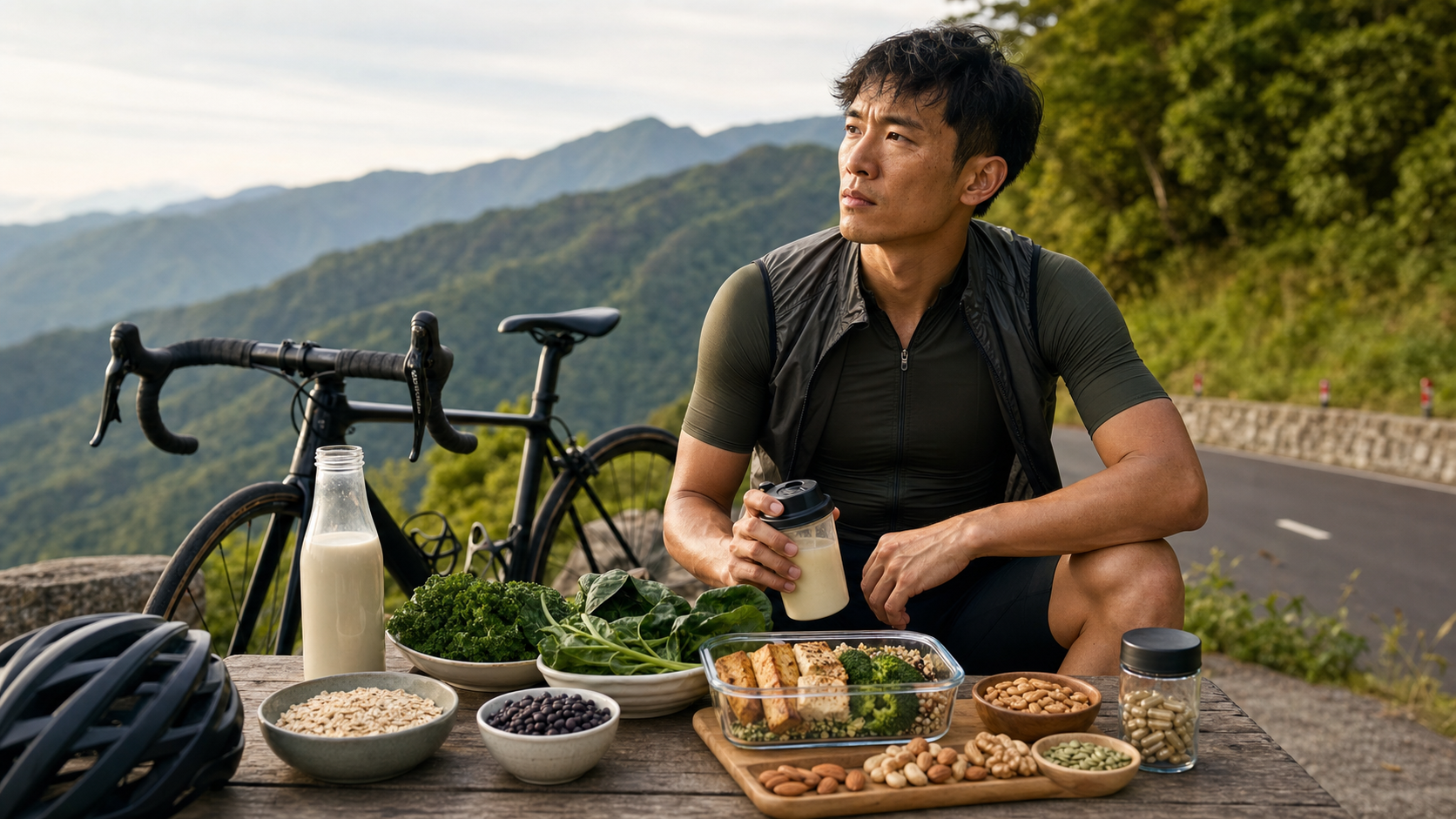
Starting with a Vegan Cyclist Who “Got Weaker the More He Trained”
A few years ago, I coached a student who left a deep impression on me—let’s call him A-Kai. In his early thirties, he’d been fully vegan for nearly five years. His main sport was cycling; on weekends he’d regularly climb Fengguizui and occasionally take on Wuling. When he came to me, his first words were: “Coach, I’m eating really clean and training really hard, so why have I been feeling weaker and weaker over the past six months, with my climbing power steadily dropping?”
I asked him to get a blood test first and to photograph everything he ate for the next three days. The results were classic: his diet was actually “very healthy”—lots of vegetables, brown rice, sweet potatoes, and fruit—but his total protein intake was low, ferritin was at the lower limit, and vitamin B12 was nearly depleted. He had equated “eating plant-based” with “eating enough,” while overlooking the fact that a vegan diet inherently has gaps in several key nutrients that require proactive attention.
In this article, I want to organize the experience I’ve accumulated over the years coaching vegan athletes (whether in cycling, running, or triathlon) into a practical playbook you can follow. Let me state my position clearly upfront: I fully support plant-based eating. Plant-based diets have proven benefits for cardiovascular health, gut microbiota, and weight management, and many top endurance athletes eat plant-based. The issue has never been “can a vegan diet support athletic performance,” but rather “have you fine-tuned it properly.” When tuned correctly, vegan athletes can ride fast, run far, and recover just as well.
Building the Right Framework First: The Inherent Strengths and Gaps of a Plant-Based Diet
The Strengths Are Real
Let’s start with the positives. A vegan diet is typically high in dietary fiber, rich in antioxidant phytonutrients, low in saturated fat, and abundant in potassium and magnesium. For climbing-focused cyclists who need to manage body weight and body fat, or long-distance runners pursuing running economy, these are very tangible advantages. Many of my students who transition to veganism report lighter digestion and no more pre-race bloating—those are definite pluses.
The Gaps Are Also Real
But there are certain nutrients that the plant kingdom either “barely has” or “has but in forms that are hard to absorb.” For athletes, because training volume is high, sweat loss is significant, and metabolism is fast, these gaps become amplified. I categorize them into two groups:
- Nutrients that barely exist in the plant kingdom: Vitamin B12 (this is the hardest gap—problems are guaranteed if you don’t supplement), EPA/DHA (long-chain Omega-3).
- Nutrients that exist in plants but with compromised absorption: Iron (non-heme iron has low absorption), calcium, zinc, and certain amino acids (especially lysine).
Let’s break these down one by one. Once we cover these, you’ll roughly understand why A-Kai was “eating healthy” yet still running into problems.
A Very Important Mindset Adjustment
Before diving into the details, I want to help you calibrate your mindset. Many people start to feel anxious the moment they hear “a vegan diet has these gaps,” thinking that eating plant-based is too troublesome and wondering if they should give it up. There’s absolutely no need to think that way. These gaps aren’t “flaws of veganism”—they’re “items that require proactive management on a vegan diet,” just as athletes already need to manage their sleep and training load. As long as you establish a few consistent habits (supplement B12, have a protein centerpiece at every meal, pair iron-rich meals with vitamin C, get blood work done once a year), these gaps will be systematically addressed, and after that it’s almost automatic—it won’t take up much of your mental energy. The ones who truly suffer are those who “assume that eating plant-based automatically means being healthy and don’t manage anything.”
Core Gap #1: Vitamin B12—A Non-Negotiable
This is the one area where I show zero flexibility with all my vegan students: B12 must be supplemented, no exceptions, and don’t come to me saying “eating plenty of seaweed, miso, or fermented foods is enough.” Most of what those foods contain are inactive analogs that cannot serve as a reliable source.
B12 exists almost exclusively in animal foods and fortified products. It’s responsible for red blood cell production and nervous system maintenance. In the early stages of deficiency, you might only notice “being a bit tired or having poor concentration,” but long-term deficiency can cause megaloblastic anemia and irreversible neurological damage—this isn’t scaremongering; it’s something that genuinely happens in clinical practice.
Based on the data I’ve reviewed, the Recommended Dietary Allowance (RDA) for B12 in adults is approximately 2.4 micrograms, and about 3.0 micrograms for those over 51. But here’s the key point: oral supplement absorption is very poor—a 500-microgram supplement might only yield about 10 micrograms absorbed. So the practical supplemental dose for vegans is far higher than the RDA. This isn’t wasteful; it’s to counteract the low absorption rate. A large European cohort study (EPIC-Oxford) also showed that up to about half of vegans have low blood B12 levels, demonstrating that “if you don’t proactively supplement, you’ll be deficient” is the norm.
My B12 Supplementation Principles for Students
| Supplementation Method | Common Dosage Range | Suitable For | Notes |
|---|---|---|---|
| Daily low dose | 50–250 mcg per day | Those who want to take it daily and can set an alarm to avoid forgetting | Methylcobalamin or cyanocobalamin both work |
| Daily moderate dose | 250–500 mcg per day | The practical first choice for most vegan athletes | Absorption is low, so higher doses are normal |
| Weekly high dose | 2,000–2,500 mcg per week | Those who often forget and want a one-and-done solution | Suitable for people with irregular schedules |
Practical reminder: The difference in effectiveness between sublingual tablets and regular oral tablets isn’t necessarily significant across individuals—choose the form you’ll “actually keep taking.” Fortified foods (such as certain plant milks, nutritional yeast, or breakfast cereals) can serve as a supplement, but I wouldn’t rely on them as the sole source. If you’ve been fully vegan for more than three to four years and have never supplemented B12, I’d strongly recommend getting blood work done, and also checking more sensitive markers like homocysteine and MMA—these can be arranged at general clinics or health checkups in Taiwan.
Core Gap #2: Iron—It’s Not About How Much You Eat, It’s About How Much You Absorb
Iron is the lifeline of endurance athletes—it’s responsible for oxygen transport. When iron is insufficient, you’ll feel “your legs have strength but your cardio is just wheezing, climbing power won’t go up, and recovery slows down”—that was exactly A-Kai’s state.
Heme Iron vs. Non-Heme Iron
Plant foods contain non-heme iron, which has an absorption rate of only about 5–12%, far lower than the heme iron from meat. Because of this, the general recommendation is that vegans should aim for an iron intake about 1.8 times higher than the general recommendation to compensate for this absorption gap. The general RDA for iron is about 8 milligrams for adult men and about 18 milligrams for women of reproductive age—converted to vegan athletes (especially women, especially those with menstrual blood loss), the target needs to be set even higher.
Practical Techniques to Double Non-Heme Iron Absorption
This is my favorite part to teach students, because “the same food, eaten differently, absorbs very differently”:
- Pair with vitamin C: Vitamin C converts non-heme iron into a more absorbable form. Tofu with a kiwi, lentil soup with a squeeze of lemon, stir-fried spinach with bell peppers—these combinations are easy to pull off at Taiwanese buffet restaurants and in your own kitchen.
- Avoid inhibitors: Coffee, tea (including milk tea), and high-calcium foods inhibit iron absorption. Try not to drink tea or coffee within one hour before or after an iron-rich meal. Many Taiwanese people are used to having a hand-shaken drink with meals—that’s a double loss for someone who’s iron-deficient.
- Make good use of cast iron cookware: Cooking slightly acidic dishes (like tomato-braised beans) in a cast iron pot can slightly increase the iron content of the food—a small but nice bonus.
Plant Sources Rich in Non-Heme Iron
| Food | Characteristics | Availability in Taiwan |
|---|---|---|
| Lentils, chickpeas, black beans | Iron + protein in one package | High (supermarkets, dried goods stores) |
| Tofu, tempeh | Easy to cook, good absorption (fermented versions are even better) | High |
| Dark leafy greens (spinach, sweet potato leaves) | Cheap, in season | Very high |
| Pumpkin seeds, sesame seeds | Great as snacks or sprinkled on meals | Medium-high |
| Fortified breakfast cereals | Check labels and pick high-iron options | Medium |
Important reminder: When it comes to iron, more is not necessarily better. Excess iron is harmful to the body, and without a blood test confirming iron deficiency, I don’t recommend self-supplementing with iron pills long-term. Medical access and health checkups are convenient in Taiwan—get your ferritin and hemoglobin tested first, then decide whether and how much to supplement. Leave that decision to a doctor or dietitian.
Core Gap 3: Calcium — The Bone Foundation Vegetarians Often Overlook
Calcium isn’t just for bones; it also plays a role in muscle contraction and nerve transmission. Vegans lack dairy, the biggest conventional source, and without deliberate effort to compensate, intake can easily fall short. For endurance athletes, a chronic shortfall of calcium and vitamin D, combined with the repetitive impact of running, is a risk factor for stress fractures — I’ve seen more than one runner forced to stop training for months because of this.
Vegan Calcium Sources and Absorption Nuances
| Food | Calcium Absorption Notes |
|---|---|
| Traditional firm tofu (set with gypsum/calcium salt) | One of the most convenient high-calcium sources in Taiwan; check the coagulant label |
| Fortified plant milks (soy milk, oat milk) | Shake well before drinking; calcium tends to settle at the bottom |
| Sesame seeds, black sesame paste | High calcium density; great as a spread or mixed into rice |
| Dark leafy greens (Chinese kale, bok choy) | Greens low in oxalate offer better calcium absorption |
| Spinach | Contains calcium but is high in oxalate, so absorption is poor; don’t rely on it as a primary source |
Vitamin D is calcium’s partner. Although Taiwan has abundant sunshine, many people — especially those working indoors or training in the early morning or at night — are actually deficient in vitamin D. Moderate sun exposure (while balancing sun protection and heatstroke risk), and supplementing vitamin D after medical evaluation when necessary, ensures the calcium you consume is actually put to use. For vegans supplementing vitamin D, be sure to choose vegan D3 (from algae or lichen) or D2; standard D3 is typically derived from lanolin and isn’t vegan.
Why is calcium even more critical for endurance athletes? Because prolonged, heavy sweating also depletes calcium, and the high mechanical load of running and climbing places significant stress on bones. Bone density is the kind of thing you “don’t notice day-to-day, but it’s a major problem when something goes wrong.” Once a fatigue fracture occurs, it often means weeks to months off training — a heavy blow to any training plan. Rather than scrambling to fix it afterward, it’s far better to keep calcium and vitamin D stable on a daily basis. This is what I emphasize to every vegan runner I work with.
Core Gap 4: Omega-3 (EPA/DHA) — Don’t Rely on Flaxseed Alone
Many vegan athletes assume, “I eat flaxseed, chia seeds, and walnuts, so my Omega-3 intake is covered.” There’s a commonly misunderstood point here: plant sources provide ALA, and the body must convert ALA into EPA/DHA — the forms that deliver anti-inflammatory, cardiovascular, and neurological benefits. That conversion rate is actually very low (it varies by individual, but is generally poor). For athletes with high training loads who need to manage inflammation and support recovery, relying on conversion alone is often insufficient.
My Recommendations
- Baseline: Have one serving of an ALA source daily (a tablespoon of ground flaxseed or chia seeds, or a small handful of walnuts). Flaxseed needs to be ground for proper absorption; whole seeds largely pass through undigested.
- Advanced: For vegan athletes with high training volumes, I recommend considering algae oil supplements. Algae oil provides EPA/DHA directly and is a vegan-friendly source, effectively bypassing the inefficient conversion step. Dosage and necessity vary by individual, so it’s worth discussing with a nutritionist first.
A quick note: Excessive Omega-6 intake (large amounts of sunflower oil, corn oil, processed snacks) competes with Omega-3 for the same metabolic enzymes, further suppressing ALA conversion efficiency. So beyond “adding Omega-3,” it’s also about “not letting Omega-6 spiral out of control” — cooking with olive oil or camellia oil and cutting back on fried vegan processed foods is the right direction.
The Overlooked Supporting Cast: Zinc, Iodine, and Protein’s Hidden Partners
The five core gaps above are the main characters, but after years of coaching, I’ve found two “supporting roles” that are often completely ignored — until problems surface.
Zinc — Key to Immunity and Recovery
Zinc is involved in immune function, wound healing, testosterone metabolism, and protein synthesis. Plant foods (legumes, whole grains, nuts, and seeds) do contain zinc, but they also contain phytate, which inhibits zinc absorption. Combined with the fact that athletes lose zinc through heavy sweating, vegan athletes are prone to inadequate zinc intake.
Practical strategies: Eat more pumpkin seeds, cashews, chickpeas, and oats; soaking, sprouting, or fermenting beans and whole grains (such as tempeh) reduces phytate and improves zinc and iron absorption — which is why I particularly recommend fermented soy products.
Iodine — Don’t Ignore It, But Don’t Overdo It Either
If vegans don’t eat seaweed or use iodized salt, iodine intake may be insufficient; conversely, seaweed is extremely high in iodine, and consuming large amounts daily can lead to excess — neither extreme is good. A balanced approach: use iodized salt in moderation, and enjoy seaweed in small amounts rather than eating it heavily every day. If you have a history of thyroid conditions, always consult your doctor regarding iodine intake.
Body Signals of Deficiency: Be Alert When These Appear
Many athletes ask me, “How do I know if I’m deficient?” The most reliable answer is always a blood test, but the body does offer some clues. The table below summarizes common deficiency signals — it’s meant to help you stay alert and decide whether to seek medical evaluation, not for self-diagnosis or self-supplementation.
| Possible Deficiency | Common Body Signals | Recommended Action |
|---|---|---|
| Iron | Unusual fatigue, easily winded on climbs, slower recovery, pale complexion, increased hair loss | Get blood tests for ferritin and hemoglobin; let a doctor interpret |
| B12 | Fatigue, tingling/numbness in hands and feet, poor concentration/memory, tongue discomfort | Test B12; add homocysteine/MMA if needed |
| Calcium/Vitamin D | Recurring minor injuries, stress fractures, muscle cramps | Test vitamin D; assess bone density |
| Protein Insufficiency | Declining strength/muscle mass, poor recovery, frequent illness | Quantify daily intake and adjust against targets |
| Zinc | Slow wound healing, weakened immunity, altered taste | Review dietary sources; seek medical evaluation if needed |
| Energy (RED-S) | Missed periods, reduced libido, persistent fatigue, plateaued performance | Seek medical attention immediately and consult a sports nutritionist |
One more emphasis: Many of these signals overlap and could stem from other medical conditions. Healthcare access in Taiwan is convenient — if you experience persistent, noticeable abnormalities, the first step is always to see a doctor, not to buy a pile of supplements online and self-medicate.
Core Gap 5: Protein — It’s About “Quality” and “Total Intake,” Not “Getting Enough”
This is where the most myths live. The statement “plant protein is incomplete” is half true and half misleading.
Breaking Down “Protein Quality”
Quality comes down to two things: whether all essential amino acids are present and digestibility/absorption rate. Plant proteins are indeed lower in certain amino acids — grains are generally short on lysine, and legumes are generally short on methionine. But the solution is simple: complementarity. Eat legumes and grains together, and the amino acid profile is complete. The Taiwanese classics — “rice with tofu, mung bean soup with rice, chickpeas with whole wheat” — are essentially natural protein complementation. And you don’t need strict complementation at every single meal; as long as your sources are diverse across the day, your body will sort it out.
Soy Protein Is the Vegan Athlete’s Ace
Worth calling out specifically are soy products (tofu, soy milk, tempeh, edamame, soy protein powder). Soy protein has a near-complete amino acid profile and high digestibility, making it the most reliable staple protein for vegan athletes. Edamame, in particular, is a locally abundant, high-value-quality protein in Taiwan — I often tell my athletes to keep boiled edamame as a go-to snack.
Protein Targets and Distribution for Vegan Athletes
| Population | Daily Protein per kg Body Weight | Notes |
|---|---|---|
| Generally healthy vegan adults | ~0.8–1.0 g | Maintains basic needs |
| Regular endurance trainees | ~1.2–1.6 g | Routine cycling, road running training |
| High training volume / muscle-building phase | ~1.4–2.0 g | Vegans advised to aim for the higher end of the range |
Why should vegans aim for the higher end? Because plant protein digestibility is slightly lower and amino acid density is slightly more diluted, aiming higher is a safety margin. Take a 65 kg endurance runner as an example: targeting 1.5 g/kg means roughly 98 grams of protein per day, spread across three to four meals at 25–30 grams per meal. This distribution is most efficient for muscle protein synthesis.
Practical Example (A Day for a 65 kg Endurance Athlete):
- Breakfast: A large glass of soy milk + whole wheat toast + peanut butter (~25 g)
- Lunch: Brown rice + braised tofu + edamame + dark leafy greens (~30 g)
- Post-training: One serving of soy or pea protein powder + a banana (~25 g)
- Dinner: Tempeh or chickpea curry + quinoa (~25 g)
This easily exceeds 100 grams in a day, with diverse sources and automatic amino acid complementation.
Putting the Whole Week Together: A Vegan Athlete’s Weekly Fueling Rhythm
Looking at a single day isn’t enough; athletes need to see how “training load” pairs with “nutritional focus.” The table below is a weekly framework I often give my clients; you can adjust it based on your own training days. The core concept is: on high-volume training days, both carbohydrates and protein need to be elevated, and recovery meals must be solid; on easy days, take the opportunity to load up on fiber, fruits/vegetables, and iron-absorption meals.
| Training Day Type | Carbohydrate Focus | Protein Focus | Iron/Other Focus |
|---|---|---|---|
| High-intensity interval day | Replenish with whole grains, sweet potatoes, fruit before/after training | Recovery meal 25–30 g (soy milk + protein powder is most convenient) | Avoid tea/coffee immediately with recovery meal |
| Long-distance endurance day | Higher carbs throughout the day; mid-ride fueling is essential | Spread across multiple meals, each with a main protein source | Heavy sweating; watch sodium, iron, zinc |
| Strength training day | Moderate | Higher throughout the day (1.6–2.0 g/kg), one serving before bed | Pair with zinc sources (pumpkin seeds) |
| Easy/recovery day | Moderate to lower | Maintain adequate amounts at each meal | Schedule an “iron-boosting meal”: legumes + vitamin C |
| Complete rest day | Lower | Maintain, don’t drop | More fruits/vegetables, fermented soy products for gut health |
How to use this table: It’s not about memorizing it, but developing the intuition of “train this today, eat that accordingly.” Many people in Taiwan eat out on weekdays and only do long rides or runs on weekends. In that case, prepare your long-distance day fueling (including mid-ride energy gels, bananas, rice balls) in advance, don’t scramble at the last minute.
Race Day and Long-Distance Mid-Ride Fueling: Veganism Actually Has an Advantage
When it comes to race day fueling, I often tell my clients: in this area, veganism has almost no disadvantage, and even has advantages. Because what’s needed during competition is easily absorbed carbohydrates, which are inherently plant-based.
- 3–4 hours before the race: Focus on easily digestible carbs like white rice, white bread, steamed buns, and bananas. Avoid high-fiber, high-fat foods that burden the stomach. Vegans especially need to watch out for “eating a ton of fiber before the race” to avoid stomach issues mid-way.
- Mid-ride/run (for efforts over 60–90 minutes): Replenish about 30–60 grams of carbs per hour. Energy gels, energy bars (choose vegan formulas), bananas, white rice balls, and sugary sports drinks all work. In Taiwan, aid stations at long-distance cycling events (like various century rides or the Tour of East Coast) often have bananas and sweet potatoes, which are very vegan-friendly.
- Post-race recovery: The golden rule is to combine carbs and protein. Soy milk + banana, or soy protein powder mixed up, is simple and effective. Don’t forget to replenish fluids and electrolytes after summer races.
One key reminder: Commercial energy bars and protein bars aren’t necessarily vegan (they may contain whey, honey, or gelatin). Always check the ingredients before race day; don’t discover at the aid station that you can’t eat them.
Case Study Follow-up: Beyond A-Kai, There’s Xiao-Ting
Besides A-Kai, let me share a female case, because iron issues in female vegan athletes need even more attention. My client Xiao-Ting, in her twenties, focuses on road running and wants to break 4 hours in the marathon. She’s vegetarian, has a menstrual cycle, and came to me complaining of “severe late-race fading, frequent breathlessness, and brittle nails.”
Because of menstrual blood loss, women’s iron needs are inherently higher than men’s; add to that the lower absorption rate of a vegan diet and iron loss through sweat from running, her low ferritin was almost predictable. A blood test confirmed her ferritin was indeed at a very low level.
The adjustments we made were very specific: we designed one meal a day as a clear “iron-boosting meal”—based on lentils or chickpeas, with lemon juice squeezed over it or paired with bell peppers, and no tea or coffee within an hour before or after the meal. At the same time, under a physician’s assessment, she used iron supplements short-term to replenish her stores (this step absolutely requires a doctor’s prescription; you cannot self-supplement). A few months later, a follow-up test showed her ferritin was back in the healthy range, her long-distance endurance improved significantly, and she eventually broke 4 hours.
Xiao-Ting’s example highlights two things: First, iron levels in female vegan athletes must be tracked more proactively; second, if you truly need iron supplements, leave it to the doctor—don’t play doctor yourself.
Common Mistakes and My Corrective Suggestions
Having coached so many vegan athletes, the mistakes are highly repetitive. I’ll list the most common ones; check whether any apply to you:
Mistake 1: Treating “Vegetarian” as “Automatically Healthy”
Some people eat a fully plant-based diet but consume potato chips, fried vegetarian mock meats, and refined bread with sugary drinks every day—this is called “junk-food vegan.” Whether you’re vegan is one thing; nutritional density is another. Fix: Focus on whole foods; treat processed vegetarian mock meats as an occasional treat.
Mistake 2: Severely Insufficient Total Protein
Many people eat plenty of fruits and vegetables but don’t have a clear “protein main character” in any meal. Fix: Ask yourself at every meal, “Who is the protein source in this meal?” and make soy products, legumes, nuts, and seeds regulars on the table.
Mistake 3: Not Supplementing B12 at All
We covered this earlier, but let me emphasize again: no exceptions. This is the one nutrient in a vegan diet that “absolutely must come from supplements.”
Mistake 4: Not Eating Enough Calories
Plant foods are bulky, high in fiber, and satiating, so people with high training volumes often feel “stuffed but still under-fueled.” Chronic low energy availability (RED-S, Relative Energy Deficiency in Sport) can wreck hormones, immunity, and bone density. Fix: Moderately increase energy-dense foods—nuts, seeds, avocado, dried fruit, olive oil, whole grains—these can add calories without making you uncomfortably bloated.
Mistake 5: Taking Iron Supplements Casually Like a Multivitamin
Feeling tired and buying iron supplements to pop liberally is dangerous. Fix: Get bloodwork done first, then decide; let professionals guide the entire process.
Local Taiwan Practicalities: Eating Out, Climate, and Medical Care
Theory aside, real-world application is what matters. Taiwan’s environment is actually not bad for vegan athletes, but there are a few local nuances.
How to Eat Out
Taiwan has high vegetarian availability; buffet restaurants, vegetarian bento shops, and noodle shops all have options. Three principles for eating out: First, actively pick one or two soy products per meal (braised tofu, dried tofu, tofu skin, wheat gluten) as the protein main; second, take plenty of dark leafy greens and pair them with a vitamin C fruit to aid iron absorption; third, avoid meals that are entirely “stir-fried noodles + fried items + pickled vegetables,” which are protein-void combinations. If you want a bubble tea, avoid the “one hour before and after iron-rich meals” window so the tea doesn’t cancel out your iron-boosting efforts.
Taiwan’s Climate and Fueling
Taiwan’s summers are hot and humid; sweat loss during long rides or runs is staggering. Besides replenishing sodium and electrolytes, heavy sweating also depletes iron and zinc, making the iron and zinc gaps for vegans even more critical. After high-heat training sessions, be diligent about replenishing protein and carbs in your recovery meal—don’t just skip it because the heat kills your appetite.
Medical Care and Testing
Taiwan’s National Health Insurance and health check-up resources are convenient, which is a major advantage for vegan athletes. My recommendation for anyone eating a fully plant-based diet with regular high-intensity training is to schedule bloodwork at least once a year, focusing on: hemoglobin, ferritin, vitamin B12, and vitamin D, with homocysteine added if needed. Once you have the data, work with a family medicine doctor, sports medicine physician, or dietitian to interpret it and make individualized adjustments—far safer and more effective than comparing numbers online and self-supplementing blindly.
Actionable Advice for Readers at Different Levels
Just Transitioned to a Vegan Diet
- Start supplementing B12 today—this is the top priority and the one step you absolutely cannot skip.
- Build the habit of “having a protein centerpiece at every meal,” and start by consistently placing soy products on your plate.
- Don’t rush to be perfect; first aim to increase the proportion of whole foods and reduce processed vegan meat substitutes.
Athletes Who Have Been Vegetarian or Vegan for a While
- Get blood work done once, and let data replace guesswork (especially ferritin and B12).
- Quantify your protein: calculate exactly how many grams you eat daily, and compare it against the 1.2–1.6 g/kg target.
- Consider algae oil to supplement EPA/DHA, and make sure calcium and vitamin D are covered.
Competitive Vegan Athletes with High Training Volume
- Aim for the higher end of the protein range (1.4–2.0 g/kg), and pay attention to distributing 25–30 g per meal.
- Monitor energy balance to prevent RED-S; proactively increase energy density when training volume goes up.
- Build a long-term partnership with a sports dietitian, and systematize your supplements (B12, algae oil, and iron/zinc/vitamin D as needed) rather than taking them sporadically.
Quick-Fire Q&A (FAQ)
Q: If I eat a lot of nori, miso, and nutritional yeast, is that enough B12?
A: No. The B12 in nori and fermented foods is mostly inactive analogs and is unreliable. Nutritional yeast only counts if it’s labeled “fortified with B12,” and even then, I still recommend a supplement.
Q: Can you build muscle on a vegan diet?
A: Yes. The keys are adequate total calories, sufficient protein (aim for the higher end), a variety of sources, and consistent resistance training. Soy protein and legumes are reliable staples.
Q: Do I have to take protein powder?
A: Not necessarily. If you can hit your target with whole foods, you don’t need it. But when you need a quick post-workout option or your overall intake falls short, soy or pea protein powder is a very practical tool.
Q: I have a chronic condition (like diabetes or high blood pressure). What should I watch out for when switching to a vegan athletic diet?
A: A plant-based diet is often helpful for these conditions, but it must be individualized. Medication, blood sugar and blood pressure control, and nutritional supplementation all need to be adjusted together with your doctor and dietitian. Don’t stop medication or drastically change your diet on your own.
Q: Will eating plant-based slow my recovery or make me more injury-prone?
A: No—provided you take care of protein, energy, iron, calcium, and vitamin D. Poor recovery and frequent injuries usually aren’t “because you eat plant-based,” but “because you’re not eating plant-based correctly”—often due to insufficient calories or protein, or low iron/vitamin D. Once you fix those, there’s no fundamental difference in recovery or injury resistance between vegan and omnivorous athletes.
Q: Can vegan meat and plant-based meat alternatives be a primary protein source?
A: They can be one source, but not the only one. Some plant-based meats have decent protein (especially soy-based ones), but many are highly processed with high starch, fat, and sodium. Read the nutrition label and choose ones with high protein and moderate sodium, and let whole soy products (tofu, tempeh, edamame, legumes) be your mainstays.
Q: Do I need a multivitamin?
A: It depends on the individual. I’d supplement B12 separately (so the dose is sufficient); other nutrients may not be needed if your diet is balanced. Instead of buying a bunch of random supplements, get blood work first to see what you’re actually deficient in, and supplement accordingly—that’s the most cost-effective and safest approach.
Q: Is eating a lot of soy products a problem (e.g., the often-mentioned hormone concerns)?
A: For generally healthy adults, normal amounts of traditional soy products are a safe and high-quality protein source. Don’t avoid them because of internet rumors. If you have a specific medical history or concerns, consult your doctor or dietitian for individualized advice.
Conclusion: Eating Plant-Based Isn’t a Compromise—It’s a Choice That Requires a Bit More Care
Back to A-Kai. What we did wasn’t complicated: we made sure he supplemented B12, brought his protein intake up to target, taught him to pair iron with vitamin C and avoid tea and coffee, added algae oil and vitamin D, and had his doctor track his ferritin. About two to three months later, his blood work stabilized, and his climbing power gradually came back. He told me: “It turns out plant-based eating wasn’t the problem—I just wasn’t doing it right before.”
That’s the core message I want to convey: A vegan diet can absolutely support high-level athletic performance, but it requires you to proactively and systematically fill a few inherent gaps—B12 must be supplemented, iron absorption needs attention, calcium and vitamin D shouldn’t be ignored, Omega-3 comes from algae oil, and protein matters in both quality and total amount. Get these right, and you won’t just match omnivores—you’ll also enjoy the extra benefits of a plant-based diet.
Adjust gradually, verify with data, and seek professional help when issues arise. You can definitely be both healthy and strong.
This article is for educational purposes and does not replace individual diagnosis or treatment advice from a physician, physical therapist, or dietitian. If you have anemia, a chronic condition, or any health concerns, please seek professional medical evaluation and individualized advice.
References
- Nutritional Considerations for the Vegan Athlete (PMC): https://pmc.ncbi.nlm.nih.gov/articles/PMC10334161/
- Rationale for VeganHealth’s B12 Recommendations (Vegan Health): https://veganhealth.org/vitamin-b12/explanation-of-vitamin-b12-recommendations/
- Maximizing Iron for Plant-Based Athletes (McDaniel Nutrition): https://mcdanielnutrition.com/maximizing-iron-for-plant-based-athletes/
- A Fueling Guide for Vegetarian & Vegan Athletes (Gatorade): https://www.gatorade.com/resources/nutritional-plant-based-guide-for-vegetarian-vegan-athletes
Related Reading
- The Complete Guide for Vegan Athletes: Protein, Key Micronutrients, and Supplementation Strategies in a Plant-Based Diet
- Vegetarian and Vegan Riders: How to Ensure Complete Nutritional Intake
- Dietary Strategies for Vegetarian Cyclists: Complete Nutritional Supplementation in a Plant-Based Diet
- A Guide for Vegan Triathletes: Complete Planning of a Plant-Based Diet
靠單車減肥35公斤 心得分享與整理
7 年前
CT暗黑廚房) 車友必備 宇宙無敵鮮蚵湯 幫助訓練恢復 天然食補 好市多 超肥鮮蚵 破PR
7 年前
CT 喇低賽) 單車 比賽總是沒照片? 攝影師的觀點大公開 姿勢就是力量! 請加速1.25倍收看
7 年前
單車 一日北高 ( 雙城 ) 肥宅雙人瘋狂行 紀錄片 REACTO
10 年前
#公路車 #Fitting 靠人工智慧APP 幫你調整單車
6 年前
一日北高常見問題大集合 | 攻略 | 路線 | 訓練 | 補給 | 自行車 單車 | 一日雙城 | 雙塔 | TWB北高360 | 屁股痛
6 年前
高雄綠園道鐵路自行車道 / 外地人能輕鬆駕馭 還是整路崩潰? / 2025 全線開通 春節實地探索一次!(附GPS連結)/ 公路車 / CT Yeh
1 年前
FTL 與 SYB 車隊專訪 西進武嶺 實用攻略分享! 2小時 如何練?!你不知道的眉角!新手準備武嶺必看 EP1 | 實力派女車友 | 精華版 | 公路車 | CTYeh
4 年前