Low-Carb and Ketogenic Diets for Athletes: The Real Evidence on LCHF, the Cost of Fat Adaptation, and Who It's Actually For
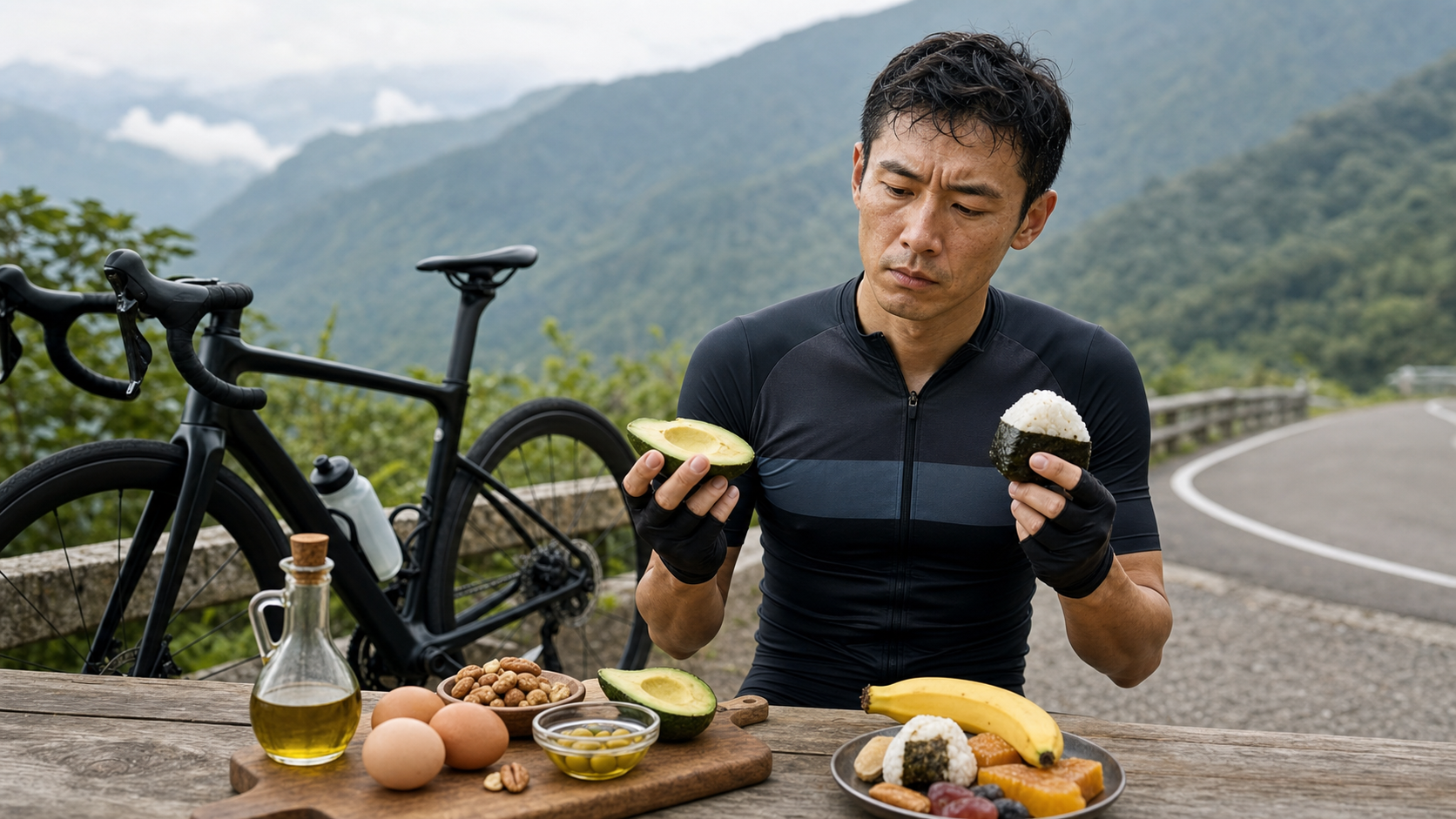
First, a Case I’ll Never Forget
Years ago, I coached a 42-year-old civilian category road cyclist—let’s call him A-Cheng. He came to me highly agitated because he’d just finished watching a series of ketogenic diet videos online and was convinced that “once I turn my body into a fat-burning machine, I’ll never need to eat during long climbs and I’ll never bonk.” He followed a strict ketogenic diet for three months, lost 5 kilograms, and did feel lighter on fasted rides. The problem was—his race results got worse. His sustainable cruising power dropped by roughly 15 to 20 watts, and on long climbs like Wuling, he was more prone to falling apart in the later stages.
He looked confused, even a bit dejected, and asked me: “Coach, I’ve clearly gotten leaner and I’m burning way more fat, so why do I feel more tired when I ride?”
That question captures the core—and most misunderstood—contradiction of Low-Carbohydrate High-Fat (LCHF) and ketogenic diets for athletes. In over a decade of coaching athletes at every level, I’ve heard this story countless times. Some people use it to fix chronic gastrointestinal issues during races; others, like A-Cheng, jump in with high hopes only to see their performance stagnate or decline. Why do the same diet produce such different outcomes? The answer isn’t whether the diet is inherently good or bad—it’s about “who this person is and what sport they’re doing.” In this article, I want to lay out, from a coach’s practical perspective, the real evidence for LCHF, the costs of fat adaptation, and who it’s actually suitable for. I’m not going to tell you that you must or must not eat this way—I just want you to understand what’s actually happening inside your body before you make a decision.
The Conceptual Foundation: How Your Body Burns Fat and Burns Sugar
To understand LCHF, you first need to grasp the energy systems used during exercise. Your body has two primary fuel reserves:
- Carbohydrates: Stored as glycogen in muscles and the liver, this supply is limited—enough for roughly 1.5 to 2 hours of moderate-to-high-intensity exercise. The advantage of carbs is that they “burn fast and produce more energy per liter of oxygen,” meaning better oxygen economy.
- Fat: Even very lean athletes have enough fat to fuel several days of low-intensity exercise. The downside is that fat metabolism is “slow,” and producing the same amount of ATP requires more oxygen.
On a normal diet, the higher the exercise intensity, the more your body tends to burn carbs; the lower the intensity, the more it burns fat. There’s a “peak fat oxidation point” in between, typically in the moderate-to-low intensity zone of 45% to 65% of VO₂max. This is why many coaches recommend “do more easy aerobic work to improve fat-burning efficiency”—that statement itself isn’t wrong, but it’s a completely different thing from “using diet to put your body into a ketogenic state.” Don’t confuse the two.
Let me clear up a common misconception here: “Burning more fat during exercise” does not equal “losing body fat faster.” The key to fat loss is always “total caloric deficit,” regardless of whether you’re burning carbs or fat at that moment. Many people think switching to keto will make them lose weight faster, but what actually makes them leaner is usually just cutting out sugary drinks and refined starches, which lowers total calorie intake. Once this concept is clear, many other myths will fall apart on their own.
The core logic of LCHF is this: If I keep carbohydrate intake extremely low over the long term (keto typically means under 50 grams of carbs per day, sometimes as low as 20 to 30 grams), the body is forced to rely heavily on fat and ketones for fuel. After several weeks of “fat adaptation,” you can burn significant fat at higher intensities too, theoretically sparing precious glycogen and delaying the bonk. This logic sounds very appealing, especially for ultra-endurance athletes.
Fat Adaptation Is Real, and It Comes Faster Than You Think
I’ll be honest here: the effects of fat adaptation are real, not a placebo. Research consistently shows that athletes on LCHF do experience a significant increase in fat oxidation rates during exercise. What’s more striking is how quickly this adaptation occurs—in elite athletes, fat oxidation rates can be elevated to levels comparable to those seen after 3 to 4 weeks, or even over 12 months, in as little as 5 to 6 days (see the Burke team studies in the references at the end).
So if someone tells you, “I burn way more fat after going keto,” they’re not lying. The problem has never been about “whether you become a fat-burning machine”—it’s that burning fat itself comes at a cost.
I often remind my athletes: when evaluating any diet, learn to distinguish between “mechanistically effective” and “helpful for performance.” The increase in fat oxidation is 100% real at the mechanistic level, which is why LCHF proponents can point to impressive metabolic data. But good metabolic numbers don’t mean you’ll run faster or ride farther in a race. In the end, only the finish line and the numbers on your power meter get to speak. This principle of judgment applies to every sports nutrition trend you’ll encounter in your life—remember it.
The Cost of Fat Adaptation: Reduced Exercise Economy
This is the most critical concept in this entire article, so please read it slowly.
A series of studies on elite race walkers (Burke’s team, published in The Journal of Physiology and PLOS One) gave us a very clear answer. The researchers had elite race walkers follow either a high-carbohydrate or a ketogenic LCHF diet, combined with the same high-intensity training. Here’s what happened:
- The LCHF group’s fat oxidation rates increased substantially—this part was entirely as expected.
- However, at race-relevant speeds, the LCHF group required more oxygen per unit of speed, meaning their “exercise economy” worsened. The studies observed an increase in oxygen cost of about 5% to 8% at near-race intensity.
- The most practical result: the high-carb group improved overall performance by about 5% to 6%; meanwhile, 6 out of 7 athletes in the LCHF group actually got slower in competition.
In plain terms: fat may be an inexhaustible fuel, but it’s “not cost-effective.” Burning fat requires more oxygen, and during high-intensity exercise, your cardiorespiratory system’s ability to deliver oxygen has a ceiling. When every step or pedal stroke costs more oxygen, you can’t maintain the same pace or power output. This also explains why my athlete A-Cheng felt “more tired despite burning more fat”—his engine had been modified into a version that consumed more but ran less efficiently.
Why “Oxygen Economy” Matters So Much to You
I’ve noticed many athletes are puzzled when they first hear “economy”—it sounds abstract. Let me use a driving analogy: suppose cars A and B can both reach 100 km/h, but car A uses 8 liters per kilometer while car B uses 12 liters per kilometer. With the same fuel tank size (i.e., your fixed VO₂max), car B can maintain high speed for a shorter distance—or, to put it another way, car B will run “out of breath” sooner trying to hold the same speed.
Ketogenic LCHF turns you into that gas-guzzling car B. Your VO₂max (engine displacement) might not change—in fact, studies show peak aerobic capacity improved in both groups—but because the oxygen cost per unit of energy rises, your sustainable “pace ceiling” gets pushed down. For competitive athletes, what percentage of max intensity you can sustain, and for how long, is often what determines your placing—not how much fat you’re burning. This is the most counterintuitive yet most important part of the whole picture.
Let me add one more observation from the field: when A-Cheng did a fixed-power test, at the same 200-watt output, his heart rate during the keto period was about 6 to 8 bpm higher than during his high-carb period, and his perceived exertion was noticeably higher. This aligns perfectly with the reduced economy described in the research—it wasn’t psychological; his body really was using more oxygen to do the same work.
Re-Adding Carbs Won’t Save You Either
You might ask: “What if I eat keto during training to get fat-adapted, then carb-load the day before a race—wouldn’t that give me the best of both worlds?”
The research cruelly demolishes this wishful thinking. Burke’s team found that even acutely restoring carbohydrate supply could not reverse the impairment in high-intensity exercise performance caused by prior LCHF adaptation. The likely reason is that long-term low-carb intake “blunts” the body’s ability to oxidize carbohydrates—the activity of a key enzyme (pyruvate dehydrogenase, PDH) is downregulated, so even if you fill your glycogen stores, your body can’t rapidly burn that sugar the way it used to. It’s like removing the high gear from a sports car: even with a full tank of high-octane fuel, you can’t reach that speed anymore.
Here’s a table I often use to explain the differences between the two metabolic pathways to my athletes:
| Comparison Item | High-Carb (Carb-Dominant) | Keto / LCHF (Fat-Dominant) |
|---|---|---|
| Primary Fuel | Muscle and liver glycogen | Fat and ketones |
| Fuel Reserve Size | Limited (about 1.5–2 hours of moderate-high intensity) | Nearly inexhaustible |
| Oxygen Economy | Good (high energy per liter of oxygen) | Worse (5–8% more oxygen at same speed) |
| High-Intensity Sprint/Climb Ability | Good | Significantly limited |
| Low-Intensity Long-Duration Endurance | Requires continuous fueling | Relatively stable, fewer bonks |
| Time Needed for Adaptation | Already the default state | Fat oxidation rises in days to weeks, but costs appear simultaneously |
| Can Re-Adding Carbs Restore High-Intensity Performance | — | Research shows it cannot be fully reversed |
Looking at It by Intensity Zone, You’ll Understand Why “Event Type” Is Key
I often draw a chart for my athletes: divide exercise intensity into zones, and you’ll see that LCHF’s pros and cons depend entirely on where your event falls. The table below is my simplified version—the numbers are rough ranges meant to build intuition, not for precise calculations:
| Intensity Zone | Approximate % of VO₂max | Primary Fuel for Most People | LCHF Situation in This Zone |
|---|---|---|---|
| Zone 1–2 Easy Aerobic | 45–65% | Fat-dominant | Relatively favorable; economy penalty is not obvious |
| Zone 3 Tempo | 65–80% | Mixed carb/fat | Starts to lose out; higher heart rate at same pace |
| Zone 4 Lactate Threshold | 80–90% | Carb-dominant | Clearly limited; can’t hold original power |
| Zone 5+ Intervals/Sprints | 90%+ | Almost entirely carbs | Biggest weakness; reduced explosive power and repeat sprint ability |
Once you understand this table, you’ll see why ultra-marathoners (spending lots of time in Zone 1–2) and criterium racers (constantly entering Zone 4–5) have wildly different experiences with LCHF. The same diet can be a help or a poison depending on the event. This is also why I dislike binary questions like “is keto good or bad?”—if you ask the wrong question, you can’t get a useful answer.
What Actually Changes Inside Your Body During Fat Adaptation
So you’re not just “knowing the conclusion,” let me briefly explain a few changes your body undergoes during adaptation, so you’ll know what to look for when self-monitoring:
- Increased fat mobilization and transport capacity: Your body gets better at pulling fat out of adipose tissue and shipping it into muscle cell mitochondria to be burned—this is the basis for the higher fat oxidation rate.
- Mitochondrial enzyme adjustments: The activity of fat-processing enzymes rises, which is good; but simultaneously, the activity of key carbohydrate-processing enzymes (like PDH) is downregulated—this is the root of later high-intensity limitations and the difficulty of rescuing performance with carbs.
- Ketone production: The liver starts producing ketones as an alternative fuel—this is where the name “keto” comes from; the brain and some tissues gradually adapt to using ketones.
- Water and electrolyte loss: In early low-carb phases, declining glycogen pulls out a lot of water (each gram of glycogen binds about 3 to 4 grams of water)—this is the main reason for rapid initial weight loss, which is mostly water, not fat. Don’t get too excited.
Understanding these will help you see why I always emphasize “experiment in the off-season, track data, and proactively supplement electrolytes”—because these changes are predictable. As long as you know what to look for, you can determine early on whether this path is right for you.
So Who Is LCHF Actually For?
You might think I’m completely dismissing LCHF at this point, but that’s not the case. My stance has always been: there’s no absolutely good or bad diet—only what fits this person, this goal, and this event. Based on over a decade of coaching experience and current evidence, here’s how I’d categorize it:
Groups More Likely to Benefit, or at Least Not Be Harmed
- Ultra-endurance, low-intensity-dominant athletes: Think ultra-marathons, ultra-distance bikepacking, or stage races over 100 km where many sections are at relatively low intensity (often below 60% of VO₂max). In these situations, the penalty from reduced economy is less pronounced, while “not having to eat constantly and less GI burden” is a genuine advantage.
- People with chronic GI sensitivity who often get stomach issues in races: I’ve genuinely coached a couple of athletes who would get nauseous or have diarrhea whenever they took carb gels during long events. After shifting to a lower-carb, higher-fat approach, their GI issues improved dramatically. For them, finishing reliably matters more than an absolute best time.
- General fitness enthusiasts whose primary goal is fat loss or weight management: If you’re not chasing performance but just want to control weight and improve metabolic markers, LCHF can be easier for some people to adhere to in terms of “controlling total calories” (because protein and fat are more satiating).
- Those with specific medical needs, evaluated by a physician: Clinical applications for certain metabolic or neurological conditions are a different matter, but those must be individually designed by a doctor and dietitian and fall outside the general exercise advice in this article.
Groups I Generally Do Not Recommend LCHF For
- Competitive athletes requiring high-intensity output: Short-to-medium distance road races, time trials, criteriums, triathlons, competitive trail running—these events spend a lot of time above lactate threshold, and the economy penalty will directly eat into your results. A-Cheng is the classic example.
- Civilian athletes chasing PBs and performance goals: If your goal this season is to set a new Wuling segment PR or a marathon PB, dismantling your high-intensity engine isn’t worth it.
- Adolescents and growing athletes: Energy and nutrient demands are high, and extreme carb restriction carries significant risk—not recommended.
- People with type 1 diabetes or other conditions requiring strict blood sugar control: Any drastic dietary change must be discussed with your medical team first. Do not attempt it on your own.
I want to say a bit more specifically to “performance-oriented civilian athletes,” because this is the group I encounter most often and the one most easily misled by online information. You’re busy with work, training time is limited, and every workout you manage to squeeze in is precious. In that situation, switching to a ketogenic diet that drags down high-intensity output is like trading your limited training gains for a metabolic adaptation that works against your event—the return on investment is terrible. Rather than risking a dietary experiment, put that energy into the three fundamentals repeatedly proven to work—sleep, fueling, and workout planning—and your performance gains will be far more solid.
Practical Approach: If You Really Want to Try It, Here’s How
Suppose you’ve assessed yourself as belonging to the “might benefit” group and want to experiment firsthand. I’ll give you a relatively safe, observable protocol. Please remember: any dietary experiment should be done in the off-season or during a period of lower training volume—absolutely do not start drastically changing your diet just weeks before an important race.
Three-Phase Introduction Protocol
| Phase | Duration | Key Focus | Observation Metrics |
|---|---|---|---|
| Phase 1: Low-Intensity Base | Weeks 1–2 | Drop carbs to under 50g/day; only do easy Zone 1–2 aerobic training; avoid intervals | Severity of dizziness, fatigue, cramping (the so-called “keto flu”) |
| Phase 2: Fat Adaptation Observation | Weeks 3–6 | Stay low-carb; gradually add back longer aerobic sessions; record heart rate and RPE on the same route | Whether heart rate is higher at the same pace; whether climbs feel more breathless |
| Phase 3: Intensity Testing | From Week 7 | Add one lactate threshold or interval session; directly compare power/pace to pre-adaptation | Whether high-intensity output drops significantly; whether recovery slows |
If you reach Phase 3 and find that high-intensity output has dropped a lot, recovery has slowed, and race feel has worsened—that’s your body telling you this path doesn’t fit your current goals, and stopping isn’t a failure. I often tell my athletes that the value of an experiment lies in honestly facing the data, not in proving your initial choice was right.
A Sample Daily Meal Plan for Those Who Want to Try
Many athletes ask me: “What can I actually eat all day on low-carb?” Here’s a sample meal plan using foods easily available in Taiwan, to give you a concrete idea. This is just a demonstration, not a prescription—actual portions should be adjusted based on your body weight, training load, and dietitian’s advice:
| Meal Time | Sample Content | Notes |
|---|---|---|
| Breakfast | Two eggs + avocado or cheese + unsweetened American coffee | High-fat, high-protein start; avoid bread and toast |
| Pre-Training | A small handful of nuts + a pinch of salt | A little electrolyte top-up before low-intensity training |
| Lunch | From a buffet: chicken leg/fish + lots of vegetables + a drizzle of oil, no rice | Taiwanese buffets are actually easy to do low-carb |
| Afternoon | Unsweetened soy milk + tea egg | Readily available at convenience stores |
| Dinner | Hot pot (clear broth) + meat platter + mushrooms and vegetables, skip processed fish balls and glass noodles | A very convenient option in Taiwan, especially in winter |
| Supplement | Actively add sodium, magnesium, and potassium daily | Electrolyte loss is fast in low-carb phases, especially in Taiwan’s humid heat |
I want to stress again: if you find yourself anxious about counting carbs all day and afraid to attend social gatherings, then the cost of this diet to your quality of life may already exceed its potential benefits. Exercise is meant to make life better, not to be held hostage by a diet. I say this to every athlete who wants to try an extreme diet.
The Reality of Doing This in Taiwan
The biggest challenge of long-term LCHF in Taiwan isn’t the theory—it’s the eating-out environment. I’ve helped my athletes map out the common pitfalls and workarounds:
- Convenience stores and buffets: Rice and noodles dominate. Braised items, tea eggs, chicken breast, unsweetened soy milk, nuts, and avocado (if you can find it) will be your friends. Be especially careful with thick soups, cornstarch-thickened dishes, and sugary drinks—they hide a lot of carbs.
- Bubble tea culture: One full-sugar pearl milk tea can blow through an entire day’s carb limit. For anyone trying to maintain ketosis, this is a real hurdle—you need to be mentally prepared to give it up.
- Taiwan’s hot, humid climate: In summer, riding along the riverside or on Beiyi or Fengguizui means heavy sweating. In a low-carb state, you’re already prone to sodium, magnesium, and potassium deficiencies that cause cramping—electrolyte supplementation needs to be more aggressive than usual, especially sodium and magnesium. I’ve seen too many people overlook this, and the keto flu symptoms get amplified by the heat.
- The advantage of accessible healthcare: Seeing a doctor or getting blood tests in Taiwan is relatively cheap and convenient. If you’re planning long-term adherence, I recommend getting basic lipid, blood sugar, and kidney function tests before you start and again 2 to 3 months in, then having a physician and dietitian interpret the results. This is a cheap safety net—don’t skip it.
Common Mistakes and Corrections
In all my years of coaching, I’ve compiled the most common mistakes below. Almost everyone who tries LCHF steps on at least one or two of these:
Mistake 1: Deciding to Change Your Diet on a Whim During Race Week
This is the most dangerous one. Fat adaptation takes weeks; a sudden dietary change will only trigger keto flu and wreck your form. Correction: Any dietary adjustment belongs in the off-season. Your race-week nutrition strategy should be locked in 4 to 6 weeks before the event, with no major changes.
Mistake 2: Only Cutting Carbs Without Eating Enough Fat and Protein
Many people think LCHF means “eat less,” so they end up low-carb and low-calorie, feeling drained all day and losing muscle. Correction: LCHF is not calorie restriction. You need to eat enough fat, and protein should stay in the range of about 1.6 to 2.0 grams per kilogram of body weight to avoid muscle loss.
Mistake 3: Ignoring Electrolytes and Mistaking Keto Flu for “Detoxing”
In early low-carb phases, insulin drops and the kidneys excrete more water and sodium. Much of the discomfort is actually dehydration and electrolyte imbalance, not some kind of detox. Correction: Proactively supplement sodium, potassium, and magnesium, especially when sweating heavily in Taiwan’s summer.
Mistake 4: Using Someone Else’s Success Story as Your Prescription
The internet is full of “so-and-so ultra-runner won on keto” stories. But remember, an anecdote is not evidence, and you are not that person. They might be in a low-intensity ultra-endurance event, might have favorable genetics, or might have a host of unseen variables. Correction: Trust the data you measure on yourself over any influencer’s experience.
Mistake 5: Equating “Burning More Fat” Directly with “Performing Better”
This is the most fundamental cognitive error, explained earlier—the increase in fat oxidation is real, but the decrease in economy is also real, and both happen simultaneously. Correction: The standard for judging a diet’s effectiveness is always “actual race or test performance,” not “how much fat I feel like I’m burning.”
Actionable Advice for Readers at Different Levels
If You’re a Beginner Fitness Enthusiast
Don’t touch keto yet. What you need most right now is to master the fundamental skill of “regularly consuming carbohydrates during exercise”—learning to take in enough carbs per hour during long sessions to solve the root cause of bonking (insufficient fueling). Most people think they need a different diet strategy when they actually just haven’t gotten their fueling right. Solidifying your basic nutrition is a hundred times more important than chasing fancy metabolic modifications.
If You’re a Civilian Athlete Chasing Performance
Given your goals, a high-carb or “periodized carbohydrate” strategy is almost certainly a better fit than full-time keto. You might look into “train low, race high” (doing some low-intensity sessions in a low-glycogen state, then fully fueling with carbs on race day)—a compromise approach that tries to retain some fat-adaptation signals without sacrificing high-intensity output on race day. But note that this advanced strategy requires more careful planning, ideally with a coach and dietitian.
If You’re an Ultra-Endurance, Low-Intensity-Dominant Challenger
You’re the group most likely to benefit from a lower-carb approach, but I’d still recommend “lower-carb” rather than “extreme keto,” and experiment in the off-season while tracking data. Focus on GI tolerance and fueling stability, not on chasing high ketone numbers.
If You Have a Chronic Condition (Diabetes, Hypertension, Heart Disease, etc.)
Please see a doctor first. Drastic dietary changes affect blood sugar, blood pressure, and medication needs, with huge individual variation. Taiwan’s healthcare is accessible—use it. Let your physician and dietitian work with you to manage this. Don’t try it on your own after reading an online article. This isn’t being conservative; it’s being responsible.
Frequently Asked Questions from the Coaching Field (FAQ)
Over the years, I’ve been asked the same questions countless times. I’ve compiled them into an FAQ to help you avoid unnecessary detours.
Q1: I’ve heard many elite ultra-runners eat keto. Does that mean it’s great for endurance?
Ultra-long, low-intensity events are the arena where LCHF is least disadvantageous, so you do hear more positive stories from the ultra-running world. But note two things: first, these are low-intensity events, which is completely different from the high-intensity road races or marathon PBs you might be chasing; second, what you hear are “success stories”—those who tried it and found it unsuitable don’t get on stage to share. Survivorship bias is especially severe in diet discussions.
Q2: Can I keep doing interval training while on keto?
During the early fat-adaptation phase (the first few weeks), I strongly advise against high-intensity intervals. Your carbohydrate oxidation capacity is being downregulated right now; forcing intervals will only give you poor quality, slower recovery, and a higher injury risk. Wait until your body stabilizes, then test intensity and honestly compare the data.
Q3: What exactly is keto flu, and how long does it last?
The common early low-carb symptoms—dizziness, fatigue, headache, cramping, reduced concentration—are mostly related to dehydration and electrolyte loss. They usually ease within a few days to a couple of weeks. Proactively hydrating and supplementing sodium, magnesium, and potassium can significantly reduce symptoms. If symptoms are severe or persist, see a doctor—don’t tough it out.
Q4: I want to burn fat and keep high-intensity performance. Is there a compromise?
Yes—the “periodized carbohydrate” approach (train low, race high) I mentioned earlier: do some low-intensity sessions in a low-glycogen state to stimulate adaptation, but fully fuel with carbs on race day and for high-intensity workouts. This suits performance-oriented athletes better than full-time keto, but it requires more careful planning, so I recommend working with a coach and dietitian.
Q5: I’m on blood sugar or blood pressure medication. Can I try keto on my own?
No—see a doctor first. Drastic dietary changes directly affect blood sugar and blood pressure, and medication dosages may need adjustment. Trying it on your own is risky. Taiwan’s healthcare is accessible—make sure your physician and dietitian are involved.
A Simple Self-Checklist
Before you decide whether to try LCHF, honestly answer these questions:
| Checklist Question | If Your Answer Trends This Way, LCHF Is Less Suitable |
|---|---|
| Does my main event require a lot of high-intensity output? | Yes |
| Do I have a clear PB or competitive performance goal this season? | Yes |
| Have I already mastered basic fueling concepts and execution? | No (work on this first) |
| Can I commit to long-term low-carb in Taiwan’s eating-out environment? | No |
| Am I willing to spend weeks experimenting in the off-season and tracking data? | No |
| Do I have a chronic condition or am I taking medication? | Yes (see a doctor first) |
If several of your answers fall in the “less suitable” column, the answer is already pretty clear.
Conclusion: Don’t Chase Magic—Chase What Works for You
Back to A-Cheng’s story. He eventually stopped keto, returned to a periodized carbohydrate approach, and spent about six to eight weeks gradually regaining his high-intensity output. That season, he rode a personal best up Wuling. He said something to me with a smile that I still remember to this day: “Coach, I realized I didn’t need to turn my body into something else—I just needed to take good care of the engine that was already right for me.”
That’s the core message I want to leave you with. LCHF and ketogenic diets are neither a cult nor a panacea. They have real physiological effects (increased fat oxidation) and real costs (reduced exercise economy, limited high-intensity performance, and difficulty reversing it with carbs). They may have value in certain low-intensity, ultra-endurance, or specific GI situations, but for the vast majority of athletes chasing performance and needing high-intensity output, they are not the optimal choice.
Most importantly—make decisions based on data you measure on yourself, not on other people’s stories. Solidify your foundational nutrition and fueling first; only then do advanced strategies make sense. Diet trends will come and go in waves, but honestly facing data, respecting individual differences, and seeking medical help when needed are principles that never go out of style. The road of sport is long—steady and patient often gets you there faster.
This article is educational content and does not replace individual diagnosis or treatment advice from a physician, physical therapist, or dietitian. If you have chronic conditions such as diabetes, hypertension, or heart disease, or are taking medication, please discuss any major dietary changes with your medical team and undergo an individualized assessment before proceeding.
References
- Burke et al., Adaptation to a low carbohydrate high fat diet is rapid but impairs endurance exercise metabolism and performance despite enhanced glycogen availability, The Journal of Physiology (2021): https://physoc.onlinelibrary.wiley.com/doi/10.1113/JP280221
- Low carbohydrate, high fat diet impairs exercise economy and negates the performance benefit from intensified training in elite race walkers (PMC full text): https://www.ncbi.nlm.nih.gov/pmc/articles/PMC5407976/
- Crisis of confidence averted: Impairment of exercise economy and performance in elite race walkers by ketogenic low carbohydrate, high fat (LCHF) diet is reproducible, PLOS One (2020): https://pmc.ncbi.nlm.nih.gov/articles/PMC7272074/
- The Effect of a Ketogenic Low-Carbohydrate, High-Fat Diet on Aerobic Capacity and Exercise Performance in Endurance Athletes: A Systematic Review and Meta-Analysis (PMC full text): https://www.ncbi.nlm.nih.gov/pmc/articles/PMC8400555/
Related Reading
- Low-Carb High-Fat and Keto: The Biggest Controversy in Endurance Sports—A Triathlon Coach’s Fifteen-Year Observation
- The Truth About Fat Adaptation: A New Strategy for Endurance Sports or Overhyped
- Nutrition & Recovery: A Guide to Ketogenic Diets and Low-Carb Adaptation (Fat-Adaptation) for Endurance Athletes: The Pros and Cons of High Fat Oxidation Rates for Ultra-Distance Races and the Core Secrets of Recovery Scheduling
- The Impact of a Low-Carb High-Fat (LCHF) Diet on Ultra-Marathon Performance: A Balanced Assessment from a Systematic Review
靠單車減肥35公斤 心得分享與整理
7 年前
CT暗黑廚房) 車友必備 宇宙無敵鮮蚵湯 幫助訓練恢復 天然食補 好市多 超肥鮮蚵 破PR
7 年前
碟煞公路車 優缺點?換車一年半實際經驗分享 / 公路車 / CT Yeh
2 年前
#公路車 #Fitting 靠人工智慧APP 幫你調整單車
6 年前
一個測試有沒有認真練車的方法😂 #公路車
10 個月前
一日北高/長距離團騎 常見問題補充篇 / 組團或跟團的眉角 / 壯車友容易被瘦車友慢性拉爆 / 原來屁股痛可能是這個原因...? / 風場配速法 / 公路車 / CT Yeh
2 年前
大家都在開箱的...單車用藍芽對講耳機真的有幫助嗎? SENA BiKom 20 長距離旅遊 & 海鷗繞圈賽 實際體驗心得 / 公路車 / CT Yeh
9 個月前
2016/4/20 - 中社路 夜騎 半年甩肉14KG 後測
10 年前