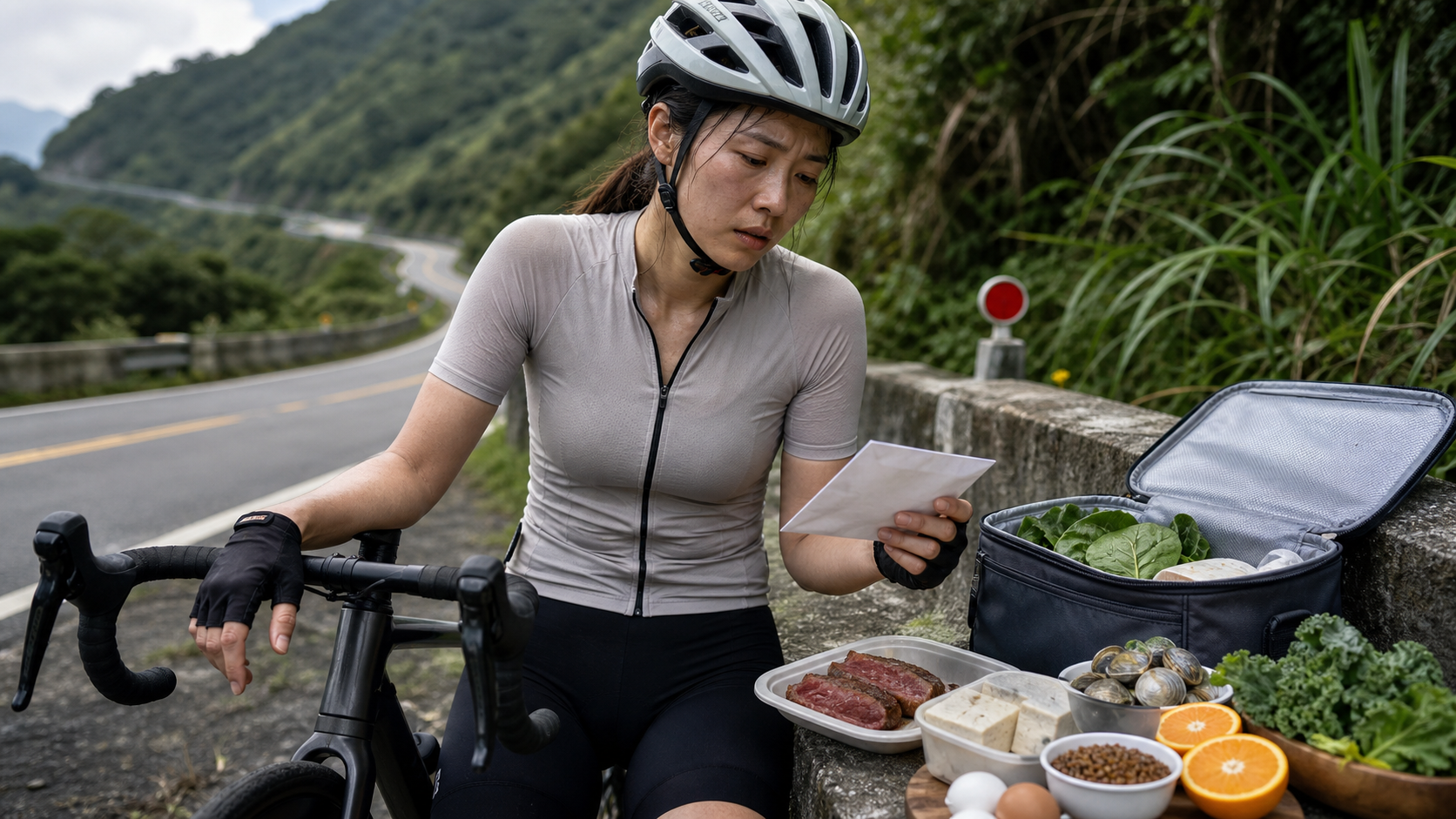
Opening: The Female Cyclist Who Couldn’t Improve No Matter How Hard She Trained
I’ve been coaching athletes and general fitness enthusiasts for nearly fifteen years, and I’ve encountered all sorts of “plateaus,” but one case stands out in my memory. She was a female cyclist in her early thirties; let’s call her Little Y. She rode steadily three to four times a week, did the Yangmingshan P-word mountain route every weekend, and in winter she’d organize group rides up Wuling for climbing practice. Her training volume was substantial, and her attitude was serious. But for six months, her power output kept declining. The 180-watt range she could previously sustain steadily became a struggle—she’d last just ten or fifteen minutes before her heart rate spiked to nearly 180 bpm and her legs turned to jelly. She described it herself: “Coach, it’s not that I’m out of breath—I feel like I’ve been completely drained dry.”
My first move wasn’t to add more training or tell her to rest for a few days. Instead, I asked her to get blood work done. The results showed her hemoglobin (Hb) was at the lower edge of the reference range—not yet crossing the diagnostic line for “anemia”—but her serum ferritin was only 12 ng/mL. On a typical lab report, that number might just be flagged as “low” and might not even be singled out by a doctor. But for a regularly training endurance athlete, it’s essentially a red alert.
In this article, I want to explain iron—the micronutrient most easily overlooked by endurance athletes—thoroughly. We’ll cover why endurance athletes are especially prone to iron deficiency, what the symptoms are, which numbers on your blood test actually matter, how to eat in daily life, when you actually need iron supplements, and how people at different levels should act. I’ll ground this in Taiwan’s climate, eating-out culture, and the realities of using the National Health Insurance system. Let me start with the most important point: Iron is not a case of “the more, the better.” It’s a nutrient where “too little causes problems, and too much also causes problems.” So understanding the concept matters more than brute force.
Why Iron Is So Critical for Endurance Athletes
What Iron Actually Does in the Body
The easiest way to think of iron is as the body’s “oxygen delivery worker.” The oxygen you breathe in relies on hemoglobin in red blood cells to be transported to muscles throughout the body; iron is at the core of hemoglobin. Once in the muscle, a protein called myoglobin is responsible for temporarily storing oxygen and handing it over to muscle cells for use—and its core is also iron. Going even deeper, the mitochondria that produce energy in cells have a whole chain of “electron transport chain” enzymes that also need iron as a cofactor.
So when iron is insufficient, it drags you down on three levels simultaneously: oxygen transport capacity drops, muscle oxygen storage capacity drops, and cellular energy production efficiency drops. For a cyclist or runner who cares about “VO₂max” and “aerobic endurance,” none of these three is anything less than critical. This is also why many iron-deficient people don’t experience “pain in a specific spot,” but rather an indescribable overall fatigue and a ceiling pressing down on performance.
Why Endurance Athletes Are a High-Risk Group
The average person rarely becomes iron deficient, but endurance athletes face significantly higher risk because of a triple squeeze: “less in, more out, and greater demand.”
- Hemolysis from foot-strike impact: During running, the repeated impact of your feet on the ground damages a small number of red blood cells (called foot-strike hemolysis), and iron is lost along with it. Cycling has less impact, but prolonged high-intensity effort still has an effect.
- Sweat loss: Taiwan’s summers are hot and humid. A long ride or run can easily produce massive sweat loss, and sweat contains trace amounts of iron that add up more than you’d think.
- Micro-bleeding in the gastrointestinal tract: During high-intensity, prolonged exercise, blood is redistributed away from the gut toward the muscles, and the intestinal lining may develop micro-leaks that increase iron loss in stool.
- Exercise-induced reduction in iron absorption: After intense exercise, the body secretes a hormone called hepcidin, which temporarily reduces the gut’s ability to absorb iron. In other words, the few hours right after a hard workout are actually the worst time to absorb iron—this has a direct impact on supplementation strategy, which I’ll cover later.
- Inadequate dietary intake: Many people eat less protein (especially red meat) to control weight or keep their stomach feeling light. Vegetarians, intermittent fasters, and women with heavier menstrual flow are at even higher risk.
Add all this up, and you can see why a serious female cyclist like Little Y is especially vulnerable. Female athletes, due to menstrual blood loss, have a significantly higher prevalence of iron deficiency than males—a difference you must always keep in mind in practice.
Symptoms and Stages of Iron Deficiency: It’s Not Just “Anemia”
Many people assume “iron deficiency = anemia,” but that’s one of the biggest misconceptions. Iron deficiency is a continuous process, and anemia is just the final stop. Before anemia even develops, athletic performance may already be compromised. Clinically, it can be roughly divided into three stages:
| Stage | Plain-Language Explanation | Hemoglobin Status | Ferritin Status | Athlete’s Experience |
|---|---|---|---|---|
| Stage 1: Iron store depletion | The warehouse (ferritin) is running low, but blood is still normal | Normal | Clearly low | May already feel easily fatigued and slower to recover, but it’s often dismissed as “overtraining” |
| Stage 2: Iron deficiency without anemia (IDNA) | The warehouse is empty, starting to affect the supply of raw materials for blood production | Still at the lower edge of normal range | Very low | Poorer training adaptation, elevated heart rate, performance hitting a ceiling |
| Stage 3: Iron deficiency anemia | Hemoglobin has also dropped; oxygen transport capacity truly declines | Low | Extremely low | Clearly breathless, dizzy, pale complexion, collapsing on climbs |
The most important takeaway from this table is: Stage 2 (iron deficiency without anemia, often abbreviated IDNA) already affects endurance performance. Research indicates that even when hemoglobin is still within the normal range, insufficient iron stores weaken the body’s ability to adapt to endurance training, leaving you “training but not improving.” (See references at the end of the article.)
Common Symptom Checklist
None of the following symptoms is specific on its own, but if a regularly training person experiences several of them simultaneously and they persist for weeks, iron deficiency is worth suspecting:
- At the same pace or power output during training, heart rate is noticeably higher than before (e.g., a zone you could hold at 160 bpm now feels like you’re about to blow up at 170 bpm)
- Persistent fatigue you can’t quite explain; you still feel tired even after a full night’s sleep
- Slower recovery; no matter how you recover between two hard sessions, you can’t bounce back
- Dizziness or blacking out especially after climbs or sprints
- Cold hands and feet; pale complexion and pale inner eyelids
- Reduced concentration, low mood, unexplained irritability
- Some people develop “pica,” such as a strong urge to chew ice (medically known as pica, one of the classic clues for iron deficiency)
- Increased hair loss, brittle nails
I often tell my athletes: if your heart rate drifts upward for no reason at the same intensity, accompanied by unexplained fatigue, that’s your body talking to you. Don’t rush to add more training—go get blood work first.
How to Read Your Blood Test: Ferritin Is Key, But Watch Out for Traps
Which Tests to Get
In Taiwan, these tests can usually be arranged through a health check-up, a family medicine clinic, or a sports medicine clinic, and many are covered by NHI or included in self-pay health check packages. The indicators most relevant to an athlete’s iron status are:
| Test Item | What It Shows | Practical Notes for Athletes |
|---|---|---|
| Hemoglobin (Hb) | Blood’s oxygen-carrying capacity | Only when it drops is it called anemia, but “normal” doesn’t mean iron is sufficient |
| Serum Ferritin | Body’s iron stores (warehouse inventory) | The most critical early indicator; it drops before anemia appears |
| Transferrin Saturation (TSAT) | Efficiency of iron transport in the blood | Aids interpretation; low levels support iron deficiency |
| Serum Iron / Total Iron-Binding Capacity | Current blood iron and transport capacity | Highly variable; must be interpreted alongside other markers |
| CRP (inflammation marker) | Whether inflammation is interfering | Ferritin can be falsely elevated by inflammation; needs to be read together |
How to Interpret Ferritin Numbers
This is the most important point to remember in the entire article. The World Health Organization (WHO) sets the iron deficiency cutoff for the general healthy adult at serum ferritin 15 ng/mL, but for endurance athletes, this standard is clearly too low and too lenient. Multiple reviews and recommendations specific to athletes indicate:
- For the general adult, below 15 ng/mL is considered an empty iron warehouse, and 15 to 30 ng/mL is considered low iron stores.
- For endurance athletes, using a higher cutoff of approximately 40 to 50 ng/mL can catch iron deficiency earlier.
- Some systematic reviews recommend athletes maintain ferritin in a band of roughly 40 to 90 ng/mL.
- Before altitude (high-elevation) training, because hematopoietic demand increases, it’s recommended to bring ferritin up to approximately 50 ng/mL or above beforehand to support red blood cell production.
In plain language: the “reference range lower limit of 15” on your lab report is not sufficient for someone who trains seriously. When ferritin drops below 30 ng/mL and you also have symptoms, it’s time to act proactively; below 15 ng/mL is a clear indication for intervention. Treat these numbers as ranges and directions, not as rigid precise thresholds. Ultimately, a physician must interpret them in the context of your clinical situation.
Going back to Little Y’s 12 ng/mL: she wasn’t even meeting the general standard, so it’s no wonder her power was collapsing. That’s also why I insisted on blood work first rather than adding training volume.
The Two Biggest Traps in Interpretation
The first trap is that inflammation can falsely elevate ferritin. Ferritin is also an “acute-phase protein.” If your body has any inflammation, infection, or you’ve just finished a very hard workout or race, the number can be temporarily inflated. So I generally recommend getting blood drawn when you’re well rested, free of colds or acute infections, and at least a day or two removed from intense training, and pairing it with CRP. If ferritin looks okay but CRP is high, be aware that the number may be artificially inflated.
The second trap is only looking at hemoglobin. As mentioned earlier, anemia is the final stop. Many athletes are already in Stage 2 while their hemoglobin is still “normal.” Testing only Hb without ferritin means missing the best window for intervention.
Dietary Sources: Heme Iron vs. Non-Heme Iron
When dealing with iron, the first line of defense is always food, not rushing out to buy supplements. And when talking about dietary iron, you first need to distinguish between two types:
- Heme iron: Comes from animal foods (red meat, organ meats, poultry, fish and shellfish). Its absorption rate is much higher, and its absorption is less affected by other dietary factors.
- Non-heme iron: Comes from plants (dark leafy greens, legumes, whole grains, nuts) and iron-fortified foods. Its absorption rate is lower and it’s easily interfered with by other dietary components.
This is especially important for Taiwanese readers, because many people (especially women and vegetarians) rely mainly on vegetables for iron, thinking “I eat a lot of spinach.” But non-heme iron has low absorption, so the actual amount that gets into your body may be far less than you imagine.
Iron Content Reference for Common Foods
The table below gives a rough directional sense of iron content in common foods (approximate values per 100 grams; actual values vary by variety and cooking method, so treat this as a relative comparison):
| Food | Iron Type | Content Direction | Coach’s Notes |
|---|---|---|---|
| Beef, lamb (red meat) | Heme iron | High | Great absorption; one of the main sources for athletes |
| Pork liver, chicken liver and other organ meats | Heme iron | Very high | Dense in iron, but high in purines; not for large daily amounts |
| Clams, oysters, shellfish | Heme iron | High | Easy to get in Taiwan; a great choice |
| Chicken, lean pork | Heme iron | Medium | Easy to pair into daily meals |
| Red amaranth, sweet potato leaves, spinach | Non-heme iron | Medium | Low absorption; needs vitamin C |
| Black beans, red beans, chickpeas | Non-heme iron | Medium | Main source for vegetarians; remember to pair with C |
| Black sesame, pumpkin seeds, nuts | Non-heme iron | Medium | Good as a snack to add a little |
| Iron-fortified breakfast cereal | Non-heme iron | Depends on product | Check the nutrition label; don’t eat with coffee |
Three Techniques to Make Iron “Actually Absorb”
Getting food into your mouth doesn’t mean it gets into your body. This section is the practical essence:
- Pair with vitamin C: Vitamin C significantly boosts the absorption of non-heme iron. When eating dark leafy greens or legumes, pair them with a serving of guava, citrus, or kiwi, or squeeze some lemon into the meal. Taiwan has abundant, cheap fruit, so this trick is very easy to use.
- Avoid “iron’s natural enemies”: Tannins in tea and coffee, calcium (dairy, calcium supplements), and phytates in whole grains and legumes all inhibit iron absorption. In practice, I ask my athletes to wait at least an hour before or after meals before drinking tea or coffee, and not to chug milk or take calcium supplements with the meal where you’re trying to get iron. This is especially practical for Taiwanese people, since many are used to having a hand-shaken tea with a meal or a coffee after.
- Eat heme and non-heme iron together: The heme iron in red meat helps the absorption of plant-based iron in the same meal. So a plate of “beef stir-fried with spinach” is actually much smarter than eating spinach alone.
Practical Strategies for Taiwan’s Eating-Out Culture
Eating out is convenient in Taiwan, but it also often hits the combination of “lots of refined carbs, insufficient protein, and post-meal drinks that inhibit absorption.” Here are some down-to-earth tips for people who eat out:
- When choosing a bento, pick one with a red meat or seafood main dish (beef, braised pork, clams), and load up on dark leafy greens for vegetables.
- Move that post-meal drink to between meals instead of right after eating.
- Hot pot is a great opportunity: beef slices + lots of vegetables + a little lemon dipping sauce puts iron and vitamin C in the same frame.
- Vegetarian bento eaters need to be more deliberate: soy products + dark leafy greens + a piece of fruit, and try to avoid having tea with every meal throughout the day.
Supplementation Strategy: When Should You Actually Take Iron Supplements
The Most Important Principle First
Iron supplements are not a health food. It’s not advisable to self-supplement long-term without blood tests and medical evaluation. The reason is that excess iron accumulates in organs like the liver and causes damage. In particular, a small number of people have hereditary hemochromatosis, and randomly supplementing iron can be very dangerous. So the correct order for iron supplementation is: get blood work → confirm deficiency → have a physician evaluate dosage and form → follow up with repeat testing.
When would oral iron supplements be needed? Roughly: when dietary adjustment is still insufficient, ferritin is clearly low (e.g., below 30 ng/mL with symptoms), or iron deficiency anemia has already developed, and after physician evaluation. At that point, food alone usually can’t replenish stores fast enough, and iron supplements are needed to accelerate refilling.
Supplementation Methods and Precautions Comparison
| Aspect | Practical Advice | Reason |
|---|---|---|
| Prerequisite | Get blood work first; physician evaluation | Avoid iron overload and masking other issues |
| Timing | Take it several hours away from exercise, or in the morning on an empty stomach | Post-exercise hepcidin rise suppresses absorption |
| Pair with | Vitamin C or acidic fruit juice | Improves absorption rate |
| Avoid taking with | Coffee, tea, calcium supplements, antacids | These inhibit iron absorption |
| Frequency | Some research supports that “every other day” dosing isn’t necessarily less efficient than daily | Large daily doses actually raise hepcidin more and cause more GI side effects |
| Side effects | Constipation, nausea, stomach discomfort, black stools | Common reactions; if severe, return to your doctor to adjust |
| Follow-up | Re-test ferritin after a period of supplementation | Confirm refilling and avoid over-supplementation |
Here’s a commonly overlooked but very practical point: because hepcidin rises after exercise and temporarily reduces iron absorption, scheduling iron supplements away from intense training (e.g., on a rest day morning, or several hours after a workout) is more cost-effective. Additionally, recent discussions suggest that taking high doses daily continuously can actually keep stimulating hepcidin, suppressing absorption and increasing GI discomfort. Switching to every-other-day dosing may not lose total absorption and may be better tolerated—but the exact dosage and frequency must be decided by your physician based on your numbers. Don’t adjust it yourself.
What About Intravenous Iron?
For some cases of severe deficiency, poor oral absorption, or inability to tolerate oral iron, a physician may evaluate intravenous iron. This is absolutely a medical procedure that must be performed and monitored by a physician in a medical facility. It’s not something an athlete can decide on their own or get done anywhere. I mention it in this article just so you know the option exists and can discuss it with your doctor if you face stubborn iron deficiency—not to encourage you to pursue it.
Common Mistakes and Corrections
Over the years of coaching, I’ve seen too many people go down the wrong path with iron. Here are the most common mistakes:
Mistake 1: Adding Training or Supplements When Tired, Without Getting Blood Work
This is the most common and most damaging mistake. Many people, when tired, think “maybe I’m not training enough” and add volume, pushing an already iron-deficient body deeper into the hole. The right approach: unexplained persistent fatigue plus an unexplained rise in heart rate at the same intensity—schedule blood work first. The cost of one blood test is far less than the cost of losing an entire season of form.
Mistake 2: Only Looking at Hemoglobin and Thinking “No Anemia Means No Problem”
As I’ve emphasized repeatedly: anemia is the final stop; ferritin is the early warning. Testing only Hb makes you miss Stage 2 (IDNA), which is the golden window for intervention. When getting blood drawn, remember to proactively ask for ferritin to be added.
Mistake 3: Indiscriminately Swallowing Iron Supplements as a “Maintenance” Habit
Iron is not vitamin C; taking more isn’t harmless. Excess accumulates and damages the liver, and it can also mask underlying disease. Long-term high-dose supplementation without blood test evidence is gambling with your body. Always follow the “test—evaluate—follow up” process.
Mistake 4: Eating Lots of Spinach Without Vitamin C, and Pairing It with Tea After Meals
This is the classic absorption mistake. Plant iron already has low absorption, and then you immediately drink tea, coffee, or milk—it’s like filling a bucket with a hole in it. Correction: pair plant iron with fruit (vitamin C), and drink tea and coffee between meals.
Mistake 5: Supplementing Iron Immediately After Training
The few hours after exercise are when hepcidin is highest and absorption is worst—yet it’s exactly when many people “swallow all their supplements right after a workout.” Correction: schedule iron supplements or high-iron meals as far away from intense training as possible.
Mistake 6: Ignoring the High Risk for Women and Vegetarians
Women, due to menstrual blood loss, and vegetarians, because their iron sources are mainly low-absorption plant iron, are both clearly high-risk groups—yet they often assume “I eat very healthily” and overlook the risk. Correction: these two groups should monitor ferritin regularly and treat screening as routine.
Action Recommendations for Readers at Different Levels
Everyone’s training volume, sex, and dietary patterns differ, so action plans should be tiered. Here are concrete starting points for three common profiles.
If You’re a “Weekend Athlete” Who Wants More Energy
- First, get the dietary basics right: have red meat or seafood in a few meals a week, and pair vegetables with fruit.
- Build the habit of drinking beverages between meals; don’t pair tea or coffee with every meal.
- If you’ve been chronically tired, pale, or prone to dizziness, go to a family medicine clinic for blood work and proactively say, “I’d like to check ferritin too.”
- You don’t need to buy iron supplements on your own. Focus on eating the right foods and getting enough sleep.
If You’re an “Advanced Athlete” Training Regularly and Want to Break Through
- I recommend checking ferritin at least once or twice per season, e.g., once before the season and once mid-season, to establish your baseline.
- Before blood work, avoid the period right after a race or a hard session, and get tested when you’re free of colds or inflammation; add CRP if needed.
- Turn iron absorption techniques into habits: plant iron with C, avoid tea/coffee and calcium, heme + non-heme in the same meal.
- If your numbers are low (e.g., ferritin below 30 ng/mL with symptoms), bring the report to a physician for discussion. Don’t self-supplement.
If You’re a “Heavy-Duty” Athlete with High Volume, Targeting Long Distances or Altitude
- Monitor more frequently, especially before preparing for Wuling or arranging altitude training. First confirm ferritin is in place (as mentioned, it’s recommended to be around 50 ng/mL or above before altitude training).
- Female, vegetarian, and high-volume athletes with heavy menstrual flow are the group most in need of long-term collaboration with sports medicine/nutrition professionals.
- If iron supplementation is needed, it must be done under physician guidance, with regular re-testing to confirm refilling and avoid over-supplementation.
- Don’t forget: iron is only one piece of the puzzle. Sleep, whether total calories are sufficient (energy availability), and protein intake all affect your iron status and overall recovery.
A Ready-to-Use Iron Status Monitoring Schedule
Many athletes ask me: “So how often should I get tested, and when?” Rather than memorizing a bunch of principles, here’s a schedule you can follow directly. This is the monitoring rhythm I practically give to athletes at different training volumes; you can adjust it to your own race calendar:
| Timing | Recommended Action | Why This Time Point |
|---|---|---|
| 4 to 6 weeks before the season starts | Test ferritin + Hb once to establish a baseline | If there’s a problem, there’s still time to address it; you won’t discover it right before a race |
| Mid-season (when training volume is highest) | Test again | That’s when training load and losses are greatest, and the most likely time to drop |
| 4 to 8 weeks before a major goal race or altitude training | Confirm ferritin is on target | Blood production takes time; cramming at the last minute won’t work |
| When unexplained fatigue or unexplained heart rate elevation appears | Arrange it anytime; don’t wait for the schedule | Symptoms are the best reminder |
| 8 to 12 weeks after starting iron supplementation | Re-test to see if stores have refilled | Confirm the strategy is working and avoid over-supplementation |
| Women, vegetarians, those with heavy menstrual flow | Increase the frequency above | High-risk groups have more baseline fluctuation |
The spirit of this table is: treat iron status like weight or sleep—a routine monitoring metric—rather than passively looking for answers only after a crash. Blood draws should avoid the period right after a race, a hard session, or an active cold/inflammation, for the reasons discussed earlier—to prevent ferritin from being falsely elevated by the acute-phase response.
Walking Through the Case: Little Y’s Six-Month Timeline
To show you what the whole process looks like, let me lay out Little Y’s six-month handling process (her blood data is the general direction of her real results; process details are slightly organized):
- Week 0: Chief complaints were declining power, elevated heart rate at the same intensity, and unexplained fatigue. I didn’t add training; I asked her to get blood work first.
- Week 1: Results came back. Hb was at the lower edge of normal, ferritin was only 12 ng/mL, and CRP was normal (ruling out inflammation inflation). Assessment: severely depleted iron stores, bordering on iron deficiency anemia.
- Week 2: She saw a physician with the report. The physician evaluated and prescribed oral iron supplements, along with dietary education. On my end, I simultaneously reduced her training volume, shifting to aerobic base work and telling her not to push hard intervals.
- Weeks 2 to 12: Three dietary changes—increase red meat and shellfish meals each week, always pair plant iron with fruit, and move hand-shaken tea and coffee to between meals. Iron supplementation was timed away from the hours after training.
- Week 12 re-test: Ferritin climbed into the thirties, and Hb returned to the mid-range. She said, “On the same climb, my heart rate doesn’t spike to nearly 180 anymore,” and her power stabilized.
- Afterward: Switched to a maintenance dietary strategy and added ferritin to her quarterly routine monitoring to avoid bottoming out again.
The key message of this timeline: iron problems have no quick fix; refilling is measured in weeks to months. But as long as the direction is right and you patiently follow the process, your condition usually stabilizes. Conversely, if she had added training and swallowed supplements without blood work when she first felt tired, she might well have lost the entire season.
Iron and Your Overall Training Nutrition Are One Chess Game
I want to specifically remind you of something that’s often treated in isolation: iron status isn’t standalone—it’s tied to your overall energy intake, protein, and recovery. Clinically, there’s a concept called “relative energy deficiency” (the idea many people know as RED-S). When you chronically eat less than you expend and energy availability is low, the body compresses many “non-essential” physiological functions—including blood production and hormones. In other words, someone who chronically under-eats calories and trains hard may struggle to improve their iron status even with diligent iron supplementation, because the body is in “power-saving mode.”
So when I coach athletes, I place iron within a larger framework:
- Are total calories sufficient?: Chronic calorie deficit drags down blood production and recovery. First make sure you’re eating enough.
- Is protein sufficient?: Blood production and repair need protein as raw material, and red meat is also a great iron source—two birds with one stone.
- Is sleep sufficient?: It’s the foundation of recovery and hormonal regulation. Without enough sleep, every nutritional strategy is discounted.
- Is training load reasonable?: If you keep stacking volume without giving the body room to refill, iron will only drop deeper.
Take care of all these pieces together, and your iron strategy will be twice as effective. Fixating on “iron supplementation” alone while ignoring the big picture is often why people supplement for a long time without seeing results.
A Frequently Asked Questions Section
Q: After I start taking iron supplements, how long until I feel a difference?
A: Subjective feelings usually take several weeks, and hemoglobin recovery and iron store refilling are measured in “weeks to months.” Don’t increase your dose or give up just because you don’t feel anything after a week or two. Follow your physician’s schedule for re-testing and look at the trend.
Q: Will donating blood make me iron deficient?
A: Donating blood depletes iron stores, and the effect is more pronounced for endurance athletes who are already on the edge. If you train heavily and donate blood frequently, pay extra attention to ferritin, and give your body enough time and nutrition to refill after donating.
Q: Do I have to completely avoid coffee?
A: No. The key is timing separation. If you love coffee, that’s fine—just keep it at least an hour away from your iron-containing meals. You don’t need to quit it.
Q: Are vegetarians guaranteed to be iron deficient?
A: Not necessarily, but the risk is higher and requires more effort. Follow the principles of “plant iron with vitamin C, avoid inhibitors, and monitor regularly when needed,” and many vegetarian athletes maintain good iron status.
Q: In Taiwan’s hot, humid summer, do I lose more iron during long rides or runs?
A: Sweat does carry trace iron, and Taiwan’s summer heat and humidity mean large sweat losses during long exercise, so cumulative losses can’t be completely ignored. But sweat iron loss is usually not the largest source of loss. The key remains overall “whether intake is sufficient, and how much menstrual and GI loss there is.” In summer, what deserves more attention is overall hydration, electrolytes, and energy intake. Iron can be managed through daily diet and regular monitoring.
Q: Is the iron in commercial multivitamins enough? Do I need extra supplementation?
A: The iron content in multivitamins is usually not high; it’s more of a “maintenance” than a “treatment” role for iron deficiency. If you’ve already been diagnosed with significant iron deficiency, a multivitamin usually won’t replenish it—you need a therapeutic dose of iron supplements evaluated by a physician. If your iron status is normal, there’s no need to stack extra iron for maintenance. The key is always “whether there’s blood test evidence.”
Q: I’m male, so I probably don’t need to worry about iron, right?
A: Iron deficiency is indeed less prevalent in men than women, but “less common” doesn’t mean “impossible.” Men with high training volume, low red meat intake, vegetarians, or those with GI bleeding issues can still become iron deficient. Rather than feeling safe based on sex, use blood work to confirm when you experience unexplained fatigue or a performance plateau.
Conclusion: Treat Iron as Long-Term Monitoring, Not Emergency Rescue
Back to Little Y. She later adjusted her diet under physician evaluation, took oral iron supplements, and changed the habits of “plant iron with hand-shaken tea” and “supplementing right after training.” A few months later, on re-testing, ferritin slowly climbed back into the thirties. What she noticed most was, “On the same climb, my heart rate finally doesn’t spike to nearly 180 anymore,” and her power stabilized. This wasn’t the work of some miracle supplement—it was the result of understanding the numbers first, then treating the root cause.
The core concepts I want to leave you with are just a few sentences: endurance athletes are a high-risk group for iron deficiency; anemia is the final stop, ferritin is the early warning; diet is always the first line, and supplements must follow “test—evaluate—follow up”; women and vegetarians need regular monitoring even more. Treat iron as a health metric that needs long-term tracking, not something you rescue at the last minute when you crash. You’ll avoid a lot of wasted effort and enjoy more stable progress in cycling and running.
If you’re trapped by unexplained fatigue and “can’t improve no matter how hard I train,” don’t rush to blame yourself for not working hard enough—go get blood work first and see if iron is protesting.
This article is educational content and cannot replace individual diagnosis and treatment advice from a physician, physical therapist, or nutritionist. The ferritin values, dosages, and supplementation strategies mentioned are general ranges and directions. Actual interpretation and management must be based on your blood test report and individualized assessment by qualified medical professionals. If you have chronic conditions (such as diabetes, hypertension, heart disease, hemochromatosis, or other blood disorders), or are taking medication or pregnant, you should discuss iron supplementation thoroughly with your physician first. Do not self-supplement in large amounts.
References
- Iron Status and Physical Performance in Athletes (PMC, NIH): https://pmc.ncbi.nlm.nih.gov/articles/PMC10608302/
- Iron deficiency in sports – definition, influence on performance and therapy (Swiss Medical Weekly): https://smw.ch/index.php/smw/article/download/2087/3053
- What Endurance Athletes Should Know About Iron Deficiency Anemia and Ferritin Screening (USA Triathlon): https://www.usatriathlon.org/articles/training-tips/what-endurance-athletes-should-know-about-iron-deficiency-anemia-and-ferritin-screening
- Iron Deficiency in Athletes: Insights for Sports Nutrition (European Society of Medicine): https://esmed.org/iron-deficiency-in-athletes-insights-for-sports-nutrition/
Related Reading
- Iron and Endurance Sports: The Hidden Killer of Iron Deficiency—Why You Get More Tired the More You Train
- The Iron Deficiency Crisis: The Most Common Yet Most Overlooked Nutritional Problem for Female Endurance Athletes
- Iron, Vitamin D, and Micronutrition for Endurance Athletes: A Complete Guide to Iron Deficiency Symptoms, Blood Test Interpretation, and Bone Health
- Iron and Anemia: A Nutritional Issue Female Endurance Athletes Cannot Afford to Ignore
FTL 與 SYB 車隊專訪 西進武嶺 實用攻略分享! 2小時 如何練?!你不知道的眉角!新手準備武嶺必看 EP1 | 實力派女車友 | 精華版 | 公路車 | CTYeh
4 年前
福隆鐵人團練隨拍
8 年前
西進武嶺 8000名單車友數據分析 PART1 | 從新手到高手數量/瓦數/推力比/FTP推力比/功率計使用率 大解析 | 公路車 | CTYeh
5 年前
Never Stop 西進武嶺 前後雙機 完整全程錄影 訓練台 實境
8 年前
CT 喇低賽) 武嶺牽車 才是王道 西進牽車四小時內秘訣 攝手位置 如何判斷 防抽筋小秘訣
7 年前
靠單車減肥35公斤 心得分享與整理
7 年前
CT 喇低賽) 單車 比賽總是沒照片? 攝影師的觀點大公開 姿勢就是力量! 請加速1.25倍收看
7 年前
CT暗黑廚房) 車友必備 宇宙無敵鮮蚵湯 幫助訓練恢復 天然食補 好市多 超肥鮮蚵 破PR
7 年前