Zinc and Exercise Immunity: Does Harder Riding Mean More Colds? A Coach Explains Zinc's Role, Requirements, and Proper Supplementation
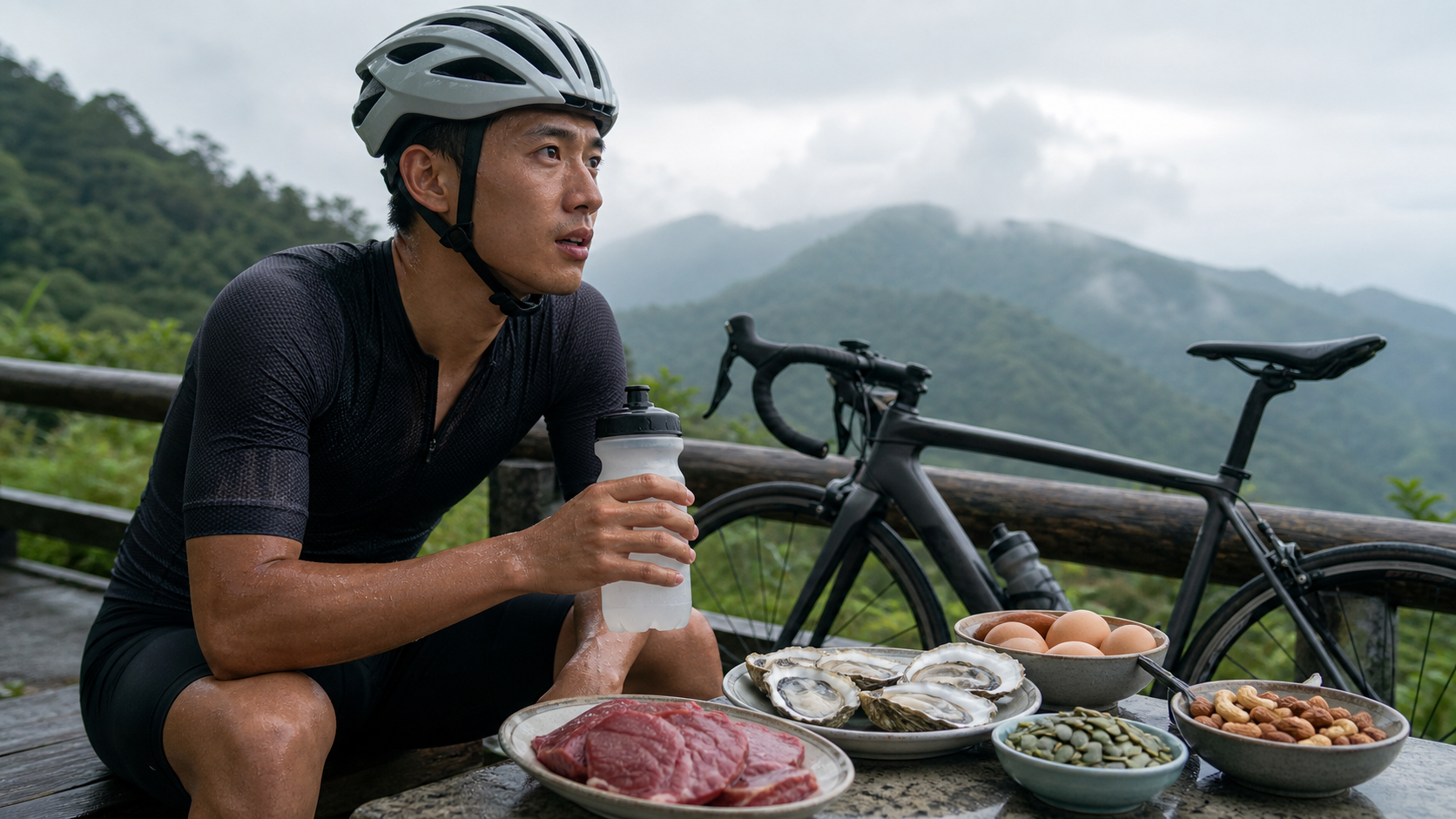
Opening: The Rider Who Always Got Sick at Peak Training
I once coached an amateur mountain biker in his early forties—let’s call him A-Hong. His problem was classic: he’d ride three or four times a week and feel fine, but every time he pushed his weekly mileage from around 100-plus kilometers to over 250 kilometers for two or three straight weeks ahead of Wuling or some big race, he’d almost “on schedule” come down with a sore throat and runny nose the week before the event, and his whole form would collapse. The first thing he said when he came to me was: “Coach, is my body just weaker than most?”
After I reviewed his training and diet logs, the first thing that came to mind wasn’t weak cardio—it was a few easily overlooked immunity-related nutrients, and one of them is today’s focus: Zinc. A-Hong ate out most of the time, relying on bento boxes, noodle shops, and convenience stores, with little red meat or seafood. Add to that his “sweat buckets the moment he exercises” constitution, and after prolonged high-intensity training, his immune system was already sitting in a temporary trough. If his zinc levels were chronically low on top of that, it was like adding insult to injury.
In this article, I want to explain zinc clearly from a coach’s perspective: what role it actually plays in the immune system, why endurance athletes are especially prone to deficiency, how to get enough from food and (when necessary) supplements, and what common misconceptions can make your supplementation efforts backfire. It’ll run a bit long, but I’ll keep it practical so you can check it against your own situation by the end.
Let me start with the most important takeaway: Zinc isn’t some magical “cold cure,” and more isn’t always better. It’s more of a “foundation-type” nutrient—when the foundation is solid, your immune system has the resources to hold up when you push your body to its limits; when the foundation is chronically shaky, no matter how hard you train, you’re prone to falling apart.
Concepts and Scientific Basis: What Zinc Actually Does in the Immune System
Zinc Is an “Essential Component” of Hundreds of Enzymes
Zinc is the second most abundant trace mineral in the human body (after iron), and it participates in hundreds of enzymatic reactions involving protein synthesis, cell division, wound healing, DNA synthesis, and other fundamental processes. For athletes, these academic-sounding functions are actually hidden in the things you care about every day—muscle repair, tissue regeneration, and, the focus of today’s discussion: the normal functioning of immune cells.
According to the Office of Dietary Supplements at the U.S. National Institutes of Health (NIH), zinc is essential for normal immune function and wound healing; even mild to moderate zinc deficiency can slow down the activity of “defensive players” like lymphocytes, neutrophils, and macrophages—the cells that serve as the first and second lines of defense against viruses and bacteria.
How Zinc Affects Your Immune Defenses
I like to explain the immune system to my athletes using a “sports team” analogy. Your body has roughly two lines of defense:
- Innate immunity (first line): Like the security guard at the door, including the skin and mucosal barriers, neutrophils, macrophages, and natural killer cells (NK cells). It reacts fast and doesn’t discriminate, but it isn’t precise.
- Adaptive immunity (second line): Like a senior guard with a roster who recognizes specific people, relying mainly on T lymphocytes and B lymphocytes. It can deliver precise strikes against specific pathogens and remembers enemies (immunological memory).
Zinc has a hand in both lines of defense. It’s especially tied to the development and function of T lymphocytes—T cells need zinc to mature and to activate and attack infected cells; zinc also affects B cells’ ability to produce antibodies. So when zinc is chronically insufficient, it’s not just the “security guard” that slows down—the “senior guard’s” ability to recognize and strike also declines. That’s why exercise immunology pays special attention to athletes’ zinc status.
Why “Training Hard” Itself Suppresses Immunity
Here’s a concept that’s crucial for endurance riders to understand: moderate exercise boosts immunity, but a single bout of prolonged, high-intensity exercise temporarily suppresses it.
In exercise immunology, there’s a classic “open window” concept: after a marathon-like bout of prolonged, strenuous exercise (like a four- or five-hour long-distance climb, or going all-out in a criterium race), immune function dips into a temporary trough. During this “window,” your resistance to upper respiratory tract infections (URTI—what we commonly call colds, sore throats, and stuffy noses) drops. Research literature indicates that endurance athletes face an elevated risk of URTI during periods of high training volume and in the one to two weeks following marathon-type events.
Connect this to zinc and you’ll understand A-Hong’s situation: he pushed his training volume to the max before a race, his body was in an immune trough, and he happened to be an eating-out type whose zinc intake was likely tight—three factors stacked together, no wonder he got sick “on schedule.”
It’s worth adding that athletes’ risk of colds isn’t a rare trivial matter. Literature and discussions in exercise immunology point out that a considerable proportion of athletes are periodically plagued by colds and infections, especially during high training volume. This doesn’t mean exercise is bad—regular moderate-intensity exercise is overall beneficial to immunity—but it reminds us that when you push training near its limits and chronically under-recover, that defensive line can develop cracks. What we can do is take care of the controllable factors (sleep, nutrition, hygiene, training planning) as best we can, to make the cracks smaller and close them faster. Zinc is one of those controllable nutritional factors worth prioritizing.
Why Athletes Are Prone to Zinc Deficiency
Endurance athletes’ zinc status tends to run tight for several main reasons:
- Sweat loss: Zinc (along with magnesium) is excreted through sweat. When you’re climbing in Taiwan’s summer heat for two or three hours and can wring water out of your jersey, these minerals are being lost drop by drop.
- Higher baseline requirements: Strenuous and endurance exercise increases the body’s demand for zinc and also alters zinc transport and metabolism.
- Diet easily goes off track: Many riders eat less red meat, seafood, and organ meats to control weight or for convenience—yet these are precisely the foods with the highest zinc content and best absorption. Vegetarian riders face even higher risk if they don’t plan carefully, because zinc absorption from plant-based foods is lower.
- Gastrointestinal issues: Prolonged exercise can affect gut function and absorption; some people have underlying GI conditions that also impair zinc absorption.
Zinc Isn’t Just About Immunity: Other Benefits for Riders
When I explain this to athletes, I like to remind them along the way: zinc’s involvement goes far beyond immunity. It’s tied to muscle repair and protein synthesis (the rebuilding process your body goes through after every long climb or interval session needs it), to wound healing (crash scrapes aren’t exactly rare for cyclists), and it’s also connected to endocrine function, taste, and skin health. That’s why I often say: taking care of your zinc isn’t just about avoiding colds—it’s about making the whole “train—break down—repair—get stronger” cycle run more smoothly. That’s also why I don’t like framing zinc as a mere “cold medicine”—it’s a foundational element that affects many systems.
A Commonly Misunderstood Point: A Slight Deficiency May Not Be Noticeable
Many riders ask: “I don’t have any symptoms, so how could I be deficient?” That’s exactly the problem—mild to moderate zinc deficiency often has no obvious, specific symptoms. It might just show up as “feeling a bit more tired, catching minor colds more easily, wounds seeming to heal a little slower”—vague feelings that are easily chalked up to “I’ve been busy and tired lately.” By the time clear deficiency signs appear, it’s usually no longer mild. So my strategy has always been prevention over correction: rather than waiting for your body to break down, keep your dietary foundation solid in daily life. That’s also why in the next section I want to first clarify “exactly how much you need.”
How Much Zinc Do You Actually Need? Understanding the Numbers
Recommended Daily Intake and Upper Limit
Here are some commonly used reference numbers internationally (using the US RDA as an example; Taiwan’s recommendations fall within a similar range):
| Population | Recommended Dietary Allowance (RDA) | Tolerable Upper Intake Level (UL) |
|---|---|---|
| Adult men | ~11 mg | 40 mg |
| Adult women | ~8 mg | 40 mg |
| Pregnant women | ~11–12 mg | 40 mg |
| Lactating women | ~12–13 mg | 40 mg |
Please remember these key points:
- Adult men need about 11 mg per day, women about 8 mg – this is the amount you “should aim to reach.”
- 40 mg per day is the tolerable upper limit for general adults. This limit refers to the “total from all sources (food + supplements),” not “you can take up to 40 mg from supplements.”
- Long-term intake of more than about 50 mg per day from supplements may interfere with copper metabolism and cause other mineral imbalances. This is especially important for athletes who like to overdo it – you might think taking more will boost your immunity, but it can actually disrupt other systems in your body.
How Much Can Athletes Aim For? My Practical Advice
I’m often asked: “Coach, I train so hard, shouldn’t I take more?” My answer is: First, build a solid dietary foundation, aim for a total intake that falls within the recommended range, or slightly above at most, rather than just piling on more.
I always give ranges, not false precision. For an endurance cyclist with high training volume and heavy sweating, here’s how I typically approach it:
| Scenario | Recommended Strategy | Approximate Target |
|---|---|---|
| General maintenance phase, balanced diet | Food alone is sufficient | ~11 mg for men / ~8 mg for women |
| High training volume, heavy sweating, frequent eating out | Food first; short-term low-dose supplementation can be considered | Total ~10–15 mg, don’t push high doses |
| Early stage of a cold (throat just feeling off) | Short-term, short-duration use, not long-term | Follow product label, use for a few days short-term |
| Vegetarian, confirmed deficiency, or doctor’s orders | Individualized; leave it to a doctor/nutritionist to assess | Determined by professional assessment |
Please note the last two rows: Zinc use for the early stage of a cold should be “short-term, short-duration,” not something you take daily long-term. And for confirmed deficiency or vegetarians, I always recommend seeing a doctor or nutritionist for an individualized assessment, rather than buying a bunch of supplements online yourself.
Practical Approach: Start with Food, Build a Solid Foundation
Ranking of High-Zinc Foods (Focusing on What’s Easily Available in Taiwan)
I’m always a “food first” advocate. Supplements are for filling “gaps,” not for replacing proper meals. Here are foods that Taiwanese cyclists can easily find, with good zinc content and absorption rates:
| Food Category | Representative Foods | Notes |
|---|---|---|
| Shellfish | Oysters, clams | Oysters are the king of zinc; Taiwan’s coastal areas produce plenty, and they’re common in restaurants (oyster omelets, clam soup) |
| Red meat | Beef, pork, lamb | Animal-based zinc has high absorption rates and is a stable source |
| Poultry and eggs | Chicken thighs, eggs | Common in bento boxes, convenient for supplementing |
| Whole grains and legumes | Brown rice, oats, chickpeas, black beans | Important sources for vegetarians, but absorption rates are lower |
| Nuts and seeds | Pumpkin seeds, cashews | Good as a snack, easy to carry around |
| Dairy products | Cheese, milk | A bonus source of calcium and protein |
A quick tip: Zinc from animal sources is generally absorbed better than from plant sources, because phytate in plants inhibits zinc absorption. This isn’t to say vegetarians shouldn’t eat whole grains and legumes, but rather a reminder for vegetarian cyclists: you can reduce phytate and improve absorption by soaking, fermenting (e.g., tempeh, miso), or sprouting, and you need to pay more attention to whether your overall intake is sufficient.
Practical Meal Planning for Taiwan’s Eating-Out Crowd
Ah-Hong’s biggest problem was eating out too carelessly. I didn’t tell him to cook every day (that’s unrealistic), but instead gave him principles he could follow even at bento shops, noodle shops, and convenience stores:
- Every meal should have a clear protein centerpiece: Choose beef, pork chops, or chicken thighs for your bento, rather than having fried food platters with lots of white rice for every meal.
- Schedule seafood a few times a week: Clam soup, oyster omelets, seafood noodles – this isn’t hard for Taiwanese people, and it’s a natural, delicious way to get zinc.
- Convenience store add-ons: Tea eggs, unsalted nuts, yogurt, and eggs or meat from oden can serve as post-training or snack options – convenient without just being empty calories.
- Don’t let white rice, noodles, and sugary drinks fill up your entire meal: Eating too many refined carbs doesn’t just affect your weight; it also crowds out room for quality protein and minerals. Sugary hand-shaken drinks are a common hidden trap – you’re consuming calories without getting any minerals or protein, and long-term, they can hurt recovery and weight management. Better to save that allowance for a bowl of clam soup or a good source of protein.
Just by achieving “a clear protein centerpiece at every meal + seafood a few times a week,” many eating-out cyclists see significant improvement in their zinc status – without even touching supplements.
Another Case Study: Vegetarian Trail Runner and Cyclist Xiao-Jie
Besides Ah-Hong, I’d like to share another contrasting case. Xiao-Jie is a female cyclist who has been fully vegetarian for three years, also does trail running, and has moderate-to-high training volume. Her issue was different from Ah-Hong’s – she’s not a heavy sweater, and her diet is quite “clean,” but she still felt she got throat discomfort easily during season changes and recovered slowly.
After reviewing her situation, I found her problem wasn’t “eating randomly,” but rather “low absorption of plant-based zinc + no specific planning.” She ate a lot of brown rice and legumes, which sounds like a decent zinc intake, but the phytate in these foods inhibits zinc absorption, so the actual amount absorbed was much less than it appeared on paper.
My adjustment for her wasn’t to tell her to start eating meat (respecting her choice), but rather: soak legumes before cooking, use more fermented foods (miso, tempeh, natto), make pumpkin seeds and other seeds a regular snack, and consider supplementation if assessed by a nutritionist. This is a great example of how “zinc supplementation” isn’t a one-size-fits-all formula – both felt their immunity was weak, but Ah-Hong needed to fix his careless eating habits, while Xiao-Jie needed to address absorption and planning. The directions were completely different. This is why I always emphasize “assess first, then target the issue.”
When to Consider Supplements
My attitude toward supplements is: They are tools, not a belief system. Only in the following situations would I seriously consider having an athlete use zinc supplements short-term or in a planned manner (ideally under a doctor’s or nutritionist’s assessment):
- Long-term high training volume + heavy sweating, where it’s very hard to get enough through diet adjustments.
- Vegetarian or restricted diet, where intake is confirmed to be genuinely low after assessment.
- Clear clinical deficiency (determined by medical evaluation).
- Short-term, short-duration use at the early stage of a cold.
Even when supplementing, I emphasize three things: conservative dosing (don’t rush toward the upper limit), limited duration (not indefinite daily use), and attention to balance with other minerals (especially copper).
Common Mistakes and Corrections
Here I’ve compiled the most common mistakes I’ve seen over the years working with athletes. You can check directly whether any of these apply to you.
Mistake 1: Treating Zinc Like a Cold Cure-All, Taking High Doses Daily Long-Term
Problem: Many people hear zinc can “prevent colds” and start taking high doses daily for months. Long-term high doses (especially above ~50 mg/day) can actually interfere with copper metabolism and cause mineral imbalances – the cure becomes worse than the disease.
Correction: Food first; use supplements to fill gaps rather than taking high doses long-term. Use for colds is “short-term, short-duration,” not a daily health staple.
Mistake 2: Taking Zinc on an Empty Stomach and Feeling Nauseous
Problem: Taking zinc supplements on an empty stomach can cause gastrointestinal discomfort and nausea for some people. Athletes often have sensitive stomachs after high-intensity efforts, and taking it on an empty stomach makes it even more uncomfortable.
Correction: Most people find it less irritating to take it with or after a meal. If a particular product causes discomfort, try a different form or timing, and keep a record of how you feel.
Mistake 3: Thinking More Is Always Better, Ignoring the Upper Limit
Problem: Automatically translating “beneficial” into “the more, the better,” while ignoring that the 40 mg general adult upper limit is the total from all sources combined. Some people already consume a fair amount through food, then add a large supplement pill on top, and the total exceeds the limit.
Fix: Look at the dosage on the supplement label together with the amount you get from your daily diet. The goal is to “supplement to sufficiency,” not “supplement to the maximum.”
Mistake 4: Only Supplementing Zinc, While Ignoring Sleep, Total Nutrition, and Training Planning
Problem: This is what I want to emphasize the most. Some cyclists blame a cold on “must be a deficiency of some nutrient,” then load up on zinc while continuing to stay up late, continuing to skip deload weeks, and continuing to push hard every day. Immunity is a holistic outcome; zinc is just one piece of the puzzle.
Fix: Treat immunity as a system to manage—adequate total calories and protein, sufficient sleep (most adults need 7+ hours), sensible training periodization (deload when it’s time to deload), stress management, and post-race recovery. These are just as important as zinc, if not more so.
Mistake 5: Treating Supplements as a Get-Out-of-Jail-Free Card for Overtraining
Problem: Taking zinc makes some feel they can more confidently pile on training volume. This completely reverses cause and effect.
Fix: Supplements cannot save a poorly planned training program. First, keep increases in training volume within a reasonable range (my usual principle is progressive overload, giving the body time to adapt), plan your taper weeks properly, and only then talk about nutritional details.
Mistake 6: Directly Applying “High Doses Seen Online” to Yourself
Problem: A lot of information comes from foreign forums or some influencer’s personal experience, often recommending very high daily doses. The issue is that those amounts are often for specific clinical situations, used short-term under professional supervision—not for generally healthy people to take daily long-term. Cyclists copy them and can easily exceed the safe upper limit without realizing it.
Fix: Remember that 40 mg is the daily upper limit for general adults from all sources combined. Long-term intake above roughly 50 mg carries risks such as interfering with copper metabolism. For any dosage recommendation that looks “hardcore,” first ask, “Who is this for, under what circumstances, and for how long?” Then ask your doctor or dietitian whether it suits you. Don’t be a guinea pig.
Mistake 7: Ignoring Interactions Between Medications and Minerals
Problem: Some cyclists are simultaneously taking iron, calcium, a multivitamin, or even long-term medications, yet treat zinc as a completely independent pill to add casually. Zinc, iron, calcium, and copper may compete with each other for absorption, and certain medications can also interact with minerals.
Fix: If you’re taking multiple supplements or on medication, compile a list and show it to your doctor or pharmacist once, and let the professional help you schedule timing and dosages. This is actually quite convenient in Taiwan—just ask during your next follow-up visit.
Actionable Advice for Cyclists of Different Levels
Everyone’s training volume, dietary habits, and physical condition differ. I roughly divide readers into three categories and give different priorities for each.
Beginner Cyclists (Riding 2–4 times a week, 1–2 hours per session)
You honestly barely need to worry about supplements. Focus on:
- Get enough protein across three balanced meals, and include seafood or red meat a few times a week.
- Prioritize sleep; don’t sacrifice it to chase mileage.
- When you feel a cold coming on, first think “rest more, hydrate more, and dial training down,” rather than rushing out to buy a bunch of supplements.
The most common mistake at this stage is mistaking beginner fatigue for a nutrient deficiency. What you’re usually short on is sleep and recovery, not zinc.
Intermediate Cyclists (Riding 4–6 times a week, with long-distance and intensity sessions)
You’ve entered the range where zinc nutrition deserves serious attention:
- Dietary audit: Spend a week honestly logging what you eat, and check the frequency of red meat, seafood, whole grains, and legumes. This is especially important if you eat out often.
- Replenish fluids and electrolytes after heavy sweating: For long, hot training sessions, pay attention to overall mineral and electrolyte intake, not just water.
- Periodize your training: Execute your deload properly after high-volume phases; don’t let yourself stay stuck in an immune trough long-term.
- Short-term supplementation when necessary: If the audit shows you really can’t get enough from food, consider low-dose, short-term supplementation, and watch the dosage and upper limit.
Competitive / High-Volume Cyclists (Very high weekly mileage during race prep, heavy sweating)
You’re the group that most needs “systematic immune management.” My recommendations:
- Treat the one to two weeks before a race as a high-risk period: Immunity tends to dip and infection risk rises during this time. Be extra careful with your routine, hygiene (wash hands frequently, avoid crowded places to reduce infection risk), and sleep.
- Work with professionals: If you have high training volume, are vegetarian, or have special conditions, it’s worth getting an individualized assessment from a sports dietitian or physician, including whether blood tests are needed to understand your nutritional status—rather than self-supplementing blindly.
- Use supplements conservatively: Even if you use them, keep doses conservative, durations clear, and pay attention to mineral balance like copper.
- Don’t neglect the fundamentals: No matter how strong an athlete you are, with insufficient sleep and chronically inadequate energy intake (low energy availability), immunity will collapse. No amount of zinc can make up for that.
Practical Reminders for the Taiwan Context
As a coach working with cyclists in Taiwan, there are a few local details I want to highlight:
- Taiwan is humid and hot, with heavy sweating: Sweat loss during long summer climbs is substantial, so overall mineral and electrolyte management needs more attention than in cooler climates. This isn’t telling you to load up on zinc, but reminding you that “heavy sweating + casual eating out” is a double risk.
- Eating out is convenient but easy to become imbalanced: Eating out in Taiwan is incredibly convenient, but it also makes it easy to overload on carbs while under-consuming protein and seafood. Using bento shop main dish options or seafood soups at noodle shops makes getting enough zinc surprisingly easy.
- Healthcare is accessible—make good use of the NHI: Seeing a doctor in Taiwan is easy. If you have recurrent infections, fatigue, slow wound healing, or suspect a nutritional problem, go directly to a physician for evaluation and blood tests if necessary. That’s far more efficient than guessing and buying a pile of supplements online. This is Taiwan’s advantage—don’t waste it.
- The supplement market is messy: Zinc products on the market vary wildly in form and dosage. When choosing, read the zinc content per serving carefully, and don’t be swayed by marketing gimmicks like “more added = more effective.”
A Week-Long Immune-Friendly Eating Template You Can Follow (Example)
The following isn’t a rigid schedule, but a demonstration of how to weave zinc intake into daily life. Adjust it according to your actual calorie needs and training volume.
| Meal | Focus | Example |
|---|---|---|
| Breakfast | Protein + whole grains | Egg crepe / oatmeal with milk / tea egg with sweet potato |
| Lunch | Choose a quality protein main | Beef bento, pork chop bento, chicken leg bento (avoid fried combo platters) |
| Post-training | Protein + carbs | Milk, yogurt, rice ball with egg |
| Dinner | Seafood a few times a week | Clam soup, oyster omelet, seafood noodles, steamed fish |
| Snack | Nuts on hand | A small handful of pumpkin seeds, cashews |
The core logic in one sentence: Make sure every meal has clear, quality protein, eat seafood regularly throughout the week, and don’t overload on carbs—your zinc nutrition will naturally stabilize. Do these things, and most people won’t need supplements at all.
Frequently Asked Questions (FAQ)
Q1: I sweat profusely whenever I exercise—do I definitely need to supplement with zinc?
A: Not necessarily. Heavy sweating does increase losses, but if your diet is balanced and you regularly eat red meat and seafood, food alone is usually enough to replenish it. First, take stock of your diet; only consider supplementation if it’s genuinely hard to get enough from food, and keep the dose conservative.
Q2: Does taking zinc help when I have a cold?
A: There’s been plenty of discussion about zinc and colds, but the key point is “short-term, short-duration” use, and it’s not a miracle cure. When you’re actually sick, getting adequate rest, scaling back your training, and seeing a doctor when necessary are the main priorities. If symptoms are severe or persistent, please see a doctor.
Q3: Are vegetarian cyclists at higher risk?
A: Relatively speaking, they need to be more intentional. The absorption rate of plant-based zinc is lower, so it’s recommended to improve absorption through soaking, fermenting, and sprouting, while also paying attention to overall intake. If you’re unsure, seeing a nutritionist for an assessment is better than guessing on your own.
Q4: Can zinc be taken together with other supplements?
A: Zinc and certain minerals (such as iron, copper, and calcium) may compete with or interfere with each other’s absorption, and long-term high-dose zinc may also affect copper metabolism. If you’re taking multiple supplements at the same time, it’s recommended to have a doctor or nutritionist review the overall combination for you.
Q5: What should I do if zinc upsets my stomach?
A: Most people feel better taking it with or right after a meal. If discomfort persists, it may be a formulation or dosage issue—keep a record and discuss adjustments with a professional rather than forcing it down.
Q6: I have a chronic condition (e.g., diabetes, high blood pressure, heart disease). Can I supplement zinc on my own?
A: For anyone with a chronic condition or on long-term medication, it’s recommended to check with your primary care physician or pharmacist before taking any supplement, because certain minerals may interact with medications or affect the balance of other nutrients. This article does not—and should not—replace the individualized advice given by your medical team. For medication and chronic disease management, always follow your doctor’s orders; don’t play doctor with yourself.
Q7: How long does it take for zinc supplements to work? Do I need to keep taking them forever?
A: This is where many people get stuck. Zinc is not something where “the longer you take it, the better.” If the goal is to fill a dietary gap, the focus should be on making your diet sustainable long-term rather than relying on supplements indefinitely. For short-term use related to colds, it’s even more about “short-term, short-duration.” Long-term daily high doses carry risks such as interfering with copper metabolism. My advice: treat supplements as a transitional or gap-filling tool while working to make your diet stand on its own.
A Quick-Reference Table: “Should I Supplement, and How?”
Here’s a decision-making table for quick self-assessment:
| Your Situation | My Recommended Direction |
|---|---|
| Balanced diet, regular red meat and seafood, no specific symptoms | No supplement needed; just maintain good habits |
| Often eats out casually, low protein/seafood intake, high training volume | Fix the diet first; only consider low-dose, short-term supplementation if short-term improvement is hard |
| Vegetarian without special planning | Improve absorption techniques + monitor intake; see a nutritionist if unsure |
| Recurrent infections, fatigue, slow wound healing | Don’t guess on your own—see a doctor and get blood work done if necessary |
| Chronic condition or long-term medication | Ask your doctor/pharmacist before taking anything |
| Cold just starting, scratchy throat | If used, keep it short-term and short-duration; the main focus is rest, reducing training volume, and seeing a doctor if needed |
Conclusion: Putting Zinc Back in Its Proper Place
Back to A-Hong. Here’s what we did afterward: we slowed down the rate at which his training volume increased, made sure his pre-race taper weeks were done properly, kept a close eye on protein as the centerpiece of every meal when eating out, scheduled seafood a few times a week, and took sleep seriously. He didn’t pop high-dose zinc every day—the vast majority of his improvement actually came from three things: “dietary foundation + training planning + sleep.” That season, he finally completed the full race season without “punctually” falling ill before a race.
The key takeaway I want to leave you with is this: Zinc is important, but it’s a solid role player on the team that is your immune system—not a superhero who can take on the whole game alone. Put it back in its proper place—build your foundation with food first, use supplements conservatively, short-term, and under professional guidance when needed, and get the bigger pieces of the puzzle right: sleep, energy intake, and periodized training. Your immunity will naturally be more stable than if you were gulping down any single supplement.
Next time you find yourself getting sick right at training peaks, don’t rush to blame yourself for being “weak,” and don’t rush to simplify the answer to “you must be deficient in some nutrient.” Go back and check whether your training is ramping up too fast, whether you’re getting enough sleep, and whether your meals have enough protein and seafood—those are the first things to fix.
If you take away only three sentences from this article, I hope they are these: First, food comes first—the best sources of zinc are right there in your everyday bento’s main dish and seafood soup; second, supplements are tools for filling gaps—conservative doses, limited duration, and attention to upper limits; more is not better; third, immunity is a whole-system project—sleep, recovery, and training planning are just as important as, if not more important than, any single nutrient. Keep these three things in mind, and you won’t get stuck obsessing over the small question of “should I supplement zinc,” but instead see the bigger picture of your overall immunity.
Wishing you smooth training, great racing, and fewer colds this season. Take care of your body, and when the day comes to unleash, you’ll have the capital to go all out. If you have any health concerns, remember that seeing a doctor in Taiwan is very convenient—don’t gamble with your health out of stubbornness. Seek medical care when needed.
This article is educational content and does not replace individual diagnosis and treatment advice from physicians, physical therapists, or nutritionists. If you have a chronic condition, are taking medication, are pregnant or breastfeeding, experience recurrent infections, or have concerns about your nutritional status, please seek professional individualized assessment before adjusting your diet or using supplements.
References
- Zinc - Health Professional Fact Sheet (NIH ODS): https://ods.od.nih.gov/factsheets/Zinc-HealthProfessional/
- Zinc: What it does for the body, and the best food sources (Harvard Health): https://www.health.harvard.edu/diet-and-nutrition/zinc-what-it-does-for-the-body-and-the-best-food-sources
- Risk of Upper Respiratory Tract Infection in Athletes: An Epidemiologic and Immunologic Perspective (PMC): https://pmc.ncbi.nlm.nih.gov/articles/PMC1320353/
- Zinc and the Immune System: FAQ on the Safe Use of Zinc Supplements (Hackensack Meridian Health): https://www.hackensackmeridianhealth.org/en/healthier-you/2025/11/13/zinc-and-immune-system-safe-zinc-supplement-guide
Related Reading
- The Complete Guide to Zinc and Immune Supplementation for Athletes: Timing, Cold Prevention, and Safety Limits
- Immune Nutrition for Athletes: Dietary Strategies to Prevent Colds and Keep Your Season from Falling Apart at the First Cough
- Getting Sick the More You Train? A Full Breakdown of Exercise and Immune Dysregulation: Overtraining-Induced Immunosuppression, Recovery, and Nutritional Strategies
- The Complete Guide to Nutrition and Immunity for Athletes: From Season Strategy to Table Practice
一日北高/長距離團騎 常見問題補充篇 / 組團或跟團的眉角 / 壯車友容易被瘦車友慢性拉爆 / 原來屁股痛可能是這個原因...? / 風場配速法 / 公路車 / CT Yeh
2 年前
CT暗黑廚房) 車友必備 宇宙無敵鮮蚵湯 幫助訓練恢復 天然食補 好市多 超肥鮮蚵 破PR
7 年前
西進武嶺 免費訓練分析服務 Intervals | 練不夠還是練過頭?你哪一種類型選手?AI模型告訴你! | 備戰神器 | 公路車 訓練 | CT Yeh
4 年前
西進武嶺 自製新版AI配速表產生器 x 賽前攻略 抱佛腳! 沒有功率計也可以產生配速表嗎?有什麼其他眉角賽前要注意的呢? | 西進武嶺 / 東進武嶺 KOM 攻略 | 公路車 | CT Yeh
4 年前
FTL 與 SYB 車隊專訪 西進武嶺 實用攻略分享! 2小時 如何練?!你不知道的眉角!新手準備武嶺必看 EP1 | 實力派女車友 | 精華版 | 公路車 | CTYeh
4 年前
一日北高前的西濱集訓 | 跟著11小時軍團 | 300W踩不動的大逆風 | 輪車破風差幾瓦?
6 年前
CT 喇低賽) 武嶺牽車 才是王道 西進牽車四小時內秘訣 攝手位置 如何判斷 防抽筋小秘訣
7 年前
Garmin Edge 1040 重大韌體更新!! / 1050功能全下放!? / 坡度反應變快了嗎?/ 快速對比實測 / 公路車 / CT Yeh
1 年前