Vitamin C and E: The Antioxidant Dilemma—When the Supplements You Take Actually Block Your Gains
Starting with an Athlete’s Blood Test Report
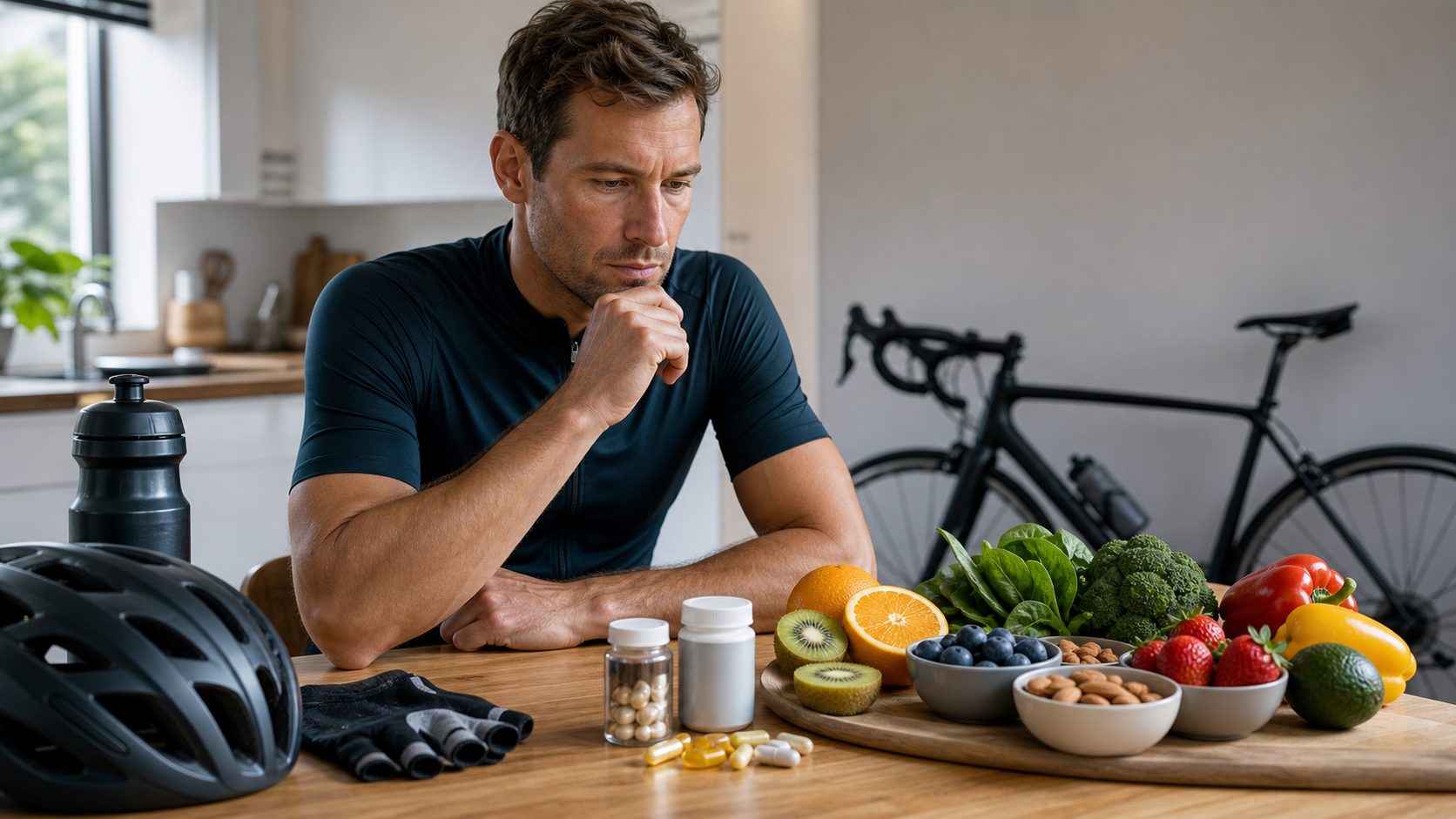
A few years ago, I coached a very dedicated amateur road cyclist — let’s call him A-Zhe. His level of discipline was among the best I’ve ever seen: fixed daily training, sleep tracking, and even the grams of carbs in his breakfast logged in a spreadsheet. One winter, he came to me sounding a bit dejected: “Coach, I’ve clearly increased my training volume these past three months, but my power is stuck at a plateau. Is my recovery not good enough?”
I looked through his training logs. The programming itself was fine — periodization, intensity distribution, and rest days were all within reasonable ranges. What really caught my attention was something he casually mentioned: “I’m worried about too much oxidative stress, so I’ve been taking 1,000 mg of vitamin C and 400 IU of vitamin E every day for the past six months.”
At that moment, a thought crossed my mind — this athlete was very likely using antioxidants to personally cancel out a portion of his training gains.
I asked him a few questions first: Was his sleep duration stable? (Answer: averaging seven hours, decent.) Had his weekly training load spiked suddenly? (Answer: No, it was progressive.) What was his season goal? (Answer: He wanted to push his power-to-weight ratio up another notch in a hill climb race that summer.) All these answers were normal. The only thing out of place was that six-month streak of high-dose antioxidant supplementation. His logic was: “Training is this demanding, so oxidative stress must be high. If I suppress it first, my body can recover properly.” It sounded perfectly reasonable — but it happened to step right on one of the most counterintuitive traps in exercise physiology.
This isn’t fear-mongering. In the general public’s mind, antioxidant vitamins are almost “all benefit, no harm” nutrients — take them for health, anti-aging, and anti-inflammation. What could possibly go wrong? But in the field of sports science, over a decade of accumulated research has revealed a counterintuitive fact: for athletes pursuing training adaptations, high doses of vitamin C and E may actually suppress the signals that make the body stronger.
In this article, I want to clearly lay out this “antioxidant dilemma.” It involves a deep physiological concept: is oxidative stress a bad thing, or an indispensable signal for training adaptation? I’ll use my real experience coaching athletes, a few organized tables, and the reality of everyday eating out in Taiwan to help you understand — when to supplement, when to let go, and why “food first” is always the first thing I tell my athletes.
The Conceptual Foundation: Free Radicals Aren’t Purely Villains
First, Let’s Bust a Myth
The narrative we’ve heard since childhood goes something like this: exercise produces free radicals (more precisely, “Reactive Oxygen Species,” or ROS), free radicals damage cells, accelerate aging, and cause inflammation, so you need to take antioxidants to neutralize them. Half of this narrative is correct, but the crucial other half has been overlooked.
ROS isn’t just a destroyer — it’s also an extremely important “signaling molecule” in the body. When you’re climbing hills, doing intervals, or on a long ride, the ROS produced inside muscle cells is read by the body as a message: “The load just exceeded our current capacity — we need to upgrade.” This message triggers a cascade of gene expression and protein synthesis that makes your mitochondria more numerous and more powerful, allowing your muscles to better withstand the next load.
In other words, part of the reason exercise makes you stronger is precisely because exercise produces an appropriate amount of oxidative stress. This is a classic example of “hormesis”: moderate stress stimulation actually brings about positive adaptations — just as appropriate training load makes you improve, while excessive load injures you.
Mitochondria, PGC-1α, and the Chain of Training Adaptation
One of the core adaptations of endurance training is mitochondrial biogenesis — in simple terms, an increase in the number and quality of the “power plants” responsible for energy production in your muscles. The more mitochondria you have, and the more efficient they are, the more economical and enduring you become at the same intensity, and the higher the intensity you can sustain.
There’s a star player in this adaptation chain called PGC-1α — you can think of it as the “commander-in-chief” of mitochondrial biogenesis. The ROS produced during exercise is one of the signals that awakens this commander. When the ROS signal is read, PGC-1α is activated, a cascade of downstream genes gets to work, and new mitochondrial proteins (such as COX4, a protein related to energy metabolism) begin to be manufactured.
Now here’s the question: if you heavily supplement vitamin C and E before and after exercise, effectively “silencing” the ROS signal in advance, what happens? The answer is intuitive — the signal weakens, the commander isn’t fully awakened, and the magnitude of adaptation may be discounted.
I often use an analogy with my athletes: ROS is like the fire alarm in your house. When the alarm goes off (oxidative stress rises), it means something’s happening in the kitchen (training load), and you’ll take action — improve ventilation, adjust the heat, and next time you’ll be better equipped to handle it (training adaptation). But if the alarm annoys you and you simply pull out the battery (high-dose antioxidants silencing the signal), it’s quiet on the surface, but you’ve actually lost the trigger that prompts you to “upgrade your coping capacity.” The post-exercise oxidative stress signal is that alarm reminding your body “it’s time to upgrade.” It’s not pure noise — it’s meaningful information.
Going deeper, the ROS signal doesn’t just affect the PGC-1α pathway alone. It also participates in pathways related to the expression of antioxidant enzymes themselves (such as superoxide dismutase, SOD, and glutathione peroxidase). In other words, regular training makes the body’s “own built-in antioxidant system” stronger over time — this is an endogenous, intelligent upgrade. And if you chronically use exogenous high-dose vitamins to “do the job for it,” the body loses the opportunity to train its own antioxidant system. This point is particularly worth pondering: you think you’re helping your body fight oxidation, but you may actually be letting your body’s own antioxidant capacity slack off.
What the Research Says
This has been a hotly debated topic in exercise physiology over the past decade or more. One of the most widely cited studies is a double-blind randomized controlled trial by Paulsen et al., published in The Journal of Physiology in 2014. The study had participants take either vitamin C (1,000 mg daily) plus vitamin E, or a placebo, during an 11-week endurance training period. The results showed: the training-induced increase in mitochondrial proteins (such as COX4) was suppressed in the supplementation group — meaning antioxidants did indeed interfere with cellular-level training adaptations.
Interestingly, the same study also found that although cellular-level adaptations were blunted, the actual improvement in running performance “was not clearly detected” as being affected during that training period. This tells us two things: first, the interference of antioxidants with cellular signaling is real; second, whether this interference manifests in overall performance like “how fast you run” may require longer durations, larger sample sizes, or more refined measurements to detect.
Additionally, review literature (meta-analyses compiling multiple studies) points to fairly consistent evidence that vitamin C and E — whether alone or in combination — suppress some skeletal muscle adaptations to endurance training, and recommends that high doses of vitamin C and E be used with caution. However, I must honestly say that the evidence in this field isn’t monolithic: some human or animal studies have not observed significant suppression. For example, one study found that supplementing vitamin C and E during 12 weeks of cycling training did not affect the increase in certain mitochondrial enzyme activities. The scientific conclusion is “may suppress, and the higher the dose, the more caution needed” — not “one dose and you’re doomed.”
Why do I state this so carefully? Because the worst thing in sports nutrition is turning “maybe” into “definitely,” or treating a single study as gospel. In over a decade of coaching athletes, the most important lesson I’ve learned is: the body is complex, individual differences are huge, and our job is to “make the choice with the lowest risk and highest benefit under uncertainty” — not to chase false precision.
Why “Dilemma” Is the Perfect Word
Let me lay this dilemma out plainly. Antioxidant vitamins, in the context of exercise, have two faces:
Situations where they may be beneficial: During excessive, overly dense training, or in extreme environments (high heat, high altitude), ROS production may exceed what the body’s natural antioxidant system can handle, causing excessive oxidative damage and impairing recovery. In such cases, moderate antioxidant support could theoretically aid recovery and reduce excessive inflammation. Additionally, if someone’s diet is extremely deficient and vitamin intake is inadequate, supplementing up to “adequate levels” is certainly a good thing.
Situations where they may be harmful: When an athlete with a balanced diet who wants to pursue training adaptations takes high-dose antioxidants long-term under “normal training,” they may prematurely suppress the very ROS signals that drive progress—the result being that they spend money to inhibit their own adaptation.
This is the core of the dilemma: The same intervention, for different people, in different contexts, can have completely opposite effects. And the problem for most recreational athletes is not “too much oxidative stress needing rescue,” but rather “training perfectly fine, yet out of cleverness silencing the signals.”
I want to go one layer deeper, because this touches on a question many people have: “Isn’t oxidative stress harmful? Isn’t suppressing it better than leaving it alone?” This statement reflects a very common thinking error—treating “oxidative stress” as uniformly the enemy. In reality, the body has a fairly sophisticated balancing mechanism. The oxidative stress produced during acute exercise is transient and localized; after exercise, the body naturally recovers, and this process itself is training your antioxidant system. Truly harmful “chronic oxidative stress” is more often associated with lifestyle factors like smoking, chronic sleep deprivation, highly processed diets, and chronic disease—not your few training sessions per week. Conflating the transient oxidative stress induced by training with pathological chronic oxidative stress is where many people make the wrong supplementation decisions. For someone with normal lifestyle habits who is simply training seriously, your body is fully capable of handling that bit of exercise-induced oxidative stress on its own—and it gets stronger at it over time. This is why my recommendation for the vast majority of healthy athletes is: don’t rush to intervene; let the body do its job.
Practical Approach: How I Help Athletes Decide
Science aside, let’s talk about how I actually operate. I don’t give athletes a lazy answer of “don’t take it” or “take it”—instead, I walk them through a decision process.
Step 1: Distinguish Between “Supplement Doses” and “Food Doses”
This is where most people get confused. Vitamin C and E obtained from food come in mild doses, accompanied by a host of other nutrients (flavonoids, polyphenols, fiber), and the body has natural regulatory mechanisms for absorption. What truly interferes with training signals is almost always high-dose supplement tablets—like A-Zhe taking 1000 mg of vitamin C plus 400 IU of vitamin E daily, a dose far exceeding what food can easily provide.
I’ve put together a table to help everyone build an intuition for dosing:
| Item | Adult Daily Recommended Intake (reference range) | Common Supplement Tablet Dose | Tolerable Upper Limit |
|---|---|---|---|
| Vitamin C | ~90 mg for men, ~75 mg for women | 500–1000 mg | ~2000 mg/day |
| Vitamin E | ~15 mg (alpha-tocopherol) | Commonly 200–400 IU (~135–270 mg) | ~1000 mg/day |
See the problem? A single common vitamin C supplement tablet (500–1000 mg) is 5 to 10 times or more the daily recommended intake; vitamin E supplements are also often several times the recommendation. This isn’t “filling a gap”—it’s pushing straight into pharmacological dosing territory. And what the exercise research shows suppressing adaptation is precisely this pharmacological dose.
Step 2: Use Questions to Clarify Which Category You Fall Into
I have athletes answer the following questions one by one:
- Is your primary goal right now “improving training adaptation and getting stronger,” or simply “maintaining health”?
- Does your daily diet include vegetables and fruit on a regular basis? Roughly how many servings per day?
- Are you currently in a “high-intensity, performance-seeking” training cycle?
- Has a physician or dietitian recommended supplementation due to a specific health condition?
The answers to these questions essentially determine the strategy. I’ve organized it into the following decision table:
| Your Situation | Recommended Strategy | Rationale |
|---|---|---|
| Healthy athlete pursuing training adaptation with a balanced diet | Not recommended to take regular high doses; prioritize food | High doses may silence ROS signals and inhibit adaptation |
| Extremely unbalanced diet with severely inadequate fruit/vegetable intake | Improve diet first; if supplementing, aim for “adequate” rather than “high” doses | The purpose is to fill a gap, not to overload |
| Pre-race taper period, post-race recovery period (short-term) | Short-term, low-dose, or food-based support for recovery may be considered | No adaptation is being pursued during taper; the trade-off differs |
| Specific medical condition with physician-directed supplementation | Follow medical advice; do not self-escalate | Individualized; left to professional judgment |
| Extreme environments (high heat/high altitude) during prolonged events | Assess individually; lean toward food plus moderate amounts, avoid long-term high doses | Special circumstances, but still avoid prolonged signal suppression |
Step 3: Turning “Food First” into an Actionable Plate
Talking about “nutrition first” is easy; the hard part is putting it into practice. Taiwan has a high rate of eating out, and many trainees frown when they hear about eating fruits and vegetables: “Coach, I just grab a bento box every day, where am I supposed to find fruits and veggies?” So I usually give very specific substitution plans.
Easily accessible Vitamin C-rich local Taiwanese foods: Guava (this is Taiwan’s superstar, very high in Vitamin C), kiwi, citrus fruits, papaya, bell peppers/sweet peppers, broccoli, and tomatoes. Guava is especially recommended—it’s available everywhere from convenience stores to fruit stands, and one medium guava provides a significant amount of Vitamin C.
Easily accessible Vitamin E-rich foods: Nuts (almonds, sunflower seeds), vegetable oils, avocado, dark leafy greens, and whole grains. Vitamin E is fat-soluble, so it’s better absorbed when eaten with some fat.
Here’s a “one-day practical version” plate example I often give to trainees who eat out:
| Time | Practical Choice for Eating Out | Key Nutrients Covered |
|---|---|---|
| Breakfast | Rice ball + unsweetened soy milk + a banana or a kiwi | Fruit for Vitamin C |
| Lunch | Bento box with an extra serving of blanched vegetables (broccoli/dark leafy greens), tomatoes | Vitamin C and polyphenols from vegetables |
| Afternoon | A small handful of nuts (almonds/sunflower seeds) as a snack | Good source of Vitamin E |
| Dinner | Two or three types of vegetables from the buffet, plus a serving of dark leafy greens | Accumulating fruit and vegetable servings |
| Anytime | Buy half a guava from a fruit stand as a late-night snack | Vitamin C champion |
You’ll notice that these arrangements require absolutely no supplements to easily get sufficient antioxidant vitamins, and they come in “food doses”—gentle, accompanied by other nutrients, and not suppressing training signals. This is what I always emphasize: Antioxidants from natural foods almost never reach the pharmacological doses needed to interfere with training adaptations, so you don’t need to worry about “will eating too many fruits and vegetables affect my progress?”—it won’t. Eat up without concern.
To make this more tangible, here’s another comparison table of Vitamin content in common Taiwanese foods. The numbers here are approximate ranges (foods vary by variety, ripeness, and season, so I’m only giving general directions, not false precision with decimal points):
| Food (approx. one serving) | Main Nutrient Provided | General Characteristics |
|---|---|---|
| One medium guava | Vitamin C | The king of Vitamin C among Taiwanese fruits; one guava significantly contributes to daily needs |
| One kiwi | Vitamin C | Convenient, long shelf life, often available at convenience stores |
| One serving of bell pepper/sweet pepper | Vitamin C | Retains more when eaten raw or quickly stir-fried |
| One serving of broccoli | Vitamin C + Fiber | Top choice for blanched vegetables; easy to add to bento boxes |
| A small handful of almonds | Vitamin E | Fat-soluble, natural and satiating |
| A small handful of sunflower seeds | Vitamin E | Vitamin E content is notably high among nuts |
| Half an avocado | Vitamin E + Healthy Fats | Great companion for fat-soluble vitamins |
The point of this table isn’t to make you calculate milligrams, but to show you: As long as your plate has color, nuts, and fruit, you don’t need to “supplement” antioxidant vitamins at all. The more diverse the colors, the more varied the antioxidants you consume—something no single supplement pill can achieve.
Supplement Timing: If You Really Must Supplement, How to Do It with Less Interference
Some trainees in special situations (doctor’s advice, extreme events) do need a little supplementation, and they ask: “Is there a way to supplement that interferes less with training?” I usually give a few principles, but I must first emphasize—these are “risk-reduction strategies for when you have no choice,” not encouragement to supplement:
- Avoid key adaptation periods. During high-intensity building phases aimed at progress, avoid high-dose supplementation; if you must, shift it to a deload week or a non-priority training phase.
- Keep doses low. If the goal is just to “reach adequate levels,” there’s no need for the 1000 mg pharmacological doses used in studies; low doses close to the daily recommended intake carry much lower interference risk.
- Prioritize food first, pills second. If you need Vitamin C, a guava and a 1000 mg pill have completely different effects on training signals.
- Short-term rather than long-term. Short-term support for a specific event is a different world from swallowing pills daily for six months. Chronic, long-term suppression is what research worries about most.
Common Mistakes and Corrections
In all my years coaching trainees, I’ve seen too many examples of people stumbling on the antioxidant issue. Here are the most common ones, and how I correct them.
Mistake 1: Taking Supplements Daily as “Insurance”
Scenario: “It doesn’t hurt to take them, so I’ll use them as insurance.” This was A-Zhe’s mindset initially, and it’s the most common misconception.
Correction: Antioxidant supplements are not harmless insurance; for athletes seeking progress, they may carry hidden costs. I later asked A-Zhe to stop his daily Vitamin C and E supplements and switch to dietary sources (a daily guava, blanched vegetables, a handful of nuts). Three months later, his power threshold started climbing again. I can’t say with 100% certainty that stopping the supplements was the sole reason—his training was also adjusted—but it at least proved that “stopping high-dose supplements didn’t make him worse; in fact, the path became smoother.”
Mistake 2: Confused Dosing Logic, Thinking More Is Better
Scenario: Some trainees think that since Vitamin C is water-soluble and excess is excreted, “eating a bit more is fine.”
Correction: Water solubility does make Vitamin C relatively safe, but “safe” doesn’t equal “beneficial,” let alone “more is better.” Excessive Vitamin C (near or above the 2000 mg daily upper limit) can cause gastrointestinal discomfort and diarrhea, and long-term high intake may even increase the risk of kidney stones in some people. In the athletic context, the key issue isn’t the safety limit—it’s that pharmacological doses suppress training signals. More is not an advantage here.
Mistake 3: Heavy Supplementation During Critical Training Weeks
Scenario: An athlete is in the most important “building phase” of the year, stacking training volume aggressively while also loading up on antioxidants to “aid recovery.”
Correction: This is the most regrettable mistake—muting the very signals you need most during the period when adaptation is the goal. My principle is: The more you’re in a high-intensity training phase seeking adaptation, the more you should avoid high-dose antioxidant supplementation. If recovery support is truly needed, prioritize sleep, total nutritional intake, and easy-day scheduling—not antioxidant pills.
Mistake 4: Ignoring Individual Health Conditions and Self-Diagnosing
Scenario: Trainees with chronic conditions (like cardiovascular issues, diabetes) or those on medication decide on their own whether to supplement based on internet information.
Correction: I must seriously remind you about this. If you have any chronic disease, are taking medication, or are in a special physiological state (pregnancy, post-surgery, etc.), the decision about antioxidant supplementation must be left to your doctor or dietitian. High-dose Vitamin E can interact with anticoagulant medications; nutritional needs under certain disease states are also completely different. Taiwan has convenient healthcare and accessible NHI coverage—if you have questions, consult a family medicine doctor or a nutrition clinic. That’s far safer than playing doctor online.
Mistake 5: Confusing “Antioxidant,” “Anti-inflammatory,” and “Anti-inflammatory Drugs”
Scenario: Some trainees think antioxidants and pain-relieving anti-inflammatory drugs both “suppress inflammation” and have similar effects.
Correction: While the mechanisms aren’t identical, there’s a common conceptual warning: Moderate post-exercise inflammation and oxidative stress are necessary processes for the body to repair and upgrade itself. Whether it’s habitually taking anti-inflammatory drugs or habitually supplementing antioxidants, chronically suppressing this necessary signal can interfere with adaptation. Post-training soreness and mild inflammation aren’t the enemy—they’re evidence that your body is rebuilding.
Actionable Advice for Readers at Different Levels
Everyone starts from a different point, so I’ve divided my advice into three roles. Find the one that fits you.
For Beginners Just Starting Exercise
If you’ve just started exercising regularly, honestly, you don’t need to spend a single dollar on antioxidant supplements. What you should invest in right now is: a consistent training habit, enough sleep, and a balanced diet. Add an extra serving of vegetables to your meal box, eat one serving of fruit a day (guava or kiwi are both great), and you’ll have more than enough antioxidant vitamins. Supplements, for you, are spending money on the least important thing, and they might even quietly slow down your progress.
Three-sentence principle for beginners: Sleep well, eat enough fruits and vegetables, and train consistently. Antioxidant supplements? Set them aside for now. I’ve coached too many beginners in Taiwan who, from the start, were led astray by ads and people around them saying “taking this is good for your training,” only to spend a lot of money and feel no effect. Put that budget toward better fruit or an extra bike ride in the park—the return is far more real than supplements.
For Advanced Enthusiasts with Some Training Base
You’re training systematically, chasing power gains and performance breakthroughs. This is where the “antioxidant dilemma” matters most to you. My advice is:
- During regular training periods, don’t routinely take high doses of vitamin C and E supplements. Leave the antioxidant work to food.
- Secure your dietary foundation: Consistently consume a variety of fruits, vegetables, and nuts daily. This is your best antioxidant source, and it won’t interfere with adaptation at all.
- If you’re truly in an extreme situation (e.g., multi-day hot-weather races, short-term recovery after extremely high training loads) and want a bit of antioxidant support, keep it short-term and food-first as the principle—don’t turn it into a daily habit.
- Don’t expect antioxidant pills to solve inadequate recovery. The foundation of recovery is sleep, total nutritional intake, and training plan design.
For Senior Athletes and Team Coaches
You should feel this issue the most. I’d like to remind you of a few practical points:
- Periodize your nutrition strategy, not just your training plan. During the building phase focused on adaptation, lean toward having athletes get antioxidants from food and avoid high-dose supplementation; in specific tapering, pre-race, or extreme race scenarios, weigh whether short-term support is appropriate on a case-by-case basis.
- Individualize your assessment. Athletes’ dietary foundations, health statuses, and training loads all differ—there’s no one-size-fits-all answer. When blood tests or nutritional assessments are needed, refer them to a sports dietitian.
- Communicate the concept with athletes. Many athletes are “self-supplementing” and won’t proactively tell you what they’re taking. Situations like A-Zhe’s—six months of high doses with no one knowing—are common. Asking regularly, “Have you been taking any supplements lately?” might help you solve the mystery of stalled performance.
A Quick FAQ Section
Here are the questions I get asked most often when coaching athletes, compiled together:
Q: If I take a multivitamin that contains vitamin C and E, will that also have an impact?
A: The doses of vitamin C and E in a typical multivitamin are usually close to the daily recommended intake, far below the pharmacological doses shown in studies to inhibit adaptation, so the impact is relatively limited. What you really need to watch out for are those “single-ingredient, high-dose” vitamin C tablets (500–1000 mg) or vitamin E tablets.
Q: Is it okay to take antioxidants on race day or before a competition?
A: A single, short-term dose is a different story from long-term daily high doses. The concern in research is about “chronically suppressing training signals over the long term.” An occasional one-off won’t matter much, but there’s also little evidence it boosts performance on the day, so I usually don’t specifically recommend it.
Q: Will eating more fruits and vegetables also inhibit adaptation?
A: No, feel free to eat them generously. Antioxidants from food sources are mild in dose and come with a host of other beneficial compounds, making it nearly impossible to reach pharmacological doses that would interfere with training. That’s the beauty of a food-first approach—you get the benefits of antioxidants without worrying about side effects.
Q: I’m older. I’ve heard antioxidants can fight aging. Won’t I age faster if I don’t supplement?
A: The relationship between antioxidants and aging is far more complex than the ads suggest, and the evidence that “supplements can fight aging” is not as solid as the marketing claims. For maintaining health and vitality, the benefits of regular exercise, adequate sleep, and a balanced diet (naturally consuming fruits and vegetables) are far more reliable than any single supplement. For specific health concerns, please consult a physician.
Q: I do weight training/strength training, not endurance sports. Do I need to worry too?
A: The most discussed and best-evidenced area is mitochondrial adaptation in endurance training. Strength training involves somewhat different adaptation mechanisms, but there’s also research looking at whether antioxidants affect the signals for muscle hypertrophy and strength gains. The conservative principle applies the same way: whether you train endurance or strength, eating a balanced diet and avoiding long-term high-dose antioxidant supplementation are relatively safe approaches.
Q: What about the vitamin C added to sports drinks or functional beverages? Does that count?
A: The vitamin C added to typical sports drinks is usually not in high doses, so the occasional drink has limited impact. What you really need to watch is the habit of deliberately taking “high-potency” single-ingredient supplement tablets. Rather than worrying about the tiny bit in sports drinks, first check whether you’re swallowing high-dose tablets every day.
Q: How do I know if I’m the kind of person with “insufficient intake who needs supplementation”?
A: The most reliable way isn’t to guess—it’s to honestly record your diet for a few days. If you have fruit almost every day, vegetables at every meal, and regularly eat nuts, you’re almost certainly not deficient; if you eat out constantly and barely touch fruits and vegetables, then rather than popping pills, a better solution is “get the fruits and vegetables back into your diet first.” If you’re truly worried, nutrition clinics or family medicine departments in Taiwan can help with an assessment—no need to play detective yourself.
Conclusion: Smart People Understand the Wisdom of “Not Supplementing”
Back to A-Zhe’s story. He later became an example I often share with my athletes—not because he did something terribly wrong, but because his mistake was so typical and so well-intentioned. He wasn’t slacking off or messing around; he was too serious, too eager to do everything right, and ended up overdoing it.
The antioxidant vitamin dilemma is, at its core, a lesson about “moderation” and “humility.” We often think that the more we add to our bodies, the better, but that’s not how physiological systems usually work. Training creates stress, and the body gets stronger precisely by responding to that stress; if we’re too eager to smooth over every bit of stress and silence every signal, we rob the body of the chance to upgrade itself.
So the next time you’re standing in front of the shelves at a drugstore, facing a dazzling array of antioxidant supplements, I hope you remember the core of this article: For the vast majority of athletes who train seriously and eat normally, what you need isn’t more supplements—it’s a guava, a handful of nuts, a plate of vegetables, and putting your money and attention back where it truly matters: sleep, training, and a balanced plate.
The true antioxidant master isn’t the one who swallows the most vitamins, but the one who knows how to let their body’s own antioxidant system be tempered and strengthened through training, time and again. Sometimes, the smartest supplementation strategy is simply “not supplementing.”
This article is educational content and cannot replace individual diagnosis and treatment advice from a physician, physical therapist, or dietitian. If you have a chronic condition (such as diabetes, hypertension, heart disease, etc.), are taking medication, or are in a special physiological state, please consult your healthcare team for an individualized assessment before making any supplementation decisions.
References
- Paulsen G, et al. Vitamin C and E supplementation hampers cellular adaptation to endurance training in humans: a double-blind, randomised, controlled trial. The Journal of Physiology (2014). https://pmc.ncbi.nlm.nih.gov/articles/PMC4001759/
- Vitamin C and E supplementation prevents some of the cellular adaptations to endurance-training in humans. Free Radical Biology and Medicine. https://pubmed.ncbi.nlm.nih.gov/26482865/
- Do antioxidant supplements interfere with skeletal muscle adaptation to exercise training? (Review article) https://pmc.ncbi.nlm.nih.gov/articles/PMC5023714/
- Vitamin C - Health Professional Fact Sheet, NIH Office of Dietary Supplements. https://ods.od.nih.gov/factsheets/VitaminC-HealthProfessional/
Related Reading
- Do Antioxidant Supplements Sabotage Your Training? Sports Science Consultants Break Down the “Vitamin C/E vs. Diet” Debate
- The Double-Edged Sword of Antioxidant Supplementation: High-Dose Vitamin C/E Interference with Training Adaptations
- Antioxidant Supplementation and Training Adaptations: Interference of High-Dose Vitamins C and E with Adaptive Signaling
- Phytonutrients and Antioxidant Diets for Athletes: How to Build a Rainbow Plate Without Wasting Your Efforts?
CT暗黑廚房) 車友必備 宇宙無敵鮮蚵湯 幫助訓練恢復 天然食補 好市多 超肥鮮蚵 破PR
7 年前
一個測試有沒有認真練車的方法😂 #公路車
10 個月前
西進武嶺 免費訓練分析服務 Intervals | 練不夠還是練過頭?你哪一種類型選手?AI模型告訴你! | 備戰神器 | 公路車 訓練 | CT Yeh
4 年前
如果Pogačar騎西進武嶺可以多快?會破2嗎?各種情況深度推估探討 / 公路車 / CT Yeh
2 年前
一日北高/長距離團騎 常見問題補充篇 / 組團或跟團的眉角 / 壯車友容易被瘦車友慢性拉爆 / 原來屁股痛可能是這個原因...? / 風場配速法 / 公路車 / CT Yeh
2 年前
Garmin Edge 1040 重大韌體更新!! / 1050功能全下放!? / 坡度反應變快了嗎?/ 快速對比實測 / 公路車 / CT Yeh
1 年前
碟煞公路車 優缺點?換車一年半實際經驗分享 / 公路車 / CT Yeh
2 年前
碟煞公路車 銑面器 !? 原來銑完差這麼多! 降低蹭碟機率! | TIME 公路車 保養小記錄 | CT Yeh
3 年前