Dietary Fiber and Athletes: Too Much or Too Little? A Complete Guide from Daily Health to Pre-Race Management
Opening: The Twenty Minutes a Rider Vanished at the Aid Station
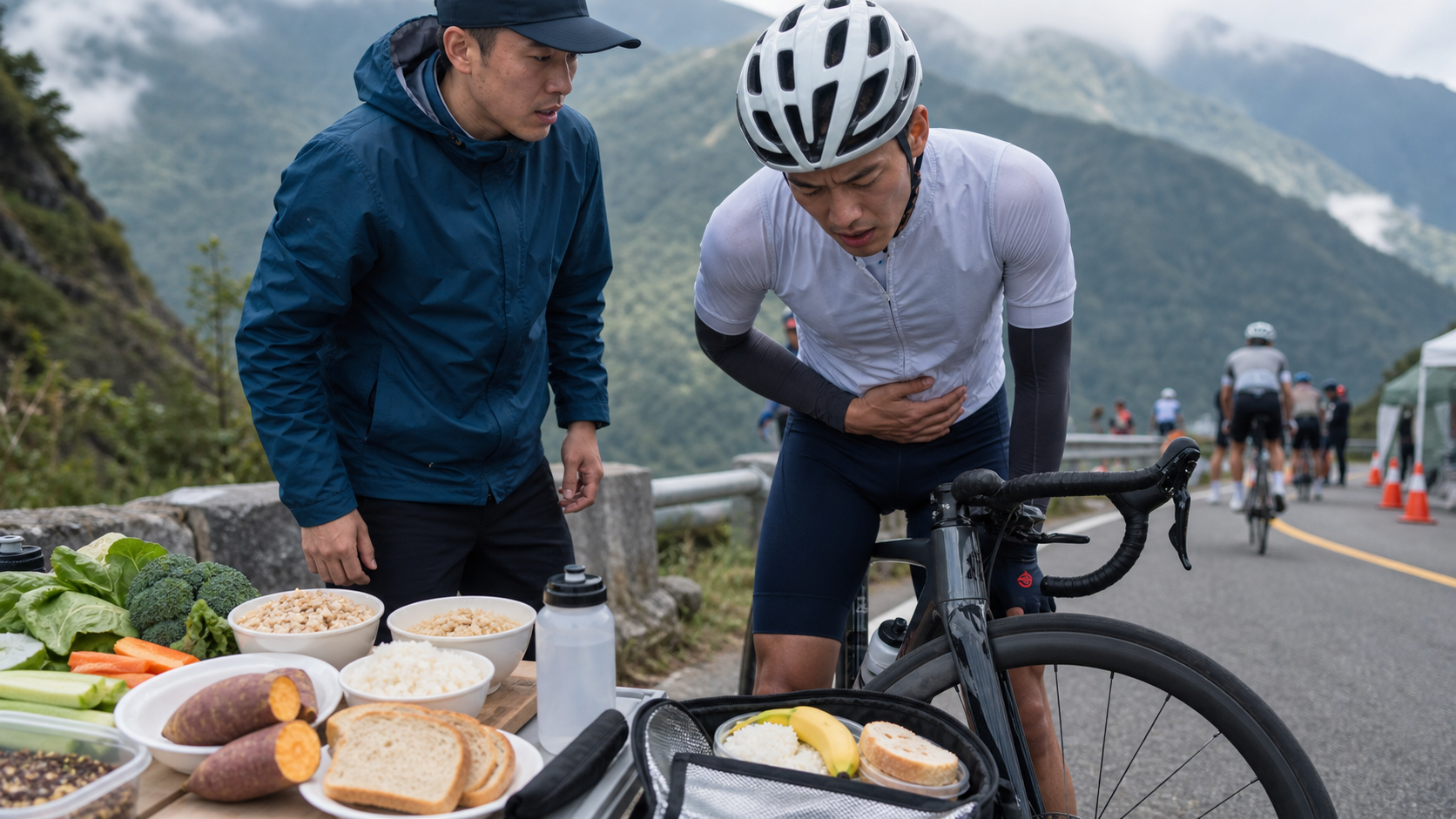
A few years ago, I was coaching an amateur rider taking on Taiwan’s KOM Challenge—let’s call him A-Zhe. His training numbers were solid, FTP steady around 260 watts, and his climbing rhythm was well-tuned. But that year, he disappeared for nearly twenty minutes near the aid station before Wuling. When he caught back up, pale-faced, he told me, “Coach, my stomach was cramping so badly I had to squat in the bushes twice.”
After the race, we retraced what he’d eaten over the previous three days. The answer surfaced quickly: he’d heard that “carbohydrates are crucial,” so the night before the race, he devoured a big plate of brown rice, a bowl of multigrain porridge, plus a sweet potato and a large plate of blanched vegetables to “get vitamins.” The intention was good, but the direction was completely wrong. He crammed all the dietary fiber he should be eating daily—but never got enough of—into the worst possible window: the final twenty-four hours before race day.
That’s exactly what I want to talk about today. Dietary fiber is a curious thing—it’s a cornerstone of daily health, yet a potential stumbling block for race-day performance. Too much or too little isn’t a binary choice; the answer is “it depends on timing.” In fifteen years of coaching athletes at all levels and recreational exercisers, I’ve found that almost everyone makes two opposite mistakes at once: eating too little on a daily basis, and too much before a race. This article will lay out both ends clearly.
Foundational Concepts: What Dietary Fiber Actually Is, and Why Athletes Should Care More
Dietary fiber is the carbohydrate in plant foods that the human small intestine cannot break down with digestive enzymes. The fact that it “cannot be digested” is precisely what makes it a double-edged sword. Because it isn’t absorbed in the small intestine, it travels all the way to the large intestine, where it influences stool bulk, gut microbiota, and transit time.
Fiber is generally divided into two broad categories, and understanding this classification is very helpful for the practical applications that follow:
Soluble Fiber
This type of fiber forms a gel-like substance when it meets water. It’s commonly found in oats, legumes, apples, citrus fruits, flaxseed, and more. Its main roles include slowing gastric emptying, helping stabilize post-meal blood sugar spikes, assisting in regulating blood cholesterol, and serving as an important fermentation substrate for beneficial gut bacteria (the so-called “prebiotic” concept).
Insoluble Fiber
This type acts like a “broom,” coming mainly from the bran of whole grains, vegetable stems, and nut skins. It doesn’t dissolve much in water, and its primary functions are to increase stool bulk, speed up intestinal motility, and shorten the time stool spends in the gut—very helpful for preventing constipation.
For athletes, both types are good friends on training days, but before a race, the everyday advantages of “slowing gastric emptying” and “increasing stool bulk” instantly become enemies out on the course. That’s the core tension running through this entire article.
Why Athletes Need to Pay More Attention to Fiber
I often tell my athletes that an athlete’s gut is actually more “sensitive” than the average person’s. During exercise, blood is massively redistributed away from the internal organs to the working muscles, and intestinal blood flow can drop significantly, temporarily impairing gut function. Long distances, long durations, hot weather, dehydration, and pre-race anxiety—these are all part of the daily reality of competition, and every single one of them is a driver of gastrointestinal distress.
According to a review of sports science literature, the proportion of endurance athletes reporting GI symptoms during competition ranges quite widely—from roughly 30% up to as high as 90%—and GI discomfort is one of the most common reasons athletes drop out mid-race (see references at the end). What makes that number so alarming is how common it is and how easily it gets overlooked. Many people treat “stomach pain halfway through a race” as fate, when in fact a large portion of it can be prevented through dietary management.
Health Benefits: Getting Enough Fiber Daily Is an Underrated Foundation
Let’s talk about daily life first. Because before we discuss whether to cut fiber before a race, we have to establish a premise: most people’s real problem is eating too little fiber on a regular basis, not too much.
According to the U.S. Dietary Guidelines, adults should consume roughly 22 to 34 grams of fiber per day, depending on age and sex; a common conversion rule is “about 14 grams of fiber per 1,000 calories consumed.” But reality is sobering—research shows that only a very small fraction of adults (around 5% in U.S. data) actually meet the recommendation, with most people averaging only about 16 grams per day (see references at the end). Under Taiwan’s eating-out culture, the situation is unlikely to be any better: a pork chop bento, a bubble tea, a bowl of beef noodle soup—fiber content is often pitifully low.
The health benefits of adequate fiber intake are relatively well-consensus directional principles in nutrition science, including:
- Gut health: Increases stool bulk, prevents constipation, helps maintain regular bowel movements, and provides fermentation substrate for beneficial gut bacteria.
- Blood sugar stability: Soluble fiber slows carbohydrate absorption, helping avoid dramatic post-meal blood sugar swings.
- Blood lipids and cardiovascular health: Helps regulate blood cholesterol and is associated with lower cardiovascular disease risk.
- Weight management: Fiber increases satiety and delays gastric emptying, which helps with total calorie control.
- Long-term disease risk: Adequate fiber intake is associated with lower risk of type 2 diabetes, colorectal cancer, and other diseases.
These benefits matter especially for athletes, because your training adaptations are built on overall health across recovery, metabolism, and immunity. A person who is chronically constipated, has an imbalanced gut microbiome, and experiences blood sugar swings will see diminished training results. When I work with athletes, I treat “daily fiber intake” as part of the baseline health assessment.
Fiber Sources Taiwanese People Commonly Eat but Often Overlook
The table below is a local fiber source reference I often give athletes, covering items easily found at convenience stores, buffet restaurants, and traditional markets (values are typical ranges; actual amounts vary by variety, ripeness, and portion size, and are intended only for comparison and planning):
| Food (typical portion) | Approximate fiber range | Ease of access (Taiwan) | Daily/Pre-race suitability |
|---|---|---|---|
| Brown rice (one bowl) | About 3–4 g | Easy at convenience stores, buffets | Good daily, avoid pre-race |
| Oats (about 40 g dry weight) | About 4 g | Widely available in supermarkets | Good daily, avoid pre-race |
| Sweet potato (one medium) | About 3–4 g | Commonly stocked at convenience stores | Good daily, cautious pre-race |
| Apple with skin (one) | About 4 g | Available year-round | Good daily, avoid pre-race |
| Cauliflower/broccoli (one serving) | About 3–5 g | Common at buffets | Good daily, avoid pre-race |
| Black beans/chickpeas (half bowl) | About 6–8 g | Supermarkets, markets | Good daily, avoid pre-race |
| White rice (one bowl) | About 0.5 g or less | Everywhere | Average daily, ideal pre-race |
| White toast/white bread | About 1 g or less | Convenience stores | Average daily, ideal pre-race |
You’ll notice that the items in the right-hand column marked “ideal pre-race” are exactly the “refined white foods” that health purists usually look down on. That’s the most counterintuitive part of fiber, and we’ll dig into it shortly.
Pre-Race Fiber Management: The Art of Timing a Low-Residue Diet
Now we get to the part that many endurance athletes need most but often get wrong—pre-race fiber management.
The core concept is called a “low-residue diet” (also commonly referred to as a low-fiber diet). “Residue” refers to the components that aren’t fully digested and remain in the intestinal tract to form fecal bulk, with fiber being the main player. The logic behind adopting a low-residue diet before a race is straightforward:
- Fiber slows gastric emptying, keeping food in the stomach longer. During exercise, you don’t want a large undigested mass of food sloshing around in your stomach.
- Fiber increases fecal bulk and speeds up intestinal motility, which is a plus on a normal day, but on race day it translates into an urgent need to use the bathroom, bloating, and abdominal discomfort.
- Undigested fiber that reaches the large intestine gets fermented by bacteria, producing gas. Add the jostling of exercise to that gas production, and you have the perfect recipe for cramps and bloating.
The general recommendation in sports nutrition for pre-race meals is: the pre-race meal should focus on easily digestible carbohydrates, minimizing fiber, fat, and protein, because fat and protein also delay gastric emptying. Sports science literature and sports nutrition organizations generally recommend adopting a low-residue (low-fiber) diet approximately 24 hours before an important race, and avoiding high-fiber, high-fat, high-protein foods and dairy in the pre-race meal to reduce the likelihood of gastrointestinal discomfort during exercise (see references at the end).
This is exactly where A-Zhe went wrong. He remembered that “carbohydrates are important,” but he chose high-fiber sources like brown rice, multigrain, and blanched vegetables, essentially stepping on every landmine before the race. If he had chosen white rice, white bread, or white toast with a bit of honey, the outcome would have been completely different.
The 72-Hour Pre-Race Fiber Taper Schedule
I typically give athletes preparing for long-distance events (such as 100 km+ cycling races, half-marathon or longer road races) a “fiber taper” schedule. The key isn’t to cut off abruptly, but to transition smoothly, giving the gut time to clear out:
| Time Point | Fiber Strategy | Specific Actions (Taiwan Context) |
|---|---|---|
| 3 days before (T-72hr) | Start slightly reducing high-fiber foods | Cut back on vegetables, switch brown rice to half brown/half white, avoid full servings of beans and nuts |
| 2 days before (T-48hr) | Significantly reduce fiber | Switch staple to white rice/white noodles, choose peeled bananas and peeled apples for fruit |
| 1 day before (T-24hr) | Enter low-residue phase | White rice, white toast, white noodles, small amounts of lean meat; avoid raw salads, whole grains, dairy |
| 3–4 hours before (race-day breakfast) | Very low residue, high carb | White toast with jam/honey, plain congee, half a banana, sports drink |
| During the race | Nearly zero fiber | Energy gels, sports drinks, electrolytes, small amounts of salt and sugar |
Two important reminders here. First, this low-residue strategy is “race-week only”—it’s not meant to be a lifelong way of eating. On normal days, you should bring fiber back into your diet. Second, any dietary strategy must be tested during training first. I often say: “Never do anything on race day that your body hasn’t practiced.” This includes the low-fiber diet—you should rehearse it before at least a few long training sessions to confirm how your gut responds.
“Gut Training”: Another Underrated Preparation
Beyond pre-race fiber reduction, there’s an advanced concept called “gut training.” It means deliberately practicing, during your regular long training sessions, taking in the same nutrition you’ll use in a race (energy gels, sports drinks, etc.), so your gut “gets used to” processing these carbohydrates under exercise conditions. The gut is trainable just like muscle—people who regularly fuel during exercise are less prone to gut issues.
This is especially practical for Taiwanese athletes, because our long-distance venues (like Beiyi, repeated climbs up Fengguizui, the Eastbound Wuling climb, the Hualien–Taitung loop, etc.) routinely take three to four hours or more. If your fueling strategy isn’t practiced, even the strongest legs will be dragged down by your gut.
In-Depth Case Study: Xiao-Mei’s Half Marathon and That “Indescribable Stomach Ache”
Let me share the story of another athlete, Xiao-Mei, an office worker who could only train after work, with a goal of the Taipei Marathon half. Xiao-Mei’s problem was classic: no issues during weekday training, but every weekend long run brought bloating, and around the 12 km mark she absolutely had to find a bathroom. She initially thought “that’s just how running is,” and even tried running fasted before races—only to end up dizzy with low blood sugar.
The first thing I asked her to do wasn’t to change her diet, but to keep a gut diary. For three consecutive weeks, she recorded what she ate in the 24 hours before each long run, what time she ate, and at which kilometer the symptoms appeared. When we laid it all out after three weeks, the pattern was obvious: whenever she’d eaten a buffet dinner with three servings of dark leafy greens plus brown rice the night before, the next day’s long run was guaranteed trouble; if she’d had white rice with a small amount of lean meat, things were much better.
The point here isn’t that “vegetables are harmful”—vegetables are of course good; the problem lies in timing and quantity. Xiao-Mei didn’t eat enough vegetables on a regular basis, so she crammed a week’s worth into the night before her long run, overloading her gut at the most sensitive moment. Our adjustment was simple: spread vegetable intake evenly across every meal throughout the week, and switch to low-residue foods the night before the race instead. Three weeks later, she finished an 18 km long run smoothly for the first time, without a mid-run bathroom stop. She texted me: “Coach, it turns out my gut isn’t weak—I was just putting all the fiber in the wrong place.”
I want to emphasize this case because it highlights a core principle: Gut issues are often not about “what you ate,” but “when you ate it and how much.” And to find your own pattern, the best tool isn’t some expensive test—it’s an honest gut diary.
The Different Roles of Two Types of Fiber Before a Race
Earlier I mentioned soluble and insoluble fiber. When it comes to pre-race management, their “danger levels” are actually quite different, and understanding this makes your approach more precise:
| Aspect | Soluble Fiber | Insoluble Fiber |
|---|---|---|
| Main food sources | Oats, beans, apple flesh, citrus | Whole-grain bran, vegetable stems, nut skins, brown rice |
| Effect on gastric emptying | Significantly slows (forms a gel) | Less impact |
| Effect on fecal bulk | Moderate | Large (the main one to avoid before a race) |
| Gas/fermentation tendency | Higher (fermented by gut bacteria) | Lower |
| Pre-race handling principle | Significantly reduce 24–48 hours before | Start reducing 48–72 hours before |
In practice, you don’t need to memorize this table. Just remember one principle: In the days before a race, push whole grains, beans, raw vegetables, skin-on fruits, and nuts to the back; bring white rice, white noodles, peeled fruit, and light protein to the front. That captures about 80% of what matters.
Practical Considerations for Taiwan’s Climate and Eating Out
Taiwan’s environment adds several layers of difficulty to fiber management—local nuances you won’t find in foreign textbooks.
First is the hot, humid climate. Most of Taiwan’s race season (especially spring and summer) is hot and humid, with heavy sweating and high dehydration risk. Dehydration itself worsens GI symptoms because it further reduces intestinal blood flow. So before races in Taiwan, hydration and electrolyte strategies need to go hand in hand with fiber management—a low-residue diet without adequate fluid intake can actually backfire.
Second is the prevalence of eating out. Taiwanese people eat out at a very high rate; buffets, bento shops, and noodle stands are everywhere. The upside is that low-residue foods (white rice, white noodles, white toast) are extremely easy to find; the downside is that getting enough fiber on a normal day requires deliberate effort. My tip for athletes who eat out: on regular days at the buffet, “actively add an extra serving of dark leafy greens”; before a race, “actively switch to white rice and take less vegetables.” Same buffet, but your plate strategy on normal days versus race week should be completely opposite.
Third is breakfast culture. Taiwanese breakfast shops offer plenty of options, and race-day breakfast is actually easy to handle: white toast with jam, plain mantou, and plain congee are all ready-made low-residue, high-carb choices. What to avoid are dan bing with too much sauce, youtiao (high fat), and large iced milk tea (dairy plus ice—a double challenge for a sensitive gut).
Common Mistakes and Fixes: Situations I See Repeatedly in My Athletes
After all these years, fiber-related mistakes are highly repetitive. I’ve compiled the most common ones below—check how many you’ve fallen into.
Mistake One: Chronically Under-Eating Fiber, Then “Cramming” Before a Race
This is A-Zhe’s classic case, and the most common one. You eat out regularly, don’t get enough fiber long-term, then suddenly have a conscience attack before a race and load up on vegetables, fruit, and whole grains to “make up for it.” The fix: Do the opposite—get a stable, adequate fiber intake on normal days (spread out, gradual), and taper down before the race instead. Fiber is a “daily savings account,” not a “last-minute cram session before the race.”
Mistake 2: Increasing Fiber Too Quickly and Not Drinking Enough Water
Many people make up their minds to get healthy, and within one week they jump their fiber intake from 15 grams to 35 grams. The result is severe bloating, abdominal pain, and even worse constipation—and then they give up. The fix: Fiber should be increased “gradually,” with small upward adjustments every few days, and you should increase your water intake at the same time. Without enough water, fiber actually makes stool harder and drier. Taiwan’s summers are hot and humid, and you sweat a lot, so hydration is something you absolutely cannot skip.
Mistake 3: Confusing “Low-Residue” with “Low-Carb”
Some athletes, upon hearing that they should eat less fiber before a race, cut carbs along with it. The result: their glycogen stores aren’t topped off before the race, and they run out of energy halfway through. The fix: The spirit of a low-residue diet is “keep the carbs, drop the fiber.” White rice, white noodles, white toast, peeled bananas, honey, and sports drinks are all great low-fiber, high-carb choices. What you want to cut is the residue, not your energy.
Mistake 4: Eating Dairy or High-Fat Foods in the Pre-Race Meal
Some people have a latte with a croissant for their pre-race breakfast—a double whammy of fat and lactose. For those who are lactose intolerant, dairy products can easily cause bloating and diarrhea, and high fat slows gastric emptying. The fix: For your pre-race meal, avoid dairy, fried foods, and high-fat foods. Choose light, easily digestible carbs. At Taiwanese breakfast shops, white toast, plain steamed buns (mantou), and sweet potato congee (in a version with excess fiber removed) are all relatively safe choices.
Mistake 5: Blaming All GI Issues on Fiber and Ignoring Other Factors
Fiber is important, but it’s not the only factor. Dehydration, excessive heat, pre-race anxiety, non-steroidal anti-inflammatory drugs (NSAIDs), excess caffeine, and overly concentrated fueling can all trigger or worsen gastrointestinal symptoms. The fix: Treat GI management as a system—adjust your diet, hydration, pacing, mindset, and fueling concentration together. Don’t just fixate on fiber alone. I often remind my athletes that fiber management is a “necessary condition,” not a “sufficient condition”: managing fiber well can greatly reduce risk, but if you’re also dehydrated, going out too fast, or loading up on caffeine before the race, problems will still happen. Systematic thinking is the only way to address the root cause rather than just the symptoms.
Actionable Advice for Readers at Different Levels
There is no “one-size-fits-all” answer to fiber management—it depends on who you are and what you’re preparing for. I’ve divided readers into three groups, each with a set of recommendations you can put into practice right away.
For General Health / Recreational Exercisers
Your primary task is to get enough fiber in your daily diet, not to worry about pre-race strategies.
- Aim for a consistent daily intake of adequate fiber (for adults, generally in the 20–35 gram range, adjusted according to calorie needs and individual circumstances).
- Increase it by “swapping”: replace half your white rice with brown rice, switch white toast for whole wheat, and swap your afternoon bubble tea for an apple with the skin on.
- Progress gradually and hydrate at the same time, to avoid bloating from a sudden jump.
- Unless you’re preparing for a long, high-intensity event, there’s no need to deliberately follow a pre-race low-residue diet. For regular fitness rides or easy weekend runs, just maintain your normal healthy daily eating.
For Amateur Endurance Athletes in Race Preparation (the Main Audience of This Article)
You need two dietary patterns to coexist: high fiber on a daily basis to nourish your gut, and low residue before races to protect performance.
- On a daily basis, get enough fiber following the principles above to build a healthy gut microbiome and regular bowel habits.
- Start tapering fiber 48–72 hours before the race, go low-residue in the final 24 hours, and have an extremely low-residue, high-carb breakfast on race morning.
- During your long training sessions, rehearse your pre-race diet and in-race fueling (gut training) at least 2–3 times.
- Keep your own “GI diary”: record what you eat before each long session and how your gut responds. Over time, you’ll find your own optimal formula. Everyone’s gut is different—someone else’s perfect meal plan won’t necessarily work for you.
For Athletes with Chronic Conditions or Digestive Issues
If you have diabetes, irritable bowel syndrome (IBS), inflammatory bowel disease, cardiovascular disease, or similar conditions, your fiber strategy needs to be highly individualized and must be coordinated with a professional medical team.
- For diabetics: Fiber helps stabilize blood sugar, but a pre-race low-residue diet and in-race carbohydrate intake will alter glucose dynamics. Be sure to discuss adjustments with your physician and dietitian.
- For those with IBS or a tendency toward diarrhea: Certain high-FODMAP foods (some legumes, onions, certain fruits, etc.) may worsen symptoms. Low-FODMAP adjustments have been shown in research to help some endurance athletes with GI symptoms, but this requires individualized guidance from a dietitian and is not recommended for long-term self-imposed strict adherence.
- Anyone who repeatedly experiences severe abdominal pain, blood in the stool, or unexplained weight loss during exercise must seek medical evaluation—do not simply attribute it to “eating the wrong fiber.” Taiwan’s National Health Insurance makes it easy to see a doctor, and gastroenterology clinics are highly accessible. If you need to be checked, get checked.
A Ready-to-Use 24-Hour Pre-Race Sample Meal Plan
Many athletes want a version they can “copy directly.” Here’s a one-day pre-race sample plan suited to the Taiwanese context, based on the principle of low residue and high carbs (adjust portions according to your body weight and calorie needs; this is only meant to illustrate the direction):
| Time | Suggested Content | Why Eat This |
|---|---|---|
| Breakfast | 2 slices of white toast with honey or jam, one bowl of plain rice porridge | Easily digestible carbs, low fiber, avoids dairy |
| Morning snack | Half a peeled banana, sports drink | Replenishes carbs and electrolytes; peeling the banana reduces fiber |
| Lunch | White rice with a small amount of skinless chicken breast, clear soup | Carbs as the base, moderate protein, avoids high-fiber vegetables |
| Afternoon | White bread, diluted juice | Continues carb loading while staying low residue |
| Dinner (night before race) | White noodles in a light broth, a small amount of lean meat | Fills glycogen stores, low fiber and low fat, easy to sleep and empty out |
| Before bed | A small amount of white bread or sports drink (as needed) | Stabilizes blood sugar, avoids going to bed on an empty stomach |
Please note: this is an “event-only” extreme version, not a model of healthy eating. Eating this way on a daily basis would actually be unhealthy. Its sole purpose is to give you a clean, emptied, easily digestible gut on race day.
Frequently Asked Questions (FAQ)
Q: My gut is usually fine. Do I really need to cut fiber before a race?
A: If you’re only doing a short, low-intensity event, there’s usually no need to go to great lengths. But for a long-distance event of three hours or more, especially in Taiwan’s hot, humid summer, moderately reducing fiber beforehand is still a relatively safe insurance policy even if your gut is normally fine. I recommend testing it out in a long training session first.
Q: Will cutting fiber before a race cause constipation?
A: A short period (a day or two) of a low-residue diet usually won’t cause problems, and you can simply return to your normal diet afterward. The key is not to do it long-term. If you’re prone to constipation, maintain adequate hydration before the race and get your fiber and vegetables back in as soon as possible afterward.
Q: Do energy gels contain fiber? What should I watch out for with in-race fueling?
A: Most sports energy gels are designed to be low-fiber, easily absorbed carbohydrates, making them suitable for use during races. The real keys are “concentration” and “habit”—fuel that’s too concentrated, or products your body hasn’t practiced with, can trigger GI discomfort. So everything you plan to use during the race must be tested in training first.
Q: I eat out most of the time and find it hard to get enough fiber. What should I do?
A: Use the “add a little” strategy. Get an extra serving of dark leafy vegetables at the buffet, grab a sweet potato or a box of edamame at the convenience store, swap white rice for brown rice, and replace your afternoon dessert with a piece of fruit. You don’t need to get it all right at once—the key is to do a little more than yesterday, every day, and stick with it.
Q: Can fiber supplements (like psyllium husk) replace natural fiber?
A: Supplements can serve as an aid in specific situations (for example, when it’s truly difficult to get fiber from food), but natural foods also provide vitamins, minerals, and phytochemicals that supplements can’t offer. If you’re considering long-term supplement use, I recommend consulting a dietitian or physician first, and be sure to pair it with adequate water intake.
Q: Should I also cut fiber during training (non-race) periods?
A: No, and it’s not recommended. The training period is exactly when you should be “nourishing your gut”—eat your fiber as you normally would. Only before key long training sessions (the ones you use to rehearse your race-day routine) do you need to simulate the pre-race low-residue approach. On regular training days, stick to your normal high-fiber, healthy diet.
Q: How should I reintroduce fiber after a race?
A: Within 1–2 days after the race, as your appetite returns, gradually add vegetables, fruits, and whole grains back in. There’s no need for a revenge binge—a sudden surge will only cause bloating. Go gradually, pair it with adequate hydration, and let your gut smoothly return to its normal routine.
Advanced Concepts: Gut Microbiota, Recovery, and Long-Term Performance
Finally, let’s add a layer many people don’t think about—the impact of fiber and gut microbiota on long-term athletic performance.
Soluble fiber is an important fermentation substrate for beneficial gut bacteria. When these good bacteria ferment fiber, they produce short-chain fatty acids, which are linked to gut barrier health, immune regulation, and even the modulation of systemic inflammation. For athletes, a healthy gut microbiota means a more stable immune system and a better recovery environment. This is why I keep emphasizing that “you can’t skimp on daily fiber”—it’s not just about bowel movements; it’s about the foundational health of your entire training system.
Here’s a tension that’s often overlooked: If you consistently eat a very low-fiber diet over the long term (for example, mistakenly treating pre-race low-residue eating as your daily routine), your gut microbiota will gradually become depleted, which is detrimental to long-term health and recovery. I’ve seen a few athletes who, because “pre-race low-residue eating worked well,” adopted it as their normal diet. A few months later, they experienced constipation, weakened immunity, and declining training performance. This is the other side of the “too much or too little” question in this article’s title—too little fiber is also a problem.
So please be sure to distinguish between these two scenarios:
| Scenario | Fiber Strategy | Duration |
|---|---|---|
| Daily life and training periods | Adequate, diverse (soluble + insoluble) | Long-term, lifelong |
| 24–72 hours before race | Taper down to low-residue | Short-term, race-specific |
| During race | Nearly zero fiber, primarily easily absorbed carbohydrates | Race day only |
| 1–2 days after race | Gradually return to normal routine | Transition period |
Once you understand this table, you’ll grasp the full picture of fiber management: it’s a strategy that shifts over time, not a fixed answer. Nourish daily, clear before race, empty during race, replenish after race—four phases, each with its own logic.
Conclusion: Fiber Is Not the Enemy—Timing Is the Key
Let’s return to A-Zhe from the beginning. The following year, we completely overhauled his dietary strategy: he consistently ate enough fiber in daily life, nurturing his gut for over half a year; three days before the race, we started tapering; 24 hours before, he was on a low-residue diet; and on race morning, he had white toast with honey and a banana. That year, he rode smoothly all the way through. Aid stations were no longer his nightmare but truly a place to refuel. When he crossed the finish line, he told me, “Coach, it turns out my gut wasn’t the problem—I was just eating at the wrong times all along.”
I’ve always remembered that statement, and I want to share it with every reader who has made it this far. The question of “too much or too little” dietary fiber has never been a black-and-white issue. On training days, you need it—it’s the foundation for gut health, stable blood sugar, and long-term disease prevention; on race day, you need to temporarily set it aside—because it delays gastric emptying, increases stool bulk, and works against you on the course. Once you learn to distinguish between these two scenarios, you’ll have mastered the most important lesson in fiber management.
Treat fiber like your daily savings—deposit steadily; treat the pre-race period like withdrawal day—clear it out wisely. By doing so, you can have the best of both worlds: daily health and race-day performance. Wishing you the best in your next race—may aid stations be just aid stations, not nightmares. See you at the finish line. Keep going.
This article is for educational purposes and does not replace individual diagnosis and treatment advice from physicians, physical therapists, or nutritionists. If you have diabetes, hypertension, heart disease, irritable bowel syndrome, or other chronic conditions, please discuss any dietary changes with your healthcare team and rely on individualized assessment.
References
- Dietary Guidelines / How Much Fiber Per Day — Healthline: https://www.healthline.com/health/food-nutrition/how-much-fiber-per-day
- How Much Fiber Do You Need per Day — Cleveland Clinic: https://health.clevelandclinic.org/how-much-fiber-per-day
- Chart of high-fiber foods — Mayo Clinic: https://www.mayoclinic.org/healthy-lifestyle/nutrition-and-healthy-eating/in-depth/high-fiber-foods/art-20050948
- Dietary restrictions in endurance runners to mitigate exercise-induced gastrointestinal symptoms — Journal of the International Society of Sports Nutrition: https://link.springer.com/article/10.1186/s12970-020-00361-w
- Nutritional Recommendations To Avoid Gastrointestinal Distress During Exercise — Gatorade Sports Science Institute: https://www.gssiweb.org/sports-science-exchange/article/sse-114-nutritional-recommendations-to-avoid-gastrointestinal-distress-during-exercise
- Should You Reduce Dietary Fiber Before Competition — PezCycling News: https://pezcyclingnews.com/toolbox/should-you-reduce-dietary-fiber-before-competition/
Related Reading
- What to Eat Before Exercise: Timing and Content—A Coach’s Guide to Pre-Race Meals, Carbs, Protein, and Gut Considerations
- The Science of Satiety for Athletes: Eating Enough Without Overeating
- Meal Prep for Athletes: A Complete Guide to Efficiency, Nutritional Balance, Storage, and Variety
- Race Week Nutrition Plan for Athletes: Glycogen, Gut Health, and Daily Meal Planning in the Week Before Competition
CT暗黑廚房) 車友必備 宇宙無敵鮮蚵湯 幫助訓練恢復 天然食補 好市多 超肥鮮蚵 破PR
7 年前
一日北高/長距離團騎 常見問題補充篇 / 組團或跟團的眉角 / 壯車友容易被瘦車友慢性拉爆 / 原來屁股痛可能是這個原因...? / 風場配速法 / 公路車 / CT Yeh
2 年前
靠單車減肥35公斤 心得分享與整理
7 年前
FTL 與 SYB 車隊專訪 西進武嶺 實用攻略分享! 2小時 如何練?!你不知道的眉角!新手準備武嶺必看 EP1 | 實力派女車友 | 精華版 | 公路車 | CTYeh
4 年前
CT 喇低賽) 單車 比賽總是沒照片? 攝影師的觀點大公開 姿勢就是力量! 請加速1.25倍收看
7 年前
西進武嶺 免費訓練分析服務 Intervals | 練不夠還是練過頭?你哪一種類型選手?AI模型告訴你! | 備戰神器 | 公路車 訓練 | CT Yeh
4 年前
西進武嶺 自製新版AI配速表產生器 x 賽前攻略 抱佛腳! 沒有功率計也可以產生配速表嗎?有什麼其他眉角賽前要注意的呢? | 西進武嶺 / 東進武嶺 KOM 攻略 | 公路車 | CT Yeh
4 年前
CT趣訪 西進武嶺 2小時組 EP2 全村的希望 蔣緯緯! 訓練菜單&技巧公開 |公路車 |CT Yeh
4 年前