Fruits and Exercise: Nature's Refueling Station — A Coach's Guide to Eating Bananas, Guavas, and Lychees at the Right Time
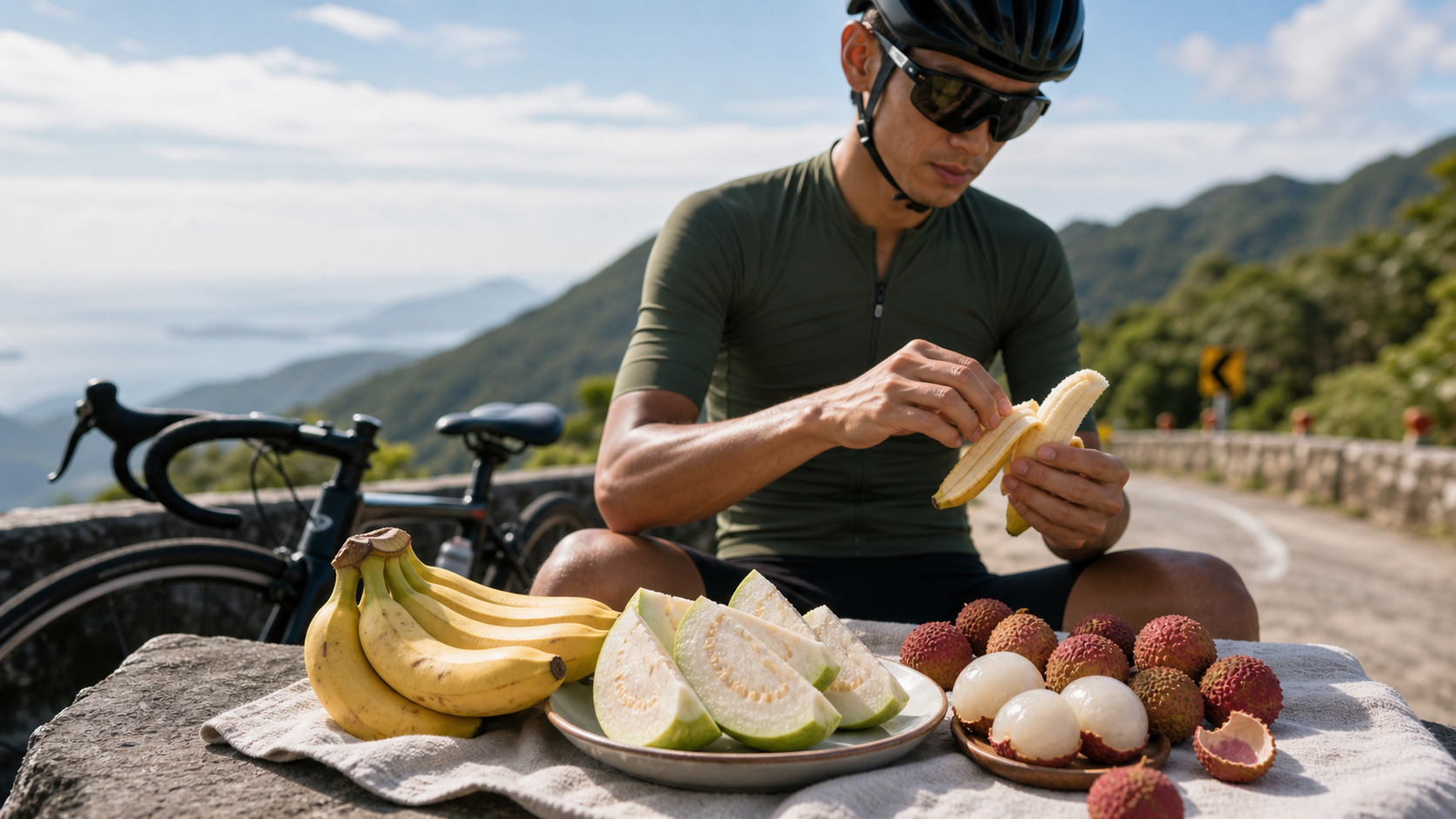
A Ten-Dollar Banana Beats an Imported Energy Gel
I’ve been coaching athletes and everyday people for fifteen years, from pro cycling team riders to weekend warriors trying to shed five kilos. The most common nutrition question I get isn’t “Should I buy that expensive tub of whey protein?” — it’s “Coach, can I actually eat fruit before and after exercise? Will I gain weight? Will my blood sugar go haywire?”
One case that sticks with me is a tech executive in his forties — let’s call him A-Hong. He rode Yangmingshan every weekend and had decent fitness, but every time he hit the Fengguizui stretch, he’d “blow up” — shaking hands, cold sweats, erratic heart rate, forced to pull over and squat by the roadside. At first he blamed his “poor fitness” and even considered buying a pile of pricey energy products. After reviewing his ride data, I told him: “You don’t have a fitness problem — you’re bonking from low blood sugar. Next time, stuff two bananas in your pocket before heading out, and eat one every hour of riding.” That month, he finished the full route smoothly for the first time and texted me: “Coach, turns out I didn’t need gear — I needed a ten-dollar banana.”
I love sharing this story because it exposes a common misconception among Taiwan’s athletic crowd: we throw big money at gear and supplements while overlooking the cheapest, most natural, and most easily absorbed refueling station at the market, convenience store, or fruit stand — fruit.
In this article, I want to lay out the full picture on fruit: where its nutritional strengths really lie, how to choose it before, during, and after exercise, how to fix common mistakes, and how to eat fruit smartly in Taiwan’s unique eating-out and climate context. It’ll run long and practical, so feel free to bookmark it and work through it section by section.
Why Fruit Is “Nature’s Refueling Station” — The Science First
Fruit’s Core Value: Easily Absorbed Carbs + Electrolytes + Water + Micronutrients
The first fuel your body burns during exercise is glycogen stored in muscles and the liver, and glycogen’s raw material is carbohydrates. Fruit’s greatest value lies in providing carbs that are easy to digest, with a moderate-to-fast glycemic response, and that come with water and electrolytes — a combination that’s hard for synthetic supplements to replicate all at once.
I often tell my athletes: an energy gel is like “pure gasoline” — potent, fast, but monotonous; a piece of fruit is more like “premium fuel with additives” — beyond sugar, it throws in potassium, magnesium, vitamins, fiber, and water. For the vast majority of recreational athletes, the latter actually fits what the body truly needs.
Fruit Sugar Isn’t Just One Thing
Most people don’t know this. The carbs in fruit come in three main forms:
- Glucose: enters the bloodstream directly, fastest energy source.
- Fructose: must first be metabolized by the liver, using a different absorption pathway than glucose.
- Sucrose: one glucose molecule plus one fructose molecule.
Why does this matter? Because sports science has an important concept called “multiple transportable carbohydrates.” The glucose absorption channel in the human gut (SGLT1) has a ceiling — from a single glucose source, the body can oxidize only about 60 grams per hour. But if you take glucose and fructose together, fructose uses a separate channel (GLUT5), and with both pathways open, total absorption can go higher.
That’s exactly why the “glucose + fructose” combo is so highly regarded in long-duration endurance sports — and fruit, by nature, is a natural source where glucose and fructose coexist. You don’t need to memorize formulas; just grasp that “fruit sugar is inherently complex and friendly to long exercise” and you’re set.
Electrolytes: The Potassium in Bananas Isn’t a Myth
Sweat doesn’t just lose water — it also drains sodium, potassium, magnesium, and chloride. Taiwan’s summers are hot and humid; a two-hour ride or run can easily shed one to two liters of sweat, taking electrolytes with it. If you only replace that with plain water, you can actually dilute your blood electrolytes further, leading to cramps, dizziness, and weakness.
Bananas earned the title “king of sports fruits” largely because of potassium. According to nutrition data, every 100 grams of banana contains about 358 mg of potassium (source at the end of this article); a medium banana weighs about 100 to 120 grams, meaning one banana delivers roughly 350 to 400 mg of potassium. It also carries about 27 mg of magnesium, plus vitamin B6 and a small amount of vitamin C. That’s why bananas are the most common fruit at marathon finish lines and cycling feed stations.
But I want to flag one overhyped claim: “Eating bananas prevents cramps.” That’s overstating it. The causes of cramping during exercise are complex — involving neuromuscular fatigue, electrolytes, hydration, even insufficient training — and potassium is just one piece. Bananas providing potassium is a good thing, but they’re not a “cramp cure-all.” I’ll expand on this in the “Common Mistakes” section later.
Fiber and Micronutrients: The Hidden Teammates for the Long Game
The dietary fiber, vitamin C, and polyphenol antioxidants in fruit do little for immediate performance “in the moment,” but they matter greatly for long-term recovery, inflammation control, and immune maintenance. Regular exercisers live in a repeated “breakdown–repair” cycle, and fruit’s antioxidant nutrients can play a supporting role in that process. So I always tell my athletes: look at fruit with two lenses — for urgent use (sugar and electrolytes during exercise) and for building a foundation (daily fiber and antioxidants).
Before, During, and After Exercise — How Should You Choose Fruit?
This is the most practical section of the whole article, so please pay attention to the table. I’ve categorized fruits by “digestion speed, fiber content, and sugar structure,” mapped to different phases of exercise.
“Before” Exercise: Fast, Easy to Digest, No Bloating
The goal before exercise is to top off glycogen a bit without weighing down your gut. So 30 to 60 minutes before exercise, the ideal picks are low-fiber, easy-to-digest fruits with a moderate-to-fast glycemic response.
| Timing | Goal | Recommended Fruits | Avoid | Coach’s Tip |
|---|---|---|---|---|
| 2-3 hours before | Full glycogen loading | Banana, papaya, guava (can pair with a meal) | Too much high-fiber in one go | The gut has time to digest here, so options are flexible |
| 30-60 minutes before | Quick small top-up, no bloating | Banana (riper), grapes, longan, lychee | Whole high-fiber apple, overly acidic citrus | Keep it to half to one banana |
| Within 15 minutes before | Just a little sugar | A small handful of grapes, a few lychees | Any fruit in large amounts | Don’t eat to the point of feeling full |
Coach’s Field Notes: A riper banana (with speckles on the peel) has had its starch converted to sugar, so it raises blood sugar faster and digests more easily — better than a green one before exercise. Conversely, if you have a sensitive stomach and tend to need the bathroom once you start moving, avoid whole high-fiber apples, fruits with skin, and overly acidic citrus before exercise.
During Exercise: Only Needed for Long Durations — The Key Is Continuous Sugar Supply
For exercise lasting under 60 minutes, you generally don’t need to eat fruit mid-workout — just water is fine. What truly requires “eating while moving” is long-duration endurance exercise.
According to the American College of Sports Medicine (ACSM) guidelines for carbohydrate intake during endurance exercise (source at the end):
- Exercise 1 to 2.5 hours: supplement approximately 30 to 60 grams of carbs per hour
- Exercise over 2.5 to 3 hours: can increase to approximately 60 to 90 grams of carbs per hour (at this point, a combined source of glucose + fructose is recommended)
Converting this into fruit makes it very intuitive:
| Fruit (approximate portion) | Carb content (approx.) | Equivalent to supplement ratio |
|---|---|---|
| 1 medium banana (about 110 g) | About 25 g | Covers about half of the 1-hour minimum |
| 1 small bunch of grapes (about 100 g) | About 17 g | Suitable for small bites mid-workout |
| 8-10 lychees | About 16-20 g | Quick and easy to eat |
| 15 longans | About 15 g | High sweetness, convenient |
Coach’s practical notes: For long-distance cycling or running, I ask athletes to break up their fueling into small, frequent portions. Instead of eating two bananas at once after an hour, eat half a banana every 20 to 30 minutes with a sip of water. This keeps blood sugar more stable and reduces gastrointestinal burden. This is why many long-distance events in Taiwan (like various 100K rides) have bananas at aid stations. But note: during exercise, blood flow to the gut decreases, so too much high-fiber or overly acidic fruit can cause discomfort — bananas, being mild and easy to digest, are the safest choice in this situation.
After Exercise: Seize the Recovery Window — Replenish Sugar and Potassium Together
After exercise, your body is like a sponge that’s been wrung out and is thirsty to absorb water — muscles are especially sensitive to nutrients. Consuming sugar within about 30 to 60 minutes post-exercise helps replenish glycogen; fruit conveniently provides both sugar and electrolytes at the same time.
However, there’s a very important concept to clarify here: fruit is very low in protein. A banana has only about 1 gram of protein per 100 grams. If you’ve just done strength training and your goal is muscle gain, eating only fruit isn’t enough — muscle repair requires adequate protein (generally recommended at about 20 grams of quality protein per serving). So the golden post-workout combination is: fruit (for sugar and potassium) + a protein source (soy milk, milk, yogurt, eggs, whey).
| Exercise type | Recommended post-workout combination | Reason |
|---|---|---|
| Long-duration aerobic (cycling/running 90+ min) | 1 banana + unsweetened soy milk or milk | Substantial glycogen replenishment + some protein |
| Strength training | Guava or kiwi + whey or Greek yogurt | Gentler sugar content, protein is the main focus |
| General 30-45 min exercise | One serving of seasonal fruit is enough | Low energy expenditure, no need to add extra |
| Heavy sweating in summer | Banana + a glass of lightly salted water or sports drink | Need to replenish sodium as well as potassium |
Taiwan-Specific: Practical Application with Local Fruits and Scenarios
Living in Taiwan is actually a blessing — year-round access to cheap, high-quality fruit is a natural fueling advantage. I’ve organized the athletic positioning of several common Taiwanese fruits into a table so you can make quick decisions at the fruit stand or convenience store.
Taiwan Common Fruits: Athletic Use Reference Table
| Fruit | Season (approx.) | Athletic scenario positioning | Characteristics & reminders |
|---|---|---|---|
| Banana | Year-round | Great before, during, and after — the all-rounder | High potassium, easy to digest, portable — the top choice |
| Guava | Year-round | Daily foundation, post-workout | High vitamin C, low-to-moderate sugar, high fiber — not recommended right before exercise |
| Lychee | Summer | Quick sugar boost before/during exercise | High sweetness, easy to eat, but watch portion size |
| Longan | Summer/Autumn | Sugar boost before/during exercise | Convenient, sweet, calorie-dense |
| Watermelon | Summer | Post-workout hydration and sugar | Extremely high water content, refreshing after summer sweating |
| Papaya | Year-round | 2-3 hours before exercise, daily use | Easy to digest, suitable for sensitive stomachs |
| Apple | Year-round (mostly imported) | Daily foundation | High fiber, not recommended as a whole fruit right before exercise |
| Kiwi | Year-round (mostly imported) | Post-workout, daily use | Extremely high vitamin C, aids recovery nutrition |
| Pineapple | Spring/Summer | Post-workout, daily use | Sweet and tangy, appetizing — those with sensitive stomachs should watch acidity |
In-Depth Analysis of Four Staple Fruits
Banana — the versatile #1. Usable before, during, and after; high in potassium, easy to digest, portable, and cheap. I tell nearly every athlete to keep one in their bag. When choosing, consider ripeness: for eating right before exercise, pick a ripe banana with brown speckles (faster sugar release, easier to digest); for a daily snack, either ripeness works. The only caveat is its low protein content — pair it with protein after exercise.
Guava — the king of vitamin C and a daily foundation staple. Taiwanese guava is cheap and excellent, with vitamin C content among the highest of common fruits, relatively moderate sugar, and more fiber. Because of the fiber, I don’t recommend eating it right before exercise (to avoid bloating), but it’s great as a daily fruit or paired with yogurt post-workout. For those watching sugar intake, guava is a relatively friendly option (actual portions should still be individually assessed).
Watermelon — the post-workout hydration hero in summer. Extremely high water content. After sweating in a Taiwanese summer, a few slices of watermelon replenish both fluids and sugar, feeling very comfortable. But precisely because it’s high in water and sugar, don’t eat too much at once on an empty stomach, and remember it doesn’t provide sodium — for heavy sweating, you still need to supplement salt or sports drinks separately.
Kiwi/berries — antioxidant support for recovery. Rich in vitamin C and polyphenols, helpful for recovery and immune maintenance in regular exercisers. I position these fruits as “foundation builders” rather than “emergency fuel” — good for daily consumption and post-workout. Imported kiwis and blueberries in Taiwan aren’t as budget-friendly as local fruits, but they’re a worthwhile nutritional investment for recovery.
Taiwan’s Climate: Humid Heat Is the Key Variable
Taiwan’s summers are humid and hot, with perceived temperatures often exceeding 35°C. For athletic fueling, this means: you sweat more than you think, and electrolyte loss is more severe. In this environment — riding up Yangmingshan, running along the riverside, or hiking in the hills — I emphasize three things:
- Fruit provides potassium, but don’t forget sodium. Bananas are great for potassium, but with heavy sweating, sodium loss is even more critical. Eating only bananas isn’t enough — pair them with a sodium-containing sports drink or add a pinch of salt to your water.
- Make good use of high-water-content fruits. Fruits like watermelon and pineapple are high in water — eating them after summer exercise replenishes both fluids and sugar, feeling very comfortable.
- Mind the storage. Taiwanese summer heat spoils fruit quickly. Cut fruit left in a bag for a few hours can go bad — for longer activities, bring whole fruits that keep well (like bananas or oranges).
The Reality for Taiwan’s Eating-Out Population: Fruit Often Gets Overlooked
Taiwan has a high rate of eating out, and many people go through the day barely eating any fruit. The two slices of watermelon that come with a bento box, or the small plate after hot pot, are often the only fruit source all day. I often remind athletes: if you exercise regularly, your daily fruit intake is even more essential, because you need more potassium, vitamin C, and antioxidant nutrients than non-exercisers. A simple approach is to turn fruit into a fixed post-workout ritual — after a gym session or a ride, grab a banana and a bottle of unsweetened soy milk at the convenience store. Over time, your body will definitely feel the difference.
Three Real-Life Cases: Putting Fruit Strategies into Practice
Principles alone can sometimes feel too abstract. Let me walk you through three typical cases (scenarios are common composites from coaching athletes; figures are within general common-knowledge ranges) to show you how fruit strategies play out in practice.
Case 1: Office Worker Xiao-Min Who Wants to Lose Fat—Turning Fruit from “Eat Freely” to “Eat Strategically”
Xiao-Min is in her early thirties, sits at a desk all day, and her goal is to lose weight and improve her physique within six months. Her initial problem wasn’t that she didn’t eat fruit, but that she ate it without a plan: in the afternoon, she’d grab a large plate of mango slices with yogurt as a “healthy snack” when she felt peckish, then eat a big bowl of mixed fruit at night, and often went into her workouts on an empty stomach. She thought, “I’m eating fruit, so why can’t I lose weight?”
The adjustments I made for her were simple:
- Set a limit on total fruit intake—a fixed 2 servings per day, no more unlimited eating.
- Move fruit to useful time points—one serving 40 minutes before her afternoon workout (a banana), and one serving after her evening strength training (guava with unsweetened yogurt).
- Quit the habit of blending fruit into a big glass of juice, switching to whole fruit instead to increase satiety.
Two months later, she reported back: she had more energy during workouts, no longer binged on snacks in the afternoon, and her weight began to steadily drop. The key lesson she learned wasn’t “you can’t eat fruit,” but rather “with the same fruit, getting the timing and portion right makes a huge difference in the results.”
Case 2: Sub-4-Hour Marathon Runner Ah-Kai—The Fueling Lab
Ah-Kai is one of the most diligent students I’ve coached when it comes to fueling homework. His goal was to break four hours in the marathon. He treated every long run as a fueling rehearsal, jotting down every eating approach in his notes. Together, we put together his personalized fruit-fueling rhythm:
| Stage | Timing | Fueling Content | Purpose |
|---|---|---|---|
| Pre-race dinner | Night before | Normal carb meal + one banana | Top off glycogen stores |
| Pre-race | 60 min before start | One ripe banana | Build a base before the start, avoid bloating |
| First half | Every 30-40 min | Energy products as primary | Steady, continuous sugar supply |
| Aid station | Middle to late stages | Half a banana for a flavor change | Replenish potassium + mental boost |
| Post-finish | Within 30-60 min | Banana + chocolate milk | Replenish sugar, potassium, and protein |
Ah-Kai’s insight is well worth sharing: “Fueling must be practiced, not figured out on race day.” He tried eating bananas that were too green before a race and ended up with stomach discomfort, and he also tried wolfing down two or three bananas at an aid station, which caused bloating. It was only through repeated practice that he found the rhythm of “half a banana, eaten slowly” that suited him. This is why I always emphasize “Nothing new on race day.”
Case 3: Elderly Uncle Chen with Blood Sugar Concerns—Conservative, Individualized, Ask a Doctor First
Uncle Chen is in his sixties and loves cycling, but his health check showed elevated blood sugar, and he has a family history of diabetes. He asked me nervously, “Coach, does that mean I can’t eat any fruit at all?”
My answer was clear: In this situation, it’s not for a coach to decide—it should be left to doctors and dietitians. What I could do was remind him of a few conservative principles and strongly urge him to seek medical consultation:
- See a doctor first: Taiwan’s National Health Insurance is convenient. Making an appointment with a metabolism specialist or seeing a dietitian for an individualized dietary plan is the first step and cannot be skipped.
- Portions and types must be individualized: Different people have very different blood sugar responses to different fruits. A general fueling chart cannot be directly applied to him.
- Clarify how exercise and medication work together: For some people, after exercise and dietary adjustments, their blood sugar and medication needs require re-evaluation by a doctor.
Uncle Chen later worked with his doctor and dietitian to find a fruit portion and exercise rhythm that suited him, and he still enjoys cycling happily. I specifically wanted to include this case to remind all readers: when it involves illness, always consult a medical professional first—no online article can replace an individual diagnosis.
Fruit vs. Commercial Sports Supplements: When to Use Which?
Many students agonize over “should I eat fruit or buy energy gels and sports drinks?” In reality, the two aren’t opposed—each has its place. Let me clarify with a table.
| Aspect | Natural Fruit | Commercial Sports Supplements (Gels/Drinks/Gummies) |
|---|---|---|
| Price | Cheap (a banana costs about NT$10) | More expensive (a single gel often starts at several tens of NT$) |
| Portability & Storage | Bananas and oranges are easy to carry; cut fruit spoils quickly | Lightweight, shelf-stable, waterproof packaging |
| Sugar delivery speed | Medium-fast, gentler | Can be designed for extremely fast absorption |
| Extra nutrition | Contains potassium, magnesium, vitamins, fiber, water | Mostly simple sugars and electrolytes |
| GI burden | Easy-to-digest varieties are very gentle | High-concentration gels without water can cause discomfort |
| Suitable occasions | General exercise, daily life, short-to-mid distances, aid station variety | Races, ultra-long distances, when precise sugar control is needed |
My advice: For the general exercise population, short-to-mid distances, and daily training, natural fruit covers almost everything—cheap and healthy. The situations that truly call for commercial supplements are races, ultra-long distances, or scenarios requiring precise control of grams per hour. Using both in combination is the most practical approach.
Common Mistakes and Fixes—I’ve Seen Students Fall Into These Traps Too Many Times
Mistake 1: “Fruit is healthy, so the more I eat, the better”
This is the most common misconception. No matter how natural fruit is, sugar is still sugar. On days with low exercise volume, 2 to 3 servings of fruit a day is enough (one serving is about the size of a fist or one banana). I’ve had students who ate five or six servings a day because “fruit is healthy,” but their exercise volume didn’t keep up, and they were confused when their weight went up instead of down. The fix: treat fruit as fuel, not as “the more you eat, the healthier you are.” Portions should match your exercise expenditure.
Mistake 2: Treating bananas as a miracle cure for cramps
As mentioned earlier, cramping has complex causes. I coached a marathon runner who loaded up on bananas for potassium before a race, only to cramp up at the 30-kilometer mark anyway—he was very frustrated. When we reviewed it later, we found his real problems were insufficient training mileage + inadequate hydration and sodium intake + too fast a pace. Potassium wasn’t the main issue at all. The fix: eating bananas for potassium is a good habit, but don’t treat it as a cure-all; cramps need a comprehensive review of training volume, hydration, electrolytes, and pacing.
Mistake 3: Eating high-fiber or overly acidic fruit right before exercise
One student ate a whole apple with the skin on ten minutes before a workout and ended up with stomach cramps halfway through the ride. High-fiber fruit digests slowly, and blood flow to the GI tract decreases during exercise, making discomfort very likely. The fix: in the immediate pre-workout window (within 30 minutes), choose easy-to-digest options like bananas or grapes; save high-fiber, skin-on, or overly acidic fruit for everyday eating.
Mistake 4: Eating only fruit as a post-workout recovery meal
After finishing a heavy strength session, some students just eat two bananas and leave—completely missing the protein needed for muscle repair. The fix: after exercise, fruit must be paired with protein. Banana with milk, guava with yogurt, or kiwi with whey protein are all great combinations.
Mistake 5: Treating juice as fruit, and eating dried fruit without limits
When fruit is juiced, the fiber is often filtered out and the sugar is concentrated—a glass of orange juice can contain the sugar of three or four oranges. Dried fruit is even worse: the water is removed and the sugar is highly concentrated, so a small handful packs a surprising number of calories. The fix: prioritize whole fruit; juice and dried fruit are fine as occasional convenient options, but don’t treat them as an everyday free-for-all.
Frequently Asked Questions (FAQ)
Q: If I’m managing blood sugar or have a family history of diabetes, can I still eat fruit?
A: Yes, but you need to pay attention to the type, portion size, and timing, and be sure to discuss individualized recommendations with your physician or dietitian. The strategy of combining exercise with fruit for sugar replenishment varies for everyone, especially if you already have blood sugar-related conditions—don’t just apply general advice to yourself. With Taiwan’s NHI making medical access convenient, seeing a metabolic specialist or consulting a dietitian when in doubt is well worth it.
Q: Will eating fruit after evening workouts make me gain weight?
A: The key is “total daily calories,” not “what time you eat.” After exercise, your body needs sugar replenishment, and moderate fruit is a reasonable choice. What you should really worry about is losing control of total intake, not the timing.
Q: My bananas are still green. Can I eat them before a workout?
A: Yes, but green bananas have more starch, are harder to digest, and raise blood sugar more slowly. If you’re eating right before exercise, it’s better to choose ripe bananas with brown spots on the peel—they’re easier to digest and raise blood sugar faster.
Q: Do I have to buy expensive imported fruit?
A: Absolutely not. Taiwan’s local bananas, guavas, and seasonal fruits are no less nutritious than imported ones, and they’re fresher and cheaper. Your natural fueling station is right at the fruit stand around the corner.
Q: Will eating fruit before fasted exercise hurt my stomach?
A: For most people, eating a ripe banana before exercise won’t hurt your stomach—it can actually prevent hypoglycemia. What really causes discomfort is eating overly acidic fruit (like unripe pineapple or large amounts of citrus) or high-fiber fruit with skin on an empty stomach. If you have GERD or stomach conditions, adjust according to your doctor’s advice.
Q: Is eating a whole banana during exercise too much?
A: For long-distance athletes, it’s not too much, but I usually recommend “breaking it in half, eating slowly, and drinking water with it.” Eating a whole one at once without water, when gastrointestinal blood flow is reduced during exercise, can easily cause bloating. Small amounts, multiple times is the general rule.
Q: Are frozen fruits or fruit smoothies okay?
A: After a summer workout, frozen berries or a watermelon smoothie can be refreshing and nutritious. But be aware that smoothies often have extra sugar or condensed milk added, which turns them into desserts. Making your own without added sugar is best.
Q: Will eating fruit before bed affect my sleep?
A: Moderate amounts are usually fine, but if you eat a large amount of fruit late after an evening workout and have a sensitive stomach, it might cause bloating that affects falling asleep. I’d suggest keeping the portion small before bed and choosing easily digestible options.
Q: What should vegetarians or those on a whole-food plant-based diet pay attention to with fruit fueling?
A: Fruit is an excellent sports fuel for vegetarians too. The difference is that you need to pay special attention to your post-workout protein source—pairing fruit with unsweetened soy milk, soy products, or plant-based protein powder can cover both sugar replenishment and recovery. The key is not to neglect protein intake just because “eating plants is healthy.”
Q: Can children or teenagers use fruit as fuel after exercise?
A: Absolutely. After exercise, natural fruit paired with fresh milk is a great recovery combination for growing kids—far healthier than sugary drinks. If your child has specific health conditions, please follow pediatrician or dietitian recommendations.
Actionable Advice for Readers at Different Levels
For Exercise Beginners (Exercising 1-3 Times a Week, Under an Hour Each Session)
You don’t actually need a complicated fueling strategy. Just focus on two things:
- If you’re hungry before exercise, eat half to one banana 30-60 minutes beforehand.
- Make fruit a regular habit after exercise—one serving of seasonal fruit with some protein (soy milk or milk both work).
For workouts under an hour, you don’t need to fuel with fruit during exercise—water is enough. Just consistently getting fruit into your daily routine already puts you ahead of most people.
For Intermediate Athletes (Regular Training, 1-2.5 Hours Per Session)
You can start “timing” your fueling:
- 30-60 minutes before exercise: one ripe banana as a base.
- During exercise (over one hour): replenish easily digestible carbs every 20-30 minutes (half a banana, a handful of grapes), targeting the ACSM recommendation of 30-60 grams of carbs per hour.
- After exercise: banana plus protein, taking advantage of the 30-60 minute recovery window.
- When sweating heavily in summer: remember to replenish both potassium and sodium—don’t rely only on bananas.
Sample Weekly Fruit Plan (For Reference, Not Mandatory)
Here’s a practical framework you can apply, then adjust based on your schedule and workout times:
| Scenario | Fruit Arrangement |
|---|---|
| Training days | One banana 40 minutes before exercise; one serving of guava or kiwi with protein after exercise |
| Rest days | One serving of seasonal fruit at breakfast or in the afternoon, totaling 2 servings |
| Long summer rides | Banana before exercise, half a banana at aid stations during, watermelon for hydration plus protein after |
Remember, this is just a framework—adjust portions and types according to your training volume and physical condition. Those with chronic conditions should consult their medical team first.
For Endurance Athletes (Long-Distance Cycling, Full Marathons, Ultramarathons)
Your challenge is sustained, high-volume, continuous sugar delivery. Relying on fruit alone for the entire event usually isn’t enough—you’ll need sports drinks and energy products—but fruit can be a great “palate cleanser”—eating a banana at an aid station for a change of taste and a potassium boost feels much better than chugging gels the whole way.
- Following ACSM principles: for events over 2.5-3 hours, aim for 60-90 grams of carbs per hour, and make good use of combined glucose + fructose sources (fruit is naturally this combination).
- You must “rehearse” your fueling during training—never try new fruit for the first time on race day, or GI distress could ruin the whole event.
- I often tell my endurance athletes: “Nothing new on race day”—and that applies to fruit too.
Conclusion: The Best Fuel Is Often the Simplest
Back to Ahong, the guy who bonked riding up Yangmingshan at the start of this article. He later became what I jokingly call a “banana disciple”—he’d stuff two bananas in his pocket before every ride and half-jokingly brag to his cycling buddies: “My fuel costs ten dollars, but it works better than your hundred-dollar gels.”
This is the message I most want to convey after years of coaching: Sports fueling doesn’t need to be expensive or complicated. The fruit stand, the wet market, the convenience store near you—they’re all natural fueling stations, offering easily absorbed carbs, electrolytes, water, and vitamins at incredibly affordable prices. All you need to do is understand their characteristics and eat the right fruit at the right time.
Eating bananas around your workouts, incorporating guava and kiwi into your daily routine, remembering to replenish potassium and sodium together in summer, and pairing fruit with protein after exercise—these small habits, accumulated over the long term, will serve your performance and recovery more reliably than any expensive supplement.
Next time you head out to exercise, stop by the fruit stand on the corner first. That ten-dollar banana might just be the key to your performance today.
This article is for educational purposes and does not replace individual diagnosis and treatment advice from physicians, physical therapists, or dietitians. If you have diabetes, hypertension, heart disease, or other chronic conditions, or are taking related medications, any dietary or sports fueling adjustments should first be discussed with your medical team for individualized assessment.
References
- American College of Sports Medicine (ACSM) endurance exercise carbohydrate intake recommendations summary (hourly carbohydrate intake vs. exercise duration comparison): https://acsm.org/gssi-energy-nutrition/
- Gatorade Sports Science Institute — Dietary Carbohydrate And The Endurance Athlete: https://www.gssiweb.org/sports-science-exchange/article/dietary-carbohydrate-and-the-endurance-athlete-contemporary-perspectives
- Potassium, magnesium, and vitamin content per 100 grams of banana and its role in exercise recovery (including reminder of low protein content): https://www.americansportandfitness.com/blogs/fitness-blog/how-much-potassium-is-in-bananas-discover-nutritional-value
- Study on plasma potassium concentration changes after post-exercise banana consumption for potassium replenishment (PMC): https://pmc.ncbi.nlm.nih.gov/articles/PMC3499889/
Related Reading
- The Sports Science of Traditional Taiwanese Refueling Foods: Research Analysis of Bananas, Sweet Potatoes, and Pineapples
- Refueling Foods for Local Taiwanese Runners: The Sports Nutrition Value of Bananas, Salted Plums, and Sweet Potatoes
- Athletes’ Fruit Smoothies and Liquid Nutrition: Drink Your Refueling and Get Back on the Course Faster
- A Scientific Comparison of Marathon Refueling Products: Digestion Speed and Energy of Energy Gels vs. Dried Fruit vs. Bananas
CT暗黑廚房) 車友必備 宇宙無敵鮮蚵湯 幫助訓練恢復 天然食補 好市多 超肥鮮蚵 破PR
7 年前
單車 一日北高 ( 雙城 ) 肥宅雙人瘋狂行 紀錄片 REACTO
10 年前
靠單車減肥35公斤 心得分享與整理
7 年前
太平山單車員工旅遊 | 這樣玩CP值最高!| 公路車
5 年前
中秋團練!GoPro Hero 9 拍攝絲般順滑,ft. 新竹某校隊 公路車
5 年前
#KOM 夏季登山王之路 比賽實況 #東進武嶺
7 年前
全運會彰化大朋神的高強肚魷魚遊戲早餐團 (惡搞版)週間廢片小劇場 | 雙崎部落 | 公路車 | GoPro 10 & iPhone 13 Pro 拍攝 | CT Yeh
4 年前
一日北高/長距離團騎 常見問題補充篇 / 組團或跟團的眉角 / 壯車友容易被瘦車友慢性拉爆 / 原來屁股痛可能是這個原因...? / 風場配速法 / 公路車 / CT Yeh
2 年前