Vegetables and Athletic Performance: Nitrates and Phytochemicals — A Coach's Guide to Turning Dark Leafy and Root Vegetables into Fuel
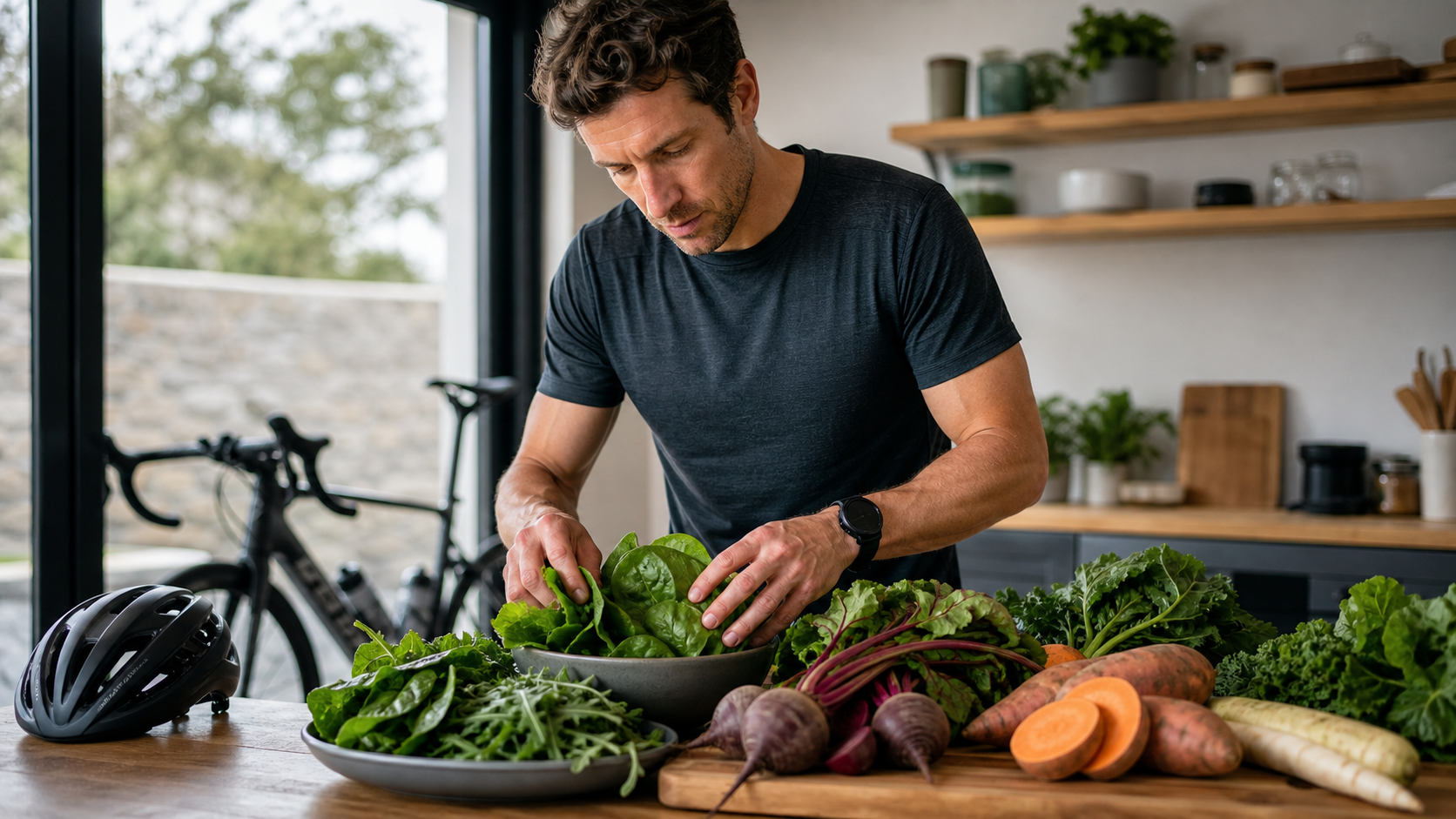
Starting with a Student Who Always “Ran Out of Gas” in the Final Five Kilometers
I once coached a cyclist in his early forties from a local cycling club—let’s call him A-Ming. His power-to-weight ratio wasn’t bad, and he could hold a steady pace on flat roads. But every time he climbed a long hill, his pace would drop in the latter half as if someone had pulled the plug. We checked his training volume, sleep, fueling timing, and even swapped his wheels—all the data looked reasonable. Then I asked him to photograph every meal he ate for a week. The answer was right there: he barely ate any dark leafy greens. Five out of seven days, his vegetables were just a small handful of stir-fried water spinach from the buffet, alongside large portions of white rice and fried foods.
I didn’t magically hand him a supplement. Instead, I first asked him to make “a big handful of dark leafy greens and one serving of root vegetables every day” his baseline, and then deliberately increase his intake of nitrate-rich vegetables in the days before a race. Three weeks later, he reported back on his own: in the latter half of long climbs, “his legs didn’t turn to wood as quickly.” This wasn’t a miracle—it was two underestimated components of vegetables—nitrate and phytochemicals—starting to work in his body.
In this article, I want to explain, in the tone I use with my students, how vegetables affect athletic performance: the scientific basis, practical dosages, how to apply this in Taiwan’s eating-out culture, common mistakes, and concrete action plans for readers at different levels. Let me start with the conclusion: Vegetables are not a side dish. For endurance athletes, they are a quantifiable, planable nutritional strategy.
Note: All values in this article are presented as “ranges” because vegetable composition varies greatly with origin, season, variety, and cooking method. Treat this as a steering wheel, not a precision instrument.
Concepts and Scientific Basis: Nitrate Works Through the Nitric Oxide Pathway
Nitrate → Nitrite → Nitric Oxide
Many people frown when they hear “nitrate” because it’s often associated with processed meats and concerns about nitrosamines. But nitrate from vegetables, combined with the vitamin C, polyphenols, and other antioxidants naturally present in those vegetables, follows a completely different physiological pathway.
Here’s roughly how the body processes vegetable nitrate:
- You eat dark leafy greens or beets, and nitrate is absorbed into the bloodstream through the small intestine.
- A portion of that nitrate is re-secreted by the salivary glands into the mouth, where symbiotic bacteria on the tongue reduce it to nitrite.
- Nitrite is then further converted into nitric oxide (NO) in the body—especially in low-oxygen, slightly acidic exercising muscle environments.
Nitric oxide is an important signaling molecule in the body. It relaxes vascular smooth muscle, dilates blood vessels, and improves local blood flow; it’s also linked to mitochondrial efficiency. For athletes, the most practical effect is improved “exercise economy”—in plain terms, at the same speed or power output, your body uses slightly less oxygen and spends energy more efficiently.
Here’s a crucial detail that’s often overlooked: the bacteria in your mouth are the relay station for this entire pathway. If you habitually use a strong antibacterial mouthwash before exercise, or aggressively scrub your tongue and rinse right after eating, you might wash away the bacteria responsible for reducing nitrate, diminishing the whole effect. This is the first question I ask in my consultation-style coaching when I see people who “eat vegetables but feel nothing.”
Why Is Nitric Oxide So Important for Endurance Sports?
I often get asked by students: “Coach, vasodilation and saving a bit of oxygen sound abstract—what practical difference does it make for my cycling or running?” I usually break it down into three levels.
The first level is exercise economy. At the same pace or power output, if your body can sustain it with less oxygen, it means at the same oxygen uptake, you can run faster or ride harder; or conversely, at the same speed, your perceived exertion (RPE) drops slightly, and you can last longer. For endurance sports, economy is one of the key gears determining performance, alongside VO₂max and lactate threshold.
The second level is efficiency in specific muscle fibers. The nitric oxide pathway seems to have a more pronounced effect on the contraction efficiency of type II (fast-twitch) muscle fibers than on slow-twitch fibers. This is physiologically interesting: fast-twitch fibers are exactly what you heavily recruit in the latter half of a long climb, during sprints, or in high-intensity intervals. In other words, the nitrate strategy is most likely to help you precisely at the moments when you’re most exhausted and need to hold on—which corresponds exactly to A-Ming’s fading in the latter half of long climbs.
The third level is blood flow and heat dissipation. Nitric oxide relaxes blood vessels and increases local blood flow. In hot, humid conditions, good distribution of blood flow to the skin and working muscles helps with heat dissipation and maintaining oxygen supply to exercising muscles. In Taiwan’s summers, where temperatures routinely hit 30-plus degrees Celsius with high humidity, this level of significance shouldn’t be underestimated—though it always comes after hydration and electrolytes.
Put these three levels together, and you’ll understand why “a small improvement in economy” can accumulate into a noticeable difference over a two-to-three-hour endurance event. It doesn’t turn you into a superhero; it just means you leak a little less oil with the same effort.
How Big Is the Effect? Being Honest
I have to be honest with my students: nitrate isn’t something that gives you an extra engine. According to recent systematic reviews and meta-analyses on dietary nitrate (mostly using beetroot juice as the vehicle) and endurance performance, the overall effect falls roughly in the “small to moderate” range, and it varies greatly by context:
- In “time-to-exhaustion” tests, the effect is usually more pronounced, especially with multi-day (more than three days) supplementation and when a certain daily dose threshold is reached.
- In “time-trial” scenarios, which are closer to real competition and involve better-trained subjects, the overall effect shrinks, sometimes becoming marginal.
- A general principle: the more highly trained the elite athlete, the less room there is to extract gains; recreational and amateur athletes, on the other hand, are more likely to feel a difference.
This is why I’m particularly confident with students like A-Ming—people who ride regularly but aren’t professionals. They’re exactly the population where the nitrate strategy is most likely to show results.
Don’t Forget Phytochemicals: The Other Half of the Story—Antioxidants and Recovery
If nitrate is the “performance amplifier for the moment,” then phytochemicals are the “long-term repair and anti-inflammatory team.” Phytochemicals are a broad class of compounds that plants evolved for self-protection. Common examples include:
- Polyphenols and flavonoids (dark berries, dark leafy greens, purple and red vegetables)
- Carotenoids (carrots, pumpkin, sweet potatoes, lycopene in tomatoes, lutein in dark leafy greens)
- Sulfides and sulfur-containing compounds (cruciferous vegetables like cauliflower, broccoli, cabbage)
- Betalains (the purple-red pigment in beets, which itself has antioxidant properties)
Exercise—especially prolonged, high-intensity endurance exercise—generates large amounts of reactive oxygen species (free radicals) in the body. A moderate amount of oxidative stress is actually a signal for training adaptation; the body needs it to get stronger. But excessive, chronic oxidative stress is linked to delayed-onset muscle soreness, slower recovery, and immune suppression. The role of phytochemicals is to help the body maintain a healthy redox balance.
Here’s an important and often misunderstood concept that I’ll expand on in the “Common Mistakes” section: “antioxidant” is not a case of the more the better, and it’s especially not recommended to chronically load up on high-dose antioxidant supplements during training periods. The phytochemicals in natural vegetables are hundreds of compounds working synergistically at low doses—a completely different thing from a single high-dose pill.
Nitrate and Phytonutrients: A Pair That Works Together
I like to use the analogy of “accelerator and chassis” to describe their relationship. Nitrate is like the accelerator you can press for short-term gains, helping you squeeze out a bit more efficiency on race day; phytonutrients are like the chassis and suspension, determining whether your vehicle runs smoothly over the long haul, how durable it is, and how often it breaks down.
What’s even better is that vegetables rich in nitrate—dark leafy greens, beetroot—are also naturally packed with phytonutrients and vitamin C. This means that when you supplement with nitrate, you’re almost automatically getting phytonutrients as well. This is why I always emphasize that “eating real food” beats “swallowing single supplements”: nature has already packaged this pair together in the same leaf; all you have to do is eat it.
| Aspect | Nitrate | Phytonutrients |
|---|---|---|
| Primary timeframe of action | Short-term (within hours) | Long-term (accumulated over days to weeks) |
| Primary mechanism | Nitric oxide → blood flow/efficiency | Antioxidant/anti-inflammatory/redox balance |
| Scenarios where most noticeable | Race day, high-intensity efforts | Recovery, immunity, long-term training consistency |
| Main vegetable sources | Dark leafy greens, beetroot, arugula | Fruits and vegetables across the full color spectrum |
| Risk of excess | GI discomfort from a sudden large intake | High-dose single supplements may blunt adaptations |
Practical Approach: Treating Vegetables as a Quantifiable Nutritional Strategy
Nitrate Content: Which Vegetables Are the Main Players?
Here’s an actionable table for everyone. It’s important to note that the values below are approximate ranges compiled from multiple sources; actual content can fluctuate significantly based on origin, fertilization, season, and cooking methods. Please use this as a “relative ranking” rather than precise quantification.
| Vegetable Category | Representative Vegetables | Approximate Nitrate Content | Availability in Taiwan |
|---|---|---|---|
| Very High Nitrate | Arugula (rocket), spinach, amaranth, bok choy | High (often several hundred mg or more per 100g) | Medium to Easy |
| High Nitrate | Beetroot, rapeseed, lettuce, celery, sweet potato leaves | Medium-High | Easy |
| Medium Nitrate | Cabbage, daikon radish, broccoli | Medium | Easy |
| Lower Nitrate | Tomato, onion, green beans, mushrooms | Low | Easy |
Looking at this table, Taiwanese readers should breathe a sigh of relief: the sweet potato leaves, spinach, bok choy, and amaranth that are easiest for us to get are all excellent sources of nitrate. Beetroot isn’t as common in Taiwan, but it’s available in fresh supermarkets and organic stores; you can juice it or eat it in salads. You don’t need to import expensive supplements; the main ingredients are available at your local market.
Dosage and Timing: A Framework You Can Follow Directly
In research, the dietary nitrate doses commonly cited and associated with improved performance generally fall in the range of approximately 5 to 16 millimoles (mmol) per day (converted to nitrate mass, this is roughly several hundred milligrams to about one gram). Regarding timing, about 2 to 3 hours before exercise is a common recommendation, as blood nitrite levels typically peak around this time; and continuous supplementation for several days (more than three days) tends to be more stable than a single dose.
I’ve organized this into a practical schedule for my athletes:
| Target Scenario | Approach | Timing | Notes |
|---|---|---|---|
| Daily foundation | A large handful of dark leafy greens + one serving of root vegetables daily | With meals | Builds the base; most important for the long term |
| Important race/test | Starting 3-6 days prior, deliberately increase high-nitrate vegetables (beetroot, spinach, arugula) | Daily | Allows levels to accumulate in the body |
| Race day | One serving of a high-nitrate source (e.g., beetroot juice or a large portion of spinach) | 2-3 hours before | Stick to foods you’ve eaten before; don’t try anything new on race day |
| Pre-race oral care | Avoid antibacterial mouthwash, avoid aggressive tongue scraping | Hours before | Protect oral bacteria |
“Don’t try anything new on race day” is something I repeat to every athlete. Beetroot has one harmless but potentially alarming characteristic: it can turn some people’s urine or stool red (known as beeturia). If you consume a large amount for the first time before a race and happen to experience this, the psychological stress could hurt your performance. So, any new food should be tested during regular training first.
Does Cooking Method Affect Nitrate?
Yes. Nitrate is water-soluble, and boiling in large amounts of water and then discarding the water will lose a significant portion; steaming, quick stir-frying, and eating raw (like salads) preserve it better. This is why I advise athletes looking to specifically supplement nitrate that spinach can be “quickly blanched and then dressed” or blended into a smoothie, rather than cooking it into a big pot of soup and only eating the leaves while discarding the broth.
However, I want to immediately add a balancing statement: You don’t need to go to extremes in your life for the sake of nitrate. Cruciferous vegetables are easier to digest and some nutrients are better absorbed when cooked; root vegetables like sweet potatoes and pumpkin taste better steamed. Overall dietary diversity and long-term consistency are far more important than the extreme preservation of a single nutrient.
Phytonutrients: Planning by “Color” Is More Practical Than Memorizing a “Component List”
There are so many types of phytonutrients that the average person can’t remember them all. I teach my athletes a super simple principle: “Eat a rainbow every day.” Different colors represent different major classes of phytonutrients; if you cover the colors, you’ve likely covered the types.
| Color | Representative Fruits & Vegetables | Main Phytonutrient Direction | Significance for Athletes |
|---|---|---|---|
| Dark Green | Spinach, sweet potato leaves, broccoli, kale | Lutein, polyphenols, sulfur-containing compounds | Antioxidant, nitrate source |
| Red/Purple | Beetroot, red cabbage, blueberries, mulberries | Betalains, anthocyanins | Antioxidant, anti-inflammatory, blood flow |
| Orange/Yellow | Carrots, pumpkin, sweet potato, bell peppers | Carotenoids | Recovery, immunity, eye health |
| White/Brown | Onion, garlic, daikon radish, mushrooms | Sulfides, polysaccharides | Antioxidant, immune modulation |
| Red (Tomato) | Tomato, watermelon | Lycopene | Antioxidant |
Stick this table on your fridge. When shopping, try to grab a bit of every color, and you’ll basically cover your nutritional density. This is a hundred times more useful than memorizing what each compound is called.
Common Mistakes and Corrections: The Pitfalls I Catch Most Often in Consultations
Mistake 1: Making Supplements the Mainstay, Ignoring Real Food
Many people hear “beetroot works” and immediately buy concentrated capsules or powder, but still don’t eat vegetables with their meals. This order is completely reversed. The advantage of real food lies in the “matrix effect”—the nitrate in vegetables comes in alongside vitamin C, polyphenols, and fiber, which help facilitate the conversion of nitrate and offset potential risks. A standalone high-dose supplement loses this natural protective combination.
Correction: First, stabilize your intake of “adequate and diverse vegetables daily,” and treat concentrated sources like beetroot juice as a “booster for important races,” not as a replacement for the mainstay of your daily diet.
Mistake 2: Chronically High-Dose Antioxidant Supplementation During Training
This is a mistake advanced athletes are particularly prone to. As mentioned earlier, the oxidative stress produced by exercise is a signal for training adaptation. Some research directions suggest that long-term, high-dose supplementation of certain single antioxidants (e.g., high doses of vitamin C and E combined) might actually blunt the body’s adaptation to training, diminishing the results of your hard work.
Correction: Let “natural fruits and vegetables” fulfill your antioxidant needs. The phytonutrient doses in natural foods are mild and the types work synergistically; they don’t flood a single pathway all at once like a pill. Unless there’s a specific diagnosed medical deficiency, healthy athletic populations don’t need long-term high-dose antioxidant supplements.
Mistake 3: Using Strong Antibacterial Mouthwash Before a Race
I’ve explained the principle earlier. You work hard to eat a bunch of high-nitrate vegetables, and then you use antibacterial mouthwash right before the race, wiping out the oral bacteria and cutting off the nitrate-to-nitric oxide pathway at its relay station.
Correction: Avoid strong antibacterial mouthwash in the hours before a race; plain water or gentle brushing is sufficient.
Mistake 4: Binge Eating, GI System Goes on Strike
Some athletes, after listening to a lecture, make a huge “ultimate green smoothie” with beetroot, spinach, and cruciferous vegetables the next morning, only to suffer stomach cramps and excessive gas halfway through the race. A sudden large influx of high-fiber, high-sulfur vegetables will make your GI tract protest.
Correction: Progress gradually. During regular training, get your body accustomed to this intake level; on race day, choose vegetable combinations that “your gut is already very familiar with,” rather than piling on a sudden large amount.
Mistake 5: Confusing “eating some vegetables” with “eating enough and eating the right ones”
The small portion of stir-fried greens you grab at a buffet is often far below what your body needs. Many people subjectively feel they “do eat vegetables,” but when you actually calculate it, they might not even get one fist-sized portion in a whole day.
Correction: Evaluate by “portion size” rather than “whether or not.” A rough visual standard: at least one fist-sized portion of vegetables per meal, accumulating to a clear two to three portions or more per day.
Local Taiwan Context: How to Make It Work for People Who Eat Out
Taiwan’s food environment is half-friendly and half-challenging when it comes to “eating more vegetables.” On the friendly side, we have convenient buffet restaurants, bento shops, hot pot, and convenience store salads. On the challenging side, eating out generally means heavy oil, heavy salt, small vegetable portions, and easily excessive root vegetables and starches. Here are a few concrete practices I give to clients who eat out:
- Buffet restaurants: Actively fill two to three sections with dark leafy greens (sweet potato leaves, spinach, bok choy, and amaranth are all good choices), and ask the vendor to “blanch the vegetables without too much sauce.” Sweet potato leaves are available at almost every place and are the easiest source of high-nitrate vegetables.
- Hot pot: This is a godsend for Taiwanese people to get their vegetables in. Large amounts of garland chrysanthemum, spinach, cabbage, enoki mushrooms, corn, and daikon radish—you can easily eat two to three times your usual amount in one meal. Watch the sodium: don’t drink too much broth and moderate processed hot pot ingredients.
- Convenience stores: Salads, daikon and corn from oden, and unsweetened vegetable boxes are all usable transitional options. Keep the dressing separate and use less.
- Beets: Available at organic retailers and fresh supermarkets. You can slice them for cold dishes, juice them, or blend them into smoothies with other fruits and vegetables. Taiwan’s summers are hot and humid, so a glass of chilled beetroot fruit and vegetable smoothie is actually easier to get down before a long ride.
I want to add one more point about Taiwan’s climate: In the hot, humid summer, the body’s demand for blood flow regulation and heat dissipation is higher during long rides or runs. The nitric oxide pathway that improves blood flow may be even more meaningful in this environment, but at the same time, I want to remind you—hydration, electrolytes, and pacing in high heat always take priority over any vegetable strategy. Don’t get the priorities backwards.
A Sample “One-Day Vegetable Combination” for Taiwanese People Who Eat Out
| Meal | Suggested Combination | Color/Category |
|---|---|---|
| Breakfast | An unsweetened salad or a vegetable egg crepe (with extra vegetables) | Green |
| Lunch | Buffet with a full serving of sweet potato leaves + blanched bok choy + one root vegetable (pumpkin/sweet potato) | Dark green + Orange-yellow |
| Afternoon snack | One carrot or a small box of tomatoes | Orange + Red |
| Dinner | Hot pot with lots of garland chrysanthemum, spinach, daikon, and mushrooms | Green + White + Purple (red cabbage) |
| Special pre-race day | Add a serving of beetroot juice or a large portion of spinach (2–3 hours before the race) | Purple-red |
This combination doesn’t require you to know how to cook, and it doesn’t require buying expensive supplements—everything can be done within Taiwan’s eating-out and convenience store environment.
Actionable Advice for Readers at Different Levels
Beginner: Just starting to exercise, diet is still casual
What you need to do most right now is not to research dosages, but to build the basic habit of “eating enough and a variety of colorful vegetables every day.”
- Goal: At least one fist-sized portion of vegetables per meal, reaching three or more colors per day.
- Start with the easiest options: sweet potato leaves, spinach, tomatoes, and carrots.
- No need to touch beetroot juice or buy any supplements.
- At this stage, solidifying the “foundation” brings far greater benefits than any advanced technique.
Intermediate: Training regularly with specific target races
You can start treating vegetables as a plannable strategy.
- Maintain a diverse and sufficient vegetable intake daily.
- For important races, starting about 3–6 days beforehand, deliberately increase high-nitrate vegetables (spinach, beetroot, arugula).
- 2–3 hours before the race, have one serving of a high-nitrate source you’re familiar with.
- Start paying attention to oral details: avoid strong antibacterial mouthwash before races.
- Always test any new food on training days first—never try something for the first time on race day.
Advanced: Elite or high-volume athletes
The marginal gains you can extract are smaller, but details determine success.
- Individualized testing: During training, record for yourself whether “enhanced nitrate intake” makes a difference in perceived exertion and pacing, and find a protocol that works for you.
- Avoid long-term high-dose supplementation of a single antioxidant during periods that require training adaptation, so as not to blunt training effects. Leave antioxidants to natural fruits and vegetables.
- Periodized thinking: During high-intensity explosive phases, recovery phases, and pre-race tapering, vegetable and antioxidant strategies can be fine-tuned, but don’t let them override the bigger levers of training, sleep, and overall calories and protein.
A Small Case Study: Back to Ah-Ming
Let’s return to Ah-Ming from the beginning. What we did was actually quite simple:
- For the first two weeks, we only asked him to consistently get “enough dark leafy greens + one root vegetable” daily, fixing the foundation first.
- From the third week onward, before important club climbing days, he started eating an extra large portion of spinach daily for 3 days before the race, and had a beetroot fruit and vegetable smoothie 2–3 hours before riding (he had already tried it several times on regular days with no stomach issues).
- We reminded him to stop using that strong antibacterial mouthwash from the supermarket.
The result wasn’t that he became a different person, but as he described it: “I don’t slow down as badly in the latter part of long climbs, and my legs feel like they can hold on better.” The more important byproduct was that his overall diet quality, digestion, and energy all improved. This is the most honest picture of a vegetable strategy: it’s not magic potion, but rather it builds your body’s foundation more solidly, making it easier for training effects to grow.
I want to be especially honest about one thing so you don’t misunderstand: Ah-Ming’s improvement was absolutely not due to vegetables alone. During the same period, his training consistency also improved and he paid more attention to sleep. The role of nitrates and phytochemicals is to “amplify and stabilize” the effects of those efforts, not to replace them. Any claim that “eating a certain vegetable will improve your time by X seconds” should be met with a big question mark. In sports science, the performance change explained by any single factor is usually small—the real world is built from many small levers stacked together.
Here, let me also address a common question: “Coach, so how many days until I feel it?” For the nitrate strategy, consistent supplementation over several days makes it easier to accumulate a stable effect, but individual responses vary greatly—some people respond clearly (so-called responders), while others feel almost nothing (non-responders). This is normal individual variation, so don’t get discouraged just because it works for your friend but you don’t feel it. The phytochemical side is even more of a long-term game—it’s about weeks and months of recovery quality and health resilience, not about eating something today and seeing your performance jump tomorrow.
If you have a chronic condition (such as hypertension, diabetes, heart disease, or kidney disease), nitrates, beetroot juice, and major changes in vegetable and potassium intake can all interact with your condition or medications. In this case, be sure to discuss it with your doctor or nutritionist first for an individualized assessment—don’t just apply general advice from the internet. Taiwan’s National Health Insurance makes medical access convenient, so if you have any long-term health condition, make good use of outpatient resources and leave the individualization to the professionals.
Conclusion: Get the Basics Right First, Then Talk About Advanced Techniques
After all this talk about nitrates, nitric oxide, and phytochemicals, what I most want to leave you with is a very simple statement: Once you consistently “eat enough, diverse, and colorful vegetables every day,” you’ve already captured 80% of the benefit. Beetroot juice, pre-race timing, and oral details are advanced operations—they’re the icing on the cake, not the cake itself.
The value of vegetables for athletes, in the long run, goes far beyond that slight improvement in exercise economy—they are the raw material for recovery, the backbone of immunity, the fuel for the gut, and the underlying support that lets you “train consistently year-round.” Treat them as part of your training plan, not as optional decoration on your plate.
Next time you shop for groceries, remember to look up at that rainbow of produce. Every deep green and purple-red choice you make is quietly banking strength for your next long climb, your next five kilometers.
Advanced Periodization: Aligning Your Vegetable Strategy with Your Training Phases
For intermediate to advanced readers who already understand the concept of periodized training, here is a reference table that aligns “vegetable and antioxidant strategies” with your training phases. The core logic is simple: During periods when you need your body to adapt vigorously, don’t use high-dose antioxidant supplements to interfere with the signals; during competition periods when you need explosive performance, push the nitrate strategy to the forefront.
| Training Phase | Goal | Vegetable/Antioxidant Strategy | Nitrate Strategy |
|---|---|---|---|
| Base Phase | Accumulate training volume, build foundation | Diverse natural fruits and vegetables, no high-dose supplements | Daily adequate intake is sufficient, no special stacking |
| Intensification Phase | Pursue training adaptations | Rely on natural fruits and vegetables for antioxidants, avoid high-dose single supplements blunting adaptations | Maintain daily intake, no deliberate increase |
| Taper/Pre-Competition Phase | Extract performance, stay fresh | Maintain natural fruits and vegetables | Start stacking high-nitrate vegetables 3–6 days before competition |
| Race Day | Perform | Choose combinations familiar to your gut | One serving of a high-nitrate source 2–3 hours before the start |
| Recovery Phase | Repair, anti-inflammation | Increase the density of phytochemicals from dark-colored vegetables, berries, etc. | Return to daily levels |
This table isn’t meant to turn you into a nutritionist, but to remind you: the same thing (eating vegetables) gets its focus fine-tuned depending on the phase. The base and intensification phases emphasize the “chassis” (phytochemicals, recovery), while the pre-competition phase emphasizes the “throttle” (nitrates, economy).
FAQ
Q1: Can I just buy beetroot powder/capsules and skip eating vegetables?
We don’t recommend making that your primary approach. Concentrated supplements have value when you need a precise, convenient dose before an important race, but they lose the matrix effect of real food (vitamin C, polyphenols, and fiber coming in together). The order should be: get your daily vegetable intake right first, use supplements as a boost—not the other way around.
Q2: Won’t eating too much nitrate cause cancer? I’ve seen news saying nitrate is bad.
Those concerns mainly come from the nitrate/nitrite in “processed meats” and the nitrosamines formed under specific conditions. The situation with vegetable-derived nitrate is completely different: vegetables also contain large amounts of vitamin C and polyphenols, which inhibit the formation of harmful nitrosamines. The current mainstream view in nutritional science is highly positive toward “eating lots of vegetables.” Of course, moderation applies to everything—binge-eating anything at once is unwise—but normal portions of high-nitrate vegetables are beneficial for healthy people.
Q3: I’m taking blood pressure medication. Can I drink beetroot juice?
This is exactly the kind of situation that requires “individualization.” Beetroot juice affects blood flow and could theoretically have an additive effect with blood pressure medication. Please discuss this with your doctor or pharmacist first, and don’t self-administer large amounts. Since seeing a doctor is convenient in Taiwan, bringing this question to a clinic visit will get you a personalized answer quickly. This article provides general principles, not your prescription.
Q4: Doesn’t juicing throw away the fiber and make it worse?
Juicing does indeed lose most of the fiber. If your goal is “targeted nitrate intake before a race without carrying too much fiber into the gut to avoid discomfort,” then juicing actually makes sense. But for daily eating, I still encourage eating “whole vegetables” with the fiber intact, which is friendlier to your gut microbiota and blood sugar. Blending into a smoothie (retaining fiber) is usually more balanced than pure juicing (discarding fiber).
Q5: My gut is sensitive when I exercise. Will eating too many vegetables cause diarrhea before a race?
It can, if you suddenly binge on them. A large amount of high-fiber, high-sulfur vegetables (especially cruciferous ones) at once can easily cause bloating. The approach is: during regular training phases, gradually build up your intake so your gut gets used to it; on race day, choose combinations you “already know well and won’t cause problems,” and keep fiber within a range you can handle. Like all fueling strategies, the golden rule is “never try anything new on race day.”
Q6: Do these recommendations also apply to children, pregnant women, and the elderly?
Eating more natural fruits and vegetables is a good general principle for almost everyone. But the performance-oriented practices like “deliberately stacking high nitrates and large amounts of beetroot juice before a race” are designed for healthy adult athletes. Special populations (pregnant women, young children, or elderly individuals with chronic conditions or on medication) should follow individualized advice from medical professionals.
Q7: What about fruit? You’ve talked so much about vegetables—does fruit count too?
Fruit is also rich in phytochemicals (especially anthocyanins in berries and vitamin C in citrus), which greatly help with antioxidant defense and recovery, and I fully encourage it. But on the nitrate front, the main sources are “dark leafy greens and root vegetables”; fruit generally isn’t high in nitrate. So here’s a simple way to remember: fruit provides phytochemicals and vitamins, vegetables (especially dark greens and beetroot) provide nitrates—you need both, so don’t be picky. Taiwan has a wide variety of affordable fruit year-round, which is a blessing—make good use of it.
Q8: I eat out for almost every meal. Is this really achievable?
It’s achievable, and simpler than you think. The key isn’t “cooking at home,” but “actively asking for more vegetables at every meal.” Grab two extra servings of dark greens at the buffet, add a side of blanched greens at the bento shop, occasionally hit hotpot for a boost at night, or grab a box of salad at the convenience store. Each of these actions seems small on its own, but accumulated over a week, your vegetable intake can double. Among the clients I’ve coached who eat out exclusively, the best performers didn’t rely on cooking skills—they relied on the small but consistent habit of “adding a bit more at every meal.”
A One-Sentence Summary for You
If you take away only one sentence from this entire article, I hope it’s this: Upgrade the vegetables on your plate from “side dish” to “strategic asset”—first aim for sufficient quantity, color variety, and long-term consistency, then talk about fine-tuning nitrates before races. Once the foundation is solid, advanced techniques become meaningful.
This article is educational content and does not replace individualized diagnosis and treatment advice from a physician, physical therapist, or nutritionist. If you have a history of chronic conditions such as hypertension, diabetes, heart disease, or kidney disease, or if you are taking medication, please consult your healthcare professional for an individualized assessment before making major dietary changes or using any supplemental sources.
References
- Dietary Nitrate Supplementation and Exercise Performance: An Umbrella Review of 20 Published Systematic Reviews with Meta-analyses (PMC): https://pmc.ncbi.nlm.nih.gov/articles/PMC12106159/
- Effects of Beetroot Juice on Physical Performance in Professional Athletes and Healthy Individuals: An Umbrella Review (MDPI Nutrients): https://www.mdpi.com/2072-6643/17/12/1958
- The effects of nitrate ingestion on high-intensity endurance time-trial performance: A systematic review and meta-analysis (PMC): https://pmc.ncbi.nlm.nih.gov/articles/PMC9287610/
- Nitrate in leafy green vegetables and estimated intake (PMC): https://pmc.ncbi.nlm.nih.gov/articles/PMC5412236/
Related Reading
- The Sports Science of Nitrate and Beetroot: A Full Analysis of the Nitric Oxide Pathway, Endurance Effect Sizes, and Dosing Timing
- Nitrate and Beetroot Juice: The Vegetable Ergogenic Aid for Improving Exercise Economy
- Blood Pressure Reduction and Exercise Benefits of Nitrate: Systemic Health Research Beyond Sports Performance
- Phytochemical and Antioxidant Diets for Athletes: How to Build a Rainbow Plate Without Wasting Your Training
CT暗黑廚房) 車友必備 宇宙無敵鮮蚵湯 幫助訓練恢復 天然食補 好市多 超肥鮮蚵 破PR
7 年前
一日北高/長距離團騎 常見問題補充篇 / 組團或跟團的眉角 / 壯車友容易被瘦車友慢性拉爆 / 原來屁股痛可能是這個原因...? / 風場配速法 / 公路車 / CT Yeh
2 年前
一個測試有沒有認真練車的方法😂 #公路車
10 個月前
大武山20%魔王陡坡【JJSC南台灣遊騎Day2】!屁股真的要裂開了...凡士林抹滿也沒用?神秘金教堂還有超便宜夜市
3 個月前
iPhone內建一秒變長腿🤣 車友必備#cycling
2 年前
西進武嶺 免費訓練分析服務 Intervals | 練不夠還是練過頭?你哪一種類型選手?AI模型告訴你! | 備戰神器 | 公路車 訓練 | CT Yeh
4 年前
一日北高常見問題大集合 | 攻略 | 路線 | 訓練 | 補給 | 自行車 單車 | 一日雙城 | 雙塔 | TWB北高360 | 屁股痛
6 年前
單車 一日北高 ( 雙城 ) 肥宅雙人瘋狂行 紀錄片 REACTO
10 年前