Egg Nutrition: The Perfect Sports Food—Protein Quality, Cholesterol Myths, and Practical Ways to Eat Them
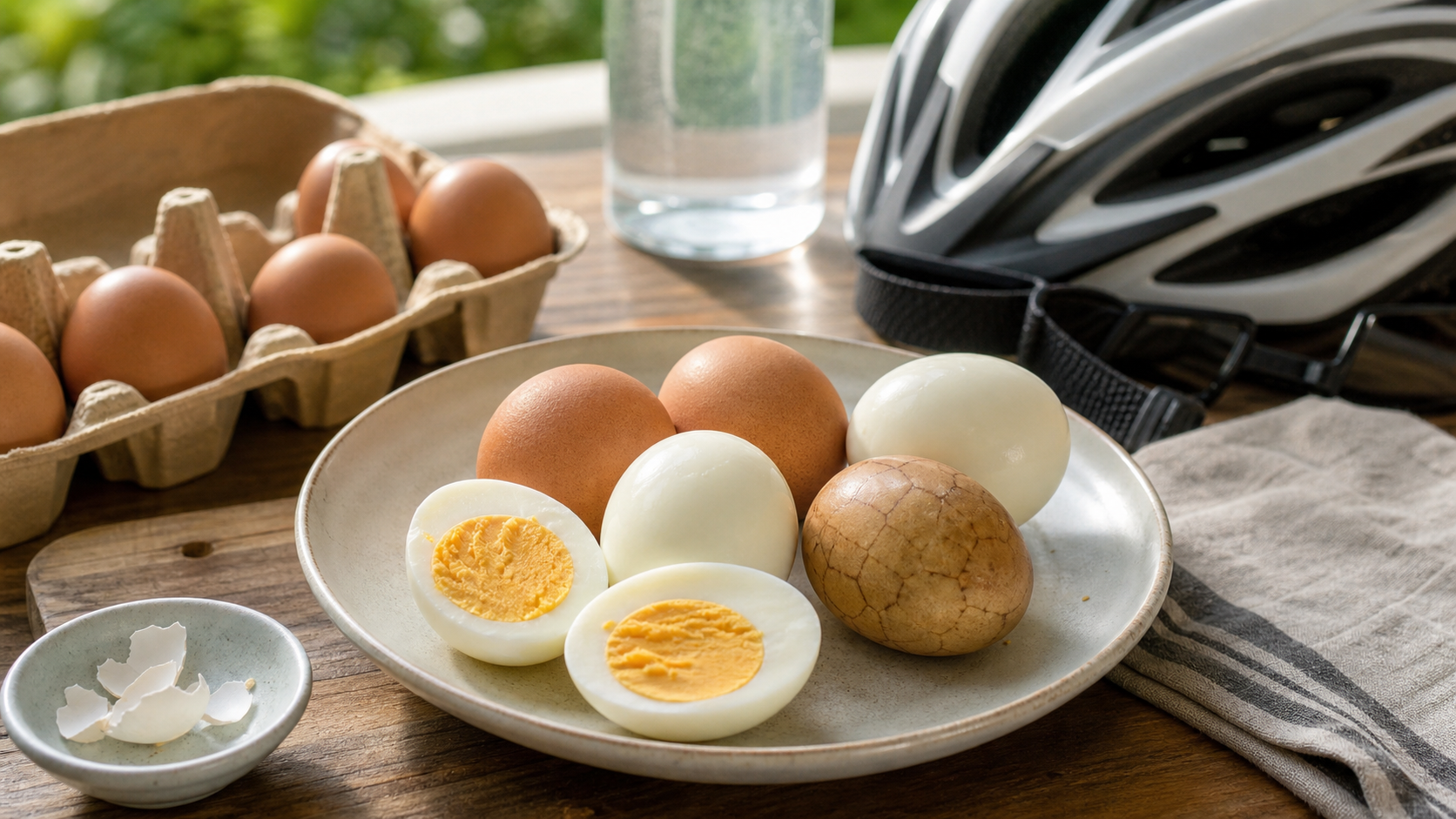
Starting with a Tea Egg
I’ve worked with athletes and general sports enthusiasts for fifteen years. If I had to pick the food that gets “asked about the most and misunderstood the deepest,” the answer would be no contest — eggs.
I remember a few years ago, I was guiding an amateur cyclist in his early fifties — let’s call him Old Chen. Old Chen took his riding seriously, often logging over 100 km on weekends. But when his health check report came out, his total cholesterol was elevated. Panicked, he cut out his favorite breakfast egg pancakes and tea eggs entirely, and wouldn’t even touch eggs for post-training recovery. The result? His recovery after training worsened, muscle soreness lingered longer, and his weight went up instead of down — because he dropped eggs but replaced the calories with bread and sugary drinks.
I sat down with him for an afternoon and explained the whole egg thing from the ground up. Six months later, he was eating two to three whole eggs a day, his blood lipid numbers looked better than before, and his riding performance was back. Old Chen’s story isn’t an outlier — it’s a snapshot of what I’ve seen repeatedly over the years: Many people aren’t harmed by eggs; they’re harmed by misconceptions about eggs.
In this article, I want to use the tone I use with my trainees to break down this “perfect sports food” — just how good its protein quality really is, whether the cholesterol blame deserves to be overturned, and what matters most to people in Taiwan: how to eat eggs as someone who eats out most of the time.
A note up front: This article is an educational sharing of concepts. If you already have cardiovascular disease, diabetes, familial hypercholesterolemia, or are taking medication, please discuss any dietary changes with your doctor or dietitian first — don’t just change things on your own after reading.
Why Sports Science Treats Eggs as the “Gold Standard”
Protein Quality: Not Just “How Much,” but “How Well Absorbed”
Many people talk about protein only in terms of “how many grams of protein are in one egg,” but that’s only half the story. What sports nutrition really cares about is protein quality — that is, how close the amino acid composition of that protein is to what your body needs, and how much your gut can actually absorb.
In the past, we used PDCAAS (Protein Digestibility-Corrected Amino Acid Score) as the standard, and eggs scored a perfect 1.0 in this system, making them one of the few “complete proteins.” In recent years, the academic community has shifted to the more precise DIAAS (Digestible Indispensable Amino Acid Score), which doesn’t just look at which amino acids are in the food but also calculates how much your gut “actually absorbs.”
Under this stricter DIAAS scale, cooked eggs score above 100, with a range of roughly 110 to 137 depending on cooking method and the age group tested; boiled, scrambled, and fried eggs all score above 100 for both adults and young children (University of Illinois Stein Lab data, PMC study). A DIAAS score of 100 or above is classified as an “excellent” protein source, while 75 to 99 is “good.” In other words, eggs sit at the very top of the pyramid.
Complete Protein and the Key Role of Leucine
What makes eggs impressive is that they provide all nine essential amino acids, with no obvious “limiting amino acid” — unlike some plant proteins that fall short on one or two and require complementary pairing.
For athletes, the most critical one is leucine. Leucine acts like the key that switches on “muscle protein synthesis” — once there’s enough of it, the body starts using amino acids to repair and build muscle. Every 100 grams of whole egg contains roughly 1,000 mg or a bit more of leucine (related study). While a single egg’s leucine content doesn’t match a big scoop of whey or a piece of beef, it wins on being complete, natural, easily absorbed, and cheap — making it an excellent base for daily fueling.
Here I want to flag a common misconception: many people eat only the egg white and toss the yolk, thinking it’s “healthier.” In reality, the yolk concentrates a large share of vitamins A, D, E, B12, choline, lutein, and minerals, plus a significant portion of the protein. Throwing away the yolk means dumping half the nutrition into the compost bin. Unless a doctor specifically advises otherwise, I generally recommend whole eggs for the general sports population.
The Nutritional Profile of One Whole Egg
The table below shows the approximate nutritional range of one medium whole egg (about 50 grams edible portion). Note that these are “range values” that fluctuate with egg size and farming method — no need to treat them as precise to the decimal point.
| Nutrient | Approximate Amount per Medium Whole Egg | Significance for Athletes |
|---|---|---|
| Calories | About 70–80 kcal | Low calorie, high nutrient density |
| Protein | About 6–7 grams | Complete protein, top-tier DIAAS |
| Fat | About 5 grams | Mostly unsaturated, with a small amount of saturated fat |
| Cholesterol | About 185–200 mg | Concentrated in the yolk; see discussion below |
| Choline | About 120–150 mg | Nerve transmission, liver metabolism |
| Vitamin D | Small but natural source | Commonly deficient in Taiwan |
| Lutein/Zeaxanthin | Small amounts | Eye protection, antioxidant |
One egg is under 80 kcal yet packs in 6 to 7 grams of top-tier protein and a full set of micronutrients — this kind of “nutrient density” is extremely rare in natural foods. For athletes who need to manage weight while maintaining muscle, this is exactly the ratio we dream of.
Eggs vs. Other Protein Sources: Seeing the Difference at a Glance
Just saying eggs are good isn’t specific enough. Let me put the protein sources commonly eaten by the sports population side by side, using “approximate protein per serving” and “ease of access,” and you’ll get a clearer picture. The numbers below are rough ranges that vary by brand, cut, and cooking method.
| Food | Typical Serving | Approximate Protein | Protein Quality | Ease of Access in Taiwan |
|---|---|---|---|---|
| Whole egg | 1 egg | 6–7 grams | Top-tier (DIAAS 100+) | Extremely high (convenience stores, breakfast shops) |
| Chicken breast | 100 grams | 20–24 grams | Top-tier | High (supermarkets, buffet restaurants) |
| Salmon | 100 grams | About 20 grams | Top-tier, contains Omega-3 | Medium |
| Traditional tofu | Half a block, about 150 grams | 12–15 grams | Good (one of the few complete plant proteins) | High |
| Plain yogurt | 1 cup | 8–10 grams | Top-tier | High |
| Whey protein | 1 scoop | 20–25 grams | Top-tier, fast absorption | Medium (requires purchase) |
The point this table aims to convey isn’t “eggs are the best, forget everything else,” but that eggs are a daily staple combining value and convenience. The protein per single egg isn’t the highest, but you can easily grab three or four on the go, at very low cost. For Taiwanese working athletes who eat out most of the time and want a steady intake of quality protein, this “within arm’s reach” quality is itself a huge advantage.
Don’t Overlook the Choline in the Yolk
When talking about eggs, everyone focuses on protein, but I want to say a few words for the choline in the yolk. Choline is involved in the synthesis of neurotransmitters, cell membrane structure, and liver fat metabolism. It’s a nutrient many people easily fall short on in their daily diet, and the egg yolk is one of the most concentrated and convenient dietary sources. This is also why I keep emphasizing “don’t toss the yolk” — what you’re discarding isn’t just fat-soluble vitamins, but this entire dose of choline as well. For athletes with high training volume and heavy neurological load, this is even more worth paying attention to.
The Cholesterol Myth: A Half-Century Misunderstanding
How the Bad Reputation Was Earned
The cholesterol controversy around eggs starts with an intuition: egg yolks contain cholesterol, high cholesterol harms your cardiovascular system, so eating eggs is equivalent to harming your heart—this reasoning sounds logical, but it doesn’t hold up scientifically.
As early as 1968, the American Heart Association (AHA) recommended no more than three egg yolks per week. But as evidence accumulated, this restriction was removed in 2016; the U.S. 2015–2020 Dietary Guidelines also dropped the upper limit of “no more than 300 mg of dietary cholesterol per day” (AHA explanation). This wasn’t a victory for egg industry lobbying, but rather the scientific community honestly correcting itself after decades of research.
The Key Concept: Dietary Cholesterol ≠ Blood Cholesterol
This is the sentence I most want you to remember from this entire article.
Most of the cholesterol in your body is actually synthesized by your own body, primarily in the liver; dietary sources account for only a small portion of blood cholesterol (studies estimate around one-quarter, see PMC review). Moreover, the body has a feedback mechanism—eat more, and the liver produces less; eat less, and the liver produces more, striving to maintain homeostasis.
Even more critical: what truly affects blood cholesterol is mainly saturated fat and trans fat, not the cholesterol in food itself (PMC review). The fat in eggs is mostly unsaturated, and their saturated fat content is not high. Some studies have even found that, within an overall dietary framework low in saturated fat, eating two eggs a day was actually associated with a decrease in LDL (commonly known as “bad” cholesterol).
So the problem often isn’t the boiled egg itself, but what’s sitting next to it—bacon, sausage, puff pastry, sweet butter filling, fried dough sticks, sugary drinks. That’s why I told Old Chen: what you should cut isn’t eggs, but the saturated fat and refined sugar you’re eating alongside them.
Eggs vs. Common Breakfast Sides: A Saturated Fat Comparison
| Common Taiwanese Breakfast Item | Cholesterol | Saturated Fat | Coach’s Comment |
|---|---|---|---|
| 1 boiled egg | Moderate (approx. 185–200 mg) | Low | The main event, eat with confidence |
| 2 slices of bacon | Moderate | High | Use sparingly as a garnish |
| 1 hot dog/sausage | Moderate | High | Processed meat, have occasionally |
| 1 puff pastry/croissant | Low | Very high | A saturated fat trap |
| 1 slice of whole wheat toast | None | Low | Great partner |
| 1 cup of unsweetened soy milk | None | Low | Great partner |
Once you understand this table, you’ll notice something: everyone stares at the “cholesterol” in eggs while letting the saturated-fat-packed puff pastry and processed meats right next to them slide. That’s a classic case of “penny-wise, pound-foolish.”
Important reminder: The above principles apply to generally healthy adults. If you have type 2 diabetes, familial hypercholesterolemia, or known cardiovascular disease, the research conclusions are more conservative and more individualized. In such cases, please defer to the personalized advice of your physician and dietitian—don’t directly apply “healthy people can have two or three eggs a day” to yourself.
Practical Approach: Putting Eggs into Your Training Routine
Enough theory—let’s get down to brass tacks. Below are the “egg strategies” I actually prescribe to different athletes. You can find where you fit based on your training volume.
How Many Eggs a Day, Really?
This is the most frequently asked question. My practical principle is: for most healthy adults who exercise regularly, two to three whole eggs a day is a perfectly reasonable range within a balanced diet. But this isn’t a decree—it depends on your overall protein needs, other protein sources, and personal health status.
Daily protein needs for athletes typically fall between 1.4 and 2.0 grams per kilogram of body weight (endurance athletes at the lower end, strength athletes at the higher end). For example: a 70 kg cyclist needs roughly 100 to 140 grams of protein per day during training. Eggs can contribute a portion of that, but they shouldn’t be the only source—fish, chicken breast, tofu, and dairy should all rotate in.
Egg Intake Reference by Training Type
| Group/Situation | Suggested Whole Egg Intake | Key Pairings |
|---|---|---|
| Daily maintenance, light exercise | 1–2 eggs per day | Pair with whole grains and vegetables; keep it simple |
| Endurance training (long rides/runs) | 2–3 eggs per day | Pair with carbs post-workout for faster recovery |
| Strength/muscle-building phase | 2–3 eggs per day, spread across meals | Include complete protein at every meal |
| Fat-loss phase | Around 2 eggs per day | Use eggs’ satiety to crowd out sugary snacks |
| Chronic illness/dyslipidemia | Follow individualized advice from doctor/dietitian | Don’t apply general population limits |
Post-Workout Refueling: Eggs’ Golden Window
After a long ride or high-intensity intervals, your body soaks up carbs and protein like a sponge. This is when I often recommend an “egg + carbs” combo, like two boiled eggs with a banana, or an egg pancake (dan bing) with unsweetened soy milk. Carbs replenish glycogen, while eggs provide quality amino acids and leucine for muscle repair—two birds, one stone.
Taiwan makes this easy: convenience stores carry tea eggs, soft-boiled eggs, and boiled eggs, so you can refuel right after training. That’s our home-field advantage—don’t waste it.
Sample Daily Egg Distribution for Training
Many athletes ask me: “Coach, how should I distribute my eggs throughout the day?” Rather than cramming them all into breakfast, I recommend spreading protein across multiple meals so the raw materials for muscle repair are available all day. Below is an example using a 70 kg cyclist in a muscle-building phase, showing how whole eggs fit into a day.
| Time | Sample Meal | Role of Eggs | Notes |
|---|---|---|---|
| Breakfast | Whole wheat toast + 1 boiled egg + unsweetened soy milk | Provides complete protein to start the day | Easy to digest, easy to prepare |
| 1–2 hours pre-training | Banana + 1 soft-boiled egg | Light protein + carbs as a base | Don’t eat anything too fatty or heavy |
| Post-training | Onigiri (rice ball) + 1 tea egg | Carbs replenish glycogen + eggs repair muscle | Can be done entirely at a convenience store |
| Dinner | Buffet: tomato scrambled eggs + vegetables + brown rice | Eggs as one of the protein sources | Pair with other protein sources |
That comes to about three whole eggs spread across different times of the day—consistent with the “balanced range” mentioned earlier, and it keeps the muscle-building signal running all day without interruption. Of course, this is just an example; actual portions should be adjusted based on your body weight, training volume, and overall diet.
Case Study: Xiao Mei Using Eggs as a Fat-Loss Weapon
Let me share a case that’s the complete opposite of Old Chen. Xiao Mei is an office worker in her thirties who started running to lose weight, but she always got hungry around 3 or 4 PM and caved to sweets and bubble tea. I asked her to swap her breakfast from “a sweet bread” to “two boiled eggs with a serving of sweet potato.”
The change was dramatic: the high protein in eggs provided satiety that carried her through to lunch without hunger, and her afternoon snack cravings weakened considerably. Three months later, her weight was steadily trending down, and her happiest takeaway was “not having to constantly endure hunger.” That’s the hidden value of eggs during fat loss—they don’t win by being low in calories, but by helping you naturally eat less through satiety.
Practical Strategies for Eating Out in Taiwan
I know most people don’t cook at home every day, so here’s a special traffic-light guide for “eating eggs when dining out”:
- Green light (order with confidence): boiled eggs, tea eggs, soft-boiled eggs, steamed eggs, tomato scrambled eggs (light oil), braised eggs.
- Yellow light (moderate amounts): egg pancakes (light sauce), fried eggs, omelets, century eggs. Watch the oil and sauces.
- Red light (avoid or treat as an occasional indulgence): cheese egg burgers with bacon, puff pastry egg tarts, fried dough sticks with salty soy milk plus an egg (the whole thing is high in saturated fat and sodium).
The key point is always the same: the egg itself is usually a green light; what turns it red is the cooking method and the sides it comes with.
Further Science: Cooking, Absorption, and Timing
This section is for readers who want to go deeper. Think of it as an “advanced elective”—skipping it won’t affect the practical advice above.
Why “Cooked” Is Actually Better Absorbed
Intuitively, many people assume raw food is more “natural and original.” But when it comes to protein absorption, the opposite is true. Raw egg whites contain components that interfere with protein digestion and the utilization of certain vitamins. Heating destroys these interfering components, and the protein structure becomes easier for digestive enzymes to break down. In practice, the protein absorption rate of cooked eggs is significantly higher than that of raw eggs. So those practices of cracking raw eggs directly into drinks for “protein supplementation” are actually less effective—and carry extra food-safety risks. The conclusion is simple: cooked eggs are the most cost-effective way for athletes to eat them.
Gentle Cooking vs. High-Heat Prolonged Frying
Heating has benefits, but more is not always better. Prolonged high-heat frying in oil not only adds extra fat but may also cause some nutrient loss and produce more oxidation byproducts. My practical advice is to take the “gentle route”—boiling, steaming, and light-oil slow sautéing are all great methods that both improve absorption and preserve nutrients. This is why, in the red-yellow-green light system I give my athletes, boiled and steamed eggs are always green lights.
The Logic Behind “Spreading Out” Protein Intake
Behind the daily distribution table above lies a principle: muscle protein synthesis responds to the amount of protein and leucine in each meal. Concentrating protein into a single meal (e.g., eating a huge plate all at dinner) is less efficient than spreading it evenly across three to four meals. This is also why I don’t recommend “eating six eggs at breakfast and no protein at other meals.” Instead of bingeing, think of it as a steady trickle—giving your body raw materials for repair throughout the day.
Eggs on Long Rides/Race Day
Some cyclists ask me whether they can eat eggs for breakfast on the day of a long-distance event. The answer is yes, but timing and portion size matter. On race or long-ride days, I usually recommend eating breakfast 2 to 3 hours beforehand, following the principle of “easily digestible carbs as the base, with a small amount of protein”—for example, congee with one boiled egg, rather than a big plate of greasy fried eggs with bacon. During the ride itself, focus on carbohydrate fueling; save protein foods like eggs for the recovery meal after the event to avoid gastrointestinal burden mid-ride. Master this rhythm, and you can put the benefits of eggs to use at the right time.
Common Mistakes and Corrections
Having coached athletes for so long, I’ve seen the same mistakes too many times. Here are the five most common ones, corrected for you in one go.
Mistake 1: Eating Only Egg Whites and Discarding the Yolks
As mentioned earlier, the yolk is where the nutritional essence lies. Unless specifically restricted by a doctor’s orders, throwing away the yolk means discarding all the vitamins, choline, and lutein—what a waste. Correction: Eat the whole egg.
Mistake 2: Confusing “Cholesterol” with “Saturated Fat”
Many people panic at the sight of “high cholesterol” but remain oblivious to the saturated-fat-laden puff pastry sitting right next to it. Correction: Learn to look at the total saturated fat of the entire meal, rather than fixating only on the egg’s cholesterol number.
Mistake 3: Cutting Out Eggs Entirely Because of a Health Check Red Flag
This is the mistake Old Chen made. High blood lipids have many causes—genetics, visceral fat, overall diet, activity level, sleep, and stress all play a role. Eliminating eggs alone often treats the symptom rather than the root cause, and you might end up replacing those calories with worse foods. Correction: Work with your doctor and dietitian to look at your overall dietary pattern, rather than singling out one food for surgery.
Mistake 4: Deep-Frying Eggs at High Heat or Dousing Them in Heavy Salt and Sauce
Eggs are a great ingredient, but frying them in lots of oil daily and drowning them in sauces cancels out their health value. Correction: Prioritize boiling, steaming, and light-oil sautéing to preserve the benefits of this good ingredient.
Mistake 5: Treating Eggs as Your Only Protein Source
No matter how good eggs are, you shouldn’t rely on ten a day as your sole protein. Dietary diversity is what covers different nutrients and prevents overconsumption of any single food. Correction: Rotate between eggs, fish, chicken, soy products, and dairy.
Mistake 6: Ignoring Taiwan’s Food Safety and Storage Details
Taiwan’s summers are humid and hot, and egg storage requires more attention than you might think. I’ve seen athletes leave an entire carton of eggs on the kitchen counter for days at room temperature of 20–30°C—that’s a food-safety risk. Refrigerate them promptly after purchase, check the shells for cracks and off-odors before cooking, and wash your hands after handling raw eggs. These small habits can save you from a bout of gastroenteritis. Correction: Refrigerate promptly after purchase, prioritize fully cooked eggs, and wash your hands after handling raw eggs.
Mistake 7: Placing Your Nutritional Hopes in a “Single Superfood” Mindset
This last one is a conceptual error. Some people hear that eggs are great and expect that “as long as I eat eggs every day, nothing else matters.” But athletic performance and health are never determined by a single food—they’re the sum of overall dietary patterns, training, sleep, and stress management. Eggs are an excellent piece of the puzzle, but they’re only one piece. Correction: View eggs within the framework of overall health, not as a miracle cure.
The “Value for Money” of Eggs: An Underrated Advantage
When discussing sports nutrition, we often overlook a very practical dimension—money. No matter how good a supplement is, if it’s too expensive to consume daily, its long-term health benefits are limited. And eggs are one of the few foods that strike an excellent balance between “quality” and “price.”
In Taiwan, the cost of one egg is usually just a fraction of a small hand-shaken drink, yet it provides 6 to 7 grams of top-tier protein plus a full set of micronutrients. In comparison, the same amount of protein from certain imported supplements or premium meats could cost several times more. I often tell my budget-conscious student athletes: Rather than throwing money at supplements of dubious origin, focus on eating your daily eggs well—that’s the first step with the highest return on investment.
This combination of “cheap, accessible, and nutritionally dense” makes eggs especially suitable as the foundation of a long-term dietary habit. After all, the key to sports nutrition is never how perfect a single meal is, but whether you can “execute consistently year after year.” The method you can sustain daily without hurting your wallet is the one that truly changes your body.
Actionable Advice for Readers at Different Levels
If You’re a Beginner Just Starting to Exercise
Don’t overthink it. Start by swapping your sugary breakfast drink for unsweetened soy milk, and replace the sweet bread with “one boiled egg + one slice of whole-wheat toast.” Just this small change can boost your protein intake and satiety, and you no longer need to fear eggs. Give yourself four weeks and simply observe how your body responds.
If You’re an Advanced Athlete Training Regularly
Start “counting protein.” Use 1.4 to 2.0 grams per kilogram of body weight to set your daily target, treat eggs as a stable and affordable base, and be sure to add “eggs + carbs” after training. At the same time, review your saturated fat sources and swap bacon and puff pastry for eggs, lean meat, and soy products.
If You Have a Chronic Condition or Lipid Concerns
Treat this article as “background knowledge to help you communicate with your doctor,” not as a prescription for self-adjustment. Bring your questions to your clinic visit and ask clearly how many eggs you should eat and how, given your condition. Taiwan’s National Health Insurance makes medical access convenient—family medicine, cardiology, and endocrinology can all help you. Don’t scare yourself, and don’t stop your medication on your own.
Who Needs Extra Caution?
Eggs are great, but not everyone can eat them freely without thinking. Here are a few situations that warrant extra care, so you know what to expect.
- People with egg allergies: This is a clear contraindication. Eggs are one of the common allergens. If you or a family member experience skin, gastrointestinal, or respiratory reactions after eating eggs, avoid them and seek medical evaluation—don’t force it.
- People with familial hypercholesterolemia: This condition involves cholesterol metabolism that differs from the general population, and dietary responses differ too. Always follow your doctor’s individualized advice.
- People with known cardiovascular disease or those managing blood lipids: Research conclusions for this group are more conservative. Leave the egg portion size to your medical team to determine.
- People with chronic kidney disease: Total protein intake often needs to be controlled. How many eggs you eat must align with the prescription from your nephrologist and dietitian—don’t increase it on your own.
- Pregnant women, young children, and immunocompromised individuals: Their tolerance for food-safety risks is lower. Fully cooked eggs are recommended; avoid raw or undercooked eggs.
By now you’ll notice that I keep repeating “consult a professional.” This isn’t just lip service—it’s because the essence of dietary advice is “individualization.” The same egg is a perfect fuel for a healthy runner, but for certain patients, it requires precise calculation. A responsible coach will tell you the principles, and will also honestly tell you where the boundaries lie.
Quick Q&A (FAQ)
Q: Are brown-shelled eggs more nutritious than white-shelled eggs?
A: The shell color only relates to the breed of the chicken, not the nutritional value. Don’t spend extra money just for the shell color.
Q: Are raw eggs more nutritious than cooked eggs?
A: Quite the opposite. The protein in raw egg whites is less absorbable, and there are food safety risks (salmonella). Cooking actually makes the protein more absorbable and safer. Given Taiwan’s hot and humid climate, raw consumption carries even more risk.
Q: Is a soft-boiled egg with a runny yolk safe?
A: As long as the eggs are fresh and properly stored, soft-cooked eggs pose low risk for healthy adults. However, pregnant women, young children, and those with weakened immune systems are advised to eat fully cooked eggs.
Q: Can I eat eggs before a workout?
A: Yes, but don’t eat a large serving of fried eggs just ten minutes before training—your stomach may not be happy. It’s recommended to eat 1 to 2 hours before exercise, preferably in an easily digestible form (such as boiled).
Q: How long can eggs be kept in the refrigerator?
A: Refrigerate them as soon as you get home. They generally keep for several weeks, but follow the expiration date on the packaging and check for any off odors or cracks before cooking.
Q: What about vegetarians? Are eggs considered meat?
A: Lacto-ovo vegetarians can eat eggs, which greatly helps make up for the complete protein that’s harder to obtain from a plant-based diet. Vegans, on the other hand, need to rely on complementary combinations of soy products, grains, and legumes, and should watch nutrients like B12—consulting a dietitian when necessary.
Q: Are free-range eggs and organic eggs really more nutritious?
A: The rearing method may affect the yolk color and certain fatty acid ratios, but overall protein quality doesn’t differ much. Rather than obsessing over egg grades, focus first on making sure you’re “consistently incorporating eggs into your diet.”
Q: What if I don’t have time to cook eggs before a morning workout?
A: This is exactly where Taiwan’s convenience stores shine. Grab a tea egg or boiled egg the night before or on your way there—you can easily refuel before or after training without ever turning on the stove.
Q: My cholesterol is already high. Can I still eat eggs?
A: This depends on your overall condition; there’s no one-size-fits-all answer. Bring your lipid panel to a clinic visit and let your doctor or dietitian give individualized advice based on your numbers, medications, and lifestyle. Don’t apply the general population’s limits to yourself, and don’t stop your medication on your own.
Conclusion: Clearing the Air for Eggs
Back to Old Chen’s story. He later told me that his biggest regret wasn’t eating eggs—it was giving up such a great food for half a year over an outdated myth.
Eggs are cheap, easy to get, sit at the top of the protein quality pyramid, are rich in micronutrients, and can be cooked in countless ways—available at every convenience store, breakfast shop, and wet market in Taiwan. For the vast majority of people who exercise regularly, they truly qualify as “near-perfect sports food.”
Science has spent half a century slowly clearing eggs of the cholesterol blame. All you need to do is stop missing the forest for the trees: keep an eye on overall saturated fat and refined sugar, and put eggs—that great teammate—to good use in your training routine.
Next time you’re standing in front of the convenience store cooler, don’t hesitate over that tea egg. It might just be the most cost-effective investment you make today.
This article is for educational purposes and does not replace individual diagnosis or treatment advice from a physician, physical therapist, or dietitian. If you have cardiovascular disease, diabetes, familial hypercholesterolemia, or are taking medication, consult a qualified healthcare professional before making any dietary changes.
References
- Digestible indispensable amino acid scores (DIAAS) in egg proteins — Hans H. Stein, University of Illinois: https://nutrition.ansci.illinois.edu/node/1968
- The DIAAS in eggs and egg-containing breakfast meals — PMC: https://pmc.ncbi.nlm.nih.gov/articles/PMC11658930/
- Leucine content of dietary proteins and muscle protein synthesis — PMC: https://www.ncbi.nlm.nih.gov/pmc/articles/PMC3488566/
- Here’s the latest on dietary cholesterol — American Heart Association: https://www.heart.org/en/news/2023/08/25/heres-the-latest-on-dietary-cholesterol-and-how-it-fits-in-with-a-healthy-diet
- Dietary saturated fat and cholesterol: cracking the myths around eggs and cardiovascular disease — PMC: https://www.ncbi.nlm.nih.gov/pmc/articles/PMC10495817/
- Nutritional Viewpoints on Eggs and Cholesterol — PMC: https://pmc.ncbi.nlm.nih.gov/articles/PMC7996514/
Related Reading
- The Complete Protein Guide: How Much, When, and Which—Practical Notes from a Sports Science Consultant
- Whole Grains and Athlete Carb Quality: Whole Grains vs. Refined, GI, and Practical Choices for Performance
- Red Meat, White Meat, and Seafood: How Should Athletes Choose Animal Protein?
- What to Eat Before Exercise: Timing and Content—A Coach’s Guide to Pre-Race Carbs, Protein, and Gut Considerations
CT暗黑廚房) 車友必備 宇宙無敵鮮蚵湯 幫助訓練恢復 天然食補 好市多 超肥鮮蚵 破PR
7 年前
一日北高常見問題大集合 | 攻略 | 路線 | 訓練 | 補給 | 自行車 單車 | 一日雙城 | 雙塔 | TWB北高360 | 屁股痛
6 年前
太平山單車員工旅遊 | 這樣玩CP值最高!| 公路車
5 年前
靠單車減肥35公斤 心得分享與整理
7 年前
一日北高/長距離團騎 常見問題補充篇 / 組團或跟團的眉角 / 壯車友容易被瘦車友慢性拉爆 / 原來屁股痛可能是這個原因...? / 風場配速法 / 公路車 / CT Yeh
2 年前
水金九不厭五分 10度寒流冷到不願停!feat. 卡卡 / 公路車 / CT Yeh
6 個月前
單車 一日北高 ( 雙城 ) 肥宅雙人瘋狂行 紀錄片 REACTO
10 年前
JJSC一槍北港 百K團實錄!跟團技巧分享 ft. Roden / 中部練車新選擇 / 開箱全台最便宜早餐店!/ 公路車 / CT Yeh
1 年前