Starting with an Anemic Climber
In all my years of coaching, one case stands out. She was a 38-year-old female cyclist who trained hard on Wuling and Fengguizui, logging over 100 km every week while maintaining impressively low body fat. But that season, her performance inexplicably dropped: on the same climbs, her heart rate would hit 175 bpm, yet her power output wouldn’t budge, and she often felt dizzy and had cold hands and feet after rides. She initially thought it was overtraining, so she cut her training volume in half—but nothing improved.
I eventually asked her to get blood work done. The results showed low hemoglobin and ferritin levels in the single digits—she had classic exercise-induced iron deficiency. When I dug into her diet, I found that for two years, she had barely touched red meat for “health” and “fear of gaining weight,” relying almost entirely on chicken breast and soy milk for protein. Chicken breast is fine, but its iron-boosting efficiency is on a completely different level from beef.
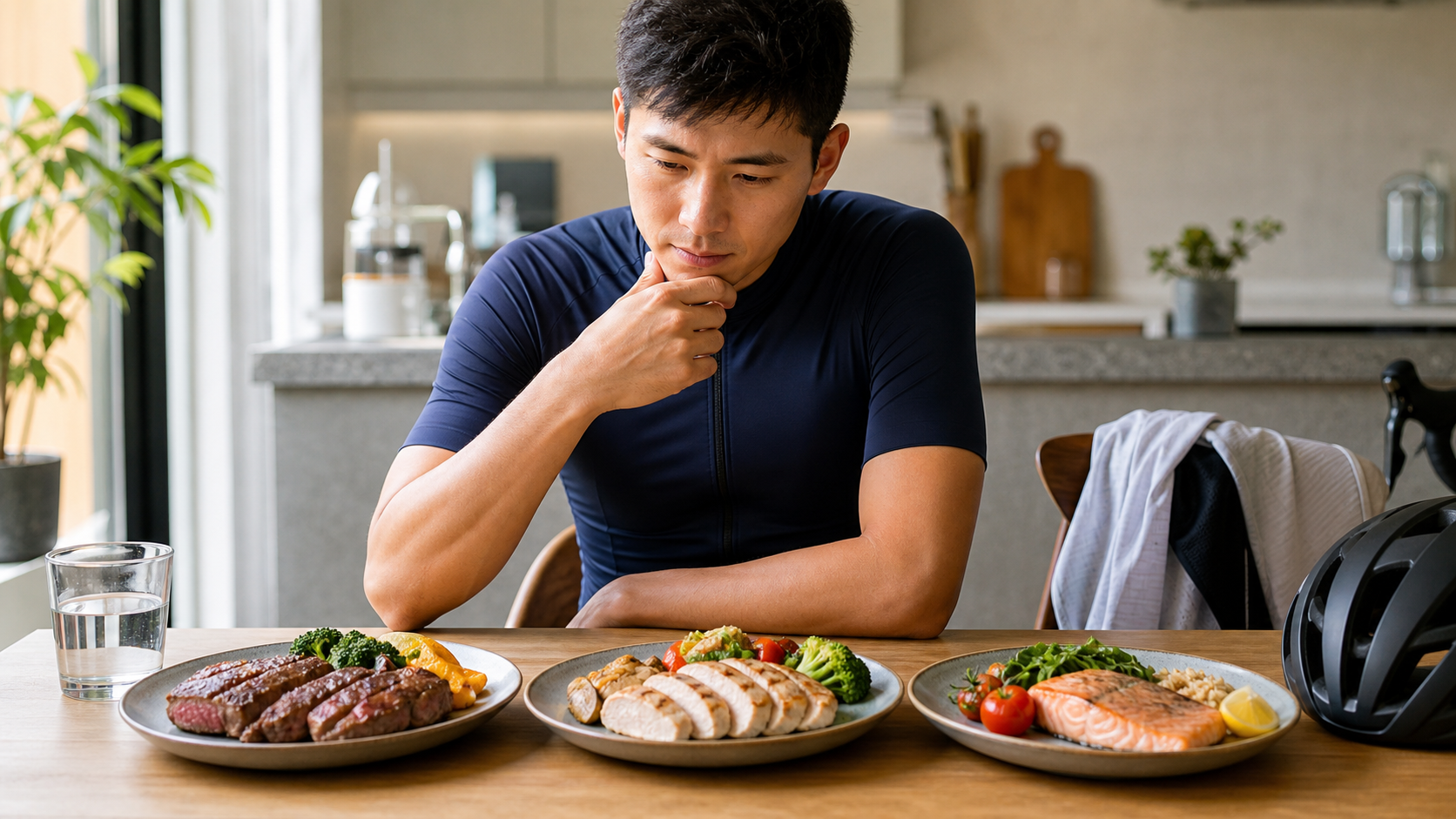
This case highlights an important point: Animal protein isn’t just about “getting enough”—the source matters, and different sources deliver vastly different things to your body. Red meat, white meat, and seafood all offer high-quality protein, but iron, zinc, omega-3s, saturated fat, and potential health concerns each tell their own story. In this article, I want to compare these three categories of animal protein from a sports science consultant’s perspective and give you a practical framework you can actually follow in Taiwan’s eating-out culture.
Here’s the bottom line: No single protein source is “best”—only “how well you combine them” matters. Let’s break it down layer by layer.
The Basics: Protein Quality Is Excellent Across All Three
Many people assume red meat, white meat, and seafood differ significantly in protein “grade,” but on the most critical metrics, all three are complete proteins—meaning they contain all nine essential amino acids in proportions close to what the human body needs.
The most important amino acid for athletes is leucine, the key trigger for muscle protein synthesis (MPS). Research suggests that consuming about 2.5 to 3 grams of leucine per meal effectively stimulates the synthetic response, which corresponds to roughly 25 to 40 grams of high-quality animal protein. Whether you’re eating steak, chicken breast, or salmon, hitting the leucine target is easy as long as portions are adequate.
So when it comes to “building muscle and repairing tissue,” the differences among the three are minimal. What truly sets them apart is the added value and risks beyond protein: iron, zinc, vitamin B12, omega-3 fatty acids, saturated fat content, and health concerns tied to processing methods. These are what we should weigh when choosing.
How Much Protein Does a “Palm-Sized” Portion Give You?
When I work with athletes, I don’t like telling them to weigh every meal on a scale—that’s not realistic for people who eat out frequently in Taiwan. Instead, I use the palm rule: a portion the size of your palm and about the thickness of a deck of cards, roughly 100 to 120 grams of meat or fish, provides about 20 to 26 grams of protein.
Take a 70 kg endurance athlete with regular training as an example: daily protein needs fall around 1.4 to 2.0 grams per kilogram, or about 100 to 140 grams of protein per day. That translates to roughly 4 to 6 palm-sized portions of quality protein daily, spread across three to four meals. This framework applies regardless of which meat you choose.
Let me clear up a common misconception here: More protein isn’t always better. Anything beyond what your body needs won’t magically turn into muscle—it just adds metabolic burden. For most people who exercise regularly, around 1.6 grams per kilogram is more than sufficient; chasing 2.0 or higher usually yields diminishing returns. Instead of obsessing over squeezing in an extra 20 grams, focus your energy on “diversifying your sources”—which is exactly what this article is about.
Why Care About “Source” Rather Than Just “Total”?
Here’s an analogy: total protein is like the money in your bank account—it determines whether you can “afford” repair and growth. But the added nutrients—iron, zinc, omega-3s—determine the “quality of what you’re buying.” Two people could both eat 130 grams of protein daily; if one relies entirely on chicken breast while the other rotates red meat, white meat, and seafood, their iron stores, inflammation levels, and recovery quality over a year could differ significantly. That’s why, when I coach athletes, after hitting the total protein target, I always follow up with: “So where is all that protein coming from?”
Red Meat: The King of Iron and Zinc, but Portion Control Matters
Red meat (the red cuts of beef, lamb, and pork) holds an irreplaceable position in sports nutrition: it’s one of the best sources of heme iron.
Iron is especially critical for endurance athletes because it’s the core of hemoglobin, directly determining how much oxygen your blood can deliver to your muscles. When iron is deficient, you get exactly what happened to the cyclist I mentioned earlier: elevated heart rate, stagnant power output, fatigue, and dizziness. Plant-based non-heme iron typically has an absorption rate in the single digits, while heme iron is absorbed far more efficiently—which is why red meat can’t be fully replaced.
According to food nutrition data, a high proportion of iron in red meat exists as heme iron, reaching over 70%. In comparison, chicken has a much lower heme iron proportion and lower total iron content overall. This is why endurance athletes who are vegetarian or rarely eat red meat—especially women (due to menstrual blood loss)—face significantly higher iron deficiency risk.
Beyond iron, red meat is also an excellent natural source of zinc, vitamin B12, and creatine. Zinc supports immune function and testosterone metabolism, B12 is tied to nerve health and blood production, and creatine aids explosive performance. These nutrients are also found in white meat and seafood, but red meat tends to have higher density.
Red Meat Health Considerations: Processed Meats Are the Key Issue
At this point, I need to address the risks in a balanced way. In 2015, the International Agency for Research on Cancer (IARC), part of the World Health Organization (WHO), released a landmark assessment:
- Processed meat—meat treated with salting, curing, fermentation, or smoking, such as sausages, bacon, ham, and hot dogs—was classified as Group 1 (carcinogenic to humans).
- Unprocessed red meat was classified as Group 2A (probably carcinogenic to humans).
IARC data indicates that consuming an additional 50 grams of processed meat per day increases colorectal cancer risk by about 18%. (Source listed in the references at the end.)
Here’s an important conceptual correction I give my athletes: “Group 1 carcinogen” refers to the “certainty of evidence,” not the “magnitude of danger.” Tobacco and alcohol are also Group 1, but no one would say “eating one sausage equals smoking one cigarette”—the actual risk levels are vastly different. The IARC classification answers “is there causal evidence?” not “how big is the risk?”
So my practical advice to athletes has always been: Fresh red meat is fine to eat and should be eaten (especially for women to replenish iron), but treat processed meats as an occasional flavor accent, not a staple. Having sausages or bacon a few times a week for taste is fine, but bacon every morning and hot dogs as late-night snacks is stacking controllable risks.
A Few Tips for Better Iron Absorption
Eating red meat doesn’t guarantee the iron gets absorbed. Over the years, I’ve taught athletes several practical techniques that noticeably improve iron absorption:
- Pair with vitamin C: Eating iron-rich foods alongside vitamin C-rich fruits and vegetables (guava, citrus, tomatoes, bell peppers) significantly boosts non-heme iron absorption. Taiwan’s guava is cheap and packed with vitamin C—a great partner.
- Separate coffee and strong tea from meals: Tannins in tea and coffee inhibit iron absorption. If you love bubble tea, try to keep drinks 1 to 2 hours away from meals.
- Avoid taking high-dose calcium with iron: High calcium doses compete with iron absorption. If you’re supplementing iron, stagger calcium pills and iron supplements.
- Don’t self-prescribe iron supplements: Excess iron can accumulate and damage the liver, and it can mask other issues. Whether to supplement and how much should be decided by a physician based on blood test results.
Key Micronutrient Comparison of the Three Protein Types
Looking at protein numbers alone isn’t enough. I’ve also compiled a quick-reference table of the micronutrients athletes care about most. All values are approximate ranges and may vary by cut and origin:
| Nutrient | Primary Function | Best Animal Sources | Significance for Athletes |
|---|---|---|---|
| Heme Iron | Oxygen transport, blood production | Red meat (beef/lamb), some shellfish | Deficiency directly impairs endurance performance |
| Zinc | Immunity, hormone metabolism | Red meat, oysters | Easily lost in those who sweat heavily |
| Vitamin B12 | Blood production, nerves | Red meat, fish, eggs | Nearly essential for vegans |
| Omega-3 (EPA/DHA) | Anti-inflammatory, cardiovascular | Deep-sea oily fish | Supports post-training recovery |
| Vitamin D | Bone and muscle function | Salmon, egg yolk | Often deficient in indoor trainers |
This table serves a straightforward purpose: when you notice one of these sources has been consistently absent from your diet, that’s a gap in your meal plan—time to add the corresponding foods.
White Meat: Low-Fat and Efficient, But Don’t Forget Its Shortcomings
White meat primarily refers to skinless chicken and turkey. It’s a favorite in the fitness and fat-loss communities for a simple reason: for the same amount of protein, white meat typically has lower saturated fat and total calories than red meat.
Take skinless chicken breast as an example: roughly 22 to 24 grams of protein per 100 grams, with only 1 to 3 grams of fat—truly “high protein, low fat.” For athletes who need to manage weight while maintaining high protein intake, chicken breast is nearly one of the most efficient choices available.
But white meat has its shortcomings—exactly the pitfall that cyclist friend of mine fell into at the start: its iron- and zinc-replenishing capacity is far inferior to red meat. As mentioned earlier, chicken has both low total iron and a low proportion of heme iron. If someone relies on white meat as their sole animal protein long-term and belongs to a high-loss group (women, endurance athletes who sweat heavily, those with vegetarian leanings), their iron stores could quietly run dry without them realizing it.
So my stance is: white meat is an excellent “daily staple,” but it shouldn’t be the “only” option. It handles clean protein and calorie control, while the iron- and zinc-replenishing duties need to be shared by red meat or certain seafood.
Chicken Breast Too Dry? That’s a Cooking Problem
Many of my clients avoid chicken breast, citing it as “too dry, too tough, hard to swallow.” In reality, whether chicken breast is dry comes down to cooking method, not the ingredient itself. Under prolonged high heat, chicken breast proteins over-contract and expel moisture, becoming dry and hard. Here are a few practical techniques I give my clients:
- Control doneness and time: Chicken breast doesn’t need to be cooked to death—it’s most tender when the center is just cooked through. Overcooking ruins it.
- Brine it first: Let it sit with a small amount of salt or saltwater before cooking to help retain moisture.
- Slice against the grain, cut into smaller pieces: Cutting against the muscle fibers makes the texture noticeably more tender.
Master these techniques, and chicken breast transforms from “punishment meal” to “daily staple.” The popularity of sous-vide ready-to-eat chicken breast in Taiwanese convenience stores is precisely because low-temperature cooking preserves tenderness.
Why Is White Meat Often Used as a Pre-Race Meal?
White meat and fish have another practical advantage: low fat, easy to digest, and gentle on the stomach. This makes them well-suited for before races or high-intensity training sessions. Marbled red meat is higher in fat and slower to digest, which can upset the stomach before competition; a serving of skinless chicken or steamed fish paired with adequate carbohydrates is a pre-race dinner combination I often recommend to clients—protein covered, and the stomach stays calm.
Seafood: Omega-3’s Home Turf, the Secret Weapon Against Inflammation
If red meat’s ace is iron, then seafood—especially oil-rich deep-sea fish (salmon, mackerel, Pacific saury, sardines, etc.)—has omega-3 polyunsaturated fatty acids, particularly EPA and DHA as its ace.
These two fatty acids offer several tangible benefits for athletes: helping regulate post-exercise inflammatory responses, supporting cardiovascular health, and aiding joints and the nervous system. For those with heavy training loads whose bodies are constantly in a “repair–inflammation” cycle, adequate omega-3 acts like an anti-inflammatory shield for the body.
In terms of numbers, salmon’s omega-3 content is substantial. According to nutritional data, farmed Atlantic salmon contains approximately 1.5 to 2.2 grams of omega-3 (EPA + DHA) per 100 grams, while wild salmon has about 1.0 to 1.7 grams. Most health organizations recommend general adults consume roughly 250 to 500 mg of EPA + DHA daily; the UK’s National Health Service (NHS) recommends eating at least one portion (about 140 grams) of oily fish per week. Translated into practice, eating one to two servings of deep-sea fish per week can substantially meet your omega-3 needs. (Source listed in the references at the end)
Another advantage of seafood is easily digestible protein with a light fat burden, making it well-suited for pre-race or pre-training meals. However, there are points to watch:
- Large predatory fish (such as certain tuna, swordfish, shark) may accumulate higher levels of heavy metals (such as methylmercury); pregnant women and those planning pregnancy should be especially cautious. Choosing small-to-medium fish (mackerel, Pacific saury, sardines, salmon) is generally safer.
- Crustaceans and shellfish are common allergens and contain more purines; those with gout or high uric acid should watch portion sizes.
- Taiwan’s fried-food culture can easily turn a good fish into a calorie bomb—the fried fish and tempura at Taiwanese-style fried snack stalls often have their omega-3 benefits offset by oil and calories.
Quick-Reference Table of the Three Protein Sources
To help you see it at a glance, I’ve compiled the characteristics of the three protein types into the table below. All values are approximate ranges; actual figures vary by cut, cooking method, and origin:
| Aspect | Red Meat (beef/lamb/lean pork) | White Meat (skinless chicken/turkey) | Seafood (deep-sea oily fish) |
|---|---|---|---|
| Protein (per 100g) | Approx. 20–26 g | Approx. 22–24 g | Approx. 18–25 g |
| Heme Iron | Excellent (high proportion, well absorbed) | Low | Moderate (some shellfish very high) |
| Zinc / B12 | Excellent | Moderate | Moderate (shellfish high in zinc) |
| Omega-3 (EPA/DHA) | Low | Low | Excellent |
| Saturated Fat | Medium to high (depends on cut) | Low | Low |
| Main Health Concerns | Carcinogen classification of processed products, saturated fat | Nearly none (except over-processing) | Heavy metals, allergens, purines |
| Coach’s Role | Primary iron and zinc replenisher | Primary daily fat-control staple | Anti-inflammatory and cardiovascular support |
Once you understand this table, one thing becomes clear: the strengths of the three are almost complementary. That’s exactly why I don’t advocate “eating only one type”—rotating through them lets you pocket all three aces.
Practical Approach: What’s the Smartest Weekly Plan?
Explaining principles alone isn’t enough—I always give my clients a version they can follow starting tomorrow. Here’s a weekly animal-protein rotation example I commonly give to regular, consistent trainers; feel free to adjust based on your taste and budget:
| Day | Main Protein Arrangement | Focus |
|---|---|---|
| Monday | Deep-sea fish (salmon/mackerel) | Omega-3 replenishment, post-training anti-inflammation |
| Tuesday | Skinless chicken breast / thigh | Clean protein, calorie control |
| Wednesday | Lean beef | Iron and zinc replenishment, scheduled on a high-intensity day |
| Thursday | White meat + eggs | Daily staple |
| Friday | Seafood (fish or shellfish) | Second omega-3 serving |
| Saturday | Red meat or white meat (based on training load) | Replenishment after long-distance training |
| Sunday | Flexible day | Eat whatever you want, maintain psychological balance |
The logic behind this plan is simple: red meat about 2 to 3 times a week for iron and zinc, deep-sea fish about 2 times a week for omega-3, white meat as the daily backbone, and processed meats kept to occasional indulgence. This way, you don’t need to obsess over every gram to reap the benefits of all three protein types.
A Practical Eating Guide for Taiwan’s Dining-Out Crowd
I know most people eat out and cooking at home isn’t realistic. So I’ve translated the principles above into strategies for choosing meals at convenience stores and buffet restaurants:
- Buffet restaurants (自助餐): Prioritize “steamed fish, braised chicken leg (skin removed), stir-fried beef, blanched meat slices,” and avoid sweet-and-sour, thickened sauces, and deep-fried items. One palm-sized portion of meat with two servings of vegetables is the easiest golden ratio.
- Convenience stores: Ready-to-eat chicken breast, tea eggs, mackerel cans, and unsweetened soy milk are all great choices. Canned mackerel is actually a highly cost-effective source of omega-3s—don’t underestimate it.
- Breakfast shops: Swap the ham and egg for “tuna and egg” or “pork tenderloin and egg” to instantly upgrade protein quality and avoid the pitfalls of processed meats.
- Night markets: Craving Taiwanese fried chicken? That’s fine, but keep the frequency in check—don’t let fried foods become a daily habit.
Remember, a nutrition strategy only matters if you can stick with it long-term. A perfect meal plan you can’t tolerate for three days is worse than a “pretty good” plan you can follow for three years.
Cooking Methods: Don’t Let Bad Preparation Ruin Good Ingredients
Choosing the right ingredients is only half the battle; the other half is how you cook them. The same piece of salmon has vastly different health value depending on whether it’s steamed or deep-fried. The cooking priority order I give my clients is roughly: Steaming, boiling, roasting > quick stir-frying > deep-frying. In Taiwan’s food environment, deep-frying and thickened sauces are everywhere, easily turning a good protein source into a high-fat, high-sodium burden. Deep-sea fish, in particular, are vulnerable to high-temperature frying because unsaturated fats like omega-3s are sensitive to heat—you lose a significant amount of those good oils after frying.
One more reminder: grilling red meat at high heat until charred can produce some undesirable compounds. Barbecue lovers don’t need to give it up entirely, but try not to char your meat, and don’t make BBQ a daily habit. Mid-Autumn Festival BBQ is a national pastime in Taiwan—occasional indulgence is fine, but every day is overdoing it.
Common Mistakes and How to Fix Them
Over the years, I’ve seen countless “well-intentioned but misguided” eating habits. Here are the most common ones—check if any apply to you:
Mistake 1: Cutting out red meat entirely for health.
This is the trap my cyclist friend from the beginning fell into. Completely eliminating red meat without deliberately supplementing iron will deplete your iron stores over time, affecting both performance and energy levels. Fix: Eat fresh, lean red meat 2 to 3 times a week to replenish iron. What you should really minimize is “processed meat,” not red meat itself.
Mistake 2: Treating “white meat is healthiest” as gospel and eating chicken breast every meal.
Chicken breast is great, but a monotonous diet will leave you deficient in various nutrients. Fix: Make white meat your foundation, but be sure to rotate in red meat and seafood regularly.
Mistake 3: Assuming eating fish means you’re getting your omega-3s.
Many people are eating “fried fish” or “fish crackers,” where the omega-3s are largely negated by the oil and high heat. Fix: Prepare deep-sea fish by steaming, roasting, or boiling to retain those good oils.
Mistake 4: Using processed meats as your daily protein source.
Having bacon, sausage, or ham every day is stacking up the risks flagged by the IARC on a daily basis. Fix: Treat processed meats as an “occasional flavor,” and let fresh meat and fish be your primary protein sources.
Mistake 5: Only tracking total protein, ignoring iron and omega-3s.
Hitting your protein target doesn’t mean your nutrition is complete. Fix: Treat “iron” and “omega-3s” as two separate checkpoints, and make sure you have sources for each every week.
Mistake 6: Feeling fatigued and responding by training harder or loading up on protein, without getting blood work done.
Many cases of “unexplained slowdown” are actually iron or B12 deficiencies. Fix: If your performance has been declining long-term without a clear cause, a blood test is more useful than any supplement. Taiwan’s National Health Insurance makes seeing a doctor convenient—use it.
Actionable Advice for Readers at Different Levels
For Beginners Just Starting to Exercise, with Health as Your Goal
Don’t overthink it. Just grasp these four principles: “One palm-sized portion of quality protein per meal, deep-sea fish twice a week, rotate red and white meat, and minimize processed meats.” No need to weigh food or count grams. Just make “rotating through the three protein types” a habit, and you’ll already be ahead of most people.
Many beginners hear “nutrition” and immediately panic about buying a bunch of supplements or strictly counting calories. My advice is the opposite: First get the basic rotation of the three protein types down solid, then talk about advanced strategies. Supplements are the icing on the cake, not the foundation. If the foundation isn’t solid, no amount of supplements will help. Just aim for “the protein I eat today is somewhat different from yesterday,” and over time, your nutritional completeness will naturally improve.
For Those with a Regular Training Schedule, Looking to Improve Performance
Start “distributing” your protein intake throughout the day: 25 to 40 grams per meal, rather than loading it all into dinner. On high-intensity or long-distance training days, deliberately schedule red meat to replenish iron and zinc; include deep-sea fish in your post-workout meal to aid recovery. If you’re female or a heavy sweater, I recommend getting a blood test that includes ferritin at least once a year to nip iron deficiency in the bud.
At this stage, you can also start learning to “plan your diet around your training.” On high-intensity interval or long-distance days, your metabolic demands and losses are higher, so you can deliberately arrange more red meat for iron and zinc, and ensure adequate carbs and protein post-workout. On easy or rest days, there’s no need to force as much. Aligning your diet with your training plan will serve your body’s actual needs better than a rigid, unchanging menu. Taiwan’s summers are hot and humid, and long outdoor rides or runs cause tremendous sweating—sodium, zinc, and iron losses all need to be factored in. Don’t just focus on hydration and neglect minerals.
For Advanced Athletes with High Training Volume, Pursuing Peak Performance
Your task is “precision.” Work with a sports nutritionist or physician to adjust your protein and fat ratios according to your training cycle; closely monitor iron stores and inflammation markers; if it’s difficult to consistently hit your omega-3 targets through food alone, discuss with a professional whether supplementation is needed (dosage and necessity should be evaluated individually—don’t self-prescribe large amounts of fish oil). At this stage, data and professional support matter far more than “eating one more piece of meat.”
Advanced athletes should also learn to adjust based on “lab data” rather than “feelings.” Regularly tracking ferritin, hemoglobin, vitamin D, and other markers allows you to see warning signs before your performance declines. The high-level athletes I’ve worked with almost all treat blood tests as part of their training log—just like reviewing power and heart rate data, they incorporate their body’s internal metrics into their monitoring. Rather than panicking and scrambling to fix things after your speed drops, it’s better to keep your dashboard in good shape all along. This kind of proactive management is a frequently overlooked gap between amateurs and elites.
Special Note: If You Have a Chronic Condition, You Must Personalize Your Approach
If you have diabetes, high blood pressure, heart disease, kidney disease, gout, or high uric acid, the general principles above all need to be adjusted for your individual situation—don’t apply them wholesale:
- Those with impaired kidney function need strict control over total protein intake and shouldn’t blindly pursue a high-protein diet.
- Those with gout/high uric acid should be cautious with seafood (especially certain shellfish and small fish) and organ meats from red meat due to purines.
- Those with cardiovascular disease need to be more careful with saturated fat intake; the omega-3s in seafood may actually be beneficial, but everything should be done under the guidance of your medical team.
In these cases, your physician or nutritionist must provide a prescription based on your individual condition. The general advice in this article is not suitable for direct application. Taiwan has relatively comprehensive medical and nutritional consultation resources—please make good use of professionals and don’t play doctor yourself.
Another Case Study: The Powerlifter Who Ate Only Steak
In contrast to the anemic cyclist from the beginning, I’ve also encountered a client who went to the opposite extreme. A 45-year-old powerlifting enthusiast firmly believed “you need red meat to get big.” He ate steak for every meal, consuming large amounts of fatty cuts daily, and barely touched seafood. His strength was indeed impressive, but when his health check came back, his blood lipids were elevated, his inflammation markers weren’t great, and his family doctor warned him to watch his cardiovascular health.
We didn’t tell him to give up red meat. Instead, we did two things: first, we swapped the heavily marbled cuts for leaner ones and controlled portions; second, we reduced his weekly red meat frequency and added 2 servings of deep-sea fish to help fight inflammation and balance his fat profile. Six months later at his follow-up, his blood lipids and inflammation markers had improved, and his strength performance hadn’t regressed at all.
Looking at these two opposite cases together perfectly illustrates the core of this entire article: Extremes in either direction are not ideal. Avoiding red meat entirely leads to iron deficiency, while eating only red meat piles on the burden of saturated fat and inflammation. The answer always lies in “rotation and balance,” not in the “more” or “zero” of any single food.
FAQ
Q: Is pork considered red meat or white meat?
A: From a nutritional and IARC classification standpoint, pork is red meat. Its lighter color after cooking can be misleading, but its myoglobin content and metabolic characteristics place it in the red meat category. The tenderloin and pork loin that Taiwanese people love are relatively lean cuts and are good red meat options.
Q: Can fish oil supplements replace eating fish?
A: Fish oil can serve as a supplement option when omega-3 intake is insufficient, but natural fish also provides protein, vitamin D, selenium, and other nutrients—they are not fully equivalent. I generally recommend “food first, supplements as support,” and whether you need supplementation and at what dosage should be discussed with a professional rather than self-prescribing high doses.
Q: How can vegetarians make up for the advantages of these animal proteins?
A: Vegetarians need to plan more carefully. Iron can be obtained from dark leafy vegetables and legumes, paired with vitamin C to enhance absorption; omega-3 can come from flaxseed, chia seeds, and algae oil; B12 almost certainly requires supplements or fortified foods. For vegan athletes, I strongly recommend regular blood tests to monitor iron and B12 levels.
Q: Can I eat a large amount of protein in one day and consume it all in one meal?
A: That’s not ideal. Research generally supports that “distributing protein evenly across meals” is more effective for muscle protein synthesis. Rather than eating 60 grams in one dinner, having 25 to 30 grams across three meals provides more consistent stimulation of synthesis.
Q: Do I have to consume protein immediately after training?
A: The so-called “anabolic window” is not as urgent as people imagine. As long as your total daily intake is sufficient and evenly distributed, getting protein within an hour or two after training is still timely—no need to stress over every minute.
Q: On a limited budget, where should I spend on protein?
A: In terms of cost-effectiveness, eggs, chicken thighs, pork tenderloin, mackerel cans, and soy products are all affordable and nutritious choices. There’s no need to be fixated on expensive imported steaks or pricey supplements. Spreading your budget across a variety of economical sources actually provides better nutritional completeness than concentrating it on a single expensive ingredient.
Conclusion: It’s Not About Choosing Sides, But Setting a Roster
Going back to the story of the anemic cyclist from the beginning. We didn’t tell her to “switch to red meat and eat less chicken” as an either-or choice; instead, we helped her rework her “roster”: red meat handles iron and zinc, deep-sea fish covers omega-3, and chicken breast remains the daily staple. Combined with the doctor-prescribed iron supplements, her ferritin recovered within about a month, and her power on climbs gradually returned. She felt that “engine coming back to life” sensation most vividly herself.
So, the comparison between red meat, white meat, and seafood has never been about picking a single champion. They are three teammates, each with their own specialty: red meat supplies iron, white meat controls fat, and seafood fights inflammation. Your job as the coach is to rotate them through your weekly menu, rather than letting one overwork while another never gets on the field.
Treat processed meats as occasional guest appearances, make fresh meat and fish the main characters, and let the three protein categories rotate—this simple principle will support your training and health far longer than any expensive supplement. It’s never too late to start adjusting from your next meal.
If you want to take away just one sentence, it’s this: Before your next grocery run or meal order, ask yourself, “Have I eaten red meat, white meat, and seafood this week?” As long as all three boxes are checked and processed meat is kept low, your animal protein strategy already beats most of the complicated plans out there. Nutrition has never been about who knows more, but about who can consistently do the simple things right.
Finally, I want to reiterate: everyone’s physical condition, training volume, and medical history are different. This article provides a general framework, not a prescription tailored to you. If you have anemia, metabolic conditions, or any special circumstances, be sure to bring these principles to your physician or dietitian and let the professionals make the final individualized adjustments. Your health deserves that extra step of caution. Diet is a long-distance race, not a sprint; what will carry you through season after season of training is always the simple set of principles you’re willing to stick with. Wishing you eat smart, train healthy, and ride long.
This article is educational content and cannot replace individual diagnosis and treatment advice from a physician, physical therapist, or dietitian. If you have anemia, chronic conditions, or special nutritional needs, please consult a qualified healthcare professional.
References
- WHO / IARC, Q&A on the carcinogenicity of red meat and processed meat: https://www.who.int/news-room/questions-and-answers/item/cancer-carcinogenicity-of-the-consumption-of-red-meat-and-processed-meat
- IARC Monographs, press release on red meat and processed meat: https://www.iarc.who.int/wp-content/uploads/2018/07/pr240_E.pdf
- WHO EMRO, IARC evaluation of red and processed meat: https://www.emro.who.int/noncommunicable-diseases/highlights/red-and-processed-meats-cause-cancer.html
- NIH ODS, Omega-3 Fatty Acids Fact Sheet for Health Professionals: https://ods.od.nih.gov/factsheets/Omega3FattyAcids-HealthProfessional/
- Research compilation on heme and non-heme iron content in meats: https://www.researchgate.net/publication/227969646_Total_Heme_and_Non-heme_Iron_in_Raw_and_Cooked_Meats
Related Reading
- The Complete Protein Guide: How Much, When, and Which—Practical Notes from a Sports Science Consultant
- Nutrition Strategies for Vegan Athletes: Practical Solutions for B12, Iron, Calcium, Omega-3, and Protein Quality
- Protein and Recovery: Timing, Dosage, and Sources—A Complete Practical Guide from a Triathlon Coach
- Whole Grains and Carbohydrate Quality for Athletes: Whole Grains vs. Refined, GI, and Practical Choices for Performance
CT暗黑廚房) 車友必備 宇宙無敵鮮蚵湯 幫助訓練恢復 天然食補 好市多 超肥鮮蚵 破PR
7 年前
單車 一日北高 ( 雙城 ) 肥宅雙人瘋狂行 紀錄片 REACTO
10 年前
太平山單車員工旅遊 | 這樣玩CP值最高!| 公路車
5 年前
水金九不厭五分 10度寒流冷到不願停!feat. 卡卡 / 公路車 / CT Yeh
6 個月前
一日北高常見問題大集合 | 攻略 | 路線 | 訓練 | 補給 | 自行車 單車 | 一日雙城 | 雙塔 | TWB北高360 | 屁股痛
6 年前
靠單車減肥35公斤 心得分享與整理
7 年前
#公路車 #Fitting 靠人工智慧APP 幫你調整單車
6 年前
嘉義大埔、阿婆灣挑戰賽,美到以為在日本!ft. 環騎5 Cool 西拉雅188 / 公路車 / CT Yeh
7 個月前