Tea and Exercise: How Catechins and L-Theanine in a Cup of Tea Affect Your Metabolism and Focus
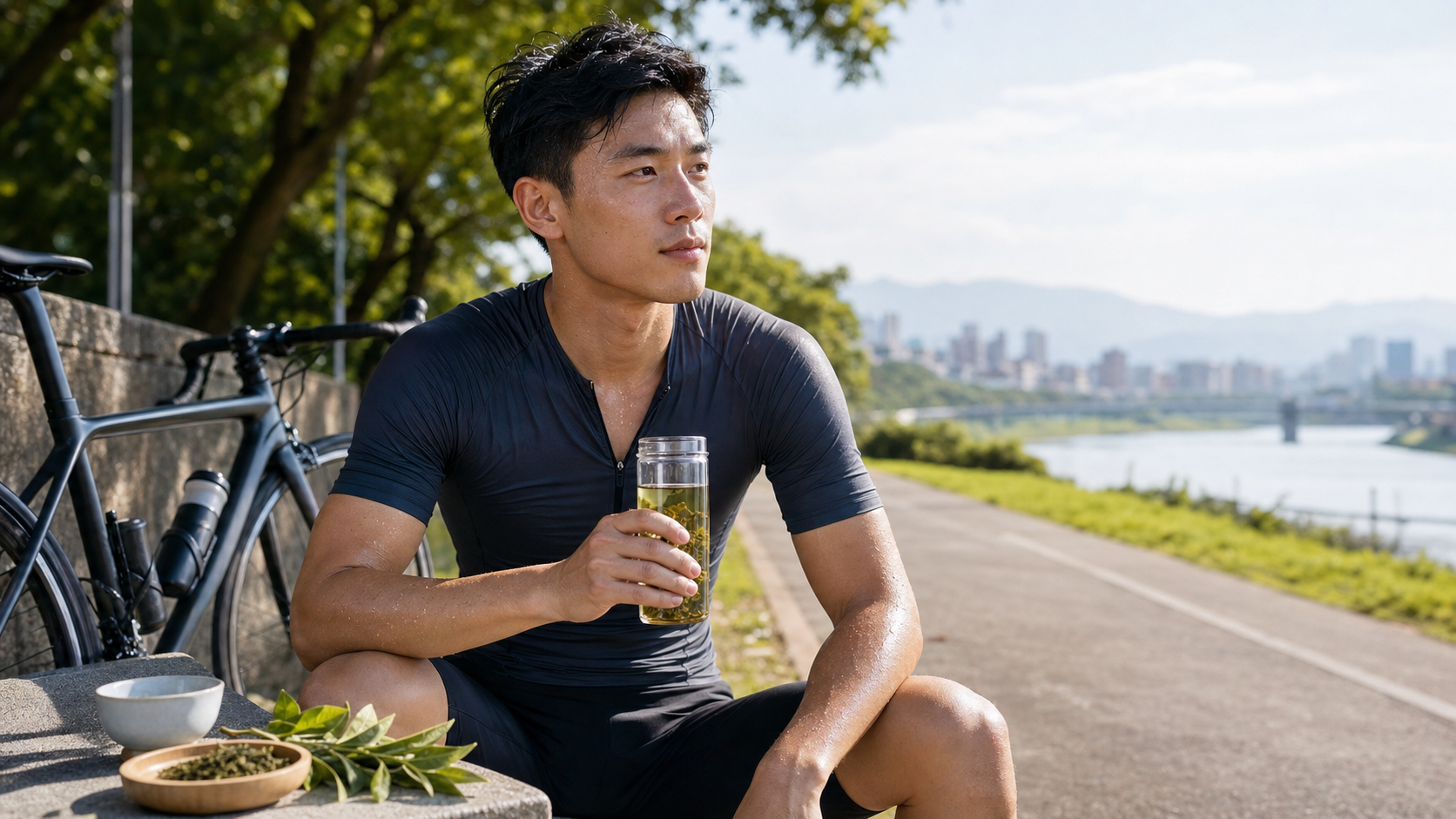
A Question Raised by a Cup of Tea
The other day, after finishing a long interval session by the riverside, A-Zhe, a trainee who had been training with me for over half a year, wiped his sweat and asked me: “Coach, I see foreign athletes drinking those caffeine-plus-theanine supplements. I usually just drink tea anyway—so does that mean it works for me too?”
I smiled. I’ve heard this question far too many times. Taiwan is a place that produces and drinks tea—from the black tea at breakfast shops, the unsweetened green tea in convenience store coolers, to the high-mountain oolong brewed in offices, tea is almost the background noise of our lives. But not many people have seriously connected “tea” with “training performance.” Most people drink tea out of habit, to quench thirst, or to pair with fried chicken. Few have ever asked: What exactly is in this cup of tea? Once it enters my body, what does it actually do to my metabolism, my focus, and today’s workout plan?
I’ve been coaching athletes and general fitness enthusiasts for over a decade, and I’ve kept up with the literature on exercise physiology, nutrition, and sports medicine. The topic of tea is fascinating because it touches on two directions at once: one is metabolism and fat utilization, starring catechins (especially EGCG); the other is neurology and focus, starring L-theanine. These two compounds coexist in the same tea leaf, yet they follow completely different physiological pathways. In this article, I want to explain this from the ground up, in the tone I use with my trainees—what’s in tea, what we know scientifically, how to drink it in practice, and the common mistakes Taiwanese people make and how to fix them.
Let me give you the conclusion first, so you don’t fall asleep by the end: Tea is not a miracle cure. It won’t magically give you 20 extra watts of power, nor will it let you run 5 more kilometers. But it is a low-cost, low-side-effect, readily available aid in Taiwan. If you understand its principles and use it at the right times, it can help make your training and daily life go a bit more smoothly. And that’s enough.
What’s Actually in a Tea Leaf
The tea we drink every day—whether green tea, oolong, black tea, or pu-erh—all comes from the same plant: the tea plant (Camellia sinensis). The difference lies in the degree of fermentation (oxidation). Green tea is barely fermented, black tea is fully fermented, and oolong sits in between. The degree of fermentation dramatically changes the ratio of compounds inside, which is why you can’t make a blanket statement about whether “drinking tea works.”
For athletes and active individuals, there are three compounds in tea worth knowing most:
1. Catechins
Catechins are a group of polyphenolic compounds, and the most heavily studied among them is EGCG (epigallocatechin gallate). Because green tea undergoes no fermentation, it has the highest catechin content; during the fermentation of black tea, catechins convert into theaflavins and thearubigins, so the levels drop significantly. So if your goal is to consume catechins, green tea or lightly fermented teas (such as Baozhong or light-fragrance oolong) are better sources.
In sports science, catechins are most discussed for their effects on fat metabolism, energy expenditure, and oxidative stress. I’ll go into more detail on this later.
2. L-Theanine
This is an amino acid that exists almost exclusively in tea leaves (and a few types of mushrooms). It’s part of what gives tea its “sweet aftertaste and smoothness.” L-theanine is best known for its effects on the brain and nervous system—it’s associated with relaxation, focus, and emotional stability. Interestingly, it’s often studied alongside caffeine, because the combination produces a state of being “alert but not jittery,” which is particularly interesting for sports that require focus (such as descending technique in cycling, or pace control over long distances).
3. Caffeine
Tea also contains caffeine, though usually in lower amounts than coffee. Caffeine’s benefit to athletic performance is among the most solidly evidenced of all supplements—it lowers perceived exertion (RPE) during exercise and improves alertness and endurance performance. However, since the main focus of this article is catechins and L-theanine, I’ll touch on caffeine in the “combination” section, because its interaction with these two is what really matters.
The table below helps you quickly grasp the compound tendencies of different tea types (values are general trends; they vary greatly by tea variety and brewing method, so treat them as conceptual reference only):
| Tea Type | Fermentation Level | Catechins (incl. EGCG) | L-Theanine | Caffeine |
|---|---|---|---|---|
| Green tea | Barely fermented | High | Medium–High | Medium |
| Baozhong / Light-fragrance oolong | Lightly fermented | Medium–High | Medium–High | Medium |
| Roasted oolong | Medium fermented | Medium | Medium | Medium |
| Black tea | Fully fermented | Low (converted to theaflavins, etc.) | Medium | Medium–High |
| Pu-erh (ripe) | Post-fermented | Low | Low–Medium | Medium |
Key reminder: This table shows trends, not precise dosages. What actually determines how much you consume is the amount of tea leaves, water temperature, steeping time, and number of infusions. Cold-brewed green tea and a strong green tea steeped in boiling water differ greatly in the catechins and caffeine you take in.
How Brewing Method Affects What You Consume
Many people think “tea is just tea,” but with the same bag of leaves, different brewing methods can produce very different results. This is a detail I often remind my trainees about, as it’s easy to overlook:
| Brewing Method | Water Temperature | Catechin/Bitterness Release | Caffeine Release | Taste and Suitable Audience |
|---|---|---|---|---|
| High-temp hot brew, long steep | High (near boiling) | High | High | Strong, astringent; those prone to heart palpitations or sensitive stomachs should be cautious |
| Moderate-temp short steep | Medium-High | Medium | Medium | Balanced; most common for daily use |
| Cold brew (refrigerated for hours) | Low (cold water) | Lower, less astringent | Lower | Smooth, mild; friendly for those avoiding caffeine or with sensitive digestion |
So if you want “on-the-spot alertness,” a moderate-temperature hot brew releases more caffeine; if you’re “worried about heart palpitations and want something gentler,” cold brew is a great choice for Taiwan’s summers. This adjustability is exactly what makes tea more interesting than capsules.
The Science (Part 1): Catechins and Metabolism
I’ll keep this section as plain-spoken as possible, because the mechanisms sound intimidating, but the logic isn’t hard to follow.
How Catechins Affect Fat Metabolism
For the body to use fat as fuel, it needs the sympathetic nervous system to “step on the gas”—mainly through a signaling molecule called norepinephrine. Norepinephrine is broken down by an enzyme called COMT. EGCG is believed to inhibit COMT, allowing norepinephrine to stick around longer, thereby prolonging the sympathetic nervous system’s stimulation of fat tissue, which in theory increases fat oxidation and energy expenditure.
I looked at recent literature reviews. A systematic review on the effects of green tea extract on fat oxidation, published in Advances in Nutrition, summarized this mechanism and noted that green tea extract does produce a measurable increase in fat oxidation at rest and during exercise—but it also honestly acknowledged that some human studies did not observe a significant rise in fat oxidation during exercise (source listed at the end). Another systematic review noted that even relatively low doses of EGCG (around 300 mg per day) may slightly increase energy expenditure and fat oxidation indicators related to the respiratory quotient.
I want to emphasize the words “slightly” and “not always.” That’s exactly what honest science looks like.
A Plain-Language Translation for Athletes
Let’s translate the mechanisms above into plain English:
- Catechins’ help with fat metabolism is a “bonus,” not the “main course.” They might help you burn a little more fat and a little more energy during exercise, but the magnitude isn’t enough to replace training volume and dietary control. Thinking you can lose fat by drinking green tea without exercising or watching what you eat is unrealistic.
- The effects lean toward long-term, chronic intake. In the literature, the effects on antioxidant capacity and reducing post-exercise muscle damage mostly appear in the context of “regular intake over a period of time,” not from chugging a cup right before a race.
- It’s more like “fine-tuning your physiology” than “on-the-spot fueling.” This is very different from the role of caffeine—caffeine is used acutely, while catechins are more like part of your daily dietary foundation.
Catechins and Oxidative Stress
Beyond fat metabolism, catechins are antioxidants. High-intensity or prolonged exercise generates more free radicals, leading to oxidative stress. The literature suggests that long-term (rather than acute, single-dose) intake of green tea catechins may enhance plasma antioxidant capacity and mitigate the oxidative stress and muscle damage caused by strenuous exercise.
There’s a practical detail worth noting here: antioxidants are not “the more, the better.” Some of the free radicals produced after exercise are actually signals that initiate training adaptations (e.g., mitochondrial biogenesis, muscle strengthening). If you use high-dose antioxidant supplements to “eliminate” them after every single workout, you could theoretically interfere with training adaptations. So my advice to my athletes is: Getting a moderate amount of catechins from natural tea is fine, but I don’t recommend long-term use of high-dose, highly concentrated green tea extract capsules during key training periods. One cup of tea a day and popping several high-dose capsules a day are two completely different things.
Scientific Basis (Part 2): L-Theanine and Focus
If catechins manage the body’s metabolism, then L-theanine manages more of the mind’s state.
The Effects of L-Theanine Alone
L-theanine is believed to promote alpha brain wave activity, a brainwave state often associated with “relaxed but alert”—that feeling of being meditative or focused without being tense. It’s also thought to be linked to the activity of certain calming neurotransmitters. In terms of subjective experience, many people find that tea provides a “pick-me-up without the heart palpitations and jitters of black coffee,” and L-theanine is considered one of the reasons.
The Really Interesting Part: Theanine × Caffeine Combination
This is the most fascinating part of the literature. L-theanine and caffeine each have their own effects, but when combined, they may produce a synergistic effect.
I found a double-blind, placebo-controlled crossover trial published in the British Journal of Nutrition that tested 37 healthy young adults aged 22–30 who were acutely sleep-deprived. They tested a combination of high-dose L-theanine (200 mg) plus caffeine (160 mg), and the results showed this combination improved behavioral and neurophysiological indicators related to selective attention (source at the end of the article). Another neuroimaging study indicated that when L-theanine is combined with caffeine, it reduces “distraction” and “mind wandering”, allowing people to focus better on target stimuli; and the analysis suggested a synergistic effect between the two in suppressing distraction.
Translating this to a training scenario: Imagine you’re doing a workout that requires intense focus—like staring at your power meter, keeping your watts for each interval within a narrow range; or a technical descent in traffic; or maintaining your pace through the last 30 kilometers of a long ride on willpower alone—this state of “being alert but not agitated, able to sustain focus without distraction” is exactly where theanine plus caffeine is thought to help.
A Case That Left an Impression on Me
Let me share a real, strongly felt example (the scenario is for illustrative purposes; the details are not fabricated, nor are they overly precise). I once coached an office worker named Xiaomin who could only train after work. Her problem was: after overtime, she’d drag her tired body to do intervals, but often her “body was there, her mind wasn’t.” Her power or pace would fluctuate wildly from interval to interval, she couldn’t hold her target zones, and she’d finish the session feeling like it was a mess. She initially tried to power through with stronger black coffee, but that only resulted in heart palpitations, shaky hands, and a vicious cycle of worse sleep at night.
I made a very simple adjustment with her: swap the pre-training black coffee for a cup of moderately warm, freshly brewed green tea, taken about 45 minutes before the workout. Her feedback was—that feeling of “a clear head, but without the jittery agitation of black coffee” helped her stabilize her attention, and she could hold her intervals’ pace better within the zones. Of course, there’s a placebo component, a change in habits, and the progress from training itself involved; I would never attribute all the credit to the tea. But this direction—replacing the high-dose caffeine that easily overstimulated her with a gentler combination of theanine and caffeine—is consistent with the research I mentioned earlier, and it was also much friendlier to her sleep. For an office worker who relies on sleep for recovery, that’s far more important than a little extra acute stimulation.
Why “Tea” Itself Is a Natural Combination
The most elegant point is this: tea leaves naturally contain both caffeine and L-theanine. This is why many people describe the “alertness from tea” as different from the “alertness from coffee”—tea’s clarity is usually gentler, more sustained, and less likely to cause the heart palpitations and anxiety you get after black coffee. Of course, the doses of theanine and caffeine in a typical cup of tea are far lower than the supplement doses used in studies, so you can’t directly extrapolate the research effects to “drinking a cup of tea,” but the direction makes sense.
Practical Application: How to Incorporate Tea into Your Training
Now that the theory is covered, here’s what you can actually do. The following suggestions are general practical principles; individual variation is significant, so treat them as a starting point, not rigid rules.
Choose What to Drink and When, Based on Your Goal
| Goal | Recommended Tea Type/Form | Timing | My Practical Advice |
|---|---|---|---|
| Want acute focus and alertness | Green tea / lightly fermented oolong (contains caffeine + theanine) | About 45–60 minutes before training or racing | Test it during regular training first; never try it for the first time on race day |
| Want daily catechin and antioxidant intake | Green tea / Baozhong, in moderation | Spread throughout the day, with or between meals | The key is “consistency,” not “quantity” |
| Want to relax before bed but avoid caffeine | Low-caffeine or decaffeinated tea | Stop a few hours before bedtime | If you’re sensitive to caffeine, cut back starting in the afternoon |
| Hydration during training | Primarily plain water / electrolytes | During training | Strong tea isn’t suitable as your main hydration during training; watch out for diuretic effects and GI irritation |
A Simple “Tea Testing” Protocol
Whenever I introduce anything new to my athletes, I follow the same principle: test it on low-risk days first, then use it on important days. Tea is no different.
- Weeks 1–2: Only try it on easy training days. Drink a cup of your chosen tea 45–60 minutes before training, and log how you feel: focus, GI response, any heart palpitations, and whether your sleep is affected.
- Weeks 3–4: Use it for moderate-intensity sessions. Observe whether you notice a difference during intervals or tempo efforts that require focus.
- Only after confirming there are no issues, consider using it on race day. Never try anything new on race day—that’s an ironclad rule.
Specific Recommendations for the Taiwan Context
Tea is incredibly accessible in Taiwan, but there are hidden pitfalls:
- Convenience store “unsweetened green tea” is a solid choice—convenient, low cost, sugar-free, and suitable as a daily source of catechins. But check carefully that it’s truly unsweetened; many “lightly sweetened” or “original” versions actually contain added sugar.
- Breakfast shop black tea, hand-shaken sugary tea drinks—at this point, the focus isn’t the tea anymore; it’s the sugar. A full-sugar hand-shaken drink can easily contain 40–60 grams of sugar, which is a significant amount of empty calories for the day. For athletes trying to manage weight and body fat, this is often the first issue I have them address. If you want the benefits of tea, don’t let the sugar cancel them out.
- High-mountain oolong, Baozhong—these excellent local Taiwanese teas are wonderful daily beverages. They’re smooth, have a pleasant sweet aftertaste, and the theanine effect is noticeable, making them very suitable for everyday drinking.
- Cold-brewed tea is very popular in Taiwan’s summers. Cold brewing extracts less caffeine and fewer bitter compounds, making it smoother and less irritating to the stomach—a good option for those sensitive to caffeine or with a delicate GI tract.
Sample: Fitting Tea into a Weekly Training Plan
Many students ask me, “So how should I actually structure my week?” I usually don’t give rigid training plans because individual differences are too great, but I can provide a sample framework to give you an idea (adjust intensity and timing based on your own tolerance and sleep):
| Day | Training Content | Tea’s Role and Timing | Reminder |
|---|---|---|---|
| Monday | Recovery day / Rest | Regular unsweetened green tea, split into portions during the day | Day for building the “foundation” of catechins and antioxidants |
| Tuesday | High-intensity intervals | One cup of lukewarm green tea 45–60 minutes before training | Aim for “alert but not jittery” focus |
| Wednesday | Easy aerobic | Regular light tea or cold brew is fine | Don’t stack caffeine too high |
| Thursday | Tempo / Threshold workout | One cup of tea before training (tolerance tested beforehand) | Observe whether pace control feels more stable |
| Friday | Rest | Reduce caffeine from mid-afternoon onward | Protect sleep before the weekend long ride |
| Saturday | Long distance | Before training, follow your habit; during training, focus on water/electrolytes | Don’t use strong tea as mid-training hydration |
| Sunday | Easy or rest | Whatever you like, return to your routine | Review the week’s sleep and total caffeine intake |
The spirit of this table isn’t “copy it exactly,” but to show you how two principles come to life: place acute focus on high-intensity/high-concentration days, accumulate daily catechins through regular unsweetened tea, and sleep always takes priority over that little bit of acute stimulation.
Acute vs. Chronic: Two Completely Different Expectations
I want to nail down another concept that’s easy to confuse. The effects of tea on exercise need to be viewed on two different timescales, with completely different expectations:
- Acute (single dose, pre-session): Primarily the “alertness, focus, and less jitteriness” from caffeine plus L-theanine. This is what you feel from “having a cup before training today.” The effect varies by person and is highly dependent on your tolerance and sleep status.
- Chronic (long-term, regular): The antioxidant effects of catechins, subtle metabolic adjustments, and reducing post-exercise oxidative stress—these mostly appear in the literature under “regular intake over a sustained period.” This is the gradual physical benefit you accumulate from “long-term replacement of sugary drinks with unsweetened tea.” It’s not something one cup will give you.
Once you distinguish these two, you won’t make the mistake of “chugging a strong green tea before a race to burn fat”—that’s a timescale mismatch.
Common Mistakes and Corrections
These are the pitfalls I’ve repeatedly seen over the years, and almost every new student steps into them.
Mistake 1: Treating Tea as a “Fat-Burning Miracle”
Symptoms: You heard green tea can burn fat, so you drink strong green tea excessively, even buying high-concentration green tea extract capsules and gulping them down, but your diet stays the same, your training stays the same, and then you blame the tea for not working.
Correction: The metabolic help from catechins is a “small bonus.” The main subjects are always calorie balance, training volume, and sleep. Get the order right, and tea becomes meaningful. Also, excessive high-dose green tea extract capsules raise concerns about liver burden; natural tea beverages are relatively safer. Don’t put the cart before the horse.
Mistake 2: First-Time Trial on Race Day
Symptoms: You read online that L-theanine plus caffeine can boost focus, so you chug a large cup of strong tea on race morning—and end up with gastrointestinal distress, frequent urination, and heart palpitations mid-race.
Correction: Any supplement must be “tested during training first.” Gastrointestinal reactions to tea (especially strong tea on an empty stomach) vary greatly between individuals. You must build tolerance and experience during regular training first.
Mistake 3: Ignoring Total Caffeine Intake and Sleep
Symptoms: Coffee in the morning, strong tea in the afternoon, another cup before evening training—caffeine stacks up all day, you can’t sleep at night, you’re even more tired the next day, creating a vicious cycle.
Correction: Count the caffeine in tea toward your “daily total caffeine.” For those sensitive to caffeine, you should start tapering off after mid-afternoon (roughly after 2–3 PM). Sleep is the foundation for all training adaptations. Destroying sleep for a little bit of acute focus is a terrible trade.
Mistake 4: Using Sugary Bubble Tea as “Fuel”
Symptoms: After training, you have a full-sugar bubble milk tea as “carb replenishment,” thinking you’re getting tea benefits anyway.
Correction: The sugar and creamer in bubble tea aren’t inherently bad—provided you count them into your total calories and don’t drink it daily. But don’t fool yourself into thinking that’s “the health benefit of drinking tea”—the star of that cup is sugar and calories, not catechins. If you want tea’s benefits, choose unsweetened.
Mistake 5: Chugging Strong Tea on an Empty Stomach
Symptoms: First thing in the morning, you down a large cup of strong green tea on an empty stomach, then feel stomach discomfort, nausea, and heart palpitations.
Correction: Strong tea (especially green tea) is quite irritating to sensitive stomachs. Drinking it with or after meals, or choosing a lighter/cold-brewed tea, can reduce gastrointestinal discomfort. Those with a history of GERD or gastric ulcers need to be especially careful.
Actionable Advice for Readers at Different Levels
If You’re a “Complete Beginner / Just an Active Person”
You don’t need to overthink this. Swapping sugary bubble tea for unsweetened tea is already the single biggest step you can take. Drink tea whenever you like in daily life—choose unsweetened green tea or local oolong, and avoid large amounts of caffeine in the afternoon that could affect sleep. No need to chase specific dosages, no need to buy capsules. Take care of the three pillars—training, sleep, and diet—and tea just adds a little joy and a little help to your life.
If You’re an “Advanced Enthusiast with Regular Training”
You can be a bit more strategic. Try having a cup of tea 45–60 minutes before workouts that require high focus, and observe whether that “alert but not jittery” feeling helps you. Maintain moderate daily catechin intake (unsweetened green tea / pouchong), keep total caffeine under control, and protect your sleep. Remember: “Test it in training first, then use it on race day.”
If You’re “Seriously Preparing for a Race, Squeezing Every Marginal Gain”
At this level, tea is just a small piece of your fueling puzzle. Your focus should be on personalized caffeine strategy (fixed pre-race dosage, well-timed), carbohydrate fueling, and hydration/electrolytes. The L-theanine plus caffeine synergy can be one option to test as your pre-race stimulation plan, but it must be quantified, tested in advance, and personalized. And be clear: the dosage in regular tea beverages differs greatly from research supplement doses—don’t directly apply research numbers.
Special Note: Those with Chronic Conditions or on Medication
I need to make this clear. If you have high blood pressure, heart disease, diabetes, gastric ulcers, thyroid issues, or are taking any medication (especially certain cardiovascular, anticoagulant, or psychiatric drugs), tea (particularly caffeine and high-dose green tea extract) may interact with your condition or medication. This is not something I or any online article can determine for you. Please consult your physician or pharmacist—in Taiwan, with convenient NHI coverage, just ask your doctor at your next visit: “I like drinking tea for exercise / I’m thinking about taking green tea extract—would that affect my condition or medications?” It takes little time but can help you avoid real risks. Pregnant and breastfeeding women also need to be especially cautious with caffeine.
Frequently Asked Questions (FAQ)
Q: Does drinking tea cause dehydration and affect athletic performance?
A: In moderate amounts, caffeinated tea’s diuretic effect is not as dramatic as people often think, and its impact on daily fluid balance is limited. However, your primary hydration during training should still be plain water or electrolyte drinks—don’t rely on strong tea as your main fluid source during exercise. This is especially important in Taiwan’s hot, humid summers where sweat loss is high and electrolyte replacement matters more than anything.
Q: Does decaffeinated tea still provide the benefits of catechins and L-theanine?
A: The decaffeination process primarily removes caffeine; catechins and L-theanine are largely retained (though some loss occurs depending on the process). If you want the benefits of catechins but are worried about caffeine affecting your sleep, decaffeinated or low-caffeine tea is a reasonable compromise.
Q: Are green tea extract capsules more effective than drinking tea?
A: Capsules offer higher doses and easier quantification, but there have been case reports of liver strain from high-dose concentrated green tea extracts—excess is not without risk. For the vast majority of exercise enthusiasts, I recommend getting it from natural tea—it’s safe, inexpensive, and carries the ritual enjoyment of drinking tea. If you really want to use high-dose capsules, consult your physician or dietitian first.
Q: How much tea per day counts as moderate?
A: There is no one-size-fits-all number, because caffeine tolerance, body weight, and health status vary from person to person. The principle is: use your sleep quality and gastrointestinal response as indicators—if you can’t sleep well, feel stomach discomfort, or experience heart palpitations after drinking, it’s too much or too late in the day. Giving a range rather than false precision is the honest advice.
Q: Is it better to drink tea or coffee before exercise?
A: Both work—it depends on your goals and tolerance. Coffee generally contains more caffeine and provides a stronger stimulant effect; tea, thanks to L-theanine, feels milder, more sustained, and less likely to cause heart palpitations. If you’re prone to palpitations or jitters and want steady focus, tea may suit you better; if you need a strong boost and tolerate caffeine well, coffee is more efficient. The key is to experiment and find your own answer.
Q: In Taiwan’s hot, humid summers, won’t drinking hot tea make heatstroke more likely?
A: During Taiwan’s summers, thermoregulation while cycling or running is the number one concern. Before and during exercise, your primary hydration should be plain water and electrolytes—don’t rely on hot tea. If you want tea but dislike the heat, cold-brewed tea is an excellent choice—smooth and gentle on the stomach. What you really need to watch isn’t “hot tea vs. cold tea,” but avoiding the hidden sugar and calories in sweetened tea drinks, and making sure you get enough fluids and electrolytes in hot, humid conditions—reducing intensity when necessary and resting in the shade. If you experience dizziness, nausea, or stop sweating—warning signs of heatstroke—stop exercising immediately, cool down, and seek medical attention promptly.
Q: Does green tea affect iron absorption? Should athletes worry about anemia?
A: The polyphenols in tea can indeed interfere with the absorption of non-heme iron (plant-based iron). The impact is limited for most people, but if you have a tendency toward anemia, are a female athlete with heavy menstrual flow, or follow a predominantly plant-based diet, a simple rule is: avoid drinking strong tea during or immediately after meals (especially iron-rich meals)—space your tea drinking apart from meals. If you’re concerned about anemia, get checked by a doctor and have a physician or dietitian assess you—don’t self-diagnose.
Q: Among oolong, green, and black tea, which is best for athletes?
A: There’s no “best”—only “best suited to your purpose.” If you want more catechins, green tea or lightly fermented Baozhong and light-fragrance oolong are the top choices; if you want a rich, full-bodied tea for everyday enjoyment, roasted oolong or black tea are both excellent. Taiwan’s local high-mountain teas are high quality with pronounced sweetness and are a pleasure to drink daily. Rather than obsessing over which is the most miraculous, pick the one you genuinely enjoy and can drink unsweetened long-term—consistency is what makes chronic benefits accumulate. Rotating between different teas and diversifying your sources is also advice I often give my athletes.
Q: I don’t feel anything when I drink tea—does that mean it doesn’t work for my body type?
A: That’s completely normal. Individual responses to caffeine and L-theanine vary significantly—some people feel strong effects, others feel almost nothing. This is related to genetics, habitual intake (tolerance), and your fatigue and sleep status on any given day. Not feeling anything doesn’t mean something is wrong with you, nor does it mean you must rely on it. Tea is ultimately a supporting player—if you don’t feel it, just treat it as a pleasant unsweetened beverage and focus on the main priorities.
Conclusion: Putting Tea Back in Its Proper Place
Back on the riverside that day, I told A-Zhe: tea won’t make you stronger. What makes you stronger is those intervals done lap after lap, every night you get enough sleep, and every small decision to swap sugary drinks for unsweetened tea. Tea is a useful supporting player, not the lead.
Catechins give your metabolism and antioxidant defense a small tune-up—the effect is modest, long-term, and requires consistency; L-theanine paired with caffeine may help you maintain that “alert but not agitated” state when you need focus. Both of these are real, but neither is exaggerated. Understand its weight, use it at the right times, and a cup of unsweetened tea—available everywhere in Taiwan—can naturally blend into your training and daily life.
And that’s enough. For the rest, it comes back to the old saying—training, sleep, and nutrition. These three are always the main subjects. Take care of the main subjects, and tea has meaning; neglect them, and no amount of tea can make up for it. Next time you pick up that cup of unsweetened green tea, I hope you’re not just quenching your thirst, but clearly knowing why you’re drinking it and when—drinking that cup a little more wisely than everyone else.
This article is educational content and cannot replace individual diagnosis and treatment advice from a physician, physical therapist, or dietitian. If you have a chronic condition, are taking medication, are pregnant or nursing, or are particularly sensitive to caffeine, please consult a qualified medical professional before adjusting your diet or supplements.
References
- High-dose L-theanine–caffeine combination improves selective attention in sleep-deprived young adults (British Journal of Nutrition / PMC): https://www.ncbi.nlm.nih.gov/pmc/articles/PMC12491391/
- l-Theanine and caffeine improve target-specific attention by decreasing mind wandering (fMRI study, PubMed): https://pubmed.ncbi.nlm.nih.gov/29420994/
- The Effect of Green Tea Extract on Fat Oxidation at Rest and during Exercise (Advances in Nutrition): https://advances.nutrition.org/article/S2161-8313(22)01097-3/fulltext
- Effect of Dietary Supplementation with Green Tea Catechins on Resting Metabolic Rate and Energy Expenditure: A Systematic Review (PMC): https://www.ncbi.nlm.nih.gov/pmc/articles/PMC7922336/
Related Reading
- Coffee and Athletes: Beyond Caffeine—A Holistic Look at Compounds, Timing, and Sleep
- Cognitive Nutrition for Athletes: Eating for Focus—A Practical Guide to Brain, Caffeine, and Hydration
- The Complete Caffeine Supplementation Guide: Dosage, Timing, and Genetic Differences—A Coach’s Guide to Using Caffeine Right
- Caffeine Supplementation Guide: How to Get Dosage, Timing, and Sources Right? A Coach’s Guide to Drinking It Right
大家都在開箱的...單車用藍芽對講耳機真的有幫助嗎? SENA BiKom 20 長距離旅遊 & 海鷗繞圈賽 實際體驗心得 / 公路車 / CT Yeh
9 個月前
CT暗黑廚房) 車友必備 宇宙無敵鮮蚵湯 幫助訓練恢復 天然食補 好市多 超肥鮮蚵 破PR
7 年前
#KOM 夏季登山王之路 比賽實況 #東進武嶺
7 年前
靠單車減肥35公斤 心得分享與整理
7 年前
一個測試有沒有認真練車的方法😂 #公路車
10 個月前
秘境雪場 日本 八甲田 冰樹探險與滑雪體驗 ft. Q老師 & 運動生活
7 年前
Q老師約騎烏來瀑布 / 該買樂透了!?/ 公路車 / CT Yeh
11 個月前
西進武嶺 自製新版AI配速表產生器 x 賽前攻略 抱佛腳! 沒有功率計也可以產生配速表嗎?有什麼其他眉角賽前要注意的呢? | 西進武嶺 / 東進武嶺 KOM 攻略 | 公路車 | CT Yeh
4 年前