Does Drinking Really Ruin Your Training? A Sports Science Consultant on Alcohol's Impact on Performance, Recovery, and Sleep
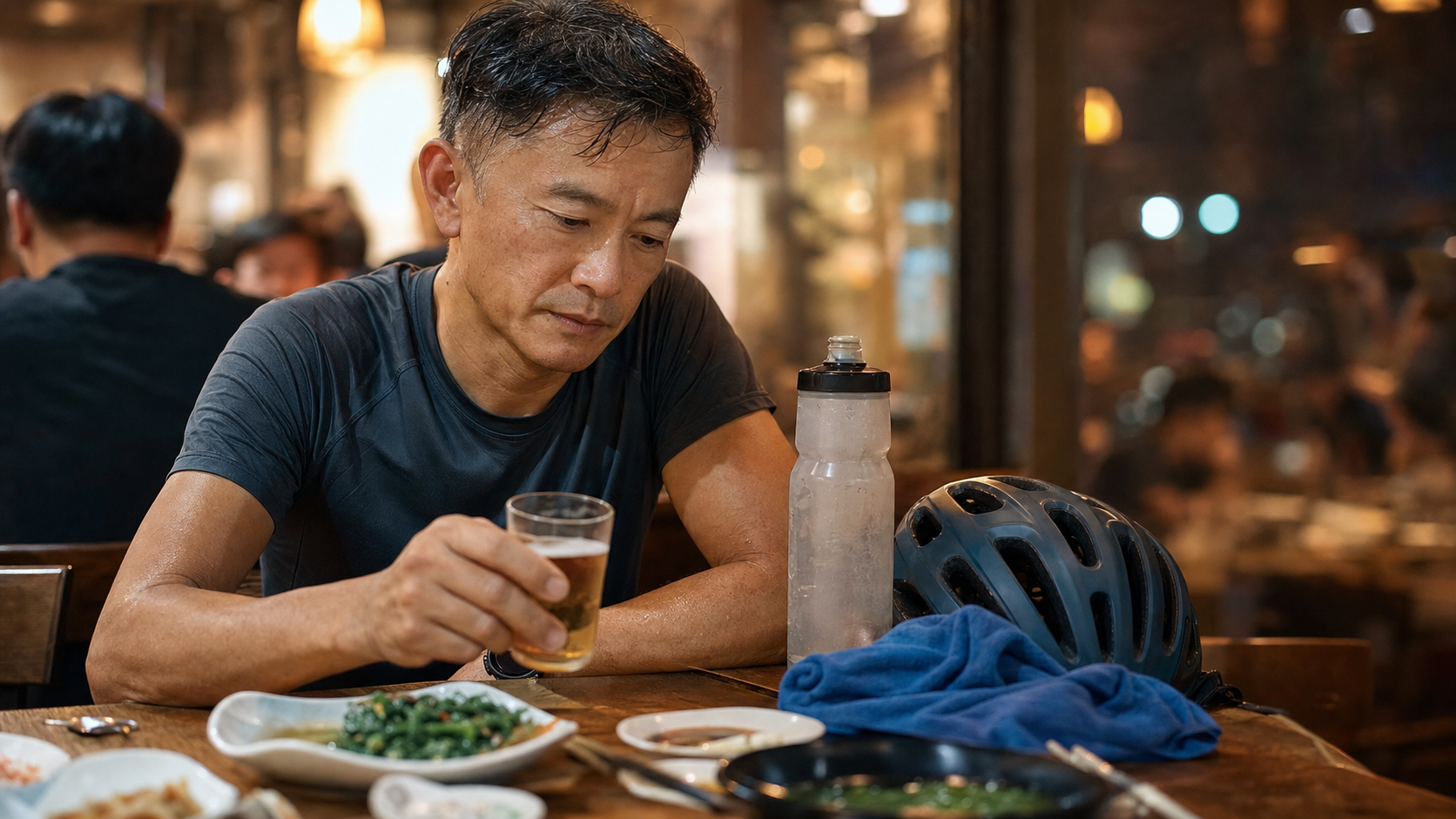
Starting with a celebration dinner
I once coached an amateur triathlete—let’s call him A-Zhe. In his early forties, a tech-industry executive, he followed his training plan diligently during the week and routinely clocked 100+ km on weekend long rides. His biggest struggle wasn’t fitness—it was the monthly round of company banquets and social gatherings. “Coach, if I have just one drink, does that mean this whole week of training is wasted?”
I’ve been asked that question hundreds of times over the past fifteen years. Interestingly, the answers usually fall between two extremes: one camp treats alcohol as the number-one enemy of training and abstains completely; the other thinks, “Athletes have great metabolisms, a little drink won’t hurt.” In my view, neither view is quite accurate.
Alcohol’s impact on athletic performance and recovery is a classic case of “the dose makes the poison.” It’s not black and white—it’s a curve with a clear slope. In this article, I want to lay that curve out for you from a sports physiology perspective: how alcohol actually affects muscle repair, sleep, hydration, and body temperature, in which situations it truly undermines your training gains, and how to find your own balance in Taiwan’s social culture where “no feast is complete without alcohol.”
Let me give you the takeaway first, so you’re prepared: The problem often isn’t “whether you drink,” but “how much, when, and what you do afterward.”
Later on, I’ll use A-Zhe and two other trainees with very different backgrounds—a female office worker preparing to break a record in the half marathon, and a middle-aged cycling club leader who loves beer—to show concretely how the same principles play out in different people. Because the most fascinating and frustrating thing about sports science is that “the same research data, applied to different people, can yield wildly different answers.”
Foundational concepts: what alcohol actually does in the body
To understand alcohol’s effects on exercise, you first need to know what happens once it enters the body. After being absorbed, alcohol (ethanol) is primarily metabolized by the liver, a process that consumes large amounts of coenzymes and produces acetaldehyde, a toxic intermediate product for cells. For athletes, the key isn’t just that “the liver is busy processing alcohol”—it’s that alcohol simultaneously disrupts several physiological pathways closely tied to recovery.
I usually explain this to trainees through four dimensions, which makes it easier to remember:
1. Muscle protein synthesis gets put on the brakes
This is something both endurance and strength trainees should care about. After exercise, the body activates muscle protein synthesis to repair and strengthen trained muscle fibers—this is the cellular basis of “getting stronger with training.” Alcohol suppresses this pathway.
According to a systematic review and related studies on recovery after resistance exercise, when higher doses of alcohol (about 1.5 grams per kilogram of body weight) are consumed after training, muscle protein synthesis rates can drop significantly—by roughly 30% in some studies. And this suppression persists even when adequate protein is consumed at the same time. In other words, you can’t fully offset alcohol’s negative effects by “adding an extra protein shake.”
What’s even more noteworthy is the timescale. Studies have observed that acute alcohol intake can suppress muscle protein synthesis for more than a dozen hours. That means if you drink heavily on Saturday night, the effects could linger into Sunday’s training or even beyond.
But let me offer a balanced perspective here: the same body of research also indicates that low doses (about 0.5 g/kg of body weight or less) of alcohol have relatively limited effects on post-exercise recovery. For a 70 kg person, 0.5 g/kg is roughly 35 grams of pure alcohol, which translates to about one to two standard beers depending on alcohol content. This range is what I call the “relative safety zone” with my trainees.
2. Sleep quality gets quietly stolen
This is the aspect I think is most underestimated, yet most practically impactful for athletes. Many people believe “a drink helps you sleep,” because alcohol does have a sedative effect that helps you fall asleep faster. But the problem lies in the second half of the night.
Findings from multiple sleep studies and meta-analyses show that alcohol increases deep slow-wave sleep in the first half of the night while suppressing REM sleep; in the second half, as alcohol is metabolized, there’s a REM rebound, increased sympathetic nervous system activity, more awakenings, and sleep fragmentation—overall sleep efficiency drops. And REM sleep is highly correlated with memory, learning, and attention recovery.
For athletes, this means: you might sleep the same number of hours, but the quality of recovery is compromised. Studies also note a dose-response relationship—low doses already begin affecting REM, and the effect becomes more pronounced with higher doses; the closer to bedtime you drink, the greater the impact. Additionally, some observations suggest that at relatively lower doses, women may experience more pronounced reductions in slow-wave sleep and more fragmentation in the second half of the night.
I often tell my trainees: sleep is the most powerful, cheapest, and most side-effect-free recovery tool there is. Trading it for the illusion of “sleeping better” with alcohol is a poor bargain.
3. Hydration and thermoregulation get disrupted
Alcohol is a diuretic, and this is something the athletic community absolutely must keep in mind. The literature shows that alcohol inhibits antidiuretic hormone (ADH), producing roughly an extra 10 ml of urine per gram of ethanol consumed (this effect is only significant with beverages above about 4% alcohol). After exercise, you’re already in a dehydrated state; adding higher-alcohol drinks on top is pouring salt on the wound.
Some studies have compared how different alcohol concentrations affect post-exercise rehydration: beverages with around 2% alcohol restore fluid balance similarly to non-alcoholic drinks; but at 4% concentration, the recovery process is delayed. This is why “chugging an ice-cold beer right after a workout” is a contradictory choice when it comes to rehydration.
Furthermore, alcohol is a peripheral vasodilator that disrupts central thermoregulation, increasing heat loss and potentially affecting core body temperature. In Taiwan’s hot, humid summer environment—whether training or racing—heavy drinking after exercise makes heat dissipation and thermoregulation more difficult, theoretically increasing heat-related risks. This is especially worth heeding for Taiwanese athletes who regularly tackle Wuling in the early summer mornings or run marathons in humid heat.
4. Short-term hormonal and metabolic imbalance
Beyond the three points above, higher doses of alcohol can temporarily elevate the stress hormone cortisol, suppress anabolic hormone signals, and affect the mTOR pathway—a key regulator of muscle synthesis. These mechanisms intertwine to form the physiological basis for “heavy drinking slows recovery.”
5. Glycogen resynthesis also gets delayed
This point is especially critical for endurance athletes. You deplete large amounts of glycogen during long rides or runs, and during post-exercise recovery the body rushes to “restock the warehouse”—this is key to maintaining training quality the next day. But when alcohol enters the body, the liver prioritizes processing it, temporarily pushing “glycogen replenishment” to the back burner. Studies have observed that when large amounts of alcohol are consumed after exercise, the rate of glycogen resynthesis can be suppressed—most noticeably when carbohydrate intake is insufficient and drinking is heavy.
So I always remind my trainees: if you’ve done a 100+ km ride today and have a dinner gathering tonight, make sure you get your carbs in first (a bowl of rice, a serving of noodles, sweet potato, or banana all work)—don’t let “drinking on an empty stomach” further delay an already tight glycogen replenishment. This small move often determines whether your early-morning ride tomorrow feels “strong-legged” or “like lead weights.”
I want to emphasize: I’ve deliberately given ranges and used words like “may” and “approximately” for all these figures, because individual variation is huge—body weight, sex, metabolic rate, whether you ate with your drinks, and that day’s training load all affect the outcome. Don’t treat any single number as gospel; the key is understanding the direction and the slope.
Why “Same Drink, Different Experience for You and Me”
Many athletes ask: “Coach, my friend drinks more than I do and still hikes up mountains effortlessly the next day, while I feel like I’ve been run over by a truck.” This isn’t because you’re weaker; it’s simply that alcohol metabolism has huge individual variation. I’ve organized the common influencing factors into the table below so you can understand why “someone else’s experience” can’t be directly applied to yourself.
| Factor | Direction of Effect on Alcohol | Practical Implication |
|---|---|---|
| Body weight and composition | Lighter weight and higher body fat lead to faster rises in blood alcohol concentration | For the same amount, smaller individuals pay a higher price |
| Sex | Women generally have a lower proportion of body water and different distribution of alcohol-metabolizing enzymes | For the same amount, women often have higher blood concentrations, and sleep disruption may be more pronounced |
| Whether fasting | Fasting leads to faster absorption and higher blood concentration spikes | Always drink with a meal |
| Metabolic enzyme genes | Some East Asian populations have lower acetaldehyde dehydrogenase activity (facial flushing after drinking) | Those who flush are more sensitive to acetaldehyde and should be more conservative |
| Training volume that day | After heavy training, the body is in a state of breakdown and dehydration | The sensitive period right after training has a greater impact |
| Sleep debt | Already sleep-deprived, adding alcohol makes it worse | Drink even less when sleep-deprived |
The most important lesson from this table, especially for Taiwanese people, is the “facial flushing after drinking” phenomenon. This reflects that some people have lower acetaldehyde dehydrogenase activity and a weaker ability to metabolize acetaldehyde. Acetaldehyde is one of the culprits behind hangover discomfort and cellular toxicity. If you’re someone who flushes and feels your heart race after just one drink, your body is sending you a clear signal: for you, the cost of alcohol is higher than for most people, and your threshold should be set more conservatively.
Alcohol Dosage and Effects Reference Table
To help athletes make judgments, I’ve put together a conceptual dosage reference table. The levels here are educational guidelines to help you gauge things, not precise medical thresholds—true tolerance varies from person to person.
| Dosage Range (Pure Alcohol) | Approximate Equivalent for a 70kg Person | Potential Impact on Recovery | My Practical Advice |
|---|---|---|---|
| Approximately below 0.5 g/kg | About 1–2 standard drinks | Relatively limited impact on muscle protein synthesis; sleep may still be mildly disrupted | Occasional social drinking during training periods is acceptable; drink early, with food and water |
| Approximately 0.5–1.0 g/kg | About 2–4 drinks | Reduced sleep quality, increased dehydration risk, recovery begins to be affected | Avoid as much as possible around high-intensity training; be careful during the week before a race |
| Approximately 1.0 g/kg and above | About 4+ drinks | Muscle protein synthesis clearly suppressed, severely fragmented sleep, dehydration | Strongly not recommended during key training phases; should be avoided before races |
Note: The definition of “one standard drink” varies slightly between countries. In Taiwan, approximately 10 grams of pure alcohol is commonly used as one reference serving. A 330 ml can of 5% beer contains about 13 grams of pure alcohol; a 150 ml glass of 12% wine contains about 14 grams. For actual amounts, estimate by multiplying the alcohol percentage on the label by the volume, then by 0.79 (the density of alcohol).
The core message this table aims to convey is: low doses and high doses are fundamentally two different things. Putting “a glass of wine with dinner” and “drinking until you black out at a party” on the same scale is misleading in itself.
Practical Approach: How to Balance Social Life and Training
After the science, let’s talk about how I actually guide my athletes through this. I never ask general fitness enthusiasts to be completely abstinent—that’s neither humane nor sustainable, and it often makes people give up on their entire training discipline altogether. What I want is “strategic drinking.”
Principle One: Place Drinking at the Low Point of Your Training Cycle
Every training cycle has a rhythm. I work with athletes to identify “which days have the lowest cost for drinking.” This is usually the night before a recovery day or an easy day, avoiding high-intensity intervals, long distances, or days with key workouts the next day.
Below is a sample week I designed for A-Zhe, demonstrating how to “embed” an unavoidable Friday gathering into the schedule:
| Day | Training Content | Drinking Strategy |
|---|---|---|
| Monday | Easy 60-minute ride (Z2) | No drinking |
| Tuesday | Intervals: 5×5 minutes high intensity | No drinking (need quality the next day) |
| Wednesday | Rest / stretching and foam rolling | Can have 1 drink with dinner |
| Thursday | 40-minute tempo run | No drinking |
| Friday | Easy 30-minute swim | Gathering day, set a limit of 2–3 drinks, drink early, with water |
| Saturday | 100 km long ride | Previous night was controlled; no drinking that day |
| Sunday | Recovery day / family time | Can have 1 drink |
The key is: schedule the Friday gathering before the day with the lowest intensity the next day, and don’t let it affect Saturday’s long ride. This is far more practical than “complete abstinence.”
Principle Two: Do Three Things While Drinking
If you decide to drink, minimize the damage. The mantra I give athletes is “early, with food, slow down”:
- Drink early: The closer to bedtime you drink, the more severe the sleep disruption. Try to concentrate drinking in the late afternoon to dinner time, giving your body time to metabolize and keeping those hours before bed clear-headed.
- Eat and hydrate: Drinking on an empty stomach leads to fast absorption and higher blood concentration spikes. Always have a meal, especially one containing protein; alternate each alcoholic drink with a glass of water to slow the pace and rehydrate.
- Slow down: Control your pace; don’t compete in drinking. Taiwanese gatherings often involve peer pressure to drink. Think of a polite refusal in advance, such as “I have to ride/run early tomorrow morning”—it usually works better than you’d think.
Principle Three: Be Especially Conservative the Week Before a Race
The taper week before an important race is the only time I recommend “getting as close to zero as possible.” The goal that week is to get your body into optimal condition—full glycogen stores, good hydration balance, quality sleep. Alcohol works against all three. I usually recommend avoiding alcohol for at least 3 to 7 days before a race, and absolutely no drinking the night before.
Principle Four: Leverage Taiwan’s Environmental Conditions
Taiwan’s food culture is actually quite friendly to “smart drinking.” Eating out commonly includes soup and vegetables, making it easy to have a meal with drinks; convenience stores and water fountains are everywhere, making hydration easy; and many social settings accept non-alcoholic drinks or sparkling water. I often encourage athletes to order a sparkling water with lemon at gatherings and hold it in their hand—it gives a sense of participation without being rude, and most of the time, no one even asks.
If You Really Drank Too Much: A Practical Post-Recovery Hydration Protocol
Sometimes gatherings get out of hand. Instead of regretting it, focus on post-recovery to minimize the impact on the next day. Below is my “post-overdrinking recovery protocol” for athletes, focusing on rehydration, electrolyte replacement, protecting sleep, and practically adjusting the next day’s workout.
| Time Point | What to Do | Explanation |
|---|---|---|
| During/Before the end of the gathering | Alternate each drink with a glass of water; before bed, top up with 300–500 ml of electrolyte-containing water | Counteract fluid loss from the diuretic effect |
| Before bed | Use the bathroom, take a warm shower, avoid looking at phone screens/blue light | Alcohol already disrupts sleep; don’t add more factors |
| After waking up | First, drink about 500 ml of water with electrolytes; observe urine color | Dark urine means still dehydrated; keep hydrating |
| Breakfast | Eat a normal meal with carbohydrates and protein; don’t tough it out on an empty stomach | Support recovery and stabilize blood sugar |
| Training that day | Drop intensity by one level, or switch to recovery activities | Don’t push hard before sleep and hydration are restored |
A reminder here: most “hangover cures” circulating out there lack reliable evidence; don’t pin your hopes on miracle drinks. What truly works is time, water, sleep, and practically slowing down.
Three Local Situations Taiwanese People Should Pay Special Attention To
For the general principles of sports science to take root, we have to consider our actual living environment. The following three situations are the ones I encounter most often when coaching students in Taiwan, and they are also the easiest places to make mistakes:
-
A dinner gathering the night before an early-summer assault on Wuling / a long climb: Taiwan’s summers are hot and humid, and long-distance climbing itself is already a severe test of fluid balance and thermoregulation. If you drink to the point of dehydration the night before and don’t sleep well, then push hard in the heat the next day, the risk of heat exhaustion and cramping rises noticeably. My principle is simple: If there’s a hard session the next day, no alcohol the night before.
-
The “salty food with beer” culture of hot stir-fry restaurants and night markets: Gatherings in Taiwan often feature salty fried chicken, stir-fry, and barbecue paired with beer. High-sodium food plus the diuretic effect of alcohol equals double dehydration. If you can’t avoid it that night, remember to drink plenty of water and load up on vegetables and protein (like grilled fish, tofu, or edamame)—don’t let the whole meal be deep-fried and overly salty.
-
Peer pressure to drink at company social functions: This is the biggest headache for many office-worker students. Prepare a polite line in advance—“I have an early ride / training session tomorrow”—which usually works better than you’d think. If you truly can’t decline, just hold a glass of water or a non-alcoholic drink and join the atmosphere. What matters is “showing up and showing goodwill,” not clinking glasses.
Three Real-Life Situations: The Same Principle, Different Applications
Principles alone can feel abstract, so let me use the situations of three students (the people are illustrative, and the data is conceptual) to demonstrate how the same thinking can be tailored to different individuals.
Situation One: A-Zhe, the triathlete—scheduling alcohol into the plan
A-Zhe’s dilemma was that he “couldn’t avoid business dinners.” We didn’t ask him to quit drinking; instead, we treated alcohol as a training variable and scheduled it into his periodization. The approach was the weekly schedule shown earlier: set a limit for Friday gatherings, drink early and pair with water, and make sure Saturday’s long ride wasn’t affected. Three months later, he reported that the biggest change wasn’t his fitness—it was that “I finally stopped feeling like I owed myself something every Monday.” That psychological relief actually made his overall training discipline more stable.
Situation Two: Ya-Ting, chasing a half-marathon PB—the pre-race trade-off
Ya-Ting is an office worker aiming for a personal record in the half marathon. She rarely drinks, but two weeks before the race, a close friend’s wedding happened to fall. My advice was clear: go to the wedding, enjoy yourself, but cap the alcohol at one drink, drink it early, and get a full night’s sleep that night; the week before the race, go completely zero. The reasoning is that every bit of sleep and fluid balance in the taper week directly affects race-day performance, and the meaning of a wedding lies in being there for your friend, not in clinking glasses. She followed through, ended up setting a new PR, and didn’t miss her friend’s important moment.
Situation Three: Old Chen, the beer-loving club leader—finding his personal cost curve
Old Chen leads a cycling club and is in his fifties. After weekend group rides, his favorite thing is having a couple of drinks with everyone—it’s an important social pleasure for him, and I fully respect that. What I asked him to do was “track”: using a sleep band and subjective feel, he recorded for several weeks how “number of drinks” corresponded to “next-day sleep quality and riding feel.” After two months, he discovered on his own that when he went beyond three drinks, his heart rate was higher and his legs felt heavier on the next morning’s ride. With his own data, he didn’t need me to nag him—he naturally set his limit at two drinks. He lost none of the social enjoyment, but his recovery clearly improved.
The common thread across these three situations is: the principle is the same, but the prescription differs. This is what I always emphasize—don’t copy someone else’s answer; test it on yourself.
Common Mistakes and Corrections
In all my years of coaching, I’ve seen too many examples of people “putting effort in the wrong place” when it comes to alcohol. Here are the most common ones, along with my correction suggestions.
Mistake One: “Drinking beer after exercise to rehydrate”
This is the most widespread myth. After exercise, the body is dehydrated, and beverages with higher alcohol content have a diuretic effect, which actually delays the restoration of fluid balance. Correction: After exercise, first replenish fluids with electrolyte water or plain water. If you want a beer, that’s fine, but have it after rehydrating, as a “reward” rather than “fuel,” and choose lower-alcohol options with plenty of water alongside.
Mistake Two: “Using alcohol to relax and sleep”
Using alcohol to aid sleep is trading long-term recovery for short-term sleep onset. As mentioned earlier, it suppresses REM and fragments the second half of the night. Correction: If you’re struggling to sleep due to post-training arousal or stress, switch to non-alcoholic relaxation methods—a warm bath, stretching, dimming the lights, reducing blue light before bed, and keeping a regular routine. These do far more for an athlete’s sleep quality than a nightcap.
Mistake Three: “Canceling out alcohol with protein”
Some gym-goers believe that chugging a whey shake after drinking makes everything fine. The truth is, even with adequate protein, higher doses of alcohol still suppress muscle protein synthesis. Correction: Rather than hoping to “cancel it out,” control the dose at the source. Having protein with your meal is still worthwhile (it helps slow absorption and supports overall nutrition), but don’t treat it as a get-out-of-jail-free card.
Mistake Four: “I don’t drink normally, so I’ll make up for it at one gathering”
This pattern of “abstinence during the week, binge on the weekend” actually pushes a single dose into the high-risk zone, with the biggest impact on sleep and recovery. Correction: If your lifestyle inevitably includes social drinking, instead of swinging to extremes, spread it out evenly and keep each occasion at a low dose—it’s far friendlier to your training overall.
Mistake Five: Ignoring personal health conditions
I want to address this one with particular seriousness. For people with chronic conditions (such as diabetes, hypertension, heart disease, or liver issues), those taking medication, or those who are pregnant, the considerations around alcohol are an entirely different level and absolutely cannot be treated with the general rules for the athletic population. Correction: In these cases, you must defer to individualized assessment by a physician or pharmacist, and incorporate your exercise and drinking plans into formal medical consultation. Taiwan’s National Health Insurance makes seeing a doctor convenient—if you have any doubts, book an appointment and ask, rather than guessing on your own.
Actionable Advice for Readers at Different Levels
Everyone’s training goals and lifestyles differ, so I’ve divided the advice into three tiers. Find the one that fits you.
For Beginners Just Starting to Exercise
Right now, your priority is building the two foundations of “consistent training” and “adequate sleep.” On alcohol, just grasp one simple principle for now: don’t use it to sleep, and don’t use it to rehydrate after exercise. Keep attending social gatherings, but practice “drinking early, pairing with water, and pacing yourself.” You don’t need to become a teetotaler for the sake of exercise—get the big picture right first, and the long-term compounding effect will follow.
- Train at least 3 times a week on a fixed schedule, and prioritize 7+ hours of sleep.
- Pair each alcoholic drink with a glass of water at gatherings.
- On nights before training days, proactively drink less.
For Intermediate Athletes with a Consistent Training Habit
You already have a concept of training plans, so the key is to “schedule” your drinking. Treat it as part of your training variables and build it into your periodization:
- Use the weekly schedule logic from earlier, concentrating drinking on recovery days or the night before an easy day.
- Avoid alcohol within 24 hours before and after high-intensity sessions (intervals, long rides).
- Track your subjective feelings: training feel, heart rate, and sleep-band data the day after drinking, to find your personal “cost curve.” Everyone’s tolerance differs—the data will tell you the answer.
For Competitive Athletes in Race Preparation
Every bit of recovery is precious for you, so the standard needs to be higher:
- Minimize alcohol to the lowest possible level during key phases of the season; during the taper, aim for zero 3–7 days before the race, and absolutely no alcohol the night before.
- Post-race celebrations are fine, but first complete the recovery essentials—rehydration, carbohydrate replenishment, stretching, and sleep—and put alcohol last.
- If racing in hot, humid conditions (like Taiwan’s summer events), pay extra attention to dehydration and thermoregulation afterward; rehydration takes priority over alcohol.
Frequently Asked Questions (FAQ)
Q: How many drinks per week is too many?
A: There is no one-size-fits-all answer. Rather than asking about frequency, it’s better to ask, “Is it affecting training quality and sleep?” If you notice your sessions the day after drinking are clearly subpar, or your sleep tracker data worsens, that’s your signal. Calibrating with your body’s feedback is more practical than sticking to a fixed number.
Q: Isn’t red wine healthier? Can I drink more of it?
A: Regardless of the type of alcohol, the key variables affecting recovery are the “amount of pure alcohol” and “timing of consumption.” Whether polyphenols and other compounds in red wine provide significant health benefits is still debated in the scientific community, and they cannot offset alcohol’s disruption of sleep and recovery. Don’t use “red wine is healthier” as an excuse to drink more.
Q: Should I completely avoid alcohol on training days?
A: It’s not about complete avoidance—it depends on the training content and timing. One standard drink on an easy day evening has limited impact for most amateurs; but on days with high-intensity or long-distance training, I’d recommend avoiding it so your recovery process isn’t disrupted.
Q: Can I train as usual the day after drinking?
A: If it was a low dose and your sleep wasn’t significantly affected, usually yes, but I’d suggest dropping the intensity a notch, hydrating thoroughly, and paying attention to how you feel. If you drank heavily the night before and slept poorly, switching to a recovery session or rest day is smarter than pushing through.
Q: Can non-alcoholic beer replace it?
A: For those who want to keep the ritual of “having a drink” without paying the alcohol tax, non-alcoholic or extremely low-alcohol beverages are a decent compromise—they let you participate socially while supporting recovery. Just note they still contain calories, and don’t binge just because it’s “alcohol-free.”
Q: Does flushing when drinking mean a low tolerance, and will it improve with practice?
A: Facial flushing reflects lower activity of the enzyme that metabolizes acetaldehyde—it’s a constitutional trait that won’t improve through “training” yourself to drink. The more pronounced the flushing and heart palpitations, the more sensitive you are to acetaldehyde, and you should be more conservative with alcohol, not force yourself to “build up tolerance.”
Q: Isn’t exercising before bed plus a drink better for sleep?
A: That’s a double misconception. High-intensity exercise too close to bedtime can itself stimulate the sympathetic nervous system and delay sleep onset; adding alcohol further disrupts the sleep architecture in the second half of the night. If you want good sleep, the answer is a regular routine, pre-bed relaxation, and reducing blue light—not stacking these two disruptive factors.
Q: Then is not drinking at all the best thing for my training?
A: From a purely physiological recovery standpoint, not drinking at all is certainly the “cleanest.” But the purpose of exercise is to make life better, and socializing and psychological relaxation are part of sustaining long-term training. Unless you have health reasons or a personal choice to abstain completely, “drinking smart in low doses” is a more pragmatic, sustainable balance for the vast majority of amateur athletes.
One-Page Key Takeaways
If you only want to remember a few points, keep this summary table in mind:
| Topic | One-Line Takeaway |
|---|---|
| Muscle Protein Synthesis | Higher alcohol doses hit the brakes; extra protein can’t fully offset it |
| Sleep | “Drinking helps you sleep” is an illusion—REM sleep in the latter half of the night gets stolen |
| Dehydration | Alcohol is a diuretic; drinking after exercise compounds the problem |
| Thermoregulation | Vasodilation interferes with heat dissipation; be extra careful in Taiwan’s summers |
| Dosage | Low dose and high dose are two different things—don’t conflate them |
| Timing | Drinking early and avoiding the night before key sessions carries the lowest cost |
| Individual Differences | Flushers, women, and those drinking on an empty stomach need more conservative limits |
| Pre-Race | Zero during taper week; absolutely no alcohol the night before a race |
Conclusion: Not Abstinence, but Trade-Offs
Back to A-Zhe’s question at the start: “Does one drink mean this week’s training is wasted?” My answer is—no, as long as you understand the trade-offs.
Alcohol’s impact on athletic performance and recovery is real: it brakes muscle protein synthesis, steals sleep quality, worsens dehydration, and disrupts thermoregulation. But these effects follow a clear dose-response curve. Drinking smart in low doses carries limited cost; drinking heavily and carelessly is what truly derails your training progress.
Exercise is meant to make life better, not to turn you into a list of prohibitions. I’ve never argued that athletes must cut off all social enjoyment. What I advocate is: understand the cost, choose deliberately. Knowing when that drink is worth it and when to decline—that judgment itself is part of being a mature athlete.
At your next gathering, you don’t have to be the buzzkill, and you don’t have to be the one whose next day’s training is ruined. Drink a little earlier, alternate with water, pace yourself, and avoid the night before key sessions—these small habits will help you find your own balance between enjoying life and pursuing progress.
Wishing you smooth training and the ability to savor every gathering life brings.
This article is for educational purposes and does not replace individual diagnosis or treatment advice from a physician, physical therapist, or nutritionist. If you have diabetes, hypertension, heart disease, liver disease, are taking medication, or are pregnant, please consult a qualified medical professional for a personalized assessment.
References
- The Effects of Alcohol Consumption on Recovery Following Resistance Exercise: A Systematic Review — https://pmc.ncbi.nlm.nih.gov/articles/PMC7739274/
- Alcohol Ingestion Impairs Maximal Post-Exercise Rates of Myofibrillar Protein Synthesis following a Single Bout of Concurrent Training (PLOS One) — https://journals.plos.org/plosone/article?id=10.1371%2Fjournal.pone.0088384
- The effect of alcohol on subsequent sleep in healthy adults: A systematic review and meta-analysis (ScienceDirect) — https://www.sciencedirect.com/science/article/pii/S1087079224001345
- Alcohol, Wine, and Sleep in Adults: Insights from a Narrative Review — https://pmc.ncbi.nlm.nih.gov/articles/PMC12942847/
- Alcohol, Athletic Performance and Recovery (PMC/NIH) — https://pmc.ncbi.nlm.nih.gov/articles/PMC3257708/
- Restoration of fluid balance after exercise-induced dehydration: effects of alcohol consumption (Journal of Applied Physiology) — https://journals.physiology.org/doi/full/10.1152/jappl.1997.83.4.1152
Related Reading
- Alcohol and Endurance Recovery: The Hidden Cost of a Celebration Beer on Training Adaptations
- Managing Alcohol Limits During Fat Loss: Calorie Budgeting and Next-Day Performance Adjustments for Cyclists
- Beer Calories vs. Riding Expenditure: How Much Training Does That Reward Drink Actually Undo?
- Nutrition and Sleep Balance for Night Trainers: How to Eat and Sleep Well After an Evening Ride
CT暗黑廚房) 車友必備 宇宙無敵鮮蚵湯 幫助訓練恢復 天然食補 好市多 超肥鮮蚵 破PR
7 年前
西進武嶺 免費訓練分析服務 Intervals | 練不夠還是練過頭?你哪一種類型選手?AI模型告訴你! | 備戰神器 | 公路車 訓練 | CT Yeh
4 年前
大家都在開箱的...單車用藍芽對講耳機真的有幫助嗎? SENA BiKom 20 長距離旅遊 & 海鷗繞圈賽 實際體驗心得 / 公路車 / CT Yeh
9 個月前
靠單車減肥35公斤 心得分享與整理
7 年前
2025 自行車錶排行榜 兩萬車友大數據 / Garmin Bryton 排名會大洗牌嗎? / 全新的碼表前身分析 /公路車 / CT Yeh
1 年前
一個測試有沒有認真練車的方法😂 #公路車
10 個月前
2016/4/20 - 中社路 夜騎 半年甩肉14KG 後測
10 年前
2026 車錶排行榜!誰是最多車友正在使用?練家子最愛哪款?🏆 (2萬名車友數據) / 公路車 / CT Yeh
5 個月前