Athlete's Immune Nutrition: Dietary Strategies to Prevent Colds, So Your Season Doesn't Fall Apart at the First Cough
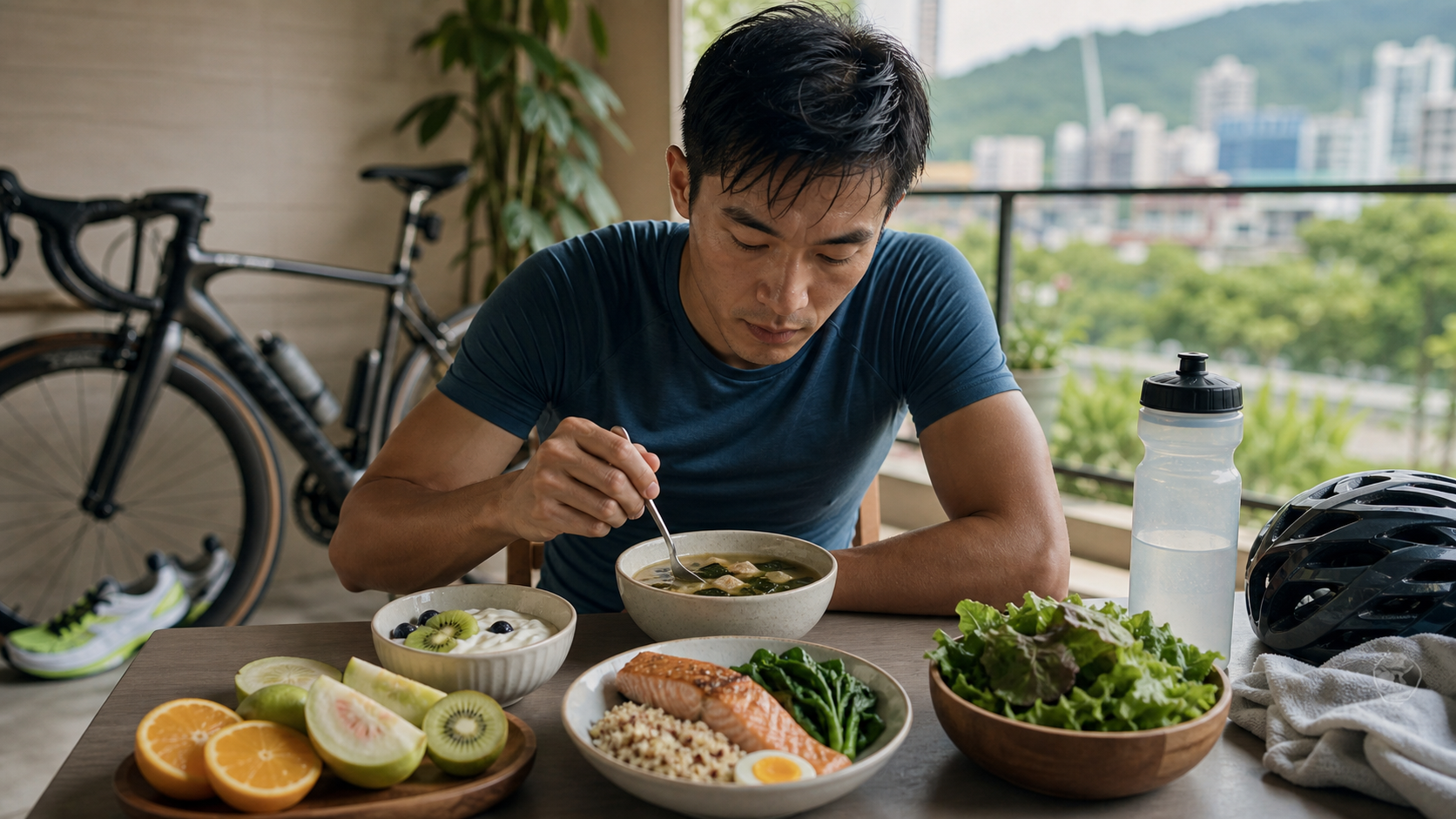
Opening: The Student Who Collapsed a Week Before Wuling
In my decade-plus of coaching cyclists and runners, the hardest thing to watch isn’t someone fading on race day—it’s someone who trained beautifully all season, only to catch a cold, run a fever, and withdraw a week before the event.
A few years ago, one of my students, A-Zhe, was preparing for a classic mountain bike challenge in Taiwan. He trained incredibly hard that season, building his weekly mileage from 200 km all the way up to nearly 350 km. Long intervals, repeated climbs, race simulations—he did it all, and his power numbers were so impressive I was thrilled for him. Then, eight days before the race, he messaged me: “Coach, my throat hurts and I have a slight fever. What should I do?”
At that moment, I already knew what was going on. In the previous two weeks, to push his training volume, he had cut his sleep to under six hours a night, eaten almost every meal out, and often went to shower and binge-watch shows on an empty stomach after training, only eating something random much later. His fitness went up, but his immune defenses were simultaneously drained. In the end, he pushed through while sick, performed far worse than in his simulations, and coughed for three weeks afterward.
This isn’t an isolated case—it’s a script I see several times every season. In this article, I want to clearly lay out the “immune nutrition” concepts I’ve compiled over the years from coaching students and reading the literature. This isn’t about telling you to take some miracle supplement; it’s about helping you understand: the fitness you worked so hard to build can only be protected with the right diet and recovery habits.
Foundational Concepts: Why Are Athletes Actually More Prone to Colds?
Many people intuitively assume that “people who exercise regularly are healthy and rarely get sick.” That holds true for people who exercise moderately and consistently—regular moderate-intensity exercise does boost immunity. But for athletes doing high-intensity, high-volume training, the story is more complicated.
The “Open Window” Theory: The Immune Window That Opens After Training
There’s a classic concept in exercise immunology called the “open window.” Research shows that after a prolonged, high-intensity endurance effort, the body’s immune defenses temporarily decline. This “window” lasts roughly 3 to 12 hours, during which the risk of upper respiratory tract infections (URTI, commonly known as colds) increases.
This happens because after intense exercise:
- Stress hormones (such as cortisol) rise, temporarily suppressing immune cell activity
- The distribution and function of immune cells change, such as fluctuations in the number and activity of natural killer (NK) cells, neutrophils, and lymphocytes
- Mucosal immunity (such as salivary immunoglobulin sIgA) declines, making it easier for viruses to invade through the mucous membranes of the mouth and nose
If you leave this window wide open after every session and fail to refuel and rest properly, the accumulation several times a week leaves your immune system in a state of “living on borrowed money.”
The “J-Curve” Between Training Volume and Cold Risk
Another frequently cited observation in exercise immunology is the “J-curve”: compared to sedentary people, those who exercise regularly at moderate intensity have a lower risk of colds. But when training volume and intensity are pushed very high (e.g., elite athletes, peak competitive season), the risk of colds rises again, forming a J shape.
Literature reviews indicate that upper respiratory infections are the most common non-injury illness among athletes, and their incidence can be considerable during high-intensity training periods or competitions. This also explains why A-Zhe collapsed during the period when he was “training hardest”—he was standing right at the right end of the J-curve.
Coach’s Note: Training volume itself isn’t the problem; the issue is “piling on training without piling on recovery.” The core of immune nutrition is helping you build up the recovery and defense side to match your high training load.
Key Immune Nutrients: Which Ones Actually Have Evidence?
The market is flooded with products claiming to “boost immunity.” Let me focus your attention on a few nutrients that have solid research backing and suit Taiwan’s athletic population. To be clear upfront: these are the “foundation for maintaining normal immune function,” not miracle pills that make you invincible.
1. Carbohydrates: The Most Underrated Immune Nutrient
This surprises a lot of people. Research shows that consuming adequate carbohydrates during prolonged, high-intensity exercise is one of the most effective nutritional strategies for maintaining athletes’ immune function.
Mechanistically, carbohydrate intake during exercise can:
- Suppress the rise of stress hormones like cortisol, reducing the degree of immune suppression
- Reduce the massive release of exercise-induced inflammatory cytokines
- Maintain blood glucose stability, giving immune cells enough fuel to function
The literature suggests consuming approximately 30 to 60 grams of carbohydrates per hour during sustained high-intensity exercise, or drinking a carbohydrate beverage at around 6% concentration during exercise, to help mitigate exercise-induced immune suppression. This is why I always emphasize to my students: don’t push through long rides or runs on an empty stomach. It doesn’t just hurt performance—it’s also opening a breach in your immune defenses.
2. Vitamin D: The Hidden Deficiency Taiwanese People Often Overlook
Vitamin D isn’t just about bones; it also plays a key role in immune regulation. Studies have observed that athletes with insufficient vitamin D may face a higher risk and more severe symptoms of upper respiratory infections; and supplementing vitamin D in deficient populations has shown a trend toward reduced cold symptoms during winter training.
Although Taiwan gets plenty of sunshine, the proportion of my students with low vitamin D is surprisingly high. The reasons aren’t hard to understand:
- Many people ride or run in the early morning or evening to avoid the strongest sunlight
- Fear of tanning leads to thorough sunscreen use
- Primarily indoor jobs mean almost no sun exposure on weekdays
If you live an indoor lifestyle and often exercise outside peak sunlight hours, it’s worth discussing with your doctor before the season whether to get a blood test for vitamin D levels before deciding on supplementation. The key is to test first, then supplement—not to blindly take high doses.
3. Protein: The Raw Material for Immune Cells and Antibodies
Immunoglobulins and immune cells themselves are made of protein. Long-term inadequate protein intake naturally weakens your immune defenses. For endurance athletes, 1.4 to 2.0 grams per kilogram of body weight per day is a common recommended range (adjusted based on training load and goals). For a 65 kg cyclist, that’s roughly 90 to 130 grams per day.
4. Other Frequently Discussed Nutrients
| Nutrient | Immune-Related Role | Practical Advice for Athletes |
|---|---|---|
| Vitamin C | Antioxidant, supports immune cell function | A balanced diet with fruits and vegetables is usually sufficient; high-dose long-term supplementation has limited benefit and self-medicating in large amounts isn’t recommended |
| Zinc | Immune cell development and function | Vegetarians and those who sweat heavily are more prone to deficiency; supplement in moderation—excess can interfere with copper absorption |
| Omega-3 fatty acids | Regulates inflammatory responses | Eating more deep-sea fish is a good approach; supplement doses and quality vary widely |
| Probiotics | Gut and mucosal immunity | Some studies show positive signals for reducing cold duration, but strain differences are large—not a panacea |
| Iron | Oxygen transport and immune cell function | Women and endurance athletes are prone to deficiency; but excess iron is actually harmful—always get a blood test before supplementing |
Coach’s Bottom Line: I never tell my students to take all of the above at once. Food first, supplements fill the gaps. Get your three meals right first, then address the specific deficiencies revealed by blood tests, and supplement only after discussing with a professional.
A Quick-Reference Table: What to Test First, What to Eat First
Many athletes come to me with a handful of supplements asking, “Should I take this?” My usual reply is: “Have you had it tested?” I’ve organized common nutrients into a “decision table” to help you tell which ones warrant a blood test first and which can simply be covered through food.
| Nutrient | Recommended Approach | Priority Food Sources |
|---|---|---|
| Vitamin D | For those living indoors or exercising outside daylight hours, get a blood test before the season and then decide | Moderate sun exposure, salmon, egg yolks, fortified dairy |
| Iron | Women, endurance athletes, and vegetarians are advised to test — do not blindly supplement | Red meat, dark leafy greens, legumes (pair with vitamin C to aid absorption) |
| Protein | No test needed; just eat enough at every meal | Eggs, chicken breast, fish, tofu, soy milk, dairy |
| Carbohydrates | No test needed; eat enough on training days | Rice, sweet potatoes, noodles, bananas, sports drinks |
| Zinc | Vegetarians and heavy sweaters should take note; moderate intake is sufficient | Seafood (oysters), red meat, nuts, whole grains |
| Omega-3 | Aim for deep-sea fish two to three times a week as the primary source | Mackerel, Pacific saury, salmon |
Remember this order: rely on food first, supplement only after a test confirms a clear deficiency, and leave supplement dosage and quality to the professionals. Athletes also need an extra layer of consideration when it comes to supplements — choose products with third-party testing and contamination safeguards to avoid inadvertently running afoul of anti-doping rules.
The Underrated Key: The Sleep–Immunity Connection
You can’t talk about immune nutrition without addressing sleep. In my experience coaching athletes, insufficient sleep is the most common — and most easily overlooked — gap in immune defense, with a greater impact than any supplement.
A-Zhe from the opening is a living example — he cut his sleep to under six hours for two weeks to squeeze in more training. Imagine what his body was going through: high-intensity training “opened the window” for immune suppression during the day, and at night he didn’t give his body enough sleep to repair, leaving the window wide open.
Sleep affects immunity in several key ways:
- Sleep is a critical period for the immune system to repair and reset; chronic sleep deprivation weakens your defenses
- Lack of sleep raises stress hormones, which compounds with the effects of high-intensity training to suppress immunity twice over
- Inadequate recovery diminishes training gains — no matter how hard you train, if your body isn’t repaired, it can’t absorb the benefits
My requirement for athletes is straightforward: sleep is part of the training plan, not something you do when you have time. Especially during high-volume weeks and the week before a race, I even ask them to scale training down slightly if needed to get sleep back to seven to nine hours. That’s not laziness — it’s how you make the hard work you put in actually stick.
A few common sleep pitfalls among Taiwan’s athletic community, worth flagging:
- Eating or showering too late after training, so core body temperature won’t drop and you toss and turn in bed
- Scrolling your phone or binge-watching before bed — blue light and mental stimulation make it hard to fall asleep
- Pre-race excitement or anxiety keeping you up — this is exactly when you should establish a consistent routine days in advance, rather than trying to force sleep the night before
Second Case Study: The Office-Worker Runner Who Kept Catching Colds from Summer Training
Let me share another case, different from A-Zhe’s. Xiao-Ting was an office-worker runner preparing for a fall half marathon. Her problem wasn’t training volume — it was that her post-training recovery and daily routine fell apart in the summer heat.
Every runner in Taiwan knows how brutal the summer can be. Xiao-Ting’s habit was to head out for her run at seven or eight in the evening after work, often getting home at nine or ten, drenched in sweat. Her bad habits: collapsing on the couch in the air conditioning and scrolling her phone after training, putting off food until late and then just having instant noodles, then taking an ice-cold shower to “cool off” before passing out. The result was a summer of recurring minor colds, a perpetually scratchy throat, and training that kept getting interrupted.
Together, we adjusted several things:
- Refuel immediately after training: Start with a bottle of sports drink for fluids and electrolytes, plus a banana or an onigiri — don’t stay empty until late at night
- Move dinner earlier and upgrade it: Swap instant noodles for a combo with protein and vegetables, like sous-vide chicken + sweet potato + salad from the convenience store
- Skip the ice-cold shower: Use warm water instead to let the body cool down gradually and avoid the shock of extreme temperature swings
- Adjust training timing: Move long runs to the cooler early morning on weekends, avoiding the most stifling hours
About a month after these changes, that “always scratchy throat” improved noticeably, her training finally became consistent, and she completed her goal race successfully. Xiao-Ting’s case shows us: the immune gap doesn’t always come from training volume — often it’s hidden in the small details of what you do after training.
Practical Approach: Immune Nutrition Strategy for the Season
Now that the concepts are covered, let’s look at how to actually apply them. I break the season into three scenarios: daily training, the “open window” after key sessions, and the week before a race — each with its own nutritional focus.
Scenario 1: Daily Training — Build a Solid Foundation
The goal here is to avoid running a long-term immune deficit. The focus isn’t any single meal but overall balance and sufficiency.
- Don’t cut calories too low for weight loss: Chronic under-fueling (especially low carbohydrate intake) is a common hidden cause of weakened immunity. I’ve seen too many people combine heavy training with strict dieting, then catch cold after cold all season.
- Include protein at every meal: Soy milk, eggs, chicken breast, fish, tofu — all easy to find at Taiwan’s convenience stores and bento shops.
- Five or more servings of fruits and vegetables daily: The more colors, the better — this is the most practical source of antioxidants and micronutrients.
- Sleep matters as much as diet: Sleep deprivation directly suppresses immunity, and no diet can fully compensate for that.
Scenario 2: After Key Training Sessions — Close the Window
This is the most critical piece of immune nutrition. After long, high-intensity training, you want to use timely nutritional intake to shrink that window.
| Time Point | Focus | Local Taiwan Examples |
|---|---|---|
| During exercise (>90 min) | 30–60 g carbohydrates per hour | Sports drinks, energy gels, bananas, rice balls |
| 0–30 min post-exercise | Carbohydrates + protein (roughly 3:1 to 4:1) | Chocolate milk, soy milk with a rice ball, convenience-store tea egg + sweetened soy milk |
| 1–2 hours post-exercise | A full meal | Bento (rice + main + vegetables), braised pork rice with blanched greens and an egg |
| All day | Adequate fluids | Mostly plain water; add electrolytes when sweating heavily |
Key principle: don’t delay eating after training. My rule for athletes is simple — “within 30 minutes of finishing, put something in your mouth.” Even just a bottle of chocolate milk is fine; eat a proper meal when you get home. That first bite is how you start closing the window.
Don’t Forget Fluids and Electrolytes
When people talk about immune nutrition, they often focus only on food and forget about drinking. Dehydration itself dries out the mucous membranes (mouth, nasal passages, throat), weakening their physical defenses and making it easier for viruses to get in. Taiwan’s summer heat means a long ride or run can cause substantial fluid loss — if you don’t replace it, your immune defense line already has a hole in it.
A few practical guidelines:
- Stay hydrated throughout the day: Don’t wait until you’re very thirsty; urine color close to pale yellow is a simple indicator
- Replace electrolytes during long or heavy-sweat sessions: Plain water alone won’t replace the sodium you lose — sports drinks or electrolyte supplements come in handy here
- Don’t overdo plain water: During ultra-long exercise, chugging large amounts of pure water without sodium carries a risk of dilutional hyponatremia — balance volume with electrolytes
The moisture and integrity of your mucous membranes are the first wall of immune defense. Drink well, and that wall holds.
Scenario 3: Race Week — Conservative, Clean, Consistent
Race week is when immunity is most fragile and mistakes are least affordable (this is where A-Zhe stumbled). My principles for this week:
- Reduce training volume (taper): This in itself gives your immune system a chance to recover
- Keep diet stable, not novel: Don’t try supplements, restaurants, or raw foods you’ve never had before the race — avoid GI issues
- Plenty of carbohydrates: Alongside glycogen loading, carbs also support immune function
- Step up hand hygiene and avoid crowds: No matter how good your diet is, you can still get infected; stay out of enclosed, crowded spaces before the race
- Sleep plenty: Treat sleep as the top priority of your training plan this week
Local Taiwan Context: How to Eat for Immunity as a Regular Diner-Outer
After all these principles, I know the biggest pain point for many cyclists and runners in Taiwan is — I eat out for almost every meal, when would I ever have time to meal prep? Don’t worry, Taiwan’s eating-out environment actually has plenty of good cards to play; you just need to know how to pick.
Convenience Store Meal Combinations
| Scenario | Recommended Combo | Approximate Nutritional Focus |
|---|---|---|
| Quick post-workout refuel | Chocolate milk + onigiri (rice ball) + tea egg | Carbs + protein, top choice for the recovery window |
| Meal replacement | Sous-vide chicken breast + sweet potato + salad + unsweetened soy milk | Balanced with sufficient protein |
| Late night after overtime | Oden (egg, radish, corn) + onigiri (rice ball) | Warm and easy to digest, avoids going to bed on an empty stomach |
Selection Principles for Buffet Restaurants and Bento Shops
Taiwan’s buffet restaurants are a great friend for those who eat out often. The key is the strategy for picking dishes:
- One to two palm-sized portions of protein: Choose two from fish, chicken, eggs, or tofu
- Two or more types of vegetables in different colors: The more dark green, orange-red, and purple, the better
- One serving of staple food: White rice, brown rice, or sweet potatoes all work. Don’t be afraid of starch on training days
- Less fried food, less thickening (starch slurry): These won’t boost immunity; they’ll only add burden
Reminders for Taiwan’s Climate and Seasons
Colds in Taiwan have two peaks: cold, damp winters and seasonal transitions (spring/autumn) with large temperature swings. Additionally, Taiwan’s summers are hot and humid. After heavy sweating, insufficient rehydration and electrolyte replacement, combined with large temperature differences between air-conditioned and outdoor environments, can easily trigger discomfort.
- Winter mountain training (e.g., Wuling, Beiyi Highway, Yangmingshan): Temperatures are low in the mountains, and body heat drops quickly on descents. Bring warm clothing and hot drinks, and don’t stay out in the cold for long
- Hot, humid summers: Replenish fluids and electrolytes after training. Don’t rush into an ice-cold shower; let your body cool down gradually
- Easy access to medical care is Taiwan’s advantage: If you do get sick, Taiwan’s National Health Insurance makes it easy to see a doctor. Don’t tough it out; seeing a doctor early helps you recover faster
Common Mistakes and Corrections: Pitfalls I’ve Seen Athletes Fall Into Countless Times
Mistake 1: Thinking That Loading Up on Vitamin C Prevents Colds
Many people chug high doses of vitamin C the moment they feel a cold coming on. In reality, for the general population, extra high-dose vitamin C has limited benefit for “preventing” colds. A balanced diet with fruits and vegetables is usually sufficient. Instead of spending money on high-dose supplements, eating two extra servings of fruit daily is more practical.
Correction: Put your budget and effort into overall dietary balance, sleep, and post-training recovery. The benefits far outweigh betting on a single supplement.
Mistake 2: Waiting Too Long to Eat After Training
This is the number one culprit for draining your immunity. The post-training window is wide open, yet you’re leaving your body hungry, tired, and undernourished.
Correction: Build the reflex of “having a serving of carbs + protein within 30 minutes after training,” then eat a proper meal when you get home.
Mistake 3: Overtraining While Strictly Dieting
Crashing calories for race weight, especially cutting carbs entirely, is the most immunity-damaging combination I’ve seen. Chronic energy deficiency suppresses immunity, hormones, and recovery across the board.
Correction: Lose weight during the off-season, and do it gradually. During peak race season, prioritize “supporting training and recovery” over extreme dieting.
Mistake 4: Training or Racing Hard While Sick
The “neck rule” is a common reference: if you only have mild nasal congestion or a scratchy throat (symptoms above the neck), low-intensity activity is acceptable. But if you have fever, body aches, coughing deep into the chest, or diarrhea (symptoms below the neck or systemic), you should rest completely and see a doctor if necessary. Pushing through a fever not only leads to poor performance but can also turn into a more serious problem.
Correction: When you have a fever or systemic symptoms, zero out your training and rest and seek medical care properly. A little lost fitness comes back quickly; losing your health can take months.
Mistake 5: Treating Supplements as the Main Course and Meals as the Side Dish
Some athletes buy an entire cabinet of supplements but eat their meals carelessly. This completely puts the cart before the horse.
Correction: It’s always food first, supplements fill the gaps. Get your meals, sleep, and hydration right first; supplements are just the final 5% to 10% fine-tuning.
Actionable Advice for Readers at Different Levels
Everyone’s training volume and lifestyle differ, so I’ve divided the advice into three tiers. You can find the one that fits you.
Beginners (3–5 hours of exercise per week, focused on health and enjoyment)
- Key point: Getting the basics right is enough; no special supplements are needed
- Eat balanced meals, with protein at every meal and five servings of fruits and vegetables daily
- Don’t stay fasting too long after exercise; have a serving of carbs + protein
- Sleep 7+ hours and wash your hands frequently
- Pay extra attention to staying warm and maintaining routines during cold/flu season (winter, seasonal transitions)
Intermediate Athletes (6–12 hours of training per week, with specific race goals)
- Key point: Start paying serious attention to fueling timing during the “open window”
- For long sessions (>90 minutes), be sure to take in carbs during exercise, 30–60 grams per hour
- Refuel properly within 30 minutes after training
- Before the race season, discuss with your doctor whether to test blood vitamin D and iron levels
- In the week before a race, execute a taper + conservative diet + enhanced hygiene
- Keep a training and body-condition log to observe when you tend to get sick
Competitive/High-Volume Athletes (12+ hours per week, professional or semi-professional)
- Key point: Treat immune nutrition as part of your training plan and manage it systematically
- Work with a sports nutritionist for individualized fueling design and monitoring
- Monitor regularly (blood tests, body-condition questionnaires, sleep and HRV tracking)
- Pay special attention to energy balance during peak training periods to avoid relative energy deficiency
- For training camps and race travel, plan dietary hygiene and daily routines well in advance
- Ensure any supplement use complies with anti-doping regulations (to avoid contamination issues)
A Practical Weekly Immune-Boosting Diet Layout (Intermediate Example)
Here’s a concrete framework for reference. Using a 65 kg cyclist training about 10 hours per week as an example (values are approximate ranges, not a precise prescription):
| Item | Approximate Range | Notes |
|---|---|---|
| Daily total calories | Fluctuates with training load; higher on training days, slightly lower on rest days | Don’t chronically under-eat |
| Protein | About 90–130 g/day | Spread across three meals + post-training |
| Carbohydrates | Ample supply on training days | Supports training and immunity |
| Fruits and vegetables | 5+ servings/day | Diverse colors |
| Fluids | Adjust based on sweat loss | Add electrolytes when sweating heavily |
| Sleep | 7–9 hours | Key to immune recovery |
A matching simple one-day menu (training day) could look like this:
- Breakfast: Unsweetened soy milk + two boiled eggs + sweet potato + one serving of fruit
- Lunch: Buffet restaurant (brown rice + one serving of fish + tofu + two types of vegetables)
- During training: Sports drink or energy gel, taking in carbs every hour
- 30 minutes post-training: Chocolate milk + onigiri (rice ball)
- Dinner: Braised chicken leg rice (skin removed) + blanched vegetables + miso soup + one serving of fruit
Every item in this menu is readily available in Taiwan. The point isn’t how fancy it is, but rather consistency, balance, and proper timing.
Frequently Asked Questions (FAQ)
Q: I catch a cold every time the season changes. Does that mean my immune system is weak?
A: With large temperature swings between seasons, combined with being in a training peak or sleep-deprived, your risk of catching a cold naturally increases. First, examine the three pillars: training volume, sleep, and diet. Usually the problem lies there, not in “naturally poor constitution.”
Q: Is it okay to eat cold food before and after exercise?
A: A moderate amount is fine, but after intense exercise your core body temperature is high and your immune system is in a sensitive phase. I usually advise athletes not to chug ice-cold drinks or take freezing showers immediately after training. Letting your body transition smoothly is the safer approach.
Q: I just recovered from a cold. How long before I can resume training?
A: If symptoms were mild, above the neck, and have resolved, you can gradually return with low-intensity, short-duration sessions. If you had a fever or systemic symptoms, it’s recommended to rest a few extra days after symptoms fully disappear, then restart at low intensity and monitor your body’s response. When in doubt, seek medical advice.
Q: Should I take supplements or not?
A: First ask yourself: “Are my meals, sleep, and hydration on point?” If not, fix those first. Only if there’s a genuine deficiency (e.g., blood tests showing low vitamin D or iron) should you discuss targeted supplementation with a doctor or dietitian.
Q: Do traditional practices like drinking chicken soup or eating ginger duck really “strengthen the body”?
A: Warm, protein-rich, easy-to-eat foods are genuinely helpful when you’re feeling unwell—hot soup soothes the throat, provides fluids and nutrition. These are all good things. But be rational about it: they play a “support recovery” role, not a “cure for the cold.” If you’re truly sick, rest when you should rest and see a doctor when you should. Don’t treat folk remedies as the only solution.
Q: Which is more important—wearing a mask and washing hands, or diet?
A: It’s not an either/or choice; do both. Diet takes care of your “internal defense line,” while hygiene habits (hand washing, avoiding touching your face, wearing a mask in crowded enclosed spaces) reduce “external exposure.” In the week before a race, you can’t let up on either—I’ve seen athletes with flawless diets get infected by squeezing into a crowded expo before race day, undoing all their hard work.
Debunking Three Common Myths
Having coached athletes for so many years, there are some myths I have to re-explain almost every season. Let me clarify them all at once here.
Myth 1: “Starve a cold for a few days to starve out the germs.” — This is wrong. When you’re sick, your body needs energy and nutrients to fight infection and repair itself. Excessive fasting actually slows recovery. If your appetite is poor, choose easy-to-eat, warm, nutrient-dense foods (like congee with egg, or noodle soup) and eat smaller, more frequent meals.
Myth 2: “Sports drinks are more nutritious, so I’ll drink them like water every day.” — Sports drinks are designed for “replenishing carbs and electrolytes during exercise.” Drinking them excessively like water when you’re not exercising just means extra sugar intake. For daily hydration, plain water is the mainstay.
Myth 3: “More vitamins are always better.” — Fat-soluble vitamins (like A, D, E) accumulate in the body when taken in excess, and certain minerals (like iron and zinc) are also harmful in excess. Immune nutrition is about “sufficiency,” not “the more the better” — too much can be as bad as too little.
Conclusion: Immunity Is Built Daily, Not a Last-Minute Cram Before Race Day
Let’s return to A-Zhe, the athlete who fell ill before his race. We made adjustments together afterward—he brought his sleep back up to seven hours, developed the habit of refueling immediately after training, learned to choose balanced meal combinations when eating out, and got blood work done before the season. The following year, he raced the same event again, barely caught a cold all season, finished successfully, and set a personal record. He told me: “Turns out, protecting your health is the fastest way to improve.”
I want to share that sentiment with every one of you training seriously. Immune nutrition isn’t some mystical art or magic supplement—it’s about getting your daily diet, fueling timing, sleep, and hygiene right and consistent. Every watt and every minute-per-kilometer pace you’ve worked so hard for deserves to be protected. Don’t let one cold wipe out an entire season of effort.
Next time you’re planning your training schedule, please also write in “recovery and immunity.” It won’t show up in your power data, but it determines whether you can stand healthy at the start line and ride up that climb you’ve been longing for.
Finally, here’s the simplest starting point: starting today, build the habit of “consuming a serving of carbs + protein within 30 minutes after training,” and get your sleep back above seven hours. Just these two things, done consistently for a full season, and you’ll feel the difference. Immune nutrition has no shortcuts, but it’s not complicated either—it rewards those willing to do the small things right every day. May you train with vigor this season, protect your health, and enjoy every ride and run in good health.
This article is educational content and does not replace individual diagnosis and treatment advice from physicians, physical therapists, or dietitians. If you have chronic conditions (such as diabetes, hypertension, heart disease, etc.) or are taking medication, please consult your healthcare team and seek individualized assessment before making any dietary or supplement changes.
References
- Vitamin D3 Supplementation Reduces the Symptoms of Upper Respiratory Tract Infection during Winter Training in Vitamin D-Insufficient Taekwondo Athletes: A Randomized Controlled Trial — https://pmc.ncbi.nlm.nih.gov/articles/PMC6164435/
- Frontiers | Vitamin D, exercise, and immune health in athletes: A narrative review — https://www.frontiersin.org/journals/immunology/articles/10.3389/fimmu.2022.954994/full
- Exercise-Induced Immunodepression in Endurance Athletes and Nutritional Intervention with Carbohydrate, Protein and Fat—What Is Possible, What Is Not? — https://pmc.ncbi.nlm.nih.gov/articles/PMC3475230/
- Upper Respiratory Tract Infections in Sport and the Immune System Response. A Review — https://www.ncbi.nlm.nih.gov/pmc/articles/PMC8146667/
- Risk of Upper Respiratory Tract Infection in Athletes: An Epidemiologic and Immunologic Perspective — https://pmc.ncbi.nlm.nih.gov/articles/PMC1320353/
Related Reading
- The Complete Guide to Athlete Nutrition and Immunity: From Season Strategy to Table Practice
- Getting Sick More Easily the More You Train? A Full Analysis of Exercise and Immune Dysregulation: Overtraining-Induced Immunosuppression, Recovery, and Nutritional Strategies
- The Relationship Between the Immune System and Training Load: The Open Window Theory and Training Strategies to Avoid Colds
- The Immunosuppressive Window After High-Intensity Training: Dietary Prevention Strategies for Upper Respiratory Tract Infections
FTL 與 SYB 車隊專訪 西進武嶺 實用攻略分享! 2小時 如何練?!你不知道的眉角!新手準備武嶺必看 EP1 | 實力派女車友 | 精華版 | 公路車 | CTYeh
4 年前
風櫃嘴時間 預測西進武嶺時間?13000名車友統計數據分析告訴你 !
5 年前
#KOM 夏季登山王之路 比賽實況 #東進武嶺
7 年前
西進武嶺 自製新版AI配速表產生器 x 賽前攻略 抱佛腳! 沒有功率計也可以產生配速表嗎?有什麼其他眉角賽前要注意的呢? | 西進武嶺 / 東進武嶺 KOM 攻略 | 公路車 | CT Yeh
4 年前
西進武嶺 免費訓練分析服務 Intervals | 練不夠還是練過頭?你哪一種類型選手?AI模型告訴你! | 備戰神器 | 公路車 訓練 | CT Yeh
4 年前
CT暗黑廚房) 車友必備 宇宙無敵鮮蚵湯 幫助訓練恢復 天然食補 好市多 超肥鮮蚵 破PR
7 年前
雨戰! 西進武嶺員工旅遊 加料 各路段大數據分析 | 同事端出5公斤的公路車來挑戰!? EP1
4 年前
一日北高/長距離團騎 常見問題補充篇 / 組團或跟團的眉角 / 壯車友容易被瘦車友慢性拉爆 / 原來屁股痛可能是這個原因...? / 風場配速法 / 公路車 / CT Yeh
2 年前