Athlete Sleep Nutrition: What to Eat to Sleep Well — A Coach's Practical Guide from the Dining Table to the Bedside
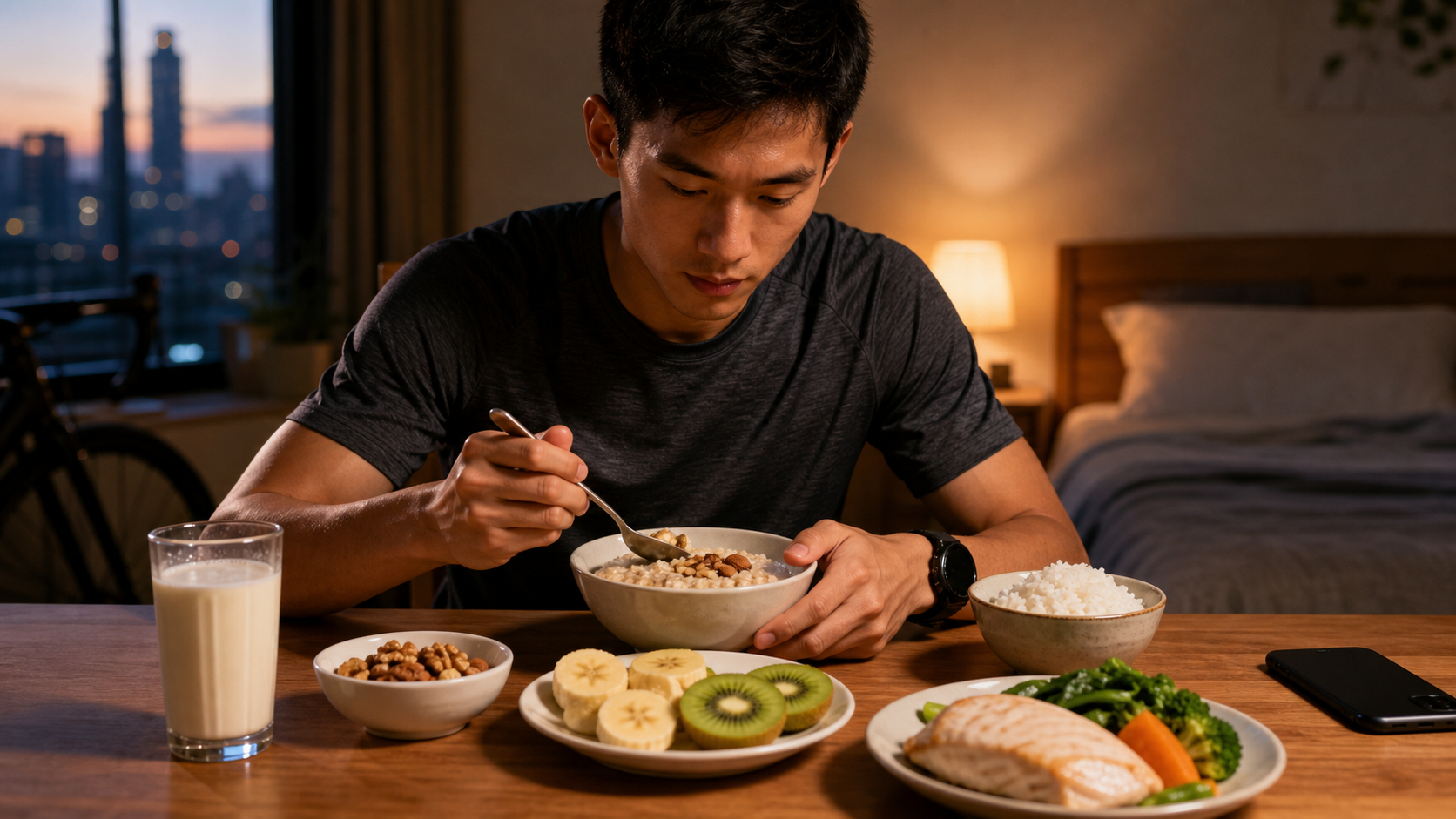
Opening: The Athlete Who “Trained Hard but Never Improved”
I once coached an amateur triathlete—let’s call him A-Kai. He trained 12 to 14 hours a week, his power numbers looked great, and his lactate threshold was climbing month after month. But his race results had been stuck for six months. When I flipped through his training log, his workout adherence was above 90%, and his nutrition was fairly meticulous—the problem was on the last page: his sleep column had long been filled with “4.5 hours,” “5 hours,” and “woke up twice in the middle of the night.”
The first thing I asked him to do wasn’t to change his training plan, but to move dinner earlier, swap out his late-night snack, and take the phone off his nightstand. Three weeks later, his deep sleep time jumped from the 45 minutes his device measured to nearly 90 minutes, his morning resting heart rate dropped by 4 bpm, and his subjective fatigue scores fell significantly. His training plan hadn’t changed a single word, but his performance finally started moving.
This is the first thing I’ve wanted to make clear in my fifteen years of coaching athletes at all levels: Sleep is not something outside of training—sleep is part of training. And among all the levers that can affect sleep, “what you ate in the hours before bed” is the most underestimated, yet the easiest one to adjust yourself. In this article, I want to cover the science and practical application from the dinner table to the bedside, all in one go.
1. Why Athletes Especially Need to Care About “Eating to Sleep Well”
For the average person, a bad night’s sleep just means feeling groggy the next day. For an athlete, the cost is doubled:
- Reduced growth hormone secretion: Most of the body’s growth hormone is secreted during deep sleep (slow-wave sleep), which is a critical window for muscle repair and tissue rebuilding. Fragmented sleep means less deep sleep.
- Slower glycogen replenishment and metabolic recovery: Sleep deprivation affects insulin sensitivity and carbohydrate utilization, leaving your “fuel tank” not quite full for the next day’s training.
- Persistently elevated sympathetic nervous system activity: People with high training volumes are already prone to a sympathetic-dominant state. If poor dietary choices add fuel to the fire at night, it becomes even harder to switch into the parasympathetic-dominant rest mode.
- Impaired immunity and increased injury risk: Chronic sleep debt lowers immunity and is also associated with a higher rate of sports injuries.
I often tell my athletes: “The sweat you shed in three hours can be half-wasted by one ruined night of sleep.” The point of sleep nutrition is to use choices at the dinner table to gently nudge the body from “keep fighting” mode into “pit stop maintenance” mode.
1-1 Four Specific Effects of Sleep on Training Adaptation
To make this more tangible, I break down the damage of “poor sleep” for athletes into four specific dimensions—this is also the diagram I most often draw when explaining to my athletes:
| Dimension | When Well-Rested | With Chronic Sleep Debt | Actual Impact on Training |
|---|---|---|---|
| Hormonal Repair | Sufficient deep sleep, robust growth hormone secretion | Fragmented deep sleep, weakened repair signals | Stalled strength and endurance gains, longer-lasting soreness |
| Energy Systems | Complete glycogen replenishment, good insulin sensitivity | Poorer carbohydrate utilization, tank not full the next day | Can’t sustain high-intensity sessions, loss of pace |
| Nervous System & Focus | Quick reactions, good movement economy | Slower reactions, reduced coordination | Deteriorating technique, higher risk on descents or in group rides |
| Immunity & Mood | Stable immunity, steady mood | Prone to colds, irritability, decreased motivation | Illness interrupts training, urge to quit |
As you can see, none of these four lines is a “minor issue.” An athlete’s progress is essentially the cycle of “training stimulus → recovery → supercompensation,” and sleep is the most core, irreplaceable part of the recovery step. What the dinner table can do is help press the accelerator on the ‘recovery’ part of this cycle.
2. The Science Foundation: The Tryptophan, Serotonin, Melatonin Production Line
To talk about sleep-promoting nutrition, you first need to understand a very important biochemical production line in the body. Think of it as a factory assembly line:
Tryptophan → Serotonin → Melatonin
2-1 Tryptophan: The Raw Material
Tryptophan is an essential amino acid—the body cannot synthesize it on its own and must obtain it from food. It is the most upstream raw material on this production line. Foods rich in tryptophan include milk, yogurt, cheese, eggs, chicken, turkey, tofu, soy products, nuts, and seeds.
But here’s the key point—and the most commonly misunderstood one: Eating a lot of tryptophan doesn’t automatically mean your brain can use it. For tryptophan to enter the brain, it must cross the blood-brain barrier, where it competes with other large neutral amino acids (like branched-chain amino acids such as valine and leucine) for the same “transporter.” When you eat a high-protein meal, a flood of amino acids is competing for seats on the transporter, making it harder for tryptophan to squeeze into the brain.
This is where carbohydrates come in.
2-2 Carbohydrates: The Driver That “Delivers” Tryptophan into the Brain
When you consume carbohydrates, blood sugar rises and insulin is secreted. Insulin pulls those branched-chain amino acids—tryptophan’s competitors—out of the bloodstream and into muscle tissue. With the competition cleared away, tryptophan finds it easier to board the transporter, cross the blood-brain barrier, and enter the brain, where it converts into serotonin and then further into melatonin—the hormone that makes you sleepy.
A study published in the American Journal of Clinical Nutrition directly tested this: researchers had healthy subjects consume either a high-glycemic-index (high-GI) or low-GI carbohydrate meal at different times before bed. The results showed that eating a high-GI carbohydrate meal about 4 hours before bed significantly shortened the time it took to fall asleep (compared to a low-GI meal, sleep onset was reduced by an average of about 8.5 minutes); and timing mattered—the effect at 4 hours before bed was better than at 1 hour before bed (source listed in the references at the end).
This gives us two very practical takeaways:
- Sleep promotion isn’t just about “getting tryptophan”—it’s about the combination and timing of protein plus carbohydrates.
- Eating too late (1 hour before bed) actually makes the effect worse, and may even disrupt sleep due to digestive burden.
- This also explains a common paradox: why some people are “exhausted but can’t fall asleep”—if dinner is too late, too oily, or too heavy, the body is busy digesting, the sympathetic nervous system is still running, and the sleep-promoting production line simply can’t get started.
Here I want to help you build an important mindset: The “average reduction of 8.5 minutes” in that study sounds small, but it was measured as a ‘single factor’ effect in healthy subjects. In reality, when you stack diet, timing, caffeine, light, and routine together, the cumulative improvement is far greater than any single number. In my experience coaching athletes, very few people fix their sleep with “one trick”—it’s about pushing several small levers in the right direction together, and only then does sleep quality truly turn around. So please don’t dismiss these principles just because “a single study’s effect looks small”—they are meant to be used in combination.
Coach’s Note: The “high-GI helps with falling asleep” point here applies to the specific window between dinner and bedtime—it’s not telling you to binge on refined carbs all day. Your daytime carbohydrate strategy is a different matter; don’t confuse the two.
2-3 Melatonin: The End Product, Also Obtainable in Trace Amounts from Food
Melatonin is the hormone that governs the sleep-wake cycle, secreted by the brain’s pineal gland after dark. Besides being produced by the body, certain foods also contain trace amounts of melatonin or its precursors, such as tart cherries, some nuts, oats, and tomatoes.
Regarding tart cherries, a randomized controlled trial on elite female field hockey players is worth mentioning: the study had athletes supplement with tart cherry juice for a short period after intermittent exercise, and found that although it didn’t significantly change blood melatonin and cortisol concentrations, it did improve sleep quality-related indicators (such as total time in bed, number of awakenings after sleep onset, etc.). In other words, tart cherry’s sleep-promoting effect may not rely solely on its tiny amount of melatonin, but also involves anti-inflammatory and antioxidant compounds like anthocyanins (source listed at the end).
Here’s how I explain it to my athletes: Food-based sleep-promoting compounds have mild effects and multiple mechanisms. Don’t expect them to be as strong as sleeping pills, but they can help ‘nudge sleep in the right direction,’ and they have virtually no side effects.
2-4 Don’t Overlook the Two Supporting Players: Magnesium and Calcium
Beyond the main tryptophan-and-carbohydrate storyline, two minerals are often discussed for sleep. Let me clarify their roles and boundaries:
- Magnesium: Involved in neuromuscular relaxation and many energy metabolism reactions. Because athletes sweat heavily, their magnesium needs and losses are higher than the average person’s. Foods rich in magnesium include dark leafy greens, nuts, seeds, whole grains, legumes, and dark chocolate. Note: getting magnesium “up to adequate levels” helps with sleep and muscle relaxation, but that doesn’t mean “more is better.” Excessive magnesium supplementation can cause diarrhea and gastrointestinal discomfort. I always recommend meeting needs through whole foods first; whether you’re deficient and whether to supplement is best determined by blood tests and professional judgment.
- Calcium: Calcium is involved in the brain’s process of using tryptophan to produce melatonin. Milk, yogurt, cheese, dried small fish, tofu, and dark leafy greens are all good sources. This is also why the old remedy of “a warm glass of milk before bed” has merit—it provides both tryptophan and calcium.
Coach’s Note: Think of magnesium and calcium as “lubricant that keeps the production line running smoothly,” not as “an on/off switch for sleep.” A solid foundation of balanced nutrition is far more practical than obsessing over a single supplement.
2-5 Light and Routine: Equally Critical Beyond the Dinner Table
Although this article’s theme is “what to eat,” I have to be honest with you: No matter how good the sleep-promoting diet is, it can’t save someone whose schedule is chaotic and who scrolls on their phone before bed. Melatonin secretion is extremely sensitive to light, especially the blue light emitted by screens, which suppresses its production and makes the brain think “it’s still daytime.”
So the sleep nutrition plan I give my athletes always combines “diet + light + routine” as three things done together:
- Fixed bedtime and wake time: Try not to deviate by more than 1 hour even on weekends. A stable circadian rhythm is the foundation of everything.
- Put away 3C devices 1 hour before bed: Move your phone and tablet out of the bedroom, and switch to warmer, dimmer lighting.
- Get natural light during the day: Exposure to daylight after waking helps calibrate your circadian rhythm. This is especially important for people who train indoors on trainers or in gyms.
Combine these three things with the dietary strategies above, and the effect becomes greater than the sum of its parts.
3. Practical Methods: How a Coach Would Structure “The Pre-Bed Meal”
Now that we’ve covered the mechanisms, let’s get down to business. Here’s the operational framework I actually give my athletes.
3-1 Three Principles of Sleep-Promoting Nutrition
- Protein provides the tryptophan raw material; carbohydrates are responsible for delivering it into the brain—for dinner, don’t just eat a “pure protein with almost no carbs” combo like boiled chicken breast with blanched vegetables. A moderate amount of quality carbohydrates actually helps you sleep.
- Timing matters more than dosage—the key meal should fall about 3 to 4 hours before bed, allowing digestion to wind down while still leaving time for the hormonal effects to kick in.
- Avoid things that ‘wake the body up’ before bed—caffeine, alcohol, excessive fat, overly spicy or salty food, and oversized portions are all disruptive factors.
3-2 Sleep-Promoting Foods and Recommended Intake (Dosage Reference Table)
The following dosages are general reference ranges—individual variation is large, so treat them as a starting point, not an ironclad rule:
| Food/Nutrient | Recommended Timing | Reference Portion | Primary Sleep-Promoting Role |
|---|---|---|---|
| Warm milk / unsweetened yogurt | 1–2 hours before bed | 200–250 ml | Tryptophan + calcium, soothing effect |
| Banana | 1–2 hours before bed | 1 piece (about 100–120 g) | Carbs + magnesium + tryptophan |
| Whole-grain rice / sweet potato | Dinner (3–4 hours before bed) | 1 serving, about 150–200 g | Carbs, helps tryptophan enter the brain |
| Eggs / tofu / fish | Dinner | 1 palm-sized serving | Tryptophan raw material |
| Tart cherry juice | About 1 hour before bed | About 200–240 ml (or 1–2 tablespoons of concentrate) | Trace melatonin + anthocyanins |
| Mixed nuts | Late afternoon to 2 hours before bed | A small handful (about 20–30 g) | Magnesium, healthy fats, tryptophan |
| Kiwi | 1 hour before bed | 1–2 pieces | Antioxidants + serotonin-related compounds |
Note: Tart cherry juice and fruit juices contain a fair amount of sugar. People with diabetes, poor blood sugar control, or those trying to lose weight should count the calories and sugar from this drink into their daily total—don’t drink it freely.
Here’s another table comparing the “relative glycemic response speed” of common carbohydrate foods, to give you a reference when choosing carbs for dinner. To emphasize: this is a relative concept, not precise values; actual response is also affected by cooking methods and the protein and fiber eaten alongside:
| Carbohydrate Type | Relative Glycemic Response Speed | Role in Sleep-Promoting Context |
|---|---|---|
| White rice, white bread, mashed potatoes | Faster | Main meal 3–4 hours before bed; can be used for pre-race carb loading |
| Sweet potato, pumpkin, whole-grain rice | Moderate | First choice for everyday dinner, balancing blood sugar stability and satiety |
| Oats, brown rice, legumes | Slower, high fiber | Suitable for daytime; if eaten before bed, keep portions small to avoid bloating |
| Banana, kiwi | Moderate, easy to digest | Ideal small pre-bed finishing option |
The key message this table conveys: “For pre-bed sleep support, use relatively easily absorbed carbs in small portions; during the day, use high-fiber, slow-digesting carbs to stabilize blood sugar and energy.” The same carbohydrate plays a completely different role depending on the time of day—this is why “timing” is more critical than “what to eat.”
3-3 A “Night Before Race” Dinner Template You Can Copy
Many athletes are so nervous the night before a race that they can’t sleep. I often design a “easy-to-digest and sleep-promoting” dinner for them. Using a 65 kg endurance athlete who goes to bed at 10:30 PM as an example:
| Time | Content | Purpose |
|---|---|---|
| 18:30 (about 4 hours before bed) | 1 bowl of whole-grain rice + 1 serving of steamed fish + stir-fried vegetables + miso soup | Carb + tryptophan main meal, avoid fried foods |
| 20:30 (2 hours before bed) | 1 cup of unsweetened yogurt + half a banana | Gentle carb and tryptophan top-up, stabilize blood sugar |
| 21:30 (1 hour before bed) | 200 ml warm milk or 200 ml tart cherry juice | Finishing touch for soothing, initiate sleepiness |
| Throughout | Stop caffeine, avoid alcohol, switch to warm and dim lighting | Reduce arousal factors |
This menu deliberately avoids high fat, heavy spice, and large portions, and completely eliminates caffeine. In my experience, simply standardizing the “night-before-race dinner” can significantly improve sleep onset for many nervous athletes.
3-3-1 Taiwan Eating-Out Version: What to Order at Convenience Stores and Buffet Restaurants
I know many people simply don’t have time to cook. Here’s a Taiwan-specific comparison for “eating out and still sleeping well”—just follow it directly:
| Scenario | Sleep-Promoting Choices | Choices to Avoid |
|---|---|---|
| Convenience store dinner | Onigiri / sweet potato + tea egg or unsweetened soy milk + a salad | Instant noodles + fried chicken + sugary energy drinks |
| Buffet restaurant bento | Normal amount of white rice, steamed fish or skinless braised chicken leg, a variety of vegetables, less oil and less thickening | Fried pork chop, three-cup style (heavy oil and spice), excessive sauce |
| Pre-bed finishing touch | Unsweetened yogurt, half a banana, warm soy milk or warm milk | Salt-and-pepper chicken, bubble tea, late-night fried foods |
| Post-training late-night snack | Chawanmushi + sweet potato, tuna onigiri, boiled egg | Spicy hot pot, BBQ with beer |
The point isn’t to make you eat blandly or suffer—it’s to “avoid the landmines in the hours before bed.” You don’t need to be perfect all seven days a week. Start by taking care of “dinner and pre-bed time on training days”—that gives you the highest return on investment.
3-4 Caffeine: The Most Overlooked Landmine for Taiwan’s Athletes
People in Taiwan love hand-shaken drinks, convenience store coffee, and energy drinks. Many athletes have no idea how much caffeine they’re actually consuming. Caffeine has a half-life of about 4 to 6 hours, meaning that latte you had at 4 PM could still have half its amount in your system at 10 PM, working against your sleepiness.
My general recommendations:
- Avoid caffeine within 6 hours of bedtime; for those sensitive to caffeine, extend that to 8 hours.
- Watch out for hidden caffeine sources: unsweetened tea, cola, some energy drinks, and even certain caffeinated sports supplements (pre-race fuel, pre-workout).
- If you’re used to training in the evening, be especially restrained with your pre-training caffeine dose, or you’ll be too wired to sleep afterward.
4. Common Mistakes and Corrections
This section is the highlight, because I’ve seen too many people “get the concept right but execute it wrong.”
Mistake 1: Dinner Is Only Protein, No Carbohydrates at All
Many athletes trying to cut fat or build muscle insist on “only chicken breast + blanched vegetables” for dinner. As discussed earlier, pure high protein actually makes it harder for tryptophan to enter the brain, and low blood sugar may also cause you to wake up in the middle of the night.
Correction: Add a moderate amount of quality carbohydrates to dinner (whole-grain rice, sweet potato, pumpkin). The portion doesn’t need to be large—about a fist-sized serving is a good starting point. If you’re watching calories, adjust from other meals; don’t sacrifice the carbs at this pre-bed meal.
Mistake 2: Binge-Eating “Sleep-Promoting Foods” Right Before Bed
Some people hear that bananas and milk help with sleep, so they stuff themselves 10 minutes before bed. The result: the digestive system is forced to work overtime, making it even harder to fall asleep.
Correction: Put the key carbohydrate meal 3–4 hours before bed. In the final hour before bed, only leave a small, easily digestible finishing touch (warm milk, half a banana—that level).
Mistake 3: Using Alcohol to Sleep
“Drinking a little helps me sleep better” is one of the most stubborn myths. Alcohol may indeed make you doze off faster, but it severely disrupts the sleep architecture in the second half of the night, reducing deep sleep and REM sleep. You’ll sleep more lightly, wake more easily, and feel even more tired the next day. For athletes, alcohol also interferes with muscle repair and glycogen replenishment.
Correction: Leave sleep promotion to food and routine, not alcohol. If you really want to drink, at least avoid it in the hours before bed. Taiwan’s sports community often has a culture of “a drink after riding, running, or racing.” I’m not telling you to quit drinking, but at least be aware: that celebratory drink is paid for with tomorrow’s recovery.
Mistake 3-1: Too Exhausted After a Race to Eat, So You Just Crash
This is also very common—after a big race or long-distance training, the body is exhausted and appetite is suppressed, so many people just skip eating and go straight to sleep. The result: glycogen isn’t replenished, protein isn’t consumed, and you may sleep restlessly in the middle of the night due to low blood sugar or the body being in an inflammatory repair state.
Correction: Even if you have no appetite after a race, use “easy-to-eat” options to get in some carbs plus protein—for example, a banana with soy milk, yogurt with oats, or a salmon onigiri. The portion doesn’t need to be large; the point is to give the body repair materials rather than toughing out the night on an empty stomach.
Mistake 4: Treating Supplements as a Magic Bullet
Melatonin supplements, tryptophan capsules, and various sleep aids are all over the market. My stance has always been conservative: Get the fundamentals right first—diet, routine, light, caffeine—then talk about supplements. Melatonin supplements are regulated as pharmaceuticals in Taiwan, not something you casually buy and take like a health food. If you’re considering them, be sure to consult a physician or pharmacist first, especially if you have chronic conditions or are taking medication.
Correction: Supplements are an adjunct, not the main character. Ninety percent of sleep problems can be improved through lifestyle adjustments first.
Mistake 5: Ignoring Taiwan’s Climate and Eating-Out Reality
Taiwan’s summers are humid and hot, and many people can’t sleep because their rooms are stuffy. Eating-out workers often have heavy, oily, salty bento dinners, salt-and-pepper chicken, and late-night stalls.
Correction:
- Cool down: Lowering your core body temperature before bed helps with sleep onset. You can take a warm shower 1–2 hours before bed (the post-shower drop in body temperature actually promotes sleep), and use a dehumidifier or air conditioning to keep the room at a comfortable temperature.
- Eating-out choices: Ask bento shops for “normal rice, less oil, more vegetables,” and avoid fried foods and thickened sauces. If you really need a late-night snack, swap it for unsweetened yogurt, a banana, or a small handful of nuts—not salt-and-pepper chicken with bubble tea.
5. Actionable Advice for Readers at Different Levels
Sleep nutrition isn’t one-size-fits-all. Here are different starting points for three common groups.
5-1 General Fitness Enthusiasts / Weekend Riders
You don’t need to make this complicated. Start with these three things:
- No caffeine within 6 hours of bedtime.
- Dinner with protein + moderate carbs, finished 3–4 hours before bed.
- Don’t use alcohol to sleep; finish with warm milk or yogurt instead.
Just these three points will solve most “too wired to sleep after training” problems.
5-2 Serious Amateur Athletes Preparing for Races
You can go a step further with “sleep nutrition periodization”:
| Training Context | Pre-Bed Nutrition Strategy |
|---|---|
| High-intensity / high-volume day | Increase carbs at dinner (to help glycogen replenishment + sleep), add an easily digestible carb before bed |
| Taper week / easy day | Return carbs to normal; be careful not to cause blood sugar swings by eating carelessly with less training |
| Night before a race | Follow the “pre-race dinner template” in Section 3; avoid any new foods or supplements you’ve never tried |
| Long travel / jet lag | Use meal timing to help adjust the clock: after arrival, schedule meals according to local time, and make the pre-bed meal a sleep-promoting combo |
Special reminder: Never try untested sleep-promoting foods or supplements on race day. Any new item should be tested for gastrointestinal response during regular training first.
5-3 People with Chronic Conditions or Special Circumstances
If you have diabetes, high blood pressure, heart disease, kidney issues, or are taking chronic medication, sleep nutrition principles need to be more individualized and conservative:
- The high-GI carb strategy for sleep promotion may not be suitable for those with poor blood sugar control; discuss it with your medical team.
- The sugar in tart cherry juice and fruit juices must be factored into daily blood sugar and calorie management.
- Supplements like melatonin may interact with certain medications—be sure to ask your physician or pharmacist first.
- If you have chronic severe insomnia, frequent breathing pauses during sleep, loud snoring combined with daytime sleepiness, this could be a medical issue like sleep apnea. Don’t try to tough it out with diet alone—Taiwan’s National Health Insurance makes it easy to see a doctor. Please schedule an evaluation with a family medicine physician, pulmonologist, or a sleep center.
Let me put this in the most direct terms: Dietary adjustments can push “normal but not great” sleep upward, but they are not a tool to replace treatment for actual sleep disorders.
6. Making It a Habit: A One-Week Action Checklist
Knowing is one thing; doing is what counts. I usually give my athletes a simple weekly checklist so sleep nutrition becomes an automatic habit you don’t have to think about:
| Daily Check Item | Done? |
|---|---|
| No caffeine within 6 hours of bedtime | ☐ |
| Dinner included protein + moderate carbs | ☐ |
| Main meal finished 3–4 hours before bed | ☐ |
| Didn’t use alcohol to sleep | ☐ |
| Pre-bed finishing touch was an easily digestible sleep-promoting food | ☐ |
| Put away 3C screens and dimmed lights 1 hour before bed | ☐ |
| Room temperature and humidity kept in a comfortable range | ☐ |
Check off each day for two consecutive weeks, and you’ll clearly feel the difference. Combined with sleep data from a sports watch or band (deep sleep time, resting heart rate, heart rate variability/HRV), you can turn subjective feelings into objective trends—which is especially convincing for serious athletes.
7. FAQ
Q1: Is drinking whey protein (especially casein) before bed good or bad?
A: Consuming protein before bed is theoretically helpful for muscle repair. Casein digests slowly and can provide a sustained supply of amino acids. But if you have a sensitive stomach, or if it causes bloating that affects your sleep, don’t force it. The principle is: as long as it doesn’t disrupt sleep, keep the portion small and choose something easily digestible.
Q2: I can only train in the evening, and I’m super wired afterward. What should I do?
A: This is extremely common among Taiwan’s office-worker athletes. Three directions: avoid high doses of caffeine before training; after training, do 10–15 minutes of cool-down, stretching, and diaphragmatic breathing to help switch to the parasympathetic nervous system; and for your post-training meal, go with “carbs + protein + easily digestible,” avoiding anything too oily or heavy. Giving your body a “cool-down—shower—cooling off” ritual will help you sleep far better than just hitting the bed directly.
Q3: Do bananas, milk, and tart cherries really work, or is it just a placebo effect?
A: Their effects are mild but real—just don’t expect anything dramatic. The research supports “nudging things in the right direction,” not “instant sleep after eating.” And sleep is a holistic project—diet, light, routine, and stress all need to be managed together. A single glass of juice can’t rescue a chronically broken sleep schedule.
Q4: Do I need to buy melatonin supplements?
A: For generally healthy athletes, I’d first ask you to fully implement the fundamentals. Melatonin supplements are regulated as pharmaceuticals in Taiwan, involving dosage and timing, and potential interactions. Leave that judgment to a physician or pharmacist—don’t buy and take them randomly online.
Q5: I’m so hungry before bed I can’t sleep, but I’m afraid eating will affect my sleep. What should I do?
A: Going to bed hungry (especially with low blood sugar) itself disrupts sleep, so don’t tough it out. Choose a “small, easily digestible, carbs + a little protein” finishing option—for example, half a banana with warm milk, or a small bowl of unsweetened yogurt with oats. What you want to avoid is large portions, high fat, and heavy-flavored late-night food—not all food.
Q6: Do sports drinks or electrolyte beverages affect sleep?
A: Pure electrolyte replenishment doesn’t really affect sleep; in fact, it helps recovery after heavy sweating. What you need to watch is that many commercial sports drinks contain sugar or caffeine—check the ingredients before drinking them near bedtime. Taiwan’s summer training involves a lot of sweating, so hydration and electrolytes are important, but don’t pick a caffeinated one as your pre-bed drink.
Q7: I measure sleep with a fitness band. How accurate is the data, and how should I read it?
A: The “minutes of deep sleep” measured by consumer wearable devices isn’t medical-grade precision, so don’t obsess over the absolute number on any single night. What’s genuinely useful is the “trend”—with the same device and the same person, changes over two or three consecutive weeks can show whether your diet and routine adjustments are moving things in a better or worse direction. Treat it as a steering wheel, not a medical report.
Conclusion: Sleep Is Your Cheapest, Most Effective Legal “Supplement”
Back to A-Kai from the opening. He later told me with a laugh: “So the ‘secret to improvement’ I’d been looking for was eating dinner right, throwing my phone out of the room, and getting a good night’s sleep.”
In these fifteen years of coaching, I’ve come to believe more and more in one statement: No supplement, no training plan, can replace the boost that a good night’s sleep gives to athletic performance. And sleep nutrition is the lever you can personally control every single day—it doesn’t cost much, has no side effects, and you can start tonight.
I often remind my athletes: Training is “destruction”; sleep and nutrition are “construction.” No matter how seriously you destroy things in your training plan, if you can’t rebuild at night, the building will never get taller. Every choice at the dinner table is, in effect, paving the road for tomorrow’s self. Rather than desperately chasing expensive gear and miracle supplements, take care of “this pre-bed meal, this drink, this light” first—it’s the investment with the highest return and the most honest one.
Start with tonight’s dinner. Pair protein with a good serving of carbs, finish it 3–4 hours before bed, end with a glass of warm milk, and leave your phone in the living room. Give your body a clear signal: today’s battle is over—time to go into the pit stop.
Appendix: Adjustment Contexts for Two Real-Life Scenarios
Here are two scenarios I often encounter, to show you how “the same principles” can be applied differently depending on the person.
Scenario 1: A shift-working rider. One of my athletes works rotating shifts, making it hard to keep a fixed schedule, and he needs to catch up on sleep during the day. Our focus wasn’t to force him into “early to bed, early to rise,” but to help him build “his own pre-bed routine”: no matter when he sleeps, the period before sleep follows the sleep-promoting diet (easily digestible carbs + protein finish), blackout the room properly (especially important for daytime catch-up sleep with blackout curtains), and avoid that post-work pick-me-up coffee. The principles don’t change—we just define “pre-bed” as his personal pre-bed time, not the clock’s evening.
Scenario 2: An athlete in a fat-loss phase. During a cut, calorie intake is low, and many people are so hungry at night they can’t sleep. My approach: shift some of the day’s carbohydrate allowance “toward dinner and pre-bed”—slightly less during the day, and keep a good carb serving at night to support sleep. Total calories stay the same, but sleep quality is preserved. This is really a “redistribution of carb timing,” not asking her to eat more. With better sleep, training quality and recovery during the cut become more stable, making long-term success more likely.
The core point these two scenarios illustrate: Sleep nutrition has no one-size-fits-all standard answer, but the underlying principles are stable—stock up on tryptophan raw materials, use carbs and timing to help it enter the brain, avoid arousal factors, and take care of light and routine. Everything else is fine-tuning based on your life’s reality.
Wishing you—and your training—good sleep, solid training, and steady progress.
This article is educational content and cannot replace individual diagnosis and treatment advice from a physician, physical therapist, or nutritionist. If you have chronic conditions, are taking medication, or have long-term sleep disorders, please seek professional medical evaluation and individualized advice.
References
- Afaghi A, et al. High-glycemic-index carbohydrate meals shorten sleep onset. American Journal of Clinical Nutrition. PubMed: https://pubmed.ncbi.nlm.nih.gov/17284739/
- Full text on high-GI carbs and sleep onset (ScienceDirect / AJCN): https://www.sciencedirect.com/science/article/pii/S0002916523279290
- Randomized controlled trial of tart cherry juice on post-exercise sleep quality in elite female field hockey players (MDPI / IJERPH): https://www.mdpi.com/1660-4601/19/16/10272
- Systematic review of tart cherry and sleep quality (PMC): https://pmc.ncbi.nlm.nih.gov/articles/PMC12438961/
Related Reading
- Nutrition and Sleep Balance for Night Trainers: How to Eat and Sleep Without Conflict After an Evening Ride
- Nutrition & Recovery: A Guide to Sleep Hygiene and Growth Hormone Release for Endurance Athletes: The Role of Deep Sleep in Repairing Central Nervous System Fatigue and Recovery Scheduling (Part 2) Practical Guide
- Sleep: The Cheapest Legal Performance Enhancer—How a Coach Helps You Steal Back Training Gains
- Athlete Meal Prep in Practice: A Complete Guide to Efficiency, Nutritional Balance, Storage, and Variety
CT暗黑廚房) 車友必備 宇宙無敵鮮蚵湯 幫助訓練恢復 天然食補 好市多 超肥鮮蚵 破PR
7 年前
西進武嶺 免費訓練分析服務 Intervals | 練不夠還是練過頭?你哪一種類型選手?AI模型告訴你! | 備戰神器 | 公路車 訓練 | CT Yeh
4 年前
碟煞公路車 銑面器 !? 原來銑完差這麼多! 降低蹭碟機率! | TIME 公路車 保養小記錄 | CT Yeh
3 年前
CT 喇低賽) 單車 比賽總是沒照片? 攝影師的觀點大公開 姿勢就是力量! 請加速1.25倍收看
7 年前
FTL 與 SYB 車隊專訪 西進武嶺 實用攻略分享! 2小時 如何練?!你不知道的眉角!新手準備武嶺必看 EP1 | 實力派女車友 | 精華版 | 公路車 | CTYeh
4 年前
沉浸室內單車練功房開箱! 100吋大畫面,最便宜的花費? 居然還能K歌!? | 公路車 | CT Yeh
3 年前
#公路車 #Fitting 靠人工智慧APP 幫你調整單車
6 年前
一個測試有沒有認真練車的方法😂 #公路車
10 個月前