Nutrition and Hydration Strategies for Hot Environments: A Complete Guide to Energy, Sodium Supplementation, and Cooling Diets for Hot-Weather Training
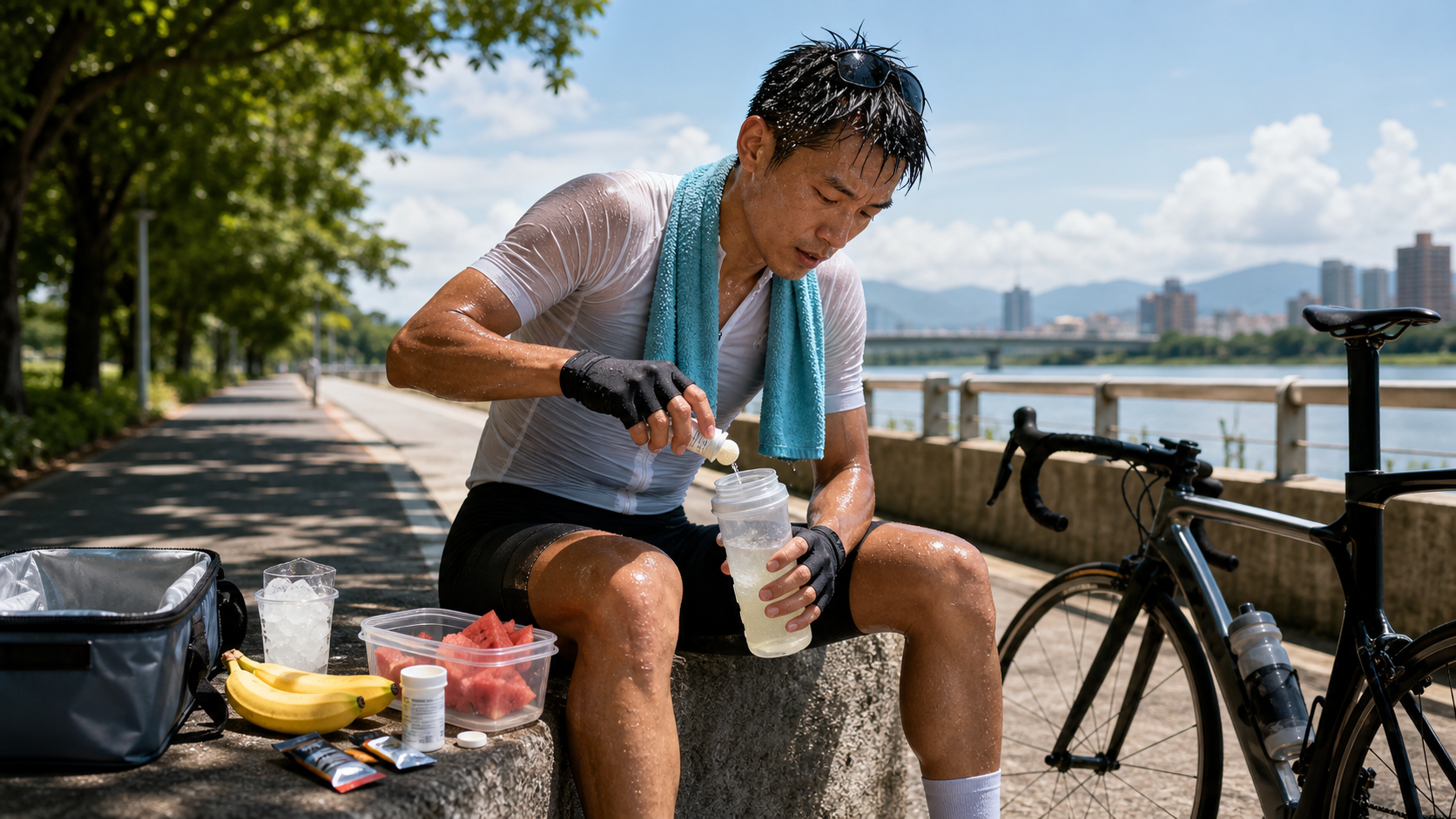
Every year when June and July roll around, my calendar fills up with the same kinds of messages: “Coach, I get dizzy and nauseous less than an hour into my morning ride,” “During the last five kilometers of yesterday’s run, I completely fell apart—is my fitness declining?” “I’m drinking plenty of water, so why am I still cramping?” After fifteen years of coaching athletes, I know exactly what’s going on—these people’s fitness usually hasn’t declined. What’s declined is their preparation for hot environments. Taiwan’s summers are hot and humid. At noon, the asphalt can easily feel like 38°C or more, and humidity routinely sits above 75%. For endurance athletes, this environment is a completely different game from winter racing.
I often tell my athletes: “In a Taiwanese summer, hydration and sodium supplementation aren’t bonus points—they’re the passing grade.” In this long-form article, I want to lay out, once and for all, the hot-environment nutrition and hydration strategies I’ve accumulated over the years working with cyclists, runners, triathletes, and office workers who just want to keep exercising through the summer. It’s going to be long and practical, because this topic simply can’t be dismissed with a couple of catchy one-liners.
Why Hot Environments Make You “Completely Fall Apart”
Let me start with a case that left a strong impression on me. Last July, a tech executive in his early forties named A-Zhe came to see me. He rode regularly and climbed Fengguizui every weekend. He complained, “On the same route, I feel great after a winter ride, but in the summer I want to quit halfway and my power drops off a cliff.” He even worried he had a heart problem and got a full checkup—everything came back normal. The problem wasn’t his heart; it was that he had made zero adjustments for the heat.
When ambient temperature rises, your body has to handle two things at once: the metabolic heat generated by exercise itself and the heat coming in from the environment. Your core temperature must stay within a narrow window around 37°C. Once exercise plus high heat pushes core temperature upward, your body activates its primary cooling mechanism—sweating and increased skin blood flow.
Here’s the catch. To carry heat to the skin surface and dissipate it, the body shunts a large volume of blood to the skin. That means less blood returns to the heart and is available to the working muscles. So you’ll observe a very typical phenomenon: at the same pace or power, heart rate runs noticeably higher. This has a technical name: “cardiovascular drift.” That feeling A-Zhe described—“power drops, heart rate spikes”—is essentially your body fighting you for blood. It wants that limited supply for both cooling and power output.
The Vicious Cycle of Sweating, Dehydration, and Performance
When you sweat to cool down, you lose not just water but electrolytes, especially sodium. If you don’t take in enough fluid, plasma volume drops, your cooling capacity worsens, core temperature rises more easily, cardiovascular drift becomes more pronounced, and performance naturally suffers. It’s a self-reinforcing cycle.
According to the American College of Sports Medicine (ACSM) position stand, the goal during exercise is to avoid dehydration exceeding 2% of body weight, because beyond that threshold, exercise performance and thermoregulation begin to degrade noticeably (ACSM Position Stand: Exercise and Fluid Replacement). What does 2% of body weight mean? For a 70 kg rider, that’s about 1.4 kg of fluid loss. During a two-hour ride in a Taiwanese summer, that number is very easy to reach or even exceed—many people have no idea they’ve already crossed the line.
I want to emphasize one point: performance decline in hot environments is largely preventable with the right strategy—it’s not fate. A-Zhe followed the hydration and sodium plan I gave him, and a month later he reported, “I can finally ride properly in the summer.” His fitness hadn’t changed. What changed was his preparation.
Humidity: Taiwan’s Hidden Variable
I want to single out “humidity” because it’s the factor most people overlook, yet it’s especially unforgiving in Taiwan. Cooling depends on sweating, but sweat only carries heat away when it “evaporates.” If it just drips off and falls to the ground, the cooling effect is nearly zero. Dry-hot regions (like deserts) may have higher temperatures, but with low humidity, sweat evaporates quickly and cooling actually works relatively smoothly. Taiwan’s summer, by contrast, is hot and humid—sweat clings to your skin and won’t evaporate. You can be drenched, your clothes soaked, while your core temperature refuses to come down.
That’s why “feels-like” temperature (heat index) often reflects real risk better than the number on a thermometer. At the same 33°C, 50% humidity and 85% humidity are two completely different worlds. I often tell my athletes: when making training decisions based on weather in Taiwan, don’t just look at temperature—look at humidity too. On high-humidity days, be more aggressive with fueling, more conservative with intensity, and more restrained with duration. That’s not cowardice; it’s respecting physics.
Three Pillars: Fluid, Sodium, and Cooling
In hot environments, I break nutrition and hydration strategy into three pillars, and all are indispensable:
- Fluid—maintains plasma volume and supports sweat-based cooling.
- Sodium (and other electrolytes)—maintains fluid osmotic pressure and neuromuscular function, while also helping your body retain the water you drink.
- Cooling—slows the rise in core temperature through food temperature and external cooling.
Most people only focus on the first pillar (chugging water), ignore the second (no sodium at all), and never even think about the third (cooling). That’s why some people “drink a lot of water and still feel terrible”—or even end up with hyponatremia—too much water, too little sodium, diluting the blood. This occasionally happens in endurance events and is genuinely life-threatening. You absolutely cannot focus on hydration alone.
Pillar One: Fluid—First, Know Your Sweat Rate
To know how much to drink, you first need to know how much you’re losing. ACSM recommends estimating your individual sweat rate by weighing yourself before and after exercise, because sweat rates vary enormously between individuals (ACSM Position Stand). This is the most practical, lowest-cost self-test you can do today.
Sweat Rate Self-Test (strongly recommended for anyone who trains seriously):
- Use the bathroom before exercise, weigh yourself in minimal clothing (kg).
- Exercise for 60 minutes at an intensity close to your usual training, and record how much water you drink during that time (liters; 1 L ≈ 1 kg).
- After exercise, towel off the sweat and weigh yourself again in minimal clothing.
- Calculate: Sweat loss (L) = (pre-exercise weight − post-exercise weight) + fluid consumed during exercise.
- That number is your approximate hourly sweat rate.
| Case Scenario | Pre-Exercise Weight | Post-Exercise Weight | Fluid Consumed | Estimated Hourly Sweat Rate |
|---|---|---|---|---|
| Office worker jogging (cool) | 68.0 kg | 67.4 kg | 0.5 L | ~1.1 L/hr |
| Cyclist climbing in summer (muggy) | 70.0 kg | 68.8 kg | 0.8 L | ~2.0 L/hr |
| Triathlete long afternoon ride (hot & humid) | 65.0 kg | 63.5 kg | 1.2 L | ~2.7 L/hr |
See that triathlete sweating close to 2.7 liters per hour? That’s not an exaggeration—sweat rates above 2 L/hr during high-intensity exercise in a Taiwanese summer are completely normal. And your gut can only absorb roughly 0.8 to 1.2 liters of fluid per hour during exercise, which means in extreme conditions, it’s physically impossible to fully replace all the fluid you’re losing in real time.
This leads to a very important practical principle: the goal of hydration in hot environments is not “zero dehydration” but “keeping dehydration within 2% of body weight.” Trying to drink back every drop of sweat mid-ride will only overwhelm your gut, causing bloating, nausea, and even vomiting. The strategy is “fully hydrate before the event + steadily drink during the event to stay within 2% + properly rehydrate afterward.”
Pillar Two: Sodium—The Underrated Key
Sodium is where I see the most mistakes. Taiwanese diets are naturally on the salty side, so many people think, “I already eat pretty salty, so I don’t need extra sodium.” That’s a dangerous misconception. The sodium in your daily diet is for everyday metabolism. The sodium lost through heavy exercise sweating is a separate bill—the two don’t cancel out.
Sodium concentration in sweat varies enormously between individuals. According to exercise physiology literature and field data, athletes lose anywhere from roughly 200 mg to over 2,000 mg of sodium per liter of sweat, with an average around 950 mg per liter (Precision Hydration: how to estimate sweat salt loss). In other words, two people riding for two hours and sweating the same amount—a “salty sweater” can lose several times more sodium than a “light sweater.”
How do you know if you’re a salty sweater? A few at-home clues: white salt crystals on your clothes or hat brim after exercise, sweat that stings particularly badly when it runs into your eyes, sweat that tastes especially salty, and a tendency to cramp in summer—these people are often high sodium losers and need a more aggressive sodium strategy.
General sodium supplementation guidelines during exercise (adjust based on intensity, duration, and environment):
| Exercise Duration / Scenario | Recommended Sodium per Hour | Example Supplementation |
|---|---|---|
| Under 60 minutes, cool | Usually no extra sodium needed | Plain water is fine |
| Over 60 minutes, normal conditions | ~300–700 mg | Sports drink or electrolyte tablets |
| Hot & humid / salty sweater | ~700–1,500 mg | Higher-sodium electrolyte products |
| All-day endurance (e.g., ultramarathon, long-distance triathlon) | Up to 1,500 mg ceiling | High-sodium electrolytes + salty foods |
This range is compiled from sports nutrition practice and related literature (STYRKR: how much sodium do you lose in sweat). Note that these are ranges, not precise prescriptions—you need to experiment through your own training to find the sweet spot where you don’t cramp, don’t feel nauseous, and stay mentally sharp.
Sodium also has an easily overlooked function: it helps your body hold onto water. Adequate sodium maintains plasma osmotic pressure, stimulates thirst, and promotes water absorption in the gut. Drinking only plain water without sodium actually dilutes blood sodium, suppresses thirst, increases urination, and the water doesn’t stay in. That’s why plain water isn’t the best choice for prolonged exercise in high heat.
Pillar Three: Cooling Foods—Cooling the Body from the Inside Out
The third pillar is the most overlooked, but it’s especially useful in a Taiwanese summer. The core concept: rather than waiting until your body heats up and then trying to cool it down, delay the rise in core temperature from the start.
Pre-cooling before exercise is a strategy endurance athletes use for hot-weather races. The most practical home version is simply drinking a cold beverage or slushie before exercise. ACSM also notes that fluids consumed during exercise are best at below ambient temperature, around 15 to 22°C, to promote drinking willingness and hydration effectiveness (ACSM Position Stand).
Specific practices I give my athletes:
- Slushie pre-cooling: Before heading out, turn your sports drink into a half-frozen slushie and sip it slowly 15–30 minutes before exercise. It effectively absorbs core heat.
- Cold fueling: Fill your bottle with ice water, or freeze half a bottle the night before and top it off with water before you leave, keeping your fuel cold the whole session.
- High-water-content cooling foods: Watermelon, cantaloupe, cucumber, and tomato—these high-water fruits and vegetables hydrate and provide small amounts of electrolytes, making them excellent pre- and post-exercise snacks in summer. Watermelon is in season in Taiwan and cheap and easy to find.
- External cooling: Areas where blood vessels run close to the skin—neck, wrists, forehead—respond well to a cold towel or ice pack. It works better than you’d think.
One reminder: pre-cooling and hydration/sodium are complementary, not substitutes. No matter how much you enjoy that slushie, you still need to get your sodium in.
Here’s a ranking table of cooling strategies I’ve actually used with athletes that works well, so you can pick based on your situation:
| Cooling Method | When to Use | Practical Difficulty | Effectiveness |
|---|---|---|---|
| Slushie / cold drink pre-cooling | 15–30 min before exercise | Easy (prep the night before) | Good; delays core temperature rise |
| Keep fuel cold throughout | Entire session | Easy | Good; also supports drinking willingness |
| Ice pack on neck / wrists | Aid stations, rest breaks during exercise | Moderate | Moderate; high subjective comfort |
| High-water-content fruits & vegetables | Pre-/post-exercise snacks | Easy | Moderate; hydrates and adds electrolytes |
| Pouring water over head, neck, back | Passing aid stations during exercise | Easy | Good; relies on evaporative cooling |
Here’s a detail that’s often misunderstood: pouring water over yourself works especially well in dry heat because of evaporation. But in Taiwan’s humid heat, evaporation is already slow, so the main benefit becomes “direct physical contact cooling” and subjective comfort—its effectiveness is somewhat reduced compared to dry-hot regions. Understanding the mechanism tells you why the same trick works differently in different weather.
A Complete Practical Timeline: Pre-Race, During, and Post-Race
Now that we’ve covered the three pillars, here’s a timeline you can follow directly. This is the general framework I use with athletes for summer races or long training sessions. You can fine-tune it based on your own sweat rate and sodium loss.
24 Hours Before to Start Line
| Time Point | Fluid | Sodium / Electrolytes | Cooling / Diet Focus |
|---|---|---|---|
| Day before | Drink normally; light-yellow urine is fine, no need to overdo it | Normal diet; slightly saltier soups are okay | Avoid heavy eating that burdens the gut |
| 2–3 hours before start | ~400–600 ml water or sports drink | Can pair with one electrolyte serving | Eat easily digestible carbs (e.g., rice, toast, banana) |
| 30 minutes before start | ~150–250 ml | One electrolyte serving in high heat | Slushie pre-cooling, neck cooling |
ACSM recommends drinking about 500 ml of fluid roughly 2 hours before exercise, giving your body time to eliminate excess and reach proper hydration (ACSM Position Stand). The key is “start early, drink in portions”—don’t chug a whole bottle five minutes before the start, or you’ll be looking for a bathroom the whole time.
Mid-Event Fueling Rhythm
The core of mid-event fueling is “small amounts, frequently; water and sodium together; keep dehydration within 2%.”
- Fluid: Based on your individual sweat rate, typically 150–250 ml every 15–20 minutes. In hot, humid conditions with high sweat rates, aim for the upper end.
- Sodium: Per the table above, start supplementing once you pass one hour; salty sweaters need to be especially proactive.
- Carbohydrates: For prolonged exercise (over 60–90 minutes), take in 30–60 g of carbs per hour to maintain blood glucose and muscle energy. ACSM also notes that adding moderate carbohydrates and electrolytes to fluids is beneficial for exercise lasting over an hour (ACSM Position Stand).
- Cooling: Keep fuel cold; at aid stations, pour water over yourself or put ice on your neck.
I often remind my athletes with a simple phrase: “If you’re thirsty, you’re already late—but don’t drink until you’re bloated, either.” In hot environments, thirst is actually a lagging indicator that dehydration has already begun. Conversely, force-drinking until your stomach sloshes is a major mistake. Establishing a fixed fueling rhythm (e.g., a sip every intersection or every 15 minutes) is far more reliable than relying on thirst.
Post-Event Recovery
Post-event rehydration and sodium replenishment are often neglected, but they’re the key to whether you can train normally the next day.
- Fluid: A general guideline is to drink about 1.25–1.5 L of fluid for every 1 kg of body weight lost (since some is lost through urination, you need to drink slightly more than you lost).
- Sodium: Pair with sodium-containing foods or sports drinks to help your body retain the water. A bowl of salty noodle soup or miso soup is actually a great sodium source—in Taiwan’s food environment, finding a salty soup is trivially easy.
- Carbs and protein: Restore glycogen and repair muscle. Don’t let “rehydration” be your only recovery action.
Common Mistakes and Corrections
In all my years of coaching, I’ve found that people repeat the same mistakes in hot environments with remarkable consistency. Here are the most common ones, along with directions for correction.
Mistake One: Only Plain Water, No Sodium
Symptoms: Drinking a lot of water but still dizzy, cramping, or feeling worse the more you drink.
Risk: Prolonged heavy plain-water intake without sodium can lead to exercise-associated hyponatremia, which in severe cases causes confusion, seizures, and is a life-threatening emergency.
Correction: For high-temperature exercise lasting over an hour, what you drink can’t be just water—it needs sodium. Adjust sodium intake based on how salty you sweat.
Mistake Two: Waiting Until You’re Thirsty to Drink
Symptoms: Sudden total collapse in the latter part of the session.
Correction: Establish a fixed fueling rhythm. Treat thirst as a warning that you’re already behind, not as the signal to start drinking.
Mistake Three: Using “I Eat Salty Every Day” as an Excuse Not to Supplement Sodium
Correction: Daily sodium intake and exercise sweat loss are two separate accounts. Sodium lost through exercise must be replenished in the exercise context.
Mistake Four: Focusing Only on Hydration, Ignoring Carbs and Energy
Symptoms: Water is sufficient, sodium is covered, but in the latter half of a long session you still run out of steam and your mind goes blank.
Correction: For exercise over 60–90 minutes, carbohydrate fueling is non-negotiable. In hot environments, gut absorption capacity drops, so choose easily digestible liquid or gel carbs.
Mistake Five: Ignoring Heat Acclimatization
Many people perform especially poorly at the start of summer simply because their bodies haven’t adapted to the heat yet. Research and practice both show that after about one to two weeks of regular training in hot conditions, the body gradually adapts—sweating starts earlier, sweat volume increases, sweat sodium concentration decreases, plasma volume increases, and overall heat tolerance improves significantly.
Correction: Don’t schedule your hardest workout on the first day of high summer. Use one to two weeks to progressively increase exercise volume and intensity in hot conditions, letting your body complete the adaptation. This is also why the same person feels very different in early June versus late July at the same temperature.
One interesting detail worth knowing: sweat is actually “saltier” in the early stages of heat adaptation. As your body gradually adapts, the sweat glands’ ability to reabsorb sodium improves, and sweat sodium concentration drops—meaning it becomes “lighter.” This means that early in the summer, when your body hasn’t adapted yet, your sodium loss may be more severe than after adaptation, so you need to pay extra attention to sodium. This phenomenon also reminds us: sweat rate and sodium loss are not fixed numbers. They change with season, training status, and adaptation level, so you should redo your self-monitoring regularly rather than measuring once and using it all year.
Mistake Six: Mistaking “Heat Exhaustion” for a “Willpower Problem”
This is the point I most want to shout from the rooftops. Some people treat dizziness, nausea, hot skin with stopped sweating, and the beginnings of confusion during exercise as “not enough willpower” and push through to the end. This is a dangerously wrong approach. Heat exhaustion and heat stroke are medical emergencies, not fatigue you can grit your teeth through. If heat stroke is delayed in treatment, it can cause organ damage or even death. The correction is simple and critical: the moment your body shows these warning signs, stop immediately, actively cool down, and seek medical attention if necessary. There will always be another race to chase a PR. You only have one life.
Actionable Advice for Different Levels of Readers
Different groups have very different needs, so I’ve split the advice into three tiers.
General Recreational Exercisers (1–3 Sessions per Week)
- Do a sweat rate self-test once. Knowing roughly how much you sweat per hour is the starting point for every strategy.
- For exercise under an hour, plain water is usually enough; beyond an hour or with heavy sweating, switch to a sports drink or add electrolytes.
- Learn to read urine color: light yellow means adequate hydration; dark yellow or amber means it’s time to drink. It’s the simplest at-home indicator.
- In summer, make good use of seasonal high-water fruits and vegetables (watermelon, cucumber, tomato) as pre- and post-exercise snacks.
- If you have high blood pressure, heart disease, diabetes, or kidney disease, consult a doctor or dietitian before adjusting your sodium and fluid strategies. Don’t blindly follow general advice, because sodium and fluid intake are sensitive issues for managing these conditions.
Serious Amateur Athletes (Cyclists, Runners, Age-Group Triathletes)
- Systematically track: Record your sweat rate, fluid intake, sodium intake, temperature and humidity, and how you felt for every long session. Build your own personal database.
- Adjust sodium based on how salty you sweat; watch for salt stains on clothing and cramp frequency.
- Build heat acclimatization into your season planning: if your target race is in summer, reserve one to two weeks of heat-environment adaptation beforehand.
- Practice your mid-event fueling rhythm. Everything you plan to use on race day—products, doses, timing—must be tested in training first. Race day is not the time for new experiments.
Athletes Preparing for Hot-Weather Races
- Do heat acclimatization training tailored to the race climate, and rehearse your fueling plan completely during training.
- Develop a personalized hydration and sodium timeline, precise down to how much you’ll take at each aid station.
- Use pre-cooling strategies: slushie before the start, neck and wrist cooling.
- On race day, monitor the environment (temperature, humidity, feels-like), and actively lower your pace target if necessary. Safety always comes before results. Heat exhaustion and heat stroke are not things you can tough out—they’re medical emergencies.
Taiwan-Specific Context: Eating Out, Climate, and Medical Care
Taiwan’s exercise environment has several local characteristics worth addressing specifically.
Humidity is the invisible killer. Taiwan isn’t just hot—it’s hot and humid. When humidity is high, sweat doesn’t evaporate easily, and sweat must evaporate to carry heat away. So Taiwanese summers often produce this situation: you’re drenched, clothes soaked, yet your core temperature won’t come down—because the sweat is just running off, not evaporating. This means that in Taiwan, cooling at the same temperature is harder than in dry-hot regions, so hydration and sodium need to be more aggressive, and exercise intensity and duration need to be more conservative.
Getting sodium from eating out is actually easy. Taiwan’s food environment makes sodium replenishment trivial—a bowl of noodle soup, miso soup, some fried chicken (in moderation), or salty soy milk after exercise are all ready-made sodium sources. This is a major advantage for Taiwanese athletes; use it rather than relying on electrolyte tablets for everything. But a reminder: overall daily sodium intake should still be moderate, especially for those with cardiovascular or kidney issues. The “timing” of sodium supplementation should be tied to exercise sweating, not unrestricted salty eating all day.
Make good use of National Health Insurance and medical resources. If you experience elevated core temperature, confusion, stopped sweating, severe headache, nausea and vomiting, or seizures during or after exercise, these may be warning signs of heat exhaustion or even heat stroke—a medical emergency. Stop exercising immediately, actively cool down, and seek medical attention as soon as possible; call 119 if necessary. Taiwan has excellent healthcare accessibility—don’t gamble your life to “finish the workout.” If you have a chronic condition or are taking diuretics or blood pressure medication, these drugs affect fluid and electrolyte balance, and your hydration and sodium strategy needs to be discussed individually with your physician.
FAQ
Q: Isn’t the sugar in sports drinks too high and unhealthy?
A: In the context of prolonged, high-intensity, heavy-sweating exercise, the carbs and electrolytes in sports drinks are functional fueling—you can’t judge them by the standard of “everyday beverages.” But if you’re just walking, doing light exercise, or sitting in an office, you don’t need sports drinks for sugar; plain water is fine. The key is using them in the right context.
Q: Can I take salt tablets?
A: Yes. Salt or electrolyte tablets are a convenient sodium tool, especially for salty sweaters and long-duration athletes. But adjust the dose to your individual needs—don’t swallow too many at once and upset your stomach. Consult a doctor first if you have kidney or cardiovascular disease.
Q: Can coconut water replace sports drinks?
A: Coconut water has decent potassium and a refreshing taste, and it’s good for hydration and potassium, but sodium content is usually low. When you’re sweating heavily for a long time and need aggressive sodium replacement, coconut water alone won’t cut it. It can be part of your hydration, but don’t treat it as your only electrolyte source.
Q: What do I do if my stomach sloshes and feels bloated?
A: That’s usually drinking too much at once, faster than your gut can absorb. Switch to smaller, more frequent amounts, choose cold fuel with moderate sodium and carbs (which helps gastric emptying), and practice gut tolerance to your fueling during training. Your gut can be trained too.
Q: Is cramping always an electrolyte deficiency?
A: Not necessarily. The causes of exercise-associated muscle cramps are still debated. Besides electrolytes and dehydration, muscle fatigue and neuromuscular control are also important factors. So don’t blame everything on sodium deficiency—get your sodium in, but also pay attention to pace management, adequate training, and progressive progression.
Q: Should I just move my summer training to early morning or evening?
A: Highly recommended. Avoiding the hottest, highest-UV midday hours and training at dawn or after sunset is one of the most practical and effective strategies for a Taiwanese summer, dramatically reducing heat risk. But note that Taiwan’s humidity is often still high in the early morning and evening, so hydration and sodium can’t be relaxed. If work forces you to train at midday, be more conservative—lower intensity, shorten duration, and strengthen fueling and cooling.
Q: How do I know if I’ve rehydrated enough by the next day?
A: A simple at-home indicator is morning body weight and morning urine color. If your morning weight is noticeably below normal for several consecutive days and your morning urine is dark yellow, you’re likely in cumulative dehydration, meaning the previous day’s recovery hydration wasn’t sufficient. Treat recovery hydration as part of your training, not an optional afterthought.
Q: Do I need all this just for commuting by bike or walking?
A: No need to copy the athlete playbook. For low-intensity, short-duration daily activities, plain water plus a normal diet is usually sufficient. The full strategies in this article are for prolonged, high-intensity, heavy-sweating training and racing. Using the right intensity and the right context is what smart fueling looks like.
Conclusion: Do the Preparation Up Front
Let’s return to A-Zhe, the tech executive from the beginning. Not only did he get back to riding normally in the summer, but he completed his first 100 km challenge that autumn. He told me: “So I wasn’t unfit after all—I just wasn’t prepared.”
Nutrition and hydration in hot environments is fundamentally about “doing your homework in advance.” You can measure your sweat rate today. You can figure out how salty you sweat after a few training sessions. You can schedule heat acclimatization one or two weeks ahead. You can practice your fueling rhythm in regular training. None of these can be improvised on race day—they’re all accumulated preparation.
Taiwan’s summer is long and hot, but that shouldn’t be a reason to stop exercising. As long as you firmly establish the three pillars—fluid, sodium, and cooling—respect your body’s signals, and respect the power of high heat, you can maintain or even improve your performance in the peak of summer. May every training session this summer be fueled just right, and may you ride and run safely and joyfully.
This article is educational content and cannot replace individual diagnosis and treatment advice from a physician, physical therapist, or dietitian. If you have cardiovascular disease, high blood pressure, diabetes, kidney disease, or are taking medications that affect fluid and electrolytes, please consult a qualified medical professional before adjusting your hydration and sodium strategy, and follow individualized recommendations.
References
- ACSM Position Stand: Exercise and Fluid Replacement — https://journals.lww.com/acsm-msse/fulltext/1996/10000/acsm_position_stand__exercise_and_fluid.45.aspx
- Precision Hydration — How to estimate your sweat sodium loss — https://www.precisionhydration.com/performance-advice/hydration/how-to-estimate-sweat-salt-loss/
- STYRKR — How much sodium do you lose in sweat? — https://styrkr.com/en-us/blogs/training-and-nutrition-hub/how-much-sodium-do-you-lose-in-sweat
Related Reading
- Thermoregulation Physiology: How the Body Cools During Exercise, and the Line Between Heat Exhaustion and Heat Stroke
- Heat Acclimatization Training: Performance Enhancement Strategies for Taiwan’s Hot Summer Environment
- Electrolyte Management for Long-Distance Riding: Precision Sodium and Potassium Replacement Strategies from Sweat
- Cycling Heat Acclimatization Training: Coping Strategies for Taiwan’s Summer Heat
CT暗黑廚房) 車友必備 宇宙無敵鮮蚵湯 幫助訓練恢復 天然食補 好市多 超肥鮮蚵 破PR
7 年前
水金九不厭五分 10度寒流冷到不願停!feat. 卡卡 / 公路車 / CT Yeh
6 個月前
單車 一日北高 ( 雙城 ) 肥宅雙人瘋狂行 紀錄片 REACTO
10 年前
大武山20%魔王陡坡【JJSC南台灣遊騎Day2】!屁股真的要裂開了...凡士林抹滿也沒用?神秘金教堂還有超便宜夜市
3 個月前
西進武嶺 免費訓練分析服務 Intervals | 練不夠還是練過頭?你哪一種類型選手?AI模型告訴你! | 備戰神器 | 公路車 訓練 | CT Yeh
4 年前
雨戰! 西進武嶺員工旅遊 加料 各路段大數據分析 | 同事端出5公斤的公路車來挑戰!? EP1
4 年前
嘉義大埔、阿婆灣挑戰賽,美到以為在日本!ft. 環騎5 Cool 西拉雅188 / 公路車 / CT Yeh
7 個月前
一日北高/長距離團騎 常見問題補充篇 / 組團或跟團的眉角 / 壯車友容易被瘦車友慢性拉爆 / 原來屁股痛可能是這個原因...? / 風場配速法 / 公路車 / CT Yeh
2 年前