High-Altitude Nutrition and Hydration: A Complete Practical Guide to Appetite, Iron, and Fluid Intake
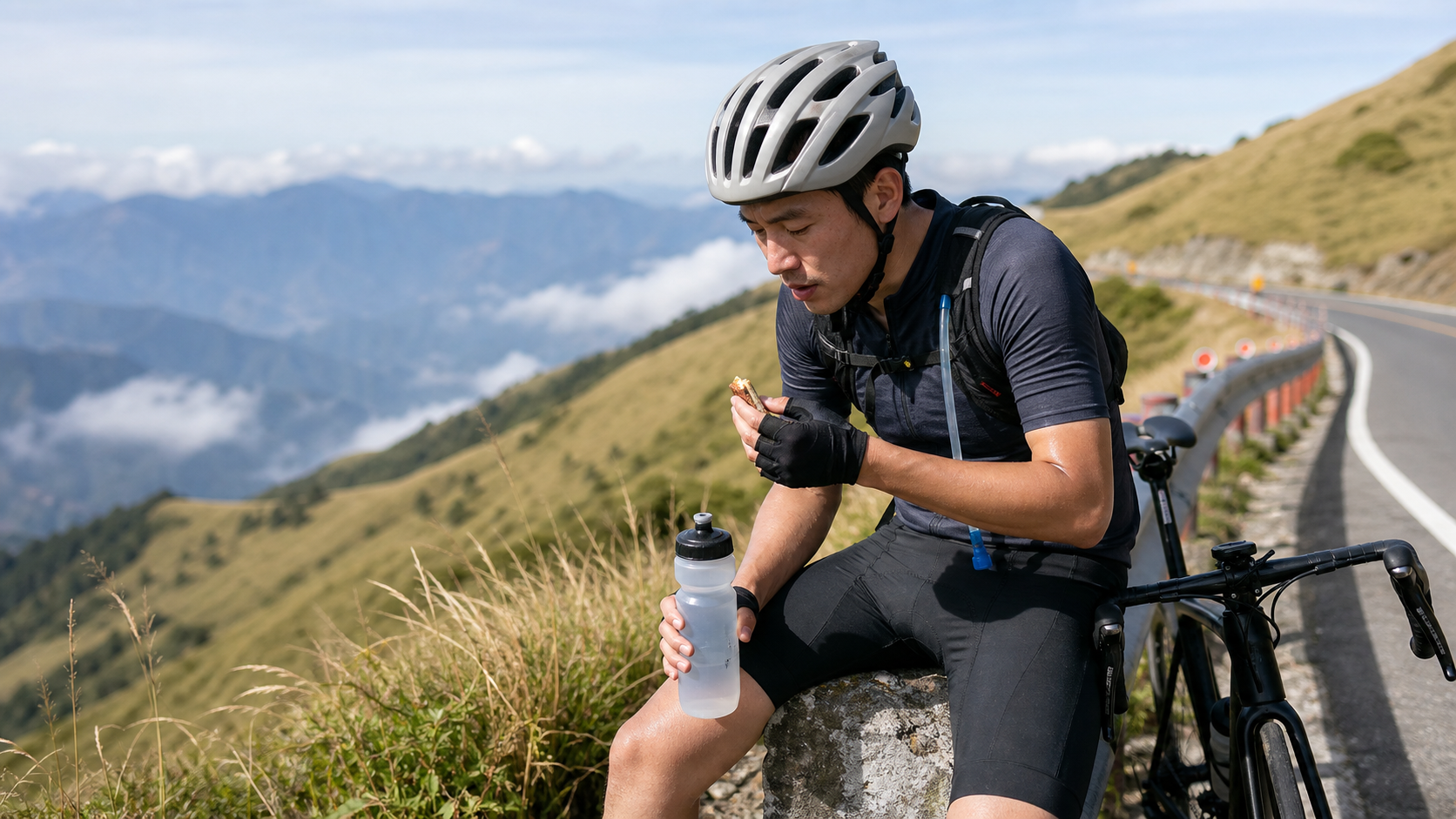
Starting with a Student Who Got Weaker, Not Stronger, on Wuling
A few years ago, I coached a very dedicated cyclist—let’s call him A-Kai. To prepare for the Taiwan KOM Challenge, he arranged a week of high-altitude training camp on Hehuan Mountain, staying in Cingjing at around 2,200 meters and riding the roads near Wuling every day. In theory, what he did was completely correct—the hypoxic stimulus at altitude stimulates red blood cell production, improving oxygen-carrying capacity back at sea level. But a week later, he came back to me pale, having lost nearly two kilograms, with an elevated heart rate all day, climbing power that had dropped instead of risen, and constant complaints: “After going up the mountain, I just can’t eat, and my mouth is always dry.”
Many people’s first reaction would be: “Did he overtrain?” But when I laid out his food diary, fluid intake, and the blood tests taken before departure, the answer was clear: He wasn’t beaten by training—he was beaten by high-altitude nutrition and hydration issues. Suppressed appetite, silent fluid loss, and insufficient iron stores stacked on top of each other, turning a plan that should have produced progress into a war of attrition.
In nearly fifteen years of working with athletes and recreational exercisers, I’ve seen too many people focus entirely on “how to ride, how to climb” for altitude training or mountain trips, while almost completely ignoring “what to eat, what to drink, and whether iron stores are sufficient once you’re up there.” This article is meant to fill that gap. Whether you’re heading to Hehuan Mountain, Yushan, or Wuling for a challenge, or simply planning a high-mountain trip, after reading this you’ll understand: why you lose your appetite at altitude, why dehydration sets in so easily, why iron becomes so critical, and most importantly—what to actually do about it in practice.
Why Does the Body Change the Moment You Go High? The Science
First, let’s clarify one thing: what Taiwanese people call “high altitude” actually covers a wide range. From a sports physiology perspective, it’s typically divided like this:
- Moderate altitude (approximately 1,500–2,500 meters): Below the main peak of Hehuan Mountain, around Cingjing and Lishan. Most people experience mild effects.
- High altitude (approximately 2,500–3,500 meters): Wuling (3,275 meters), the Hehuan Mountain peaks, near the Yushan trailhead. Physiological responses are noticeable.
- Very high altitude (above 3,500 meters): Yushan main peak (3,952 meters), Xue Mountain, etc. Responses are more severe.
The higher the altitude, the thinner the air, and the less oxygen you get with each breath. To cope with hypoxia, the body activates a cascade of compensatory responses: breathing becomes faster and deeper, heart rate rises, the kidneys excrete more water, and the bone marrow is stimulated to produce more red blood cells. These responses are inherently good—they’re the core of “altitude acclimatization.” But the side effects are—appetite is suppressed, fluid loss skyrockets, and iron demand surges.
Why Does Appetite Get Shut Off?
This is what most people notice the most. Almost anyone who has spent time at altitude experiences the strange phenomenon of “having a huge increase in activity but feeling zero hunger.” This isn’t psychological—it’s a real hormonal shift. Research indicates that altitude-induced appetite suppression is nearly universal, primarily regulated by changes in leptin (which makes you feel full), ghrelin (which makes you want to eat), and cholecystokinin. Simply put, the hypoxic environment lowers ghrelin and raises leptin, so your body keeps telling you “I’m full, no need to eat,” even while you’re burning through energy at a high rate.
To make matters worse, high altitude also raises basal metabolic rate and increases activity-related energy expenditure, while potentially impairing intestinal absorption. Studies have observed that climbers at altitude tend to lose fat first, then protein (i.e., muscle), often while in a state of chronic dehydration. For athletes trying to preserve power and muscle mass, this is a trend that must be actively countered.
Why Does Fluid Loss Happen So Fast?
Dehydration at altitude isn’t caused by just one factor—it’s several leaks happening at once:
- Huge increase in respiratory water loss: The mountain air is dry and cold, and your breathing is faster and deeper. Every exhale carries warm, moisture-laden air. Research indicates that below 4,000 meters, daily respiratory water loss can increase to roughly 1,900 milliliters for men and 850 milliliters for women, plus about 500 milliliters of extra urine output. In other words, just from “breathing” and “urination” alone, you could be losing one to two extra bottles of water per day compared to sea level—and you’d barely notice.
- Diuretic response: When you first arrive at altitude, your body increases urine output to adjust blood pH and concentration. Increased urine volume is a normal part of acclimatization.
- Blunted thirst sensation: Under hypoxia and cold, your thirst response often lags. By the time you feel thirsty, you’ve already been dehydrated for a while.
- Deliberately drinking too little: It’s cold, you don’t want to stop, restrooms are inconvenient—many people simply drink less, creating a vicious cycle.
Add all this up, and you’ll understand why A-Kai’s mouth was “always dry”—he was silently losing far more water each day than he realized, and drinking nowhere near enough to compensate.
To give you a clearer picture, I’ve organized the differences in nutrition and hydration between “sea level” and “high altitude” into the comparison table below. You’ll see that the environmental change alone is enough to disrupt someone who does everything right at sea level:
| Aspect | Sea Level (near 0 m) | High Altitude (approx. 2,500 m and above) |
|---|---|---|
| Appetite | Generally normal; hunger cues work | Clearly suppressed; often don’t feel hungry |
| Respiratory water loss | Relatively low | Significantly increased; dry, cold air plus faster breathing |
| Thirst sensation | Generally accurate | Often inaccurate and delayed; easy to underestimate dehydration |
| Preferred fuel | Carbohydrates or fat both work | More carbohydrate-focused (more oxygen-efficient, easier to consume) |
| Iron demand | Normal requirements | Increased due to accelerated red blood cell production |
| Recovery efficiency | Better | Worse; sleep and repair are more challenging |
Once you understand this table, you’ll see that high altitude isn’t about “taking your sea-level routine and moving it up the mountain unchanged.” Instead, you need to proactively adjust your eating, drinking, training, and recovery strategies in response to these changes.
Why Has Iron Become the Crucial Key?
The reason altitude training works is that hypoxia stimulates the bone marrow to “work overtime” producing red blood cells, increasing total hemoglobin mass and enhancing the blood’s oxygen-carrying capacity. But producing red blood cells requires raw materials, and iron is the most critical—and most easily deficient—raw material of all.
Here’s a crucial, research-backed concept: whether your iron stores (serum ferritin) are sufficient before you go to altitude directly determines whether your altitude training will be effective. A study published in PLOS ONE observed approximately 21 days of altitude exposure and found a clear dose-response relationship between iron supplementation and increases in hemoglobin mass: those who took no iron increased by about 1.1%, those taking 105 mg daily increased by about 3.3%, and those taking 210 mg daily increased by about 4.0%. In other words, with adequate iron supplementation, the red blood cell production effect can be three to four times greater than without.
Another review in sports medicine literature points out that endurance athletes—male or female—with serum ferritin below approximately 40 μg/L, or those training for extended periods at moderate altitude (approximately 2,000–3,000 m) or high altitude (above 3,000 m), may need oral iron supplementation to support accelerated red blood cell production. Some Olympic-level training programs even mandate: athletes with ferritin levels too low are not allowed to train at altitude—because training would be futile and could even cause problems.
This is exactly why I always insist that athletes like A-Kai who plan altitude training get blood tests before departure. Taiwan’s National Health Insurance and health check-up system is actually very convenient; a standard blood draw can check hemoglobin and hematocrit. Ferritin usually requires an additional out-of-pocket test, but the cost is low and well worth it.
Here’s a common misconception worth clarifying: “having anemia” and “having sufficient iron stores” are not the same thing. Some athletes have hemoglobin levels within the normal range on blood tests, appearing non-anemic, but their ferritin is already low—meaning “not yet anemic, but iron is nearly depleted.” This “subclinical iron deficiency” is not uncommon among endurance athletes, especially women, and it happens to impair the red blood cell production needed for altitude training. That’s why I emphasize checking ferritin, not just whether hemoglobin shows a red flag. This is also why proper interpretation should be left to a physician, looking at the entire panel of data together, rather than staring at one number and guessing.
How to Apply It in Practice? A Practical Guide to Appetite, Hydration, and Iron
Now that the concepts are covered, here comes the main event—what you should actually eat, drink, and how to supplement iron. I’ll use a few tables to turn this into something you can follow directly.
1. Combating Appetite Suppression: Switch from “Eat When Hungry” to “Scheduled Eating”
Since your body’s hunger signals malfunction at altitude, we can no longer wait for “hunger” to eat. The core principle I give my athletes is: at high altitude, eating is something that must be scheduled, reminded, and deliberately executed—not left to feeling.
Here’s the high-altitude eating strategy table I commonly use:
| Situation | Common Mistake | Recommended Approach |
|---|---|---|
| No appetite at all on day one at altitude | Skipping meals entirely | Eat small, frequent meals every 1.5–2 hours, focusing on “easy-to-eat, high-carb” foods (rice balls, bread, bananas, energy bars) |
| Don’t feel like eating during riding/climbing | Only drinking water, no food | Switch to liquid or semi-solid fuel (sports drinks, energy gels, congee, noodle soup) to bypass the “can’t chew” problem |
| Eating little at dinner | Just picking at a few bites | Increase the energy density of meals by using nuts, olive oil, peanut butter, etc., to raise calories per bite |
| Meat feels greasy and nauseating | Skipping protein entirely | Switch to easily digestible protein sources: soy milk, steamed eggs, fish, yogurt, whey protein drinks |
In practice, high-altitude diets should place extra emphasis on carbohydrates. There are two reasons: first, carbohydrates use oxygen more efficiently than fat in hypoxic conditions, making them “oxygen-saving” fuel; second, carbs are generally easier to eat than greasy, heavy meat dishes and less likely to trigger nausea. I typically recommend that on altitude training or event days, carbohydrates make up a higher proportion of total calories, with rice, noodles, sweet potatoes, and bananas as the mainstays.
Taiwanese people have an inherent advantage: our food delivery and convenience store culture is incredibly convenient. Along the route up Hehuan Mountain and Wuling, convenience store rice balls, tea eggs, bananas, soy milk, and oden are all excellent high-altitude fuel options. Rather than forcing yourself to eat a full meal you can’t stomach, make good use of these “easy-to-eat, readily available” local foods to gradually replenish calories.
2. Hydration: Switch from “Drink When You Think of It” to “Fixed Amounts at Fixed Times”
The hydration principle is the same as eating—don’t rely on thirst; rely on a schedule. Here’s the basic framework I give my athletes:
| Time Period | Hydration Strategy | Additional Notes |
|---|---|---|
| Day before going up | Drink normally but adequately; urine should remain light yellow | Arrive at altitude well-hydrated; don’t start with a fluid deficit |
| Static time at altitude (lodging, rest) | Total daily intake about 500–1,000 mL more than at sea level | To offset additional fluid loss from respiration and urination |
| During exercise/climbing | Take small sips every 15–20 minutes, including electrolytes | Small, frequent amounts absorb better than chugging a whole bottle at once |
| After exercise | Replenish based on losses; monitor body weight and urine color | Weigh yourself before and after exercise; replenish approximately 1–1.5 liters for every kilogram lost |
Here are several key points worth emphasizing:
First, plain water alone isn’t enough—you need electrolytes. Altitude-induced fluid loss also depletes sodium, potassium, and other electrolytes. If you only chug plain water, you might actually dilute your blood, risking “drinking a lot but still feeling off” or even hyponatremia. When exercising or sweating heavily, sports drinks, electrolyte tablets, or adding a pinch of salt to water are far better than plain water.
Second, use “urine color” and “body weight” as your two free dashboards. Dark yellow urine in small amounts is a warning sign of inadequate hydration; the ideal is maintaining a light yellow color. Body weight is the most honest indicator—if you lose weight rapidly over a few days at altitude, a large portion is often water, not actual fat loss.
Third, don’t “celebrate” with alcohol and excessive caffeine. Many people enjoy a drink while viewing the night scenery at altitude, or drink lots of coffee to stay alert, but both have diuretic effects—adding insult to injury in an environment already prone to dehydration. It’s not that you can’t touch them at all, but you need to consciously compensate with extra water.
III. Iron Supplementation: Test Blood First, Then Decide
Regarding iron, I must state this upfront: Iron supplementation is not “the more, the better,” but rather “supplement only if deficient, and test if supplementing.” Excess iron can deposit in organs such as the liver, and long-term overconsumption is harmful to the body. So it is absolutely not a matter of buying a large bottle from the pharmacy and gulping it down. The correct sequence is: first, get a blood test to check ferritin levels, then have a physician or nutritionist determine whether supplementation is needed and how much.
Below is a reference table summarizing common scenarios (must be paired with professional evaluation; do not use it as a self-prescription):
| Serum Ferritin Status | General Interpretation | Recommended Action |
|---|---|---|
| Low (e.g., below approximately 40 μg/L) | Insufficient iron stores, may affect red blood cell production and altitude adaptation | Seek medical evaluation; dietary adjustments and possibly oral iron supplements are often needed, with follow-up testing |
| Borderline low | Stores are not abundant | Increase dietary iron intake, monitor before heading to altitude, consult about supplementation if necessary |
| Normal range | Stores are sufficient | Maintain a balanced diet; generally no need for extra large-dose iron supplementation |
| High | Possible excess or other underlying conditions | Do not self-supplement iron; seek medical advice to clarify the cause |
Regarding iron supplementation, there are several practical details worth remembering:
- Dietary sources are always the first line of defense. Heme iron from animal sources (red meat, pork liver, duck blood, clams, fish with red flesh) has higher absorption rates; non-heme iron from plant sources (dark green vegetables, legumes, seaweed) has lower absorption rates, but consuming them with Vitamin C (such as guava, citrus, tomatoes) can aid absorption.
- Tea and coffee inhibit iron absorption. If you want tea or coffee after a meal, it is recommended to wait a while before drinking.
- Calcium and iron compete for absorption. If you need to supplement both calcium and iron, it is best to take them at different times.
- Common side effects of oral iron supplements include constipation, gastrointestinal discomfort, and dark stools. These are mostly normal, but if severe, you should return for a follow-up and adjustment.
- Due to menstruation, women have a higher risk of iron deficiency than men. If you are also an endurance athlete planning altitude training, you should pay even earlier attention to your iron status.
I usually recommend that athletes serious about altitude training get their blood tested at least three to four weeks in advance. Iron stores cannot be replenished in a day or two. If you discover your ferritin is too low right before heading to the mountains, it is often already too late to benefit from it during that training block.
IV. A Ready-to-Use “High-Altitude Daily Nutrition and Hydration Template”
After seeing the three tables above, many athletes still ask me: “Coach, so how exactly should I arrange my day?” So I have integrated all the principles above into a reference schedule for a “high-altitude training day.” This template is designed for an amateur rider staying in Cingjing and doing climbing training up near Wuling during the day. You can adjust it according to your own routine and body weight. This is just a demonstration framework, not a set of absolute prescribed numbers.
| Time | Eating Arrangement | Hydration Arrangement | Key Reminders |
|---|---|---|---|
| Wake up (approx. 06:30) | First, weigh yourself and check the color of your first urine | Drink about 300–500 ml of water upon waking | Body weight and urine color are your two free dashboards for the day |
| Breakfast (07:00) | Focus on high-carb, easy-to-eat foods: congee, steamed buns, bananas, soy milk, steamed eggs | Pair with a warm beverage; don’t just drink coffee on an empty stomach | Even if you have no appetite, eat anyway; this is a mission, not a choice |
| Before departure (08:30) | Have a banana or a small energy bar | Fill your bottle with an electrolyte-containing drink | Bring enough portable food; supply points on the mountain are scarce |
| During riding (every hour) | Consume easily digestible carbs every hour (energy gels, rice balls, crackers) | Take small sips every 15–20 minutes | Don’t wait until you’re hungry or thirsty; use your bike computer to remind yourself |
| Within 30 minutes after riding | Consume carbs plus some protein (whey drink, soy milk with a rice ball) | Replenish based on weight lost; roughly 1–1.5 liters for every 1 kg lost | Make good use of the recovery window; it’s your capital for training the next day |
| Lunch and afternoon | Eat normally, eat as much as you can; make good use of convenience stores | Keep sipping water to maintain light yellow urine | Don’t chug coffee in the afternoon to stay awake; it’s a diuretic |
| Dinner (18:30) | Increase energy density: rice with easily digestible protein and vegetables | Hydrate normally, but don’t drink too much before bed to avoid nighttime urination | If supplementing iron, take it separately from calcium-rich foods, tea, and coffee |
| Before bed | If total calorie intake for the day is clearly insufficient, have a cup of warm soy milk or milk | Just a small sip of water is fine | Sleep is key to altitude recovery; don’t stay up late looking at the night view |
The spirit of this template can be summed up in one sentence: At high altitude, “eating” and “drinking” must become proactive behaviors with a schedule and reminders, rather than passively waiting for your body’s signals. Because in a hypoxic environment, the signals your body gives you are inherently unreliable.
V. A Practical Tip on Energy Density
When you can’t eat much at high altitude, one of the most pragmatic countermeasures is to “increase the calories in every bite.” Take a bowl of rice, for example: you can drizzle a little olive oil, mix in some peanut butter, or add a few nuts, and the calories go up noticeably while the volume barely changes. For those whose appetite is suppressed and who feel full after two bites, this “small portion, high calorie” strategy is far more effective than forcing yourself to eat a huge plate. Common local options in Taiwan like black sesame paste, nuts, peanut soup, or miso soup with added ingredients are all good choices.
VI. Pre-Departure Preparation Timeline
Many nutrition and hydration issues are actually decided “before you even go up the mountain.” I’ve organized what you should do before departure into a timeline, especially suitable for those seriously preparing for a race or doing altitude training for the first time.
| Time Point | What to Do |
|---|---|
| 3–4 weeks before departure | Schedule a blood test to check hemoglobin and ferritin; if iron stores are low, seek medical evaluation, adjust diet early, or supplement iron as prescribed and follow up |
| 1–2 weeks before departure | Rehearse high-altitude eating and hydration routines (small frequent meals, scheduled hydration, adding electrolytes); get used to it during sea-level training first |
| 3–5 days before departure | Prepare portable food and electrolyte supplements; plan out convenience stores and supply points near your accommodation |
| 1 day before departure | Sleep well, hydrate fully, and head up the mountain with adequate fluids and energy; don’t depart fatigued or dehydrated |
| Days 1–2 on the mountain | Focus on acclimatization; keep training intensity low and prioritize hydration, eating, and sleep |
| Mid-to-later phase on the mountain | Gradually increase volume; continuously monitor your adaptation using body weight, urine color, heart rate, and power |
The core concept of this table is: High-altitude nutrition and hydration management is a complete process that starts before you leave, not something you “improvise after arriving.” Especially with iron, because stores take time to build up, the earlier you address it, the better. Taiwan’s mountains are easily accessible and you can go on a whim, but precisely because it’s so convenient, many people completely skip the preparation phase, wasting a good opportunity or even incurring unnecessary risk.
Common Mistakes and Corrections
Over the years, the high-altitude nutrition and hydration mistakes I’ve seen could almost be compiled into a textbook titled “Don’t Do This.” Here are the most common and most damaging ones.
Mistake 1: “Since I can’t eat anyway, I’ll just eat less and lose some weight while I’m at it.”
This is one of the most dangerous mindsets. High altitude already promotes muscle loss; if you deliberately undereat, you’re accelerating muscle breakdown and depleting your energy reserves. The result is decreased power output, accumulated fatigue, weakened immunity, and a higher risk of catching a cold or encountering problems. Correction: Treat eating as a scheduled task. It’s better to eat small, frequent meals and make up calories with easily digestible carbs than to let yourself go hungry.
Mistake 2: “If I don’t feel thirsty, I must be hydrated enough.”
As mentioned earlier, your thirst sensation becomes unreliable at high altitude. By the time you feel thirsty, you’re usually already dehydrated. Many instances of high-altitude discomfort (headache, fatigue, decreased concentration) are partly caused by dehydration, yet they are often mistaken for just “altitude sickness” or “being tired.” Correction: Hydrate on a fixed schedule and quantity, using urine color and body weight as your dashboards. Don’t wait for thirst.
Mistake 3: “Just drink plain water, and the more the better.”
Chugging plain water without replenishing electrolytes can dilute blood sodium, making you feel unwell, and in severe cases, it can even be dangerous. Correction: During exercise and heavy sweating, you must replenish with electrolyte-containing drinks, not just plain water.
Mistake 4: “Iron supplementation is always effective—buying it yourself is definitely the right call”
Taking large amounts of iron supplements without a blood test is the behavior I most want to discourage. Excess iron is harmful to the body, and if your problem isn’t actually iron deficiency, supplementing won’t help and may even cause harm. Correction: Get a blood test first, let professionals make the judgment, and follow up after supplementation—never self-prescribe.
Mistake 5: “Push to the max on the first day up the mountain”
Many people rush to complete their hardest workout as soon as they arrive at altitude, but the body is still adapting to hypoxia and dehydration. Overtraining on day one often leads to a crash in the following days. Correction: Give your body the first day or two to adapt, prioritize hydration, food intake, and sleep, and increase training intensity progressively.
Mistake 6: Confusing “simple discomfort” with “altitude sickness requiring medical attention”
This one is especially important. No matter how well you manage nutrition and hydration, it cannot replace vigilance for Acute Mountain Sickness (AMS). If you experience persistent and worsening headache, nausea or vomiting, unsteady gait, confusion, or severe breathlessness even at rest, these may be signs of High-Altitude Cerebral Edema (HACE) or High-Altitude Pulmonary Edema (HAPE). The most effective response is to descend as quickly as possible and seek medical care—never try to tough it out by drinking more water or eating more food. Taiwan’s high mountains (Hehuan Mountain, Jade Mountain, etc.) are highly accessible, but the altitude poses real risks—better to err on the side of caution.
Actionable Advice for Readers at Different Levels
Everyone goes to high altitude for different reasons. I’ve organized my recommendations into three common groups—find the one that fits you.
General High-Altitude Travelers (driving up Hehuan Mountain, vacationing in Cingjing)
Your priority isn’t training effect—it’s comfort, safety, and not ruining the trip.
- Start hydrating well the day before you go up; don’t arrive already dehydrated.
- Once at altitude, drink small sips on a schedule even if you don’t feel thirsty, and carry a water bottle with you.
- Bring some easy-to-eat snacks (bananas, crackers, onigiri) and eat small amounts frequently.
- Limit alcohol and reduce excessive caffeine intake.
- If you experience persistent headache, nausea, or shortness of breath, prioritize descending and seek medical care if needed.
Amateur Sports Enthusiasts (aiming to conquer Wuling, KOM, cycling climbs)
Your priority is performing as well as possible while protecting your body.
- If you’re serious, get a blood test three to four weeks before departure to check ferritin and hemoglobin; address any iron deficiency first.
- At altitude, increase your carbohydrate ratio and use convenience store food for fueling.
- Hydrate on a fixed schedule with electrolytes; weigh yourself before and after exercise to track fluid loss.
- Spend the first day or two adapting, increase training intensity progressively, and don’t blow up on day one.
- Sleep and recovery matter just as much—your body works harder to repair itself in a hypoxic environment.
Advanced Athletes Preparing for Competition (planning systematic altitude training camps)
Your priority is maximizing the benefits of altitude training while minimizing risk.
- Plan ferritin management well in advance—ideally maintain your iron stores throughout the entire season rather than scrambling at the last minute. Any iron supplementation should be paired with professional evaluation and follow-up.
- Treat eating and hydration like training: quantify and record them, and use data (body weight, urine color, heart rate, power output) to monitor your adaptation.
- Build a team with your coach, physician, or sports nutritionist to look at blood work, diet, and training plans together.
- Respect individual differences: some adapt fast, some adapt slowly. Someone else’s successful plan may not work for you—base everything on your own response data.
Questions Trainees Ask Me Most Often (FAQ)
Q1: I’m just driving up to Hehuan Mountain for a two-day trip. Do I really need to be this meticulous?
You don’t need the same level of quantified management as an athlete, but hydration and easy-to-eat snacks are non-negotiable. Many people in Taiwan drive up to Hehuan Mountain for sunrise or snow, only to end up with headaches, nausea, and a ruined trip because they didn’t sleep well the night before and didn’t drink enough water. You don’t need a blood test or iron supplements, but doing these few things—hydrating well before going up, carrying a water bottle and drinking on a schedule, bringing crackers and bananas for small frequent meals, and limiting alcohol—will dramatically reduce your chances of feeling unwell.
Q2: After altitude training, how long do the benefits last when I return to sea level?
It varies by individual and depends on how long you stayed at altitude, how well you adapted, and whether your iron stores were adequate. Generally speaking, the aerobic advantages gained at altitude are time-limited and gradually fade after returning to sea level, which is why serious competitors time their altitude training within a specific window before their target race. But this involves individualized planning, so it’s best to work it out with your coach. This article focuses on “don’t let nutrition and hydration hold you back while you’re up there”—how to structure your training plan and timing is a separate topic in training programming.
Q3: Can I just buy iron supplements at the pharmacy and take a round before departure as insurance?
I strongly advise against it. As I’ve emphasized repeatedly: iron deficiency doesn’t always require supplementation, supplementation isn’t always effective, and too much iron is harmful. The correct sequence is always “get a blood test first, let professionals judge, and follow up after supplementing.” Medical care is easily accessible in Taiwan—spending a little extra on a consultation fee and a self-paid ferritin test is far more cost-effective and safer than blindly supplementing iron.
Q4: Should I eat more protein at high altitude to prevent muscle loss?
You’re on the right track—high altitude tends to cause muscle loss, and maintaining adequate, easily digestible protein intake helps. But keep two things in mind: first, don’t sacrifice carbohydrates for protein—in a hypoxic environment, carbs are the more oxygen-efficient and easier-to-eat primary fuel; second, choose easily digestible protein sources (soy milk, steamed eggs, fish, whey, yogurt)—heavy, greasy cuts of meat often make you feel more nauseated and less able to eat at altitude.
Q5: I have a chronic condition (such as high blood pressure, diabetes, heart disease, or anemia). Can I go to high altitude?
This absolutely requires individualized assessment—it can’t be decided by an article. High altitude poses greater challenges to the cardiovascular system, blood sugar, and blood oxygen levels, and the risks are higher for people with chronic conditions. Hydration, diet, and medications may all need adjustment. Please consult your primary care physician before departure and prepare based on your own condition. This isn’t being overly cautious—it’s being responsible.
A Closing Case Study: Getting It Right
Let’s return to A-Kai’s story. We eventually replanned his second altitude training camp: four weeks before departure, he got a blood test that confirmed low ferritin. After physician evaluation, he adjusted his diet and did short-term iron supplementation, tracking until his stores recovered. During the camp, he switched to small, frequent meals focused on carbohydrates, using convenience stores for fueling. Hydration became scheduled and quantified with electrolytes, and he weighed himself morning and night while checking urine color. The first two days were dedicated to adaptation before gradually increasing the load.
The result? His weight stayed stable, his heart rate stopped spiking all day, and his climbing power improved as expected after returning to sea level. Same mountain, same effort—the only difference was that this time, he didn’t let nutrition and hydration hold him back. That’s the core message I want to convey through this article: performance at high altitude is often lost not in leg strength, but in the details you thought didn’t matter.
Appetite gets switched off—so schedule your eating. Water leaks away silently—so hydrate on a timer. Iron is the raw material for red blood cells—so test in advance and supplement only if deficient. Get these three things right, and every high-altitude trip you take will truly be effective training, an enjoyable adventure, and a safe journey.
Finally, I want to say this: high altitude is a unique resource for athletes in Taiwan. Hehuan Mountain, Wuling, and Jade Mountain are right at our doorstep—heights that people in other countries have to fly far to reach, we can get to in a few hours by car. Precisely because it’s so close and so convenient, I hope we treat it the right way—getting the “invisible but decisive” details of nutrition, hydration, and iron right, so that every trip up is a gain rather than a drain. Next time you head for the heights, ask yourself these three questions first: Is my eating schedule set? Is my hydration rhythm in place? Are my iron stores taken care of? If you can answer yes, you’ve already won before you start.
This article is educational content and cannot replace individual diagnosis and treatment advice from physicians, physical therapists, or nutritionists. If you have a chronic condition (such as diabetes, high blood pressure, heart disease, or anemia), or are planning high-altitude activities or training, please consult your physician and relevant professionals in advance for individualized assessment and adjustments. Acute Mountain Sickness carries real risks—if severe or worsening symptoms occur, descending and seeking medical care promptly should be the priority.
References
- Pre-Altitude Serum Ferritin Levels and Daily Oral Iron Supplement Dose Mediate Iron Parameter and Hemoglobin Mass Responses to Altitude Exposure (PLOS ONE): https://journals.plos.org/plosone/article?id=10.1371%2Fjournal.pone.0135120
- Nutrition and Altitude: Strategies to Enhance Adaptation, Improve Performance and Maintain Health: A Narrative Review (Sports Medicine): https://link.springer.com/article/10.1007/s40279-019-01159-w
- Nutrition and Hydration for High-Altitude Alpinism: A Narrative Review (PMC): https://pmc.ncbi.nlm.nih.gov/articles/PMC9965509/
- Fluid Metabolism at High Altitudes (NCBI Bookshelf): https://www.ncbi.nlm.nih.gov/books/NBK232881/
Related Reading
- High-Altitude Diet and Hydration: Eating and Drinking Strategies Above 3,000 Meters
- Identifying and Managing Exercise Dehydration: A Complete Guide to Severity Levels, Symptoms, and Rehydration Strategies
- High-Altitude Nutrition Strategies: Metabolic Adjustments for Mountaineering Training and Endurance Sports
- Nutritional Adjustments for High-Altitude Races: How Your Diet Should Change When the Air Gets Thin
雨戰! 西進武嶺員工旅遊 加料 各路段大數據分析 | 同事端出5公斤的公路車來挑戰!? EP1
4 年前
單車 一日北高 ( 雙城 ) 肥宅雙人瘋狂行 紀錄片 REACTO
10 年前
Never Stop 西進武嶺 前後雙機 完整全程錄影 訓練台 實境
8 年前
FTL 與 SYB 車隊專訪 西進武嶺 實用攻略分享! 2小時 如何練?!你不知道的眉角!新手準備武嶺必看 EP1 | 實力派女車友 | 精華版 | 公路車 | CTYeh
4 年前
大武山20%魔王陡坡【JJSC南台灣遊騎Day2】!屁股真的要裂開了...凡士林抹滿也沒用?神秘金教堂還有超便宜夜市
3 個月前
#KOM 夏季登山王之路 比賽實況 #東進武嶺
7 年前
秘境雪場 日本 八甲田 冰樹探險與滑雪體驗 ft. Q老師 & 運動生活
7 年前
大禹嶺 到 武嶺牌樓 全程前後實況錄影 | 北進武嶺 | 東進武嶺 | KOM | 訓練台 | 坡度分析 | Taiwan KOM Last 10 km HARD | 公路車
6 年前