Exercise Nutrition for Menopausal Women: A Complete Supplementation Strategy from Metabolic Changes to Bone and Muscle Health
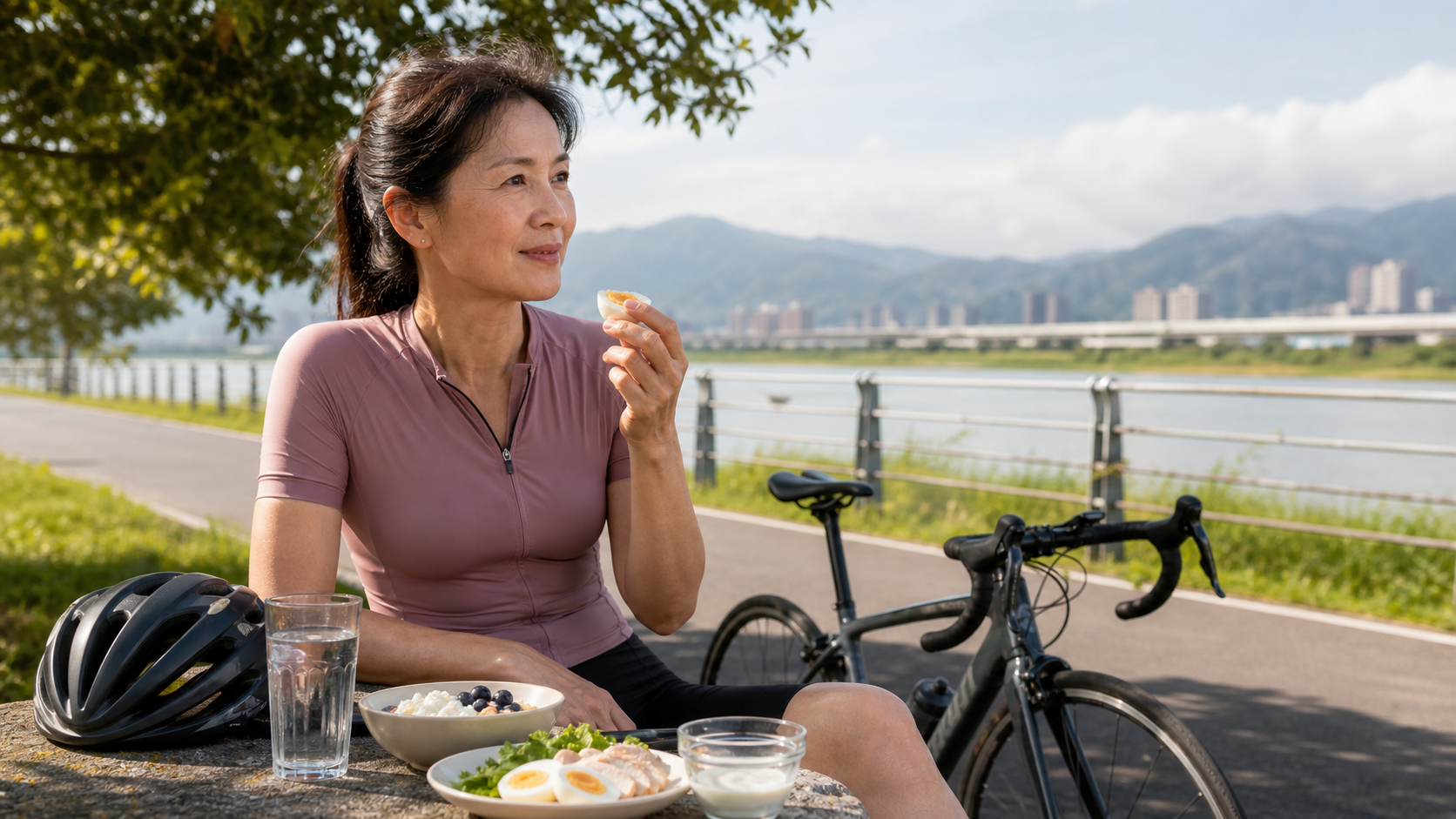
Let Me Start with a Case I’ll Never Forget
A few years ago, a 52-year-old woman—let’s call her Sister Yuqin—was half-persuaded, half-dragged in to see me by her daughter. She’d been riding a road bike for three or four years. Every weekend, she used to ride with her group from Guandu to Tamsui and back, covering 60 kilometers without breaking a sweat. But over the previous six months, she told me, “Coach, I don’t know what’s wrong. Same route, but in the second half, I feel completely drained. My legs have no power, I sleep terribly at night, and my weight keeps creeping up even though I’m not eating more.”
She thought she was just “getting old, getting slower,” and even started wondering if she should just quit riding. But when we laid out her menstrual history, sleep patterns, and food diary, the answer was clear: she was going through perimenopause, and her fueling strategy was still stuck on the one she’d used in her forties.
I want to set the tone for this entire article with one statement: Menopause is not “the beginning of a decline”—it’s a signal from your body telling you it’s time to re-strategize your fueling and training. What many female athletes lose during this phase isn’t their ability, but the opportunity to “use the right methods.” In this article, drawing on my years of experience coaching athletes, I want to explain the metabolic changes of menopause and the nutritional strategies for bone and muscle health—clearly, and in a version that’s actually achievable for you here in Taiwan, where eating out is the norm and the weather is hot.
The Conceptual Foundation: What Actually Changes During Menopause?
The Decline in Estrogen Is the Core of It All
The most critical physiological change in menopause is the gradual decline of ovarian function and a significant drop in estrogen secretion. The average age of menopause for Taiwanese women is around 50, but the transition can quietly begin around age 45 and stretch over several years. Estrogen isn’t just about reproduction; it’s a “whole-body” hormone that deeply affects metabolism, bones, muscles, blood vessels, and mood.
When estrogen declines, several changes occur that are particularly noticeable for athletes:
- Decreased basal metabolic rate: Reduced muscle mass combined with hormonal changes means fewer calories burned at rest, making it easier to store fat even if you eat the same as before.
- Shift in fat distribution: Fat moves from the hips and legs toward the abdomen, creating what’s called “central obesity,” which is also linked to increased cardiovascular and metabolic risk.
- Reduced muscle-building efficiency: Estrogen has a protective effect on muscle. When it declines, the muscles’ response to protein stimulation becomes blunted—what’s known as “anabolic resistance.” The same training and protein intake build less muscle than they did when you were younger.
- Rapid bone loss: This is the point that deserves the most attention. The first five to ten years after menopause are when bone loss occurs fastest.
Bones Are Constantly Being “Torn Down and Built Up”
Many people think of bones as fixed, unchanging hard tissue, but they’re actually living tissue, constantly undergoing a remodeling process of “breaking down old and building new”—one group of cells dismantles old bone, while another group lays down new bone. Estrogen’s role in this balance is, simply put, to “apply the brakes,” suppressing excessive breakdown. When estrogen drops, those brakes loosen, the rate of breakdown exceeds the rate of building, and bone mass is gradually lost.
This also explains why calcium, vitamin D, and weight-bearing exercise need to be done together: Calcium is the raw material for building new bone, vitamin D is responsible for transporting that material in, and exercise is the signal telling your bones to “get stronger.” Miss any one piece, and the results are diminished. This isn’t a sales pitch from anyone—it’s the basic logic of bone physiology.
Why “Eating the Same and Training the Same” Leads to Decline
Back to Sister Yuqin’s case. Her problem wasn’t a lack of effort; it was that her body’s “demands” had increased, but the “supply” hadn’t kept up. The protein that used to be enough with casual eating was now insufficient due to anabolic resistance. She never needed to supplement calcium before, but now her bones were losing mass at an accelerated rate. This is why I often tell my athletes: Menopause is a stage that requires you to “proactively add more.” Passive maintenance equals gradual decline.
Three Stages, Different Needs
Many people talk about “menopause” as a single point in time, but it’s actually a layered process. I usually break it into three stages when communicating with my athletes, because the key strategies differ slightly for each:
| Stage | General Characteristics | Nutrition & Training Focus |
|---|---|---|
| Perimenopause | Irregular periods, night sweats, poor sleep, fluctuating hormones | Stabilize protein distribution, build a foundation with regular resistance training, start prioritizing sleep and magnesium |
| Around Menopause | Around the one-year mark of no periods, vasomotor symptoms often more pronounced | Bone loss is fastest; calcium, vitamin D, and weight-bearing exercise must be in place |
| Postmenopause | Symptoms mostly subside, but bone and cardiovascular risks persist long-term | Long-term maintenance of muscle and bone density, regular follow-up on lab data |
The key takeaway from this table is: Which stage you’re in determines what you should prioritize right now. The focus during perimenopause is “building the foundation of good habits,” around menopause it’s “protecting your bone bank,” and postmenopause it’s “long-term maintenance and monitoring.” You don’t need to do everything at once, but you need to know where you stand.
The Scientific Foundation: Three Main Nutritional Pillars
For menopausal female athletes, I condense the nutritional focus into three main pillars: Protein (to preserve muscle), Calcium and Vitamin D (to preserve bone), and Overall Energy and Micronutrient Balance. Let’s go through them one by one.
Pillar One: Protein—The First Line of Defense Against Muscle Loss
The general adult Recommended Dietary Allowance (RDA) for protein is about 0.8 grams per kilogram of body weight. But for menopausal and postmenopausal women, multiple studies and expert consensus indicate that this number is clearly insufficient.
Based on current literature and the direction of expert panels (such as the PROT-AGE recommendations for older adults), a more reasonable reference range is:
| Population & Goal | Protein Recommendation per kg Body Weight | Approximate Daily Amount for a 60 kg Person |
|---|---|---|
| General adult RDA (baseline) | 0.8 g | ~48 g |
| Menopausal/postmenopausal muscle maintenance | 1.0–1.2 g | ~60–72 g |
| Regular resistance or endurance training | 1.2–1.4 g | ~72–84 g |
| Fat loss while preserving lean tissue | 1.4–1.6 g | ~84–96 g |
(These are general reference ranges; actual needs should be individualized based on health status, kidney function, and activity level.)
There are two practical points I always remind my athletes about:
- Distribution matters more than total amount. Many Taiwanese people eat a very casual breakfast (a bread roll with milk tea) and then have a big dinner. But muscle synthesis has a “ceiling effect”—if you cram too much protein into one meal, the excess doesn’t build more muscle. A better approach is to aim for about 20–30 grams of protein at each meal, spread evenly across three to four meals. This provides more sustained stimulation for muscle throughout the day.
- Refuel after training. Within one to two hours after resistance training or a long ride, having a meal or snack with quality protein is especially helpful for menopausal women fighting anabolic resistance.
Pillar Two: Calcium and Vitamin D—Protecting Your Bone Bank
Accelerated bone loss after menopause is the health issue you can’t afford to ignore at this stage. Based on recommendations from multiple international organizations (such as the U.S. National Academy of Medicine, IOM):
| Nutrient | Reference Recommendation for Women Over 50 | Tolerable Upper Level |
|---|---|---|
| Calcium | ~1,000–1,200 mg per day (diet plus supplements) | ~2,000 mg per day |
| Vitamin D | ~600 IU for ages 51–70, ~800 IU for ages 70+ | ~4,000 IU per day |
(For those already diagnosed with osteoporosis, some clinical recommendations fall in the range of calcium 1,000–1,200 mg and vitamin D 800 IU; actual dosage should be determined by your physician based on your bone density and lab results.)
I want to emphasize a few points:
- Prioritize calcium from food. Taiwanese people tend to have insufficient calcium intake, but supplementing doesn’t mean you should start popping calcium pills right away. Dairy products (milk, yogurt, cheese), dark leafy greens (Chinese kale, amaranth, sweet potato leaves), traditional tofu (firm tofu coagulated with calcium sulfate or calcium chloride has decent calcium content), dried baby anchovies, and black sesame seeds are all good sources. Get your diet in order first, then use supplements to fill the gaps—not the other way around.
- Vitamin D is the transporter for calcium. Although Taiwan has plenty of sunshine, many people avoid the sun, fear tanning, or spend long hours in air-conditioned rooms, so the proportion of people with low vitamin D levels is actually not insignificant. When vitamin D is insufficient, no matter how much calcium you take in, it won’t be absorbed into your bones.
- Exercise itself is the most powerful “bone-building agent.” I’ll expand on this later, but remember this: Weight-bearing and impact exercise stimulates bones to get stronger—something no supplement can replace.
Pillar Three: Overall Energy and Micronutrient Balance
Many menopausal women, worried about gaining weight, actually eat too little and fall into the trap of “energy deficiency”—what sports science calls relative energy deficiency (low energy availability). Eating too little long-term doesn’t help with fat loss; it actually accelerates muscle and bone loss, disrupts hormones, and makes sleep and mood worse.
Beyond the three main pillars, there are several nutrients that are easily overlooked but important for female athletes at this stage:
- Magnesium: Involved in muscle relaxation, nervous system stability, and sleep. Helpful for menopausal women who often complain of poor sleep and cramps. Nuts, dark leafy greens, and whole grains are good sources.
- Omega-3 fatty acids: Beneficial for blood lipids and chronic inflammation. Mackerel, Pacific saury, and salmon are good choices.
- Iron: After menopause, with menstruation stopped, most women’s iron needs actually decrease. At this point, there’s no need to deliberately supplement large amounts of iron (unless diagnosed with anemia). Excessive iron supplementation isn’t necessarily beneficial—this differs from the reproductive years.
- The synergy of Vitamin K and protein: A balanced intake of dark leafy greens and adequate protein has a multiplicative effect on bone health. Bone isn’t just calcium; it’s also a protein matrix, so “eating enough protein” is itself part of bone protection—this is often overlooked.
Here I want to reiterate the logic of “food first.” You’ll notice that the magnesium, Omega-3s, dark leafy greens, soy products, and deep-sea fish mentioned above are all things you can find on an everyday dining table. Rather than agonizing over a shelf of supplements at the pharmacy, focus on filling your plate with color and protein first. Supplements are always in the role of “filling gaps,” not the main character; the real foundation is the meals you actually eat every day.
Practical Methods: Turning Principles into Things You Can Actually Do at the Table
Now that the concepts are covered, I know what you really want to ask: “Coach, so what do I eat for lunch today?” Below, I’ve turned it into a version that’s actually achievable for people in Taiwan.
Sample Daily Protein Distribution (for a ~60 kg woman with regular cycling habits)
| Meal | Suggested Content | Approximate Protein |
|---|---|---|
| Breakfast | A cup of unsweetened soy milk + two eggs + a serving of sweet potato or whole wheat toast | ~20 g |
| Lunch | Bento box with half the rice removed, add a braised chicken leg or mackerel, add an extra serving of blanched vegetables | ~28 g |
| Afternoon/Post-ride | A cup of unsweetened yogurt, or a small handful of edamame + a piece of fruit | ~12 g |
| Dinner | Firm tofu + a palm-sized portion of lean meat or fish + two servings of dark leafy greens | ~25 g |
This comes to roughly 85 grams for the day, right in line with the recommended range for regular training, and each meal has a clear protein centerpiece—which is more effective than just “hitting the daily total.”
Protein Content Reference for Common Taiwanese Foods
To help you gauge portions more easily, I’ve put together a comparison of protein sources commonly available in Taiwan, so you can combine them to hit your 20–30 gram per meal target. These are approximate values for estimation purposes:
| Food | Common Portion | Approximate Protein |
|---|---|---|
| Egg | 1 | ~6–7 g |
| Unsweetened soy milk | 260 ml cup | ~7–9 g |
| Firm tofu | Half a block | ~8–10 g |
| Chicken breast | One palm (about 100 g) | ~22–25 g |
| Mackerel/Salmon | One fillet (about 100 g) | ~18–20 g |
| Unsweetened yogurt | One cup | ~8–10 g |
| Edamame | One small bowl | ~10–12 g |
Looking at this table, you’ll notice something: A breakfast of just one egg and a cup of milk tea gives you less than 10 grams of protein—far from the “20–30 grams per meal” target. This is also the hidden reason many menopausal women can’t build muscle back—it’s not a lack of effort, the quantity simply isn’t there.
Practical Tips for Eating Out in Taiwan
Eating out is so convenient in Taiwan that it actually leads many people to not get enough protein and eat too many refined carbs. Here are a few “eating-out tweaks” I often teach my athletes:
- Buffet-style (自助餐): First grab two protein items (braised egg, chicken leg, fish, tofu), then two vegetable dishes, and cut the rice in half.
- Convenience stores: Tea eggs, unsweetened soy milk, chicken breast salad, and unsweetened yogurt are protein refuels you can grab anywhere.
- Breakfast shops: Upgrade your ham-and-egg toast to “cheese egg + add an extra egg,” and switch the drink to unsweetened soy milk or unsweetened fresh milk tea.
- Night markets: At braised food stalls, choose dried tofu, chicken gizzards, and blanched vegetables; salt-water chicken is a decent protein source, just watch the sodium.
The “Nutrition + Exercise” Dual Engine for Bone Health
Just supplementing calcium without exercising will yield diminished results. I always make sure to schedule two types of bone-stimulating training into my menopausal athletes’ programs:
- Resistance training: Two to three times per week, focusing on large muscle group movements like squats, deadlifts, rows, and shoulder presses, with progressive overload. The force of muscles pulling on bones is exactly the stimulus that triggers bone formation.
- Impact activities: While pure cycling is excellent for cardiovascular fitness and leg muscular endurance, it’s a “non-weight-bearing” exercise and provides limited bone stimulation. So I recommend menopausal women who love cycling to add activities with ground reaction forces—like brisk walking, jogging, jump rope, or climbing stairs—to make up for cycling’s lack of bone stimulation.
This point is a wake-up call for many seasoned cyclists—No matter how many kilometers you ride, it doesn’t mean your bones are being well maintained. Sister Yuqin later added twice-weekly weight training and some brisk walking. Six months later, her follow-up bone density hadn’t declined, and her energy and sleep had noticeably improved.
What Does a Real Weekly Schedule Look Like?
After hearing the principles, many athletes still ask, “So what does a specific week look like?” Here’s a beginner-level weekly example I designed for menopausal athletes like Sister Yuqin who have a cycling habit and want to maintain both muscle and bone. You can adjust it flexibly based on your own schedule:
| Day | Training Content | Nutrition Focus |
|---|---|---|
| Monday | Resistance training (lower body focus: squats, deadlifts, lunges) | Refuel with protein + carbs within 1–2 hours after training |
| Tuesday | Easy ride 40–60 minutes or rest | Normal three meals, protein evenly distributed |
| Wednesday | Brisk walk or jog 30 minutes (impact for bone stimulation) | Pay attention to hydration and electrolytes, especially in summer |
| Thursday | Resistance training (upper body & core: rows, shoulder presses, planks) | Refuel with protein after training; add a serving of dark leafy greens at dinner for calcium |
| Friday | Rest or stretching, yoga | Supplement magnesium (nuts, dark leafy greens) to aid relaxation and sleep |
| Saturday | Long ride (group route, e.g., Guandu–Tamsui) | Fuel regularly during the ride, have a proper meal afterward |
| Sunday | Complete rest or a walk | Review the week’s diet, fill in any gaps in protein and vegetables |
The spirit of this table isn’t to “copy it exactly,” but to show you that—resistance, impact, cycling, and rest—these four types of stimuli should rotate, and nutrition should follow training intensity. Eat a bit more on heavy training days, simply eat well on rest days, and over time, body composition and bone density will gradually move in the right direction.
Hydration and Electrolytes for Summer Riding
Taiwan’s summers are hot and humid, and menopausal women are already more prone to night sweats and impaired thermoregulation. For longer rides, hydration needs to be a priority. Here are the simple principles I give my athletes:
| Scenario | Refueling Recommendation |
|---|---|
| Short ride under 1 hour | Mostly plain water; hydrate well before heading out |
| 1–2 hours with noticeable sweating | Take small sips every 15–20 minutes, alternating with an electrolyte drink containing sodium |
| Over 2 hours or during peak heat | Electrolytes + small amounts of carbs; avoid drinking only plain water to prevent hyponatremia |
The key is don’t wait until you’re thirsty to drink—by the time you feel thirsty, your body has already been dehydrated for a while. If you also have cardiovascular concerns, be proactive about slowing down and extending rest breaks during peak heat hours. Safety comes before performance.
How Sister Yuqin Adjusted Later
With the principles covered, I want to bring you back to Sister Yuqin’s story to see how these principles play out in real life, because abstract advice often gets stuck at the “how do I start” step.
In the first month, we didn’t overhaul everything. We only made three small changes. First, we swapped her original breakfast of “a pineapple bun with milk tea” for “unsweetened soy milk + two eggs + a slice of sweet potato.” Just that one step took her breakfast protein from nearly zero to almost 20 grams. Second, for lunch, we cut the rice in half, added a braised chicken leg, and I required her to “see a piece of meat, a piece of fish, or a piece of tofu at every meal.” Third, we scheduled two simple weight training sessions per week, each under 40 minutes, starting with bodyweight squats and resistance band rows—no pursuit of heavy weight at all, just correct form and consistency.
At the end of the first month, she told me the most noticeable change wasn’t her weight, but that “I don’t feel as sleepy in the afternoon, and I have more power in the second half of my rides.” This is actually very typical—when protein and training stimulus are brought up to par, your body’s sensations often give you feedback before the scale does. After three months, we gradually added brisk walking and slightly heavier training. Six months later, at her follow-up, her bone density was maintained and her sleep had improved. Her most frequent saying was: “So it wasn’t that I couldn’t do it—I was just eating wrong and training wrong before.”
I’ve written this part in some detail to let you know—Change doesn’t have to happen all at once. Starting with the smallest, easiest habit is often the path that lasts.
Common Mistakes and Corrections
Having coached so many menopausal female athletes, I’ve found that everyone tends to fall into similar traps. Here are the most common ones, along with directions for correction.
Mistake One: Eating Too Little for Fear of Getting Fat
This is the most common and the most damaging. As mentioned earlier, long-term energy deficiency accelerates muscle and bone loss and makes your metabolism more “energy-efficient,” creating a vicious cycle.
Correction: Shift your goal from “eat as little as possible” to “eat enough nutrition, train with enough intensity.” Instead of obsessing over calories, focus on getting your protein and vegetables in at every meal and cutting refined sugar and sugary drinks. Your body composition will gradually move in the right direction.
Mistake Two: Only Doing Cardio, Never Touching Weights
Many women worry that strength training will make them “look like a bodybuilder.” But the female hormonal environment makes it hard to build bulky muscles, and even more so after menopause. Giving up strength training means giving up the most effective way to preserve muscle and bone.
Correction: Treat resistance training as “prescription exercise for menopause.” Two to three times per week, progressing gradually. Starting with bodyweight movements or light weights is fine—the key is consistency and progression.
Mistake Three: Treating Supplements as a Miracle Cure
Some athletes, upon hearing they’re deficient in calcium or vitamin D, rush to the pharmacy and start gulping down a bunch of supplements. But supplements are meant to “fill gaps,” not to “ease your mind.” Excessive calcium can even raise other health concerns.
Correction: Food first, lab tests as evidence. If you have concerns, get a blood test for vitamin D and a bone density scan through your doctor, and let them decide whether and how much to supplement based on your actual data. Taiwan’s National Health Insurance makes medical visits convenient—use it.
Mistake Four: Only Caring About the “Total,” Ignoring Breakfast
I’m calling this one out separately because it’s so common. Many athletes eat plenty of protein at dinner, but their breakfast is almost pure carbs (bread, rice balls, egg crepes with milk tea), followed by hours of nothing. For menopausal women, long periods without amino acid stimulation are quite detrimental to muscle maintenance.
Correction: Treat breakfast as “the first battle in preserving muscle.” Even just adding a cup of unsweetened soy milk, an egg, or a serving of yogurt—bringing breakfast protein from single digits to 15–20 grams—can help your muscles more in the long run than that extra piece of meat at dinner.
Mistake Five: Blaming All Discomfort on “Aging” and Not Seeing a Doctor
The fatigue, insomnia, and mood swings of menopause can indeed be related to hormones, but they can also be mixed with thyroid issues, anemia, depression, or other conditions that need attention. Enduring it all and thinking “this is just how it is at this age” could mean missing the window for treatment.
Correction: When symptoms significantly affect your life, seek help from an OB-GYN or family medicine physician. Whether medical options like hormone replacement therapy are right for you is a matter for individual assessment by a doctor—not something you can decide by comparing notes online.
FAQ
Q: Is weight gain inevitable during menopause?
A: Not “inevitable,” but metabolic changes do make gaining weight easier. As long as you proactively adjust—getting enough protein, adding resistance training, managing refined sugar—many athletes actually achieve better body composition and fitness at this stage. The key is to attack proactively, not accept passively.
Q: Milk makes me bloated. How do I get calcium?
A: A fair number of Taiwanese adults have lactose intolerance. You can choose lactose-free milk, yogurt (fermentation reduces lactose), firm tofu, dark leafy greens, dried baby anchovies, black sesame seeds, and other sources. If you’re truly deficient, have a doctor or dietitian evaluate supplements.
Q: I only want to ride my bike. Do I really need to do strength training?
A: From a bone health perspective, I strongly recommend adding at least some weight-bearing and resistance training. Cycling is great for cardiovascular fitness and leg muscular endurance, but it provides limited bone stimulation. Think of strength training as “protecting your capital so you can keep riding”—that makes it easier to accept.
Q: What should I pay attention to when riding in Taiwan’s summer?
A: Taiwan’s summers are hot and humid, and dehydration and electrolyte loss happen quickly. On longer rides, remember to hydrate on a schedule and supplement with sodium-containing electrolytes. Don’t wait until you’re thirsty. If you have cardiovascular concerns, slow down and pace yourself during peak heat hours.
Q: I often hear that “soy isoflavones” help with menopausal symptoms. Should I take them?
A: Soy foods (soy milk, tofu, edamame) are themselves excellent plant-based protein sources, and incorporating them moderately into your daily diet is reasonable. As for high-dose supplements or extracts, their effectiveness and suitability vary from person to person. If you have relevant medical history or are taking medication, discuss it with your doctor or dietitian first—don’t self-prescribe large doses.
Q: I sleep poorly and have night sweats. Is this a nutritional problem?
A: Menopausal sleep issues and vasomotor symptoms are primarily related to hormonal changes, not something a single nutrient can solve. However, moving caffeine earlier in the day, avoiding heavy meals before bed, moderately increasing magnesium-rich foods, and maintaining regular exercise can usually improve sleep quality somewhat. If symptoms severely affect your life, see a doctor—don’t just tough it out.
Q: My weight is stuck and won’t come down. Should I eat even less?
A: This is the easiest step to get wrong. The key to weight loss during menopause usually isn’t “eat even less,” but “get enough protein, build muscle, and cut refined sugar.” Eating too little actually makes your metabolism more energy-efficient and accelerates muscle loss, making it harder to lose weight long-term. Instead of starving yourself, put your effort into improving diet quality and training.
Action Recommendations for Readers at Different Levels
Finally, I’ve divided my recommendations into three levels based on where you currently are. Find your level and get started.
If You’re a Beginner Who’s “Just Starting to Notice Changes”
- Do just one thing this week: Ask yourself at every meal, “Who’s my protein centerpiece?” (Choose one: egg, tofu, fish, chicken, or lean meat).
- Walk in the sun for about 15 minutes a day, which also helps with vitamin D and mood.
- Swap sugary drinks for unsweetened soy milk or unsweetened fresh milk tea.
- Find time for a basic health checkup at a family medicine or OB-GYN clinic to know your starting point.
If You’re More Advanced and “Already Have an Exercise Habit”
- Using the table above, increase your daily protein to about 1.2–1.4 grams per kilogram of body weight, spread evenly across three to four meals.
- Schedule two to three resistance training sessions per week, focusing on compound movements like squats, deadlifts, and rows, with progressive overload.
- If you primarily cycle, add one to two sessions of brisk walking or jogging per week to make up for bone stimulation.
- Get a bone density and vitamin D test once a year, and use the data to adjust your strategy.
If You’re in the “Chronic Illness or Special Condition” Group
- If you have diabetes, high blood pressure, heart disease, kidney disease, or a diagnosed osteoporosis, any dietary or training adjustments must be discussed with your medical team first.
- Protein and calcium intake need to be individualized for those with abnormal kidney function—you can’t directly apply general recommendations.
- Before high-heat exercise or increasing intensity, have your doctor assess your cardiovascular and overall condition.
- Treat this article as “a starting point for discussion with your doctor,” not a self-treatment manual.
Conclusion: Menopause Is a Good Time to Get to Know Your Body Again
Back to Sister Yuqin. More than a year later, she not only rejoined her cycling group, but also told me with a smile that she now “understands her body better than she did five years ago.” Menopause didn’t weaken her—it forced her to learn to eat smarter and train more strategically.
I want to pass the same message on to you reading this: Menopause isn’t an endpoint; it’s a signal reminding you to “upgrade your fueling system.” Get enough protein, protect your bone bank, build strength, and see a doctor when you should—you can absolutely ride farther and live with more strength at this stage.
Your body responds to how you treat it. Starting with today’s meal, today’s training session, and building up gradually, you’ll find that the best version of yourself is often truly forged after forty and fifty.
Key Takeaways Summary
If you only want to remember a few things from this article, I’ve condensed it into a quick-reference table—perfect for sticking on the fridge:
| Topic | One-Sentence Key Point |
|---|---|
| Protein | About 1.0–1.4 g per kg, 20–30 g per meal, breakfast is a must |
| Calcium | About 1,000–1,200 mg per day, food first, supplement the gap |
| Vitamin D | Helps calcium get into bones; deficiency is common; confirm with a blood test |
| Resistance Training | 2–3 times per week, preserves muscle and bone; women won’t bulk up |
| Impact Exercise | Brisk walking, jogging to make up for cycling’s lack of bone stimulation |
| Energy | Don’t eat too little for fear of fat; long-term energy deficiency harms you |
| Medical Care | If symptoms are significant or you have chronic conditions, see a doctor for individual assessment |
None of these seven things requires spending a lot of money or special equipment. Their shared spirit is simple: Be a little more proactive, a little more consistent, and rely a little more on data. Menopause doesn’t give you limitations; it gives you a reason to take better care of your body. You don’t need to do everything at once. Pick one thing you can start today, get moving, and the rest will gradually follow. Among the athletes I’ve coached, the most successful were never the most perfect ones—they were the ones most willing to persist and smartest about seeking professional help at the right time. May you be that person too, and may you keep riding steady and going far on this journey.
References
- Mayo Clinic Press — How much protein do you really need after menopause? : https://mcpress.mayoclinic.org/women-health/how-much-protein-do-you-really-need-after-menopause/
- PMC — Adequate Dietary Protein Is Associated with Better Physical Performance Among Post-Menopausal Women 60–90 Years: https://pmc.ncbi.nlm.nih.gov/articles/PMC4433492/
- PMC — Calcium and vitamin D in post menopausal women: https://pmc.ncbi.nlm.nih.gov/articles/PMC4046613/
- U.S. Preventive Services Task Force — Vitamin D, Calcium, or Combined Supplementation for the Primary Prevention of Fractures: https://www.uspreventiveservicestaskforce.org/uspstf/recommendation/vitamin-d-calcium-or-combined-supplementation-for-the-primary-prevention-of-fractures-in-adults-preventive-medication
This article is educational content and does not replace individual diagnosis and treatment advice from a physician, physical therapist, or dietitian.
Related Reading
- Menopause Is Not the Start of a Decline: Use Exercise to Protect Your Bones, Muscles, Heart, and Mood
- The Menopausal Athlete: How Hormonal Changes Affect Training
- Menopause and Endurance: The Muscle, Bone, and Thermoregulation Challenges After Estrogen Declines
- Menopausal Female Runners: Training Wisdom Under Hormonal Changes
靠單車減肥35公斤 心得分享與整理
7 年前
CT暗黑廚房) 車友必備 宇宙無敵鮮蚵湯 幫助訓練恢復 天然食補 好市多 超肥鮮蚵 破PR
7 年前
西進武嶺 免費訓練分析服務 Intervals | 練不夠還是練過頭?你哪一種類型選手?AI模型告訴你! | 備戰神器 | 公路車 訓練 | CT Yeh
4 年前
太平山單車員工旅遊 | 這樣玩CP值最高!| 公路車
5 年前
2025 自行車錶排行榜 兩萬車友大數據 / Garmin Bryton 排名會大洗牌嗎? / 全新的碼表前身分析 /公路車 / CT Yeh
1 年前
單車AI教練!全新 ChatGPT4o 幫你分析訓練成果!排武嶺課表,分析騎車姿勢! 太神了! / 公路車 / CT Yeh / feat. 緯緯
2 年前
單車 一日北高 ( 雙城 ) 肥宅雙人瘋狂行 紀錄片 REACTO
10 年前
碟煞公路車 優缺點?換車一年半實際經驗分享 / 公路車 / CT Yeh
2 年前