HMB and Anti-Catabolic Supplements for Athletes: Evidence, Target Populations, and Cost-Effectiveness Explained Clearly
Starting from a Student’s Question
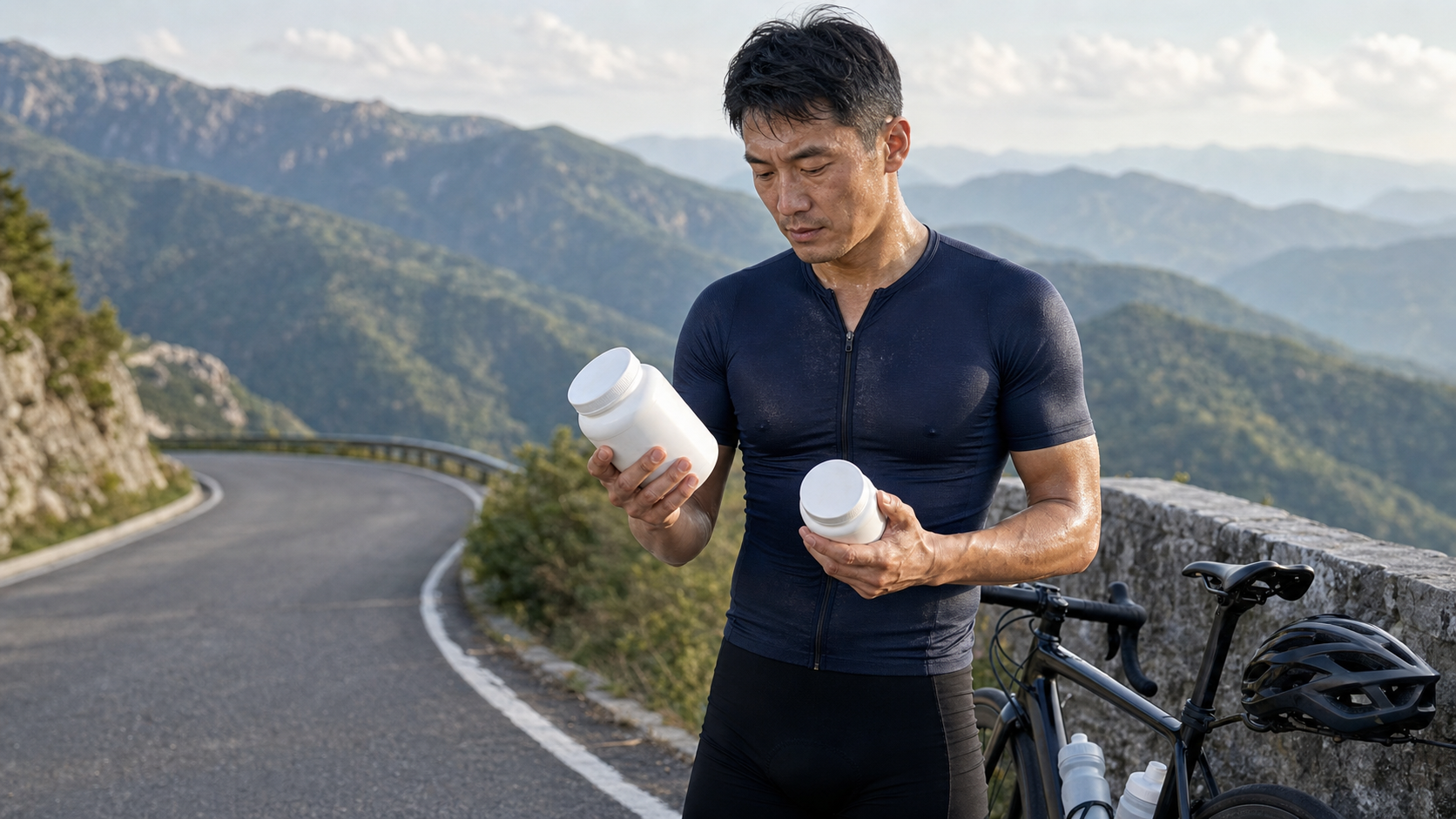
Over the years I’ve led team training, the most common question I hear at the aid station is: “Coach, my friend says taking HMB can prevent muscle breakdown. Should I also supplement it for my heavy climbing training?” The question came from a seasoned cyclist in his early 40s, who routinely rides 120 km on weekends with over 2,000 meters of elevation gain. He’s losing more weight than he’d like, and his muscle definition is getting “drier” the more he trains. He already had HMB links from three overseas purchasing agents saved in his phone, just waiting for my nod.
I didn’t immediately answer whether he should buy it. Instead, I asked him three questions back: Are you currently getting enough protein every day? Are you just starting this kind of heavy training, or have you been training for three to five years? How much are you willing to spend on supplements per month? These three questions happen to be the core of determining whether HMB is worth it for “you as an individual.”
In this article, I want to organize the judgment I’ve accumulated over the years from coaching students and continuously reading sports physiology and nutrition literature, and lay it out clearly for you. HMB is neither a miracle pill nor a “tax on intelligence”—it’s a supplement that “makes sense for specific groups in specific situations.” Once you understand that context, you can spend your money where it counts instead of being led around by marketing hype.
What Exactly Is HMB? Let’s Build the Foundation First
HMB’s full name is beta-hydroxy-beta-methylbutyrate. It’s not some mysterious chemical compound—it’s a metabolic byproduct naturally produced when our bodies metabolize leucine, a branched-chain amino acid. The protein you eat contains leucine, and your body converts a small portion of it into HMB.
There’s a key number to remember here: the conversion efficiency from dietary leucine to HMB is very low—only about 5% of leucine takes this pathway to become HMB. In other words, if you wanted to reach supplement-grade HMB doses purely through food, you’d have to consume an astronomical amount of protein—practically impossible. That’s exactly why HMB is sold as a standalone supplement.
HMB Does Two Things in the Body
From a sports physiology perspective, HMB is believed to affect muscle through two main pathways:
- Reducing muscle breakdown (anti-catabolic): This is HMB’s signature selling point. When the body is under high stress and high expenditure, muscle protein gets broken down at an accelerated rate. HMB is believed to “hit the brakes” and slow that breakdown. This is also where the name “anti-catabolic supplement” comes from.
- Promoting muscle synthesis (anabolic): HMB is also believed to mildly stimulate muscle protein synthesis signaling, somewhat similar to leucine’s own effect, though the intensity and mechanism aren’t identical.
For endurance athletes (like cyclists, runners, and triathletes), the first pathway is actually more relevant than the second. Because our pain point usually isn’t “muscles won’t grow bigger,” but rather “during heavy training, muscles get consumed, recovery is incomplete, and we get weaker the more we train.” Understanding this positioning, you’ll see that HMB’s significance for the endurance crowd is different from what it means for the gym-going muscle-building crowd.
What “Anti-Catabolic” Really Means
Many students hear “anti-catabolic” and think it’s some kind of protective charm—take it and muscles won’t be lost. I want to clarify this concept further so you don’t misuse it.
The human body’s muscles exist in a dynamic balance between “synthesis” and “breakdown” every day—this is called muscle protein turnover. In a state of good health, adequate nutrition, and appropriate training, synthesis slightly exceeds or equals breakdown, and muscle mass is maintained or increased. But when you fall into certain “catabolic stress” situations—such as severe caloric deficit, severe sleep deprivation, a sudden spike in training volume, infection/inflammation, or bed rest—breakdown overtakes synthesis, and muscles begin to net-lose.
HMB is believed to act on the “breakdown” end, pushing that excessively elevated breakdown rate down a bit. Note: it suppresses the “excessive” portion. If you don’t have obvious catabolic stress to begin with (e.g., a healthy veteran with adequate nutrition and sleep), your breakdown rate is already in the normal range, so there’s naturally limited room for HMB to press down—this is the core reason its effects are less obvious in veterans, which I’ll expand on later.
Another Angle for the Endurance Crowd: Muscle Damage and Recovery
Beyond anti-catabolism, the evidence also contains a fairly practical thread for cyclists and runners: HMB is believed to reduce exercise-induced skeletal muscle damage and aid recovery.
Imagine you’ve just finished a 200+ km long ride or a full marathon. The next day, your legs give out on the stairs and you have muscle soreness (commonly known as DOMS—delayed onset muscle soreness). Behind that soreness are micro-damage and inflammatory responses in the muscle. HMB is believed to slightly lower damage markers and speed up recovery rhythm during these “major damage events.” For those with dense race schedules and compressed recovery time, this pathway’s practicality sometimes hits closer to home than the muscle-building one.
What Does the Scientific Evidence Say? Don’t Just Listen to the Manufacturers
I always emphasize to my students: when it comes to supplement evidence, you have to look at the “population”—you can’t just dismiss it with a blanket “effective” or “ineffective.” HMB is the perfect teaching material for this principle, because its performance varies greatly across different populations.
The International Society of Sports Nutrition (ISSN) has published a formal position stand on HMB, which is currently a relatively authoritative and continuously updated summary. Let me highlight the points most practical for Taiwan’s athletic community.
Key Point One: More Helpful for “Beginners” and “High-Stress Trainees”
The evidence shows a fairly consistent direction: HMB is more likely to show anti-catabolic and recovery benefits for beginners just starting high-intensity training, as well as athletes already under high physiological stress (e.g., high-volume in-season training, dense competition schedules).
The logic behind this is actually quite intuitive. When beginners first start intense training, their bodies haven’t adapted yet, and the magnitude of muscle damage and breakdown is larger—so HMB’s “brake-pressing” has room to work. Similarly, veterans in the middle of consecutive high-volume training, with their bodies under obvious catabolic stress, may also fall into this “high-breakdown” situation and benefit.
Key Point Two: Weaker Evidence for “Adapted Training Veterans”
Conversely, for veterans who have trained for years and whose bodies have long adapted to regular training, HMB’s benefits on strength and body composition are “unclear, or even barely visible.”
There’s a beautiful physiological explanation here: through long-term adaptation, training veterans’ bodies have already “down-regulated” the excessive exercise-induced protein breakdown. Since breakdown isn’t that high to begin with, HMB’s “anti-catabolic brake” has less room to press, and the effect gets diluted. This also reminds us that whether a supplement “works” often depends on whether your body currently has the “problem” for it to solve.
Key Point Three: “Older Adults and Muscle Loss” Is Another Battlefield
The more interesting evidence in recent years actually comes from the older adult and sarcopenia area. Some clinical randomized controlled trials show that for adults over 60 with sarcopenia concerns, HMB combined with resistance training can provide additional benefits in strength, physical function, and muscle quality; and when paired with exercise, the effects are usually more definitive than taking HMB alone.
This carries significant meaning for Taiwan. Taiwan is already an aged society—many readers are caring for their parents, or entering middle-to-older age themselves. Situations like bed rest, hospitalization, and post-surgery—where you’re “forced to stop being active”—are exactly the high-risk periods for rapid muscle loss, and precisely the scenarios where anti-catabolic nutritional interventions like HMB have a relatively solid theoretical foundation.
But I have to honestly add one caveat: even in the older adult population, most reviews still lean toward “HMB plus exercise” for more robust conclusions; the effect of “HMB alone” is not settled. So please don’t treat it as a substitute for “taking it means you don’t have to move”—that would be putting the cart before the horse.
Dosage, Forms, and Timing: How to Use It in Practice
Now that we’ve covered the concepts, let’s talk practical application. If you’ve evaluated and decided to try HMB, here’s the usage framework with relatively broad consensus in the current literature. I’ve organized it into a table for easy reference.
Basic HMB Usage Framework
| Item | Common Recommendation | Coach’s Notes |
|---|---|---|
| Daily Dosage | Approximately 38 mg per kg of body weight, generally around 3 grams per day | For a 70 kg person, that’s about 2.6 grams; usually just round up to 3 grams |
| Split Dosing | Typically divided into 2 to 3 doses, taken with meals or around workouts | No need to take it all at once; splitting keeps blood levels more stable |
| Timing | Supplement close to training sessions | The pre- and post-workout window is considered more meaningful |
| Onset Period | Recommended to start about 2 weeks before key training or events | It’s not something you feel after one day; you need to build it up in advance |
| Common Forms | Calcium salt form (HMB-Ca) and free acid form (HMB-FA) | Both are used; the free acid form is thought to have faster absorption kinetics |
The thing I want to circle in this table is “2 weeks in advance.” Many athletes buy it and think, “I’m climbing Wuling tomorrow, so I’ll pop the first pill tonight.” That’s almost guaranteed to produce no effect. HMB is a nutritional intervention that gradually primes your body’s state, not a pre-race stimulant. If you’re going to use it, build it into your periodized training plan and start supplementing consistently two weeks before race day.
How to Choose Between the Two Forms?
There are two main types of HMB on the market:
- Calcium salt form (HMB-Ca): The most traditional, most common, and usually the cheapest. Available in capsules or powder. Most research has also been done with this form.
- Free acid form (HMB-FA): Thought to be absorbed into the bloodstream faster with higher peaks. It’s also usually more expensive.
For the vast majority of general athletes, my practical advice is: start with the calcium salt form. It’s cheaper, has the deepest research foundation, and using it first to verify “does HMB do anything for me personally” is far more reasonable than splurging on the expensive free acid form right away. Once you’ve confirmed it’s worth it, then consider upgrading.
A Two-Week Priming Template You Can Copy
Many athletes ask me “how exactly should I set this up,” so here’s a hypothetical two-week pre-race example you can adapt. Let’s assume the target event is a major climbing challenge on a holiday (something like the Wuling level), for a 70 kg rider:
| Week | Daily HMB | Split Schedule | Training Focus |
|---|---|---|---|
| 2 weeks before race | 3 grams | 1 g at breakfast, 1 g before training, 1 g at dinner | Maintain volume; final quality sessions before tapering begins |
| 1 week before race | 3 grams | Same as above; keep the pre-training dose on training days | Enter the taper; sessions get shorter and lighter |
| Race week | 3 grams | Put one dose 1 to 2 hours before the event | Only easy rides to wake the body up before race day |
| 3 to 5 days after race | 3 grams | Split doses with meals | Aid recovery after major damage; can stop afterward |
The point of this example isn’t that the numbers need to be precise—it’s to show you that HMB follows a rhythm of “prime in advance, sustain through the event, finish with recovery,” not something you think about at the last minute. The logic of splitting doses is simple: spreading the dose out keeps blood levels more stable, so it doesn’t get metabolized quickly after one big bolus.
Anti-Catabolism Isn’t Just HMB: Comparing Common Options
Athletes often equate “anti-catabolism” with “HMB,” but there are actually several things on the market touted for anti-catabolic and muscle-preserving effects. I’ve put the commonly compared options in one table to give you the big picture.
| Option | Primary Role | Evidence Status for Anti-Catabolism/Muscle Preservation | My Practical Take |
|---|---|---|---|
| Adequate Total Protein | Provides building blocks for synthesis | The most fundamental and irreplaceable | Always priority number one; do this first |
| Leucine/BCAAs | Stimulate synthesis signals | Has effects but often overrated | People who eat enough protein usually don’t lack it |
| Whey Protein | Fast, easily absorbed protein | High cost-performance mainstay for muscle preservation | First choice when protein intake is insufficient |
| Creatine | Power, strength, cellular hydration | Solid evidence for muscle preservation and performance | Universally recognized as excellent value; prioritize over HMB |
| HMB | Anti-catabolic, reduces damage | Clearer in specific populations, less obvious in experienced athletes | Use it when the indication is clear; not a universal solution |
| Adequate Carbohydrates | Prevents protein from being burned as energy | Indirect but important muscle-preserving measure | Especially critical for endurance athletes during long sessions |
After looking at this table, you should better appreciate: anti-catabolism has never been about some magical powder in a jar—it’s the overall result of “eating enough, sleeping enough, training properly, and supplementing the right things when needed.” HMB is just one small piece of that larger puzzle, useful only in specific situations.
Cost-Performance: The Math Taiwanese Athletes Should Really Be Doing
At this point, I want to lay out the most important piece that few people seriously calculate: cost-performance. Because supplements aren’t a true/false question of “does it work,” but a multiple-choice question of “with the same money, is there a better way to spend it?”
I often tell athletes: Before you’ve taken care of the basics, the CP value of any advanced supplement approaches zero. What are the basics? Sleep, total calories, total protein, and consistent training. These four things protect and build muscle far more than any supplement, and most of them cost nothing extra.
Supplement Investment Priority (My Ranking for Athletes)
| Priority | Item | Approximate Cost | Importance for General Athletes |
|---|---|---|---|
| 1st | Enough sleep, consistent routine | Free | Highest, irreplaceable |
| 2nd | Adequate total calories and total protein | Regular food costs | Highest, the real driver of anti-catabolism |
| 3rd | Whey or general protein supplementation (when intake is insufficient) | Low to medium | High, excellent cost-performance |
| 4th | Caffeine (pre-race alertness, endurance performance) | Very low | Medium-high, solid evidence |
| 5th | Creatine (power, strength, some endurance) | Low | Medium-high, universally recognized as good value |
| 6th | HMB | Medium-high | Depends on the population; mostly low for experienced athletes |
Did you notice HMB ranks fairly low? That’s not bias on my part—it’s an honest reflection of the ratio between evidence strength and cost. For someone whose “protein intake is nowhere near enough and sleep is insufficient,” fixing those earlier items first will yield far greater returns than buying HMB.
When Does HMB’s Cost-Performance “Jump Up”?
To be fair, there are moments when HMB’s cost-performance rises, mainly in these cases:
- Beginners transitioning from a sedentary lifestyle to high-volume training: Catabolic stress is high, giving HMB room to work.
- Athletes in dense race seasons under prolonged physical stress: When clearly in a catabolic state.
- During weight loss or fat loss phases, wanting to preserve muscle as much as possible: Muscle breakdown risk rises under a calorie deficit; this is one of the more reasonable use cases for HMB.
- Older adults, post-surgery, bedridden recovery, or those at high risk of sarcopenia: This is the population with the strongest clinical rationale, but it must be paired with medical and rehabilitation professionals.
If you don’t fall into any of the above—a healthy, experienced athlete training consistently for three to five years—then I’ll say it plainly: your money is better spent on creatine, getting your protein intake right, and sleeping well. The return on investment is far higher.
Common Mistakes and Fixes: What I Correct Most Often in the Field
In all my years coaching athletes, the mistakes I see around HMB and anti-catabolic supplements repeat almost every year. Here are the most common ones, along with directions for correction.
Mistake One: Treating HMB as a Shortcut to “Not Having to Eat Enough Protein”
Some athletes think that if they take HMB, they can slack off on protein. That’s completely backwards. HMB is a downstream metabolite of leucine; its role is a “marginal bonus,” and the premise is that your total protein intake is already sufficient. The real driver of anti-catabolism is always adequate total calories and total protein.
Fix: First ensure daily protein reaches the reasonable range for athletes (generally around 1.4 to 2.0 grams per kg of body weight, depending on training volume). That’s the foundation. If the foundation isn’t solid, supplements are built on quicksand.
Mistake Two: Taking It at the Last Minute and Expecting Immediate Results
As mentioned earlier, HMB should be started about 2 weeks before race day. Taking it for the first time the night before the event is a waste of money.
Fix: Build it into your periodized plan. If you decide to use it, start two weeks before key training sessions or races, supplementing consistently in divided doses every day to maintain stable blood levels.
Mistake 3: Veterans Overestimate “Advanced Supplements” Over Basic Ones
Many people who have trained for years are the most likely to skip cheap, evidence-backed basics like creatine and go straight for something that sounds more “advanced” like HMB. But the evidence actually shows that HMB has the most unclear effects on already-adapted veterans.
Fix: Supplements aren’t better just because they’re more expensive or advanced; what matters is whether they solve a real problem for your current physical state. For veterans looking to invest, creatine’s cost-effectiveness usually far exceeds HMB’s.
Mistake 4: Ignoring the Hidden Protein Gaps in Taiwan’s Eating-Out Culture
Eating out is convenient in Taiwan, but many bento boxes are high in carbs and low in protein. A breakfast rice ball with milk tea provides almost zero protein. Trainees often “think they’re eating enough protein,” but when they actually calculate it, they’re far off. In this case, instead of buying HMB, it’s better to first fill the protein gap in each meal.
Fix: Use a week’s food diary to actually estimate your protein intake. Taiwan’s convenience stores are actually great for this—tea eggs, unsweetened soy milk, chicken breast, tuna onigiri, and yogurt are all cheap and accessible protein sources. Filling this gap first often makes a bigger difference than any supplement.
Mistake 5: Treating Supplements as Medicine and Delaying Medical Care
Some trainees experience persistent fatigue, abnormal muscle loss, or unexplained weakness, and their first reaction is to buy an anti-catabolic supplement to “patch things up” while putting off seeing a doctor. Persistent, unexplained muscle loss or rapid weight loss could have underlying causes that need medical evaluation.
Fix: Supplements address marginal optimization of “training and nutrition,” not disease. If you have persistent, abnormal symptoms, Taiwan’s NHI makes it easy to see a doctor. Go to a family medicine, metabolism, or sports medicine clinic—don’t let supplements delay a diagnosis.
Actionable Advice for Readers at Different Levels
Everyone starts from a different point, so I’ve split the advice into three typical reader profiles. Find yours.
If You’re a “Beginner Just Starting to Train Seriously”
- Don’t rush to buy HMB. Focus on sleep, total calories, total protein, and consistent training first. These are your highest-return investments at this stage, and most of them are free.
- If you’ve just jumped from a sedentary lifestyle into high-volume training and your protein intake is already sufficient, HMB is one of the few situations where it’s “relatively reasonable” to try, because the catabolic stress during the beginner phase is high.
- If you do try it, choose the calcium salt form, about 3 grams per day, split into doses with meals, starting two weeks before competition. Observe how you feel and recover over one training cycle.
If You’re a “Veteran Training Consistently for 3–5 Years”
- Be honest with the evidence: HMB has the least clear benefits for someone already adapted like you.
- Prioritize your budget for creatine (universally recognized for its cost-effectiveness), get your protein intake right, and catch up on sleep. These will benefit you far more than HMB.
- The only time HMB is worth serious consideration is during high-pressure race season or a cutting phase with a significant calorie deficit, to help preserve muscle. In these situations, short-term supplementation is a relatively reasonable strategy.
If You’re a “Older Adult or Caring for an Elderly Relative”
- HMB has a relatively solid evidence base for sarcopenia and recovery from bed rest, but almost all evidence points to “HMB plus exercise” being the reliable approach—don’t treat it as a substitute for staying active.
- If surgery, hospitalization, or chronic conditions (like diabetes, hypertension, or heart disease) are involved, be sure to discuss it with your doctor and dietitian first. Get an individualized assessment before deciding—don’t self-prescribe large doses.
- Resistance training (even home-based options like resistance bands or sit-to-stand exercises) combined with adequate protein is the core of protecting muscle. HMB is just a supplement.
A Real Case Study in Trade-Offs (Scenario Example)
Let’s go back to the 40-year-old cyclist from the beginning who did massive weekend rides. What did I end up recommending?
First, I asked him to keep a week-long food diary. When we calculated it, his daily protein was only around 1.0 grams per kilogram of body weight—clearly insufficient for his training volume. He was also chronically sleeping only about five and a half hours. So my first-phase advice contained no HMB at all: get protein up to about 1.6 g/kg, try to get sleep to seven hours, and add a whey protein shake post-training.
Six weeks later, his muscle loss had noticeably improved and his recovery was better—and he hadn’t spent a single dollar on HMB. This is what I always emphasize: many people think they need an anti-catabolic supplement, when in reality their fundamentals just have holes.
It wasn’t until he was entering race season, facing several consecutive weeks of high-volume training, that we brought HMB into the discussion—as a short-term aid for that specific high-pressure period. Calcium salt form, 3 grams per day, starting two weeks before competition. Using it then puts it in the right population, at the right time, and in the right cost-effectiveness position.
Another Scenario: A Female Trainee Cutting Fat While Preserving Muscle
Let me share a different type of case to show you how “the same supplement, different populations” changes the judgment call. This is a 35-year-old female trainee who wanted to cut fat before summer but was worried about losing muscle definition. She regularly did strength training and indoor cycling.
She also started by asking whether she should take HMB. I looked at her fundamentals first: her protein intake was actually good (about 1.5 g/kg), her sleep was decent, and she trained consistently. In her case, her cutting phase was actually one of the few “relatively reasonable” times to use HMB—because she was deliberately creating a calorie deficit, which raises catabolic stress, and she had already taken care of her fundamentals, so there was “marginal room” for HMB to work.
So my advice to her was the complete opposite of the cyclist’s: she could use HMB as an extra layer of insurance during her cut. Calcium salt form, 3 grams per day, split into doses with meals, while keeping protein intake solid and maintaining strength training intensity as much as possible. Once the cut ended and she returned to maintenance calories, she could stop.
See—the same HMB. For the “veteran cyclist who wasn’t eating enough protein,” I told him not to buy it. For the “female trainee with solid fundamentals who’s currently cutting,” I thought it was worth trying. The difference isn’t in the supplement itself, but in whether this person’s current physical state has the room for HMB to work. That’s why I emphasize “target population” so much—talking about effectiveness without considering the population is just empty talk.
Practical Reminders for the Taiwan Context
Bringing this back to Taiwan, there are a few things related to our local environment that I want to specifically call out.
The “Hidden Catabolism” of Humid, Hot Weather and Long Exercise
Taiwan’s summers are humid and hot. A long endurance session (like a long ride or road run in the early summer morning) involves not just sweating and dehydration—if carbohydrate intake is insufficient during prolonged high-intensity effort, the body tends to break down protein for fuel. That’s also a form of “hidden muscle breakdown.” In this situation, rather than thinking about taking HMB, your priority should be ensuring adequate carbohydrate and electrolyte intake during exercise—enough carbs can “protect” protein from being burned as fuel. This is the most overlooked muscle-preservation strategy for endurance athletes, and it matters far more than HMB.
A Practical Protein Shopping List for People Who Eat Out
I mentioned earlier that protein intake from eating out in Taiwan is often insufficient. Instead of spending money on HMB, I’d rather you fill this gap first. Here’s a list you can execute at convenience stores or restaurants: tea eggs, unsweetened soy milk, ready-to-eat chicken breast packs, tuna or salmon onigiri, unsweetened yogurt, eggs and tofu from oden, or adding an extra braised chicken leg or dried tofu at a buffet. These are easy to find and inexpensive, and the benefit of boosting your protein at every meal often outweighs any advanced supplement.
If You Have a Chronic Condition or Take Medication, Ask a Professional First
Taiwan’s healthcare system is convenient and NHI access is excellent—that’s a huge advantage. If you have diabetes, hypertension, heart disease, kidney issues, or are on long-term medication, I recommend confirming with your primary care physician or dietitian before using any supplement (including HMB). This isn’t meant to scare you—it’s just that individualized assessment should be handled by professionals. Don’t self-prescribe large doses based on what you read online.
Frequently Asked Questions (FAQ)
Q: Can HMB and whey protein be taken together?
A: Yes, the two play different roles. Whey is the main source of protein material, while HMB is a marginal anti-catabolic aid. But keep in mind that whey (or sufficient protein from whole foods) is the foundation, and HMB is the decoration—don’t get the order reversed.
Q: Does HMB have side effects?
A: At generally recommended doses, most people tolerate it well. However, the long-term safety and individual suitability of any supplement should still be viewed conservatively. Those with chronic conditions, those taking medication, pregnant or nursing women, and older adults should consult a physician or dietitian first.
Q: I’m cutting fat and heard that a calorie deficit easily causes muscle loss. Is HMB a must-buy?
A: The cutting phase is indeed one of the more reasonable use cases for HMB, because catabolic stress is higher under a calorie deficit. But the prerequisites remain the same—adequate protein intake and resistance training. If you take care of those two, the risk of muscle loss is already greatly reduced. HMB is just an extra layer of insurance, not the main player.
Q: So should I buy it or not? In one sentence.
A: If you’re a seasoned athlete who isn’t getting enough protein and isn’t sleeping well, don’t buy it—fix the fundamentals first. If your fundamentals are in place and you’re in a beginner muscle-gain phase, a high-pressure race season, or a cutting phase, you can try the calcium salt form short-term, starting two weeks before competition, and observe one cycle before deciding whether to continue.
Q: Do I need to take HMB continuously, or can I cycle it?
A: From an endurance athlete’s perspective, I tend to treat it as a “situational, phase-specific tool” rather than a daily long-term staple. Use it during high-pressure race seasons, cutting phases, or beginner muscle-gain phases, and stop once the situation passes. This saves money and aligns with its positioning as “only having room to work when catabolic stress is present.”
Q: Do I still need creatine if I take HMB? Do the two conflict?
A: They don’t conflict—their mechanisms and positioning are different. Creatine leans toward explosive power, strength, and cellular hydration, with widely recognized excellent cost-effectiveness; HMB leans toward anti-catabolism and reducing muscle damage. If prioritizing, I usually ask my athletes to take care of creatine and protein first, with HMB added later based on the situation.
Q: Can vegetarians take HMB?
A: HMB itself is a metabolite of leucine, and supplement forms typically don’t involve animal sources, so most vegetarians can use it (but still check the product ingredients and certifications carefully). What’s more worth reminding vegetarians about is ensuring adequate overall protein and leucine intake—that matters far more for muscle preservation than HMB itself.
Q: I’ve taken it for a month and feel nothing. Is that normal?
A: Quite possibly normal, especially if you’re a healthy seasoned athlete with your fundamentals in place. As mentioned earlier, this group doesn’t have much “catabolic room” for HMB to act on, so feeling nothing is actually the evidence-consistent result. Rather than forcing it, put your money and attention back into protein, sleep, and training—the things that truly pay off.
Conclusion: Putting Supplements Back in Their Place
HMB is a good example that shows us one thing clearly: the value of a supplement is never absolute—it’s relative to “who you are, what you’re currently lacking, and whether the same money has better uses.”
For endurance athletes, HMB is an anti-catabolic aid that “makes sense in specific situations but offers low cost-effectiveness for most seasoned athletes.” It can’t fix a broken foundation, and it can’t replace sleep, protein, and consistent training. Get those irreplaceable things right, and you’ll find you need far fewer supplements than marketing rhetoric tells you.
If after your assessment you fall into the minority for whom it’s truly appropriate—beginner muscle-gain phase, high-pressure race season, cutting while preserving muscle, or older-adult and rehabilitation situations under professional guidance—then use it deliberately, build it into your cycle, start two weeks before competition, and put it in the right place. That’s the advice a senior coach would give you for spending money where it counts.
Finally, I want to share a phrase I’ve said countless times to athletes at the feed station: What truly makes you stronger and more durable is never a particular supplement, but doing the boring yet irreplaceable things—sleep, diet, training—day after day. Supplements are just the icing on the cake. Once you’ve woven the “cake” well, the HMB “icing” has meaning; conversely, if you don’t even have the cake yet, no amount of icing can hold up your performance. May you put every dollar of budget and every ounce of attention into what truly makes you last longer and get stronger on the bike and on the road. See you at the feed station.
This article is educational content and cannot replace individual diagnosis and treatment advice from a physician, physical therapist, or dietitian. Those with chronic conditions such as diabetes, hypertension, or heart disease, or special situations such as post-surgery, bedridden, pregnancy, or nursing, should undergo professional individualized assessment before using any supplement. Do not self-supplement in large amounts or use supplements as a substitute for medical care.
References
- International Society of Sports Nutrition Position Stand: beta-hydroxy-beta-methylbutyrate (HMB) — https://pmc.ncbi.nlm.nih.gov/articles/PMC3568064/
- International society of sports nutrition position stand: β-hydroxy-β-methylbutyrate (HMB) (2024 updated version) — https://www.tandfonline.com/doi/full/10.1080/15502783.2024.2434734
- Beta-hydroxy-beta-methylbutyrate supplementation and skeletal muscle in healthy and muscle-wasting conditions — https://pmc.ncbi.nlm.nih.gov/articles/PMC5566641/
- The effects of HMB or HMB-rich nutritional supplements on sarcopenia patients: a systematic review and meta-analysis — https://www.frontiersin.org/journals/medicine/articles/10.3389/fmed.2024.1348212/full
Related Reading
- Creatine vs HMB: Supplement Choices and Evidence Strength Comparison for Endurance Athletes
- Sports Supplement Evidence Review: A Scientific Examination of Creatine, Beta-Alanine, and HMB
- Beta-Alanine’s Enhancement of Muscle Buffering Capacity: Research on Lactate Tolerance in High-Intensity Training
- Creatine and Beta-Alanine: Do Endurance Athletes Need Them Too? A Coach’s Look at the Evidence and Practice
CT暗黑廚房) 車友必備 宇宙無敵鮮蚵湯 幫助訓練恢復 天然食補 好市多 超肥鮮蚵 破PR
7 年前
一日北高/長距離團騎 常見問題補充篇 / 組團或跟團的眉角 / 壯車友容易被瘦車友慢性拉爆 / 原來屁股痛可能是這個原因...? / 風場配速法 / 公路車 / CT Yeh
2 年前
#公路車 #Vo2Max #最大攝氧量 測驗 體驗 | 心肺測試
6 年前
2025 自行車錶排行榜 兩萬車友大數據 / Garmin Bryton 排名會大洗牌嗎? / 全新的碼表前身分析 /公路車 / CT Yeh
1 年前
一日北高常見問題大集合 | 攻略 | 路線 | 訓練 | 補給 | 自行車 單車 | 一日雙城 | 雙塔 | TWB北高360 | 屁股痛
6 年前
一個測試有沒有認真練車的方法😂 #公路車
10 個月前
#公路車 #Fitting 靠人工智慧APP 幫你調整單車
6 年前
多到選擇障礙... 換個單車把帶想一個小時 / BTP / 編織&軟木特有材質超吸睛! / 公路車 / CT Yeh
1 年前