The Athlete's Guide to Zinc and Immune Supplementation: Timing, Cold Prevention, and Safe Upper Limits
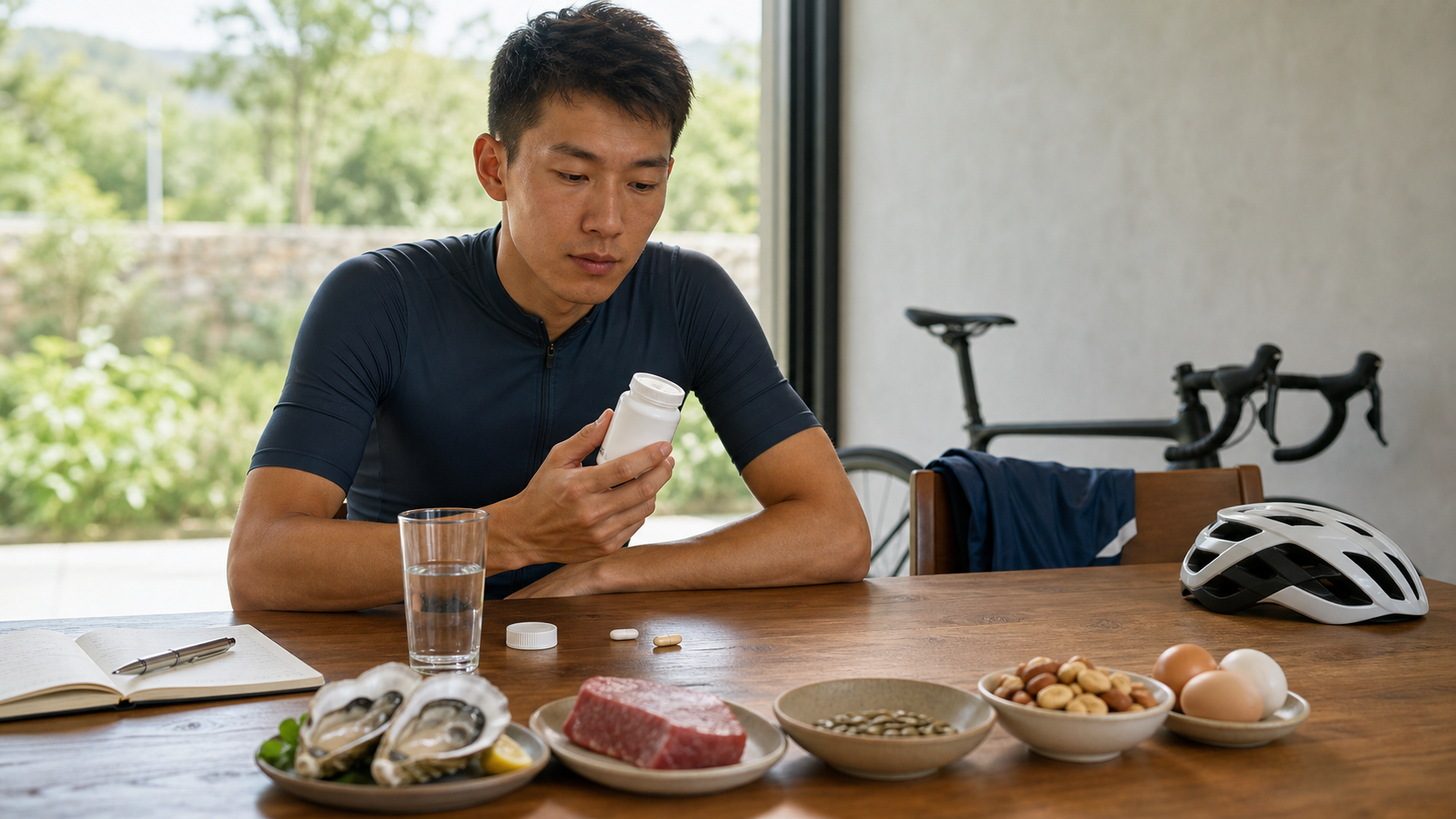
Starting with a Case of an Athlete’s Pre-Race Fever
Two weeks before an important mountain race a few years ago, one of my amateur road cyclists—let’s call him A-Kai—posted a photo in the training group chat: five or six supplement bottles laid out on a table, one of which was a high-dose zinc tablet he’d bought the day before at the pharmacy on a salesperson’s recommendation, adding it to his regimen on his own. His logic was simple: “Coach, the thing I fear most before a race is catching a cold. Zinc supports immunity, so taking more can’t hurt, right?”
As it turned out, he didn’t catch a cold, but in the week leading up to the race he started having recurring nausea and a poor appetite. He couldn’t eat enough to fuel his training, and his recovery slowed. On the last long ride before the race, he cut it short by a full 30 kilometers. Later, I asked him to lay out all his supplements and tally them up—he was taking nearly 100 milligrams of zinc per day, more than double the official recommended upper safety limit. His immune system wasn’t the problem; he was overdoing it.
This case is actually quite typical. In my 15 years of coaching athletes at various levels and general fitness enthusiasts, “zinc” is probably the most misunderstood mineral: some people have no idea they might be deficient, while others treat it as a “more-is-better immune cure-all” and swallow it by the handful. This article aims to clarify the whole picture—what role zinc actually plays in immunity, when to supplement, how to supplement, where the limits are, and when you should see a doctor. I’ll give you a practical dosage chart and a self-check list, but let me say this upfront: this is educational content, not a prescription for you to self-medicate.
Why Athletes Especially Need to Care About Zinc
What Zinc Actually Does in the Body
Zinc is an essential trace mineral that participates in the function of over 300 enzymes, and it’s connected to all of the following:
- Immune function: Zinc is critical for the development and function of immune cells (especially T lymphocytes). When zinc is deficient, the immune response noticeably deteriorates.
- Protein synthesis and tissue repair: Muscle rebuilding after training and wound healing both require zinc.
- Normal metabolism of hormones like testosterone: Long-term zinc deficiency can affect the hormonal axis.
- Antioxidant and inflammatory regulation: Zinc participates in antioxidant enzyme systems and is involved in handling oxidative stress after exercise.
- Taste and appetite: One early sign of zinc deficiency is a dulled sense of taste and decreased appetite.
For the average sedentary person, as long as they eat normally, zinc deficiency isn’t all that common. But endurance athletes and heavy sweaters need to pay more attention than the general population.
The “Open Window” Theory and Athletes’ Immune Vulnerability
To understand why athletes are especially concerned about immunity, you first need to know a concept frequently mentioned in exercise physiology—the post-exercise immune “open window.” The gist of this theory is: after a high-intensity, long-duration workout, certain immune markers temporarily decline, creating a window of relatively weakened immune defense. During this period, pathogens have a better chance of sneaking in, and the risk of upper respiratory infections rises.
I translate this into language my athletes understand: right after you finish a grueling, exhausting century ride or a full marathon, your body is in a state of “major construction, with resources diverted to repair.” If you then don’t sleep well, don’t eat enough, and go hang out in crowded places, that’s when you’re most likely to “get hit.” This is also why many people notice that they’re especially prone to catching a cold in the days right after a big race—it’s not a coincidence; it’s a physiological state.
And zinc happens to be one of the key raw materials for immune cell function. If an athlete’s zinc levels are already on the low edge, and they’re chronically in a state of high training volume with insufficient recovery, it’s like the immune system’s “foundation” is already unstable—when the open window hits, problems are more likely. That’s why “closing potential nutritional gaps first” is especially meaningful for athletes—it’s not about making you superhuman, but about not letting your foundation collapse before anyone else’s.
The Interplay of Training Stress, Sleep, and Immunity
Here I want to emphasize one thing: zinc is just one thread in the larger web of immunity; it’s not everything. In my experience, the top three reasons athletes get sick before a race are almost always insufficient sleep, a sudden spike in training volume, and chronic under-eating of total energy. Zinc or other micronutrients usually rank as secondary factors behind these.
I often see things getting turned upside down: an athlete sleeps five hours a night, crams in heavy training up to a week before the race, and cuts weight to the point of having no energy—then tries to “restore immunity” with a bottle of zinc tablets. It’s like the foundation of a house is sinking while you’re frantically patching the walls. So please remember this order of priority—first take care of sleep and training load, then overall nutrition, and only last comes fine-tuning with individual supplements. Get the order right, and your immune payoff will be far greater than from randomly popping supplements.
Why Athletes Are Prone to Zinc Deficiency
I often explain to my athletes that athletes have “three leaks” when it comes to zinc:
- Loss through sweat: Sweat contains zinc. In Taiwan, summer cycling and running often last two to three hours, and you can wring water out of your clothes. Chronic heavy sweating does increase mineral loss.
- Restrictive or plant-based diets: Many athletes focused on weight and body fat deliberately eat less red meat and organ meats, or go plant-based. The foods highest in zinc are exactly these—oysters, red meat, organ meats. Plant sources (whole grains, legumes, nuts) do contain zinc, but they also contain phytate, which inhibits absorption.
- Insufficient energy intake: People in a long-term calorie deficit for weight control eat less total food, so micronutrients decrease proportionally.
So in Taiwan’s athletic environment, those most likely to have low zinc are often people where these three conditions overlap: “high training volume in summer + weight control + low red meat or vegetarian diet.” This doesn’t mean they’re definitely deficient, but the risk is relatively higher, and it’s worth paying attention to.
Clarifying the Concepts: What the Evidence Actually Says About Zinc and Cold Prevention
This is the most misunderstood part, so I have to split “zinc supplementation” into two completely different things:
Thing one: Can long-term daily zinc supplementation “prevent” you from catching a cold?
Current evidence does not support the idea that healthy, well-nourished people taking zinc tablets long-term will significantly reduce the number of colds they get. If you’re not zinc-deficient to begin with, the extra zinc won’t put your immune system into “superhero mode.” What actually helps immunity is closing the gap—that is, when someone who is deficient gets enough zinc, immune function improves. For those who already have enough, adding more has very low marginal benefit, and excess can even be harmful.
Thing two: Can taking zinc lozenges when a cold just starts “shorten” the duration?
The evidence here is relatively clearer. According to a meta-analysis by Hemilä et al. on zinc lozenges, starting high-dose zinc lozenges within 24 hours of cold symptom onset can shorten the average cold duration by about one-third (approximately 33%). Zinc acetate also appears to work better than zinc gluconate, with observed shortening of symptoms like nasal congestion, runny nose, sore throat, and cough. It’s important to emphasize that the doses used in these trials were generally high (about 80 to over 200 mg per day, divided into multiple lozenges), and they were used for short-term, acute episodes—this is completely different from “swallowing high-dose zinc every day long-term.”
I’ve organized these two things into a comparison table, which is what I most often show my athletes:
| Scenario | Purpose | Strength of Evidence | My Practical Advice |
|---|---|---|---|
| Healthy, well-nourished person supplementing zinc long-term | Prevent colds | Weak; not recommended for long-term high-dose supplementation for this purpose | Start with dietary adjustments; no need for daily high doses |
| Suspected zinc deficiency being corrected to adequate levels | Repair immune gap | Moderate; closing the gap does matter | Assess diet and symptoms; see a doctor for testing if necessary |
| Short-term lozenges within 24 hours of cold onset | Shorten duration | Relatively clear (acute, short-term, high-dose) | Short-term use is reasonable, but watch GI tolerance and limits |
| Loading up before a race for peace of mind | “Insurance” | No support, and there’s an overdose risk | This is exactly A-Kai’s mistake; don’t follow it |
Once you understand this table, you’re already ahead of most people who grab a bottle off the pharmacy shelf at random.
Safety Limits: The 40 mg Line You Must Remember
After covering the benefits, I have to cover the risks—this is what I care about most as a coach.
Daily Tolerable Upper Intake Level: 40 mg
The National Institutes of Health (NIH) sets the adult daily “Tolerable Upper Intake Level (UL)” for zinc at 40 mg, and this figure includes the total from “food + supplements.” Note that standards vary slightly between organizations: the European Food Safety Authority (EFSA) sets it at approximately 25 mg per day, which is more conservative. In Taiwan, the general adult daily recommended intake falls around 15 mg for men and 12 mg for women (varying by age and physiological status).
Here’s a key concept to clarify: The 80 to 200 mg mentioned earlier for lozenges during the acute phase of a cold is a special, short-term use for “a few days during the symptomatic period”—it is not a recommendation to take that amount daily. Exceeding 40 mg per day over the long term is the real overdose scenario to worry about.
What Happens If You Overdo It
Taking too much zinc at once in the short term (especially on an empty stomach) most commonly causes what A-Kai experienced: nausea, queasiness, gastrointestinal discomfort, and a metallic taste. For athletes, the bigger problem is that this can directly affect appetite and training fuel intake, ultimately hindering recovery.
What truly warrants caution is long-term excess. Zinc and copper compete for absorption in the gut. Long-term high-dose zinc (e.g., 50 mg or more daily for weeks to months) can suppress copper absorption, potentially leading to copper deficiency, which in turn can cause anemia, neurological symptoms, and other issues. Excess zinc can also interfere with immune function—yes, over-supplementing can actually make your immunity worse, which runs completely counter to the common intuition that “more supplementation means stronger immunity.”
This “zinc-copper seesaw” is an image I really want everyone to remember: zinc and copper compete for the same absorption pathway in the intestine. The harder and longer you press down on the zinc side, the higher the copper side gets lifted, and the less copper gets absorbed. The tricky part is that the anemia and neurological symptoms from copper deficiency tend to develop slowly and present atypically, so many people never connect them to “eating too much zinc” and end up going in circles before finding the cause. This is also why “staying under the 40 mg total and avoiding long-term high doses” isn’t just conservative nagging—it’s genuinely about preventing you from developing unexplained problems months down the line. In the world of supplements, “more” rarely equals “better”; it often just means “more money spent and more risk.”
I’ve organized common dosage scenarios into this safety reference table:
| Daily Total Zinc Intake | Safety Assessment | Notes |
|---|---|---|
| 8–15 mg | General recommended range | Usually achievable with a normal balanced diet |
| 15–40 mg | Within the upper limit | Supplements + diet combined; safe for most people |
| 40–75 mg (long-term) | Caution needed; exceeds UL | Not recommended long-term; may affect copper absorption |
| 80–200 mg (acute lozenges, a few days) | Special short-term use | Only for the acute phase of a cold; watch for GI issues |
| Long-term daily >75 mg | Harmful | Risk of copper deficiency, anemia, immune suppression |
The key takeaway from this table: separate “short-term acute lozenges” from “long-term daily supplementation”—don’t mistake the high numbers from the acute phase for a daily dose.
Why a Blood Test Isn’t So Straightforward
Many athletes ask me: “Coach, can’t I just get a blood test to see if I have enough zinc?” Let me first clarify a common misconception: the zinc concentration in your blood (serum zinc) does not fully reflect your body’s overall zinc status. That’s because most of the body’s zinc is stored inside cells and tissues; only a small fraction is in the serum. Moreover, serum zinc can fluctuate due to inflammation, infection, recent meals, and even the time of day.
What does this mean? It means you can’t look at a single serum zinc number and conclude on your own that you’re “zinc deficient” or “not deficient.” In practice, assessing zinc status requires integrating dietary history, symptoms, and risk factors, with a professional deciding whether testing is needed and how to interpret it. This is also why I keep emphasizing “if in doubt, see a family medicine doctor or a dietitian” rather than buying an at-home test and starting to supplement blindly. Healthcare access is convenient in Taiwan—leave this to the professionals; it’s far more reliable than guessing on your own.
Self-Risk Screening: Which Category Are You In
While you can’t self-diagnose, you can use this “risk screening” below to first assess whether you should pay more attention. This is not a diagnostic tool—it’s just a reference to help you decide “whether to be more cautious and whether to seek professional help”:
| Risk Factor | Check if This Applies |
|---|---|
| Long-term vegan or rarely eating red meat, seafood, or shellfish | ✓ |
| Long-term high training volume (heavy sweating for long hours weekly) | ✓ |
| Long-term caloric deficit, deliberately controlling weight and body fat | ✓ |
| Dulled sense of taste, decreased appetite | ✓ |
| Slower wound healing, prone to recurrent infections | ✓ |
| Deteriorating hair and nail condition | ✓ |
If you only match one or two items, dietary adjustments alone can usually handle it. But if you match three or four or more at once—especially if accompanied by warning signs like fatigue or recurrent infections—then stop buying supplements online on your own and go get a professional assessment. The more risk factors you have, the more you should defer to professionals, not the more you should self-supplement.
Practical Approach: How to Supplement Smartly
Step One Is Always Diet, Not Supplements
My principle with athletes is always “food first.” In Taiwan, it’s actually not hard to find zinc-rich foods. Here’s the list I often give:
- Oysters (蚵仔): The king of zinc content. Oyster omelets and oyster vermicelli from the coastal areas of Tainan, Chiayi, and Changhua are very local sources.
- Red meat: Beef, pork, lamb. Even eating out—like braised pork rice or beef noodle soup—contributes.
- Organ meats: Pork liver, etc., in moderation.
- Shellfish and seafood: Clams, shrimp, crab.
- Eggs and dairy: Stable and convenient sources.
- Legumes, nuts, whole grains: Main sources for vegetarians, but absorption is poorer due to phytic acid; soaking, fermenting, or sprouting can improve absorption.
A practical tip for people in Taiwan who eat out a lot: if your three meals are mostly convenience-store rice balls, bread, blanched vegetables, and boiled chicken breast—that kind of “light, weight-control meal”—you can easily have chronically low zinc without realizing it. Rather than rushing to buy supplements, schedule red meat or seafood two to three times a week. That’s more natural than swallowing pills and harder to overdo.
To give you a better sense, I’ve ranked the zinc density of common Taiwanese foods using “relative levels” (rather than falsely precise absolute numbers), so you have a rough idea when eating out:
| Food Category | Zinc Density | How to Get It Locally in Taiwan | Notes |
|---|---|---|---|
| Oysters (蚵仔) | Extremely high | Oyster omelet, oyster vermicelli, steamed | King of zinc content; moderation is fine |
| Red meat (beef/pork/lamb) | High | Beef noodle soup, braised pork rice, lamb hot pot | Easy to get when eating out |
| Organ meats (pork liver, etc.) | High | Sesame-oil pork kidney, pork liver soup | In moderation; watch cholesterol |
| Shellfish and seafood (clams/shrimp/crab) | Medium-high | Clam soup, saltwater shrimp | Good absorption rate |
| Eggs and dairy | Medium | Tea eggs, milk, cheese | Convenient and stable |
| Legumes/nuts/whole grains | Medium (poorer absorption) | Soy milk, edamame, mixed nuts | Affected by phytic acid; soaking and fermenting help |
| Refined starches (white rice/white bread) | Low | Convenience-store rice balls, toast | Almost no contribution |
The point of this table isn’t to make you memorize numbers—it’s to help you intuitively judge “does this meal have zinc” when you’re at a convenience store or a buffet. When you notice you’ve been eating from the bottom two rows for several days in a row, it’s time to consciously add a meal from the top.
When to Consider Supplements
I typically recommend considering zinc supplementation for people who fit one or more of the following situations:
- Long-term plant-based diet and completely avoiding seafood and shellfish.
- Long-term high training volume, heavy sweating, and in a caloric deficit for weight control.
- Showing clues of possible zinc deficiency: dulled taste, poor appetite, slow wound healing, frequent infections, deteriorating hair and nail condition (these are not exclusive symptoms—they’re only for awareness, not for self-diagnosis).
Even when supplementing, my principle is “aim to get close to the upper limit, but err on the lower side rather than the higher”: for daily maintenance, keeping supplemental zinc at 15 to 25 mg per day, with the total from diet not exceeding 40 mg, is a relatively safe range. If you need short-term lozenges during the acute phase of a cold, that’s a separate short-term protocol—stop once symptoms resolve.
Timing and Details of Zinc Supplementation
These are the operational details I actually emphasize when coaching my students:
- Avoid taking high doses on an empty stomach: It can easily cause nausea. Taking it with or after meals is gentler on the digestive system.
- Separate from calcium and iron supplements: High doses of calcium, iron, and zinc can interfere with each other’s absorption; it’s best to take them at different meals.
- For acute-phase lozenges, “suck” don’t “swallow”: Lozenges work by releasing locally in the mouth and throat; swallowing them directly reduces their effectiveness.
- Start early for colds: If you decide to use lozenges, start as soon as symptoms appear (the day your throat feels off). The earlier, the better; waiting until day three or four makes it largely pointless.
- Don’t mix randomly with antibiotics: Zinc may affect the absorption of certain antibiotics. If you’re on medication, consult your doctor or pharmacist first.
A “Short-Term Lozenges Protocol” for When a Cold Just Starts
Because this is the most evidence-supported use, I want to clearly explain the operational logic (again: this is for short-term acute use only, not daily use, and those with chronic conditions or on medication should consult a doctor or pharmacist first):
- Timing: Start on the first day symptoms appear (the moment your throat feels itchy or off). The earlier, the better.
- Form: Prioritize zinc acetate lozenges. Use the “sucking” method to let it release slowly in the mouth and throat; don’t swallow it directly.
- Divide doses: Take it in multiple divided doses throughout the day rather than all at once. This keeps local concentration more stable and reduces the chance of irritating the stomach in one go.
- Duration: Use only during the symptomatic period, typically the few days of the cold. Stop once symptoms subside; don’t extend it into long-term daily use.
- Stop, look, and listen: If you experience severe nausea, a metallic taste that makes it hard to eat, or symptoms that don’t improve or worsen, stop and see a doctor if needed.
I often remind my students that lozenges aren’t candy; they’re products with clear dosages and short-term purposes. Used correctly, they might help shorten the miserable phase of a cold; used carelessly, they’ll only upset your stomach and waste your money.
Seasonal and Situational Considerations in Taiwan
Taiwan’s climate has several “high-risk” windows worth keeping in mind. During seasonal transitions, when the northeast monsoon arrives, or when cold snaps hit, the temperature difference between indoors and outdoors is large, and people tend to crowd into busy places—this is the peak season for upper respiratory infections. For outdoor athletes, riding in the mountains on cold winter mornings, not changing into dry clothes promptly after training in the rain, or staying up late celebrating after a big race are all ways of pushing yourself into a “window period + high exposure” combination.
At these times, the real priorities should be: staying warm and changing out of wet clothes promptly, replenishing nutrition and sleep after training, and avoiding crowded places when you’re at your most fatigued. Zinc (whether from adequate dietary intake or acute-phase lozenges) is just one small piece of this overall strategy—it’s not a substitute for the fundamentals above. Get the basics right, then fill in the nutritional gaps, and your chances of staying illness-free through the season will genuinely improve.
Common Mistakes and Corrections
The zinc-related mistakes I’ve seen over the years almost all fall into the following categories, along with my correction suggestions:
Mistake 1: Treating zinc as pre-race insurance and cranking up the dose.
This is A-Kai’s case. Correction: Before a race, you should instead be stable and conservative. Don’t introduce any new high-dose supplements during key weeks to avoid digestive issues derailing your training and competition.
Mistake 2: Assuming “more supplementation means stronger immunity.”
Correction: The logic of immunity is “filling a gap,” not “the more, the better.” Once you have enough, adding more yields near-zero marginal benefit, and excess can be harmful.
Mistake 3: Taking high doses daily long-term without ever calculating the total.
Correction: Lay out all your supplement labels and add up the zinc content (many multivitamins, zinc lozenges, and oyster extract products contain zinc). Make sure the total doesn’t exceed 40 mg long-term.
Mistake 4: Swallowing a high-dose zinc tablet on an empty stomach in one go.
Correction: Take it with meals, divide the doses, and don’t force it down on an empty stomach.
Mistake 5: Only thinking about lozenges when the cold is already three or four days in.
Correction: The value of lozenges lies in “early.” If you miss the golden window, shift your focus back to rest, hydration, nutrition, and sleep.
Mistake 6: Misinterpreting “shortening the course” as “curing the cold.”
Correction: Zinc lozenges shorten and reduce symptoms; they’re not a miracle cure. If you have a fever, severe symptoms, or prolonged illness, see a doctor.
Actionable Advice for Readers at Different Levels
General Fitness Enthusiasts / Beginners
- Don’t rush to buy zinc tablets. First, review how many times a week you eat red meat, seafood, or eggs.
- If you’re someone who eats out with a light diet, schedule “red meat or seafood two to three times a week” into your menu—that’s usually enough.
- When you have a cold, focus on rest, hydration, nutrition, and sleep. Zinc lozenges are a bonus, not the main event.
Advanced / High-Volume Amateur Athletes
- During high-volume summer training and weight management periods, pay special attention to zinc (and other micronutrient) intake.
- If you want daily supplementation, aim for 15–25 mg from supplements, keeping the total within 40 mg.
- Don’t introduce new high-dose supplements during key pre-race weeks.
- For acute colds, consider short-term lozenges and stop once symptoms subside.
Long-Term Vegetarians / Those with Significant Risk Factors
- This is the group that most needs proactive assessment. I recommend discussing with a doctor or nutritionist, and getting blood work done if necessary to understand your status.
- For plant-based zinc sources, remember to use methods like soaking, fermenting, or sprouting to improve absorption.
- Don’t keep increasing your dose on your own long-term; you must have professional guidance to calibrate it.
When You Must Seek Medical Attention
If you have any of the following, set the supplements aside and see a professional first: recurrent infections, wounds that won’t heal, unexplained loss of taste, suspected anemia or neurological symptoms; or if you have diabetes, kidney disease, immune-related conditions, or are on long-term medication. Your zinc (or copper) status in these cases requires individualized assessment. With Taiwan’s NHI system, it’s convenient to see a doctor—family medicine or endocrinology are good starting points for consultation. Don’t try to self-diagnose online.
A Directly Referable Daily Zinc Planning Example
Finally, here’s a “conceptual” planning example. The numbers are given as ranges; actual use should still be adjusted based on individual circumstances and professional advice:
| Group | Dietary Adjustment Focus | Supplement Reference | Acute Cold Phase |
|---|---|---|---|
| General Enthusiasts | Red meat/seafood 2–3 times a week | Usually not needed | Rest first, lozenges as support |
| High-Volume Amateur Athletes | Watch total intake during training periods | Supplements 15–25 mg, total ≤40 mg | Short-term lozenges within 24 hours of symptoms |
| Long-Term Vegetarians | Improve plant-based zinc absorption | Supplement after professional assessment | Same as above, but first confirm no drug interactions |
Remember the three principles behind this table: food first, keep the 40 mg total cap, and short-term use during acute phases. Hold onto these three points, and you won’t make A-Kai’s mistake of “supplementing until nauseated and dragging down your training.”
Another Case in the Opposite Direction: Xiao-Min, a Long-Term Vegetarian
A-Kai is an example of “over-supplementing.” I want to share another case of “actually having a gap but not realizing it,” because these people are even easier to overlook.
Xiao-Min is a female runner I coached. She’d been fully vegetarian for over three years, maintaining a weekly mileage of 50 to 70 km long-term, with very low body fat. When she came to me, her main complaints were “recently getting tired easily, lacking motivation in training, wounds seem to heal slower, and I’ve caught more colds this year than in previous years.” She initially thought her training plan was too heavy, but when I went through her meals with her, I found the problem wasn’t just training—her diet had almost no seafood or shellfish. Her zinc sources were concentrated in legumes and whole grains, which are affected by phytate absorption. Combined with high training volume and sweating, her overall zinc intake was likely chronically low.
My approach wasn’t to tell her to go buy high-dose zinc tablets and down them. What I did was: first, I recommended she consult a family medicine doctor and get blood work if necessary (which is very convenient under Taiwan’s NHI); second, on the dietary side, I taught her to soak legumes, choose fermented soy products, and pair them with vitamin C sources to improve plant-based zinc absorption; third, only if professional assessment confirmed a need, she would use low-to-moderate dose supplements under a nutritionist’s guidance to fill the gap—not starting with a high dose right away.
A few weeks later, her fatigue and training status improved noticeably. The key point of this case is: gaps need to be filled, but the way to fill them is “assess → food first → supplement under professional guidance if necessary,” not just arbitrarily increasing the dose on your own. Xiao-Min and A-Kai are exactly the two ends of the spectrum; the “just right” line in the middle is what we’re aiming for.
Frequently Asked Questions (FAQ)
These are the questions I get asked most often when working with athletes. Here they are, all in one place:
Q1: Can I take zinc every day to prevent colds?
A: If you’re not actually deficient in zinc, taking it daily long-term has no clear preventive effect, and you need to be careful not to exceed 40 mg per day over an extended period. Instead of “daily prevention,” focus on getting your diet right, and if a cold does hit, consider short-term lozenges during the acute phase.
Q2: What brand or form of zinc lozenge is better?
A: Based on research, zinc acetate lozenges have shown more consistent results in shortening cold duration than zinc gluconate. But what matters even more is “using it early” and “letting it dissolve in your mouth, not swallowing it.” Product labels at Taiwanese pharmacies will state the form and dosage of zinc—check the label before buying, and ask the pharmacist if you have questions.
Q3: Will taking zinc affect my iron or calcium supplements?
A: Yes, there are interactions. Taking high doses of zinc, iron, and calcium together will interfere with each other’s absorption, so it’s recommended to space them out across different meals. This is especially important if you’re supplementing multiple minerals at once.
Q4: My multivitamin already contains zinc. Do I need extra?
A: Check the label first. Many multivitamins, oyster extracts, and zinc lozenges contain zinc, and it’s easy to unknowingly approach or even exceed the upper limit when you add them all up. Before supplementing extra, be sure to total up all sources of zinc.
Q5: I’m fully vegetarian. Am I guaranteed to be zinc deficient?
A: Not necessarily, but the risk is indeed relatively higher, especially if you combine it with high training volume. The key is to improve the absorption of plant-based zinc (soaking, fermenting, sprouting) and seek professional assessment if you have concerns—rather than panicking and self-supplementing heavily.
Q6: Can zinc lozenges for a cold replace seeing a doctor?
A: No. Lozenges can at best shorten and reduce the symptoms of a mild cold—they are not a treatment. If you have a fever, severe symptoms, symptoms lasting more than a week, or an underlying chronic condition, you should still see a doctor.
Q7: I sweat a lot in summer. Do I need extra zinc?
A: Heavy sweating does increase losses, but that doesn’t mean you should immediately pop high doses. First, make sure your diet is keeping up (especially red meat and seafood). If your overall diet is adequate, extra supplementation is usually unnecessary; get assessed if you have concerns.
Q8: Should zinc supplements be taken before or after meals?
A: It’s recommended to take them with or after a meal, avoiding an empty stomach, to reduce the chance of nausea. This is the most practical piece of advice I’ve gathered from real feedback from many athletes.
Q9: What should athletes who are children, pregnant, or breastfeeding pay attention to with zinc supplementation?
A: The recommended intakes and upper limits for these groups differ from those for general adults, and individual variation is large. Do not simply apply general adult dosages to yourself. If there’s a need, consult a physician or dietitian directly and let the professional adjust based on individual circumstances. The general recommendations in this article are not suitable to be directly applied to these groups.
Conclusion: Supplement Smart, Not Hard
Back to A-Kai’s story. I later asked him to put away that bottle of high-dose zinc tablets and return to a normal diet. In the week before the race, he just maintained his usual routine and nutrition. His stomach quickly recovered, and he finished the race without issues. He told me: “I had it backwards all along—I thought eating more was protection, but it turned out to be harm.”
Zinc is a good thing—being deficient in it can indeed drag down immunity and recovery. But it’s also a classic example of “enough is enough; too much is harmful.” For athletes, what you should really do is not treat supplements as an immunity insurance policy, but rather build a solid dietary foundation first, fill in the potential gaps, respect the safe upper limits, and use the right method (short-term lozenges) at the right time (when a cold first hits). That’s what smart supplementation looks like.
Immunity has never been propped up by a single pill. Adequate sleep, regular but not excessive training, a balanced diet, good hydration, and stress management—these “boring fundamentals” contribute far more to keeping you healthy before a race than any supplement bottle. Zinc is just one piece of the puzzle; put it back where it belongs.
This article is educational content and does not replace individual diagnosis and treatment advice from a physician, physical therapist, or dietitian. If you have diabetes, kidney disease, immune-related conditions, or are on long-term medication, please consult a qualified medical professional for individualized assessment before supplementing any mineral.
References
- Hemilä H., et al. Zinc lozenges and the common cold: a meta-analysis. https://journals.sagepub.com/doi/10.1177/2054270417694291
- The effectiveness of high dose zinc acetate lozenges on various common cold symptoms: a meta-analysis. https://www.ncbi.nlm.nih.gov/pmc/articles/PMC4359576/
- NIH Office of Dietary Supplements — Zinc, Health Professional Fact Sheet. https://ods.od.nih.gov/factsheets/Zinc-HealthProfessional/
Related Reading
- Zinc and Athletic Immunity: Does Harder Cycling Training Make You More Prone to Colds? A Coach’s Guide to Zinc’s Role, Needs, and Proper Supplementation
- The Complete Guide to Athlete Nutrition and Immunity: From Season Strategies to Table Practices
- Magnesium: The Overlooked Sports Mineral—Functions, Exercise Losses, and Supplementation Evidence Explained
- Athlete Immune Nutrition: Dietary Strategies to Prevent Colds, So Your Season Doesn’t Fall Apart at the First Cough
西進武嶺 自製新版AI配速表產生器 x 賽前攻略 抱佛腳! 沒有功率計也可以產生配速表嗎?有什麼其他眉角賽前要注意的呢? | 西進武嶺 / 東進武嶺 KOM 攻略 | 公路車 | CT Yeh
4 年前
FTL 與 SYB 車隊專訪 西進武嶺 實用攻略分享! 2小時 如何練?!你不知道的眉角!新手準備武嶺必看 EP1 | 實力派女車友 | 精華版 | 公路車 | CTYeh
4 年前
西進武嶺 免費訓練分析服務 Intervals | 練不夠還是練過頭?你哪一種類型選手?AI模型告訴你! | 備戰神器 | 公路車 訓練 | CT Yeh
4 年前
一日北高/長距離團騎 常見問題補充篇 / 組團或跟團的眉角 / 壯車友容易被瘦車友慢性拉爆 / 原來屁股痛可能是這個原因...? / 風場配速法 / 公路車 / CT Yeh
2 年前
CT暗黑廚房) 車友必備 宇宙無敵鮮蚵湯 幫助訓練恢復 天然食補 好市多 超肥鮮蚵 破PR
7 年前
#公路車 #Vo2Max #最大攝氧量 測驗 體驗 | 心肺測試
6 年前
大家都在開箱的...單車用藍芽對講耳機真的有幫助嗎? SENA BiKom 20 長距離旅遊 & 海鷗繞圈賽 實際體驗心得 / 公路車 / CT Yeh
9 個月前
CT 喇低賽) 武嶺牽車 才是王道 西進牽車四小時內秘訣 攝手位置 如何判斷 防抽筋小秘訣
7 年前