Iron Supplementation for Athletes: When to Supplement? Principles, Forms, and Monitoring for Supplementing Only When Deficient
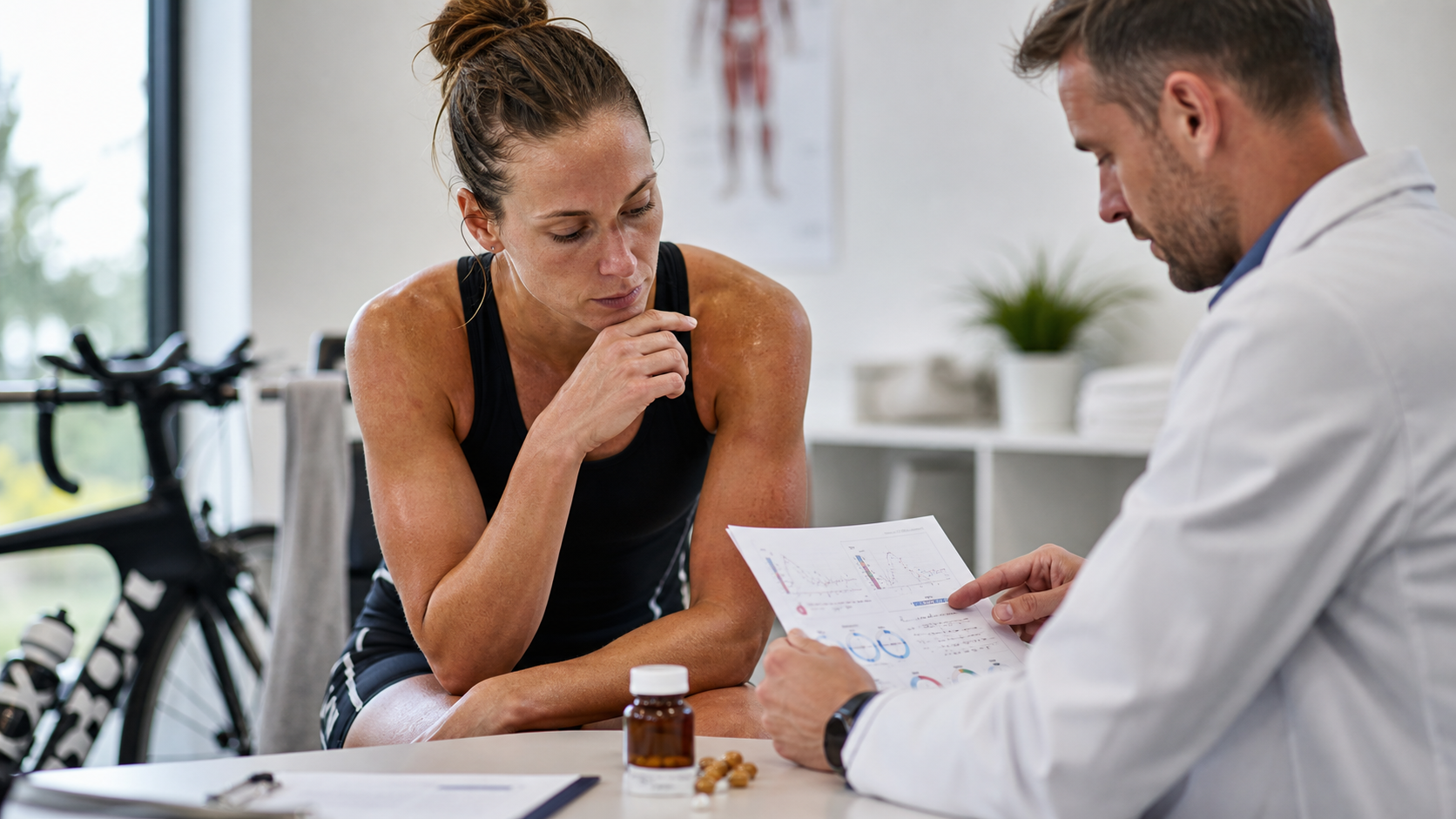
A few years ago, I coached a very dedicated female triathlete—let’s call her A. At the time, her training volume had ramped up to nearly 70 km of weekly running, plus swimming and long-distance cycling, yet she was getting weaker with each session. Climbing a hill she used to handle with ease, her heart rate would inexplicably spike above 175 bpm while her pace dropped significantly. Recovery after training was slow, and during the day at work she often felt dizzy, had brittle nails, and got winded climbing stairs. She initially thought she was “overtraining” and even wondered if she wasn’t cut out for the sport. Later, I asked her to get blood work done. The results showed serum ferritin in the single digits, with hemoglobin also at the lower edge of the normal range. This wasn’t a matter of willpower or talent—her body simply didn’t have enough iron to transport oxygen.
Iron supplementation has always had two extremes in the endurance sports community. One is ignoring it entirely, only discovering the problem after hitting a wall in training. The other is treating iron like a miracle supplement that “makes you stronger if you take it,” with everyone popping it daily and in large doses. Both approaches are wrong. In this article, I want to clearly walk you through one core concept: Iron is something you supplement only when deficient, and you stop once you’ve reached adequate levels—it is not a nutrient where “more is better.” Supplemented correctly, it pulls you back from the brink; supplemented incorrectly, haphazardly, or in excess, it can actually harm your health. Below, I’ll take you step by step through my practical experience coaching athletes, combined with the current consensus in sports science.
Why Endurance Athletes Are Especially Prone to Iron Deficiency
Let me first explain what iron actually does in the body. Iron’s primary role is to form hemoglobin and myoglobin, which are responsible for transporting oxygen from the lungs to muscles throughout the body, and then delivering it to the mitochondria to produce energy. You can think of red blood cells as delivery trucks carrying oxygen, with iron as the truck’s loading platform. Without enough iron, no matter how many trucks you have, they can’t carry oxygen. At high intensity, your muscles will be starved of oxygen, lactate will accumulate, and you’ll feel like “your legs have strength, but your cardio can’t keep up.” Beyond that, iron also participates in multiple enzyme reactions in energy metabolism, so even before you reach anemia, simply having low iron stores can make many people feel fatigued, unfocused, and experience declining endurance.
So why are endurance athletes—whether you’re a runner, cyclist, or triathlete—especially prone to iron deficiency? The reasons are multifaceted and cumulative:
- Footstrike hemolysis: During long-distance running, the repeated impact of the feet striking the ground mechanically destroys some red blood cells. This is particularly pronounced in marathon runners.
- Sweat loss: Taiwan’s summers are humid and hot. A single long training session leaves you drenched in sweat, and sweat naturally carries away small amounts of iron. Over time, this accumulation cannot be ignored.
- Gastrointestinal microbleeding: During high-intensity or prolonged exercise, blood is shunted to working muscles, leaving the gastrointestinal tract relatively ischemic, which can cause very minor bleeding in the digestive tract.
- Exercise-induced rise in hepcidin: This is the most critical factor, and I’ll dedicate a section to it shortly. Strenuous exercise triggers a mild inflammatory response that raises a hormone called hepcidin. When hepcidin is elevated, intestinal iron absorption is suppressed.
- Menstrual blood loss in women: Women who menstruate lose a fixed amount of iron each month, which is why the prevalence of iron deficiency is significantly higher among female athletes than males.
- Inadequate dietary intake: Vegetarians, those who deliberately limit red meat to control weight, or people who eat out for most meals with plenty of fruits and vegetables but relatively little protein often don’t get enough iron.
When you stack these factors together, you can understand why an endurance athlete who trains diligently and appears to have a “healthy” diet might actually be at high risk for iron deficiency. A was a classic case: high training volume, female, and preferring light, low-meat restaurant meals.
I want to emphasize a concept that’s often overlooked: Iron deficiency is “staged,” not a binary “yes or no” switch. It typically progresses through three stages sequentially. The first stage is “iron store depletion,” where ferritin in the blood starts to drop, but hemoglobin remains completely normal. You might just feel a bit sluggish and off in training, easily dismissed as “having a bad patch.” The second stage is “iron deficiency without anemia,” where red blood cell production is already affected and athletic performance noticeably declines, but routine hemoglobin tests may still fall within the lower end of the normal range, leading people to think nothing is wrong. The third stage is “iron deficiency anemia,” where hemoglobin also drops. By this point, symptoms are often obvious—pale complexion, noticeable breathlessness, palpitations, and struggling just to climb stairs.
The key point I want you to remember is this: The decline in athletic performance often occurs in the first and second stages—when hemoglobin is still normal. So if you only test hemoglobin and feel reassured when it’s normal, you may have already missed the optimal window for intervention. That’s why I keep emphasizing the “ferritin” marker—it’s the one that reflects the problem earliest.
Hepcidin: The Key Hormone That Determines “When to Supplement and How”
I specifically want to highlight hepcidin because it’s the key to understanding the entire iron supplementation strategy.
Hepcidin is the body’s “master switch” for regulating iron absorption. When iron levels are sufficient, or when the body is in an inflammatory state, hepcidin rises, narrowing the channels for intestinal iron absorption to prevent iron overload. Conversely, when the body is iron-deficient, hepcidin drops, opening the absorption channels to let you absorb more. This is a clever self-protective mechanism—but for athletes, it also creates two practical problems.
The first problem is that exercise itself raises hepcidin. Studies have observed that roughly 3 to 6 hours after strenuous exercise, hepcidin concentrations rise noticeably, and during this period your iron absorption efficiency is suppressed (sources: GSSI and related studies listed at the end). So if you supplement iron immediately after training without timing it right, you may get diminished absorption.
The second problem is that hepcidin follows a clear circadian rhythm: it’s lowest in the early morning, then gradually climbs throughout the day. This means morning is the golden window for iron absorption.
Combining these two points leads to the current consensus in sports nutrition: research indicates that iron absorption after morning exercise, when taken with breakfast, is actually better than in a resting state, showing that there’s a brief post-exercise window that promotes absorption (source: PubMed study listed at the end). The practical recommendation is—try to place iron-rich meals or supplements in the morning; if you have training, you can supplement within about 30 to 60 minutes after finishing, or wait until more than 6 hours post-exercise once hepcidin has fallen, avoiding that suppressed window.
There’s another very important finding that has changed clinical practice in recent years: hepcidin rises after taking a dose of iron and suppresses absorption for about 24 hours, only returning to baseline at 48 hours. This leads to a counterintuitive conclusion—taking iron daily, or even twice a day, doesn’t necessarily result in better absorption than taking it every other day. I’ll clarify this with a table below.
The First Principle of Iron Supplementation: Get a Blood Test First, Only Supplement If Deficient
I want to state the most important point as loudly as possible: Do not blindly supplement iron on your own without a blood test.
There are two reasons. First, iron supplementation does not improve performance in people who are “not iron deficient.” The current consensus is clear: the purpose of iron supplementation is to “restore insufficient stores back to normal,” not to “supplement beyond the body’s needs to chase extra effects.” If your body has enough iron, taking more won’t make you faster—it will only increase gastrointestinal burden and the risk of excess. Second, iron is one of the few minerals that “accumulates when in excess, and the body has no active mechanism to excrete it.” Long-term over-supplementation can cause iron to deposit in organs such as the liver and heart, leading to damage. There is also a genetic condition called “hemochromatosis” where people are inherently prone to iron overload; for such individuals, blindly supplementing iron is very dangerous. So—a blood test is a prerequisite, not an option.
So what should you test? The three core indicators:
- Serum Ferritin: Reflects the body’s “iron storage level” and is the most sensitive early indicator for detecting iron deficiency. In athletes, ferritin typically drops first, before hemoglobin drops. So simply seeing normal hemoglobin and saying “I’m not anemic, I’m fine” is not enough.
- Hemoglobin (Hb): Reflects whether the condition has progressed to “iron deficiency anemia.”
- Transferrin Saturation (TSAT): Reflects whether there is enough “circulating available” iron in the blood.
One thing to note: ferritin is also an “inflammatory marker.” It can be falsely elevated during intense exercise, infection, or injury-related inflammation. So blood draws should ideally be scheduled on a rest day, when you don’t have a cold or acute inflammation, for the numbers to be accurate. I usually ask my athletes to get tested during a relatively easy week, avoiding the day after a race or an ultra-long ride.
How to Interpret Ferritin Values
This is where most people get confused. The “reference range” lower limit on lab reports (e.g., 15 μg/L) is set for the general population as an “are you anemic” threshold—for endurance athletes, that standard is too lenient. Based on current literature consensus, values can generally be viewed as follows (units in μg/L, equivalent to ng/mL):
| Serum Ferritin (μg/L) | General Interpretation | Meaning for Endurance Athletes | Recommended Action |
|---|---|---|---|
| < 15 | Iron stores nearly depleted | High likelihood of impaired performance, possibly approaching anemia | Seek medical evaluation; active supplementation usually needed |
| 15–30 | Low iron stores | Performance often already affected | Discuss supplementation strategy with a doctor |
| 30–50 | Considered “normal” for the general population | Low for athletes; a gray zone | If symptomatic, discuss supplementation with a doctor |
| ≥ 50 | Normal | Generally considered more ideal for athletic performance | Maintain diet; no extra supplementation needed |
It’s important to emphasize: these are general reference ranges, not precise diagnostic cutoffs. Different studies give slightly different numbers (some set the ideal lower limit for athletes at 35–40, others at 40–50), and individual variation is large. Some people feel great at a ferritin of 40, while others still feel fatigued at 45. The final interpretation must be left to your physician, combining your symptoms, hemoglobin, TSAT, and overall condition—you cannot make a decision based on a single number alone.
Practical Approach: Forms, Dosage, and Absorption
Assuming you’ve had your blood tested and a physician has evaluated that you need iron supplementation, the next questions are: What form to take? How much? And how to take it for best absorption?
Common Forms of Oral Iron Supplements
Common oral iron supplements found in Taiwanese pharmacies and clinics are mainly ferrous salts, which have relatively better absorption rates. The differences between the salts mainly lie in the “elemental iron content per tablet” and “gastrointestinal tolerance”:
| Common Form | Characteristics | GI Tolerance | Notes |
|---|---|---|---|
| Ferrous sulfate | Most traditional, cheapest, high elemental iron content | Poorer; constipation/nausea more common | Good value, but more noticeable side effects |
| Ferrous gluconate | Lower elemental iron content | Relatively gentler | Need to take more tablets for equivalent dose |
| Ferrous fumarate | High elemental iron content | Moderate | Commonly found in combination formulas |
| Ferrous bisglycinate (amino acid chelate) | Chelated form, gentler | Usually better | More expensive; often chosen by those who fear side effects |
Here’s a key point many people don’t know: when looking at iron supplements, don’t just look at “how many milligrams per tablet”—look at the “elemental iron” content. Two products both labeled 300 mg can differ greatly in actual elemental iron provided between ferrous sulfate and ferrous gluconate. What the body actually uses is the elemental iron. As for dosage, the clinical range for oral elemental iron in treating deficiency is quite broad. For exactly how much to take and for how long, please strictly follow your physician’s or pharmacist’s instructions. I won’t give you a “just take this” prescription number here, because it needs to be individualized based on your ferritin, body weight, and tolerance.
The Key Within the Key: Taking It Every Other Day May Be Better Than Daily
This is the most important and counterintuitive finding in recent years, and I must spend time explaining it clearly because it could directly improve your iron supplementation results while reducing side effects.
As mentioned earlier, after a dose of iron, hepcidin rises and suppresses subsequent absorption for about 24 hours, only returning to baseline by 48 hours. This means if you take it every day, the absorption efficiency of the second day’s dose is actually suppressed by the previous day. Studies have directly compared “daily consecutive dosing” versus “alternate-day dosing”:
| Comparison Item | Daily Consecutive Dosing | Alternate-Day Dosing |
|---|---|---|
| Cumulative iron absorption “rate” | ~16.3% | ~21.8% |
| Cumulative total absorbed amount | ~131 mg | ~175 mg |
| Serum hepcidin in first 14 days | Higher (absorption suppressed) | Lower (absorption smoother) |
| GI side effects | More (GI tract stimulated daily) | Relatively fewer |
(Data sources: PubMed / Lancet Haematology studies cited at the end)
In other words, taking it every other day not only gives a higher single-dose absorption rate and greater total absorption, but also causes fewer side effects because the GI tract gets a day of rest. This is great news for people who experience constipation, nausea, or stomach pain when taking iron. Studies also show that splitting the dose into twice a day doesn’t increase absorption—it actually raises hepcidin further. So “once, every other day, in the morning” is often a smarter strategy than “twice a day, every day.” However—this still needs to be decided in discussion with your physician, because if you are already clearly anemic and need to recover quickly, your doctor’s prescription may differ.
How to Take It for Better Absorption
Beyond timing and frequency, what you take it with is also critical:
- Pair with Vitamin C: Vitamin C reduces ferric iron to the more absorbable ferrous form, significantly boosting absorption. Pair it with a kiwi, a glass of orange juice, or any vitamin C-rich fruit. Taiwan has a wide variety of cheap fruits, so this is easy to do.
- Avoid absorption inhibitors: Tea, coffee (contain tannins), calcium supplements and dairy products, and phytates in whole grains all inhibit iron absorption. Many Taiwanese people habitually have milk tea with breakfast or a cup of tea or coffee right after a meal—this effectively blocks iron absorption. Try to avoid these for about 1 to 2 hours before and after taking iron.
- Empty stomach vs. with food: Absorption is better on an empty stomach, but GI irritation is greater. If an empty stomach causes discomfort, take it with a small amount of food, sacrificing a bit of absorption for better tolerance. Being able to stick with it long-term matters more than anything.
- Separate calcium and iron: If you’re also supplementing calcium, try to space out the timing of calcium and iron—don’t take them together in the same meal.
A Special Note on Altitude Training and Iron Deficiency
Some advanced athletes arrange high-altitude training, such as going to Hehuan Mountain or the Wuling area for altitude stimulus, or joining altitude training camps. Here’s a key point many people don’t know: At altitude, the body accelerates red blood cell production to adapt to hypoxia, and producing red blood cells requires large amounts of iron. If you go to altitude with already low iron stores, you’re essentially asking your body to work with an “empty warehouse of raw materials.” Not only will the adaptation be less effective, but you may also deplete your remaining iron reserves and accelerate your slide into anemia. So experienced coaches and sports medicine teams typically recommend confirming adequate iron stores before heading to altitude, and topping up iron beforehand if necessary—but this still requires evaluation by a physician, not self-prescribing. This again echoes the core principle: Monitor regularly; don’t wait until you need it to discover the shelves are bare.
Monitoring: How to Know If Supplementation Is Working
Iron supplementation isn’t “swallow and done”—monitoring is just as important as supplementing. Here are a few key concepts:
First, oral iron supplementation is a slow process. Don’t expect to feel like a new person after three days. Restoring iron stores with oral iron typically takes at least 8 weeks, sometimes 3 months. If your ferritin starts very low, early progress will be slow—this is normal. Don’t give up just because “two weeks of taking it didn’t feel like anything.”
Second, get regular follow-up blood tests. I usually recommend rechecking ferritin, hemoglobin, and TSAT about 8 to 12 weeks after starting supplementation to see if the trend is moving upward. If there’s progress, continue or adjust per your doctor’s instructions; once you reach the target range, stop and switch to maintaining through diet, rather than taking it indefinitely.
Third, if levels won’t budge after months, look for the underlying cause. If you’ve been supplementing diligently for 8 to 12 weeks and ferritin is still stuck very low, it could mean: absorption issues, an ongoing source of loss (such as chronic gastrointestinal bleeding or heavy menstrual bleeding), or other underlying conditions. In this case, the answer is absolutely not to “crank up the dose and force it down”—you need to go back to your doctor to investigate the cause.
Fourth, intravenous iron is a tool reserved for special situations. In some cases, a doctor may consider IV iron: when oral side effects are completely intolerable, when ferritin remains severely low after 8 to 12 weeks of oral supplementation, or when faster recovery is needed before a key race or altitude training camp. This is a medical procedure that must be evaluated and performed by a physician—it is absolutely not something you decide on your own or use to speed things up.
Common Mistakes and Corrections
Having coached athletes for many years, I’ve seen countless people stumble when it comes to iron supplementation. Here are the most common mistakes:
- Mistake 1: Buying and taking iron supplements without a blood test. → Fix: Get a blood test first and have it evaluated by a physician. Only supplement if you’re iron deficient—this is the iron rule (pun intended).
- Mistake 2: Assuming you’re fine because hemoglobin is normal. → Fix: You must check ferritin. In athletes, ferritin typically drops first while hemoglobin holds steady; by the time hemoglobin drops, you’re anemic, and performance has already been suffering for a long time.
- Mistake 3: Treating iron as a “performance booster” and continuing to take it even when stores are sufficient. → Fix: Iron supplementation only helps people who are iron deficient. Stop once you’re sufficient; excess is harmful.
- Mistake 4: Taking it every day, even twice a day, to speed things up. → Fix: Frequent high doses raise hepcidin, which actually reduces absorption and irritates the gut. Taking a single dose every other day in the morning is often more effective (per your doctor’s instructions).
- Mistake 5: Swallowing it with milk tea, coffee, or tea. → Fix: These block absorption—separate them by 1 to 2 hours; pairing with vitamin C actually helps.
- Mistake 6: Throwing away the whole bottle and giving up when side effects are bad. → Fix: Switching to a chelated form (ferrous bisglycinate), taking it with food, or switching to every-other-day dosing usually dramatically improves tolerance. If it’s still not manageable, go back to your doctor to discuss other options.
- Mistake 7: Never getting tested again after supplementing. → Fix: Get regular follow-up blood tests to track the trend, and switch to dietary maintenance once you reach your target.
Dietary Side: Local Ways to Eat Your Way Back to Adequate Iron
Supplements are for “patching the hole,” but long-term maintenance relies on daily diet. Iron in food comes in two forms: heme iron, from animal sources, with high absorption; and non-heme iron, from plant sources, with lower absorption but still an important contributor.
Given Taiwan’s food environment, here are practical suggestions I often give my athletes:
- Moderate red meat: Beef and pork are high in heme iron. You don’t need to eat large amounts daily, but scheduling a few meals per week is reasonable. In Taiwan, beef noodle soup, braised pork rice, and small hot pot all deliver.
- Organ meats and shellfish: Pork liver, clams, and oysters are quite high in iron. Taiwan’s ginger and clam soup, oyster omelet, and sesame-oil pork liver are all local, iron-rich choices (organ meats are higher in cholesterol, so moderation is fine).
- Dark leafy greens and legumes: Spinach, sweet potato leaves, red amaranth, black beans, and red beans provide non-heme iron—vegetarians especially need to rely on these.
- Pair with vitamin C: When eating iron-containing foods, pair them with vitamin C-rich Taiwanese fruits like guava, kiwi, orange, or tomato to significantly boost non-heme iron absorption.
- A note for those who eat out often: Eating all meals out easily becomes “lots of carbs, few vegetables, inconsistent red meat.” If you’re primarily eating out and training heavily, your risk of iron deficiency is higher—you should get regular check-ups, consciously include iron-rich meals, and avoid immediately following meals with a hand-shaken drink or tea.
Actionable Advice for Readers at Different Levels
The same article calls for different actions from different people. I’ll divide readers into three groups and give you concrete starting points.
If You’re a “General Fitness Enthusiast / Just Starting Running or Cycling”
No need to panic, and no need to rush out to buy iron supplements. The key points are:
- Eat a balanced diet—include red meat, dark leafy greens, and legumes, paired with vitamin C fruits.
- If you don’t have noticeable fatigue and your performance is normal, you typically don’t need special iron testing or supplementation.
- But if you’re vegetarian, a menstruating woman, or ramping up training volume, consider adding ferritin to your routine health check-up to have a baseline.
- If you experience unusual fatigue, unexplained breathlessness on climbs, or slower recovery, see a doctor and get blood work done—don’t self-diagnose.
If You’re a “Serious Amateur Athlete / Training Volume Is on the Higher Side”
You’re in the moderate-to-high risk group for iron deficiency. My recommendations:
- Make ferritin part of regular monitoring—for example, test every six months to a year, and schedule the blood draw when you’re rested and free of inflammation.
- Know your baseline value, so you’ll recognize when it drops.
- If results show low levels, bring the report to your doctor to discuss a supplementation strategy (form, dosage, every-other-day morning dosing, etc.), and retest after 8 to 12 weeks.
- Eat iron-rich foods consistently; post-training and breakfast are good times to take in iron.
If You’ve Already Been Diagnosed with Iron Deficiency / Iron Deficiency Anemia
Your job is to cooperate fully with medical care and treat this as a long-term management issue:
- Follow your doctor’s instructions exactly regarding form, dosage, and method of supplementation—don’t adjust the amount on your own.
- Master the techniques of “single dose every other day, take in the morning, pair with vitamin C, avoid tea/coffee/calcium” to improve absorption and reduce side effects (but always defer to your doctor’s orders).
- Be patient: oral iron typically takes 8 weeks or more to show results—don’t quit halfway.
- Get regular follow-up tests, and once you reach the target range, switch to dietary maintenance—don’t keep taking high doses indefinitely.
- If levels won’t rise after extended supplementation, go back to your doctor to find the root cause—there may be ongoing losses or absorption issues that need to be addressed.
Frequently Asked Questions from Athletes (FAQ)
After years of coaching athletes, the questions I get about iron supplementation are highly repetitive. I’ve compiled the most common ones into a Q&A — you probably have the same doubts.
Q1: I don’t have anemia, but I often feel tired. Is it iron deficiency? Should I supplement?
Not necessarily. Fatigue has many causes — insufficient sleep, overtraining, inadequate nutrition, or even stress can make you tired. Iron deficiency is just one possibility. The right approach isn’t “feel tired, so supplement iron,” but rather “feel tired, so get a blood test to find the cause.” If your ferritin is low and you meet the clinical presentation of iron deficiency, supplement only after a physician’s assessment; if your iron is sufficient, you should be looking for other causes — supplementing iron would just be a waste of money and hard on your gut.
Q2: Multivitamins on the market contain iron. Is taking one of those enough?
If you’re not iron deficient, the small amount of iron in a multivitamin is fine for daily maintenance, but the dose is usually insufficient to “treat” someone who is already iron deficient. Conversely, if you’re not deficient at all, long-term use of an iron-containing multivitamin warrants attention to potential accumulation. The key point remains: know your numbers, then decide whether to take it and what to take.
Q3: My stool turns black after taking iron supplements. Is that normal?
Oral iron supplements often turn stool black or dark green — this is a normal phenomenon of unabsorbed iron in the intestines, and usually nothing to worry about. But pay attention to the distinction — if it’s tarry, shiny black stool, that could be a sign of gastrointestinal bleeding, and you should seek medical attention promptly rather than dismissing it as “just from the iron.” When in doubt, always ask your physician.
Q4: Are vegetarians guaranteed to be iron deficient?
Not necessarily, but the risk is indeed higher because plant-based non-heme iron has lower absorption rates. Vegetarians need to eat more strategically: consume more dark leafy greens, legumes, and whole grains (but watch out for phytates), and pair them generously with vitamin C to boost absorption, while avoiding tea and coffee around meals. For vegetarian athletes with training loads, I’d strongly recommend regular ferritin monitoring.
Q5: I just found out I’m iron deficient right before a race. Is there time to fix it?
Oral iron supplementation is a slow process, often taking 8 weeks or more — cramming at the last minute is almost useless. This is why I keep emphasizing “regular monitoring” — you want to catch the problem while it’s still small, not realize it a week before race day. As for whether IV iron can quickly bring levels back up, that’s a medical intervention a physician would evaluate only under specific circumstances — not a shortcut you can arrange yourself before a race.
A Follow-Up on One Case
Back to A from the beginning. After her ferritin came back in the single digits, I accompanied her to see a physician. After evaluation, the physician gave her an oral iron supplementation plan. We adjusted the timing to mornings, every other day, paired with a kiwi, and asked her to push her usual post-meal milk tea back by two hours. She had some constipation at first, so we switched to a chelated form, taken with a small amount of food, and things smoothed out. For the first three to four weeks she didn’t feel much difference and was quite discouraged at one point. I kept reminding her, “This is a slow process — the numbers will speak.” By the follow-up blood test around week 8, her ferritin was clearly climbing, and she noticed her heart rate no longer spiked inexplicably on climbs and her recovery after long sessions was faster. After three months, she reached the target range, so we stopped the oral supplement and switched to dietary maintenance plus regular monitoring.
The key point I want to make: her problem from start to finish was not a lack of effort, but a body missing the raw material for carrying oxygen. If she had kept pushing through with sheer “willpower,” she would only have gotten more worn down with training. Iron deficiency can be identified and it can be addressed — provided you’re willing to get a blood test first and lay the numbers out on the table.
Conclusion
When it comes to iron supplementation, it boils down to four phrases: get tested first, supplement only if deficient, stop once you’re sufficient, and re-test after supplementing. It’s not a magic pill for getting stronger — it’s a tool for repairing a leak. Athletes, due to training volume, sweat, hemolysis, hepcidin, menstrual cycles, and other factors, are inherently a high-risk group for iron deficiency, so it’s even more important to understand monitoring rather than supplementing blindly based on feelings or ignoring it altogether.
Taiwan’s healthcare and health-check environment is actually very convenient — the barrier to getting blood drawn or seeing a clinic is low. Rather than comparing iron supplements online and guessing at dosages yourself, treat this article as a conceptual map — the actual path still needs to be walked with your physician. Get your iron right, and you’ll find that those mysterious fatigue, the huffing on climbs, and the slow recovery often have solutions.
Wishing you healthy training, confident testing, and just-right supplementation.
This article is educational content and does not replace individual diagnosis and treatment advice from a physician, physical therapist, or nutritionist. For health conditions involving anemia, iron overload, and the like, please be sure to seek medical care and have professionals evaluate your individual situation. All values in this article are general reference ranges; individual variation is large — do not self-diagnose based on numbers or decide your own supplement dosage.
References
- USA Triathlon — What Endurance Athletes Should Know About Iron Deficiency Anemia and Ferritin Screening: https://www.usatriathlon.org/articles/training-tips/what-endurance-athletes-should-know-about-iron-deficiency-anemia-and-ferritin-screening
- Gatorade Sports Science Institute — Contemporary Approaches to the Identification and Treatment of Iron Deficiency in Athletes: https://www.gssiweb.org/sports-science-exchange/article/contemporary-approaches-to-the-identification-and-treatment-of-iron-deficiency-in-athletes
- The Impact of Morning versus Afternoon Exercise on Iron Absorption in Athletes (PubMed): https://pubmed.ncbi.nlm.nih.gov/31058762/
- Iron absorption from supplements is greater with alternate day than with consecutive day dosing in iron-deficient anemic women (PubMed): https://pubmed.ncbi.nlm.nih.gov/31413088/
- Iron absorption from oral iron supplements given on consecutive versus alternate days (The Lancet Haematology): https://www.thelancet.com/article/S2352-3026(17)30182-5/abstract
- Iron Status and Physical Performance in Athletes (PMC / NIH): https://pmc.ncbi.nlm.nih.gov/articles/PMC10608302/
Related Reading
- Iron Nutrition: The Most Overlooked Key Micronutrient for Endurance Athletes
- Iron and Serum Ferritin: The Most Common Hidden Drain on Endurance Athletes’ Performance
- Iron and Endurance Sports: The Hidden Killer of Iron Deficiency — Why You Get More Tired the More You Train
- The Iron Deficiency Crisis: The Most Common Yet Most Overlooked Nutritional Issue for Female Endurance Athletes
福隆鐵人團練隨拍
8 年前
FTL 與 SYB 車隊專訪 西進武嶺 實用攻略分享! 2小時 如何練?!你不知道的眉角!新手準備武嶺必看 EP1 | 實力派女車友 | 精華版 | 公路車 | CTYeh
4 年前
#公路車 #Fitting 靠人工智慧APP 幫你調整單車
6 年前
CT 喇低賽) 武嶺牽車 才是王道 西進牽車四小時內秘訣 攝手位置 如何判斷 防抽筋小秘訣
7 年前
西進武嶺 免費訓練分析服務 Intervals | 練不夠還是練過頭?你哪一種類型選手?AI模型告訴你! | 備戰神器 | 公路車 訓練 | CT Yeh
4 年前
#公路車 #西進武嶺 配速配瓦實驗 坡度分析 四小時內攻略 建大盃 NeverStop #西進武嶺攻略
6 年前
詳測) 小米 電動打氣筒 公路車胎要充多久? 值得買嗎? 米家充氣寶 小心燙手!
7 年前
Never Stop 西進武嶺 前後雙機 完整全程錄影 訓練台 實境
8 年前