Athlete's Caffeine Product Comparison: How to Choose Between Coffee, Capsules, Lozenges, and Energy Drinks? Timing Explained All at Once
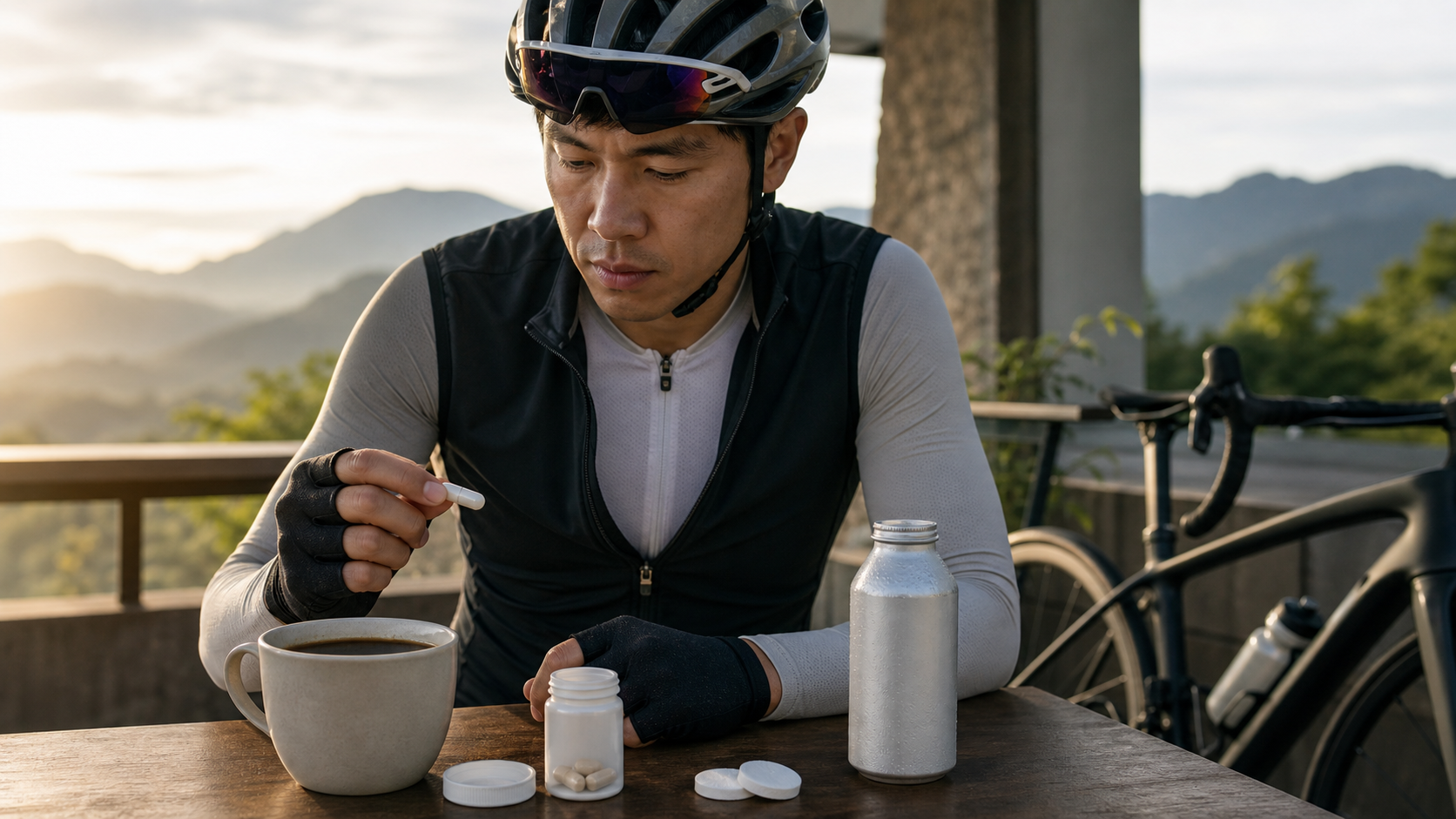
Starting with a Black Coffee Before Wuling
An amateur rider I coached, A-Kai, sent me a message the night before his first attempt at the western ascent of Wuling: “Coach, tomorrow morning should I drink a convenience store Americano, or swallow that can of caffeine capsules in my drawer?” I’ve heard this question hundreds of times over the past decade or so. Interestingly, what people agonize over is never “whether to use caffeine”—there’s long been a consensus on that in sports science—but rather “which form to use, when to use it, and how much.”
Caffeine is probably one of the few legal supplements where “almost everyone feels an effect, and the evidence is solid.” But precisely because the market is flooded with options—black coffee, instant coffee, caffeine capsules, buccal tablets, caffeine gum, energy drinks, caffeine added to energy gels—each one differs in absorption rate, dosage precision, gastrointestinal burden, and even price. Choose wrong, and at best it won’t work; at worst, you’ll be halfway up a climb with your stomach churning and your heart rate spiking enough to scare yourself.
In this article, I want to take a practical coaching perspective, lay these products side by side for comparison, and thoroughly explain “timing”—the most overlooked factor. Whether you’re a beginner preparing for your first half marathon or a veteran trying to squeeze out that extra 1% at the edge of a PB, you should be able to design a plan that works for you after reading this.
Here’s the conclusion for those in a hurry: Most people’s sweet spot is 3–6 mg of caffeine per kilogram of body weight, taken about 45–60 minutes before exercise. As for which product to use, it depends on whether you want “fast absorption, easy on the stomach” or “cheap, convenient, and ritualistic.”
Building the Foundation: Why Does Caffeine Work?
Mechanism of Action (In Plain Terms)
Caffeine’s primary performance-enhancing mechanism is blocking adenosine receptors in the brain. Adenosine is a signaling molecule that makes you “feel tired and want to rest,” accumulating the longer you exercise. Caffeine resembles adenosine and occupies those receptors, preventing fatigue signals from getting through. The result: at the same level of effort, your rating of perceived exertion (RPE) drops—you don’t feel as miserable, so you can sustain a higher pace or power output for longer.
It also has secondary effects: increasing central nervous system arousal, improving calcium utilization in muscle contraction, and sharpening focus. You used to hear “caffeine promotes fat burning and spares glycogen,” but recent research has downplayed that mechanism—the real driver of performance is the central nervous system pathway that makes you “feel less tired.”
This has an important practical implication: since caffeine primarily acts on “perceived fatigue,” it provides the greatest benefit for long-duration endurance events where you need to push through willpower and are prone to fading late. That’s why you feel its value most in the late stages of a marathon, the dead of night in an ultramarathon, or the final climb of a long mountain bike ride—those are exactly the moments when your brain wants to quit most. In contrast, for an explosive event lasting just a few seconds, caffeine’s “reduced fatigue” advantage isn’t as accessible. Understanding this, you’ll know where to deploy caffeine’s “firepower” in a race, rather than mindlessly chugging it all before the start.
How Big Is the Effect?
According to the International Society of Sports Nutrition (ISSN) position statement from 2021, caffeine at a dose of 3–6 mg per kilogram of body weight provides consistent benefits to endurance performance, with most studies observing roughly a 2–4% improvement. That number sounds small, but translated to actual racing: in a 40 km time trial or a full marathon, 2–4% could be a difference of several minutes—enough to decide whether you stand on the age-group podium.
The statement also notes that the minimum effective dose may be as low as 2 mg/kg, while high doses like 9 mg/kg offer no additional benefit and come with a host of side effects. This is crucial, and I’ll emphasize it repeatedly: more caffeine isn’t better—past the sweet spot, all you get is heart palpitations and diarrhea.
Take a 65 kg rider as an example: 3–6 mg/kg translates to 195–390 mg. For reference: a medium convenience store Americano contains roughly 120–200 mg of caffeine (varying widely with roast and extraction), so one to two cups puts him in the effective range.
Absorption Rate: The Real Key to Product Differences
Across different caffeine forms, “whether it works” doesn’t differ much—what really differs is how quickly it enters the bloodstream. That determines how far in advance you should take it. Based on a review of alternative caffeine delivery forms and a pharmacokinetic comparison study of caffeine gum versus capsules:
- Capsules/tablets (swallowed): Must pass through the stomach and into the small intestine for absorption; time to peak blood concentration (Tmax) is roughly 84–120 minutes.
- Caffeine gum/lozenges: A portion of the caffeine is absorbed directly through the buccal mucosa, bypassing the gastrointestinal tract, so blood levels rise noticeably faster, with a Tmax of about 44–80 minutes, and a clear spike in blood concentration within 5–15 minutes of chewing.
Note: the total amount absorbed is similar between the two—what differs is the speed. This means if you have only a short warm-up, or you’re in a trail race and want a quick top-up at an aid station, the faster response of buccal forms is a clear advantage.
Practical Comparison of Four Major Products
I’ve organized the four most common product categories into a table—this is the version I’d put directly on the table when discussing with athletes.
Table 1: Comparison of Four Caffeine Products
| Product Form | Absorption Rate | Dosage Precision | Gastrointestinal Burden | Convenience/Availability | Suitable Scenarios |
|---|---|---|---|---|---|
| Black coffee (brewed/convenience store) | Moderate (Tmax approx. 30–60 min) | Poor (strength varies widely) | Moderate (may stimulate bowel movement in some) | High (convenience stores everywhere in Taiwan) | Daily training, pre-race with time, enjoy the ritual |
| Caffeine capsules/tablets | Slow (Tmax approx. 84–120 min) | Excellent (clearly labeled) | Low to moderate | Moderate (requires advance purchase) | 1 hour pre-race dosing, precise measurement |
| Lozenges/caffeine gum | Fast (Tmax approx. 44–80 min) | Good (fixed dose per piece) | Low (primarily bypasses GI tract) | Moderate (specialty sports nutrition stores) | Mid-race top-ups, short warm-up, sensitive stomach |
| Energy drinks (canned) | Moderate to fast | Moderate (depends on brand labeling) | Moderate to high (carbonation, sugar, acidity) | High (convenience store refrigerators) | Want simultaneous sugar and stimulation, prefer the taste |
Black Coffee: The Most Accessible, but Hardest to “Dose”
Black coffee is the form I most recommend for beginners to “learn how their body responds to caffeine,” because it’s cheap and readily available—convenience store Americanos in Taiwan are practically everywhere. The downside is obvious: you rarely know exactly how many milligrams you’re getting. The same “medium Americano” can range from 100 mg to 250 mg of caffeine depending on the shop, roast depth, and extraction time.
For daily training or pre-race situations with plenty of time (45–60 minutes ahead), black coffee is perfectly adequate. But if you need precise dosing and reproducible race performance, its variability is just too large.
Caffeine Capsules/Tablets: The King of Precision, but Take Them Early
The biggest advantage of capsules is dosage precision—if the label says 100 mg, it’s 100 mg, and you can reliably reproduce your intake every time. That’s extremely useful for veterans who want to fine-tune their dose. The downside is slow absorption, with a Tmax that can reach 1.5–2 hours, so they’re not for spontaneous use. I typically have athletes swallow capsules 60 minutes before the start, so blood levels peak right around the gun.
Capsules also suit people with sensitive stomachs who need the bathroom after coffee, since they lack coffee’s acidity and other gut-stimulating compounds.
Lozenges / Caffeine Gum: The Fastest-Responding Fire Brigade
This is the form I believe is most underrated. Because caffeine is absorbed directly through the oral mucosa, its onset is the fastest of all forms. This delivers two practical benefits:
- When warm-up time is very short (e.g., track races, pursuit events, being pulled in as a last-minute substitute), you don’t need to take it a full hour early.
- When you want a mid-race top-up on the fly (e.g., hitting the wall late in a marathon, aid stations in an off-road race), gum takes effect within minutes—no need to swallow a big bolus and wait for it to slowly absorb through the gut.
The downsides are a higher unit cost, a taste that isn’t for everyone, and the need to actually chew to release the caffeine into the oral cavity—many people chew twice and swallow, which defeats the mucosal absorption advantage.
Energy Drinks: Solving Alertness and Sugar Intake in One Go, but Don’t Overlook the “Other Ingredients”
The advantage of energy drinks is getting caffeine plus carbohydrates together, which is convenient for long-duration exercise that also needs fuel, and they’re readily available in the refrigerated section of any Taiwanese convenience store. But watch out for three things:
- Sugar and carbonation: High sugar, high acidity, plus carbonation can upset some people’s stomachs during high-intensity exercise or in hot weather.
- Other additives: The evidence for ingredients like taurine, guarana, and B vitamins is mixed—don’t credit them with all the benefits.
- Total caffeine content: It varies widely between brands. Always check the label before drinking to avoid unknowingly stacking up an excessive dose.
Timing: What Gets Botched More Often Than “Which Form to Use”
I often say, if the timing is wrong, even the best product is useless. Here’s a table summarizing recommendations for different exercise scenarios.
Table 2: Caffeine Intake Timing and Form Recommendations by Scenario
| Exercise Scenario | Recommended Form | Intake Timing | Reference Dose (by body weight) | Coach’s Notes |
|---|---|---|---|---|
| Full marathon / ultra-half marathon (>90 min) | Capsules or black coffee as a base + lozenges mid-race | 60 min pre-race + top-up when hitting the wall | 3–4 mg/kg pre-race, 1–2 mg/kg late-race | Split the dose to avoid one big spike |
| Half marathon / 10K road race | Capsules or black coffee | 45–60 min pre-race | 3–5 mg/kg | Usually one full dose is enough |
| Mountain biking / long-distance road cycling (>2 hr) | Black coffee as a base + energy drink/lozenges mid-ride | 60 min pre-race + mid-ride | 3 mg/kg pre-race, 1–2 mg/kg mid-ride | Watch stomach and hydration in hot weather |
| Track events / short time trials (short warm-up) | Lozenges / caffeine gum | 15–30 min before start | 2–3 mg/kg | Use a fast-absorbing form to buy time |
| Evening / nighttime training | Black coffee or capsules, half the dose | 45 min before training | 1–2 mg/kg | Prioritize sleep; avoid affecting falling asleep |
Why Do Most Recommendations Say “45–60 Minutes Before Exercise”?
Because the most common and most reliable timing in most studies is 60 minutes before exercise (capsules/black coffee). This window lets blood concentration peak right when you actually need to exert yourself. But if you’re using a lozenge form, because absorption is fast, you can push that timing back to 15–30 minutes, closer to when you actually need it.
“Split Dosing Mid-Race” Is an Advanced Technique
For long-duration exercise exceeding 90 minutes, I often advise athletes not to take all the caffeine at once, but to give part as a base before the race and top up when they hit the wall later. The benefit: that late-race dose can push your RPE down another notch at the moment when your willpower is weakest and you most want to quit. This is where the fast response of lozenges really shines.
Quickly Calculate Your Dose: Body Weight Reference Table
Many athletes get overwhelmed when they hear “3–6 mg per kilogram,” but it’s actually simple once you do the math once. I’ve pre-calculated common body weight ranges so you can just look them up. Remember: beginners should start at the lower end of the dose, and only increase once you’ve confirmed there are no issues.
Table 3: Body Weight to Caffeine Dose Reference
| Body Weight | Low Dose 3 mg/kg | Medium Dose 4.5 mg/kg | High Dose 6 mg/kg | Approx. Equivalent in Convenience-Store Americanos (est. 150 mg each) |
|---|---|---|---|---|
| 50 kg | 150 mg | 225 mg | 300 mg | 1–2 cups |
| 60 kg | 180 mg | 270 mg | 360 mg | 1–2.5 cups |
| 70 kg | 210 mg | 315 mg | 420 mg | 1.5–3 cups |
| 80 kg | 240 mg | 360 mg | 480 mg | 1.5–3 cups |
| 90 kg | 270 mg | 405 mg | 540 mg | 2–3.5 cups |
Seeing the 6 mg/kg column routinely hit 400 or 500 mg should help you understand why I keep saying “don’t chase the high dose”—that’s actually a fair number of cups, and forcing it down is a ticket to heart palpitations for many people. In practice, the range I most often have athletes settle into is 3–4.5 mg/kg, balancing effectiveness with comfort.
Don’t Forget the “Hidden Sources”: Caffeine in Common Foods and Drinks
When calculating total intake on race day, the most commonly overlooked items are the caffeine in everyday foods and drinks. Taiwan’s bubble-tea culture means a single unsweetened green tea or a pearl milk tea can contribute a significant amount of caffeine. The table below is a rough reference I often give athletes (actual amounts vary greatly by product, volume, and extraction method—use it only as a conceptual guide).
Table 4: Rough Caffeine Estimates for Common Drinks/Foods
| Item | Rough Caffeine Content | Notes |
|---|---|---|
| Convenience-store medium Americano | 120–200 mg | Varies greatly by roast and extraction |
| Convenience-store latte | 100–180 mg | Depends on number of espresso shots |
| Large hand-shop red/green tea | 60–150 mg | Tea type and strength have a big impact |
| Canned energy drink | 80–160 mg | Always check the nutrition label |
| Canned/bottled cola | 30–45 mg | More volume means more caffeine |
| Espresso (single shot) | 60–80 mg | Per single shot |
| Dark chocolate (one small piece) | 10–30 mg | Higher cocoa content means more caffeine |
Key reminder: if you’ve already had a latte in the morning and a hand-shop drink at noon, then add a capsule before the race, your daily total could easily be approaching or exceeding the recommended limit. Add up all sources across the day—don’t just count the pre-race dose.
Why Do Others React So Differently to the Same Dose?
This is the thing I most want everyone to understand, yet the fewest people know: caffeine metabolism speed is inherently individual, and a large part of it comes down to your liver’s metabolic enzymes (the CYP1A2 pathway responsible for breaking down caffeine). Some people are “fast metabolizers”—they break it down quickly and are less affected; others are “slow metabolizers”—the same cup of coffee hits harder and lasts longer, and they may even struggle to sleep at night.
This explains several practical observations:
- Why your training partner can take a double espresso and still nap, while you get shaky hands until evening from half a cup.
- Why the same dose is a miracle tool for some and only brings anxiety and palpitations for others.
- Why copying someone else’s caffeine protocol often doesn’t work—this is highly individual.
You don’t need to actually get genetic testing. The most practical approach is to use training days to test your own response one by one, treating it as a skill that takes time to calibrate. That’s also the scientific basis for why I keep emphasizing “test it in training first” throughout this article.
A Complete Case Study: From Heart Palpitations to a PB
Let me share another example from one of my athletes, Xiao-Min (the data reflects common real-world scenarios and is only meant to illustrate the process). She was an office worker preparing for her first full marathon, weighed 65 kg, and typically had one latte a day. When she first came to me, she mentioned that during a previous long run, she had “chugged a large energy drink plus a coffee before the race, and after 10 km, she started experiencing heart palpitations and nausea.”
The adjustments I made for her were simple:
- Simplify first: We stopped the “energy drink + coffee” stacking before races and switched to a single, quantifiable source in capsule form.
- Start with a low dose: At 65 kg, we started with 3 mg/kg, roughly 195 mg, taken 60 minutes before the race.
- Rehearse it three times in training: She followed this exact protocol for three consecutive weekend long runs, logging her heart rate, GI comfort, and focus. The first two times, she felt “energized but not jittery.” On the third, we fine-tuned it to 4 mg/kg (about 260 mg), and she responded well.
- Add late-race fueling: Since a full marathon exceeds 90 minutes, I had her carry one caffeinated gum (about 50 mg) to take at the 30 km mark to combat the wall.
On race day, she experienced no heart palpitations at all. She said that at 30 km, “a few minutes after chewing the gum, my legs felt strong again.” She finished comfortably, nearly four minutes faster than her original target. There was no magic involved—it was simply calibrating the dose, form, and timing one by one through training.
Common Mistakes and How to Fix Them
These are the pitfalls I’ve repeatedly seen athletes fall into over the years. Here they are, one by one, so you can avoid them.
Mistake 1: Trying It for the First Time on Race Day
This is the most dangerous mistake. Caffeine affects everyone differently, and some people are highly sensitive—300 mg can cause heart palpitations, shaking hands, and stomach upset. Trying it for the first time on race day is like using your most important day as a guinea pig.
Fix: Always test it during regular training (especially key sessions at race intensity) at least 2–3 times to confirm the dose, form, and GI response are all fine before adding it to your race plan. This is the iron rule of “Nothing new on race day.”
Mistake 2: Thinking “More Is Stronger”
Many people assume that if a little works, more must work better. As mentioned earlier, beyond 6 mg per kilogram, performance doesn’t improve further, but side effects climb sharply—heart palpitations, anxiety, shaking, GI discomfort, and headaches. One athlete once self-dosed to nearly 500 mg and spent the entire race with an inexplicably elevated heart rate, breathing harder than usual on climbs, which ultimately hurt his performance.
Fix: Start with a low dose (2–3 mg/kg) and gradually work up to find the sweet spot where you “feel it but don’t get jittery.” You usually won’t need to exceed 6 mg/kg.
Mistake 3: Ignoring Tolerance
People who consume large amounts of caffeine daily develop a tolerance, and the same dose on race day may have a diminished effect.
Fix: Some coaches recommend reducing daily caffeine intake a few days before the race to “reset” sensitivity, but you need to be prepared for withdrawal symptoms (headaches, low energy), and you should test this during training first. If your withdrawal symptoms are severe, forcing a reset may do more harm than good. In that case, it’s better to maintain steady intake and slightly increase the dose on race day.
Mistake 4: Drinking It Before Evening Training
Many office workers in Taiwan can only train in the late afternoon or evening. Caffeine’s half-life is roughly 3–6 hours (varying by individual and genetic metabolism). If you down a large cup at 7 or 8 PM, you may still be wide awake at midnight. Sleep is the most powerful recovery tool, and sacrificing sleep for a little training boost is never worth it in the long run.
Fix: For evening training, cut the dose in half or switch to low-caffeine options. Put sleep first.
Mistake 5: Chugging Energy Drinks on an Empty Stomach in Hot Weather
Taiwan’s summers are humid and hot. Many people, fasting in the morning and nervous before a race, chug a full can of high-sugar, high-acid carbonated energy drink—and their GI system rebels within a short distance.
Fix: In hot weather or for those with sensitive stomachs, prioritize forms that don’t irritate the GI tract, such as capsules or gums. Save energy drinks for occasions you’ve already tested and confirmed your body can handle.
Actionable Advice for Different Experience Levels
If You’re a Beginner (First Half Marathon, Just Starting Regular Exercise)
- Get to know yourself with black coffee first: On a regular training day, drink a convenience-store Americano (about 150 mg) 45–60 minutes before your session and observe any heart palpitations, GI reactions, or changes in focus.
- Don’t rush to buy expensive supplements: Black coffee is perfectly sufficient for beginners. Once you’ve confirmed you respond well and want consistent, repeatable results, then consider capsules.
- Keep a log: How much you took, when you took it, and how you felt. This record is worth more than any product.
If You’re an Advanced Runner/Cyclist (Aiming for a PB)
- Switch to capsules for precise dosing: Calculate the milligrams for your body weight at 3–5 mg/kg and take it 60 minutes before the race.
- Consider split dosing for long events: For races over 90 minutes, use a base dose early and a gum form for a late-race boost.
- Rehearse the full race-day protocol: Treat caffeine as part of your gear and run through the entire process during key training sessions.
If You’re a Seasoned Veteran (Chasing Every Last Detail)
- Fine-tune the timing and form combination: For example, use fast-absorbing gum for short warm-ups or time trials, and capsules as a base for longer races.
- Carefully evaluate pre-race tolerance resets: Only do this if you’re confident your withdrawal symptoms are manageable and you have enough time to rehearse.
- Integrate caffeine into your overall fueling strategy: Plan it together with carbohydrates, electrolytes, and water—don’t let it work in isolation.
How to Configure Your Products for the Best Value: Choose by Budget and Needs
Athletes often ask me: “Coach, should I stock up on a bunch of supplements?” My answer is usually: First, clarify how often you’ll use them and in what situations, then decide whether to invest in the pricier forms. Here are three common setups.
Setup 1: The Minimalist (Limited Budget, Few Races)
Use only black coffee. For daily training and a few races a year, convenience-store Americanos are enough, with nearly zero cost. The downside is imprecise dosing, but it’s sufficient for most amateur athletes. This is the starting point I recommend for most beginners.
Setup 2: The Balanced Approach (Regular Racing, Want Consistent Results)
Capsules as the primary + gum as backup. Use capsules for precise pre-race dosing, and keep a few caffeinated gums on hand for short warm-ups or mid-race needs. This setup is moderately priced, covers most situations, and is the combination I most recommend to advanced athletes.
Setup 3: The Detail-Oriented (Chasing Perfection, Ample Resources)
Capsules + gum + caffeinated gels, all three, switching by situation: capsules as a base for long races, gels for the late stages, and gum for time trials to save time. This is the most flexible setup, but it also requires you to test and log each form thoroughly in training—otherwise, you’re just adding variables.
My advice: Most people are more than fine stopping at Setup 2. Don’t buy a pile of products just because you see what pros use. First, make sure you’ll actually use them and have tested them.
Combining Caffeine with Other Supplements
Caffeine rarely works alone; it’s often paired with carbohydrates, electrolytes, and even other ergogenic aids. A few practical points:
- Caffeine + Carbohydrates: This is the classic endurance-sports combination. Carbs provide fuel, and caffeine reduces perceived fatigue. They don’t conflict—they complement each other. That’s why caffeinated gels and energy drinks are designed this way.
- Caffeine + Electrolytes: Especially important in hot weather. Caffeine doesn’t replace electrolyte replacement; each has its own role. In Taiwan’s summer, you sweat heavily, so don’t neglect sodium intake just because you’re focused on caffeine.
- Interactions with Other Supplements: Some “all-in-one pre-race formulas” mix caffeine with multiple ingredients, but the evidence for their effectiveness is mixed, and they make it hard to know which ingredient is doing what (or which one is making you feel unwell). I prefer simple, controllable combinations—the fewer variables, the easier it is to troubleshoot.
Local Context for Taiwan
- Convenience store coffee is convenient but inconsistent in strength: If you want precise dosing, don’t rely on it entirely—capsules or lozenges offer more control.
- Be extra cautious in hot, humid weather: Caffeine has a mild diuretic effect, and combined with heavy sweating in Taiwan’s summers, you must place hydration and electrolytes on equal footing—don’t let a pick-me-up turn into dehydration.
- Hidden caffeine for those who eat out: Bubble tea, milk tea, cola, and chocolate all contain caffeine. Don’t forget to count them in your daily total to avoid unknowingly exceeding your limit.
- Those with chronic conditions must consult a doctor first: If you have high blood pressure, arrhythmia, heart disease, anxiety disorder, or GERD, or are taking related medications, caffeine may interact with your condition or drugs. Taiwan’s NHI makes seeing a doctor easy—spend one outpatient visit before you start and have your primary care physician or cardiologist evaluate you. It’s far more cost-effective than guessing online. Pregnant women, adolescents, and those highly sensitive to caffeine should also be especially conservative.
FAQ
Q: Does drinking coffee vs. taking capsules make a difference in effect?
A: In terms of performance enhancement, the difference is minimal—what matters is absorption rate and dosing precision. Capsules give you exact doses; black coffee is cheap and convenient. It depends on what you need.
Q: Caffeine causes dehydration—should I avoid it during exercise?
A: At typical exercise doses, the diuretic effect is very mild and won’t cause noticeable dehydration, especially since you’re hydrating anyway. What you should really worry about is overall fluid and electrolyte balance in hot weather, not the caffeine itself.
Q: Are lozenges always better?
A: It’s not “better”—it’s “faster-acting.” If you have an hour before your race to prepare, capsules or black coffee work just as well and cost less. Lozenges are valuable when your warm-up is short or you need a mid-race top-up.
Q: How much per day is too much?
A: The general daily upper limit for healthy adults is often cited as around 400 mg, but that’s a “daily” concept. For a single pre-exercise dose, calculate by body weight (3–6 mg/kg), and include other sources from that day (bubble tea, cola) in your total. If you have concerns or chronic conditions, consult a physician.
Q: My energy gels already contain caffeine—do I need more?
A: Many endurance energy gels offer “with caffeine” and “caffeine-free” versions, with amounts ranging from 25 to 50 mg per packet. If you’re already using caffeinated gels, remember to count them in your total and don’t stack additional caffeine to the point of exceeding your limit. In practice, many people rely on caffeinated gels for “divided mid-race dosing”—it’s very convenient.
Q: Will taking caffeine capsules on an empty stomach hurt my stomach?
A: It varies by individual. Capsules are less irritating than black coffee, but on an empty stomach combined with race-day nerves, some people still feel discomfort. If you’re prone to GERD or discomfort on an empty stomach, take them with a small amount of easily digestible carbs (e.g., banana, toast) and test it during training first.
Q: Why do I feel more tired after caffeine?
A: It could be a rebound effect from too high a dose (fatigue after palpitations and jitteriness), or it could be that you’re sleep-deprived and propping yourself up with caffeine, which naturally diminishes the effect. Caffeine “borrows” energy rather than “creates” it—no supplement can repay a long-term sleep debt. Get your sleep in order first, and caffeine will work in your favor.
Conclusion: Treat Caffeine as a Skill to Practice
Caffeine isn’t a magic pill—it’s a well-evidenced tool that requires individualized tuning. Which product to use, when to use it, and how much—the answers aren’t printed on the packaging; they’re hidden in the records of your own repeated training sessions. Black coffee gets you started, capsules give you precision, lozenges buy you time, and energy drinks cover everything at once—none is absolutely best; there’s only “what suits you best for this particular race.”
Back to A-Kai’s question at the start. My answer then was: “If you haven’t tested those capsules in your drawer during training, don’t touch them tomorrow. Just drink the usual Americano you’re used to, have it an hour before the race, and focus on riding.” He did exactly that and broke his own westbound record that day. You see, sometimes the best fueling strategy is simply not doing anything you haven’t practiced.
Here’s one concrete first step for you: This week, pick a regular training day, take about 3 mg/kg of caffeine 45–60 minutes beforehand using the most accessible form (for most people, that’s a convenience store Americano), then jot down four things in your phone’s notes—time of intake, dose, heart rate and how you felt during the session, and GI status. After accumulating three to four such records, your understanding of your own body will surpass any generic article online (including this one). From there, adjust the form and timing upward—you’ll be on the right track.
Remember, fueling experts aren’t the ones using the most expensive products—they’re the ones who know their own bodies best and never do anything they haven’t practiced. Wishing you a smooth ride and a strong finish at your next race—securing that 2–4% you’re looking for.
This article is educational content and cannot replace individual diagnosis and treatment advice from a physician, physical therapist, or nutritionist. If you have chronic conditions such as high blood pressure, heart disease, arrhythmia, or anxiety disorder, or are taking medication, please consult a qualified medical professional before trying any caffeine supplementation strategy.
References
- International Society of Sports Nutrition position stand: caffeine and exercise performance (PMC): https://pmc.ncbi.nlm.nih.gov/articles/PMC7777221/
- Administration of Caffeine in Alternate Forms (Sports Medicine, PMC): https://pmc.ncbi.nlm.nih.gov/articles/PMC5790855/
- The rate of absorption and relative bioavailability of caffeine administered in chewing gum versus capsules (ScienceDirect): https://www.sciencedirect.com/science/article/abs/pii/S0378517301009589
Related Reading
- Caffeine Supplementation Guide: How to Get Dose, Timing, and Sources Right? A Coach Walks You Through It
- Choosing Energy Gels and When to Use Them: Race Planning with Caffeinated vs. Caffeine-Free Gels
- Caffeine Tolerance and Withdrawal for Athletes: Periodized Use to Make Every Milligram Count
- The Complete Caffeine Supplementation Guide: Dose, Timing, and Genetic Differences—A Coach Shows You How to Use Caffeine Right
西進武嶺 自製新版AI配速表產生器 x 賽前攻略 抱佛腳! 沒有功率計也可以產生配速表嗎?有什麼其他眉角賽前要注意的呢? | 西進武嶺 / 東進武嶺 KOM 攻略 | 公路車 | CT Yeh
4 年前
#公路車 #Fitting 靠人工智慧APP 幫你調整單車
6 年前
靠單車減肥35公斤 心得分享與整理
7 年前
12/9 曜越Tomashinii 免費約騎,海倫咖啡 星巴克吃到飽😍 #公路車 #cycling
2 年前
大家都在開箱的...單車用藍芽對講耳機真的有幫助嗎? SENA BiKom 20 長距離旅遊 & 海鷗繞圈賽 實際體驗心得 / 公路車 / CT Yeh
9 個月前
2026 車錶排行榜!誰是最多車友正在使用?練家子最愛哪款?🏆 (2萬名車友數據) / 公路車 / CT Yeh
5 個月前
單車 一日北高 ( 雙城 ) 肥宅雙人瘋狂行 紀錄片 REACTO
10 年前
五指山約騎,居然包場海倫咖啡無料吃喝! 牽車都比我快...大羞辱QQ | CHPT3 x 曜越單車活動小記錄 | 全程iPhone 14 Pro 4K電影級 拍攝| 公路車 | CT Yeh
3 年前