Athletes' Baking Soda and Buffering Supplements: How to Use Sodium Bicarbonate, How to Save Your Gut, and Which Sports It Actually Works For
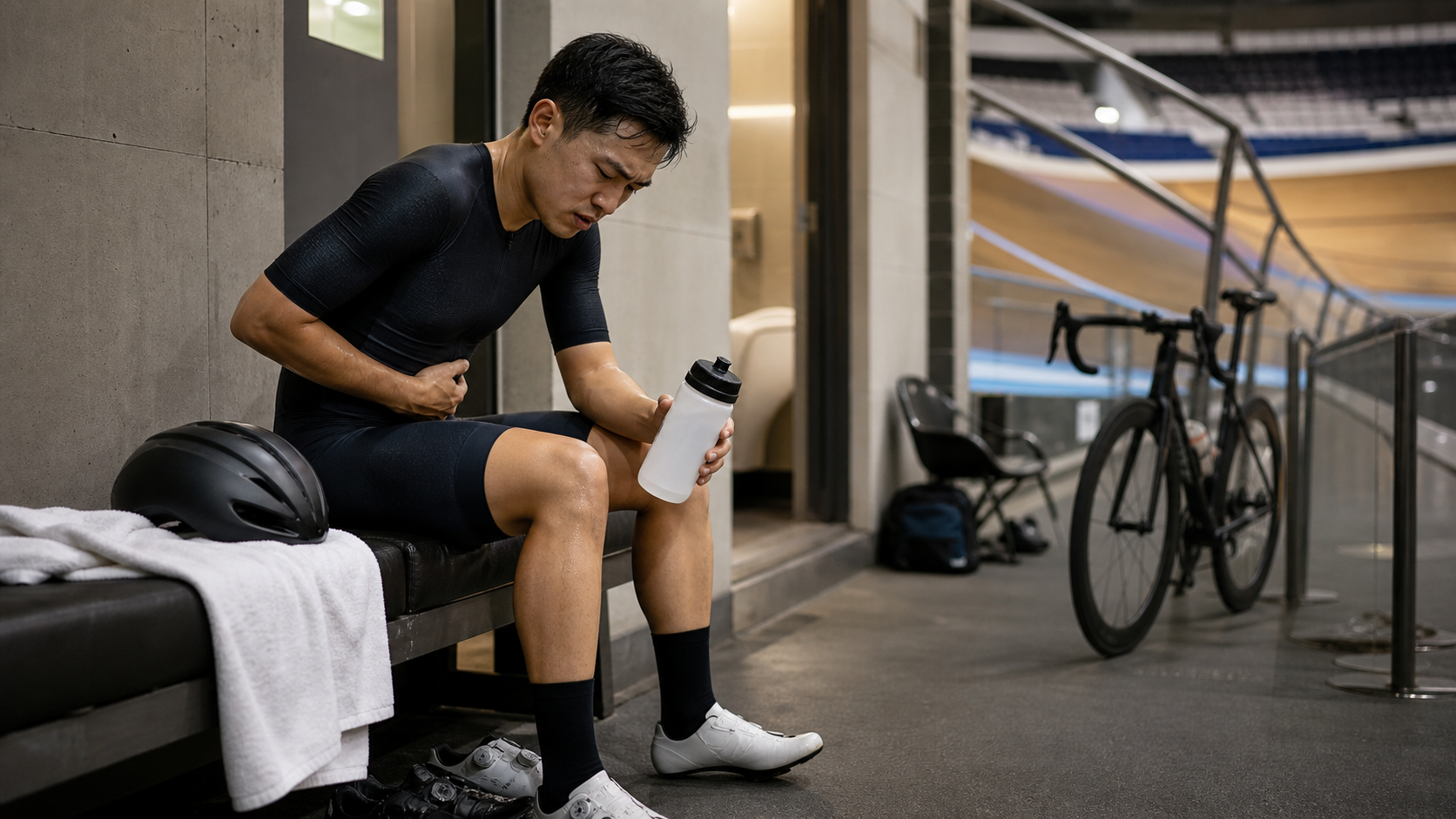
Starting with One Athlete’s Time Trial Tragedy
I will never forget that scene. A few years ago, I was coaching an athlete preparing for a track time trial—let’s call him A-Kai. His individual pursuit event was roughly three and a half minutes of all-out effort. He had heard somewhere that “drinking baking soda before a race delays the burn and lets you go faster.” On race morning, without consulting me, he went to the pharmacy himself, bought food-grade sodium bicarbonate, and about forty minutes before his start, downed a large glass of warm water mixed with the whole thing in one go. He didn’t even make it to the start line—he “exploded” in the restroom next to the check-in area: bloating, nausea, three trips to the toilet, and a pale face. His race result was slower than his usual training times. When he confessed to me afterward, his eyes were full of grievance: “Coach, the internet said it works.”
He wasn’t wrong. Baking soda—sodium bicarbonate (NaHCO₃)—is indeed one of the few legal supplements in sports science with a solid evidence base. The problem was never “does it work,” but rather how much to use, when to take it, how to avoid the gastrointestinal landmines, and whether your sport even responds to it. A-Kai’s tragedy wasn’t baking soda’s fault; it was the result of treating a tool that requires precise dosing and timing like a drink to be chugged carelessly.
In this article, I want to explain sodium bicarbonate from start to finish from the perspective of someone who has coached athletes for over a decade. I’ll give you ranges rather than false precision, because everyone’s body weight, gut, and sport profile are different. After reading this, at least you won’t end up like A-Kai, spending the three and a half minutes that should have been your sprint in a toilet next to the start line.
Let me say the most important thing first: Sodium bicarbonate is not for every sport or every person. It has a clear scope of application and real side-effect risks. This article will teach you how to judge whether you should touch it at all.
Concepts and Scientific Basis: What Baking Soda Actually Does in Your Body
During High-Intensity Exercise, Your Muscles Are “Turning Acidic”
Let’s establish a core picture first. When you do high-intensity, near-maximal exercise—like an all-out 400-meter sprint, a track time trial, a 2000-meter row, judo combat, or repeated sprint intervals—your muscles rely primarily on anaerobic glycolysis for rapid energy production. This process generates a large amount of hydrogen ions (H⁺), which drives the pH in your muscles and blood downward—what people commonly call “muscles turning acidic.”
This acidification interferes with muscle contraction and disrupts the function of energy-metabolism enzymes. It’s one of the reasons your legs feel “like lead” and your power suddenly drops in the latter stages of high-intensity efforts. Note that I said “one of,” because fatigue is multifactorial—it’s not simply lactic acid or hydrogen ions doing all the work. This is a concept that gets oversimplified far too often.
Sodium Bicarbonate Is an “External Buffering Army”
Sodium bicarbonate’s role is as an extracellular acid-base buffer. When you supplement it, the concentration of bicarbonate ions (HCO₃⁻) in your blood rises, and the blood’s buffering capacity increases. This creates a larger “hydrogen ion concentration gradient” between the inside and outside of your muscles, helping to “pull” accumulated hydrogen ions out of the muscle faster and shuttle them into the blood, where they get buffered away.
Here’s an analogy: your muscle is a factory constantly producing waste (hydrogen ions), and your blood is the garbage truck outside. What sodium bicarbonate does is increase the number of garbage trucks and their hauling capacity, so the waste inside the factory is less likely to pile up to the point of shutting down the production line. It doesn’t go into the muscle cells to neutralize directly; it strengthens the removal system from the “outside.”
This mechanism also explains why its benefit is “marginal” rather than “transformative.” It won’t raise your VO₂max, and it won’t suddenly boost your strength. It simply helps push that wall back a little further when you’re already approaching your acidification limit. For an athlete already performing near their ceiling, that little bit can be the difference between placings; but for someone whose fundamentals aren’t solid yet, that marginal benefit gets completely drowned out by much larger variables. This echoes my long-standing position: Get the foundation right first; only then do supplements make sense.
Level of Evidence: This Is One of the Few Legal Supplements That Genuinely Delivers
This point deserves emphasis, because far too many supplements on the market are a tax on the gullible. According to the official position stand published by the International Society of Sports Nutrition (ISSN) in 2021, sodium bicarbonate can improve muscular endurance performance, various combat sports (boxing, judo, karate, taekwondo, wrestling), and high-intensity cycling, running, swimming, and rowing. Its most well-established ergogenic effect is for high-intensity exercise lasting approximately 30 seconds to 12 minutes.
This “30 seconds to 12 minutes” time window is absolutely critical—it essentially determines whether it suits your event. I’ll dedicate a full section to it later.
Don’t Think of It as the “Lactic Acid Delayer” Myth
Here I want to break a widely circulated myth. Many people (including A-Kai back then) assume baking soda “neutralizes lactic acid and keeps you from feeling the burn.” That claim isn’t physiologically precise. First, lactic acid itself isn’t the culprit behind soreness and fatigue—what actually disrupts muscle function is the acidification caused by hydrogen ions, and lactic acid is actually a reusable energy source for the body. Second, sodium bicarbonate doesn’t enter muscle cells to “neutralize” directly; it strengthens buffering outside the cells and accelerates hydrogen ion removal.
Why bother correcting this? Because a wrong mental model leads to wrong expectations and wrong usage. If you think it’s a “miracle anti-soreness pill,” you’ll tend to think “the sorer I am, the more I should take” and “it works for any event,” eventually using it on endurance sports where it does nothing. Only by understanding its true mechanism—external buffering, accelerated removal, useful only when high-intensity acidification dominates—will you use it where it belongs.
Individual Variability: Why You Can’t Just Copy Someone Else’s Numbers
Let me stress another key point: responses to sodium bicarbonate vary enormously between individuals. At the same dose of 0.3 g/kg, one person’s blood bicarbonate peaks at 90 minutes, another’s at 150 minutes; one person feels nothing in their gut, another feels nauseous just from the smell. These differences come from body weight, gastrointestinal physiology, dietary habits, and even how nervous you are on the day.
So when you see an athlete online say, “I take it 60 minutes before my race,” that’s their number, not yours. Copying someone else’s protocol onto yourself is just as dangerous as A-Kai copying what he read online. That’s why I’ll keep coming back to “test it yourself, record it yourself.”
Practical Methods: Dosing, Timing, and Gut Strategies
This is the most practical part of the article, and the part A-Kai needed most back then. I’ll break it into three sections: dosing, timing, and gut.
Dosing: More Is Not Better
According to the ISSN position stand, the optimal single dose is approximately 0.3 grams per kilogram of body weight (0.3 g/kg). Below this dose, the effect diminishes—roughly 0.2 g/kg is the minimum threshold at which performance improvements can be observed. Higher doses (such as 0.4 or 0.5 g/kg) provide no additional benefit and significantly increase side effects.
This is where many people go wrong: they assume “a little more works better,” and the only result is that they send themselves to the bathroom. More is not better—it’s often worse.
Here’s a conversion table for common body weights, so you can reference actual gram amounts:
| Body Weight (kg) | 0.2 g/kg (Threshold Dose) | 0.3 g/kg (Optimal Dose) | 0.4 g/kg (Not Recommended, High Side Effects) |
|---|---|---|---|
| 50 | ~10 g | ~15 g | ~20 g |
| 60 | ~12 g | ~18 g | ~24 g |
| 70 | ~14 g | ~21 g | ~28 g |
| 80 | ~16 g | ~24 g | ~32 g |
| 90 | ~18 g | ~27 g | ~36 g |
Reminder: One teaspoon of food-grade baking soda is roughly 4 to 5 grams, so a 70 kg person at 0.3 g/kg would need about 4 to 5 teaspoons—swallowing that amount dry or mixed with a small amount of water will almost certainly make your gut protest. Which brings us to the next key point: timing and form.
Timing: 60 to 180 Minutes, Not “Just Drink It Before the Race”
The ISSN position statement recommends a single-dose intake window of approximately 60 to 180 minutes before exercise or competition. One of A-Kai’s mistakes was chugging it just 40 minutes before the start—at that point, bicarbonate hasn’t fully entered the bloodstream, yet the gut is already reacting at its most intense, effectively stacking the peak of side effects right on the starting line.
What’s more troublesome is that research shows the peak of gastrointestinal distress, depending on the form, often occurs about 60 to 90 minutes after ingestion (for regular capsules or delayed-release forms), while enteric-coated tablets may even push that peak to around 180 minutes. This means you can’t just look at “when blood bicarbonate peaks”—you also have to consider “when my gut is going to act up,” and the two need to be staggered away from the critical race window.
This is also why personalized timing testing is so crucial—everyone’s absorption and gut reaction curves are different. Some people hit their optimal window at 90 minutes; others need to stretch it to 150. This can only be figured out through repeated trials in training, and absolutely must never be attempted for the first time on race day.
Gut Strategies: This Is Where Success or Failure Really Lies
Sodium bicarbonate’s most notorious downside is its gastrointestinal side effects: bloating, nausea, abdominal pain, and diarrhea. The mechanism isn’t hard to understand—a large load of sodium salts entering the gut, plus bicarbonate reacting with stomach acid to produce carbon dioxide, is the source of bloating and burping; the high osmotic pressure then pulls water into the intestines, causing diarrhea. Here are the practical strategies I’ve compiled for my athletes over the years, ranked by effectiveness:
| Strategy | Approach | Effectiveness | Notes |
|---|---|---|---|
| Switch to enteric-coated tablets | Choose enteric-coated formulations so the bicarbonate is released in the small intestine rather than the stomach | High | Studies show a marked reduction in GI symptoms, but the absorption curve is slower and the gut peak shifts later |
| Split the dose | Divide the total amount into multiple doses taken tens of minutes apart, rather than downing it all at once | High | Flattens out osmotic pressure and gas production rate |
| Take with food | Consume alongside a small meal or snack based primarily on carbohydrates | Medium to High | Some research suggests co-ingestion with carbs can reduce GI discomfort |
| Dilute with plenty of water | Use a larger volume of water to take the dose in portions, avoiding high concentration directly irritating the stomach lining | Medium | But don’t drink so much that you feel bloated and it affects your performance |
| Serial (multi-day) loading | Take divided doses daily for several days before the race to let the body adapt and build up buffering reserves | Medium | Some studies show serial enteric-coated loading produces almost no significant GI side effects |
| Lower the single dose | Start at 0.2 g/kg, then adjust up to 0.3 g/kg once tolerance is confirmed | Medium | Sacrifices some effect for usability; worth it for those with sensitive stomachs |
A special note on serial loading: one study had subjects take enteric-coated sodium bicarbonate daily for several days, and they improved performance in subsequent anaerobic tests, with almost no one reporting meaningful GI side effects throughout the process. This offers a viable path for those with sensitive stomachs who still want to use this tool—rather than chasing a single big pre-race dose, you gradually build up your buffering reserves over several days beforehand.
Taiwan-Specific Context: Two Reminders for Eating-Out Regulars and Humid, Hot Weather
When using this tool in Taiwan, there are two things I always emphasize to my athletes.
First, eating-out regulars need to watch out for “sodium stacking.” Sodium bicarbonate is itself a high-sodium supplement—0.3 g/kg for a 70 kg person means ingesting a considerable amount of sodium in one go. Eating out in Taiwan tends to be salty anyway, and if your three meals that day include braised snacks, bento boxes, or noodle soups—all high-sodium fare—the overall sodium load stacks up very high. For most people, that just means thirst and water retention, but if you have high blood pressure, heart conditions, or kidney issues, this is an absolute red line that requires consulting a doctor first, which I’ll emphasize again in the compliance section later.
Second, fluid and electrolyte balance in hot, humid weather. Taiwan summers routinely exceed 32°C with high humidity, and heavy sweating and dehydration are already common. If the high osmotic pressure of sodium bicarbonate also triggers diarrhea, it can accelerate dehydration and electrolyte imbalance in that humid heat—leaving you not faster, but potentially heat-stricken or cramping. So when using this in outdoor events during Taiwan’s summer, your hydration strategy needs to be more conservative and more cautious—don’t stack two dehydration risks on top of each other.
Applicable Events: Which Sports Benefit, Which Don’t
Back to that key “30 seconds to 12 minutes” time window. Sodium bicarbonate’s effect is fundamentally about helping you counteract the acidification caused by high-intensity exercise, so it’s best suited for events that are intense enough to generate large amounts of hydrogen ions, and long enough for those ions to accumulate. Too short (like a 100-meter sprint or a single maximal lift) and the hydrogen ions never build up before it’s over; too long and slow (like low-intensity long-distance jogging) isn’t dominated by anaerobic glycolysis, so acidification isn’t the limiting factor.
| Event Type | Representative Sports | Applicable? | Reason |
|---|---|---|---|
| Middle-distance, high-intensity | 400–1500 m running, track time trials, 2000 m rowing | Highly suitable | Falls within the golden 30-second to 12-minute window; acidification is a primary limiter |
| Repeated high-intensity intervals | Team sport sprints, interval training, CrossFit-style circuits | Suitable | Repeated anaerobic output; buffering helps maintain quality in the later stages |
| Combat sports | Judo, boxing, taekwondo, karate, wrestling | Suitable | Explicitly listed as effective by ISSN; round-based high-intensity bursts |
| High-intensity cycling | Short time trials, criterium sprints, hill climbs | Suitable | High intensity, duration falls within the effective window |
| Pure explosive, very short | 100 m sprint, single maximal lift, shot put | Limited benefit | Too short; hydrogen ions don’t have time to accumulate |
| Low-intensity endurance | Marathon at easy pace, long LSD rides | Not applicable | Primarily aerobic metabolism; acidification isn’t the limiter, and GI risk is high |
Many people who come to ask me are actually endurance enthusiasts running full marathons or riding long gran fondos. The moment they hear “a supplement with scientific evidence,” they want to try it. I usually talk them out of it directly: your event isn’t limited by acidification, and forcing it will only get you a stomach full of gas and a constant search for restrooms, with zero performance benefit. Put your effort into fueling, pacing, and training volume—the return on investment is far higher.
Looking at common Taiwan venues: if you’re into track cycling, short time trials along the riverside, middle-distance races at school track meets, or sparring practice at a judo dojo, this tool is worth serious consideration; if you’re doing the Sun Moon Lake loop, long Wuling climbs, or weekend riverside jogs, it will barely help you at all.
Edge Case: Does a Cycling Hill Climb Time Trial Count as Applicable?
One athlete asked me a great question: does a long climb time trial like Wuling qualify? The answer depends on duration and intensity. For a long climb like Wuling that takes two to three hours, you’re primarily relying on aerobic metabolism with pacing at moderate to low intensity—acidification isn’t the limiting factor, so it’s not applicable. But if it’s a short climb time trial finishing within ten minutes—say, a five-to-eight-minute climb done almost entirely at anaerobic limit—then it falls right in the effective window and is worth considering.
The key isn’t “is this a climb?” but rather “where does the duration and intensity of this effort fall?” On the bike, the all-out sprint on the final lap of a criterium, track pursuit, or short time trial all benefit from this; long endurance rides and gran fondos don’t. Learn to judge by “duration × intensity” rather than “event name,” and you’ll have grasped the essence.
Common Mistakes and Fixes
In all my years coaching athletes, the mistakes I’ve seen almost all fall into the categories below. See which one fits you:
Mistake One: First Attempt on Race Day
This is the most fatal one, and it’s exactly what A-Kai did. Any supplement strategy must be fully tested in training. You don’t know your gut tolerance, you don’t know your optimal timing window, you don’t know whether you’ll get diarrhea—betting all those unknowns on race day is gambling your performance on luck.
Fix: Start on a non-critical training day with a lower dose (0.2 g/kg) to test the waters, and record your GI reactions and how you feel. Gradually work up to 0.3 g/kg while testing different timings (60, 90, 120, 150 minutes) and different forms (regular vs. enteric-coated). Only after at least 3 to 4 successful rehearsals with no GI incidents should you consider using it in competition.
Mistake 2: Downing it all at once, dry-swallowing, or mixing it too concentrated
Slamming 4 to 5 teaspoons of baking soda down with a small amount of water is basically challenging your gut to a fight. High concentration, fast intake, massive gas production—side effects hit all at once.
Fix: Prioritize enteric-coated tablets instead, or split the total dose into multiple portions taken over several tens of minutes, paired with adequate water and a small amount of carbs. If you have a sensitive stomach, the enteric-coated tablet or serial loading route is strongly recommended.
Mistake 3: Miscalculating the dose or being greedy
Some people skip the body-weight calculation and just grab a “feels about right” amount; others think more is more powerful and go straight to 0.5 g/kg. The former might be insufficient and ineffective, while the latter doubles the side effects without any extra benefit.
Fix: Strictly calculate based on body weight, target 0.3 g/kg, and do not exceed it. Use a digital scale to measure the exact grams—don’t eyeball it with “about a spoonful”—teaspoon capacities can vary widely.
Mistake 4: Using it for the wrong type of event
Endurance enthusiasts forcing it, and pure power athletes using it too—both are applying the tool where it can’t help.
Fix: First confirm whether your main event falls within the “high-intensity 30 seconds to 12 minutes” range, or belongs to repeated high-intensity intervals or combat/grappling sports. If it’s outside that range, don’t waste your gut capacity.
Mistake 5: Ignoring sodium load and personal health conditions
Focusing only on athletic performance while overlooking the fact that sodium bicarbonate is a high-sodium supplement.
Fix: If you have hypertension, heart disease, kidney disease, or are on a sodium-restricted diet, consult your doctor before use. This isn’t a “be a little careful” situation—it’s a “ask first, then talk” situation.
Actionable advice for readers at different levels
Everyone starts from a different point, so I’ve split the advice into three tiers. You can find where you fit.
If you’re a beginner / general fitness enthusiast
Honestly, you probably don’t need it yet. Sodium bicarbonate is a tool to squeeze out that tiny marginal gain in high-intensity performance when you’re already near your limit. If your training volume, sleep, daily nutrition, and hydration still have plenty of room for improvement, put your energy into those fundamentals—the return will far outweigh baking soda.
Action steps:
- First, get your training consistency, sleep, and basic nutrition in order—these are the foundation.
- Confirm whether your main event actually falls within the applicable range (most recreational runners and long-distance cyclists actually don’t qualify).
- If you really want to try it, start at the lowest 0.2 g/kg, in enteric-coated tablet form, on a non-key training day. Treat it as a “slowly getting to know it” experiment, not a “magic pill that works instantly.”
If you’re an advanced athlete / competing with goals
You might genuinely benefit, especially if your event is middle-distance, interval-based, or combat/grappling. The key is systematic testing and logging.
Action steps:
- Create a “supplement testing log.” Each time, record: dose (g/kg), form, intake timing, GI response (using the scale below), subjective feelings, and performance data.
- Use the GI grading table below to quantify that vague “a bit uncomfortable” feeling so you can adjust:
| Grade | Description | Action |
|---|---|---|
| 0 | No sensation at all | Keep current protocol |
| 1–2 | Mild bloating, burping, doesn’t affect exercise | Acceptable, keep monitoring |
| 3–4 | Noticeable bloating or mild nausea, slightly affects focus | Consider lowering dose or switching to enteric-coated tablets |
| 5–6 | Nausea, abdominal pain, clearly affects performance | Should adjust protocol, don’t use on race day |
| 7+ | Diarrhea, severe discomfort | Stop that protocol, re-evaluate form and dose |
- Target 0.3 g/kg, prioritize enteric-coated tablets or split dosing, and find your personal optimal timing window (usually between 90 and 150 minutes, but it varies by individual).
- If a single pre-race dose never passes the gut test, try serial loading (split doses over several consecutive days before the race).
If you’re a coach or team leader
Your responsibility isn’t just “teaching how to use it”—it’s holding the safety line.
Action steps:
- Screen your athletes’ health. Proactively ask about hypertension, kidney or heart disease, and sodium-restricted diets. Anyone in those categories gets referred to a doctor for evaluation first.
- Establish a standardized testing protocol within the team. Never allow anyone to try it for the first time on race day.
- Institutionalize the GI grading and timing tests for your athletes. Make decisions with data, not feelings.
- Especially for events in Taiwan’s hot, humid summer environment, tie hydration and electrolyte strategies together with the sodium bicarbonate protocol to avoid dehydration stacking on top.
A revised case study: How A-Kai did it afterward
Back to A-Kai. After that disaster, we spent about a season slowly refining the protocol. First, we confirmed his event (a 3.5-minute time trial) fell perfectly within the applicable window—that was good news, meaning it was worth the investment.
Then, on non-key training days, he started with 0.2 g/kg of enteric-coated tablets, doing a maximal effort test 90 minutes after intake. He reported a GI grade of only 1 to 2—almost no sensation. We bumped it up to 0.3 g/kg and pushed the timing back to 120 minutes to avoid the gut’s potential peak. After about five practice runs, he found his sweet spot: 0.3 g/kg enteric-coated tablets, split into two doses taken 150 to 120 minutes before the race, paired with a small carb-based snack.
At the next season’s time trial, he wasn’t nervously hovering by the porta-potty at the start line. Instead, he followed the rhythm he’d rehearsed countless times, calmly completing his supplementation, warm-up, and race. He set a personal best that day. I won’t say it was all the baking soda’s doing—training and mindset mattered just as much—but at least that tool that once broke him had become a part of his trusted routine.
The biggest takeaway from this process for me is: Supplements are never magic; they’re a variable that needs to be tamed. Their value isn’t in “take it and get stronger,” but in whether you’re willing to invest the time to tune them to fit your body.
I’ve also coached a counter-example. A very dedicated female athlete whose main event was the full marathon heard A-Kai’s success story and wanted to try baking soda too. I spent considerable effort convincing her otherwise: her event was three to four hours of aerobic endurance—acidosis wasn’t the limiting factor for her at all. Forcing it would only bring gut distress. She eventually redirected the energy she would have spent researching baking soda into optimizing her long-run fueling rhythm and pacing strategy, and she broke her personal best that season instead. This contrast illustrates the point well—the same tool is an asset when used for the right event, and pure interference when used for the wrong one. Deciding “whether to use it” always comes before and matters more than “how to use it.”
FAQ Quick-Fire Answers
Q: Can I just use food-grade baking soda (for baking) directly?
A: The ingredients are essentially the same, but precise dosing, the form (enteric-coated or not), and hygienic quality are the key points. If you’re serious about using it as a sports supplement, choosing a product with clear labeling—preferably enteric-coated tablets—and calculating the dose precisely with a digital scale is far more reliable than grabbing baking soda from the pantry. Regardless of the source, anyone with health conditions should consult a doctor first.
Q: Can baking soda be used together with caffeine or beta-alanine?
A: These have different mechanisms of action, so theoretically they don’t conflict, and some people do combine them. But introducing multiple variables at once means you won’t be able to tell which one is working or which one is causing discomfort. The principle is: “add one variable at a time, and only add the next once you’ve confirmed it’s stable.”
Q: How long after taking it does it take effect, and how long does it last?
A: Blood bicarbonate levels rise along a specific time curve. The effective window roughly corresponds to 60 to 180 minutes after ingestion, but individual variation is large. This is exactly why you need to test and map out your own curve in training—don’t just borrow someone else’s numbers.
Q: Is it safe to take every day long-term?
A: Sodium bicarbonate is a high-sodium substance, and the long-term health effects of chronic high-dose use—especially on blood pressure, heart, and kidneys—should not be taken lightly. It should be treated as a performance tool for specific occasions, not a daily supplement. Even serial loading is only for a few short days before competition, not year-round daily consumption.
Q: I have a super sensitive stomach. Am I doomed?
A: Not necessarily. Enteric-coated tablets, split dosing, serial loading, and reducing the single dose are all strategies designed specifically for you. Start with the lowest dose and the most gentle form, and test slowly. Many people who thought they were out of luck eventually found a workable protocol. And if none of it works for you, that’s fine too—it was never a necessity in the first place.
Q: Is there a difference between commercial “buffering supplements for sports” and buying baking soda myself?
A: Commercial products typically sell you on the dosage form (enteric-coated tablets, pre-measured packets), clear dose labeling, and possibly additional compounded ingredients. These do help with “reducing GI side effects and making precise dosing easier,” but whether they’re worth the price is debatable. If the core ingredient is sodium bicarbonate, the mechanism is the same. The key still comes down to dose, timing, form, and personal testing—not how nice the packaging looks.
Q: Is there any immediate danger if I take it wrong?
A: For healthy people, the most common “cost” is a GI upset—bloating, diarrhea, nausea. Uncomfortable, but usually not dangerous. What truly requires caution is excessive sodium intake in people with heart, kidney, or blood pressure issues, which can affect fluid and electrolyte balance. That’s exactly the group that must consult a doctor beforehand and never self-experiment. If you experience abnormal heart palpitations, severe discomfort, or altered consciousness after use, seek medical attention immediately.
A Quick Self-Check Table
Before you start, use this table to quickly assess your current state of readiness:
| Check Item | Pass Criteria | What to Do If You Fail |
|---|---|---|
| Event Suitability | Main event falls in the 30-second to 12-minute high-intensity range, or is an intermittent/combat sport | If it doesn’t fit, don’t use it; invest your resources in training instead |
| Health Screening | No hypertension, heart disease, or kidney disease; not on a sodium-restricted diet | If you have any of these, consult a doctor first |
| Dose Calculation | Precisely calculate 0.3 g/kg with a digital scale | Don’t eyeball it, don’t overdo it |
| Form Selection | Choose enteric-coated tablets or split dosing if you have a sensitive stomach | Chugging it all at once is a major mistake |
| Timing Test | Have already determined your personal window through training | If you haven’t tested it, don’t use it in competition |
| Practice Runs | At least 3–4 incident-free practice sessions | If insufficient, keep accumulating them on training days |
Only when you pass all six items are you truly ready to bring it to race day.
Conclusion: Using the Tool Correctly Matters More Than Using It Hard
Sodium bicarbonate is one of the few legal supplements I seriously discuss with advanced athletes, because its scientific foundation is relatively solid. But precisely because it “actually works,” I worry even more about people treating a tool that requires precise calculation like chugging a sports drink, just like A-Kai did.
Remember these core points: Lock the dose at 0.3 g/kg and don’t overdo it, time it 60 to 180 minutes before the event, save your stomach with enteric-coated tablets and split dosing, make sure your event falls in the 30-second to 12-minute high-intensity window, and never, ever try it for the first time on race day. Get these things right, and only then do you have the right to talk about its benefits.
Ninety percent of performance improvement comes from solid training, sleep, nutrition, and recovery; supplements are at best a small part of that last ten percent. Don’t put the cart before the horse, and don’t let a bottle of baking soda steal the spotlight from your daily hard work. When your foundation is solid and your event is right, this tool might help you squeeze out that crucial extra bit—but it will always be the supporting actor. Your effort is the star.
Wishing you smooth training. Treat every practice run with the same seriousness as a real race, and you won’t be frantically searching for a bathroom on race day.
This article is for educational purposes and does not replace individual diagnosis and treatment advice from a physician, physical therapist, or nutritionist. If you have hypertension, heart disease, kidney disease, or other chronic conditions, or if you are taking medication or following a sodium-restricted diet, please consult your doctor before using any high-sodium supplement, and rely on individualized assessment. In Taiwan, make good use of National Health Insurance resources and let professionals oversee your specific situation—it’s always the safest choice.
References
- International Society of Sports Nutrition position stand: sodium bicarbonate and exercise performance (ISSN official position statement): https://pmc.ncbi.nlm.nih.gov/articles/PMC8427947/
- Effects of serial and acute enteric-coated sodium bicarbonate supplementation on anaerobic performance, physiological profile, and metabolomics in healthy young men: https://pmc.ncbi.nlm.nih.gov/articles/PMC9424542/
- Enteric-Coated Sodium Bicarbonate Attenuates Gastrointestinal Side-Effects (International Journal of Sport Nutrition and Exercise Metabolism): https://journals.humankinetics.com/view/journals/ijsnem/30/1/article-p62.xml
Related Reading
- Sodium Bicarbonate and Lactate Buffering: How Baking Soda Supports Your Final Three Minutes of High-Intensity Effort
- Sodium Supplementation for Athletes: Are Salt Tablets Really Necessary? A Coach Explains Loss Differences, Timing, and Overdose Risks
- Beetroot Juice and Nitrate: A Triathlon Coach’s Guide to This Legal Supplement Worth Trying
- The Science of Sports Drinks: When You Need Them, How to Choose, or Should You DIY Your Own Formula?
CT暗黑廚房) 車友必備 宇宙無敵鮮蚵湯 幫助訓練恢復 天然食補 好市多 超肥鮮蚵 破PR
7 年前
西進武嶺 免費訓練分析服務 Intervals | 練不夠還是練過頭?你哪一種類型選手?AI模型告訴你! | 備戰神器 | 公路車 訓練 | CT Yeh
4 年前
FTL 與 SYB 車隊專訪 西進武嶺 實用攻略分享! 2小時 如何練?!你不知道的眉角!新手準備武嶺必看 EP1 | 實力派女車友 | 精華版 | 公路車 | CTYeh
4 年前
碟煞公路車 銑面器 !? 原來銑完差這麼多! 降低蹭碟機率! | TIME 公路車 保養小記錄 | CT Yeh
3 年前
CT 喇低賽) 武嶺牽車 才是王道 西進牽車四小時內秘訣 攝手位置 如何判斷 防抽筋小秘訣
7 年前
西進武嶺 自製新版AI配速表產生器 x 賽前攻略 抱佛腳! 沒有功率計也可以產生配速表嗎?有什麼其他眉角賽前要注意的呢? | 西進武嶺 / 東進武嶺 KOM 攻略 | 公路車 | CT Yeh
4 年前
一個測試有沒有認真練車的方法😂 #公路車
10 個月前
詳測) 小米 電動打氣筒 公路車胎要充多久? 值得買嗎? 米家充氣寶 小心燙手!
7 年前