Banned Substances and Sport: The Science of Anti-Doping, and How to Protect Yourself with Clean Supplements
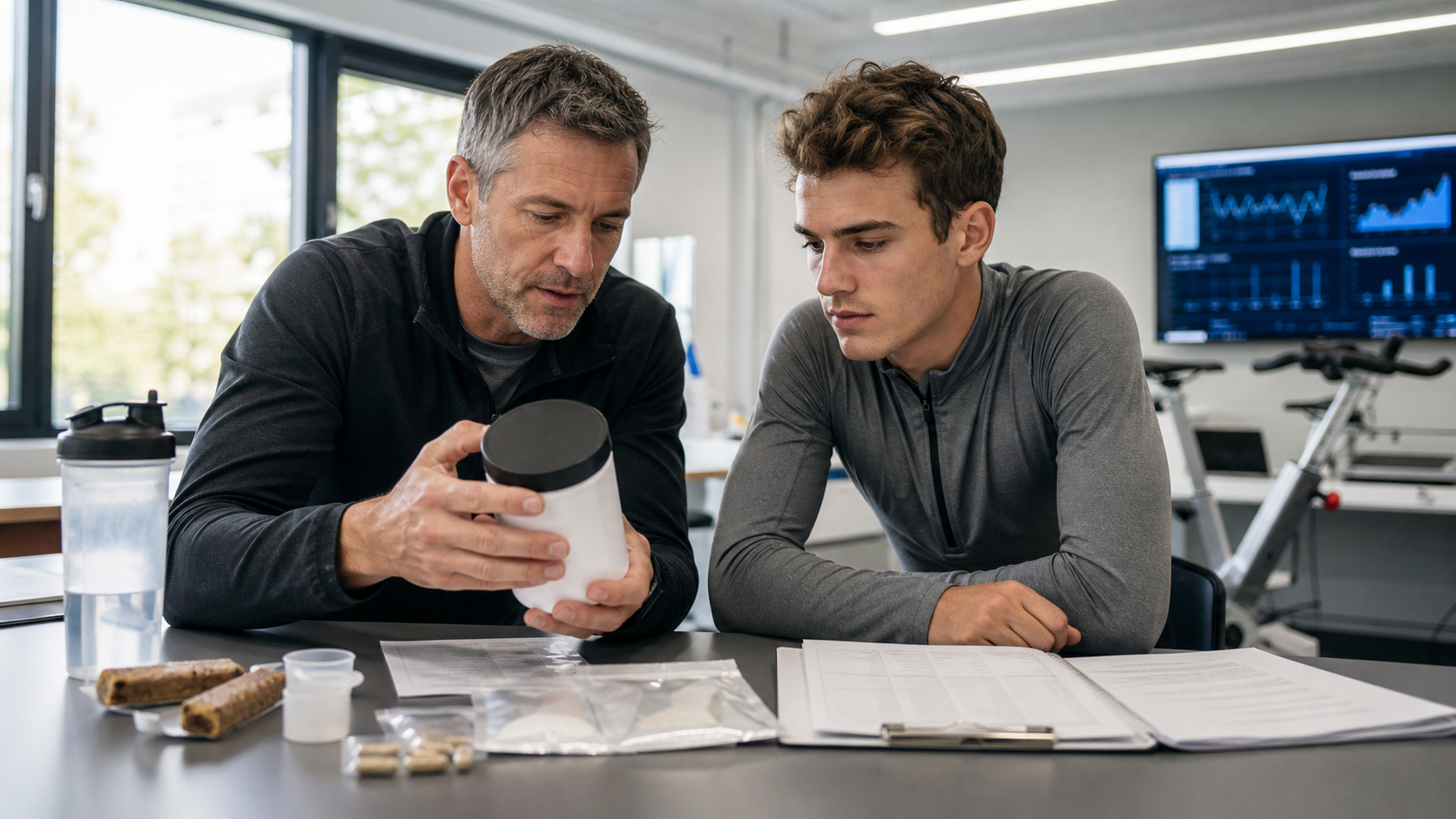
One Scoop of Whey Nearly Ruined a Season
A few years ago, I coached a very dedicated amateur road cyclist—let’s call him A-Zhe. That year, A-Zhe was in peak form. His Functional Threshold Power (FTP) had climbed from 265 watts to nearly 300 watts, and he’d trimmed his weight down to 68 kg, preparing to race a regional age-group event. One day after training, he excitedly showed me a jar of “imported premium fat-burning formula,” saying he’d bought it online, that foreign bodybuilders all used it, and asked if he could take it.
I flipped the label over to the back and saw a long list of plant extract names I couldn’t pronounce, plus a vaguely labeled “proprietary patented complex.” I only said one thing to him: “If you get selected for doping control one day, are you confident you can explain to the officials exactly what’s in that jar?” He froze. In the end, we set that jar aside and switched to third-party-certified whey and caffeine tablets. He stayed clean that season and made it onto the age-group podium.
What this article wants to talk about is something many people assume “has nothing to do with amateurs”—the science of anti-doping. It’s not just about professional athletes. Anyone who enters a race with doping control, or simply wants to progress cleanly, should understand a bit of it. Because what really trips people up isn’t usually deliberate cheating—it’s “accidentally ingesting something.” In 15 years of coaching, I’ve seen too many cases of people who weren’t bad actors, but who nearly threw away all their hard work because of one supplement of dubious origin.
This isn’t meant to scare you off nutrition products. It’s meant to give you a practical, readable self-protection protocol.
Part 1: Foundational Concepts—What Does Anti-Doping Actually Regulate?
Banned Substances Aren’t Just “Injectable Steroids”
Many people’s image of doping stops at bodybuilders injecting steroids or Tour de France riders getting blood transfusions. But the Prohibited List from the World Anti-Doping Agency (WADA) actually covers a very broad range, and it’s updated every year. It broadly falls into several categories:
- Anabolic agents: Includes anabolic-androgenic steroids (such as testosterone derivatives) and selective androgen receptor modulators (SARMs). These are the most classic “muscle-building” drugs.
- Peptide hormones, growth factors: Such as erythropoietin (EPO), human growth hormone (HGH), and insulin-like growth factors. EPO is the most damaging for endurance athletes because it directly boosts oxygen-carrying capacity.
- Beta-2 agonists: Certain asthma inhaler ingredients become violations if used above the permitted dosage or without a declaration.
- Hormone and metabolic modulators: Such as aromatase inhibitors and insulin.
- Diuretics and masking agents: These don’t enhance performance themselves, but they can dilute urine and mask other banned substances, so they’re prohibited too.
- Stimulants: This category is most relevant to the general public. It includes ingredients that are secretly added to many weight-loss, energy, and fat-burning supplements, such as certain amphetamine analogues, DMAA, DMBA, and others.
- Narcotics, cannabinoids, glucocorticoids: Some are only prohibited in-competition.
Here’s the key point: the list contains a clause called “S0 Non-Approved Substances,” which in plain language means—any experimental substance that has not yet been approved for human use by any health authority is prohibited outright. This clause casts a wide net. A lot of things sold online as “latest technology” or “leaked from overseas labs” often fall right into this category.
The “Strict Liability” Principle: If It’s In You, It’s Your Fault
This is the rule in the entire anti-doping system that catches people most off guard, and the one you need to keep closest to heart. It’s called Strict Liability.
It means: if a prohibited substance is found in your sample, a violation is established in principle, regardless of whether you intended it or knew about it. If you say, “I didn’t know that protein powder was contaminated”—under the rules, that usually won’t fully exonerate you. At best, it’s taken into account when determining the length of the sanction.
I know this sounds unfair. But the logic behind the system is: the athlete bears ultimate responsibility for everything that enters their own body. That’s why “accidentally ingesting something” is fatal in the anti-doping world, and the core of this article is exactly about minimizing the odds of that “accident.”
Part 2: The Science of Contamination Risk—The Problem Is More Common Than You Think
The Numbers Speak for Themselves
Many people intuitively assume “products from big brands should be fine.” But the actual testing data isn’t reassuring. According to recent scientific literature and testing surveys, the proportion of commercially available sports supplements found to contain WADA-prohibited substances falls in the range of roughly 10% to over 30%, depending on the study and product category—a rather alarming range.
Take a 2025 analysis of sports supplements sold on the online market as an example: its results indicated that about one-third (35%) of the tested products contained WADA-prohibited substances. In other words, casually buying an uncertified product online is like playing a probability game where roughly “one in three jars is tainted.” Another systematic review published in 2026 pointed out that in empirical studies, about 10% to 15% of commercially available supplements were found to contain prohibited substances or unapproved pharmacological ingredients, mainly stimulants and anabolic agents.
The numbers vary depending on sampling methods and product category (fat-loss and muscle-building categories carry higher risk), but the direction is consistent: contamination is not a rare accident—it’s a structural risk.
How Does Contamination Happen?
Contamination sources broadly fall into two types. Understanding them is the key to knowing how to defend yourself:
1. Deliberate adulteration
Some unscrupulous manufacturers, in order to make their products “feel effective”—fat burners that make your heart race, muscle builders that give you short-term explosive strength—will secretly add undeclared pharmaceutical ingredients. This is most common in weight-loss, energy, sexual-enhancement, and bodybuilding products. You think you’re taking natural plant extracts, but in reality, the product is packed with stimulants or steroid precursors.
2. Cross-contamination
This is the more “innocent” kind. On the same production line, with the same mixing equipment, if the previous batch was a product containing banned ingredients and the cleaning wasn’t thorough, residues can end up in your clean batch of whey or amino acids. Trace amounts—yet enough to trigger a positive urine test. Research also indicates that a very high proportion of substances detected are actually compounds naturally present in complex plant matrices, making it hard to determine whether they came from natural sources, contamination, or deliberate addition.
The table below is the risk classification I use when explaining things to my athletes. You can use it as a quick intuitive reference:
| Product Category | Contamination/Adulteration Risk | My Recommendation |
|---|---|---|
| Fat-burning / thermogenic / energy blends | Extremely high | Even amateurs should avoid these outright, especially imported ones from online marketplaces |
| Muscle-building precursors, testosterone support, SARM-type products | Extremely high | Never touch these—many are already on the prohibited list themselves |
| Herbal / plant extract blends (long ingredient lists) | Medium-high | The more complex and less understandable the ingredients, the more conservative you should be |
| Multivitamins, minerals | Medium-low | Choose reputable brands, but certification is still recommended |
| Single-ingredient whey, caffeine, creatine | Relatively low | Prioritize third-party-certified versions |
Core principle: the simpler the ingredients, the fewer the performance claims, and the more transparent the product, the lower the risk. Conversely, a jar that claims to simultaneously burn fat, build muscle, boost energy, and enhance sexual function—the “all-in-one complex”—is usually also the highest-risk jar.
Part 3: Practical Methods—A Self-Protection SOP for Clean Supplements
Now that we’ve covered the science, let’s get to what actually works. This is the five-step supplement selection process I require my athletes to follow.
Step 1: First Ask, “Do You Really Need It?”
This is the most overlooked yet most effective step. Most amateur cyclists and runners, provided their diet is balanced, don’t need a pile of supplements at all. What you actually need is surprisingly minimal:
- Protein after training (best obtained through food)
- Carbohydrates and electrolytes for prolonged exercise
- Caffeine when needed
- Creatine only if there’s a significant dietary gap (single-ingredient, well-supported by evidence)
Every can of something you don’t need that you skip is one less chance of getting caught out. I often tell my athletes: “Supplements are meant to fill ‘dietary gaps,’ not ‘psychological anxiety.’”
Step 2: Look for Third-Party Certification
If you’ve assessed and truly need it, only buy products certified by independent third-party testing. The two certifications most trusted by athletes internationally are:
| Certification | Feature | Testing Coverage |
|---|---|---|
| Informed Sport | Emphasizes that every batch is tested | Screens for 285+ prohibited substances; continues blind testing after certification |
| NSF Certified for Sport | Recognized by organizations like USADA (U.S. Anti-Doping Agency) | Panel of ~290 substances, including label claims and contaminant assessment; tested on a variable frequency |
Both confirm that “what’s in the container is indeed what’s on the label” and that it contains no WADA-prohibited ingredients. The differences lie in the size of the testing panel, batch testing frequency, and rule details. For the average person, seeing either of these marks on the product or its packaging significantly boosts safety.
Practical tip: Certification is “batch-specific.” Ideally, you can check the Informed Sport website to see if a specific batch of a product has passed testing. Once you have the product in hand, matching the batch number on the container to the database is the most thorough step you can take.
Step 3: Check Ingredients, Check Sources
- Can you understand the ingredient list? If it’s full of “proprietary blends” you can’t pronounce or look up, skip it.
- Are there performance claims? The more exaggerated the claims (rapid fat burning, explosive muscle gain), the more suspicious you should be.
- Is the channel reliable? Stick to official manufacturers or authorized distributors whenever possible. Avoid gray-market imports, personal shoppers, and group buys from online communities. The cheap price might cost you an entire season.
Step 4: Keep Evidence
Almost no amateur does this step, but if there’s any chance you could be drug-tested (e.g., entering an official race with testing), it’s worth making it a habit:
- Take photos of the ingredient list and batch number of every supplement you take
- Keep proof of purchase
- If you’re ever unlucky enough to test positive, this is the only evidence you have to speak for yourself in a hearing
Step 5: Check Medications Too
Doping isn’t just about supplements. Cold medicines, asthma inhalers, painkillers, and certain weight-loss drugs can all contain prohibited ingredients. This is especially important in Taiwan—medical care is convenient and over-the-counter drugs are easy to buy. Many people grab a combination cold medicine from the pharmacy when they catch a cold, and some of the decongestant ingredients in them (such as certain sympathomimetic drugs) are restricted during competition.
When seeing a doctor, proactively tell them you’re an athlete with upcoming events, and ask them to avoid prohibited ingredients or help you apply for a Therapeutic Use Exemption (TUE). Taiwan has relevant anti-doping organizations and resources for checking. If you have any doubts before a race, verify—don’t rely on gut feeling.
4. Get Your Fueling Strategy Right: “Food First” as the Foundation
Many people turn to supplements because their basic sports nutrition isn’t solid, and they try to compensate with pills. Rather than risking contamination, it’s better to build a solid foundation first. Here’s a general fueling framework I give endurance athletes (values are ranges—adjust based on your body weight, intensity, and climate):
| Scenario | Carbohydrates | Protein | Fluids/Electrolytes |
|---|---|---|---|
| Easy ride/run under 1 hour | Usually no extra needed | — | Plain water primarily |
| 1–2.5 hours moderate-to-high intensity | ~30–60 g carbs per hour | — | ~400–800 ml per hour; add sodium if sweating heavily |
| Over 2.5 hours long distance | ~60–90 g carbs per hour (requires gut training) | — | Sodium based on sweat rate; increase in hot weather |
| 30–60 minutes post-training | Carbs to help replenish glycogen | ~0.3 g protein per kg body weight | Replace lost fluids |
Taiwan’s climate is a key variable. Summer is hot and humid, and sweat and sodium losses are greater than in temperate regions. For the same workout, you may need more fluids and more sodium. Rather than swallowing a bunch of mysterious “electrolyte miracle tablets,” a bottle of sports drink, some salty food, and plenty of plain water is often enough.
The benefit of food first is twofold: it lowers contamination risk and is usually cheaper and easier to digest. A tea egg, a banana, a bowl of rice with meat can replace many pills. Taiwan’s convenience of eating out—convenience stores and buffet restaurants can easily make up a great sports meal—is our advantage. Use it.
5. Why Are They Banned? The “Effects” and Costs of Doping, Explained Physiologically
An athlete once asked me privately: “Coach, if those things really work, why can’t we use them?” It’s a good question, and it deserves a serious answer. Understanding why doping works and why it’s dangerous is what makes you genuinely not want to touch it—not just fear getting caught.
Oxygen-Carrying Agents: EPO and Blood Transfusions
A huge ceiling for endurance sports is oxygen-carrying capacity. Your VO₂max and how long you can hold power both depend on how much oxygen your blood can transport. Methods like EPO (erythropoietin) and blood transfusions artificially raise your red blood cell percentage (hematocrit), letting each breath deliver more oxygen. In theory, threshold power and climbing endurance both improve.
But the cost is terrifying: your blood becomes thick and sludgy. Imagine blood that normally flows like water being turned into a thick soup. Your heart has to work much harder to pump it, and the risk of blood clots, stroke, and heart attack skyrockets. During exercise, rising body temperature and dehydration make the blood even thicker—which is why there are tragic cases in history of endurance athletes dying in their sleep from clots. The few extra watts you gain might cost you your life.
Anabolic Agents: Steroids and SARMs
These work by mimicking androgens to accelerate muscle synthesis and shorten recovery, allowing you to handle greater training loads. Bodybuilding and power sports favor them most. But the long-term costs include: liver damage, abnormal blood lipids, increased cardiovascular risk, and disruption of the endocrine axis (suppression of your own testosterone production, potentially causing infertility and testicular atrophy), along with possible mood and psychological issues. SARMs are often marketed as “steroid alternatives with fewer side effects,” but many are still experimental with insufficient human safety data—exactly falling into the S0 unapproved substances category mentioned earlier.
Stimulants: A Trap of Short-Term Gain, Long-Term Pain
Stimulants make you feel less fatigued in the short term, spike your heart rate and blood pressure, and let you “push through.” The problem is—fatigue is your body’s protective signal. Turn off the alarm, and you might push yourself to heatstroke, arrhythmia, or even sudden death in high temperatures. These ingredients are most commonly hidden in fat-burning and energy supplements, and they’re the category amateurs are most likely to consume unknowingly.
I’ve put together a “effects vs. costs” comparison table so you can see at a glance why “it works” has never been a reason to use:
| Category | Claimed “Effects” | Real Physiological Costs |
|---|---|---|
| EPO/Blood Transfusions | Higher oxygen transport, endurance | Thicker blood, clots, stroke, heart attack |
| Anabolic Steroids/SARMs | Muscle gain, faster recovery | Liver damage, abnormal lipids, endocrine disruption, cardiovascular risk |
| Stimulants | Anti-fatigue, energy, fat burning | Arrhythmia, blood pressure spikes, heatstroke, addiction |
| Growth Hormone | Tissue repair, body composition changes | Acromegaly, joint problems, metabolic abnormalities |
Once you understand this table, you’ll see: the anti-doping system isn’t just about “fair competition”—it’s also about protecting athletes’ health and lives. Being clean has never been a moral constraint; it’s a responsibility you owe to your own body.
6. A Real-Life Scenario: An Age-Group Triathlete’s Cold Medicine Scare
Let me share another case — this time involving an age-group triathlete, let’s call her Xiao-Mei. She was preparing for an age-group race that included drug testing. Unfortunately, she caught a cold a week before the race. Naturally, she went to a pharmacy near her home and bought a box of multi-symptom cold medicine that took care of her stuffy nose and runny nose all at once. After three days, she felt much better.
Before the race, she casually mentioned in our training group chat, “Good thing I took that cold medicine, otherwise my nose was so blocked I couldn’t breathe.” My heart skipped a beat when I saw that message. I immediately asked her to send me a photo of the ingredient list. Sure enough, it contained a common nasal decongestant (sympathomimetic) ingredient, which is restricted during competition under certain anti-doping rules.
We took three actions immediately:
- Stopped the medication and switched approaches: We switched to methods that relieved symptoms without the restricted ingredient, and increased rest and hydration.
- Verified and documented: We recorded the ingredients of that box of medicine, the purchase date, and the dosage taken, and took photos as evidence.
- Sought medical consultation: We asked her to see a doctor, explain that she was an athlete with an upcoming drug-tested event, and let the doctor assess the medication and whether a therapeutic use exemption (TUE) process was needed.
In the end, Xiao-Mei passed without issue. But this incident was a huge wake-up call for me: In Taiwan, over-the-counter drugs are too easy to buy and medical care is too convenient — which ironically makes “casual self-medication” the most easily overlooked pitfall for age-group athletes. You would never deliberately buy a banned substance, but a box of the most ordinary cold medicine could put you over the line.
So I later added one rule to my coaching guidelines: “During the season, for any medication you’re about to swallow, photograph the ingredient list first and ask one question first.” That one sentence is worth more than any expensive supplement.
7. A Practical Local Checklist for Athletes in Taiwan
Applying the principles above to the Taiwanese context, I’ve compiled a local checklist:
- Take advantage of accessible NHI healthcare, but communicate proactively: Seeing a doctor in Taiwan is convenient and affordable — that’s an advantage. When you visit a doctor, spend ten seconds saying, “I’m an athlete and have a drug-tested competition coming up,” so the doctor can help you avoid restricted ingredients or assess a Therapeutic Use Exemption (TUE).
- Check over-the-counter drugs first; don’t rely on habit: Cold medicine, painkillers, allergy medication, asthma inhalers, and certain weight-loss or stimulant products are common pitfalls. Develop the reflex of “photograph the ingredient list first.”
- Buy supplements through legitimate channels: Avoid gray-market imports, personal shoppers, and group buys from social media groups. Prioritize products with third-party certification (Informed Sport, NSF Certified for Sport) and traceable batch numbers.
- Factor climate into your fueling plan: Taiwan’s summers are hot and humid, with heavy sweating and significant sodium loss. Instead of swallowing mysterious “electrolyte miracle tablets,” use sports drinks, salty foods, and plenty of plain water.
- Confirm race rules in advance: Before registering, check whether the race has drug testing and which anti-doping rules apply. Don’t wait until you’re at the venue to scramble.
- Keep a documentation habit: Photograph and archive supplement ingredient lists, batch numbers, and proof of purchase. If a dispute ever arises, this is the only thing that can speak for you.
This checklist isn’t difficult — what’s difficult is building the habit. But once it becomes second nature, you can enjoy the convenience of Taiwan’s sports environment while keeping your risk to a minimum.
8. Common Mistakes and Corrections
Over my years of coaching, I’ve compiled the most common landmines below. I’ve seen virtually every single one in real athletes.
Mistake 1: “Age-group athletes don’t need to worry about doping”
Correction: As long as the race you register for has drug testing (age-group races, national team selections, and some major events may all have it), the strict liability rule still applies. And even without drug testing, many banned substances cause real harm to the body (cardiovascular, liver/kidney, endocrine systems). Clean progress is the only path that lasts.
Mistake 2: “Big brands and expensive products must be safe”
Correction: Price and brand do not equal clean. Contamination is a matter of production lines and quality control — only third-party testing can truly vouch for a product. Look for certifications, not price tags.
Mistake 3: “The ingredient list says natural, so it’s safe”
Correction: As mentioned earlier, a high proportion of banned substances detected are ingredients that naturally occur in plants. “Natural” does not mean “legal,” nor does it mean “safe.” Ephedra and certain stimulant herbs can already put you over the line.
Mistake 4: Buying over-the-counter cold medicine on a whim
Correction: During the season, for any medication, check the ingredients first or ask a doctor. This is especially easy to slip up on in Taiwan because OTC drugs are so readily available. Build the habit of “checking before taking anything during the season.”
Mistake 5: Treating supplements as a staple food
Correction: Supplements fill “gaps.” If your foundational diet isn’t solid, stacking powders on top is both inefficient and riskier. Get your three meals right, sleep enough, and train consistently — the benefits of these far outweigh any single tub of powder.
Mistake 6: Believing in “secret recipes” and “coach special blends”
Correction: The more unclear the ingredients and the more mysterious the product, the more dangerous it is. Anything whose ingredients and origin you cannot verify one by one should never enter your body. A truly responsible coach gives you verifiable, transparent advice — not mystery powders.
Mistake 7: Only cramming right before race day
Correction: Anti-doping isn’t something you only do in the week before a race. If the whey protein, vitamins, or energy drinks you consume regularly have contamination risks, trace amounts of banned substances can accumulate in your body or be detected in any random test. Being clean is a long-term lifestyle habit, not a last-minute race-week measure. What you do on a daily basis is what determines whether you’re safe.
Mistake 8: Using “my friend took it and was fine” as proof of safety
Correction: Contamination is a batch-level issue. Different batches of the same product can differ completely in terms of cleanliness. The batch your friend took being fine doesn’t mean the batch you bought is fine. Individual body chemistry, metabolism, and the timing of being tested all differ too. Someone else’s experience can’t vouch for you — only third-party testing and your own diligence can.
9. Actionable Advice for Readers at Different Levels
Anti-doping self-protection looks different depending on your level. Here are specific checklists for three types of readers.
For recreational exercisers (no drug testing, purely for health and enjoyment)
- Focus on real food; minimize supplements whenever possible.
- If you do buy, choose brands with simple ingredients and a good reputation; third-party certification is even better.
- Stay away from any “fat-burning,” “explosive muscle-gain,” or “quick results” combination formulas.
- Even if you don’t compete, avoid banned-substance products for the sake of your health — many carry real risks to the liver, kidneys, cardiovascular, and endocrine systems.
For serious age-group competitors (may be subject to drug testing)
- Use only third-party certified products; batch-number traceability is ideal.
- Build the habit of maintaining a supplement log with photo documentation.
- During the season, check ingredients or ask a doctor before taking any medication (including cold medicine).
- Research in advance whether your race has drug testing and which rules apply.
- If you have ongoing medication needs for chronic conditions, proactively learn about the Therapeutic Use Exemption (TUE) process.
For competitive athletes aiming higher / future national team members
- Treat anti-doping as part of your training; regularly review the current year’s WADA Prohibited List updates.
- Source all supplements through traceable channels and keep complete records.
- Work with experienced coaches and (if possible) sports nutritionists to systematize your fueling protocol.
- Proactively state your athlete status when seeing doctors so they can help screen accordingly.
- Remember strict liability: Everything that enters your body is ultimately your responsibility.
10. Common Scenario Q&A
I’ve compiled the questions students ask most often into an FAQ for easy reference.
Q: I only commute on YouBike and ride riverside trails on weekends—do I need to worry about doping?
A: In terms of the risk of being “found in violation,” you almost certainly don’t need to worry, because you won’t be drug-tested. But in terms of “physical health,” you should still avoid those exaggerated fat-burning, libido-enhancing, or muscle-building formulas sold on online marketplaces—their risks to your cardiovascular and endocrine systems are very real, regardless of whether you compete.
Q: Are caffeine and creatine considered banned substances?
A: Based on current general understanding, creatine is not on the prohibited list; caffeine is also currently not prohibited (though it was monitored in the past). But this highlights a key point: the prohibited list is updated every year, so don’t rely on old memories—always check the current year’s version before important competitions.
Q: My whey protein isn’t certified, but I’ve been taking it for a long time without issues. Do I still need to switch?
A: If there’s a chance you’ll be drug-tested, I’d recommend switching to a certified version. “No problems so far” doesn’t mean the next batch won’t be cross-contaminated—contamination is a batch-level issue. A clean past doesn’t guarantee a clean future.
Q: Could medications I get through National Health Insurance visits put me at risk?
A: Yes, it’s possible—especially certain cold, asthma, and allergy medications. When you see a doctor, proactively tell them you’re an athlete with upcoming competitions, and ask them to help you avoid problematic substances or pursue a TUE. Taiwan’s convenient healthcare system is an advantage—bring your doctor into your support team.
Q: If I test positive but I was genuinely contaminated, can I appeal?
A: You can enter the hearing process, and the ingredient photos, batch numbers, and purchase receipts you kept beforehand will be key evidence. However, due to strict liability, this can usually only reduce rather than completely eliminate liability. So the best strategy is always prevention in advance, not appeal afterward.
Q: Are vegetarian/plant-based athletes free from contamination risk?
A: Not necessarily. Dietary patterns and supplement contamination are two separate things. The protein powders, plant extract formulas, and multivitamins that plant-based eaters commonly take can equally have cross-contamination or adulteration issues. The principle is the same: look for third-party certification and choose simple ingredients.
Q: Can I drink that pre-mixed “training camp special blend”?
A: If you can’t clearly determine what’s in it or where it comes from, my answer is no. The more “secret family recipe,” “special blend,” or “you’ll feel it” something is, the more conservative you should be. You can’t take responsibility for something you can’t verify—but under strict liability, the responsibility is yours anyway.
Q: So would it be safest to just not take any supplements at all?
A: In terms of “zero contamination risk,” not taking any extra supplements and relying solely on a balanced diet is indeed the cleanest path—and it’s completely sufficient for the vast majority of recreational athletes. Supplements are an option, not an obligation. If you assess that you truly need them, then carefully select them according to the SOP outlined earlier.
11. Making “Clean” a Habit
Let’s return to A-Zhe from the beginning. He eventually developed a habit: before buying any supplement, he’d post a photo of the ingredient list in the group chat and ask me, “Is this okay?” That action takes less than a minute, yet it has kept his entire athletic career’s risk extremely low.
The science of anti-doping, at its core, isn’t about living in fear—it’s about taking the choice back into your own hands. You don’t need to understand every chemical name; you only need to remember a few principles:
- The simpler the ingredients, the better; the more exaggerated the claims, the more dangerous.
- Trust third-party certification, not brand names or prices.
- Food first; supplements only fill the gaps.
- Check medications during the season proactively, and let your doctor help you stay safe.
- What goes into your body is ultimately your responsibility—so keep evidence and build habits.
Clean progress is slower, but it’s the only path that lets you stand on the podium with your head held high, season after season. When you eventually ride a great result or run a personal best, you’ll want it to be a record that is clean and entirely your own. That is what the science of anti-doping truly seeks to protect.
Make these principles second nature, and you’ll no longer have to agonize over “can I take this or not.” True strength is a clean body, honest results, and peace of mind—and that confidence is something no supplement can give you.
This article is for educational purposes and does not replace individual diagnosis or treatment advice from physicians, physical therapists, or nutritionists. If you have a chronic condition, are taking medication, or are preparing for an official competition with drug testing, please seek individualized assistance from professional medical and accredited anti-doping resources.
References
- Sports Supplement Analysis Survey for the Prevalence of WADA Prohibited Substances in the Australian Online Marketplace (Drug Testing and Analysis, 2025): https://analyticalsciencejournals.onlinelibrary.wiley.com/doi/10.1002/dta.3893
- Systematic review of undeclared prohibited substances and pharmacological adulterants in dietary supplements (Frontiers in Sports and Active Living): https://www.frontiersin.org/journals/sports-and-active-living/articles/10.3389/fspor.2026.1740663/full
- Dietary Supplements as Source of Unintentional Doping (PMC): https://pmc.ncbi.nlm.nih.gov/articles/PMC9054437/
- The Prohibited List | World Anti-Doping Agency: https://www.wada-ama.org/en/prohibited-list
- NSF Certified for Sport®: https://www.nsfsport.com/
Related Reading
- Supplement Contamination and Certification: The Hidden Risks Behind a Tub of Whey—A Coach’s Guide to Choosing Safely
- What Is Anti-Doping Control Really About? From the Three Criteria of the Prohibited List to What Amateur Riders Should Know
- The Doping Risks Amateur Athletes Most Easily Overlook: Five Blind Spots in Cold Medicine, Supplement Contamination, and Traditional Chinese Medicine
- Energy Gels and Energy Bars Explained: Ingredients, Selection Logic, and a Complete Guide to DIY Recipes
一個測試有沒有認真練車的方法😂 #公路車
10 個月前
CT暗黑廚房) 車友必備 宇宙無敵鮮蚵湯 幫助訓練恢復 天然食補 好市多 超肥鮮蚵 破PR
7 年前
2021 96聯賽 桃園市長盃 4K多視角實況 當天選手瓦數/推力比/均速/時間 即時數據分析 | 公路車 | CT Yeh
5 年前
把帶被我推爛,換新的防推爛款💪 #cycling #公路車 #曜越單車
2 年前
鎮西堡 公路車首航 你排乳酸 我排卵... | 宇老又爆胎 要直接棄坑了嗎?
4 年前
西進武嶺 自製新版AI配速表產生器 x 賽前攻略 抱佛腳! 沒有功率計也可以產生配速表嗎?有什麼其他眉角賽前要注意的呢? | 西進武嶺 / 東進武嶺 KOM 攻略 | 公路車 | CT Yeh
4 年前
一日北高/長距離團騎 常見問題補充篇 / 組團或跟團的眉角 / 壯車友容易被瘦車友慢性拉爆 / 原來屁股痛可能是這個原因...? / 風場配速法 / 公路車 / CT Yeh
2 年前
下次拍照前要查清楚啦🤣 #cycling
7 個月前