Supplement Contamination and Certification: The Hidden Risks Behind a Tub of Whey—A Coach's Guide to Choosing Safely
It Started with a Late-Night Phone Call
A few years ago, on a Sunday night, I got a call from a cyclist I had been coaching for three years. His voice was shaking. He had just received a notice from his sport’s association: an out-of-competition test had detected trace amounts of an anabolic agent, and he was facing a possible two-year ban. I know this kid. He trains with a discipline that breaks your heart, keeps an immaculate routine, and even asks me whether he can eat dishes cooked with alcohol. How could he possibly have used a banned substance on purpose?
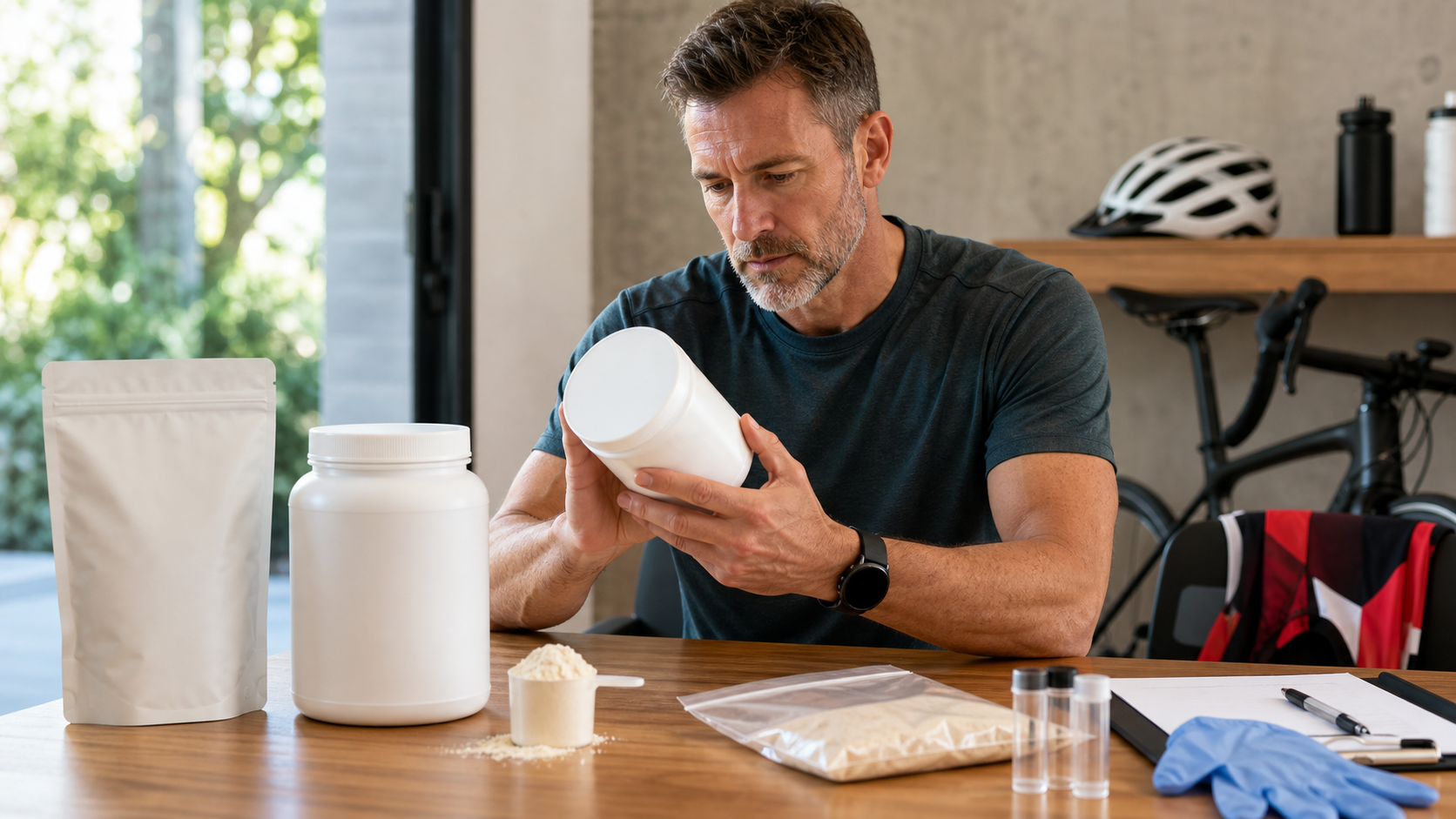
Later, we laid everything he had consumed over the past six months out on the table: whey protein, branched-chain amino acids (BCAAs), a can of “pre-workout explosive powder” bought from an overseas website, and a proprietary blend claiming to boost pump. The problem most likely came from that pre-workout powder—the ingredients listed on the label looked clean, but the actual contents were a different story.
After that incident, my attitude toward the phrase “supplement contamination” changed completely. It is not a fear-mongering marketing gimmick; it is a real risk that every serious athlete—whether you are a professional or a weekend amateur grinding up Wuling Mountain—should understand. In this article, I want to walk you through the whole thing the way I would with my athletes: how widespread contamination really is, why it happens, how much third-party certification can protect you, and how to choose wisely when you walk into a pharmacy or scroll through a shopping site.
Let me give you the bottom line first: You don’t need to stop taking supplements out of fear, but you do need to learn how to choose. Choose right, and the risk drops very low; choose wrong, and at best you waste money, at worst you harm your health or land in serious trouble.
I especially want to write this for two groups of people: one is the competitive athletes who, like that rider, get randomly drug-tested—for you, one careless mistake could cost your entire career; the other is the vast majority of amateur riders and runners who aren’t tested, but adulterated stimulants and excessive heavy metals can still genuinely damage your body. The risk profiles differ between the two groups, but “learning to choose” matters just as much for both.
The Basics: What Supplement “Contamination” Actually Means
Many people assume contamination just means “the factory wasn’t clean and something dirty got mixed in”—that’s only one type. In the context of sports science, supplement contamination can be broken down into several categories. Let me explain them in a way my athletes can easily grasp.
1. Unintentional Cross-Contamination
The same production line makes a “muscle-building formula” containing testosterone precursors one day, and the next day, without thorough cleaning, it’s used to make the tub of whey you bought. Trace residues end up in your product. The amount may be minuscule—too small to help muscle growth at all—yet enough to trigger a positive result on a strict drug test. This is the most painful kind for competitive athletes: you never intended to cheat, yet you’re branded a cheater.
2. Deliberate Adulteration
This category is even worse. Certain products marketed as “rapid fat burners,” “explosive pumps,” or “visible results in a week” have manufacturers secretly adding undeclared drugs so consumers “actually feel something”: weight-loss products laced with sibutramine (a weight-loss drug already withdrawn from the market due to cardiovascular risks), muscle-building products laced with anabolic-androgenic steroids or their precursors, and energy products laced with amphetamine-like stimulants. You think it’s the effect of natural herbs; in reality, it’s unapproved pharmaceuticals working inside your body.
3. Heavy Metal and Microbial Contamination
Plant-based ingredients (such as certain herbal extracts or protein sources) can carry lead, arsenic, cadmium, and other heavy metals from soil or processing; improper storage or manufacturing can also lead to microbial counts exceeding limits. These threats to general health are sometimes more real than banned substances.
How Does Contamination “Get Into” Your Supplements?
Many of my athletes assume contamination is just random bad luck, but it actually follows several fairly fixed pathways. Understanding these will help you judge which products carry higher risk:
- Shared production lines not thoroughly cleaned: This is the biggest source of unintentional contamination. A line makes a precursor-containing muscle-building formula one day and whey the next, and residues carry over. Large manufacturers usually have strict line-cleaning and testing protocols; smaller brands or contract manufacturers may not.
- Contamination already present at the raw-material stage: Some banned substances or heavy metals are already present when “raw materials” enter the factory. If the finished-product manufacturer doesn’t screen them, they’re essentially packaging the problem straight into the bottle.
- Deliberate “feel-the-effect” formulation: As mentioned, secretly adding drugs to make consumers “feel something” is the most malicious and dangerous type, concentrated in fat burners, pre-workouts, and male-enhancement categories.
- Counterfeits and repackaging: In gray-market and reseller channels, products may be counterfeited, repackaged, or relabeled—whether the tub in your hand is even genuine becomes a question.
Once you understand these pathways, you’ll see why I keep stressing “certification plus legitimate channels”—certification governs quality control at the manufacturing end, and legitimate channels govern “whether what you receive is the real product.” Both are indispensable.
How Widespread Is Contamination? Look at the Numbers
I know at this point you’re thinking: “Coach, are you trying to scare me? Is it really that common?” I looked up recent systematic reviews and analyses and compiled the verifiable figures for you. These are ranges—methodologies vary widely across studies, so treat them as order-of-magnitude references, not precise percentages:
| Aspect | Approximate Range | Notes |
|---|---|---|
| General market supplements containing undeclared substances | Roughly 12%–58% across studies | Sampling methods, product categories, and eras vary enormously |
| Risk proportion in more rigorous overall analyses | Over 28% of samples had unexpected-substance risk | In one large analysis, about 875/3132 items tested positive for undeclared substances |
| Early multinational non-hormonal supplements containing steroid-like substances | About 15% | Classic data from a 2001–2002 multinational sampling |
| Most common banned adulterants | Sibutramine and anabolic-androgenic steroids dominate | Weight-loss and muscle-building categories are the worst-hit areas |
(Sources are listed in the references at the end of this article.)
Please note: these numbers do not mean “there’s a 28% chance the tub in your hand is toxic.” Sampling studies often deliberately target high-risk categories (weight loss, muscle building, energy/pre-workout), so the proportions get inflated. But conversely, if what you’re buying happens to fall into those high-risk categories and comes from an unknown source, the risk is genuinely not low. The risk of a tub of whey, a pack of electrolytes, or a vitamin D capsule is a completely different magnitude from a “gain five kilos of muscle in a week” miracle powder.
Use a Risk Tiers to Assess What’s in Your Hands
One thing I love doing with my athletes is classifying common supplements by “contamination risk level,” so you can see at a glance which ones demand extra caution and which are relatively safe. The table below is a rough practical classification from my experience—it’s not an absolute standard, but a framework to build your risk awareness:
| Risk Level | Common Categories | Why This Level | Purchasing Approach |
|---|---|---|---|
| Low risk | Single-ingredient whey, casein, electrolytes, vitamin D, single-ingredient fish oil | Simple ingredients, clear purpose, low incentive for adulteration | Check the channel and ingredient transparency |
| Medium risk | Multivitamins, BCAA/EAA, single-ingredient creatine, single-ingredient caffeine | More ingredients but still conventional; occasional quality inconsistencies | Prioritize certified products or major brands |
| High risk | Pre-workout, fat-burner blends, muscle-building/testosterone-booster blends, herbal male-enhancement blends, “rapid-results” weight-loss products | Strongest incentive for adulteration, blends hide dosages, historically the most banned substances detected | Don’t touch anything without certification; skip anything of unknown origin outright |
You’ll notice that risk is almost directly proportional to the strength of the marketing promise. The more a product screams “intense,” “explosive,” “fast,” or “visible in a week,” the more it’s a hotbed of problems; meanwhile, the plain, boring, single-ingredient staples are actually the safest. This isn’t a coincidence—it’s precisely because consumers crave “instant results” that unscrupulous manufacturers have the incentive to sneak things in.
Why Regulation Can’t Stop It: The Situation for Taiwanese Consumers
Students often ask me: “Don’t these products have to pass inspection before they can be sold?” There’s a key gap in understanding here.
In many countries, dietary supplements are classified as “food” rather than “drugs.” Pre-market review for food is far more lenient than for drugs—manufacturers don’t need to complete the full safety and purity verification required for new drugs before selling. It’s mostly “sell first, spot-check if something goes wrong.” This leaves a huge gray area.
Let me use a comparison to help you understand how big this gap is. For a new drug to reach the market, it must go through animal testing, multiple phases of clinical trials, strict purity and dosage controls—often taking years and costing enormous sums, with regulators reviewing the entire dossier before approval. A dietary supplement, by contrast, in many countries, the manufacturer is responsible for ensuring safety and clear labeling, and it can go on the shelf; regulators mostly step in “after the fact” to issue recalls or warnings when problems surface. In other words, drugs are “proven safe before they’re allowed to sell,” while supplements in many cases are “sell first, deal with problems later.” This isn’t to say all supplements are dangerous, but to remind you: the “pre-market gatekeeping” in this industry is much looser than you think, and the last line of defense often has to be you yourself and third-party certification bodies.
Taiwan’s situation adds another layer of complexity:
- Cross-border e-commerce is too convenient: Many people order directly from overseas fitness supplement websites. These products may not have undergone any inspection by Taiwan’s Food and Drug Administration (TFDA), and if something goes wrong, there’s no recourse for compensation.
- Proxy purchasing and gray-market imports are rampant: With the same product, you can’t be sure whether you’re getting an authentic original or something repackaged, expired, or even counterfeit.
- A large population eats out: Taiwan has a high rate of eating out. Many people’s diets are already unbalanced, making them easy targets for “one bottle covers all your nutrition” marketing, which makes them even more reliant on supplements.
- Strong health awareness but cluttered information: People are willing to invest in health but lack the tools to discern quality. One “this really works” post on social media is enough to trigger a purchase.
So, in Taiwan, you need to build your own set of purchasing criteria even more. You can’t completely rely on “if it’s sold, it must be safe.”
The Practical Core: Third-Party Certification Is Your Best Defense
Now that we’ve covered the risks, let’s talk solutions. Currently, the most effective and globally recognized way to significantly reduce contamination risk is to choose products that have passed independent third-party sports certification.
What is third-party certification? It means an independent organization with no financial interest in the manufacturer actually samples and tests the products, inspects the factories, and confirms that “what’s on the label matches what’s in the bottle” and that “there are no banned substances or harmful contaminants.” This is far more trustworthy than a manufacturer simply claiming “we’re clean.”
Comparison of Three Major Sports Supplement Certifications
Below are the seals most trusted in the sports world. Certification “significantly reduces” risk, not “100% guarantees zero risk”—please remember this.
| Certification Seal | Main Testing Content | Suitable For | Notes |
|---|---|---|---|
| NSF Certified for Sport | Tests for approximately 280–290 substances banned by major sports organizations, confirms label matches contents, confirms no unsafe levels of contaminants | Athletes subject to drug testing (professional/elite), and general consumers who want peace of mind | Cited by the U.S. Anti-Doping Agency (USADA) as the most suitable option for athletes to reduce risk |
| Informed Sport / Informed Choice | Batch-by-batch or periodic testing for banned substances, with a publicly searchable database of certified products | Athletes and coaching staff commonly use it to verify | Emphasizes the “batch testing” concept; you can look up the batch number online |
| General GMP / Food Certification | Good Manufacturing Practices, mainly covering production hygiene and quality consistency | General health needs | Does not mean it tests for sports banned substances—don’t confuse the two |
Here I want to debunk a common myth for students: seeing “GMP” and assuming it means “clean enough for athletes to use” is wrong. GMP governs “whether the factory follows proper procedures and whether quality is consistent”—it does not specifically test for those 280-plus sports banned ingredients. To guard against sports-related contamination, you need to look for “sports-specific” seals like NSF Certified for Sport or Informed Sport, not just general food certifications. Simple way to remember: GMP is the “hygiene and quality threshold,” while sports certification is “the checkpoint that tests for banned substances for you.” They play different roles—don’t use one as a substitute for the other.
How to Verify Certification: A Three-Step Guide
- Check the label on the bottle: Look for the blue NSF “Certified for Sport” mark, or the Informed Sport logo with a red checkmark. Note that the general NSF food certification seal is different from “Certified for Sport”—don’t just see “NSF” and assume it’s a sports certification.
- Search the official database: This is the crucial step. Seals can be stolen or counterfeited. The safest approach is to go to the certification body’s official product database and search by product name or even batch number to confirm it’s actually listed.
- Cross-check the batch number (advanced): Informed Sport emphasizes batch testing, and professional teams often verify whether the specific batch you’re holding has been tested. For the general public, steps 1 and 2 are usually sufficient.
How Much Can Certification Screen Out? An Honest Answer
Students love to ask: “Coach, if it’s certified, is it foolproof?” I have to be honest: certification reduces risk from “fairly high” to “fairly low,” but it doesn’t bring it to zero. Anti-doping organizations take the same position—using certified products can “significantly reduce” but cannot “completely eliminate” the chance of testing positive for a banned substance.
Why can’t it be zero? Because certification is mostly based on random sampling or batch-by-batch testing. Theoretically, there’s still a tiny probability that “this particular batch just happened not to be tested, and just happened to have a problem.” Manufacturing-side changes can also occur after certification. So the complete defense is doing four things together: “certification + legitimate purchasing channels + minimal usage + keeping records”—rather than pinning all your hopes on a single seal.
That said, I still want to emphasize: for athletes subject to drug testing, certification remains the most practical and effective single line of defense—bar none. Don’t abandon it just because it’s “not 100%.” That would be like refusing to wear a seatbelt because it can’t guarantee you’ll never die in a crash—the logic is backwards.
Real-World Application with Students: Two Scenarios
Scenario One: A Competitive Athlete Subject to Drug Testing
One road cyclist I coach competes in age-group elite races and is subject to out-of-competition testing. My rules for him are strict:
- Only consume products with sports certification—no exceptions. Even if it costs more or limits options, he doesn’t touch anything uncertified.
- Photograph, keep the container, and record the batch number of every supplement he takes, building his own supplement log. If anything ever goes wrong, this is crucial evidence to prove his innocence.
- Use real food whenever possible. For recovery after long-distance training, a bowl of braised pork rice with blanched vegetables and a glass of unsweetened soy milk provides both protein and carbs—why rely on powder?
- Treat any new product that gives an “immediate effect” with high suspicion. There’s a saying in sports science that rings true: if a supplement makes you feel “a drug-like effect instantly,” you should first worry that it contains something it shouldn’t.
Scenario Two: A Recreational Rider Who Just Wants to Ride Healthy
Another student is a man in his late 40s who joins weekend group rides on the Beiyi Highway and climbs Fengguizui. He’s not subject to drug testing, but he has mild hypertension under monitoring. For him, my focus is completely different:
- Banned substances aren’t his primary risk—“drug interactions” and “heavy metals” are. Some “explosive” or “fat-burning” formulas contain high doses of caffeine or unknown stimulants, which are a burden for someone with blood pressure issues.
- Any supplement must first be cleared by his primary care physician. He has regular follow-up visits and prescriptions under the National Health Insurance system. I asked him to bring the ingredient lists of any supplements he wants to take to his next appointment and ask the doctor whether they conflict with his current medications.
- Get back to basics: What he truly lacks usually isn’t some miracle powder, but consistent hydration, adequate sleep, and balanced meals. In Taiwan’s summer heat, he sweats a lot cycling. The “supplements” I actually give him are mainly electrolyte replacement and plenty of plain water—far more practical than any fancy formula.
You see, the same question—“should I take supplements or not?”—has completely different answers depending on who you are, what your goals are, and what your health condition is. That’s why I’m strongly against those “you must take this” cheat sheets on social media—there is no one-size-fits-all supplement list.
A Step-by-Step Guide to Keeping a Supplement Log
The athlete who nearly faced a ban was able to fight for a favorable outcome thanks to the supplement log I helped him create retroactively and which he maintained consistently afterward. It’s not difficult, but it can be a lifesaver in critical moments. I’ve simplified the format so anyone can follow it:
| Date | Product Name | Brand | Batch Number | Certification | Dosage | Source/Channel | Notes |
|---|---|---|---|---|---|---|---|
| Example: 3/15 | Some Whey | Some Brand | L2402A | Informed Sport | 30 g | Official Flagship Store | Post-workout |
| Example: 3/15 | Electrolyte Tablet | Some Brand | — | None | 1 tablet | Pharmacy | During ride |
Key reminders:
- Keep the container and packaging: Don’t throw away empty containers right away, especially the first container of a new product. Keep it until you’re sure everything is fine.
- Take photos as evidence: Take a photo of the ingredient list, batch number, and purchase receipt, and store a copy in the cloud.
- Introduce new products one at a time: Only add one new supplement at a time, and observe for three to seven days. This way, if you experience any physical issues or problems with a drug test, you’ll know exactly which product is responsible.
This approach requires minimal effort, but it gives you “traceability”—when something goes wrong, you can clearly state “what I took, when, which batch, and where I bought it.” This is extremely valuable information when filing an appeal or seeking medical attention.
Common Mistakes and Corrections
Over the years of leading teams, I’ve compiled the most common mistakes people make into a table. Check how many apply to you.
| Common Mistake | Why It’s Dangerous | Coach’s Recommended Fix |
|---|---|---|
| Assuming “natural” or “herbal” means safe | Natural doesn’t equal clean; heavy metals and adulterated drugs are often found in herbal blends | Look at certifications and ingredients, not marketing adjectives |
| Treating GMP as a sports certification | GMP doesn’t test for substances banned in sports | Look for NSF Certified for Sport / Informed Sport |
| Buying pre-workout/fat burner powders directly from unknown overseas websites | High-risk category, no local inspection, no recourse for complaints | Buy certified products from legitimate channels |
| Stacking many complex formulas at once | Duplicate ingredients, excessive stimulants, difficult to trace interactions | Streamline to just two or three you truly need |
| Thinking “more is better” with dosage | Excess provides no benefit and can harm the liver and kidneys, also increases exposure to contaminants | Follow recommended dosages; err on the side of caution |
| Self-medicating with chronic conditions | May conflict with medications (e.g., blood pressure, blood sugar meds) | Consult a doctor or pharmacist first |
| Only looking for evidence when something goes wrong | No containers kept, no records kept—hard to defend yourself | Keep a supplement log and retain packaging at all times |
Special Note: For Those with Chronic Conditions
If you have high blood pressure, diabetes, heart disease, kidney issues, or are taking any long-term prescription medication, I want to make a special request: Before any supplement passes your lips, confirm it with your doctor or pharmacist first. In Taiwan, seeing a doctor is convenient and National Health Insurance access is easy. Asking one extra question during a follow-up visit costs very little but can help you avoid a lot of trouble. Products containing caffeine or stimulants can affect blood pressure and heart rhythm; certain ingredients may interfere with blood sugar control or interact with medications. These judgments require professional, individualized assessment—they’re not something internet articles can decide for you.
Actionable Advice for Readers at Different Levels
If You’re a Complete Beginner (Just Starting to Exercise, Wanting Some Nutritional Support)
- Get your regular meals right first. Eating out is convenient in Taiwan, but you can make conscious choices: one serving of protein (meat, fish, eggs, tofu) + one serving of staple food + one serving of vegetables. Most beginners don’t need supplements at all yet.
- If you really want to supplement, start with the simplest, lowest-risk options: for example, plain whey protein, electrolytes, or vitamin D. Avoid anything marketed as “fast-acting,” “explosive,” or “fat-burning” complex formulas.
- Buy products with sports certification, or at least from legitimate channels with transparent ingredients.
If You’re an Advanced Enthusiast (Training Regularly, Pursuing Performance but Not Subject to Drug Testing)
- Build your own “whitelist”: Research the certifications, ingredients, and dosages of the few supplements you regularly take, and form a stable combination. Don’t switch to every new product you see.
- Streamline rather than stack: Instead of taking eight complex formulas, do two or three evidence-based, certified ones well.
- If you have chronic conditions or take medication, consult a medical professional—bring the ingredient list to your follow-up visit and ask.
If You’re a Competitive Athlete / Subject to Potential Testing
- Only touch products that have passed NSF Certified for Sport or Informed Sport, and verify them against the official databases.
- Keep a supplement log, retain containers and batch numbers—have your evidence of innocence ready at all times.
- Stay alert to anything that “feels” effective—the more immediate the drug-like effect, the more suspicious you should be.
- Work with your coaching team, team doctor, or sports nutritionist—don’t make decisions alone.
A Purchasing Checklist You Can Follow
Next time you’re standing in front of a pharmacy shelf, or about to place an order on a shopping app, run through this checklist:
- [ ] Is this a high-risk category (fat burner, muscle-building/explosive, quick results)? If so, be especially vigilant.
- [ ] Does it have the NSF Certified for Sport or Informed Sport seal?
- [ ] Have I verified the seal is genuine on the official database?
- [ ] Is the ingredient list complete and transparent? Are there a bunch of vague “proprietary blends” hiding actual dosages?
- [ ] Is the channel legitimate (manufacturer, authorized distributor, reliable pharmacy), rather than an unknown gray-market importer?
- [ ] Do I understand the recommended dosage and intend to follow it?
- [ ] Do I have a chronic condition or am I on medication? If so, have I asked my doctor/pharmacist?
- [ ] Could I replace this with real food?
Eight questions, taking less than two minutes, could save you a lot of money, prevent harm to your body, and even block a doping ban lawsuit. I recommend screenshotting this checklist and saving it to your phone. Next time you’re about to buy supplements, pull it out and compare. Once it becomes a habit, it’ll turn into instinct—you’ll naturally spot at a glance which products to avoid and which ones you can safely buy.
Frequently Asked Questions (FAQ)
Q: Certified products are more expensive—are they worth it?
A: If you are subject to doping control, this money is insurance and not negotiable. If you are a regular person, it is worth it at least for high-risk categories. For generally low-risk categories (such as simple-ingredient vitamins), you can settle for checking ingredient transparency and channel reliability.
Q: Does a product without certification necessarily have problems?
A: No. Many good products have not gone through certification because certification costs money and time. But “no certification” means you have to take on more responsibility for judgment yourself—checking ingredients, channels, and brand reputation. The value of certification is that it outsources these uncertainties to an independent body.
Q: Does taking certified products guarantee 100% safety?
A: No. Certification means “significantly reduced risk,” not “zero risk.” It helps you rule out the vast majority of problematic products, but there is no absolute guarantee in the world. Pairing it with legitimate channels, conservative dosing, and keeping records is the complete protection.
Q: I just ride for fun and don’t compete—do I need to care about this?
A: Prohibited substances may not be your primary concern, but adulterated stimulants, excessive heavy metals, and interactions with your chronic-disease medications are real health threats to everyone. So yes, you should still care—just with a different focus.
Q: Where is the safest place to buy in Taiwan?
A: Licensed pharmacies, official brand channels, and physical or online stores with formal distributorship are generally more reliable than unknown resellers or gray-market imports. Before buying, running through the checklist above is the safest approach.
Q: What should I do if I suspect I’ve consumed a problematic supplement?
A: Stop using it immediately, and keep the remaining product and packaging. If you experience physical discomfort (such as palpitations, abnormal blood pressure, severe gastrointestinal reactions, jaundice, etc.), seek medical attention promptly and proactively tell your doctor what you took, showing the ingredient list and batch number. Medical care is easily accessible in Taiwan—don’t skip this step. If you are a tested athlete, notify your coaching team and governing body at the same time; the earlier you document it, the better.
Q: Do I need to worry about common things like creatine and caffeine?
A: Creatine and caffeine themselves are relatively well-researched and are legal routine supplements in most sports organizations. The main risk is not the ingredients themselves but “whether the product you bought has been adulterated with something else” and “whether you are exceeding the dose or conflicting with chronic-disease medications.” So it comes back to the same principles: choose single-ingredient products, choose certified ones, follow the dosage, and consult a doctor first if you have a medical history.
Q: Should children, adolescents, and pregnant or breastfeeding women be more careful with supplements?
A: Yes. These groups are more sensitive to ingredients and can tolerate lower risk. In particular, avoid multi-ingredient products containing stimulants and products of unknown origin. Any supplementation decision should be discussed with a physician or dietitian first—don’t follow online advice on your own. The principles in this article apply to them as well, but the threshold should be set higher and more conservatively.
Local Taiwan Context Reminders
A few practical points that are very Taiwan-specific:
- Hot, humid summers with heavy sweating: Riding the Beiyi Highway, climbing Wuling, or running along the riverside—Taiwan summers bring high heat and humidity. What you actually lack most is water and electrolytes, not some explosive formula. Getting hydration right often improves performance and safety more than any fancy supplement.
- Nutritional gaps for those who eat out often: Rather than plugging holes with a pile of supplements, first consciously add an extra serving of protein and vegetables to your meals out. Supplements fill “small gaps”—they are not a substitute for a full diet.
- Make use of your NHI follow-up visits: If you are being monitored for chronic conditions and picking up regular medications, bring the ingredient list of supplements you want to take to your follow-up visit and ask your doctor or pharmacist a quick question. That is the most cost-effective professional advice you can get.
Conclusion: Putting Supplements Back in Their Place
After leading teams for over a decade, I increasingly believe one thing: Supplements are always the supporting cast; the lead roles are your training, sleep, meals, and recovery. The athlete who nearly faced a suspension eventually managed to secure a favorable outcome thanks to a complete supplement log and subsequent procedures, but that agonizing period is something I wouldn’t wish on anyone who takes their sport seriously.
Supplement contamination is a real problem, but it shouldn’t make you stop eating for fear of choking—afraid to touch anything. What you need is not fear but judgment: understanding the magnitude of risk, recognizing genuinely effective third-party certifications, avoiding high-risk categories and unknown channels, consulting medical professionals if you have chronic conditions, and keeping records as a habit. Do these things, and you can confidently treat supplements as an aid to your training rather than a hidden landmine.
Before you place your next order, remember to ask yourself those eight questions. Your body, your performance, and your wallet will all thank you for the extra two minutes you spend today.
I often tell my athletes: When it comes to supplements, “boring” is often “safe.” Those plain, simple-ingredient, certified, legitimately purchased basics may lack flashy marketing or the “instant effect” stimulants provide, but they are the choices least likely to harm you. Conversely, the products that promise the moon and boast explosive, fast-acting results are exactly the ones that deserve the most caution. Internalize this instinct, and you’ve already avoided most of the landmines. May you ride farther, run longer, and be healthier and more at ease.
This article is educational content and does not replace individual diagnosis and treatment advice from a physician, physical therapist, or dietitian.
References
- Systematic review of undeclared prohibited substances and pharmacological adulterants in dietary supplements (Frontiers in Sports and Active Living): https://www.frontiersin.org/journals/sports-and-active-living/articles/10.3389/fspor.2026.1740663/full
- Prevalence of adulteration in dietary supplements and recommendations for safe supplement practices in sport (PMC): https://pmc.ncbi.nlm.nih.gov/articles/PMC10570429/
- Dietary Supplements as Source of Unintentional Doping (PMC): https://pmc.ncbi.nlm.nih.gov/articles/PMC9054437/
- NSF Certified for Sport® Official Information: https://www.nsfsport.com/
- Certified for Sport® Program (NSF): https://www.nsf.org/consumer-resources/articles/certified-for-sport-program
- USADA — Reduce Your Supplement Risk with NSF Certified for Sport: https://www.usada.org/substances/supplement-connect/reduce-risk-testing-positive-experiencing-adverse-health-effects/
Related Reading
- Prohibited Substances and Sport: The Science of Anti-Doping and How to Protect Yourself with Clean Supplements
- The Science of Protein Powder: Do You Actually Need It, and How Should You Choose?
- Evidence Grading for Sports Supplements: What’s Supported, What’s Nearly Useless, and How to Avoid Marketing Traps
- The Evidence Pyramid of Sports Supplements: What Actually Works, What’s Just a Fad, and How to Read the Research
碟煞公路車 銑面器 !? 原來銑完差這麼多! 降低蹭碟機率! | TIME 公路車 保養小記錄 | CT Yeh
3 年前
鎮西堡 公路車首航 你排乳酸 我排卵... | 宇老又爆胎 要直接棄坑了嗎?
4 年前
西進武嶺 自製新版AI配速表產生器 x 賽前攻略 抱佛腳! 沒有功率計也可以產生配速表嗎?有什麼其他眉角賽前要注意的呢? | 西進武嶺 / 東進武嶺 KOM 攻略 | 公路車 | CT Yeh
4 年前
一個測試有沒有認真練車的方法😂 #公路車
10 個月前
#公路車 #西進武嶺 配速配瓦實驗 坡度分析 四小時內攻略 建大盃 NeverStop #西進武嶺攻略
6 年前
一日北高/長距離團騎 常見問題補充篇 / 組團或跟團的眉角 / 壯車友容易被瘦車友慢性拉爆 / 原來屁股痛可能是這個原因...? / 風場配速法 / 公路車 / CT Yeh
2 年前
一日北高前的高裝檢 | 北高 360 | 挑戰11小時的裝備 | 一日雙塔 | 補給
6 年前
下次拍照前要查清楚啦🤣 #cycling
7 個月前