Exercise and Digestion: Why Does Running Make You Need the Bathroom? A Complete Guide from Intestinal Ischemia to On-Site Management
Opening: That Morning by the Riverside Looking for a Bathroom
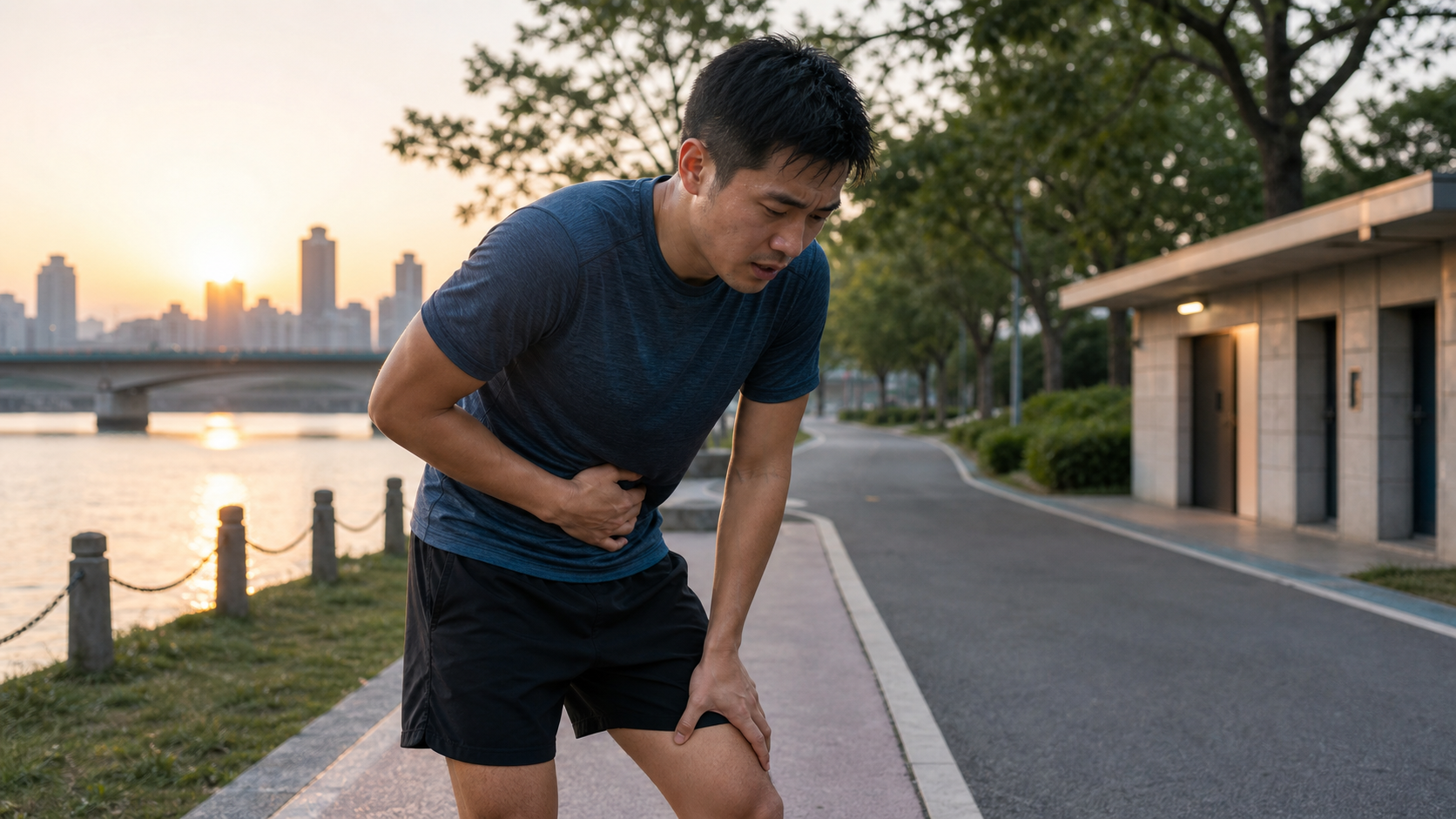
I still remember a few years ago, a student named A-Zhe, who had been running for two years and was preparing for his first full marathon, suddenly turned pale at the 18th kilometer of a 30-kilometer long run and told me, “Coach, I can’t do this, I need to find a bathroom.” We were on the Dahan River riverside, and the nearest public restroom was 1.5 kilometers away. He clamped his legs together and shuffled his way there, and when he came back, he was completely drained, his pace was ruined, and his mood hit rock bottom. He asked me a question I’ve heard countless times over the past decade or so: “Is my stomach just too weak? Why is no one else affected?”
My answer usually puts students at ease: This isn’t your fault; it’s a physiological reality that almost every endurance athlete has to face. The urge to use the bathroom, diarrhea, bloating, nausea, or even severe cases with blood during running are collectively known as “Exercise-Induced Gastrointestinal Syndrome” (often abbreviated as Ex-GIS), and its prevalence among runners is astonishingly high. Based on the literature I’ve reviewed, the proportion of runners experiencing gastrointestinal symptoms during training or competition, depending on the study design, is estimated to be between 30% and 90%; among them, those with clear diarrhea account for approximately 15% to 23%, and it’s more common in women and runners participating in distances longer than a half marathon.
In other words, if you feel the urge to dash to the bathroom mid-run on the riverside or the track, you’re not alone—this is almost the “norm.” In this long article today, I want to explain this from start to finish: why it happens, what the underlying physiological mechanisms are, how to prevent it through diet and training, and most practically—when it actually happens on race day, what you can do on the spot. This is the practical experience I’ve accumulated through years of trial and error with my students, and I hope it can help turn “runner’s diarrhea” from a frightening random event into a manageable training variable.
Foundational Concepts: When You Run, Your Gut Is Being “Cut Off from Blood”
To understand why running makes you need the bathroom, you first need to understand one thing: your total blood volume is limited, and your body has to make trade-offs.
Blood Flow Redistribution: The Gut Gets Sacrificed
When you’re at rest, your digestive system (medically known as the “splanchnic circulation”) enjoys a fairly abundant blood supply because the body is busy digesting and absorbing. But once you start running, especially as intensity increases, the sympathetic nervous system orders: “Pull blood away from non-essential organs like the stomach and intestines, and prioritize the skeletal muscles, heart, lungs, and brain that are working hard.”
How large is this diversion? According to the exercise physiology literature I’ve found, during high-intensity endurance exercise, blood flow to the intestines and liver can be reduced by up to 80%. You read that right—80%. In this state, the gut is in “relative ischemia,” meaning it lacks adequate blood flow and oxygen supply.
The Chain Reaction Caused by Ischemia
Intestinal cells are oxygen-hungry tissues, especially the tips of the intestinal villi. When blood flow is diverted and oxygen is insufficient, several things happen in sequence:
- Impaired intestinal barrier: The integrity of the intestinal mucosa declines, and gaps appear between the tightly packed intestinal wall cells—this is the so-called “increased intestinal permeability” (commonly known as leaky gut, though the term is often overused; here it refers to the temporary change during exercise).
- Reduced digestive and absorptive function: Under ischemic conditions, intestinal motility and the absorption of water and electrolytes are affected. Water that should be reabsorbed into the body stays in the intestines, making stools loose and the urge urgent.
- Ischemia-reperfusion injury: When you finish running and blood rushes back to the oxygen-deprived gut, it can actually generate oxidative stress and inflammation. This “ischemia-reperfusion” injury is one of the mechanisms behind gut discomfort and, in severe cases, blood in the stool.
- Bacterial and endotoxin translocation: When gaps in the intestinal wall widen, bacteria and endotoxins from the gut can “leak” in small amounts into the bloodstream, triggering a systemic inflammatory response. This is why some people not only get diarrhea after a run but also feel achy all over, chilled, and nauseous.
Not Just Ischemia: Mechanical Vibration and Hormones
Beyond blood flow issues, running has two other unique factors that add fuel to the fire:
- Mechanical vibration: Running involves significant vertical impact. Your internal organs bounce up and down with every step, and this repeated mechanical jostling directly stimulates the intestines and accelerates motility in the lower gut. This is why running is more likely than cycling or swimming to cause lower gastrointestinal symptoms—cycling and swimming involve far less organ vibration. I often tell my students that among endurance sports, cyclists more commonly complain of bloating and nausea (upper GI symptoms), while runners most often experience urgent bowel movements and diarrhea (lower GI symptoms)—this is the reason.
- Stress hormones: Race-day nerves, adrenaline, and cortisol can themselves accelerate intestinal motility. Many people “feel the urge to go the moment they reach the starting line,” which is actually the result of psychological stress acting through the gut-brain axis—the same mechanism as needing the bathroom before an exam.
Upper GI vs. Lower GI Symptom Comparison
To help you better identify where your symptoms fall, here’s a table of common symptoms by region:
| Region | Common Symptoms | Main Related Mechanisms | Common Scenarios |
|---|---|---|---|
| Upper GI | Bloating, belching, GERD, nausea, vomiting | Delayed gastric emptying, relaxed lower esophageal sphincter, retention of high-concentration sugar drinks | Eating too much before a run, chugging high-concentration energy drinks mid-race |
| Lower GI | Intestinal cramps, urgent bowel movements, diarrhea, bloating, uncontrollable urge | Intestinal ischemia, mechanical vibration, reduced water absorption, high fiber residue | Long distances, high intensity, too much fiber or fat before a race |
| Systemic | Chills, body aches, extreme fatigue, feeling inflamed | Ischemia-reperfusion, endotoxin translocation | High heat, dehydration, ultra-endurance events |
Looking at this table, you’ll notice something important: different symptoms correspond to different mechanisms, and the management approaches differ too. The solution for bloating is not the same as for urgent bowel movements, which is why “tips from others” may not work for you.
Practical Methods: Treating GI Symptoms as a Trainable, Manageable Variable
Okay, mechanisms are covered. Now for the main event—how do you actually prevent this? I divide prevention strategies into four pillars: meal timing, fiber and food choices, hydration and electrolytes, and “gut training.”
Pillar One: Pre-Race Meal Timing and Content
This is the first thing I adjust with my students and the one with the most immediate results. The core principle is simple: The less food in your stomach when you run, the better, because it’s already in an ischemic state and unable to digest effectively.
Here’s a reference timeline for pre-race eating that I give my students. Please note these are “ranges”—everyone’s gastric emptying speed differs, and you must calibrate this yourself during training:
| Time Before Start | Recommended Content | Purpose | Local Taiwanese Example |
|---|---|---|---|
| 3–4 hours before | A meal with easily digestible carbs, low fat, low fiber | Replenish glycogen, allow enough digestion time | White toast with honey, white rice with steamed fish, plain congee |
| 1–2 hours before | A small, easily absorbed snack | Top up blood sugar without adding GI burden | A banana, white toast with a thin layer of peanut butter |
| 30–60 minutes before | Small amount of fluids or nothing | Avoid large amounts of solid food in the stomach | A small sip of sports drink, a few mouthfuls of energy gel with water |
| Every 30–45 minutes after start | Small amounts of fuel | Maintain blood sugar, small frequent doses | Energy gels/gummies, always diluted with water |
Key practical points:
- Your pre-race meal must be low in fat and low in fiber. Fat severely delays gastric emptying, and fiber leaves a large amount of residue in the lower gut. This is why whole wheat bread, salads, fried foods, and large amounts of vegetables are not recommended before a race. The pre-race feasts Taiwanese runners love—hot pot, barbecue, or spicy mala hot pot—are a disaster for sensitive stomachs.
- Avoid your personal “trigger foods.” Common triggers include: dairy (especially for those with lactose intolerance), high-fat foods, spicy foods, excessive caffeine, and foods high in fructose or sugar alcohols (sorbitol, xylitol—commonly found in sugar-free gum and diet foods).
- Caffeine is a double-edged sword. Moderate caffeine can enhance performance, but it also stimulates intestinal motility. For some, a cup of coffee before a race conveniently helps clear the bowels; for others, it causes diarrhea mid-race. This can only be tested and determined by yourself during training—there’s no standard answer.
Pillar Two: Fiber Management—Reduce Before Races, Don’t Cut It Long-Term
This is where most people get confused, and I want to emphasize: Fiber is very important for health in your daily diet—I’m not telling you to go low-fiber long-term. What I’m saying is—strategically reduce fiber intake in the 24 to 48 hours before an important race or key long workout to reduce gut residue and lower the chance of urgent bowel movements during the event.
Food choice comparison for the low-fiber transition:
| “Temporarily avoid” 1–2 days before race | “Can eat” 1–2 days before race |
|---|---|
| Whole grains, brown rice, oats | White rice, white toast, white noodles |
| Large amounts of raw vegetables, broccoli, beans | Peeled, seeded, well-cooked soft vegetables (small amounts) |
| Fruits with skin, dried fruits | Bananas, peeled applesauce |
| High-fiber smoothies, sweet potatoes (large amounts) | Plain congee, mashed potatoes |
After the race, remember to gradually add fiber back to your daily diet to maintain gut microbiota and long-term intestinal health. This is “strategic reduction,” not “long-term low fiber”—the two are worlds apart.
Pillar Three: Hydration and Electrolytes—Dehydration Makes Ischemia Worse
This point is especially important in Taiwan because our summers are humid and hot. The literature clearly shows: dehydration further reduces blood flow to the intestines. Think about it—your gut already loses up to 80% of its blood flow during running. If you’re also dehydrated and your plasma volume drops, the ischemic state of your gut only gets worse.
Hydration principles for Taiwanese runners:
- Don’t chug water right before the race. Downing more than 500 ml of water right before the start only leaves a bunch of liquid sloshing in your stomach, making you feel nauseous and needing to pee. Instead, hydrate regularly in small sips over the hours before the race.
- Small amounts, frequently during the race. Aim for about 100–200 ml every 15–20 minutes, adjusted based on sweat rate and temperature. On a Taiwanese summer morning by the riverside, it can easily exceed 30°C with extreme humidity—you’re sweating far more than you think.
- Replenish electrolytes, especially sodium, for long distances. Drinking only plain water while sweating heavily can lead to hyponatremia, which is dangerous. Sports drinks or electrolyte tablets are essential for long workouts and races.
- Watch the sugar concentration of your fuel. Chugging a high-concentration sugar drink at once causes it to pool in the stomach and pull water into the intestines, triggering bloating or osmotic diarrhea. Energy gels must be diluted with water—this is one of the most common mistakes I see runners make.
Pillar Four: Gut Training—Your Gut Can Be Trained
This is an important concept in sports nutrition in recent years, and it’s one of my favorites to share with advanced students: your gut’s ability to absorb carbohydrates can be trained.
The literature I found mentions that when runners continuously consumed a carbohydrate drink containing glucose and fructose during running for two weeks, their GI symptoms improved in a subsequent three-hour long run challenge. This shows that the gut’s ability to “absorb nutrients while exercising” can be adapted through repeated practice.
How to do gut training in practice:
- Practice your race fueling plan during long workouts. Don’t run all your training fasted and then try an energy gel for the first time on race day. That’s using the race as a guinea pig.
- Gradually increase your in-race carbohydrate intake. Start at 30 grams of carbs per hour and work your way up, letting your gut adapt.
- Use a glucose + fructose combination. These two sugars use different absorption pathways in the gut. Combining them raises your total absorption ceiling and reduces the residue and diarrhea caused by saturating a single pathway.
- Stick to your fuel brand and flavor. Once you find products your gut tolerates, don’t switch around. Race day is not the time to experiment.
In-Race Carbohydrate Intake Reference Table
Many students ask me, “So how much should I actually eat?” Here’s a reference table of common in-race carbohydrate intake ranges. Again, these are general ranges, not precise prescriptions—the actual numbers need to be pushed upward gradually through your own gut training to find your personal limit that doesn’t cause diarrhea:
| Exercise Duration | Recommended Carbs per Hour | Sugar Type Recommendation | Notes |
|---|---|---|---|
| 30–60 minutes | Usually no special fueling needed | — | Most people have sufficient glycogen |
| 60–120 minutes | ~30 grams | Single sugar (glucose) is sufficient | Small, frequent doses |
| 120–180 minutes | ~30–60 grams | Start using glucose + fructose | Requires prior gut training |
| 180+ minutes (ultramarathon, ultra-triathlon) | ~60–90 grams (requires training) | Glucose + fructose at a 2:1 ratio | Upper limit varies by individual; untrained people forcing it will likely get diarrhea |
The most important phrase in this table is: “requires training.” Someone who hasn’t done gut training who tries to force 90 grams of carbs per hour in an ultra-distance event is almost guaranteed to end up with diarrhea mid-race. Your intake ceiling is built through training, not innate. For Taiwanese summer triathlons or ultramarathons, I usually recommend students keep their fueling on the conservative end of what they’ve trained and are confident about, because GI tolerance in high heat is naturally reduced compared to cooler days.
Second Case Study: The Experienced Runner Who “Did Everything Right and Still Got Diarrhea”
I want to share a more advanced case because it highlights a frequently overlooked factor—heat and humidity.
Mei-Hui is an experienced female runner with seven or eight years of running under her belt. She’s broken 4 hours in the marathon, and her fueling plan is more meticulous than most: low fiber before races, energy gels diluted with water, and carefully calculated hourly carb intake. But she complained to me that whenever she ran in Taiwan in July or August, no matter how complete her preparation, she’d always get diarrhea on long runs; yet the same fueling plan in the cool weather of December caused zero problems.
This is a classic example of heat exacerbating intestinal ischemia. When it’s hot, the body diverts more blood to the skin’s surface for cooling. This means the gut gets even less blood flow under the double squeeze of “muscles grabbing blood, skin also grabbing blood.” Add to that the dramatically increased sweat rate in high heat and humidity, making dehydration more likely, and dehydration further compresses gut blood flow—three factors stacked together. No wonder she was especially prone in summer.
Our adjustment wasn’t to change her fueling (it was already perfect), but rather:
- Heat acclimatization training: Plan 1–2 weeks of training in hot conditions before the race to improve the body’s cooling efficiency, increase plasma volume, and reduce the impact of heat on circulation.
- More aggressive sodium and fluid intake: Summer sweat loses a lot of sodium, so the electrolyte strategy needs to be more aggressive than in winter.
- Loosen pace targets for summer races: Accept that intensity naturally needs to be more conservative in high heat. When intensity is more conservative, the pressure on gut blood flow is reduced.
- Use cooling strategies: Pre-cooling before the race, pouring water on your head and neck mid-race, and sucking on ice can all indirectly reduce the stress of rising core temperature on circulation.
The lesson from this case: When you’ve “done everything right” and still have symptoms, don’t blame yourself—look to environmental factors. Taiwan’s climate itself is an amplifier for GI symptoms. It’s not your fault; it’s a variable that needs to be factored into your plan.
Common Mistakes and Fixes: The Pitfalls I’ve Seen in My Students
After all these years, some mistakes are repeated by nearly every cohort of students. Here are the classics, along with corrections.
Mistake One: “Using an Energy Gel for the First Time on Race Day”
This is the most fatal and most common. Part of the reason A-Zhe blew up in his first marathon was that he heard online that a certain brand of energy gel was great, and he squeezed it for the first time on race day. That brand’s formula happened to contain something he couldn’t tolerate, and he completely fell apart after 30 kilometers.
Fix: All fuel, drinks, and pre-race meals must be rehearsed at least 2–3 times during training. “Nothing new on race day” is an iron rule of endurance sports.
Mistake Two: “Eat a Huge Meal Before the Race for Energy”
Many people think that because the race is long, they need to stuff themselves the night before or the morning of. The result is a bunch of undigested food in the stomach at the start. The gut, in its ischemic state, simply can’t handle it—bloating, nausea, and urgent bowel movements all arrive.
Fix: Glycogen stores are built through overall carbohydrate intake over the 1–3 days before the race, not by cramming one big meal the morning of. The pre-race meal should focus on “easy to digest, with enough time,” not “large quantity.”
Mistake Three: “Treating Fiber as a Universal Health Cure-All and Eating It Right Up to Race Day”
Health-conscious students are especially prone to this one. Eating lots of vegetables, brown rice, and sweet potatoes daily is a good habit, but eating the same the day before a race means stocking your gut with a pile of residue.
Fix: Understand that “daily healthy eating” and “pre-race strategic eating” are two different things. Strategically reduce fiber 24–48 hours before a race, then add it back afterward.
Mistake Four: “Toughing It Out on Willpower, Afraid to Stop for the Bathroom”
Some people are afraid of a bad result, so they push through even when their gut is protesting. The outcome is either a loss of control or a miserable run with an even worse pace collapse.
Fix: Stopping for 90 seconds to use the bathroom is far more cost-effective than running 10 kilometers in pain with your legs clamped together and your pace ruined. Learning to distinguish between “a brief urge I can push through” and “a signal I must address” is also a matter of experience.
Mistake Five: “Chugging High-Concentration Energy Drinks to Boost Energy”
Feeling low on energy, some people down half a bottle of concentrated energy drink in one go. The sugar concentration is too high, it pools in the stomach, pulls water into the gut, and bloating and diarrhea follow.
Fix: Fuel in small, frequent amounts. Dilute energy gels with water, and keep drink concentrations within what your body can absorb.
Mistake Six: “Using Winter Fueling and Pacing Plans in Summer”
Many students develop an entire plan in cooler seasons and then apply it verbatim in Taiwan’s scorching summer. The result: heat worsens intestinal ischemia, sweat and dehydration compound the problem, symptoms appear, and they’re left scratching their heads.
Fix: Treat “season” as an important variable. In summer, be more aggressive with fluids and sodium, loosen pace targets, and add heat acclimatization and cooling strategies. Your plan isn’t a one-size-fits-all; it needs to adapt to the climate.
On-the-Spot Management: Race Day, It Actually Happens—Now What?
Even with perfect preparation, you can hit a wall. Here’s my “on-the-spot first aid” approach for students.
Step One: First, Determine What Kind of Urge It Is
- A brief urge that fluctuates with your stride: This is often a false alarm caused by mechanical vibration. Try slowing your pace, adjusting your breathing and core engagement. Often, slowing down for a minute or two to reduce organ vibration will make the feeling subside.
- An increasingly urgent urge with cramping: This is a real signal. Don’t tough it out—find a bathroom and deal with it early. Urban marathons in Taiwan usually have portable toilets along the route. For long-distance trail runs or riverside training, scout out public restroom locations in advance.
Step Two: Reducing Intensity Is the Universal Solution
The core of almost every on-the-spot strategy is reducing exercise intensity, because when intensity drops, the sympathetic nervous system’s “cut off blood” command to the gut relaxes, blood flow partially returns to the intestines, and symptoms often subside. Walk for a bit, jog slowly, let your gut catch its breath, then gradually build back up to pace. This is hard to accept for someone desperate to set a PB, but it’s the physical reality of the body.
Step Three: Pause Fueling, Only Take Water
If symptoms have already appeared, first pause solid food and high-concentration energy intake, switching to small sips of plain water or diluted electrolytes. Once your gut stabilizes, consider slowly adding back small amounts of energy.
On-the-Spot Rapid Decision Table
| Situation | Immediate Action | Don’t Do |
|---|---|---|
| Mild bloating, belching | Slow down, adjust breathing, pause fueling | Keep chugging energy drinks |
| Urge that fluctuates with stride | Slow pace for 30–60 seconds and observe | Force a higher pace to push through |
| Continuously worsening cramps and urgent bowel movements | Find a bathroom early, drop to a fast walk | Clamp down and tough it out for the sake of your time |
| Nausea, feeling like vomiting | Stop eating, sip water, slow down | Eat another energy gel to “replenish energy” |
| Diarrhea with dizziness and weakness | Stop exercising, replenish electrolytes, seek medical attention if necessary | Push through and keep racing |
When Should You See a Doctor? Don’t Treat Warning Signs as Normal
I have to be serious about this. The vast majority of runner GI discomfort is benign and temporary—rest after the run and you’re fine. But some situations are not normal and require medical attention:
- Bloody or black stools: Occasional, mild blood after exercise may be related to ischemia-reperfusion, but any recurrent or obvious blood in the stool should not be self-diagnosed—seek medical evaluation to rule out organic intestinal issues.
- Severe and persistent abdominal pain that doesn’t resolve after exercise.
- Recurrent severe diarrhea causing obvious dehydration or abnormal weight loss.
- A change in symptom patterns: You were fine before, and suddenly it becomes severe or completely different from past experience.
Taiwan’s National Health Insurance makes seeing a doctor very convenient, and gastroenterology clinics are widespread. If you have recurrent exercise-related GI issues or have ever seen blood, spending one clinic visit for an evaluation is far more reassuring than hunting for folk remedies online. Especially if you have diabetes, hypertension, heart disease, or pre-existing GI conditions (such as inflammatory bowel disease or IBS), your exercise-related GI responses need individualized evaluation. You must discuss your exercise plan with your doctor—don’t blindly follow the general advice of any online article (including this one).
Actionable Advice for Readers at Different Levels
Everyone starts from a different point, so here are different next steps based on your level.
If You’re a Beginner Runner (Just Started, Distances Within 10 km)
- Start with the simplest adjustment: don’t eat too much, too fatty, or too much fiber before a run.
- Scout out bathroom locations near your running route to reduce psychological stress.
- Keep a record of your “trigger foods”: what you ate before each run and how your gut reacted, gradually building your own database.
- Don’t rush into energy gels—for distances within 10 km, most people don’t need mid-run fueling.
If You’re an Intermediate Runner (Running Half Marathons, Full Marathons)
- Seriously implement fiber reduction 24–48 hours before a race and a low-fat pre-race meal.
- Start systematic gut training: rehearse your race fueling plan during long workouts.
- Establish your hydration and electrolyte strategy and validate it in training.
- Fully commit to “nothing new on race day.”
If You’re an Advanced/Competitive Runner (Chasing PBs, Running Ultras)
- Treat gut management as a training dimension as important as pacing and strength.
- Precisely calculate your in-race carbohydrate intake (target grams per hour) and use the glucose + fructose combination to raise your absorption ceiling.
- For Taiwan’s high heat and humidity, do heat acclimatization training while strengthening your fluid and sodium strategy, because dehydration directly worsens intestinal ischemia.
- If you’ve had blood in your stool or severe symptoms, get a full gastroenterology evaluation before talking about breaking performance records.
Universal Principles for Everyone
- Treat your gut as a trainable organ, not an uncontrollable enemy.
- Change only one variable at a time. That way you’ll know which adjustment actually works.
- Keep a training log. Solutions to GI issues are almost always highly individualized, and your log is your best coach.
Frequently Asked Questions (FAQ)
Q1: Why does running make you need the bathroom more than cycling?
A: Because running involves high vertical impact. Your internal organs vibrate repeatedly with every step, directly stimulating motility in the lower gut. Cycling and swimming involve far less mechanical vibration, so cyclists more commonly experience upper GI symptoms (bloating, nausea) rather than urgent bowel movements and diarrhea.
Q2: Is it normal to feel like I need to have a bowel movement before a morning run?
A: Very normal, and it’s a good habit. If you can empty your bowels naturally before a morning run, it significantly reduces the chance of urgent bowel movements during the session. Some people use a cup of warm water or moderate caffeine before a run to help with bowel movements, but caffeine is a double-edged sword—test your personal reaction during training first.
Q3: Can I take anti-diarrheal medication to race?
A: This isn’t something I can universally recommend. Any medication should be discussed with a physician or pharmacist, considering your overall health. Suppressing symptoms with medication without addressing the underlying dietary and training issues isn’t a long-term solution. If you have recurrent severe symptoms, seek medical evaluation first.
Q4: Can runner’s diarrhea cause long-term damage to the gut?
A: Occasional, benign exercise-related GI discomfort usually recovers with rest. But recurrent, severe cases—especially those with blood—should not be taken lightly and warrant medical evaluation to rule out organic issues. The key to long-term gut health is prevention, giving your gut recovery time, and seeking professional evaluation when warning signs appear.
Q5: Can a low FODMAP diet help with runner’s gut issues?
A: Some research suggests that for particularly sensitive individuals, short-term reduction of certain highly fermentable carbohydrates (FODMAPs) before a race may help. But this involves individualized nutritional assessment and isn’t something I’d recommend doing long-term on your own. If you suspect food is the main culprit, I’d suggest working with a dietitian with a sports nutrition background—it’ll be more efficient than figuring it out yourself.
Q6: Is running on an empty stomach less likely to make me need the bathroom?
A: For some people, fasted morning runs do result in fewer urgent bowel movements because there’s nothing in the gut. But this also sacrifices energy supply during the run, which is detrimental for long distances, and high-intensity fasted running isn’t suitable for everyone. My advice: for short, easy runs, you can try fasted running, but for long distances and races, you should rely on gut training to build up “eating while running” rather than avoiding the problem by running fasted. Additionally, people with diabetes or at risk of hypoglycemia should be especially cautious with fasted exercise and must discuss it with their doctor first.
Q7: Can probiotics or yogurt improve runner’s gut issues?
A: Gut microbiota and intestinal health are indeed related. Maintaining a balanced diet and adequate dietary fiber (on a daily basis, not before races) is beneficial for long-term gut health. But treating a specific probiotic product as a miracle cure for exercise-related GI symptoms lacks strong evidence and varies by individual. Rather than spending money on supposedly magical supplements, focus on the fundamentals—pre-race diet, fiber management, hydration, and gut training. The return on investment is far higher.
Conclusion: Turning “Runner’s Diarrhea” into a Variable You Know How to Manage
Back to A-Zhe, the one looking for a bathroom by the riverside at the start of this article. Over the following two months, we systematically adjusted his pre-race diet, reduced fiber, rehearsed fueling, and trained his gut adaptation. In his next full marathon, he wasn’t interrupted by GI issues at all, finished smoothly, and even slightly beat his target time. After the race, he texted me: “So this really can be trained—it’s not that my gut is broken.”
This is exactly what I want to convey through this article: Needing the bathroom during exercise is not a matter of willpower, nor is it that you were born with a weak gut. It’s a phenomenon with clear physiological mechanisms that can be understood, prevented, and managed. From intestinal ischemia with up to 80% of blood flow diverted, to the compounding effects of mechanical vibration, hormones, and dehydration—every link has a corresponding solution.
What you need to do is treat it as part of your training: observe, record, adjust, and validate. Give yourself time and patience, and you’ll find that the “bathroom alarm” that once terrified you gradually becomes a signal you understand and can control. Wishing you a smooth and enjoyable next long run.
This article is educational content and cannot replace individual diagnosis and treatment advice from a physician, physical therapist, or dietitian. If you have recurrent or severe exercise-related GI symptoms, blood in your stool, or have diabetes, hypertension, heart disease, or GI conditions, please consult a qualified medical professional for individualized advice.
References
- Gastrointestinal Complaints During Exercise: Prevalence, Etiology, and Nutritional Recommendations (Sports Medicine): https://link.springer.com/article/10.1007/s40279-014-0153-2
- Systematic review: Exercise-induced gastrointestinal syndrome—implications for health and intestinal disease: https://onlinelibrary.wiley.com/doi/10.1111/apt.14157
- Exercise-Induced Gastrointestinal Symptoms in Endurance Sports: A Review of Pathophysiology, Symptoms, and Nutritional Management: https://www.mdpi.com/2674-0311/2/3/21
- Physiology and pathophysiology of splanchnic hypoperfusion and intestinal injury during exercise: https://journals.physiology.org/doi/full/10.1152/ajpgi.00066.2012
- Endurance Exercise and Your Gut: Strategies to Outrun the Runs (NASM): https://blog.nasm.org/fitness/endurance-exercise-gut-strategies-outrun-runs-gi-complaints
Related Reading
- Desperately Looking for a Bathroom Mid-Run? A Complete Guide to the Mechanisms, Dietary Adjustments, and Pre-Race Strategies for Exercise-Induced Diarrhea
- Preventing Race-Day GI Issues: What to Do When You Feel Like Vomiting Mid-Run? A Coach’s Guide from Mechanisms to On-the-Spot Management
- Gut Training for Runners: How to Get Your Gut Used to Digesting Fuel While Running
- GI Issues in Endurance Athletes: Solutions for Runner’s Diarrhea and Cyclist’s Bloating
約騎爆笑地獄梗 大腸怎麼了🤣 #公路車 #cycling
3 年前
2018 田中馬拉松 全程健跑 VR 360 環景錄影 體驗現場狂野加油氣氛! Insta 360
7 年前
一日北高常見問題大集合 | 攻略 | 路線 | 訓練 | 補給 | 自行車 單車 | 一日雙城 | 雙塔 | TWB北高360 | 屁股痛
6 年前
一日北高/長距離團騎 常見問題補充篇 / 組團或跟團的眉角 / 壯車友容易被瘦車友慢性拉爆 / 原來屁股痛可能是這個原因...? / 風場配速法 / 公路車 / CT Yeh
2 年前
Never Stop 西進武嶺 前後雙機 完整全程錄影 訓練台 實境
8 年前
CT 喇低賽) 單車 比賽總是沒照片? 攝影師的觀點大公開 姿勢就是力量! 請加速1.25倍收看
7 年前
單車 一日北高 ( 雙城 ) 肥宅雙人瘋狂行 紀錄片 REACTO
10 年前
2026 輪霸西濱200K 挑戰VLOG / 第一集團 / 首次參加..經驗不足、膀胱不足 /死守6H內 / AI戰鬥力顯示系統 / 公路車 / CT Yeh
4 個月前