Burning Chest and Sour Throat During Exercise? A Complete Guide to Exercise-Induced GERD: Diet, Posture, and Workout Adjustments
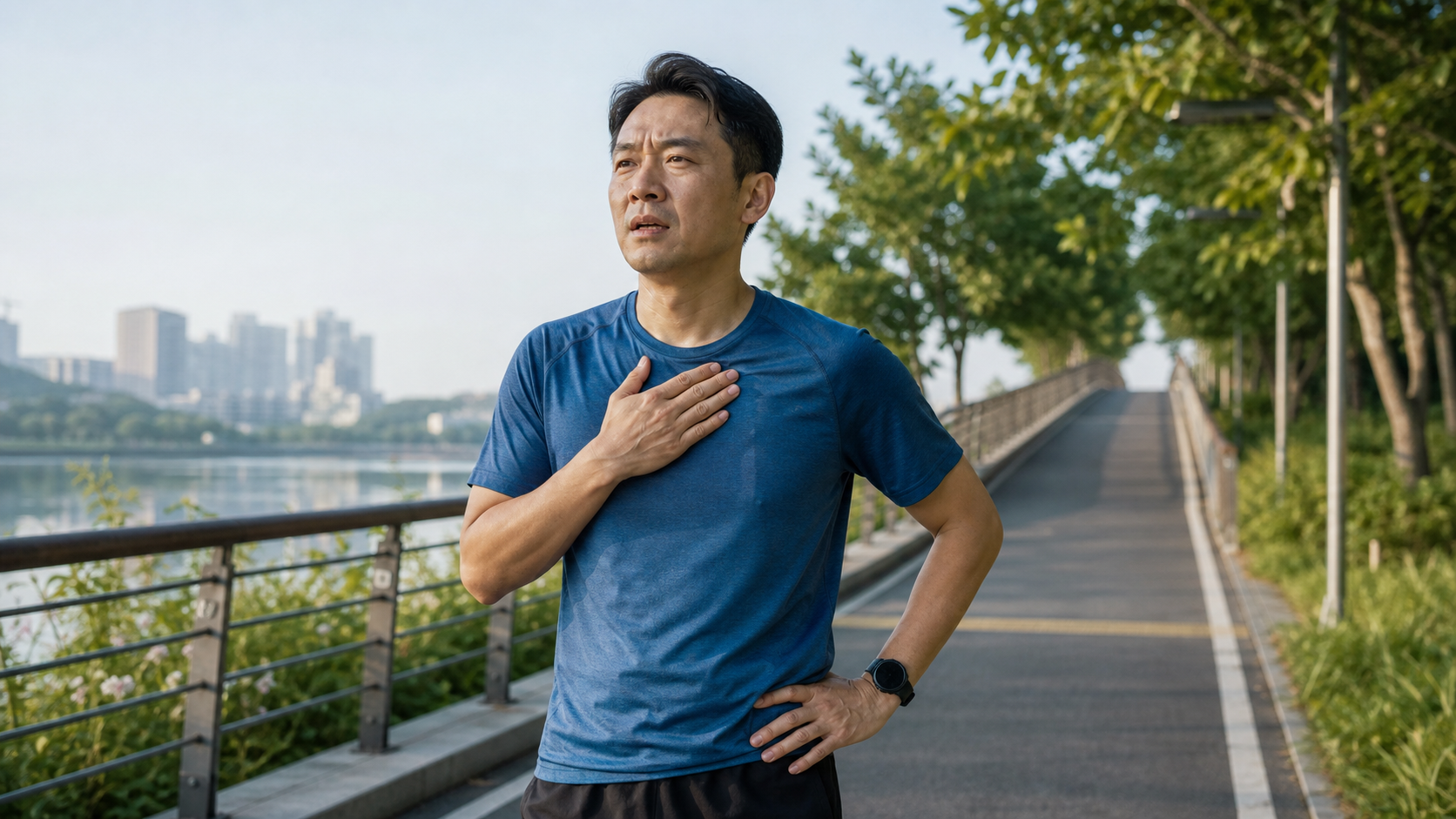
Starting with a very typical case
I remember it clearly—a student in his early forties, let’s call him A-Kai, came to me looking confused. He said that every time he ran to about the third or fourth kilometer, a burning sensation would start rising from the center of his chest, his throat would turn sour, and sometimes he’d burp with the taste of stomach acid. In severe cases, he even felt like he couldn’t catch his breath. His first thought was, “Do I have a heart problem?” So he went for an exercise ECG and an echocardiogram—all normal. Then he wondered if it was asthma, saw a pulmonologist, and his lung function was fine too. After going around in circles, spending money, and taking time off work, the problem was still there.
After hearing the timing he described—“heading out for a run one hour after breakfast,” “symptoms concentrate during running and climbing, but cycling is actually fine,” “lying down to stretch makes it more acidic”—I had a pretty good idea. This wasn’t the heart or the lungs. It was something many endurance athletes encounter but rarely get correctly identified: exercise-induced gastroesophageal reflux.
In fifteen years of working with athletes and general fitness enthusiasts, I run into several cases like this every year. The tricky part isn’t whether it’s dangerous (most of the time it isn’t)—it’s that it’s very good at “disguising itself as something else,” sending people on detours, causing needless anxiety, and even making some people afraid to exercise. So in this article, I want to lay the whole thing out from start to finish: why it happens, which exercises are especially likely to trigger it, how to adjust diet and fueling, how to modify posture and workout plans, and what people at different severity levels should do. It’s a long article, but I hope that after reading it, you can actually get this under control instead of continuing to battle the burning sensation head-on.
First, understand: what gastroesophageal reflux actually is
Everything we eat passes through the esophagus and into the stomach. At the junction between the esophagus and the stomach, there’s a sphincter that acts like a door, called the “lower esophageal sphincter” (LES). Under normal conditions, this door stays closed when you’re not swallowing, keeping the acidic contents of the stomach down below; it only opens briefly at the moment you swallow.
The environment inside the stomach is strongly acidic (stomach acid has a pH of roughly 1.5 to 3.5), which is important for digesting food, but the esophageal lining doesn’t have the same protection as the stomach. So if this door loosens when it shouldn’t, or doesn’t close tightly enough, stomach acid can travel upward into the esophagus, irritate the esophageal lining, and produce the symptoms we’re all familiar with:
- A burning sensation in the center of the chest (commonly called heartburn), often radiating upward from below the breastbone
- A sour or bitter taste in the throat or mouth, sometimes with a feeling of food or stomach fluid coming back up
- Burping or belching, sometimes bringing up an acidic taste
- A scratchy throat, the urge to clear the throat, or a hoarse voice (a sign that reflux material is irritating the throat)
- A smaller number of people experience chronic cough, chest tightness, or a feeling of breathlessness, which is also why it’s easily mistaken for a heart or lung problem
If these symptoms occur occasionally and don’t cause much trouble, we usually call it “gastroesophageal reflux phenomenon.” But if they happen frequently, affect quality of life, or cause esophageal inflammation, it gets classified clinically as “gastroesophageal reflux disease” (GERD). The line between the two needs to be determined by a physician—it’s not something we decide on our own.
Background that’s especially important for people in Taiwan
In Taiwan, the prevalence of GERD has been rising steadily in recent years, linked to several very local factors: a high rate of eating out, a diet that leans oily and spicy, high consumption of sugary hand-shaken drinks and coffee, irregular meal times, eating too fast, and eating dinner late and heavily. Many of my students only have time to exercise after work—eating dinner at 7 or 8 PM, then going for a run or riding the trainer at 9-something. That schedule alone is very unfriendly to reflux. So before we even talk about exercise, a lot of people’s daily-life foundation is already feeding the reflux.
Why does “exercise” trigger reflux? Breaking down the mechanisms
This is the core concept of the entire article. Exercise triggers reflux mainly through several pathways. Let me organize them the way I usually explain it to my students.
Mechanism 1: Increased intra-abdominal pressure “squeezes” the stomach upward
During exercise—especially when the core is engaged, breathing is rapid, and the body is repeatedly jostled—pressure inside the abdominal cavity rises significantly. Think of the stomach as a bag half-filled with liquid: when external pressure increases, the contents are more easily pushed upward, slamming against that door that should stay shut. The impact of foot strikes while running, breath-holding with effort during weight training (Valsalva maneuver), and repeated abdominal contractions all create this “pushing upward” force.
Mechanism 2: Transient relaxation of the lower esophageal sphincter
There’s a key finding from research: in running, the main mechanism behind exercise-induced reflux isn’t that the number of times the door relaxes increases—it’s that the proportion of those transient relaxations that “happen to result in reflux” goes up. In other words, the frequency of the door opening doesn’t change, but because abdominal pressure is higher during exercise, the body is moving, the shape of the esophagogastric junction changes, and the esophagus’s ability to clear refluxed material is reduced, so when the door opens, acid is more likely to rush up—and once it’s up there, it’s also harder to clear away. This observation comes from esophageal pH monitoring studies on runners (see references at the end of the article).
Mechanism 3: Slower gastric emptying and redistribution of blood flow
During exercise—especially moderate-to-high intensity—the body prioritizes blood flow to the working muscles, and blood flow to the digestive system is relatively reduced, slowing down gastric emptying. The longer food and fluid stay in the stomach, and the greater the volume, the more “ammunition” there is for reflux. This is also why “heading out to push hard right after a full meal” is especially likely to cause trouble.
Mechanism 4: Certain fueling products themselves relax that door
This is something many people overlook. Things commonly consumed during exercise—high-concentration sugar drinks, caffeinated energy gels or beverages, carbonated sports drinks—can directly relax the lower esophageal sphincter, increase stomach acid secretion, or inflate the stomach with gas and raise pressure. You think you’re refueling, but you might also be opening the door for reflux at the same time.
Let me summarize the four mechanisms above in a quick table so you can easily check which one (or which ones) is causing trouble for you:
| Mechanism | Plain-language explanation | What you can do about it |
|---|---|---|
| Increased intra-abdominal pressure | Core engagement and body movement squeeze the stomach upward | Choose low-impact exercise, reduce breath-holding, keep posture upright |
| Reflux happens to occur during transient relaxation | When the door opens, acid rushes up and can’t be cleared | Reduce triggers, ease into the start, avoid working out on a full stomach |
| Slower gastric emptying | Blood flow goes to muscles, food stays longer | Widen the gap between meals and training, reduce portion sizes |
| Fueling products relax the door | Sugar drinks, caffeine, and carbonation backfire | Split fueling into smaller amounts, lower concentration, avoid caffeine and carbonation |
Most people don’t have just one cause—several mechanisms happen simultaneously and stack up past the threshold the body can handle. So when adjusting, don’t obsess over “which one exactly it is.” Instead, change everything you can, bring the overall burden below the threshold, and the symptoms will naturally subside.
Not All Exercise Is the Same: Differences in Intensity and Type
This is the part I most want everyone to remember, because it directly determines “how to adjust training.” Both research and clinical experience point in the same direction: the type and intensity of exercise significantly affect the likelihood of reflux occurring.
One study comparing different sports found that running caused reflux at a significantly higher rate than cycling, while weight training (especially heavy loads) was even more likely to trigger reflux than running. In concrete numbers, the study observed that roughly over 40% of participants experienced reflux while running, whereas only about 20% did while cycling (see references at the end). The overall trend is also consistent: low-intensity aerobic exercise—such as brisk walking, easy cycling, and yoga—is relatively reflux-friendly or may even have a protective effect; while high-intensity aerobic and anaerobic exercise—such as all-out running, interval sprints, and heavy weight training—is more likely to trigger or worsen reflux.
I’ve organized common exercises into the table below based on their “reflux-friendliness,” so you can compare against your own training:
| Exercise Type | Reflux Trigger Tendency | Why | Advice for Those Prone to Reflux |
|---|---|---|---|
| Brisk walking, power walking | Very low | Low impact, stable abdominal pressure, low intensity | First choice during a reflux flare-up |
| Easy cycling (flat cruising) | Low | Minimal body jostling, relatively upright upper body | Suitable as a primary aerobic activity |
| Swimming (freestyle, breaststroke) | Low to moderate | Horizontal position but stable abdominal pressure, no ground impact | Most can tolerate it; allow enough time after meals |
| Yoga (avoiding deep forward bends and inversions) | Low to moderate | Primarily relaxing, but some poses compress the abdomen | Avoid deep forward bends and inversions on a full stomach |
| Running at a normal pace | Moderate to high | Ground impact + abdominal pressure + body jostling | Control the post-meal interval, start at a slower pace |
| Hill running, interval sprints | High | High intensity + rapid breathing + core engagement | Progress only after reflux is well controlled |
| Heavy weight training (squats, deadlifts) | High | Breath-holding effort, abdominal pressure spikes instantly | Reduce breath-holding, control the load, train longer after meals |
| High-intensity core training (lots of crunches) | High | Directly and repeatedly compresses the abdomen | Switch to isometric moves like planks; avoid doing them on a full stomach |
Seeing this, the situation of Kai mentioned earlier is easy to explain: his symptoms were concentrated in running and hill climbing, while cycling was relatively fine—precisely because running’s ground impact plus abdominal pressure triggers reflux more than cycling does. This isn’t poor fitness on his part; it’s the inherent difference in exercise type.
Practical Strategy One: Nutrition and Fueling Timing
This is the area with the highest return on investment when I adjust things with my athletes. Many people find that simply getting “what to eat and when to eat it” right resolves most of their symptoms.
How Long to Wait Between Meals and Training
The core principle is simple: don’t do high-impact, high-intensity exercise while your stomach is still full. A general recommendation is to wait about 2 to 3 hours after a main meal before doing moderate-to-high-intensity training; if it’s just low-intensity activity like brisk walking, a post-meal stroll is actually beneficial. As for a small pre-workout snack, like a banana or a small energy food, a buffer of 30 to 60 minutes is usually safer.
This “2 to 3 hours after meals” principle actually aligns with clinical lifestyle advice for reflux sufferers—guidelines also recommend not eating within 2 to 3 hours before bedtime and avoiding high-intensity exercise immediately after meals (see references at the end). The reasoning is the same: give the stomach enough time to empty its contents.
Here’s a “pre-training eating schedule” I often give my athletes for reference; you can match it to your own schedule:
| Time Until Training | Suitable Foods | Foods to Avoid |
|---|---|---|
| 3+ hours | A normal, balanced meal | Extremely oily, extremely spicy, oversized portions |
| 2 to 3 hours | Medium portion, carb-focused, low fat and low fiber | Fried foods, fatty meats, large amounts of dairy |
| 1 to 2 hours | Small portion, easy to digest (toast, porridge, banana) | Large amounts of high-fiber fruits/vegetables, legumes |
| 30 to 60 minutes | Small amounts of easily absorbed fuel (half a banana, a small energy gel) | High-concentration sugary drinks, carbonated beverages, caffeine |
| Within 30 minutes | A few sips of water or a small amount of electrolytes | Any solid meal |
Which Foods and Drinks Are Common Triggers
The following are the more common “reflux-promoting” items clinically and anecdotally. Not everyone is sensitive to every one of them, but if you’re struggling with reflux, you can try reducing them one by one and observing your response:
- High-fat foods: fried items, fatty meats, large amounts of cheese, puff pastries. Fat delays gastric emptying and relaxes the lower esophageal sphincter.
- Spicy, sour, and heavily seasoned foods: chili peppers, lots of garlic, tomato products, citrus fruits, vinegar-heavy foods—these directly irritate the esophageal lining.
- Caffeine: coffee, strong tea, some energy drinks. It may relax that valve.
- Carbonated beverages: the gas distends the stomach and increases abdominal pressure. Especially avoid during exercise.
- Alcohol: relaxes the sphincter and stimulates stomach acid. Not recommended before or after exercise.
- Mint: many people think mint soothes the stomach, but mint may actually relax the lower esophageal sphincter, which is counterproductive for reflux sufferers.
- High-concentration sugary drinks: including hand-shaken drinks and hyperosmotic sports drinks. Given how prevalent the hand-shaken drink culture is in Taiwan, this deserves special attention.
How to Adjust Your Fueling Strategy
If you’re an endurance athlete who needs to fuel during exercise, here’s what I typically recommend to athletes prone to reflux:
- Break up each fueling amount into smaller portions and increase the frequency. Instead of gulping down a large amount of high-concentration sugary drink at once, take small amounts more often to reduce the one-time volume and pressure in the stomach.
- Dilute your sports drink concentration. Overly concentrated sugar water delays gastric emptying; diluting it slightly makes it easier to absorb and less likely to cause reflux.
- Take energy gels with water, and skip the caffeinated versions. Caffeinated gels can be a double-edged sword for sensitive individuals; test with the non-caffeinated version first.
- Avoid carbonated drinks. Never touch sparkling beverages during exercise.
- Slow down before fueling. Fueling on descents or flat sections when your heart rate has dropped slightly is far better than forcing it down while gasping on a climb.
Practical Strategy Two: Posture, Breathing, and Workout Adjustments
Beyond diet, “how” you perform the exercise itself also matters a great deal.
Posture
- Keep your upper body as upright and relaxed as possible. Excessive forward lean or a collapsed chest while running increases abdominal compression. If you ride very low (e.g., the drops position on a road bike), that can also compress the abdomen—this is one reason some people get reflux on the bike. In that case, raise the handlebars moderately and cruise mostly on the hoods.
- Avoid deep forward bends, inversions, and lots of crunches on a full stomach. These movements directly compress the abdomen; doing them after a meal is asking for trouble.
- Don’t lie down immediately after exercise. If you lie flat to stretch or rest right after working out, gravity no longer helps keep stomach contents down, making acid reflux more likely. Stand or walk around for a few minutes first, or do cool-down moves in a standing or seated position.
Breathing and Effort Patterns
During weight training, many people habitually hold their breath while exerting force (the Valsalva maneuver), which makes abdominal pressure spike instantly. For those prone to reflux, I’d suggest:
- Moderately use exhalation to drive the effort, reducing prolonged breath-holding
- Lower the per-rep load and increase the rep count, avoiding the need for maximal breath-holding on every rep
- For heavy lifts that require strong core stability (squats, deadlifts), schedule them longer after meals
Schedule Arrangement
This is the actual adjustment I made for A-Kai. You can use this four-week progressive approach as a reference:
| Week | Main Adjustments | Example Training Content | Key Observations |
|---|---|---|---|
| Week 1 | Widen the gap between meals and training, lower intensity | Exercise 3 hours after meals; focus on brisk walking and easy riding | Whether symptoms noticeably decrease |
| Week 2 | Add low-impact aerobic exercise | Focus on easy riding or swimming, with short easy runs穿插 | Tolerance differences across activities |
| Week 3 | Gradually resume running | Start with a slower pace at the beginning, avoid going hard from the start | Symptom threshold during running |
| Week 4 | Carefully return to intensity | Short, brief intervals; break up nutrition into smaller portions | Whether symptoms remain manageable at high intensity |
After A-Kai completed these four weeks, his condition improved significantly. The key wasn’t actually complicated: he used to go out for a hard run one hour after breakfast. I asked him to change it to at least two and a half to three hours after meals, start running at a slower pace, swap his hand-shaken drinks for plain water, and cut out the carbonated sports drinks he loved. After four weeks, most of his runs no longer caused that burning sensation—only occasionally during all-out sprints did he feel a slight hint of it. That’s already a very good result.
Common Mistakes and Corrections
Over the years of coaching athletes, I’ve found that people tend to make a few typical mistakes when dealing with exercise-induced reflux. Let me list them out, along with the corrective directions:
Mistake 1: Completely avoiding exercise the moment symptoms appear
This is the most regrettable one. Regular, moderate exercise benefits overall health and weight management, and maintaining a healthy body weight is itself an important part of improving reflux (excess abdominal fat increases intra-abdominal pressure). The right approach isn’t to stop moving, but to choose the right type of activity and adjust the timing. Starting with low-impact exercises like brisk walking or easy riding, almost everyone can find a form of exercise they can tolerate.
Mistake 2: Treating exercise-induced reflux as a simple fitness issue and constantly pushing harder
Some people think, “I’m just weak—if I train more, it’ll get better,” and end up making things worse. Reflux has no direct relationship with fitness level. Forcing more volume only increases abdominal pressure and stomach burden. You need to sort out diet, timing, and posture first, then talk about progression.
Mistake 3: Self-medicating with over-the-counter drugs long-term
Antacids are easy to buy at pharmacies in Taiwan, and many people pop stomach medication the moment they feel a burning sensation. Occasional short-term use is fine, but if you need to use them frequently and long-term to suppress symptoms, that means the problem has gone beyond what self-adjustment can handle—it’s time to see a doctor, rather than relying on OTC drugs to tough it out. Long-term medication should be done under a physician’s guidance.
Mistake 4: Ignoring lifestyle habits outside of exercise time
Many people only focus on the moment of exercise, but overlook daily factors like eating dinner too late and too much, lying down right after eating, smoking, heavy coffee and alcohol consumption, and being overweight. These are the foundation of reflux. Lifestyle adjustments with more consistent evidence in the guidelines include: weight loss, not eating 2 to 3 hours before bedtime, elevating the head of the bed, sleeping on the left side, and quitting smoking (see references at the end). Exercise is just one piece—adjusting your overall lifestyle together is what makes results stable.
Mistake 5: Attributing all “chest tightness and shortness of breath” to reflux
I want to remind you of this point with extra, extra caution. Although reflux can indeed cause chest tightness and a feeling similar to shortness of breath, chest pain, chest tightness, unusual breathlessness, cold sweats, or dizziness during exercise could also be warning signs of heart problems, and the two aren’t always distinguishable by symptoms alone. So my principle is always: don’t self-diagnose. Especially for chest symptoms that are new, getting progressively worse, or accompanied by other discomfort, you must seek medical attention. Let a doctor clarify with professional examinations, rule out more urgent issues like heart problems first, and then come back to addressing the reflux.
When Should You See a Doctor? Don’t Tough It Out Alone
Most exercise-induced reflux can be improved through self-adjustment, but there are some situations where I strongly recommend seeing a doctor directly rather than delaying:
- Symptoms are frequent, multiple times per week, or already affecting sleep, daily life, or training
- Difficulty swallowing, pain when swallowing, or feeling like food is stuck
- Unexplained weight loss
- Black stools, vomiting blood, or vomiting coffee-ground-like material (could be gastrointestinal bleeding)
- Recurrent chronic cough, hoarseness, or a sensation of something in the throat with no identifiable cause
- Chest pain, chest tightness, unusual breathlessness, cold sweats, dizziness, or palpitations during exercise—heart problems must be ruled out first in these cases
Seeing a doctor is actually quite convenient in Taiwan. Under the National Health Insurance, the threshold for seeing a gastroenterologist (digestive medicine) isn’t high, and if needed, the doctor may arrange tests like an endoscopy. Rather than Googling your symptoms and scaring yourself, or continuously swallowing OTC medications, it’s better to leave it to the professionals. I often tell my athletes: spending one clinic visit to get the problem clarified is far more worthwhile than months of anxiety.
Action Recommendations for Readers at Different Levels
Finally, I’ve divided the action plan into three tiers based on everyone’s situation. You can directly find the one that fits you.
If you’re a “general exerciser with only occasional symptoms”
- Extend the gap between meals and exercise to 2 to 3 hours (low-intensity walking isn’t subject to this restriction).
- Avoid high-fat, spicy, acidic foods, carbonated drinks, caffeine, and alcohol before and after exercise.
- Hand-shaken drinks in Taiwan are tempting, but switch to plain water or low-concentration electrolyte water before and after exercise.
- Keep your upper body relaxed and upright during exercise, and don’t lie flat immediately afterward.
- That should be enough to keep things in good shape—no need to be overly anxious.
If you’re an “advanced athlete who trains regularly but is often bothered by reflux”
- First, make trade-offs in exercise type: during flare-up periods, focus on brisk walking, easy riding, and swimming; postpone running, heavy lifting, and hill intervals.
- Break up nutrition into smaller portions, lower concentration, and avoid caffeine and carbonation; take nutrition during lower-intensity segments.
- During strength training, reduce breath-holding and control per-set load; schedule heavy lifting further away from meals.
- Use a training log to record “what you ate, how long ago, what exercise you did, and how symptoms felt” to identify your personal triggers.
- If symptoms keep recurring after several weeks of adjustment, see a gastroenterologist—don’t rely on long-term antacid use to tough it out.
If you have chronic conditions or more severe symptoms
- If you have chronic diseases like heart disease, hypertension, or diabetes, or are taking medication, any new chest symptoms must first be evaluated by a doctor—don’t assume it’s reflux on your own.
- If symptoms are severe, frequent, or show the warning signs mentioned earlier (difficulty swallowing, weight loss, black stools, etc.), see a doctor first before discussing any exercise plan.
- Your exercise plan should ideally be discussed with your physician, and a nutritionist if necessary, for individualized adjustments rather than blindly following general advice.
- Remember: being conservative, individualized, and prioritizing medical evaluation is always the safer path.
Frequently Asked Questions: The Ten Questions I Get Asked Most by Athletes
Over the years of leading teams and teaching classes, I’ve been asked the same questions about exercise-induced reflux so many times that I’ve compiled them into this QA, answering them in the most straightforward way possible.
Q1: If I exercise on an empty stomach, will I avoid reflux?
Not necessarily. Fasting does remove the “ammunition” of stomach contents, and many people find running on an empty stomach more comfortable. However, some people still produce stomach acid when fasting, and when exercise relaxes that valve, acid can still come up. In fact, some people experience stronger reflux symptoms when exercising fasted because low blood sugar triggers a stronger stress response in the body. So whether fasting works for you depends on the individual. I suggest trying both and keeping a record to find your optimal pattern.
Q2: Does drinking water make reflux worse? Should I drink less during exercise?
Don’t avoid hydration out of fear of reflux—that’s more dangerous, especially in Taiwan’s humid summer heat where dehydration risk is high. The trick is to drink plain water “in small amounts, frequently,” rather than chugging a whole bottle at once and stretching your stomach. What you should avoid are carbonated drinks and high-concentration sugary drinks, not water itself.
Q3: Is it better to exercise in the morning or evening?
From a reflux perspective, exercising in the morning on an empty stomach or after a light meal is usually more forgiving than exercising after dinner, because it’s hard to wait 2 to 3 hours after an evening meal. But this needs to be balanced with your daily routine, sleep, and work schedule. If you can only exercise in the evening, pay extra attention to eating dinner earlier, eating less, and choosing low-fat, easily digestible foods.
Q4: Does chewing gum actually help?
Some people find that chewing sugar-free gum before or after exercise promotes saliva production, which helps neutralize and clear acid from the esophagus, making them feel somewhat more comfortable. This is a relatively mild, low-risk trick worth trying—but avoid mint flavors (mint may relax that valve), and don’t treat it as a fundamental solution.
Q5: I’m slim, so why do I still get reflux?
Being overweight is indeed a risk factor, but it’s not the only one. Slim people can still experience reflux due to exercise-induced relaxation of that valve, too short an interval between meals and training, dietary triggers, or postural compression. So being slim doesn’t make you immune—the key still comes back to those three factors during exercise.
Q6: Will reflux get worse the more I exercise and damage my esophagus?
Occasional, mild exercise-induced reflux usually doesn’t cause long-term harm. But if reflux is frequent, severe, and recurrent over a long period, prolonged exposure of the esophageal lining to an acidic environment can indeed lead to issues like esophagitis. This is exactly why “frequent episodes warrant a doctor’s visit”—let a physician assess the severity and treat it if needed.
Q7: Can I take antacids (stomach medication) before exercise as a preventive measure?
This falls into the realm of medication, and I won’t give you instructions like “pop one before you run.” Whether to use medication, which one, and when to take it should be determined by a physician based on your condition. For self-management, focus on diet, timing, posture, and exercise type.
Q8: Is reflux more likely when exercising in cold weather?
In Taiwan’s winter or on colder early mornings, some people report more noticeable symptoms. This may be related to cold air stimulation, a more tense body, or insufficient warm-up. I recommend warming up more thoroughly in cold weather and gradually increasing intensity—don’t sprint out the door the moment you start.
Q9: I’ve changed my diet and timing but nothing works. Am I beyond help?
No. When self-adjustment doesn’t work, that’s exactly the signal that “it’s time for professional intervention”—not a sign of hopelessness. Gastroenterologists have far more assessment and treatment options than we can figure out on our own. Ineffectiveness means you need a more precise diagnosis, not that there’s no solution.
Q10: Once my reflux is under control, can I never eat spicy food or drink coffee again?
You don’t need to be that extreme. It’s reasonable to be more restrained during flare-ups or sensitive periods, but once your condition stabilizes, many people can enjoy these in moderation as long as they’re not too close to exercise time. The key is to avoid triggers right before or after training; in daily life, observe your own tolerance and find a comfortable balance—no need for an ascetic, total ban.
Another Comparative Case: The Difference That Attention to Detail Makes
Let me share a comparison case to make this more tangible. Besides A-Kai, I also coached a female athlete in her fifties named Xiao-Mei. Her situation looked very similar to A-Kai’s at first glance—she’d get acid reflux halfway through riding her trainer, with a scratchy sensation in her throat. But her key triggers were completely different from A-Kai’s.
A-Kai’s issues were mainly “too short an interval between meals and training + high-impact running + carbonated drinks.” Xiao-Mei’s issues were “trainer posture too low and hunched, compressing the abdomen + a habit of drinking a cup of coffee before evening training + lying directly on the couch after finishing.” See? Same reflux, completely different triggers. That’s why I always say, there’s no one-size-fits-all solution—only identifying your own variables one by one and adjusting each of them.
For Xiao-Mei, the adjustments I made were: raising the trainer handlebars and using a more upright posture; removing the pre-training coffee and switching it to after training if she still wanted it; and standing or walking slowly for a few minutes after training before sitting down, never lying flat immediately. Three weeks later, she told me the acidic sensation stuck in her throat had almost disappeared. She originally thought it was “just getting old and falling apart,” but really, it was just a few small details that weren’t right.
This is also the core attitude I want to convey through this article: exercise-induced reflux isn’t something to resign yourself to or give up on—it’s a manageable problem that’s “worth observing carefully, troubleshooting item by item, where details determine success.” Pull out your training log, record honestly, and you’ll find your own answers faster than you think.
Conclusion: Turn Reflux into a Manageable Variable and Keep Training Well
Let’s return to A-Kai from the beginning. He kept running afterward and even completed his first half marathon. One thing he said to me has stayed with me: “The problem wasn’t that I couldn’t run—it was that I’d been running the wrong way all along.”
Exercise-induced gastroesophageal reflux is essentially the result of abdominal pressure during exercise, stomach contents, and the state of that valve—all three coinciding at once. It sounds annoying, but here’s the good news: nearly every one of these three factors can be adjusted—what you eat, when you eat, what exercise you do, what posture you use, and whether you see a doctor. Work through these variables one by one, and the vast majority of people can keep training without giving up exercise while reducing the burning sensation to a level that barely affects their workouts.
If you’re currently struggling with this, don’t panic, don’t rush, and don’t just tough it out. Start with the simplest steps—“lengthen the interval between meals and training, and eliminate trigger foods”—observe your body’s feedback, and gradually adjust your exercise type and intensity to a range you can comfortably handle. If you truly can’t resolve it, or if you have any symptoms that worry you, see a doctor—that’s not weakness, that’s smart.
Wishing you healthy and comfortable training. May your next workout be filled with nothing but the rhythm of your heartbeat and breath—without that nagging burn. See you out on the road.
This article is educational content and cannot replace individual diagnosis and treatment advice from a physician, physical therapist, or nutritionist. If you have persistent or severe symptoms, please seek medical attention promptly.
References
- Gastroesophageal reflux induced by exercise in healthy volunteers (PubMed): https://pubmed.ncbi.nlm.nih.gov/2724505/
- Effect of Running on Gastroesophageal Reflux and Reflux Mechanisms (American Journal of Gastroenterology): https://journals.lww.com/ajg/abstract/2016/07000/effect_of_running_on_gastroesophageal_reflux_and.15.aspx
- Esophageal Reflux in Conditioned Runners, Cyclists, and Weightlifters: https://www.researchgate.net/publication/10756059_Esophageal_Reflux_in_Conditioned_Runners_Cyclists_and_Weightlifters
- Association between physical activity and risk of gastroesophageal reflux disease: A systematic review and meta-analysis (ScienceDirect): https://www.sciencedirect.com/science/article/pii/S2095254624000309
- Lifestyle intervention in gastroesophageal reflux disease (PMC): https://pmc.ncbi.nlm.nih.gov/articles/PMC4636482/
- ACG Clinical Guideline for the Diagnosis and Management of GERD (PMC): https://pmc.ncbi.nlm.nih.gov/articles/PMC8754510/
Related Reading
- Feeling Nauseous During Exercise? A Coach Explains the Causes and Nutrition Strategies
- Preventing Race-Day GI Issues: What to Do When You Feel Like Throwing Up Mid-Run? A Coach Walks You Through the Mechanisms and On-Site Management
- Gut Training: Why Your Digestive System Needs Training Too, and How to Handle Race-Day GI Discomfort
- Gut Training for Running: How to Get Your Digestive System Used to Processing Fuel While Running
一日北高/長距離團騎 常見問題補充篇 / 組團或跟團的眉角 / 壯車友容易被瘦車友慢性拉爆 / 原來屁股痛可能是這個原因...? / 風場配速法 / 公路車 / CT Yeh
2 年前
CT暗黑廚房) 車友必備 宇宙無敵鮮蚵湯 幫助訓練恢復 天然食補 好市多 超肥鮮蚵 破PR
7 年前
TBA 北高360 逆風爆熱再送空汙 苦行挑戰賽全記錄 4K沈浸式臨空畫質| 公路車 | CT Yeh
3 年前
一日北高常見問題大集合 | 攻略 | 路線 | 訓練 | 補給 | 自行車 單車 | 一日雙城 | 雙塔 | TWB北高360 | 屁股痛
6 年前
約騎爆笑地獄梗 大腸怎麼了🤣 #公路車 #cycling
3 年前
爬陡坡被爆胎的車友跑步超車 #cycling #里佳部落
9 個月前
戰略) Zwift Race 如何咬在第一集團 如何評估自己要開多少推力 (請開1.5倍速看)
7 年前
靠單車減肥35公斤 心得分享與整理
7 年前