Athlete's Fruit Smoothies and Liquid Nutrition: Drink Your Fuel and Get Back on the Course Faster
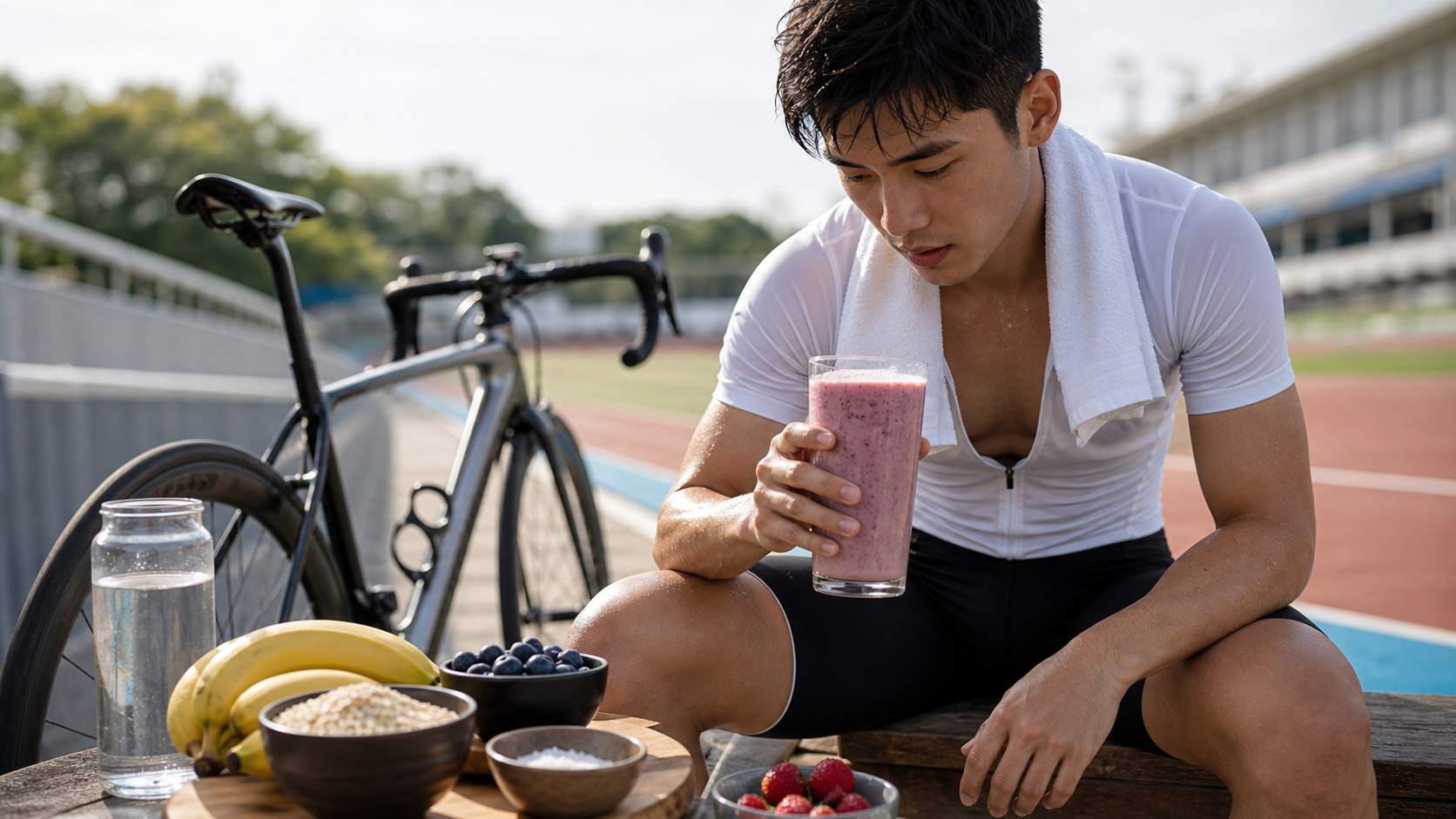
It Starts with a Protein Shake You Couldn’t Stomach
A few years ago, I coached an amateur cyclist preparing for the Westbound Wuling climb. He trained hard—often logging over 100 km on weekends—and his power numbers looked great. But after every long ride, he’d be mentally drained, his legs heavy the next day, and his recovery clearly lagging behind his training partners. I asked him to log his fueling routine, and the problem wasn’t “how much he ate” but “that he couldn’t eat.” He knew he needed carbs and protein, but after grinding up a long climb with his heart rate still hovering around 150 bpm, forcing down dry bread and hard-boiled eggs left his stomach churning and his appetite gone. In the end, he’d often just drink half a bottle of water and call it done.
I switched his entire post-ride fueling plan to liquid: a fruit smoothie made with banana, oats, whey, and a pinch of salt. Two weeks later, he reported that his recovery felt “like getting a new body,” and the next day’s training sessions no longer felt like wading through mud. This isn’t magic—liquid nutrition simply has a physiological edge: it bypasses the most vulnerable stage of post-exercise digestion.
In this article, I want to lay out clearly what I’ve learned from fifteen years of coaching athletes at all levels, plus general fitness enthusiasts, along with the sports physiology and nutrition literature I keep reading: why liquid nutrition and fruit smoothies are especially valuable for athletes, how to formulate them, when to drink them, and what common mistakes turn a good smoothie into a gut bomb. This applies to cyclists, runners, triathletes, and anyone who simply wants to recover better after training.
The Conceptual Foundation: Why “Drinking” Beats “Eating” in Athletic Contexts
Let me be clear: I never advocate replacing whole meals with liquid nutrition. Whole foods, chewing, fiber, and satiety all have their place. But during exercise and immediately after, liquid nutrition has several advantages that are hard to beat.
1. Faster Gastric Emptying, Earlier Absorption
During exercise—especially high-intensity or prolonged endurance efforts—blood flow is prioritized to working muscles and skin for heat dissipation, reducing blood flow to the gut and suppressing digestive function. Solid food lingers longer in the stomach, causing bloating, nausea, and even vomiting. Liquid or semi-liquid fruit smoothies empty from the stomach faster, allowing nutrients to reach the small intestine and be absorbed sooner. This is critical for the principle that “the sooner recovery starts after exercise, the better.”
2. Hydration and Fueling in One Go
Taiwan’s climate is a major challenge for endurance athletes. In summer, riding along coastal highways, on Yangmingshan’s Balaka, or across the plains of central and southern Taiwan, the perceived temperature routinely exceeds 35°C. A long ride produces staggering sweat losses, draining both water and electrolytes. Liquid nutrition is naturally a vehicle for “water + nutrients + electrolytes.” One glass delivers hydration, carbs, and sodium in a single step—far more efficient than “chomping an energy bar, then chugging water.”
3. Easy Customization and Precise Dosing
The biggest advantage of a fruit smoothie is that it’s adjustable. You can precisely control the grams of carbs and protein, tweak the thickness, and add or cut salt based on that day’s training intensity. For advanced athletes who need to track every gram of fuel, this quantifiable flexibility is extremely practical.
4. Multiple Transportable Carbohydrates Raise the Absorption Ceiling
Many people don’t know this. The small intestine absorbs glucose primarily via the SGLT1 transporter, which saturates at roughly 60 grams per hour. But fructose uses a different transport pathway (GLUT5). Research shows that when you combine glucose (or maltodextrin) with fructose at roughly a 2:1 ratio, total carbohydrate absorption and oxidation rates can rise significantly, pushing the hourly carb ceiling from 60 grams up to 90 grams or more—while actually reducing the likelihood of GI distress. This “multiple transportable carbohydrates” concept is easiest to achieve in a liquid formula: just pick the right ingredients, and you naturally hit that ratio.
5. Countering Post-Exercise Appetite Suppression
This is a physiological phenomenon many don’t realize: after high-intensity exercise, appetite is often temporarily suppressed. Causes include elevated core temperature, a still-active sympathetic nervous system, and shifts in appetite-regulating hormones. You’ve burned a huge amount of energy, yet your body has little interest in food—forcing down a bento box at that moment is pure torture. The beauty of liquid nutrition is that it bypasses the psychological and physiological barrier of “do I feel like eating?” A cold, slightly sweet, faintly salty fruit smoothie is easy to get down even when appetite is low, letting you actually take in the nutrients you need during that window when you most need fuel but least want food. Many of my athletes have told me the same thing: with identical nutritional content, a smoothie is simply “drinkable” where a plated solid meal isn’t.
The Science: Recovery Window, Roles of Carbs and Protein
After exercise, the body has two major tasks: restoring glycogen and repairing muscle protein. These two processes determine your recovery quality the next day—and across the entire training cycle.
Glycogen Resynthesis
Endurance exercise heavily depletes muscle and liver glycogen. Research generally indicates that to maximize glycogen resynthesis after exercise, you should consume carbs at a rate of about 1.0 to 1.2 grams per kilogram of body weight per hour in the first few hours, with smaller, frequent feedings working better. For a 65 kg rider, that’s roughly 65 to 78 grams of carbs per hour.
Note that if you have more than 24 hours to recover (e.g., train today, rest tomorrow), the urgency of “stuffing yourself in the first hour or two” diminishes. As long as your total daily carb intake is sufficient (studies suggest that with a 24+ hour recovery period, 6 to 12 grams of carbs per kilogram of body weight is enough to restore glycogen stores), your body has plenty of time to catch up. The scenario that truly demands racing the clock is “another session in a few hours”—like double days, multi-sport triathlon training, or multi-day stage races.
Protein Synergy
Adding protein to carbs offers two benefits. First, protein (especially whey, which is rich in leucine) stimulates insulin secretion, helping shuttle glucose into cells and, in some cases, aiding glycogen synthesis. Second, post-exercise protein supplies the amino acids needed for muscle repair and synthesis. A common approach in the literature: about 0.8 g/kg of carbs paired with 0.3 to 0.4 g/kg of protein covers both glycogen and muscle repair.
Translating those numbers into a smoothie: for a 65 kg athlete, a recovery shake containing roughly 50 to 70 grams of carbs and 20 to 25 grams of protein is a very reasonable starting point.
Here’s a common myth worth flagging: protein is not “the more, the better.” A single post-exercise dose beyond what muscles can immediately use doesn’t translate into more repair—it’s simply wasted. About 20 to 30 grams of quality protein in one sitting is enough to kickstart muscle repair for most people. What really matters is “spreading adequate protein intake across the whole day,” not piling it all into that one post-workout shake. Liquid nutrition’s role is to get that first dose in during the critical post-exercise window; the rest comes from evenly distributed meals.
Timing: The Window Isn’t as Narrow as You Think
People used to talk about the “golden 30 minutes,” making the recovery window sound extremely tight. Current understanding is that supplementing within 30 to 60 minutes post-exercise is ideal, but muscles’ heightened nutrient uptake can persist for up to about two hours after exercise. In other words, if you’ve just finished a descent, your heart rate hasn’t dropped yet, and you genuinely can’t eat, don’t panic and force it down. What matters is not waiting three or four hours before remembering to refuel. And this is exactly where liquid nutrition shines again—when your appetite hasn’t returned, a smoothie is far easier to get down than a bento box.
Practical Application: Formulas, Ratios, and Timing
Enough theory—here’s the practical stuff. Below is the formula framework and timing schedule I actually give my athletes.
Four Functional Categories of Liquid Nutrition
I tend to categorize liquid nutrition for athletes into four types, based on “when it’s used,” and the formulation logic for each is completely different:
| Type | Timing | Carbohydrate Focus | Protein | Consistency | Electrolytes |
|---|---|---|---|---|---|
| Pre-Race Preparation Drink | 1-2 hours before exercise | Moderate, easily digestible | Little or none | Thin | Small amount |
| Mid-Exercise Fuel Drink | During exercise | High, multiple-transport carbohydrates | Usually none or minimal | Thin, easy to swallow | Depends on sweat rate |
| Recovery Fruit Smoothie | 0-2 hours after exercise | High | High (mainly whey) | Thick, acceptable | Moderate sodium |
| Bedtime Repair Drink | Before bed | Low to moderate | Moderate (slow-absorbing) | Thick | Low |
These four categories are the most prone to mixing errors. The most common mistake is taking a thick, high-protein recovery smoothie and drinking it during exercise, which results in gastrointestinal distress mid-ride or mid-run. What you need during exercise is something thin, fast-absorbing, and carbohydrate-focused; high protein and a thicker consistency only come into play during recovery.
The Golden Formula Framework for Recovery Smoothies
This is the basic “recovery smoothie” formula I most often give my athletes. You can fine-tune it based on your own body weight and training volume:
| Ingredient | Suggested Amount (for ~65 kg athlete) | What It Provides |
|---|---|---|
| Banana | 1 (medium-large) | Fast carbohydrates + Potassium |
| Rolled Oats | 30-40 g | Slower carbohydrates + a bit of fiber |
| Whey Protein | 25-30 g (about 1 scoop) | Repair protein, Leucine |
| Milk or Soy Milk | 250-350 ml | Liquid base + additional protein |
| Honey or a small amount of dried fruit | 1 tablespoon | Topping up carbohydrates to target grams, providing fructose |
| Salt | A pinch (about 0.5 g) | Sodium replenishment, especially after heavy sweating |
| Ice Cubes | As needed | Texture, helps lower core temperature |
This one smoothie typically lands between 60 to 80 grams of carbohydrates, 25 to 35 grams of protein, and 300 to 450 kcal, depending on how much honey and oats you add. Bananas provide glucose and fructose, honey adds more fructose, so you naturally get a combination close to multiple-transport carbohydrates – that’s the inherent advantage of a fruit smoothie.
Ingredient Role Reference Chart
Many people just throw things into a smoothie based on feeling, without really knowing what each ingredient does. I’ve put together a reference chart so you can choose ingredients based on “what function you need”:
| Ingredient | Main Contribution | Suitable Timing | Notes |
|---|---|---|---|
| Banana | Fast carbohydrates, Potassium | Good before or after exercise | Riper ones are easier to digest |
| Rolled Oats | Slower carbohydrates, a bit of fiber | Recovery, earlier pre-race | Don’t add too much during exercise |
| Whey Protein | Fast-absorbing protein, Leucine | Post-exercise repair | Isolate whey has lower lactose |
| Milk | Liquid, protein, natural sugars | Recovery | Lactose intolerant? Switch to plant milk |
| Unsweetened Soy Milk | Plant protein, liquid | Recovery, convenient for eating out | Vegan-friendly |
| Greek Yogurt | Thick protein, texture | Recovery | Choose the unsweetened version |
| Honey | Fructose + Glucose | Topping up carbs to target | Very sweet, don’t overdo it |
| Berries | Small amount of carbs, antioxidants | Recovery garnish | Mainly for flavor |
| Salt | Sodium | After heavy sweating | A pinch is enough |
| Ice Cubes | Cooling, texture | Hot, humid weather | Essential for Taiwan’s humid summers |
Here’s how to use this chart: first decide the “primary function” of your smoothie (during exercise? recovery? bedtime?), then pick and combine ingredients from the corresponding timing column. The smoothie during exercise should be as simple as possible; the recovery one can be richer but still should prioritize easy absorption.
Fueling Timing Chart for Various Exercise Scenarios
The table below outlines how I would arrange liquid nutrition for different training scenarios, based on a 60-70 kg endurance athlete:
| Scenario | Pre-Exercise | During Exercise | 0-2 Hours Post-Exercise | Notes |
|---|---|---|---|---|
| Easy session under 60 min | Normal diet is fine | Plain water | Regular meal is fine | No need for deliberate smoothies |
| 90-120 min moderate intensity | One pre-race drink | 30-60 g carbs per hour in a drink | One recovery smoothie | Start paying attention to hydration |
| Long distance over 3 hours | Easily digestible breakfast | 60-90 g carbs per hour (multiple transport) | One recovery smoothie, then a meal two hours later | Add sodium for Taiwan’s summer |
| Double training day | Recovery smoothie immediately after first session | Depends on intensity | Liquid fast-fueling between sessions is essential | The most critical scenario for the recovery window |
| Race day | Eat 2-3 hours early | Familiar formula, no experimenting | Immediate liquid fueling | Stick to everything practiced |
Common Mistakes and Corrections
After coaching for so many years, I’ve found that people’s mistakes with liquid nutrition are highly repetitive. Here are the ones I have to correct with almost every group of athletes.
Mistake 1: Trying a New Formula for the First Time on Race Day
This is the most fatal and the most common. Your gut needs training, especially its tolerance for high-carbohydrate fueling. Any fruit smoothie or sports drink you plan to use in a race must be rehearsed repeatedly during training to confirm your gut can handle the concentration, sweetness, and volume. I’ve seen too many people see some influencer recommend a formula the night before a race, use it the next day, and end up running to the bathroom halfway through. The principle is simple: no experimenting on race day.
Mistake 2: Concentration Too High, Osmolality Off the Charts
Many people think “the thicker, the more nutritious,” so they make their mid-exercise drinks overly sweet and thick. The problem is that high-concentration drinks have too high an osmolality; when they reach the gut, they actually pull water into the intestinal lumen, causing bloating, diarrhea, and worsening dehydration. Mid-exercise fueling drinks should follow the “thin and frequent” approach; generally, a carbohydrate concentration in the 6% to 8% range is recommended for better absorption. Recovery smoothies can be thicker, because you’ve stopped moving by then.
Mistake 3: Only Focusing on Carbs and Protein, Forgetting Sodium
Taiwan’s humidity is a silent killer. Heavy sweating loses not just water, but also sodium. If you only replace water without sodium, your blood gets diluted, leading to a risk of “exercise-associated hyponatremia” – mild cases bring weakness and nausea, severe cases can be dangerous. For long, sweaty training sessions, adding a pinch of salt to your recovery smoothie is a cheap form of insurance. As for how much, it depends on your sweat rate and how salty your sweat is (some people’s sweat is especially salty, leaving white salt crystals on their clothes – these people need to be even more careful).
Mistake 4: Replacing All Regular Meals with Smoothies
Liquid nutrition is a tool, not a belief system. Long-term consumption of only liquids sacrifices fiber, satiety, and the satisfaction of chewing, and it’s easy to take in excessive sugar. My principle is: use liquid nutrition for “around workouts” and for “times when you can’t sit down for a proper meal”; the rest of the time, stick to whole foods as the mainstay.
Mistake 5: Mismatching Protein Type and Timing
After exercise, if you want to quickly kickstart repair, fast-absorbing proteins like whey are more suitable; before bed, if you want to maintain amino acid supply through the night, you can choose slower-absorbing sources (like casein, or milk and soy milk themselves). Making your bedtime repair drink a big glass of high-sugar, fast-absorbing protein both disrupts sleep and risks storing excess sugar – a common pairing error.
Mistake 6: Ignoring Your Gut’s Condition on Any Given Day
Some days you’re just not in good shape – didn’t sleep well the night before, ate something bad, or the weather is too hot. On those days, don’t force your usual high-carb formula. Moderately lower the concentration and reduce the amount; prioritize making your body comfortable. Fueling is meant to serve your body, not torture it.
Mistake 7: Too Much Fiber, Uncomfortable Before and After Exercise
Fruit smoothies are healthy, but if you blend in a large handful of high-fiber vegetables, lots of oats, chia seeds, and nuts before or right after exercise, the excessive fiber will slow down gastric emptying and ferment in the gut, causing gas—acting up exactly when you least want it to. Smoothies around workouts should follow a “low-residue, easily absorbed” approach, saving the heavy fiber for regular meals. This is also why my workout-specific recipes typically focus on bananas, a small amount of oats, and whey protein, rather than packing in a pile of greens and seeds.
A Complete Case Study: From Post-Race Collapse to Consistent Finishing
I’d like to use a more complete case study to tie together the principles above, showing you how adjustments work in practice.
This client was a 72 kg office-worker runner in his early 40s, aiming to break four hours in a full marathon. His main complaints when he came to me: after every long run over 25 km, he’d be wiped out all afternoon, his legs would be so sore the next day that climbing stairs hurt, and he’d have no appetite that evening—just forcing down a few bites before bed.
I first looked at his fueling routine, and the problem was obvious: during long runs, he mostly drank plain water, occasionally nibbling half an energy bar; after finishing, he’d go home and lie down for an hour, only eating when he “had the energy,” which was often two to three hours post-run. Essentially, he was severely under-fueling during exercise and missing the critical window afterward—a double blow.
We made three adjustments. First, he switched to liquid fueling during long runs, targeting 45 to 60 grams of carbs per hour, using commercially available sports drinks containing glucose and fructose, with extra sodium in the summer. Second, immediately after finishing the run, before even getting home, he’d grab a bottle of chocolate milk and a banana from the convenience store—that’s the most basic liquid recovery, carbs and protein in one go, for a few dozen NT$. Third, within 30 minutes of getting home, he’d have a standard recovery smoothie: banana, oats, whey protein, milk, and a pinch of salt.
Four weeks later, he reported that his post-long-run afternoons were no longer completely wiped out, the next-day leg soreness was noticeably reduced, and his dinner appetite had returned. There were no expensive supplements or high-tech tricks here—it was purely about getting the fundamentals right: “fuel enough during exercise, and use liquid nutrition promptly afterward.” He later hit his target in a race with less-than-friendly weather, and his post-race recovery was smooth, allowing him to jog easily a few days later.
I especially want to highlight one detail from this case: the real change came from that step with the chocolate milk. Not because it’s magical, but because it’s “simple enough, cheap enough, and available at any convenience store,” making it executable even at his most exhausted, least motivated moment. This reinforces what I always emphasize: the fueling strategy you can sustain long-term is the good one.
Taiwan-Specific Context: Climate, Eating Out, and Medical Care
This section is specifically about the daily lives of Taiwanese athletes, because general rules from abroad don’t always fully apply to our environment.
Fueling Adjustments for Humid, Hot Weather
Taiwan’s summers are humid, which reduces the efficiency of sweat evaporation for cooling, making it feel more stifling, and often leading to greater sweat loss than in drier regions. This means our hydration and sodium needs should be adjusted upward. For recovery smoothies after long-distance training, I usually recommend adding a bit more salt, ensuring adequate fluid volume, and including ice—cold liquids are not only easier to drink but also help cool the body’s core after exercise. After climbing Yangmingshan, finishing a 100 km coastal ride, or completing a summer road race, a cold recovery smoothie is often far more welcome than hot food.
Liquid Nutrition Strategies for Those Who Eat Out
Taiwan has a high rate of eating out, and athletes often head straight to a convenience store or food stall after workouts. This actually gives liquid nutrition plenty of room to shine: a decent liquid recovery can be assembled at a convenience store—unsweetened soy milk or fresh milk, a banana, and a small yogurt cup, combined into a perfectly adequate carb + protein mix. If you’re willing to prepare ahead, portion out whey protein into single-serve packets, then buy a bottle of milk at the store and shake it up—you have a recovery drink in seconds. The key is lowering the “execution barrier” of fueling—the more convenient it is, the more likely you are to actually do it.
National Health Insurance and Medical Care: When to Seek Professional Help
Taiwan has excellent medical accessibility, which is a blessing we should use wisely. In the following situations, I strongly advise against toughing it out alone—seek professional help:
- Recurring severe gastrointestinal discomfort or diarrhea after exercise that doesn’t improve with recipe adjustments—may require evaluation by a gastroenterologist or sports nutritionist.
- Severe headache, nausea, or confusion after heavy exercise—be alert for hyponatremia or heatstroke; these are emergencies requiring immediate medical attention.
- If you have diabetes, hypertension, heart disease, or kidney disease—any high-sugar, high-sodium fueling strategy must be discussed with your doctor or dietitian first, as these recipes affect blood sugar, blood pressure, electrolytes, and kidney load, and cannot be blindly applied from general guidelines for healthy athletes.
I want to emphasize the diabetes point specifically. High-carb fruit smoothies have a significant impact on blood sugar. Fueling for diabetics must be individualized, designed by your medical team based on your blood sugar control, medication, and exercise patterns. None of the numbers in this article should be applied directly to you.
Actionable Advice for Readers at Different Levels
People at different stages need different starting points. Below are concrete first steps based on your level.
General Exercisers / Beginners
You don’t need to calculate grams precisely. First, grasp one principle: within 1 hour after exercise, drink something with both carbs and protein. The simplest version is a banana plus a glass of milk or unsweetened soy milk, blended briefly or even eaten separately. Building the habit of “actively fueling after exercise” is a hundred times more important than chasing the perfect recipe. Once the habit is stable, start experimenting with adding oats and whey protein, gradually upgrading.
Advanced Enthusiasts (with Consistent Training Volume)
You can start quantifying. Using the recovery smoothie framework above, aim for roughly 1 gram of carbs per kilogram of body weight and about 0.3 grams of protein per kilogram. Focus on practicing two things: first, test your fueling tolerance during training, gradually pushing hourly carb intake from 30 grams toward 60 or even higher; second, establish your own “standard recovery smoothie” recipe, make it consistent, and turn it into an automatic reflex after training.
Competitive Athletes
Your level requires moving into “recipe engineering.” Here’s my key checklist for competitive athletes:
- Multiple-transport carbs: During exercise, deliberately use a combination of glucose (or maltodextrin) and fructose at roughly a 2:1 ratio, pushing hourly carbs toward 90 grams, and confirm your gut can handle it during training.
- Stage/Two-a-day recovery: The window between sessions is critical—prioritize immediate liquid replenishment; don’t wait for your appetite to return.
- Personalized sodium intake: Understand your sweat rate and sweat saltiness, and precisely calculate the sodium content of your recovery drinks and sports drinks.
- Pre-race rehearsal: Everything used in competition must be validated in simulation races or key workouts—zero surprises.
- Record and iterate: Log the amounts, timing, and physical responses of every fueling session, and continuously fine-tune.
A Ready-to-Use “One-Week Recovery Smoothie” Example
For advanced readers, here’s a more concrete example, assuming a 68 kg amateur triathlete training 5 days a week:
| Day | Main Session | Recommended Liquid Recovery |
|---|---|---|
| Monday | Swim technique 60 min | Not needed; regular meals suffice |
| Tuesday | Run intervals 75 min | One standard recovery smoothie |
| Wednesday | Bike 90 min moderate intensity | One standard recovery smoothie |
| Thursday | Rest / Stretching | Normal diet |
| Friday | Long bike 3 hours | 60-90g carbs per hour during exercise + recovery smoothie with extra sodium afterward |
| Saturday | Brick session (bike to run) | Quick liquid refuel between segments, plus another recovery smoothie at the end |
| Sunday | Long run 90-120 min | One recovery smoothie, regular meal two hours later |
This is just an example; actual amounts should be adjusted based on your body weight, intensity, and sweat rate, and be sure to test it on non-critical days first to confirm your gut can handle it.
FAQ
Q: Won’t the fructose in fruit smoothies be too much and bad for health?
A: In an exercise context, moderate fructose can actually help—it uses a different absorption pathway and can raise the total carbohydrate absorption ceiling. The key lies in “portion” and “timing”: before and after exercise, when the body needs energy, the natural fructose in fruit and honey is appropriate. But if you sit all day and chug large amounts of high-fructose drinks, that’s a different story. Use fructose at the right time, and it becomes an asset.
Q: Do I have to use whey protein powder? Is it okay without it?
A: Not necessarily. Fresh milk, soy milk, yogurt, or even adding some unsweetened Greek yogurt can all provide protein. Protein powder is just convenient and easy to dose. The real principle is “carbohydrates paired with some protein,” and there are many ways to achieve that.
Q: What if I’m lactose intolerant?
A: Switch to lactose-free milk, soy milk, or plant-based milk as the base, and choose plant-based protein or whey isolate (which is lower in lactose) as the protein source. Don’t give up liquid recovery just because of lactose intolerance.
Q: Can I still drink recovery smoothies during a fat-loss phase?
A: Yes, but you need to count the entire smoothie’s calories into your daily total, and you may need to reduce the carbohydrate portion. A fat-loss phase doesn’t mean no supplementation—it means being more precise. Post-exercise nutrition is still important for maintaining muscle and performance.
Q: Will drinking it before bed make me gain weight?
A: Weight gain depends on “total daily calories,” not just that one cup before bed. If your calories are controlled for the day, a moderate recovery drink before bed (low sugar, moderate protein) can actually aid overnight recovery. The key remains the total amount.
Q: Which should I choose—fruit smoothies or commercial bottled recovery drinks?
A: Each has pros and cons. Homemade fruit smoothies have transparent ingredients, lower cost, and are customizable, but the downside is prep and cleanup. Commercial products are convenient, have standardized dosing, and are easy to carry to events, but they cost more and sometimes contain more additives. My advice: for daily training, rely mainly on homemade smoothies to build the habit; for events or when traveling and prep isn’t convenient, use a trusted commercial product as a backup. Whichever you choose, test it during training first—never use it for the first time on race day.
Q: Is drinking something ice-cold right after exercise bad for you?
A: In Taiwan’s hot, humid climate, a moderate amount of chilled drink after exercise can actually help lower core temperature and is easier to consume, with no obvious downsides for generally healthy people. What you should avoid is “chugging a large amount of extremely icy liquid in one go,” which can cause GI discomfort. Taking small sips, spaced out, cool but not icy, is the more comfortable approach. If you have a sensitive stomach, just adjust the temperature to slightly cool.
Q: How long can a smoothie sit before it’s no longer drinkable?
A: Freshly blended is best. Smoothies containing fresh milk and fruit oxidize and lose flavor quickly, and bacteria can grow at room temperature. If you need to bring it to the training venue, keep it chilled and finish it within a few hours. I don’t recommend drinking overnight smoothies that contain milk.
Conclusion: Make Nutrition Something You’ll Actually Do
Back to that rider heading west up Wuling at the start. He finished the ride, and his recovery was far more stable than before. The key change wasn’t some expensive supplement—it was turning “post-exercise nutrition” from a dreaded chore into a cold, tasty fruit smoothie that takes minutes to prepare.
That’s the greatest value of liquid nutrition: it lowers the barrier to “doing recovery right.” No matter how scientific the formula, if you can’t stomach it, can’t be bothered to make it, or are too exhausted to do anything but collapse after a race, it all amounts to zero. Liquid nutrition makes supplementation easy to consume, easy to customize, and easy to actually implement in Taiwan’s hot, humid environment.
Remember the core points: during and immediately after exercise, liquid nutrition empties from the stomach quickly and starts being absorbed sooner; recovery needs both carbohydrates and protein; during exercise, keep it diluted and frequent, while recovery smoothies can be thicker and contain protein; in Taiwan’s heat and humidity, don’t forget sodium; and all formulas should be rehearsed during training first. Turn these principles into automatic reflexes, and your training investment won’t be lost in the last mile of recovery. Training determines your ceiling; recovery determines how often you can approach that ceiling—and a properly made fruit smoothie is often the lowest-cost starting point for getting recovery right.
One last reminder, especially for friends with chronic conditions: all the portions and ratios above are general guidelines for the healthy exercising population, not a prescription for you personally. If you have diabetes, high blood pressure, heart or kidney conditions, or allergies to certain ingredients, please consult your physician or dietitian first and make individualized adjustments based on your actual situation—don’t just apply the general guidelines from this article.
This article is educational content and does not replace individual diagnosis or treatment advice from a physician, physical therapist, or dietitian.
References
- Restoration of Muscle Glycogen and Functional Capacity: Role of Post-Exercise Carbohydrate and Protein Co-Ingestion — https://www.ncbi.nlm.nih.gov/pmc/articles/PMC5852829/
- Nutritional Strategies to Improve Post-exercise Recovery and Subsequent Exercise Performance: A Narrative Review — https://pmc.ncbi.nlm.nih.gov/articles/PMC12297025/
- Multiple Transportable Carbohydrates And Their Benefits — Gatorade Sports Science Institute — https://www.gssiweb.org/sports-science-exchange/article/sse-108-multiple-transportable-carbohydrates-and-their-benefits
- A Step Towards Personalized Sports Nutrition: Carbohydrate Intake During Exercise — https://www.ncbi.nlm.nih.gov/pmc/articles/PMC4008807/
Related Reading
- Anti-Fatigue Nutrition for Athletes: Iron, B-Vitamins, and Hydration—A Coach Helps You Eat Your Way Out of “Why Can’t I Ride Anymore”
- Comparative Study on GI Absorption Rates: Gel Energy Gels vs. Liquid Nutrition
- Combining Solid and Liquid Nutrition for Long Rides: Flavor Fatigue, GI Burden, and Practical Combination Logic
- Quick Cooking for Athletes: 15-Minute Nutritious Meals—Practical Recipes for Eating Right on a Busy Schedule
CT暗黑廚房) 車友必備 宇宙無敵鮮蚵湯 幫助訓練恢復 天然食補 好市多 超肥鮮蚵 破PR
7 年前
2021 96聯賽 桃園市長盃 4K多視角實況 當天選手瓦數/推力比/均速/時間 即時數據分析 | 公路車 | CT Yeh
5 年前
FTL 與 SYB 車隊專訪 西進武嶺 實用攻略分享! 2小時 如何練?!你不知道的眉角!新手準備武嶺必看 EP1 | 實力派女車友 | 精華版 | 公路車 | CTYeh
4 年前
西進武嶺 自製新版AI配速表產生器 x 賽前攻略 抱佛腳! 沒有功率計也可以產生配速表嗎?有什麼其他眉角賽前要注意的呢? | 西進武嶺 / 東進武嶺 KOM 攻略 | 公路車 | CT Yeh
4 年前
#KOM 夏季登山王之路 比賽實況 #東進武嶺
7 年前
一日北高/長距離團騎 常見問題補充篇 / 組團或跟團的眉角 / 壯車友容易被瘦車友慢性拉爆 / 原來屁股痛可能是這個原因...? / 風場配速法 / 公路車 / CT Yeh
2 年前
昇陽SYB車隊 & Fuji 菁英選手們的趣味經驗分享,長知識了!市民車友必看~ 一路被拉爆後才給問 | 戀戀197 武嶺 凸台經驗分享 | 公路車 | CT Yeh
4 年前
西進武嶺 免費訓練分析服務 Intervals | 練不夠還是練過頭?你哪一種類型選手?AI模型告訴你! | 備戰神器 | 公路車 訓練 | CT Yeh
4 年前