Anti-Fatigue Nutrition for Athletes: Iron, B-Vitamins, and Hydration — A Coach's Guide to Eating Your Way Back from "I Just Can't Ride"
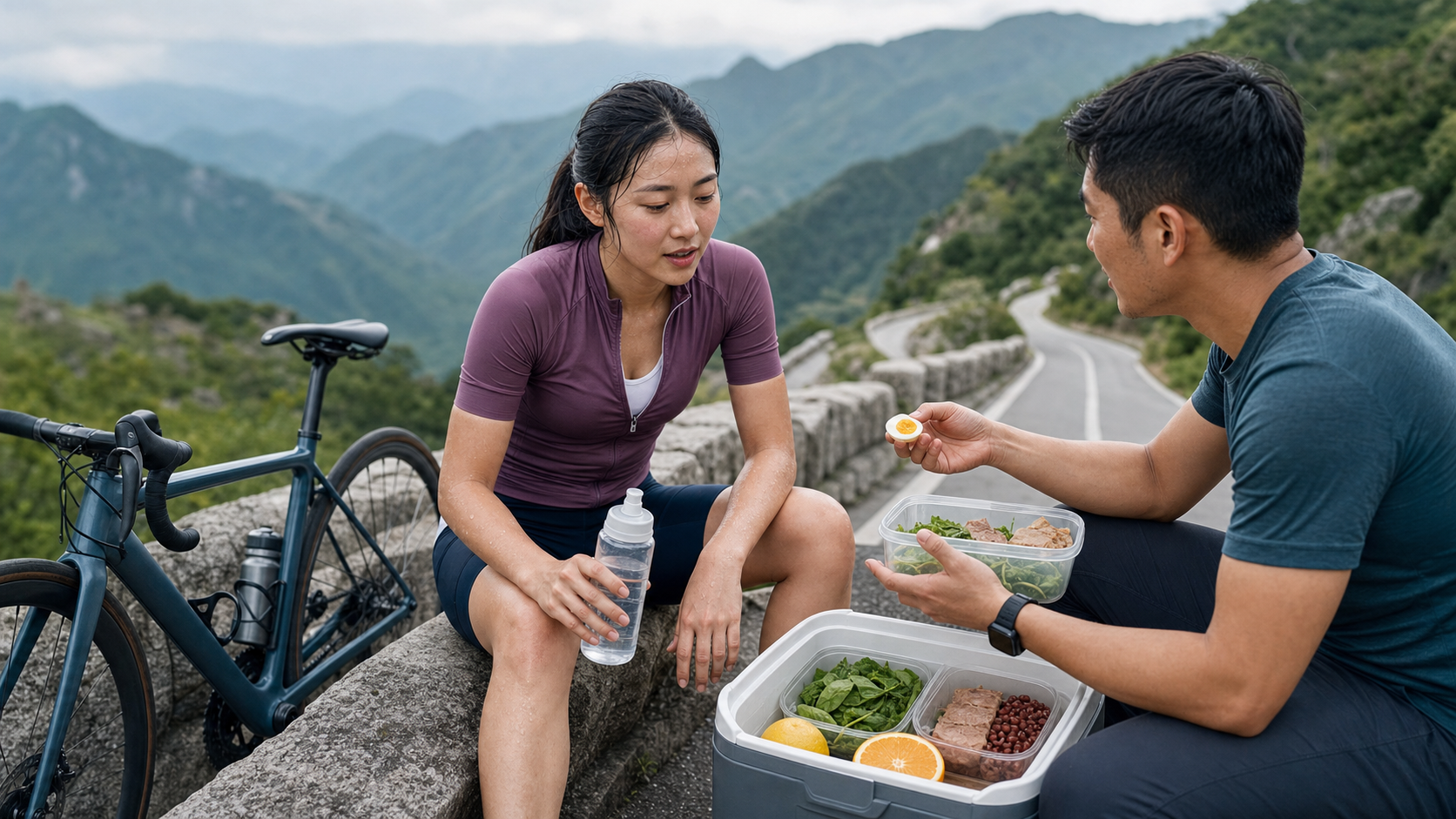
Opening: The Athlete Who Trained Hard but Got Slower
I’ve been coaching athletes and general fitness enthusiasts for about 15 years now. I’ve seen all kinds of plateaus, but there’s one scenario that repeats itself every single year, and it’s the one that hurts the most.
A few years ago, I had a female athlete—let’s call her Little Q. She was the kind of person you’d want every athlete to be: never skipped a workout, slept on a regular schedule, and hit the Yangmingshan climbs every weekend. But for two or three consecutive months, her numbers kept sliding—on the same Fengguizui climb, her average speed that used to hold steady became a struggle; her resting heart rate was nearly 10 bpm higher than usual; and on climbs, at the same wattage, her heart rate was spiking noticeably higher. She came to me and asked, “Coach, is this just my genetic limit? Or should I add more training?”
My first thought wasn’t to add training. It was: Don’t add anything. What your body needs right now isn’t more stimulus—it’s fixing the nutritional foundation for fighting fatigue. She went for a health check-up afterward. Her hemoglobin was at the low end of normal, and her ferritin was low. After supplementing iron, adjusting her diet, and getting her hydration and B-vitamins in order, her climbing legs came back in less than two months—and she even set a personal best.
I’ve told this story many times because it highlights a brutal truth: Many people think they’ve hit a “fitness plateau” when it’s actually a nutritional plateau in disguise. This is especially true for endurance sports like cycling, running, and triathlon, where the nutritional toll on your body is subtle. You don’t feel it immediately like an injury; instead, it’s like a frog in boiling water—slowly, gradually, you just “can’t ride anymore.”
In this article, I want to walk you through the three pillars of anti-fatigue nutrition from a coach’s practical perspective: the overall nutritional strategy for fighting fatigue, iron and B-vitamins—the two severely underestimated keys—and hydration, the most overlooked yet most immediately effective piece. By the end, I hope you’ll understand your body a little better and avoid some unnecessary detours.
A note up front: This article is educational content. The health, nutrition, and supplement discussions herein cannot replace a diagnosis from a physician or dietitian tailored to your individual situation. If you have anemia, chronic fatigue, or any medical history, please see a doctor and get blood work done first—don’t self-supplement blindly.
Foundational Concept: Fatigue Isn’t One Thing—It’s Several Things Stacked Together
When coaching athletes, one of the most common myths I correct is that “being tired” has a single cause. In sports science, fatigue can be broken down into at least several layers, and nutrition plays a role in each one:
- Energy substrate depletion: When glycogen runs out and your body can’t find quick fuel, you feel like “your legs are empty and you can’t push power.”
- Reduced oxygen-carrying capacity: This is iron’s domain. Without enough hemoglobin, your muscles can’t get enough oxygen, so your heart rate has to spike higher at the same intensity to compensate.
- Impaired metabolic efficiency: B-vitamins are enzyme cofactors that convert carbohydrates, fats, and proteins into energy. Without them, no matter how much fuel you have, it won’t burn smoothly.
- Fluid and electrolyte imbalance: Dehydration thickens the blood, increases cardiac load, and impairs thermoregulation—directly dragging down endurance performance.
- Central fatigue: Your brain feels tired and calls it quits even when your muscles still have reserve. Dehydration, low blood sugar, and deficiencies in certain nutrients all worsen this.
See—just the word “tired” hides all these different angles you can work on. And these mechanisms often compound each other: someone with low ferritin, a habit of not drinking enough water, and a preference for sugary drinks over proper meals has triple-layered fatigue. No wonder no amount of training seems to help.
Chronic Fatigue vs. Acute Fatigue: Two Completely Different Approaches
Many people confuse these two, which leads to completely wrong strategies.
Acute fatigue is the tiredness you feel during or immediately after a single session, mainly related to glycogen, fluids, electrolytes, and current blood sugar. This kind of fatigue you can handle with pre-race fueling, mid-workout hydration and carbs, and immediate post-exercise recovery.
Chronic fatigue is that “drained to the core” tiredness accumulated over weeks or even months. For this kind, whether iron, B-vitamins, and overall calories and protein are sufficient long-term is the key. Little Q’s case is a classic example of chronic fatigue—she wasn’t tired on any particular day; her entire ceiling was just sinking.
I often tell my athletes: Acute fatigue is spending money; chronic fatigue is going into debt. Spending you can pay back the same day, but debt compounds with interest—the longer you leave it, the harder it is to repay.
Pillar One: Iron—The Nutrient Where Endurance Athletes Spring the Most Leaks
If I had to pick the single most “underestimated yet highest-impact” nutrient, iron would be number one. Especially for endurance athletes, iron is essentially the oxygen pipeline to your engine.
Why Are Athletes Especially Prone to Iron Deficiency?
Several factors stack up to make endurance athletes a high-risk group for iron deficiency:
- Footstrike hemolysis: The repeated impact of your feet striking the ground during running destroys some red blood cells. This affects runners the most, but the vibration from long hours on the bike also has some impact.
- Sweat losses: Sweat itself carries away small amounts of iron. Over a long-term accumulation, heavy sweating from endurance sports is nothing to ignore.
- Exercise-induced inflammation: After high-intensity exercise, the body secretes a hormone called hepcidin, which temporarily suppresses iron absorption in the gut. For people with high training volumes, this “iron-locking” state can be chronically elevated.
- Microscopic gastrointestinal bleeding: Prolonged intense exercise can cause tiny amounts of GI bleeding, which also adds up as a source of loss over time.
- Menstrual losses (in women): This is the main reason female athletes have far higher rates of iron deficiency than males.
So you’ll notice: the more seriously someone trains, the more iron they actually burn through. That’s why Little Q, precisely because she was so dedicated, was more likely to fall into this trap.
What Should Your Ferritin Level Be?
This is the point I most want to clarify for everyone. Many people bring me their health check reports and ask, “Coach, my ferritin is in the normal range, so why am I still tired?”
The key is this: The lab’s “normal range” is for the general population, not for endurance athletes. For the average person, a ferritin of 15 ng/mL might pass, but for an endurance athlete, that number is often not enough to perform at your best.
According to recent sports medicine literature, recommended ferritin levels for athletes are typically higher than general standards: research supports female runners maintaining ferritin at least around 35 to 40 ng/mL, male runners around 40 to 50 ng/mL, with levels above 50 ng/mL generally corresponding to a more ideal performance state; some systematic reviews also recommend athletes maintain ferritin in the range of roughly 40 to 90 ng/mL. When ferritin drops below a certain threshold (commonly cited as below about 30 ng/mL), iron supplementation shows the most pronounced improvement in performance.
These numbers give you an idea: If you’re a serious endurance athlete, having ferritin at the “low end of normal” could very well be the culprit behind your chronic fatigue. At that point, don’t just look at “whether you’re anemic”—look at whether your iron stores are sufficient to support your training load.
The Three Stages of Iron Deficiency (It’s Not “Deficient” Only When You’re Deficient)
I like explaining this with a staging table because it shows that “you might not be anemic yet, but you’re already affected”:
| Stage | Status | Hemoglobin | Ferritin | How You Feel |
|---|---|---|---|---|
| Stage 1 | Reduced iron stores | Normal | Starting to decline | Barely noticeable, or occasionally feeling a bit more tired |
| Stage 2 | Iron deficiency without anemia | Normal or low-normal | Clearly low | Slower recovery, higher heart rate at same intensity, climbs feel especially hard |
| Stage 3 | Iron deficiency anemia | Clearly low | Very low | Obvious fatigue, pale complexion, shortness of breath, dizziness, significant performance decline |
The key is Stage 2. Many athletes are stuck here—their checkup says “no anemia,” but their performance has long been dragged down. That’s why I recommend that anyone training seriously and often feeling tired should not just test hemoglobin when getting blood drawn, but ferritin as well.
How to Get Iron from Food: A Practical Version for Taiwan
Dietary iron comes in two forms with very different absorption rates:
- Heme iron: From animal sources, with high absorption. Red meat, pork liver, duck blood, pig blood cake, oysters, and clams are all good sources. The duck blood from your local braised snack stand or in a spicy hot pot—a Taiwanese favorite—is actually a pretty good iron-boosting food.
- Non-heme iron: From plants, with lower absorption. Red amaranth, spinach, red beans, black beans, black sesame, and seaweed are examples.
A few practical tips for the Taiwanese context:
- Pair with vitamin C: Non-heme iron absorption improves when paired with vitamin C. Eating spinach or red beans with guava, citrus, or fresh juice works well. Taiwan has cheap and convenient fruit, so this is easy to leverage.
- Avoid things that inhibit absorption: Tannins in tea and coffee inhibit iron absorption. If you love milk tea or a coffee right after meals, pay attention—try to separate your tea/coffee from your main iron-containing meals by at least an hour.
- Calcium competes with iron for absorption: High-calcium dairy products and calcium supplements should be avoided at the same time as iron-rich meals.
Should You Take Iron Supplements? I’m Most Conservative on This One
Let me be blunt first: For iron supplements, you must get blood work done first and have a physician decide—don’t buy them and take them on your own. Iron is one of the few minerals where “over-supplementing causes problems.” Your body has no active mechanism to excrete excess iron; too much accumulates in organs like the liver and causes damage. And people with certain hereditary iron-overload conditions absolutely cannot touch it.
In sports medicine literature, for athletes with confirmed iron deficiency, a common oral supplementation protocol is about 40 to 60 mg of elemental iron per day, with courses lasting weeks to months, and regular follow-up ferritin tests. But this is a practice “after physician evaluation, for those who are actually deficient”—not a general recommendation for everyone who feels tired.
My practical principle is simple:
- Feeling chronically fatigued or seeing performance decline → get blood work first (hemoglobin + ferritin; women may add related iron markers).
- Confirmed low → let the physician decide whether to supplement, how much, and for how long.
- While supplementing, adjust your diet too—don’t rely on pills alone.
- Re-test after a period of time; don’t supplement indefinitely.
Taiwan’s National Health Insurance makes seeing a doctor very convenient. A family medicine or internal medicine clinic can arrange this kind of blood work at a low cost. Rather than buying a bunch of supplements online and guessing, spend one consultation fee to get your numbers straight—that’s my sincere advice to every athlete I coach.
Pillar Two: B-Vitamins—The Spark That Burns Fuel Smoothly
If iron is the oxygen pipeline, B-vitamins are the ignition system. When you eat carbohydrates, fats, and proteins, you need the whole group of B-vitamins as enzyme cofactors to convert them step by step into usable energy (ATP) for the body. Without them, no matter how much fuel you have, it won’t burn cleanly—and you just feel listless.
How Each B-Vitamin Relates to Exercise
| B-Vitamin | Main Role in Exercise | Common Food Sources |
|---|---|---|
| B1 (Thiamine) | Carbohydrate metabolism, nerve function | Whole grains, pork, legumes |
| B2 (Riboflavin) | Energy metabolism, antioxidant-related | Dairy, eggs, leafy greens |
| B3 (Niacin) | Energy metabolism, cell repair | Meat, fish, peanuts |
| B6 (Pyridoxine) | Protein metabolism, red blood cell production | Chicken, fish, bananas, sweet potatoes |
| B9 (Folate) | Red blood cell production, cell division | Dark leafy greens, legumes, liver |
| B12 (Cobalamin) | Red blood cell production, nerve function | Animal foods (meat, eggs, dairy) |
Please pay special attention to B9 (folate) and B12—these two, like iron, are involved in red blood cell production. In other words, even if your iron is sufficient, a folate or B12 deficiency can still cause anemia and fatigue. The three are interconnected, which is why I don’t like talking about single nutrients in isolation—the body is one complete system.
Who Is at High Risk for B-Vitamin Deficiency?
In Taiwan, I specifically remind these groups to watch their B-vitamins:
- Vegans: B12 exists almost exclusively in animal foods. Long-term strict veganism without supplementation carries a high risk of B12 deficiency. For this group, I strongly recommend seriously evaluating B12 supplementation.
- People who eat out a lot or favor refined carbohydrates: White rice, white noodles, bread, and sugary drinks provide plenty of calories but low B-vitamins. Eating out is so convenient in Taiwan that many people consume “empty calories” all day, naturally under-consuming B-vitamins.
- High training volume individuals: With high energy metabolism, the body’s turnover demand for B-vitamins increases.
- Regular alcohol drinkers: Alcohol interferes with the absorption and utilization of several B-vitamins.
Should You Take B-Vitamin Supplements? My Stance
Most B-vitamins are water-soluble, so excess amounts are excreted by the body (that’s why your urine turns bright yellow). They’re much safer than iron. But “relatively safe” doesn’t mean “more is more effective.”
My view:
- People with a balanced diet usually don’t need extra B-vitamins. If you’re getting enough whole grains, eggs, lean meat, dark leafy greens, and legumes, your B-vitamins are covered.
- People with clearly skewed diets and high training volume taking a B-complex as insurance is reasonable—but that should be “patching holes in the net,” not replacing eating well.
- B12 for vegans is one of the few cases where I actively recommend evaluating supplementation.
- Don’t treat B-vitamins as a stimulant and crank up the dose. Yellow urine doesn’t mean you “got a workout”—it just means you excreted it.
I’ve seen too many people with cabinets full of supplements while their actual meals are an afterthought. I often joke: “If your foundation is crooked, no matter how expensive the decor, it won’t hold up.” Eating three proper meals a day will always be the highest-ROI anti-fatigue strategy.
Pillar Three: Hydration—The Easiest to Fix, Yet the Most Overlooked
By now you might think iron and B-vitamins are complicated, so here’s the good news about hydration: it’s the easiest to handle, and the effects are immediate. The bad news is that precisely because it’s so simple, the most people get it wrong.
A Brutal Number: 2% Dehydration Starts Dragging You Down
This is a well-supported research point: when the body loses about 2% of its body weight in water through sweating and other means, endurance performance noticeably declines. Research indicates that around 2% dehydration can reduce aerobic performance by up to roughly 10%, with particularly pronounced effects on endurance sports like long-distance running and cycling; and even mild dehydration of just 1% to 2% already begins to impair endurance capacity. In hot environments, this negative effect is amplified because the body simultaneously has to cope with the stress of thermoregulation.
Let me do the math for you: a 70 kg person only needs to lose 1.4 kg of water (about 2%) before performance starts to take a clear hit. And during a long ride in Taiwan’s humid summer heat, losing 1.4 kg of sweat isn’t hard at all—a two-to-three-hour climbing session, many people sweat far more than that.
This is why I always say: You don’t get weaker in the second half of a ride; you get dehydrated in the second half and then get weaker. Many people think it’s “running out of gas,” but it’s really just not drinking enough.
How Dehydration Drags Down Performance Step by Step
Understanding the mechanism is how you’ll know why water matters so much:
- Blood thickens and blood volume drops → each heartbeat pumps less blood → heart rate is forced up to compensate (so you feel your heart rate inexplicably spiking at the same intensity).
- Blood flow to the skin for heat dissipation is restricted → body temperature becomes harder to lower → core temperature rises.
- Rising core temperature → the brain hits the brakes → central fatigue worsens, and you feel “especially breathless, especially wanting to stop.”
In Taiwan’s summer, this cascade happens fast and hard. That’s why, for outdoor exercise in summer, a hydration strategy is almost as important as the training itself.
Electrolytes: Plain Water Sometimes Isn’t Enough
Sweat doesn’t just lose water—it also loses electrolytes like sodium and potassium (sodium especially). During long, heavy-sweat sessions, if you only chug plain water, you can actually dilute your body’s sodium concentration, causing what’s called “hyponatremia,” which in severe cases leads to dizziness, nausea, cramping, and in extreme situations can be dangerous.
Practical principles:
- Under one hour, normal sweat rate: Plain water is usually sufficient.
- Over one hour, or heavy sweating: Supplement with a sodium-containing sports drink or electrolytes.
- Very long sessions (several hours or more): Electrolyte replenishment needs to keep pace—don’t just drink water.
In Taiwan’s summer environment, this is especially important. When I take athletes on long rides, I often remind them: better to take small, frequent sips of electrolytes continuously than to wait until you’re cramping or dizzy. Cramping has complex causes and isn’t always sodium deficiency, but in heavy-sweat situations, appropriate sodium intake does reduce the risk and helps you hold steady in the second half. Also, a note: sugary sports drinks should be used situationally—during long, high-intensity exercise, the sugar can simultaneously provide energy; but if it’s just a short, easy ride, you don’t need those sugars—plain water or sugar-free electrolytes will do.
A Practical Hydration Schedule (Using Cycling/Running as Examples)
The table below is the general starting point I give my athletes. Actual amounts should be adjusted based on your body size, sweat rate, and weather. The numbers in the table are common reference ranges, not precise prescriptions.
| Timing | Recommended Approach | Notes |
|---|---|---|
| 2 hours before exercise | Slowly drink about 300–500 mL of water | Gives the body time to absorb and eliminate excess |
| 15 minutes before exercise | Another 150–250 mL | Don’t chug it all at once and cause stomach bloating |
| During exercise (every 15–20 minutes) | About 150–250 mL, small frequent sips | Switch to electrolyte drinks if over one hour |
| After exercise | Replenish based on losses, can pair with sodium-containing foods | Weigh yourself before and after to estimate losses |
One super practical home trick: Weigh yourself before and after exercise. The weight lost is almost entirely water (1 kg ≈ 1000 mL). If you find yourself dropping one or two kilos after every session, you’re under-drinking during exercise—be more aggressive next time.
Another no-blood-test self-check: Look at your urine color. Pale yellow means adequate hydration; dark yellow is a signal to drink more water. I’ve taught this trick to countless athletes—simple and effective.
Common Mistakes and Fixes: The Landmines I Catch Most Often in the Field
In all my years coaching, these mistakes play out almost daily. See how many you’ve hit.
Mistake One: Adding Training When Tired, Without Checking the Nutritional Foundation
This is the most damaging one. Little Q nearly trained herself into a deeper hole this way. Fix: When performance declines for weeks and recovery slows, the first step is to review sleep, diet, and get blood work if necessary—not blindly add volume. Adding training when you’re tired is often just digging one more shovel into the hole.
Mistake Two: Only Looking at “Whether You’re Anemic,” Ignoring Iron Stores
Many people see normal hemoglobin on their checkup and relax, without testing ferritin. Fix: If you train seriously and often feel fatigued, add ferritin to your blood work. Look at whether your iron “stores” are sufficient to support training, not just whether you’ve reached anemia.
Mistake Three: Treating Supplements as Meals, and Meals as an Afterthought
Cabinets full of bottles and jars, but three meals are milk tea and convenience store bread. Fix: Any supplement is a “supplement.” First get your three meals right—protein, whole grains, vegetables, fruit—then supplements have meaning.
Mistake Four: Relying on Thirst in Summer
“Drink only when thirsty” is a late signal in endurance sports—by the time you feel thirsty, you’re often already mildly dehydrated. Fix: Drink on a schedule during exercise, don’t wait for thirst. Use weight difference and urine color as objective indicators.
Mistake Five: Buying Iron Supplements Online and Loading Up
Seeing “iron for anti-fatigue” and buying it without any blood work. Fix: Excess iron is harmful and your body can’t excrete it. You must get blood work first and have a physician evaluate. Medical care is convenient in Taiwan—don’t skip this step.
Mistake Six: Only Drinking Plain Water During Very Long Sessions
A three-to-four-hour epic with nothing but water and no electrolytes, ending in cramps and dizziness. Fix: For sessions over an hour or with heavy sweating, be sure to replenish sodium-containing electrolytes.
Actionable Advice for Readers at Different Levels
Everyone starts from a different point, so I’ve divided my advice into three tiers. Find where you fit.
For Beginners and Weekend Riders/Runners
- First, nail “eating three proper meals”: every meal has protein (meat, eggs, legumes, fish), whole grains, vegetables, and moderate fruit.
- Weigh yourself before and after exercise to build a sense of hydration; check urine color after sessions.
- At 3–5 hours of exercise per week, a balanced diet is usually enough—no need to rush out and buy a bunch of supplements.
- If you often feel inexplicably tired, don’t guess—get blood work at a family medicine clinic.
For Regular Trainers and Those with Goal Races
- Treat hydration as part of training. Adjust based on weather and sweat rate; have electrolytes ready for long sessions.
- Get blood work at least once a year, including hemoglobin and ferritin; female athletes especially need to watch iron.
- Review whether your diet leans too heavily on refined carbs; increase dark leafy greens, legumes, and lean meat for B-vitamins.
- During high-volume training blocks, pay extra attention to whether calories and protein are sufficient—don’t create a chronic deficit between dieting and heavy training.
For High-Volume, Serious Race-Prep Veterans
- Monitor ferritin and other markers regularly (e.g., pre-season and mid-season). Treat the numbers as part of training decisions, not something to address only when you crash.
- For iron deficiency, work with a physician/sports dietitian, set a treatment course, and re-test regularly—don’t self-supplement indefinitely.
- Heavy sweaters can consider estimating their sweat rate and sweat sodium concentration to build a more personalized fluid plan.
- Female athletes and vegetarians should specifically manage iron, B12, and folate as priorities.
A Complete Case Study: Putting the Three Pillars Together
Let’s return to Little Q from the opening. I want to lay out her full treatment process so you can see how the three pillars work in concert.
Identifying the problem: Performance declining for two to three months, rising resting heart rate, struggling on climbs. The first step wasn’t adding training—it was blood work.
Finding the root cause: Hemoglobin at the low end of normal, ferritin low. At the same time, I reviewed her diet and found she ate very little red meat to control her weight, and habitually drank tea right after meals—iron absorption was doubly compromised. Her summer training hydration was also on the conservative side.
A multi-pronged approach:
- Iron: Short-term supplementation under physician evaluation, while increasing duck blood and red meat in her diet, pairing with vitamin C fruits, and separating tea time from iron-rich meals.
- B-vitamins: Swapped part of her refined white rice for whole grains, added eggs and dark leafy greens.
- Hydration: Built the habit of weighing before and after exercise; prepared electrolytes for long sessions.
Result: About two months later, follow-up blood work showed her iron stores had recovered, resting heart rate returned to normal, her climbing legs came back, and she set a new personal best. One thing she said afterward stuck with me: “Turns out what I was missing all along wasn’t willpower—it was taking care of my body.”
That sentence, I want to give to everyone who’s currently white-knuckling through it.
A Second Case Study: The Gym Regular Drained by “Hidden Calorie Deficit”
Let me share another case that’s completely different from Little Q but shares the same underlying logic. This athlete, let’s call him A-Xian, was in his early forties. Busy at work, he relieved stress with long weekend rides while also trying to lose fat, so he deliberately ate very little at meals. His complaint when he came to me: “Coach, lately I run out of steam in the second half of rides, and I seem to catch colds easily.”
As soon as I asked about his diet, I had a pretty good idea. To cut fat, he often had just a black coffee for breakfast, a convenience store onigiri for lunch, and only ate a normal dinner. But on weekends he’d ride four to five hours, over a hundred kilometers. This is a classic case of “long-term calorie and carbohydrate intake not keeping up with training expenditure.” In sports science, there’s a concept called “relative energy deficiency in sport,” which describes what happens when the energy you consume long-term can’t support your training and daily needs—your body starts “power-saving” in various ways: immunity drops, hormones are affected, recovery worsens, and fatigue accumulates.
A-Xian’s problem wasn’t a single nutrient; it was overall calories and carbohydrates being chronically insufficient, which dragged down his intake of B-vitamins, iron, and other nutrients along with it (eat less, and you get less of everything). The adjustments I gave him weren’t about telling him to binge-eat, but:
- Plan training-day and non-training-day diets separately: On long ride days, carbohydrate intake before, during, and after must be sufficient—don’t ride hard on an empty stomach.
- Breakfast is non-negotiable: At least add a serving of protein and a serving of whole grains; don’t run on black coffee alone.
- Fat loss is fine, but use “slight reduction on non-training days” rather than being hungry every day, and especially don’t starve on high-volume days.
After about a month of adjustments, he had power in the second half again, and his frequency of colds dropped. This case is to remind everyone: At the very foundation of anti-fatigue is “are you eating enough overall.” Iron, B-vitamins, and hydration all work on the foundation of “sufficient calories and protein.” If you’re not even eating enough food, supplementing individual nutrients is a drop in the bucket.
This is also why, in Taiwan, I’m especially concerned about people who exercise hard while using extreme dieting to lose weight. Eating out is convenient and sugary drinks are cheap, making it easy to fall into a state of “looks like you’ve eaten, but nutritional density is very low”—a fake fullness. Rather than starving yourself, learn to choose smartly: even at a convenience store, you can pick tea eggs, unsweetened soy milk, sweet potatoes, bananas, and salad to raise your nutritional density.
FAQ
Q: I’m vegan. How do I manage iron and B12?
A: Iron can come from plant sources like red amaranth, red beans, black beans, and black sesame, paired with vitamin C to enhance absorption; B12 exists almost exclusively in animal foods, so long-term vegans should seriously evaluate B12 supplementation and get regular check-ups. For this situation, I strongly recommend consulting a dietitian for individualized planning.
Q: Should I drink sports drinks for every workout?
A: No. For sessions under an hour with normal sweat rate, plain water is usually enough; electrolyte drinks are only needed for sessions over an hour or with heavy sweating. Drinking sports drinks for short daily sessions just adds unnecessary sugar.
Q: My ferritin is in the normal range, but I’m still tired. What should I do?
A: First, confirm whether “normal range” is just the low end. Endurance athletes’ ideal iron stores are often higher than general standards. Also rule out insufficient sleep, chronic calorie deficit, and other nutrient deficiencies. I recommend a full medical evaluation rather than fixating on a single number.
Q: I have a chronic condition (like diabetes, high blood pressure, or heart disease). Do these dietary recommendations apply to me?
A: The broad principles (balanced diet, adequate hydration) apply, but supplements, sodium intake, and exercise intensity all need to be individualized. Be sure to discuss with your primary care physician and dietitian first. Anyone with a chronic condition should be more conservative and cautious with any dietary or supplement changes—don’t decide on your own.
Q: Is it enough to just sleep more and eat more nutrients when I feel tired?
A: In most cases it will improve, but if fatigue persists for weeks despite rest and dietary adjustments, be sure to see a doctor to rule out other underlying issues. Persistent fatigue sometimes points to a health condition that needs attention—you shouldn’t keep toughing it out on your own.
Conclusion: Treat Anti-Fatigue as a Long-Term Investment, Not First Aid
In all my years coaching, I’ve become increasingly convinced of one thing: What truly separates people isn’t whose training plan is more brutal—it’s who takes better care of the foundation of their body.
Iron, B-vitamins, and hydration—they don’t sound sexy. They’re not as exciting as a new set of wheels or a carbon frame. But they’re the foundation that determines whether you can keep progressing and hold up at the critical moment. If the foundation cracks, no amount of expensive training or equipment can hold it together.
My final three sentences for you are simple:
- Eating three proper meals a day will always be the highest-ROI anti-fatigue strategy.
- If you’ve been tired for weeks and performance keeps dropping, get blood work first—don’t add training first.
- Don’t rely on thirst for hydration—use weight difference and urine color as objective measures.
Get these three things right, and you’ll find that many “genetic limit” plateaus are actually just details that haven’t been taken care of yet. Wishing you smoother rides and stronger training.
This article is educational content and cannot replace individual diagnosis and treatment advice from a physician, physical therapist, or dietitian. If you have anemia, chronic fatigue, or any medical history, or are considering any supplement, please consult a qualified medical professional first.
References
- Iron Status and Physical Performance in Athletes (PMC, NIH):https://pmc.ncbi.nlm.nih.gov/articles/PMC10608302/
- Approaches to Prevent Iron Deficiency in Athletes (German Journal of Sports Medicine):https://www.germanjournalsportsmedicine.com/archive/archive-2024/issue-5/approaches-to-prevent-iron-deficiency-in-athletes/
- Optimal Ferritin Levels for Runners: What Research Says (RunnersConnect):https://runnersconnect.net/ferritin-levels/
- Does Dehydration Really Impair Endurance Performance? (Gatorade Sports Science Institute):https://www.gssiweb.org/sports-science-exchange/article/does-dehydration-really-impair-endurance-performance-recent-methodological-advances-helping-to-clarify-an-old-question
- Hypohydration impairs endurance performance: a blinded study (PMC, NIH):https://www.ncbi.nlm.nih.gov/pmc/articles/PMC5492205/
Related Reading
- Iron Nutrition: The Most Overlooked Key Micronutrient for Endurance Athletes
- Iron and Endurance Sports: The Invisible Killer of Iron Deficiency—Why You Get More Tired the More You Train
- Athlete Smoothies and Liquid Nutrition: Drink Your Fuel and Get Back on the Road Faster
- Nutrition Strategies for Vegan Athletes: Practical Solutions for B12, Iron, Calcium, Omega-3, and Protein Quality
一日北高/長距離團騎 常見問題補充篇 / 組團或跟團的眉角 / 壯車友容易被瘦車友慢性拉爆 / 原來屁股痛可能是這個原因...? / 風場配速法 / 公路車 / CT Yeh
2 年前
西進武嶺 免費訓練分析服務 Intervals | 練不夠還是練過頭?你哪一種類型選手?AI模型告訴你! | 備戰神器 | 公路車 訓練 | CT Yeh
4 年前
CT暗黑廚房) 車友必備 宇宙無敵鮮蚵湯 幫助訓練恢復 天然食補 好市多 超肥鮮蚵 破PR
7 年前
Never Stop 西進武嶺 前後雙機 完整全程錄影 訓練台 實境
8 年前
一日北高常見問題大集合 | 攻略 | 路線 | 訓練 | 補給 | 自行車 單車 | 一日雙城 | 雙塔 | TWB北高360 | 屁股痛
6 年前
FTL 與 SYB 車隊專訪 西進武嶺 實用攻略分享! 2小時 如何練?!你不知道的眉角!新手準備武嶺必看 EP1 | 實力派女車友 | 精華版 | 公路車 | CTYeh
4 年前
4K 東眼山 x 水蜜桃冰沙 百人單車約騎! 操完再吃冰 多爽快
7 年前
CT 喇低賽) 武嶺牽車 才是王道 西進牽車四小時內秘訣 攝手位置 如何判斷 防抽筋小秘訣
7 年前