Phytochemicals and Antioxidant Diets for Athletes: How to Build a Rainbow Plate Without Wasting Your Training?
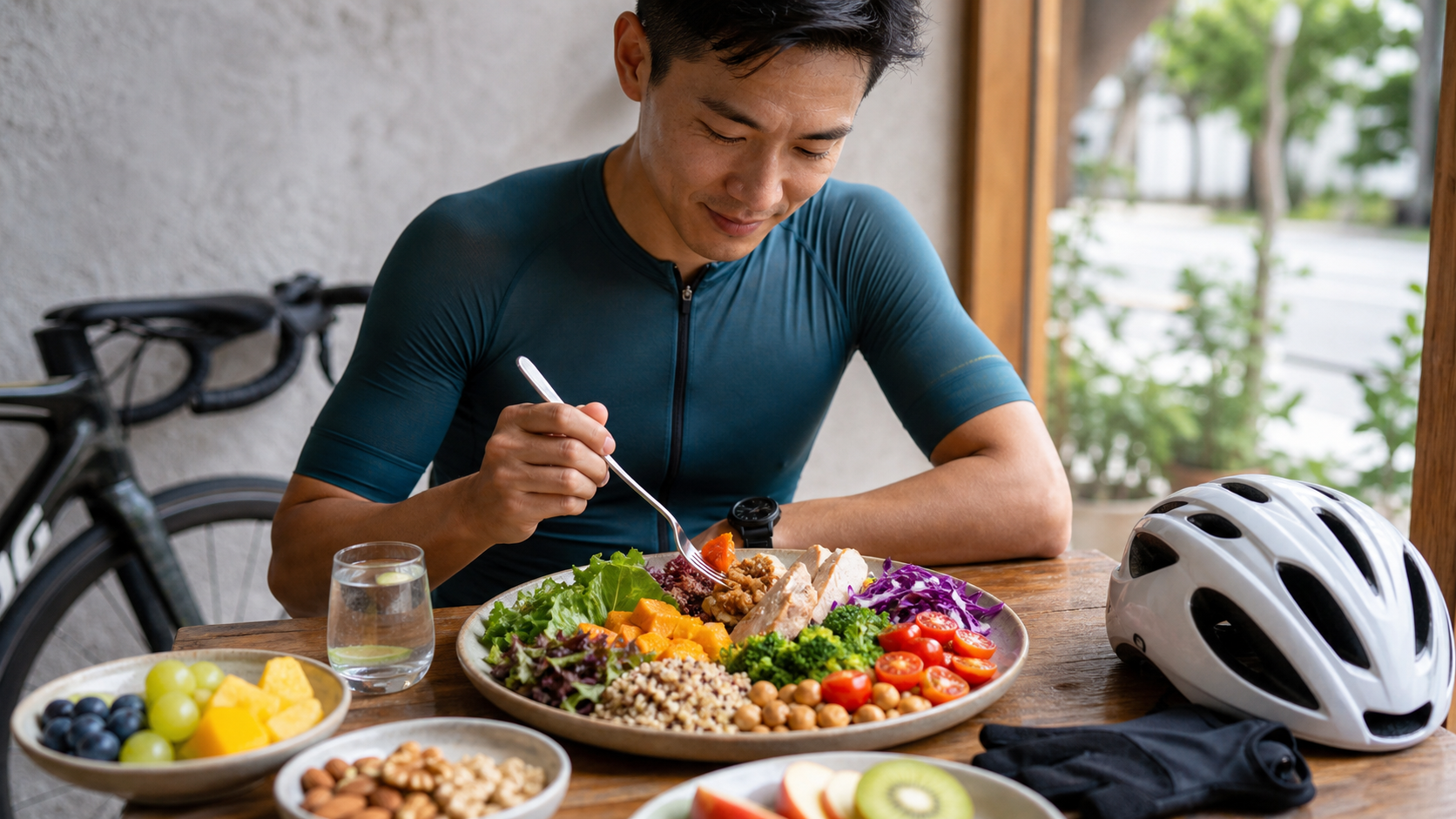
Starting with a Student Who “Supplemented Himself Slower”
A few years ago, I coached an amateur road cyclist, let’s call him Ah-Hong. He was very dedicated, training 2 to 3 hours daily, with weekly mileage easily exceeding 300 km. One day, he asked me dejectedly: “Coach, my supplement intake looks like a pharmacy counter—Vitamin C, E, grape seed extract, astaxanthin, you name it. How come my climbing power hasn’t improved in the past six months, and my recovery hasn’t gotten any faster?”
I looked at his supplement list and had a pretty good idea. He was consistently taking over 1000 mg of Vitamin C plus a high dose of Vitamin E daily, and stacking various antioxidant extracts on top. The problem often lies right there—Many people think “antioxidant = body protection = definitely good,” but for athletes seeking adaptation, completely suppressing the body’s oxidative signals might actually erase the training stimulus along with them.
More ironically, when I asked Ah-Hong how much fruit and vegetables he usually ate, he paused and said, “Actually, not much, I rely on supplements.” This is a classic case of putting the cart before the horse: neglecting what truly needs to be done (eating a variety of fruits and vegetables) while spending a lot of money on something potentially counterproductive (high-dose antioxidant pills). It wasn’t that he wasn’t trying; he was just trying in the wrong direction. I’ve seen too many cases like this over the years, which is why I wanted to write a thorough piece to clarify the concept.
In this article, I want to explain the concepts I’ve repeatedly emphasized to my students over the years: what phytonutrients are, why a “rainbow diet” is smarter than single supplements, how to “balance” antioxidants rather than thinking “more is better,” and how Taiwanese people who often eat out can put this into practice. The content is educational, and I’ll try to provide ranges rather than falsely precise numbers, because everyone’s physique, training phase, and dietary foundation are different.
Let me state the conclusion first, in case you don’t have the patience to read through: For the vast majority of athletes training seriously, the best antioxidant strategy is to “eat a full, colorful rainbow of fruits and vegetables” and put away the high-dose antioxidant supplements. This advice sounds plain and even counterintuitive (how can expensive pills lose to cheap vegetables?), but this is precisely the important lesson sports science has taught us in recent years. I’ll tell you why next.
Foundational Concept: Oxidative Stress is Not an Enemy, It’s a Signal
Exercise Naturally Produces Free Radicals
Let’s start with a key point that’s easily misunderstood. Exercise—especially high-intensity or prolonged endurance training—causes the body to produce large amounts of reactive oxygen and nitrogen species (ROS/RNS). In the past, people heard “free radicals” and immediately thought they were bad, but the understanding in exercise physiology has flipped in recent years.
These reactive species are actually important signaling molecules. The oxidative signals generated during exercise trigger a cascade of intracellular adaptation pathways, such as PGC-1α, which is related to mitochondrial biogenesis, and signaling proteins like MAPK. Simply put: oxidative signals are part of the body’s process of “receiving training instructions and preparing to get stronger.” If you suppress the signal, the body thinks nothing happened.
This is why recent studies have found that long-term supplementation with high doses of Vitamins C and E may blunt the mitochondrial adaptations brought about by endurance training (for example, the increase in mitochondrial proteins related to aerobic capacity is inhibited). Some scholars have therefore explicitly suggested: during heavy training periods aimed at skeletal muscle adaptation, the long-term combined use of 1000 mg of Vitamin C plus Vitamin E is not recommended. The evidence is more mixed for strength training, with some meta-analyses suggesting the impact is minor, but the concerns on the endurance training side are relatively clear (see references at the end).
I want to particularly emphasize the keyword “dosage.” What we’re talking about here is high-dose, long-term, single-compound antioxidant supplements (like taking over a thousand milligrams of Vitamin C plus a high dose of Vitamin E daily). It doesn’t mean eating a kiwi or drinking a glass of tomato juice will ruin your training. The dosage of phytonutrients in food differs from that in pills by several orders of magnitude; the two cannot be conflated. This is also what I fear students misunderstand the most—some people hear “antioxidants can interfere with adaptation” and become so scared they stop eating fruits and vegetables altogether. That’s completely backwards. Keep eating fruits and vegetables, and eat plenty of them; what should be put away is that bottle of high-dose antioxidant pills.
Do You Need to Measure Oxidative Stress? The Boundaries of “Individualization”
Occasionally, advanced students ask me: “Coach, should I go get my oxidative stress markers tested?” My answer is usually: for the general athletic population, there’s no need to undergo expensive lab tests specifically for this. Physiological markers of oxidative stress fluctuate greatly and are complex to interpret; clinically, there isn’t a simple answer like “hitting this number means your antioxidant levels are just right.” Rather than spending money on these tests, it’s better to invest resources in the fundamentals you can truly control, like “structuring your diet well and arranging your training and recovery properly.”
The scenarios that truly require individualized medical assessment are different: if you have a chronic disease, are on medication, or suspect a specific nutrient deficiency (like iron issues, which are common in endurance athletes). These are the situations where you should see a doctor or dietitian for blood tests and targeted treatment. “Individualization” doesn’t mean everyone needs a battery of tests; it means people with specific risks need special care, while the rest should focus on getting the general principles right.
So What Are Phytonutrients? How Do They Differ from Vitamins?
Phytonutrients (phytochemicals) are natural compounds synthesized by plants for self-protection, numbering in the thousands. They are not essential nutrients in the traditional sense (you won’t get sick immediately without them), but long-term intake is associated with many health benefits. Common major categories include:
- Polyphenols: such as anthocyanins, quercetin, catechins, resveratrol
- Carotenoids: such as β-carotene, lycopene, lutein, zeaxanthin
- Sulfur-containing compounds: such as organosulfides in garlic and onions, isothiocyanates in cruciferous vegetables
- Organic sulfur and thiol sources: influencing the body’s endogenous antioxidant systems like glutathione
The key difference is this: When phytonutrients enter the body through a “food matrix,” they typically come in low doses, multiple varieties, accompanied by fiber and other nutrients. This physiological effect is completely different from swallowing a pill containing thousands of milligrams of a single compound. Phytonutrients in food act more like “gently modulating” the body’s antioxidant system, rather than “brutally flooding” it.
The World Health Organization recommends consuming at least 400 grams of fruits and vegetables daily (excluding starchy tubers like potatoes), roughly equivalent to five servings, to reduce the risk of chronic diseases like cardiovascular disease. Furthermore, research generally indicates that the benefits gained from eating “whole fruits and vegetables” are greater than taking extracted single components, due to the additive and synergistic effects among the components in food (see references at the end). This is the core logic behind the rainbow diet.
The Endogenous Antioxidant System: The Body “Trains” Itself Too
Here’s a key point many people overlook: Your body already has a complete, built-in antioxidant defense system, including enzymes like glutathione, superoxide dismutase (SOD), and catalase. This system, much like your muscles, operates on a “use it or lose it” principle—the moderate oxidative stress brought on by regular training actually stimulates it to become stronger.
This is why I constantly emphasize “balance.” When you chronically suppress oxidative signals with high-dose exogenous antioxidants (pills), it’s like telling your body, “Don’t bother training your own defense system; I’ll handle it for you.” Over time, your own built-in system may become lazy. In contrast, phytonutrients from food sources, due to their gentle dosage, act more like “assisting” rather than “replacing” this system. Some phytonutrients (like isothiocyanates from cruciferous vegetables) even work by stimulating the body’s detoxification and antioxidant genes (like the Nrf2 pathway)—they don’t act as direct “fire extinguishers” but rather “train the fire department.” This mechanistic difference is the most fundamental distinction between “food vs. pills.”
Why a “Rainbow”? The Phytonutrient Map Behind the Colors
I often tell my students: “You don’t need to memorize chemical names; just look at how many colors are on your plate today.” Different colored fruits and vegetables generally correspond to different groups of phytonutrients. The more diverse the colors, the more automatically you’re ingesting a wide variety of antioxidant and regulatory substances. This is the strategy with the lowest knowledge barrier and the easiest to implement.
Rainbow Fruits and Vegetables and Their Representative Phytochemicals
| Color | Representative Phytochemicals (General) | Easily Available Ingredients in Taiwan |
|---|---|---|
| Red | Lycopene, Anthocyanins | Tomato, Red bell pepper, Watermelon, Red dragon fruit |
| Orange/Yellow | β-Carotene, Zeaxanthin | Sweet potato, Pumpkin, Papaya, Pineapple, Mango |
| Green | Chlorophyll, Lutein, Sulfur-containing compounds | Sweet potato leaves, Baby bok choy, Broccoli, Guava, Kiwi |
| Purple/Blue | Anthocyanins, Polyphenols | Eggplant, Purple sweet potato, Blueberry, Mulberry, Grape |
| White/Brown | Organosulfur compounds, Quercetin | Onion, Garlic, White radish, Mushrooms, Yam |
The execution principle is simple: aim to eat 4 to 5 colors per day, and try to rotate through all five major categories in the table above over the course of a week. Taiwan has abundant and affordable fruits and vegetables year-round, which makes this much easier to do than in many other countries. In summer, there’s watermelon, mango, and dragon fruit; in winter, there are oranges, tomatoes, and various leafy greens. One trip to the traditional market is enough to gather the entire rainbow.
Why Diversity Is More Important Than “Superfoods”
Every so often, a certain “superfood” gets hyped up—acai berries, kale, blueberries. My attitude towards my students has always been: They are all good, but none are so good that you should eat them every day at the expense of diversity. Different phytochemicals have different mechanisms of action and target organs in the body; you can’t get everything you need from a single ingredient. Instead of spending a lot of money on imported superfoods, it’s better to eat plenty of local, affordable Taiwanese ingredients like sweet potato leaves, guava, tomatoes, and onions.
I often use an analogy: Phytochemicals are like a sports team. You need a complete lineup where everyone plays their specific role—you need defenders, midfielders, and forwards, not 11 players who are all forwards. If you only eat blueberries every day, it’s like fielding a whole team of forwards. It looks flashy, but the defense is full of holes. Diversity itself is the strongest strategy.
A Few Frequently Asked-About Phytochemical Stars (But Don’t Mythologize Them)
Students often ask me about ingredients they’ve “heard are amazing.” Here’s a quick clarification on a few. The key point is—they are all worth eating, but none should replace diversity.
- Beetroot (Nitrates): Beetroot, arugula, and similar foods are rich in dietary nitrates, which can be converted into nitric oxide in the body and are discussed in relation to blood flow and exercise economy. It’s a good food choice, but effects vary from person to person; don’t treat it as a magic bullet.
- Tomato (Lycopene): Lycopene is one of the few phytochemicals that is “better absorbed after heating,” so dishes like scrambled eggs with tomatoes or tomato soup actually release it more effectively than eating them raw. This also illustrates the value of “combining raw and cooked.”
- Dark Berries and Grapes (Anthocyanins/Polyphenols): These are relevant to discussions about antioxidants during the recovery period. Eating them in moderation in “food form” is great, but there’s no need to binge on them daily or buy concentrated extracts for this purpose.
- Cruciferous Vegetables (Broccoli, Cabbage, White Radish): These work by stimulating the body’s own detoxification and antioxidant pathways. They are a great type of ingredient that “trains the fire department,” and they are especially cheap and plentiful in Taiwan during winter.
By now, you’ll notice: these star ingredients happen to be scattered across the red, green, purple, and white color categories. As long as you honestly eat the full rainbow, you’ll naturally consume these stars without having to chase them deliberately.
Antioxidant “Balance”: The Core Principle is Food First, Supplements Conservative
This is the one sentence I most want you to remember from this entire article: During training periods aimed at pursuing adaptation, the antioxidant strategy should “rely on food, and use high-dose pills sparingly.”
Why? Because the phytochemical doses in food are moderate, diverse, and buffered by the food matrix, making them less likely to completely flatten the body’s oxidative signaling from exercise. High-dose, single-compound supplements (especially those antioxidant pills claiming “one equals dozens of servings of vegetables”) are the most likely culprits to interfere with adaptation.
Food vs. High-Dose Supplements: How to Choose
| Scenario | Recommended Tendency | Reason |
|---|---|---|
| General training period, aiming to get stronger | Prioritize food, avoid long-term high-dose antioxidant supplements | Preserve oxidative signaling, do not interfere with mitochondrial and strength adaptations |
| Pre-race taper period | Maintain the food strategy | The focus here is recovery and preparation, not pursuing new adaptations |
| After a long-distance race in hot, humid conditions | Slightly increase antioxidant-rich foods for recovery | Helps manage the higher acute oxidative load |
| Diagnosed with a specific deficiency (e.g., iron deficiency) | Supplement that specific nutrient as prescribed by a doctor | The deficiency itself harms performance and requires individualized treatment |
Please note, this table describes “tendencies,” not prescriptions. Any supplement decision, especially if it involves existing medical conditions or medications, should first be discussed with a doctor or dietitian.
So, Should I Still Take Supplements or Not?
My practical stance is: Get your food right first. Use supplements to fill gaps, not as the main force. A person who eats less than two servings of fruits and vegetables a day, with meals consisting of convenience store bento boxes and sugary drinks, isn’t lacking an antioxidant pill; they’re lacking a proper overall dietary structure. Once you fix that structure, the phytochemicals, fiber, vitamins, and minerals will naturally follow. This is far more cost-effective than swallowing pills.
Timing Matters Too: Shifting Mindsets Between Training and Recovery Phases
The most advanced, and most easily overlooked, layer of antioxidant strategy is the concept of “periodization.” An athlete’s training isn’t a straight line; it has rhythmic fluctuations—there are building phases for pursuing adaptation, and intense competition phases requiring rapid recovery. The antioxidant strategy should shift accordingly.
| Training Phase | Main Goal | Antioxidant Mindset |
|---|---|---|
| Base/Building Phase | Pursue mitochondrial, aerobic, and strength adaptations | The worst time to suppress oxidative signaling; prioritize food, avoid high-dose supplements |
| Intensity/Peak Phase | Accumulate key training stimuli | Same as above, maintain the food strategy to allow full adaptation |
| Pre-race Taper Phase | Recovery, preparation, eliminate fatigue | Not pursuing new adaptations; maintaining a balanced diet is sufficient |
| Multi-day/Intensive Race Phase | Rapid recovery between events | Recovery is the priority; the role of antioxidant foods can be slightly elevated here |
| Post-season Off-season | Repair, relaxation | Return to daily balance, no deliberate manipulation needed |
The core logic of this table is: When you are “accumulating training effects,” don’t rush to extinguish the oxidative signals; when you enter a phase where you “must recover as quickly as possible and are no longer pursuing new adaptations” (e.g., between stages of a multi-day race), the role of antioxidant foods can be moved slightly forward. But even during recovery phases, I still prefer using food over high-dose pills for this—the only difference is you might drink an extra cup of blueberry yogurt or eat an extra serving of dark-colored fruit, rather than swallowing an antioxidant bomb.
Practical Configuration for Taiwan’s “Eating Out” Crowd
The proportion of people who eat out in Taiwan is extremely high. The first thing many students say is: “Coach, I eat out every day, how could I possibly eat the rainbow?” Actually, you can, you just need to “order consciously.”
Bonus Point Ordering Methods for Common Eating-Out Scenarios
- Buffet/Bento Shops: These are the best friends of the eat-out crowd. When picking vegetables, force yourself to fill your plate with “at least three different colors” of veggies: one slot for dark green, one for orange/yellow, one for white/brown (mushrooms, onions, radish).
- Breakfast Shops/Convenience Stores: Add a tomato, a banana, or a box of salad greens, a cup of unsweetened yogurt with blueberries. Convenience stores now have far more fresh fruit and vegetable options than they did a decade ago.
- Noodle Shops/Small Eateries: Blanched vegetables, seaweed, cold cucumber salad, a plate of sliced tomatoes are all easy options to add colors.
- Bubble Tea and Juice: If you want a drink, choose “freshly squeezed with real fruit pulp” rather than those made with concentrated syrups, and pay attention to the sugar content. Eating whole fruit is always better than drinking juice that has lost its fiber.
Sample One-Day Rainbow Eating-Out Menu (Illustration only, not a calorie prescription)
| Time | Eating-Out Choice | Colors Covered |
|---|---|---|
| Breakfast | Egg crepe + one tomato + unsweetened soy milk | Red |
| Lunch | Buffet: Brown rice + baby bok choy + stir-fried wood ear mushrooms and onions + pumpkin | Green, White/Brown, Orange/Yellow |
| Post-training Snack | One serving of guava or kiwi + unsweetened yogurt | Green |
| Dinner | Noodle shop: Braised blanched vegetables + seaweed + cold eggplant salad | Green, Purple |
With a day like this, red, orange, yellow, green, purple, and white are all covered. It’s entirely achievable by eating out, and the cost isn’t high. The key isn’t for every single meal to be perfect, but to look back at the end of the day and see if your plate was diverse enough.
Taiwan’s Climate and Antioxidants: The Hidden Challenge of Summer
Here, we need to specifically address Taiwan’s environment. Our summers are humid and hot. Many cyclists head out at five or six in the morning to ride Yangmingshan, Beiyi Road, or Fengguizui, returning drenched in sweat with heart rates easily soaring above 160 to 170 bpm, feeling unbearably stifling. Exercising for long periods in a high-temperature, high-humidity environment places a greater oxidative and physiological load on the body than on a cool day—making the importance of “recovery” even more pronounced.
But please note: this doesn’t mean you should start downing antioxidant pills in the summer. The correct approach is to nail the fundamentals—replenish fluids and electrolytes, consume enough carbohydrates and protein post-ride to aid repair, and fill your plate with seasonal, deeply colored fruits and vegetables (watermelon, dragon fruit, tomatoes, dark leafy greens—things Taiwan has in abundance every summer). Taiwan’s summer fruits are naturally high in water content and packed with phytochemicals, helping you rehydrate and add color to your diet simultaneously. This is an environmental advantage nature has given us.
A practical reminder: after sweating profusely in the summer, many people only focus on chugging plain water or sports drinks, and end up eating even fewer fruits and vegetables (because the heat kills their appetite). This is a very common trap. I suggest that my students treat fruit as a “cooling summer snack”—chilled guava, watermelon, or dragon fruit quenches thirst, cools you down, and adds color, making it far healthier than sugary hand-shaken drinks.
What Exactly is One Serving? A Portion Guide for People Who Eat Out
The most common sticking point for my students is, “I know I should eat fruits and vegetables, but how much is ‘one serving’?” Here’s a rough, easy-to-remember, everyday comparison (for estimation only, not precise calculation):
| Category | One Serving is Roughly Equal To | Everyday Analogy |
|---|---|---|
| Raw Leafy Greens | About 1 bowl (½ bowl when cooked) | One large section in a bento box for vegetables |
| General Vegetables (Cooked) | About ½ bowl | Half a standard rice bowl |
| Fruit | About the size of a fist | One medium guava, one banana |
| Small Fruits | About ¾ bowl | A small handful of grapes or blueberries |
Using the WHO’s minimum of 400 grams per day, or about five servings, as a healthy baseline, people who exercise a lot typically need more. Rather than obsessing over grams, use the self-check: “Did I eat 5 servings and cover 5 different colors today?” It’s simple and stress-free.
Common Mistakes and Corrections
After coaching students for so many years, I’ve found the pitfalls in the antioxidant area are highly repetitive. Here are the most common ones I’ve compiled:
Mistake 1: Treating Antioxidant Supplements as “More is Better”
This was Ah-Hong’s problem. Stacking long-term, high-dose Vitamin C + E during heavy training phases can potentially weaken the adaptations you’ve worked so hard to build. It’s like pressing the accelerator and pulling the handbrake at the same time. Correction: During training periods, rely primarily on food sources. Do not stack long-term, high-dose supplements unless medically necessary.
Mistake 2: Eating Only “One Color” of Healthy Food
Some people love one particular thing and eat it every single day (a huge handful of blueberries daily, or only broccoli). It’s healthy, yes, but the diversity of phytochemicals is insufficient. Correction: Use the “rainbow” as a checklist and force yourself to rotate.
Mistake 3: Replacing Whole Fruit with Juice
When fruit is juiced, the fiber is destroyed, the sugar hits your bloodstream faster, and it’s easy to inadvertently consume the sugar from many servings at once. Correction: Eat the whole fruit whenever possible. Treat juice as an occasional choice, not a daily staple.
Mistake 4: Only Thinking About Nutrition Right Before a Race
Phytochemicals and an antioxidant-rich diet build a “long-term foundation.” This isn’t something you can cram in at the last minute before a race. Correction: Make the rainbow diet a daily habit, not a pre-race ritual.
Mistake 5: Ignoring Pre-existing Chronic Conditions
For people with diabetes, hypertension, heart disease, or those on medication, certain supplements (and even the portion sizes of some high-potassium fruits and vegetables) require individualized assessment. For example, individuals with kidney issues need to watch their intake of high-potassium foods (many dark-colored fruits and vegetables, and bananas, are quite high in potassium). For those taking certain medications, specific foods or supplements may cause interactions. Taiwan’s National Health Insurance makes seeing a doctor very convenient. Don’t just search online and start supplementing randomly. In these cases, you must consult your primary care physician or a dietitian first, prioritizing professional evaluation over online information.
Mistake 6: Believing Only “Organic” or “Expensive” Foods Have Phytochemicals
This is a costly and unnecessary myth. Seasonal, local fruits and vegetables from a traditional market have phytochemical content that is just as good as imported organic produce. Diversity and quantity are far more important than whether something is “organic” or “expensive.” Spending your budget on “more variety and eating them more frequently” is a much better deal than splurging on a single high-priced ingredient. Taiwan’s traditional markets are truly a treasure trove of phytochemicals.
Mistake 7: Using Supplements as “Insurance” to Justify a Poor Diet
I’ve seen people eat fried foods and sugary drinks for three meals a day while downing various antioxidant supplements, thinking, “The supplements will cancel it out.” This is the most dangerous mindset. No pill can offset a chronically poor dietary structure. Supplements are not indulgences. Instead of this, you’d be better off spending that supplement money on buying more vegetables and fruits.
Actionable Advice for Readers at Different Levels
If You Are a Beginner Just Starting to Exercise
Forget about phytochemical classifications for now. Just do one thing: Add two more colors of fruits and vegetables to your plate every day. Progressing from eating less than two servings of fruits and vegetables a day to consistently having three to five servings will yield far greater health and recovery benefits than researching which brand of antioxidant pills to buy. Build the foundation first.
If You Are an Advanced Athlete with Regular Training
Make the “rainbow check” an automatic daily action. During training phases, avoid long-term, high-dose antioxidant supplements to allow your body’s adaptive signals to function normally. In your season planning, especially during the build phase where you’re pursuing adaptation, be particularly disciplined about not suppressing oxidative signals. After recovery or high-load events, you can moderately use “antioxidant foods” (not pills) to help.
If You Are an Athlete with a Chronic Condition or Special Circumstance
Your principle is “conservative + individualized.” Any supplementation strategy, especially one involving existing conditions and medications, should first be discussed with your doctor and dietitian. The barrier to medical care in Taiwan is low; use this environment to your advantage and prioritize professional advice over online information. Exercise is often beneficial for those with chronic conditions, but the details of diet and supplementation must be tailored to the individual. You cannot simply copy someone else’s menu.
A One-Week Rainbow Action Plan (You Can Copy This Directly)
Many people hear the reasoning but still don’t know how to start. Here’s a super easy one-week mini-plan. The key is making one color the star each day; by rotating, you naturally achieve diversity:
| Day | Featured Color of the Day | Easily Accessible Representative Ingredients | One Simple Way to Eat It |
|---|---|---|---|
| Mon | Red | Tomatoes, Red bell peppers | Add a sliced tomato to your bento / Scrambled eggs with tomatoes |
| Tue | Orange/Yellow | Sweet potato, Pumpkin | Swap breakfast for a baked sweet potato, add pumpkin at lunch |
| Wed | Green | Sweet potato leaves, Guava | A large portion of blanched greens + one guava after the meal |
| Thu | Purple | Eggplant, Grapes | Cold tossed eggplant / A small handful of grapes as a snack |
| Fri | White/Brown | Onions, Mushrooms | Stir-fry a plate of mushrooms and onions |
| Sat | Mixed Color Day | Choose 3 or more types yourself | Take a stroll through the market, buy whatever catches your eye |
| Sun | Catch-up Day | Check which colors you missed this week | Add back the colors you skipped during the week |
The spirit of this table isn’t to force you to follow it rigidly, but to reduce the decision fatigue of “what should I eat today?” When you have a rotation rhythm, you’ll naturally eat the rainbow over the course of a week, without needing to memorize chemical names or calculate dosages.
Three Small Tasks for the First Week
If even the table above feels like too much, just start with these three minimal things:
- When you’re picking side dishes for a meal, grab one extra item of a different color. That’s it. This single action will change your intake structure.
- Swap one sugary hand-shaken drink for a serving of seasonal fruit. You’ll cut sugar and add color simultaneously—killing two birds with one stone.
- Don’t buy any new antioxidant supplements this week. Shift your focus from pills back to your plate.
None of these three things require spending a lot of money, a lot of time, or knowing any nutritional science. But stick with them for a month, and you’ll definitely feel the difference.
Frequently Asked Questions (FAQ)
Q: Should I avoid antioxidant supplements completely?
A: Not necessarily. The key lies in “dosage, timing, and purpose.” When pursuing training adaptations, avoid long-term, high-dose, single-compound antioxidant pills. If you have a medically diagnosed deficiency, supplement accordingly, but it must be individualized.
Q: Do I absolutely have to eat the 400 grams recommended by the WHO?
A: That’s a reasonable minimum reference target for general health. Athletes have higher activity levels and may require more, but rather than obsessing over the exact gram count, prioritize ensuring “a wide variety, every day.”
Q: Is there a big difference between frozen produce, in-season, and out-of-season?
A: Frozen fruits and vegetables actually retain nutrients quite well, are convenient and affordable, and are a great help for people who eat out frequently. In-season produce is certainly fresher and more economical, but don’t skip eating vegetables just because they are “out-of-season and therefore less nutritious”—eating them and eating a variety is far more important than fixating on these details.
Q: Are phytonutrients destroyed by cooking?
A: Some are heat-sensitive, while others are actually better absorbed after heating (e.g., lycopene in tomatoes). Therefore, “a mix of raw and cooked, and diversity” is the best insurance policy. There’s no need to over-optimize your cooking methods for a single compound.
Q: Do the polyphenols in coffee, green tea, and cocoa count?
A: Yes, they are also sources of polyphenols. Moderate consumption is fine, but don’t treat them as a substitute for fruits and vegetables—you can’t claim you’ve had your phytonutrients just by drinking a matcha latte. Beverages are a bonus; fruits and vegetables are the main course. Also, be mindful of your personal tolerance to caffeinated drinks and their impact on sleep.
Q: I already eat a lot of fruits and vegetables. Do I still need to buy antioxidant supplements?
A: From a health and training adaptation perspective, most people with a solid dietary foundation do not need additional high-dose antioxidant supplements. If you really want to supplement, focus on “what you might actually be deficient in” (e.g., a deficiency confirmed by testing), rather than indiscriminately stacking antioxidant pills. If in doubt, consult a dietitian or physician for evaluation.
Q: Do vegetarian or plant-based athletes have an advantage in this area?
A: In terms of phytonutrient intake, plant-based eaters often have a natural advantage because they consume more fruits and vegetables. However, they need to pay attention to the completeness of other nutrients like protein, iron, and B12. This aspect requires more careful planning, ideally with professional consultation.
Q: Does the rainbow diet also apply to child and adolescent athletes?
A: The rainbow diet is equally beneficial for growing children, and it’s even more important to cultivate this habit from a young age. However, growing bodies have specific energy and nutritional needs. For adolescent athletes engaged in serious training, it’s recommended that parents seek an individualized assessment from a dietitian or a pediatric/sports medicine physician, rather than directly applying adult supplementation strategies.
Q: Is it better to eat antioxidant-rich foods before or after exercise?
A: Prioritize “adequate overall daily intake” first; don’t obsess over precise timing. That said, if you are concerned about training adaptations, avoid consuming large amounts of high-dose antioxidant supplements immediately after key training sessions. However, eating a normal serving of fruit or a plate of vegetables is perfectly fine—don’t view food as so “dangerous.” This is why I consistently emphasize that the problem lies in the dosage of pills, not the fruits and vegetables on your plate.
Conclusion: Applying Good Intentions Correctly
Let’s go back to Ah-Hong. What I asked him to do was very simple: put away the pile of high-dose antioxidant supplements, instead aim for four to five colors on his plate every day, and stop indiscriminately suppressing oxidative signals during training periods. A few months later, his perceived recovery and climbing performance clearly returned. His original intentions weren’t wrong; he just applied his good intentions in the wrong place—the body needs gentle, diverse food signals, not to be aggressively flooded by pills.
When it comes to phytonutrients and an antioxidant-rich diet, it boils down to three phrases: Use food, seek diversity, avoid excess. The rainbow plate isn’t some profound nutritional science; it’s a low-cost, long-term investment you can execute every day. Make it a habit, so your training gains aren’t canceled out by your own good intentions.
Finally, I want to say this: The biggest taboo in nutrition is “not seeing the forest for the trees”—chasing a single popular ingredient or a trendy supplement while neglecting the most fundamental and effective overall structure. The same applies to phytonutrients. You don’t need to be a nutrition expert; you just need to ask yourself one question every day: “How many colors are on my plate today?” This incredibly simple question is the best compass for your antioxidant diet. Answer it well, and leave the rest to your body’s own sophisticated systems. Progress on the training ground often hides in these daily, unremarkable, yet persistent choices. I wish you a varied diet, steady training, and good recovery.
This article is for educational purposes only and cannot replace individual diagnosis and treatment advice from a physician, physical therapist, or dietitian. If you have chronic conditions such as diabetes, hypertension, or heart disease, or are taking medication, please be sure to consult your primary care physician or dietitian for an individualized assessment before making any adjustments to your diet or supplementation strategy.
References
- Paulsen et al. (2014), Vitamin C and E supplementation hampers cellular adaptation to endurance training in humans: a randomized controlled trial: https://physoc.onlinelibrary.wiley.com/doi/abs/10.1113/jphysiol.2013.267419
- Antioxidant supplementation and endurance exercise: Current evidence and mechanistic perspectives (PMC review): https://pmc.ncbi.nlm.nih.gov/articles/PMC7284926/
- Potential harms of high-dose antioxidant supplementation in athletes (PMC): https://pmc.ncbi.nlm.nih.gov/articles/PMC9241084/
- WHO European Region study on insufficient fruit and vegetable intake (including background on the 400g/day or five-a-day recommendation): https://www.ncbi.nlm.nih.gov/pmc/articles/PMC10684282/
- Whole food synergy of health-promoting components in fruits and vegetables (PMC): https://pmc.ncbi.nlm.nih.gov/articles/PMC3650511/
Related Reading
- Vitamin C and E: The Antioxidant Dilemma—When Your Supplements Hinder Your Gains
- Do Antioxidant Supplements Sabotage Your Training? A Sports Science Consultant Breaks Down the “Vitamin C/E vs. Diet” Debate
- Vegetables and Athletic Performance: Nitrates and Phytonutrients—A Coach’s Guide to Turning Dark Greens and Root Vegetables into Fuel
- Nutrition Planning for Vegetarian/Plant-Based Endurance Athletes: Key Nutrients Often Overlooked
CT暗黑廚房) 車友必備 宇宙無敵鮮蚵湯 幫助訓練恢復 天然食補 好市多 超肥鮮蚵 破PR
7 年前
西進武嶺 免費訓練分析服務 Intervals | 練不夠還是練過頭?你哪一種類型選手?AI模型告訴你! | 備戰神器 | 公路車 訓練 | CT Yeh
4 年前
一個測試有沒有認真練車的方法😂 #公路車
10 個月前
靠單車減肥35公斤 心得分享與整理
7 年前
碟煞公路車 銑面器 !? 原來銑完差這麼多! 降低蹭碟機率! | TIME 公路車 保養小記錄 | CT Yeh
3 年前
Zwift 元宇宙單車世界 如何與全世界同步騎車運動
6 年前
一日北高/長距離團騎 常見問題補充篇 / 組團或跟團的眉角 / 壯車友容易被瘦車友慢性拉爆 / 原來屁股痛可能是這個原因...? / 風場配速法 / 公路車 / CT Yeh
2 年前
單車 一日北高 ( 雙城 ) 肥宅雙人瘋狂行 紀錄片 REACTO
10 年前