Exercise and Blood Sugar Control: Exercise as Medicine for Diabetes — A Coach's Guide to Treating "Movement" as a Prescription
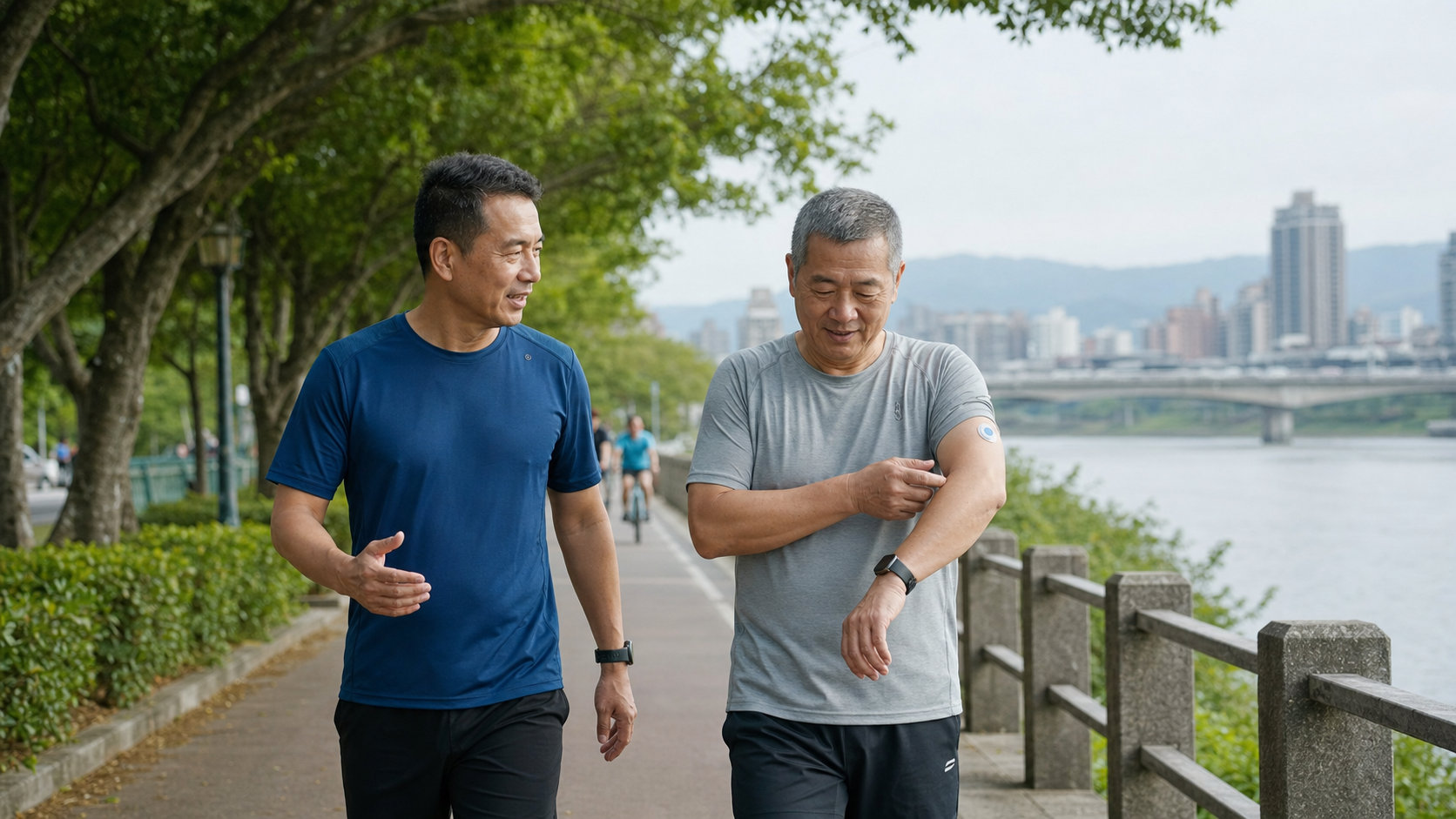
Starting with a Student’s Glucose Monitor
A few years ago, I coached a man in his early fifties—let’s call him Ah-Ming. At our first meeting, he handed me his phone, showing the graph from his continuous glucose monitor (CGM)—a red line like a roller coaster, spiking to the teens after breakfast and surging again after a late-night snack. He said, “Coach, my doctor says my HbA1c is nearly 8. I’m already on medication, but I don’t want to keep adding more drugs for the rest of my life.”
I didn’t start by talking about pacing or power output. Instead, I asked him one question: “Would you be willing to walk twenty minutes with your wife after dinner every day?” He was taken aback. Three months later, that red line had smoothed out considerably, and the post-meal peaks were clearly shaved off. Even he was surprised: “So walking really makes a difference?”
Yes, it does—and a big one at that. For people with diabetes, exercise isn’t just the vague platitude of “being more active is healthier.” It’s a “drug” with a clear physiological mechanism, a dosage, a duration of effect, and precautions. In this article, I want to use the tone I take with my students to explain the ingredients, usage, dosage, and the most common pitfalls of this exercise medicine—all in one go.
Let me state my position clearly first: This article covers general principles and educational concepts, and is not meant to replace your medical team. Diabetes is a highly individualized disease. Your medications, complications, kidney function, and cardiovascular status all change the details of your exercise prescription. Treat this article as “common language for discussions with your doctor, diabetes educator, and dietitian,” not as a basis for adjusting your medication on your own.
Concepts and Scientific Basis: Why Does Exercise Lower Blood Sugar?
Muscles Are the Body’s Largest “Blood Sugar Sponge”
To understand why exercise works, you first need to grasp one thing: skeletal muscle is the largest site for processing blood sugar in the body. After a meal, most of the body’s glucose is taken up and used by muscle. And for muscle to “pull” blood sugar from the bloodstream into its cells, it relies on a glucose transport protein called GLUT4.
Normally, getting GLUT4 to come out and shuttle glucose requires orders from the “foreman”—insulin. One of the core problems in type 2 diabetes is “insulin resistance”—the foreman shouts until he’s hoarse, but the workers (cells) couldn’t care less, so glucose gets stuck in the blood and can’t get in.
The remarkable thing about exercise is this: muscle contraction itself can bypass insulin and directly summon GLUT4 to move glucose. This is an “insulin-independent” pathway. In other words, even if your insulin is throwing a tantrum, as long as your muscles are moving, glucose still has a way in. That’s why so many people with diabetes see their blood sugar drop immediately after a walk or a bike ride.
I often use this analogy with my students: insulin resistance is like a rusty lock where the key won’t turn, so glucose can’t get into the house that is the cell. Exercise is like opening an extra window in the wall—even if the door won’t open for now, glucose can still get in through the window. And regular exercise gradually oils and repairs that rusty lock (improving insulin sensitivity), so both the door and the window work together. That’s the difference between the acute effect and the chronic effect.
The Acute Effect: How Long Does One Session Last?
This is the part I most want my students to remember. The benefit of exercise on blood sugar doesn’t end when you finish—it has an “afterglow.”
Based on exercise physiology research, after a single session:
- From the moment of exercise to about 2 hours afterward, glucose uptake is maintained at a higher level primarily through the “insulin-independent” mechanism—meaning the muscles are directly shuttling glucose.
- Next, “improved insulin sensitivity” takes over. Studies show that a single session of moderate-intensity, sufficiently long exercise can enhance skeletal muscle insulin sensitivity, lasting approximately 24 to 48 hours. During this period, the same amount of insulin can drive more glucose into cells.
- Interestingly, even “low-intensity but prolonged” exercise (e.g., 60+ minutes of easy aerobic work) is enough to improve sensitivity in insulin-resistant individuals, with benefits lasting into the next day.
This leads to a highly practical principle: the blood sugar benefits of exercise fade over time. If you exercise on Monday and then take a break until the weekend before moving again, those days in between are essentially “past the expiration date.” That’s why guidelines emphasize—at least 3 days of exercise per week, and never go more than 2 consecutive days without activity. For people with diabetes, “regular frequency” often matters more than “one hardcore session.”
The Chronic Effect: Long-Term Changes from Consistent Training
If the acute effect is “one shot covers two days,” then the chronic effect is “long-term medication that changes your constitution.” Weeks to months of regular exercise bring a cascade of structural benefits:
- Increased muscle mass and higher total GLUT4—more “workers” available to shuttle glucose.
- Reduced visceral fat—visceral fat is a major source of inflammatory substances that worsen insulin resistance.
- Improved mitochondrial function—the cell’s “furnace” gets stronger, improving the efficiency of fat and glucose metabolism.
- Lower HbA1c—this is the metric clinicians care about most. Regular aerobic plus resistance training typically produces clinically meaningful improvements in HbA1c (the actual magnitude varies by individual and needs personalized assessment, so I won’t give false precision here).
- Reduced cardiovascular risk—blood pressure, blood lipids, and vascular endothelial function all improve. Cardiovascular disease is the leading cause of death for people with diabetes, so this benefit is no less valuable than blood sugar control itself.
Ah-Ming’s HbA1c eventually dropped significantly, but what I valued even more was the look on his face when he measured his blood pressure—going from anxious to “Coach, look, it’s normal now.” That’s the “combination therapy effect” of exercise as medicine: one prescription tackles multiple problems at once.
Practical Approach: Prescribing Exercise Like a Doctor
Now that the concepts are covered, let’s get to the most practical part: how exactly should you move? I like to break down an exercise prescription into the FITT elements—Frequency, Intensity, Time, Type—plus one diabetes-specific addition: Timing.
The Basic Dose of Aerobic Exercise
The mainstream guidelines for most people with diabetes can be condensed into one sentence: accumulate at least 150 minutes per week of moderate-to-vigorous aerobic exercise, spread across at least 3 days, with no more than 2 consecutive days of inactivity.
What counts as “moderate intensity”? I teach my students a method that requires no devices—the talk test:
- Moderate intensity: You can talk while exercising, but you can’t sing. You’re slightly breathless, your body feels warm, and you’re lightly sweating.
- Vigorous intensity: You struggle to get out a full sentence.
Here’s a table of aerobic doses I commonly give to students at different starting points. The numbers are ranges—please adjust based on your own condition and your doctor’s advice:
| Starting Point | Recommended Form | Time per Session | Frequency per Week | Intensity (RPE 1–10) | Notes |
|---|---|---|---|---|---|
| Complete beginner / sedentary | Post-meal walk | 10–15 minutes | Nearly every day | 3–4 (can chat easily) | Build the habit first; volume over intensity |
| Beginner | Brisk walking / stationary bike | 20–30 minutes | 4–5 days | 4–5 | Start to feel “slightly breathless” |
| Intermediate | Cycling / jogging / stair climbing | 30–45 minutes | 3–5 days | 5–7 | Can incorporate intervals |
| Advanced | Long road rides / interval training | 45–90 minutes | 3–5 days | 6–8 | Watch out for fueling and hypoglycemia |
A special note for the sedentary: one underrated tactic is breaking up sitting time. If your job keeps you at a desk all day, get up every 30 minutes and move for 2–3 minutes (march in place, walk to refill your water, take the stairs). This has a significant effect on post-meal blood sugar. It’s not a replacement for formal exercise, but it’s bonus benefit with an extremely low barrier to entry.
Resistance Training: Don’t Just Do Cardio
Many people with diabetes think that walking is all they need to lower their blood sugar. This is one of the most common misconceptions. Resistance training (weight training) is extremely valuable for people with diabetes because it directly increases muscle mass—which means increasing your body’s “warehouse capacity” for storing and processing blood sugar.
Basic principles of resistance training:
- 2–3 times per week, on non-consecutive days (to allow muscle recovery).
- Target major muscle groups: legs (squats, leg presses), back, chest, core. Large muscle groups are the most efficient at clearing blood sugar.
- For each exercise, do 2–3 sets of 8–15 repetitions, with a weight where “the last 2–3 reps are somewhat challenging, but your form doesn’t break down.”
- Beginners must learn proper form before adding weight. Seek a trainer or educational resources; it’s better to go lighter than to get injured.
Below is a sample weekly “cardio + resistance” schedule for beginners with diabetes. You can use it directly or adjust it after discussing it with your healthcare team:
| Day | Main Session | Time | Intensity | Notes |
|---|---|---|---|---|
| Monday | Brisk walking or stationary cycling | 30 minutes | Moderate | Start 60–90 minutes after a meal |
| Tuesday | Resistance training (lower body + core) | 40 minutes | Moderate | Includes 10 minutes warm-up |
| Wednesday | Brisk walking or swimming | 30 minutes | Moderate | Do it even if it means breaking up prolonged sitting |
| Thursday | Rest or gentle stretching | 20 minutes | Low | Active recovery |
| Friday | Resistance training (upper body + core) | 40 minutes | Moderate | Prioritize major muscle groups |
| Saturday | Longer cardio session (cycling / hiking) | 45–60 minutes | Moderate | Riverside parks and suburban trails in Taiwan are great options |
| Sunday | Easy walk | 20–30 minutes | Low | Best done with the whole family |
This schedule totals about 3 hours of cardio and 2 resistance sessions per week, which already exceeds the basic threshold, yet the intensity is approachable. The key point is always: “A workout plan you can stick with long-term is a good workout plan.” I’d rather you do a 70-point plan for three years than a 100-point plan for three weeks and then quit.
The “Timing” of Exercise: Exercising After Meals Works Best
This is a bonus tip exclusive to people with diabetes. Research and clinical observations both indicate that exercising after a meal (especially after the meal that causes your blood sugar peak of the day) has the most significant effect on blunting that peak. For people in Taiwan, dinner is often the meal that spikes blood sugar the highest (large portions, lots of refined carbs, followed by sitting and watching TV), so a post-dinner walk offers particularly high value for the effort.
Practical advice: Start activity between 30 and 90 minutes after a meal; even a 10–20 minute walk can effectively flatten the post-meal peak. This is the key to why Ah-Ming’s blood sugar curve became flat.
Let’s also debunk a myth here: many people think “you shouldn’t exercise after eating because it’s bad for digestion.” For low-to-moderate intensity walking, taking a stroll after a meal not only doesn’t harm your stomach, it actually helps process blood sugar. What you really should avoid is “engaging in vigorous exercise immediately after a full meal”—that’s what can cause gastrointestinal discomfort. So people with diabetes can rest assured about walking after meals; it’s one of the gentlest and most effective blood sugar tools available.
Preventing Hypoglycemia: The “Medication Safety” of the Exercise Prescription
The most important side effect to watch for with the medicine of exercise is hypoglycemia (low blood sugar), especially for those using insulin or sulfonylureas (a class of oral medications that stimulate insulin secretion). Please read this section carefully and confirm with your doctor whether your medication puts you in a high-risk category for hypoglycemia.
First, Determine: Are You in a High-Risk Group for Hypoglycemia?
- Primarily managing through diet, or using medications like metformin that do not stimulate insulin secretion: The risk of exercise-induced hypoglycemia is relatively low, but you still need to be cautious.
- Using insulin or sulfonylurea medications: These are high-risk groups for hypoglycemia, and blood sugar management before and after exercise needs to be more careful.
Memorize the Warning Signs of Hypoglycemia
During exercise and for several hours afterward, be highly alert if you experience any of the following symptoms: cold sweats, trembling hands, heart palpitations, dizziness, hunger, blurred vision, irritability, difficulty concentrating, or even confusion. It’s worth noting that the breathlessness and heat from exercise can easily mask these early warning signs, so high-risk individuals should ideally monitor themselves during exercise.
Reference for Blood Sugar Management Before and After Exercise
The table below outlines common “pre-exercise blood sugar management by level” concepts. The actual numbers and actions must follow your healthcare team’s instructions; this is only to help you build a framework for discussion with your doctor:
| Pre-Exercise Blood Sugar Level | General Management Concept | Notes |
|---|---|---|
| Low (e.g., below the safety threshold) | First consume a small amount of sugary carbs, then exercise after blood sugar rises | Don’t push through on an empty stomach, especially if on insulin |
| Moderately low | Can consume a small amount of carbs before starting | Provides a buffer for the energy expenditure during exercise |
| Moderate | Usually can start directly, but monitor | The ideal starting range |
| High but without discomfort | Can exercise, but stay vigilant | Management differs by diabetes type; consult your doctor |
| Clearly too high or suspected ketones | Postpone vigorous exercise and consult your healthcare team first | Especially be alert for ketoacidosis in type 1 diabetes |
Six Life-Saving Rules I Give to High-Risk Clients
- Always carry fast-acting sugar: glucose tablets, sugar cubes, sugary drinks, juice. Convenience stores are everywhere in Taiwan; plan where you can buy these along your exercise route.
- Do not do prolonged or high-intensity exercise on an empty stomach, especially after taking insulin.
- Check your blood sugar before and after exercise, and be especially diligent during the first two weeks of a new routine to learn your body’s response patterns.
- Watch out for “delayed hypoglycemia”: after prolonged or high-intensity exercise, muscles continue to replenish glycogen, which can cause low blood sugar several hours later, or even in the middle of the night. Those who exercise in the evening or before bed should pay special attention to nighttime blood sugar.
- Exercise with a partner or inform someone: when riding long distances alone on suburban trails or riverside paths, let your family know your route and expected time.
- Learn the concept of the “Rule of 15”: when you feel hypoglycemia, consume about 15 grams of fast-acting carbs, wait about 15 minutes, and recheck—follow your diabetes educator’s specific instructions.
If you take insulin or sulfonylureas, you must discuss your exercise plan with your doctor first to see if your dosage needs adjustment. Never decide on your own to “reduce your medication just because you’re going to exercise”; this must be determined by a professional.
Common Mistakes and Corrections
In all my years of coaching clients, there are some pitfalls that almost everyone stumbles into. I’ve compiled the most common ones here, along with directions for correction.
Mistake 1: Only Doing Cardio, Never Touching Weights
Correction: Muscle is the warehouse for blood sugar; the bigger the warehouse, the better. Schedule at least 2 resistance training sessions per week, prioritizing major muscle groups like legs and back. Walking is great, but walking won’t build you muscle.
Mistake 2: The Weekend Warrior—Sedentary All Week, Then One Big Blowout on the Weekend
Correction: The insulin-sensitivity benefits of exercise only last about 1–2 days; a weekend blowout can’t cover the whole week. Spread your exercise out over at least 3 days to keep your blood sugar curve stable. The value of frequency is severely underestimated.
Mistake 3: Fasted Morning Runs Combined with Taking Insulin
Correction: This is a high-risk combination for hypoglycemia. If you’re accustomed to morning exercise, you must discuss insulin dosage and meal planning with your doctor first, and always carry sugar and check your blood sugar beforehand.
Mistake 4: Starting Too Hard, Then Giving Up After Three Days of Soreness
Correction: This is the “beginner’s enthusiasm trap.” Increase intensity and duration gradually, adding a little more every 1–2 weeks. Consistency is what matters most. I often tell my clients: “Don’t compare yourself to the person who quits after three weeks; compare yourself to the person who’s still moving after three years.”
Mistake 5: Panicking When Blood Sugar Is High, Binge-Eating When It’s Low
Correction: Learn to look at “trends” rather than single numbers. If you have a CGM, watch the direction and slope of the curve. When treating hypoglycemia, consume a “measured amount” (about 15 grams) rather than “eating until you feel satisfied.” Over-correcting will cause your blood sugar to rebound and spike, creating a rollercoaster effect.
Mistake 6: Ignoring Foot Care
Correction: This is a particularly important point for people with diabetes who exercise. Diabetes can be accompanied by peripheral neuropathy, which dulls sensation in the feet. A small blister or abrasion might go unnoticed, yet it could develop into a wound that is slow to heal. Check both feet before and after exercise, wear well-fitted athletic shoes and moisture-wicking socks, and avoid exercising barefoot. Taiwan’s summers are hot and humid, so foot care requires even more attention.
Mistake 7: No Warm-Up, No Cool-Down
Correction: For older individuals or those with cardiovascular risk, jumping suddenly from rest to high intensity places a burden on the heart. Taking 5–10 minutes for a gradual warm-up before exercise and a few minutes for cool-down and stretching afterward can reduce the risk of injury and cardiovascular events, and allows the body to adapt comfortably. These few minutes may seem insignificant, but they are the foundation for safe, long-term exercise.
Mistake 8: Focusing Only on Blood Sugar, Ignoring Overall Health Metrics
Correction: Blood sugar is certainly important, but the number one threat for people with diabetes is actually cardiovascular disease. The improvements in blood pressure, blood lipids, body weight, and fitness that come from exercise are equally valuable. Don’t just stare at the numbers on your glucose meter; during follow-up visits, also pay attention to changes in blood pressure, blood lipids, waist circumference, and fitness. View exercise as a medicine through the lens of “overall health.”
Taiwan-Specific Context: Fitting Exercise into Real Life
No matter how sound the theory, if it doesn’t fit into your life, it’s worthless. I’d like to give some concrete advice tailored to the daily lives of people with diabetes in Taiwan.
Post-Meal Exercise Strategies for Those Who Eat Out
Eating out is common in Taiwan, and a single meal often contains a high amount of refined carbohydrates (white rice, noodles, thick soups, bubble tea), which can easily spike post-meal blood sugar. Instead of agonizing over what you can eat, make “moving a bit after meals” a habit. After finishing your lunch bento, don’t rush back to your seat; walk around the office building for 10–15 minutes. After dinner, take a walk with your family around a nearby park or riverside trail. This small habit can often significantly shave off the post-meal peak.
Making the Most of Taiwan’s Exercise Environment
- Riverside bike paths: The flat, safe riverside paths in Taipei, New Taipei, Taichung, Kaohsiung, and elsewhere are great for brisk walking and cycling, and are also suitable for people with diabetes to control intensity and stop anytime.
- Community parks and school tracks: Great places for an evening stroll or simple strength training.
- Hiking and mountain trails: Taiwan has abundant low-elevation mountain resources, but people with diabetes need to pay special attention to supplies and hypoglycemia when hiking, especially on long or high-altitude routes. Always go with a companion, carry sugar, and inform family of your route.
- Indoor options: Taiwan’s summers are hot and humid, with frequent afternoon thunderstorms. Having an indoor backup plan (stationary bike, gym, following along with bodyweight workout videos) helps maintain exercise “continuity.”
Weather and Timing
Exercising outdoors at noon in Taiwan’s summer carries a risk of heatstroke. It’s recommended to avoid the midday heat and choose early morning or evening instead, and to stay hydrated. In winter, when temperatures drop suddenly in the morning, people with diabetes who have cardiovascular risk should warm up thoroughly and dress warmly—don’t rush out the door and start sprinting.
Leveraging Taiwan’s Health Insurance and Medical Resources
Taiwan’s National Health Insurance and diabetes care network are quite comprehensive. Make good use of your diabetes shared care network—attend regular follow-ups, learn blood glucose monitoring and diet from health educators, and consult a dietitian if needed to plan strategies for eating out. Before starting a new exercise program, especially if you’ve been sedentary, are older, or have cardiovascular concerns, get an assessment from your doctor first to confirm any complications that need attention (such as retinopathy, nephropathy, or cardiovascular issues), as these can affect the types and intensity of exercise suitable for you.
In-Depth Case Studies: Three Different Starting Points, How I Guide Them
Beyond the numbers, I’d like to use three common client archetypes to show you how exercise prescriptions are “adjusted to the individual.” The following scenarios are designed for illustrative purposes, but the logic behind each intervention reflects how I actually work with my clients.
Case 1: Xiao-Mei, a Sedentary Office Worker with Prediabetes
Xiao-Mei is 38, an engineer who sits for 10 hours a day. Her fasting blood glucose and HbA1c from her health check-up are both on the borderline of prediabetes. She’s not on medication, and her biggest enemies are “no time and sitting too long.”
What I gave her wasn’t a gym membership, but rather “micro-exercise embedded into daily life”: stand up and move for 3 minutes every 45 minutes of sitting, walk around the building for 15 minutes after lunch, and get off the bus one stop early during her commute. On weekends, add a riverside bike ride. She felt no pressure of “having to exercise specifically,” yet at her follow-up visit just over two months later, her blood sugar numbers had moved in the right direction. For prediabetes, the most effective approach is often not intense training, but breaking up sedentary time and increasing daily activity.
Case 2: Auntie Chen, Diagnosed for Years, Managed on Metformin
Auntie Chen is 62, with knee problems—walking for long periods causes pain, which has kept her from exercising. Her risk of hypoglycemia is low (metformin doesn’t stimulate insulin secretion), but her joints are the limiting factor.
I switched her to a “low-impact” combination: a stationary bike instead of brisk walking (no impact on the knees), water walking or swimming (buoyancy protects the joints), and seated resistance band exercises for the upper body and core. Within what her knees can handle, we added simple chair squats. The key point is—finding a form she can tolerate with her joints and sustain long-term. An exercise prescription must accommodate the body’s limitations, rather than forcing her to do “standard movements” and getting injured, forcing her to quit.
Case 3: Zhi-Hao, on Insulin, Loves Road Cycling
Zhi-Hao is 45, has type 2 diabetes, and uses basal insulin. He loves long weekend rides, often covering 40–50 kilometers once he heads out. His challenge is high exercise volume and high risk of hypoglycemia.
I asked him to do three things: First, always discuss with his doctor beforehand whether his insulin dose needs adjustment on exercise days. Second, always carry fast-acting sugar and energy supplies in his jersey pockets, and consume some carbohydrates every 30–45 minutes—don’t wait until you’re hungry to eat. Third, check his blood sugar more frequently after long rides and before bed that night, staying alert for delayed hypoglycemia. Once he understood his patterns, he could enjoy cycling while keeping his blood sugar stable. The greater the exercise volume, the more detailed the safety management needs to be—this isn’t telling you not to exercise, but teaching you to exercise smartly.
Blood Glucose Monitoring: Let the Data Be Your Coach
To fine-tune your exercise, you need “feedback.” I strongly recommend that people with diabetes, especially those just starting a new exercise program, treat blood glucose monitoring as part of the exercise itself.
- Traditional glucose meter: Test before and after exercise and record the results. The first two weeks of a new routine are the most important; you’ll gradually see which type of exercise, duration, and time of day has the greatest impact on your blood sugar.
- Continuous Glucose Monitor (CGM): If you have access to one, a CGM lets you “see” the changes in your glucose curve during and after exercise. That real-time feedback is a powerful motivator for building an exercise habit—many of my clients only truly believed “exercise works” when they saw their curve drop after a walk.
- What to record: Don’t just record the numbers; also note what you ate that day, how you took your medication, and the type and duration of exercise. This “personal database” is the best material for fine-tuning with your doctor at follow-up visits.
Remember the principle: Look at trends, don’t be held hostage by a single number. One slightly high blood sugar reading doesn’t mean your exercise was in vain; what matters is the overall trajectory over a period of time.
FAQ: Questions My Clients Ask Me Most Often
Q: My blood sugar goes up after exercise—what’s going on?
A: This can indeed happen, especially after high-intensity exercise—the body’s stress hormones (like adrenaline) temporarily release glycogen into the bloodstream, which can cause a temporary rise in blood sugar. It usually comes back down afterward. If you frequently see a significant rise after exercise that doesn’t come down, discuss it with your doctor; don’t try to figure it out on your own.
Q: I’m older and have chronic conditions. Can I still start exercising?
A: In most cases, appropriate exercise will do you more good than harm, but be sure to get a doctor’s assessment before you start to confirm there are no complications or cardiovascular risks that need attention, and progress gradually from low-intensity, low-impact forms.
Q: If I skip a day of exercise, will all my previous gains be lost?
A: No, they won’t be completely lost, but the improvement in insulin sensitivity does fade over time (roughly 1–2 days). So the key is “don’t let the gap get too long”—maintain a rhythm of at least 3 days per week, without going more than 2 consecutive days without exercise.
Q: Is it okay to do only strength training and no cardio?
A: Resistance training is very valuable for blood sugar, but the ideal is to do both “cardio and resistance” together—they work through different mechanisms and complement each other’s benefits. If you can manage it, do both.
Q: Can exercise help me stop taking my medication?
A: That’s not something you or I can decide. Exercise can indeed improve blood sugar to the point where a doctor might consider adjusting medication, but adding or reducing medication is always the doctor’s responsibility. Please do not stop or reduce your medication on your own.
Actionable Advice for Readers at Different Levels
Finally, based on your current situation, here are some concrete steps you can “start today.”
If You Are Prediabetic or Have Just Been Told Your Blood Sugar Is High
You are in the most valuable window for intervention. Act now—it pays off the most.
- Start with a “10-minute walk after meals” and do it every day to build the habit first.
- After two weeks, extend some of those walks to 20–30 minutes.
- Within a month, add simple bodyweight strength training twice a week (squats, wall push-ups, glute bridges).
- Goal: reach 150 minutes of aerobic exercise plus 2 resistance sessions per week within three months.
If You Have Been Diagnosed with Type 2 Diabetes and Manage It with Diet or Metformin
- Aim directly for “150 minutes of aerobic exercise per week plus 2–3 resistance sessions per week,” progressing gradually.
- Schedule exercise after meals, prioritizing the meal that spikes your blood sugar the most.
- Monitor your blood sugar frequently during the first two weeks of a new routine to build your own response database.
- See your doctor every 3–6 months to check HbA1c and fine-tune together based on the data.
If You Use Insulin or Sulfonylureas
- Discuss your exercise plan with your doctor first, especially how medication dosage and exercise timing work together.
- Carry fast-acting sugar with you, check blood sugar before and after exercise, and stay alert for delayed and nighttime hypoglycemia.
- Do not do prolonged or high-intensity exercise on an empty stomach.
- Start with low-risk, controllable activities (such as brisk walking on flat ground or indoor cycling), and progress only after you understand how your body responds.
If You Are a Caregiver Wanting to Help a Family Member
- Exercise together with him or her—it is the most effective support. A big part of why A-Ming has stuck with it is that his wife walks with him every day.
- Help watch for signs of hypoglycemia, and keep fast-acting sugar both at home and in the exercise bag.
- Turn “walking after meals” into a family ritual together, not just his or her homework alone.
Conclusion: Put “Movement” on Your Prescription
Back to A-Ming. To this day, he still walks with his wife after every meal, and he rides his road bike farther and farther. He often says: “Turns out walking really does make a difference.”
Exercise is called the “medicine” for diabetes not as a figure of speech, but because it works on so many fronts at once—insulin sensitivity, the muscles’ ability to process blood sugar, visceral fat, blood pressure, blood lipids, cardiovascular health—and almost no other drug covers such a broad range while costing almost nothing.
But remember the three key words of this prescription: consistency (frequency matters more than intensity), individualization (your medications and complications determine the details), and safety (hypoglycemia and foot care cannot be ignored).
Improvements in blood sugar do not happen overnight; they are built from every after-meal walk, every set of squats, and every slow ride along the riverside. You do not need to become an athlete—you just need to start, and then not stop. After dinner tonight, go out and walk for ten minutes.
Finally, I want to share with you a phrase I often say to A-Ming: Exercise is not punishment; it is a gift. It is not a chore you must do to “atone,” but a health deposit you make for your future self. Every step helps flatten your blood sugar curve, lower your cardiovascular risk, and extend your quality of life. Starting today, starting after this meal, ease into movement.
This article is for educational purposes and cannot replace individual diagnosis and treatment advice from a physician, physical therapist, or dietitian. Diabetes is a highly individualized disease. For any adjustments to your exercise plan, especially those involving insulin or oral glucose-lowering medications, be sure to discuss them with your healthcare team first.
References
- American Diabetes Association — Weekly Exercise Targets: https://diabetes.org/health-wellness/fitness/weekly-exercise-targets
- Physical Activity/Exercise and Diabetes: A Position Statement of the American Diabetes Association, Diabetes Care: https://diabetesjournals.org/care/article/39/11/2065/37249/Physical-Activity-Exercise-and-Diabetes-A-Position
- A Single Session of Low-Intensity Exercise Is Sufficient to Enhance Insulin Sensitivity Into the Next Day in Obese Adults, Diabetes Care: https://diabetesjournals.org/care/article/36/9/2516/37837/A-Single-Session-of-Low-Intensity-Exercise-Is
- Exercise Increases Human Skeletal Muscle Insulin Sensitivity via Coordinated Increases in Microvascular Perfusion and Molecular Signaling, Diabetes: https://diabetesjournals.org/diabetes/article/66/6/1501/40045/Exercise-Increases-Human-Skeletal-Muscle-Insulin
Related Reading
- Nutrition Management for Diabetes and Exercise: A Coach’s Practical Notes on Blood Sugar, Carbohydrate Adjustments, and Hypoglycemia Prevention
- Type 2 Diabetes and Endurance Exercise: A Complete Guide to Blood Sugar Response Mechanisms and Pre- and Post-Exercise Precautions
- Exercise Is the Cheapest Metabolic Drug: From Mitochondria to Insulin Sensitivity, Train Your Body into a Fuel-Efficient Engine
- Cycling and Diabetes Management: The Science of Riding for Blood Sugar Control and Insulin Sensitivity
靠單車減肥35公斤 心得分享與整理
7 年前
#公路車 #Fitting 靠人工智慧APP 幫你調整單車
6 年前
CT暗黑廚房) 車友必備 宇宙無敵鮮蚵湯 幫助訓練恢復 天然食補 好市多 超肥鮮蚵 破PR
7 年前
4K 東眼山 x 水蜜桃冰沙 百人單車約騎! 操完再吃冰 多爽快
7 年前
西進武嶺 免費訓練分析服務 Intervals | 練不夠還是練過頭?你哪一種類型選手?AI模型告訴你! | 備戰神器 | 公路車 訓練 | CT Yeh
4 年前
台北大雁西飛 約騎挑戰 feat. Doris | 公路車 | CT Yeh
3 年前
一日北高常見問題大集合 | 攻略 | 路線 | 訓練 | 補給 | 自行車 單車 | 一日雙城 | 雙塔 | TWB北高360 | 屁股痛
6 年前
一日北高/長距離團騎 常見問題補充篇 / 組團或跟團的眉角 / 壯車友容易被瘦車友慢性拉爆 / 原來屁股痛可能是這個原因...? / 風場配速法 / 公路車 / CT Yeh
2 年前