Exercise and Osteoporosis Prevention: A Safety Guide to Weight-Bearing Exercise, Bone Density, and High-Risk Groups
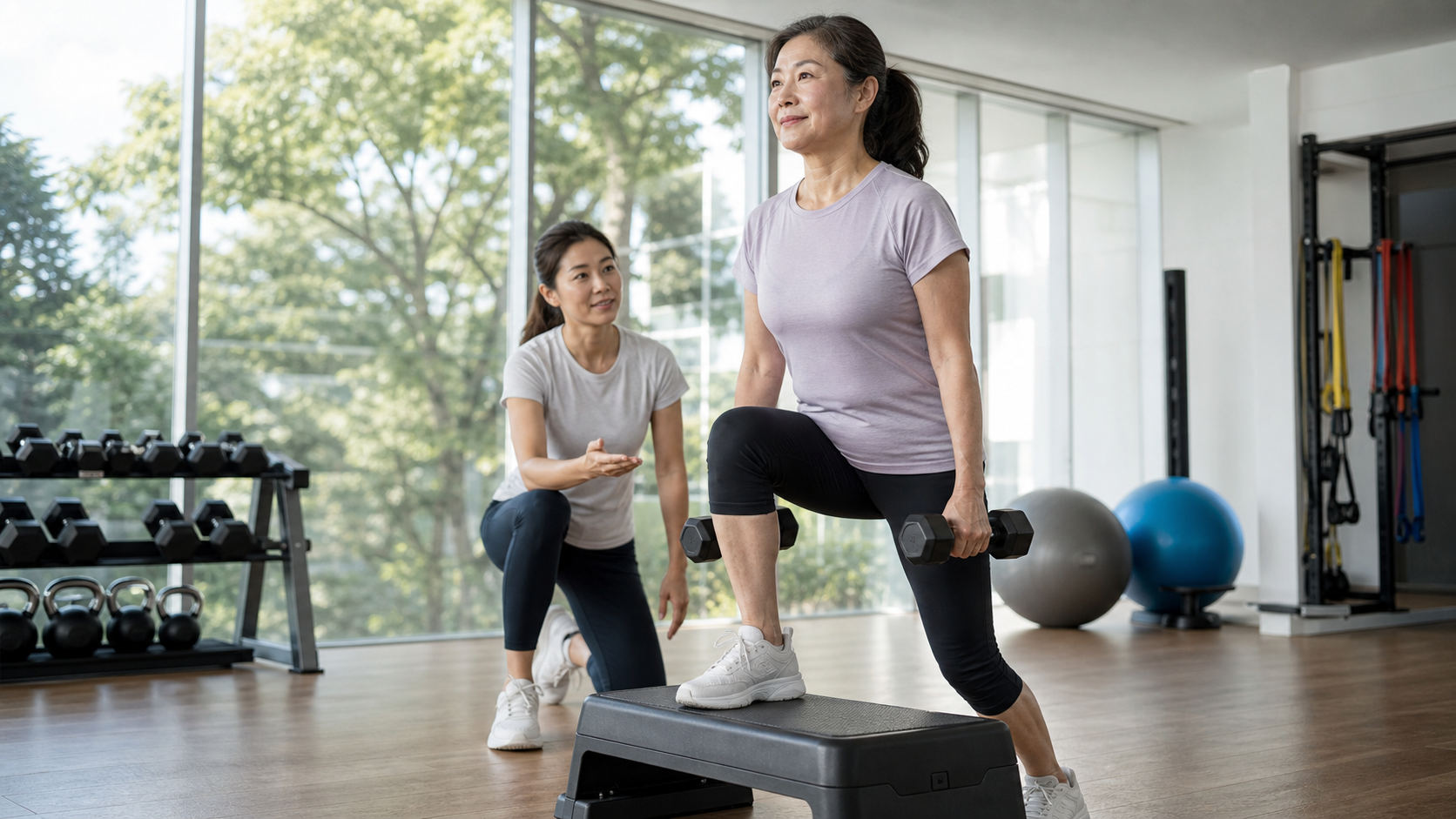
Starting with a 55-Year-Old Woman’s Health Check Report
In all my years of coaching, the piece of paper that left the deepest impression wasn’t someone’s personal record—it was a bone density report handed to me by a 55-year-old student. Her surname was Chen, three years post-menopause. During a company health check, she had a DXA scan, and her lumbar spine T-score read -2.3. The doctor circled a note beside it: “Osteopenia, exercise recommended.” When she brought the report to me, her first words were: “Coach, is it already too late for me? From now on, can I only walk and not do strength training?”
I asked her to sit down and take a deep breath first. Because when it comes to bone health, what hurts people most often isn’t the number itself—it’s being so frightened by the number that they end up “afraid to do anything.” The truth is exactly the opposite: for the vast majority of people with osteopenia, or even mild osteoporosis, regular, progressive weight-bearing and resistance training is one of the few methods repeatedly proven by science to help preserve—and even modestly increase—bone density. As for Ms. Chen, she later followed my progressive strength and impact training for over a year—but that’s a story for later. We’ll come back to her at the end of this article.
In this article, I want to use the practical tone I use with my students to explain clearly how exercise helps bones: from the physiological basis of bones “breathing” and remodeling, to how different groups should train and avoid pitfalls, and finally to a tiered workout plan you can start following today. It’s a long read, but bone health is a lifelong matter—worth ten minutes of your time.
First, the Concept: Bones Are Alive and Listen to Your Body
Many people picture bones as those white, hard, stone-like things in museums. But living bones are actually living tissue constantly undergoing breakdown and rebuilding. Two main types of cells work in shifts: osteoclasts are responsible for “demolishing” old bone with micro-fractures, while osteoblasts are responsible for “filling in” new bone. This demolition-and-rebuild process is called “bone remodeling,” and it continues throughout your entire life.
Your Bone Bank Is a Fixed Deposit with an Expiration Date
Bone mass doesn’t stay steady throughout life. Roughly speaking:
- From birth to about age 30: Building outpaces breaking, and bone mass accumulates steadily, reaching its lifetime “peak bone mass” in the mid-20s to early 30s.
- From about 30 to 50: A relatively balanced plateau period where building and breaking roughly keep pace.
- Post-menopausal women and older men: Breaking begins to clearly outpace building, and bone mass declines year after year. For women, the rapid drop in estrogen after menopause causes especially fast loss in the first few years.
That’s why I often tell my younger students: “The bone bank you save before 30 determines your floor at 80.” The higher your peak bone mass, the later you’ll cross the fracture-risk threshold, even if you lose a fixed percentage each year. This is why osteoporosis prevention isn’t just for the elderly—it’s something teenagers and people in their 20s and 30s should take most seriously. It’s a fixed deposit with an expiration date, and once it passes, you can’t top it up as much.
Why Does Exercise Stimulate Bone Formation? The Key Is “Mechanical Stimulation”
Bones have a clever trait: they adjust their density and structure according to the forces placed upon them. In physiology, this concept is known as “Wolff’s law”—bones remodel according to the mechanical loads applied to them. Give them pressure, and they think, “This area needs to be stronger,” so they tend to build a bit more bone. Spend long periods bedridden, or be an astronaut in zero gravity, and bones think, “We don’t need that much,” and rapidly lose mass.
There are two main types of force that effectively stimulate bone formation:
- The force of muscle contraction pulling on bone: When you do squats or deadlifts, large muscle groups contract powerfully, pulling on bones through tendons. This tension transmits to the skeleton, telling osteoblasts to “work overtime and reinforce.”
- Ground reaction force (impact): The moment you land from a jump, jog, or jump rope, the upward impact force from the ground travels through the skeleton. This kind of brief, high-peak force that “startles the bones a bit” is particularly effective at stimulating bone formation.
This also explains a phenomenon many people find puzzling: swimming and cycling are great for cardiovascular health but barely stimulate bone density. Water’s buoyancy cancels out gravity, and a bicycle saddle supports most of your body weight, so bones don’t experience sufficient impact or vertical loading. So if you’re a cycling enthusiast or a strong swimmer, your cardiovascular fitness may be excellent, but your bone density may not keep pace—which is exactly what I want to highlight in this column focused on cycling health: endurance athletes also need to schedule weight-bearing training to take care of their bones.
What Does Science Say? Which Exercise Is Most Effective?
When it comes to evidence, I’ll stick to broad conclusions that have been repeatedly validated, rather than citing precise numbers from single studies (bone research has huge individual variation, and excessive precision can be misleading). Combining recommendations from the International Osteoporosis Foundation, the American College of Sports Medicine (ACSM), and multiple systematic reviews, several relatively solid conclusions emerge:
- Moderate-to-high-intensity progressive resistance training (targeting all major muscle groups, roughly 8 to 12 reps per set) improves lumbar spine and hip bone density in post-menopausal women.
- Impact weight-bearing exercise (jumping, jogging, jump rope, etc.) has clear bone-stimulating effects, especially for people whose bones are still healthy and can tolerate impact.
- Balance and functional training doesn’t directly increase bone density, but it significantly reduces fall risk—for people who already have osteoporosis, preventing falls may do more to avoid hip fractures than gaining that extra 0.1 in bone density.
- Exercise interventions that follow ACSM recommendations and have high adherence rates are more effective at improving bone density than casual, inconsistent exercise.
Local Taiwanese health education resources echo this direction: the Ministry of Health and Welfare recommends combining weight-bearing exercises such as jogging, dancing, hiking, and dumbbell routines to increase bone density and muscle strength.
Comparing the Bone Benefits of Different Exercise Types
The table below is what I often use with my students to illustrate the categories, so everyone can see at a glance which exercises “take care of bones” and which “don’t help bones but help other things”:
| Exercise Type | Examples | Bone Density Benefit | Added Value | Coach’s Notes |
|---|---|---|---|---|
| High-impact weight-bearing | Jump rope, jumping, sprinting | High | Cardiovascular, power | Best for those with healthy bones; needs assessment for those with osteoporosis |
| Resistance training | Squats, deadlifts, presses | High | Strength, metabolism, fall prevention | Suitable for all groups; intensity adjustable |
| Moderate-impact weight-bearing | Jogging, brisk walking, stair climbing, hiking | Moderate | Cardiovascular, endurance | Beginner- and senior-friendly |
| Balance/functional training | Single-leg stands, tai chi, yoga | Low (indirect) | Significant fall prevention | Key life-saving item for those with osteoporosis |
| Non-weight-bearing aerobic | Swimming, water exercise, cycling | Very low | Cardiovascular, joint-friendly | Must add weight-bearing training for bones |
Seeing this table, many cycling or swimming enthusiasts may feel a bit disappointed. But please don’t misunderstand—these activities are excellent for your cardiovascular system, joints, and mood. They just can’t be your only bone investment. The ideal approach: keep the endurance sports you love, and add two to three sessions of resistance or impact training per week to cover the bone-stimulation gap.
Practical Methods: A Tiered Workout Plan You Can Follow
After all that theory, let’s get to something actionable. I roughly divide exercisers into three tiers, and you can choose your starting point based on your situation. The key principle: start at an intensity you can complete consistently, then increase the load slightly every one to two weeks, giving your body and bones time to adapt.
Tier Classification Criteria
- Green light group (healthy bones, no osteoporosis history, no major joint or cardiovascular issues): Can do full impact + resistance training.
- Yellow light group (osteopenia, T-score between -1.0 and -2.5, or older but with reasonable mobility): Focus on resistance and low-to-moderate impact; scale down impact movements; add balance training.
- Red light group (diagnosed osteoporosis with T-score ≤ -2.5, history of fragility fracture, severe kyphosis, or poor balance): Must first be assessed by a physician or physical therapist; focus on safe resistance and balance training; avoid high impact and movements involving spinal flexion with rotation.
Sample Weekly Training Structure (Green and Yellow Light Groups)
The weekly schedule below is for people with some foundation who want to seriously take care of their bones. For the yellow light group, swap impact movements for the scaled-down versions in parentheses, reduce weight, and keep the rep count the same.
| Day | Main Training | Key Content | Recommended Intensity |
|---|---|---|---|
| Monday | Lower body resistance | Squats, leg press, deadlifts (can start with resistance bands or light dumbbells) | 8-12 reps × 3 sets, moderate-to-high intensity |
| Tuesday | Impact + balance | Jump rope or jumping in place (scaled down: brisk walking + high knees), single-leg stands | Accumulate 50-100 landings |
| Wednesday | Rest or non-weight-bearing aerobic | Walking, stretching, easy cycling | Low-intensity recovery |
| Thursday | Upper body and core | Shoulder press, rows, push-ups, planks | 8-12 reps × 3 sets |
| Friday | Full-body circuit | Squats, presses, rows linked together + step-ups | Moderate intensity, minimal rest between exercises |
| Saturday | Outdoor weight-bearing | Hiking, stair climbing, trail walking (Elephant Mountain and Four Beasts Mountain in Taiwan are great options) | 30-60 minutes |
| Sunday | Complete rest | Sleep well, get sunlight for vitamin D | — |
This schedule isn’t scripture—adjust it to fit your life. The key is at least two sessions per week where your bones feel a meaningful load—not casually lifting a feather-light weight, but working to the point where the last few reps feel challenging (while maintaining proper form). Only then do your bones receive the signal that they “need to get stronger.”
Progressive Resistance Loading Principles
A common beginner mistake is “using the same weight forever.” After six months, your bones have adapted, and the stimulus drops to zero. The loading mantra I give my students:
- When you can easily complete 3 sets of 12 reps with proper form, increase the weight by about 5% to 10%.
- After increasing, you might only manage 8 reps—that’s fine. Gradually work the reps back up to 12, then increase the weight again.
- This is called “double progression” (first increase reps, then increase weight), and it provides continuous new stimulus for both bones and muscles.
High-Risk Groups: Who Needs Extra Caution?
Some people have inherently higher osteoporosis risk, or are in life stages where bone loss is particularly rapid. For the following groups, I recommend more proactive testing and intervention—but the intervention approach also needs to be more cautious.
Overview of High-Risk Groups
| Group | Risk Factor | Coach/Advisor Recommendations |
|---|---|---|
| Post-menopausal women | Rapid estrogen decline, fast loss in early years | Start resistance training as early as possible after menopause; consider a DXA scan |
| Adults over 65 | Age-related bone loss + high fall risk | Balance resistance and balance training; fall prevention first |
| Small-framed, underweight individuals | Low baseline bone mass from low skeletal loading | Strengthen resistance training; ensure adequate calories and protein |
| Long-term sedentary/inactive people | Bones chronically lack mechanical stimulation | Build up gradually from low-impact, light resistance |
| Long-term steroid users | Medication accelerates bone loss | Must discuss with your primary physician; individualize exercise |
| Family history of osteoporosis or fractures | Genetic factors | Test earlier; save bone bank earlier |
| Smokers, excessive alcohol drinkers | Impairs bone formation and calcium absorption | Combine lifestyle changes with exercise |
| Related to the female athlete triad | Low energy availability, menstrual dysfunction, low bone density | Requires a medical team; not just training alone |
A special reminder: if you fall into the long-term steroid use, endocrine disorder, or unexplained fracture categories, your exercise plan must be individualized—get assessed by a physician and physical therapist before starting. This article provides general principles and cannot replace individual diagnosis.
Reading Your Bone Density Report: T-Scores and Z-Scores
Many students bring their health check reports to ask me. Here’s a simple explanation (diagnosis still rests with your physician). Medical institutions in Taiwan generally follow the WHO DXA standards:
- T-score ≥ -1.0: Normal bone density.
- T-score between -1.0 and -2.5: Osteopenia—this is a yellow-light warning and the stage where exercise and nutrition can make the biggest comeback.
- T-score ≤ -2.5: Osteoporosis.
For people with osteopenia, follow-up DXA every one to two years is generally recommended. For women under 50 or pre-menopausal, physicians typically reference the Z-score (comparison with same-age peers) rather than the T-score. Taiwan’s National Health Insurance has DXA coverage criteria for specific groups (such as those with fragility fractures or certain high-risk conditions). If you’re concerned, consult an orthopedist, family medicine physician, or endocrinologist—don’t scare yourself.
Safety First: Movement Restrictions and Modifications for Osteoporosis
For people already diagnosed with osteoporosis, exercise isn’t off-limits—it’s about choosing the right movements and avoiding landmines. This section is especially important, so red light group, please read carefully.
Movements to Be Cautious With or Avoid for Osteoporosis
- Forceful spinal flexion (especially with added load): Things like old-school toe touches with straight legs, weighted sit-ups, or bending over to lift heavy objects. Forward spinal flexion puts pressure on the front of the vertebral bodies, creating a risk of compression fractures in those with osteoporosis.
- Rapid spinal rotation combined with flexion: Certain golf swings, or compound movements involving quick twisting to pick something up.
- High-impact jumping (for severe osteoporosis): Jump rope and squat jumps are great for the general population, but may be too impactful for those with very low T-scores or a history of fractures.
- Movements with high fall risk: Complex movements on unstable surfaces—the fall risk outweighs the benefit.
How to Modify?
The good news is that almost all of these movements have safe alternatives:
- Want to train your core? Swap weighted sit-ups for planks, bird dogs, and dead bugs—movements that keep the spine in a neutral position.
- Need to pick something up off the floor? Teach yourself to hinge at the hips, squat down with a straight back, rather than bending over with a rounded spine.
- Want impact stimulation but have osteoporosis? Swap jump rope for brisk walking, step-ups, or marching in place—lower impact but still provides loading.
- Want to increase bone density? Resistance training is the safest and most effective mainstay for people with osteoporosis. Start with very light weights; proper form is a hundred times more important than the amount of weight.
I often tell my red light students: “Your goal is to live long, stay active, and never fall and break a bone—not to lift heavy.” Adjust your mindset, and training becomes much safer.
Don’t Forget Nutrition and Sunlight: Training Without Eating Right Is Wasted Effort
Exercise is the “signal” that stimulates bone formation, but for bones to actually grow, they need “materials”—namely calcium, vitamin D, and protein. All three are indispensable.
The Roles of the Three Key Bone Nutrients
| Nutrient | Role | Common Taiwanese Sources | General Recommendations |
|---|---|---|---|
| Calcium | Primary bone mineral | Dairy, high-calcium soy products (dried tofu), black sesame seeds, dark leafy greens, dried small fish | Adults around 1000 mg per day; higher for post-menopausal women and seniors |
| Vitamin D | Helps calcium absorption | Moderate sun exposure, oily fish like salmon, egg yolks, fortified foods | Osteoporosis patients often recommended at least 800 IU per day (diet plus supplements) |
| Protein | Bone matrix and muscle building blocks | Eggs, chicken breast, fish, legumes, dairy | Higher needs for regular exercisers; seniors especially must not eat too little |
According to the Taiwanese Osteoporosis Association, post-menopausal women with osteoporosis should get at least 1200 mg of calcium per day, and men over 50 with osteoporosis at least 1000 mg. But note: daily calcium intake above roughly 1200 to 1500 mg doesn’t help further and may actually increase the risk of kidney stones or cardiovascular issues—so more isn’t better. For vitamin D, osteoporosis patients are recommended at least 800 IU per day. Supplementing both calcium and vitamin D together effectively reduces fracture risk; evidence for supplementing just one alone is insufficient.
Practical Reminders for Taiwan
- Eating out often means insufficient calcium: Taiwanese takeout lunch boxes tend to have few vegetables, and dairy consumption is generally low. Add a cup of unsweetened yogurt, a piece of dried tofu, or a handful of black sesame seeds.
- The sun exposure vs. sun avoidance tug-of-war: Taiwan’s summer sun is intense, and many people (especially women) cover up completely with sun protection, resulting in widespread vitamin D deficiency. I recommend getting 10 to 20 minutes of sun on your arms and calves during the gentler morning or late afternoon hours. If you’re chronically avoiding sun or tests show deficiency, discuss supplementation with your physician.
- Supplements aren’t a magic bullet: Calcium tablets and vitamin D should only be taken when needed. Ideally, get a blood test to understand your status first; don’t self-prescribe high doses. Consult a nutritionist or physician for supplement advice, especially if you have a history of kidney or cardiovascular disease.
Common Mistakes and Fixes: I’ve Seen Students Fall into These Traps Too Many Times
In all my years of coaching, the same mistakes keep recurring. Here’s a list to help you avoid them:
Mistake One: Thinking Walking Is Enough
Walking is great, but it’s a low-impact activity. For people who already walk regularly, their bones have long adapted to that intensity, and the stimulus is very limited. Fix: Beyond walking, add resistance training and slightly higher impact (like stair climbing, or transitioning from brisk walking to jogging) to give your bones a new challenge.
Mistake Two: Always Using Ultra-Light Weights for Fear of Injury
Bones need a load they can “feel” to respond. Always lifting a weight so easy it feels effortless is like depositing one dollar into a fixed deposit every day—your account won’t grow. Fix: With proper form, make the last few reps feel challenging, and progressively increase the load on a regular schedule.
Mistake Three: Only Doing Cardio and Never Touching Strength Training
This is the most common blind spot for endurance athletes (including many cyclists). Their cardiovascular fitness is superb, but their bone density doesn’t match expectations. Fix: At least two full-body resistance training sessions per week, treating them as seriously as your rides.
Mistake Four: Completely Stopping Exercise After an Osteoporosis Diagnosis
This is the most regrettable one. Because of fear, people stop moving entirely, muscles waste away, balance deteriorates, and they become even more likely to fall and fracture. Fix: Under professional guidance, do safe resistance and balance training. Moving is what protects you.
Mistake Five: Focusing Only on Bone Density and Forgetting Fall Prevention
For seniors, the direct trigger for hip fractures is almost always a fall. Even with great bone density, one fall can cause a fracture. Fix: Incorporate balance training (single-leg stands, tai chi, functional movements) into your regular schedule, and check home safety—lighting, non-slip floors, bathroom grab bars. Common fall scenarios for Taiwanese seniors are the bathroom, stairs, and getting up at night—pay special attention to slip resistance and night lights in these areas.
Mistake Six: Training in Fits and Starts
Bones respond to stimulation very “pragmatically”—if you give them regular loads, they stay strong; if you stop for a few months, the hard-won bone-stimulating benefits slowly fade. Fix: Consistency matters more than intensity. Rather than occasionally training to exhaustion and then lying flat for two weeks, aim for a steady two to three sessions per week, uninterrupted over the long term. Scheduling training into fixed time slots and executing it like clocking in for work is the most sustainable approach I’ve seen.
Action Recommendations for Readers at Different Levels
After reading the principles and the schedule, you might still be unsure “so where exactly do I start?” Here are the most concrete first steps for three types of readers.
If You’re in Your 20s or 30s
You’re saving the most important bone bank deposit of your life—don’t waste this golden period.
- Schedule 2 to 3 resistance training sessions per week, prioritizing multi-joint movements like squats, deadlifts, and presses.
- Keep the impact sports you love: ball sports, running, and jump rope are all excellent.
- Eat enough protein and calcium; don’t stay in a long-term calorie deficit for the sake of being thin (especially women—watch for menstrual irregularities).
- Every bit of bone bank you save now is future life insurance.
If You’re Middle-Aged and Just Discovered Osteopenia (Yellow Light Group)
Like Ms. Chen, this is the stage most worth putting in effort.
- Don’t be scared by the T-score. Osteopenia isn’t a fracture—it’s a yellow light telling you to act.
- Start with low-to-moderate impact plus progressive resistance. Find a knowledgeable coach or physical therapist to help you build proper form.
- Review your nutrition: are you getting enough calcium, vitamin D, and protein? Get blood work done if needed.
- Return for a follow-up DXA in one to two years to see the results of your efforts.
If You’ve Been Diagnosed with Osteoporosis (Red Light Group)
Safety and fall prevention are your top priorities.
- See your physician first to confirm whether medication is needed, and have a physical therapist assess safe movements.
- Make light-weight, proper-form resistance training your mainstay; avoid spinal flexion with added load, rapid rotation, and high impact.
- Do balance training daily and improve your home fall-prevention environment.
- Regular, long-term effort matters more than intense bursts. Bone changes are measured in years—patience is your friend.
Back to Ms. Chen: The Report Over a Year Later
Remember Ms. Chen from the beginning, who worried it was “too late”? We started with the most basic bodyweight squats and resistance band rows. For the first two months, even an empty barbell felt heavy to her, so we used very light dumbbells, focusing on posture and proper hip-hinge mechanics. After three months, she could deadlift steadily. At six months, we added light step-ups and brisk-walking intervals. Along the way, she also adjusted her diet—an extra cup of yogurt daily, and getting some sun during her brisk walks in the community park in the late afternoon.
When she had her DXA done again over a year later, her lumbar spine T-score had improved from -2.3 to about -1.9. The number only moved by a few tenths, but for a post-menopausal woman who should have been losing bone year after year, stopping the decline and reversing it was itself a huge victory. More importantly, her posture was straighter, she walked more steadily, she could climb four flights of stairs without getting winded—and that confidence of “I can still take charge of my own body” was a gain no report could show.
I want to use her story to tell every reader: When it comes to bone health, it’s never too late to start—but the earlier you start, the easier it is. You don’t need to become a fitness competitor. You just need to regularly and safely give your bones a reason worth getting stronger.
A Twelve-Week Beginner Program: A Bone-Protection Plan from Zero
Many people get stuck at “I know I should train, but what exactly do I do in week one?” Here’s a twelve-week progressive plan suitable for the green and yellow light groups, giving you a clear starting line. Red light group, treat this as a reference—actual intensity must be adjusted by professionals.
| Week | Training Focus | Resistance Training | Impact/Weight-Bearing | Balance |
|---|---|---|---|---|
| Weeks 1-2 | Building form | Bodyweight squats, wall push-ups, resistance band rows, 2 sets of 10 each | Brisk walking 20 minutes daily | Wall-supported single-leg stand, 20 seconds per leg |
| Weeks 3-4 | Adding load | Light dumbbell squats, shoulder press, rows, 3 sets of 10 each | Brisk walking 25 minutes + stair climbing | Unsupported single-leg stand, 20 seconds per leg |
| Weeks 5-6 | Learning the hip hinge | Add Romanian deadlifts (very light), leg press, 3 sets of 10-12 | Brisk walking transitioning to light jogging intervals | Forward-backward step balance |
| Weeks 7-8 | Progressive loading | Increase weight 5-10% on each movement, back to 3 sets of 8-10 | Jogging or 30 jumping jacks (yellow light: high knees) | Attempt single-leg stand with eyes closed |
| Weeks 9-10 | Intensity increase | Full-body multi-joint movements, 3 sets of 10-12 | Jump rope 50-80 jumps (yellow light: step-ups) | Dynamic balance (walking a straight line) |
| Weeks 11-12 | Cementing the habit | Maintain moderate-to-high intensity, form first | Accumulate 80-100 landings based on ability | Combined balance challenges |
After completing twelve weeks, you should have established the habit of “training your bones two to three times a week” with stable form. From there, it’s about continued progression and making it as routine as brushing your teeth. Bone changes are measured in years—twelve weeks is just the beginning, not the finish line.
Exercise and Osteoporosis Medication: Can They Go Together?
Some students are already on physician-prescribed osteoporosis medications (such as bisphosphonates or injectable drugs) and ask me, “Do I still need to exercise? Will exercise conflict with my medication?”
My position is clear: Exercise and medication aren’t an either/or—they’re complementary. Medication primarily works to slow bone loss or promote bone formation, while exercise provides mechanical stimulation and comprehensive improvements in muscle and balance—they address different aspects. Here are a few principles:
- During medication treatment, regular exercise is generally encouraged, as it simultaneously reduces fall and fracture risk, but always follow your physician’s instructions.
- Exercise cannot replace medication: If your physician determines you need medication, don’t think “I’ve started exercising, so I can stop the drugs.” That decision must be made by your physician.
- Medication also cannot replace exercise: If you take medication but don’t move, your muscles and balance still deteriorate, and fall risk remains.
- If you’re on special medications (such as long-term oral steroids that accelerate bone loss), your exercise plan must be even more individualized—discuss it with your primary physician and physical therapist as a three-way conversation.
Please remember, this article cannot and will not give you any medication advice. All decisions about starting, adjusting, or stopping medication fall within your physician’s professional scope.
FAQ
In all my years of coaching, these questions come up almost every month. Here they are, all answered in one place.
Q1: I’m very thin and don’t like sun exposure. Am I at high risk for osteoporosis?
Yes. A small frame and low body weight mean a lower baseline bone mass, and avoiding sun makes vitamin D deficiency more likely—two risk factors stacking together. I recommend strengthening resistance training, ensuring adequate calories and protein, and getting moderate sun exposure during gentler hours. If concerned, get a blood test for vitamin D levels and discuss supplementation with your physician.
Q2: I’m already in my 60s. Is it still useful to start training now?
Yes, it is. While the magnitude of bone density increase may be limited, resistance and balance training can maintain bone mass, significantly improve strength and balance, and markedly reduce fall and fracture risk—which for seniors may matter even more than the bone density number. It’s never too late, but you need to be more gradual and prioritize safety.
Q3: I cycle a lot. My bones should be pretty strong, right?
Unfortunately, not necessarily. Cycling is a non-weight-bearing activity—the saddle supports your body weight and there’s no vertical impact, so the stimulus to bone density is very limited. In fact, some studies have observed that endurance athletes who only cycle don’t necessarily have higher bone density than the general population. I recommend cycling enthusiasts definitely add resistance training and some impact activities to take care of their bones.
Q4: Can drinking bone broth supplement calcium?
This is a popular myth in Taiwan. Very little calcium actually leaches out of bones into the broth, and it may contain more fat and purines. For calcium, dairy products, high-calcium soy products, dark leafy greens, and dried small fish are far more efficient sources.
Q5: How long until I see changes in bone density from exercise?
Bone remodeling is slow. It typically takes at least six months to a year or more of consistent training before meaningful changes show up on a DXA scan, and the magnitude is often just a few tenths. Don’t give up because you don’t see numbers change in the short term—the improvements in strength, balance, and posture happen long before the numbers do.
Q6: Could I actually fracture a bone from training?
For the vast majority of people, progressive training with proper form is safe. The real risks are “too fast, too heavy, wrong form.” For those in the red light group with diagnosed osteoporosis, avoiding spinal flexion with added load, rapid rotation, and excessive impact—and training under professional guidance—keeps the risk very low.
Conclusion: Treat Exercise as Your Most Cost-Effective Bone Investment
Osteoporosis is a “silent” problem. It accumulates without pain or symptoms, often only being discovered after a fall causes a fracture. But it’s also one of the few health issues we can substantially influence through lifestyle—weight-bearing and resistance exercise, adequate calcium and vitamin D, sufficient protein, regular routines, and avoiding smoking and excessive alcohol—put these together, and you have the most solid bone-protection combination.
No matter your age today, or whether your bone density is green, yellow, or red light, there’s a starting point for you. Find it, do it steadily, and let every squat, every landing, every moment of sun exposure become bone bank savings for your future.
Finally, a reminder: if you have any medical history (diabetes, hypertension, heart disease, kidney disease, endocrine issues, etc.), are taking medication, or have any physical discomfort, please consult your physician and relevant professionals before starting a new exercise or nutrition plan, so the plan is truly tailored to you.
This article is educational content and cannot replace individual diagnosis and treatment advice from a physician, physical therapist, or nutritionist.
References
- Prescribing Physical Activity for the Prevention and Treatment of Osteoporosis in Older Adults: https://www.ncbi.nlm.nih.gov/pmc/articles/PMC5746719/
- Effects of exercise based on ACSM recommendations on bone mineral density in individuals with osteoporosis (systematic review): https://www.ncbi.nlm.nih.gov/pmc/articles/PMC10389279/
- Exercise depending on age (International Osteoporosis Foundation): https://www.osteoporosis.foundation/health-professionals/prevention/exercise/exercise-depending-on-age
- Ministry of Health and Welfare “Save Your Bone Bank, Protect Your Future” Osteoporosis Prevention Education: https://www.mohw.gov.tw/cp-4252-49681-1.html
- Taiwanese Osteoporosis Association: Calcium and Vitamin D Intake Recommendations for Osteoporosis Patients: https://www.toa1997.org.tw/news/content.php?id=146&t=6
- Training Hard but Bones Still Fragile? “Weight-Bearing” Exercise Builds Bone and Prevents Osteoporosis (TVBS Health): https://health.tvbs.com.tw/regimen/310412
Related Reading
- Bone Density in Older Runners: The Benefits of Gravity-Loaded Training for Osteoporosis
- The Key Value of Strength Training for Bone Density and Older Athletes
- Bone Density Benefits of Road Running: Impact Forces and Skeletal Strengthening
- Skeletal Adaptation to Exercise: Impact, Loading, and Bone Density—The Hidden Concern Endurance Athletes Can’t Ignore
一日北高/長距離團騎 常見問題補充篇 / 組團或跟團的眉角 / 壯車友容易被瘦車友慢性拉爆 / 原來屁股痛可能是這個原因...? / 風場配速法 / 公路車 / CT Yeh
2 年前
西進武嶺 免費訓練分析服務 Intervals | 練不夠還是練過頭?你哪一種類型選手?AI模型告訴你! | 備戰神器 | 公路車 訓練 | CT Yeh
4 年前
秘境雪場 日本 八甲田 冰樹探險與滑雪體驗 ft. Q老師 & 運動生活
7 年前
一日北高常見問題大集合 | 攻略 | 路線 | 訓練 | 補給 | 自行車 單車 | 一日雙城 | 雙塔 | TWB北高360 | 屁股痛
6 年前
靠單車減肥35公斤 心得分享與整理
7 年前
Never Stop 西進武嶺 前後雙機 完整全程錄影 訓練台 實境
8 年前
Nepest NOVA 碳條輪組:輕量、空力、舒適一次滿足!/ 公路車 / CT Yeh
7 個月前
西進武嶺 自製新版AI配速表產生器 x 賽前攻略 抱佛腳! 沒有功率計也可以產生配速表嗎?有什麼其他眉角賽前要注意的呢? | 西進武嶺 / 東進武嶺 KOM 攻略 | 公路車 | CT Yeh
4 年前