Exercise and Insomnia: Train Your Way to Better Sleep — A Coach's Guide to Using Intensity and Timing for a Good Night's Rest
Opening: The Student Who Rode More but Slept Worse
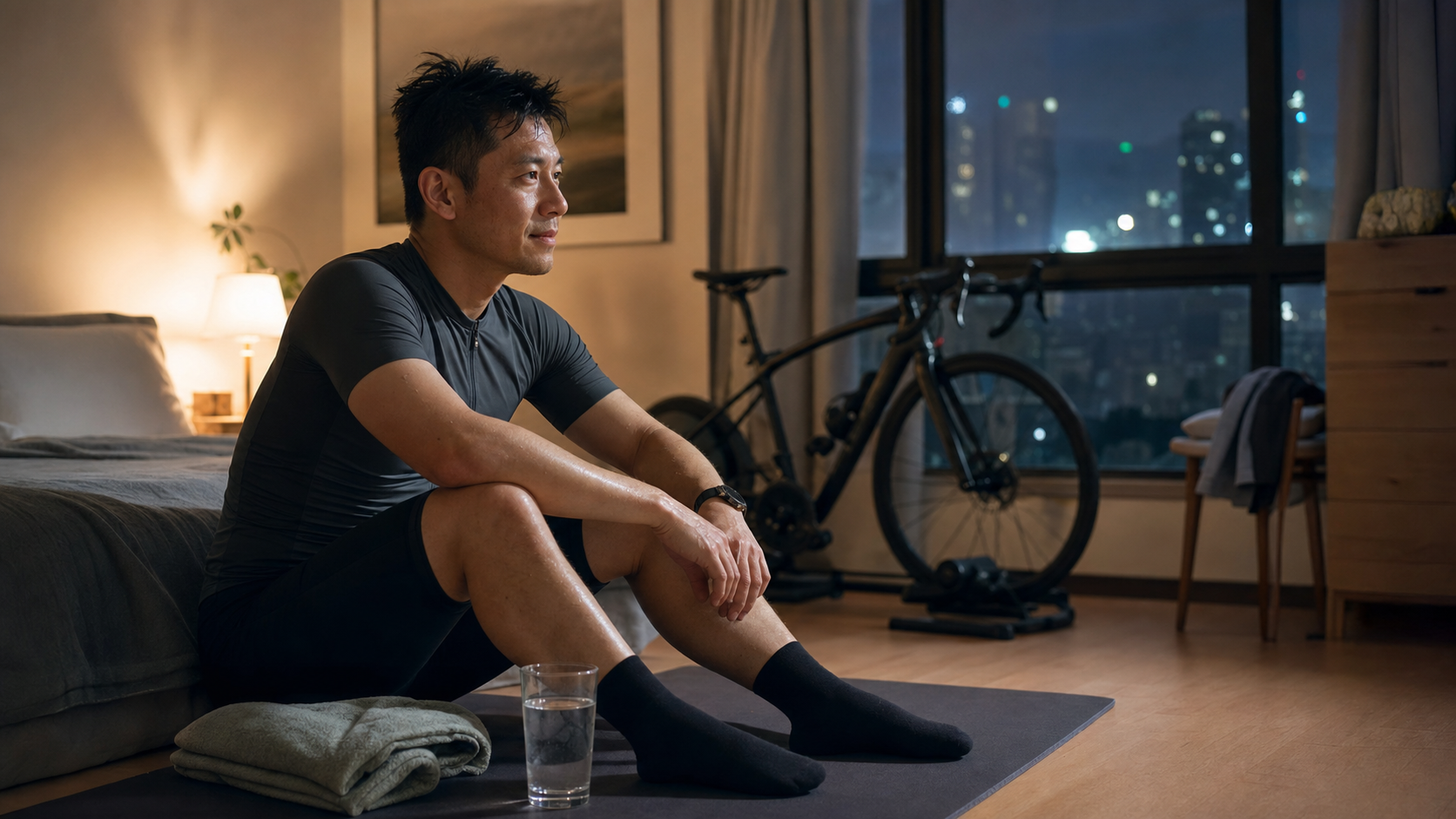
A few years ago, I coached an executive in his early forties from the tech industry; let’s call him A-Zhe. His first words to me were: “Coach, I’m exhausted, but when I lie down, my eyes are wide open, and I’m still scrolling my phone at 3 a.m.” He rode his bike three or four times a week, a decent amount, but his routine was typical: get off work at 8 or 9 p.m., hastily eat a takeout bento, change by 9:30, head to the riverside bike path for an hour of interval sprints, get home around 11 p.m., shower, scroll his phone, and then—lie in bed staring at the ceiling.
The first time he described this, I had a pretty good idea of the issue. The problem often isn’t that he “exercises,” but “how he exercises” and “when he exercises.” In the end, we only adjusted three things: moved the high-intensity workouts to the early evening, changed the pre-bedtime period to a low-intensity cool-down, and swapped out half of his takeout meals. Three weeks later, he reported: his time to fall asleep dropped from over an hour to under twenty minutes, and his nighttime awakenings decreased.
A-Zhe’s story isn’t unique. Over the past decade-plus, in my training plan consultations, the proportion of students reporting “poor sleep” has been remarkably high. In this article, I want to clearly explain “how exercise helps you sleep well” from three angles—mechanism, timing, and intensity—and give you training plans and dosage charts you can directly apply. Let me start with the conclusion: Exercise is one of the most evidence-based non-drug sleep aids available, but using the wrong intensity and timing can actually make your insomnia worse.
An important note upfront: This is educational content. If your insomnia is chronic, severe, affects daytime function, or is accompanied by snoring, sleep apnea, or low mood, please seek medical evaluation. Don’t try to tough it out with exercise alone.
Part 1: Why “Moving” Helps You Sleep Well — The Scientific Foundation
I often tell my students that sleep isn’t a matter of “automatically shutting down when the time comes,” but rather multiple body systems working together to “deliver” you into sleep. Exercise happens to flip several switches at once.
Mechanism 1: The “Rise Then Fall” of Core Body Temperature
This is my favorite mechanism to explain because it’s the most intuitive. To fall asleep, your core body temperature needs to drop by about 0.5 to 1 degree Celsius; this cooling process itself is a powerful sleep-onset signal.
During exercise, core body temperature rises. After you finish, your body initiates heat dissipation, and over the next one to two hours, your temperature drops to a level lower than before you exercised. This “rebound cooling” mimics the physiological state before sleep, essentially paving the ramp for you to fall asleep. The key is—this cooling takes time. If you lie down immediately after exercising, your core temperature is still elevated, which actually blocks sleep onset. This is why “high-intensity exercise too close to bedtime” is counterproductive, which I’ll detail later.
Mechanism 2: Regulating Stress Hormones and the Autonomic Nervous System
Many insomniacs have a “can’t shut off” problem—the sympathetic nervous system stays ramped up, and the mind won’t stop. Regular exercise helps regulate the hypothalamic-pituitary-adrenal (HPA) axis, the body’s stress response system, normalizing the circadian rhythm of cortisol (the stress hormone): higher during the day when it should be, lower at night when it should be.
At the same time, regular exercise helps boost parasympathetic nervous system activity (roughly understood as the “brake” ability). This is why many people, after exercising for a while, feel “less tense and better able to relax.” From a data perspective, good sleep nights are typically accompanied by lower resting heart rate and higher heart rate variability (HRV).
Mechanism 3: Calibrating the Biological Clock (Circadian Rhythm)
The human body has an internal clock of roughly 24 hours, primarily synchronized by light. But exercise itself is also a zeitgeber—exercising at a consistent time gives your biological clock a stable “this is daytime, be awake” signal each day, making the “awake/sleepy” rhythm more distinct.
This is especially practical in Taiwan. Many people spend all day in air-conditioned offices with insufficient sunlight, causing their biological clocks to drift. If you can consistently exercise in the early morning or early evening while also getting daylight, you get the combined effect of light plus exercise for synchronization—a double benefit.
Mechanism 4: Mood, Anxiety, and the Brain
Everyone has heard about exercise’s benefits for mood. For sleep, reducing anxiety and rumination is particularly important—many people aren’t physically tired; their minds just won’t shut off. Research has also observed associations between exercise and brain-derived neurotrophic factor (BDNF) as well as improvements in chronic inflammation markers, all of which are interconnected with sleep quality and emotional regulation.
Mechanism 5: Sleep Pressure and Adenosine
There’s one angle few people talk about, but I love using to explain things: sleep pressure. From the moment you wake up, a substance called “adenosine” gradually accumulates in your brain; the more it builds up, the sleepier you feel—this is the so-called “sleep drive.” By evening, when concentrations are high enough and combined with the circadian rhythm, you naturally feel drowsy.
So why does coffee keep you awake? Because caffeine “blocks” adenosine receptors, preventing the brain from receiving the “I’m tired” signal. This also explains why that espresso in an afternoon bubble tea drink might have you tossing and turning at night.
And physical activity increases your total daily energy expenditure and metabolism, allowing sleep drive to accumulate more solidly. In other words, people who are active and get sunlight during the day will have a stronger “urge to sleep” at night than those who sit and scroll their phones all day. This is a fundamental but often overlooked underlying logic of how exercise aids sleep.
What Do These Mechanisms Actually Do for You?
According to multiple systematic reviews and meta-analyses, regular moderate-intensity exercise can generally lead to improvements in the following areas (note: these are general directions and ranges observed in research; individual variation is large, and these are not guaranteed values):
| Sleep Metric | Plain-Language Explanation | General Direction After Exercise Intervention |
|---|---|---|
| Sleep Onset Latency | Time from lying down to falling asleep | Decreased |
| Total Sleep Time | Actual total sleep throughout the night | Increased |
| Sleep Efficiency | Proportion of time in bed actually spent sleeping | Improved |
| Deep Sleep Percentage | The most critical sleep for physical recovery | Tends to increase |
| Subjective Sleep Satisfaction | How well you feel you slept | Improved |
One point I really want to emphasize: multiple literature reviews indicate that exercise’s effect on chronic insomnia is comparable to Cognitive Behavioral Therapy for Insomnia (CBT-I), making it a powerful non-drug option. This isn’t to say you shouldn’t see a doctor, but rather—the tool you have in your hands is more powerful than you think.
Part 2: Timing and Intensity — The Two Things Most Often Got Wrong
If mechanisms are the “why,” then timing and intensity are the “how to do it right.” This section is the most practical core of the entire article, so please read it carefully.
Does Evening Exercise Actually Ruin Your Sleep?
This is the question I get asked to death. Past “sleep hygiene” advice almost universally told people “don’t exercise at night,” but recent evidence is revising this claim.
Summarizing recent research, the key points can be condensed into these statements:
- For most people, moderate-intensity exercise in the early evening or evening not only doesn’t harm your sleep, but may actually help you fall asleep faster and increase deep sleep.
- The real landmine is high-intensity exercise too close to bedtime (especially within one hour), such as sprint intervals. This type of activity can slow sleep onset and worsen sleep quality.
- Recommended safe buffer: finish moderate-to-high intensity exercise at least about 90 minutes to several hours before bedtime to allow core temperature, heart rate, and excitatory brain chemicals time to subside. Some research suggests “completing moderate-to-high intensity exercise at least 3 hours before bed” is safer; a 2025 analysis further indicated that finishing exercise within 4 hours of sleep is associated with delayed sleep onset, shorter and poorer sleep, elevated resting heart rate, and decreased HRV.
So the answer isn’t “you can’t exercise at night”—it’s—you can exercise at night, but move the most intense part earlier and reserve the pre-bedtime period for a low-intensity cool-down. This was the core of A-Zhe’s adjustment.
A Quick-Reference Chart: Different Intensities for Different Times
The following “exercise timing and dosage chart” is the reference framework I actually give my students. The time points are marked by “how long until bedtime,” which is more useful than clock time (since everyone sleeps at different times).
| Time Until Bedtime | Suitable Intensity | Example Activities | Why |
|---|---|---|---|
| Morning / Daytime | Any intensity | Long rides, intervals, weight training | Lowest risk for sleep; also helps synchronize the biological clock |
| Early evening (about 4+ hours before bed) | Moderate-to-high intensity OK | Riverside intervals, hill climbs, weight training | Enough buffer for heat dissipation and heart rate to drop |
| About 90 minutes to 3 hours before bed | Primarily moderate intensity | Easy aerobic rides, brisk walking, jogging | Good for sleep, but avoid pushing to maximum intensity |
| Within 90 minutes of bedtime | Low intensity / relaxation focus | Stretching, yoga, easy walking, breathing exercises | Helps the body “downshift”; no longer raising temperature or arousal |
| Within 1 hour of bedtime | Avoid high intensity | No sprint intervals, no max-effort lifting | The most likely landmine zone to make it harder to fall asleep |
How to use this chart? Say you go to bed at 11 p.m. Your “high-intensity window” would be roughly before 7 p.m.; from 7 to 9:30 p.m., moderate-intensity aerobic exercise is fine; after 9:30 p.m., focus on stretching and relaxation breathing.
Intensity: It’s Not About How Exhausted You Get
Many students have a misconception: “If I push myself to the limit today, I’ll sleep like a log tonight.” Wrong. Overtraining can actually ruin your sleep.
There’s an interesting observation in research: the relationship between total exercise volume and sleep quality follows an inverted U-shaped relationship—too little has no effect, moderate amounts are best, and too much diminishes the benefits. One analysis roughly placed the “sweet spot” at around 900+ MET-minutes per week (a composite unit of exercise volume). You don’t need to calculate METs precisely; just remember the core principle:
Sleep is a reward for “moderate and consistent” exercise, not for “pushing yourself to the brink.” Long-term overtraining with insufficient recovery keeps the sympathetic nervous system ramped up all day, making it harder to fall asleep and more likely to wake at night.
This is especially common among endurance athletes. I’ve met many passionate cyclists who pile on massive mileage before the season, only to see their sleep quality collapse, feel lethargic during the day, and get weaker the more they train—that’s not a lack of effort; it’s a recovery deficit.
Part 3: Practical Methods — Training Plans You Can Copy Directly
After all that theory, here’s something you can use right away. The following plans are designed with “improving sleep” as the primary goal, suitable for the general population using exercise as a sleep aid, and also for cyclists troubled by insomnia.
A One-Week Sleep-Promoting Exercise Plan (Beginner to Intermediate)
The design principles of this plan: accumulate sufficient moderate-intensity aerobic exercise each week, place high-intensity work in the daytime or early evening, and always include a low-intensity cool-down before bed. The weekly goal is roughly 150+ minutes of moderate-intensity activity (which also aligns with general adult physical activity guidelines).
| Day | Main Workout | Intensity | Recommended Time | Pre-Bed Cool-Down |
|---|---|---|---|---|
| Monday | Easy aerobic ride, 40 min | Moderate (can hold a conversation) | Early evening | Stretching, 10 min |
| Tuesday | Rest or 30-min walk | Low | Any time | Breathing exercises, 5 min |
| Wednesday | Intervals or hill training, 40 min | High | Daytime / early evening | Easy spin cool-down, 15 min |
| Thursday | Yoga or core work, 30 min | Low to moderate | Early evening | Stretching, 10 min |
| Friday | Brisk walk or jog, 30 min | Moderate | Early evening | Stretching, 10 min |
| Saturday | Long ride, 60–90 min | Moderate | Morning | Cool-down, 15 min |
| Sunday | Rest, easy walk | Low | Any time | Relaxation breathing, 10 min |
A few usage notes:
- This is a “template,” not a “commandment.” You can shift days to fit your schedule, but try to keep one full rest day.
- If the high-intensity day (Wednesday) can only be scheduled in the evening, make sure it’s at least 3 hours before bedtime and do a proper cool-down.
- The low-intensity cool-down in the 30 minutes before bed is the most easily overlooked yet most crucial part of this plan. Its purpose isn’t to build fitness; it’s to help the body “downshift.”
The 30-Minute Pre-Bed “Downshift” Routine
This is the small pre-sleep ritual I have my students develop, focused on pushing the sympathetic nervous system back down. It can accompany workout days or serve as pure pre-sleep relaxation:
- Cat-cow stretch × 8 reps: Mobilize the spine, relax the lower back.
- Legs-up-the-wall pose for 3–5 minutes: Helps venous return from the legs and promotes relaxation.
- Static stretches for hip openers and hamstrings, 30 seconds × 2 sets each: The tightness trouble zones for cyclists.
- Diaphragmatic breathing for 5 minutes: Inhale for about 4 seconds, exhale for about 6 seconds. The extended exhale is key—it biases toward activating the parasympathetic nervous system.
- Lights off, phone down: This step is the hardest and the most effective.
A Real Case Study: A-Ping’s Three-Week Adjustment
Let me give you another case for a clearer picture. A-Ping, age 50, started cycling after retirement. Her main complaint was “early waking”—she’d often wake at 4 a.m. and then couldn’t get back to sleep. Her problem was the opposite of A-Zhe’s: her exercise timing was fine (all in the morning), but her exercise volume was too low, she got insufficient daytime sunlight, and her naps were too long.
Our adjustments were simple: gradually increased her morning ride from 20 minutes to 40 minutes at moderate intensity, limited naps to under 30 minutes, and no caffeine after 3 p.m. Three weeks later, her early waking frequency had noticeably decreased. This illustrates an important point: insomnia manifests in many different ways, and exercise prescriptions must be individualized. No single training plan works for everyone.
Part 4: Common Mistakes and Corrections
This section covers the landmines I most often see in my students. Check how many you’ve hit.
Mistake 1: High-Intensity Intervals Within an Hour of Bedtime
Symptoms: Like A-Zhe, doing sprint training very late at night, then lying in bed with your mind still racing and heart rate still elevated.
Correction: Move high-intensity work to at least 3 hours before bedtime, leaving only low-intensity activity for the pre-bed period. If you truly only have time late at night, it’s better to do easy aerobic exercise or stretching than to force intervals.
Mistake 2: Using “Pushing Yourself to Exhaustion” as a Sleep Aid
Symptoms: Believing the more exhausted you are, the better you’ll sleep, resulting in chronic overtraining, worsening sleep, and daytime fatigue.
Correction: Remember the inverted U-shaped relationship. Regular moderate exercise beats occasional extreme volume. Schedule sufficient recovery days. If your resting heart rate stays consistently elevated, that’s a warning sign of inadequate recovery.
Mistake 3: Eating and Drinking Heavily, or Consuming Caffeine Right After Exercise
Symptoms: A big late-night meal after working out, or drinking energy drinks to “stay awake for the drive home,” and then caffeine wreaks havoc.
Correction: Caffeine half-life varies by individual, but a general recommendation is avoid caffeine after mid-to-late afternoon (around 3–4 p.m.). Post-exercise nutrition should focus on easily digestible foods; avoid eating too much, too greasy, or too spicy before bed. This is especially worth noting in Taiwan, where late-night fried chicken and spicy hot pot are beloved.
Here’s a caffeine and pre-bed substance reference chart I often give students. With bubble tea shops and convenience store coffee everywhere in Taiwan, many people don’t realize how much caffeine they consume in a day. The following doses are general approximate ranges; actual amounts vary significantly by product and concentration:
| Common Beverage/Source | Approximate Caffeine Content | Pre-Bed Handling Advice |
|---|---|---|
| Convenience store medium American coffee | About 100–200 mg | Try to avoid after 2–3 p.m. |
| Bubble tea shop concentrated latte (large) | About 100–200 mg | Same as above; note some “extra strong” versions are higher |
| Taiwanese black tea / green tea (large) | About 40–100 mg | Be cautious within 6 hours of bedtime |
| Energy drinks | About 80–160 mg | Avoid after early evening |
| Regular dark chocolate | Small amount | Usually minor impact, but sensitive individuals should still be mindful |
| Alcohol | — | Avoid before bed; disrupts second-half sleep |
Key concept: caffeine’s half-life commonly falls in the range of several hours, meaning that cup you had in the afternoon may still be half-active in your system by night. For those sensitive to caffeine, this cutoff needs to be even earlier.
Mistake 4: Relying Only on Exercise, Ignoring Other Sleep Hygiene
Symptoms: Training plan is followed diligently, but the bedroom is too bright, you scroll your phone for two hours before bed, and your sleep schedule varies wildly day to day.
Correction: Exercise is a powerful tool, but not a magic bullet. Combine it with a consistent bedtime, reducing bright light and screen time before bed, and keeping the bedroom cool and quiet for multiplied effects.
Mistake 5: Shouldering Severe Insomnia Alone
Symptoms: Already suffering from insomnia for months, with daytime function severely affected, yet still trying to “just exercise more” on your own.
Correction: See a doctor when you should. Taiwan’s National Health Insurance makes it convenient to seek care; family medicine, psychiatry, and sleep centers can all provide evaluation. Exercise can be an adjunct, but chronic, refractory insomnia, or insomnia accompanied by other symptoms (snoring, daytime sleepiness, mood issues), requires professional assessment—it may involve conditions like sleep apnea, anxiety, or depression that need treatment.
Part 5: Actionable Advice for Different Reader Levels
Everyone starts from a different point, so I’ve broken down specific recommendations by common demographic.
If You’re a Beginner with “No Exercise Habit”
- Start with the smallest viable dose: A 20-minute brisk walk every evening for two consecutive weeks. The goal isn’t fitness; it’s establishing a “move at a fixed time” rhythm.
- Don’t rush intensity: Beginners most often quit due to soreness from pushing too hard once. Better to do less, but do it consistently.
- Pair with the pre-bed downshift routine: Even on days you don’t exercise, do the 5 minutes of diaphragmatic breathing.
- Review after two weeks: If you’re falling asleep faster and waking less at night, gradually increase the time to 30 minutes.
If You’re an Intermediate Cyclist Who “Rides but Sleeps Poorly”
- Check your timing: First, see if your high-intensity sessions are scheduled too late. Simply moving intervals earlier helps many people feel a difference.
- Check your volume: Have you been overloading recently? Try scheduling a deload week and observe whether sleep stabilizes.
- Add low-intensity days: Don’t let every ride be a hard session; mix in easy rides and yoga.
- Track for two weeks: Simply jot down “exercise time, intensity, how quickly you fell asleep that night, how many times you woke up,” and you’ll quickly see your own patterns.
If You’re an Advanced Endurance Athlete with High Training Volume
- Treat sleep as part of your training: For you, declining sleep quality is often an early warning sign of overtraining, not a trivial matter.
- Monitor recovery markers: Resting heart rate, HRV, and subjective fatigue—if any of these consistently trend in the wrong direction, consider reducing volume.
- Be extra careful with pre-season volume spikes: When piling on mileage, sleep is the first thing to break down. Better to trim the training plan than to sacrifice sleep.
- Jet lag for international competitions: Use “consistent exercise timing + sunlight exposure” to help synchronize your biological clock.
A Few Practical Tips Specific to Taiwan
- Summer heat and humidity: Taiwan’s summer nights are hot and humid, slowing post-exercise heat dissipation. Consider moving workouts to early morning, or take a warm shower before bed to aid cooling, and set the bedroom air conditioning to a cool, comfortable temperature.
- Venue options: Riverside bike paths, school tracks, and riverside trails are all good, free options; on rainy days or when air quality is poor, indoor cycling, or core work on a yoga mat at home work fine.
- Nutrition for those who eat out: Taiwan’s food options are convenient but often too salty and oily. Keep the pre-bed meal light, with more vegetables and moderate protein, and avoid the heavy, spicy stimulation of late-night food stalls.
- Healthcare resources: If you genuinely can’t sleep well long-term, don’t tough it out. Under the NHI, family medicine, psychiatry, and hospital sleep centers can all help with evaluation.
Part 6: Self-Monitoring — How Do You Know If You’re Improving?
I often remind my students: relying on feelings is an easy way to fool yourself, especially for insomniacs, whose anxiety amplifies the sense of “I didn’t sleep well again.” Instead of agonizing, do some simple tracking and let the data speak for you.
A Minimalist Sleep Diary
You don’t need expensive devices; a piece of paper or a phone memo app is enough to start. Spend one minute each morning recording these columns:
| Tracking Item | How to Record | Why It Matters |
|---|---|---|
| Yesterday’s exercise time and intensity | e.g., 6 p.m., 40-min intervals | To correlate timing with sleep |
| Approximate bedtime | e.g., 23:10 | To see if your schedule is consistent |
| Estimated time to fall asleep | e.g., about 20 minutes | To track sleep onset latency |
| Number of nighttime awakenings | e.g., 1 time | To assess sleep continuity |
| Morning energy level (1–5 scale) | Subjective rating | Daytime function is the most important indicator |
Track for two weeks, and you’ll be surprised to discover your own patterns—“Oh, I always sleep poorly the night after Wednesday intervals” or “I wake up more easily at night on days I drink afternoon coffee.” These personalized clues are worth more than any generic advice.
How to Interpret Wearable Device Data?
Many cyclists already wear sports watches or bands that display sleep stages, resting heart rate, and HRV. This data has reference value, but please remember two things:
- Consumer-grade devices’ sleep staging isn’t medical grade. Look at trends, not single numbers. Don’t panic over one night showing “only 30 minutes of deep sleep.”
- Look at trends, not single points. If resting heart rate trends upward and HRV trends downward for a week straight, while you also feel tired—that’s a real signal to reduce volume and prioritize sleep.
A practical tip: Treat “daytime energy” as your North Star. No matter how good the device numbers look, if you’re lethargic during the day, you didn’t sleep well; if the numbers are mediocre but you feel clear-headed all day, don’t manufacture worries.
Part 7: What About People with Chronic Conditions or Special Situations?
This section needs to be more conservative because it involves medical conditions. The following are general principles, not personalized medical advice for you. Please defer to your primary care physician’s assessment for actual practices.
Hypertension and Heart Disease
Regular moderate-intensity aerobic exercise is generally beneficial for cardiovascular health and sleep, but intensity and safety must be individualized. If you have high blood pressure, a history of heart disease, or have experienced chest tightness, palpitations, or discomfort during exercise, be sure to get a physician’s evaluation before starting or intensifying an exercise program, and consider cardiopulmonary exercise testing if necessary. Certain medications (e.g., some blood pressure drugs) can also affect heart rate response during exercise—these all require physician oversight.
Diabetes
Exercise helps with blood sugar control and sleep, but be aware that exercise can cause blood sugar fluctuations, especially for those using insulin or certain glucose-lowering medications, with a risk of nocturnal hypoglycemia after evening exercise. Timing, nutrition, and medication adjustments should all be discussed with your physician or diabetes educator, and learn to self-monitor blood glucose. Don’t make major changes on your own.
Suspected Sleep Apnea
If you (or your bed partner reports that you) have loud snoring, breathing pauses during sleep, or severe daytime sleepiness, this may not be simple insomnia but rather obstructive sleep apnea. Exercise alone won’t solve this condition; you need evaluation at a sleep center. Major hospitals in Taiwan all have sleep centers, and under the NHI system, access is relatively convenient—don’t delay.
Menopause and Hormonal Changes
Many female students experience sleep disturbances around menopause (such as nighttime hot flashes causing awakenings). Regular exercise, temperature management, and a cool sleep environment can all help, but if the disturbance is severe, an individual assessment by an OB/GYN or family medicine physician is more appropriate than trying to self-adjust.
One-sentence common principle: For those with chronic conditions or on medication, exercise is a good thing, but “how to move, how hard, and when” must be individualized, with your healthcare team involved in the decisions.
Part 8: Quick Q&A (FAQ)
Q1: I only have time to exercise after 9 p.m. Is there no hope for me?
No, there’s hope. You can still exercise, just skip the most intense parts and opt for moderate-to-low intensity aerobic work or stretching instead. Some movement is better than none, as long as you don’t force high-intensity work right before bed.
Q2: How long until I see sleep improvements from exercise?
Many studies use interventions of about 30 minutes per session, 3 times per week, lasting several weeks (e.g., 8 weeks) before evaluating. So give yourself at least three to four weeks; don’t quit after two days just because you don’t feel a difference.
Q3: Does strength training help too, or does it have to be cardio?
It helps. Moderate-intensity aerobic exercise, resistance training, and mind-body exercises (yoga, tai chi) have all been observed to have positive effects on sleep. The kind you enjoy and can sustain is the best kind.
Q4: Is it okay to have a little alcohol before bed to help me fall asleep?
Alcohol may make you feel like you fall asleep faster, but it disrupts the structure of the second half of the night, making you more likely to wake up and sleep more lightly. Alcohol is not recommended as a sleep aid.
Q5: Can people taking sleeping pills exercise?
Yes, and exercise can be a great adjunct. But any medication adjustments must be directed by your physician. Don’t self-adjust your dosage just because you started exercising; discuss it with your doctor.
Q6: Does a hot bath help or hinder sleep?
Usually it helps. Taking a warm bath about 1–2 hours before bed first dilates surface blood vessels, accelerating subsequent heat dissipation, essentially giving you a push onto the “core temperature drop” ramp to sleep. The key is not to soak in water so hot that your body stays elevated right before falling asleep; leave time for your temperature to come back down for the best effect.
Conclusion: Make “Movement” Your Most Reliable Sleep Partner
Back to A-Zhe at the beginning. He later told me: “Turns out I was working hard all along, just in the wrong direction.” I’ve remembered that line ever since. Insomniacs usually don’t lack willpower; what they lack is putting exercise’s ‘intensity’ and ‘timing’ in the right place.
Let me distill this article into three takeaways you can carry with you:
- Mechanistically, exercise helps you fall asleep through multiple pathways: lowering body temperature, regulating the autonomic nervous system, synchronizing the biological clock, and stabilizing mood.
- Timing-wise, you can exercise at night, but move the most intense work earlier and reserve the 90 minutes before bed for a low-intensity cool-down.
- Intensity-wise, moderate and consistent is best. Don’t treat “pushing to exhaustion” as a sleep aid—overtraining will make you sleep worse.
Give yourself four weeks. Follow the plan, put exercise in the right place, and take care of basic sleep hygiene. Most people will gradually transform “can’t sleep” back into “sleeping through the night.” If you still can’t sleep well after adjustments, or if your insomnia is chronic, severe, or affects your daytime function, please seek medical evaluation—exercise is a powerful adjunct, but it shouldn’t replace professional diagnosis.
Sleep isn’t a luxury; it’s the foundation of every pedal stroke, every race, and every waking day. Get moving, and win it back.
This article is educational content and cannot replace individual diagnosis and treatment advice from a physician, physical therapist, or nutritionist. If you have insomnia, sleep apnea, cardiovascular disease, or other chronic conditions, or are taking medication, please consult a qualified healthcare professional before starting or modifying an exercise program, and rely on individualized assessment.
References
- The impact of exercise on sleep and sleep disorders — npj Biological Timing and Sleep: https://www.nature.com/articles/s44323-024-00018-w
- The best approaches and doses of exercise for improving sleep quality: a network meta-analysis and dose-response relationship study — PMC: https://pmc.ncbi.nlm.nih.gov/articles/PMC11987399/
- Effects of Exercise on Sleep Quality and Insomnia in Adults: A Systematic Review and Meta-Analysis of Randomized Controlled Trials — Frontiers in Psychiatry: https://www.frontiersin.org/journals/psychiatry/articles/10.3389/fpsyt.2021.664499/full
- Dose-response relationship between evening exercise and sleep — Nature Communications (2025): https://www.nature.com/articles/s41467-025-58271-x
- Does exercising in the evening affect sleep? — Harvard Health: https://www.health.harvard.edu/exercise-and-fitness/does-exercising-in-the-evening-affect-sleep
- The Best Time of Day to Exercise for Sleep — Sleep Foundation: https://www.sleepfoundation.org/physical-activity/best-time-of-day-to-exercise-for-sleep
Related Reading
- Nutrition and Sleep Balance for Night Trainers: How to Eat and Sleep Without Conflict After Evening Rides
- Athlete Sleep Nutrition: What to Eat to Sleep Well — A Coach’s Practical Guide from the Dinner Table to the Bedside
- The Bidirectional Relationship Between Exercise and Sleep: How Training Improves Sleep Quality
- Sleep: The Cheapest Legal Performance Enhancer — A Coach’s Guide to Stealing Back Your Training Gains
#公路車 #Fitting 靠人工智慧APP 幫你調整單車
6 年前
西進武嶺 免費訓練分析服務 Intervals | 練不夠還是練過頭?你哪一種類型選手?AI模型告訴你! | 備戰神器 | 公路車 訓練 | CT Yeh
4 年前
[教學] Premiere 影片 手震 修正 教學 防抖 單眼 影像 GoPro 穩定 Video Stabilization
8 年前
一個測試有沒有認真練車的方法😂 #公路車
10 個月前
多機位拍片神器 DJI Action 2 拍出速度張力感 | 類空拍機視角 4陣列麥克風超強降風噪 實測! | 公路車 | CT Yeh
3 年前
沉浸室內單車練功房開箱! 100吋大畫面,最便宜的花費? 居然還能K歌!? | 公路車 | CT Yeh
3 年前
一日北高常見問題大集合 | 攻略 | 路線 | 訓練 | 補給 | 自行車 單車 | 一日雙城 | 雙塔 | TWB北高360 | 屁股痛
6 年前
CT暗黑廚房) 車友必備 宇宙無敵鮮蚵湯 幫助訓練恢復 天然食補 好市多 超肥鮮蚵 破PR
7 年前