Exercise and Immunity: Moderation Is Best — A Coach's Guide to the J-Curve and the "Open Window"
Opening: The Student Who “Got Sick More the More She Trained”
I’ve been coaching for over fifteen years and have met all kinds of people. But one case stands out in my memory.
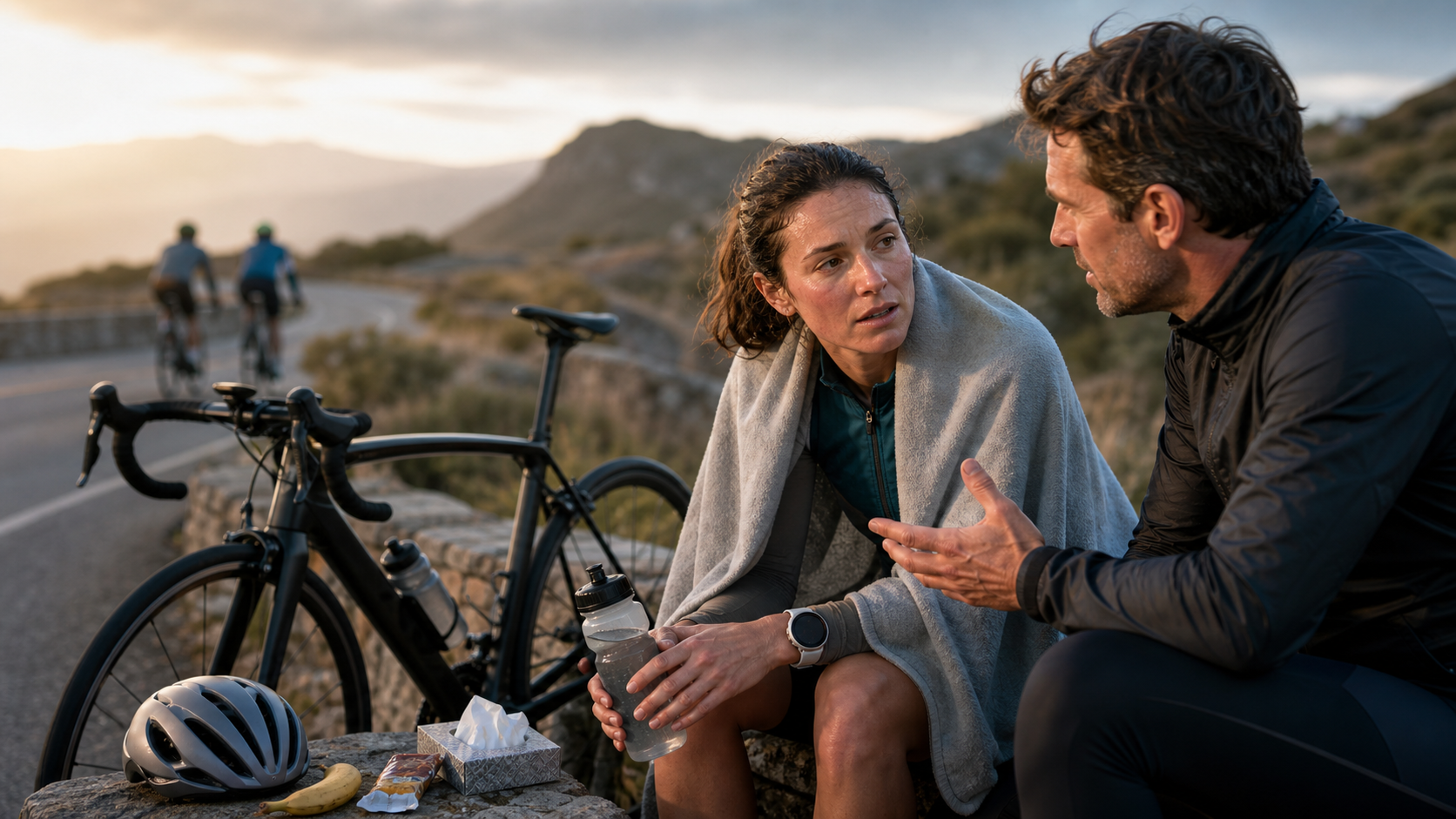
She was an office worker in her thirties—let’s call her Miss A. She had never been one to exercise, but she eventually made up her mind to take part in a classic cycling challenge in central Taiwan, so she came to me. In the first three months, she improved rapidly. Her weight dropped from 68 kg to 62 kg, her resting heart rate fell from 78 bpm to just over 60 bpm, and she was glowing. Even she said, “I haven’t caught this few colds in a long time.”
Then the problem hit. With two months left before the race, she started to get nervous and doubled her training volume on her own. She rode every day during the week, and on weekends she did back-to-back rides of over 100 km each day. She also cut her sleep from seven hours to five. The result? She caught colds for three straight weeks—sore throats and runny noses coming and going—and the crucial training month before the race was almost completely ruined.
She came to me and asked: “Coach, I’ve clearly gotten stronger, so why do I keep getting sick?”
That question is exactly what this article aims to answer. The relationship between exercise and immunity is not a straight line of “the more, the better”—it’s a J-shaped curve. Moderate exercise does make you get sick less often, but once you cross a certain threshold and lack sufficient recovery, exercise can actually temporarily lower your immune defenses. Today, I’ll use my real experience coaching students, along with the concepts that currently have relatively broad consensus in exercise physiology, to help you fully understand this.
Let me first lay out Miss A’s situation at the time, because the devil is in the details. During those three weeks of intense extra training, she was actually stepping on several landmines at once: a sudden spike in training volume (nearly doubling within a week, far beyond what the body can adapt to), severe sleep deprivation (cut from seven hours to five), high psychological stress (fear of not training enough), and deliberately eating less to lose weight. Any one of these alone, a healthy body could probably handle. But when all four are stacked together, it’s like four valves opening at once, draining her immune defenses dry. Her body wasn’t broken down by “exercise” itself, but by the combination of “more training plus zero recovery.” This distinction is crucial, and I’ll come back to it repeatedly later.
If you’ve ever wondered, “Why do I keep getting sore throats even though I exercise seriously?” then this article is written for you. Get ready—let’s break it down layer by layer.
Concepts and Scientific Basis: The J-Curve and the “Open Window”
What Is the J-Curve (J-Shaped Curve)
In exercise immunology, there’s a widely cited and relatively well-tested model called the J-shaped curve theory. It describes the relationship between “exercise volume” and the risk of “upper respiratory tract infections (URTI—what we commonly call colds, sore throats, and the like).”
If you plot it on a graph, you’ll see a shape like the letter J:
- Completely sedentary people who don’t exercise: Immune protection is at an “average” level, with infection risk at baseline.
- People who exercise regularly and moderately: Infection risk is lower than that of sedentary people—this is the lowest point of the J, the sweet spot we all want to be in.
- People who train long-term at high volume and high intensity: Infection risk is actually higher than average—this is the upward sweep of the J.
In other words, the benefit of exercise for immunity is not unlimited. Moderation is best; excess will backfire. According to summaries in exercise immunology, regular moderate-intensity training is indeed associated with a lower risk of upper respiratory tract infections, while prolonged, very high-intensity exercise may temporarily weaken immune function (see the “J-Curve” and “Open Window Theory” references at the end of the article).
What Is the “Open Window” (Open Window Theory)
The second key concept is called the Open Window Theory. This is about what happens after a single bout of high-intensity, long-duration exercise.
After you finish a very demanding long-distance ride or run, your immune system enters a brief period of reduced function. According to the literature, this “window” opens for roughly 3 to 72 hours, and during this period, pathogens can more easily take advantage of the situation. Clinically, the chance of colds and sore throats rises.
I often use this analogy with my students: after a tough battle, your city walls (immune defenses) temporarily have a gap that hasn’t been patched up. If you stay up late, get caught in the rain, or go to crowded places during this time, it’s like inviting the enemy into the city.
Please note—there are two key points I want to make clear upfront:
- The open window is a temporary phenomenon after a single high-intensity workout; it doesn’t mean you shouldn’t exercise. For the average person doing moderate-intensity exercise, this window opens very small and shallow—so small it can even be ignored.
- The depth of the open window is proportional to the duration and intensity of the exercise. A leisurely 40-minute ride along the riverside and a six-hour climb up Wuling are completely different magnitudes of immune impact.
Why Moderate Exercise “Protects” You
So why does regular, moderate-intensity exercise actually reduce your chances of getting sick? Exercise physiology currently tends to explain this through several mechanisms (described below in general terms; specific numbers vary greatly from person to person):
- Improved immune cell patrol efficiency: Each bout of moderate exercise briefly sends certain immune cells into the bloodstream, enhancing their “patrol” efficiency throughout the body. Done regularly, it’s like giving your immune system regular drills.
- Reduced chronic inflammation: Regular exercise helps improve the body’s state of chronic low-grade inflammation, and chronic inflammation itself is linked to immune dysregulation.
- Improved metabolism and body composition: Once weight, blood sugar, and blood pressure improve, the overall health foundation gets better, and the immune system naturally functions more smoothly.
- Lower psychological stress: Exercise reduces the long-term burden of stress hormones, and chronic high stress itself suppresses immunity.
A systematic review and meta-analysis of the general population pointed out that regular physical activity is associated with a lower risk of community-acquired infectious diseases and better vaccine responses (see references at the end of the article). Additionally, pooled results from randomized controlled trials show a trend toward lower infection rates in moderate-exercise groups, though the quality of evidence is low-to-moderate and should be interpreted with caution. I want to be honest here: Scientifically, the direction is clear (moderation is beneficial), but the exact degree of protection varies from person to person. Any claim that “if you exercise, you definitely won’t catch a cold” is overreaching.
“Incidence” and “Severity” Are Two Different Things
Here’s a detail many people confuse, but it’s worth distinguishing. When research asks whether exercise can prevent colds, it’s actually asking two different questions:
- Incidence: Whether you “do or don’t” get infected.
- Severity: Once you’re infected, how severe the symptoms are and how long they last.
Interestingly, some studies give inconsistent answers—with limited evidence—on whether exercise can reduce the incidence of infections. But other studies have observed that people with regular exercise habits, even if they do get infected, tend to have milder symptoms and recover faster. In other words, exercise may not be able to block every cold 100% of the time, but it’s more likely to make it so that “even if you get it, you get it milder.”
I often remind my students of this: Don’t treat “I exercise” as a free pass to stay up late, eat poorly, or push through exhaustion. Exercise is a plus, not a magic invincibility star. When you combine the benefits of exercise with sleep, nutrition, and stress management, that’s when you build a truly solid immune foundation.
Why “Overtraining” Backfires: What Happens Physiologically
Let me explain in plain language the pathways through which excessive exercise suppresses immunity (the following is a general description of mechanisms, not precise values):
| Mechanism | Plain Explanation | Impact on Immunity |
|---|---|---|
| Chronically elevated stress hormones | Prolonged high-intensity exercise keeps the body’s “stress throttle” pressed down | Chronically elevated stress hormones suppress the activity of some immune cells |
| Chronic energy deficit | Training a lot, eating too little—the body is chronically living beyond its means | Immune cells also need energy and raw materials; without supply, they malfunction |
| Sacrificed sleep | Sacrificing sleep to fit in the training schedule | Sleep is the golden window for immune repair; chronic deprivation is highly damaging |
| Accumulated chronic fatigue | Insufficient recovery, fatigue piling up day after day | The body is in a constant state of “not yet repaired, then pushed hard again,” thinning the defenses |
| Weakened mucosal barrier | Prolonged intense breathing, dry mouth | The first-line mucosal defense of the respiratory tract may temporarily decline |
Reading this table, you’ll notice one thing: The real problem is often not “exercise” itself, but that when training volume increases, recovery doesn’t keep pace. This is why I always emphasize—training and recovery are two sides of the same coin.
Practical Approach: How to Put Exercise in the “Sweet Spot”
Enough theory—let’s get to the most practical part: how exactly should you train to stay at the lowest point of the J-curve, rather than on the upturned tail?
What Exactly Is “Moderate Intensity”?
“Moderate intensity” isn’t an abstract term. There are several easy ways to gauge it, and you don’t need expensive equipment:
- Talk Test: At moderate intensity, you can speak in full sentences but can’t sing comfortably. If you can’t even get out a short phrase, you’re already at high intensity.
- Rating of Perceived Exertion (RPE, 1 to 10): Moderate intensity falls roughly at 4 to 6.
- Heart Rate Reference: Roughly speaking, moderate intensity falls between 64% and 76% of your maximum heart rate. You can use “220 minus age” as a very rough starting point for max heart rate (this formula has a significant margin of error—use it only as a reference).
The table below is an “intensity comparison” I often give to trainees of different levels, helping everyone align perceived effort, heart rate, and purpose:
| Intensity Zone | Talk Test | RPE (1-10) | Approximate Heart Rate Zone | Primary Purpose |
|---|---|---|---|---|
| Easy (Recovery) | Can sing comfortably | 2-3 | 50-63% of max HR | Recovery days, warm-ups, open-window activity |
| Moderate | Can speak full sentences, can’t sing | 4-6 | 64-76% of max HR | Immune sweet spot, aerobic base |
| High | Can only squeeze out a few words | 7-8 | 77-93% of max HR | Advanced training, requires strict volume control |
| Very High (Sprint) | Barely able to speak | 9-10 | 94%+ of max HR | Racing, intervals; highest recovery demand |
Recommended Weekly Exercise Dose
Internationally, there’s relative consensus on physical activity recommendations for general adults: accumulate about 150 to 300 minutes of moderate-intensity aerobic activity per week, or 75 to 150 minutes of vigorous activity, plus two sessions of strength training per week. Reviews in exercise immunology also indicate that moderate-intensity exercise within this “recommended dose” range helps enhance immune cell function and reduce the risk of upper respiratory tract infections (see references at the end).
Mapping this to the J-curve, this dose sits right at the center of the sweet spot. Below are “immune-friendly” weekly schedule examples I give to trainees of different levels—note that each one deliberately preserves recovery space:
| Level | Weekly Training Volume | Sample Weekly Schedule | Recovery Design |
|---|---|---|---|
| Beginner (sedentary to active) | ~150 minutes | 30 min moderate cycling or brisk walking on Mon/Wed/Fri; 30 min easy activity on Sat | At least one day off between sessions; 7+ hours of sleep |
| Intermediate (regular exerciser) | ~250-300 minutes | 45 min moderate on Tue/Thu; 90 min mid-long ride on Sat; 30 min recovery on Sun | Complete rest on Mon/Fri; only one long session per week |
| Advanced (race goals) | Per schedule, includes high intensity | High-intensity intervals 1-2x, one long-distance session, rest at low-moderate intensity | 48 hours between high-intensity days; a deload week every 3-4 weeks |
The most important thing about this table isn’t “how much you train,” but that every row has a clear recovery design. I often tell trainees: training breaks you down (microscopic stress), recovery makes you stronger. If you have only the former without the latter, that J-curve will slowly start to curl upward.
How to Protect Yourself During the Open Window
Say you’re set on doing Wuling, Taroko, or some full marathon—long-duration, high-intensity exercise is unavoidable. How do you minimize the damage from the “open window”? Here’s my practical checklist for trainees:
- Treat the 24 to 72 hours after a race or heavy session as a “protection period”: Don’t stack another hard workout on top; switch to easy activity or complete rest.
- Stay on top of fueling: Consume adequate carbohydrates and protein during and after exercise—don’t let your body stay in an energy deficit for long. Fasting through a hard session will open the window even wider.
- Prioritize sleep: In the nights after a big session, sleep matters more than any supplement.
- Avoid high-risk environments: Right after a race, don’t immediately head into crowded, poorly ventilated indoor spaces. Race venues in Taiwan are often packed; grab your medal and head out early to rest.
- Stay warm and dry: In Taiwan’s mountain areas (like Wuling), temperature swings on descents are extreme. Change out of soaked clothes immediately—don’t let a fatigued body also lose body heat.
How to Monitor Yourself for Overtraining
Before immunity collapses, the body actually flashes many yellow lights—most people just ignore them. I teach trainees a simple “daily self-check” that requires no expensive devices and takes thirty seconds each morning. Here’s the red-yellow-green chart I commonly use:
| Monitoring Indicator | Green Light (Good) | Yellow Light (Caution) | Red Light (Rest/Reduce) |
|---|---|---|---|
| Morning resting heart rate | About the same as usual | 3-5 bpm above usual | 5-10+ bpm above usual for several consecutive days |
| Sleep | Deep sleep, wake up refreshed | Light sleep, occasional poor sleep | Consecutive insomnia, tired no matter how much you sleep |
| Feeling during exercise | Expected pace achieved easily | Feels a bit harder than usual | Even easy sessions leave you breathless, legs heavy |
| Mood and appetite | Stable, good appetite | Somewhat irritable, average appetite | Clearly low mood, no appetite or binge eating |
| Minor aches and illnesses | None | Occasional dry, scratchy throat | Recurrent colds, slow-healing wounds |
The interpretation is simple: An occasional yellow light or two is usually just normal fluctuation—observe and move on. But if three or more yellow lights appear at once, or any single red light shows up, that’s your body clearly telling you—today’s session should be scaled back, or even skipped entirely. Miss A back then had elevated morning heart rate, poor sleep, and irritability for two straight weeks, yet stubbornly ignored these signals and kept adding volume—which is how she ended up with a cascade of colds. Learning to read your body is worth more than any expensive watch feature.
I especially want to highlight the “morning resting heart rate” metric because it’s cheap, objective, and sensitive. Here’s how: every morning, right when you wake up, before getting out of bed and before checking your phone, measure your heart rate for one minute (using a watch, or fingers on the carotid artery or wrist), and log it. Within a week or two, you’ll have your baseline. From then on, if it jumps noticeably for a few days, combined with other yellow lights, it’s an excellent “time to hit the brakes” reminder.
Taiwan-Specific Context: Climate, Terrain, and Lifestyle
When it comes to exercise immunology, putting it into the reality of daily life in Taiwan brings up some very local nuances. This section is compiled specifically for Taiwan’s cyclists and runners.
Heat, Humidity, and Temperature Swings
Taiwan’s summers are hot and humid, placing a heavier burden on sweating and body temperature during prolonged exercise than in drier, cooler regions. Dehydration and electrolyte loss can slow recovery and potentially lengthen the open window. For long-distance summer exercise, hydration and electrolyte intake must be a priority—don’t wait until you’re thirsty to drink. Conversely, when cycling or running at mid-to-high altitudes in winter (around Wuling, Hehuan Mountain), temperature swings can be drastic on descents. Fatigue combined with hypothermia is a perfect breeding ground for colds. Before heading to the mountains, be sure to bring ample warm, windproof, and waterproof clothing—a lightweight windbreaker can often be the key.
Nutrition for Those Who Eat Out
Taiwan’s convenient food culture is actually an advantage for busy athletes, as long as you choose wisely:
| Need | Practical Options Easily Found in Taiwan |
|---|---|
| Protein | Chicken breast bento, braised tofu and tofu skin from luwei shops, convenience store tea eggs, unsweetened soy milk, milk, yogurt |
| Quality Carbs | White rice, sweet potatoes, brown rice, noodles, oatmeal |
| Fruits & Vegetables | Blanched greens added to bentos, seasonal fruit from fruit stalls, convenience store salads |
| Post-Workout Recovery | Bananas, onigiri with unsweetened soy milk, or a simple combo of milk and a banana |
The key isn’t eating elaborately, but getting enough carbs and protein at the right times, especially in that window after a hard workout. Taiwan’s convenience store density is among the highest in the world—use it to your advantage, and don’t let yourself carry fatigue on an empty stomach for long.
Common Training Venues and Crowds
Taiwan’s riverside bike paths, lake-loop roads, and rural lanes are excellent venues for moderate-intensity training, offering good safety and accessibility. However, it’s worth noting that large race events are often extremely crowded, and rest areas are poorly ventilated—exactly the environment you should avoid lingering in during the open window. My advice: after finishing the race, collecting your medal, and taking photos, head back to a ventilated area to rest and change into dry clothes. Don’t spend too long in the crowded aid stations.
Access to Medical Care
Taiwan’s National Health Insurance makes seeing a doctor convenient, which is a major advantage for taking care of our bodies. When you have a persistent fever, symptoms that haven’t improved after a week, or any physical signals that concern you, lower the threshold for seeing a doctor. Spending a small registration fee to get clarity on your health is always better than toughing it out and letting a minor illness turn into a major one. This is especially important for those with chronic conditions—maintain open communication with your healthcare team.
Common Mistakes and Corrections
I want to spend extra time on this section because I’ve seen these mistakes in my athletes far too often, and they’re usually made by people with the best intentions.
Mistake 1: “I Need to Push Harder, So More Volume Is Better”
This is A’s story. The closer the race gets, the more anxious you become, and the more you want to add volume. But the immune system doesn’t work that way.
Correction: The closer you get to a major goal, the more you need to understand “tapering.” In the 1 to 2 weeks before a competition, moderately reduce training volume while maintaining intensity, allowing your body to clear accumulated fatigue and rebuild its immune defenses. After I adjusted A’s plan, she cut her weekly mileage by nearly 40% in the two weeks before the race. On race day, she felt the best she had in months—and didn’t catch a cold.
Mistake 2: “I Have to Train Even When Sick, or I’ll Lose Fitness”
This is the most dangerous one. Many disciplined athletes push through colds to ride or run, feeling that skipping a day is a sin.
Correction: Here’s a simple principle commonly used in sports medicine, called the “Neck Check”—
- If symptoms are above the neck (simple nasal congestion, mild sore throat, sneezing), and you have no fever or general weakness, low-intensity, short-duration exercise is usually acceptable, while continuously monitoring how your body responds.
- If symptoms are below the neck (fever, body aches, cough with phlegm, nausea, abnormal heart rate, significant fatigue), you should rest completely, stop exercising, and consider seeing a doctor.
This principle is a guideline to help you judge, not an ironclad rule. A special warning: exercising with a fever carries the risk of serious complications like myocarditis, with documented cases both in Taiwan and internationally. Exercising with a fever is never worth it; it’s better to rest for a few days. If symptoms persist or worsen, see a doctor directly.
Mistake 3: Focusing Only on Training, Neglecting Sleep and Nutrition
Many people treat “training” as the only variable, overlooking that the foundation of the immune system is actually sleep and nutrition.
Correction: Treat sleep and diet as part of your training plan. Here are some practical, immune-friendly suggestions that fit Taiwan’s lifestyle:
- Sleep: Adults should aim for 7 to 9 hours. Prioritize this especially on hard training days.
- Protein: For those with regular training habits, a common reference range is about 1.2 to 2.0 grams of protein per kilogram of body weight per day. In Taiwan, those who eat out can easily meet this with chicken breast bentos, soy products from luwei shops, convenience store tea eggs, unsweetened soy milk, and milk.
- Sufficient Calories and Carbs: For prolonged aerobic training, avoid staying in a chronic, overly low-calorie state, or your immunity can suffer. The rice, noodles, and sweet potatoes that Taiwanese people love are actually excellent fuel for exercise.
- Fruits, Vegetables, and Hydration: A diverse intake of fruits and vegetables supports overall health. Taiwan offers convenient access to produce year-round—take advantage of it.
Mistake 4: Treating Supplements as an Immune Panacea
The market is full of supplements claiming to “boost immunity,” and many athletes ask me whether they should take them.
Correction: My stance has always been conservative. A balanced diet, adequate sleep, and moderate exercise are the three main pillars of immunity. Any supplement is merely a supporting player, with effects that vary by individual and evidence of varying strength. If your diet is normal, the marginal benefit of most supplements is very limited. If you do want to take something, consult a doctor or nutritionist first, especially if you have a chronic condition or are on medication. Excessive vitamins or minerals can also be harmful—don’t treat “supplementing” as something without limits.
Special Reminder: For Those with Chronic Conditions
I want to say this in the most cautious tone possible. If you have diabetes, high blood pressure, heart disease, asthma, immune-related conditions, or are undergoing any treatment, exercise is likely still beneficial for you, but the threshold for “moderation” and the details you need to watch out for differ from the general population.
- Exercise prescriptions should be individualized. Ideally, discuss with your primary care physician before starting or significantly changing an exercise plan.
- Some medications can affect heart rate, blood sugar, or temperature regulation, making “using heart rate to gauge intensity” inaccurate—this requires professional assessment.
- Infections pose a higher risk for certain chronic disease groups, so self-protection during the open window needs to be even more thorough.
Taiwan’s National Health Insurance makes medical access relatively convenient—this is our advantage. Use it: attend regular follow-ups, maintain communication with your healthcare team, and tell your doctor about your exercise plans so professionals can help you manage. What I can offer here are only general principles; they cannot replace the discussion between you and your doctor about your specific situation.
Actionable Advice for Readers at Different Levels
Finally, let’s condense the entire article into actionable steps you can implement right away. Find where you fit.
If You’re a Sedentary Person Who Doesn’t Exercise at All
The good news: your starting point is where you have the most room for improvement. From the perspective of the J-curve, simply getting moving will shift you toward that immune sweet spot.
- Start with moderate intensity, 3 times per week, 20 to 30 minutes each session (brisk walking or a leisurely riverside ride are both great).
- Use the “talk test” to gauge intensity: you should be able to speak in full sentences.
- Don’t rush to increase volume. First, establish “consistency” itself—that matters more than how long any single session is.
If You’re an Intermediate Athlete with Training Habits
Your biggest risk is often “overtraining without realizing it.”
- Check your week: are you training at moderate-to-high intensity every single day? If so, schedule at least 1 to 2 true recovery days.
- Track your resting heart rate: if it’s noticeably elevated for several consecutive mornings (e.g., 5 to 10 bpm higher than usual), combined with feeling unusually tired or sleeping poorly, it’s usually your body signaling “I need rest.”
- Schedule at most one truly long or high-intensity session per week; accumulate the rest at low-to-moderate intensity.
If You’re an Advanced Athlete with a Race Goal
You understand training, but you often fall short on recovery and discipline.
- Write deload weeks (every 3 to 4 weeks) and pre-race tapering into your plan—not as optional extras, but as necessities.
- After hard sessions and races, treat the following 24 to 72 hours as a “immune protection period” and take it seriously.
- Monitor your fatigue markers (sleep, resting heart rate, mood, appetite). When multiple red flags appear, it’s better to skip a session than to push through.
- Remember: Those who make it to the start line and finish healthy are often not the ones who train the hardest, but the ones who understand recovery best.
Frequently Asked Questions (FAQ)
These are the questions I get asked most often when coaching athletes, so I’ve compiled them all here for you.
Q1: So, should I exercise every day or not?
For most generally healthy people, “doing some light-to-moderate activity every day” (such as brisk walking or an easy ride) is perfectly fine—even worth encouraging. The issue is never “frequency,” but rather “the balance between intensity and recovery.” You can be active every day, but you can’t go hard every day. Think of your week as a puzzle: some pieces are hard, high-intensity efforts, some are easy recovery, and you also need to leave blank space for complete rest. Only then do you piece together a healthy week.
Q2: I just got over a cold—how soon can I resume training?
There’s no one-size-fits-all answer, but the conservative principle I give my athletes is: After symptoms have completely disappeared and your energy and mental state are back to normal, start with low intensity and short duration to “test the waters,” observe how your body responds, then gradually build back up. Whatever you do, don’t rush to make up for missed workouts the moment you feel better—that’s exactly why so many people “get sick again right after recovering.” If you had a fever, return even more cautiously and slowly, and consult a doctor first if necessary.
Q3: Are the “stress scores” and “recovery scores” on sports watches accurate?
You can treat these metrics as “reference trends,” but don’t treat them as gospel. They’re mostly calculated from indicators like heart rate variability, which vary greatly between individuals and are easily affected by how you wear the device and the accuracy of sleep tracking. My advice is: Look at the watch data together with your own subjective feelings (whether you slept well, whether your legs feel heavy, whether you feel like training). When the two align, the data is most trustworthy; when the data conflicts with how your body feels, trust your body more.
Q4: Can exercise “boost immunity” to the point where I never get sick?
This is a gentle but important expectation to manage. No exercise, food, or supplement can make you completely immune to illness. What exercise can do is help raise your overall health and immune “baseline level,” making you less likely to get sick—and possibly making illnesses milder when you do. Treat it as a long-term health investment, not a magic pill that makes you invincible. Your mindset will be much healthier, and you won’t doubt whether “all that training was for nothing” every time you catch a cold.
Q5: How do I maintain immunity while losing weight?
This is the pitfall Ms. A fell into. Weight loss requires a caloric deficit, but too large a deficit combined with heavy training volume is a high-risk recipe for immune collapse. My advice: keep the deficit moderate, eat enough protein, prioritize sleep, and don’t try to ramp up training volume at the same time you’re cutting weight. Try not to tackle weight loss and peak training volume in the same period. If you have specific health conditions, it’s best to consult a nutritionist or physician for your weight-loss plan.
Conclusion: Treat “Moderation” as a Practice
Back to Ms. A’s story. She eventually completed that challenge event, finishing with better results than she’d expected. But she told me the most valuable lesson she learned from the journey wasn’t any climbing technique—it was that “restraint is also a form of training.”
The relationship between exercise and immunity is actually a very Eastern, very balanced wisdom: Too much is as bad as too little; moderation is best. If you don’t move at all, your immune defenses lack conditioning; if you push too hard, you end up breaching your own walls. The true masters are those who can strike the right balance between “pushing hard when it’s time to push” and “truly letting go when it’s time to rest.”
Exercise is meant to make you healthier and help you enjoy life more—not to trap you in a cycle of recurring illness. May we all stay at that sweet spot at the bottom of the J-shaped curve, riding and running healthily for many, many years to come.
See you at the next session.
This article is for educational purposes and cannot replace individual diagnosis and treatment advice from a physician, physical therapist, or nutritionist. If you have a chronic condition, are taking medication, or experience any abnormal symptoms during exercise (chest tightness, chest pain, palpitations, severe shortness of breath, persistent fever, etc.), stop exercising immediately and seek medical attention as soon as possible.
References
- Excessive Exercise and Immunity: The J-Shaped Curve — https://pmc.ncbi.nlm.nih.gov/articles/PMC7176256/
- Exercise, Infection, and Immunity: Practical Applications / Open Window Theory — https://www.ncbi.nlm.nih.gov/books/NBK230961/
- Exercise workload: a key determinant of immune health – a narrative review (includes recommended dose of 150–300 minutes/week) — https://www.frontiersin.org/journals/immunology/articles/10.3389/fimmu.2025.1617261/full
- Effects of Regular Physical Activity on the Immune System, Vaccination and Risk of Community-Acquired Infectious Disease: Systematic Review and Meta-Analysis — https://link.springer.com/article/10.1007/s40279-021-01466-1
- Does physical exercise prevent or treat acute respiratory infection (ARI)? (Randomized controlled trial meta-analysis on moderate-intensity exercise and infection incidence, with evidence level explanation) — https://www.cebm.net/covid-19/does-physical-exercise-prevent-or-treat-acute-respiratory-infection-ari/
Related Reading
- Exercise and the Immune System: A Modern Perspective on the Open Window Theory—The J-Shaped Curve, Upper Respiratory Infection Risk, and Practical Strategies
- Getting Sick More Often as You Train Harder? A Complete Analysis of Exercise and Immune Dysregulation: Overtraining-Induced Immunosuppression, Recovery, and Nutrition Strategies
- The Post-Exercise Immune Window: How to Maintain Immunity Under High Training Volume
- The Cyclist’s Immune System: Cold Prevention Strategies Under High Training Volume
西進武嶺 免費訓練分析服務 Intervals | 練不夠還是練過頭?你哪一種類型選手?AI模型告訴你! | 備戰神器 | 公路車 訓練 | CT Yeh
4 年前
一日北高/長距離團騎 常見問題補充篇 / 組團或跟團的眉角 / 壯車友容易被瘦車友慢性拉爆 / 原來屁股痛可能是這個原因...? / 風場配速法 / 公路車 / CT Yeh
2 年前
靠單車減肥35公斤 心得分享與整理
7 年前
把帶被我推爛,換新的防推爛款💪 #cycling #公路車 #曜越單車
2 年前
一日北高常見問題大集合 | 攻略 | 路線 | 訓練 | 補給 | 自行車 單車 | 一日雙城 | 雙塔 | TWB北高360 | 屁股痛
6 年前
戰略) Zwift Race 如何咬在第一集團 如何評估自己要開多少推力 (請開1.5倍速看)
7 年前
風櫃嘴時間 預測西進武嶺時間?13000名車友統計數據分析告訴你 !
5 年前
風櫃嘴 | 全台最多大砲的單車路線 | 尋寶網攝影師告訴你怎麼擺拍起來才好看 | 熱門攝影地點巡禮
6 年前