Exercise and Eye Health: A Complete Guide from Intraocular Pressure and Vision to Countermeasures for Prolonged Sitting and Screen Use
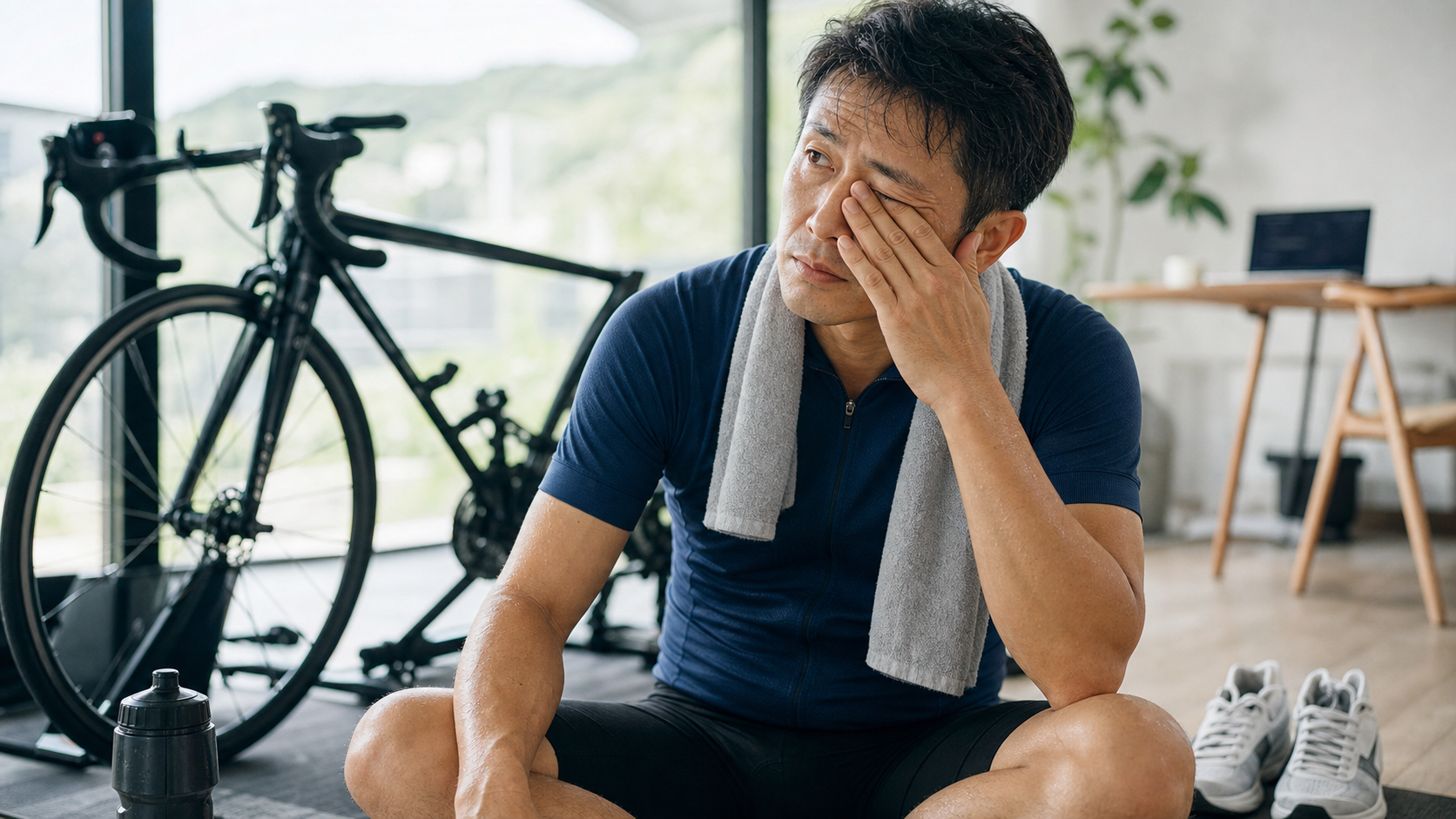
Opening: The Student Who Stared at His Power Meter but Couldn’t Read the Road Signs
I’ve been in the fitness industry for fifteen years and have seen all kinds of physical issues, but one student left a particularly deep impression on me. He was a 42-year-old software engineer with solid fitness—he could run 5K in under 25 minutes and hold 220 watts on the indoor trainer for an hour without flinching. But once, when we were riding together on the Beiyi Highway, he couldn’t read the road signs ahead on a descent, and he complained to me, “Coach, my eyes have been so dry and sore lately, and everything looks blurry at night.”
I asked him how many hours a day he stared at a screen. He paused and said, “Probably ten to twelve hours, plus my phone.” That’s when I understood—his heart, lungs, and legs were strong, but his eyes were fighting an endurance race every single day with no rest, and no one had ever set up recovery for them.
Many people think sports science only deals with muscles, the heart, and metabolism. In reality, the eyes are part of the body too, and they are equally affected by blood circulation, intraocular pressure, posture, and screen habits. In this article, I want to talk to you from a coach’s perspective about exercise and eye health: Does exercise actually help with intraocular pressure and vision? How should people who sit for long hours staring at screens protect their eyes? I’ll give you the concepts, the scientific basis, practical training plans and strategies you can actually implement, plus actionable recommendations for readers at different levels.
Let me make one thing clear first: This article is educational content, not a medical diagnosis. If you already have glaucoma, retinopathy, diabetic eye disease, or any eye discomfort, please be sure to have an ophthalmologist evaluate you first. The principles in this article cannot replace professional, individualized advice.
Concepts and Scientific Basis: How Exercise Affects Your Eyes
What Is Intraocular Pressure and Why Does It Matter
Let’s start with intraocular pressure (IOP). Inside the eye, there’s a clear fluid called “aqueous humor” that is constantly produced and drained, maintaining the eye’s shape and metabolism. When the drainage channels become blocked, intraocular pressure rises. Chronically elevated intraocular pressure is one of the most important risk factors for glaucoma, which gradually damages the optic nerve, and once visual field loss occurs, it cannot be reversed.
In normal adults, intraocular pressure typically falls between 10 and 21 mmHg. This is a range that fluctuates with the time of day, posture, and even whether you’re holding your breath and straining at that moment. I want to emphasize this point: everyone’s “safe intraocular pressure” is different. Some people have IOP within the normal range yet still suffer optic nerve damage (normal-tension glaucoma), while others have slightly elevated IOP with no issues. So never draw conclusions by comparing numbers on your own—interpretation of IOP must be left to an ophthalmologist.
Aerobic Exercise Does Have the Potential to Lower Intraocular Pressure
This is a key point I want to introduce you to today, and it’s backed by research. Recent clinical studies have found that regular aerobic exercise can temporarily lower intraocular pressure after exercise. Multiple studies have observed that both healthy eyes and those of patients with primary open-angle glaucoma (POAG) show significant average IOP reductions after aerobic exercise (see references at the end of this article).
What’s even more interesting is the mechanism: some studies using imaging have observed that after aerobic exercise, the cross-sectional area and diameter of the “Schlemm’s canal”—the structure inside the eye responsible for draining aqueous humor—expand. This suggests that aqueous humor drainage may become more efficient, making it easier to bring IOP down. Moreover, this phenomenon has been observed in both medicated and unmedicated glaucoma patients.
There’s another finding that’s encouraging for our athletic community: the fitter you are, the more pronounced and longer-lasting the IOP-lowering effect of low-intensity aerobic exercise. In other words, the cardiorespiratory foundation you build up over time may benefit your eyes as well.
But I have to be honest and complete the picture: current evidence is not yet sufficient to treat “exercise” as a replacement therapy for glaucoma. It’s more like a potential adjunctive role. The research literature itself emphasizes that exercise cannot replace medication or other treatments. So if you have glaucoma, exercise is something you can and should do, but be sure to do it under the follow-up care of an ophthalmologist, and keep using your eye drops as prescribed.
Which Exercises Might Actually Raise Intraocular Pressure
Every coin has two sides. Certain movements cause a temporary rise in intraocular pressure, which has little impact on most people, but is worth paying attention to for those at high risk of glaucoma:
- Holding your breath while straining (Valsalva maneuver): The moment you hold your breath during heavy lifting or a heavy squat, increased intrathoracic pressure raises IOP. The recommendation is to “exhale during exertion and avoid breath-holding,” which is also friendlier for blood pressure control.
- Inverted postures with the head below the heart for extended periods: Poses like headstands and shoulder stands in yoga cause a significant rise in IOP. People with glaucoma should avoid maintaining these positions for long periods.
- Goggles that are too tight compressing the eye area: Wearing swim goggles that are too tight can also compress the area around the eyes, potentially affecting IOP over time. Just choose goggles with a moderate fit.
None of this is meant to scare you away from exercise—it’s a reminder that the “way” you exercise matters more than “whether” you exercise when it comes to individual adjustment, especially for those who already have eye conditions.
Other Benefits of Exercise for Vision and the Eyes
Beyond intraocular pressure, exercise benefits the eyes through several indirect but important pathways:
- Improving systemic blood circulation and metabolism: The retina is one of the most vascular-dense tissues in the body. When blood sugar, blood pressure, and blood lipids are well controlled, the small blood vessels in the retina are less likely to be damaged. Diabetic retinopathy and hypertensive retinopathy are both highly correlated with these metabolic factors.
- Controlling body weight and blood sugar: Regular exercise helps improve insulin sensitivity, which is of great significance for protecting the eyes of people with type 2 diabetes.
- Reducing prolonged sitting: I’ll dedicate a full section to this shortly. Prolonged sitting itself is a breeding ground for many chronic diseases, and almost all chronic diseases eventually come back to harm the eyes.
Prolonged Sitting, Metabolism, and the Hidden Chain Reaction in the Eyes
I want to spend a bit more time on “prolonged sitting” because its destructive power is severely underestimated. You might think: sitting doesn’t hurt, at worst it gives you back pain. But from an exercise physiology perspective, staying still for long periods slows blood circulation, reduces insulin sensitivity, and makes blood sugar and blood pressure harder to control—and this entire cascade of metabolic deterioration ultimately shows up in the retina, the most vascular-dense tissue in the body.
I often use this analogy with my students: the retina is like a finely cultivated rice paddy, irrigated by tiny blood vessels. When your blood sugar is chronically elevated and your blood pressure is chronically high, these small vessels slowly become brittle, leaky, and clogged—like pipes soaked in saltwater. Diabetic retinopathy and hypertensive retinopathy are, at their core, problems with the irrigation system of this paddy. Regular exercise and breaking up prolonged sitting are among the most fundamental ways to maintain that irrigation system.
This is also why I always emphasize: eye care can’t be viewed in isolation. You think you’re taking care of your eyes, but what you’re really taking care of is your entire metabolic system. You think you’re training your heart and lungs, but your eyes benefit too. The body is never a collection of independent parts—it’s a web of interconnected systems.
A Few Eye-Related Nutrition Concepts (Giving Ranges, Not Exaggerating)
It’s hard to talk about sports without mentioning nutrition, but I want to be clear upfront: No single food or supplement can “cure” eye diseases, and there’s no magical eye-health panacea. Nutrition’s role here is to “build a foundation”—to give the body and eyes enough raw materials to function normally, not to be used as medicine. Please understand the following concepts as “directions for a balanced diet,” not precise prescriptions.
| Nutritional Direction | Common Food Sources (Easily Found in Taiwan) | Connection to Eyes (General Principles) |
|---|---|---|
| Carotenoids in dark green vegetables | Sweet potato leaves, spinach, kale, broccoli | Generally believed to be related to macular pigment density; part of a balanced diet |
| Omega-3 fatty acids | Mackerel, Pacific saury, salmon, flaxseed | Often discussed in relation to tear film quality and dry eye comfort |
| Vitamin A related | Carrots, pumpkin, egg yolk, liver (in moderation) | Needed for normal visual function; excess is not beneficial and can be harmful |
| Antioxidants like Vitamins C & E | Guava, citrus, nuts, colorful fruits and vegetables | Antioxidant effects are systemic; balanced intake is sufficient |
| Adequate hydration | Primarily plain water | Foundational for the whole body and tear film; especially important to replenish during exercise |
I particularly want to remind Taiwanese readers of two things. First, Taiwan has a rich variety of affordable fruits and vegetables. Rather than buying expensive eye-health supplements, first make sure you’re eating enough dark green vegetables and colorful fruits daily. The overall benefits of whole foods are far more reliable than capsules of single extracted compounds. Second, many people in Taiwan eat out frequently—convenient bento boxes, noodle shops, and bubble tea are everywhere—but vegetable portions are often insufficient and sugar intake is high. You can make two simple adjustments: add a serving of blanched greens to each meal, and swap sugary drinks for unsweetened tea or plain water. These two small habits are long-term investments in your blood sugar, your eyes, and your overall health.
If you want to add any supplements or health products, my advice is always: consult a doctor or dietitian first, especially if you have chronic conditions or are taking medication. Supplements can interact with drugs, and self-supplementing isn’t necessarily safe.
What Taiwanese People Especially Need to Prioritize: Outdoor Time and Myopia
Taiwan has a relatively high prevalence of myopia, which is closely tied to our lifestyle of prolonged near-distance eye use from childhood. Here’s a principle useful for both parents and adults: Adequate outdoor time is widely believed to help slow the progression of myopia. One key factor often discussed is the intensity of natural outdoor light, as well as the act of “looking into the distance,” which allows the eyes to relax.
This ties in perfectly with the exercise we’re discussing today. When you go outdoors to cycle, run, or hike, you’re simultaneously meeting both the “exercise” and “outdoor distance viewing” needs for eye health. This is why I particularly enjoy recommending outdoor aerobic activities to students who overuse their eyes—it solves two problems at once with excellent cost-effectiveness. Taiwan’s riverside bike paths, suburban mountain trails, and lake-loop roads are all great options. Find a route you like, get your body moving, and let your eyes gaze into the distance.
Of course, remember to combine sun protection with eye care during outdoor exercise: wear sunglasses to block UV rays, apply sunscreen, and avoid the harshest midday sun. Protecting your eyes from excessive UV damage doesn’t conflict with getting natural light; the key is “moderation” and “protection.”
Practical Methods: Fitting “Eye Care” into Your Training and Life
Now that the concepts are covered, here’s what I actually give my students in their training plans. Eye care isn’t just about buying another bottle of eye drops; it requires addressing exercise prescription, screen habits, and environmental setup all at once.
An Eye-Care-Oriented Weekly Aerobic Exercise Prescription
This is a beginner-to-advanced plan I often give to “sedentary office workers who want to balance cardiovascular health and eye health.” Intensity is expressed using RPE (Rating of Perceived Exertion, 1 to 10) and heart rate zones, so people of different fitness levels can follow along.
| Level | Frequency per Week | Duration per Session | Intensity (RPE / Heart Rate Reference) | Recommended Activities |
|---|---|---|---|---|
| Beginner (Sedentary) | 4 times | 20-30 minutes | RPE 3-4 / approx. 50-60% of max HR | Brisk walking, riverside cycling, easy indoor trainer rides |
| Intermediate (Some fitness base) | 4-5 times | 30-45 minutes | RPE 4-6 / approx. 60-75% of max HR | Jogging, road bike cruising, spinning |
| Advanced (Regularly trained) | 5-6 times | 40-60 minutes | RPE 5-7 / approx. 65-80% of max HR | Long-distance rides, interval runs, mixed aerobic sessions |
Heart rate estimation tip: A rough formula for maximum heart rate is “220 minus your age.” For example, a 40-year-old would be around 180 bpm, and 60% would be about 108 bpm. This is just an estimate—individual variation is significant. Those with cardiovascular disease should follow their doctor’s advice and exercise test results.
You’ll notice this table overlaps heavily with general cardiovascular health recommendations—and that’s exactly the point: aerobic exercise that’s good for your heart is, broadly speaking, also good for your eyes. You don’t need a separate routine just for your eyes; do your foundational cardio well, and your eyes benefit along with the rest of you.
Strategies for Sedentary Screen Use: The 20-20-20 Rule and How to Use It Correctly
When it comes to eye care, the most widely known concept is the “20-20-20 rule”: Every 20 minutes of screen use, look at something 20 feet (about 6 meters) away for 20 seconds. Professional organizations like the American Optometric Association (AOA) recommend this method to relieve digital eye strain.
I want to honestly add a detail many articles don’t mention: the scientific evidence for this rule is “present, but not entirely consistent.” When it was proposed in the late 1990s, it lacked rigorous empirical support. Subsequent studies have shown mixed results—some indicate it reduces dry eye and eye strain symptoms, while others found no significant difference. Recent research, however, tends to support that “regularly resting the eyes and looking into the distance” is indeed helpful (see references at the end).
So my advice is: Treat the 20-20-20 rule as a memorable reminder framework, not a magical formula. Its core value isn’t in those three precise numbers, but in the behavior of “periodically forcing your eyes to disengage from near-distance strain and look far away.” Even if you do “every 30 minutes, look into the distance for 30 seconds,” that’s perfectly fine. What matters is that you actually do it, and do it consistently.
Here’s a “workday eye-care schedule” I’ve designed for my students; feel free to copy it:
| Time Period | What to Do | Purpose |
|---|---|---|
| Every 20-30 minutes | Look at something 6 meters away for 20-30 seconds | Relax the ciliary muscle, reduce accommodative fatigue |
| Every hour | Stand up and move for 2-3 minutes, look out the window into the distance | Break up sitting, promote blood circulation |
| Lunch break | Walk outdoors for 10-15 minutes | Get natural light, view distant scenery, move the body |
| After work | 20-45 minutes of aerobic exercise | Benefits cardiovascular health, metabolism, and intraocular pressure together |
| 1 hour before bed | Reduce bright screens, dim the environment | Aid sleep and eye recovery |
Your Eyes Also Need “Conscious Blinking”
Here’s a piece of trivia I often remind students of in class: When you’re intensely focused on a screen, your blink rate drops significantly. In a relaxed state, we blink about 15 to 20 times per minute, but when staring at a screen, it can drop to about a third of that. This causes the tear film to evaporate, leading to dry, irritated eyes.
The solution is simple, but it requires deliberate practice:
- Blink fully and consciously: Every so often, do a few complete blinks—“close slowly, pause, then open”—to re-spread the tear film across the eye’s surface.
- Take advantage of (or adapt to) Taiwan’s environment: In Taiwan, summer air conditioning is strong, and heaters are sometimes used in winter, both lowering indoor humidity and worsening dry eyes. Keep a glass of water on your desk, and use a humidifier if needed—both are good for your eyes.
- Use artificial tears when necessary: If dryness is significant, you can use preservative-free artificial tears on the advice of a doctor or pharmacist. But don’t treat them as a long-term cure-all; improving your underlying eye habits is the core solution.
Screen and Environment Settings: Small Tweaks, Big Differences
Many cases of eye strain are actually caused by “poor environmental setup,” and this can be improved without spending much money:
- Screen distance: Keep your eyes about 50 to 70 centimeters (roughly an arm’s length) from the screen.
- Screen height: Position the top edge of the screen at or slightly below eye level, so your gaze naturally tilts slightly downward. This prevents your eyes from opening too wide and reduces dryness.
- Brightness and contrast: Adjust screen brightness to match your surroundings. Don’t stare at a glaring white screen in a dim room.
- Font size: Don’t squint at small text. There’s no shame in enlarging the font; squinting only tires your eyes more.
- Lighting: Avoid glare from windows or lights directly facing the screen. Afternoon sunlight in Taiwan is strong, so remember to draw the blinds if you sit near a window.
Common Mistakes and Corrections
Over years of coaching, I’ve compiled the most common eye-care and exercise misconceptions people have. Check if any apply to you.
Mistake 1: Thinking “more exercise can cure eye diseases.”
This is the most dangerous misconception. Exercise may help lower eye pressure and support overall metabolism, but it cannot replace ophthalmological treatment. Glaucoma medications, blood sugar control for diabetes, and regular retinal check-ups are all non-negotiable. Exercise is a bonus, not a substitute.
Mistake 2: Habitually holding your breath during weight training.
Many people hold their breath when lifting heavy weights, which can spike eye pressure and blood pressure instantly. The fix is to exhale during exertion and avoid prolonged breath-holding (Valsalva maneuver). Those with glaucoma or hypertension should pay extra attention to their breathing rhythm.
Mistake 3: Turning “taking a break” into “switching to another screen.”
Scrolling through your phone when tired from work isn’t rest—it’s just moving fatigue from one screen to another. Real rest means letting your eyes look into the distance and stepping away from near-focus work. Ideally, stand up, walk to a window, and look at the scenery.
Mistake 4: Relying on various “eye-care gadgets” while neglecting the basics.
Blue-light glasses, eye-care supplements, various eye drops… These aren’t useless, but none of them compare to regular routines, scheduled breaks, consistent exercise, and regular check-ups. Spend your money and attention on the fundamentals—the cost-performance ratio is far higher.
Mistake 5: Toughing it out and avoiding the doctor when symptoms appear.
If you experience sudden blurred vision, dark spots or flashes in front of your eyes, a missing patch in your visual field, or severe eye pain with headache and nausea, these could be signs of an emergency (such as acute glaucoma attack or retinal detachment). In Taiwan, accessing healthcare through NHI is very convenient, and eye clinics are everywhere. Don’t delay until it’s irreversible just to save a registration fee. In such cases, “waiting to see” is the worst choice.
Another Case Study: Designing Rest into the System, Not Relying on Willpower
Let me share another student’s story, because her problem reflects what many people go through. She was a 35-year-old marketing planner who worked long hours, had eyes so dry she constantly needed artificial tears, and often suffered from migraines at night. When she first came to me, it wasn’t actually about her eyes—she wanted to lose weight and improve her sleep.
After discussing her daily routine, I realized her problem wasn’t that she “didn’t know she needed rest,” but that she “knew but couldn’t do it.” She had tried the 20-20-20 rule, but forgot all about it when work got busy. She also wanted to exercise after work, but often ended up editing presentations until 10 PM. I’ve seen this situation too many times—relying purely on willpower to fight against a schedule with no breathing room is destined to fail.
So we didn’t start with “you need more discipline.” Instead, we started with “redesigning the system”:
- Turn rest into automatic reminders that don’t require memory: She installed timed reminders on her computer and set hourly alarms on her phone. When they went off, she was forced to stand up, walk to the window, and look into the distance for thirty seconds. The key was replacing “relying on memory” with “relying on the system.”
- Schedule exercise into the calendar as a non-cancellable meeting: We scheduled brisk walking three times a week, 30 minutes each, into her calendar. The time was fixed right after work and before overtime, and marked as “immovable.”
- Always take a 10-minute walk during lunch break: No matter how busy, she was required to walk outside for ten minutes after lunch, which simultaneously satisfied looking into the distance, getting sunlight, and moving her body.
Three months later, she reported: her frequency of using dry-eye drops decreased, migraines became less frequent, and her weight and sleep also improved. The key point I want to emphasize is—nothing she did was novel; what was novel was that she “systematized” these things instead of relying on willpower. Eye care is like exercise: the key to sustainability has never been motivation, but design. If you design your environment well, good habits will happen on their own.
Actionable Advice for Readers at Different Levels
Everyone starts from a different point, so I’ve divided the advice into three common scenarios. Pick the group closest to your situation and start there.
If You’re a “Sedentary Office Worker Who Barely Exercises”
Your priority isn’t training hard—it’s getting moving and giving your eyes regular rest.
- Start with brisk walking or riverside cycling 4 times a week, 20 minutes each session, at an easy intensity where you can “walk and chat comfortably.”
- Set a timer at work to remind yourself to look into the distance every 30 minutes and stand up and move around every hour.
- Adjust your screen distance, height, and brightness according to the principles above. It’s a one-time setup with long-term benefits.
- If you haven’t had an eye exam in over a year, schedule a comprehensive check-up as your starting point.
If You’re “Active but Overusing Your Eyes”
Your fitness foundation is already helping your eyes. The focus is on correcting your eye habits and not letting screens cancel out the benefits of exercise.
- Maintain your current aerobic training and make sure you get at least 150 minutes of moderate-intensity cardio per week (a common threshold in many health guidelines).
- Seriously implement the 20-20-20 rule or your own version of scheduled distance viewing, making it as automatic as drinking water.
- Check your breathing rhythm during weight training and break the habit of holding your breath during heavy lifts.
- Give yourself a daily block of “outdoor distance viewing”—a lunchtime walk outside works perfectly.
If You Already Have Eye Disease or a Family History
For this group, put “individualization” and “follow-up appointments” first.
- Discuss your exercise plan with your ophthalmologist first, especially if you have glaucoma. Confirm which movements to avoid (such as inversions or breath-holding during weight training).
- Focus on gentle aerobic exercise—brisk walking, flat-road cycling, and swimming (with looser goggles) are all good options.
- Don’t skip any prescribed medications or required check-ups. Exercise is supplementary, not a replacement.
- If you have diabetes or hypertension, controlling your blood sugar and blood pressure is itself one of the most important eye-care measures.
- If any visual abnormality occurs, seek medical attention immediately. Don’t self-diagnose.
A Ready-to-Use “Weekly Eye-Care Plan” Example
Finally, here’s an integrated weekly schedule that combines exercise and eye care, suitable for sedentary workers from beginner to intermediate level. You can adjust it to fit your own routine.
| Day | Exercise Plan | Eye-Care Focus |
|---|---|---|
| Monday | Brisk walk or riverside cycling for 25 minutes | Look into the distance every 30 minutes during work |
| Tuesday | Easy indoor trainer ride for 30 minutes | Walk outside for 15 minutes during lunch break to view distant scenery |
| Wednesday | Rest or stretching | Pay extra attention to complete blinking and staying hydrated |
| Thursday | Jog or spin class for 30 minutes | Check screen height and brightness settings |
| Friday | Brisk walk for 25 minutes | Reduce bright screen exposure one hour before bed |
| Saturday | Longer outdoor ride or hike | Natural outdoor light, plenty of distance viewing to relax |
| Sunday | Complete rest | Review this week’s eye habits and schedule any needed check-ups |
The spirit of this plan is simple: let your body move regularly, let your eyes rest regularly, and let yourself regularly connect with the outdoors and distant views. If you accomplish these three things, you’ve already outperformed most people who only stare down at their screens.
Frequently Asked Questions from Athletes (FAQ)
Q: My eyes get dry and watery easily when cycling or running. Is that normal?
Wind, sun exposure, and dry air during outdoor exercise can all irritate the eyes. Wearing a proper pair of sports sunglasses blocks wind and UV rays, which is a plus for your eyes. UV intensity in Taiwan remains strong year-round, so making it a habit to wear sunglasses during outdoor exercise is well worth it.
Q: Do blue-light-blocking glasses actually work?
This is a question many people ask me. Current evidence does not strongly support whether blue-light-blocking glasses can substantively protect the retina or reduce eye strain. Rather than spending a lot of money on them, I’d recommend focusing on the fundamentals—taking regular breaks, adjusting your screen settings, exercising regularly, and getting enough sleep. These have more tangible benefits.
Q: My vision seems clearer after exercise. Is that just my imagination?
Not necessarily. After exercise, blood circulation throughout the body improves, your mind relaxes, and your eyes are freed from the strain of prolonged sitting and focusing. It’s reasonable to feel a subjective sense of refreshment. However, this is a temporary soothing effect and does not mean your myopia is cured or your prescription has changed—that distinction is important.
Q: How often should I get an eye exam?
For most adults, regular eye exams can be considered part of routine health maintenance. Those with myopia, diabetes, hypertension, a family history of glaucoma, or older individuals typically need more frequent check-ups. The actual interval should follow your ophthalmologist’s recommendation. Medical access is convenient in Taiwan, so don’t keep putting off your eye exams.
Q: I have glaucoma. Can I still ride a road bike or run marathons?
That depends on your individual condition, and you must discuss it with your ophthalmologist first. As a general rule, mild to moderate aerobic exercise (such as flat-road cycling or jogging) is acceptable for many glaucoma patients and may even help lower intraocular pressure as a supplementary benefit. What you should avoid are activities that cause a significant rise in eye pressure, such as breath-holding heavy lifting or inverted positions like headstands. Don’t skip your prescribed eye drops or follow-up appointments during your training.
Q: What should I be careful about when exercising with contact lenses?
Sweating during exercise, plus wind and dust outdoors, can easily dry out contact lenses or allow foreign particles to get trapped underneath. For prolonged or high-intensity outdoor exercise, I usually recommend switching to frame glasses with sports sunglasses, or choosing highly oxygen-permeable lenses designed for sports, and carrying artificial tears with you. For swimming, try to avoid wearing contact lenses in the water to reduce the risk of infection. Please consult your optometrist or ophthalmologist for the best choice for you.
Q: Does staring at a screen for long indoor trainer sessions also tire the eyes?
Yes, it does. This is essentially the same as staring at a computer at work. When you’re on the trainer staring at your power numbers, heart rate, or virtual reality scenery, your eyes are still working hard at close range continuously. My advice: occasionally look away from the screen during your session, gaze at a distant wall in the room for a few seconds, and make sure your training space is well-ventilated and not too dry. Don’t let indoor training become another form of “sitting and staring at a screen.”
Q: Do these principles apply to children as well?
The general principles apply, especially “more time outdoors, less prolonged near-distance screen time, and regular breaks,” which are particularly important for children whose eyes are still developing and who are at higher risk of myopia. However, children’s eye care and myopia management involve professional nuances, so please defer to pediatric ophthalmology or optometry professionals. The adult-oriented content in this article is for reference only.
Conclusion: Treat Your Eyes as an Organ That Needs Recovery
Let’s return to the engineer trainee from the beginning. Later, I helped him do two very simple things: schedule the screen time he had never managed into his daily routine, add a weekly session of easy aerobic exercise, and send him to an ophthalmologist to rule out any disease. Three months later, he told me his dry, sore eyes had improved significantly, and he could see road signs more clearly on descents. There was no miracle cure—it was simply about giving the eyes the same regular use and regular recovery as the rest of the body.
I often tell my trainees: you plan recovery for your legs, you plan recovery for your heart and lungs—but what about your eyes? They work for you over a dozen hours every day, yet they are often the most neglected organ. Can exercise protect your eyes? Yes. By improving circulation, metabolism, and even temporarily lowering intraocular pressure, it’s on your side. But the real key is whether you’re willing to make “letting your eyes rest” as natural a part of your daily routine as training itself.
Starting today, the next time you set up your training plan, also schedule a recovery block for your eyes. Even if it’s just getting up and walking to the window every hour to gaze at the distant mountain for thirty seconds, it all adds up to genuine care over time. Your eyes will repay you with a clearer world, allowing you to see every part of the scenery more vividly on your next ride or your next road race.
This article is for educational purposes and does not replace individual diagnosis or treatment advice from physicians, physical therapists, or nutritionists. If you have glaucoma, diabetes, hypertension, heart disease, or any eye discomfort, please consult an ophthalmologist first and adjust your exercise and screen-use plan according to your individual condition.
References
- Glaucoma Research Foundation, “Can Exercise Lower Eye Pressure?” — https://glaucoma.org/articles/can-exercise-lower-eye-pressure
- “Aerobic exercise reduces intraocular pressure and expands Schlemm’s canal dimensions in healthy and primary open-angle glaucoma eyes” (PMC) — https://pmc.ncbi.nlm.nih.gov/articles/PMC8186587/
- “The intraocular pressure lowering-effect of low-intensity aerobic exercise is greater in fitter individuals: a cluster analysis” (PubMed) — https://pubmed.ncbi.nlm.nih.gov/35608210/
- American Optometric Association, “20-20-20 rule for eye strain” — https://www.aoa.org/AOA/Images/Patients/Eye Conditions/20-20-20-rule.pdf
- “Digital Eye Strain: Another Look at the 20-20-20 Rule” (Optometry Advisor) — https://www.optometryadvisor.com/features/digital-eye-strain-may-not-be-solved-by-the-20-20-20-rule/
Related Reading
- Sports Vision and Eye Training: Seeing Clearly, Reacting Accurately, or Just Falling for Marketing Hype?
- A Scientific Guide to Starting Exercise from Zero: Restarting After a Sedentary Lifestyle, Progression, and Complete Injury Prevention
- Exercise and Stress Management: A Coach’s Guide to Using Physiological Mechanisms and Daily Exercise Prescriptions to Ride Stress Back into a Controllable Range
- When Anxiety Comes Knocking: A Coach on How Exercise Helps You Pedal Your Tense Nerves Back to a Normal Cadence
近視雷射三個月後悔嗎?單車族/工程師必看,Smart TransPRK 術後血淚史與後遺症全公開 / CT Yeh
4 個月前
一日北高/長距離團騎 常見問題補充篇 / 組團或跟團的眉角 / 壯車友容易被瘦車友慢性拉爆 / 原來屁股痛可能是這個原因...? / 風場配速法 / 公路車 / CT Yeh
2 年前
一日北高常見問題大集合 | 攻略 | 路線 | 訓練 | 補給 | 自行車 單車 | 一日雙城 | 雙塔 | TWB北高360 | 屁股痛
6 年前
[教學] Premiere 影片 手震 修正 教學 防抖 單眼 影像 GoPro 穩定 Video Stabilization
8 年前
西進武嶺 免費訓練分析服務 Intervals | 練不夠還是練過頭?你哪一種類型選手?AI模型告訴你! | 備戰神器 | 公路車 訓練 | CT Yeh
4 年前
多機位拍片神器 DJI Action 2 拍出速度張力感 | 類空拍機視角 4陣列麥克風超強降風噪 實測! | 公路車 | CT Yeh
3 年前
實景訓練台) 彰化經典百K 高強度喵團 90分鐘 跟著一起練功 2019 Indoor workout Changhua Classic 100 Taiwan
7 年前
大家都在開箱的...單車用藍芽對講耳機真的有幫助嗎? SENA BiKom 20 長距離旅遊 & 海鷗繞圈賽 實際體驗心得 / 公路車 / CT Yeh
9 個月前