Exercise for Polycystic Ovary Syndrome (PCOS): A Coach's Practical Guide to Mechanisms, Prescriptions, and Weight Management
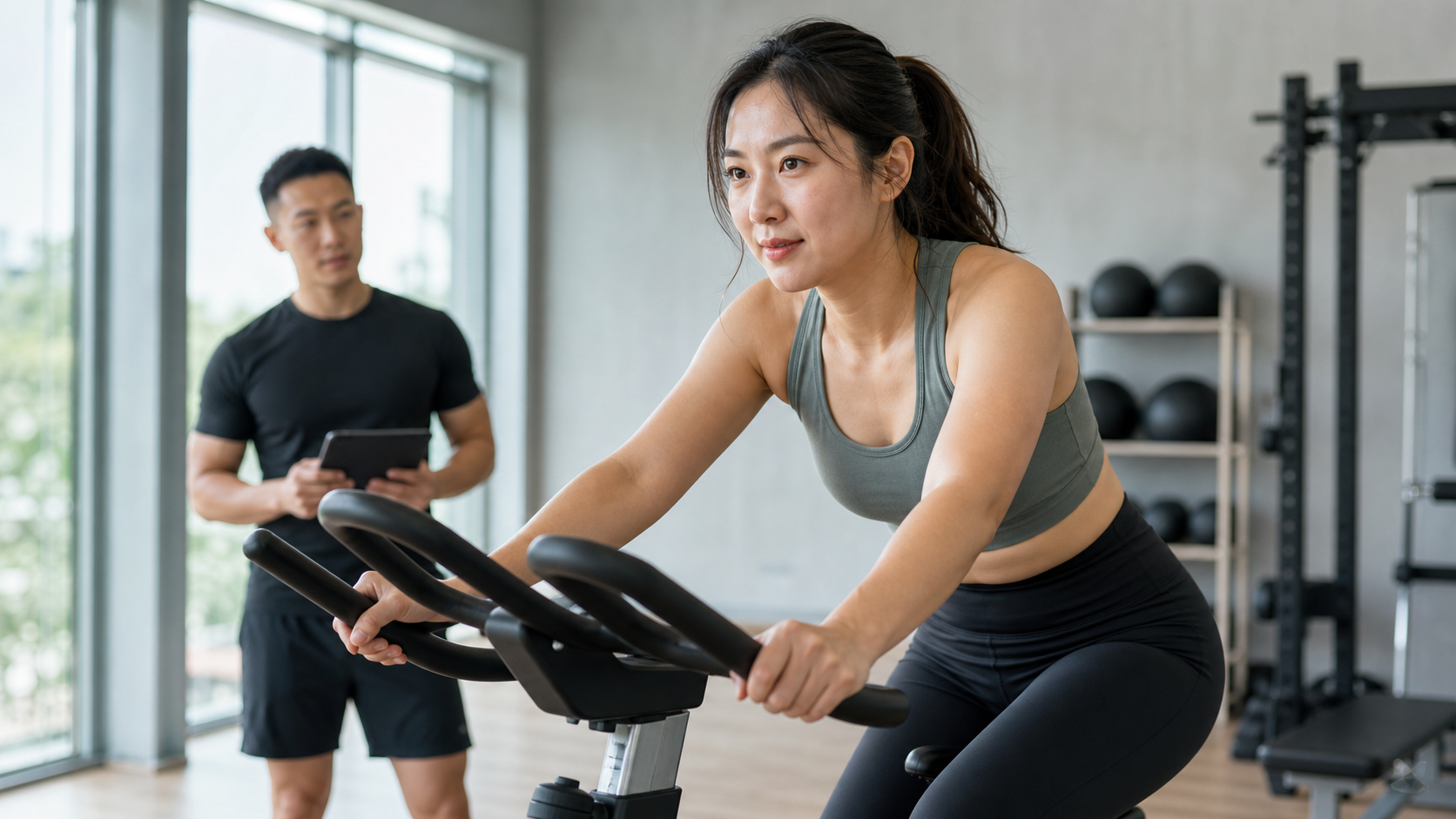
Starting with a Client’s Confusion
A few years ago, a client in her early thirties who worked an office job came to see me for the first time. I still remember her opening line: “Coach, I clearly eat less than my coworkers and I do exercise, so why is my weight stuck and my periods a mess? My gynecologist said I have PCOS.” She handed me her phone, which showed her blood test results—elevated fasting insulin, elevated free testosterone, and an ultrasound showing a ring of small follicles on her ovaries. She asked me a question that stuck with me: “Is it because I’m not trying hard enough?”
After all my years of coaching, that self-blame is the last thing I want to hear. Polycystic Ovary Syndrome (PCOS) is not a matter of willpower; it’s an endocrine condition that involves insulin, androgens, and metabolism. It makes the body’s response to “eat less and move more” sluggish, and it makes weight easier to gain and harder to lose. Understanding this is the starting point for any change.
In this article, I want to use the perspective of a coach and exercise science consultant to clarify three things: how exercise actually improves PCOS through its mechanisms, how to practically prescribe exercise, and what role weight really plays in the whole picture. I’ll give you tables and training plans you can follow, and I’ll honestly tell you which common mistakes to avoid. Let me start with the most important premise: this is educational content. PCOS is a condition that requires diagnosis and follow-up by a gynecologist or endocrinologist. Exercise is an important part of the picture, but it does not replace medical care.
Foundational Concepts: Why PCOS Is Tied to Insulin and Exercise
Insulin Resistance Is One of the Core Engines
To understand why exercise works for PCOS, you first need to know a key term: insulin resistance.
Simply put, insulin is the key that delivers blood sugar into cells. When cells become “insensitive” to this key, the body has to secrete more insulin to keep blood sugar stable, resulting in chronically elevated insulin levels in the blood. This high-insulin state does two things that are very unfavorable for PCOS patients:
- It stimulates the ovaries to secrete more androgens, worsening symptoms like excess hair growth, acne, and hair loss, and also disrupting ovulation.
- It lowers sex hormone-binding globulin (SHBG), raising the proportion of “free” androgens in the blood, making symptoms more pronounced.
Not every PCOS patient has obvious insulin resistance, but a very high proportion—especially those with higher body weight—have this issue combined. This is also why exercise—particularly exercise that improves insulin sensitivity—becomes a first-line tool in treatment.
How Exercise Mechanically Unties This Knot
This is the part I most want my clients to understand. Exercise improves PCOS not just by “burning calories”—it works through several pathways simultaneously:
- Muscle contraction itself can move blood sugar into cells without relying on insulin. When you cycle, walk briskly, or lift weights, muscle cells take up glucose through a pathway that doesn’t depend entirely on insulin (GLUT4 translocation). This means that during exercise and for several hours afterward, your body’s ability to handle blood sugar improves.
- Regular training raises muscle insulin sensitivity. The more consistently you train and the more muscle mass you have, the less insulin is needed for the same meal. Over time, this can help break the vicious cycle of high insulin.
- Androgens and menstruation may improve as well. A systematic review compiling multiple studies found that after exercise interventions, the HOMA-IR index (a marker of insulin resistance) decreased, potentially accompanied by rising SHBG and falling free androgens. Some studies also observed improvements in menstrual regularity and clinical hyperandrogenism symptoms.
- Cardiorespiratory fitness and body composition improve together. Aerobic and interval training can boost cardiorespiratory fitness and improve fat distribution, which is a plus for the cardiometabolic risks often associated with PCOS.
I often use this analogy with clients: medication is like turning down the faucet, while exercise is like smoothing out the entire pipe’s diameter. The two don’t conflict—in many cases, they run in parallel.
Different Exercise Modalities Have Different Emphases
Many clients ask me: “So should I do cardio or strength training?” My answer is usually “both,” but to understand each one’s strengths, you can refer to the direction summarized from multiple systematic reviews and network meta-analyses. I’ve organized this into a comparison table so you know what each modality mainly “fills in”:
| Exercise Modality | More Pronounced Improvements | Suitable For | Coach’s Notes |
|---|---|---|---|
| Moderate-intensity aerobic (e.g., steady cycling, brisk walking) | Insulin resistance (HOMA-IR), inflammatory markers, cardiorespiratory fitness | Almost everyone, especially beginners | The safest foundation, easy to maintain long-term |
| High-intensity interval training (HIIT) | Fasting insulin, HOMA-IR, and more time-efficient | Those with a base level of fitness who want to save time | High stimulus, needs recovery, not for daily use |
| Resistance (strength) training | Muscle mass, long-term glucose handling, some androgen markers | Everyone; women often underestimate it | Key to preserving muscle during weight loss |
| Combined training (aerobic + resistance) | Blood lipids (triglycerides, LDL) and other comprehensive aspects | Those wanting comprehensive metabolic improvement | The combination prescription I most often use |
Looking at this table, you’ll notice one thing: none is “the best”—they fill different gaps. That’s also why I almost never tell anyone to “just do one type.”
Weight Isn’t the Only Metric, but Don’t Ignore It Either
On weight, I want to be honest. Research and international guidelines consistently lean toward this: for PCOS patients with higher body weight, losing 5% to 10% of total body weight may bring noticeable improvements in insulin sensitivity, blood lipids, and menstruation. Note this number—it’s not about getting down to some “ideal weight,” but rather that “modest, sustainable” weight loss already has clinical significance.
But I want to add the other half: a controlled study points out that in women with PCOS, “physical activity level” is more directly linked to lower insulin resistance than “diet alone.” In other words, even if the number on the scale hasn’t budged, as long as you’re moving enough and your muscles are working, your metabolic profile may still be improving. For many clients stuck at a weight plateau and feeling frustrated, this is crucial psychological support—don’t just stare at the scale; blood sugar, waist circumference, periods, and fitness are all part of your report card.
A Role Often Overlooked: Visceral Fat and Chronic Inflammation
I want to go one layer deeper, because this is where many clients have an “aha” moment. The insulin resistance often accompanying PCOS is mutually causal with visceral fat (the fat around organs inside the belly) and low-grade chronic inflammation. More visceral fat secretes signaling molecules that make the body more “inflamed” and more “insulin resistant”; and insulin resistance in turn makes fat easier to store in the belly—this is a self-reinforcing loop.
What’s often seen together in exercise intervention studies is that after exercise, inflammatory markers (e.g., high-sensitivity C-reactive protein, hs-CRP) drop, body fat distribution improves, and HOMA-IR decreases—all happening at the same time. This is also why I keep emphasizing that “waist circumference” is a great self-tracking metric—it reflects changes in visceral fat to some degree, and you don’t need any equipment; a tape measure is enough. The scale can lie to you; your waist circumference is more honest.
Practical Approach: How to Write a PCOS Exercise Prescription
Now we get to the most hands-on part. I’ve integrated the broad direction of international guidelines with my actual coaching experience into an executable framework. The core combination is: aerobic exercise as the foundation + resistance training to build muscle + a small amount of high-intensity intervals (only for advanced trainees).
The Baseline for Weekly Training Volume
Let’s start with an overview table—this is my starting point when designing a training plan:
| Training Component | Recommended Weekly Amount | Intensity Zone | Primary Benefit for PCOS |
|---|---|---|---|
| Moderate-Intensity Aerobic | At least 150 minutes, split into 3–5 sessions | ~50–70% of max heart rate (can talk but not sing) | Improves insulin sensitivity, cardiorespiratory fitness, and body fat management |
| Resistance (Strength) Training | At least 2 days, non-consecutive | Moderate weight, 8–15 reps to completion | Increases muscle mass, improves long-term glucose handling |
| High-Intensity Interval Training (HIIT, advanced option) | 1–2 sessions, replacing part of aerobic work | Short bursts to a challenging effort (80%+ max heart rate) | Effectively lowers fasting insulin and HOMA-IR, time-efficient |
| Flexibility / Balance / Yoga | Interspersed throughout | Low intensity | Reduces stress, supports consistency; some studies show hormonal improvements |
150 minutes is the “minimum effective dose,” not a ceiling. If weight loss is a goal, you’ll typically need to increase total activity toward or beyond 200–250 minutes per week, combined with dietary adjustments. But for someone sedentary or just starting out, consistently hitting 150 minutes is already a huge achievement.
Why I Especially Love Using “Cycling” as the Entry-Level Aerobic Exercise for PCOS
As a coach who has long worked with cyclists, I’m admittedly biased toward using cycling for my PCOS clients—and the reasons are quite practical:
- Low joint impact. Many clients who are overweight find that running is hard on their knees and ankles at first. Cycling (indoors or outdoors) is seated and weight-bearing in a joint-friendly way, allowing people to “last long enough and train consistently.”
- Intensity is easy to quantify. With a power meter, you use watts; without one, you use heart rate or the “talk test.” It’s easy to stay in the moderate-intensity zone and convenient for adding intervals later.
- Easy access in Taiwan. Riverside bike paths (along the Xindian River, Dahan River, and Keelung River in Greater Taipei, plus well-planned routes in other counties and cities) are flat, safe, and ideal for steady aerobic work. Gym spin bikes or indoor trainers at home are completely unaffected by weather—given Taiwan’s humid summers and frequent afternoon thunderstorms, having an indoor option keeps you from breaking your routine due to weather.
A 12-Week Progressive Training Plan Example (Aerobic + Resistance)
This is the framework I often give clients who are “sedentary, newly diagnosed, and want to start steadily.” Treat it as a template—actual intensity must be adjusted based on your fitness level and your doctor’s advice.
| Week | Aerobic (Time × Frequency per session) | Resistance Training | Notes |
|---|---|---|---|
| Weeks 1–2 | Cycling or brisk walking 20–25 min × 3 | Full-body bodyweight/light weights, 2 sessions | Focus on building the “habit”; keep intensity low rather than high |
| Weeks 3–4 | 30 min × 3–4 | Full-body resistance, 2 sessions, slightly heavier | Can now talk continuously but with slight breathlessness |
| Weeks 5–6 | 30–35 min × 4 | Resistance 2–3 sessions, add split-body work | Approaching ~150 minutes per week |
| Weeks 7–8 | 35–40 min × 4 | Resistance 3 sessions | May try 1 short interval session (see below) |
| Weeks 9–10 | 40 min × 4 + 1 interval session | Resistance 3 sessions, progressive overload | Noticeable fitness gains period |
| Weeks 11–12 | 40–45 min × 4 + 1–2 interval sessions | Resistance 3 sessions | Review fitness, waist circumference, and menstrual changes |
The key isn’t filling every box perfectly—it’s “not stopping.” I’d rather have a client complete 4 sessions per week consistently for 12 weeks than do 6 sessions in week one and then disappear by week three. PCOS improvements happen on a scale of “months” and “quarters.”
The Role of High-Intensity Interval Training (HIIT) and a Simple Template
Some studies comparing high-intensity versus moderate-intensity exercise have found that HIIT is quite effective at lowering fasting insulin and HOMA-IR, and it saves time—which is very appealing to busy Taiwanese office workers. But I want to emphasize: HIIT is an advanced option, not a starting point. If your cardiorespiratory base isn’t built yet, your joints haven’t adapted, or you have cardiovascular concerns, don’t rush into it.
Here’s a cycling-friendly beginner interval protocol I often use (warm-up and cool-down not included):
| Item | Content |
|---|---|
| Warm-up | Easy riding for 8–10 minutes |
| Main Set | Hard riding for 1 minute (breathless, hard to talk) → easy riding for 2 minutes, repeat 4–6 rounds |
| Cool-down | Easy riding for 5–8 minutes |
| Frequency | At most 1–2 times per week, on separate days from moderate-intensity sessions |
If 1 minute is too hard, start with “30 seconds hard, 90 seconds easy.” The point of intervals is stimulation, not grinding yourself to the point where you can’t get out of bed the next day.
You can gauge HIIT intensity with a simple “talk test” combined with the Rating of Perceived Exertion (RPE, on a 1–10 scale). I often give clients this reference chart so they don’t have to stare at a heart rate monitor to gauge intensity:
| Zone | Perceived Exertion (RPE) | Talking State | Corresponding Workout |
|---|---|---|---|
| Easy (Recovery) | 2–3 | Can chat and sing normally | Warm-up, cool-down, recovery segments of intervals |
| Moderate (Aerobic Base) | 4–6 | Can speak full sentences but slightly breathless | The main zone for the weekly 150 minutes |
| High (Interval Effort) | 8–9 | Can only get out a few words | HIIT sprint segments, short duration |
Most PCOS clients should spend their time in the RPE 4–6 zone, with high intensity as just a garnish. Many people get this backwards—they go all-out from the start and then burn out and quit within three days.
Resistance Training: The Most Underrated Piece for Women with PCOS
Many female clients worry that lifting weights will make them “bulky and big,” which is the myth I most often have to debunk. In reality, increasing muscle mass improves your body’s long-term ability to handle glucose—it’s a very cost-effective investment for improving insulin resistance. Systematic reviews have also observed a moderate reduction in HOMA-IR after resistance training, and some studies have seen improvements in androgen-related markers.
Here’s a twice-weekly full-body resistance framework for beginners:
- Lower-body dominant: Squats or seated leg press, glute bridges, deadlift patterns (start with bodyweight or light weights to learn the movement).
- Upper-body push: Push-ups (against a wall or from knees), shoulder presses.
- Upper-body pull: Lat pulldowns, rows.
- Core: Planks, bird dogs.
- Perform 2–3 sets of each exercise, 8–15 reps per set; the last 2–3 reps should be challenging but still allow you to maintain good form.
Two Case Studies, Two Different Paths
To give you a clearer picture, I’ll share two (fictionalized and de-identified) client cases, because PCOS truly isn’t a “one-size-fits-all prescription.”
Case A: Sedentary office worker, overweight, primarily metabolic concerns. She found even a 20-minute walk exhausting at first, and her knees were uncomfortable. I had her start entirely on an indoor trainer—for the first two weeks, the only goal was “sit on the bike and pedal easily for 20 minutes,” with no talk of intensity. By week six, she was consistently hitting 150 minutes per week and added two bodyweight strength sessions. Three months later, she told me her pants were looser, she no longer got winded climbing stairs, and at her follow-up appointment her doctor noted her insulin numbers had come down—she had only lost two or three kilograms, but her entire metabolic profile was improving. That’s the best illustration of “don’t just look at the scale.”
Case B: A runner who already had an exercise habit, normal weight but irregular periods. Her problem wasn’t that she wasn’t moving enough—it was that she was “only doing aerobic work and often pushing through on too few calories.” My adjustment was actually to add strength training, bring her caloric intake back up (handled by a dietitian), and slightly reduce her excessive aerobic volume. After a few months, her cycle became more regular. This case is one I really want to emphasize: for some women with PCOS, the problem isn’t too little exercise—it’s too much stress and too little recovery. An exercise prescription should always target “what this person is currently lacking.”
Common Mistakes and Fixes: The Pitfalls I Keep Seeing
Having coached so many clients with PCOS, there are some mistakes almost everyone makes. Let me flag them for you in advance.
Mistake 1: Treating Exercise as Punishment, Pushing Harder and Harder to Extremes
Many people become anxious the moment they’re diagnosed and start “crash dieting plus daily intense exercise.” The problem is that PCOS patients’ bodies are especially sensitive to stress. Long-term overtraining combined with severe caloric deficit can actually make hormones more chaotic, periods more irregular, and lead to burnout and quitting.
Fix: Set intensity and frequency at a “sustainable” level. Exercise is something you’ll do for the rest of your life, not a three-month military boot camp. I often say: “Find the intensity you can still maintain three years from now.”
Mistake 2: Only Doing Cardio, Never Touching Strength Training
Cardio is great, but if you only do cardio, muscle mass gets chronically neglected. During weight loss, you might even lose muscle, making your metabolism worse over time.
Fix: Make sure to include at least 2 resistance training sessions per week. When the scale stalls, muscle mass and waist circumference are often still quietly improving.
Mistake 3: Only Watching the Scale, Ignoring Other Report Cards
This is the one I think hurts morale the most. Body weight is a lagging indicator that fluctuates heavily with water retention. PCOS patients often have metabolism that’s already improving, but when the number on the scale doesn’t budge, they self-reject and give up.
Fix: Create a “multi-dimensional report card”—waist circumference, fitness level (the same route feels easier to ride), menstrual cycle, energy and sleep, and blood test markers (left to your doctor for regular tracking). Look at these together, and you’ll see progress the scale can’t show.
Mistake 4: Disconnecting Diet from Exercise, or Using Exercise to “Atone”
“Today I ate too much, so I’ll run an extra hour tonight to make up for it”—this mindset long-term turns both exercise and eating into an emotional battlefield. Eating out is common in Taiwan, and sugary drinks and refined carbs are everywhere. Exercise truly cannot fully offset an uncontrolled diet.
Fix: Exercise and diet are two independent yet complementary levers, not debts that cancel each other out. For the diet side, be sure to consult a dietitian for individualized adjustments—don’t experiment with extreme methods on your own.
Mistake 5: Ignoring Sleep and Stress
Insufficient sleep and chronic stress worsen insulin resistance, and also make you less motivated to exercise and more likely to crave high-sugar foods, creating a vicious cycle.
Fix: Treat sleep as part of your training. Low-intensity yoga, stretching, and outdoor walks are beneficial in themselves and also serve as effective stress-reduction tools—systematic reviews have observed positive signals from yoga on some hormonal and metabolic markers in PCOS.
Mistake 6: Going All-In Then All-Out, Relying on Bursts of Willpower
This is the pattern I’ve seen most often, and the most regrettable. Many people start with huge motivation, train harder than athletes in the first week, then work gets busy or mood dips, and they disappear for two or three weeks. When they come back, they think “this time I have to go even harder,” then crash and disappear again. This cycle repeats for years, and looking back, almost nothing has accumulated.
Fix: Change your goal from “this time I’m going to train hard” to “this habit needs to live a long time.” Regular moderate intensity far outperforms intermittent hellish training over the long term. The meaningful metabolic improvements in research almost all come from consistent interventions lasting “12 weeks or more,” not a few days of intense training. I often tell my clients: better to do three steady sessions a week for two years than to go all-out for a month and then quit.
Mistake 7: Treating PCOS as a Disease That Exercise Alone Can “Cure”
Exercise is very important, but PCOS is an endocrine condition that requires holistic management, involving hormones, metabolism, and sometimes fertility planning and mental health. Pinning all your hopes on exercise, then rejecting everything when you don’t see ideal short-term results, makes it easier to give up.
Fix: Position exercise as “a piece of the puzzle you can actively control with solid results,” while coordinating with your medical team (OB-GYN/endocrinology, plus a dietitian and mental health professional when needed). Exercise, diet, sleep, and medication when necessary all work together.
Actionable Advice for Readers at Different Levels
Everyone starts from a different point. I divide readers into three groups and give each one a path you can “start today.”
If You’re Completely Sedentary and Just Diagnosed
- This week’s goal: Forget intensity—just focus on “starting to move.” Brisk walking or easy riding 15–20 minutes a day, 3 times a week.
- Mindset: Don’t chase 150 minutes right away. Let your body first remember “we’re moving again,” then add more starting in week 4.
- Medical support: Establish follow-up with an OB-GYN or endocrinologist first, and record your baseline blood test values so you have something to compare later.
If You Already Exercise and Want a More Systematic Approach to PCOS
- This week’s goal: Check whether your training mix is “cardio only.” If you don’t do strength training, add 2 full-body resistance sessions per week.
- Advanced: Swap one cardio session for the short intervals mentioned above, and observe your fitness and recovery.
- Quantify: Start recording your waist circumference and menstrual cycle, and review blood test data with your doctor every 3 months.
If You’re Overweight and Metabolic Improvement Is Your Primary Goal
- This week’s goal: Use cycling as your main cardio (joint-friendly), steadily accumulate 150 minutes per week, then push toward 200+ minutes.
- Weight-loss anchor: Set your target at “5–10% of total body weight”—a clinically meaningful range—rather than some cosmetic number. Be sure to work with a dietitian on nutrition along the way.
- Caution: If you also have hypertension, diabetes, heart disease, or other conditions, your exercise plan must first be evaluated and individualized by a physician, with conservative, gradual progression.
How to Track Progress: A Multi-Dimensional Report Card
I’ve emphasized “don’t just watch the scale” throughout. Here’s a practical tracking table you can actually use. I ask my clients to fill it out periodically so progress becomes “visible”—this is crucial for maintaining motivation.
| Tracking Item | Recommended Frequency | Who Measures | What It Represents |
|---|---|---|---|
| Body weight | Weekly (at a fixed time) | Yourself | Long-term trend; don’t obsess over daily fluctuations |
| Waist circumference | Every 2–4 weeks | Yourself (tape measure) | Practical indicator of visceral fat and metabolic risk |
| Perceived effort on the same route | Anytime | Yourself | The same ride feeling easier = cardiorespiratory improvement |
| Menstrual cycle regularity | Monthly record | Yourself (App/calendar) | Important signal of PCOS symptom improvement |
| Sleep and energy | Subjective weekly review | Yourself | Recovery and stress status |
| Blood tests (insulin, glucose, lipids, hormones) | Every 3–6 months | Physician | Objective metabolic and endocrine changes |
The spirit of this table is: when the weight column isn’t moving for now, you still have five other columns telling you “I’m actually improving.” I’ve seen too many people give up while genuinely improving simply because weight was their only metric. With more angles, you’ll have more confidence to keep going.
One more reminder: the blood test row must always be interpreted by your physician—don’t scare yourself with the numbers or misinterpret them on your own. Your job is to exercise consistently and record changes; interpretation and treatment are the medical team’s job.
Practical Tips for Taiwan
Finally, a few down-to-earth points, all from my real experience coaching Taiwanese clients:
- Weather: Taiwan’s summers are hot and humid. For outdoor riding or running, avoid midday and make use of early morning or evening hours, or switch to indoor trainers, spin bikes, or gyms—don’t let the weather become an excuse to skip training. Hydrate adequately, and pay attention to electrolytes when sweating heavily.
- Venues: Riverside bike paths, sports centers, and school tracks in every city and county are cheap and practical options. Spin bikes and weight-training areas at sports centers are very budget-friendly for clients.
- Eating out: Eating out is convenient in Taiwan, but refined carbs and sugary drinks are everywhere. Instead of going cold turkey, start with small changes like “switching sugary hand-shaken drinks to unsweetened or smaller portions.” Accumulation beats radicalism.
- Healthcare: Taiwan’s National Health Insurance makes medical access easy. For PCOS, establish long-term follow-up with an OB-GYN or endocrinologist, with regular blood tests for insulin, glucose, lipids, and hormones. Exercise is self-management; medical monitoring and medication when necessary are the healthcare side—neither should be neglected.
FAQ
Q: How long does it take to see improvements related to PCOS from exercise?
A: Metabolic aspects (such as insulin sensitivity) may change within a few weeks, but menstrual regularity and symptom improvement are typically observed over a timeframe of “several months.” In research, most meaningful improvements in insulin resistance come from regular intervention lasting 12 weeks or more. Patience is the key word here.
Q: Do I have to lose weight for it to work?
A: Not necessarily. Losing 5–10% of body weight is indeed very helpful for those who are overweight, but studies also indicate that physical activity levels alone are associated with lower insulin resistance. Even if your weight plateaus, continued exercise still holds value.
Q: I’m afraid of getting bulky from weight training. Can I just do cardio?
A: It’s not recommended to completely abandon resistance training. Muscle is an important asset for improving glucose metabolism, and typical training volumes will not make women look “bulky.” Most changes in physique come from reduced body fat and improved muscle tone.
Q: Is HIIT the most effective option? Should I just start doing it?
A: HIIT has advantages in lowering insulin and saving time, but it is an advanced option. If your cardiorespiratory fitness and joint foundation aren’t solid, or if you have cardiovascular concerns, please start with moderate-intensity cardio and resistance training, then gradually incorporate HIIT later.
Q: Does exercise conflict with medication (e.g., insulin-sensitizing drugs prescribed by my doctor)?
A: There’s no conflict; they are usually complementary. Whether to use medication and how to adjust it should always be determined by your primary care physician. This article does not make any recommendations regarding medications.
Q: Can I still exercise during my period?
A: In general, yes. Just adjust the intensity according to how your body feels. If you’re uncomfortable, switch to lower intensity or rest. If you have severe menstrual cramps, abnormal bleeding, or other issues, please consult your gynecologist first.
Q: I don’t have a gym membership and I don’t ride a road bike. Can I still get started?
A: Absolutely. Brisk walking, a stationary bike or trainer at home, and bodyweight training (squats, push-ups, planks) are all great starting points. Even a park, a school track, or a community sports center is more than enough. Equipment is not the barrier—starting is.
Q: How often should I weigh myself and measure my waist per week?
A: For body weight, it’s recommended to weigh yourself just once a week at the same time. Don’t weigh yourself daily and let water-weight fluctuations mess with your emotions. Waist circumference can be measured every two weeks to a month. As for blood markers, leave that to your doctor; tracking them over a timeframe of “several months” is usually more meaningful.
Conclusion: Slowly Taking Back Control
Let’s return to the student mentioned at the beginning of this article. Six months later, she didn’t have a magazine-cover body, but she could ride the same riverside path while chatting easily instead of gasping for air. Her waist was smaller, her periods had become more regular, and her insulin bloodwork was trending downward. The second thing she said to me, I remember too: “So it wasn’t that I wasn’t trying hard enough—I was just using the wrong approach before.”
This is what I most want to convey through this article: PCOS is not your fault, and exercise is not a punishment. It’s a tool you can hold onto long-term, using it day by day to gradually bring your body back into balance. Build your foundation with cardio, build muscle with resistance training, and use intervals as an advanced step. Look at your results with a broader perspective and pace yourself for the long haul—you’ll go further than you think.
Please remember that everyone’s PCOS presents differently, and the associated metabolic and health conditions vary as well. This article is educational content and cannot replace individual diagnosis and treatment advice from a physician, physical therapist, or dietitian. Before starting or adjusting an exercise program—especially if you have other chronic conditions—be sure to discuss it with your healthcare team and create a sustainable plan that works for you.
References
- Exercise Recommendations for Women with Polycystic Ovary Syndrome: Is the Evidence Enough?(PMC)https://pmc.ncbi.nlm.nih.gov/articles/PMC6905185/
- A Systematic Review of the Effects of Exercise on Hormones in Women with Polycystic Ovary Syndrome(PMC)https://www.ncbi.nlm.nih.gov/pmc/articles/PMC7739243/
- Exercise Interventions in Polycystic Ovary Syndrome: A Systematic Review and Meta-Analysis(Frontiers in Physiology)https://www.frontiersin.org/journals/physiology/articles/10.3389/fphys.2020.00606/full
- Physical Activity, Rather Than Diet, Is Linked to Lower Insulin Resistance in PCOS Women—A Case-Control Study(PMC)https://www.ncbi.nlm.nih.gov/pmc/articles/PMC10180891/
- HIIT’ing or MISS’ing the Optimal Management of Polycystic Ovary Syndrome: A Systematic Review and Meta-Analysis of High- Versus Moderate-Intensity Exercise Prescription(PMC)https://www.ncbi.nlm.nih.gov/pmc/articles/PMC8415631/
- Lifestyle management in polycystic ovary syndrome – beyond diet and physical activity(PMC)https://pmc.ncbi.nlm.nih.gov/articles/PMC9841505/
Related Reading
- Exercise and Hormonal Balance: A Coach’s Guide to Understanding Your Endocrine System and Turning Training into a “Regulatory Switch” Rather Than a Stressor
- Exercise Is the Cheapest Metabolic Medicine: From Mitochondria to Insulin Sensitivity, Learn to Train Your Body into a Fuel-Efficient Engine
- How Exercise Helps Your Body “Understand Insulin”: The Science and Practice of Exercise and Insulin Sensitivity
- Exercise and Blood Sugar Control: The Exercise Medicine for Diabetes—A Coach’s Guide to Treating “Movement” as a Prescription
16/02/16 - 夜訪中社路 緩慢進步中
10 年前
一日北高常見問題大集合 | 攻略 | 路線 | 訓練 | 補給 | 自行車 單車 | 一日雙城 | 雙塔 | TWB北高360 | 屁股痛
6 年前
靠單車減肥35公斤 心得分享與整理
7 年前
一日北高/長距離團騎 常見問題補充篇 / 組團或跟團的眉角 / 壯車友容易被瘦車友慢性拉爆 / 原來屁股痛可能是這個原因...? / 風場配速法 / 公路車 / CT Yeh
2 年前
#公路車 #Fitting 靠人工智慧APP 幫你調整單車
6 年前
西進武嶺 免費訓練分析服務 Intervals | 練不夠還是練過頭?你哪一種類型選手?AI模型告訴你! | 備戰神器 | 公路車 訓練 | CT Yeh
4 年前
CT暗黑廚房) 車友必備 宇宙無敵鮮蚵湯 幫助訓練恢復 天然食補 好市多 超肥鮮蚵 破PR
7 年前
DJI OSMO Action 3 新韌體超強! 2.5H續航!運動攝影新神器!超強快充!今年不換GoPro了🤣| 公路車 | CT Yeh
3 年前