Menopause Is Not the Start of a Downhill Slide: Use Exercise to Protect Your Bones, Muscles, Heart, and Mood
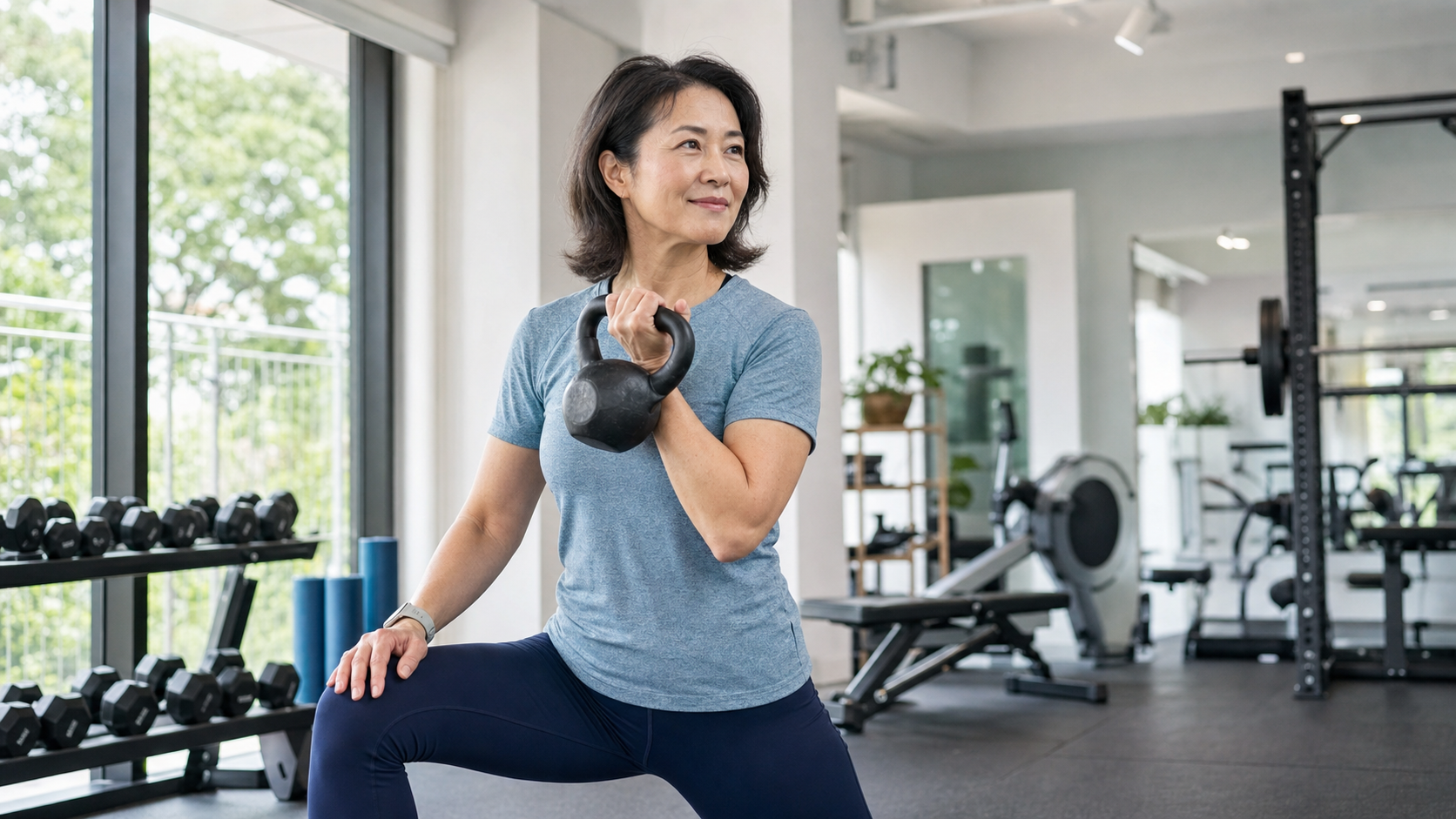
That Afternoon at the Gym, I Rediscovered What Menopause Really Means
I still remember that Tuesday afternoon when I first worked with Auntie Xiuqin (a pseudonym, 52 years old—this case scenario is fictional for teaching purposes, but it reflects what I routinely see with my clients). She walked in and said, almost apologetically: “Coach, something’s off with me lately. I wake up hot in the middle of the night, I’m too exhausted to move during the day, I’ve inexplicably gained three kilos, and my knees feel weird. The doctor says I’m in menopause and told me to exercise more. But the moment I move, I’m out of breath, and when I’m tired, I get even more irritable. Wouldn’t it be better to just not exercise at all?”
That question—“wouldn’t it be better to just not exercise at all?”—is something I’ve heard far too many times over the past fifteen years. Behind it lies an entire generation of women’s misunderstanding of menopause: treating it as a downhill stretch that can only be “endured.” But I want to make this clear from the very start of this article—menopause is not the end of your body; it is your body’s “reset phase.” Your hormones are indeed changing, but your command over this body is precisely what you should reclaim during this stage. And the most effective, cheapest, and lowest-side-effect tool for reclaiming that control is exercise.
In this article, I’ll walk you through it layer by layer, the way I do with my clients: what menopause actually does to your bones, muscles, cardiovascular system, and mood; why exercise can counteract these changes; and then I’ll give you practical methods that are easy to understand, doable, and truly executable in the context of life in Taiwan, including a full weekly schedule and an intensity dosing chart. Whether you’re a complete beginner with no exercise habits or a seasoned cyclist or runner, you’ll find your next step here.
Let me set the tone with one crucial point: this article is an educational sharing of concepts and methods, not a diagnosis or prescription tailored to you personally. Your physical condition, medications, and existing illnesses always require individual assessment by your physician, physical therapist, or nutritionist.
What Does Menopause Actually Change? First, Understand the Four Fronts of Your Body
At the core of menopause is the gradual decline of ovarian function and the long-term drop in estrogen. Estrogen isn’t just about reproduction—it’s actually a “whole-body protective hormone” with far-reaching effects. When it withdraws, four fronts in your body loosen simultaneously. Understanding these four fronts is the key to realizing that exercise isn’t just about “moving more”—it’s about “strategically restoring the protection that estrogen has withdrawn.”
Front One: Bones—The Quietest, and Most Dangerous, Loss
Estrogen normally inhibits osteoclasts (the cells responsible for breaking down bone), acting like someone pressing the brakes. When it’s gone, the brakes release, and the rate of bone breakdown accelerates. A common clinical observation is that in the first few years after menopause, bone loss noticeably speeds up in women—which is why “postmenopausal osteoporosis” is a major women’s health concern.
The most frightening thing about bone loss is that it is completely asymptomatic. You won’t feel pain, itching, or fatigue—until one day you slip in the bathroom or bend over to move a flowerpot, and your wrist, spine, or hip fractures. A hip fracture is especially a watershed event for older adults, dramatically affecting subsequent mobility and quality of life. So the strategy for this front is clear: early on, use the right methods to send “stress signals” to your bones, forcing them to hold onto bone mass or even build a little back.
Front Two: Muscles—The Invisible Starting Line of Sarcopenia
Past a certain age, muscle mass naturally declines year after year—this is called sarcopenia. For menopausal women, because both estrogen and activity levels drop, muscle loss often accelerates. Less muscle means: lower basal metabolic rate (so you gain weight eating the same amount), reduced strength (carrying groceries, holding grandchildren, and climbing stairs become harder), poorer blood sugar regulation (muscles are major consumers of blood sugar), and a higher risk of falls.
Many clients blame “slow metabolism” for middle-age weight gain, but the real culprit is often muscles quietly wasting away. The good news is that muscle is the tissue most willing to respond to training—as long as you give it enough resistance stimulus, muscles at sixty or seventy will still grow.
Front Three: Cardiovascular System—After the Protective Umbrella Folds
Before menopause, women’s rates of cardiovascular disease are generally lower than those of same-aged men, and estrogen is generally believed to play a protective role (helping maintain vascular elasticity and influencing blood lipids). After menopause, this protective umbrella gradually folds up, and women’s blood pressure, blood lipids, and visceral fat often worsen in tandem, with cardiovascular disease risk climbing to catch up. In Taiwan’s top ten causes of death for women, heart disease and cerebrovascular disease have ranked near the top for years—this isn’t a distant statistic; it’s something our mothers’ generation, and even we ourselves, need to take seriously.
Front Four: Mood and Sleep—Not Something You Can Just “Think Positively” Away
Hot flashes, night sweats, poor sleep, mood swings, decreased concentration, unexplained anxiety or low mood—these aren’t signs that you’re “not strong enough” or “overthinking.” They are the genuine effects of hormonal fluctuations on your brain and autonomic nervous system. Nearly every menopausal woman I’ve coached has mentioned sleep and mood issues, and these are often the final straw that crushes their motivation to exercise: too tired, so they move even less; the less they move, the worse their sleep and mood become. It’s a vicious cycle, and regular exercise is one of the most effective interventions I’ve seen for breaking it.
I often explain to clients that exercise improving mood and sleep isn’t mysticism—it has a physiological basis: regular moderate-intensity exercise helps regulate stress hormones, promotes balance in brain chemicals related to mood, and deepens the deep stages of nighttime sleep. What many clients notice first isn’t weight or body shape, but “I sleep better,” “I have more energy during the day,” and “I’m less easily irritated by small things.” These invisible improvements are often the real motivation that keeps them going long-term—because they personally feel their quality of life getting better.
Why Does Exercise Work? Rebuilding All Four Fronts at Once
The most fascinating thing about exercise is that it can “kill multiple birds with one stone,” acting on all four fronts simultaneously. Let me show you the big picture with a table first, then break down how to do it.
| Menopausal Change | Main Exercise Strategy | What Happens in the Body |
|---|---|---|
| Accelerated bone loss | Weight-bearing + impact exercise, resistance training | Bones receive mechanical stress, triggering bone-building signals, tending to preserve/increase bone density |
| Declining muscle mass, slower metabolism | Resistance (weight) training | Muscle fibers repair and grow, raising resting metabolism and improving blood sugar |
| Rising cardiovascular risk | Aerobic exercise (brisk walking, cycling, swimming) | Improves blood pressure, blood lipids, visceral fat, and vascular elasticity |
| Poor mood, poor sleep | Regular aerobic + group/outdoor exercise | Promotes balance in brain chemicals, regulates stress hormones, improves sleep architecture |
| Poor balance, higher fall risk | Balance and functional training (tai chi, single-leg stands) | Strengthens proprioception and lower-limb stability, reducing fall and fracture risk |
Here I want to clear up a common public misconception: many people assume that “walking more” equals taking care of your whole-body health. Walking is great, but it mainly benefits the cardiovascular system and mood; its stimulus to bones and muscles is actually quite weak. Based on international research discussions on bone health in postmenopausal women, growing evidence points to this: activities like strolling—low-intensity, low-impact—are generally insufficient to effectively improve bone density. You need more targeted resistance training and moderate-to-high impact loading to give your bones a strong enough signal (see references at the end). That’s why I always include “weight training” in my menopausal clients’ prescriptions, rather than just telling them to hit 10,000 steps a day and calling it done.
What Does the World Health Organization Recommend? Get the Big Picture Right First
Before giving you a detailed schedule, let me share the broad direction of mainstream international guidelines. According to the World Health Organization (WHO) 2020 physical activity guidelines, adults (including middle-aged and older) are recommended to:
- Get at least 150 to 300 minutes of moderate-intensity aerobic activity per week (or 75 to 150 minutes of vigorous-intensity aerobic activity, or a combination)
- Do muscle-strengthening activities on 2 or more days per week, involving all major muscle groups
- For older adults, additionally 3 or more days per week of multicomponent training that includes balance and strength, to maintain function and prevent falls
These three points are essentially the skeleton of your entire menopausal exercise prescription: aerobic for heart and mood, strength for muscle and bone, balance for safety. Next, I’ll turn this skeleton into a weekly plan you can actually follow.
Practical Approach: How to Structure Your Week? A Complete Schedule Right Here
I’ve divided the schedule into three versions: Beginner Start-Up, Advanced Stability, and Experienced Intensification. Honestly assess where you are right now, start with the matching version, and don’t aim too high too soon.
Version 1: Beginner Starter Edition (Little to No Regular Exercise in the Past)
The goal is to first build a habit and let the body adapt, with intensity deliberately kept conservative. At this stage, the biggest enemy isn’t insufficient intensity, but rather “being too eager, getting injured, and then giving up.”
| Day | Activity | Duration | Intensity Cue |
|---|---|---|---|
| Monday | Brisk walking (riverside, park, track) | 25–30 minutes | Can talk but slightly out of breath |
| Tuesday | Full-body bodyweight strength (squats, sit-to-stand, wall push-ups, resistance band rows) | 20 minutes | Leave 2–3 reps in reserve per set |
| Wednesday | Rest or easy walk | — | Focus on recovery |
| Thursday | Brisk walking or indoor cycling | 25–30 minutes | Moderate |
| Friday | Full-body bodyweight strength (same as Tuesday, can add half a set) | 20–25 minutes | Slightly increase difficulty |
| Saturday | Balance + stretching (Tai Chi, yoga, single-leg balance practice) | 20 minutes | Easy |
| Sunday | Complete rest | — | — |
Version 2: Advanced Stability Edition (Already Have 2–3 Months of Regular Habits)
At this point, you can formally add “weights.” Equipment isn’t mandatory, but if you can go to a gym or buy a set of adjustable dumbbells, the results will be even better.
| Day | Activity | Duration | Focus |
|---|---|---|---|
| Monday | Resistance Training A (lower body focus: squats, deadlifts, lunges) | 40 minutes | Large muscle groups, can add load |
| Tuesday | Cardio (choose one: cycling, jogging, swimming) | 40 minutes | Moderate intensity |
| Wednesday | Balance + core + stretching | 30 minutes | Stability and mobility |
| Thursday | Resistance Training B (upper body + back: rows, shoulder press, chest press) | 40 minutes | Full-body balance |
| Friday | Cardio + light impact (brisk walking with 20–30 small jumps interspersed) | 40 minutes | Send impact signals to bones |
| Saturday | Longer outdoor cardio (mountain hiking, longer riverside ride) | 60–90 minutes | Cardiovascular fitness and mood |
| Sunday | Complete rest | — | — |
Version 3: Advanced Intensification Edition (Trained Regularly for Over Six Months, No Joint Restrictions)
For trainees reaching this stage, I will explain “progressive overload” and “moderate-to-high impact” more explicitly, because these are the true drivers of bone density and muscle strength. However, the prerequisite is that you do not have severe osteoporosis or joint injuries—this must first be confirmed by a physician.
A practical direction often mentioned in bone research is: combine brisk walking with approximately 10 to 50 moderate-to-high intensity jumps per day, at least 4 times per week, and incorporate multi-directional movements to place “unusual” loads on the hips (see references at the end of the article). This is exactly what the advanced version aims to do.
Intensity and Dosage: Turning “Doing It” into “Doing It Right”
Beginners often ask me: “Coach, how heavy should I go and how many reps should I do?” I’ll give you a dosage chart as a reference range. Please note that this is a general range, not a precise prescription for you personally; the actual weight should be adjusted based on your current ability.
| Training Goal | Weight Selection | Repetitions | Sets | Weekly Frequency |
|---|---|---|---|---|
| Muscle/Bone Strengthening | A weight where reps 8–12 feel challenging | 8–12 reps | 2–4 sets | 2–3 days full body |
| Strength Progression | Heavier, reps 5–8 near failure | 5–8 reps | 3–4 sets | 2 days |
| Bone Impact Signal | Bodyweight | 10–50 jumps/landings | Done in multiple bouts | 3–4 days |
| Cardio/Aerobic Fitness | — | Moderate intensity | Continuous 30–40 minutes | Accumulate 150+ minutes per week |
| Balance/Fall Prevention | Bodyweight | Single-leg stands, dynamic balance | Several sets per session | 2–3 days |
Regarding aerobic intensity, I give my trainees the simplest self-assessment method, which works without a heart rate monitor:
- Easy: You can sing while exercising.
- Moderate: You can talk but not sing; slightly breathless, body starting to warm up. (This is where most of your cardio should be)
- High intensity: You can only say a few words before needing to catch your breath.
If you prefer using numbers, moderate intensity roughly falls between 60–70% of your maximum heart rate. A common rough estimate is “220 minus your age” as a reference for maximum heart rate. For example, a 55-year-old trainee would have an estimated max heart rate of about 165 bpm, with moderate intensity falling around 100 to 115 bpm. This is only a rough reference—individual variation is significant, especially if you take medications that affect heart rate (such as certain blood pressure medications), which can skew the numbers. Always rely on how your body feels and your physician’s advice.
Why Cycling Is Especially Suitable for Menopause—and Its Limitations
Since this site has many cyclists, I want to dedicate a section to cycling. Cycling has several great advantages for menopausal women: it’s a low-impact exercise, placing far less stress on the knees and hips than running, making it friendly for women who already have degenerative joint issues or are heavier; it effectively trains the cardiovascular system, burns calories, and improves heart health; and Taiwan’s riverside bike paths and mountain routes offer beautiful scenery, making rides enjoyable and beneficial for mood and stress regulation. I’ve coached several menopausal trainees whose knees couldn’t handle running; after switching to cycling as their primary cardio, their exercise volume actually became more consistent, and both blood pressure and waist circumference improved.
But I must honestly tell you about cycling’s limitations: cycling is a “non-weight-bearing, non-impact” exercise. You sit on the saddle with your weight supported by the frame, so its contribution to “maintaining bone density” is actually limited. This is a point repeatedly emphasized in the literature—long-term endurance cyclists who don’t incorporate other weight-bearing training don’t necessarily have better bone density. So my recommendation is clear: Cycling can be your primary tool for cardiovascular health and mood, but it cannot replace resistance training and impact loading for bone health.
For menopausal women who love cycling, here’s a practical combination principle:
- Cycle 2–3 times per week as your primary cardio (riverside flats or gentle mountain roads, moderate intensity, able to talk but slightly breathless; if you have a power meter, aim for a wattage range you can sustain steadily for 40 to 60 minutes).
- Do 2 days of strength training per week to provide the bone and muscle stimulus, with “standing, weight-bearing” movements like squats, deadlifts, and lunges being especially important.
- Incorporate some impact each week (if your knees allow), such as doing a few sets of small hops or jump rope after a ride, to give your bones the signal cycling can’t provide.
This way, you enjoy the joy and cardiovascular benefits of cycling while filling in the gap it can’t cover—that’s the complete menopausal exercise package.
Twelve-Week Progressive Plan: From Zero to Systematic, Step by Step
What many trainees need isn’t “knowing what to do,” but “knowing what to do next.” So I’m giving you a twelve-week progressive blueprint that ties the three versions above together. This is a general template—adjust it flexibly based on your recovery status; it’s not a rigid rule.
| Week | Stage Goal | Cardio | Strength | Impact/Balance |
|---|---|---|---|---|
| Weeks 1–2 | Build habit, learn movements | Brisk walking 3×25 min | Bodyweight 2 sessions, learn correct form | Single-leg balance practice |
| Weeks 3–4 | Increase frequency and duration | Cardio 3–4×30 min | Bodyweight 2–3 sessions, add half a set | Add light hops, 10 reps |
| Weeks 5–6 | Introduce weights | Cardio 3×35 min | Dumbbells/resistance bands 2 sessions | Jumps 15–20 reps |
| Weeks 7–8 | Establish full-body split | Cardio 3×40 min | Upper/lower body split 2 sessions | Jumps 20–30 reps |
| Weeks 9–10 | Progressive loading | Include 1 longer cardio session | Increase weight, stabilize reps | Multi-directional jumps |
| Weeks 11–12 | Consolidate into habit | Arrange according to preference | Log weights, track progress | Balance + impact combined |
After completing these twelve weeks, you’ll have gone from “barely moving” to “having your own regular training routine.” The point isn’t how strong you become after twelve weeks, but that exercise has become part of your life—that’s the real long-term weapon against menopause.
Hormone Replacement Therapy (HRT) and Exercise: It’s Not an Either/Or Choice
Some of my clients ask me: “I’m considering hormone replacement therapy (HRT)—do I still need to exercise?” Or the reverse: “If I just exercise, do I even need HRT?”
Let me be very clear: These two are not mutually exclusive, nor does one replace the other. And whether to do HRT, and how, is entirely a medical decision between you and your gynecologist or family physician. As a coach, I cannot—and should not—make that decision for you. HRT does have a role for certain women’s symptoms (such as severe hot flashes) and bone protection, but it also carries its own indications and risk considerations that require individualized assessment. What I can tell you is this: regardless of whether you end up doing HRT, the benefits of exercise for muscle, cardiovascular health, mood, and balance are things HRT cannot provide—those can only be earned through your own movement. So the right mindset is: Treat exercise as the health foundation you should have no matter which path you choose, and leave the HRT decision to your doctor.
The Local Taiwan Context: Fitting Exercise into Real Life
No matter how good the methods are, if they don’t fit into your life, they’re just empty talk. The people I train are Taiwanese mothers, office workers, and retired women, so this section is about “what you can actually do in Taiwan.”
Venues: No Need to Spend Big Money
Taiwan’s exercise resources are actually very convenient. The riverside bike paths in every city (the Tamsui River and Xindian River in Greater Taipei, Dongfeng Green Corridor in Taichung, the Love River route in Kaohsiung) are flat and safe—excellent places for brisk walking and cycling. Elementary and junior high school tracks in your neighborhood open in the evening, and their PU surfaces are kind to your knees. Sports centers are available in nearly every administrative district, offering weight training areas, spinning bikes, and swimming pools all in one place, often with discounted hours for seniors. If you want a group atmosphere, the tai chi, external elixir kung fu, and folk dance groups in parks are actually great balance and aerobic training, with the bonus of social interaction, which is especially helpful for your mood.
Climate: Dealing with Humidity, Heat, and Afternoon Thunderstorms
Taiwan’s summers are humid and hot, and menopause already predisposes you to hot flashes and night sweats, so outdoor exercise requires special attention to heatstroke. My advice: schedule outdoor exercise in the early morning or evening during summer, avoiding 10 a.m. to 4 p.m.; carry water with you and hydrate at regular intervals during exercise; wear breathable, moisture-wicking clothing. Afternoon thunderstorms are common, so have indoor options ready as a backup (sports centers, resistance bands and dumbbells at home, online exercise classes) so a rainy day doesn’t derail your entire week.
Nutrition for People Who Eat Out Frequently
For exercise to be effective, protein intake must keep up—otherwise your muscles are being “broken down without being rebuilt.” Eating out in Taiwan is convenient, but meals often contain excessive carbohydrates and insufficient protein. The simple principle I give my clients is: every meal should include a clear serving of protein—pick up a piece of fish or a chicken leg at the buffet, add a braised egg and a serving of blanched greens at the noodle stand, or grab tea eggs or unsweetened soy milk from the convenience store as a supplement. Post-menopausal needs for calcium and vitamin D also deserve attention; you can get them from dairy products, dried baby fish, dark leafy greens, and soy products in your daily diet, plus moderate sun exposure to help with vitamin D synthesis. As for whether to take additional calcium or vitamin D supplements, and at what dosage (for example, the common recommended calcium intake is around 1,000-plus milligrams per day), that depends on your individual situation and potential drug interactions—please leave that assessment to your doctor or nutritionist, and don’t self-prescribe large doses.
Health Insurance and Medical Care: Use the Resources, Don’t Scare Yourself
Taiwan’s accessible healthcare is a blessing. Before you start exercising seriously—especially if you have high blood pressure, diabetes, heart disease, joint issues, or a family history of osteoporosis—I strongly recommend seeing a doctor first for a basic evaluation. Post-menopausal women can discuss with their doctor whether a bone density test (DXA) is needed to establish your baseline bone mass. If you have a family history of cardiovascular disease, getting basic blood pressure, lipid, and blood sugar checks will make your exercise prescription safer and more individualized. These are all easy to access in Taiwan’s medical environment—don’t skip them just because it feels like a hassle.
Common Mistakes and Corrections: What I Most Often Call Out in Person
This is the section I most want to write, because incorrect exercise isn’t just ineffective—it can injure you and leave you permanently discouraged about working out.
Mistake One: Only Doing Cardio, Never Touching Weights
This is the most common mistake among menopausal women. Many are afraid that strength training will turn them into “muscle-bound bodybuilders”—don’t worry, the female hormonal environment makes it very hard to build that kind of muscle. What you’ll build is firm, functional muscle that protects your joints and bones. Correction: At least two days per week of full-body resistance training—this is the core of preserving muscle and bone, and it’s non-negotiable.
Mistake Two: Intensity Stuck at the Same Level Forever
Auntie Hsiu-chin was very diligent at first, but six months later I noticed she was still using the same weight and walking at the same speed. Her body had long since adapted—she was essentially running in place. Correction: Progressive overload. When you can easily complete more than the recommended number of reps at a given weight, it’s time to increase the weight slightly or add difficulty, so your body keeps receiving the signal that it “needs to get stronger.”
Mistake Three: Ignoring Warm-Up and Recovery, Mistaking Soreness for Injury
During menopause, the elasticity and repair speed of joints and tendons do decline, and pushing through can easily cause injury. But you also shouldn’t stop training in a panic at the first sign of soreness. Correction: Do 5 to 10 minutes of dynamic warm-up before every session and stretch afterward; learn to distinguish between “muscle soreness (normal, resolves in 1–2 days)” and “sharp joint pain (not normal—stop and see a doctor).”
Mistake Four: Sleeping Poorly and Feeling Too Tired, So Not Moving at All
That’s the vicious cycle. But research and clinical experience both point to: regular daytime exercise is actually a great way to improve nighttime sleep. The correction isn’t “wait until you sleep better, then exercise”—it’s “move first, and use exercise to earn better sleep.” Just be aware that high-intensity exercise too close to bedtime can leave you too wired to fall asleep, so schedule the intense stuff for daytime or early evening.
Mistake Five: Following Someone Else’s Program Without Listening to Your Own Body
I’ve seen clients force themselves through a fitness influencer’s online program, only to have an old knee injury flare up. Correction: Every program is just a starting point. Your existing conditions, joint status, medications, and that day’s sleep and mood all need to be factored into adjustments. This is why I keep emphasizing that individualized assessment should be left to professionals.
Actionable Advice for Readers at Different Levels
After all that, I want you to be able to “start today.” Please find the category that fits you.
If You’re a Complete Beginner (Currently Barely Exercising)
Please don’t finish reading this and try to do the entire program at once—that’s the fastest route to quitting. Your only task this week is to pick one small thing and do it: for example, “brisk walk for 20 minutes every evening,” or “do 15 minutes of bodyweight squats and wall push-ups every other day.” First, let your body and your calendar establish the identity of “I am someone who exercises.” After two to four weeks, gradually build up following the beginner starter plan. Building the habit always matters more than intensity.
If You Already Have an Exercise Habit (But Maybe Only Do One Thing)
Many women who are already active only do one thing—only running, or only aerobic dance. Your task is to fill in the missing piece. If you only do cardio, add two days of strength training per week; if you only lift weights, add cardio and balance work. Use the advanced stability plan as your blueprint to make your training more comprehensive.
If You’re Experienced (Training Regularly, Wanting to Go Further)
What you should do is make your training more targeted: incorporate progressive overload, add moderate-to-high-impact jumping (provided your joints allow it), and regularly log your weights and reps to track progress. If possible, get a bone density and body composition test to verify your training results with objective data and adjust your direction accordingly.
No Matter Which Category You’re In—Do These Three Things First
- Put exercise into your calendar today, with specifics: which day of the week, what time, and what you’ll do. A vague “I should exercise more” is not a plan.
- Find a partner or a group—especially when menopausal mood swings hit, companions will pull you through. Taiwan’s sports centers, community tai chi classes, and riverside cycling groups are all ready-made resources.
- If you have a chronic condition or family history, see a doctor first before increasing intensity, and keep the safety gate secure.
What Happened to Auntie Xiuqin Later
Back to Auntie Xiuqin at the beginning who asked me, “Wouldn’t it be better to just not move?” We started with the most conservative beginner version. For the first two weeks, she only did brisk walking plus bodyweight squats—I didn’t let her touch any weights at all. In the third week, she told me on her own, “I’ve been sleeping better at night.” That was the first turning point. Three months later, she advanced to the next level and started using dumbbells. Six months in, she could steadily perform weighted squats, and the weird feeling in her knees actually improved because the surrounding muscles had gotten stronger. Her weight didn’t drop dramatically, but her waistline shrank, her energy improved, and that sense of “something just isn’t right with me” faded considerably.
She later said something I really loved: “It turns out menopause isn’t my body starting to break down—it’s my body reminding me that it’s time to take good care of it.”
That’s exactly what I want to convey through this article. The changes brought on by menopause are real—bones, muscles, cardiovascular health, and mood are all loosening on every front—but almost every single one of these can be countered and restored through the right exercise. You don’t need to become an athlete; you just need to start, and then keep moving strategically and consistently. This body of yours still has a long way to go with you, and investing in it now is never too late.
FAQ
These are the questions I get asked most often on-site by menopausal trainees, compiled here for you in one place.
Q: My hot flashes are severe. The moment I exercise, I’m drenched in sweat and feel even worse. What should I do?
A: First, lower the intensity, move your workout to a cooler indoor space or to early morning/evening, wear breathable, moisture-wicking clothing, and stay hydrated. Feeling a bit hotter during exercise is normal, but in the long run, regular exercise actually helps with overall autonomic nervous system regulation. If hot flashes are seriously affecting your daily life, this is something you can discuss with your doctor—there’s no need to tough it out on your own.
Q: I’ve already been diagnosed with osteoporosis. Can I still do strength training and jumping?
A: This is exactly the kind of situation that requires individualization. For those with confirmed osteoporosis, certain high-impact movements or exercises involving significant spinal flexion/twisting may carry a fracture risk. You must first be assessed by a physician and physical therapist before they design a progressive resistance training program suited to you. The key point is that “supervised training with professional oversight” generally protects your bones better than “being too afraid to move at all,” but you must never add impact on your own.
Q: I have high blood pressure/diabetes. Is exercise dangerous for me?
A: For most people with stable, well-controlled chronic conditions, regular exercise is actually part of the treatment and its benefits far outweigh the risks. However, you must first confirm with your doctor any exercise contraindications and pay attention to your medications (for example, some blood pressure medications affect heart rate response during exercise, and with diabetes you need to watch for hypoglycemia). Start at low-to-moderate intensity and progress gradually. These all need to be individualized—general rules don’t apply.
Q: I’m overweight and my knees hurt. Does that mean I can’t exercise?
A: It’s not that you can’t—it’s that you need to “choose the right kind.” Start with low-impact options like cycling, swimming, water aerobics, or seated strength training to reduce joint load while still training your cardiovascular system and muscles. Once your strength improves and weight drops, joint pressure naturally decreases and you’ll have more options available. Knee pain actually requires strengthening the surrounding muscles, not staying completely still and letting them get weaker.
Q: I’m only starting to exercise in my 50s or 60s. Isn’t it too late?
A: It’s not too late at all. Muscles and bones respond to training at any age. Numerous studies and clinical experience show that older adults can still increase muscle strength and function through resistance training. The real risk isn’t “starting too late”—it’s “never starting at all.” Today is the youngest day of your life.
This article is educational content and cannot replace individual diagnosis and treatment advice from a physician, physical therapist, or nutritionist. If you have a chronic condition, are taking medication, or have a history of sports injuries, be sure to consult a professional before starting or adjusting an exercise program.
References
- WHO Guidelines on Physical Activity and Sedentary Behaviour: https://www.ncbi.nlm.nih.gov/books/NBK566046/
- World Health Organization 2020 guidelines on physical activity and sedentary behaviour (guideline summary): https://pmc.ncbi.nlm.nih.gov/articles/PMC7719906/
- Position Statement: Exercise Guidelines for Osteoporosis Management and Fall Prevention: https://pmc.ncbi.nlm.nih.gov/articles/PMC10345999/
- Exercise beyond menopause: Dos and Don’ts: https://pmc.ncbi.nlm.nih.gov/articles/PMC3296386/
- Exercise’s Ability to Improve Bone Density After Menopause May Depend on Age and BMI: https://www.medscape.com/viewarticle/exercises-ability-improve-bone-density-after-menopause-may-2026a10008sn
Related Reading
- Exercise Nutrition for Menopausal Women: Complete Supplementation Strategies from Metabolic Changes to Bone and Muscle Health
- Benefits of Cycling for Menopausal Women’s Health: Bone Density, Mood, and Cardiovascular Protection
- The Menopausal Athlete: How Hormonal Changes Affect Training
- Exercise for Older Adults: A Complete Prescription for Extending Healthy Lifespan—Practical Notes from a 15-Year Coach
靠單車減肥35公斤 心得分享與整理
7 年前
白沙屯媽祖進香在家走!UREVO 坡度自調走步機 / 可連接訓練遊戲APP MyWhoosh / 邊看直播邊走起來 / CT Yeh
11 個月前
西進武嶺 免費訓練分析服務 Intervals | 練不夠還是練過頭?你哪一種類型選手?AI模型告訴你! | 備戰神器 | 公路車 訓練 | CT Yeh
4 年前
#公路車 #Fitting 靠人工智慧APP 幫你調整單車
6 年前
[教學] Premiere 影片 手震 修正 教學 防抖 單眼 影像 GoPro 穩定 Video Stabilization
8 年前
把帶被我推爛,換新的防推爛款💪 #cycling #公路車 #曜越單車
2 年前
Never Stop 西進武嶺 前後雙機 完整全程錄影 訓練台 實境
8 年前
碟煞公路車 優缺點?換車一年半實際經驗分享 / 公路車 / CT Yeh
2 年前