Does Exercise Really Build Up the "Macho Hormone"? A Full Scientific and Practical Breakdown of Exercise, Testosterone, and Men's Health
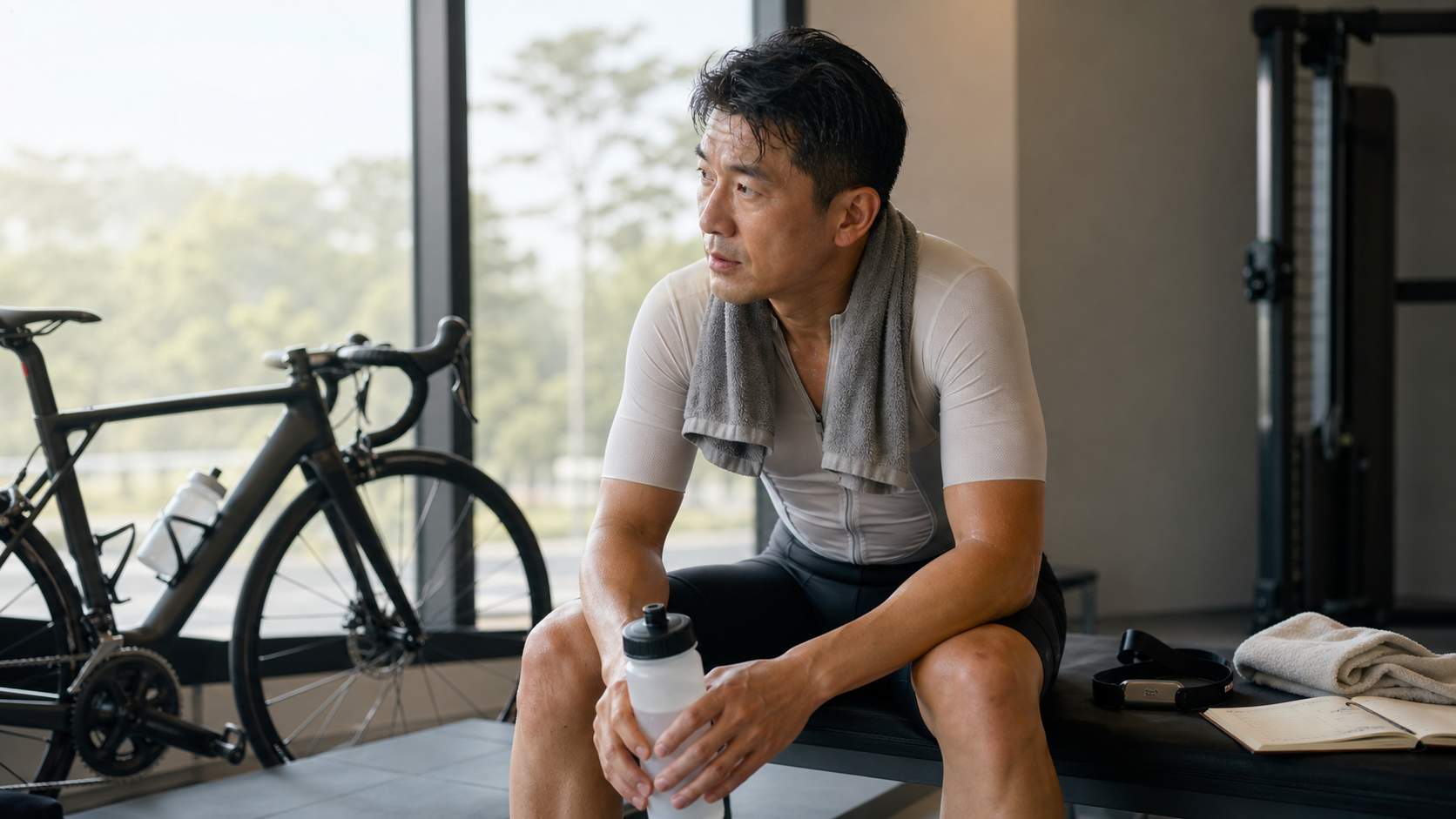
It Starts with a Fellow Cyclist’s Red Flags on His Health Check
I still remember the first time that 42-year-old tech-industry cyclist sat down in front of me. He slid a stack of health check reports across the table, his tone half self-deprecating, half anxious: “Coach, I ride 300 kilometers a week, my body fat is only 15%, and I look this healthy—so why did my testosterone come back low, and why did the doctor say I’m slightly anemic? Shouldn’t I be getting stronger and tougher the more I train?”
That stack of reports is still etched in my memory, because it’s almost a缩影 of middle-aged male exercisers in Taiwan: crushing work stress, sleep squeezed down to five hours, eating out for every meal, trying to “make up” for all the miles missed during the week with one big weekend ride, and then wearing their body’s protests like a badge of honor for their willpower. He assumed exercise would automatically send his male hormones soaring, but he never realized that “exercise” and “overtraining” can have completely opposite effects on testosterone.
In this article, I want to lay out clearly what I’ve learned from fifteen years of coaching athletes at all levels and general populations, plus my ongoing reading of exercise physiology and sports medicine literature: How exactly does exercise affect male hormones? Is higher testosterone always better? And how does overtraining gradually steal your energy, your sex drive, and your mood? I’ll give you tables and training plans you can follow directly, but I’ll also be honest with you: your body is not a machine you can keep cranking up without limit.
Here’s the bottom line: Moderate, regular exercise is almost universally beneficial for male hormones and overall health. But long-term excessive training with insufficient recovery will actually suppress testosterone, raise stress hormones, and leave you more exhausted the more you train. The difference isn’t whether you exercise—it’s whether you give your body enough recovery.
Concepts and Scientific Foundations: What Testosterone Actually Governs
Testosterone Is Not Just the “Sex Drive Hormone”
When most people hear “testosterone,” they immediately think of sexual function. That’s not wrong, but it sells the hormone short. Testosterone is the primary male androgen, and its influence reaches far wider than most people imagine:
- Muscle and strength: It promotes muscle protein synthesis and is one of the keys to building muscle.
- Bone density: It maintains bone strength; chronically low testosterone is linked to osteoporosis.
- Red blood cell production: It affects hematopoiesis, which is why hormonal imbalance can sometimes come with fatigue or even mild anemia.
- Mood and motivation: It’s tied to vitality, focus, stress resilience, and libido.
- Metabolism and body fat distribution: It influences insulin sensitivity and abdominal fat accumulation.
So when a man has chronically low testosterone, the symptoms are rarely isolated—it’s more like “the whole person runs out of battery”: no drive, can’t train hard, poor sleep, low mood, declining libido, and body fat creeping up. That’s why I often tell my athletes that testosterone is, in a sense, a “master dashboard” for men’s health—when that needle keeps dropping, it usually means at least one of your systems—sleep, nutrition, stress, or training—has been out of balance for a long time. It’s not the problem itself; it’s the display showing you the problem.
What a Normal Range Looks Like
Here’s a reference for everyone. One important reminder: reference ranges vary slightly between labs, and your numbers can be affected by the time of blood draw, sleep, and stress, so don’t scare yourself over a single reading. The following are common general references:
| Item | Common Reference Range | Notes |
|---|---|---|
| Total testosterone (adult men) | Approximately 264–916 ng/dL | This range comes from a pooled study of healthy, non-obese men aged 19–39 in the US and Europe |
| Low threshold (some guidelines) | Below approximately 300 ng/dL | Some urology guidelines use this as a low reference threshold, but symptoms and repeat testing are required |
| Change with age | Roughly 1% decline per year after age 30 | Individual variation is large; not everyone follows the same pattern |
Please note especially: These are general principles, not diagnostic criteria. Testosterone is usually best measured with a morning blood draw, repeated if necessary, and interpreted by a physician alongside your symptoms. The last thing I want any of you to do is self-prescribe supplements based on one slightly low number.
Cortisol: The Opponent Tugging Against Testosterone
To understand how exercise affects hormones, you need to meet another player—cortisol. It’s the hormone your body secretes in response to stress (including exercise, which is “good stress”). In the short term, it helps mobilize energy, maintain blood sugar, and get you through a workout. It’s not inherently bad—the problem is when it stays chronically elevated.
Research shows that prolonged, exhaustive endurance exercise simultaneously pulls on both cortisol and testosterone, and the two often move in opposite directions: as cortisol rises, testosterone falls. Some studies have found that after exhaustive endurance exercise, cortisol takes about 48 hours and free testosterone about 72 hours to return to baseline (see references at the end of this article).
This leads to a crucial concept—
It’s not the hormonal changes during exercise that determine your health—it’s whether you let them return to baseline. Feeling tired and seeing temporary hormonal fluctuations after a hard workout is normal. The real problem is stacking another high-intensity session on top before you’ve recovered, and over time, your body simply “turns the system down.”
Resistance Training vs. Endurance Training: Two Different Hormonal Scripts
Here’s something that’s often misunderstood. Many cyclists assume “cardio is the best exercise,” but when it comes to male hormones, resistance training actually plays a very important role.
Research generally observes: resistance training that engages large muscle groups produces a temporary rise in testosterone after the session, which falls back within a few hours; as for whether long-term training (e.g., weeks to months) raises your “resting baseline,” it varies by individual—some groups (especially those who also lose body fat) see a modest increase, but many middle-aged men who already exercise don’t show a statistically significant change in baseline (see references at the end).
To put both types of exercise side by side, I often use this table to help athletes set realistic expectations:
| Aspect | Resistance Training (Lifting) | Low-to-Moderate Intensity Endurance (Cycling/Running) | Prolonged High-Intensity Endurance (When Excessive) |
|---|---|---|---|
| Acute testosterone after session | Commonly a temporary rise | Smaller changes | May decline |
| Long-term baseline testosterone | Varies by individual; more likely to rise modestly with fat loss | Generally neutral to positive when moderate | Can be suppressed with chronic overtraining |
| Cortisol burden | Moderate, depends on volume and recovery | Low when moderate | Clearly elevated with prolonged high intensity |
| Overall men’s health impact | Beneficial for muscle, bone, metabolism | Beneficial for cardiovascular health, weight, blood pressure | Becomes a burden when recovery is insufficient |
Once you understand this table, you’ll see why my advice to that tech-industry cyclist wasn’t “ride less” but “add back strength training and recovery.” What he was missing was never training volume—it was balance and recovery in his training.
So How Much Is “Too Much”?
This is where most people want a concrete number, but I have to be honest: there is no mileage or hour threshold that applies to everyone. Whether something is excessive is relative—it depends on your training background, age, sleep, nutrition, work stress, and most importantly, your recovery status. The same 300 kilometers per week might be perfect for a full-time athlete who sleeps and eats well, but for an office worker sleeping five hours, eating out, and drowning in work, it could be the straw that breaks the camel’s back.
So instead of asking “how many kilometers is too many,” I’d rather you ask yourself these three questions:
- Is my training volume increasing far faster than my body can adapt? (For example, doubling your mileage within a month.)
- Am I giving each hard session enough recovery before stacking the next one on top?
- Are my body’s signals (heart rate, sleep, mood, performance) trending in a better or worse direction?
If you shift your standard from “absolute numbers” to “relative to your recovery capacity,” you won’t fall into the trap of comparing mileage with others while ignoring your own body. This is also why professional training planning is always individualized—someone else’s menu can be your poison.
Practical Methods: How to Train for a Healthy Hormonal Environment
I’ve laid out the science to convince you, but what you really need is “what to do tomorrow morning.” Here’s the framework I actually use with my athletes.
Principle 1: Lay the Foundation First—Sleep, Nutrition, Stress
I have to be honest: if you’re not sleeping enough, eating poorly, and stress is through the roof, no training plan can save your hormones. These three things are the foundation; exercise is just the superstructure.
- Sleep: Testosterone secretion is highly correlated with the sleep cycle. People who consistently sleep less than 6 hours will struggle to keep their hormones healthy. Aim for a consistent 7–9 hours.
- Adequate energy intake: Chronic caloric deficit (especially among endurance athletes who train heavily while dieting) is a common culprit in suppressing hormones. Don’t ride hard while starving yourself.
- Healthy fats and protein: Hormone synthesis requires cholesterol and fat. Extremely low-fat diets are unfriendly to male hormones. In Taiwan, where eating out is common, pay special attention to avoiding meals that are mostly refined carbs with just a little meat.
- Stress management: Chronic stress equals chronically high cortisol. Work stress, sleep debt, and training stress all stack up—this is the most overlooked piece for middle-aged men in Taiwan.
Principle 2: A Sensible Weekly Training Layout
Take a typical rider with some training background who wants to balance health and cycling performance—here’s how I’d structure it. This is a sample framework; adjust it to your own situation.
| Day | Content | Intensity/Duration | Purpose |
|---|---|---|---|
| Mon | Full-body strength training (squats, deadlifts, rows, presses) | Moderate-high intensity, 45–60 min | Stimulate muscle and hormones, maintain bone density |
| Tue | Easy ride or active recovery | Low intensity, 30–60 min | Promote recovery, add no extra stress |
| Wed | Intervals/tempo ride | Moderate-high intensity, 60 min | Improve aerobic capacity |
| Thu | Complete rest or walking/stretching | Very low | Let hormones return to baseline |
| Fri | Lower-body-focused strength training | Moderate-high intensity, 45 min | Stimulate large muscle groups |
| Sat | Long endurance ride | Low-moderate intensity, 2–4 hours | Aerobic base, fat metabolism |
| Sun | Rest or super easy ride | Very low | Recovery |
The key point of this table isn’t “how much high intensity” there is—it’s that recovery days are always sandwiched between high-intensity sessions. Many people pack their schedules full but forget that “rest” is also part of the plan. I often tell my athletes: rest isn’t laziness; rest is where you get stronger.
Principle 3: Treat “Recovery” as Something Quantifiable
Hormones are invisible and intangible, but their imbalance leaks out through many signals. I have athletes track these markers consistently, turning subjective feelings into observable data:
| Monitoring Item | How to Check | Red-Flag Signals |
|---|---|---|
| Morning resting heart rate | Measure every morning upon waking, log your baseline | Several consecutive days 5–10 bpm above normal |
| Sleep quality | Difficulty falling asleep, nighttime awakenings, daytime energy | Persistent poor sleep, still tired no matter how long you sleep |
| Training motivation and mood | How much you look forward to training | Persistent lack of drive, unexplained irritability or low mood |
| Libido | Trend over a period of time | Clear and sustained decline |
| Performance | How the same workout feels | Previously easy intensities now feel very hard and heavy |
This table requires no expensive equipment—just a watch and a bit of self-awareness. When two or three of these light up red at the same time, it’s usually not “I’m just having an off day”—it’s your body telling you: time to back off.
Principle 4: How the Body “Decides” Whether to Secrete Testosterone
Many athletes find hormones mysterious, but it can be explained with a simple analogy. Your brain has a “command center” (the hypothalamus and pituitary gland) that sends signals to the testes, telling them whether to produce testosterone—this pathway is called the hypothalamic-pituitary-gonadal (HPG) axis. Meanwhile, the brain also has a “stress line” that secretes cortisol when you face stress. These two lines restrain each other.
Here’s the key point: when the brain continuously receives signals that “you’re under chronic stress, energy is insufficient, sleep is inadequate,” it judges that now is not a good time to “invest in growth and reproduction,” so it turns down the volume on the HPG axis and turns up the volume on the stress line. This isn’t your body malfunctioning—quite the opposite, it’s a smart survival mechanism. In situations of famine, fleeing for your life, or prolonged depletion, maintaining basic survival matters more than building muscle or reproduction.
The problem is that modern “chronic stress” isn’t actually about fleeing for survival—it’s the work, late nights, excessive training volume, and dieting that people pile onto themselves. The body can’t tell the difference; it only knows “the signals are constantly tense,” so it lowers testosterone. So what you really need to do isn’t to “force” your hormones—it’s to remove the signals that make your brain misjudge the situation as a crisis: sleep enough, eat enough, train just right, and give your body adequate recovery. When the brain receives signals that “the environment is safe and energy is sufficient,” it will naturally turn the HPG axis volume back up. Once you truly understand this concept, you’ll stop believing in any quick-fix supplements.
Principle 5: Hormone-Friendly Eating for Taiwan’s Dining-Out Culture
The raw materials for hormones come from what you eat—especially quality protein, healthy fats, and micronutrients. Eating out is convenient in Taiwan, but it’s also easy to end up with a combination of “mostly refined carbs, insufficient protein and vegetables.” I’ve organized common eating-out options into a comparison table so you can make quick decisions in front of a convenience store or buffet:
| Scenario | More Friendly Options | Options to Minimize | Why |
|---|---|---|---|
| Convenience store breakfast | 2 tea eggs + unsweetened soy milk + a banana | Sweet bread + sugary milk tea | Get enough protein, avoid big blood sugar spikes and crashes |
| Buffet lunch | A palm-sized portion of meat/fish + two servings of vegetables + half to one bowl of rice | Three fried items + a full bowl of rice + no vegetables | Cover protein and micronutrients, control refined carbs and fried foods |
| Post-training refuel | Unsweetened yogurt + fruit, or tea eggs + sweet potato | Just a can of sugary sports drink | Refuel carbs and protein to aid recovery |
| Healthy fat sources | A small handful of nuts, avocado, deep-sea fish | Deep-fried crispy items | Hormone synthesis needs good fats |
I don’t advocate any extreme diet. The principle is simple: ask yourself at every meal, “Is the protein enough? Are there vegetables? Are the fats good ones?” Simply answering these three questions well will, over the long term, do more for your hormonal environment than any supplement claiming to be miraculous. Taiwan actually has abundant ingredients—deep-sea fish, eggs, soy products, and seasonal produce are all easy to get. Make good use of them.
Principle 6: How to Schedule a Deload Week
The deload week is the most underrated training tool. It’s not “time off”—it’s deliberately reducing the load to let the body complete supercompensation and let hormones return to baseline. I typically schedule one every 3–5 weeks. Here’s a simple version:
| Item | Normal Week | Deload Week |
|---|---|---|
| Total mileage | 100% | About 50–60% |
| High-intensity sessions | 2–3 | 0–1 |
| Strength training weight | Normal | Drop to about 60–70%, fewer sets |
| Sleep | Aim for 7+ hours | Deliberately get 8 hours |
| Mindset | Push forward | Let go, recover |
Many athletes initially resist deloading, thinking, “Won’t I lose fitness?” But almost every time, when the deload week ends, the first thing they say is: “Weird, why do I feel stronger?” That’s supercompensation—you don’t get stronger during the deload week; you “cash in” the training effects accumulated beforehand during the deload week.
Overtraining: How Hormones Get Drained Step by Step
What Is Overtraining Syndrome
Overtraining isn’t as simple as “today’s workout was too tiring.” It’s a state where long-term training load exceeds recovery capacity, causing a systemic decline in the body. It’s highly insidious because in the early stages, you might even feel like you’re being “disciplined and hardworking.”
Research indicates that overtraining is strongly associated with decreased testosterone and elevated cortisol. Chronically elevated cortisol suppresses anabolic metabolism, depresses immunity, and increases the risk of injury and illness. Some studies have even observed an association between overtraining and a subsequent decline in sperm concentration (about 74 days later; see references at the end). This is why I view overtraining as a “silent killer of men’s health”—it doesn’t just affect your performance; it affects your entire hormonal environment and reproductive health.
The Typical Progression of Overtraining
I’ve mapped out the overtraining I’ve seen countless times in my athletes into a rough stage chart so you can more easily compare your own situation:
| Stage | Common Signs | My Approach |
|---|---|---|
| Overreaching (Functional) | Short-term fatigue, temporary performance plateau, rebounds after adequate rest | Part of normal training; schedule a deload week |
| Overreaching (Non-functional) | Fatigue lingers longer, mood worsens, sleep deteriorates, needs weeks to recover | Immediately reduce volume, prioritize sleep and nutrition, re-evaluate the training plan |
| Overtraining Syndrome | Long-term performance decline, chronic fatigue, weakened immunity, hormonal disruption | Significantly reduce volume or even pause training, and recommend medical evaluation |
The key difference lies in the time required for recovery. Feeling fine after a day or two of rest is normal fatigue; but if you still can’t get going after two or three weeks of rest and feel no motivation for anything, you need to take it very seriously.
A Realistic Case Scenario
Let me describe a typical scenario that combines elements from several of my athletes (the scenario is for illustrative teaching purposes; the data is not fabricated). A 35-year-old office worker, preparing for the year-end Around Hualien-Taitung Challenge, forcefully increased his weekly training volume from 150 km to 350 km, while also cutting fat and sleeping less than six hours a night. For the first four weeks, he felt incredibly strong and his performance improved; by the sixth week, he started complaining about “heavy legs,” “heart rate spiking on climbs that used to be easy,” “can’t sleep at night but exhausted during the day,” and “suddenly lost interest in cycling.”
This is a classic case of non-functional overreaching, even bordering on overtraining. What he lacked wasn’t willpower, but someone to tell him: when you increase training volume, recovery must be increased proportionally. I then had him significantly reduce his volume for two weeks, catch up on sleep, and stop the calorie deficit. Three weeks later, that energetic person slowly came back. I’ve seen too many cases like this; it’s almost never about training too little, but about recovering too little.
I often joke with my athletes: if you think of training as “swiping your credit card,” then recovery is “making the payment.” You can swipe aggressively, that’s fine, but if you never pay it back, eventually your card debt will explode and your credit will be ruined. Overtraining is your body’s hormonal “credit bankruptcy” — once you reach that point, the time it takes to rebuild is far longer than the few days of rest you thought you were saving. So instead of fixing it afterward, it’s better to schedule “payments” into your routine regularly, keeping the balance always in check.
Common Mistakes and Corrections
I’ve compiled the most common mistakes from the past fifteen years. If you just avoid these few, you’ll be ahead of most people.
Mistake 1: Treating “Rest Days” as a Waste
Many Taiwanese cyclists are weekend warriors. They have no time during the week, so they ride hard and long for both weekend days, feeling that resting in between is a waste. Correction: Treat recovery as part of training and write it into your plan. Low-intensity days after high-intensity efforts, and a deload week every 3–5 weeks, are key to stabilizing hormones and allowing for supercompensation.
Mistake 2: Only Doing Cardio, No Strength Training at All
Endurance athletes often only ride and never touch weights. Over time, this leads to muscle loss, decreased bone density, and is also detrimental to male hormones. Correction: Do resistance training involving large muscle groups at least 1–2 times per week (squats, deadlifts, pushes, pulls). This isn’t just for muscles; it’s about maintaining a healthy hormonal and skeletal environment.
Mistake 3: Combining High-Volume Training with Strict Dieting
This is one of the fastest ways to suppress testosterone. Chronic energy deficiency makes the body “shut down non-essential functions,” including reproduction and anabolism. Correction: Don’t pursue significant fat loss and high mileage simultaneously during a training block. Ensure calories and carbohydrates are sufficient to support training; for fat loss, use a moderate, sustainable deficit, not a combination of starvation and intense training.
Mistake 4: Mistaking Chronic Fatigue for “Not Trying Hard Enough”
Many people’s bodies are already crying for help, yet they blame themselves, thinking “I must not have enough willpower.” Correction: Learn to distinguish between “normal tiredness” and “systemic breakdown.” When morning heart rate, sleep, mood, libido, and performance all decline simultaneously, that’s not laziness; it’s a signal.
Mistake 5: Ignoring Taiwan’s Unique Environmental Factors
Taiwan’s summers are hot and humid. Dehydration and heat stress from long outdoor rides add extra strain on the body. Additionally, eating out often means refined carbs and inconsistent fat quality, and sleep is frequently compressed by work and 3C devices. Correction: During summer rides, pay attention to hydration and electrolytes, avoid the midday heat (ride in the early morning or evening), try to get enough quality protein and vegetables when eating out, and limit phone use before bed. These may seem like small things, but accumulated, they are the dividing line for hormonal health.
Actionable Advice for Readers at Different Levels
There’s no one-size-fits-all plan, so I’ve broken down the advice by level. Find where you are and start from there.
If You Are a Beginner / Sedentary Office Worker
- Prioritize consistency over intensity: Moderate exercise 3 times a week for 30–40 minutes each is enough to bring significant health and hormonal benefits.
- Add some weights: Even bodyweight squats, push-ups, or simple dumbbells are better than nothing.
- Make sleep your top priority: For sedentary individuals, the hormonal benefits from improved sleep are often greater than from adding training volume.
- Don’t rush to look at numbers: Get your body moving and build habits first; don’t be anxious about getting your testosterone checked right away.
If You Are an Advanced Cyclist / Regular Trainer
- Re-evaluate your recovery ratio: You most likely don’t lack training volume; you lack recovery. Schedule a deload week every 3–5 weeks.
- Add strength training: If you only ride, incorporate weight training to protect muscle and bone.
- Start monitoring: Track morning heart rate, sleep, mood, and performance. Develop a logging habit so your body’s signals become visible to you.
- Plan your season: Don’t go all-out in every event; give your body a rhythm of peaks and valleys.
If You Already Show Signs of Suspected Overtraining or Low Hormones
- First, significantly reduce volume: This isn’t a step back; it’s stopping the bleeding. Give your body two to four weeks of true recovery.
- Strengthen the foundation: Address sleep, nutrition, and stress, one by one.
- Seek medical evaluation: If fatigue, decreased libido, and low mood persist after several weeks of reduced volume and recovery, see a doctor. In Taiwan, you can start with a family medicine physician for an overall assessment, and get a referral to urology or endocrinology if needed. With NHI, it’s convenient to see a doctor; don’t delay.
- Don’t self-medicate with supplements: Any supplement claiming to “boost testosterone” or unverified hormonal preparations can carry risks. Always get professional evaluation; never use them on your own.
A Quick Self-Checklist
Finally, here’s a minimalist checklist you can stick on your wall:
| Check Question | Ideal Answer |
|---|---|
| Do I have real rest days scheduled each week? | Yes, at least 1–2 days |
| Am I getting roughly 7 hours of sleep most nights? | Yes |
| Am I doing 1–2 strength training sessions per week? | Yes |
| Am I combining high-volume training with strict dieting? | No |
| Have my mood, libido, and energy been stable lately? | Stable |
| Do I still feel comfortable with the same training plan? | Yes |
If two or more answers are not ideal, that’s your body’s reminder: it’s time to adjust.
Frequently Asked Questions from Cyclists (FAQ)
These are the questions I’ve been asked so often over fifteen years of coaching that I could recite them in my sleep. Let me answer them all clearly in a Q&A format.
Q1: Will long-term cycling lower testosterone and affect sexual function?
Moderate cycling will not, and is beneficial for overall health. What causes problems is “long-term excessive riding with insufficient recovery.” If you ride a reasonable amount per week, schedule rest, sleep enough, and eat enough, you usually don’t need to worry. It’s those who push hard every day, cut fat, and stay up late who are more likely to experience suppressed hormones. As for the issue of saddle pressure, choosing the right saddle, adjusting the fit, and standing up periodically on long rides can mostly prevent it. There’s no need to give up cycling entirely out of fear.
Q2: Should I get my testosterone checked?
If you just want to “see the numbers” and don’t have any symptoms, there’s no rush. But if you already have a combination of persistent fatigue, noticeably decreased libido, low mood, and an inability to train hard, then it’s worth seeking medical evaluation, letting the doctor decide whether to draw blood and how to interpret it. Remember: testosterone is best tested in the morning, and a repeat test may be necessary; a single reading doesn’t tell the whole story.
Q3: Do those “testosterone-boosting” supplements on the market actually work?
My stance has always been conservative: Get the four foundational pillars—sleep, nutrition, training, and stress—in order first, and the results will usually beat any supplement. The evidence for many products is weak, and some are even of dubious origin, potentially containing undeclared ingredients that carry risks. If you genuinely suspect you have a hormonal issue, the correct sequence is to seek medical evaluation, not to buy things online and self-medicate. Any hormonal preparation absolutely requires a physician’s prescription and monitoring—never use it on your own.
Q4: My testosterone is declining with age—does that mean there’s no hope?
A natural, gradual decline in testosterone with age is a normal physiological phenomenon, and individual variation is large. But the good news is that regular exercise (especially strength training), good sleep, healthy body fat levels, and diet are all factors you can actively control that have a positive impact on hormones. I’ve coached plenty of trainees in their fifties and sixties who, through adjusting their lifestyle and training, saw a clear rebound in their overall vitality and physical capacity. Age isn’t a death sentence; lifestyle is the key variable.
Q5: I’ve been especially tired and unmotivated lately—is it overtraining or something else?
This is something I must emphasize: Chronic fatigue has many causes, and it isn’t necessarily overtraining. Thyroid issues, anemia, sleep apnea, depression, and other chronic diseases can all produce similar symptoms. So if you’ve already properly deloaded, caught up on sleep, and adjusted your diet for several weeks and things still haven’t improved, please see a doctor for a comprehensive evaluation rather than guessing on your own. In Taiwan, it’s very convenient to book a family medicine appointment—let the professionals do the screening first for peace of mind.
Conclusion: Treat Your Body as a Partner, Not an Adversary
Let’s return to the tech-industry cyclist from the beginning. Six months later, he came back to me with a new health check report, and this time the numbers were much better. But what truly made me happy wasn’t that piece of paper—it was what he said: “Coach, I ride a bit less now, but I have more energy, I sleep well, my mood is better, and even my wife says I’m less irritable.”
That is the core message I want to convey: The benefits of exercise for male hormones and health are never built by piling on “more,” but by growing through “just enough plus adequate recovery.” Moderate exercise is beneficial across the board, while excessive volume without enough recovery will backfire. Your body is a partner meant to accompany you for decades, not a machine you can endlessly push and squeeze for more output.
If this article could leave you with just one sentence, I hope it’s this: Training smart matters more than training hard; and the first step to training smart is respecting your recovery.
May you ride healthy and ride long on every road in Taiwan. May you pursue not just faster results, but a body that still has energy and joy when you’re riding at seventy or eighty. That is the true way to win at the finish line. After all, the one who will ride alongside you for the long haul is always the body you’ve taken good care of and respected.
This article is educational content and does not replace individual diagnosis and treatment advice from physicians, physical therapists, or nutritionists. If you have any concerns about hormones, fatigue, sexual function, or any health issue—especially if you have chronic conditions such as diabetes, hypertension, or heart disease—please seek medical attention and receive individualized evaluation. Do not self-diagnose or use any supplements based solely on this article.
References
- Cortisol and testosterone dynamics following exhaustive endurance exercise — https://pubmed.ncbi.nlm.nih.gov/27262888/
- Overtraining affects male reproductive status — https://www.sciencedirect.com/science/article/pii/S0015028216562232
- Acute Response to Endurance Exercise Stress: Cortisol, Testosterone, and SHBG interplay — https://pmc.ncbi.nlm.nih.gov/articles/PMC6298450/
- The effect of acute and chronic exercise on steroid hormone fluctuations in men — https://www.sciencedirect.com/science/article/abs/pii/S0039128X18300199
- Harmonized Reference Ranges for Circulating Testosterone Levels in Men — https://pmc.ncbi.nlm.nih.gov/articles/PMC5460736/
Related Reading
- The Complete Guide to Exercise and Hormones: Testosterone, Cortisol, and Growth Hormone—Reading Your Endocrine Signals
- The Impact of Cycling on Testosterone: Research on Ultra-Long-Distance Training and Hormones
- Hormonal Responses in Cycling Training: The Relationship Between Testosterone, Cortisol, and Training Plans
- Hormonal Responses to High-Intensity Training: Testosterone, Cortisol, and Training Balance
一日北高/長距離團騎 常見問題補充篇 / 組團或跟團的眉角 / 壯車友容易被瘦車友慢性拉爆 / 原來屁股痛可能是這個原因...? / 風場配速法 / 公路車 / CT Yeh
2 年前
如果Pogačar騎西進武嶺可以多快?會破2嗎?各種情況深度推估探討 / 公路車 / CT Yeh
2 年前
一日北高常見問題大集合 | 攻略 | 路線 | 訓練 | 補給 | 自行車 單車 | 一日雙城 | 雙塔 | TWB北高360 | 屁股痛
6 年前
靠單車減肥35公斤 心得分享與整理
7 年前
一個測試有沒有認真練車的方法😂 #公路車
10 個月前
西進武嶺 免費訓練分析服務 Intervals | 練不夠還是練過頭?你哪一種類型選手?AI模型告訴你! | 備戰神器 | 公路車 訓練 | CT Yeh
4 年前
CT暗黑廚房) 車友必備 宇宙無敵鮮蚵湯 幫助訓練恢復 天然食補 好市多 超肥鮮蚵 破PR
7 年前
#公路車 #Vo2Max #最大攝氧量 測驗 體驗 | 心肺測試
6 年前