Exercise and Pregnancy: A Safe Guide to Prenatal Exercise—A Comprehensive Analysis from Coaching and Sports Science Perspectives
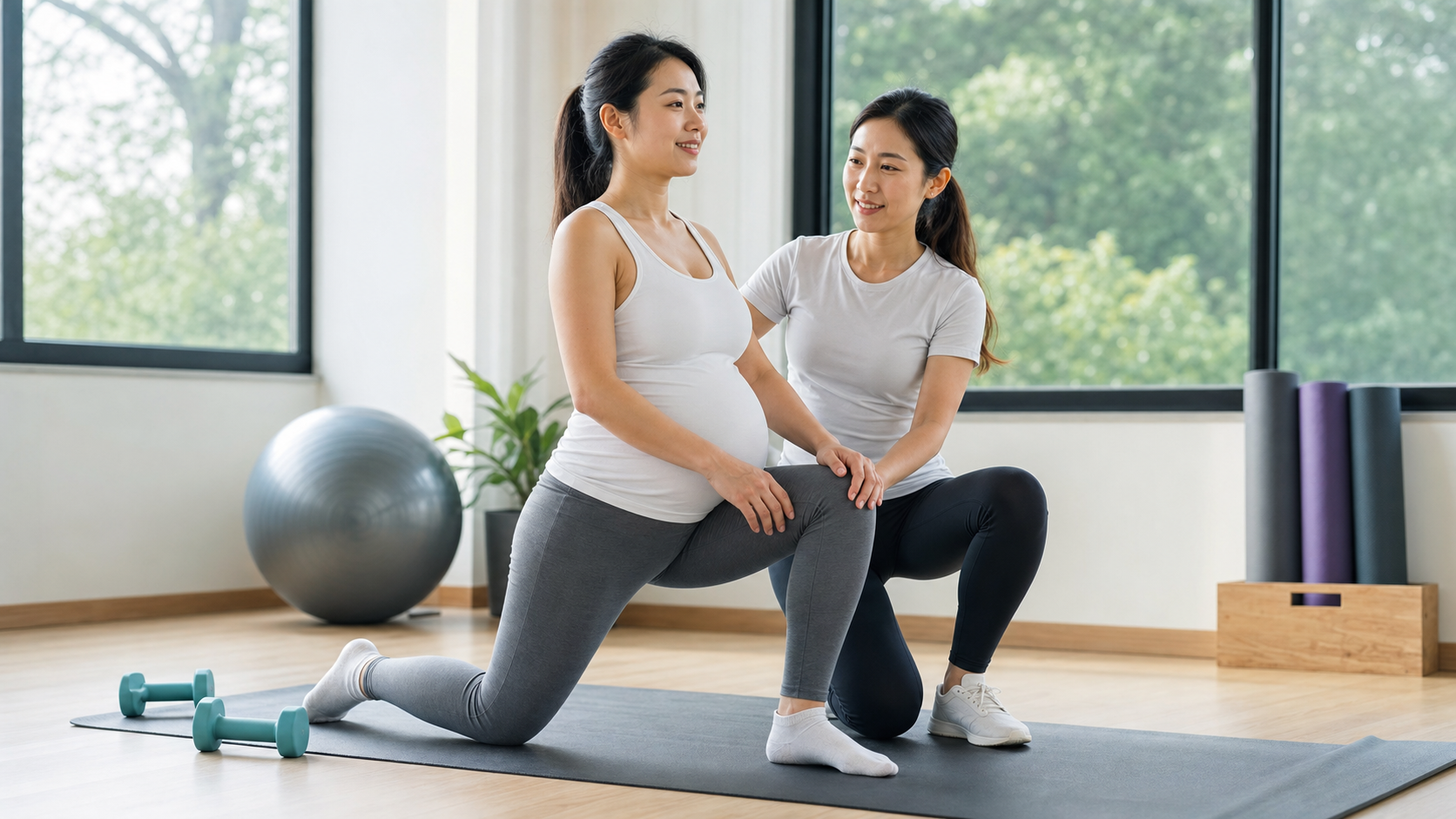
It Started with a Message from a Client
A few years ago, on a Sunday evening, I received a message from my client, Xiao-Min. She had just seen two lines on the pregnancy test, and her tone was a mix of excitement and anxiety: “Coach, I’m pregnant… Does that mean I have to stop all my training? I usually cycle, lift weights, and run—do I have to give all of that up?”
This is almost always the first question every regularly active woman asks me in early pregnancy. But what concerns me even more is the opposite scenario—some expectant mothers who never exercised at all, following their elders’ advice that “pregnancy means you need to rest more and lie down more,” barely leave the house for the entire pregnancy. The result: uncontrolled weight gain, back pain, high blood sugar, and insufficient stamina during labor.
Both extremes stem from the same misconception: putting “pregnancy” and “exercise” on opposite sides. But from a sports science perspective, for the vast majority of healthy pregnant women, regular, moderate exercise isn’t just safe—it’s clearly beneficial for both mother and baby. The real key isn’t “to move or not to move,” but rather “how to move, how much, and when to stop.”
In this article, I want to explain prenatal exercise from start to finish, using the same tone I use with my clients: the scientific foundation, adjustments for each trimester, absolute contraindications, warning signs from your body, how to gauge heart rate and intensity, and how to put these principles into practice in Taiwan’s humid, hot environment with its widespread reliance on eating out.
A note upfront: This is educational content. Every pregnancy is vastly different. All the principles in this article must first be evaluated and approved by your obstetrician before you implement them.
Concepts and Scientific Foundation: Why You Should Exercise During Pregnancy
The Stance of Major Guidelines
The most widely cited international guideline is the recommendation from the American College of Obstetricians and Gynecologists (ACOG). ACOG clearly states: pregnant women without complications should accumulate at least 150 minutes of moderate-intensity physical activity per week. Those 150 minutes can be split into 30 minutes a day, 5 days a week, or broken into smaller blocks—for example, several 10-minute sessions per day—which is actually easier for busy moms-to-be or those suffering from severe first-trimester nausea.
For those who had no exercise habits before pregnancy, ACOG recommends a very gentle starting approach: start with 5 minutes a day, add 5 minutes each week, and gradually build up to 30 minutes of continuous activity per day. This spirit of “progressive overload” is exactly what I emphasize most when working with complete beginners.
The Specific Benefits of Prenatal Exercise
The benefits of regular exercise for pregnant women are comprehensive. I’ve organized them into a table for you to see at a glance:
| Aspect | Potential Benefits of Exercise |
|---|---|
| Weight Management | Helps control gestational weight gain and reduces the risk of excessive gain |
| Blood Sugar Metabolism | Helps lower the risk and severity of gestational diabetes |
| Blood Pressure | May help reduce the risk of gestational hypertension and preeclampsia |
| Cardiovascular & Stamina | Maintains cardiorespiratory fitness, building energy reserves for the “marathon” of childbirth |
| Musculoskeletal | Strengthens the core and lower back, relieving common pregnancy-related back pain |
| Mood & Sleep | Reduces anxiety and depressive tendencies, improves sleep quality |
| Constipation & Edema | Promotes bowel motility and lower-limb circulation, reducing constipation and swelling |
| Postpartum Recovery | Those who maintain fitness during pregnancy typically recover faster after birth |
I often use this analogy with my clients: childbirth itself is an endurance event that requires physical stamina. You wouldn’t expect someone who never exercises to run a full marathon, so why expect your body to successfully complete a labor that could last over ten hours without any preparation? Prenatal exercise, in a sense, is the specific preparation for this “event.”
I’d like to highlight two benefits that are often overlooked but particularly practical for Taiwanese moms-to-be. The first is blood sugar metabolism. Gestational diabetes is not uncommon in Taiwan, and regular exercise is one of the most effective non-pharmacological ways to improve insulin sensitivity and stabilize blood sugar. A walk after meals often helps blood sugar more than you’d imagine. The second is mood and sleep. The hormonal changes, physical discomfort, and anxiety about the future that accompany pregnancy all affect your mood; regular moderate-intensity exercise is widely recognized to help alleviate anxiety and improve sleep, which greatly impacts your quality of life throughout the pregnancy. Many of my clients have reported, “On the days I exercised, I slept more soundly and felt more emotionally stable.”
Of course, these benefits are all predicated on being “moderate” and “safe.” Neither extreme is good—not moving at all carries risks, and pushing too hard also carries risks. The sweet spot in between is what we need to find together.
A Common Myth: Will the Baby Be “Shaken Up”
Many expectant mothers worry that the vibration or elevated heart rate from exercise will harm the baby. In fact, a healthy placenta is designed with considerable cushioning and regulatory capacity, and the physiological responses of the mother during moderate-intensity exercise typically do not harm the fetus. What truly requires vigilance is “excess” and “impropriety”—for example, prolonged exercise in high heat causing core body temperature to rise too high, activities with a risk of falls or impacts, or ignoring your body’s warning signs and pushing through. We’ll address all of these later.
How Pregnancy-Related Physiological Changes Affect Exercise
To understand “why adjustments are needed during pregnancy,” you first need to understand what changes are happening in your body. I’ve summarized the physiological changes most relevant to exercise below:
| Physiological Change | Effect on Exercise | Practical Response |
|---|---|---|
| Increased blood volume and cardiac output | Resting and exercise heart rates are higher than pre-pregnancy; same intensity feels more breathless | Don’t use pre-pregnancy heart rate as your standard; use perceived exertion instead |
| Hormones (relaxin) loosen ligaments | Decreased joint stability, increased risk of sprains | Avoid large ranges of motion, rapid direction changes, and ballistic movements |
| Enlarged uterus, forward-shifted center of gravity | Poorer balance, increased lower back strain | Choose stable activities, strengthen core and glutes |
| Changed breathing patterns, increased oxygen consumption | Gets breathless more easily, lower exercise tolerance | Shorten session duration, extend recovery |
| Increased thermoregulatory burden | Core temperature rises more easily in heat | Avoid overheating, hydrate adequately, choose cooler times |
| Slower GI motility, bloating and nausea | Exercising immediately after meals causes discomfort | Allow sufficient time between eating and exercise |
This table is essentially the underlying logic for all the “adjustment principles” that follow—it’s not that the rules are being difficult with you; it’s that your body has genuinely changed.
Adjustment Principles for Each Trimester
Pregnancy is typically divided into three trimesters, and since your body changes differently in each, the focus of exercise must adjust accordingly. Here’s an overview table, followed by a detailed explanation of each trimester.
| Trimester | Weeks | Physical Characteristics | Exercise Focus | Special Considerations |
|---|---|---|---|---|
| First Trimester | ~1–13 weeks | Nausea, fatigue, dramatic hormonal changes | Maintain existing habits, lower expectations, aim for “just moving” | Don’t push through fatigue or nausea; avoid overheating |
| Second Trimester | ~14–27 weeks | Usually the most comfortable, better energy | The “golden period” for exercise; can steadily maintain moderate intensity | Avoid prolonged supine positions after ~16 weeks; center of gravity begins to shift |
| Third Trimester | ~28–40 weeks | Noticeable belly, forward-shifted center of gravity, easily breathless and tired | Reduce impact, focus on comfort and mobility | Poorer balance, loose joints, watch for signs of preterm labor |
First Trimester: Focus on “Maintenance,” Not Breakthroughs
The biggest enemy in this trimester is often not the risk of exercise, but nausea and fatigue. Dramatic hormonal changes leave many expectant mothers exhausted just from getting through a workday, so demanding they maintain their pre-pregnancy training volume is simply unreasonable.
My advice to Xiao-Min was: change the goal from “progress” to “maintaining basic activity.” She originally cycled three times a week for an hour each session; we changed it to riding only when her body allowed, at an intensity where she could easily hold a conversation, with sessions shortened to around 30 minutes. On days when nausea was severe, she’d switch to a 20-minute walk near home after meals. The most important mindset for this trimester: Don’t compare yourself to your pre-pregnancy self; any movement counts as a win.
Second Trimester: The Golden Period for Exercise
Around 14 weeks, most women find their nausea subsides and energy improves, while the belly isn’t too big yet—this is the best stage of the entire pregnancy for consistent exercise. This is when you can steadily work toward the 150-minute weekly goal.
But there’s one key adjustment: after about 16 weeks, avoid prolonged supine (flat on your back) positions. This is because the enlarged uterus can compress the inferior vena cava, affecting venous return to the heart and causing dizziness or discomfort. Core exercises that were previously done lying down can be modified to side-lying, seated, or standing versions.
Third Trimester: Reduce Impact, Prioritize Comfort
In the later stages, the belly is noticeably larger, the center of gravity shifts forward, and hormones have loosened the joints and ligaments, so balance and stability both decline. During this trimester, I ask my clients to focus on low-impact, controlled activities: walking, stationary cycling, water exercise, prenatal yoga, and gentle mobility and breathing exercises. Running, jumping, and movements requiring rapid direction changes should be retired by most women at this point.
Additionally, this trimester requires heightened sensitivity to preterm labor and abnormal signs—regular uterine contractions, vaginal bleeding or fluid leakage, or a noticeable decrease in fetal movement all warrant immediately stopping and seeking medical attention.
Practical Methods: Intensity, Heart Rate, and a Weekly Schedule
How to Gauge Intensity: The “Talk Test” Is More Practical Than a Heart Rate Monitor
Many clients ask me as soon as they’re pregnant: “Coach, what’s my maximum heart rate?” It’s a good question, but the answer might not be what you expect.
There used to be a popular saying that “pregnant women’s heart rate shouldn’t exceed 140 bpm.” However, according to ACOG’s review, this single heart rate ceiling was actually removed in later versions. The 2020 recommendations instead use perceived exertion described as “fairly light to somewhat hard,” and mention that intensity roughly falls within 60–80% of the age-predicted maximum heart rate, typically not exceeding around 140 bpm; but they also emphasize that there is no clinical evidence requiring healthy pregnant women to deliberately lower exercise intensity and target heart rate to avoid adverse effects.
In other words, a heart rate monitor can be a reference, but a more practical and safer tool is the “Talk Test”:
- Ideal moderate intensity: You can still speak and chat fluidly while exercising, but singing would make you a bit breathless.
- Too easy: You can talk and sing with no difficulty at all—intensity can be bumped up a bit.
- Too hard: You’re pausing between words, too breathless to complete a full sentence—that’s overdone, time to dial it back.
I usually tell my clients: Pregnancy isn’t the time to chase personal records; “comfortable but moving” is the best intensity.
Perceived Exertion (RPE) Reference Chart
If you prefer using numbers, you can refer to the 6–20 Borg Rating of Perceived Exertion (RPE) scale. The recommended range during pregnancy roughly falls between “light” and “somewhat hard”:
| RPE (6–20) | Perceived Sensation | Pregnancy Recommendation |
|---|---|---|
| 6–8 | Almost no sensation, like sitting | Too light, for warm-up |
| 9–11 | Very light, can converse easily | Suitable for warm-up or recovery days |
| 12–14 | Somewhat hard, can still chat | Ideal pregnancy range |
| 15–16 | Hard, speech starts to break up | Upper limit, short duration, caution needed |
| 17–20 | Very hard to maximal exertion | Avoid during pregnancy |
Sample Weekly Schedule
Below is a weekly plan I designed for a client who had a baseline exercise habit before pregnancy, is currently in her second trimester, has no complications, and has received physician approval. Please note this is a “sample”—not everyone should copy it exactly. Your version must be adjusted based on your own condition and medical advice.
| Day | Content | Duration | Intensity (RPE) |
|---|---|---|---|
| Monday | Brisk walking or stationary cycling | 30 minutes | 12–13 |
| Tuesday | Light strength training (seated/standing focus) + pelvic floor exercises | 30 minutes | 12–14 |
| Wednesday | Rest or walking | 20 minutes | 9–10 |
| Thursday | Prenatal yoga / mobility + breathing | 40 minutes | 10–12 |
| Friday | Brisk walking or swimming | 30 minutes | 12–13 |
| Saturday | Full-body light strength circuit | 30 minutes | 12–14 |
| Sunday | Complete rest | — | — |
Over the course of a week, this adds up to roughly 120–150 minutes of moderate-intensity aerobic exercise, right in line with ACOG’s target, while also incorporating strength and pelvic floor training.
Don’t Forget the Pelvic Floor
I especially want to emphasize pelvic floor muscle training (Kegel exercises). Pregnancy and childbirth place significant demands on the pelvic floor. Consciously training it during pregnancy helps reduce urinary incontinence during and after pregnancy and supports the increasing weight. The technique is to imagine the sensation of “holding in urine and gas,” contract for a few seconds, then relax, repeating multiple times. The key is that both the contraction and the release must be deliberate, and the relaxation must be complete—not holding tension continuously.
Warm-Up and Cool-Down: Even More Essential During Pregnancy
Many clients skip warm-ups and cool-downs in their regular training, but during pregnancy I’m much stricter about them. Because ligaments are looser and balance is worse, jumping straight into exercise without warming up carries a higher risk of sprains and strains than before pregnancy.
- Warm-up (5–10 minutes): Slow walking, marching in place, gentle mobility circles for the shoulders, neck, and hips to gradually raise heart rate and body temperature.
- Main session: Follow the day’s plan, monitoring intensity throughout with the Talk Test.
- Cool-down (5–10 minutes): Gradually bring the intensity down, perform gentle stretching (avoid overstretching already-lax joints), combined with deep breathing.
During the cool-down, I especially like to add a few minutes of diaphragmatic breathing practice—belly expands on the inhale, gently contracts on the exhale. This not only aids relaxation but also practices a breathing rhythm that’s very useful during labor.
Case Studies: Three Expectant Mothers with Different Starting Points
To give you a clearer picture, I’ll share three (scenario-based) client situations. The numbers are conservative general ranges; the key is the logic of the adjustments:
Case A—Sedentary office worker, barely exercised before pregnancy. Initially, even walking 15 minutes felt exhausting. We started with 10-minute post-meal walks, adding 5 minutes each week. By week eight, she could comfortably walk 30 minutes and had added seated light strength work. Her takeaway: “It’s not about doing it all at once; it’s about building up gradually.”
Case B—Recreational runner, ran two to three times a week. Her biggest struggle after becoming pregnant was “can I keep running?” We used the Talk Test to slow her pace down. She maintained slow jogging into the second trimester, but switched to brisk walking whenever she felt pelvic pressure or discomfort. Around 30 weeks, she proactively switched to swimming and brisk walking, and her body felt much more comfortable.
Case C—Expectant mother with a strength training habit who could squat with heavy loads. What she needed most was to “let go of her attachment to weight.” We reduced the loads to something she could complete with ease, prioritized movement quality, avoided breath-holding (Valsalva), and after 16 weeks, replaced supine bench presses with seated and standing variations. She maintained good strength throughout her pregnancy and transitioned back to training smoothly postpartum.
These three cases illustrate: different starting points require different adjustments, but the core principles are the same—progress gradually, listen to your body, and coordinate with your physician.
Absolute and Relative Contraindications: Who Should Not Exercise on Their Own
This section may be the most important part of the entire article. Exercise is beneficial for most pregnant women, but there is a group of people for whom it is unsuitable or even prohibited, and this must be determined by a physician.
Absolute Contraindications (Aerobic Exercise Generally Not Recommended)
According to ACOG, the following conditions are absolute contraindications to exercise, meaning routine aerobic exercise is not recommended under these circumstances:
- Rupture of membranes (water breaking)
- Cervical insufficiency
- Persistent bleeding in the second or third trimester
- Placenta previa after 26 weeks
- Preterm labor (premature contractions)
- Preeclampsia
- Heart disease affecting blood pressure or hemodynamics
- Restrictive lung disease
- Severe anemia
Relative Contraindications (Require Individual Physician Assessment)
The following conditions are relative contraindications, meaning they aren’t an outright ban, but whether to exercise and what to do must be individually assessed and weighed by a physician:
- Extreme obesity or extreme underweight
- Extremely sedentary with no exercise foundation previously
- Poorly controlled type 1 diabetes
- Poorly controlled hypertension
- Poorly controlled seizure disorders such as epilepsy
- Poorly controlled hyperthyroidism
- Orthopedic activity restrictions
- Heavy smokers
I want to specifically emphasize: If you have any of the chronic conditions listed above—especially diabetes, hypertension, or heart disease—please bring your exercise plan to your physician for an individualized assessment. Managing these diseases during pregnancy is already complex; exercise is just one piece of the puzzle, and you absolutely should not decide how to train based on internet articles alone. This article provides general principles, not a prescription for your specific situation.
Types of Exercise That Should Be Avoided Entirely
Even without the contraindications above, most pregnant women are advised to avoid the following types of activities:
- Activities with a risk of falls or impacts: skiing, horseback riding, gymnastics, sports involving intense physical contact, road cycling in traffic, etc.
- Prolonged exercise in high-heat environments: such as hot yoga or prolonged midday sun exposure outdoors in a Taiwanese summer, to avoid core body temperature rising too high.
- Deep diving (scuba diving): should be avoided during pregnancy due to decompression risks.
- Strenuous exercise at high altitude: unless you live at high altitude, strenuous activity at high altitude is not recommended during pregnancy.
- Prolonged supine positions after 16 weeks.
Warning Signs That Require Immediate Stop and Medical Attention
This is a checklist every exercising pregnant woman must memorize. If any of the following occurs during exercise, stop immediately and contact your physician or seek medical care:
- Vaginal bleeding
- Dizziness or feeling like you’re about to faint
- Chest pain
- Regular, painful contractions
- Shortness of breath before starting exercise (breathlessness at rest)
- Fluid leaking from the vagina (possible water breaking)
- Calf pain or swelling
- Headache
- Noticeably decreased fetal movement
I ask my clients to save this list on their phones or tape it to their gym bags. The highest principle of prenatal exercise is always: if anything feels off, stop rather than push through. In Taiwan, medical access is convenient and National Health Insurance coverage is readily available. When in doubt, seeing your OB-GYN or contacting your prenatal hospital directly is far safer than guessing on your own online.
Common Mistakes and Corrections
Having coached so many prenatal clients, I’ve compiled the most common mistakes and how I help correct them.
Mistake One: Sedentary Before Pregnancy, Then Suddenly Wanting to Train Hard “for the Baby”
This is the most dangerous one. With no physical foundation, suddenly starting moderate-to-high-intensity exercise carries a high risk of injury and overexertion.
Correction: Follow ACOG’s progressive principle exactly—start with 5 minutes a day, add 5 minutes each week. Walking is the best starting point; there’s no need to hit the gym right away.
Mistake Two: Athlete Before Pregnancy, Refusing to Reduce Intensity After
The other extreme. Clients who could lift heavy and run fast feel that reducing intensity is “regressing,” and it’s psychologically hard to accept.
Correction: I help her redefine what “winning” means—during this period, maintaining health and reaching delivery safely is the best achievement. The pursuit of competitive performance can wait until the postpartum recovery period.
Mistake Three: Ignoring Hydration and Overheating, Especially in Taiwanese Summers
Taiwan’s summers are hot and humid, with heat index temperatures often exceeding 35°C. One client went for a midday workout along the riverside and only realized something was wrong when she came back dizzy and nauseous.
Correction:
- Avoid midday hours, choose early morning or evening instead.
- Hydrate adequately—before, during, and after exercise.
- Take advantage of indoor venues in Taiwan: air-conditioned gyms, community activity centers, and indoor pools are all great summer options. Swimming and water exercise are particularly recommended prenatal activities—the buoyancy of water reduces joint strain while naturally dissipating heat.
Mistake Four: Only Doing Aerobic Exercise, Completely Skipping Strength and Pelvic Floor Work
Many people assume prenatal exercise just means walking and swimming, overlooking strength and pelvic floor training.
Correction: Moderate light strength training (with physician approval) maintains muscle mass, supports the increasing body weight, and relieves back pain; pelvic floor training is very helpful for labor and postpartum recovery. Both should be incorporated into the schedule.
Mistake Five: Poor Nutrition, Pitfalls of Eating Out
For exercise to be effective, nutrition must keep up, but Taiwan’s eating-out culture is full of pitfalls: sugary drinks with excessive sugar, bento boxes lacking vegetables, and excessive sodium intake worsening edema.
Correction: For this aspect, I recommend consulting a dietitian for individualized planning. General principles are—prioritize whole foods, adequate protein and vegetables, pay attention to iron and calcium, limit refined sugar and overly salty foods, and stay well-hydrated. Vitamin and mineral supplements during pregnancy (such as folic acid, iron) should follow medical advice; don’t add supplements on your own.
Here are the general eating-out adjustment directions I commonly give to exercising expectant mothers. Again, these are for reference only and cannot replace dietitian advice:
| Common Eating-Out Scenario | Common Pitfalls | General Adjustment Direction |
|---|---|---|
| Bento boxes / buffet | Too few vegetables, fried mains, excessive white rice | Load up on dark leafy vegetables, choose non-fried protein, moderate rice portions |
| Bubble tea / drinks | Full sugar, large size, excessive calories and sugar | Switch to sugar-free or lightly sweetened, smaller size, substitute with unsweetened tea or water |
| Noodle shops / snacks | Salty broth, insufficient protein | Add an egg or soy product, drink less of the broth, watch sodium |
| Breakfast shops | High-calorie sauces, almost no vegetables | Choose options with egg and vegetables, switch drinks to unsweetened |
Practical Advice on Hydration and Venues in Taiwan
Taiwan’s climate is a major challenge for prenatal exercise—hot and humid in summer, damp and cold in the north during winter. The principles I give my clients for venues and hydration are:
- Hydration: Drink some before exercise, take small sips periodically during, and replenish afterward; dark-colored urine is a sign of inadequate hydration.
- Summer: Prioritize indoor air-conditioned venues, or riverside and park areas during cooler early morning or evening hours. Avoid midday sun exposure and hot yoga.
- Winter: When it’s damp and cold in the north, indoor venues (community centers, gyms, indoor pools) are more stable; outdoors, remember to layer clothing and warm up thoroughly.
- Recommended venues: indoor pools (buoyancy reduces strain and dissipates heat), community activity centers, air-conditioned gyms, and flat sidewalks and park paths near home.
Actionable Advice for Readers at Different Levels
If You’re an Expectant Mother with “No Exercise Habits at All”
- Get a prenatal checkup and ask your physician first to confirm there are no exercise contraindications.
- Start with a 10-minute walk after meals each day—this is the lowest-barrier, safest starting point.
- Increase the time each week based on your energy, gradually working toward “30 minutes a day.”
- When it’s hot, switch to indoor walking—even strolling through an air-conditioned mall counts. The key is getting moving and building the habit.
If You’re an Expectant Mother Who “Exercises Occasionally”
- Make 150 minutes of moderate-intensity exercise per week your core goal.
- Use the Talk Test to gauge intensity: can chat but gets breathless singing.
- Add pelvic floor training and light strength work.
- Push steadily in the second trimester; proactively reduce impact in the third.
If You’re an Expectant Mother with “Regular Training” or a Competitive Background
- Communicate thoroughly with your physician about your training content and intensity.
- Mentally accept “maintenance over breakthrough,” keeping RPE at 12–14.
- Adjust progressively by trimester: avoid impact, avoid supine positions after 16 weeks, avoid overheating.
- Constantly cross-reference the warning signs checklist—stop immediately if anything feels off.
- Save competitive goals for postpartum and plan long-term.
FAQ
Q: Can I continue road cycling during pregnancy?
A: Stationary cycling (trainer/spin bike) is generally much safer than riding on the road, as there’s no risk of falls or traffic. If you insist on outdoor riding, as your belly grows and your center of gravity shifts, the balance risk increases, and most women switch to indoor riding in the mid-to-late stages. Be sure to discuss this with your physician.
Q: Can I lift weights during pregnancy?
A: With physician approval, moderate, well-controlled light strength training is generally acceptable, but you should avoid breath-holding under strain (Valsalva maneuver), avoid excessively heavy loads, and avoid prolonged supine positions after 16 weeks.
Q: Will exercise cause miscarriage or preterm birth?
A: For healthy pregnant women without contraindications, moderate exercise does not increase these risks and actually provides overall benefits. However, those with contraindications or high-risk conditions must follow their physician’s advice.
Q: I noticed decreased fetal movement but I just finished exercising—is that normal?
A: A noticeable decrease in fetal movement is a warning sign that requires medical attention; don’t reassure yourself with “I just finished exercising.” Contact your physician if you have concerns.
Q: How soon after delivery can I resume exercise?
A: It varies from person to person, depending on the mode of delivery (vaginal or cesarean) and recovery status. Please confirm with your physician at your postpartum checkup before gradually resuming, following the same progressive principle.
Q: My morning sickness is so severe I don’t want to move at all. Should I force myself to exercise?
A: No, don’t force it. Your body is very honest in the first trimester—rest when you’re too tired or nauseous. Start moving again gradually once you feel better. Don’t feel guilty about “not exercising today.”
Q: My belly feels a bit tight and dull during exercise. Is that normal?
A: Occasional mild tightness may be irregular uterine contractions (Braxton Hicks). But if it becomes regular, painful, increasingly frequent, or is accompanied by bleeding or fluid leakage, stop immediately and seek medical care. When in doubt, it’s better to stop and ask your physician.
Q: Can I wear a heart rate monitor as a reference, but should I trust the heart rate or my feelings?
A: Look at both together, but when the numbers and your feelings conflict, trust your body’s sensations. Heart rate is naturally elevated during pregnancy; forcing it down to a specific number just makes things unnecessarily restrictive. If you feel it’s hard, it’s hard—dial it back.
Q: I have no time to exercise all day. What should I do?
A: Break the 150 minutes into smaller chunks. ACOG also recognizes splitting it into multiple 10-minute blocks. Walk a few extra stops on your commute, take post-meal walks, get up and move during TV time—it all accumulates and counts.
Q: How is prenatal yoga different from regular yoga? Can I just go to a regular class?
A: Prenatal yoga avoids movements that compress the abdomen, deep twists, backbends, and prolonged supine positions, and is designed around pregnancy-specific breathing and pelvic work. I recommend choosing classes specifically designed for pregnant women and informing the instructor of your gestational age in advance. In regular classes, if you’re unsure about a movement, it’s better to skip it or ask.
Q: Do the same exercise principles apply to twin pregnancies or advanced maternal age?
A: These are situations that require more cautious evaluation. The feasibility and content of exercise can vary greatly, and must be individually assessed by a physician—you cannot directly apply the general schedule in this article.
A Note on the Postpartum Transition
Although this article focuses on pregnancy, I want to add a reminder: childbirth is not the end of your exercise plan; it’s the beginning of a new phase. Your body undergoes enormous changes postpartum as well—the pelvic floor, abdominal muscles, and hormones all need time to recover. When returning to exercise, please apply the same caution as during pregnancy—get physician clearance first, start at low intensity, progress gradually, and especially don’t rush into high-impact or heavy abdominal work. Many postpartum issues (incontinence, back pain) can actually be improved with proper progressive training, but rushing it can easily lead to injury.
Conclusion: Make Exercise Your Teammate During Pregnancy
Let’s return to Xiao-Min’s story from the beginning. With her physician’s approval, she navigated her entire pregnancy using the plan we adjusted together—maintenance-focused in the first trimester, steady exercise in the second, and switching to walking, swimming, and prenatal yoga in the third. She told me that although labor was tough, she felt her “stamina held up,” and her postpartum recovery was faster than expected.
What I want to say is this: Pregnancy was never the end of exercise; it’s a journey that requires readjustment. When you move correctly and in the right amounts, exercise becomes one of your best teammates during pregnancy—helping you control weight, stabilize blood sugar and blood pressure, relieve back pain, improve sleep and mood, and build stamina for childbirth.
But please always remember three things: progress gradually, listen to your body, and ask your physician when in doubt. Taiwan’s medical accessibility is excellent. Make good use of your prenatal checkups, discuss your exercise plan with your physician, and let the professionals help you stay safe.
If this article could leave you with just one sentence, I hope it’s this: Prenatal exercise isn’t about challenging your body’s limits; it’s about accompanying your body through change. Treat it as a process of cooperation with yourself and your baby. Moving just right is the best arrangement.
Wishing every expectant mother a safe and comfortable journey, moving together with the little life inside you.
This article is educational content and cannot replace individual diagnosis and treatment advice from a physician, physical therapist, or dietitian. If you have conditions such as diabetes, hypertension, heart disease, or any pregnancy complications, you must undergo individual assessment by an OB-GYN before exercising and follow medical advice.
References
- ACOG — Physical Activity and Exercise During Pregnancy and the Postpartum Period: https://www.acog.org/clinical/clinical-guidance/committee-opinion/articles/2020/04/physical-activity-and-exercise-during-pregnancy-and-the-postpartum-period
- ACOG — Exercise During Pregnancy (FAQ): https://www.acog.org/womens-health/faqs/exercise-during-pregnancy
Related Reading
- Prenatal Exercise and Postpartum Return: A Complete Guide for Endurance Athletes
- Prenatal and Postpartum Endurance Training: Safety Boundaries and Return Timelines
- The Complete Guide to Running While Pregnant: When to Run, How to Run, When to Stop
- Exercise During Pregnancy and Postpartum Return: Trimester Principles and Absolute Contraindications (All Subject to Individual Assessment by an Obstetrician)
靠單車減肥35公斤 心得分享與整理
7 年前
西進武嶺 免費訓練分析服務 Intervals | 練不夠還是練過頭?你哪一種類型選手?AI模型告訴你! | 備戰神器 | 公路車 訓練 | CT Yeh
4 年前
一日北高常見問題大集合 | 攻略 | 路線 | 訓練 | 補給 | 自行車 單車 | 一日雙城 | 雙塔 | TWB北高360 | 屁股痛
6 年前
#公路車 #Fitting 靠人工智慧APP 幫你調整單車
6 年前
一日北高/長距離團騎 常見問題補充篇 / 組團或跟團的眉角 / 壯車友容易被瘦車友慢性拉爆 / 原來屁股痛可能是這個原因...? / 風場配速法 / 公路車 / CT Yeh
2 年前
[教學] Premiere 影片 手震 修正 教學 防抖 單眼 影像 GoPro 穩定 Video Stabilization
8 年前
大家都在開箱的...單車用藍芽對講耳機真的有幫助嗎? SENA BiKom 20 長距離旅遊 & 海鷗繞圈賽 實際體驗心得 / 公路車 / CT Yeh
9 個月前
單車 一日北高 ( 雙城 ) 肥宅雙人瘋狂行 紀錄片 REACTO
10 年前