Postpartum Exercise Recovery Guide: From Pelvic Floor to Returning to the Run, Step by Step to Reclaim Your Body
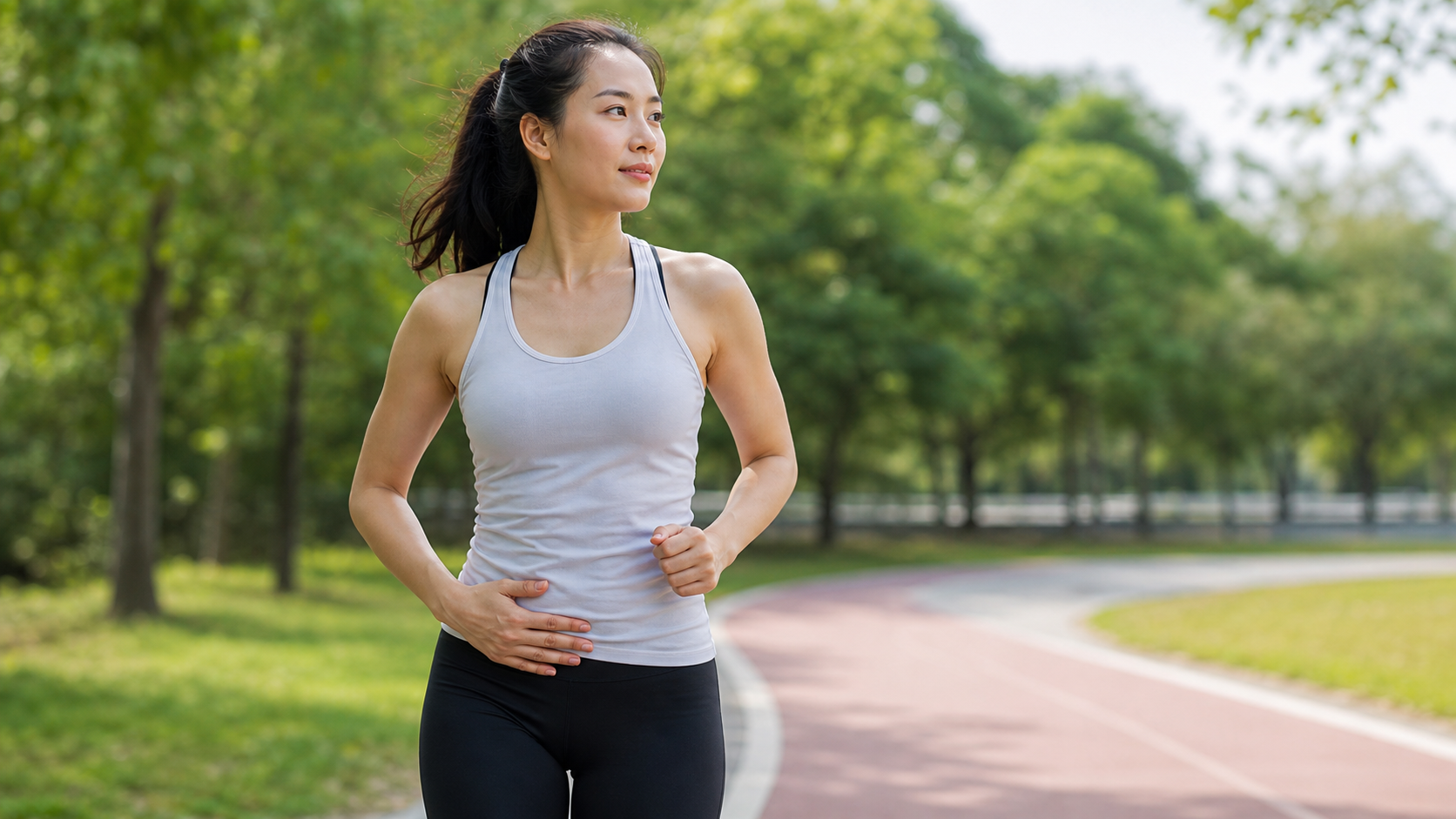
Opening: The Mom Who Wanted to Get Back on the Road
A few years ago, I worked with a student who was six weeks postpartum after her first baby—let’s call her Xiao-Min. She was a long-distance running enthusiast, logging 40 to 50 kilometers a week before giving birth, and had completed several full marathons. After her postpartum check-up, she got the doctor’s “cleared to exercise” note, and the very next day she couldn’t wait to lace up her running shoes, determined to make up for the “wasted” ten months of pregnancy in one go. The result? On her first run out, she planned for five kilometers, but by the third kilometer she started leaking urine. She came home with a sore back that lasted three full days, and she could feel a soft groove down the middle of her belly.
When she came to see me, her face was written all over with frustration: “I clearly still have my fitness, so why does my body feel like it’s not mine?”
I often say that this is almost the exact sentence every postpartum mom returning to exercise will utter. The transformation pregnancy and childbirth impose on the body runs far deeper than most people imagine. It’s not just “the belly got big and then got small again”—it’s the entire core cylinder—the diaphragm, transversus abdominis, multifidus, and pelvic floor muscles—being stretched open, elongated, and rearranged, plus hormones causing ligament laxity and decreased joint stability. This is a process that requires “relearning control,” not simply “getting your fitness back.”
In this article, I want to lay out clearly the principles I’ve gathered from over a decade of working with postpartum populations and continuously reading sports medicine literature. Whether you’re a runner hoping to return to the track, a cyclist wanting to get back on the bike, or just a regular mom who wants to be able to hold her baby without a sore back, I hope this guide helps you avoid some unnecessary detours.
Let me say the most important thing first: Postpartum recovery is a marathon, not a sprint. The more you rush, the slower your body usually heals.
1. Concepts and Scientific Foundations: What Exactly Did Pregnancy Change?
The Core Isn’t “Abs”—It’s a Breathing Cylinder
Many people think the core is just the six-pack, but what actually undergoes massive change during pregnancy is the deep “core cylinder” system:
- Top lid: The diaphragm (the primary breathing muscle)
- Front, back, and side walls: Transversus abdominis and multifidus
- Bottom: The pelvic floor muscles (supporting the bladder, uterus, and rectum)
These four muscle groups work like an airtight canister, coordinating to regulate intra-abdominal pressure when functioning normally. When you cough, lift something heavy, or jump, this system automatically tightens to protect your internal organs and spine. During pregnancy, the uterus stretches this canister open from the inside, the rectus abdominis on the front of the abdominal wall gets elongated and even separates left and right (diastasis recti), and the pelvic floor muscles bear prolonged downward weight. Childbirth (especially vaginal delivery) is an extreme stretch for the pelvic floor.
So the core logic of postpartum recovery is clear: It’s not about building strength first; it’s about restoring the “coordination” and “pressure management” of this cylinder first. If the cylinder is leaking, no matter how much strength you pile on, the pressure will still escape toward the weakest point—usually the pelvic floor (leaking urine) or the linea alba (bulging down the middle of the belly).
How Long Does Pelvic Floor and Abdominal Wall Recovery Take?
Based on current sports medicine and physical therapy literature, the pelvic floor muscles take on average about 4 to 6 months to return to a more ideal functional state; and high-impact exercise (such as running, jumping) is generally recommended to wait at least 3 to 6 months postpartum before gradually resuming—returning too early is not advised. These are general timeframes; actual situations vary by individual and mode of delivery.
Here I want to clarify a common misconception: Many moms get the “cleared to exercise” permission at their six-week postpartum check-up and assume it means “I can run, lift weights, and do sit-ups.” No, it doesn’t. That clearance usually means “your wounds and uterus have healed enough to begin gentle activity,” not “you can do high-impact or high intra-abdominal pressure exercises.” This gap is exactly where many moms get injured.
The Impact of Hormones and Breastfeeding
During pregnancy and the early postpartum period, hormones like relaxin keep ligaments and joints looser, and this state may persist for a while after you stop breastfeeding. This means your joint stability may not yet be back to pre-pregnancy levels, and doing heavy weights or high-impact exercise too soon raises your injury risk. Breastfeeding itself burns several hundred extra calories per day (generally in the range of about 300 to 500 kcal, varying by individual), so breastfeeding moms exercising need to pay extra attention to hydration and caloric intake. Don’t overly restrict your diet for quick weight loss—it’s detrimental to both milk supply and recovery.
Why “I Still Feel Fit” Doesn’t Mean You Can Rush
This is the mindset I most want to establish for moms who exercised before pregnancy. Your cardiovascular capacity and muscle “memory” do indeed decline more slowly than you’d think, so you feel like “I can still run, I can still lift.” The problem is that what’s lost first postpartum, and what takes the longest to rebuild, isn’t cardiovascular fitness or strength—it’s the ‘coordination and timing’ of the core cylinder—that is, whether your pelvic floor and transversus abdominis can contract “instantly and precisely” at the moment your foot strikes the ground or you exert force.
If this coordination hasn’t been reconnected, but your cardiovascular system and large muscle groups can already output significant power, the result is “a strong engine with a loose chassis,” and all the pressure vents toward the weakest points (pelvic floor, linea alba). This is exactly why many physically fit moms are actually more prone to leaking urine or worsening diastasis recti in the early stages—not because they’re weak, but because they’re “too strong” and skipped the foundation. So please treat “I still feel fit” as a warning sign, not a free pass.
2. Practical Methods: A Phased Postpartum Recovery Map
I like to divide postpartum recovery into several phases. Please note that these week numbers are “reference starting points,” not “you can definitely do this once the time arrives.” Passing the ‘symptom checks’ at each phase is the real gate to advancing.
Postpartum Recovery Phase Overview Table
| Phase | Approximate Time | Main Goals | What You Can Do | Absolutely Avoid |
|---|---|---|---|---|
| Phase 0 | 0–2 weeks postpartum | Rest, reduce swelling, learn breathing | Diaphragmatic breathing, gentle pelvic floor contractions, controlled rolling in bed, short walks | Any abdominal exertion, prolonged standing or walking |
| Phase 1 | 2–6 weeks postpartum | Reconnect core and pelvic floor | Breathing coordinated with pelvic floor contractions, light deep abdominal activation, posture correction | Sit-ups, planks, running/jumping, loaded exercises |
| Phase 2 | 6–12 weeks postpartum | Low-load strength and movement integration | Bridges, bird-dogs, bodyweight squats, brisk walking, low-resistance cycling | High-impact running/jumping, heavy weights, high-intensity intervals |
| Phase 3 | 3–6 months postpartum | Progressive loading, return to sport | Run-walk intervals, progressive strength training, gradually increasing cycling intensity | Jumping straight into full running/racing without passing symptom checks |
| Phase 4 | 6+ months postpartum | Return to pre-pregnancy training | Resume full mileage, races, climbing intensity as appropriate | Ignoring body warning signs and pushing through |
The “Symptom Checks” at Each Phase—This Is the Real Key to Advancing
Before moving to the next phase, honestly ask yourself these questions. If any of the following appears, it means you’re “not ready yet”—step back a phase or seek professional assessment:
- Urinary leakage: Leaking urine when walking, running, jumping, coughing, or sneezing
- Heaviness or prolapse sensation: A heavy, dragging, or “something is about to fall out” feeling in the vagina or perineum (could be a warning sign of pelvic organ prolapse)
- Abdominal doming/coning: The midline of your belly bulges up like a tent when you exert force
- Pain: Persistent pain in the pubic bone, lower back, or pelvis
- Abnormal bleeding: Lochia suddenly increases in volume or turns bright red after exercise
Of these five, the two I most often remind students to watch for are “heaviness/prolapse sensation” and “abdominal doming,” because people tend to be more alert to leaking urine, but many moms overlook these two and push through, risking prolapse or worsening diastasis recti.
How to Do Pelvic Floor Muscle Training (Kegels) Correctly
Pelvic floor muscle training (Kegels) is the foundation of postpartum recovery, but nine out of ten people do it wrong. The common mistakes are “holding your breath, squeezing your glutes, and sucking in your belly”—none of these train the pelvic floor.
The correct approach:
- Imagine you’re “holding in urine and holding in gas,” while gently lifting the perineum “upward and inward”
- Exhale as you lift, inhale as you release—breathing and contraction must be coordinated; never hold your breath
- Relaxation is just as important as contraction: Many people only train the “squeeze” and not the “release,” leaving the pelvic floor tight and weak, which actually makes leaking worse
Pelvic Floor Training Dosage Reference Table
| Training Type | Contraction Time | Relaxation Time | Reps per Set | Sets per Day |
|---|---|---|---|---|
| Endurance (slow-twitch) | Squeeze for 5–10 seconds | Fully relax for 5–10 seconds | 8–12 reps | 2–3 sets |
| Power (fast-twitch) | Quick 1-second squeeze | Relax for 1–2 seconds | 8–10 reps | 2–3 sets |
This dosage is a general reference range; actual reps and intensity should be adjusted to individual circumstances. If you can’t feel your pelvic floor moving at all when you contract, or if you feel more pain or tightness afterward, I strongly recommend seeking assessment from a women’s health physical therapist. In Taiwan, more and more hospital rehabilitation departments and physical therapy clinics now offer “postpartum pelvic floor function assessments,” with some items covered by National Health Insurance—worth taking advantage of.
3. Returning to Running: A Progressive Run-Walk Plan
Running is the sport I get asked “when can I start” most often, because it’s high-impact—with every foot strike, your body absorbs about 2 to 3 times your body weight in impact force, and that force transmits directly down to the pelvic floor. So running can’t be rushed.
The general recommendation is to start a “run-walk interval” progressive plan only after passing the symptom checks mentioned above and roughly 12 weeks postpartum or later. Before starting, I usually have students do a few simple “impact loading tests”: jump in place 10 times, hop on one foot, brisk walk and suddenly stop—if none of these cause leaking, pain, or a heaviness sensation, then your body has a basic tolerance for impact.
8-Week Run-Walk Progressive Table (Reference)
| Week | Single Session Content | Sessions per Week | Check Points |
|---|---|---|---|
| Weeks 1–2 | Brisk walk 30 minutes, interspersed with 1-minute runs × 3–5 times | 3 | No leaking on impact, no heaviness sensation |
| Weeks 3–4 | Walk 2 min / run 2 min, cycle for about 20–30 minutes | 3 | No back soreness the next day, no abnormal bleeding |
| Weeks 5–6 | Walk 1 min / run 3–4 min, cycle for about 30 minutes | 3 | Heart rate controllable, posture doesn’t collapse |
| Weeks 7–8 | Continuous easy jog 15–20 minutes, gradually extending | 3 | No warning symptoms at all throughout |
Please progress your mileage using “time” rather than “distance” as the unit, and keep total weekly increases to about 10% or less—don’t spike all at once. Taiwan’s summers are hot and humid, and many moms are used to pushing a stroller to the riverside or school track in the evening. A reminder here: stroller running changes your running form and core loading, so I recommend building your running foundation without a stroller first before considering stroller running; and in high heat and humidity, be sure to hydrate—breastfeeding moms are especially prone to dehydration.
4. Returning to Cycling: Low-Impact, But Don’t Overlook the Pelvic Floor and Posture
Many postpartum moms ask me: “What if I switch to cycling or spinning instead? Does that make it safe?”
Cycling is indeed a low-impact sport, with far less impact on the pelvic floor than running, making it a great choice for the postpartum transition period. But it has two easily overlooked issues:
First, saddle pressure. If your perineum is still healing postpartum (especially with tears or stitches), saddle pressure can cause discomfort or even affect the wound. I recommend waiting until the wound is fully healed and pain-free before getting on the bike, and consider a cut-out or wider saddle.
Second, the forward-leaning posture challenges the core. The forward-leaning position on a road bike or spin bike requires core stability to support your upper body. If your transversus abdominis and pelvic floor haven’t been rebuilt yet, prolonged forward leaning can cause the lower back to compensate, leading to back soreness.
So my advice for postpartum cyclists is:
- Start with indoor spinning, low resistance, seated flat terrain, for 20 to 30 minutes
- Avoid standing climbs for the first 4 to 6 weeks (they significantly increase intra-abdominal pressure and core load)
- Progress resistance (which can correspond to power output, e.g., starting at low wattage like 60 to 80 watts) gradually—don’t rush into high-intensity intervals
- Keep heart rate in the low-to-moderate intensity zone (most people can aim for around 60% of max heart rate, e.g., in the range of about 120 to 140 bpm, depending on the individual)
The beauty of cycling is that you can control intensity very precisely, making it an excellent “aerobic and leg strength bridge” before running. I often have moms who can’t run yet maintain their cardiovascular fitness with low-resistance spinning, then switch back to running once their pelvic floor passes the checks. Many moms in Taiwan organize group rides along the riverside or light island tours. A reminder here too: long rides, prolonged saddle time, and standing climbs on hills are all significant challenges to the perineum and core in the early postpartum period. I recommend building your foundation and tolerance indoors first, then gradually transitioning to longer outdoor rides—don’t take on high mileage or hilly routes from the start.
5. Practical Core and Pelvic Floor Rebuilding Workout Plan
Principles alone are too abstract, so I’ve organized the most commonly used exercises from Phases 1 and 2 into a home workout plan. No equipment needed—you can do it at home while the baby naps.
Postpartum Core Rebuilding Home Workout Plan (for weeks 2–12, adjust by phase)
| Exercise | Main Goal | Reps / Time | Key Reminders |
|---|---|---|---|
| Diaphragmatic breathing | Rebuild diaphragm and pelvic floor coordination | 10 reps × 2 sets | Belly expands on inhale; gently lift pelvic floor on exhale |
| Pelvic floor contractions (Kegels) | Pelvic floor strength and relaxation | See dosage table above | Train both contraction and relaxation; don’t hold your breath |
| Bridge | Activate glutes and posterior chain | 10–12 reps × 2 sets | Exhale as you lift hips; don’t use your lower back to drive |
| Bird-dog | Deep core stability and coordination | 8–10 reps per side | Keep pelvis stable and still as you extend arm and leg |
| Dead bug | Transversus abdominis anti-extension | 8–10 reps per side | Lower back stays on the floor; belly must not bulge |
| Bodyweight squat | Lower body strength and functional movement | 10–12 reps × 2 sets | Exhale as you stand up, coordinating with a pelvic floor lift |
The golden rule that runs through all exercises: exhale on exertion, coordinated with a gentle pelvic floor lift. This “exhale—lift pelvic floor—exert” rhythm is how you manage pressure in the core cylinder, keeping pressure from rushing toward the pelvic floor or linea alba. Once you learn this rhythm, you’ll be able to protect yourself whether you’re picking up your baby, carrying things, or lifting weights.
About Diastasis Recti
Diastasis recti is very common postpartum, and most cases improve naturally over time. How to check: lie on your back with knees bent, place your fingers just above and below the belly button, gently lift your head, and feel how many finger-widths the midline separates. The key isn’t just ‘how many finger-widths,’ but whether the midline can generate tension. If the midline feels soft, sunken, or bulging when you exert, it means the deep core hasn’t reconnected yet, and you should avoid exercises like sit-ups and planks, returning instead to anti-intra-abdominal-pressure training like breathing and dead bugs. Most mild-to-moderate separation can improve significantly with proper training. If the separation is very wide (e.g., more than 2 to 3 finger-widths and persistently lacking tension), I recommend seeking a physical therapist’s assessment.
6. A Real Case’s Complete Timeline
Besides Xiao-Min from the opening, let me share another case that left a strong impression on me—let’s call her A-Hui. She had her second baby via cesarean section, had no regular exercise habits before pregnancy, and came to see me at about eight weeks postpartum. Her chief complaints were “sore back when holding the baby, and a dull, heavy feeling in my lower abdomen when I stand up after sitting for a while.” Her goal was simple: no more back soreness, and be able to run and play with her older child at the park.
I’ve organized her recovery process into a timeline because it’s a typical demonstration of what “not rushing, following the phases” looks like.
A-Hui’s Postpartum Recovery Timeline (Illustrative Case Scenario)
| Time Point | Situation at the Time | What We Did | Observed Changes |
|---|---|---|---|
| 8 weeks postpartum | Back soreness, heaviness sensation, tightness around C-section scar | Started with diaphragmatic breathing and gentle pelvic floor contractions; paused all abdominal exertion | Heaviness sensation began to ease after two weeks |
| 10 weeks postpartum | Breathing and pelvic floor could coordinate contraction and release | Added bridges, bird-dogs, dead bugs, 10 minutes daily | Back soreness when holding baby noticeably improved |
| 14 weeks postpartum | Core stable, no heaviness sensation | Added bodyweight squats, 30-minute brisk walks, low-resistance spinning | Energy returned, mood improved |
| 5 months postpartum | Impact tests passed with no symptoms | Started run-walk intervals, gradually able to chase and play with older child | Achieved the goal of “running and playing with the kids” |
| 8 months postpartum | Function stable, no warning signs | Maintained 3 sessions per week; core stronger than before pregnancy | Back soreness almost never occurs |
There are two key points worth underlining from A-Hui’s case: First, she wasn’t an athlete to begin with, but the recovery logic was exactly the same—rebuild coordination first, then layer on function. Second, she had a C-section, so in the early stages we were especially conservative with her abdominal wall, only progressing once the wound and deep core were stable. As a result, she recovered more smoothly than many people who rush to train.
I often tell my students: Slow is the fastest path. Every time you skip a level, you’re saving up a future injury.
7. Sleep, Mood, and Their Relationship to Postpartum Recovery
When talking about postpartum exercise, it’s incomplete to only discuss muscles without addressing sleep and emotions. New parents’ sleep is almost always fragmented, and sleep deprivation directly slows tissue repair, affects hormone and appetite regulation, and makes core coordination harder to rebuild.
My practical principle is: treat sleep as part of your training to manage.
- On days with severely insufficient sleep, automatically “downshift” your training: swap the core workout for pure breathing and a walk
- Use the baby’s daytime nap windows to do 5 to 10 minutes of breathing and pelvic floor practice—short and frequent is easier to stick with than one long session
- Don’t berate yourself with “I had no energy to exercise today”—the goal during recovery is “accumulation,” not “explosive output”
Mood matters just as much. Postpartum low mood is quite common under physiological and hormonal changes, and moderate gentle exercise (especially outdoor walks with some sunshine) can help. But please learn to distinguish: if you experience persistent low mood, insomnia, lack of interest in everything, or even thoughts of harming yourself or your baby, this is beyond what exercise can address—please seek help from an obstetrician-gynecologist, psychiatrist, or professional psychological support. This isn’t a matter of willpower; it’s a health issue that needs proper care.
8. Nutrition and Hydration for Postpartum Exercise (Taiwan Context)
During recovery, your body is simultaneously “repairing tissue” and “supporting breastfeeding,” so nutritional needs are actually quite high. Here’s a practical guide—the focus is on “sufficient, balanced, and accessible,” not obsessing over details.
Postpartum Recovery Nutrition Direction Reference Table
| Nutritional Focus | Why It Matters | Easy-to-Find Sources in Taiwan | Reminders |
|---|---|---|---|
| Protein | Repairs muscle and tissue, supports breastfeeding | Chicken breast, soy milk, tofu, eggs, fish | Include a serving at every meal; don’t concentrate it in one meal |
| Iron | Replenishes blood loss from delivery, combats fatigue | Red meat, pork liver, dark leafy greens | Pair with vitamin C (guava, citrus) to aid absorption |
| Calcium | Bone health, high demand during breastfeeding | Milk, unsweetened yogurt, dried small fish, dried tofu | Demand is higher during breastfeeding |
| Whole grains and fiber | Stabilize blood sugar, improve postpartum constipation | Brown rice, sweet potatoes, oats, vegetables | Helps bowel motility |
| Fluids | Supports breastfeeding, prevents dehydration | Plain water as the main source | Be proactive about hydration when exercising in Taiwan’s summers |
A few local Taiwan reminders: If you eat out, order an extra serving of blanched vegetables with your bento box, choose a protein-rich main dish, and keep the rice moderate; convenience stores are great for emergencies (tea eggs, unsweetened soy milk, sweet potatoes, chicken breast, and salad can be combined on the fly). Traditional “zuo yue zi” (confinement) diets tend to be oily and heavy on tonics. If you’re concerned about calories and fat, ask family to skim the oil off soups and increase the vegetable ratio. Breastfeeding moms, remember not to drastically cut calories to lose weight—insufficient energy will hurt both milk supply and your own recovery. If you have anemia, a history of gestational diabetes, or special nutritional needs, please consult a dietitian for individualized advice.
9. Common Mistakes and Corrections
These are the mistakes I’ve seen most often over the years, and the ones that hurt the most to witness, because they often set recovery back instead of forward.
Mistake 1: Getting the “Six-Week Clearance” and Going Straight to Running or Heavy Lifting
Correction: Six-week clearance ≠ high-impact clearance. Treat it as the starting point for “gentle recovery.” Transition through Phase 2’s low-load training first, and only progress after passing the symptom checks.
Mistake 2: Rushing to Do Sit-Ups to Flatten the Belly
Correction: Sit-ups increase intra-abdominal pressure and can worsen diastasis recti, making the belly bulge more. To regain a flat stomach, the key is the deep core (transversus abdominis), not the superficial rectus abdominis. Start with breathing and dead bugs to restore midline tension.
Mistake 3: Training Only Contraction, Not Relaxation, of the Pelvic Floor
Correction: An overly tight pelvic floor can also leak and hurt. After every contraction, be sure to “fully relax” and feel the muscle release.
Mistake 4: Ignoring Urinary Leakage, Thinking “It’s Normal After Having a Baby”
Correction: Short-term postpartum leaking is common, but persistent leaking is neither normal nor unchangeable. It’s your pelvic floor’s distress signal. Taiwan’s urogynecology, rehabilitation medicine, and women’s health physical therapy can all address it—don’t suffer in silence.
Mistake 5: Using the Scale to Decide Training Intensity
Correction: Much of the weight lost postpartum is water and tissue; the number dropping fast doesn’t mean you’re recovering well. Use “symptom checks” and “functional performance” to determine progress, not the number on the scale.
Mistake 6: Doing High-Intensity Training on Severely Insufficient Sleep
Correction: New parents’ sleep is often fragmented, and the body’s recovery is already strained. When sleep is severely lacking, swap high-intensity training for walking, breathing, and light core work—don’t turn exercise into another source of stress.
10. Actionable Advice for Readers at Different Levels
If You’re a Regular Mom Who Just Wants to Live Well
Your goal isn’t competition—it’s holding your baby without a sore back, not leaking when you sneeze, and having energy. Your prescription is simple:
- Do diaphragmatic breathing + pelvic floor contractions daily, 2 sets each, and make it a habit
- Walk 20 to 30 minutes every day (pushing the stroller to the park counts)
- Learn the “exhale, lift pelvic floor, then exert” method for picking up your baby and carrying things
- If you have leaking or a heaviness sensation, see a physical therapist—don’t tough it out
If You’re a Fitness Enthusiast Who Exercised Regularly Before Pregnancy
Your muscle memory is still there, and your biggest risk is actually “thinking you can still do it” and skipping levels. My advice:
- Hold back! Strictly complete Phases 1 and 2, rebuild the core cylinder before adding load
- Start strength training with bodyweight and light loads, applying the breathing rhythm to every movement
- Add high intra-abdominal pressure movements like heavy squats, deadlifts, and overhead presses only after symptoms fully pass
- Find a coach who understands postpartum training—it’s far more efficient than grinding through on your own
If You’re a Runner/Cyclist Wanting to Return to Racing
You most want to hear “how many weeks until I can run,” but I’d rather ask you to shift your mindset to “spend a few months rebuilding your body, in exchange for being able to run for the next decade.”
- 3 to 6 months postpartum is the reasonable starting point for high-impact activity; use cycling and spinning to maintain cardiovascular fitness first
- Strictly follow the run-walk progressive table, keeping weekly mileage increases within 10%
- Do symptom checks after every session; step down if any symptom appears
- Don’t rush to sign up for a race as your “return goal”—first let your body run symptom-free for a sustained period
11. Frequently Asked Questions (FAQ)
Q: Does a C-section mean slower recovery?
A: A C-section adds an abdominal wound, so the early stages require more protection of the abdominal wall and avoiding premature abdominal exertion. But the pelvic floor also went through the entire pregnancy’s load-bearing and needs rebuilding just the same. A C-section doesn’t mean the pelvic floor is fine—neither recovery can be skipped.
Q: Can I exercise, breastfeed, and lose weight at the same time?
A: You can exercise, but don’t over-restrict your diet. Breastfeeding burns several hundred extra calories daily, and if you also drastically cut calories, it can affect milk supply and your own recovery. Follow the principle of “balanced, sufficient, hydrated,” and it’s fine to lose weight more slowly.
Q: How should postpartum moms who eat out in Taiwan manage their diet?
A: Follow the principle of “protein, vegetables, and whole grains at every meal.” With bento boxes, order an extra serving of blanched vegetables, choose a main dish with meat and eggs, and keep rice moderate; at convenience stores, combine tea eggs, soy milk, sweet potatoes, chicken breast, and salad. During breastfeeding, remember to supplement iron and calcium and drink plenty of water.
Q: When should I definitely see a doctor or physical therapist?
A: Persistent leaking, a noticeable heaviness sensation, persistent pelvic or pubic bone pain, abnormal increase or bright red lochia after exercise, or a very wide diastasis recti lacking tension—if any of these occur, seek medical attention or a women’s health physical therapy assessment as soon as possible. Don’t push through on your own.
Q: I’m six months postpartum and still leaking. Is it hopeless?
A: No. The pelvic floor is muscle, and muscles can improve with proper training. Even if you start training long after giving birth, there’s a chance of progress. Seek professional assessment, confirm your training technique is correct, and most people can improve.
Q: Can a postpartum support belt (shapewear) help rebuild the core?
A: A support belt can provide some abdominal support and reassurance in the early postpartum period, and short-term use is fine. But it can’t replace training—long-term reliance on external support may actually let the deep core “slack off” and not activate. True core recovery still comes from breathing and muscle training. A support belt is at most an aid, not a solution.
Q: I don’t have time for the gym or a coach, and can only train at home. Is that enough?
A: Absolutely. The home workout plan in this article requires no equipment, and 10 minutes during the baby’s nap is already valuable. What matters most during recovery isn’t equipment or location—it’s “correctness” and “consistency.” The time you truly need professional intervention is when you have warning signs like leaking, heaviness, or pain—then spending money on a women’s health physical therapist assessment is well worth it.
Q: Can I follow postpartum exercise videos online?
A: You can use them for reference, but filter them through the principles in this article: Does the video emphasize breathing and the pelvic floor? Does it remind you to avoid early running/jumping and sit-ups? Does it teach you how to self-check for symptoms? If a video has you doing planks, sit-ups, or high-intensity jumps right away, it’s not appropriate for you in the early postpartum period—skip it.
Conclusion: Gently and Steadily, Get Your Body Back
Back to Xiao-Min from the opening. She eventually agreed to “take a step back” and dutifully rebuilt from breathing, pelvic floor, and run-walk intervals, step by step. It took about four months before she ran a continuous five kilometers symptom-free for the first time. That day she texted me: “So this is the body I remember.” Six months later, she ran a half marathon again—and ran it more steadily, with fewer niggling injuries than before pregnancy, because her core foundation was more solid than ever.
Postpartum recovery isn’t a race to compare with others. Everyone’s birth experience, sleep, and support system are different. You only need to compare with “yesterday’s you.” Rebuild coordination first, then layer on strength; confirm you’re symptom-free first, then pursue intensity. If you take care of this sequence, your body will reward you with stable, lasting performance.
To every mom on the road to recovery: You’ve already accomplished the remarkable feat of bringing life into the world. Now, please treat your recovering self with the same gentleness.
This article is educational content and cannot replace individual diagnosis and treatment advice from a physician, physical therapist, or dietitian. Postpartum recovery varies by individual. Especially if you have pregnancy complications, C-section wound issues, or pre-existing chronic conditions (such as hypertension, diabetes, heart disease, etc.), be sure to discuss with your obstetrician-gynecologist or a professional first to obtain individualized assessment and advice before starting exercise. If any discomfort or warning symptoms occur during exercise, stop immediately and seek medical attention.
References
- Current Guidelines and Recommendations for Postnatal Exercise – Physiopedia: https://www.physio-pedia.com/Current_Guidelines_and_Recommendations_for_Postnatal_Exercise
- Maximizing Recovery in the Postpartum Period: A Timeline for Rehabilitation from Pregnancy through Return to Sport – International Journal of Sports Physical Therapy: https://ijspt.scholasticahq.com/article/37863-maximizing-recovery-in-the-postpartum-period-a-timeline-for-rehabilitation-from-pregnancy-through-return-to-sport
- Postpartum exercise guidelines / ACOG related compilation – Motherly: https://www.mother.ly/health-wellness/fitness/new-postpartum-exercise-guidelines/
Related Reading
- Returning to Running After Childbirth: Core Recovery and a Progressive Training Plan
- Postpartum Return to Road Running: Core Recovery and the Safe Timing for Resuming Running
- Returning to Running After Childbirth: Pelvic Floor Recovery Is the Most Important Hurdle
- Returning to Endurance Sports After Childbirth: A Timeline for Pelvic Floor, Diastasis Recti, and Phased Return to Training
摔車後補裝備: 好市多新款單車安全帽& Specialized Romin 北高整路屁股都不痛的坐墊 | 一千元居然有MIPS | CT Yeh | 公路車
4 年前
靠單車減肥35公斤 心得分享與整理
7 年前
一日北高常見問題大集合 | 攻略 | 路線 | 訓練 | 補給 | 自行車 單車 | 一日雙城 | 雙塔 | TWB北高360 | 屁股痛
6 年前
一起升級!海鷗盃LSD團練...JJSC Zone2招待 騎到手抖 / 公路車 / CT Yeh
2 天前
Never Stop 西進武嶺 前後雙機 完整全程錄影 訓練台 實境
8 年前
Live) 備戰2019彰化經典百K 賽前攻略 (已完賽請看新影片
7 年前
西進武嶺 免費訓練分析服務 Intervals | 練不夠還是練過頭?你哪一種類型選手?AI模型告訴你! | 備戰神器 | 公路車 訓練 | CT Yeh
4 年前
實景訓練台) 彰化經典百K 高強度喵團 90分鐘 跟著一起練功 2019 Indoor workout Changhua Classic 100 Taiwan
7 年前