Safe Exercise for People with Disabilities and Chronic Illnesses: A Coach's Guide to Adjustments, Assistance, and Safety for Special Populations
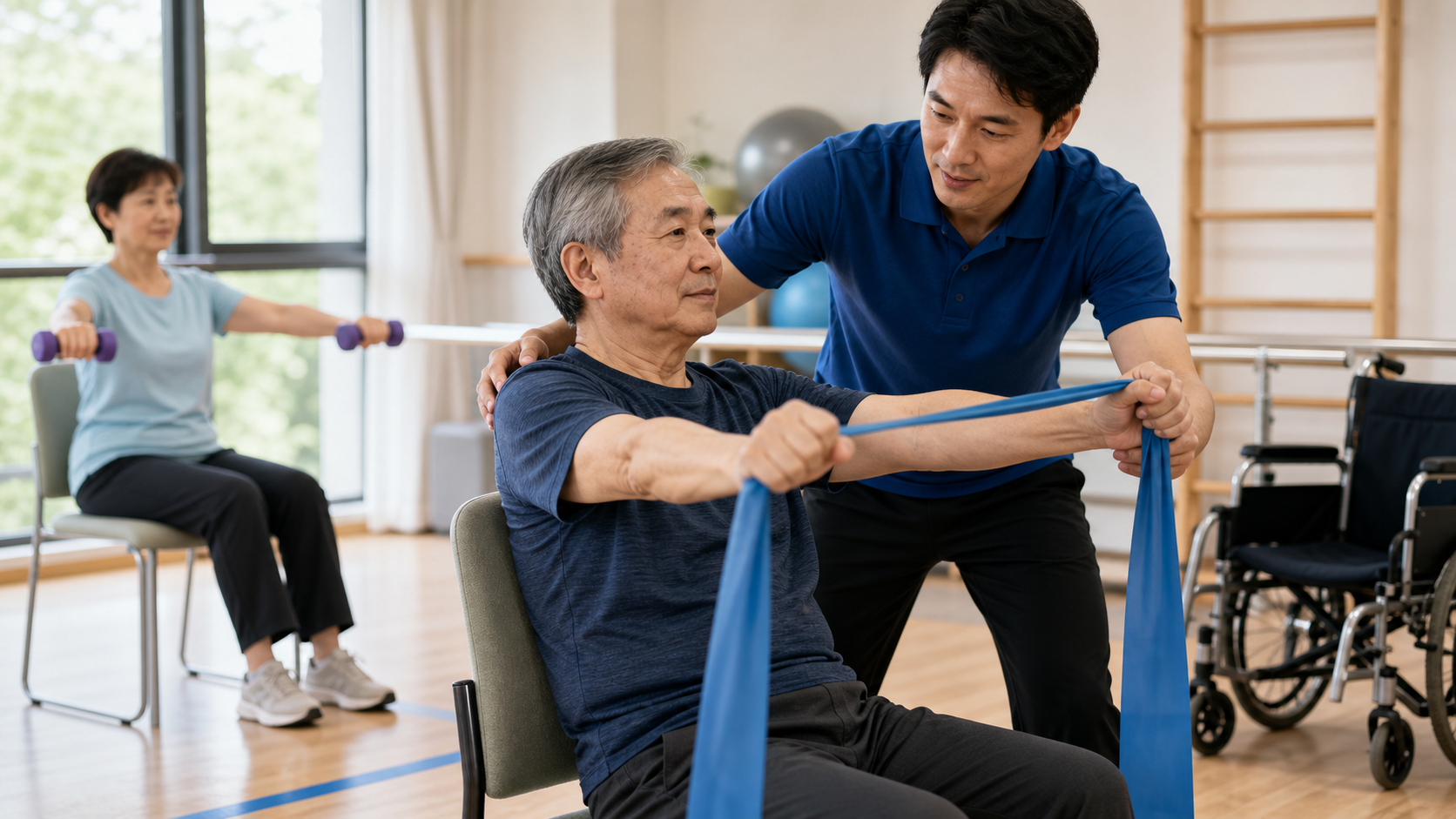
Opening: Mr. Chang, Who Came to Me in a Wheelchair
I’ve been in the fitness industry for fifteen years and have trained all kinds of clients, but the one who truly made me rethink the word “exercise” was Mr. Chang, who arrived in a motorized wheelchair.
He was 58 that year, had a stroke three years prior, leaving him with left-side hemiplegia, plus over a decade of type 2 diabetes and hypertension. His wife pushed him in, and her first words were: “Coach, the doctor says he needs to move more, but he can’t even stand steadily. How is he supposed to move?” Mr. Chang himself kept his head down and said: “Can someone like me even exercise? What if something goes wrong instead?”
I’ve been asked that question countless times over the years. The people asking include those with stroke-induced paralysis, those on dialysis, those with heart stents, those with amputations from diabetic foot, those with spinal cord injuries, those with Parkinson’s disease, and also older adults who get winded after “just a little movement” simply due to obesity and knee degeneration. What they all share is this: they are bound by some physical condition, and also bound by a fear — “If I move like this, is it safe?”
I want to start with the most important statement, which is also the core of this entire article: For the vast majority of people with disabilities and chronic illnesses, the risk of “not moving” is far greater than the risk of “moving with proper adaptation.” In its 2020 physical activity guidelines, the World Health Organization specifically dedicated sections to “people with chronic conditions” and “people with disabilities,” explicitly recommending that they too should exercise regularly — just starting “according to their abilities” and progressing gradually. This isn’t just my personal opinion as a coach; it’s a global public health consensus.
In this article, I want to organize the experience I’ve gained training special populations over the years, along with the exercise physiology and sports medicine principles I’ve studied, into a practical guide for you, your family, and fellow coaches. I’ll be as specific as possible — including actual workout structures, how to choose assistive tools, how to gauge intensity, and what situations require immediately stopping and seeking medical care. But first, I need to make one thing clear: This is educational information about concepts and methods, not a personalized prescription for you or your family member. Everyone’s diagnosis, medications, and complications are different; ultimately, you must work with your physician, physical therapist, and nutritionist to implement a plan.
Concepts and Scientific Foundations: Why “Special Populations” Need to Move More, Not Less
1. The Body Deteriorates Without Use — And Faster Than You Think
Let me start with a harsh but important physiological fact: disuse atrophy. A healthy person lying completely still in bed loses roughly 1%–1.5% of muscle strength per day; one or two weeks is enough to leave a strong man weakened. For someone already disabled or chronically ill, this decline is steeper: a single cold that keeps them bedridden, or one hospitalization, can permanently set back walking ability they’d worked hard to maintain.
I often tell my clients in plain terms: “Every bit of effort you save today, your body will take back in full — with interest.” That’s why, even for those with severe disabilities, we find ways to get them to “move some part of the body” — even if it’s just raising arms while seated or pedaling legs while in bed.
2. Exercise Is “Medicine” for Chronic Illness — And Often a Good One
In recent years, the sports medicine community loves to say: Exercise is Medicine. This isn’t just a slogan; it has concrete mechanisms:
- Type 2 diabetes: Muscle contraction itself can “pull” glucose into cells, not entirely dependent on insulin. After a single aerobic session, insulin sensitivity can remain improved for one to two days. That’s why diabetes exercise guidelines specifically emphasize “don’t go more than two consecutive days without moving.”
- Hypertension: Regular aerobic exercise can typically lower systolic blood pressure by anywhere from a few to over ten mmHg (varying by individual) — an effect comparable to part of what some medications achieve.
- Cardiovascular disease: Cardiac rehab is supported by extensive evidence showing it reduces rehospitalization and mortality risk. This is a structured exercise intervention, not just “go for more walks.”
- Osteoporosis and falls: Resistance training combined with balance training can simultaneously increase bone density and reduce fall risk — especially critical for older adults. In Taiwan, the one-year mortality rate after a hip fracture in older adults is not insignificant; preventing falls is almost equivalent to saving lives.
3. What International Guidelines Say: The Dose Is Actually the Same as for the General Population — But the “Starting Point” Differs
Many people assume chronic illness patients should “move less.” Wrong. The WHO’s exercise recommendations for adults with chronic conditions and disabilities are actually the same in volume as for the general adult population: 150–300 minutes of moderate-intensity aerobic activity per week, or 75–150 minutes of vigorous-intensity aerobic activity, plus muscle-strengthening activities targeting all major muscle groups on two or more days per week. The difference is that the guidelines add a crucial note — if you can’t achieve that, that’s okay; work within your abilities, start with small amounts, and gradually increase. “Some movement” is always better than “no movement.”
For diabetes specifically, the American College of Sports Medicine (ACSM) consensus is even more detailed: at least 150 minutes per week of moderate-to-vigorous aerobic exercise, spread across at least three days, with no more than two consecutive days between aerobic sessions; resistance training two to three times per week on non-consecutive days, targeting all major muscle groups. This “don’t leave too many empty days” principle is especially important for blood sugar control.
So you see, the scientific target hasn’t actually changed; what changes is how we “safely bring people to that target.” That’s where all the technical skill in exercising special populations lies.
4. Medications Change How the Body Responds to Exercise — Coaches and Family Members Should Understand a Bit
This is the aspect most easily overlooked by the general public, yet it’s critical for safety. People with chronic illnesses are almost always on medication, and many drugs directly affect how the body responds to exercise. I’m not asking you to become a pharmacist, but you should at least know “this is a thing” and remember to confirm it with your doctor. Here are the most common categories of medications and their interactions with exercise that require the most attention (this is for educational purposes only; always follow your physician’s/pharmacist’s guidance on medication and adjustments):
| Medication Category | Common Uses | Effect on Exercise | Practical Considerations |
|---|---|---|---|
| Beta-blockers | Hypertension, arrhythmia, heart disease | Suppress heart rate; both resting and exercise heart rates are lower | Don’t gauge intensity by heart rate percentage; use the talk test / RPE instead |
| Diuretics | Hypertension, edema, heart failure | Increase fluid loss; higher risk of dehydration and electrolyte imbalance during exercise | Proactively hydrate; be extra cautious of dizziness in hot weather |
| Insulin / insulin secretagogues | Diabetes | Exercise amplifies blood sugar-lowering effects; higher risk of hypoglycemia | Carry fast-acting glucose snacks; stay alert for hours after exercise |
| Vasodilators / antihypertensives (multiple types) | Hypertension | Sudden stop after exercise can cause orthostatic hypotension | Cool down gradually, don’t stop abruptly; slow down progressively |
| Certain painkillers / steroids | Arthritis, inflammation | May mask pain warning signals; affect blood sugar | Don’t overdo it just because “it doesn’t hurt”; damage is still accumulating |
The point of this table isn’t to memorize every drug, but to establish one concept: “Could the medication I’m taking change how my body responds during exercise?” Take that question to your doctor, and the answer will make your exercise much safer. Especially that beta-blocker entry — I’ve encountered too many clients trying to force-fit a “target heart rate” formula they found online, only to never reach that number and grow increasingly anxious. The truth is the medication is suppressing their heart rate; in such cases, RPE and the talk test are the right tools.
Practical Methods: The Three Pillars of Adaptation, Assistance, and Safety
I break down my approach to training special populations into three pillars: adapting intensity and movements, making good use of assistive tools, and holding the safety line. Let’s go through them one by one.
Pillar 1: How to Gauge Intensity? Use the “Talk Test” and the Rating of Perceived Exertion Scale—Don’t Stare at Your Heart Rate
Many chronic disease patients take medications that lower heart rate (such as beta-blockers). In these cases, calculating a target heart rate using “percentage of maximum heart rate” will be inaccurate. I more often use two tools:
1. Talk Test — the simplest and most practical:
- Can sing comfortably → too easy, can increase intensity a bit
- Can speak in full sentences but can’t sing → just right for moderate intensity, this is the sweet spot
- Can only say a few words before needing to catch breath → high intensity, not recommended for special populations in the early stages
2. Rating of Perceived Exertion (RPE, Borg CR10 scale) — ask clients to self-report their perceived exertion from 0 to 10:
| RPE Score | Subjective Feeling | Recommendation for Special Populations |
|---|---|---|
| 0~1 | No exertion at all / barely moving | Starting point for warm-up or for the extremely debilitated |
| 2~3 | Easy, can sustain for a long time | Safe zone for most beginners |
| 4~5 | Moderate, a bit breathless but can talk | Advanced goal, corresponds to moderate-intensity aerobic exercise |
| 6~7 | Somewhat hard, speech becomes shortened | Try only after fitness is stable, requires monitoring |
| 8~10 | Very hard to maximal effort | Generally avoided for special populations, unless under medical supervision |
For almost all of my chronic disease clients, I deliberately keep them in the RPE 2~4 range for the first four to eight weeks. I’d rather have them think, “This is way too easy,” than exhaust them into fear in the first week. “Simple enough to sustain for three months” beats “intense enough to burn out in three days.”
Pillar 2: Assistive Tools and Movement Modifications—Turning “I Can’t Do It” into “This Way, I Can”
This is the most creative and life-changing part of exercise for special populations. The core mindset is: Don’t demand the body to conform to standard movements; instead, modify the movements to fit the body.
A few adjustment strategies I use most often:
- Seated / reclined positions: Can’t stand steadily? Do it seated. Can’t sit comfortably? Do it lying down. Seated cycling (recumbent or upright), seated resistance band rows, and seated leg lifts are staples for people with stroke, lower limb weakness, or poor balance.
- Support assistance: Hold onto a sturdy table, wall, or walker for squats or calf raises to minimize fall risk.
- Resistance bands instead of dumbbells: Resistance bands have adjustable tension, won’t drop on your feet, and can be secured with loops even if you can’t grip well—very friendly for those with weak grip or impaired hand function.
- Healthy side drives affected side: For stroke survivors with hemiplegia, use the healthy hand to guide the affected hand through movements (interlocking fingers to push and pull), which aligns with rehabilitation concepts of movement facilitation.
- Water exercise: Buoyancy in water reduces joint load, making it an excellent choice for those with obesity, degenerative joint disease, or lower limb weakness. Many community sports centers and rehabilitation departments in Taiwan have warm-water pools—an underrated resource.
- Exercise snacks: Can’t do 30 minutes at once? Break it into six 5-minute sessions throughout the day. For the extremely debilitated or easily breathless, accumulated volume still counts.
The first “program” I designed for Mr. Chang back then was so simple it would make gym regulars laugh: seated in his wheelchair, pulling a resistance band with his healthy arm, using his healthy leg to guide the affected leg through small pedaling motions, and practicing sit-to-stand while holding a sturdy handrail—split into three 10-minute sessions a day. But three months later, he could walk to the bathroom on his own with a walker. To him and his wife, that was more precious than any squat weight.
Pillar 3: Safety Bottom Line—Stop Immediately in These Situations, Seek Medical Care When Necessary
This is the section I least want to skip. For exercise in special populations, safety always comes first. Here are the “red flag signals” I repeatedly emphasize to every client and their family:
If any of these occur during exercise, stop immediately:
- Chest tightness, chest pain, pressure in the chest, or pain radiating to the arm or jaw
- Unusual and persistent breathlessness that doesn’t ease with rest
- Dizziness, blacking out, feeling like about to faint
- Cold sweats, nausea, extremely irregular heartbeat
- Sudden weakness on one side, slurred speech, facial drooping (stroke warning signs)
- Sharp pain in joints or muscles (not soreness, but pain)
If any of the above occurs—especially chest pain or suspected stroke symptoms—don’t hesitate, call 119. In Taiwan, medical access is convenient, and with National Health Insurance the threshold for emergency care isn’t high. Better to make a wasted trip than to gamble.
The table below is the “pre- and post-exercise self-check” key points I give to clients with diabetes, hypertension, and heart disease. You can use it as a reference framework (actual numerical standards must be set by your physician based on individual conditions):
| Population | Things to Watch Before Exercise | Things to Watch During/After Exercise | General Reminders |
|---|---|---|---|
| Type 2 Diabetes | If blood sugar is too low (e.g., below physician’s lower limit), consume carbs first before exercising; if too high or with ketones, postpone | Carry sugar cubes / sugary drinks to prevent hypoglycemia; low blood sugar can still occur hours after exercise | Check feet for wounds; choose well-covered shoes |
| Hypertension | If blood pressure is too high (per physician-set upper limit), skip high-intensity exercise that day | Avoid breath-holding and straining (Valsalva maneuver); stop if very dizzy | Don’t stand up suddenly from squatting/lying; take it slow |
| Heart Disease / Cardiac Rehab | Follow medical advice; be more conservative if there’s a history of chest pain | Stop immediately at any chest tightness or pain | Best done within a structured cardiac rehabilitation program |
| Dialysis Patients | Avoid the most fatigued period right after dialysis; watch the fistula arm | Stop if fatigued or feeling hypotensive | Avoid heavy lifting or compression on the fistula-side arm |
| Post-Stroke | Control blood pressure; confirm balance and fall risk | Stop if the affected side is overly fatigued or has unusual pain | Have someone accompany; fall-proof the environment |
Let me emphasize again: The table above reminds you “which aspects to watch for,” not a standard for you to judge values. Your individual safe range must be set by your medical team.
Individualized Key Points for Common Populations
Each physical condition requires different adjustments. Let me pick a few populations most common in Taiwan and most frequently asked about, and share practical points for each. The following are general principles, not prescriptions; everyone should still rely on their own medical team’s assessment.
Type 2 Diabetes: Remember “Muscles Are the Biggest Blood Sugar Sponge”
I often use this analogy with diabetic clients: Your muscles are like a sponge—when you exercise, they actively soak up the sugar from your blood. That’s why exercise is so effective for blood sugar. In practice, I emphasize:
- Aerobic + resistance training together works best. Research shows that combining aerobic and resistance training improves HbA1c more than doing either alone.
- A 10–15 minute walk after meals is the easiest “medicine” to implement and can significantly blunt post-meal blood sugar spikes. Taiwanese people tend to sit and watch TV after meals; changing that to a walk around the block makes a big difference for blood sugar.
- Don’t go two consecutive days without moving, to keep insulin sensitivity in an improved state.
- Foot care and hypoglycemia prevention (mentioned earlier) are red lines—make sure to follow through.
Hypertension: Focus on “Stability” and “No Breath-Holding”
- Regular aerobic exercise is the mainstay, gently bringing blood pressure down.
- Resistance training is fine, but at low-to-moderate intensity, higher reps, and never hold your breath, to avoid sudden blood pressure spikes.
- A cool-down is especially important: many blood pressure medications can cause post-exercise orthostatic hypotension and dizziness when you stop suddenly, so gradually slow down before finishing—don’t rush to sit.
- If blood pressure is particularly high that day (per physician-set upper limit), skip high-intensity work and do light stretching and walking instead.
Heart Disease / Cardiac Rehab: If You Can Join a Formal Program, Don’t Go It Alone
This is the group where I’m most conservative. After a heart attack, stent placement, or heart surgery, many hospitals in Taiwan offer cardiac rehabilitation programs, where medical staff lead exercise under monitoring. I strongly recommend this path rather than exercising by feel on your own after discharge. With structure, monitoring, and progressive loading, the safety profile is completely different. Only after completing the rehab phase and getting the physician’s clearance should you gradually transition to self-directed exercise.
After Stroke: Balance and Fall Prevention Are the First Line of Defense
- Post-stroke hemiplegia and poor balance are common; fall prevention always comes first: have someone accompany you, use handrails, and keep the environment clear.
- Make good use of bilateral movements where the “healthy side leads the affected side,” echoing the motor relearning approach in rehab.
- Seated exercise is the safe main arena; progress to standing and walking only after confirming sufficient balance.
- Keep blood pressure well-controlled to avoid a second stroke.
Degenerative Arthritis / Obesity with Knee Pain: Reduce Load, Don’t Stop Training
Many older adults with knee pain think “if it hurts, don’t move,” which leads to a vicious cycle: the less they move, the weaker their legs become, and the more their knees hurt. The correct approach is to switch to low-impact, load-reducing ways to keep moving:
- Water exercise, recumbent cycling, and supine leg raises take the body weight pressure off the knees.
- Building leg strength (especially the quadriceps) is actually key to protecting the knees. Strong legs help share the load for the knees.
- Control weight gradually; every bit of weight lost reduces the burden on the knees.
A Four-Week Starter Program You Can Follow (For Frail Chronic Disease / Disabled Trainees)
Many people get stuck at “I don’t know where to start.” Here is a conservative, safe, and almost universally adjustable four-week framework. This is a general example, not a prescription for you personally. Please confirm with your doctor / physical therapist before starting.
| Week | Aerobic (e.g., seated cycling / slow walking) | Strength (resistance band / bodyweight, can be seated) | Balance / Flexibility | Target RPE |
|---|---|---|---|---|
| Week 1 | 2 sessions daily, 5 minutes each | 2 days per week, 8 reps x 1 set per exercise | Hold standing with support 1–2 minutes daily | 2–3 |
| Week 2 | 2 sessions daily, 8 minutes each | 2 days per week, 10 reps x 1–2 sets per exercise | Daily balance + stretching for 3 minutes | 2–3 |
| Week 3 | 1–2 sessions daily, totaling 20 minutes | 2–3 days per week, 10 reps x 2 sets | 5 minutes daily | 3–4 |
| Week 4 | Accumulate 25–30 minutes daily | 3 days per week, 12 reps x 2 sets | 5 minutes daily | 3–4 |
Principles for using this table:
- Only progress to the next week if you finish the previous week without excessive fatigue. If you’re too exhausted to get out of bed the next day, step back a week—there’s no pressure to progress.
- Choose the aerobic format based on your body: if you can walk, walk slowly (Taiwan’s riverside paths, parks, and community activity centers are all great venues); if you can’t stand, use a recumbent bike; if your legs are weak, use an upper-body ergometer.
- Pick strength exercises targeting major muscle groups: seated push (wall push / resistance band push), seated row, sit-to-stand, leg raises, and calf raises—covering upper-body push/pull, lower body, and core is enough.
- Always start with a warm-up and end with a cool-down, 3–5 minutes each, especially important for cardiovascular health.
Taiwan-Specific Context: Climate, Eating Out, Venues, and Medical Access
Over the years of training clients, I’ve learned that there’s a gap between “international guidelines” and “the daily life of people in Taiwan” that needs to be filled with localization.
Weather: Heat and Humidity Are Silent Killers
Taiwan’s summers are hot and humid, adding extra strain on people with heart disease, hypertension, and diabetes. My principles:
- Avoid the high-temperature window from 10 a.m. to 4 p.m., switch to early morning or evening, or go to an air-conditioned community sports center, department store corridor, or MRT underground passageway.
- Moving indoors is a great friend for special populations exercising in summer. Seated cycling and resistance bands can be done in the living room with air conditioning, free from weather constraints.
- Hydrate proactively, especially since diabetics and hypertensive patients on diuretics are more prone to dehydration.
Blood Sugar and Blood Pressure Traps for Those Who Eat Out
Eating out is convenient in Taiwan, but it’s a double-edged sword for chronic disease. I often remind diabetic trainees: What you eat around your workout directly affects your blood sugar fluctuations. General advice (not an individual nutrition prescription):
- Avoid eating only large amounts of refined carbohydrates (big bowls of white rice, sugary drinks) before exercise, which causes blood sugar spikes and crashes.
- Carry a pack of sugar cubes or a small juice box to prevent hypoglycemia—it’s standard gear for diabetic exercisers.
- For those with hypertension, note that Taiwanese restaurant food tends to be salty; go easy on the soup broth and sauces in noodle dishes.
Please discuss these directions with your dietitian to create a version that suits you—don’t just copy someone else’s meal plan.
Venues and Medical Resources
Taiwan actually has decent exercise resources; many people just don’t know about them:
- Municipal sports centers in various cities and counties mostly have warm-water pools and accessible facilities, suitable for water exercise and seated equipment.
- Hospital rehab departments / cardiac rehab centers: after a stroke or heart disease, don’t just improvise on your own—first ask if the hospital has a structured rehab exercise program; professional supervision is the safest option.
- Taiwan’s advantage lies in its National Health Insurance and convenient medical access—use it: get a doctor’s assessment before exercising, and seek medical attention nearby if you see red-flag signs. Don’t tough it out just because you “don’t want to be a bother.”
Common Mistakes and Corrections
Over these fifteen years, I’ve seen too many well-intentioned but wrong approaches. Here are the most common ones, with corrections:
Mistake 1: “The doctor said to exercise more,” so you go all out at once
Many people, once told by a doctor to exercise, enthusiastically sign up for weight training or follow online videos intensely, only to end up sore all over, with spiked blood pressure, or even injured the next day—and then never dare to move again.
Correction: The start must be so small that “you wonder if it’s even doing anything.” The only goal for the first few weeks is—build the habit and confirm your body’s response, not to chase results.
Mistake 2: Holding your breath during exertion (Valsalva maneuver)
Especially for people with hypertension and heart disease, holding your breath during resistance exercises causes a sudden spike in blood pressure, which is dangerous.
Correction: Teach this mantra—“Breathe out on exertion, breathe in on relaxation.” Maintain the ability to talk throughout; never hold your breath.
Mistake 3: Diabetic patients ignoring foot care and hypoglycemia
Diabetic feet have reduced sensation; you might not notice a shoe rubbing a sore, and a small wound can turn into a big problem. Exercise can also trigger delayed hypoglycemia hours afterward.
Correction: Check both feet before and after every workout, wear well-covered athletic shoes, carry a fast-acting sugar snack, monitor blood sugar after exercise, and don’t do high-intensity exercise alone in an isolated place.
Mistake 4: Confusing “soreness” with “pain,” and pushing through pain
Muscle soreness (a normal training response) means you can continue; joint or nerve “pain” (sharp, radiating, worsening with movement) means you must stop.
Correction: Establish the rule “stop on pain, continue on soreness,” and log it to discuss with your physical therapist next time.
Mistake 5: Family members being overprotective and not letting the patient do anything
This is just as harmful as overdoing it. Overprotection accelerates disuse atrophy, making the person weaker and more dependent.
Correction: The family’s role is to “protect from the side and let them do it safely themselves,” not “do it for them.” Let them lift that arm and stand up from the chair on their own—even if it’s slow, even if it’s shaky, that’s how they rebuild ability.
Action Advice for Readers at Different Levels
If you are severely disabled / just discharged / extremely frail
- The goal isn’t “exercise,” it’s “reduce the time spent completely immobile.” Move a little every hour—raising your arm in bed, seated cycling—all counts.
- Everything should be done under the guidance of your medical / rehab team, with family members accompanying throughout.
- Treat “I moved today” as a victory; don’t compare progress.
If you are a stable chronic disease patient (diabetes / hypertension / stable heart condition)
- First, get a doctor’s assessment to confirm your safe range and medication effects.
- Start with the four-week starter program above, keeping RPE at 2–4.
- Aim for the general direction of “150 minutes per week, no two consecutive days without movement,” gradually working toward the WHO recommendation.
- Include both aerobic and strength training—don’t just walk and skip strength.
If you are a family member / caregiver
- Your mindset determines whether they can get moving. Assist, but don’t take over.
- Learn to recognize red-flag signs and know when to call 119.
- Help them build the habit; exercising together is the easiest way to stay consistent.
If You Are a Fellow Coach / Exercise Instructor
- Before taking on students with special conditions, establish communication with their medical team first to determine the safe scope of exercise.
- Your expertise lies in “adjustment and support,” not “diagnosis and treatment”—keep that boundary clear.
- Record every response. Go slow rather than fast, and put safety ahead of results.
Second Case: Auntie Lin, 20 Years with Diabetes—How She Went from “Afraid to Move” to Loving Her Walks
Besides Brother Zhang, I’d like to share another student who left a deep impression on me, because she represents a very large segment of Taiwan’s middle-aged and older population living with chronic disease.
Auntie Lin is 63 years old, with a diabetes history of over 20 years, plus mild hypertension and degenerative knee osteoarthritis. When she came to me, her blood sugar control was less than ideal, she was overweight, and her knees hurt after walking for a while. She told me: “I know I need to exercise, but when I walk, my knees hurt. When it hurts, I don’t want to move, and then my blood sugar gets worse. Sigh.” This is a very typical vicious cycle.
I didn’t start by having her walk. In the first month, what I had her do was seated cycling—completely removing the weight-bearing stress from her knees. She did it twice a day, starting with 5 minutes each session, combined with seated resistance-band exercises for her thighs and upper body. At the same time, I asked her to do one small thing: after every meal, slowly walk around the living room for just five minutes. No particular goal—just don’t sit down immediately after eating.
Three months later, her quadriceps were noticeably stronger, and the pain in her knees while walking had decreased significantly. Only then did we gradually take her out to the riverside walking trail. Six months later, her HbA1c had improved, she had lost a few kilograms, and what made me happiest was—she started proactively inviting her neighbors to go for walks together. Exercise had transformed from a dreaded chore into a part of her life.
There are two key takeaways from Auntie Lin’s story that anyone with knee pain and high blood sugar should remember: First, knee pain doesn’t mean you can’t move—it means you need to move in ways that don’t hurt, while training your legs to protect your knees. Second, a habit as small as walking after meals helps blood sugar far more than you can imagine.
Frequently Asked Questions (FAQ)
These are the questions I’ve been asked most often over the years of working with special populations—compiled here for you in one place.
Q1: My blood sugar / blood pressure isn’t under control yet. Can I exercise first and worry about that later?
A: The general principle is to “have your physician assess you first.” When blood sugar or blood pressure is in an extreme range (too high or too low), high-intensity exercise isn’t appropriate at that moment—stabilize first. But this doesn’t mean “you can’t move at all”—in most cases, light activity is actually helpful. The key is to let your physician define the safe range; don’t gamble based on how you feel.
Q2: I’m very old and frail. Isn’t strength training too dangerous?
A: Quite the opposite—the frailer an older adult is, the more they need strength training to combat sarcopenia and fall risk. What’s dangerous isn’t “training with strength,” but “training with the wrong method.” Seated positions, holding onto support, resistance bands, light loads, higher repetitions, and progressing gradually are very safe for older adults and bring enormous benefits. Don’t be afraid—but do it with proper technique and with someone by your side.
Q3: If I can only move for 5 minutes a day, does it even matter?
A: It matters a great deal. Research and guidelines both support that accumulated activity counts just the same—splitting 30 minutes into six 5-minute sessions throughout the day doesn’t diminish the effect. For special populations who get short of breath or fatigued easily, “breaking time into small chunks” is often the only sustainable approach. Moving at all always beats not moving.
Q4: Will exercise make my condition worse?
A: With proper adjustments and medical evaluation, regular exercise improves the vast majority of chronic conditions rather than worsening them. What truly worsens a condition is usually the muscle loss, metabolic decline, and cardiopulmonary deterioration that come from not moving. Of course, the prerequisite is appropriate intensity and respecting the safety red lines—which is exactly what this entire article aims to teach you.
Q5: I don’t have a coach. Can I do it alone?
A: Yes, but please follow three principles: first, get your physician’s assessment and clearance; second, start from the most conservative starting point (use the four-week beginner program in this article); third, recognize the red-flag warning signs and seek medical attention nearby if anything goes wrong. If you have higher-risk conditions such as a history of stroke or heart disease, I strongly recommend at least the initial phase be done under the guidance of a rehabilitation specialist or qualified professional.
Conclusion: Movement Is the Gentlest Form of Rehabilitation
Back to Brother Zhang. One day, two years later, he “walked” in on his own—using a walker, slowly, but without anyone holding him. His wife stood behind him, smiling, her eyes red-rimmed. He said to me: “Coach, back then I thought this was how the rest of my life would be.”
I often feel that when working with special populations, what we teach is never just the movements—it’s helping someone trapped by their body and their fear to believe again that “I still can.” Disability and chronic disease may change what the body can do, but they almost never mean “nothing can be done.” The key always comes down to those three pillars: adjust intelligently, make good use of assistance, and stay within safe limits.
If you or a family member are stuck in that place of “afraid to move,” I want to say this to you: just take the smallest step first. Today, lift your arm one more time, pedal a few more revolutions, stand up from the chair one more time. Your body will remember—and it will reward you.
Finally, please always remember—this article is educational content and cannot replace individual diagnosis and treatment advice from a physician, physical therapist, or nutritionist. Your diagnosis, medications, and complications are unique to you. Before putting any exercise plan into practice, be sure to discuss it with your medical team and tailor a version that fits you.
References
- WHO 2020 Guidelines on Physical Activity and Sedentary Behaviour (including recommendations for people with chronic conditions and disabilities): https://www.ncbi.nlm.nih.gov/books/NBK566048/
- WHO Guidelines on Physical Activity and Sedentary Behaviour (PMC full text): https://pmc.ncbi.nlm.nih.gov/articles/PMC7719906/
- ACSM Updated Consensus Statement on Physical Activity for Type 2 Diabetes (AAFP summary): https://www.aafp.org/pubs/afp/issues/2023/0100/practice-guidelines-physical-activity-diabetes.html
- Exercise and Type 2 Diabetes: Joint Position Statement of ACSM and ADA: https://diabetesjournals.org/care/article/33/12/e147/39268/Exercise-and-Type-2-DiabetesThe-American-College
Related Reading
- Exercising with Chronic Illness: A Complete Guide to Safety, Quality of Life, and Lifestyle While Living with Disease
- The Science of Exercise and Longevity: Evidence for Extended Lifespan, Optimal Doses, and a Lifestyle You Can Maintain for Life
- Safe Exercise for Heart Disease Patients: From Exercise Prescription and Monitoring to Warning Signs—A Coach Walks You Through It Step by Step
- Exercise for Older Adults: A Complete Prescription for Extending Healthy Lifespan—Practical Notes from a 15-Year Coach
[教學] Premiere 影片 手震 修正 教學 防抖 單眼 影像 GoPro 穩定 Video Stabilization
8 年前
一日北高/長距離團騎 常見問題補充篇 / 組團或跟團的眉角 / 壯車友容易被瘦車友慢性拉爆 / 原來屁股痛可能是這個原因...? / 風場配速法 / 公路車 / CT Yeh
2 年前
CT 喇低賽) 武嶺牽車 才是王道 西進牽車四小時內秘訣 攝手位置 如何判斷 防抽筋小秘訣
7 年前
近視雷射三個月後悔嗎?單車族/工程師必看,Smart TransPRK 術後血淚史與後遺症全公開 / CT Yeh
4 個月前
Never Stop 西進武嶺 前後雙機 完整全程錄影 訓練台 實境
8 年前
一日北高常見問題大集合 | 攻略 | 路線 | 訓練 | 補給 | 自行車 單車 | 一日雙城 | 雙塔 | TWB北高360 | 屁股痛
6 年前
Canyon 公路車斷把手 五年老車特規還能修嗎? 維修保養全記錄 feat. 501單車監理站 | 公路車 | CT Yeh
4 年前
靠單車減肥35公斤 心得分享與整理
7 年前