Recognizing and Recovering from Exercise Burnout: A Coach's Guide to Reading Your Body's Distress Signals
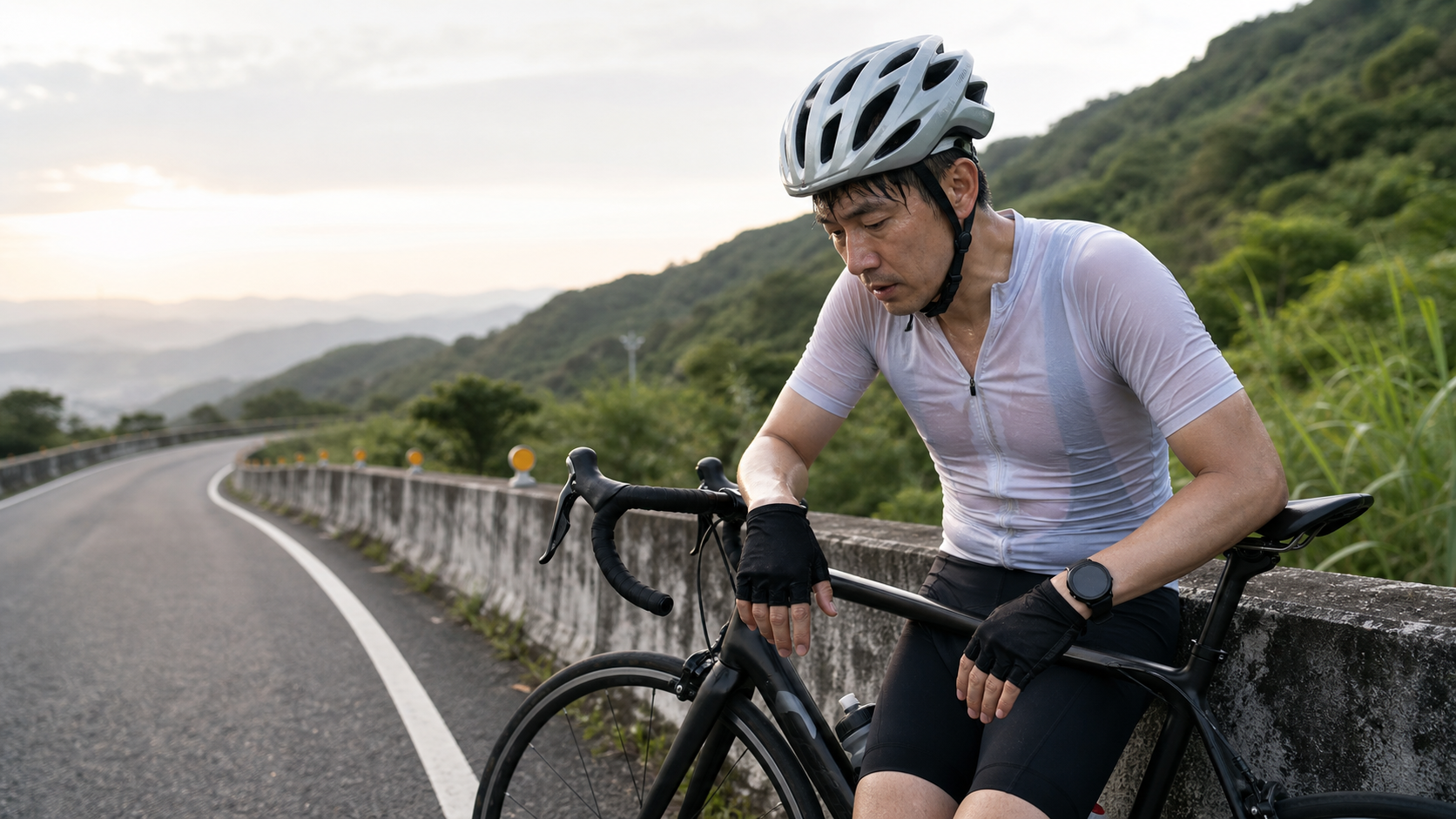
Opening: The Student Who Got “Slower the More He Trained”
I’ve coached athletes and everyday cyclists for over fifteen years and have encountered all sorts of situations, but one type of case is the most heartbreaking because it happens precisely to the most dedicated people.
A few years ago, I had a student in his early forties who worked an office job—let’s call him A-Hong. His progress was impressive at first: within six months, his Functional Threshold Power (FTP) jumped from 210 watts to 265 watts, and he successfully completed a one-day assault on Wuling. After tasting that success, he kept ramping up his training volume, pushing his weekly mileage from 150 kilometers to 320 kilometers, and even sneaking in interval sessions on the indoor trainer after work.
Then one day he messaged me: “Coach, why am I getting slower the more I train? On that same climb, the power that felt easy last year now feels like hell. My heart rate won’t go up, I can’t sleep enough, and I just can’t seem to muster any enthusiasm when I look at my bike.”
I had him measure his resting heart rate every morning for a week—it averaged 8 to 10 bpm higher than his baseline from three months prior. His sleep had become lighter, he was waking up early, and on the trainer, even when he tried to push power, his heart rate just wouldn’t “respond.” This wasn’t a regression, and it wasn’t a lack of effort—this was the classic borderline zone between burnout and overtraining.
In this article, I want to use the practical, coaching tone I use with my students to explain “exercise burnout” clearly: why it happens, what warning signs your body gives you, and most importantly—how to recover. Whether you’re a commuter riding three times a week or an advanced rider preparing for major races in Taiwan, it’s worth your time to read this to the end. Because in my experience, those who know when to hit the brakes end up riding farther than anyone.
Concepts and Scientific Basis: Burnout Isn’t Laziness—It’s Your Body’s Protective Mechanism
From “Fatigue” to “Burnout” Is a Continuous Spectrum
Many people think that being tired after training or having sore legs the next day means “overtraining,” but that’s not the case. In sports science, there’s a clear spectrum, and I often use this table to explain it to my students:
| Stage | English | Characteristics | Recovery Time Needed |
|---|---|---|---|
| Acute Fatigue | Acute Fatigue | Normal tiredness and soreness after a single session | A few hours to 1-2 days |
| Functional Overreaching | Functional Overreaching (FOR) | Short-term deliberate volume increase; performance dips then rebounds with supercompensation | A few days to 1-2 weeks |
| Non-Functional Overreaching | Non-Functional Overreaching (NFOR) | Performance plateaus or declines; mood and sleep changes begin to appear | Several weeks |
| Overtraining Syndrome | Overtraining Syndrome (OTS) | Systemic, long-term performance breakdown accompanied by psychological burnout | Several weeks to several months |
Functional overreaching is actually a good thing—coaches deliberately schedule “overload weeks” to stress the body, followed by a taper, allowing performance to rebound to a higher level. That’s called supercompensation. The problem arises when you have only stress, no recovery, and you slide to the right toward non-functional overreaching, eventually falling into overtraining syndrome.
Exercise burnout leans more toward the “psychological and motivational” side of this spectrum: losing interest in a sport you once loved, feeling like training is a burden, and seeing your sense of accomplishment vanish. It often appears hand-in-hand with physiological overtraining, each pulling on the other.
Why Does It Happen? The Imbalance Between Stress and Recovery
I like to use a simple analogy: your body is a bank account. Every training session is a “withdrawal,” and every bit of sleep, food, and rest is a “deposit.” The core of burnout and overtraining always comes down to one sentence: when withdrawals exceed deposits over the long term, the account goes into overdraft.
The key point is that “stress” isn’t just training. Your body doesn’t distinguish between sources of stress—it only knows the total load. All of the following draw from the same account:
- Training stress: mileage, intensity, frequency, racing
- Life stress: work deadlines, family, finances, relationships
- Sleep deprivation: the most common invisible killer for Taiwanese office workers
- Inadequate nutrition: caloric deficit, insufficient carbohydrate intake, not enough protein
- Environmental stress: Taiwan’s humid summer heat, air pollution, jet lag
I’ve seen too many students with perfectly planned training schedules who overlook the fact that they’re moving house that month, working late into the night, and grabbing whatever convenience food they can on the go. The schedule wasn’t wrong—the mistake was throwing life stress into the same account while only accounting for the training withdrawal.
What’s Actually Happening Physiologically
The sports medicine community doesn’t yet have a 100% definitive mechanism for overtraining syndrome, but the evidence in several directions is relatively consistent. Here’s how I explain it to my students in general terms:
- Autonomic nervous system imbalance: The balance between the sympathetic (gas pedal) and parasympathetic (brake) nervous systems is disrupted. Some people show sympathetic overactivity (elevated heart rate, anxiety, insomnia); others, conversely, become parasympathetic-dominant, with an abnormally low resting heart rate yet no energy at all.
- Hormonal and stress-axis changes: Under prolonged high stress, the body’s regulation of stress hormones becomes abnormal, affecting recovery, immunity, and mood.
- Chronic low-grade inflammation: Repair can’t keep up with damage, and an inflammatory state accumulates.
- Psychoneurological aspects: Motivation, mood, and focus all decline—this is the most visible face of “burnout.”
According to a practical guide published on the U.S. National Library of Medicine’s PMC platform (Overtraining Syndrome: A Practical Guide), the typical manifestations of overtraining syndrome include persistent fatigue, abnormal resting heart rate (either elevated or depressed), low mood scores, and an inability to perform at normal levels during training or competition. Recovery time ranges from days to months, and complete rest is often a necessary first step.
Practical Methods: How to Identify and Quantify Your Burnout Signals
Now that the concepts are covered, let’s get to the most practical part—how do you “catch” yourself sliding toward burnout? I never rely on “feelings,” because the most dedicated people are the best at lying to themselves with “I can still push through.” What I have my students do is monitor with data.
The Core Four Metrics: Two Minutes Every Morning
I require all advanced students to develop a habit: every morning, after getting up and using the bathroom, before drinking water or eating anything, do a quick four-item log. This is the cheapest and most accurate early-warning system for overtraining.
| Monitoring Metric | How to Measure | Warning Threshold (Relative to Personal Baseline) | Meaning |
|---|---|---|---|
| Morning Resting Heart Rate | Lie down and measure for 60 seconds, or use a watch | Consistently above baseline by 5 bpm or more for several days | Sympathetic overactivity, insufficient recovery |
| Heart Rate Variability (HRV) | Morning measurement via watch/App | Persistently and significantly below personal average | Declining autonomic recovery status |
| Sleep Quality | Subjective 1-10 score + hours | Consistent difficulty falling asleep, early waking, not feeling rested | Recovery window is compressed |
| Subjective Energy/Mood | Subjective 1-10 score | Low motivation, irritability, listlessness | Early face of psychological burnout |
I want to emphasize one thing here: a single day’s reading on any single metric doesn’t matter—trends matter. If your resting heart rate is 8 bpm higher today, it might just be from two drinks last night or poor sleep; but if it stays elevated for five consecutive days, combined with a declining HRV and worsening mood, that’s your body honking the horn.
There’s a frequently cited practical recommendation in sports science: if morning heart rate, body weight, and mood show significant changes for at least 5 consecutive days, it’s worth taking a closer look and adjusting training load. While HRV may not be the most sensitive single metric for endurance athletes, it’s very valuable when combined with other secondary indicators.
Objective Evidence on Performance
Beyond morning markers, performance during training is also a revealing mirror. Here are the red-flag signals I look for:
- Heart rate won’t rise at the same power: Previously, 250 watts corresponded to 160 bpm; now, at 250 watts, your heart rate only reaches 145 bpm, yet you’re exhausted (your heart rate “won’t respond”).
- Power drops at the same heart rate: You want to maintain a certain heart rate, but you can only produce lower watts than before.
- Inability to complete workouts you normally do: You completely fall apart on the last two intervals.
- Muscle soreness persisting beyond 72 hours.
- Slower recovery: What used to take one day to recover from now takes two or three days.
Emotional and Psychological Aspects: Don’t Ignore the Psychological Face of “Burnout”
In overtraining research, changes in emotional state are actually a fairly consistent early signal. Mood scales commonly used in sports psychology (such as the POMS) observe that when training stress increases, total mood disturbance scores rise, fatigue and depression scores increase, and vigor scores decrease. In plain language: the more you train, the less motivated, the more irritable, and the less interested you become.
If you find yourself starting to “make excuses not to go out for a ride,” “feeling annoyed just looking at the trainer,” or “feeling no sense of accomplishment after completing a workout,” these psychological signals are just as important as physiological data—and they may even appear earlier. Burnout often means the mind gets tired first, and then the body follows.
Recovery Strategies: From Slamming the Brakes to Getting Back on the Road
This is the part people ask me about most: “Coach, I know I’ve overdone it. How do I fix it?” My answer comes in three levels—the more severe the case, the longer the rest.
Step 1: Honestly Assess Where You Are on the Spectrum
| Situation Assessment | Corresponding Stage | Recommended Action |
|---|---|---|
| Just particularly tired this week; back to normal 2-3 days after reducing load | Acute Fatigue/FOR | Schedule reduced-load recovery days; just get enough sleep |
| Performance plateauing for 1-2 weeks; mood starting to deteriorate | NFOR | Proactively cut training load by 40-60%; reassess after 1-2 weeks |
| Performance deteriorating for weeks; complete loss of motivation; daily functioning affected | Suspected OTS | Complete rest for several weeks; consider seeking medical evaluation |
I have to be honest: for true overtraining syndrome, recovery is measured in weeks to months, and the first step often requires complete rest for several weeks before gradually returning. This is the hardest pill to swallow for dedicated people, but pushing through will only overdraw the account even further.
Step 2: The Four Pillars of Recovery
No matter where you are on the spectrum, recovery rests on these four pillars. I’ve organized them into an actionable table:
| Pillar | Specific Actions | Taiwan Context Reminders |
|---|---|---|
| Sleep | Aim for 7-9 hours per night; maintain a consistent schedule | Stop staying up late binge-watching shows or scrolling on your phone until the early hours; Taiwan’s nightlife offers many temptations |
| Nutrition | Don’t run a calorie deficit during recovery; get enough carbs and protein | When eating out, prioritize places offering protein + whole-food carbs |
| Reduced Load/Rest | Significantly reduce training volume, or even rest completely | Replace high intensity with walking, easy rides, and stretching |
| Stress Management | Address life stressors; don’t just focus on training | Work projects and family stress also need to be scaled back |
I want to say a bit more about nutrition. Many endurance cyclists chronically consume insufficient calories and carbohydrates. In sports medicine, this is related to the concept of “Relative Energy Deficiency in Sport (RED-S).” Long-term energy deficiency affects recovery, hormones, bones, and immunity across the board, and is a major driver of burnout. The recovery period is absolutely not a fat-loss phase—you need to eat enough. General protein recommendations for adults are about 1.6 to 2.0 grams per kilogram of body weight; carbohydrates should be adjusted based on training load, but during recovery, I typically don’t have athletes deliberately restrict carbs.
Step 3: Gradual Return, Not All at Once
This is where most people trip up—after finally resting for a few days, they feel “better” and the next day want to make up all the missed workouts, only to crash a second time. My principle for returning is: better to return too slowly than too quickly.
Here’s a sample gradual return schedule I often give to NFOR athletes (using a mid-level cyclist who normally rides 250 km per week as an example, returning after one week of rest):
| Week | Content | Approximate Distance | Intensity Ceiling |
|---|---|---|---|
| Return Week 1 | Pure easy rides, recovery rides | 80-100 km | Heart rate Zone 1-2, no intervals |
| Return Week 2 | Add a little tempo riding | 120-150 km | Brief Zone 3, still no high-intensity intervals |
| Return Week 3 | Resume some structured workouts | 170-200 km | Some threshold work allowed |
| Return Week 4 | Gradually return to normal training volume | 220-250 km | Decide on adding high intensity based on morning markers |
The prerequisite for progressing each week is that the four morning markers must stably return to baseline. If resting heart rate is still elevated, HRV hasn’t recovered, or mood hasn’t improved, stay where you are and don’t increase. That’s not regression; that’s being responsible.
When Should You See a Doctor?
Some symptoms of overtraining overlap with other health issues, and I must remind readers in Taiwan: we have a very convenient National Health Insurance system—don’t tough it out. If you experience any of the following, please seek medical attention and let professionals make the call; don’t play doctor yourself:
- Extreme fatigue lasting for weeks that doesn’t improve with rest
- Persistently abnormal resting heart rate, palpitations, or chest tightness
- Significant unexplained weight loss or abnormal appetite
- Low mood or severe insomnia affecting daily functioning
- Recurrent infections or slow-healing wounds
Fatigue, abnormal heart rate, and low mood can also stem from thyroid issues, anemia, infection, cardiac problems, or other internal medicine conditions—or even a depressive state requiring professional help. In Taiwan, seeing a family medicine doctor or cardiologist is very convenient. Getting blood work done and basic tests to rule out other diseases is the safest approach. This isn’t weakness; it’s smart.
Common Mistakes and Corrections
Having coached athletes for so many years, I’ve found that people tend to step on the same rakes repeatedly. Here are the most common mistakes and their corresponding corrections:
Mistake 1: Treating “Rest” as Failure
Many dedicated cyclists hold a belief: every rest day means falling a day behind everyone else. This is the most damaging myth. Training progress doesn’t happen while you’re riding; it happens during rest and recovery—that’s when the body repairs and gets stronger. Training without recovery is like building a house on sand.
Correction: Formally write recovery days and deload weeks into your training plan. Treat them as “training components” just as important as interval workouts, not as optional slacking off.
Mistake 2: Counting Only Training Stress, Ignoring Life Stress
Ah-Hong from earlier is a classic example. That month, he happened to be rushing a major project and often worked late into the night. His training account had long been drained by life stress, yet he only counted the mileage.
Correction: When you’re going through a high-stress period in life (changing jobs, moving, family issues, hitting deadlines), proactively reduce your training volume. At times like this, the purpose of maintaining exercise is stress relief, not chasing a PB.
Mistake 3: Completely Collapsing the Moment You Detect Overtraining, Then Rebounding with a Vengeance
Some people go to the other extreme: once they realize they’re overtrained, they don’t move at all for weeks, and then when they feel better, they go all out to make up for lost time—binge-and-purge style training.
Correction: Unless it’s severe overtraining syndrome, most NFOR cases only require reduced load rather than complete cessation. Maintain some activity with easy rides and walks. When returning, be gradual—refer to the return schedule above.
Mistake 4: Still Trying to Cut Fat and Restrict Carbs During Recovery
This is especially common among climber-type cyclists chasing “lightness.” Restricting calories and carbs during recovery is like asking the body to repair itself while refusing to give it the materials.
Correction: Recovery comes first; fat loss can wait. During recovery, eat enough carbs and protein, get enough sleep, and only talk about weight management once the body has stabilized.
Mistake Five: Ignoring Taiwan’s Summer Environmental Stress
Taiwan’s summers are hot and humid, with humidity levels remaining high year-round, making the perceived temperature frequently exceed 35 degrees. Training in this environment places a much greater burden on the body’s cooling and circulation systems than in cooler climates, and recovery demands are higher. Yet, few people factor “weather” into their fatigue account.
Correction: During peak summer heat hours (typically 10 AM to 4 PM), try to avoid outdoor high-intensity workouts, shifting them to early morning, evening, or moving them indoors to a trainer. Be more aggressive with hydration and electrolyte replacement, and moderately lower your intensity expectations.
In-Depth Case Studies: Three Faces of Fatigue
Fatigue doesn’t have just one appearance. Among the cases I’ve coached over the years, I can at least categorize three distinctly different faces. Sharing them here will make it easier for you to find which one matches your situation.
Case One: The Sympathetic-Overdrive “Sleepless Rider” Xiao Lin
Xiao Lin, a 35-year-old tech industry engineer, was preparing for a long-distance race. His profile was classic sympathetic overactivity: his morning resting heart rate climbed from a baseline of 52 bpm all the way to 62 bpm. At night, lying in bed, his heart pounded, he tossed and turned unable to sleep, yet during the day he felt groggy and lethargic. His HRV was significantly below average for two consecutive weeks, and he became irritable, losing patience even when talking to his wife.
This type is most easily mistaken for just “being stressed,” but when physiological markers also crash, it can’t be treated as merely a mood issue. My prescription for him was: cut out all high-intensity workouts for two weeks, keeping only two to three easy rides per week, completely avoid phone screens for one hour before bed, and renegotiate project deadlines with his supervisor. Three weeks later, his resting heart rate returned to 54 bpm, his sleep recovered, and only then did we gradually add intensity back.
Case Two: The Parasympathetic-Dominant “Unresponsive” Lao Zhang
Lao Zhang, 50 years old with 20 years of riding experience, was the complete opposite. He was parasympathetic-dominant—his resting heart rate was as low as 44 bpm, numbers so impressive that many people would envy him. But his problem was “no matter how hard I pedal, I can’t produce power.” On the trainer, trying to push watts, his heart rate seemed asleep and completely unresponsive, and his whole body lacked energy.
This type is dangerous because a beautifully low heart rate can make people assume “recovery is great.” The key is to look at heart rate numbers together with performance: a low heart rate combined with collapsing performance is a warning sign, not a good thing. What Lao Zhang needed was also a complete reduction in training volume, along with adequate nutrition and sleep. His recovery period was longer than Xiao Lin’s, taking nearly six weeks to gradually stabilize.
Case Three: The Purely Psychological Fatigue of “Lacking Motivation” A-Mei
Forty-year-old A-Mei’s physiological markers were actually all normal—resting heart rate, HRV, and sleep were all at baseline. But she had completely lost her passion for cycling. Previously, she’d excitedly plan routes every weekend; now, even wheeling her bike out the door felt like a chore, and completing workouts brought no sense of accomplishment.
This is purely psychological fatigue, not necessarily accompanied by physiological overtraining. My advice to her was completely different from the previous two: it wasn’t about telling her to rest and recover physically, but helping her “rediscover the meaning of riding.” I asked her to pause all structured workouts and power numbers, and instead simply gather friends to ride scenic routes, eat good food, and take photos for social media. Turning cycling from a “task” back into “enjoyment,” her passion returned on its own within two to three weeks.
These three cases are meant to tell you: identifying fatigue requires looking at the whole picture; recovery must be individualized. There is no one-size-fits-all magic bullet, which is why I keep emphasizing the need to monitor your own data and understand your own body.
Nutritional Strategies for the Recovery Period: Eating Right Matters More Than Eating Less
I mentioned earlier that nutrition is one of the four pillars of recovery. Here, I’ll use a table to make the nutritional priorities during the recovery period more concrete. These are general principles; actual portions should be adjusted based on individual body weight, activity level, and medical conditions. Those with chronic illnesses or special conditions should definitely consult a nutritionist or physician.
| Nutrient | General Recommended Range | Recovery Period Focus | Taiwanese Eating-Out Examples |
|---|---|---|---|
| Protein | Approximately 1.6-2.0 grams per kg of body weight | Tissue repair, muscle maintenance | Braised chicken leg, steamed fish, soy milk, boiled eggs |
| Carbohydrates | Adjust based on training load; don’t deliberately restrict during recovery | Replenish glycogen, support recovery and mood | White rice, sweet potato, brown rice, oatmeal |
| Healthy Fats | Moderate amounts; don’t avoid entirely | Support hormone synthesis | Nuts, avocado, olive oil, mackerel |
| Fluids & Electrolytes | Replenish based on sweat loss | Rapid loss in Taiwan’s hot, humid environment | Sugar-free sports drinks, soup with a pinch of salt |
Regarding supplements, my consistent stance is: get your meals right and your sleep sufficient before even thinking about supplements. The market is flooded with products claiming to “accelerate recovery,” but no supplement can replace adequate sleep and a balanced diet. If you’re considering supplementing with caffeine, iron, vitamin D, etc.—especially for conditions like iron-deficiency anemia or vitamin D deficiency that require blood tests to confirm—please get evaluated by a doctor or nutritionist first. Don’t just buy a bunch of stuff online and take it randomly. Blood tests are very convenient in Taiwan; supplement what you’re actually deficient in, so you don’t end up going down the wrong path.
Actionable Advice for Readers of Different Levels
Finally, I’ll break down my advice according to three common reader profiles so you can directly find the one that fits you.
For Recreational/Commuter Riders (Exercising 2-4 Times Per Week)
You’re actually the group least likely to suffer from severe overtraining, but you can still experience fatigue from “life stress + exercise.”
- Focus on “enjoyment”: If you start feeling that riding has become a stressor or a chore, that’s a signal of fatigue. Allow yourself to ride spontaneously and at a leisurely pace.
- Prioritize sleep over exercise: On days you haven’t slept enough, it’s better to turn a high-intensity session into an easy ride or just rest entirely.
- No need to measure HRV daily, but do pay attention to physical sensations like “noticeably elevated morning heart rate + feeling lethargic all day.”
For Advanced Riders (5-10 Hours Per Week with Structured Workouts)
You are a high-risk group for overtraining because you’re dedicated enough and capable enough to push yourself to the brink.
- Establish a morning monitoring habit: Resting heart rate, HRV, sleep, and mood—two minutes a day, watching trends rather than single-day readings.
- Schedule a deload week every 3-4 weeks: Cut training volume by 40-50% to allow for supercompensation.
- Mandatory “transition period” after the season: Take one to two weeks of complete relaxation; don’t seamlessly jump into the next goal.
- Factor life stress into your decisions: During high-stress weeks, proactively reduce your load. Don’t stubbornly fight the workout plan.
For Goal-Oriented Riders Preparing for Events (e.g., Wuling, Major Cycling Races)
You have clear goals and deadlines, which is a double-edged sword—strong motivation, but also the highest risk of pushing through when you shouldn’t.
- Trust the Taper: Reducing volume while maintaining a small amount of intensity 1-2 weeks before the race leads to better performance. Hard training right up to race day only means showing up fatigued.
- Set a “withdrawal line”: Decide in advance which signals, if they appear (e.g., resting heart rate elevated by 8 bpm for a week straight, intervals consistently falling apart), will trigger an immediate, unhesitating adjustment to your plan.
- Schedule recovery time after the race: After a major event, don’t rush to chase the next goal. Give your body and mind a genuine period of true downtime.
Quick Self-Check Checklist
If you want a quick self-assessment, ask yourself these questions. The more “yes” answers, the more you should hit the brakes:
- [ ] Have I recently become noticeably slower or found the same workouts much harder?
- [ ] Has my morning resting heart rate been elevated for several consecutive days?
- [ ] Has my sleep deteriorated—not feeling rested, waking up easily?
- [ ] Have I lost interest in cycling, feeling it’s a burden?
- [ ] Have I become irritable, low, or lacking in energy?
- [ ] Has life stress (work, family) been particularly high lately?
- [ ] Has muscle soreness lasted more than three days without resolving?
Prevention Over Treatment: Keeping Burnout at Bay with Periodization
After all this discussion of identification and recovery, what I most want to convey is—the best recovery is never needing to get to that point in the first place. And the most effective tool for preventing burnout is the concept of “periodization”—that is, deliberately planning the rhythm of stress and recovery, rather than going all-out every single day.
I often use a simple, memorable principle with my athletes: three weeks up, one week down. Accumulate three weeks of progressively increasing training load, then cut volume significantly in the fourth week for recovery, allowing the body to supercompensate. This is just one of many periodization models; the point isn’t the specific numbers, but actively building recovery into the plan, rather than passively resting only when the body can’t take any more.
Here’s a simplified example of a monthly rhythm to give you a concrete picture:
| Week | Focus | Relative Training Volume | Perceived Goal |
|---|---|---|---|
| Week 1 | Accumulation | 100% | Slightly tired but manageable |
| Week 2 | Accumulation | 110% | Fatigue begins to build |
| Week 3 | Peak | 120% | Noticeably fatigued, nearing the limit |
| Week 4 | Deload/Recovery | 50-60% | Getting easier with each ride, form returning |
This table isn’t meant to be copied exactly—everyone’s tolerance, life stress, and recovery capacity are different. There’s only one core principle: stress must always be followed by recovery, just like breathing—every inhale must be followed by an exhale. Those who only inhale will eventually run out of oxygen.
Beyond training cycles, I also recommend considering the “annual rhythm”: schedule one or two competitive peaks within the year, with clear transition periods and an off-season between them, giving both mind and body a genuine window to unwind. Taiwan’s year-round riding weather actually leads many cyclists to train “365 days a year” without a break, which is a breeding ground for burnout. Giving yourself a legitimate off-season isn’t laziness—it’s sustainability.
FAQ
Having coached athletes for so many years, here are the questions I get asked most often, compiled for you in one place.
Q1: If my resting heart rate returns to baseline after a few days of rest, does that mean I’m fully recovered and can go all-out again?
Not necessarily. Resting heart rate returning to baseline is a good first step, but recovery is holistic—you also need to look at HRV, sleep, mood, and most importantly, performance. I recommend that even if your metrics stabilize, you still use the regression table mentioned earlier to gradually increase load rather than going all-out at once. Heart rate is just one piece of the recovery puzzle.
Q2: I don’t have a sports watch and can’t measure HRV. Can I still monitor my recovery?
Absolutely, and it works just as well. The cheapest method is measuring your resting heart rate for 60 seconds every morning (counting your pulse with your fingers) plus subjectively rating your sleep and mood on a 1-10 scale. These three things cost nothing, and you can still see the trends clearly. Technology is a supplement; how your body feels is the foundation.
Q3: How do I tell the difference between burnout and plain laziness?
That’s a good question. With plain laziness, once you actually get out and start moving, you usually feel better and get a sense of accomplishment. But with burnout, even moving feels exhausting, there’s no sense of accomplishment when you finish, and you feel more irritated the more you do—often accompanied by changes in physiological markers (heart rate, sleep). If you feel more tired and more frustrated after exercising, that’s more likely burnout, and you should rest rather than push yourself.
Q4: What’s the single most important thing for preventing burnout?
If I had to pick just one thing, it would be sleep. Sleep is the foundation of all recovery; without enough sleep, even the perfect training plan and nutrition will only yield half the results. The thing Taiwanese office workers sacrifice most is sleep, and that’s the hidden root cause of the most burnout I’ve seen. Take care of your sleep, and you’ve already won half the battle.
Q5: Won’t a deload week make me lose fitness and undo all my progress?
Quite the opposite. Appropriate deloading allows the body to supercompensate, and performance actually rebounds and improves. Both research and practice support that tapering before a race enhances performance. What truly causes you to lose fitness is “training hard while fatigued”—that’s what undoes your progress.
Q6: I’m already burned out. Can I just not move at all and rest lying down?
Unless it’s a severe case of overtraining syndrome where your body truly needs complete rest, in most cases I recommend “active recovery”—walking, easy riding, stretching—maintaining low-intensity activity, which actually helps blood circulation and mood. Complete bed rest is usually reserved for the most severe cases, and in those situations you should also seek medical evaluation.
Conclusion: Knowing When to Stop Is What Takes You Far
Let’s return to A-Hong from the beginning. The prescription I gave him was simple, yet hard to execute: complete rest for ten days—sleep plenty, eat enough, finish up your work projects first, and not a single kilometer of riding during that period.
He was resistant at first, worried he’d lose all his progress. But two weeks later, his morning heart rate was back to baseline, his sleep had improved, and he had energy again. When he got back on the bike, he told me: “Coach, I never realized rest was so important. I’ve been fighting myself all this time.” He then returned to training progressively, and that year he actually rode a personal best.
This is the most counterintuitive and most fascinating thing about sport: progress is hidden in recovery, and strength comes from knowing how to yield. Your body doesn’t betray you for no reason—every signal it gives you, the elevated heart rate, the deteriorating sleep, the vanishing enthusiasm, is protecting you. Your job isn’t to ignore it or crush it, but to learn to listen to it.
Exercise is meant to make life better, not to push yourself to the breaking point. May you ride happily and ride for the long haul, and may you have the courage to hit the brakes when the time calls for it.
This article is for educational purposes and cannot replace individual diagnosis and treatment advice from a physician, physical therapist, or nutritionist. If you experience persistent fatigue, abnormal heart rate, low mood, or other symptoms, please seek medical attention promptly and have a professional evaluate your condition.
References
- Overtraining Syndrome: A Practical Guide (PMC): https://pmc.ncbi.nlm.nih.gov/articles/PMC3435910/
- Diagnosis and prevention of overtraining syndrome: an opinion on education strategies (PMC): https://pmc.ncbi.nlm.nih.gov/articles/PMC5019445/
- Heart rate variability and overtraining: A systematic review (PMC): https://pmc.ncbi.nlm.nih.gov/articles/PMC12098969/
- Overtraining Syndrome (Physiopedia): https://www.physio-pedia.com/Overtraining_Syndrome
Related Reading
- Overtraining Fatigue and Psychological Burnout in Cycling: Identification and Recovery Strategies
- Getting More Tired the More You Train Isn’t a Lack of Effort: A Complete Coach’s Guide to Identifying Chronic Fatigue, Overtraining, and Recovery
- Training Burnout: Identifying the Psychological Signs, Causes, and Ways Out
- Psychological Recovery and Burnout Management: The Path to Mental-Physical Balance for Cyclists
西進武嶺 免費訓練分析服務 Intervals | 練不夠還是練過頭?你哪一種類型選手?AI模型告訴你! | 備戰神器 | 公路車 訓練 | CT Yeh
4 年前
一個測試有沒有認真練車的方法😂 #公路車
10 個月前
單車AI教練!全新 ChatGPT4o 幫你分析訓練成果!排武嶺課表,分析騎車姿勢! 太神了! / 公路車 / CT Yeh / feat. 緯緯
2 年前
一日北高常見問題大集合 | 攻略 | 路線 | 訓練 | 補給 | 自行車 單車 | 一日雙城 | 雙塔 | TWB北高360 | 屁股痛
6 年前
CT 喇低賽) 單車 比賽總是沒照片? 攝影師的觀點大公開 姿勢就是力量! 請加速1.25倍收看
7 年前
#雙崎部落 單車挑戰賽 心跳破200 #公路車 Neko's Fun
6 年前
一日北高/長距離團騎 常見問題補充篇 / 組團或跟團的眉角 / 壯車友容易被瘦車友慢性拉爆 / 原來屁股痛可能是這個原因...? / 風場配速法 / 公路車 / CT Yeh
2 年前
FTL 與 SYB 車隊專訪 西進武嶺 實用攻略分享! 2小時 如何練?!你不知道的眉角!新手準備武嶺必看 EP1 | 實力派女車友 | 精華版 | 公路車 | CTYeh
4 年前