How Exercise Reshapes Your View of Your Body: On the Healthy Connection Between Exercise, Body Image, and Self-Esteem
/no_think
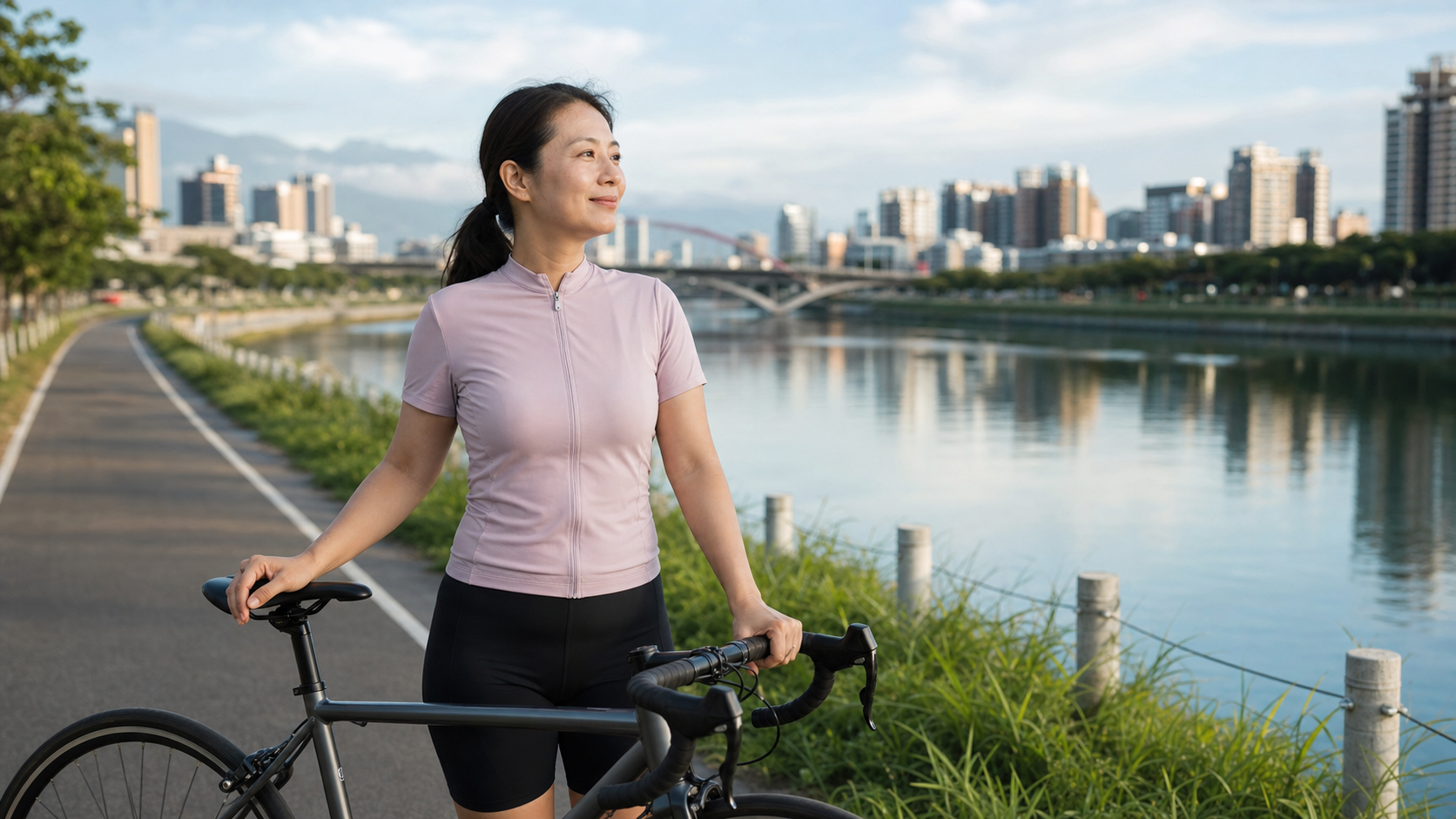
Starting with a Student Who Was Afraid to Look in the Mirror
I’ve been training athletes and fitness enthusiasts for over fifteen years, and I’ve encountered every kind of body type, age, and fitness level. But there’s one student I’ll never forget—let’s call her Xiao-Min, a 38-year-old mother of two. The first time she came to me, her opening words were: “Coach, am I really fat and beyond hope?” As she said it, her eyes were fixed on the floor.
I didn’t answer whether she was fat, because that wasn’t the point. Instead, I asked her back: “When was the last time you felt your body was great and powerful?” She was silent for a long time, then said: “Probably before I had kids—back then I used to ride my bike along the riverside.”
Eight months later, she finished her first 100-kilometer cycling event. But what I remember most clearly isn’t that 100K—it’s the day she texted me: “Coach, I went out in short sleeves today. I used to be too afraid to show my arms.”
At that moment, I was certain: exercise has never just changed the numbers on your body—it changes the way we see our own bodies. In this article, I want to talk with you properly about “body image” and “self-esteem,” and how exercise—especially endurance sports like cycling that are sustainable long-term and kind to your joints—rewrites our relationship with our bodies, drop by drop.
Let me add a bit more to Xiao-Min’s story, because her transformation is actually quite typical. What she resisted most at first wasn’t cycling itself, but “being seen”—she didn’t dare wear a cycling jersey, always covering herself in a loose oversized T-shirt, afraid of people on the riverside seeing her figure. For the first three weeks, I never brought up body shape or numbers at all; I only had her report back one “thing my body helped me accomplish today” after each ride: in week one, it was “rode 3 km without stopping”; by week three, it became “got up that little overpass without walking.” By week six, she brought it up herself—she wanted to try a short-sleeve jersey because “it’s cooler to ride in and looks better too.” See, the courage to change your exterior grows from an inner sense of capability—I didn’t push her into it. That’s the real rhythm of body-image repair.
This is not an article teaching you how to “build abs” or “lose a few kilos.” Quite the opposite: what I want to talk about is—when we shift our motivation for exercise from “I hate my current body and want to punish it” to “I want to treat my body well and live with more strength,” what good things happen to body and mind.
What Are Body Image and Self-Esteem? Let’s Clarify the Concepts First
Many people understand “body image” simply as “whether I think I’m fat or thin, good-looking or not”—but that’s only half the story.
Body Image Is Multifaceted
Body image is the sum of a person’s feelings, thoughts, and attitudes toward their own body, and clinically it’s usually broken down into several dimensions:
- Perceptual dimension: How you “see” your body’s size and shape (which can diverge from objective reality—for example, anorexia patients often overestimate their body size).
- Affective dimension: Your emotions toward your body—satisfaction, anxiety, shame, or ease.
- Cognitive dimension: The beliefs you hold about your body (e.g., “my legs are too thick,” “a body like mine doesn’t deserve to wear tight clothing”).
- Behavioral dimension: The actions you take because of how you feel about your body (e.g., avoiding mirrors, refusing to swim, not daring to join group rides).
Functional body image is a concept that sports science has emphasized in recent years: instead of asking “what does my body look like,” you ask “what can my body do.” Being able to climb that hill, run laps around the track with your kids, or pedal for two straight hours without collapsing—this function-centered view of the body is precisely the gift that exercise can bring.
Self-Esteem: An Overall Sense of Self-Worth
Self-esteem, meanwhile, is the broader “overall sense of self-worth.” In sports psychology, there’s a very practical model that pictures self-esteem as a pyramid:
| Level | Content | How Exercise Intervenes |
|---|---|---|
| Top | Global self-esteem (whether I, as a person, have worth) | Benefits indirectly; changes slowest |
| Middle | Physical self-worth (my overall evaluation of my body) | The main battleground for exercise |
| Bottom | Specific physical abilities (strength, endurance, physique, motor skills) | Where exercise creates the most direct change |
This pyramid tells us something very important: exercise doesn’t directly “fix” your global self-esteem—it starts from the bottom, with specific abilities. You become able to ride farther, climb steeper, lift heavier—these concrete experiences of success seep upward, gradually changing your overall evaluation of your body, and only finally reaching the core self-esteem of “whether I, as a person, am worth anything.”
This also explains why “I’ll be happy once I lose weight” so often falls flat: because weight is an appearance-based number, while what truly supports self-esteem is a sense of capability and control.
What Science Says: The Evidence Base for Exercise and Body Image
I always remind myself that I can bring warmth when training students, but when it comes to science, I have to be honest. Here are the directions where current research is relatively consistent; I’ll give ranges rather than false precision.
Exercise Does Improve Body Image and Self-Esteem
Multiple reviews and meta-analyses indicate that regular exercise significantly improves body image and self-esteem, and the effects span different populations—observed in college students, general adults, and rehabilitation groups after illness alike. One review specifically notes that supervised interventions that include resistance training tend to show more pronounced effects on self-esteem than unsupervised general activity (see references at the end).
Here’s a particularly intriguing finding: improving body image doesn’t necessarily require a major drop in weight or body fat. In other words, even if the appearance-based numbers barely change, as long as you start exercising regularly and feel yourself becoming stronger and more in control of your body, subjective body satisfaction rises. This echoes what I said earlier—a sense of capability supports body image more than appearance-based numbers do.
Several Mechanisms by Which Exercise Improves Body and Mind
Research attributes exercise’s ability to improve body image and self-esteem to roughly three pathways:
- Physiological improvements: Gains in strength, cardiorespiratory endurance, physique, and sleep quality provide tangible physical feedback.
- Psychological benefits: Regular exercise is associated with reduced anxiety and depressive symptoms; when your emotions stabilize, the way you look at yourself softens too.
- Social interaction: Group rides, clubs, and connections with coaches or training partners let people recalibrate their self-perception through others’ acceptance.
Laying these three pathways side by side makes it clearer how each one works and roughly how quickly it takes effect:
| Mechanism | Primary Effect | Approximate Speed of Effect | Practical Reminder for You |
|---|---|---|---|
| Physiological improvements | Strength, endurance, physique, and sleep improve, providing real feedback | Weeks to months | Track functional indicators, not just weight |
| Psychological benefits | Associated with reduced anxiety and depressive symptoms; more stable mood | Often noticeable within weeks | A better mood is itself a result worth acknowledging |
| Social interaction | Recalibrating self-perception through others’ acceptance | Varies by individual | Finding the right community matters; avoid circles that make you feel inferior |
The key point this table conveys is: you don’t have to wait until you’ve “slimmed down” to start benefiting. Mood and sleep often improve first, and these early gains are exactly the momentum that carries you through the first few weeks and builds the habit.
“Commitment” Is Healthier Than “Obsession”
There’s an important contrast: research roughly divides exercisers into “committed” types (exercise frequently, but without obsession, able to adjust flexibly) and “obsessive” types (treat exercise as a compulsory task that must be completed, anxious if they miss a day). The result is that committed types consistently show significantly higher body satisfaction and self-esteem, while obsessive types tend to fall into anxiety and self-criticism.
This has a direct lesson for us: for exercise to improve body image, the key is that it must be a way of treating yourself well, not a means of punishment or atonement. With a different mindset, the same training plan yields wildly different results.
/no_think
Why Cycling Is Especially Suited for Repairing Body Image
All kinds of exercise can improve body image, but I want to say a few words specifically for cycling, because it has several inherent advantages that make it especially suitable for people who lack confidence in their bodies, or whose bodies are in the process of rebuilding:
| Characteristic | Meaning for Body Image |
|---|---|
| Non-weight-bearing, joint-friendly | People who are heavier or have old knee/ankle injuries can also start without being discouraged right away |
| Intensity can be infinitely fine-tuned | You can go slow enough to chat, or climb hills to your limit—any level can find its sweet spot |
| Clear “functional progress” to track | Getting faster on the same route, or not having to get off and walk up the same hill—concrete, quantifiable feelings of accomplishment |
| Scenery while moving | Attention is placed on the environment rather than on your own physical appearance, reducing self-scrutiny |
| Easy to integrate into daily life | Group rides, commuting, and family outings can all be combined, leading to high long-term adherence |
I often say that running is a sport of “facing yourself,” while cycling adds a layer of “taking yourself out to see the world.” For someone accustomed to scrutinizing their body with a critical eye, being able to shift attention from “how do my legs look” to “this riverside path is so beautiful, and I actually rode up this hill” is itself a form of healing.
What the Official Guidelines Recommend for How Much to Exercise
The World Health Organization (WHO) 2020 physical activity guidelines recommend that adults get at least 150–300 minutes of moderate-intensity aerobic activity per week, or 75–150 minutes of vigorous-intensity aerobic activity, plus muscle-strengthening activities involving major muscle groups on two or more days per week. The guidelines also explicitly state that regular physical activity benefits mental health (reducing symptoms of anxiety and depression), cardiovascular health, type 2 diabetes, cognition, and sleep.
For cyclists, this amount is actually not hard to reach: riding three to four times a week at moderate intensity for 40–60 minutes each time, plus one to two sessions of core and leg strength training, already puts you solidly within the recommended range.
Practical Methods: Turning Exercise into a Tool That Treats Your Body Well
Now that the concepts are covered, let’s talk about how I actually work with my clients. The key point of the following training plans and methods is not “lose weight fast,” but rather accumulating a sense of competence and building a positive feedback loop with your body.
Principle One: Replace “Appearance Goals” with “Functional Goals”
I almost never let clients make “lose five kilograms” their primary goal, because that’s an outcome, not a behavior, and it easily leads to weighing yourself daily and feeling anxious daily. Instead, I shift them toward functional goals:
- “Ride the riverside path round trip for 30 km continuously without needing a long break”
- “Ride up Fengguizui in one go, with an average speed 1–2 km/h faster than last month”
- “Do 3 sets of 10 squats with stable form”
- “Climb four flights of stairs without getting winded”
What these goals have in common is: they can be practiced, they can be achieved, and when you achieve them, your body gives you genuine feedback of accomplishment. Each one achieved makes the base of the body-image pyramid more solid.
Principle Two: An Eight-Week Beginner Plan (Cycling-Focused)
The following is an eight-week framework I often give to complete beginners or people who haven’t exercised in a long time. Intensity can be judged using the “talk test”—there’s no need to chase heart rate or power numbers at the start:
- Easy: Can chat comfortably (roughly 60–70% of max heart rate)
- Moderate: Can speak short sentences but slightly breathless (roughly 70–80%)
- Somewhat hard: Can only get out a few words (roughly 80–90%)
| Week | Rides per Week | Time/Content per Session | Strength Training | Weekly Goal |
|---|---|---|---|---|
| 1–2 | 3 times | 30–40 min easy riding | 1 time: squats, bridges, planks, 2 sets each | Build routine, no physical breakdown from soreness |
| 3–4 | 3 times | 40–50 min, including 3×3 min moderate | 1–2 times: add lunges, rowing movements | Start feeling “a bit more capable” |
| 5–6 | 3–4 times | 50–60 min, including 4×4 min moderate | 2 times | Complete one 30 km long ride |
| 7–8 | 3–4 times | Extend one ride to 60–75 min long ride | 2 times | Challenge a small hill or a personal distance record |
The design philosophy of this table is progressive, achievable, with a visible small victory every week. I never aim to push people to the point of questioning their existence in the first two weeks—that would only reinforce the negative body image of “my body is terrible.”
Principle Three: Strength Training Is an Accelerator for Body Image
Research repeatedly shows that resistance training is especially effective at improving body image (particularly in women), and my own experience with clients is completely consistent with this. The reason is intuitive: strength training gives you the most direct feedback of “I’ve gotten stronger”—when you can push a weight this week that you couldn’t last week, that sense of control quickly permeates your self-evaluation.
A minimal at-home strength combination for sedentary people:
| Exercise | Target Area | Beginner Dose | Progression Direction |
|---|---|---|---|
| Bodyweight squat | Thighs, glutes | 2–3 sets × 8–12 reps | Add load, slow down the eccentric |
| Bridge | Glutes, posterior chain | 2–3 sets × 12–15 reps | Single-leg bridge |
| Plank | Core | 2–3 sets × 20–40 seconds | Extend time, add lifting arm/leg |
| Standing row (resistance band) | Upper back | 2–3 sets × 12 reps | Increase resistance |
| Wall push-up | Chest, shoulders | 2–3 sets × 8–12 reps | Progress to floor push-ups |
Twice a week on alternating days, combined with cycling, and within eight weeks you’ll clearly feel that your body “works differently.”
Principle Four: Make Good Use of Taiwan’s Local Riding Environment
Taiwan is actually a great place to turn cycling into a lifestyle habit. Urban areas have extensive riverside bike paths (the Tamsui River, Xindian River, and Keelung River systems in Taipei, the Love River in Kaohsiung, and the Dongfeng and Houfeng green corridors in Taichung)—flat, low-traffic, scenic, and very suitable for building routine and confidence. For those wanting to advance, the north has Fengguizui and Yangmingshan, the center has the classic Wuling, and the south has Shoushan—but these are goals, not starting points.
Taiwan’s climate calls for two special reminders:
- Hot, humid summers: The midday heat index often exceeds 35°C. It’s best to ride in the early morning or evening, hydrate aggressively with 500–800 ml per hour, and include electrolyte drinks when sweating heavily. Heatstroke is a real risk in Taiwan’s summers—if you feel dizzy, nauseous, or stop sweating, stop immediately, cool down, and seek medical attention.
- Plum rain season and afternoon thunderstorms: When the road is wet, reduce speed and increase braking distance. If you can switch to an indoor trainer instead, don’t push it.
Common Mistakes and Corrections: I’ve Seen Too Many People Fall into These Traps
After all these years, I’ve found that what damages body image is often not exercise itself, but wrong approaches and mindsets. Here are the most common ones.
Mistake One: Treating Exercise as “Atonement”
“I ate fried chicken yesterday, so I need to ride an extra twenty kilometers today to atone.”—This is the mindset I most want to stop. When exercise becomes a punishment mechanism for eating, it degenerates from “treating your body well” into an extension of “disliking your body,” which in the long run worsens body image and can even slide into disordered exercise and eating relationships.
Correction: Decouple exercise from eating. Exercise because you want to live with more strength and health, not because you “owe your body a burn.”
Mistake Two: Staring Only at the Scale
Weighing yourself daily and feeling discouraged when the number doesn’t drop—this is the habit I’ve seen destroy exercise motivation more than anything else. Body weight is affected by water, glycogen, hormones, and gut contents, and can fluctuate one to two kilograms within a single day—it simply doesn’t reflect real changes. And as mentioned earlier, improvement in body image does not necessarily equal weight loss.
Correction: Put the scale away and track with functional indicators instead—has the same route gotten faster? Do you still get winded climbing stairs? How do your clothes feel? These are the meaningful forms of progress.
Mistake Three: Comparing Yourself to Bodies on Social Media
Scrolling through your phone and seeing a bunch of heavily edited, perfectly lit, even filter-and-angle-crafted “perfect bodies,” then comparing yourself to them—this is one of the biggest killers of body image in the modern era. You’re comparing yourself to a nonexistent, highly curated image.
Correction: Clean up your follow list. Reduce accounts that make you feel self-loathing, and follow more content that showcases “physical function, the joy of movement, and diverse body types.” Compare yourself to yesterday’s you, not to other people’s filters.
Mistake 4: Spiking Intensity, Getting Injured, Then Quitting
Many people, on a whim, try to catch up to three years of someone else’s progress in their first week. The result is knee pain, back pain, overtraining, and then they quit, mentally stamping themselves with “I’m really not cut out for exercise.” This is a double blow to body image.
Fix: Follow the principle of progression. Keep the weekly increase in training volume to around 10% or less. It’s better to go slower and last longer. If your body isn’t in pain and your mind isn’t breaking down, you’ll go further.
Mistake 5: Ignoring Sleep and Recovery
Treating “more exercise” as the only solution while sacrificing sleep—this means recovery can’t keep up, your mood worsens, and it amplifies dissatisfaction with your body.
Fix: Treat sleep as part of your training. Adults need 7–9 hours a night, and even more attention on training days. When recovery is good, your physical feelings become more positive.
Mistake 6: Treating Taiwan’s Eating-Out Culture as the Enemy
Taiwan has a high rate of eating out. Many trainees, once they start exercising, want to “give up all eating out” and “can’t eat this, can’t eat that,” making their diet tense and full of guilt—this kind of strict dieting mindset is itself a breeding ground for damaging body image and is hard to sustain long-term.
Fix: Instead of extreme restriction, make sustainable small adjustments. When eating out, order an extra serving of blanched vegetables or a boiled egg for protein and fiber, swap fried items for braised or steamed ones, reduce sugary drinks or switch to unsweetened tea, and leave 20-30% of the rice in your bento box. Eating a meal with protein and carbs within 1–2 hours after exercise (e.g., a chicken leg bento with the skin removed, plus vegetables) is very helpful for recovery. The key is to build a relationship with food that you can maintain long-term without guilt, not short-term extreme dieting. For dietary details involving chronic illness or special needs, please consult a nutritionist for a personalized plan.
Action Advice for Readers of Different Levels
There’s no one-size-fits-all prescription. I’ve divided readers into several common scenarios and given corresponding starting points.
For “Those Who Don’t Exercise at All and Lack Confidence in Their Body”
This is the group I most want to guide carefully. My first principle for you is: lower the bar so low that failure is impossible.
- Your first week’s goal isn’t “exercise”; it’s “put on workout clothes, go out for a 15-minute walk or ride.” That’s it.
- Don’t judge yourself in the mirror, don’t weigh yourself. Focus on the sense of accomplishment from “I did it, I got out the door.”
- Find a flat, scenic riverside bike path and make it your regular route.
- After two weeks, you’ll find your body starting to look forward to it—then refer to the eight-week plan above to increase the load.
For “Those Who Are Active but Always Feel They Aren’t Good Enough”
Your problem usually isn’t your body; it’s that your evaluation system is too harsh.
- Stop comparing yourself on social media. Instead, track your functional progress (use a ride-logging app to see changes on the same route).
- Each week, write down one thing “your body helped you accomplish today” to train a functional body image.
- Designate one workout as “pure enjoyment”—no data, no pace chasing. Just ride out and feel the wind and your body.
For “Those Who Train Regularly and Want to Chase Performance”
You might actually need to watch out for the obsession trap—valuing numbers too much and feeling anxious if you miss a session.
- Schedule regular “offline days”: completely ignore power numbers and rankings, letting exercise return to pure enjoyment.
- Decouple your self-worth from performance: your value is not your FTP or your ranking.
- Coach others or mentor beginners. Through helping others, you’ll rediscover the original beauty of sport.
For “Those Restarting After Childbirth, Injury, or in Midlife”
Having been through major physical changes, you’re especially prone to feeling loss over a body that “can’t go back.”
- Accepting your body’s “current state” is the starting point for rebuilding, not the end point of failure.
- Start with functional rebuilding: first regain a stable core and basic strength, then talk about endurance and speed.
- After childbirth, surgery, or with chronic conditions, be sure to consult a doctor or physical therapist before starting. Individualization is paramount.
A “Starting Point Comparison Table” to Help You Find Your Place
To help you find your position faster, I’ve condensed the four scenarios into a table. Save it in your phone’s notes to remind yourself anytime:
| Your Situation | What NOT to Do in Month One | What to Do in Month One | Milestone After Three Months |
|---|---|---|---|
| No exercise at all | Weigh yourself, judge in the mirror | Get out for 15–30 minutes each time, record “I did it” | Regular riding becomes a habit, complete 30 km |
| Active but lacking confidence | Compare with social media filters | Track functional progress on the same route | Replace appearance anxiety with a sense of capability |
| Chasing performance | Staring at data daily until anxious | Schedule offline days, decouple worth from ranking | Enjoy the fun while progressing steadily |
| Restarting postpartum/post-injury | Forcing yourself back to a past state | Rebuild core and basic strength first | Accept the present, steadily return to endurance training |
The core spirit of this table is one sentence: Quitting the “don’ts” is often more important than the “dos.” Many people don’t lose because they don’t work hard enough; they lose because they treat themselves the wrong way, burning out or giving up before they even start enjoying exercise.
Special Reminder: The Boundaries of Body Image, Health, and Seeking Medical Help
Exercise can improve body image and mood, but it has its limits. I need to make this clear.
If you experience the following, it means you’ve gone beyond what “exercise can handle on its own.” Please proactively seek professional help:
- Disgust toward your body is so strong it affects daily life, socializing, or work.
- You exhibit extreme dietary restriction, self-induced vomiting, or compulsively use exercise to “offset” eating.
- You’re already very thin but still persistently believe you’re overweight (this could be a warning sign of severely distorted body image).
- Long-term low mood, loss of interest, feelings of worthlessness—this could be depression, not “not trying hard enough.”
Taiwan’s healthcare environment is actually quite accessible: psychiatry or family medicine can be a first stop, and NHI covers related consultations. Issues like eating disorders and body dysmorphic disorder require a multidisciplinary team—coordinated intervention from doctors, clinical psychologists, and nutritionists—not just riding another hundred kilometers on your own. Seeking help early isn’t weakness; it’s smart.
If you have chronic conditions like diabetes, high blood pressure, or heart disease, you must discuss the type, intensity, and precautions of exercise with your primary care physician before starting or adjusting a plan, and make individualized adjustments. This article provides general principles and cannot replace the judgment you and your medical team make for your specific situation.
A Mindset Checklist You Can Stick on Your Fridge
Finally, here’s a self-check list I often give my trainees. Ask yourself periodically whether you’re on the right track:
| Check Item | Healthy Signal | Signal That Needs Adjustment |
|---|---|---|
| Motivation to exercise | Want to feel stronger, healthier | Want to punish the body, atone |
| Facing a missed session | Adjust flexibly, no self-blame | Intense anxiety, guilt |
| Progress indicator | Look at function and ability | Only look at weight and appearance |
| Comparing with others | Compare with yesterday’s self | Compare with social media filters |
| Feeling after exercise | Usually calmer, sense of accomplishment | More anxious, dislike yourself more |
| Rest and sleep | Viewed as part of training | Sacrifice sleep for more exercise |
If you mostly fall in the left column, congratulations—exercise is becoming a way to treat yourself well. If you lean toward the right column, don’t rush to add volume; adjust your mindset and methods first.
FAQ
Over the years of coaching trainees and answering questions online, the same questions come up again and again. I’ve compiled them into an FAQ to help you avoid detours.
Q1: How long until I start to “feel better about my body” from exercise?
Visible changes in appearance usually take weeks to months, but subjective physical feelings and mood improvements often come faster—many people, within two to four weeks of regular exercise, start to feel they sleep better, their mood is more stable, and they complain less about their body. This is the key point: don’t wait for appearance goals to validate yourself. The sense of capability and mood improvement along the way are achievements worth celebrating in themselves.
Q2: My weight hasn’t dropped much. Is my exercise all for nothing?
Absolutely not. As mentioned earlier, research shows that improvements in body image and self-esteem don’t necessarily come with significant weight loss. Moreover, strength training builds muscle and changes body composition; the number on the scale might even stay flat or rise slightly, but your physique, strength, and mental state are all improving. Treating “no weight loss” as failure is the most regrettable misjudgment. Please switch to looking at functional indicators.
Q3: I’m middle-aged, heavier, and have bad knees. Can I still start?
This is exactly where cycling shines. Cycling is a non-weight-bearing exercise, placing far less impact on the knees and ankles than running, making it ideal for beginners who are heavier or have old joint injuries. The principles are: set the saddle height correctly (knee slightly bent, not locked, at the bottom of the pedal stroke), use a light gear ratio, keep cadence around 70–90 rpm, and progress gradually. If you have a specific joint condition or are post-surgery, consult a physician or physical therapist before starting.
Q4: I feel very guilty when I miss a workout. Is that normal?
Feeling a bit disappointed occasionally is normal, but if missing one day triggers intense anxiety, self-blame, or even pushing yourself to exercise through pain, that’s the “obsessive type” warning sign mentioned earlier. Exercise should be nourishment for life, not a master holding you hostage. Give yourself some “flexible allowance”—aim for three sessions a week, but it’s okay if you only manage two. Life has its variables. Those who can adapt flexibly are the ones who last the longest.
Q5: Taiwan’s summers are too hot. Can an indoor trainer replace outdoor riding?
Yes, it can, and it’s an excellent alternative. Taiwan’s summers are humid and hot, with frequent afternoon thunderstorms. A trainer lets you ride regardless of weather and gives you better control over intensity. We recommend pairing it with a fan for cooling, and having towels and electrolyte drinks on hand—indoor heat can still cause heavy sweating. The ideal approach is alternating between indoor trainer sessions and outdoor rides—outdoor for mood and scenery, indoor for consistency and intensity.
Q6: Can exercise help with children’s or teenagers’ body image?
Yes, it can, and it’s crucial. Adolescence is the most sensitive period for body image. We recommend adults emphasize “what the body can do” rather than “how the body looks”, exercise together, encourage trying diverse activities, and avoid criticizing your own or others’ bodies in front of children. Focus exercise goals on fun, skill, and health, not on being “thin” or “looking a certain way.” If you notice extreme dieting, excessive exercise, or obvious body aversion in a child, seek professional help early.
Conclusion: Turning the Body from “an Object to Be Scored” into “a Partner in Life”
Back to Xiao-Min at the beginning. The day she completed her hundred kilometers, I asked her how she felt. She didn’t say, “I lost a few kilograms.” Instead, she said: “Coach, for the first time, I feel like my body is on my side.”
I’ve always kept that sentence close to my heart. Our culture is too accustomed to treating the body as “an object to be scored, scrutinized, and corrected,” as if its shortcomings are our failures. But exercise—especially endurance sports like cycling, where you can build up slowly and have a dialogue with your own body—gives us a chance to see the body anew as a partner that lives with us, gets stronger with us, and takes in the scenery with us.
When you stop judging it by appearance and instead thank it for “where it can take me and what it can do for me,” the shift in body image and self-esteem happens quietly, without you even noticing.
So, stop asking “Am I thin enough?” and start asking, “Where does my body want to take me for a ride today?” Find a riverside path you love or a climb you want to conquer, and just go. Change begins with that one ride where you treat yourself kindly.
This article is for educational purposes and cannot replace individual diagnosis and treatment advice from a physician, physical therapist, or nutritionist. If you have chronic conditions, body image issues, or eating-related concerns, please consult a qualified medical professional.
References
- WHO Guidelines on Physical Activity and Sedentary Behaviour: https://www.ncbi.nlm.nih.gov/books/NBK566046/
- World Health Organization 2020 guidelines on physical activity and sedentary behaviour (British Journal of Sports Medicine, PMC full text): https://www.ncbi.nlm.nih.gov/pmc/articles/PMC7719906/
- The Relationship Between Physical Exercise and Subjective Well-Being in College Students: The Mediating Effect of Body Image and Self-Esteem (Frontiers in Psychology, PMC full text): https://www.ncbi.nlm.nih.gov/pmc/articles/PMC8194825/
- Exercise, Body Image and Self-Esteem: A Review: https://ijcsrr.org/wp-content/uploads/2025/03/46-2603-2025.pdf
- Depression and anxiety: Exercise eases symptoms (Mayo Clinic): https://www.mayoclinic.org/diseases-conditions/depression/in-depth/depression-and-exercise/art-20046495
Related Reading
- Exercise and Body Image: From Mirror Anxiety to Loving What Your Body Can Do
- The Truth About Exercise and Weight Management: Can Exercise Really Help You Lose Weight? A Coach Breaks Down the Division of Labor Between Exercise and Diet
- Exercise and Cancer: From Prevention to Recovery, A Sports Science Consultant’s Practical Prescriptions and Training Plans
- Body Image in Running: The Healthy Psychology of Weight Pressure and Running Performance
靠單車減肥35公斤 心得分享與整理
7 年前
CT 喇低賽) 單車 比賽總是沒照片? 攝影師的觀點大公開 姿勢就是力量! 請加速1.25倍收看
7 年前
#公路車 #Fitting 靠人工智慧APP 幫你調整單車
6 年前
#PUSHBIKE 原來這麼好玩! 小朋友 滑步車 初體驗 超可愛
6 年前
4K 東眼山 x 水蜜桃冰沙 百人單車約騎! 操完再吃冰 多爽快
7 年前
2016/4/20 - 中社路 夜騎 半年甩肉14KG 後測
10 年前
一日北高常見問題大集合 | 攻略 | 路線 | 訓練 | 補給 | 自行車 單車 | 一日雙城 | 雙塔 | TWB北高360 | 屁股痛
6 年前
2019 柯P 超越北高 第一集團實錄 (11小時實錄請參考另一部影片) 一日雙城 一日北高 NeverStop Taiwan Long Distance Cycling Challenge
7 年前