Preventing and Managing Hypothermia in Sports: A Complete Practical Guide from a Sports Science Consultant
Starting with a Scare on the Banks of the Tamsui River
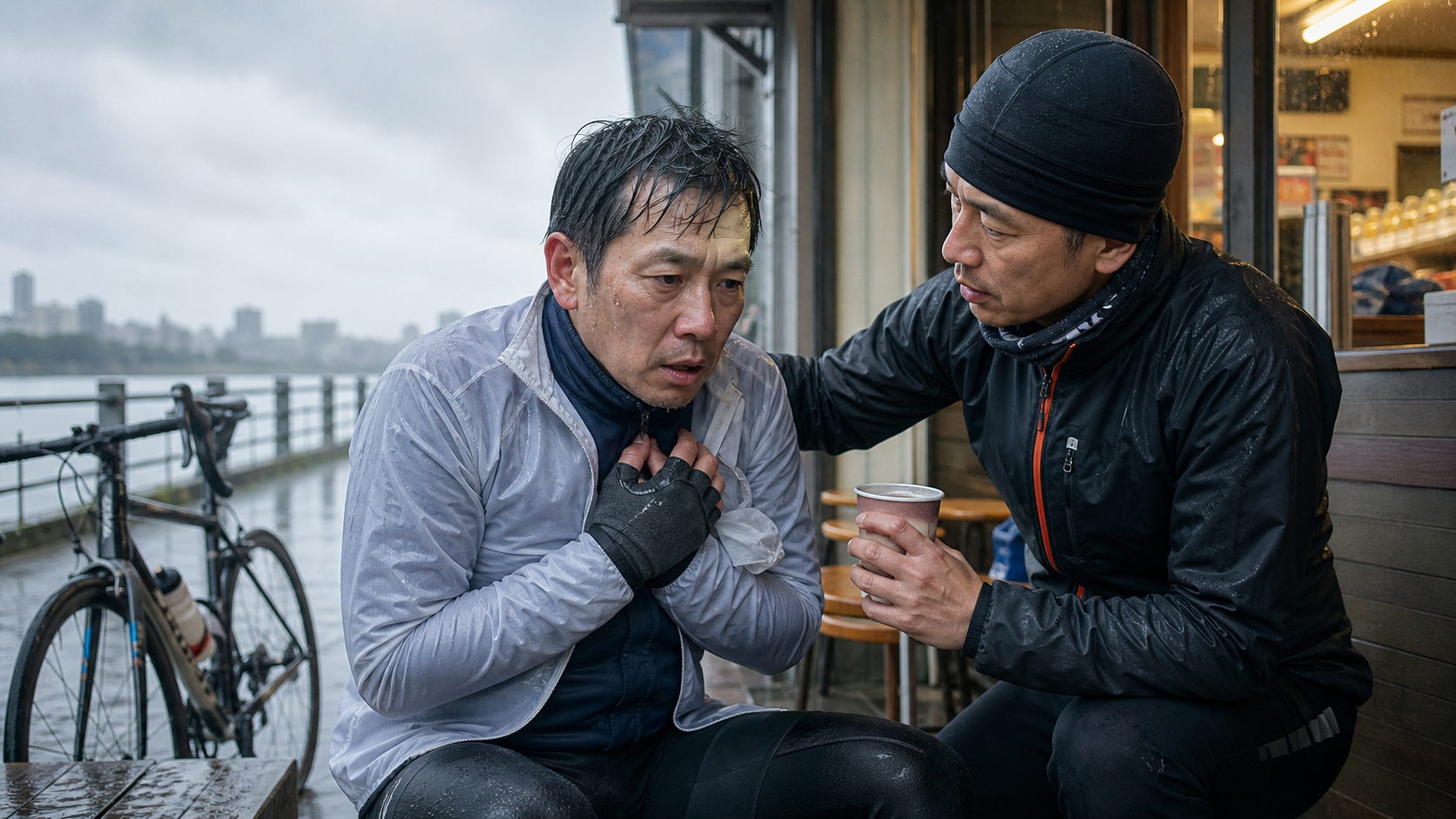
In all my years guiding athletes and everyday riders, the most unforgettable incident happened on a drizzly February morning at around 12°C. I was accompanying a group of trainees cycling north from Guandu along the riverside bike path. One of them, a man in his 40s with generally good fitness, was full of energy for the first 30 kilometers, chatting nonstop and even complaining we were riding too slowly. But after passing Zhuwei, when the wind picked up and the rain intensified, he suddenly went quiet, his face turned pale, and his speech started to become incoherent. When I asked if he was okay, he replied, “I’m fine, I need to take off my jacket, I’m hot.”
At that moment, the hairs on the back of my neck stood up—in a cold, wet environment, when someone starts to “feel abnormally hot and wants to remove clothing,” this is often not a sign of improvement, but a dangerous signal that hypothermia is worsening. We immediately stopped, brought him into a nearby convenience store, changed his soaked clothes, gave him hot cocoa, and applied heat packs to his armpits and chest. It took about twenty minutes before he gradually returned to normal. Afterwards, he was shocked himself, because he “had no idea he was suffering from hypothermia.”
This is the most terrifying aspect of hypothermia: it steals your judgment first, making you feel like you’re fine precisely when you most need to call for help. Many people assume hypothermia is something that only happens during snow mountain climbing or open-water swimming, and has nothing to do with a subtropical island like Taiwan. But in reality, more than half of the hypothermia cases I’ve handled over the years occurred during winter cycling, rainy-day running, early morning riverside activities, or even just standing around soaked in sweat under strong air conditioning after an event. In this article, I want to explain the mechanisms, prevention, and on-site first aid for hypothermia in the same way I talk to my trainees, hoping that you and your teammates won’t have to learn from a real experience.
Bottom line first: Hypothermia means your “core temperature” is dropping, not just that your hands and feet are cold. Taiwan’s humidity, wind, and sweat steal your body heat more effectively than dry cold. Prevention relies on layered clothing and fueling; first aid relies on “stopping heat loss, warming, gentle rewarming, and seeking medical help when necessary.”
1. The Science of Hypothermia: How Your Body “Loses Temperature”
What is Hypothermia? It’s About Core Temperature
Humans are warm-blooded animals. Core temperature (the temperature of vital organs like the brain, heart, and internal organs) is normally maintained within a narrow range of about 36.5–37.5°C. Medically, when core temperature drops below 35°C, it enters the realm of hypothermia.
Note that this refers to “core” temperature, not the temperature of your fingers, ears, or nose tip that you can feel. Cold hands and feet are just the body’s normal heat-conservation response—when the environment gets cold, peripheral blood vessels constrict, shunting blood back to protect the internal organs. So cold hands and feet don’t equal hypothermia, but if you can’t even protect your core, that’s when things are truly serious.
The Four Pathways of Body Heat Loss
To understand prevention, you first need to understand where body heat is lost. The body loses heat to the environment through four main pathways:
| Heat Loss Pathway | Mechanism | Examples in Exercise Contexts |
|---|---|---|
| Conduction | Direct contact with a colder object | Sitting on a cold rock, wet clothing against skin, soaking in a stream |
| Convection | Air or water currents carry heat away from the body surface | Strong winds on descents, headwinds while cycling, direct fan or AC airflow |
| Radiation | Body surface radiates heat outward | Most noticeable when still; exposed head and neck lose heat quickly |
| Evaporation | Sweat or moisture evaporates, carrying heat away | Stopping after heavy sweating, wet clothing drying in the wind |
This table is the backbone of this entire article. You’ll notice that the biggest culprits of exercise-related hypothermia in Taiwan are almost all concentrated in “conduction” and “convection”—in other words, “wet” plus “wind.”
Why Are “Wet” and “Wind” So Lethal?
According to the American College of Sports Medicine (ACSM) expert consensus on cold-weather exercise, the rate of body cooling in cold environments depends on clothing, environment (water, temperature, wind), and exercise intensity. A particularly important warning: in humid and windy conditions, an environment of about 0–10°C can feel and cool the body as effectively as sub-zero temperatures in calm, dry conditions. (Sources: ACSM consensus and NATA position statement at the end of this article)
This is why Taiwan’s winter—“only 12 or 13 degrees”—can still cause hypothermia:
- Water conducts heat about 25 times more effectively than air. Soaked clothing against your skin continuously draws heat away, far more severely than dry cold.
- As wind speed increases, wind chill drops. Descending at 40 km/h on Wuling, Fengguizui, or Beiyi is like creating your own strong windstorm.
- Sweat evaporation is a great cooling aid in summer, but a trap in winter: you sweat heavily climbing, then on the descent you’re still, the wind blows, sweat evaporates, and heat is carried away in large amounts.
I often tell my trainees a simple phrase: “Wet, Wind, Stop”—when these three conditions come together, hypothermia comes knocking. Soaked from climbing, wind-chilled on descents, and then stopping at a rest area—this is the standard script for many winter cycling accidents.
Wind Chill: Why It Feels So Much Colder Than the Thermometer Reads
Many trainees initially don’t understand: “The forecast says 14°C, so why does it feel like 5°C?” The answer is the “wind chill effect.” When wind blows away the layer of air warmed by your body against your skin, you have to constantly heat up new cold air, accelerating heat loss and dramatically lowering the perceived temperature. The following conceptual table can help you build intuition (actual values vary with humidity, sunlight, and individual differences; use it only for directional comparison):
| Actual Air Temperature | Almost No Wind | Moderate Wind (e.g., cruising on flats) | Strong Wind (e.g., high-speed descent) |
|---|---|---|---|
| 15°C | Feels like ~15°C, comfortable | Feels noticeably cooler | Feels like single digits; wind protection needed |
| 10°C | Cool but acceptable | Feels close to 5°C | Feels close to 0°C; high risk |
| 5°C | Warm clothing already needed | Feels close to 0°C | Feels sub-zero; extremely dangerous if wet |
The key isn’t memorizing numbers, but building a habit: when checking the weather, always look at wind speed and precipitation, not just temperature. For cyclists, remember even more—your movement itself creates wind. A descent at 30–40 km/h is like having a giant fan on you, combined with the sweat accumulated from climbing. This is the most typical hypothermia combination for Taiwan’s mountain riders.
Who Is at Higher Risk
In the same weather, some people are particularly susceptible. The following groups should be especially vigilant:
- Lean individuals with low body fat: Subcutaneous fat is a natural insulating layer; the leaner you are, the faster you lose heat.
- Children and the elderly: Children have a relatively large body surface area and lose heat quickly; the elderly have blunted thermoregulation and sensation.
- Those who are fatigued, sleep-deprived, or energy-depleted: Heat production capacity drops, and they may not even be able to shiver effectively.
- People with chronic diseases: Hypothyroidism, diabetic neuropathy, cardiovascular disease, and certain medications can affect thermoregulation (more on this in a dedicated section later).
- Those who have just finished high-intensity exercise with heavy sweating: Soaked through and then stopping is the perfect window hypothermia loves.
2. Recognizing the Three Stages of Hypothermia: From Shivering to No Longer Shivering
Hypothermia isn’t an “on/off” switch; it’s a continuous deteriorating process. Internationally, it’s commonly divided into three stages based on core temperature. I’m putting the medical data and “what you’ll see on site” together because in the wilderness there’s no thermometer—you have to rely on observation to save someone.
| Stage | Core Temperature | Observable Signs On Site | Key Signals |
|---|---|---|---|
| Mild Hypothermia | ~35–32°C | Violent shivering, teeth chattering, clumsiness, slowed speech, fatigue and sleepiness, increased heart rate and breathing | Still shivering = body is still fighting to save itself |
| Moderate Hypothermia | ~32–28°C | Shivering weakens or even stops, confusion, impaired judgment, slurred speech, paradoxical behavior | Shivering stopping and incoherent speech means worsening, not improvement |
| Severe Hypothermia | Below 28°C | Loss of consciousness, weak and hard-to-detect pulse, possible hallucinations, paradoxical undressing, greatly increased risk of cardiac arrest | Unresponsive, no detectable pulse, cardiac arrest possible at any moment |
(Stage and temperature ranges reference medical resources such as Cleveland Clinic and StatPearls; see end of article)
The Two Most Commonly Misjudged Turning Points
The first turning point: shivering stops. Many people think “not shivering anymore, not feeling as cold” is a sign of improvement, but it’s actually the opposite. Shivering is the body’s last line of defense, using muscle tremors to generate heat. When core temperature drops below about 32°C, the body gradually loses its ability to rewarm itself, and shivering weakens or even stops—this is the dividing line between mild and moderate deterioration. It’s getting worse, not better.
The second turning point: paradoxical undressing. This was the situation with the gentleman I mentioned at the beginning. In moderate to severe hypothermia, peripheral blood vessels may suddenly dilate after prolonged constriction, causing a sudden feeling of “being hot,” leading the person to remove clothing, which accelerates heat loss. If you see someone saying they’re hot and trying to undress in cold conditions, treat it as a critical alarm, not as them genuinely not being cold.
An Easy-to-Remember Self-Check Method
I teach my trainees to use “can you walk a straight line properly, can you speak a full sentence properly” for a quick assessment. International wilderness medicine uses a similar “-ables” concept:
- Still able to speak clearly, think clearly, walk steadily, and act (manage simple tasks) → likely mild; quickly stop heat loss and warm up.
- Starting to slur speech, walk unsteadily, or unable to perform simple actions (e.g., pulling up a jacket zipper) → moving toward moderate; treat very seriously and prepare to call for help.
Open Water and River Tracing: The Underestimated Hypothermia Stage
Speaking of this, I must remind friends who enjoy swimming, triathlon, river tracing, and SUP paddleboarding. Water conducts heat about 25 times more effectively than air; being immersed in water causes hypothermia much faster than being in air. Even in Taiwan’s summer, mountain streams and early-morning open water can be just over 20°C, and prolonged immersion can still pull down your core temperature.
I know a triathlete who, during an early-morning open-water swim leg, suddenly felt his hands and feet unresponsive, weak strokes, and deteriorating sense of direction mid-swim because he hadn’t warmed up before entering and the water was on the cooler side—these are actually early signs of hypothermia in water. Fortunately, he knew to raise his hand for help and was pulled onto the rescue boat. In water, hypothermia combined with muscle failure is a deadly combination because it simultaneously threatens your ability to stay afloat.
Reminders for water sports enthusiasts:
- Adapt to water temperature gradually; warm up thoroughly before entering, and don’t immerse your whole body in cold water at once (cold shock can also trigger gasping and heart rhythm issues).
- Wear a wetsuit when necessary—it provides both warmth and buoyancy.
- Watch for “soaking too long” signals: shivering, weak strokes, inability to spread fingers, slurred speech—get out immediately.
- After getting out, change into dry clothes, dry off, and warm up immediately; don’t stand around in the wind while wet—the wind chill on shore often draws more heat than the water itself.
3. Practical Prevention: Layered Clothing and On-Site Management
Prevention is always more cost-effective than first aid. I break prevention into two parts: “what you wear” and “what you do.”
Layered Clothing: The Three-Layer System
International consensus on cold-weather exercise points to one core principle—layering. Its advantage is that you can add or remove layers at any time based on exercise intensity and weather changes, avoiding the “soak through with sweat then get chilled” scenario.
| Layer | Function | Material Choices | Taiwan Context Reminders |
|---|---|---|---|
| Base Layer (Moisture-Wicking) | Moves sweat away from the skin | Polyester wicking fabrics, merino wool | Never wear pure cotton: cotton absorbs sweat and doesn’t dry, clinging wet to skin and acting like a heat sink |
| Mid Layer (Insulation) | Traps warm air | Fleece, wool, synthetic insulation | Can be removed for climbs, but must be put back on before descents |
| Outer Layer (Wind/Waterproof) | Blocks wind and rain | Windproof, waterproof, breathable jacket | Taiwan winters have frequent showers; a lightweight rain/wind jacket in your back pocket is a life-saving piece of gear |
The essence of the layering system is “dynamic adjustment”: take off the mid layer and open zippers to vent heat on climbs; before descents or rest stops, put layers back on, zip up, and put on windproof gloves and a neck gaiter. I often see trainees soaked from climbing, then frantically trying to put on a jacket on the descent, only to find their hands too frozen to work the zipper. The best time to put on clothing is “before you feel cold.”
Don’t Overlook the Big Heat Losers: Head, Neck, and Hands
The head and neck have rich blood flow and are often exposed, making them major sites of radiation and convection heat loss. A thin wicking cap or a skull cap under your helmet, a neck gaiter (buff), and a pair of windproof gloves are all very light but can significantly reduce hypothermia risk. Feet matter too—wet socks are a commonly overlooked source of heat loss. For long activities in the rain, carrying a pair of dry socks in your backpack is worth far more than their weight.
Fueling: Generating Heat from Within
The body needs fuel to produce heat. In winter exercise, energy and hydration are equally important:
- Carbohydrates are the primary fuel for heat production. For prolonged activities, replenish about 30–60 grams of carbs per hour (e.g., energy bars, bananas, rice balls, convenience store onigiri) to maintain the muscles’ ability to generate heat and shiver.
- Warm beverages: A cup of warm, sweetened drink (hot cocoa, sports drink, ginger tea) in winter both hydrates and warms, and provides psychological comfort.
- Don’t wait until you’re thirsty or hungry: Thirst sensation is blunted in cold weather; many people unknowingly become hypoglycemic and dehydrated, and heat production drops along with it.
- Alcohol is a major no-no: Alcohol dilates peripheral blood vessels, making the skin feel warm momentarily, but it actually accelerates core heat loss while impairing judgment—a hidden driver of hypothermia.
Pre-Trip and On-Site Management
- Check the weather and set limits: Before heading out, check temperature, precipitation probability, and wind speed. International event management emphasizes having objective cancellation/postponement thresholds to remove “subjective stubbornness.” The same applies to your own riding or running—decide in advance “under what conditions I won’t go, or I’ll cut it short.”
- Go with a buddy, never alone: Hypothermia steals judgment; your companion is your second pair of eyes. Agree to “watch each other for changes in speech.”
- Control intensity, avoid soaking through with sweat: In winter, don’t start out sprinting until you’re drenched. A steady pace that balances heat production and heat loss is better than alternating between bursts and coasting.
- Don’t linger too long at rest stops: Stopping still causes heat production to plummet and sweat to evaporate, drawing heat away—a high-risk moment for hypothermia. When resting, put on insulating layers, find a wind-sheltered spot, and keep stops short.
4. On-Site First Aid: From “Stopping Heat Loss” to “Rewarming”
If prevention fails and you actually encounter hypothermia, how should you respond? Remember the four-step sequence: Stop heat loss → Warm → Rewarm → Seek medical help.
Step 1: Stop the Heat Loss
Stopping further temperature drop is more important than rushing to add heat.
- Remove environmental exposure: Get the person out of wind, rain, and water, and into a sheltered, dry, warm place (a convenience store, car, mountain hut, or tent all work).
- Remove wet, cold clothing: Wet clothing is the main culprit continuously drawing heat away. Change into dry clothes and wrap in insulating layers, a sleeping bag, or an emergency foil blanket.
- Insulate from the ground: Have the person lie or sit on a sleeping pad, backpack, or dry clothing, not directly on the cold ground (to prevent conductive heat loss).
Steps 2 and 3: Gentle Rewarming
| Degree of Hypothermia | Recommended Actions | Absolutely Do NOT Do |
|---|---|---|
| Mild (still shivering, conscious) | Warm up, give warm sweetened drinks, encourage light activity under supervision to generate heat, apply warmth to the torso | Do not soak in a hot bath, do not vigorously rub limbs |
| Moderate to Severe (shivering stopped, altered consciousness, hard to rouse) | Carefully lift horizontally, handle gently, only apply warmth to the torso, seek medical help promptly | Do not give food or drink, do not move forcefully, do not heat only the limbs |
The key principle of rewarming: apply heat to the “core of the torso”—armpits, chest, and groin, where major blood vessels pass—using heat packs, hot water bottles (wrapped in cloth to prevent burns), or another person’s body heat. Warming these areas effectively sends heat back to the core.
Why can’t you vigorously rub limbs or soak in hot water? This involves a phenomenon called “afterdrop”: the blood pooled in the extremities is cold and acidic. If you suddenly rub vigorously or soak in hot water, causing rapid dilation of peripheral blood vessels, this cold blood can rush back to the core, potentially causing core temperature to drop further rather than rise, and even triggering severe cardiac arrhythmias. For moderate to severe hypothermia, handle the person gently, slowly, and focus on the torso.
Step 4: When You Must Seek Medical Help
Call 119 immediately and prepare for transport if any of the following occurs:
- Shivering has stopped, confusion, slurred speech, hard to rouse
- Paradoxical undressing, hallucinations, or clearly abnormal behavior
- Weak pulse, slowed breathing, or any sign suggesting severe hypothermia
- On-site conditions cannot effectively warm the person, or there’s no improvement after rewarming
Medical care in Taiwan is actually very accessible, with NHI coverage and widespread emergency services. Don’t delay because of “fear of being a bother or embarrassment.” The danger of hypothermia is that it deteriorates quickly; once it reaches moderate to severe, it’s a time-critical emergency. In mountain areas, call 119 or use the “NFA 119 Report App” or the National Rescue Command Center for help.
One-sentence principle: For mild hypothermia, stopping heat loss and warming up will usually resolve it on its own; once shivering stops and consciousness deteriorates, don’t tough it out—handle gently and get to a hospital quickly.
5. Common Mistakes and Corrections
Over the years I’ve seen too many cases of “good intentions gone wrong.” I’ve compiled them into a comparison table, hoping to help you avoid them:
| Common Mistake | Why It’s Wrong | Correct Approach |
|---|---|---|
| Wearing pure cotton base layers in winter | Cotton absorbs sweat and doesn’t dry, clinging wet to skin and acting as a heat sink | Switch to polyester wicking or merino wool |
| Feeling relieved that “shivering stopped, not as cold” | Shivering stopping is a sign of deterioration | Immediately increase vigilance, strengthen warming, prepare for medical transport |
| Vigorously rubbing limbs or soaking a severe hypothermia victim in hot water | Can trigger afterdrop and cardiac arrhythmias | Only apply warmth to the torso, handle gently and slowly |
| Giving hot drinks or food to an unconscious person | Risk of choking and aspiration | Never feed anyone with altered consciousness; go straight to the hospital |
| Drinking alcohol to warm up | Peripheral dilation actually accelerates core heat loss | Use warm, sweetened, non-alcoholic drinks |
| Soaking through with sweat on climbs, only thinking about a jacket on descents | Hands already too frozen to work zippers, and already chilled | Put on insulating layers “in advance” before descents and rest stops |
| Lingering too long chatting at rest stops | Heat production plummets when still, sweat evaporation draws heat | Dress warmly, find wind shelter, keep stops short |
| Going solo | Hypothermia steals judgment first; hard to notice on your own | Go with a buddy, watch each other’s condition |
Case Studies: Two Very Different Responses
Case A (handled correctly): A female trainee was trail running in the Yangmingshan area when fog and rain moved in. She started shivering and slowing down. Her running partner immediately became alert; the two retreated to a roadside pavilion, changed into a dry top from the backpack, put on a lightweight rain/wind jacket, and drank hot ginger tea from a thermos. Within about ten minutes she returned to normal and descended safely. The key: early detection, having supplies, and decisive action to stop heat loss.
Case B (nearly caused a disaster): A group was on a winter night ride. One rider, trying to “prove his toughness,” pushed through—soaked, refusing to change clothes or rest. In the latter part of the ride, he started rambling incoherently and weaving on his bike. His companions assumed he was just tired and even urged him to speed up. Fortunately, an experienced ride leader noticed something was wrong and forcibly stopped to treat him. The lesson from this case: a culture of toughness and the misjudgment of “he’s just tired” are the easiest ways to turn mild hypothermia into moderate.
6. Actionable Advice for Readers at Different Levels
Everyone’s exercise patterns differ. I’ve divided the advice into three tiers; you can find where you fit.
Beginners / General Exercisers
- Minimal gear combination: One wicking base layer, one insulating mid layer, and one lightweight wind/waterproof jacket can handle most of Taiwan’s winter outdoor activities.
- One neck gaiter, one pair of gloves, one thin cap: The highest cost-performance life-saving items; they take up almost no space in a backpack.
- Build awareness of “Wet, Wind, Stop”: Whenever these three conditions align, proactively add layers, find wind shelter, and drink something warm.
- Never go alone: Find a partner to exercise with and look out for each other.
- Call it quits when something feels off: What beginners need most is “the courage to admit defeat”; ending early is not embarrassing.
Advanced / Regular Trainees
- Fine-tune layering and intensity: Learn to use zippers and adding/removing mid layers for dynamic adjustment, aiming for “slightly warm, not soaked.”
- Fuel on a schedule: For prolonged activities, aim for 30–60 grams of carbs per hour and regular warm drinks to maintain heat production.
- Practice cold-weather assessment: Familiarize yourself with how your state changes in low temperatures, and learn to observe teammates’ “speech, walking, and motor skills” indicators.
- Make spare gear routine: Dry socks, emergency foil blankets, and heat packs become permanent members of your winter backpack.
Ride Leaders / Event Organizers / Coaches
- Set objective thresholds: Write down temperature, wind speed, precipitation, and cancellation/postponement criteria in black and white to eliminate “subjective toughness.”
- Pre-trip risk briefing: Remind participants before departure about clothing, fueling, going with a buddy, and hypothermia warning signs.
- Set up check-ins and checkpoints: For long events, arrange aid stations, observe conditions, and have a mechanism for supporting those falling behind.
- Stock first-aid supplies: Foil blankets, heat packs, warm drinks, dry clothing, communication, and rescue plans should be prepared in advance.
- Know when to call it: The most important ability of a leader is to decisively shorten or cancel when weather deteriorates, rather than pushing to complete.
7. Chronic Illnesses and Special Populations: Must Be Individualized
I’ll be especially conservative in this section because it involves diseases, and everyone’s situation is different. The following are general principles, not diagnoses or prescriptions. Please discuss actual practices with your primary care physician.
Why Chronic Illnesses Affect Hypothermia Risk
Maintaining core body temperature relies on the entire system of “feeling cold → vasoconstriction → shivering to generate heat → fuel supply.” Certain diseases or medications can weaken one link in this chain:
| Condition | Potential Impact | General Reminder (Not Medical Advice) |
|---|---|---|
| Hypothyroidism | Lower basal metabolic rate and heat production, more sensitive to cold | Pay extra attention to warmth and intensity control in cold weather; discuss with your doctor at follow-up visits |
| Diabetes (including neuropathy) | Blunted peripheral sensation, harder to detect cold and frostbite | Strengthen protection for hands and feet, check regularly, avoid prolonged wet-cold exposure |
| Cardiovascular disease | Cold causes vasoconstriction, increasing cardiac workload | Get physician evaluation before cold-weather exercise; avoid strenuous and sudden exertion |
| Taking medications that affect thermoregulation | Some drugs may alter sweating and vascular responses | Proactively inform your doctor about your exercise habits for individual assessment |
Please note that the purpose of this table is not to scare you away from exercise—regular exercise is actually beneficial for most chronic conditions. The key point is: if you have these conditions, your warmth, intensity control, and rescue preparations for cold-weather exercise need to be more thorough, and you must take the path of “ask your doctor first, get individualized assessment.” Taiwan’s NHI makes medical access easy; discussing your exercise plan with your doctor at follow-up visits is a worthwhile investment.
Medications and Alcohol
One more emphasis: alcohol dilates peripheral blood vessels, creating the illusion of “warmth,” but actually accelerates core heat loss and impairs judgment. Don’t rely on alcohol to warm up before or after winter exercise, or during outdoor overnight activities. If you’re on any long-term medication and have questions about your response to cold, consult your doctor or pharmacist—don’t adjust on your own.
8. Frequently Asked Questions (FAQ)
Q1: Taiwan is so hot—can you really get hypothermia here?
Yes. Most cases I’ve handled occurred during winter wet-cold cycling and running, early morning riverside activities, or after events when soaked in sweat and exposed to strong wind or AC. Wet plus wind steals body heat more than dry cold. Don’t assume a subtropical island makes you immune.
Q2: Can hypothermia happen in summer?
Possibly. Prolonged immersion in cooler stream or sea water (open-water swimming, river tracing), or being soaked through and then spending a long time in an air-conditioned room or in mountain areas at night, can all cause core temperature to drop. Water conducts heat far better than air; immersion is an underestimated hypothermia scenario.
Q3: Is shivering good or bad?
Shivering means the body is “still fighting to save itself,” indicating mild hypothermia. What you should truly worry about is shivering weakening or stopping, which means it may have progressed to moderate, requiring immediate intensified treatment and preparation for medical transport.
Q4: Can I just soak in a hot bath to rewarm?
For mild cases with clear consciousness, a warm shower is generally fine; but those with moderate to severe hypothermia must absolutely not soak in hot water, as it can trigger afterdrop and cardiac arrhythmias. The principle is “gentle torso rewarming, handle gently, seek medical help promptly.”
Q5: My exercise performance drops in cold weather—is that related to hypothermia?
Yes. Lowered core and muscle temperature impairs nerve conduction, strength, and coordination—this is also one of the manifestations of “early hypothermia.” If you find yourself suddenly clumsy and slow to make decisions in cold weather, your body may be sending a warning.
Q6: How do I distinguish hypothermia from just “feeling cold”?
The key is whether core functions are affected: if it’s just cold hands and feet and feeling chilly, but you can still speak, walk, and think normally, it’s likely a normal heat-conservation response; once shivering becomes uncontrollable or consciousness and coordination deteriorate, treat it as hypothermia.
Q7: Do I need a thermometer reading below 35°C to call it hypothermia?
In the field, it’s almost impossible to get an accurate core temperature (axillary and forehead readings are unreliable). On-site assessment relies on behavior and symptoms, not numbers. Instead of obsessing over degrees, watch closely the indicators of “shivering state, speech, walking, and judgment,” and err on the side of early intervention.
Q8: Can someone with hypothermia rewarm by walking around?
For mild cases with clear consciousness who can still walk steadily, moderate activity with someone accompanying can help generate heat; but those with moderate to severe hypothermia should not walk on their own, nor be moved forcefully, as vigorous jostling can trigger cardiac arrhythmias. They should be lifted gently and horizontally and transported to medical care promptly.
Q9: Is it okay to apply heat packs directly to the skin?
It’s not recommended to apply them directly to the same spot on the skin for a long time, especially for those with blunted sensation, as it can cause low-temperature burns. Place them over a layer of clothing, in the armpits, chest, and groin—these torso areas work best.
Q10: After the event ends and I’m home, do I still need to worry about hypothermia?
Yes. Many people overlook the “post-race, post-training” period. You’re soaked in sweat and depleted; sitting down in a restaurant or car with strong AC can cause your temperature to keep dropping. As soon as exercise ends, change into dry clothes, add a jacket, and have some warm sweetened drink to pull your body back from “cooling mode” to “warming mode.”
Conclusion: Keep “Wet, Wind, Stop” in Mind
Exercise-related hypothermia is not remote in Taiwan at all. It doesn’t require snow or sub-zero temperatures; just the combination of “wet, wind, and stop” can find you or your teammates on a seemingly mild winter morning. And its most cunning trait is that it steals your judgment first, making you feel fine at the very moment you’re in the most danger.
After all these years of guiding trainees, what I most want to convey is just a few sentences: Put on clothing while you’re still not cold; shivering stopping is worsening, not improvement; first aid is stop heat loss, then rewarm, with heat applied to the torso; seek medical help when needed—toughing it out is meaningless. Remember these few lines, and they’ll serve you better than any expensive gear.
I hope this article gives you a bit more composure and vigilance on the next cold, wet cycling or running morning. May you and your partners return home safely every single time.
This article is educational content and cannot replace individual diagnosis and treatment advice from physicians, physical therapists, or nutritionists. If you have cardiovascular disease, diabetes, hypertension, thyroid dysfunction, or other chronic conditions, your cold tolerance and hypothermia risk may differ. Please discuss with your primary care physician before exercising for individualized assessment. For any suspected moderate to severe hypothermia emergency, call 119 immediately for transport to a hospital.
References
- Cleveland Clinic — Hypothermia (Low Body Temperature): https://my.clevelandclinic.org/health/diseases/21164-hypothermia-low-body-temperature
- StatPearls / NCBI Bookshelf — Hypothermia: https://www.ncbi.nlm.nih.gov/books/NBK545239/
- ACSM Expert Consensus Statement: Injury Prevention and Exercise Performance during Cold-Weather Exercise: https://doi.org/10.1249/JSR.0000000000000907
- National Athletic Trainers’ Association Position Statement: Environmental Cold Injuries: https://pmc.ncbi.nlm.nih.gov/articles/PMC2582557/
- Physiopedia — Cold-Related Injuries: https://www.physio-pedia.com/Cold-Related_Injuries
Related Reading
- Prevention and First Aid for Exercise-Related Heat Stroke: A Coach’s Guide to Heat Illness Severity, the Golden 30 Minutes of Cooling, and Practical Strategies for Taiwan Summer Rides
- Body Temperature and Athletic Performance: The Overlooked Core Temperature Code
- Preventing Heat Exhaustion While Cycling: Thermoregulation and Hydration Strategies for Summer Rides
- Hydration Strategies for High-Heat Riding: A Complete Guide to Preventing Dehydration and Heat Illness
單車 一日北高 ( 雙城 ) 肥宅雙人瘋狂行 紀錄片 REACTO
10 年前
水金九不厭五分 10度寒流冷到不願停!feat. 卡卡 / 公路車 / CT Yeh
6 個月前
大武山後門26%歡樂陡坡!JJSC南台灣單車行Day2 / 被颱風追著跑 / 公路車 / CT Yeh
2 年前
滑雪新手們慘摔學習全紀錄(請開字幕),滑雪好好玩 | Snowboard + Ski | 岩原 スキー場 | 滑雪APP使用 | GoPro Max
6 年前
秘境雪場 日本 八甲田 冰樹探險與滑雪體驗 ft. Q老師 & 運動生活
7 年前
[防寒衣體驗] 鐵人魂 三鐵 防寒衣試穿會 於松運 深水游泳池 鯨魚池
8 年前
CT暗黑廚房) 車友必備 宇宙無敵鮮蚵湯 幫助訓練恢復 天然食補 好市多 超肥鮮蚵 破PR
7 年前
5 ℃ 櫻花之旅 / 75萬單車直接雨中洗車.../ 平菁街 / 北迴歸小隊 / 公路車 / CT Yeh
5 個月前