Sedentary Sitting, Long-Distance Travel, and Exercise: A Complete Prevention Guide for Those Who Fear Blood Clots
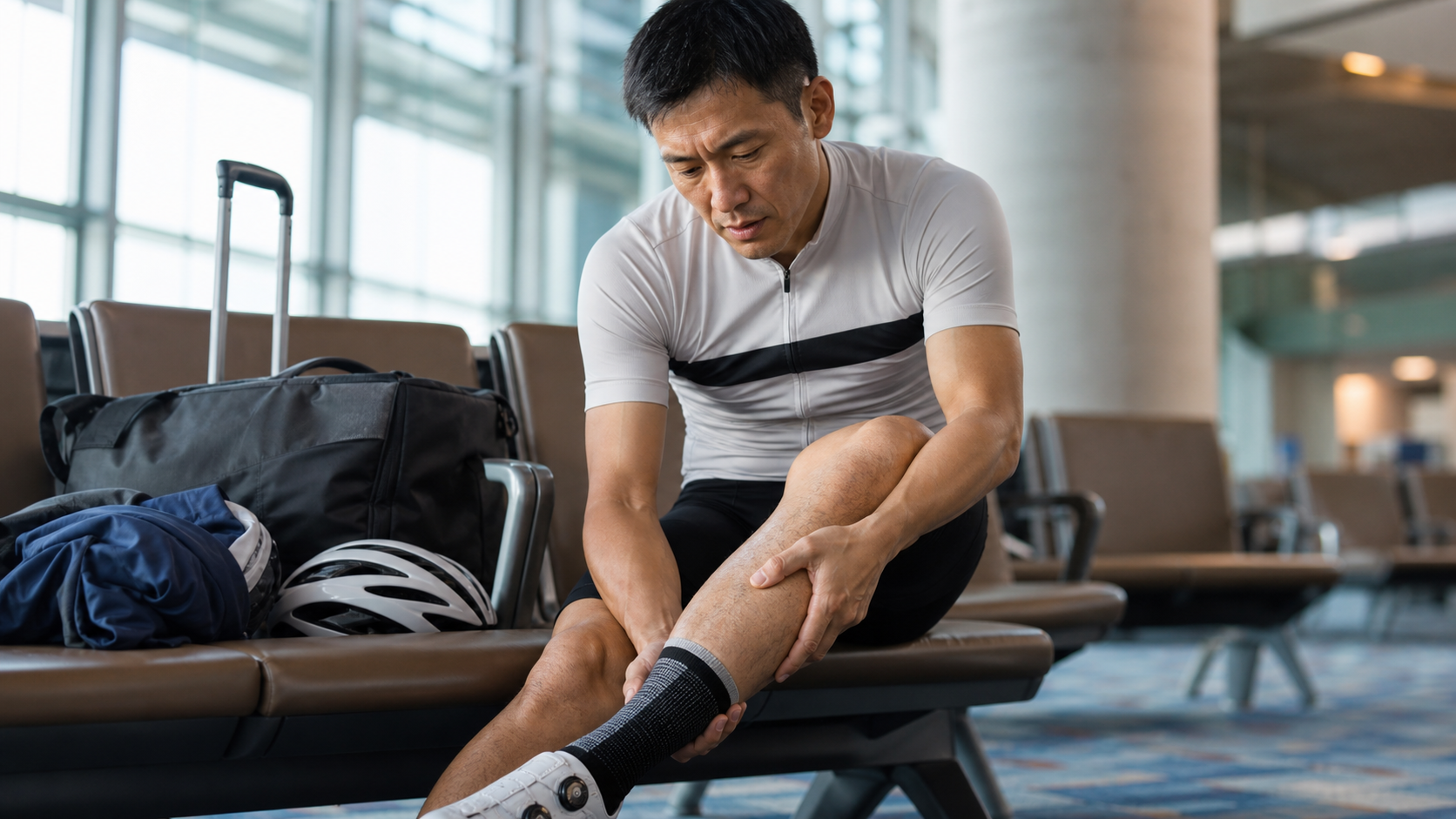
Starting with a Trainee’s Swollen Calf
Over the years training athletes, I’ve heard all kinds of complaints, but one stands out in my memory. A male trainee in his early forties, a regular cyclist, came to see me two days after a business trip to Europe. His right calf felt tight and swollen, hurt when he walked, and was warmer to the touch than his left leg. At first, he assumed it was just swelling from the flight or soreness from jet lag and poor sleep. The moment I heard the keywords—“unilateral,” “after a long-haul flight,” and “tight, swollen, warm, painful calf”—I didn’t let him do any training. Instead, I sent him straight to the emergency room for a lower-extremity venous ultrasound.
It turned out to be deep vein thrombosis (DVT). Fortunately, it was caught early, and timely anticoagulation treatment prevented it from progressing into a fatal pulmonary embolism.
After that incident, I formally added “blood clot risk” to my trainee education checklist. Because it has a dangerous characteristic: people who exercise regularly often assume blood clots are far from them. In reality, regular exercise is indeed a protective factor, but it cannot shield you from the acute risk of a single prolonged period of immobility—especially in Taiwan, where long business trips, flights to Japan, Europe, or the US, road trips around the island during holidays, or bed rest after an injury are situations everyone encounters.
In this article, I want to explain, from a coach’s perspective, the relationship between “prolonged sitting, travel, and exercise” and blood clots. It’s on the longer side because this is a life-threatening topic, and I’d rather be overly thorough. But let me say this upfront: this article is educational content. If you suspect any symptoms of a blood clot, seek medical attention immediately—do not try to handle it yourself with exercise or stretching.
What Exactly Is a Blood Clot? Let’s Clarify the Concept First
When we talk about “blood clots” in the context of exercise and travel, the main concern is venous thromboembolism (VTE), which comes in two forms:
- Deep vein thrombosis (DVT): A blood clot forms in a deep vein, most commonly in the deep veins of the calf and thigh. Typical signs include unilateral swelling, tightness, pain, warmth, and redness of the calf or thigh.
- Pulmonary embolism (PE): A piece of the DVT clot breaks off, travels through the bloodstream to the lungs, and blocks a pulmonary artery. This is a life-threatening emergency, with symptoms including sudden shortness of breath, chest pain (worse with deep breaths), coughing up blood, rapid heartbeat, dizziness, or even fainting.
These two are upstream and downstream of the same pathological pathway, which is why a calf problem should never be taken lightly—it can become a lung emergency within days.
Virchow’s Triad: Three Conditions for Clot Formation
To understand why prolonged sitting and travel are dangerous, just remember one classic framework—Virchow’s triad. Blood clots typically form when these three conditions come together:
| Factor | Plain Explanation | Common Triggering Situations |
|---|---|---|
| Venous stasis | Blood flow slows down or gets stuck | Prolonged sitting, prolonged bed rest, long-distance travel, wearing a cast |
| Endothelial injury | The vessel wall is scratched or inflamed | Surgery, trauma, previous vein injury |
| Hypercoagulability | Blood clots more easily than usual | Dehydration, pregnancy, oral contraceptives, cancer, inherited clotting disorders, infection or inflammation |
Prolonged sitting and long-distance travel most directly hit the first factor: “venous stasis.” When you maintain a seated position for a long time, with knees bent and calf muscles barely contracting, the mechanism that relies on the calf muscle pump to push blood back to the heart nearly shuts down, and blood pools in the deep veins of the lower limbs. If dehydration is added on top (dry cabin air, not drinking enough water) or you already have other risk factors, the triad is complete, and the risk of blood clots rises noticeably.
The Calf Muscle Pump: Your Best Natural Anti-Clot Device
I want to emphasize one concept here, because it’s the core of all the practical advice that follows.
Venous blood in the lower limbs must flow against gravity back up to the heart. This relies mainly not on the heart’s pumping force, but on calf muscle contractions squeezing the deep veins, with venous valves preventing backflow. This mechanism is called the “calf muscle pump” or colloquially the “second heart.”
So you’ll notice that all the recommended actions for preventing blood clots—ankle flexion and extension, marching in place, getting up and walking—are essentially the same thing: getting the calf muscles to contract again, activating the pump, and pushing stagnant blood back up. Once you understand this, you won’t treat those actions as boring routine; you’ll know that every contraction is protecting you.
The Relationship Between Prolonged Sitting, Travel, and Exercise: What Science Says
Long-Distance Travel Does Increase Risk
Research on long-distance travel and blood clots is fairly consistent. According to the World Health Organization (WHO) and various travel medicine guidelines, after long-distance travel of more than about 4 hours, the risk of venous thrombosis roughly doubles; the longer the flight, the higher the risk, with flights of 8 to 10 hours or more carrying the greatest risk.
However, it’s important to distinguish between “relative risk” and “absolute risk.” This matters greatly for the general public, otherwise it’s easy to panic unnecessarily. For a healthy person with no other risk factors, the absolute risk of developing a blood clot after a single flight of more than 4 hours is estimated to be on the order of one in several thousand. In other words, the risk is real and worth preventing, but for an average healthy person, a single long-haul flight leading to a clot is still a low-probability event. Those who truly need heightened vigilance are people who already carry other risk factors.
Prolonged Sitting—Not Just a Travel Problem
Many people think blood clots are only a concern when “flying,” but in reality, daily prolonged sitting is equally relevant. Long hours at a desk, sitting continuously at a computer for hours without getting up, or long gaming or binge-watching sessions—this kind of “work- and computer-related prolonged seated immobility” has also been observed to be associated with venous thrombosis risk.
This is very relevant to many office workers in Taiwan: once you sit down, three or four hours pass in the morning with your eyes never leaving the screen and your feet never leaving the floor. The problem with this kind of sitting is that it happens every day and accumulates over time, rather than being an occasional one-off trip.
What About Exercise? Is It Protective or a Risk?
This is the question I get most often from trainees: “Coach, if I exercise so intensely, won’t that make my blood clot more easily and increase my risk of clots?”
The answer needs to be considered on two levels:
In the long term, regular exercise is a protective factor. Regular exercise improves endothelial function, promotes blood circulation, and helps control weight and metabolism—all of which move in the direction of reducing blood clot risk. A person who is regularly active generally has better venous return efficiency and vascular health than someone who is chronically sedentary.
But exercise itself cannot “exempt” you from the acute risk of a single bout of prolonged sitting or bed rest. This is the point I constantly remind my trainees of. Riding your bike for two hours in the morning doesn’t mean you’re safe for the next ten hours on a long-haul flight. Acute blood stasis is a problem of the moment; it has little to do with how fit you usually are. In fact, some situations actually stack the risks: for example, severe dehydration after intense exercise or competition, immobilization in a cast or bed rest after a sports injury, or the recovery period after surgery—in these cases, athletes actually need to be more careful, because all three elements of Virchow’s triad can be triggered at once (dehydration causing hypercoagulability, injury causing endothelial damage, and bed rest causing venous stasis).
So the right mindset is: treat regular exercise as your long-term foundation, and treat immediate countermeasures for prolonged sitting and travel as your seatbelt every single time. Both are indispensable.
High-Risk Groups: Which Category Are You In?
For prevention to be effective, you first need to know which risk level you fall into. Below are the common risk factors, organized for self-assessment. This is not a diagnostic tool—it’s simply to help you gauge “how careful I need to be.”
| Risk Level | Common Characteristics (the more you match, the more attention needed) | Recommended Mindset |
|---|---|---|
| General Risk | Young, healthy, no chronic disease, no family history of blood clots, normal weight | Basic movement and hydration are sufficient |
| Moderate Risk | Older age, overweight, visible varicose veins, long-term sedentary work, currently taking oral contraceptives or hormone medications | Proactively plan prevention before long trips; consider compression socks |
| High Risk | Previous blood clot, recent surgery, undergoing cancer treatment, pregnant or postpartum, inherited clotting disorder, lower-limb injury with a cast | Consult a physician before traveling or prolonged bed rest; medication or medical-grade compression socks may be needed |
A few key points I want to highlight:
- Oral contraceptives and hormone medications: These shift the blood toward a hypercoagulable state and are a relatively underestimated risk factor. If you’re taking them and planning a long flight, it’s worth discussing with your doctor.
- Pregnancy and postpartum: Pregnancy itself is a hypercoagulable state, and long-distance travel during this period requires extra caution.
- Those who have had a blood clot before: The risk of recurrence is significantly higher. For this group, travel prevention absolutely cannot rely on DIY measures alone—you need individualized advice from a physician.
- Post-surgery or bed rest from injury: This is a blind spot that active people often overlook. The recovery period after an injury is actually a high-risk window for blood clots.
If you fall into the high-risk category, the action recommendations later in this article are “not enough” for you—what you need is professional medical evaluation, not general advice from the internet.
Practical Methods: Prevention Actions You Can Do Right Away
Now that the concepts are covered, let’s get to the most practical part. I’ve divided the methods into three pillars: Move, Hydrate, Compress—these are the three pillars of prevention.
Pillar One: Move (Most Important)
Movement always comes first. All research and guidelines place “regularly activating the calf muscles” at the core of prevention. Here is my “sedentary/long-travel movement prescription” for clients, which you can do directly in an airplane seat, on a train, or in an office chair.
| Exercise | How To | Recommended Frequency | Purpose |
|---|---|---|---|
| Ankle Pumps | Seated, keep heels down, forcefully point toes up then press down, like pressing a gas pedal | 20–30 reps every 30–60 minutes | Activates the calf pump; most effective |
| Ankle Circles | Feet elevated, rotate ankles clockwise and counterclockwise | 10 circles each direction every 30–60 minutes | Promotes distal circulation |
| Toe Curls and Spreads | Curl toes downward forcefully, then spread and relax | Anytime during downtime | Assists distal blood flow |
| Get Up and Walk | Stand up and walk a short distance, or march in place | Once every 1–2 hours | Fully activates the lower-limb muscle pump |
| Seated Leg Raises | Seated, straighten one leg and hold it up for a few seconds, then lower; alternate legs | 10–15 reps during downtime | Contracts thigh and calf muscles |
A few practical tips:
- Ankle pumps offer the best value. Even if you’re stuck in a middle seat and the person next to you is sleeping, you can still do ankle pumps while seated and significantly activate the calf pump. This is my top recommendation for the “lowest-cost life-saving move.”
- Choose an aisle seat on flights whenever possible. Studies have observed that aisle seats offer relative protection, likely because people in aisle seats are more willing and able to get up and move around. When booking long-haul flights, this is a small choice worth considering.
- Set alarms as reminders. During long flights or sedentary work, once you’re focused or asleep, you forget to move. Setting an hourly reminder on your phone, or using your watch’s sedentary alert feature, are both good methods.
Pillar Two: Hydration (Necessary, But Don’t Misunderstand Its Role)
Cabin humidity is very low, and many people deliberately drink less water to avoid using the restroom, which can lead to dehydration and make the blood thicker and more prone to clotting. So maintaining adequate hydration is necessary.
But I want to honestly clarify a commonly exaggerated notion: there is currently no clear evidence that “drinking more water alone” can independently prevent blood clots. Hydration is one piece of the puzzle, not a magic bullet. Its proper role is to “avoid dehydration as an additional risk factor,” not “drink water and you won’t get a clot.” So please implement hydration alongside movement and compression socks, rather than assuming that chugging water makes everything fine.
Practical recommendations:
- On long flights, hydrate regularly in small sips before you feel thirsty—don’t wait until you’re very thirsty.
- Coffee, tea, and alcohol are diuretics. On long flights, don’t treat them as your primary fluid source. Alcohol especially can make you drowsy and immobile, which simultaneously triggers both the dehydration and sedentary pitfalls.
- No need to force down excessive amounts—drink enough to need normal restroom breaks, which also forces you to get up and move. Two birds with one stone.
Pillar Three: Compression (Compression Socks, Used as Appropriate)
Knee-high graduated compression socks (typically labeled in the 15–30 mmHg pressure range) provide decreasing pressure from the ankle upward, helping venous return and reducing blood pooling in the lower limbs.
But it’s important to keep things in perspective:
- For generally healthy travelers without additional risk factors, major clinical guidelines typically do not routinely recommend that everyone wear compression socks. If you do “move + hydrate” well, that’s usually sufficient.
- For those with one or more risk factors, properly fitted, correctly sized knee-high graduated compression socks are a reasonable preventive tool.
- For high-risk groups (previous clot, post-surgery, cancer, pregnancy, etc.), whether compression socks are needed—or even medication (such as certain anticoagulant measures)—is a professional judgment for your physician. Don’t decide on your own, and don’t buy or take medication by yourself.
A note on wearing compression socks: choose the right size and put them on correctly (don’t roll them into a tight band around the calf, which can be counterproductive). Those with peripheral artery disease, diabetic foot, or skin conditions should consult a doctor before wearing them.
Complete Strategy for Long-Distance Travel (For Those Heading Abroad or on Long Journeys)
Here’s the above principles consolidated into a practical checklist from “pre-departure to during the trip,” specifically tailored to the long-haul flights and holiday road trips common for people in Taiwan.
Before Departure
- Self risk assessment: Refer to the risk table above. If you fall into moderate or high risk, talk to your doctor before leaving—don’t wait until the last minute.
- Wear loose clothing: Choose loose-fitting clothes that don’t constrict the groin or behind the knees, avoiding additional compression on lower-limb venous return.
- Book an aisle seat: On long-haul flights, choose the aisle whenever possible for easy movement.
- Prepare water: Buy enough water after security to bring on board.
During the Trip (Plane/Bus/Train)
- Do a round of ankle pumps and ankle circles every 30–60 minutes.
- Get up and walk once every 1–2 hours (at stops on buses or trains, when permitted on planes).
- Hydrate regularly in small sips; minimize alcohol.
- Avoid crossing your legs for long periods or keeping your feet tucked under the seat in front of you bent for too long—stretch out periodically.
Special Notes for Long-Distance Driving
During holidays in Taiwan, many people drive around the island or travel north-south. Drivers can’t do ankle pumps as freely as on a plane (safety comes first), so planning rest stops becomes especially important:
- Every 1.5–2 hours of driving, pull into a rest stop, get out, walk around, stretch, and do some marching in place and calf stretches.
- The front passenger and rear-seat passengers should actually be more proactive about doing ankle pumps, since they’re passively seated the entire time and most likely to forget to move.
- Don’t push through without stopping just to make better time—that’s a lose-lose for both clot prevention and preventing driver fatigue.
After Arrival
- Don’t immediately collapse onto the hotel bed and stay still after arriving—go for a walk and stretch.
- Over the next few days to weeks, if you experience unilateral calf swelling, pain, or warmth, or sudden shortness of breath or chest pain, seek medical attention immediately and proactively inform the doctor, “I just finished a long-distance trip.” Clot symptoms can sometimes appear delayed—they don’t only happen the moment you get off the plane.
Common Mistakes and Corrections
Having coached students for this long, I’ve compiled some of the most common myths and mistakes about blood clots, and corrected them one by one.
Mistake 1: “I exercise, so blood clots have nothing to do with me.”
Correction: Regular exercise is a long-term protective factor, but it cannot ward off the acute risk of a single prolonged period of sitting or lying still. Athletes actually need to be more careful after being bedridden from injury, after surgery, or following dehydration from competition. Exercise is not a get-out-of-jail-free card.
Mistake 2: “Drinking lots of water means I won’t get a blood clot.”
Correction: Hydration only avoids the additional risk of dehydration; there is no evidence to support that it can independently prevent blood clots. It must be combined with “getting moving.”
Mistake 3: “My calf is a bit swollen and sore—a massage will sort it out.”
Correction: This is one of the most dangerous mistakes. If it is a blood clot, vigorous kneading, massage, or stretching could dislodge the clot and send it to the lungs, causing a fatal pulmonary embolism. If you suspect a clot due to unilateral swelling, heat, and pain, the correct action is to stop all massage and exercise and seek medical attention immediately—not to handle it yourself.
Mistake 4: “The tighter the compression socks, the more effective they are.”
Correction: Compression socks need to be the right size and worn correctly. Rolling them into a tight band around the calf actually impedes circulation and is counterproductive. If you have diabetes, peripheral vascular issues, or skin problems, consult a doctor first.
Mistake 5: “I’ll just buy anticoagulants or aspirin online to prevent it myself.”
Correction: Anticoagulant-related medications require a physician’s professional judgment, as they involve bleeding risks and individual circumstances. You absolutely must not self-medicate or take these drugs on your own to prevent travel-related blood clots. If needed, go through proper medical channels.
Mistake 6: “Only sitting for long periods is a concern—my job keeps me moving, so I’m fine.”
Correction: Prolonged desk work and sitting at a computer for hours on end have also been observed to be associated with risk. The key is “whether you remain motionless for extended periods,” not your job title. Even if you’re a field worker, long stretches of driving or riding in a vehicle in between still require attention.
Action Recommendations for Readers of Different Levels
Finally, here are recommendations graded by your situation, so you know what you should be doing.
For generally healthy people who exercise regularly
Your baseline risk is already low; the focus is on implementing immediate countermeasures for long trips and prolonged sitting:
- During sedentary work, get up and move around every hour, and build the habit of ankle pumps.
- On long flights/rides, do ankle pumps every 30–60 minutes, walk around every 1–2 hours, and hydrate regularly.
- Remember the warning signs—don’t treat exercise as a get-out-of-jail-free card.
For sedentary office workers
Your enemy is “the daily accumulation of sitting”:
- Set a sedentary reminder on your phone or watch to force yourself to stand up every hour.
- Turn drinking water and using the restroom into natural opportunities to get up and move.
- Consider standing desks or standing during meetings—both are good habits.
- Regular exercise after work is crucial; it’s your long-term protective foundation.
For moderate-to-high-risk groups (older adults, overweight individuals, those on hormonal medication, those with prominent varicose veins, etc.)
- Proactively plan prevention before long trips—don’t wait until the last minute.
- Seriously consider properly sized below-knee graduated compression socks.
- If you have multiple stacked risk factors, talk to a doctor before departure for peace of mind.
For high-risk groups (prior blood clots, post-surgery, cancer, pregnancy, inherited clotting disorders)
- The general advice in this article is not sufficient for you.
- Before any long trip or anticipated prolonged immobility (e.g., surgery or hospitalization), be sure to get an individualized assessment from a physician first, who will decide whether medication or medical-grade measures are needed.
- In Taiwan, medical access is convenient and National Health Insurance coverage is readily available—don’t skip this step out of inconvenience. It could save your life.
A One-Week Micro-Habit Overhaul for Sedentary Office Workers
Many students ask me: “Coach, I know I need to move, but work is really busy—how do I actually do it?” My answer is—don’t try to change everything at once; build up gradually with micro-habits. Here is a one-week progressive plan I give to sedentary office workers. The key is “anchoring movement to existing daily routines” so it happens automatically, without relying on willpower.
| Stage | Target Habit | Specific Action | Anchored Daily Cue |
|---|---|---|---|
| Week 1 | Build awareness of getting up | Stand up once every hour to refill water or use the restroom | Stand up when the phone/watch sedentary reminder goes off |
| Week 2 | Add seated ankle pumps | Do 20 ankle pumps every time you answer the phone or wait for a file to load | Phone ringtone, loading screens |
| Week 3 | Standing and stretching | Stand during meetings and phone calls; stretch your calves when you get up | Meetings, phone calls |
| Week 4 | Integrate into a routine | Automate all of the above; add a walk during your lunch break | After lunch |
The spirit of this plan is: rather than vowing to “exercise for an hour every day” and failing, first ensure you “don’t go completely motionless for several consecutive hours.” When it comes to blood clot risk, the “frequency” of breaking up sitting is more critical than the “intensity” of a single workout. Of course, regular formal exercise after work—cycling, running, swimming—remains an important foundation for your long-term health and vascular function. The two are complementary, not an either/or.
Why Being “Very Fit” Doesn’t Equal “Clot-Proof”: A Deeper Look at the Mechanism
I want to take this concept one level deeper, because it’s the biggest cognitive blind spot for the athletic population, and the thing I most want to change with this article.
The protection from regular exercise is a long-term, chronic, constitution-level improvement: healthier vascular endothelium, better blood circulation efficiency, and more ideal weight and metabolism. These lower your “baseline risk.” That’s real and important.
But an acute blood clot event depends on whether the three factors align at that specific moment in time. The fact that you rode 100 kilometers yesterday doesn’t change the current state of sitting on a plane for ten hours straight today, dehydrated and motionless. Whether blood stagnates and clots in the deep veins of the calf depends on “whether the calf pump is working right now and how concentrated the blood is,” not “what this person’s FTP is in watts or what their marathon time is.”
Here’s an analogy: regular exercise is like building a very solid foundation for your house over the long term, giving it strong earthquake resistance. But if someone lights a fire in the living room today (prolonged sitting/lying, dehydration), no matter how good the foundation is, you still have to go put out the fire (get up and move, hydrate). You wouldn’t let the living room burn just because the house is well-built.
This also explains why some people who are normally healthy—even highly fit—still develop blood clots during long flights, after major surgery, or when bedridden from serious injury. Their baseline risk is low, but the immediate situation ticks all three boxes. So the right attitude isn’t panic; it’s: respect the acute situation, and when preventive actions are called for, do them properly.
Warning Signs vs. Normal Soreness: How to Tell the Difference?
This is a judgment I believe every athletic person should learn. Because we often have sore, swollen legs after training, it’s easy to mistake early signs of a blood clot for a normal post-workout response and dismiss them. The comparison table below is what I ask my students to memorize.
| Observation Point | Normal Post-Exercise Soreness/Edema (Usually Reassuring) | Suspected Blood Clot (Needs Vigilance, Seek Medical Attention Promptly) |
|---|---|---|
| Symmetry | Usually both legs are sore, to a similar degree | Often unilateral noticeable swelling and tightness |
| Degree of Swelling | Mild, subsides quickly | Clearly enlarged, calf circumference increases, may pit when pressed |
| Temperature and Color | Generally normal | Affected area is warm to the touch and reddened, with a temperature difference compared to the other leg |
| Nature of Pain | Muscle soreness, improves with stretching or activity | Deep, dull ache and tightness that doesn’t ease much with rest |
| Timing | Occurs right after heavy training | Often appears within a few days after prolonged sitting/lying during travel |
| Accompanying Symptoms | None | If accompanied by sudden shortness of breath, chest pain, or rapid heartbeat, it’s an emergency signal |
Please note: this table is meant to help you “stay alert,” not to self-diagnose. As long as you have a combination of “unilateral, pronounced, warm, and appearing after prolonged sitting,” the correct action is to seek medical attention for an ultrasound and let the professionals decide. Especially if you experience shortness of breath or chest pain—that could be a fatal pulmonary embolism signal. Call an ambulance or head to the ER immediately; don’t delay a single minute.
Two High-Risk Windows Athletes Should Pay Special Attention To
I mentioned earlier that exercise isn’t a get-out-of-jail-free card. Here I want to use two real-world scenarios to explain it thoroughly, because these are the blind spots where the athletic population is most likely to get caught, yet the least likely to be warned about.
Scenario 1: Recovery Period After Injury—Cast and Crutches
I had another athlete who fractured their ankle in a cycling crash. They ended up in a cast and on crutches, barely moving for six full weeks. They thought, “Since I’m recovering, lying still and resting is best.” During that recovery period, they developed a deep, aching pain in their calf. Because of the education I had provided earlier, they recognized the warning sign, went back to the doctor promptly, and it was confirmed to be a small blood clot that was treated in time.
Why is this scenario dangerous? Because it hits nearly all three components of Virchow’s triad:
- Vascular endothelial injury: The trauma itself damaged the blood vessels.
- Stasis of blood flow: With a cast and crutches, the affected limb is almost immobile, and the calf muscle pump shuts down.
- Sometimes compounded by inflammation and a sharp drop in activity levels.
Advice for friends who are injured and have limited mobility:
- Keep the uninjured leg and upper body as active as possible to maintain overall circulation.
- Within the limits approved by your doctor, do ankle pumps and leg raises on the healthy side, and even gentle toe movements on the affected limb if they won’t interfere with healing.
- Proactively discuss clot prevention with your doctor at follow-up visits—especially for fractures, surgeries, or situations requiring prolonged immobilization. This is precisely when individualized medical judgment is needed.
Scenario 2: Long-Distance Travel Immediately After a Race/Long Training Ride
Many races in Taiwan are held in other counties or even across the sea. Picture this: you participate in a cycling race or marathon in Taitung or Pingtung. You push hard for three or four hours in the morning, sweat heavily, and become severely dehydrated. After the race, exhausted and sleepy, you get straight into a car or board the HSR or bus for several hours heading north, sleeping the whole way.
This combination is dangerous:
- Dehydration after intense exercise → blood becomes thicker and more prone to clotting.
- Extreme fatigue and sitting motionless after the race → blood flow stagnates.
Together, these two factors hit two of the three components of the triad. So my reminder to athletes who frequently race away from home is:
- Replenish fluids and electrolytes before getting into the vehicle—don’t take a long trip while severely dehydrated.
- Even if you’re very tired during the journey, do a round of ankle pumps every hour, and get off to walk around at rest stops.
- In the days following the race, stay alert to any unusual swelling in the calves.
Frequently Asked Questions (FAQ)
When working with athletes, the same questions come up repeatedly. I’ve compiled them into an FAQ to answer them all at once.
Q1: How long a flight or period of prolonged sitting should I start worrying about?
A: Generally, long-distance travel exceeding about 4 hours is used as the threshold for heightened awareness—the longer the duration, the higher the risk. But this doesn’t mean “under 4 hours is completely zero risk”; rather, beyond this time, the necessity of actively taking preventive measures clearly increases. The same logic applies to daily sedentary work—the key factor is “whether you remain continuously immobile for a long period.”
Q2: I’m young and very athletic. Do I really need to care about this?
A: Your baseline risk is indeed low, but don’t forget two things: first, the risk from acute prolonged sitting or lying down has little to do with how active you usually are; second, you may not know whether you carry an inherited clotting tendency or are currently in a situation with compounding risk factors (such as injury or medication use). So basic preventive actions are worth building into the habits of young athletes too—the cost is very low.
Q3: Can taking aspirin prevent travel-related blood clots?
A: Whether any anticoagulant or antiplatelet medication is needed for prevention is a decision for a physician based on individual risk assessment, and it involves bleeding risk. Please don’t buy and take medication on your own just because you saw someone online doing it. For generally healthy, low-risk individuals, doing “keep moving + stay hydrated” is usually sufficient—no medication needed.
Q4: I wear compression socks for sports. Can I just wear the same ones for travel?
A: Athletic compression socks and medical/travel graduated compression stockings are designed for different purposes with different pressure distributions. If your goal is preventing travel-related clots (especially if you have risk factors), it’s recommended to choose knee-high graduated compression stockings with clearly labeled pressure levels, and make sure the size fits properly. When in doubt, ask your doctor or pharmacist.
Q5: After a clot has been treated, can I continue exercising?
A: Many people can gradually resume activity after treatment and physician evaluation, but the timing of return, intensity, and whether you’re still on anticoagulant medication must all be determined by the physician treating you. While on anticoagulants, pay special attention to the bleeding risk from contact sports. Always follow your primary physician’s recommendations—coaches and online advice cannot replace that.
Q6: I avoid drinking water on long flights because I don’t want to use the bathroom. Is that correct?
A: This is exactly the mindset that needs correcting. Deliberately reducing fluid intake causes dehydration, which actually increases clot risk. The right approach is to hydrate regularly—and getting up to go to the bathroom incidentally works your calf pump, which is a good thing, not a bad one.
Practical Reminders for Taiwan-Specific Situations
Finally, a few very local but practical points:
- Taiwan’s hot, humid summers and heavy sweating: After summer cycling or running, dehydration is common. If you have long-distance travel ahead that day (for example, taking a bus back north right after a race), remember to rehydrate before getting on board.
- The hydration blind spot for people who eat out frequently: Eating out is convenient in Taiwan, but sugary drinks and bubble tea can’t replace plain water. Before and after long-distance travel, stick primarily to plain water.
- Healthcare is easily accessible—use it: If you suspect a clot, emergency rooms and major hospitals in Taiwan can all perform lower-extremity venous ultrasounds. Don’t delay out of fear of “making a mountain out of a molehill.” Unilateral calf swelling, pain, and warmth, or sudden shortness of breath—that’s the time to head to the ER. When you arrive, proactively mention “I just finished a long flight/prolonged period of lying still,” which helps doctors make a faster assessment.
Conclusion
The most paradoxical thing about blood clots is this: they’re so silent in daily life that people forget they exist, yet once they strike, they can be fatal. And their prevention, when you boil it down, is almost absurdly simple—move regularly, drink enough water, use compression when needed, and know how to recognize the warning signs.
I often tell my athletes that training is about making you stronger on the racecourse, but these clot-prevention habits are about keeping you healthy enough to keep riding and running for years to come. Exercise gives you a long-term foundation of protection, and every ankle pump during long-distance travel, every time you get up to walk around, is your seatbelt for the journey. You need both the foundation and the seatbelt.
Share this article with friends who travel frequently for work, take long flights, or sit for extended periods at their jobs. Every additional person who remembers “if you’ve been sitting a while, get moving” could mean one less tragedy.
This article is for educational purposes and cannot replace individual diagnosis and treatment advice from a physician, physical therapist, or nutritionist. If you belong to a high-risk group or experience any symptoms that might suggest a blood clot, seek medical attention immediately. Do not attempt to self-treat with exercise, massage, or over-the-counter medication.
References
- WHO-related research and travel medicine: Air Travel and Venous Thromboembolism (Medscape) — https://www.medscape.com/viewarticle/air-travel-and-venous-thromboembolism-who-risk-2026a1000mll
- NaTHNaC / TravelHealthPro — Venous thromboembolism — https://travelhealthpro.org.uk/factsheet/54/venous-thromboembolism
- CDC Yellow Book — Deep Vein Thrombosis and Pulmonary Embolism — https://www.cdc.gov/yellow-book/hcp/travel-air-sea/deep-vein-thrombosis-and-pulmonary-embolism.html
- American Society of Hematology — Clots and Travel — https://www.hematology.org/education/patients/blood-clots/travel
- Air Travel and Venous Thromboembolism (The Blood Project) — https://www.thebloodproject.com/air-travel-and-venous-thromboembolism/
Related Reading
- Managing Blood Circulation During Long-Distance Rides: Prevention Strategies for Lower Limb Edema and Varicose Veins
- Exercising with Chronic Illness: A Complete Guide to Safety, Quality of Life, and Lifestyle with Disease
- Hypertension and Exercise: General Principles, Why to Avoid Breath-Holding Strain, and a Complete Guide to Monitoring Concepts
- The Science of Exercise and Chronic Disease Prevention: Evidence, Mechanisms, and Dosage for Cardiovascular Disease, Diabetes, and Cancer
一日北高/長距離團騎 常見問題補充篇 / 組團或跟團的眉角 / 壯車友容易被瘦車友慢性拉爆 / 原來屁股痛可能是這個原因...? / 風場配速法 / 公路車 / CT Yeh
2 年前
一日北高常見問題大集合 | 攻略 | 路線 | 訓練 | 補給 | 自行車 單車 | 一日雙城 | 雙塔 | TWB北高360 | 屁股痛
6 年前
單車 一日北高 ( 雙城 ) 肥宅雙人瘋狂行 紀錄片 REACTO
10 年前
爬陡坡被爆胎的車友跑步超車 #cycling #里佳部落
9 個月前
Never Stop 西進武嶺 前後雙機 完整全程錄影 訓練台 實境
8 年前
CT暗黑廚房) 車友必備 宇宙無敵鮮蚵湯 幫助訓練恢復 天然食補 好市多 超肥鮮蚵 破PR
7 年前
大家都在開箱的...單車用藍芽對講耳機真的有幫助嗎? SENA BiKom 20 長距離旅遊 & 海鷗繞圈賽 實際體驗心得 / 公路車 / CT Yeh
9 個月前
CT 喇低賽) 武嶺牽車 才是王道 西進牽車四小時內秘訣 攝手位置 如何判斷 防抽筋小秘訣
7 年前