Exercise-Induced Anemia and Blood Health: A Coach's Guide to Understanding the Mechanisms, Recognition, and Management of Sports Anemia
Opening: The Athlete Who “Got Slower No Matter How Hard She Trained”
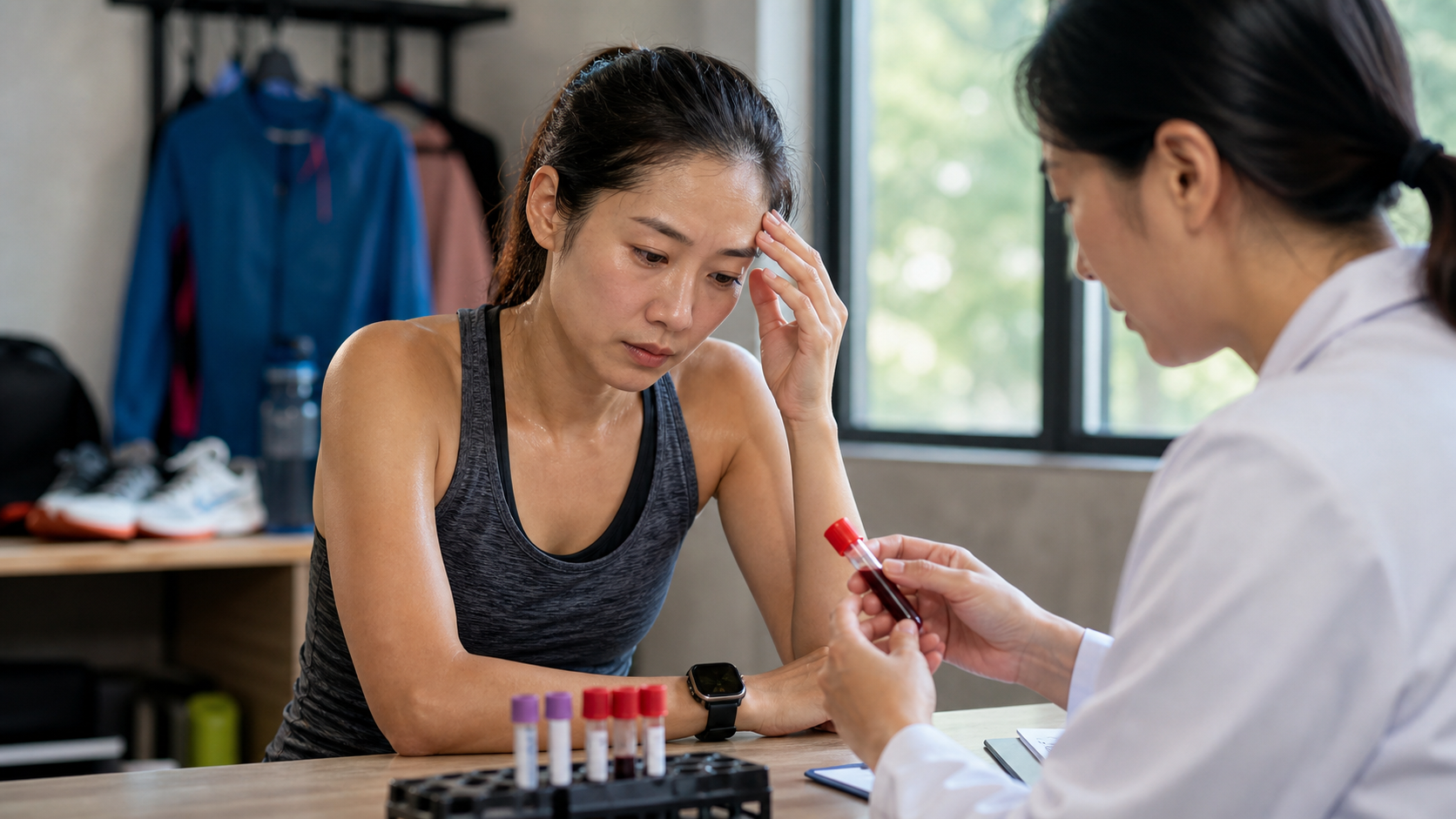
I still remember coaching a female athlete in her early thirties a few years ago—let’s call her A. She had been running for about three years, gradually building her weekly mileage from 40 km to 60 km, preparing for her first full marathon. The first six months were marked by rapid progress, with her pace dropping from 6:30 per kilometer down to 5:40. But over the next three months, something strange happened: even though her training plan hadn’t gotten harder and her sleep was still decent, her easy-run heart rate started drifting upward inexplicably. At the same pace, her heart rate was nearly 10 bpm higher than it had been three months earlier. She got winded climbing a pedestrian overpass, and her complexion looked pale. At one point, she thought she was just “losing mental toughness” and even wondered if she wasn’t cut out for running.
I asked her to get a full blood panel done. The results came back: hemoglobin was right at the lower edge of normal, but her ferritin was only 12 µg/L—a textbook case of “depleted iron stores in an athlete.” After three months of iron supplementation, training adjustments, and dietary changes, her ferritin climbed back above 40, her easy-run heart rate returned to baseline, and she finished her marathon without issue.
I’ve seen this story play out dozens of times over the past fifteen years. Exercise-induced anemia and blood health are among the most overlooked factors in endurance sports—yet they have an outsized impact on both performance and overall health. Unlike muscle soreness, it doesn’t grab your attention, but it quietly caps your ceiling. In this long-form article, I want to approach it from a coach’s perspective and lay out the “mechanisms, recognition, and management” clearly in one go.
Key point up front: Blood is the highway your body uses to transport oxygen. A large part of athletic performance boils down to “the ability to deliver oxygen to working muscles.” When blood health breaks down, even the most disciplined training plan is wasted effort.
1. Foundational Concepts: What Exactly Is Sports Anemia?
Many people hear “anemia” and assume it’s all the same thing, but the blood status of athletes actually falls into two distinct categories, and the approach to each is completely different.
1.1 Pseudo-Anemia (Hemodilution / Sports Hemodilution)
This is the most commonly misunderstood type. Endurance training causes the body to increase plasma volume (the liquid portion of the blood). This is a beneficial adaptation—thinner blood flows more easily, improves heat dissipation, and is actually advantageous for endurance performance. However, because plasma volume increases, the hemoglobin concentration measured in a blood draw (hemoglobin per unit volume) appears lower due to dilution.
This “anemia on paper” isn’t actually an iron deficiency. The total number of red blood cells hasn’t decreased; they’re simply diluted by more plasma. It’s a sign of being well-trained and requires neither iron supplementation nor treatment. This is also why athletes’ blood panels can’t be interpreted using the same reference ranges as the general population.
1.2 True Iron-Deficiency Anemia (Exercise-Induced Iron Deficiency)
This is the one that genuinely needs to be addressed. When the body’s iron stores are gradually depleted, the raw materials for red blood cell production run short, hemoglobin truly drops, and oxygen-carrying capacity genuinely declines. This category is the focus of this article.
To understand it, you first need to know: Why are endurance athletes especially prone to iron deficiency? According to the sports medicine literature, there are three main pathways: increased iron demand, increased iron loss, and blocked iron absorption. (Source)
2. Breaking Down the Mechanisms: How Do Endurance Athletes Lose Iron?
This section is the core of the article. I’ll break down the pathways of iron loss in athletes into several main threads from a teaching perspective, and you’ll see that runners, cyclists, and triathletes each face different levels of risk.
Mechanism 1: Foot-Strike Hemolysis
This is the classic mechanism unique to runners. With every foot strike, red blood cells in the capillaries of the sole of the foot undergo mechanical compression, and some are literally “crushed.” This is known as foot-strike hemolysis. The ruptured red blood cells release hemoglobin and iron, a portion of which is lost through urine (hemoglobinuria). (Source)
Here’s the key point: the literature indicates that runners destroy approximately four times more red blood cells than other athletes, and the mechanical trauma from foot strikes may be linked to iron deficiency in runners—those involved in impact sports like basketball and tennis tend to have lower iron stores than cyclists and rowers. (Source)
This gives us a very practical takeaway: at the same training volume, runners face a higher risk of iron loss than cyclists. This is why, when coaching “running-focused” athletes, I pay attention to their ferritin earlier and more frequently than with pure cyclists. That said, in most cases, the red blood cell destruction from foot-strike hemolysis is mild and doesn’t directly cause anemia. It’s more like “one of the straws that breaks the camel’s back”—it becomes apparent when mileage is high or training volume spikes sharply, overwhelming the red blood cell production machinery.
Mechanism 2: Inflammation and Hepcidin—The Hidden Culprit That Locks Absorption
This is one of the most important discoveries in sports nutrition over the past decade or two, and I want to spend some time on it because it directly affects “when you should take iron.”
The body has a hormone called hepcidin, which acts like the “master switch” for iron absorption. When hepcidin levels rise, the gut’s ability to absorb iron is suppressed. Exercise triggers an inflammatory response (primarily a rise in the inflammatory cytokine IL-6), which in turn increases hepcidin secretion. Research shows that hepcidin typically peaks around three hours after exercise, creating a window during which iron absorption and utilization are temporarily suppressed. (Source)
What does this mean? It means that if you immediately load up on iron right after a hard session, the effect may be significantly diminished—because hepcidin is elevated at that point, and iron simply isn’t being absorbed well.
What’s even more interesting is another finding: when iron stores are low, the post-exercise hepcidin response is blunted—the body appears to self-regulate, trying to open the absorption window wider when iron is deficient. Therefore, for athletes with ferritin in the “suboptimal” range (roughly 30–50 µg/L), the focus isn’t just on “how much iron to take,” but also on the timing of supplementation, avoiding the post-exercise hepcidin peak as much as possible. (Source)
Mechanism 3: Sweat, Gastrointestinal, and Other Losses
Beyond the two main pathways above, iron also leaks away through other routes bit by bit:
- Sweat loss: Heavy sweating carries away trace amounts of iron. Taiwan’s summers are hot and humid, and losing one to two kilograms of sweat in a single long outdoor session is par for the course—this pathway can’t be ignored in our climate.
- Minor gastrointestinal bleeding: During prolonged high-intensity exercise, blood is redistributed from the internal organs to the muscles, leaving the gut relatively ischemic, which can cause minor gastrointestinal oozing.
- Red blood cell turnover and muscle building: Training itself increases the rate of red blood cell turnover, and muscle protein synthesis also requires iron, raising overall demand.
Mechanism 4: Not Eating Enough / Eating the Wrong Things—The Most Common Yet Easiest to Fix
To be honest, in the cases I’ve coached, the most common root cause isn’t some complex physiological mechanism—it’s simply not consuming enough iron, or consuming iron with poor absorption rates. In particular:
- Female athletes: The menstrual cycle causes regular iron loss, so their requirements are higher than men’s.
- Vegetarians or people who eat very little red meat: Plant-based non-heme iron has a much lower absorption rate than animal-based heme iron.
- People deliberately restricting calories or chronically under-eating: Eat less, and you get less iron too.
3. Recognizing the Signals: Should You Suspect an Iron Deficiency?
The most troublesome aspect of exercise-induced iron deficiency is that it progresses in stages, with no obvious anemia in the early phase. By the time hemoglobin actually drops and you’re diagnosed with “anemia,” your iron stores have actually been depleted for a while. That’s why I always emphasize to my athletes: Don’t wait until you’re anemic to deal with it—intercept it during the “declining iron stores” phase.
The Three Stages of Iron Deficiency
| Stage | Name | Hemoglobin | Ferritin | What You Might Feel |
|---|---|---|---|---|
| Stage 1 | Iron store depletion | Normal | Low (bottomed out) | Barely noticeable, or just “feeling more tired lately” |
| Stage 2 | Iron deficiency without anemia | Low-normal | Low | Heart rate rises at same pace, slower recovery, declining endurance |
| Stage 3 | Iron deficiency anemia | Significantly decreased | Very low | Obvious fatigue, shortness of breath, pale complexion, dizziness, major performance drop |
Many athletes’ problems occur in Stage 2: hemoglobin is still within the “normal” range, so a general physician looking at the report might see nothing wrong—but athletic performance is already clearly affected. This is why athletes must look at ferritin, not just hemoglobin.
Physical Signals I Ask Athletes to Watch For
- Heart rate inexplicably drifts upward at the same pace (like Athlete A at the start of the article—this is one of the signals I value most)
- Recovery after training slows down; legs still feel heavy the next day
- Easy runs also feel breathless; stairs and footbridges leave you winded
- Pale complexion, pale lower eyelid conjunctiva, pale nail beds
- Unexplained fatigue, decreased concentration, feeling cold easily
- A small number of people experience an unusual pica craving like “wanting to chew ice”
None of these signals alone is specific enough, but if several appear at the same time—and especially during a progressive overload phase—it’s worth getting blood work done.
Which Blood Markers Should You Look At?
| Marker | What It Shows | Plain-Language Coach’s Perspective |
|---|---|---|
| Hemoglobin (Hb) | Primary oxygen carrier | If it actually drops, you’ve entered the anemic stage |
| Ferritin | Iron stores | The most critical early marker for athletes—be alert when it bottoms out |
| Transferrin saturation (TSAT) | Available iron in blood | More accurate when interpreted alongside ferritin |
| MCV (mean corpuscular volume) | Red blood cell size | Red blood cells tend to be smaller with iron deficiency |
| CRP / inflammatory markers | Whether inflammation is present | Ferritin can be falsely elevated with inflammation—must be read together |
Here’s an important trap to be aware of: Ferritin is an “acute-phase reactant protein”—it can be falsely elevated during inflammation or infection. If you’ve just finished a hard race or are coming down with a cold, your ferritin reading might look decent when your iron stores are actually low. So blood draws should ideally be scheduled during a stable physical state—not after heavy training, not during an infection—for the numbers to be meaningful.
4. Practical Management: Diet, Iron Supplementation Timing, and Training Adjustments
Now that we’ve covered the mechanisms and recognition, let’s get to the practical part most people want to see. I divide the management strategy into three parts: eating the right foods, supplementing iron smartly, and adjusting training accordingly.
(1) Dietary Strategy: Heme Iron vs. Non-Heme Iron
Iron in food comes in two types with vastly different absorption rates—this is fundamental knowledge every athlete should have:
- Heme iron (animal-based): Found in red meat, organ meats, shellfish, and blood products. High absorption rate and not easily interfered with by other foods.
- Non-heme iron (plant-based): Found in dark leafy greens, legumes, whole grains, and nuts. Lower absorption rate and easily disrupted by tannins in tea and coffee, as well as phytates.
The table below is an “easily available iron-rich foods in Taiwan” reference I often send to athletes. Values are typical ranges and will vary by ingredient and cooking method:
| Food (Common in Taiwan) | Type | Reference Iron Content (mg per 100 g) | Coach’s Notes |
|---|---|---|---|
| Pork liver | Heme | Approx. 10–11 | The king of iron, but high in purines and cholesterol—moderation is key |
| Beef (lean) | Heme | Approx. 2–3 | Easy to find in bento boxes and beef noodle soup |
| Clams / freshwater clams | Heme | Approx. 3–13 | Clam essence and clam soup are great sources |
| Pork blood / duck blood | Heme | Approx. 2–28 (highly variable) | Night-market spicy duck blood and pork blood soup are hidden iron boosters |
| Red amaranth / spinach | Non-heme | Approx. 2–12 (amaranth is higher) | Dark leafy greens—pair with vitamin C |
| Black sesame | Non-heme | Approx. 20+ | Easy to sprinkle on rice or blend into sesame paste |
| Red beans / black beans | Non-heme | Approx. 5–7 (dried) | Important source for vegetarians |
Absorption tips (I remind nearly every athlete of these):
- Pair with vitamin C: When eating plant-based iron, pair it with guava, citrus, kiwi, or tomato to significantly boost non-heme iron absorption. Taiwan has plenty of fruit options, so this is easy to do.
- Separate iron from tea and coffee: Avoid strong tea and coffee within 1–2 hours of meals and iron-containing meals—tannins bind to iron and block absorption. Since Taiwanese people love bubble tea and tea, this one deserves special attention.
- Take calcium and iron separately: High calcium (milk, cheese, calcium supplements) competes with iron absorption—stagger them when supplementing iron.
- Practical advice for eating out: Eating out in Taiwan is convenient but can easily lead to insufficient iron. I often recommend deliberately choosing 2–3 meals per week that include “red meat or organ meats”—like beef noodle soup, braised pork liver, clam soup, or spicy duck blood—integrating iron intake into daily life, which is more sustainable than relying on extra supplements.
(2) Iron Supplementation Timing: Leveraging the Hepcidin “Window”
If a physician determines that oral iron supplements are needed, simply “taking them” isn’t enough—timing is critical. Combining the hepcidin mechanism discussed earlier, here’s a practical timing recommendation table I’ve put together:
| Scenario | Recommended Approach | Underlying Principle |
|---|---|---|
| Right after a hard workout / long distance session | Hold off on iron supplementation—wait a few hours | Hepcidin peaks about three hours post-exercise; absorption is poor during this time |
| Golden window for iron supplementation | Preferably early morning, on an empty stomach or before exercise—not after heavy training | Avoids the hepcidin peak for better absorption |
| Oral iron frequency | Physicians may recommend every other day rather than daily | Daily continuous supplementation may actually raise hepcidin and reduce overall absorption efficiency |
| Pairing | Take with vitamin C; avoid calcium, tea, and coffee | Enhances absorption and reduces competition |
A very important reminder: Oral iron supplements are not dietary supplements—you should not self-medicate. Excess iron can deposit in organs like the liver and cause damage; some people are born with iron-overload conditions (such as hemochromatosis), and reckless supplementation can be dangerous. Whether you need supplementation, how much, and for how long must be determined by a physician based on your blood work. This article provides principles and direction, not a prescription.
(3) Training Adjustments: Don’t Stack Volume While Iron-Deficient
When addressing iron deficiency, the training-side coordination is often overlooked. My usual approach is:
- Pump the brakes on training volume progression: Piling on more volume when iron stores are bottomed out is like trying to fill a bucket with a hole in it. Stabilize the volume first and give your body a chance to replenish.
- Keep intensity, fine-tune total volume: You don’t necessarily need complete rest, but you can dial back excessive high-impact mileage (especially for runners) to reduce the additional burden of foot-strike hemolysis.
- Prioritize recovery and sleep: Sleep deprivation worsens fatigue and hinders overall repair.
- Be patient during the replenishment phase: Getting ferritin from bottomed-out back to a healthy range typically takes several weeks to several months—it won’t happen in a few days. I usually ask athletes to supplement for about 8–12 weeks before getting retested, using the numbers to confirm the direction is correct.
5. Common Mistakes and Corrections
In this section, I’ve compiled the most common pitfalls I encounter when coaching athletes—many of which are cases of “thinking you’re doing the right thing.”
Mistake 1: Only Looking at Hemoglobin, Ignoring Ferritin
This is the most common and the most regrettable. A “normal” hemoglobin level doesn’t mean your iron stores are normal. Many athletes with stage 2 iron deficiency are told they’re “fine” because only hemoglobin was checked, wasting months of declining performance. Fix: Athletes must add ferritin to their blood panels.
Mistake 2: Self-Prescribing Iron Pills at the Pharmacy the Moment Fatigue Hits
Fatigue has too many causes—sleep deprivation, overtraining, thyroid issues, other nutrient deficiencies. Supplementing iron without testing may target the wrong cause, or worse, lead to iron overload. Fix: Get bloodwork first, then let a physician decide whether supplementation is needed.
Mistake 3: Treating “Training-Induced Hemodilution” as Anemia
The pseudo-anemia mentioned earlier is a benign training adaptation. Forcing a “treatment” for it is counterproductive. Fix: Distinguish between hemodilution and true iron deficiency—ferritin and overall clinical interpretation are key.
Mistake 4: Poor Timing of Iron Supplementation—Taking It to No Effect
Supplementing immediately after a hard workout, or pairing it with strong tea or coffee at every meal, drastically reduces iron absorption. Fix: Avoid the post-exercise hepcidin peak, take iron with vitamin C, and avoid tea, coffee, and calcium.
Mistake 5: Expecting Results in Days, Then Giving Up When Numbers Don’t Bounce Back
Rebuilding iron stores is a project measured in weeks and months. Giving up after two weeks of no noticeable change is a real shame. Fix: Give your body 8–12 weeks, and track progress with follow-up ferritin tests, not by how you feel.
Mistake 6: Ignoring Other Sources of Blood Loss—Menstruation, GI Bleeding
If iron supplementation isn’t raising your levels after a long time, ask yourself: is there ongoing blood loss? Heavy menstrual flow or underlying gastrointestinal bleeding can make iron supplementation feel like pouring water into a bottomless pit. Fix: When iron levels won’t budge, go back to the doctor to find the root cause of blood loss—don’t just keep adjusting the supplement dose.
6. Actionable Advice for Readers at Different Levels
Training volume and risk profiles differ for everyone, so I’ve split the advice into three tiers. Find the one that fits you.
Beginners / Athletes with Lower Weekly Training Volume
- Focus on a balanced diet first—rotate red meat, dark leafy greens, and legumes, paired with vitamin C-rich fruit.
- No need to proactively take iron supplements or check your blood daily.
- If a health check-up happens to show low ferritin, or if you notice the fatigue signals mentioned earlier, then consult a physician.
- Taiwan has convenient adult health check-ups and clinic blood-draw services—make blood status part of your annual physical.
Intermediate / Runners and Cyclists Seriously Preparing for Races
- Make ferritin part of regular monitoring, especially during build phases and before race season. I typically recommend at least 1–2 tests per year.
- Women, vegetarians, and those managing body weight should monitor more frequently.
- Learn the basics: separate tea/coffee from iron-containing meals, and pair iron with vitamin C.
- During increased training load, watch for changes in heart rate at the same pace—treat it as an early warning sign.
Advanced / High-Mileage Athletes or Those Preparing for Competition
- Build a long-term relationship with a physician familiar with athletes or a sports medicine clinic, and make blood monitoring a routine part of your protocol.
- Iron supplementation must follow the full cycle: test → physician assessment → supplement → retest, and make good use of the hepcidin timing principle.
- When planning your season, treat “iron store replenishment” as part of your periodization—don’t wait until just before race day to discover your stores are empty.
- High-impact runners can pay attention to shoe cushioning, running form, and mileage distribution to slightly reduce foot-strike hemolysis at the source (but don’t sacrifice training quality for this—it’s only a supporting measure).
7. Practical Reminders for the Taiwan Context
Here are a few down-to-earth, practical points I always emphasize with my athletes in Taiwan:
- Don’t underestimate sweat loss in the hot, humid climate: For long outdoor training sessions in Taiwan’s summers, hydration and electrolytes matter—but for those who sweat heavily over long periods, overall nutrient density deserves extra attention.
- The iron trap of eating out: Bentos and noodle shops are convenient, but they easily give you “enough calories, not enough iron.” Deliberately scheduling a few meals with red meat, organ meats, or clams is a low-cost way to boost iron.
- Bubble tea and tea culture: It’s common in Taiwan to have a tea or coffee every day—just remember to separate it from your iron-containing main meals.
- Make good use of NHI and outpatient clinics: Blood tests are relatively accessible and affordable in Taiwan. If you have concerns, discuss them with a family medicine, internal medicine, or sports medicine clinic—don’t scare yourself by comparing numbers online or self-supplementing.
- Tell your doctor “I’m an athlete”: Because reference ranges for athletes are interpreted differently than for the general population, proactively telling your physician about your training volume and discipline helps with more accurate interpretation.
8. Three Real Case Scenarios: To Help You “Find Yourself” in the Stories
Principles alone can feel abstract, so let me share three case scenarios (these are constructed for teaching purposes; the numbers represent common ranges, not precise medical records). You’ll see that even when the complaint is the same—“I’m tired”—the blood story behind it can be completely different.
Case 1: Runner B Who Ramped Up Too Fast (Male, 28)
B is the type of athlete with fierce determination. In three months, he pushed his weekly mileage from 45 km to 90 km, adding plenty of track intervals on top. Around week eight, he started complaining that “my legs feel heavy, and I can’t hit my old interval splits.” Bloodwork showed low ferritin, hemoglobin at the low end of normal, and low MCV.
This is a classic case of “training volume growing faster than red blood cell production can keep up”: foot-strike hemolysis increased, inflammation pushed hepcidin up and suppressed absorption, and his food intake didn’t scale proportionally with his training load—so the iron deficit widened. The fix: pull weekly mileage back to 60 km, cut intervals in half, deliberately add red meat and organ meats to his diet, and supplement iron under physician assessment. About 10 weeks later, follow-up bloodwork showed ferritin had recovered, and his splits were back. Lesson: The golden rule of increasing volume is gradual progression—your blood system adapts slower than your willpower.
Case 2: Vegetarian Female Cyclist C (Female, 35)
C is a strict vegan who primarily cycles with a fairly high weekly volume. She kept thinking, “I’m very careful about my diet—how could I possibly be iron deficient?” But her problem was exactly the combination of low absorption of non-heme iron and always pairing meals with black coffee. Her ferritin was bottomed out.
Her fix wasn’t about “quantity” but “strategy”: pair iron-rich plant foods (legumes, dark leafy greens, black sesame) with vitamin C-rich fruit, move coffee to two hours after meals, and use physician-prescribed supplements when necessary. Lesson: Vegetarian athletes aren’t iron deficient because they don’t try hard enough—it’s an inherent disadvantage in absorption rate that needs to be compensated with pairing techniques.
Case 3: Runner D Who Actually Had Hemodilution (Male, 40)
After six months of training, D’s health check-up report said “low hemoglobin.” He panicked and asked me whether he should start loading up on iron. But he had none of the symptoms—no fatigue, no elevated heart rate, no performance decline. In fact, it was the period of his greatest improvement in six months. A follow-up ferritin test came back excellent.
This is classic exercise-induced hemodilution (pseudo-anemia)—plasma volume expansion dilutes the hemoglobin concentration. It’s a benign adaptation and requires no treatment. Lesson: Not every “low” on a lab report needs to be addressed—clinical interpretation and ferritin are what matter. Don’t scare yourself into unnecessary supplementation.
9. Frequently Asked Questions (FAQ)
These are the questions students ask me most often, compiled here for you.
Q1: I don’t have anemia, but my ferritin is low. Do I need to do anything about it?
A: This is exactly the second stage of “iron deficiency without anemia,” where athletes most commonly get stuck. Performance is affected, but hemoglobin is still normal. Whether to supplement with iron should be determined by a physician based on your overall condition, but at the very least, your diet should be adjusted first.
Q2: What ferritin level counts as “enough”?
A: The reference standards for the general population and athletes are not exactly the same, and different labs have slight variations. Rather than fixating on a single number, it’s better to look at the “trend” and “symptoms” together—if levels are bottoming out and symptoms are present, it’s time to be alert. Leave the actual threshold to your physician’s judgment.
Q3: Can I just buy iron supplements at the pharmacy on my own?
A: Not recommended. Iron is not a case of “more is better.” Excess iron can deposit and damage organs, and people with an iron-overload predisposition can actually be put at risk by supplementing. Always get tested first and let a physician decide.
Q4: Are there side effects from iron supplementation?
A: Common side effects of oral iron supplements include gastrointestinal discomfort, constipation, and darkened stools. If these are very uncomfortable, discuss adjusting the formulation, dosage, or switching to every-other-day dosing with your physician.
Q5: Can I drink red wine or coffee on the same day I eat steak or pork liver?
A: Try to separate caffeinated or tannin-containing beverages from iron-rich meals by one to two hours, so the iron has a chance to be absorbed before you drink them.
Q6: How long should I supplement before getting retested?
A: Typically, you should go back to have your ferritin checked 8–12 weeks after starting iron supplementation, using the numbers to confirm the direction rather than stopping or increasing the dose based on how you feel.
Q7: Do cyclists not need to worry about this?
A: Cyclists don’t have the main pathway of footstrike hemolysis, so their risk is relatively lower. However, sweat loss, inflammation-related hepcidin, and inadequate dietary intake still apply. The overall risk is lower than for runners, but that doesn’t mean it’s zero.
10. Don’t Attribute Every Kind of Fatigue to Iron Deficiency: The Concept of Differential Diagnosis
I want to highlight this section specifically, because many students, the moment they feel tired, dive headfirst into the “it must be iron deficiency” framework and overlook other equally important possibilities. Fatigue is a highly non-specific symptom, and iron deficiency is just one of many causes. Here are the other directions I put on the radar before suspecting iron deficiency:
| Possible Cause | Why It Causes Fatigue | How a Coach Would Initially Differentiate |
|---|---|---|
| Overtraining / Inadequate recovery | Training stress exceeds recovery capacity | Review recent training load curve, sleep, and life stress |
| Sleep deprivation | Impaired repair and hormonal regulation | Ask about sleep duration and quality; try catching up on sleep first |
| Chronic low energy availability (RED-S concept) | Insufficient energy supply drags down the whole body | Check whether food intake keeps pace with training load |
| Other nutrient deficiencies | E.g., vitamin B12 and folate are also involved in blood production | Requires blood tests; cannot be guessed |
| Thyroid / endocrine issues | Abnormal metabolism and energy regulation | Requires medical evaluation; not something exercise can fix |
| Infection or chronic inflammation | Body resources are occupied by the immune system | Recent colds or elevated inflammatory markers |
The purpose of this table is not for you to play doctor and make a differential diagnosis yourself, but to remind you: if you’ve been supplementing iron for a long time and your symptoms haven’t improved, you must go back and consider other possibilities, and return to a professional for clarification. Trapping yourself in a single explanation is often where delays begin. In particular, chronic low energy availability is very common among endurance athletes who are deliberately controlling their weight. It doesn’t just cause iron deficiency—it also affects hormones, bone health, and overall health, and deserves to be highlighted on its own.
11. A Practical “Annual Blood Health Rhythm” Example
Finally, I’ve compiled the annual rhythm I commonly use with intermediate-and-above students into an example table, so you have a concrete framework to reference and then adjust according to your own situation and your physician’s advice:
| Period | Training Status | Blood Focus | Dietary Focus |
|---|---|---|---|
| Base period (high mileage) | Training volume ramping up | Get a baseline blood draw before increasing volume; watch ferritin | Increase overall food intake and iron-rich foods alongside training volume |
| Intensity period | High intensity, high inflammation | Watch hepcidin effects; avoid iron supplementation right after hard sessions | Prioritize recovery meals; pair with vitamin C |
| Pre-race taper | Reduced volume, recovery | Confirm iron stores aren’t bottomed out before race day | Keep things stable; don’t make drastic changes at the last minute |
| Post-race / transition period | Rest and recovery | Consider retesting if fatigue lingers after a major race | Replenish nutrients that may have been insufficient during training |
This is just an illustrative framework. The actual frequency and interpretation depend on your sport, sex, dietary patterns, and physician’s recommendations. The key is turning “blood health” from a one-off firefighting effort into a rhythmic, long-term management practice. This is also the core message I’ve wanted to convey through years of coaching students—good performance is built by taking care of the foundation, block by block.
Conclusion: Treat Blood Health as the Foundation of Your Training
Going back to Student A from the beginning. She not only finished her race but kept pushing her results further. But I think her real takeaway was learning to listen to her body, understand the data, and make blood health part of her training plan—rather than waiting for it to collapse and then scrambling to fix it.
Exercise-induced anemia is not some rare, strange disease. It’s a common side effect of endurance sports, especially for runners. The good news is that it is identifiable, preventable, and treatable—as long as you’re willing to look at the right numbers at the right time, eat the right foods, and supplement at the right moments. Your blood is the highway that delivers oxygen. Take care of that road, and your ceiling will naturally be raised.
If you’re stuck in that confusion of “no matter how I train, I keep getting slower, and my heart rate keeps climbing at the same pace,” don’t rush to blame your willpower. Go get a blood draw, check your ferritin—maybe the answer is right there.
This article is educational content and does not replace individual diagnosis or treatment advice from a physician, physical therapist, or nutritionist. If you have persistent fatigue, obvious symptoms of anemia, or suspect blood loss, iron overload, or other conditions, please seek medical attention and have a professional evaluate and manage your specific situation. Iron supplementation and the use of any supplements should be done under a physician’s guidance.
References
- Footstrike is the major cause of hemolysis during running (Journal of Applied Physiology): https://journals.physiology.org/doi/full/10.1152/japplphysiol.00631.2001
- Anemia in Sports: A Narrative Review (PMC): https://www.ncbi.nlm.nih.gov/pmc/articles/PMC8472039/
- Effects of an Acute Exercise Bout on Serum Hepcidin Levels (PMC): https://www.ncbi.nlm.nih.gov/pmc/articles/PMC5852785/
- Iron Status and the Acute Post-Exercise Hepcidin Response in Athletes (PMC): https://www.ncbi.nlm.nih.gov/pmc/articles/PMC3965532/
Related Reading
- Exercise-Induced Anemia: A Complete Guide to Iron Management for Endurance Athletes
- Iron and Serum Ferritin: The Most Common Hidden Loss of Performance in Endurance Athletes
- Iron Nutrition: The Most Overlooked Key Trace Mineral for Endurance Athletes
- A Nutritional Interpretation of Athlete Blood Tests: What to Test, How to Read It, and How to Track It
西進武嶺 免費訓練分析服務 Intervals | 練不夠還是練過頭?你哪一種類型選手?AI模型告訴你! | 備戰神器 | 公路車 訓練 | CT Yeh
4 年前
CT 喇低賽) 單車 比賽總是沒照片? 攝影師的觀點大公開 姿勢就是力量! 請加速1.25倍收看
7 年前
靠單車減肥35公斤 心得分享與整理
7 年前
福隆鐵人團練隨拍
8 年前
#公路車 #Fitting 靠人工智慧APP 幫你調整單車
6 年前
FTL 與 SYB 車隊專訪 西進武嶺 實用攻略分享! 2小時 如何練?!你不知道的眉角!新手準備武嶺必看 EP1 | 實力派女車友 | 精華版 | 公路車 | CTYeh
4 年前
CT暗黑廚房) 車友必備 宇宙無敵鮮蚵湯 幫助訓練恢復 天然食補 好市多 超肥鮮蚵 破PR
7 年前
一日北高常見問題大集合 | 攻略 | 路線 | 訓練 | 補給 | 自行車 單車 | 一日雙城 | 雙塔 | TWB北高360 | 屁股痛
6 年前